• Home
  • About The Herald
  • Local Agencies
  • Daily Email Update
  • Legal Notices
  • Classified Ads

Contra Costa Herald

News Of By and For The People of Contra Costa County, California

  • Arts & Entertainment
  • Business
  • Community
  • Crime
  • Dining
  • Education
  • Faith
  • Health
  • News
  • Politics & Elections
  • Real Estate

Autonomous vehicles take center stage at annual Contra Costa Redefining Mobility Summit

May 9, 2024 By Publisher Leave a Comment

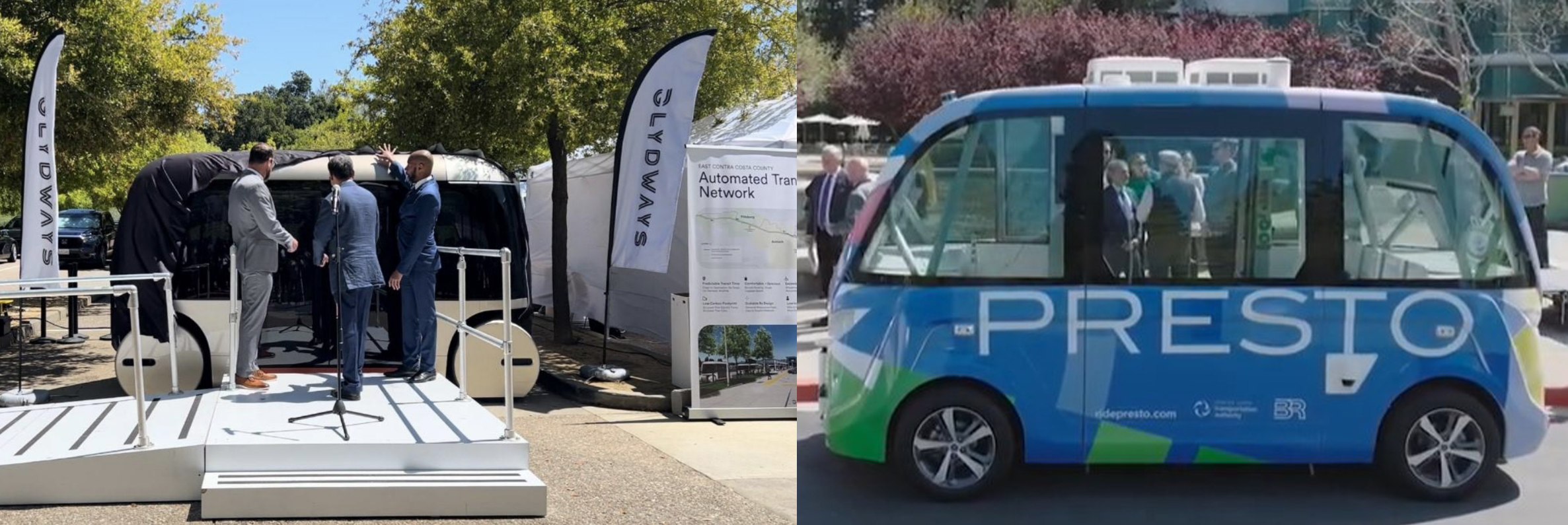
Glydways and BEEP automated vehicles were on display at the summit. Photo (left) and video screenshot by CCTA.

Transportation leaders convened in San Ramon to share strategies to build public trust, redefine mobility & develop the future workforce of transit

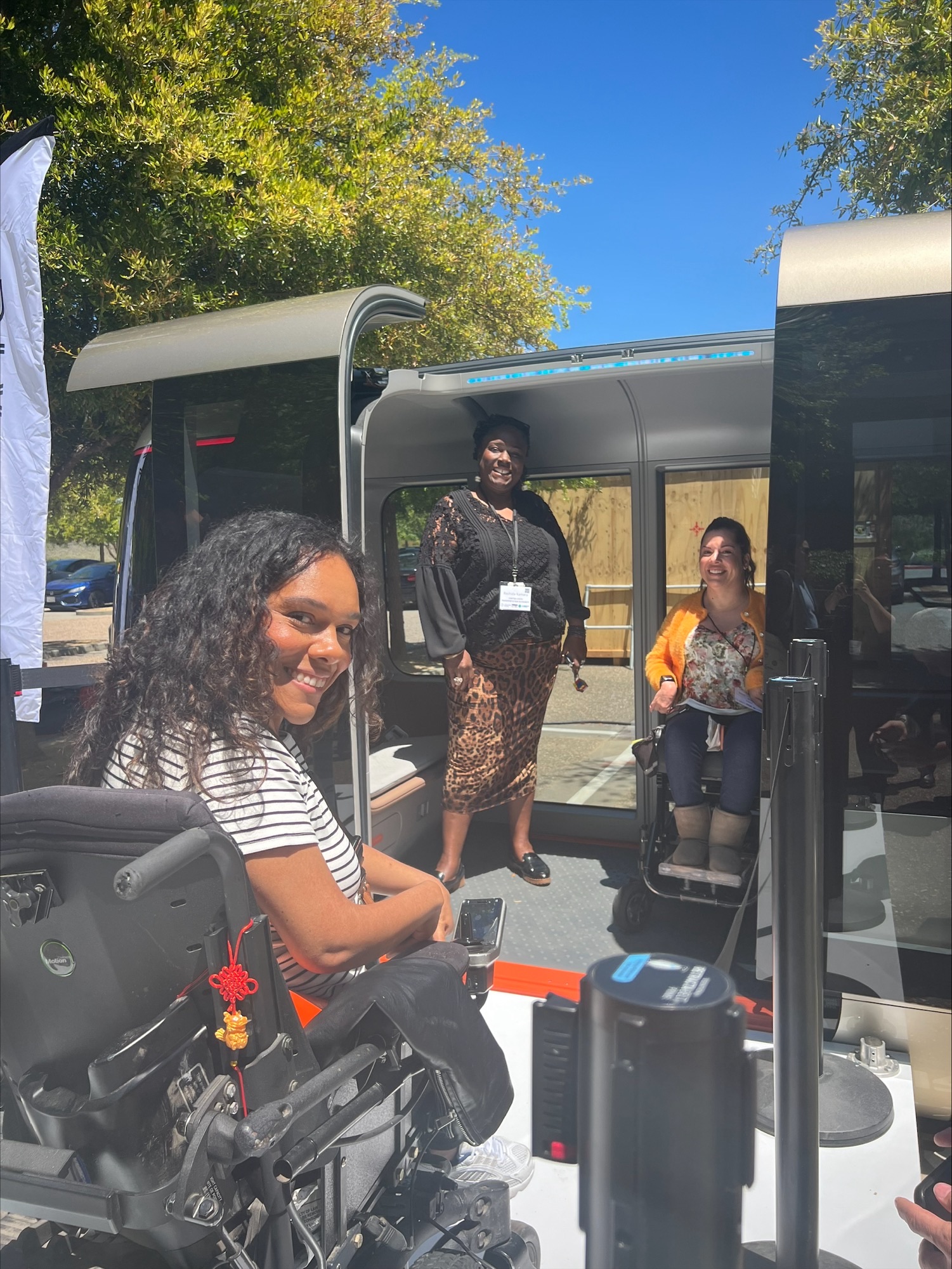
Glydways vehicles offer wheelchair access. Photo: CCTA

On Tuesday, May 7, 2024, the Contra Costa Transportation Authority (CCTA), GoMentum Station and Bay Area LEEDS joined forces to host the ninth annual Redefining Mobility Summit. Transportation officials from regional, state and federal agencies gathered with private industry innovators, local youth and workforce development experts in San Ramon’s Bishop Ranch business park to share vital information aimed to advance mobility. Autonomous vehicles took center stage as Glydways, BEEP and May Mobility unveiled transit options of the future in the Demonstration Exhibit Zone.

“This year’s panel topics: fostering public trust for new innovations like autonomous vehicles, connecting communities through technology, building the workforce of the future, and solving the challenges of our transportation systems are the very touchstones CCTA embraces every day to improve the quality of lives for those who live and work in Contra Costa County,” said CCTA Vice Chair and Antioch Mayor Lamar Hernandez-Thorpe.

The summit included a youth showcase where high school aged students shared their STEM projects and the midday Demonstration Exhibit Zone, which was powered by smart, clean generators supplied by Richmond-based Moxion. All the day’s activities connected the dots between innovation and future benefits not just for transportation but for the region.

“Innovation in transportation leads to improved productivity, enhanced trade, infrastructure development, increased regional commerce and job creation—all of which contribute to economic growth,” Contra Costa Supervisor Candace Andersen said.

Filed Under: News, Technology, Transportation

April is Distracted Driving Awareness Month

April 6, 2024 By Publisher Leave a Comment

Source: NHTSA

The laughs aren’t worth the risk. Put the phone down and just drive

By National Highway Traffic Safety Administration

Distracted driving has become a deadly epidemic on our roads. Cell phone use — specifically, texting, talking, and social media use — has become the most common distraction. Other risky actions include adjusting the radio or GPS, applying makeup, eating and drinking. By driving distracted, you’re robbing yourself of seconds that you may need to avoid a close call or deadly crash.

Drive Responsibly

In 2021, distracted driving killed 3,522 people.  April, which is national Distracted Driving Awareness Month, is a good time to regroup and take responsibility for the choices we make when we’re on the road. Follow these safety tips for a safe ride:

  • Need to send a text? Pull over and park your car in a safe location.
  • Designate your passenger as your “designated texter” to respond to calls or messages.
  • Do not scroll through apps while driving. Struggling not to text and drive? Put the cell phone in the trunk, glove box, or back seat of the vehicle until you arrive at your destination.

The Consequences

During a portion of Distracted Driving Awareness Month, from April 4 through 8, you may see increased law enforcement on the roadways as part of the national paid media campaign Put the Phone Away or Pay. This campaign reminds drivers of the deadly dangers and the legal consequences – including fines – of texting behind the wheel.

Take Action

  • Remind your friends and family: If you’re in the driver’s seat, it’s the only thing you should be doing. No distractions.
  • If your driver is texting or otherwise distracted, tell them to stop and focus on the road.
  • Ask your friends to join you in pledging not to drive distracted. You could save a life. Share your pledge on social media to spread the word — #JustDrive.


Filed Under: News, Transportation

Opening of Mokelumne Trail Bicycle and Pedestrian Overcrossing in Brentwood celebrated

March 20, 2024 By Publisher Leave a Comment

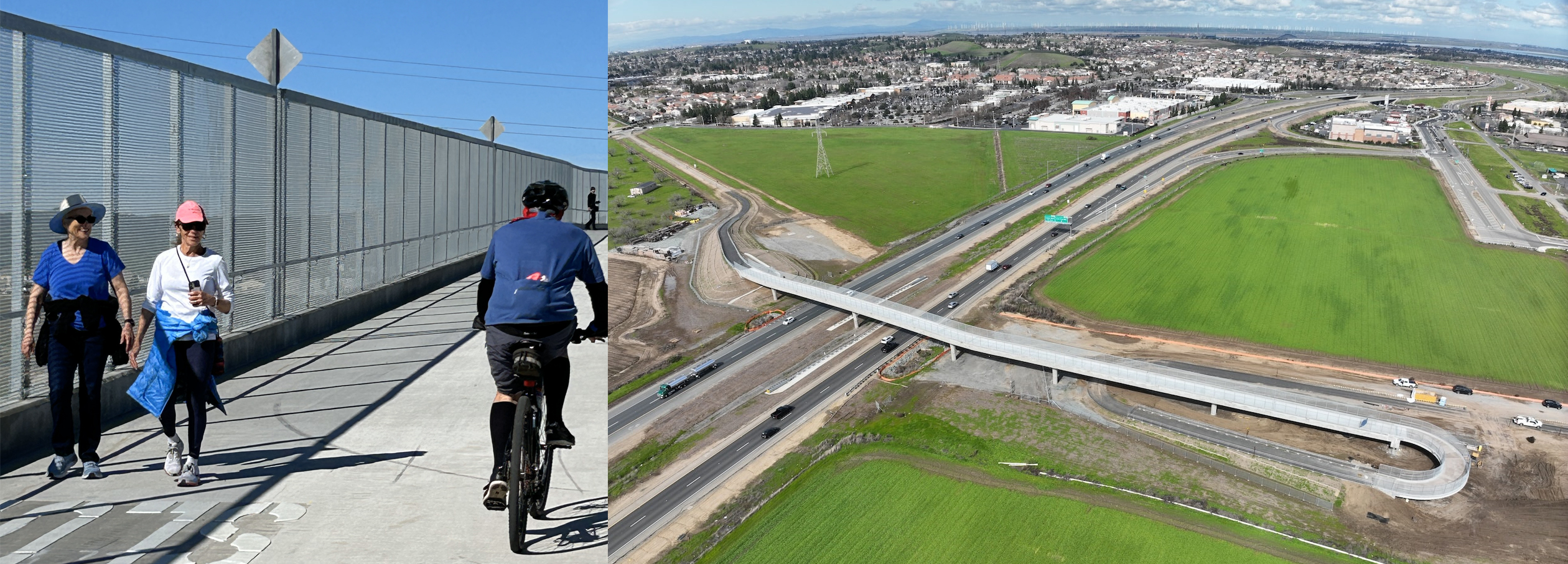
Pedestrians and a bicyclist cross the recently completed Highway 4 Mokelumne Trail Overcrossing in Brentwood on March 20, 2024. Photos: CCTA

Transportation, city officials were joined by dozens of cyclists and pedestrians to cut the ribbon, make the inaugural walk over new $13 million bridge 

BRENTWOOD, CA – Almost two years to the day of the groundbreaking, as of today, Wednesday, March 20, 2024, the Mokelumne Trail Bicycle and Pedestrian Overcrossing in Brentwood is officially open to the public.

Officials of the Contra Costa Transportation Authority (CCTA), City of Brentwood, State Route 4 Bypass Authority, Contra Costa County and Metropolitan Transportation Commission cut the ribbon to ceremonially open the recently completed bridge across Highway 4 between Lone Tree Way and Sand Creek Road.

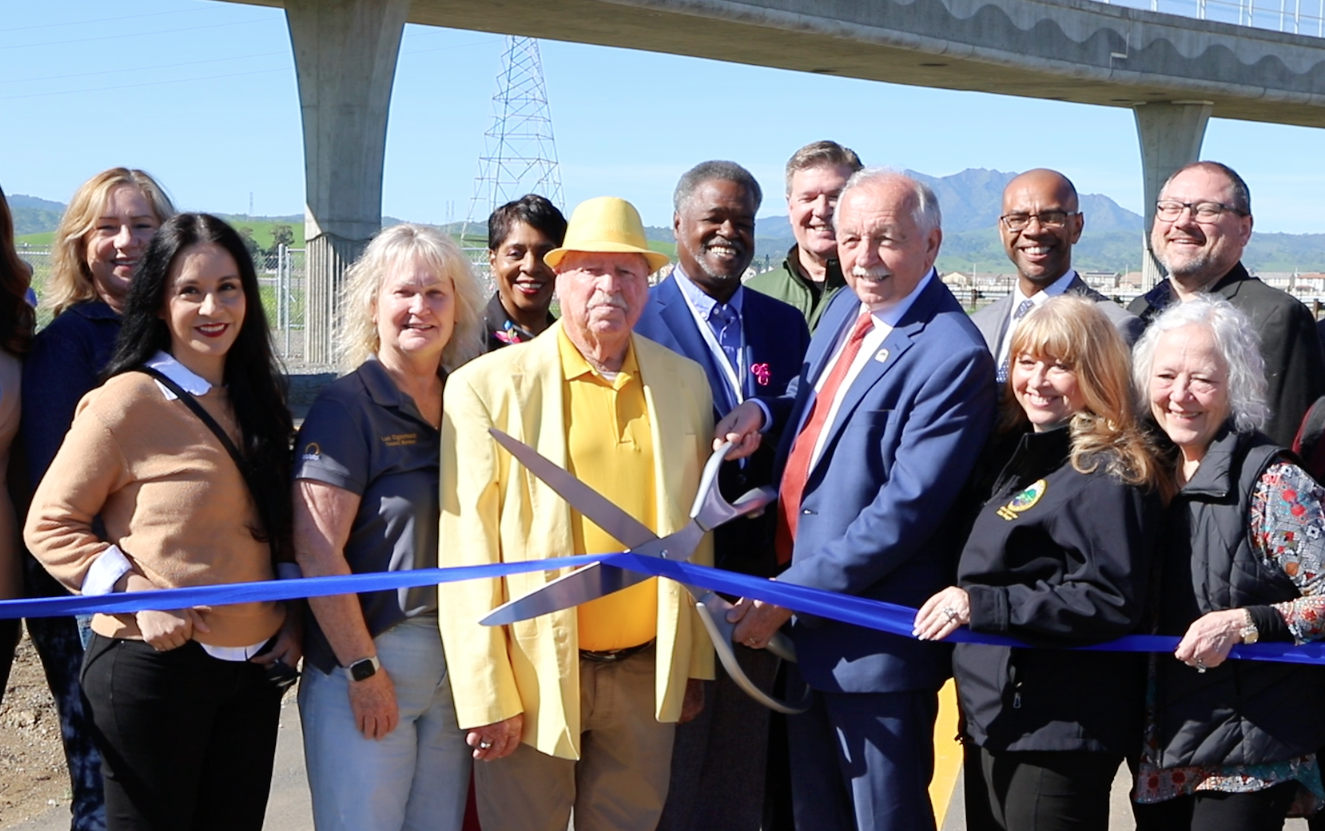
Transportation and city officials, and former Brentwood Mayor Bob Taylor (in yellow) who first proposed the project, cut the ribbon for the opening of the Mokelumne Trail Overcrossing on March 30, 2024. Photo: CCTA

They were joined by dozens of eagerly awaiting bicyclists and pedestrians to make the inaugural bike and walk on the overcrossing. The bridge now provides safe access to bicyclists and pedestrians for commuting and recreational travel and as part of the Mokelumne Coast to Crest Trail which includes the Delta de Anza Regional Trail that runs through Antioch and Oakley..

The 850-foot bridge structure includes a wider trail-width of 16 feet to accommodate bicyclists and pedestrians using the trail or accessing a potential future transit station. The bridge also meets Americans with Disabilities Act (ADA) standards to support use by all community members. The overcrossing will also provide access to the future Brentwood Transit Center and BART Station

“The opening of the Mokelumne Pedestrian Overcrossing marks a significant milestone for alternative and innovative transportation in Contra Costa County,” said CCTA Board Chair Newell Arnerich. “The bridge was designed for the future in mind: access to future development in Brentwood as well as creating a wider pathway to someday accommodate many forms of environmentally friendly travel, including autonomous shuttle vehicles.”

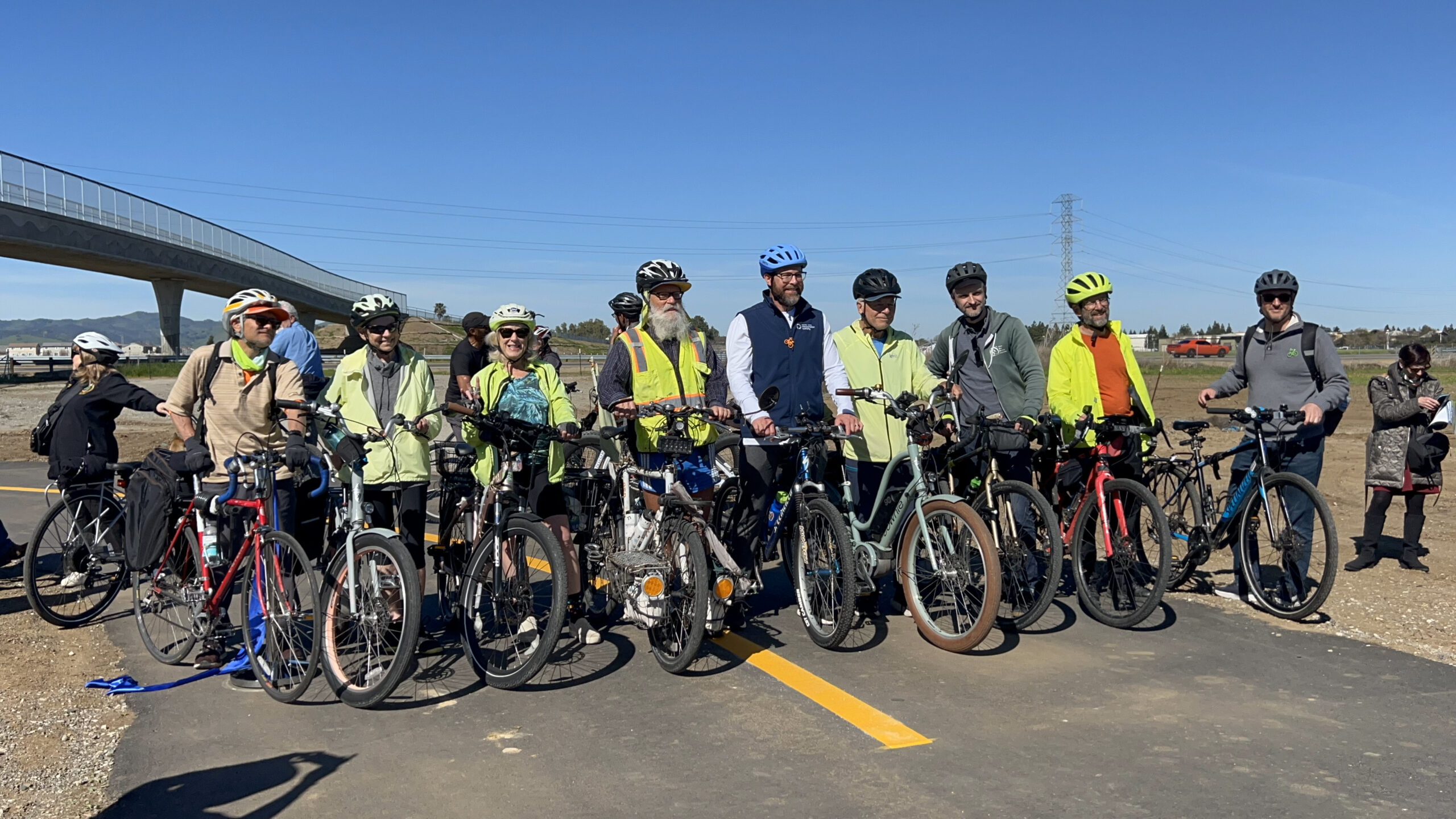
Bicyclists, including advocate Bruce Ohlson (grey beard) and CCTA Executive Director Tim Haile (in blue vest) prepare to ride across the Mokelumne Trail Overcrossing following the ribbon cutting on Wed., March 20, 2024. Photo: CCTA

The overcrossing also provides a connection to the planned Innovation Center at Brentwood, a 200+ acre parcel that city officials have zoned for employer and development partners to create a workplace community.

“The City of Brentwood is proud to have partnered with CCTA on this important project, which brings greater connectivity for bicyclists and pedestrians in Eastern Contra Costa County,” said Mayor Joel Bryant. “The project complements the City’s emphasis on innovation, safety and being financially wise – no city funds were used to construct the overcrossing.”

The cost to design and build the bridge was approximately $13 million, with funding provided through Measure J taxpayer dollars, the State Route 4 Bypass Authority, and Bay Area Toll Authority (BATA) bridge toll funds.

“Closing the gap between the Mokelumne Trail by constructing a bridge to span Highway 4 was a priority project for CCTA as the overcrossing allows safe access to cyclists and pedestrians for commuting and recreational travel,” said CCTA Executive Director Tim Haile who spoke while wearing a helmet as he said  rode his bike to the event and rides his bike to work every day. “This project represents CCTA’s commitment to improving mobility and furthering safe and accessible transportation for all.”

Learn more about the overcrossing by clicking here: Mokelumne Trail Bicycle/Pedestrian Overcrossing.

Mokelumne Trail Overcrossing partner agencies.

About the Contra Costa Transportation Authority: 

The Contra Costa Transportation Authority (CCTA) is a public agency formed by Contra Costa voters in 1988 to manage the county’s transportation sales tax program and oversee countywide transportation planning efforts. With a staff of 23 people managing a multi-billion-dollar suite of projects and programs, CCTA is responsible for planning, funding, and delivering critical transportation infrastructure projects and programs that connect our communities, foster a strong economy, increase sustainability, and safely and efficiently get people where they need to go. CCTA also serves as the county’s designated Congestion Management Agency, responsible for putting programs in place to keep traffic levels manageable. More information about CCTA is available at ccta.net.

Allen D. Payton contributed to this report.

Filed Under: East County, News, Recreation, Transportation

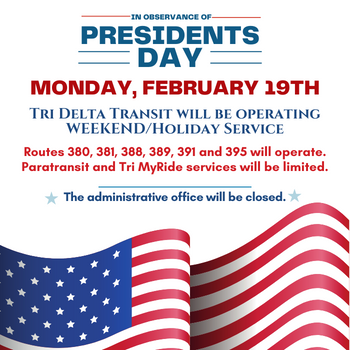
Tri Delta Transit issues Rider Alert for Presidents’ Day, Feb. 19

February 16, 2024 By Publisher Leave a Comment

RIDER ALERT: Tri Delta Transit will be running weekend/holiday service on Monday, February 19th, in observance of the Presidents’ Day holiday. Tri MyRide and paratransit services will be limited. Administrative offices will be closed. Have a safe holiday weekend. For more information visit Tri Delta Transit.

Filed Under: East County, News, Transportation

Contra Costa Health awarded state grant for Bicycle and Pedestrian Safety Program

February 14, 2024 By Publisher Leave a Comment

Graphic source: OTS

$202.7K from Office of Traffic Safety

Contra Costa Health (CCH) announced today that it has received a $202,692 grant from the California Office of Traffic Safety (OTS) to support its Bicycle and Pedestrian Safety Program. This grant will allow CCH to promote safe practices for pedestrians and bicyclists and provide education about the importance of sharing the road.

Local data show an increase of nearly 30% in fatal crashes involving pedestrians over the past 10 years in Contra Costa County, and that pedestrians and bicyclists are 2.4 times more likely to be seriously injured or killed in a traffic crash compared to drivers. The OTS grant funds multiple efforts to improve safety for pedestrians and bicyclists.

“Everyone deserves a safe environment to travel, regardless of how people get to places,” OTS Director Barbara Rooney said. “The safety of people walking and biking on our roads is a high priority. Education plays a pivotal role in creating a strong road safety culture that prioritizes traffic safety, especially for our most vulnerable road users.”

Grant funds will support a variety of activities focused on bicycle and pedestrian safety:

  • Support for local jurisdictions to include public health in road safety plans and address the community conditions that create unsafe environments for non-motorized road users.
  • Local bicycle and pedestrian safety campaigns.
  • Community bicycle and walk “audits” of streets with high rates of pedestrian or bicyclist fatalities and serious injury crashes.
  • Bicycle training courses that teach youth on how to stay safe on the road.
  • Community events that promote bicyclist and pedestrian visibility and the importance of sharing the road, slowing down, and staying alert to bicyclists and pedestrians while driving.

Area Goals for the OTS program include:

  • Reduce the total number of pedestrians killed.
  • Reduce the total number of pedestrians injured.
  • Reduce the number of pedestrians killed under the age of 15.
  • Reduce the number of pedestrians injured under the age of 15.
  • Reduce the number of pedestrians killed over the age of 65.
  • Reduce the number of pedestrians injured over the age of 65.
  • Reduce the total number of bicyclists killed in traffic related crashes.
  • Reduce the total number of bicyclists injured in traffic related crashes.
  • Reduce the number of bicyclists killed in traffic related crashes under the age of 15.
  • Reduce the number of bicyclists injured in traffic related crashes under the age of 15.
  • Increase bicycle helmet compliance for children aged 5 to 18.

The grant program will run through September 2024.

Funding for this program was provided by a grant from the California Office of Traffic Safety, through the National Highway Traffic Safety Administration.

Filed Under: History, News, Recreation, State of California, Transportation

West County: District 1 Open House on Contra Costa Draft General & Climate Action Plans Feb. 21

February 14, 2024 By Publisher Leave a Comment

Casa Abierta sobre el Borrador del Plan General del Condado y el Plan de Acción Climática

At El Cerrito City Hall

By District 1 Supervisor John Gioia

I invite you to join us for an upcoming open house to learn about the Draft Contra Costa County General Plan and Draft Climate Action Plan Update!

When: Wednesday, February 21 from 5:00 – 7:00 pm

Where: El Cerrito City Hall Lobby, 10890 San Pablo Ave., El Cerrito

Learn about proposed land use policies for the unincorporated areas of West County – Kensington, East Richmond Heights, El Sobrante, North Richmond, Rollngwood, Montalvin Manor/Bayview and Tara Hills; and provide input.

Click on my video explaining the importance of participating in the General Plan!

The Draft Contra Costa County General Plan and Draft Climate Action Plan (CAP) 2024 Update are part of the Envision Contra Costa 2040, the County’s plan to address land use, transportation, housing, climate change, environmental justice and other important issues over the next 20 years. They update is available for public review at envisioncontracosta2040.org. (See related article)

Community feedback has been the driving force behind our planning efforts. Now, we invite you to explore our work and ensure it reflects our collective vision for Contra Costa County’s future.

We’ll be taking questions, providing answers, and encouraging you to share feedback in-person or through our online commenting tool.

View the event flyer here.

Thank you, and we hope to see you there!

En Español

¡Lo invito a unirse a nosotros en una próxima jornada de puertas abiertas para conocer el borrador del Plan General del Condado de Contra Costa y el borrador de la actualización del Plan de Acción Climática!

Cuándo: Miércoles 21 de febrero de 5:00 a 7:00 p.m.

Dónde: Vestíbulo del Ayuntamiento de El Cerrito, 10890 San Pablo Ave., El Cerrito

Conozca las políticas de uso de suelo propuestas para las áreas no incorporadas del oeste del condado: Kensington, East Richmond Heights, El Sobrante, North Richmond, Rollngwood, Montalvin Manor/Bayview, Tara Hills; y proporcionar información.

El borrador del Plan General del Condado de Contra Costa y el borrador del Plan de Acción Climática (CAP) 2024 están disponibles para revisión pública en envisioncontracosta2040.org

Los comentarios de la comunidad han sido la fuerza impulsora detrás de nuestros esfuerzos de planificación. Ahora, lo invitamos a explorar nuestro trabajo y asegurarnos de que refleje nuestra visión colectiva para el futuro del condado de Contra Costa.

Responderemos preguntas, brindaremos respuestas y lo alentaremos a compartir sus comentarios en persona o a través de nuestra herramienta de comentarios en línea.

Vea el folleto del evento aquí.

¡Gracias y esperamos verte allí!

Allen D. Payton contributed to this report.

Filed Under: Environment, Government, Growth & Development, Supervisors, Transportation, West County

Public Meeting: Federal review of MTC’s role in the Bay Area Feb. 27

February 12, 2024 By Publisher Leave a Comment

Source: MTC

Every four years, the Secretary of the U.S. Department of Transportation (DOT) must certify that each metropolitan planning organization (MPO) serving a transportation management area (TMA) — a designation by DOT of an urbanized area with a population over 200,000 as defined by the Bureau of the Census or smaller urbanized areas on request by the Governor and MPO — is carrying out the metropolitan planning process in adherence with federal statutes and regulations. The Federal Highway Administration (FHWA) and the Federal Transit Administration (FTA) conduct a review of the metropolitan planning process within each TMA and jointly issue this certification on behalf of the DOT Secretary, in accordance with 49 U.S.C. 5303(k).

The FHWA and the FTA are hosting a public meeting as part of MTC’s certification review. This public meeting is an opportunity for Bay Area residents to directly address FHWA and FTA officials concerning your views on the transportation planning process in the San Francisco–Oakland metropolitan area. Participants can attend in person or via Zoom or submit written comments.

The meeting is scheduled for:

Tuesday, February 27, 2024, from 4:30–5:30 p.m.
Bay Area Metro Center, Yerba Buena Conference Room, First Floor
375  Beale Street, San Francisco, CA 94105
Participate on Zoom

Webinar ID: 863 1915 0671
iPhone One-Tap:

+13462487799,,86319150671# US (Houston)
+12532158782,,86319150671# US (Tacoma)

Join by Telephone (for higher quality, dial a number based on your current location):

+1 408 638 0968 US (San Jose)
+1 669 900 6833 US (San Jose)
833 548 0282 US Toll Free
877 853 5247 US Toll Free

Detailed instructions on participating via Zoom are available at:
mtc.ca.gov/how-provide-public-comment-board-meeting-zoom
Members of the public participating by Zoom wishing to speak should use the “raise hand” feature or dial *9. When called upon, unmute yourself or dial *6. In order to get the full Zoom experience, please make sure your application is up to date.

This public meeting  is part of a review that will assess compliance with federal regulations pertaining to the transportation planning process conducted by MTC, the California Department of Transportation, transit operators and local jurisdictions in the San Francisco–Oakland metropolitan area.

If you are unable to attend the meeting, written comments may be submitted via email to Cert.Review@dot.gov.
Written comments also can be mailed to:

Federal Highway Administration, California Division
650 Capitol Mall, Suite 4-100
Sacramento, CA 95814-4708
Or
Federal Transit Administration, Region  IX
90 Seventh Street, Suite 15-300
San Francisco, CA 94103-6701

請求幫助! | ¡Solicita Ayuda! | Request Assistance!

您是否需要我們協助翻譯其中一份文件的内容? 您是否需要大字體或盲文印刷的書面資料? 您是否需要手語或您所説語言的翻譯協助才能參與活動?
我們可以爲您提供幫助! 請致電 (415) 778-6757和我們聯係。為確保爲您提供適當的安排,請提前三天通知我們。對於TDD或聽障人士,請致電711,加州轉接服務,或 (800) 735-2929(TTY),(800) 735-2922(語音),然後要求轉接至 (415) 778-6700。

¿Necesita que alguno de nuestros documentos sea traducido? ¿Necesita nuestras comunicaciones escritas en letra grande o en Braille? ¿Necesita un intérprete del lenguaje de señas o un intérprete que hable su idiomapara poder participar?
¡Nosotros podemos ayudar! Comuníquese al (415) 778-6757. Necesitamos aviso con tres días de anticipación para proporcionar asistencia razonable. Para personas con discapacidad auditiva o TDD, llame al 711, California Relay Service, o al (800) 735-2929 (TTY) o al (800) 735-2922 (voz) y pida que lo comuniquen al (415) 778-6700.
Do you need one of our documents translated? Do you need written materials in large type or in Braille? Do you need a sign language interpreter or an interpreter who speaks your language in order to participate?
We can help! Please call us at (415) 778-6757. We require three days’ notice in order to provide reasonable
accommodation. For TDD or hearing impaired, call 711, California Relay Service, or (800) 735-2929 (TTY) or (800) 735-2922 (voice) and ask to be relayed to (415) 778-6700.


Filed Under: Bay Area, News, Transportation

65 Bay Area candidates in March 5th primary share vision, values on transportation issues

February 7, 2024 By Publisher Leave a Comment

Only 9 running to represent Contra Costa respond; read the questions and their answers

A coalition of transportation advocacy groups from around the Bay published the results “Transportation Questionnaire” for Bay Area Candidates for Office that are on the March 5th 2024 Ballot which the public can view in its entirety here. People can view it by region at: East Bay; North Bay; Peninsula; San Francisco; and South Bay.

The project, led by Transbay Coalition, SPUR, Seamless Bay Area, San Francisco Transit Riders, Silicon Valley Bike Coalition, and Bike East Bay will help voters across the Bay Area make more informed decisions about candidates for local, state and federal office.

“Candidate’s stances on how to make it easier for people to get around the Bay Area and what needs fixing is essential information for voters,” said Carter Lavin, the project lead at the Transbay Coalition. “Transportation policies impact everyone and every elected official, no matter the office, has the power to make it easier, greener, safer, more affordable, just and accessible for people to get around– or they can make it harder. Voters deserve to know where the candidates vying for their vote stand.”

“To my knowledge, this is the only vetting process that really seeks to demystify where candidates stand on the region’s transportation issues, which is critical given how much public funding goes into transportation and the pivotal moment we are in” said Laura Tolkoff, Transportation Policy Director for SPUR, a public policy nonprofit rooted in the Bay Area.

Candidates were asked the following questions included in the survey:

  1. Which forms of transit and active transportation (bicycling, walking, scooters, wheelchair) do you use on a regular basis and for what types of trips– and why?
  2. Would you seek additional funding for Bay Area transit and what form of funding do you think makes sense?
  3. Public transit in the Bay Area is highly fragmented, with 27 transit agencies, each with different fares, schedules, branding, and customer information. Do you believe it should be a priority for the region to create an well-coordinated transit system? And as an elected leader or potential member of a local transit agency board, would you support state legislation that advances a more integrated, high ridership system, even if it diminishes local control?
  4. Transportation is the largest single source of carbon emissions in California, and in the Bay Area, and the largest share of transportation emissions come from single occupancy vehicles.  What are your top priorities to achieve substantial reduction in transportation-related GHG emissions?
  5. The Bay Area still has road projects under development that would increase Vehicle Miles Traveled (VMT), greenhouse gas emissions, and air pollution.  What decisions would you make about projects that increase VMT and pollution?
  6. Transit priority improvements are proven to make taking the bus faster and more reliable, while also reducing operating costs. Should local governments be able to stop transit priority improvements on local roads?
  7. What do you think are the most important actions that can be taken to make public transit comfortable, accessible, and safe for all communities?
  8. Traffic violence and deaths in California are increasing annually; in 2021, 4,258 people died in vehicle crashes, a 10.7% increase from the prior year. If elected, what will you do to reverse the trend, increase street safety, save lives and reduce injuries in our community?  What policies or specific projects would make the greatest impact?
  9. What do you think are the biggest access and mobility needs for disadvantaged populations in your district, and how would you propose to solve them?
  10. In what circumstances do you support removing parking or repurposing vehicle travel lanes to create safer and more efficient bus, biking, and walking options? How do you propose balancing the demands of different interest groups who may disagree on how streets should be designed?

Contra Costa County Candidates Who Responded

So far, only the following candidates have responded to the questionnaire in the following races:

Assembly District 14 – Margot Smith 2024 Transp Qnr    Buffy Wicks 2024 Transp Qnr

Assembly District 15 – Karen Mitchoff 2024 Transp Qnr  Monica E Wilson 2024 Transp Qnr

Assembly District 16 – Joseph Rubay 2024 Transp Qnr

State Senate District 3 – Jackie Elward 2024 Transp Qnr

State Senate District 7 – Jovanka Beckles 2024 Transp Qnr  Dan Kalb 2024 Transp Qnr

Congressional District 10 – Mohamed Elsherbini 2024 Transp Qnr

No candidates have responded yet in the races for Contra Costa County Supervisor District 5, Assembly District 11, State Senate District 9 nor Congressional District 8.

“Over the next few years, the region faces important decisions about continuing on a path toward convenient, rider-friendly, accessible worldclass public transportation – or taking steps backward. Our elected officials at the local, state and federal levels will make key decisions steering our region on a path toward improvement or into a downward spiral. Voters deserve to know where candidates stand at this pivotal time,” said Adina Levin, Co-Founder and Advocacy Director, Seamless Bay Area.

“With the rise of biking and walking fatalities across the Bay Area, it is more important than ever that voters know where candidates stand in building communities that are joyful, safe, and inclusive” said Justin Hu-Nguyen, Bike East Bay’s  Co-Executive Director of Mobility Justice.

“Public transit is a lifeline for so many people in the Bay Area. Allowing transit agencies to go unfunded would hurt economically disadvantaged and transit-dependent people the worst, leaving thousands of transit riders — including workers, seniors, and people with disabilities — without a reliable way of getting around. It connects folks with everything from food, to healthcare, family, friends and fun. We’re excited to release this questionnaire, which lifts the issues that matter to transit riders, with our other partners in the space. In order to make the Bay Area a more pleasant, affordable, and green place to live, our elected representatives need to center public transit and transit riders in the choices they make for us,” said Dylan Fabris, Community & Policy Manager for San Francisco Transit Riders.

Candidates who have not yet responded can email their answers to info@transbaycoalition.org and the coalition could potentially update their website and include them.

The Transbay Coalition is a grassroots public transportation advocacy group championing bold near-term solutions to the Bay Area’s regional transportation challenges. Learn more at www.transbaycoalition.org.

Allen D. Payton contributed to this report.

Filed Under: Bay Area, News, Politics & Elections, Transportation

MTC, ABAG approve Plan Bay Area 2050+ Draft Blueprint Strategies and Growth Geographies

January 30, 2024 By Publisher Leave a Comment

Source: Plan Bay Area 2050+

Include non-transit transportation, environment, housing and economy strategy refinements

The Joint Metropolitan Transportation Commission (MTC) Planning Committee with the Association of Bay Area Governments (ABAG) Administrative Committee on Jan. 12, 2024 approved the revised Plan Bay Area 2050+ Draft Blueprint strategies and Growth Geographies.  This action enables staff to further study the strategies’ performance in meeting critical regional goals for an affordable, connected, diverse, healthy and vibrant Bay Area for all. Staff are aiming for adoption of the Plan Bay Area 2050+ Final Blueprint in summer 2024.

Given Plan Bay Area 2050’s solid foundation of 35 strategies, the Draft Blueprint phase for Plan Bay Area 2050+ is focusing on making targeted refinements to select plan strategies. These refinements reflect Plan Bay Area 2050’s implementation progress, the post-pandemic planning context and insights gathered during engagement with the public and partners in summer 2023.

What is the Plan Bay Area 2050+ Blueprint?

The Plan Bay Area 2050+ Blueprint will integrate strategies across the four elements of the plan — the economy, the environment, housing and transportation — to create a more equitable and resilient future for all.

Beginning in summer 2023 and wrapping up in late 2024, staff will develop the Blueprint over two phases: the Draft Blueprint and the Final Blueprint. Given Plan Bay Area 2050’s solid foundation of 35 strategies, the Draft Blueprint phase for Plan Bay Area 2050+ will focus on making targeted refinements to select plan strategies.

What are Growth Geographies?

Priority Development Areas — Places nominated by local governments served by transit and planned for new homes and jobs at densities necessary to support effective transit service.

Priority Production Areas — Industrial areas of importance to the regional economy and local communities that support middle-wage jobs.

Transit-Rich Areas — Places near rail, ferry or frequent bus service that were not already identified as Priority Development Areas.

High-Resource Areas — State-identified places with well-resourced schools and access to jobs and open space.

Staff previously shared proposed Draft Blueprint strategy refinements in October and November 2023, detailing which of Plan Bay Area 2050’s 35 strategies were likely to see major, minor or no changes in Plan Bay Area 2050+. This month, the MTC and ABAG committees approved moving forward with revisions for further study and analysis, including:

  • Non-transit transportation strategy refinementsfocused on prioritizing equity considerations, adapting to tighter fiscal constraints, promoting active transportation and safety, and expanding pricing strategies;
  • Environment strategy refinementsfocused on further reducing greenhouse gas emissions and proactively adapting to climate change; and
  • Housing and economy strategy refinementsfocused on addressing pressing challenges of housing affordability, homelessness and access to opportunity.

At this time the Draft Blueprint only includes a handful of modified transportation strategies, pending the development of a fiscally constrained Transportation Project List, which will integrate recommendations from the ongoing parallel Transit 2050+ effort. The complete suite of revised transportation strategies will be integrated as part of the Final Blueprint in summer 2024.

The Joint ABAG and MTC Committee also approved targeted updates to the Growth Geographies that were adopted as part of Plan Bay Area 2050. Growth Geographies are places that Plan Bay Area prioritizes for future homes, jobs, services and amenities and serve as a component of the plan’s housing and economy elements. Specifically, draft Growth Geographies for Plan Bay Area 2050+ will include five new Priority Development Areas (PDAs) and 16 modified existing PDAs nominated by local Bay Area jurisdictions; reflect up-to-date information on transit service, natural hazards and demographics; and integrate areas subject to MTC’s revised Transit Oriented Communities Policy.

The Draft Blueprint approval comes six months after MTC and ABAG kicked off the limited and focused update to Plan Bay Area 2050. In November 2023, staff shared progress-to-date with policymakers, including findings from the first round of engagement, core planning assumptions, the draft Regional Growth Forecast, a financial needs and revenue analyses and proposed strategy refinements.

The next round of public and partner organization engagement activities, which will inform the development of the Plan Bay Area 2050+ Final Blueprint, is planned to begin in spring 2024. MTC and the ABAG Executive Board are expected to approve Final Blueprint strategies in summer 2024.

Learn more about the Plan Bay Area 2050+ Draft Blueprint strategies and Growth Geographies. For additional technical resources, please visit the Plan Bay Area 2050+ Draft Blueprint Documents page on our website.

Filed Under: Bay Area, Business, Economy, Government, Homeless, Industry, Jobs & Economic Development, News, Transportation

Bay Area transit to take on a whole new look

January 29, 2024 By Publisher Leave a Comment

Source: MTC

Unified mapping and wayfinding features Golden Yellow, Sky Blue, Dark Blue

By John Goodwin & Gordon Hansen, Metropolitan Transportation Commission

Bay Area transit’s ongoing transformation into a more connected, more efficient and more customer-focused mobility network today took another big step forward as transit agency and MTC staff at the January meeting of the Bay Area’s newly formed Regional Network Management Council unveiled design protoypes for a common set of signs to be used by all agencies at all locations — from individual bus stops to major hubs where multiple systems connect. These prototypes will be installed later this year at the El Cerrito del Norte BART station, the Santa Rosa Transit Mall and the nearby Santa Rosa SMART station.

To establish and reinforce a common identity for all Bay Area transit services, the new signage employs a three-color palette of golden yellow, sky blue and dark blue; as well as simple icons to identify service by trains, buses or ferries. These icons are larger and more visually prominent than the logos of the individual agencies providing the services at each location. The modal icons and the three-color palette will be extended to a new mobile-friendly website to which passengers can connect via QR codes at each bus stop, train station or ferry terminal, providing real-time information along with accessibility features such as audio descriptions and language translation.

“The Mapping and Wayfinding initiative is a brilliant example of regional cooperation,” said MTC Chair and Napa County Supervisor Alfredo Pedroza. “Putting customers’ interests first is the cornerstone of our Transit Transformation Action Plan to increase ridership by making transit faster, cleaner, more comfortable, more convenient and easier to navigate.”

More than 90 percent of Bay Area residents polled by MTC in 2021 identified uniform and easy-to-use transit maps and signage as an important priority for improving the region’s transit network. MTC’s Operations Committee in 2022 approved a contract with Applied Wayfinding Inc. to develop a single mapping and wayfinding system for use by all Bay Area transit agencies. Applied has completed similar projects in London; Toronto; Seattle; Cleveland; Vancouver, B.C.; and elsewhere. The design concepts presented today incorporate comments and recommendations from more than 1,000 Bay Area residents — including transit riders and nonriders, people with limited English proficiency and people with disabilities — who participated in MTC-sponsored surveys, workshops and focus groups. New transit signage will include tactile and Braille elements.

The golden yellow in the three-color palette developed by transit agencies, MTC and the design contractor was chosen to represent the Bay Area’s sunshine and golden hills, with the light blue representing clear skies and the dark blue representing San Francisco Bay, lakes, rivers and other bodies of water. MTC and its partners will invite Bay Area residents and visitors alike to share their thoughts about the newly designed transit signs and digital wayfinding tools once the prototypes — which have not yet been fabricated — are installed at the Santa Rosa and El Cerrito locations.

Design prototypes for a consistent set of transit maps will be presented to the Regional Network Management Council later this year. The Council includes top executives from MTC, the San Francisco Municipal Transportation Agency, BART, AC Transit, the Santa Clara Valley Transportation Authority (VTA), Caltrain, SamTrans and the Golden Gate Bridge, Highway and Transportation District as well as three general managers representing all other transit agencies serving Bay Area communities.

MTC is the transportation planning, financing and coordinating agency for the nine-county San Francisco Bay Area.


Filed Under: BART, Bay Area, News, Transportation

  • « Previous Page
  • 1
  • …
  • 7
  • 8
  • 9
  • 10
  • 11
  • …
  • 31
  • Next Page »
Liberty-Tax-Jan-Apr-2026
Deer-Valley-Chiro-06-22

Copyright © 2026 · Contra Costa Herald · Site by Clifton Creative Web