• Home
  • About The Herald
  • Local Agencies
  • Daily Email Update
  • Legal Notices
  • Classified Ads

Contra Costa Herald

News Of By and For The People of Contra Costa County, California

  • Arts & Entertainment
  • Business
  • Community
  • Crime
  • Dining
  • Education
  • Faith
  • Health
  • News
  • Politics & Elections
  • Real Estate

Nine Oakland-based “Ghost Town” gang members sentenced for 2022 armed robberies of Bay Area businesses

February 10, 2026 By Publisher Leave a Comment

Including stealing bags of jewelry valued at $300K to $500K from San Pablo jewelry store

Will serve combined 60 years in prison

One suspect arrested 30 times since 2013

By U.S. Attorney’s Office Northern District of California

OAKLAND – Nine associates of the Oakland-based “Ghost Town” gang have been sentenced to a combined total of nearly 60 years in prison for a series of armed robberies targeting small Bay Area businesses.  The sentences were handed down by U.S. District Judge Araceli Martínez-Olguín, with the final defendant sentenced today.

The nine defendants, Demarco Barnett, 36 of Oakland; Jakari Jenkins, 34 of Stockton; Danny Garcia, 41; Garland Devonte Rabon, 30 of Mountain House; Aramiya Burrell, 35 of Oakland; Lester Andre Garnett, 34 of Tracy; Darrin Andre Hutchinson, 39 of Cherryland, CA, located between San Leandro and Hayward; Ricky Joseph, 37 of Oakland; and Keanna Alloise Smith-Stewart, 33 of West Sacramento, each pleaded guilty to one count of conspiracy to commit robbery affecting interstate commerce.  Based on their involvement, eight of the defendants also pleaded guilty to a varying number of substantive counts of robbery affecting interstate commerce.

The robberies took place in 2022.  On March 18, 2022, the co-conspirators engaged in the armed robbery of a coin and stamp store located on the tenth floor of a building in the South of Market neighborhood of San Francisco.  The co-conspirators entered the store, brandished firearms, and demanded money from the business and the two individuals who happened to be present at the time – the owner and his son. The robbers struck the head and zip-tied the hands of the owner’s son, and absconded with cash, jewelry, and coins.  Defendants Jenkins, Barnett, and Joseph were charged with and pleaded guilty to this robbery count.

The co-conspirators then struck a San Pablo jewelry store on Nov. 12, 2022.  Five co-conspirators, at least three of whom were brandishing firearms, entered the store and pretended to be customers, while two others waited outside in the getaway cars.  The co-conspirators stole bags of jewelry valued at approximately $300,000 to $500,000.

As previously reported, the pretend customers left jewelry with the operators of the store. According to the indictment, Jenkins, Barnett, and Rabon arrived at the jewelry store with at least four other co-conspirators and robbed the store of jewelry, including the jewelry that members of the gang previously had left with the store. The robbers arrived in two getaway cars—both Dodge Chargers bearing stolen license plates. Five co-conspirators, at least three of whom were brandishing firearms, entered the store while two of the co-conspirators waited outside in the getaway cars. The co-conspirators stole bags of jewelry valued at approximately $300,000 to $500,000. The indictment describes how all four defendants in the superseding indictment later wore the stolen jewelry, shared the stolen jewelry with other members of Ghost Town gang members, or otherwise made use of the stolen jewelry for their personal purposes.

Defendants Jenkins, Barnett, Rabon, Garcia and Hutchinson were charged with and pleaded guilty to this robbery count.

A third robbery occurred on Dec. 24, 2022, of a marijuana business in Oakland.  The co-conspirators arrived at the business as an employee was leaving it.  The robbers brandished weapons, directed the employee back into the building at gunpoint, demanding “budded weed” and “money.”  One of the robbers struck the employee in the head with a firearm.  The robbers searched through the employee’s pockets and stole his bank debit card.  The robbers absconded with the victim’s debit card and a bag of marijuana plant trimmings.  Defendants Jenkins, Barnett, Rabon, Burrell, Garnett, and Garcia were charged with and pleaded guilty to this robbery count.

United States Attorney Craig H. Missakian and FBI Special Agent in Charge Sanjay Virmani made the announcement.

The following chart summarizes the number of counts each defendant pleaded guilty to and the sentence each defendant received:


Defendant Number of Counts in Guilty Plea Sentence (months)
Demarco Barnett Conspiracy + 3 substantive robberies 114
Jakari Jenkins Conspiracy + 3 substantive robberies 96
Danny Garcia Conspiracy + 2 substantive robberies 84
Garland Rabon Conspiracy + 2 substantive robberies 75
Aramiya Burrell Conspiracy + 1 substantive robbery 82
Lester Garnett Conspiracy + 1 substantive robbery 70
Darrin Hutchinson Conspiracy + 1 substantive robbery 70
Ricky Joseph Conspiracy + 1 substantive robbery 68
Keanna Smith-Stewart Conspiracy 50
Total 709


In addition to the custodial time, the Court also ordered restitution in the amount of $150,338.00.

The Violent Crime Strike Force is prosecuting the case with the assistance of Yenni Weinberg.  The prosecution is the result of an investigation by the FBI and the Oakland Police Department.

Previous Arrests of Suspects

According to localcrimenews.com, the five-foot, 11-inch, 215-pound Demarco is Black and has a history of nine arrests dating back to 2014 including five times for burglary and once for hit-and-run; the five-foot, five-inch tall, 180-pound Jenkins is Black and has been arrested 30 times since 2013 including 14 times for burglary, plus, multiple times for domestic violence, drugs and gun charges; the six-foot tall, 190-pound Rabon is Black and has a history of 11 arrests since 2016 including multiple times for burglary and petty theft, as well as gun charges; the five-foot, seven-inch tall, 195-pound Burrell is Black and has been arrested nine times since 2014 including for carjacking, burglary and multiple gun and ammunition charges; the six-foot, one-inch tall, 190-pound Garnett is Black and has been arrested six times since 2015 including multiple times for burglary as well as for DUI, gun and drug charges; the five-foot, 10-inch tall, 260-pound Hutchinson is Black and has been arrested three times including once for being an addict in possession of a firearm; Joseph is Black and has three arrests including one for burglary; and the five-foot, five inch tall, 135-pound Smith-Stewart is Black and has been arrested once on April 29, 2024, but no details were available. Information about Garcia was requested. Please check back later for any updates to this report.

Further Information:

Case No. 23-cr-00191-AMO

Electronic court filings and further procedural and docket information are available at https://ecf.cand.uscourts.gov/cgi-bin/login.pl.  Judges’ calendars with schedules for upcoming court hearings can be viewed on the court’s website at www.cand.uscourts.gov.

Allen D. Payton contributed to this report.

Filed Under: Bay Area, Crime, DOJ, News, U S Attorney

Save Mount Diablo expands free Discover Diablo hikes, outings program for 2026

February 10, 2026 By Publisher Leave a Comment

Discover Diablo Exploratory hike in Del Puerto Canyon. Photo: Kendra Smith. Inset – People enjoying our Discover Diablo hike looking for newts at Briones Regional Park. Photo: Emily Sherwood.

By Laura Kindsvater, Senior Communications Manager, Save Mount Diablo

CONTRA COSTA, ALAMEDA, STANISLAUS AND SAN BENITO COUNTIES—Explore some of the East Bay’s premiere hiking and natural areas with Save Mount Diablo in 2026, including places normally closed to the public.

The Discover Diablo outings series offers guided hikes, themed walks, and other outdoor activities: mountain biking; rock climbing; meditation in nature; plein air painting events; and property tours.

New this year are a Green Ranch rove, and a Spanish language hike at Pine Canyon.

We’ll also be continuing much-loved events in 2026 including rock climbing at Mount Diablo State Park and Pinnacles National Park, stargazing with the Mount Diablo Astronomical Society, our Mitchell Canyon medicinal herb walk, Pinnacles condor hikes and our tarantula treks!

Save Mount Diablo is offering a total of 36 more excursions in 2026 in Contra Costa County (Walnut Creek, Clayton, Concord, Pittsburg, Antioch, Brentwood, Oakley, Danville, and San Ramon), Alameda County (Dublin, Livermore, and Pleasanton), Stanislaus County (Patterson), and San Benito County (Hollister and San Juan Bautista). All events are free to the public. Trailblazers of all ages and skill levels are welcome to choose appropriate outings from our extensive offerings.

The Discover Diablo program began in 2017 to connect local communities to the spectacular natural world of the Mount Diablo area and to build awareness about land conservation.

Hikes and outings take place at Save Mount Diablo’s conserved properties or on park lands in the Diablo Range. These include Mount Diablo State Park, East Bay Regional Park District, Walnut Creek Open Space Foundation, Contra Costa Water District, Stanislaus County Parks, and National Park Service lands.

Discover Diablo hikes are guided by experts steeped in the natural history and lore of the region, who both educate and entertain while emphasizing the breathtaking beauty that the Diablo Range has to offer.

Save Mount Diablo hopes the Discover Diablo series will spark a passion for the Diablo Range and deepen people’s connections to the land and nature.

Ted Clement, Executive Director of Save Mount Diablo, stated, “It is the goal of the Discover Diablo program to build connections between people, Save Mount Diablo, and the land, helping our communities develop a strong sense of place and a deepened appreciation for our collective backyard. Most importantly, we want to cultivate a love of the land in participants, as that is what it will take to ensure the precious Diablo natural areas are taken care of for generations to come.”

There is something right for anyone to discover in the nooks and crannies surrounding Mount Diablo and within its sustaining Diablo Range, so be sure to hit the trails in 2026 and find your own individual inspiration!

RSVPs required. To ensure everyone has an equal opportunity to attend, registration for hikes and outings will open one month prior to each hike’s date. See our schedule of upcoming hikes and outings; view and RSVP online here: https://savemountdiablo.org/what-we-do/educating-and-inspiring-people/discover-diablo-hikes-outings/

Filed Under: Bay Area, News, Parks, Recreation

Guest Commentary: There are better alternatives to BART’s cutback plan

February 9, 2026 By Publisher 1 Comment

“They should go back to the drawing board and give us a cost savings plan that demands more sacrifice from BART management, senior staff, and retirees.”

By Marc Joffe

BART has published a plan to balance its budget in the event voters reject the half-cent additional transit sales tax slated for the November 2026 ballot. BART’s plan appears to be well thought out but imposes far more inconvenience on riders than is necessary to close an expected $376 million deficit.

The most visible change is the station closures. Under its more extreme Phase 2 plan, BART would close 15 stations systemwide, including these five in Contra Costa: Orinda, North Concord, Pittsburg Bay Point, Pittsburg Center, and Antioch. Oakland Airport station would close, but SFO would stay open. Five other stations in Alameda County south of Oakland would be shuttered, as would four stations in San Mateo County south of Daly City. (See related article)

But most of these stations should not close. As BART itself recognizes, the savings from shuttering stations are not that large. And there is an alternative that would achieve a large portion of the expected savings, which is to operate the stations on an unstaffed basis. This idea may seem strange to BART riders expecting to see a station agent, but the fact is that many train stations in California operate without staff, including several on Capitol Corridor and Caltrain. Even Pittsburg Center on e-BART often operates without staff.

That said, both Pittsburg Center and North Concord have very low utilization (less than 1000 riders on an average weekday) and are reasonable candidates for closure. Indeed, BART should demolish the North Concord station and sell the parking lot to a developer for conversion to single family housing, a use consistent with the adjoining neighborhood.

Pittsburg Center, being in the median of Highway 4, does not offer a similar redevelopment option. It is one of three stations on the eBART extension connecting Antioch, Pittsburg and Bay Point using standard-gauge diesel multiple-unit trains which are incompatible with the rest of BART. The BART retrenchment plan envisions closing the whole eBART extension. A better choice would be to find a private operator to take it over.

That operator should be given discretion over fares and the option to convert the line to driverless technology in hopes of achieving a profit or at least minimizing the need for taxpayer subsidies.

As anyone who has visited an airport in the last few decades knows, driverless trains are nothing new. Outside the Bay Area, they are used for non-airport systems such as Honolulu’s Skyline and Vancouver’s Skytrain. Paris, Singapore, and other cities have successfully converted some of their lines to autonomous operation and Washington DC’s Metro is looking into doing the same thing.

Over the longer term, the entire BART system should be driverless: it could achieve large operational cost savings while maintaining or even increasing service frequency. Yet BART is not giving serious consideration to transitioning to driverless trains. When BART Director Matt Rinn spoke to CoCoTax in November I asked him about the idea and saw that he was unfamiliar with it. Staff should be discussing this option with the governing board.

They don’t do so because BART operates primarily for the benefit of staff and the labor unions that collect a portion of their salaries via dues. Riders are second, and taxpayers are a distant third.

Contra Costa taxpayers already pay plenty for transit, and, this November, it is time for us to tell BART and other agencies “no more.” They should go back to the drawing board and give us a cost savings plan that demands more sacrifice from BART management, senior staff, and retirees.

One change that should be considered is a 10% salary reduction for all BART employees receiving over $100,000 per year. Based on my analysis of 2024 wage and overtime data, this option would save $54 million. Costly overtime hours should also be limited: in 2024 alone five BART employees collected over $200,000 in overtime a piece.

BART’s plan defers advanced payments for retiree health benefits. This saves $38 million, but only by pushing the cost onto future taxpayers when the fund holding the advance retiree health funding is exhausted. Instead, the BART retiree health benefit should be eliminated just as it was for Stockton employees when that city went bankrupt in 2012. With BART facing functional bankruptcy in 2026, a similar economy is needed. Retirees can get subsidized healthcare through Covered California or Medicare just as those of us who work in the private sector usually do.

Salary and benefit cuts in addition to the layoffs BART already has planned may seem harsh, but these are the types of reductions companies have to make when they are losing money and there is less demand for their product. Because BART now needs more of our money, we have the power to veto any cost-saving plan that fails to prioritize the needs of beleaguered taxpayers and riders. Let’s exercise that veto. In November, say NO to the transit sales tax.

Marc Joffe is the President of the Contra Costa Taxpayers Association

Filed Under: BART, Bay Area, Finances, Opinion, Taxes, Transportation

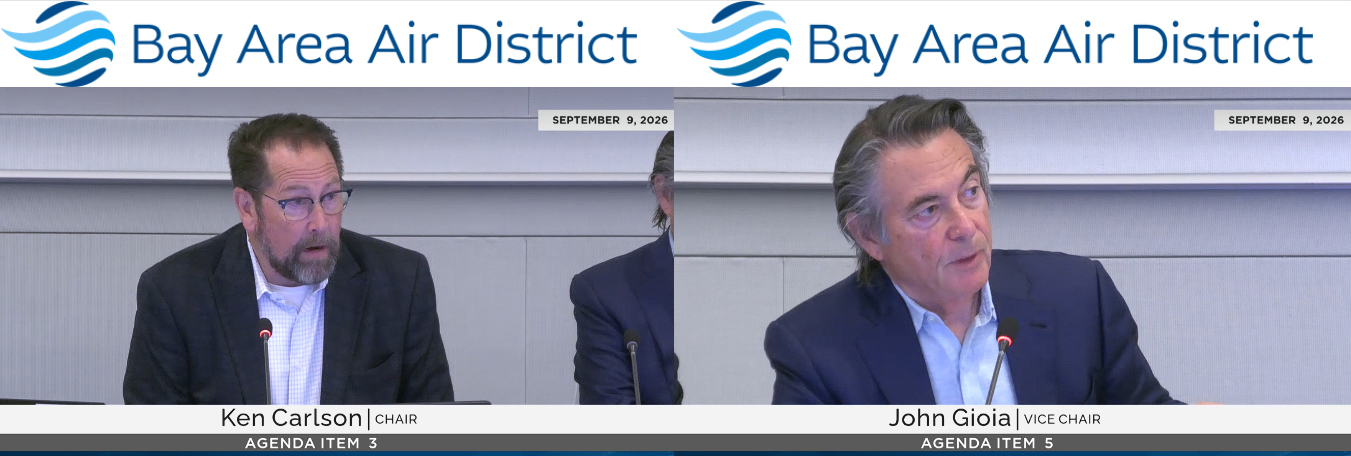
Joint statement from Carlson, Gioia, other Bay Area county supervisors reaffirming support for immigrant community in advance of Super Bowl LX

February 7, 2026 By Publisher 1 Comment

By Victor Benedict Tiglao, Communications Associate, Office of Contra Costa County Supervisor Ken Carlson

“Across the Bay Area, we stand united in our commitment to the dignity, safety and belonging of every community member, regardless of immigration status. As we prepare for the Super Bowl this weekend, and upcoming major sporting events in 2026, our message is simple: Unity over division, power over panic, and care for one another.

To our immigrant community members: You belong here. This region is our collective home, and you are at the heart of what makes the Bay Area one of the most diverse, innovative and vibrant places in the world.

We recognize that many across the Bay Area are experiencing fear and anxiety at this time. As local jurisdictions, we have clear policies in place to protect the safety of all residents across the region, including our immigrant communities. Local law enforcement remains focused on keeping everyone safe and building trust in our communities.

In the Bay Area, our strength lies in each other. When we stay informed and support one another, we make our region safe and strong. Rapid Response Networks, community-based organizations, and county resources continue to be available to support residents across the Bay Area.

Source: ACLU SoCal

As a connected, resilient region, we are unwavering in our commitment to our immigrant communities. Together, let’s look out for our families and neighbors, follow verified information, and continue to draw pride and power from our shared connection to this extraordinary place we call home.”

Supervisor Ken Carlson, Contra Costa County

Supervisor John Gioia, Contra Costa County

Supervisor Margaret Abe-Koge, Santa Clara County

Supervisor Sylvia Arenas, Santa Clara County

Supervisor David J. Canepa, San Mateo County

Supervisor Connie Chan, San Francisco City and County

Supervisor Chyanne Chen, San Francisco City and County

Supervisor Noelia Corzo, San Mateo County

Supervisor Betty Duong, Santa Clara County

Supervisor Susan Ellenberg, Santa Clara County

Supervisor Jackie Fielder, San Francisco City and County

Supervisor Nikki Fortunato-Bas, Alameda County

Supervisor Lisa Gauthier, San Mateo County

Supervisor Rebecca Hermosillo, Sonoma County

Supervisor Lynda Hopkins, Sonoma County

Supervisor Cassandra James, Solano County

Supervisor Otto Lee, Santa Clara County

Supervisor Eric Lucan, Marin County

Supervisor Elisa Márquez, Alameda County

Supervisor Monica Martinez, Santa Cruz County

Supervisor Myrna Melgar, San Francisco City and County

Supervisor Ray Mueller, San Mateo County

Supervisor Dennis Rodoni, Marin County

Supervisor Mindy Sotelo, San Benito County

Supervisor Jackie Speier, San Mateo County

Supervisor Shamann Walton, San Francisco City and County

_______________________________________________________________________
We are asking the public to build power, not panic, and to avoid spreading fear or misinformation. Use the Rapid Response Network in your area to share and receive accurate and verified information.

Contra Costa County: 925-900-5151

Alameda County: 510-241-4011

Marin County: 415-991-4545

Monterey County: 831-204-8082

Napa County: 707-800-4544

San Benito County: 831-204-8082

San Francisco City and County: 415-200-1548

San Mateo County: 203-666-4472

Santa Clara County: 408-290-1144

Santa Cruz County: 831-239-4289

Solano County: 707-800-4544

Sonoma County: 707-800-4544

Filed Under: Bay Area, Homeland Security, Immigration, News, Sports, Supervisors

Drone operator charged for flight near Levi’s Stadium during NFL game

February 2, 2026 By Publisher Leave a Comment

Violated temporary restrictions at Rams vs. Niners contest on Nov. 9, 2025; faces one year in prison and $100K fine

No Drone Zones this week in S.F., at Levi’s Stadium for Super Bowl LX & related events; violators face up to $75K fine, more

By Assistant U.S. Attorney Michelle Lo, PIO, U.S. Attorney’s Office, Northern District of California

SAN JOSE – A San Francisco man was charged in a federal criminal complaint for flying a drone within restricted airspace surrounding Levi’s Stadium during a National Football League (NFL) game in violation of a temporary flight restriction (TFR) imposed by the Federal Aviation Administration (FAA).

According to the criminal complaint and court documents filed today, Junwei Guo, 27, operated a drone within the airspace surrounding Levi’s Stadium on Nov. 9, 2025, during a game between the San Francisco 49ers and the Los Angeles Rams.  As court documents describe, the FAA has issued a TFR that prohibits all aircraft, including drones, from operating within a three nautical mile radius of any stadium with a seating capacity of 30,000 or more people during, among other events, regular or post-season NFL games.  The “stadium TFR” classifies the airspace defined in the restriction as “National Defense Airspace” and remains in effect for a specified time period before, during, and after the qualifying event.

The complaint alleges that Guo flew the drone as high as approximately 2,300 feet above ground level, an altitude that raises significant concerns for public safety and the potential disruption air traffic control in the area.  Guo allegedly did not register the drone with the FAA, obtain a remote pilot’s certificate with the FAA, obtain FAA authorization to fly the drone in national defense airspace, or comply with the requirements of the FAA’s recreational use exception.

United States Attorney Craig H. Missakian and FBI Special Agent in Charge Sanjay Virmani made the announcement.

Defendant is scheduled to appear in federal court in San Jose on Feb. 27, 2026, for an initial appearance.

A complaint merely alleges that a crime has been committed, and the defendant is presumed innocent until proven guilty beyond a reasonable doubt.  If convicted, the defendant faces a maximum sentence of one year in prison and a $100,000 fine for the charged violation of national defense airspace under 49 U.S.C. § 46307.  Any sentence following conviction would be imposed by the court after consideration of the U.S. Sentencing Guidelines and the federal statute governing the imposition of a sentence, 18 U.S.C. § 3553.

Assistant U.S. Attorney Christina Liu is prosecuting the case with the assistance of Natachiana Burney.  The prosecution is the result of an investigation by the FBI, the Federal Air Marshal Service, and the Santa Clara Police Department.

No Drone Zone for Super Bowl LX Week

The FAA, in coordination with the FBI, has established a “No Drone Zone” for Super Bowl LX at Levi’s Stadium in Santa Clara on Feb. 8, 2026, with additional drone restrictions surrounding Levi’s Stadium and in downtown San Francisco during the days leading up to the event. Areas include the Moscone Center, The Pearl, The Ferry Building, Grace Cathedral and the Palace of Fine Arts.

Drone operators who enter restricted airspace without authorization may face fines of up to $75,000, drone confiscation and federal criminal charges, with the FBI identifying operators, seizing drones, and supporting prosecution

For more information, please visit: https://www.faa.gov/newsroom/faa-and-fbi-announce-strict-no-drone-zones-super-bowl-lx.

Further Information:

Case No. 26-cr-70083-MAG

Electronic court filings and further procedural and docket information are available at https://ecf.cand.uscourts.gov/cgi-bin/login.pl. Judges’ calendars with schedules for upcoming court hearings can be viewed on the court’s website at www.cand.uscourts.gov.

Allen D. Payton contributed to this report.

Filed Under: Bay Area, Crime, DOJ, Government, News, Sports, U S Attorney

Connect Bay Area campaign raises nearly $3 million to support signature gathering for regional transit tax measure

January 15, 2026 By Publisher 1 Comment

Multiple Bay Area transit agencies would benefit from the five-county sales tax measure. Photo: MTC. Graphics source: Connect Bay Area

Businesses, labor unions, civic foundations join effort for 5-county Nov. 2026 ballot measure to prevent threatened catastrophic transit service cuts, promote reliable, safe public transit

Includes Contra Costa; would generate about $1 billion per year

SAN FRANCISCO BAY AREA, CA — The Connect Bay Area Transit committee today announced that it has already raised nearly $3 million to support a region-wide effort to qualify Connect Bay Area, a voter-proposed regional transportation funding measure, for the November 2026 ballot. With strong early financial backing secured, the campaign will now begin signature gathering while continuing to fundraise to qualify and pass a five-county sales tax to save public transit.

About the Tax Measure

The measure if adopted would increase the sales tax in Contra Costa, Alameda San Mateo and Santa Clara Counties by a half cent and one cent in San Francisco County for 14 years. As previously reported, the measure would generate approximately $980 million annually across the five counties.

Revenue from the tax measure will benefit multiple transit agencies in the region including Tri Delta Transit, County Connection and WestCat, as well as AC Transit and BART which serve Contra Costa County residents.

Following is a county-by-county breakdown of the County Specific Dollars. It does not include money going to BART, Muni, AC Transit and Caltrain, or to regional improvements that aren’t designated by county, such as coordinated fare programs and accessibility improvements.

County Agencies:

  • Contra Costa County Transportation Authority (2.5%, $26.51M)
  • Alameda County Transportation Commission (1%, $10.26M)
  • San Mateo County Transit District (4.7%, $50M)
  • Santa Clara Valley Transportation Authority (25.1%, $264.07M)

Small Operators:

  • Contra Costa County small operators (1.5%, $15.75M)
  • Alameda County small operators (0.5%, $5.25M)
  • SF Bay Ferry (0.7%, $7M)
  • Golden Gate Transit (0.1%, $1M)

Without new and sustainable operations funding, the Bay Area will face a true emergency:

  • BART: Could shut down two of its five lines, reducing service from 4,500 trains per week to just 500, with trains running only hourly and no weekend service.
  • AC Transit: Would reduce service by 37%, bringing operations down to just half of pre-pandemic levels.
  • Muni: Would face 50% cuts to all bus and Metro lines, including elimination of entire neighborhood routes and San Francisco’s iconic historic trolleys and cable cars.
  • Caltrain: Trains would run only once per hour, end service by 9 p.m. on weekdays, and eliminate all weekend service.

The Connect Bay Area measure will support the future of public transportation in the Bay Area:

  • Protect and improve service on BART, Muni, Caltrain, SamTrans, VTA and AC Transit
  • Prevent catastrophic service cuts that could devastate the Bay Area
  • Keep traffic and emissions down, preventing gridlock and protecting climate progress;
  • Support the Bay Area’s economy, ensuring that downtown recovery and regional mobility remain strong.

The Connect Bay Area Transit measure will include strong accountability provisions. This ensures new funding delivers real improvements, not just short-term fixes. Transit agencies must:

  • Independent financial review and cost-efficiency: Operators will undergo a third-party financial review and be required to improve financial efficiency and use public funds wisely
  • Better regional coordination to benefit riders: Operators will be required to comply with MTC’s Regional Network Management Policies to coordinate across systems and simplify fares and signage to create a more seamless experience for riders.
  • Oversight Committee: An oversight committee will ensure that the expenditure plan is adhered to and hold MTC and operators accountable to all provisions of SB63.

About the Campaign

The campaign’s initial fundraising success reflects broad alignment across business, labor, philanthropy, and community leaders that a reliable, safe, and efficient public transportation system is vital to the future of the Bay Area. Major early donors include Chris Larsen, Herzog Contracting Corporation, Genentech, HNTB Corporation, Meta, and SEIU 1021. For a full list of donors, see below.

“Public transportation connects everyone. We are proud of the broad coalition uniting to prevent catastrophic service cuts and to build an affordable, safe, and efficient public transportation system,” said Jeff Cretan, a spokesperson for the Connect Bay Area Transit Committee. “The commitments we are seeing from business, labor, and civic leaders shows that everyone is ready to get this measure across the finish line in November.”

Connect Bay Area is a five-county regional tax measure designed to prevent catastrophic transit service cuts and provide reliable operating funding for major transit systems and local bus operators throughout the region. The measure also funds improvements to transit systems, capital projects within counties, and targeted road improvements. The measure is critical to supporting the Bay Area’s economy, promoting an affordable region, reducing traffic congestion, and ensuring access to jobs, schools, and healthcare.

Early financial support for the campaign includes commitments from:

  • Chris Larsen
  • Herzog Contracting Corporation
  • Genentech
  • HNTB Corporation
  • Meta
  • SEIU 1021
  • Jacobs
  • Silicon Valley Community Foundation
  • ATU Local 1555
  • PG&E
  • San Francisco Foundation
  • WSP
  • Golden State Warriors
  • AFSCME Local 3993
  • Boston Properties
  • Visa
  • AFSCME Council 57
  • T.Y. Lin
  • GILLIG
  • HDR, Inc.
  • Fehr & Peers
  • AFSCME 3916
  • Arup North America
  • Olson Remcho

Additional major employers, labor organizations, and philanthropic partners have indicated commitments that are expected to be finalized as the campaign continues to build momentum.

With signature gathering starting, the Connect Bay Area campaign will focus on qualifying the measure for the ballot while continuing to expand its coalition across the region. The Campaign must secure over 186,000 signatures from the five counties by June 6, 2026 to qualify for the November ballot.

The campaign’s early momentum comes as Bay Area transit agencies face an unprecedented funding crisis. Without a sustainable solution, public transportation in the the region could see devastating impacts, including:

  • BART could eliminate 2 full lines, stop service at 9pm on weekdays, and eliminate all weekend service.
  • Muni could eliminate entire routes, make 50% cuts to major bus and metro lines, gut historic train and cable car service.
  • Caltrain could cut weekday service to once an hour, stop service at 9pm on weekdays, and eliminate all weekend service.
  • AC Transit could cut up to 37% of overall service.

Recent polling on the proposed Connect Bay Area measure shows a clear path to passage, with strong support across counties and voter demographics. A survey conducted by EMC Research for the Metropolitan Transportation Commission found that 59% of Bay Area voters would support a proposed regional sales tax measure for public transportation. The threshold for passage for a signature-gathering initiative is 50%+1.

For more information about Connect Bay Area, visit ConnectBayArea.com.

About the Connect Bay Area Transit Committee

The Connect Bay Area Transit Committee is led by labor, business, and transit supporters, including the Bay Area Council, SEIU 1021, ATU 1555, SPUR, SAMCEDA, among others, as well as a broad advocacy council. The advocacy council includes more than 20 organizations including transit advocates, housing advocates, safe streets advocates, senior and disability advocates, and environmentalists. The Committee is focused on delivering a successful 2026 ballot measure that will strengthen public transportation to keep the Bay Area affordable for residents and support critical economic growth and climate resilience.

Allen D. Payton contributed to this report.

Filed Under: BART, Bay Area, News, Politics & Elections, Taxes, Transportation

Two Concord men among four charged in Fremont jewelry store heist

January 13, 2026 By Publisher Leave a Comment

20-year-old Jose Herrada-Aragon, 19-year-old Andres Palestino, two others stole $1.7 million of merchandise, each face 20 years in prison and $250,000 fine

By Michelle Lo, PIO, U.S. Attorney’s Office, Northern District of California

OAKLAND – A federal grand jury has indicted four defendants, Afatupetaiki Faasisila, 20, of San Bruno, Jose Herrada-Aragon, 20, of Concord, Andres Palestino, 19, of Concord, and Tom Parker Donegan, 19, of Fairfield, in connection with the June 18, 2025, robbery of a jewelry store in Fremont.  Faasisila and Palestino were arrested yesterday and made their initial appearances in district court today.  Herrada-Aragon and Donegan are currently in state custody on other charges and will be transferred to federal custody.

Faasisila, Herrada-Aragon, Palestino, and Donegan were initially charged by complaint on December 8, 2025, and subsequently indicted on December 18, 2025.  The indictment, unsealed today, charges each defendant with one count of robbery affecting interstate commerce.  According to the criminal complaint and other court documents, on June 18, 2025, over two dozen masked individuals conducted a takeover-style robbery of a Kumar Jewelers located on Mowry Avenue in Fremont.  Surveillance video captured a gray Honda ramming into the store’s front façade to force entry.  One individual brandished a firearm at the store’s security guard, while another held the guard’s arms and forced him to the ground.  Dozens of masked individuals, including Faasisila, Herrada-Aragon and Palestino, allegedly stormed the business, which was occupied at the time.  Once inside, the robbers used hammers and other tools to smash display cases and grab the jewelry contained within, resulting in an estimated loss of approximately $1.7 million worth of jewelry.  After ransacking the store, the robbers left with the stolen goods and got into waiting vehicles to flee. (See additional details in the NBC Bay Area news report)

The complaint alleges that Donegan drove one of the getaway vehicles, leading responding police officers on a vehicle pursuit before eventually crashing the car in another part of Fremont.  There, the four defendants exited the vehicle and attempted to flee on foot, only to be apprehended by officers.  Several pieces of stolen jewelry were recovered in the defendants’ flight path and the abandoned vehicle, which had also been reported stolen.

United States Attorney Craig H. Missakian and FBI Special Agent in Charge Sanjay Virmani made the announcement.

Palestino is next scheduled to appear in federal court in Oakland for an arraignment on January 14, 2026, and Faasisila is next scheduled to appear for a detention hearing on January 16, 2026.

A complaint or indictment merely alleges that crimes have been committed, and all defendants are presumed innocent until proven guilty beyond a reasonable doubt.  If convicted, the defendants each face a maximum sentence of 20 years in prison and a $250,000 fine for the count of robbery affecting interstate commerce in violation of 18 U.S.C. §§ 1951(a) and 2.  Any sentence following conviction would be imposed by the court after consideration of the U.S. Sentencing Guidelines and the federal statute governing the imposition of a sentence, 18 U.S.C. § 3553.

Assistant U.S. Attorneys Sloan Heffron and Wendy Garbers of the Violent Crime Strike Force are prosecuting the case with the assistance of Lakisha Holliman and Yenni Weinberg.  The prosecution is the result of a joint investigation by the FBI and the Fremont Police Department.

Anyone who has information relevant to this case can report it by contacting the FBI at (415) 553-7400 or tips.fbi.gov.

According to localcrimenews.com, Herrada-Aragon was also arrested on Aug. 31, 2025, by Concord Police for warrants or holds only.

According to the Alameda County Sheriff’s Office, as of this morning, Palestino was being transferred to another facility.

Further Information:

Case No. 25-cr-00435-HSG

Electronic court filings and further procedural and docket information are available at https://ecf.cand.uscourts.gov/cgi-bin/login.pl.  Judges’ calendars with schedules for upcoming court hearings can be viewed on the court’s website at www.cand.uscourts.gov.

Allen D. Payton contributed to this report.


Filed Under: Bay Area, Central County, Concord, Crime, DOJ, News, Police, U S Attorney

Richmond man sentenced to over 5 years for $80,000 retail theft spree across 11 Nor Cal counties

January 11, 2026 By Publisher Leave a Comment

Shawn Naputi faced 56 felony theft charges for more than 80 crimes from October 2023 to May 2025; arrested 16 times since 2021 for violent crimes, multiple counts of theft

By Allen D. Payton

According to the Sonoma County Office of the District Attorney, on May 8, 2024, Shawn Andre Naputi walked into the Friedman’s Home Improvement store on Santa Rosa Avenue in Santa Rosa, filled a trash can with more than $2,400 worth of Friedman’s merchandise, and headed for the exit. A sharp-eyed Friedman’s employee recognized Mr. Naputi and his vehicle from prior Friedman’s thefts and called the police. When employees started observing Mr. Naputi inside the store and Sonoma County Sheriff deputies arrived outside, Mr. Naputi abandoned the trashcan full of merchandise and walked out of the store. Sheriff Deputies spoke to the Friedman’s employees and connected Mr. Naputi to seven (7) other Friedman’s thefts, dating back to January 2024.

Once the case was referred to the District Attorney’s Office, it was forwarded to the Organized Retail Theft Unit. The Sonoma County District Attorney’s Office has been awarded grant funding from the State of California’s Organized Retail Theft Grant Program, administered by the Board of State and Community Corrections (BSCC), to combat organized retail theft. The grant funds are used by the office to establish a dedicated prosecutor and investigator focused on ensuring that perpetrators are held accountable by identifying gaps in the system and improving cooperation with retail operators and local law enforcement.

When the District Attorney’s Organized Retail Theft Unit started looking into prior Sonoma County thefts and speaking to counterparts in nearby counties, only then did the true breadth of Mr. Naputi’s criminal conduct become clear. Between October 6, 2023, and May 22, 2025, Mr. Naputi committed more than eighty (80) separate instances of theft from Bay Area retailers. The combined loss to these retailers, including Best Buy, Boot Barn, REI, Friedman’s Home Improvement, Dick’s Sporting Goods, Kohls, Lowes, and The Home Depot, was more than $80,000. The crimes occurred in Contra Costa County, Alameda County, San Mateo County, Santa Clara County, Sacramento County, Solano County, Placer County, San Francisco County, Yolo County, Marin County, and Sonoma County.

Without naming Naputi, the Vallejo Police Department reported that on May 21, 2025, a repeat thief was arrested after burglarizing a business. Officers assigned to the Vallejo Police Department Patrol Division responded to a call regarding a suspect wanted in connection with a burglary on the 1300 block of Tennessee Street.

The property owner reported having surveillance footage from May 20 showing a male suspect breaking into the business, ransacking the location, and leaving with multiple items, including professionally graded equipment. The suspect also caused approximately $500 in damage to the business.

The following morning, the business owner was alerted by her surveillance system that the thief had returned to the property. She drove to the location and confronted him. The thief was still in possession of her stolen equipment bag. She took her bag back and the thief fled on foot.

Later that day, the thief was observed loitering near a business on the 400 block of Broadway Street. Officers quickly detained the thief without incident. A records check revealed he was on felony probation out of Solano County for vehicle theft. He also had two outstanding arrest warrants related to stealing a dog, stealing another vehicle and initiating a pursuit in Vallejo.

A probation search revealed he had a glass-shattering tool commonly used to commit burglaries. After being Mirandized, the suspect admitted to the burglary, stating he needed to get out of the sun.

The thief was subsequently booked into the Solano County Jail on multiple charges, including burglary, probation violations and outstanding warrants.

About the sentencing, Sonoma County District Attorney Carla Rodriguez stated, “This case exemplifies the very reason that Proposition 36 was passed by the voters, to stop prolific thieves that repeatedly victimize our communities’ businesses which previously, under Proposition 47, provided little accountability and few consequences for retail theft.” The Naputi case “further highlights the impact of the Sonoma County District Attorney’s Organized Retail Theft Unit whose primary mission is to change expectations of criminal defendants, the public, and the criminal justice system by ensuring that there will be significant consequences if these crimes are committed in Sonoma County.”

Taking advantage of legislation passed under the recent Proposition 36 and designed to combat organized retail theft, the Sonoma County District Attorney’s Office assumed jurisdiction from the affected counties to prosecute all crimes under one criminal complaint. With jurisdictional approval in hand, the Sonoma County District Attorney’s Office filed an amended felony complaint charging Mr. Naputi with fifty-six (56) felony theft charges capturing his crime spree between October 2023 and May 2025.

On November 12, 2025, Defendant Naputi plead no-contest to six (6) felony theft charges in exchange for a prison term of 5 years and 4 months. Two years of that term will be served in actual custody, with the balance on Mandatory Supervision. On January 7, 2026, Defendant was sentenced to that term and agreed to several Organized Retail Theft Restraining Orders under the new Penal Code section 490.8. Defendant Naputi also agreed to $83,093.64 in restitution.

According to the Sonoma County Sheriff’s Office, he is 43 years old, was booked on May 28, 2025, and is being held in the Main Adult Detention Facility in Santa Rosa.

According to localcrimenews.com, the five-foot, nine-inch tall, 200-pound Naputi is Hispanic and has been arrested 16 times since 2021 by multiple agencies including Richmond PD, El Cerrito PD, Emeryville PD, Vallejo PD, San Rafael PD, Daly City PD, Sunnyvale PD, Contra Costa CHP, and the Contra Costa County and Solano County Sheriff’s Departments. He was charged with crimes including Assault with a Deadly Weapon or Assault with Force Likely to Produce Great Bodily Harm, Inflicting Corporal Injury on a Spouse/Cohabitant, Organized Retail Theft, Grand Theft, Burglary, Petty Theft, Obtaining property by theft where value exceeds $950, Shoplifting Not to Exceed $950, Taking a Vehicle without Owner’s Consent, Receiving/Etc. Known Stolen Property Over $200, Vandalism, Possession of a Controlled Substance, Possession of Narcotic Controlled Substance and Possession of Drug Paraphernalia.

Filed Under: Bay Area, Business, Crime, District Attorney, News, Sheriff

Law firm offers free New Year’s Eve Uber rides across California

December 31, 2025 By Publisher Leave a Comment

Source: Setareh Law, LLC

Includes major regions such as the Bay Area, Stockton, Santa Rosa, Sacramento, Modesto, Madera, Fresno, Bakersfield, Ventura/Oxnard, Salinas, Los Angeles and San Diego

By Karla Fernandez, Public Relations, Market My Market

New Year’s Eve is consistently one of the deadliest nights of the year to be on the road. According to the National Highway Traffic Safety Administration, alcohol-impaired driving accounts for about 37% of traffic deaths during the New Year’s holiday period, with fatal crashes peaking during late-night hours between 9 p.m. and 3 a.m.

Nationwide, the National Safety Council projects more than 500 traffic fatalities during major holiday travel periods, and NHTSA reports that roughly one-third involve alcohol-impaired drivers – a risk that intensifies during overnight celebrations like New Year’s Eve.

To help reduce that risk, Setareh Law is offering free Uber rides (up to $20 each) across eligible California counties, giving people a safe way to get home on New Year’s Eve without getting behind the wheel.

This initiative is part of a broader community safety effort aimed at reducing impaired driving and helping more people get home safely during one of the busiest travel nights of the year.

Daniel Setareh, Founder of Setareh Law, explains, “New Year’s Eve is a time for celebration, not tragedy. After fighting for justice for families who have been forever impacted by impaired drivers, we want to do our part to help prevent these accidents before they happen. If one free ride will keep someone safe, then this effort is worth every bit of it.”

Here’s How It Works (Step by Step):

Step 1: Request Your Voucher

Fill out the short form on the official campaign page to request your Uber voucher. Once approved, you’ll receive a unique Uber voucher link by email.

Step 2: Add Your Voucher to the Uber App

Click the link in your email and the voucher will automatically load into your Uber app.

Step 3: Take Your Free Ride (Dec 31–Jan 1)

Use the voucher anytime between:

5:00 PM on December 31 through 10:00 AM on January 1

Your ride must start or end in one of the eligible California counties.

Eligibility Requirements:

To qualify for the free ride, users must:

  • Be 21 years or older
  • Have an active Uber account
  • Take the ride during the campaign window (Dec 31–Jan 1)
  • Start or end the ride in an eligible California county
  • Limit: one voucher per Uber account
  • Offer is limited to the first 300 vouchers

The voucher covers one one-way ride up to $20 (tip not included).

Eligible California Counties

Contra Costa, Alameda, San Francisco, San Mateo, Santa Clara, Sacramento, Fresno, San Joaquin, Stanislaus, Sonoma, Kern, Ventura, Monterey, and Madera, Los Angeles, Orange, Riverside, San Bernardino and San Diego.

Only rides that start or end in an eligible county will qualify. The Uber app will automatically prevent the voucher from applying outside approved areas.

About Setareh Law

Setareh Law, APLC, is a California-based personal injury law firm dedicated to representing individuals and families harmed by negligence. Founded by attorney Daniel Setareh, the firm handles serious injury cases including car accidents, drunk-driving crashes, catastrophic injuries, and wrongful death. With offices across California, Setareh Law is committed to providing hands-on legal representation, personalized client care, and strong advocacy both inside and outside the courtroom.


Filed Under: Bay Area, Holiday, Legal, News, Transportation

Toll increases at 7 Bay Area bridges beginning Jan. 1

December 24, 2025 By Publisher Leave a Comment

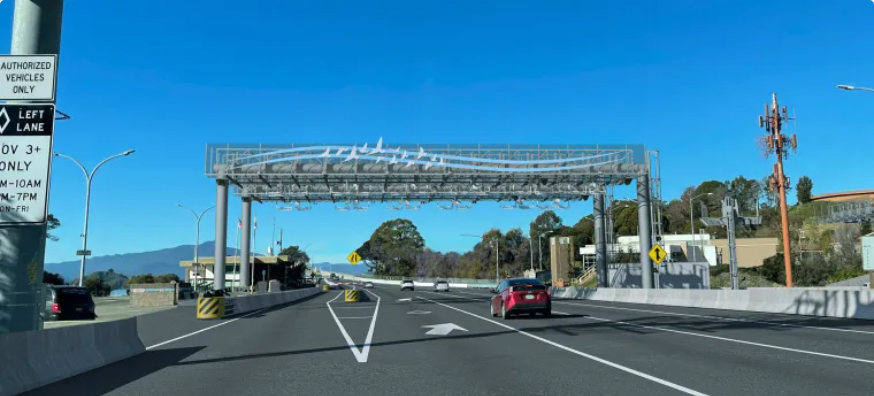
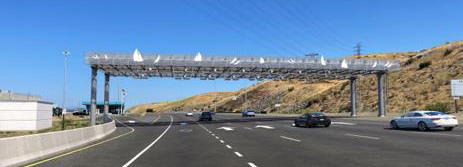
Richmond-San Rafael Bridge. Credit: Karl Nielsen. Photos source: BATA

$8.50 for all regular two-axle cars & trucks

First in series of 5 increases each year through 2030 – not voter approved

Plus, new policies for carpool lanes on bridge approaches

By John Goodwin, Assistant Director of Communications & Rebecca Long, Director, Legislation & Public Affairs, Metropolitan Transportation Commission

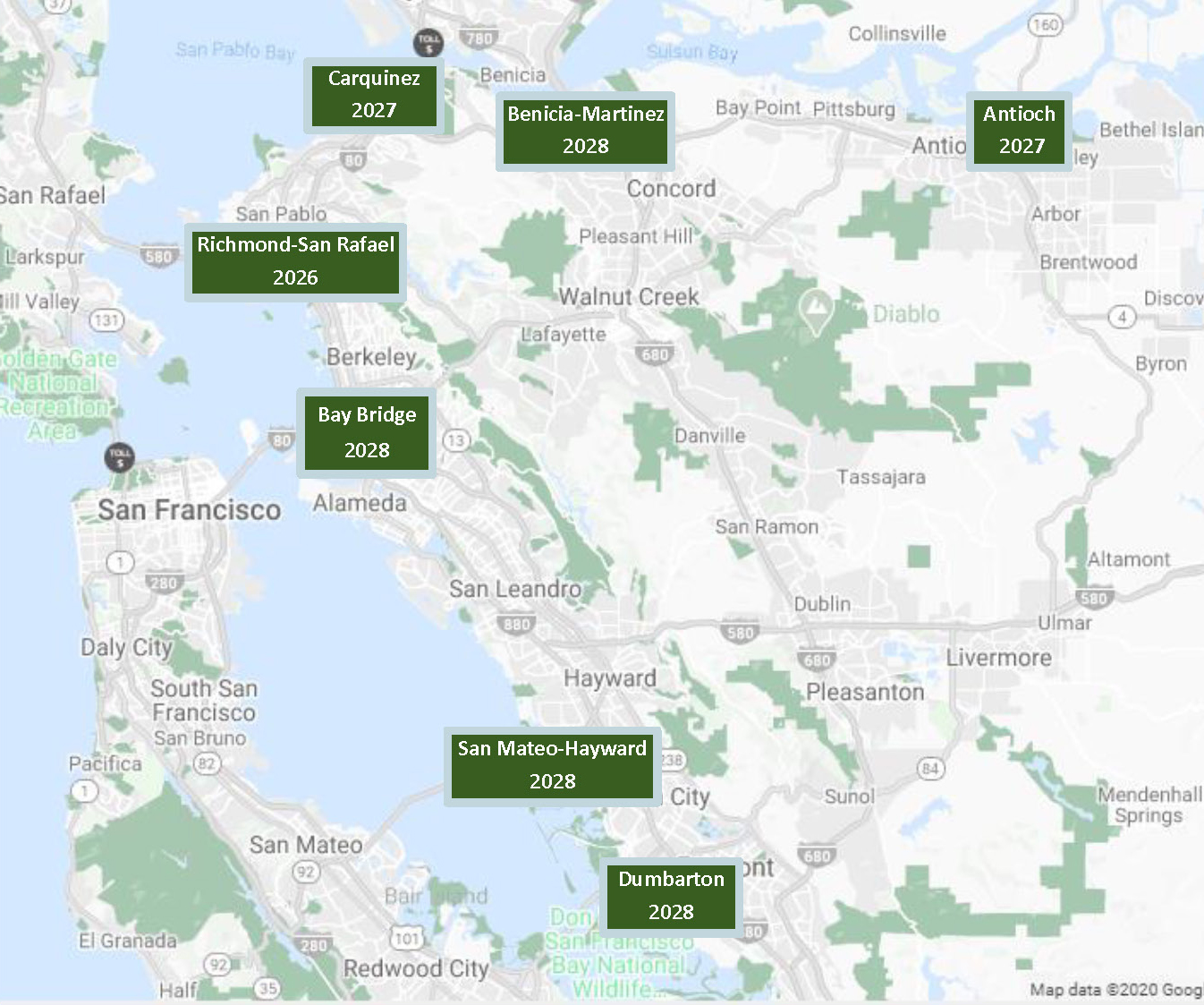
With the new year starting next Thursday, the Bay Area Toll Authority (BATA) reminds drivers that tolls at the region’s seven state-owned toll bridges will go up by 50 cents on Jan. 1, 2026. This will be the first in a series of five toll increases to be phased in each January through 2030, with the additional funds to be used only to pay for the maintenance, rehabilitation and operation of the San Francisco-Oakland Bay Bridge and the Antioch, Benicia-Martinez, Carquinez, Dumbarton, Richmond-San Rafael and San Mateo-Hayward bridges, and to service debt on BATA bond issues.

Approved by the BATA board in late 2024, not the voters, the new toll schedule includes a tiered rate structure  aimed at encouraging more customers to pay electronically with FasTrak® toll tags. Because payment with FasTrak carries lower administrative costs than payment through a license plate account or by returning payment with an invoice received in the mail, customers will pay a premium for using a pre-registered license plate account or for invoiced tolling. To give customers ample time to sign up for FasTrak, BATA last year voted to delay the start of the tiered pricing structure until 2027.

Tolls for all regular two-axle cars and trucks will increase to $8.50 from the current $8 on Jan. 1, 2026. Tolls for customers who pay with FasTrak tags will then rise to $9 in 2027; to $9.50 in 2028; to $10 in 2029; and then to $10.50 in 2030. Tolls for customers who use a pre-registered license plate account will climb to $9.25 in 2027; to $9.75 in 2028; to $10.25 in 2029 and to $10.75 in 2030. Invoiced tolls will go to $10 in 2027; $10.50 in 2028; $11 in 2029; and $11.50 in 2030.

Tolls for large freight trucks and other vehicle/trailer combinations with three or more axles will rise by 50 cents per axle each year from 2026 through 2030.

History of Bay Area Bridge Tolls

Tolls include the $5 of voter approved toll increases on the region’s seven state-owned toll bridges. They include:

  • The $1 uniform base toll on the bridges from Regional Measure 1 approved by voters in 1988, except for tolls at the Richmond-San Rafael Bridge, which were already set at $1, and unchanged by passage of RM1.
  • Voters also approved Regional Measure 2 in 2004 which raised the toll price on the bridges by another $1.
  • The $3 from Regional Measure 3 approved by voters in June 2018 which raised tolls in three $1 increments that went into effect on January 1, 2019, January 1, 2022, and January 1, 2025.

Updated HOV Policies

BATA last year also set a Jan. 1, 2026, start date for updated policies about the use of high-occupancy vehicles on approaches to the Bay Area’s state-owned toll bridges. These include a uniform three-person occupancy requirement for half-price tolls during weekday commute periods at all seven bridges. Carpool vehicles approaching the San Francisco-Oakland Bay Bridge must use a dedicated carpool lane, but can use either a standard FasTrak tag or a FasTrak Flex tag set to the ‘3+” position to receive the 50 percent discount available weekdays from 5 a.m. to 10 a.m. and from 3 p.m. to 7 p.m. Carpoolers at the six other state-owned bridges must use a dedicated carpool lane and pay their tolls with a FasTrak Flex toll tag set to the ‘3+’ position to receive the peak-period discount.

The new policies also will allow vehicles with two occupants and a switchable FasTrak Flex toll tag set to the ‘2’ position to use the carpool lanes on the approaches to the Antioch, Benicia-Martinez, Carquinez, Dumbarton, Richmond-San Rafael and San Mateo-Hayward bridges. These two-occupant vehicles will not receive the 50 percent carpool discount but will be able to use the carpool lanes to save time traveling through the toll plazas. Use of the carpool lanes on approaches to the Bay Bridge still will require at least three occupants.

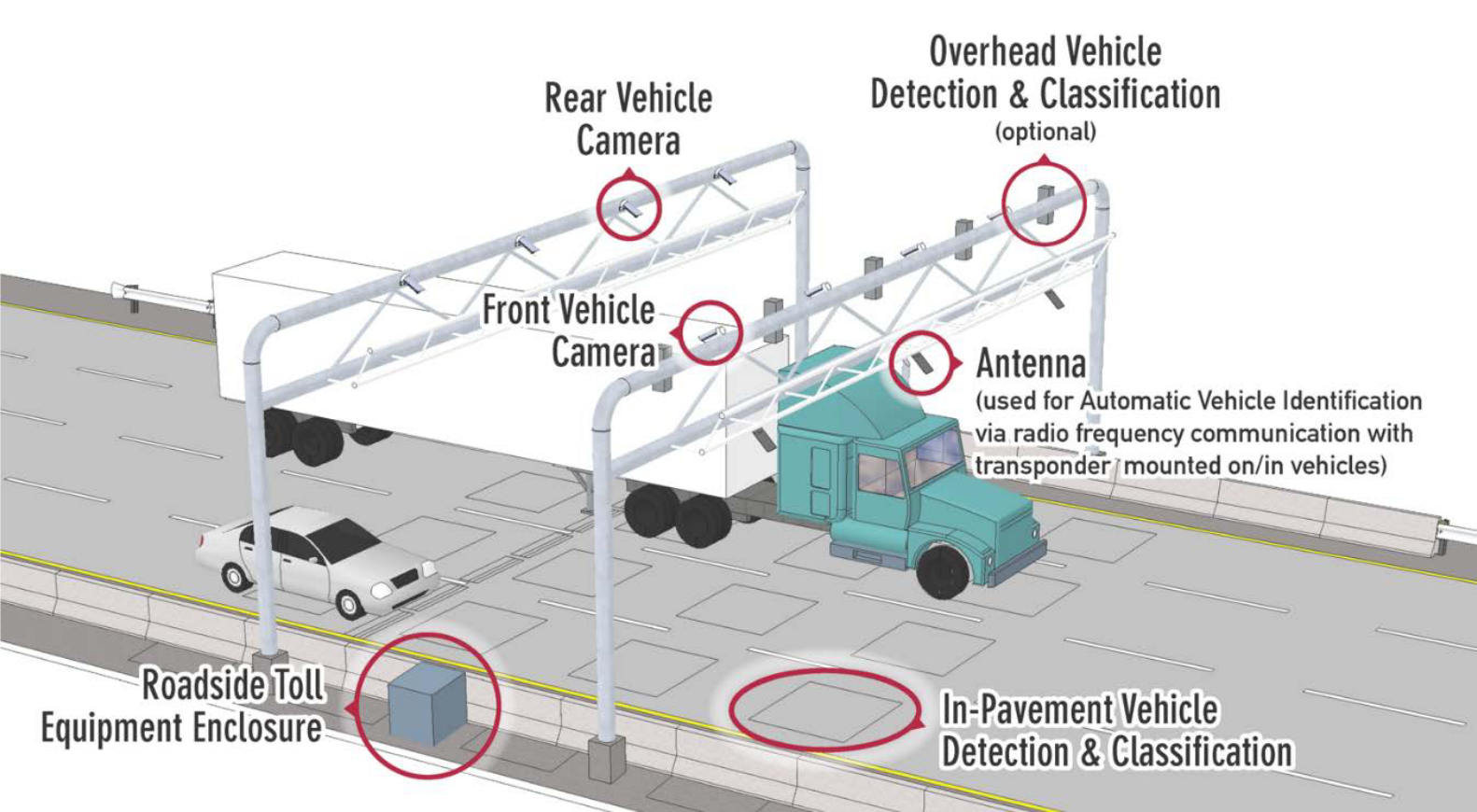
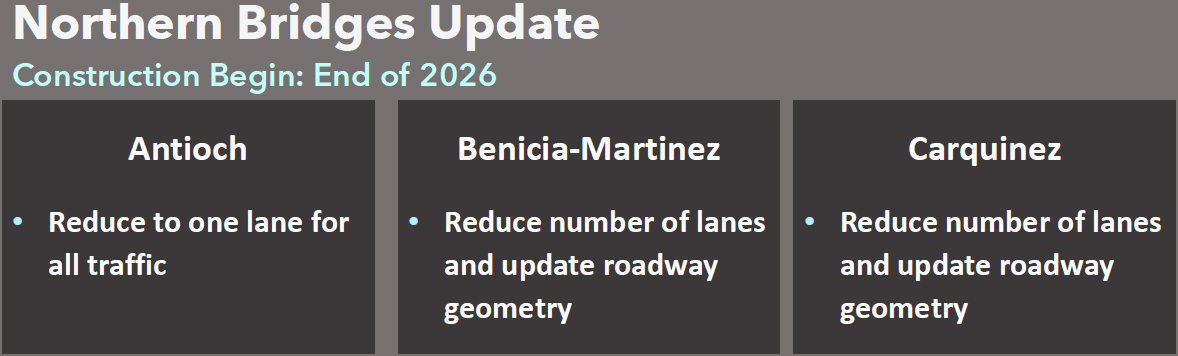
The new carpool policies are designed to improve safety on the toll bridge approaches by minimizing ‘weaving’ between lanes and to increase person-throughput by prioritizing access for buses and carpools. The policy change will optimize lane configurations as now-obsolete toll booths are removed as part of the coming transition to open-road tolling. The Richmond-San Rafael Bridge will be the first of the state-owned bridges to convert to open-road tolling. Crews are expected to begin work later this month on the construction and demolition projects at the Richmond end of the bridge needed to institute open-road tolling. Completion is scheduled sometime in the new year.

BATA, which is directed by the same policy board as the Metropolitan Transportation Commission (MTC), administers toll revenues from the Bay Area’s seven state-owned toll bridges. Toll revenues from the Golden Gate Bridge are administered by the Golden Gate Bridge, Highway and Transportation District, which joined with BATA to operate a single regional FasTrak customer service center in San Francisco. MTC is the transportation planning, financing and coordinating agency for the nine-county San Francisco Bay Area.

The 21 BATA board members aren’t directly elected by the voters but are appointed to represent the nine Bay Area counties and cities in each county, the mayors of San Francisco, Oakland and San Jose, plus, various agencies. Contra Costa County’s representatives are Chair Sue Noack, Mayor of Pleasant Hill, representing Cities of Contra Costa County, who was appointed in February 2023 (contact: 415-602-9929 or snoack@pleasanthillca.org) and District 2 Supervisor Candace Andersen representing the County, who was appointed January 2025 (contact 925-655-2300 or candace.andersen@bos.cccounty.us).

Allen D. Payton contributed to this report.

Filed Under: Bay Area, News, Taxes, Transportation

  • 1
  • 2
  • 3
  • …
  • 11
  • Next Page »
Liberty-Tax-Jan-Apr-2026
Deer-Valley-Chiro-06-22

Copyright © 2026 · Contra Costa Herald · Site by Clifton Creative Web