• Home
  • About The Herald
  • Local Agencies
  • Daily Email Update
  • Legal Notices
  • Classified Ads

Contra Costa Herald

News Of By and For The People of Contra Costa County, California

  • Arts & Entertainment
  • Business
  • Community
  • Crime
  • Dining
  • Education
  • Faith
  • Health
  • News
  • Politics & Elections
  • Real Estate

Draft Plan Bay Area 2050+ Blueprint includes 840,000 more affordable homes, guaranteed monthly income

July 8, 2024 By Publisher Leave a Comment

Source: MTC & ABAG

“Demonstrates continued progress toward key plan goals” of housing, transportation, economy and environment in the nine counties including “a gradual shift away from the use of single-occupancy cars and trucks.”

Includes over $1.2 trillion to maintain existing transportation system, build and buy affordable housing, “Provide an income-based monthly payment to all Bay Area households” and to “Adapt to Sea Level Rise.”

Also working on parallel Transit 2050+ plan

Public input opportunities

By MTC & ABAG staff

The Metropolitan Transportation Commission (MTC)’s and the Association of Bay Area Governments (ABAG)’s newly released Plan Bay Area 2050+ Draft Blueprint analysis outlines how the nine-county region can advance an affordable, connected, diverse, healthy and vibrant Bay Area for all residents by the year 2050.

The Blueprint is essentially a draft version of the plan. It is a foundational framework for a future vision of the Bay Area that includes:

  • Forecasts and Assumptionsabout the Bay Area’s future (population, jobs, financial needs and revenues, sea level rise, etc.);
  • Strategiesfor public investment and policy reform; and
  • Geographieswhere future housing and/or job growth can be focused under the plan’s Strategies.

The Blueprint is then analyzed through computer-generated models and simulations to measure how successful the strategies are in achieving shared goals for the future, such as housing affordability, reduced greenhouse gas emissions and much more.

As the first draft of the Bay Area’s next long-range plan, the Draft Blueprint demonstrates significant progress toward reaching key goals for housing affordability, post-pandemic economic recovery and environmental health and sustainability. This includes the addition of 840,000 affordable homes, with a total of nearly 1 million permanently affordable homes regionwide by 2050; a 17 percent increase in the number of lower-income households living within a half-mile of transit service; and a gradual shift away from the use of single-occupancy cars and trucks. MTC and ABAG planning staff stress that the expected progress would only come about if all the strategies to be detailed in Plan Bay Area 2050+ are implemented.

Source: MTC & ABAG

The full range of performance and equity outcomes from the Plan Bay Area 2050+ Draft Blueprint analysis may be found in the Draft Blueprint Compendium, which also demonstrates how the Bay Area can accommodate some 1.3 million additional jobs and nearly 1 million new households by the year 2050.

The Compendium shows the following proposed budget highlights for three of the Plan’s categories:

Transportation Strategies

$382 billion for T1 – Operate and Maintain the Existing System. Commit to operate and maintain the Bay Area’s roads and transit infrastructure while transitioning to zero-emission transit vehicles.

Housing Strategies

$250 billion for H2 – Preserve Existing Affordable Housing. Acquire homes currently affordable to low- and middle-income residents for preservation as permanently deed-restricted affordable housing, including opportunities for resident ownership.

$302 billion for H4 – Build Adequate Affordable Housing to Ensure Homes for All. Construct enough deed-restricted affordable homes to fill the existing gap in housing for the unhoused community and to meet the needs of low-income households.

Economic Strategies

$205 billion for EC1 – Implement a Statewide Guaranteed Income. Provide an income-based monthly payment to all Bay Area households to improve family stability, promote economic mobility and increase consumer spending.

Environment Strategies

$94 billion for EN1 – Adapt to Sea Level Rise. Adapt shoreline communities, infrastructure and ecosystems affected by sea level rise.

These outcomes were first presented at the May meeting of MTC’s Policy Advisory Council, and then at the June 14 joint meeting of the MTC Planning Committee and the ABAG Administrative Committee.

The Draft Blueprint also identifies challenges that will have to be addressed as part of the Final Blueprint process over the coming months. More work is needed to reduce greenhouse gas emissions as well as to identify transportation investment priorities for the plan’s fiscally constrained transportation project list. The Draft Blueprint does not include significant transportation expansion or enhancement investments, as these will be identified through Transit 2050+ and the Final Blueprint process.

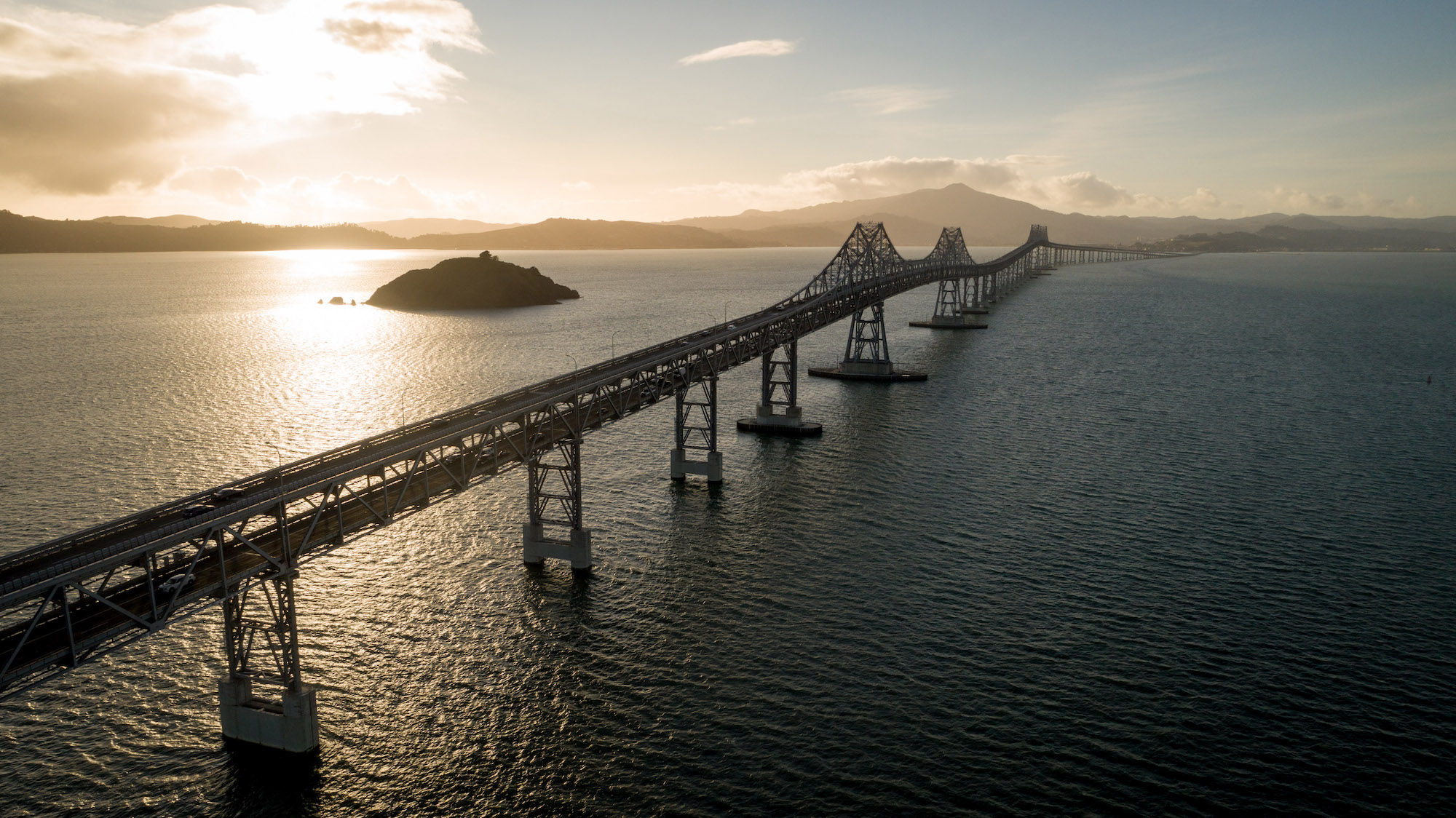
Photo source: MTC. Credit: Joey Kotfica

What’s Next?

In light of the pandemic’s lasting impact to public transportation, MTC is collaborating with the region’s transit operators on Transit 2050+ , a parallel planning effort to re-envision the future of public transit in the nine-county Bay Area. Two key updates in this process will be released in July: the Draft Project Performance Assessment and the Transit 2050+ Draft Network. It will be a comprehensive overhaul of the six transit-related strategies included in Plan Bay Area 2050.

The Draft Project Performance Assessment will analyze the costs and benefits of major capacity-increasing projects being considered for inclusion in Plan Bay Area 2050+, the vast majority of which are transit projects. These investments, including those adopted in Plan Bay Area 2050, now face a significantly reduced projected revenue stream. This is due largely to slow post-pandemic transit ridership recovery and other economic changes.

The Transit 2050+ Draft Network will identify strategies and investments (capital and operating) envisioned through 2035 and over the long term through 2050. Development of the Draft Network has been guided in part by public engagement conducted in summer 2023, when nearly 3,000 Bay Area residents provided input on the future of Bay Area transit. The Draft Network also is being informed by an existing needs and gaps assessment conducted in partnership with local transit agencies, the Draft Project Performance Assessment, local priorities and improvements to transit network connectivity and customer experience.

Source: MTC & ABAG

Summer 2024 Public Engagement

Beginning in August, MTC staff will conduct a second round of public engagement for Plan Bay Area 2050+, the content of which will focus on:

  • Sharing both the Draft Blueprint outcomes and the Transit 2050+ Draft Network
  • Gathering feedback to inform the development of the Final Blueprint and address identified Draft Blueprint challenges
  • Identifying early priorities for implementing Plan Bay Area 2050+

There will be a variety of in-person and virtual opportunities for the public to participate. Stay up-to-date on upcoming engagement activities in your community by subscribing to the Plan Bay Area 2050+ mailing list. There also will be dedicated engagement opportunities for technical partners and stakeholders, which will be publicized on the Plan Bay Area website’s Partner Engagement page.

Following an analysis of public input, the Commission and the ABAG Executive Board are expected to consider approval of the Final Blueprint in late 2024.

Allen D. Payton contributed to this report.

Filed Under: Bay Area, Economy, Environment, Government, Growth & Development, Infrastructure, News, Transportation

Pavement repair work on Waterfront Road near Martinez July 8-15

July 3, 2024 By Publisher Leave a Comment

Source: CCC Public Works Dept

Expect delays 7:00 am-4:30 pm

By Kelly Kalfsbeek, Community & Media Relations Coordinator, PIO, Contra Costa County Public Works Department

Unincorporated Contra Costa County, CA- The Contra Costa County Public Works Department will perform pavement repair work on Waterfront Road, between the Northbound I-680 offramp and Waterbird Way, beginning on Monday, July 8, 2024, through Monday, July 15, 2024, barring unforeseen circumstances. The work will take place from 7:00 a.m. through 4:30 p.m., Monday through Thursday, weather permitting. Traffic control will be used. Road users can expect delays of 15-20 minutes. Electronic message boards will be placed in advance to alert drivers to work and advise of expected delays.

About Contra Costa County Public Works Department:

Contra Costa County Public Works Department (CCCPWD) maintains over 660 miles of roads, 150 miles of streams, channels, and other drainage, and over 150 County buildings throughout Contra Costa County. CCCPWD provides services such as Parks and Recreation, Sandbag Distribution, and Flood Control throughout unincorporated areas of Contra Costa County.  CCCPWD operates two airports, Buchanan Field Airport in Concord, and Byron Airport in Byron. For more information about CCCPWD, please visit us at: www.cccpublicworks.org

Filed Under: Central County, Construction, News, Transportation

Pavement repair work on Brentwood Blvd July 12-19

July 3, 2024 By Publisher Leave a Comment

Source: CCC Public Works Dept.

Expect delays 7 am to 4 pm

By Kelly Kalfsbeek, Community & Media Relations Coordinator, PIO, Contra Costa County Public Works Department

July 3, 2024, unincorporated Brentwood, CA- The Contra Costa County Public Works Department will perform pavement repair work on Brentwood Boulevard, between Sellers Avenue and Byron Highway, on Friday, July 12, 2024, and Friday, July 19, 2024, barring unforeseen circumstances. The work will take place from 7:00 a.m. through 4:00 p.m., weather permitting. Electronic message boards will be placed in advance to alert drivers to work and advise of expected delays. Temporary lane closures will be required during working hours. Traffic control will be used. Road users can expect delays of 15-20 minutes and are encouraged to use alternative routes.

About Contra Costa County Public Works Department:

Contra Costa County Public Works Department (CCCPWD) maintains over 660 miles of roads, 150 miles of streams, channels, and other drainage, and over 150 County buildings throughout Contra Costa County. CCCPWD provides services such as Parks and Recreation, Sandbag Distribution, and Flood Control throughout unincorporated areas of Contra Costa County.  CCCPWD operates two airports, Buchanan Field Airport in Concord, and Byron Airport in Byron. For more information about CCCPWD, please visit us at: www.cccpublicworks.org

Filed Under: Construction, East County, News, Transportation

Contra Costa Transportation Authority seeks public input for Integrated Transit Plan

July 3, 2024 By Publisher Leave a Comment

To give input to help make transit easier to use and more convenient till out the survey by July 15

By Lindy Johnson, Director of External Affairs, Contra Costa Transportation Authority

The Contra Costa Transportation Authority (CCTA) is inviting residents and travelers within the county to participate in a survey on transit use. Survey responses will inform the development of an Integrated Transit Plan (ITP) to make public transportation easier to use and more convenient in Contra Costa County.
With improved transit, Contra Costa County will be a more livable, sustainable, and equitable place to live and travel. As recommendations in the ITP are put into place, the public will see many benefits:

  • Better connections to regional services, like BART and Capitol Corridor.
  • Improvements for increased speed and reliability.
  • Enhancements to improve riders’ transit experience.

Background

Contra Costa residents want to drive less, but many still rely on cars. This is due in part to the challenges of using public transit, such as insufficient connections between transit provider services, too much time between trips, and long travel times.

The five bus transit operators in the county have a long history of working together, which has improved the transit system and made it easier for riders to transfer between services. However, the system needs to be updated to meet the needs of today’s travelers. We need to make it more efficient and better coordinated, and we need to update services and infrastructure to create a modern and sustainable transit network.

Creating the Integrated Transit Plan

CCTA is working with the Metropolitan Transportation Commission (MTC) and the five Contra Costa bus operators (AC Transit, County Connection, Tri Delta Transit, WestCAT, and Wheels) to identify ways to optimize the transit network. The ITP will provide guidance for an improved transit network that better serves local and regional travelers.

The ITP will also include a list of improvements that will support enhanced services. The goal of these projects and improvements is to attract more riders and position the bus operators to meet future challenges.

The ITP will focus on the following areas:

  • Coordination:Identify ways to improve coordination between transit providers so that riders have convenient and seamless travel. Improved coordination will also result in more efficient use of public funds.
  • Innovation:Explore emerging technologies to enhance Contra Costa County’s transit system, like on-demand shuttles that get people to transit, Mobility as a Service, and traffic signals that prioritize the movement of buses.
  • Equity:Improve transit so that all communities and residents benefit, including low-income communities, communities of color, and people with disabilities.

The ITP is necessary to enable Contra Costa County’s four bus operators to meet the transportation challenges of the future.

Improved Transit

CCTA wants to make public transportation easier to use and more convenient. With improved transit, Contra Costa County will be a more livable, sustainable, and equitable place to live and travel. As recommendations in the ITP are put into place, the public will see many benefits:

  • Better connections to regional services, like BART and Capitol Corridor.
  • Improvements for increased speed and reliability.
  • Enhancements to improve riders’ transit experience.

Project Status

The ITP project team is actively working to identify new ways to make transit services more reliable, efficient, and accessible, while improving first and last-mile connections. They’re exploring innovative mobility options to help reduce our reliance on cars and promote sustainable transportation across Contra Costa County. The responses to the survey launched in May are being used to review and confirm the team’s recommendations. We’re committed to keeping the public informed throughout this process and plan to share our findings this summer.

Project Timeline

The ITP is an 18-month project that began in April 2023 and is scheduled to be completed in late 2024.

Source: CCTA

Get Involved

Tell us what would get you where you need to go using public transit! CCTA is looking for input from community members to make sure the ITP meets the needs of all travelers. We’re particularly interested in hearing from transit riders and people in equity priority communities. Five survey participants will have a chance to win a $100 Clipper Card! Take the ITP survey here.

About the project: 

The Contra Costa Transportation Authority (CCTA) is working with all five bus service providers in Contra Costa County (AC Transit, WestCAT, County Connection, Tri Delta Transit, and Wheels) and the Metropolitan Planning Commission (MTC) to develop the Integrated Transit Plan (ITP) to improve transit services and coordination in Contra Costa County. CCTA is reviewing all existing services and will recommend new ways to improve transit for everyone, with special consideration for the different needs of riders across the county.
For more information, visit the ITP project website.

Filed Under: Transportation

Why does California’s gas tax keep increasing?

July 1, 2024 By Publisher Leave a Comment

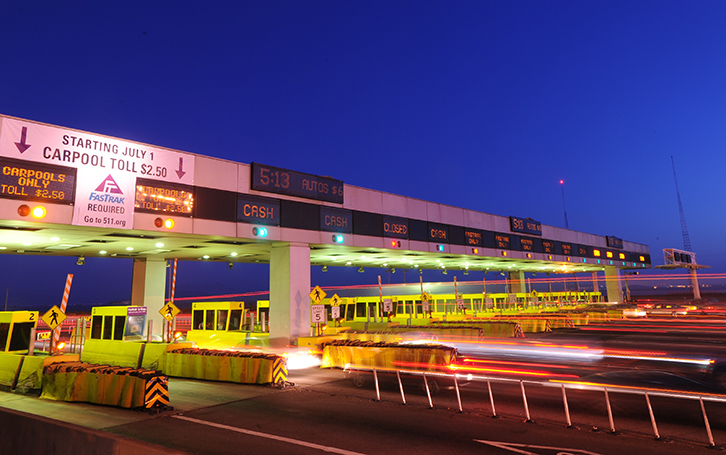
State’s excise tax on gasoline increased July 1 from 57.9 to 59.6 cents per gallon and from 44.1 to 45.4 cents per gallon for diesel fuel.

No end in the law to annual increases based on state CPI

By Allen D. Payton

If you’re not already aware, the State of California gas tax increased today, July 1, 2024 according to the announcement in May by the Department of Tax and Fee Assessment (CDTFA). According to that notice as reported by the California Taxpayers Association, the state’s excise tax* on gasoline increased today “from 57.9 cents per gallon to 59.6 cents per gallon and from 44.1 cents per gallon to 45.4 cents per gallon for diesel fuel.”

According to the California Transportation Commission, “the Legislature passed and the Governor signed SB 1 (Beall, 2017)…increasing transportation funding and instituting much-needed reforms. SB 1 provides the first significant, stable, and on-going increase in state transportation funding in more than two decades.”

Contra Costa’s representatives at that time split on the bill, with then-Assemblyman Jim Frazier, who was chairman of the Assembly Transportation Committee, and Assemblyman Tim Grayson voting in favor, and State Senator Steve Glazer voting against.

Source: AAA

As of Monday, according to the American Automobile Association (AAA), which updates prices daily, drivers in Contra Costa County are paying an average of $4.869 per gallon of regular unleaded gas, while today’s Bay Area average is $4.943, California’s average is $4.794 and the national average is $3.491 per gallon.

Taxes & Fees in the Price for a Gallon of Gas

According to data from the California Energy Commission, drivers are now paying 90 cents in taxes per gallon of gas:

  • $0.596 on state excise tax
  • $0.184 on the federal excise tax
  • $0.10 cents on more state and local sales taxes
  • $0.02 for a state underground storage tank fee

Plus, $0.51 for state environmental programs fee for a total of $1.41 in taxes and fees per gallon of gas.

Source: CDTFA

But why does the state gas tax keep increasing each year? It’s due to the passage of a bill in 2017, not a vote of the people, as some folks misremember. According to the Metropolitan Transportation Commission (MTC), State Senate Bill 1 (SB1) entitled the Road Repair and Accountability Act of 2017, “was passed by a two-thirds majority in the California Legislature and signed into law by Governor Jerry Brown in 2017. As the largest transportation investment in California history, SB 1 is expected to raise $52.4 billion for transportation investments statewide over the next decade.” It marked “the first increase in the state excise tax on gasoline since 1994.”

It requires the CDTFA to annually adjust the rate by the increase in the California Consumer Price Index (CPI) which is as calculated by the Department of Finance (CDFI). According to the CADFI, the CPI “measures price changes in goods and services purchased by urban consumers.  The all urban consumer (CPI-U) represents the spending patterns of the majority of the population which includes professionals, the self-employed, the poor, the unemployed, and retired people, as well as urban wage earners and clerical workers (CPI-W).  The U.S. Bureau of Labor Statistics (BLS) compiles and publishes the CPI for the Los Angeles area monthly, the Riverside area bimonthly, San Diego County bimonthly, the San Francisco area bimonthly, and the nation each month.  A California CPI is calculated…as a population-weighted average of the BLS-published local area CPIs. The California CPI formula was developed by the California Department of Industrial Relations (CADIR).”

According to the CDIR, the CPI “Is a measure of the average change over time in the prices paid by urban consumers for a fixed market basket of goods and services. The CPI provides a way to compare what this market basket of goods and services costs this month with what the same market basket cost, say, a month or year ago.” This year, the California CIP was determined to be 3.3% in February and 3.8% in April.

History of Recent CA Gas Tax Increases

In addition, according to details provided by the CDTFA, “*Effective July 1, 2010, under the Fuel Tax Swap Law, purchases and sales of gasoline are exempt from the state portion of the sales and use tax rate (then 6 percent), and a corresponding increase in the excise tax rate on that gasoline was imposed.” Then, “Effective November 1, 2017, Senate Bill 1 imposed an additional $0.12-per-gallon gasoline tax.” Finally, “Effective July 1, 2020, Senate Bill 1…requires CDTFA to annually adjust the rate by the increase in the California Consumer Price Index.”

Proposed Use of Funds

The majority of the revenue from the state gas tax is intended for “Local Street and Road Maintenance and Rehabilitation” at $1.5 billion per year over 10 years and $1.9 billion for “State Highway Maintenance and Rehabilitation.”

Also, according to the MTC, “In the Bay Area, most of this money will be directed to cities, counties and public transit agencies to tackle the enormous backlog of maintenance and repairs for local streets, roads and transit systems. SB 1 money also will be available for new projects, including bicycle and pedestrian improvements.”

Asked if the law sunsets and the annual increases end or if they continue indefinitely a staff member for CDTFA responded, “CDTFA is required by law to adjust the motor vehicle fuel and diesel fuel excise tax rates annually based on the California Consumer Price Index as calculated by the Department of Finance.  SB1 did not include a sunset date.”

For additional information on SB1 see the answers by the California Department of Transportation (Caltrans) to the Frequently Asked Questions, here and by the California State Controller’s Office, here. Read the 2022 article by the CED entitled What Drives California’s Gasoline Prices.

Filed Under: News, State of California, Taxes, Transportation, Travel

Construction on Walnut Blvd. Bikeway Gap Closure Project June 24-July 22

June 18, 2024 By Publisher Leave a Comment

Expect delays of up to 10 minutes between Marsh Creek and Vasco Roads

By Kelly Kalfsbeek, Community & Media Relations Coordinator, PIO, Contra Costa County Public Works

June 18, 2024 – Unincorporated Brentwood, CA – Contra Costa County Public Works will begin construction of the Walnut Boulevard Bikeway Gap Closure Project on Monday, June 24, 2024, through Monday, July 22, 2024, barring unforeseen circumstances. Work will occur between 7:00 a.m. – 5:00 p.m., Monday through Friday (excluding holidays), weather permitting.

Traffic control will be used. Message boards will alert drivers about the work. Drivers should expect delays of up to 10 minutes through the construction zone and consider alternative routes during working hours.

The work consists of roadway shoulder widening along an 860-foot segment of Walnut Boulevard between Marsh Creek Road and Vasco Road to provide Class II bike lanes, grinding and overlaying the roadway pavement section, and installing a centerline rumble strip, striping, pavement markings, and signage.

Funding for this project is provided by a State Highway Safety Improvement Program grant, local Transportation Development Act grant and Gas Tax Funds. For more information visit: www.contracosta.ca.gov/9899/Walnut-Blvd-Bikeway-Gap-Closure.

Filed Under: Construction, East County, News, Recreation, Transportation

Paving work for Alamo Roundabout Project June 20 – July 17

June 18, 2024 By Publisher Leave a Comment

Alamo Roundabout Project Location map. Source: CCC Public Works

Expect up to 15-minute traffic delays

Part of the Danville Boulevard/Orchard Court Complete Streets Improvement Project

By Kelly Kalfsbeek, Community & Media Relations Coordinator, PIO, Contra Costa County Public Works

Alamo, CA – Contra Costa County Public Works will perform surface treatment work as part of the Alamo Roundabout Project starting Thursday, June 20, 2024, through Wednesday, July 17, 2024, weather permitting. Message Boards will be posted in advance to advise of the scheduled work. Drivers should expect delays of up to 15 minutes near the area of work. Work consists of applying a pavement surface treatment and final roadway striping along Danville Blvd. from Stone Valley Road to St. Alphonsus Way.

Thursday, June 20, 2024, through Friday, June 28, 2024, 8:00 pm to 6:00 am: Night-time work will include pavement surface treatment work. One-way traffic control will be implemented, and flaggers will be present.

Monday, July 8, 2024, through Wednesday, July 17, 2024, 8:00 pm to 6:00 am: Night-time work will take place for roadway striping operations. One-way traffic control will be implemented, and flaggers will be present.

The Danville Boulevard/Orchard Court Complete Streets Improvement Project-Alamo Roundabout Project will improve safety of vehicles, bicycle, and pedestrian traffic along Danville Boulevard. The project will construct sidewalks and bicycle facilities, improve landscaping and electrical work, reconstruct pavement, apply a pavement surface treatment, replace traffic striping and pavement markings, and install curb extensions and ramps along this segment of Danville Boulevard. It will also create a roundabout at the intersection of Danville Boulevard and Orchard Court. Funding for this project is provided by the federal Highway Safety Improvement Program grant, Measure J Regional Funds, and Gas Tax Funds. For more project information about this project visit: www.contracosta.ca.gov/alamoroundabout.

About Contra Costa County Public Works Department:

Contra Costa County Public Works Department (CCCPWD) maintains over 660 miles of roads, 150 miles of streams, channels, and other drainage and over 150 County buildings throughout Contra Costa County. CCCPWD provides services such as Parks and Recreation, Sandbag Distribution and Flood Control throughout unincorporated areas of Contra Costa County.  CCCPWD operates two airports, Buchanan Field Airport in Concord, and Byron Airport in Byron. For more information about CCCPWD, please visit us at www.cccpublicworks.org.

Filed Under: Construction, San Ramon Valley, Transportation

Concord: Traffic delays from construction on Walnut Creek Desilt Project begin Monday

June 15, 2024 By Publisher Leave a Comment

Walnut Creek Desilt Project work area map. Source: CCC Public Works

For 3 ½ months on the portion of the creek that runs through northern section of Concord

By Kelly Kalfsbeek, Community & Media Relations Coordinator, PIO, Contra Costa County Public Works

Contra Costa County Public Works will begin construction of the Walnut Creek Desilt Project on Monday, June 17, 2024, through Thursday, October 31, 2024, barring unforeseen circumstances. Work will take place between 8:00 a.m.-5:00 p.m., Monday through Friday (excluding holidays), weather permitting.

Drivers should expect delays of 5-15 minutes at Meridian Park Boulevard and Willow Way, Via de Mercados to Concord Avenue, and Waterworld Parkway to Willow Pass Road and should consider alternate routes during construction. Message boards will alert drivers about the work. Traffic control will be used. Restrictions will be in place to minimize impacts during commute hours.

The work consists of removing approximately 115,000 cubic yards of silt in the Walnut Creek Channel to restore creek flow capacity. Funding for this project is provided by Flood Control Zone 3B Funds. For more information visit: https://www.contracosta.ca.gov/8658/Walnut-Creek-Desilt

About Contra Costa County Public Works Department:

Contra Costa County Public Works Department (CCCPWD) maintains over 660 miles of roads, 150 miles of streams, channels, and other drainage and over 150 County buildings throughout Contra Costa County. CCCPWD provides services such as Parks and Recreation, Sandbag Distribution and Flood Control throughout unincorporated areas of Contra Costa County.  CCCPWD operates two airports, Buchanan Field Airport in Concord, and Byron Airport in Byron. For more information about CCCPWD, please visit us at: www.cccpublicworks.org

Filed Under: Central County, Concord, Construction, Transportation

Contra Costa paratransit services get $1 million boost

June 2, 2024 By Publisher Leave a Comment

US DOT awards Contra Costa Transportation Authority SMART grant to transform transportation for seniors and those with disabilities

By Lindy Johnson, Director of External Affairs, Contra Costa Transportation Authority

WALNUT CREEK, CA – Thanks to the US Department of Transportation (USDOT), the Contra Costa Transportation Authority (CCTA) now has a $1 million boost to enhance mobility options for seniors and those with disabilities. County of Contra Costa officials gathered in Walnut Creek today as US Representative Congressman Mark DeSaulnier (CA-10) announced the federal Strengthening Mobility and Revolutionizing Transportation (SMART) award. The SMART grant funding will be used to implement a centralized call center with access to all relevant transportation data, so seniors and paratransit users can make real time transit choices through an Accessibility Application (App). The primary goal of creating an Accessibility App is to address equity and access through data sharing and will to transform transit to better serve seniors and those with disabilities.

“The Accessibility App is a much-needed virtual tool as many transit agencies do not have paratransit or other accessible transit data with real-time service options,” CCTA Chair Newell Arnerich said. “Transit should be easy, accessible and efficient. Our new technology will enable transit operators to make the best use of passenger’s specific needs, so they can provide easy to access options for the most vulnerable members of our county.”

“There is a growing trend in the transit service industry to develop and use data to help enhance transparency, improve efficiency, and foster innovation,” CCTA Executive Director Tim Haile said. “CCTA is partnering with research engineers at UC Berkeley to use data to build the Accessibility App which will be made possible thanks to the SMART grant.”

The Bipartisan Infrastructure Law established the Strengthening Mobility and Revolutionizing Transportation (SMART) discretionary grant program with $100 million appropriated annually for fiscal years (FY) 2022-2026.

The SMART program was established to provide grants to eligible public sector agencies to conduct demonstration projects focused on advanced smart community technologies and systems in order to improve transportation efficiency and safety.

Applying for a SMART grant is a competitive process, whereupon applications from all over the US are reviewed. Of the hundreds of applications submitted for funding, the US Department of Transportation saw the value in CCTA’s Accessibility App project and chose to support its development by awarding the project a $1 million grant.

“I am proud to have advocated for this funding for Contra Costa Transportation Authority that will help improve transportation accessibility and efficiency for members of our community, including seniors and individuals with disabilities,” said DeSaulnier. “I look forward to continuing to support CCTA as it implements this important App and continues its efforts to create a more convenient, accessible, and equitable transportation system across our district.”

County Supervisor Ken Carlson was on hand Friday to publicize existing pilot programs aimed to make transit easier for seniors and paratransit passengers. CCTA has partnered with other entities, such as the City of San Pablo, to connect senior and disabled transportation from San Pablo directly to county medical facilities in Martinez. CCTA also supports the Low-Income Fare Equity (LIFE) program to provide free rides to eligible paratransit users who are low-income earners.

The public can find out full details about CCTA’s existing and future accessibility programs as by going to https://ccta.net/accessibility/.

About the Contra Costa Transportation Authority:

The Contra Costa Transportation Authority (CCTA) is a public agency formed by Contra Costa voters in 1988 to manage the county’s transportation sales tax program and oversee countywide transportation planning efforts. With a staff of 24 people managing a multi-billion-dollar suite of projects and programs, CCTA is responsible for planning, funding, and delivering critical transportation infrastructure projects and programs that connect our communities, foster a strong economy, increase sustainability, and safely and efficiently get people where they need to go. CCTA also serves as the county’s designated Congestion Management Agency, responsible for putting programs in place to keep traffic levels manageable.

Allen D. Payton contributed to this report.


Filed Under: News, Transportation

Bay Area “Transit Transformation” gets $18 million boost

May 27, 2024 By Publisher Leave a Comment

First commitments spur near-term projects to improve bus, light rail service

County Connection’s routes in Concord’s Monument Corridor will benefit from more reliable service, reduced travel times

By John Goodwin, Assistant Director of Communications and Khristina Wenzinger, Principal, Public Information, Legislation & Public Affairs, Metropolitan Transportation Commission

SAN FRANCISCO – The Metropolitan Transportation Commission (MTC) last week approved an $18.3 million allocation to fund eight near-term transit priority projects in Concord, other East Bay cities, San Jose, San Francisco and Redwood City. These investments are the first to be made through the $30 million Bus Accelerated Infrastructure Delivery (BusAID) program established as part of the Bay Area Transit Transformation Action Plan to implement quick-build solutions designed to improve service at problem ‘hotspot’ locations identified by transit agencies throughout the region.

What Does Transit Transformation Mean?

  • Design, adequately invest in and effectively manage a public transit network that is equitable, inclusive, frequent, affordable, accessible and reliable.
  • Integrate with unified service, fares, schedules, customer information and identity.
  • Serve all Bay Area populations, resulting in increased transit ridership and reduced growth in vehicle miles traveled.

The Action Plan aims to improve the Bay Area’s public transportation network to create a more user-friendly and connected system. It identifies key targets and actions to make this vision a reality.

Map of County Connection’s routes in the Monument Corridor. Source: Central Contra Costa Transit Authority

Approved Projects

Each of the eight approved projects is slated for completion in the next one to three years:

  • Monument Corridor Transit Speed Improvements (Concord): This project will transit priority signals along Monument Boulevard between Detroit Avenue and Mohr Lane, and will relocate and reconfigure bus stops to improve efficiency and accessibility. County Connection routes 11, 14, 16, 311, 314, 611, 613, 616 and 619 will benefit from more reliable service and reduced travel times.(See pages 5-2 & 5-3 of the Monument Corridor Community-Based Transportation Final Plan)
  • Park Street Transit Signal Priority and Signal Optimization (Alameda): this project will install transit signal priority and optimize signal timing at four intersections along Park Street from Alameda Avenue to Otis Drive, reducing delays for AC Transit routes 20, 21, OX and 663.
  • International Boulevard Transit Lane Delineation (Oakland): this project will reduce delays for AC Transit’s Tempo (1T) line, reduce speeding by drivers on non-transit vehicles and improve corridor safety between 14th Avenue and 42nd Avenue through the installation of vertical treatments to separate the existing bus lanes from general purpose lanes, and by painting the bus lanes red to deter non-transit vehicles from using the bus lanes.
  • El Camino Real Bus Boarding Islands & Bus Stop Balancing (Redwood City): To reduce delay for SamTrans routes ECR, 79, 270, 278, 295, 296, 2960 and 397, this project will fund the planning and design of bus boarding islands at stops along El Camino Real between Whipple Avenue and Dumbarton Avenue in Redwood City and unincorporated North Fair Oaks.
  • K-Ingleside Rapid Project Ocean Avenue Quick Build (San Francisco): Spanning Ocean Avenue from Junipero Serra Blvd. to Geneva Avenue, this project will increase service reliability and reduce travel times for Muni’s K-Ingleside light rail line by installing longer and wider boarding islands, adding red transit lanes, and implementing signal timing refinements and turn restrictions.
  • VTA Frequent Network Cloud-Based Transit Signal Priority (San Jose): This project will install next-generation transit signal priority at 174 intersections along VTA’s Frequent Network in San Jose, reducing delays for numerous bus routes, including 25, 26, 61, 64A, 64B, 70, 71, 72, 73, 77 and 500.
  • Vision Zero Senter Road East San Jose Safety Corridor Project (San Jose): This project will reduce delays for VTA routes 70, 72 and 73 by installing bus boarding islands along Senter Road between Story Road and Monterey Road.
  • Alvarado-Niles Road Part-Time Transit Lane Pilot (Union City): To reduce congestion-related delays for AC Transit route 97 and Union City Transit routes 1, 3 and 5, this project will install for a two-year pilot period a part-time transit lane along Alvarado-Niles Road from Decoto Road to Almaden Boulevard, providing buses with a dedicated lane during hours with peak traffic congestion.

MTC approved funding for these projects at its regularly scheduled May meeting, after each had been endorsed last month by the multi-agency Regional Network Management Council. Project recommendations were developed based on a two-stage screening process that evaluated potential rider benefits (time savings), equity considerations, and feasibility and readiness. Each project will include pre- and post-implementation evaluation to quantify project benefits. The remaining balance of $12 million in BusAID funding will be used for future funding rounds, when additional projects are identified and ready for implementation.

MTC is the transportation planning, financing and coordinating agency for the nine-county San Francisco Bay Area. Caltrans owns and operates the state highway system.

Allen D. Payton contribute to this report.

Filed Under: Bay Area, Central County, Concord, Finances, News, Transportation

  • « Previous Page
  • 1
  • …
  • 6
  • 7
  • 8
  • 9
  • 10
  • …
  • 32
  • Next Page »
Deer-Valley-Chiro-06-22

Copyright © 2026 · · Contra Costa Herald · All Rights Reserved