• Home
  • About The Herald
  • Local Agencies
  • Daily Email Update
  • Legal Notices
  • Classified Ads

Contra Costa Herald

News Of By and For The People of Contra Costa County, California

  • Arts & Entertainment
  • Business
  • Community
  • Crime
  • Dining
  • Education
  • Faith
  • Health
  • News
  • Politics & Elections
  • Real Estate

SF Bay Area road, bridge conditions, congestion and safety examined in new report

September 26, 2025 By Publisher Leave a Comment

Source: TRIP

Existing transportation funding strained by rising construction costs, population growth, potential decrease in state gas tax revenue

“115 of 1,374 bridges are rated poor/structurally deficient, with significant deterioration” – TRIP Report

By Carolyn Bonifas Kelly, Director of Communication & Research, TRIP

San Francisco, CA – While additional state and federal transportation funding is allowing California to repair and improve roads and bridges, a new report documents looming challenges including population growth, rising congestion, construction cost inflation and declining fuel-tax revenue. The report by The Road Information Program, TRIP, a national transportation research nonprofit based in Washington, DC, examines California’s road and bridge conditions, congestion and reliability, highway safety, economic development, vehicle travel trends, and the impact of recent state and federal transportation funding increases.

The TRIP report, “Keeping California Mobile: Providing a Modern, Sustainable Transportation System in the Golden State,” finds that throughout the state, traffic fatalities have increased significantly in the last decade despite recent downward trends, 50 percent of major roads are in poor or mediocre condition, five percent of locally and state-maintained bridges (20 feet or more in length) are rated poor/structurally deficient, and traffic congestion costs the state’s drivers $55 billion annually in lost time and wasted fuel. In addition to statewide data, the TRIP report includes regional pavement and bridge conditions, congestion data, highway safety data, and cost breakdowns for the Los Angeles, Riverside-San Bernardino, Sacramento, San Diego, San Francisco-Oakland and San Jose urban areas.

The TRIP report finds that 73 percent of major locally and state-maintained roads in the San Francisco-Oakland urban area are in poor or mediocre condition, costing the average motorist an additional $1,106 each year in extra vehicle operating costs, including accelerated vehicle depreciation, additional repair costs, and increased fuel consumption and tire wear. Statewide, 28 percent of California’s major roads are in poor condition and 22 percent are in mediocre condition. TRIP estimates that the state’s drivers lose $24.2 billion annually in extra vehicle operating costs as a result of driving on deteriorated roads.

In the San Francisco-Oakland area, eight percent of bridges (115 of 1,374 bridges) are rated poor/structurally deficient, with significant deterioration to the bridge deck, supports or other major components. This includes locally and state-maintained bridges that are 20 feet or longer. Statewide, five percent of California’s bridges are rated poor/structurally deficient. Most bridges are designed to last 50 years before major overhaul or replacement. In California, 54 percent of the state’s bridges were built in 1969 or earlier.

According to the TRIP report, traffic congestion in the San Francisco-Oakland area causes 111 annual hours of delay for the average motorist and costs the average driver $3,406 annually in lost time and wasted fuel. On average, San Francisco-Oakland drivers waste 38 gallons of fuel annually due to congestion. Statewide, drivers lose $55 billion annually because of lost time and wasted fuel due to traffic congestion. Due to the Covid-19 pandemic, vehicle travel in California dropped by as much as 41 percent in April 2020 (as compared to vehicle travel during the same month the previous year). By 2025, vehicle miles of travel in California had rebounded to five percent below 2019’s pre-pandemic levels. Congestion reduces job accessibility significantly. In California’s six largest metros, the number of jobs accessible within a 40-minute drive during peak hours were reduced by 44 percent in 2023 as a result of traffic congestion.

Source: TRIP

Traffic crashes in California claimed the lives of 24,508 people from 2019 to 2024. The state’s 2024 traffic fatality rate of 1.19 fatalities for every 100 million miles traveled was slightly lower than the national average of 1.2. The number of traffic fatalities and the fatality rate per 100 million vehicle miles of travel in California spiked dramatically in 2020 and 2021 before falling each year from 2022 to 2024. But, despite recent progress, from 2014 to 2024 the number of traffic fatalities in California increased 24 percent and the state’s traffic fatality rate increased 29 percent. From 2019 to 2023, 30 percent of those killed in California crashes involving motorized vehicles were pedestrians or bicyclists. In the San Francisco-Oakland area, 36 percent of traffic fatalities between 2019 and 2023 (306 of 934) were pedestrians or bicyclists.

“California’s future depends on transportation infrastructure that can withstand the challenges of a changing climate and a growing population,” said Senator Dave Cortese, chair of the California Senate Transportation Committee. “These investments don’t just move people and goods—they cut emissions, strengthen communities, create jobs, and spur economic growth. The TRIP report makes clear that smart infrastructure investments are among the most powerful tools we have to support California’s workforce and drive long-term economic prosperity.”

Improvements to California’s roads, highways and bridges are funded by local, state and federal governments. In April 2017, the California legislature enacted SB 1 — the Road Repair and Accountability Act. SB 1 increased state revenues for transportation by increasing the state’s gasoline and diesel taxes, implementing a transportation investment fee on vehicles and initiating an annual fee on zero emission vehicles. SB 1 is estimated to increase state revenues for California’s transportation system by an average of $5.2 billion annually through to 2027. In addition to state transportation funding, the Infrastructure Investment and Jobs Act (IIJA), signed into law on November 2021, provides $25.3 billion in federal funds to the state for highway and bridge investments in California over five years, representing a 29 percent increase in annual federal funding for roads and bridges in the state over the previous federal surface transportation program. The IIJA is set to expire on September 30, 2026.

“California’s transportation system is the backbone of our daily lives, connecting millions of people to work, school, and opportunity,” said Assemblymember Lori Wilson, chair of the California State Assembly Transportation Committee. “The TRIP report provides the proof points behind what we already know: our infrastructure needs are urgent and growing. As we transition to cleaner vehicles and more sustainable mobility, we must secure fair and reliable funding solutions to ensure tomorrow’s infrastructure serves Californians better than today’s.”

The ability of revenue from California’s motor fuel tax – a critical source of state transportation funds – to keep pace with the state’s future transportation needs is likely to erode as a result of increasing vehicle fuel efficiency, the increasing use of electric vehicles and inflation in highway construction costs. The Federal Highway Administration’s national highway construction cost index, which measures labor and materials cost, increased by 48 percent from the beginning of 2022 through the fourth quarter of 2024.

The California Legislative Analyst’s Office (LAO) found that steps taken by California to reduce greenhouse gas emissions, including programs and policies that are targeted at increasing the adoption of zero-emission vehicles (ZEVs), increasing the use of lower-carbon fuels, and reducing the number of vehicle miles traveled will reduce state transportation revenues by $4.4 billion over the next decade. This reduction in state transportation spending which is projected to result in poorer road conditions. However, the recent federal rollbacks to California strict emissions requirements will impact these programs and policies.

“Our deteriorating transportation system costs Californians lives, time, and money,” said California Transportation Commissioner Joseph Cruz. “Every investment in improving and maintaining our roads, bridges, and transit networks is an investment in people. These projects don’t just build infrastructure – they create good jobs, support local economies, and ensure California’s workforce is at the center of the solution.”

Source: TRIP

The efficiency and condition of California’s transportation system, particularly its highways, is critical to the health of the state’s economy. In 2023 California’s freight system moved 1.4 billion tons of freight, valued at $2.8 trillion. From 2022 to 2050, freight moved annually in California by trucks is expected to increase 65 percent by weight and 100 percent by value (inflation-adjusted dollars). The design, construction and maintenance of transportation infrastructure in California supports approximately 420,000 full-time jobs across all sectors of the state economy. Approximately 7.1 million full-time jobs in California in key industries like tourism, retail sales, agriculture and manufacturing are dependent on the quality, safety and reliability of the state’s transportation infrastructure network.

“California’s transportation dollars are already being stretched thin by increased inflation in construction costs and declining fuel tax revenue,” said Dave Kearby, TRIP’s executive director. “Without additional transportation investment, needed projects that would make the state’s roads safer, smoother and more efficient will not move forward.”

Filed Under: Finances, Government, Infrastructure, News, State of California, Transportation

Final vote by BCDC on Richmond-San Rafael Bridge lane use Thursday, Aug. 7

August 6, 2025 By Publisher Leave a Comment

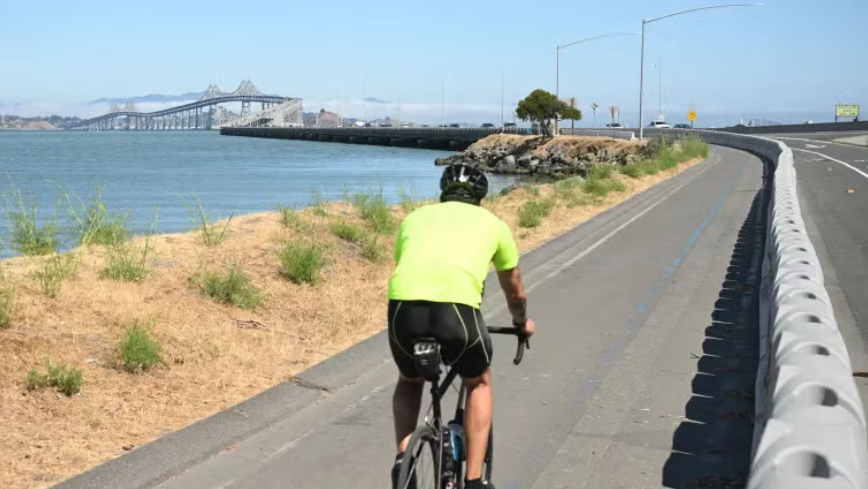
To either keep the bike-pedestrian path open 24/7 or allow conversion to breakdown lane every Mon.-Thurs.

By 511 Contra Costa

On Thursday, August 7, 2025, the San Francisco Bay Conservation and Development Commission (BCDC) will decide whether to keep the Richmond-San Rafael Bridge bike-pedestrian path open 24/7 or allow it to be converted to a breakdown lane every Mon.-Thurs. Submit comments in advance or attend meeting (virtually or in person). The meeting will last from 10:00 am – 5:00 pm.

This Commission meeting will operate as a hybrid meeting under teleconference rules established by the Bagley-Keene Open Meeting Act. Commissioners are located at the primary physical location and may be located at the teleconference locations specified below, all of which are publicly accessible. The Zoom video conference link and teleconference information for members of the public to participate virtually are also specified below.

Primary physical location

Metro Center
375 Beale Street, Board Room, San Francisco

415-352-3600

Teleconference locations

  • Earl Warren Hiram W Johnson Building: 455 Golden Gate Ave., San Francisco, CA 94102
    • 100 Howe Ave., Ste. 100 South, Sacramento, CA 95825
    • City Hall: 701 Laurel St., Allied Arts Rm., Menlo Park, CA 94025
    • 675 Texas St., Ste. 6002, Fairfield, CA. 94533
    • 176 E. Blithedale Ave., Mill Valley, CA 94941
    • 197 Palmer Ave., Falmouth, MA 02540
    • 1195 Third St., Ste. 310, Napa, CA, 94559
    • 890 Osos St., Ste. H, San Luis Obispo, CA 93401
    • 500 County Center, 5th Fl., Buckeye Conf. Rm., Redwood City, CA 94063
    • 2379 Sheffield Dr., Livermore, CA 94550
    • 1021 O St., Sacramento, CA 95814

If you have issues joining the meeting using the link, please enter the Meeting ID and Password listed below into the ZOOM app to join the meeting.

Join the meeting via ZOOM

https://bcdc-ca-gov.zoom.us/j/87295886829?pwd=my206SeP5kGy5bSz3kcbUFbbbCgxYK.1

Live Webcast

See information on public participation

Teleconference numbers
1 (866) 590-5055
Conference Code 374334

Meeting ID
872 9588 6829

Passcode
891700

If you call in by telephone:

Press *6 to unmute or mute yourself
Press *9 to raise your hand or lower your hand to speak

Details: http://511cc.org/rsrbridge

For more information about the BCDC visit

Filed Under: Government, News, Transportation, West County

Help shape Contra Costa’s transportation future

August 4, 2025 By Publisher Leave a Comment


Source: CCTA

Enter a chance to win $100!

By Contra Costa Transportation Authority

Every trip matters! No matter if you’re driving to work, catching BART, biking to school, or strolling your neighborhood, we have a plan to make traveling around our county easier, safer, and smarter.

The Contra Costa Transportation Authority (CCTA) is updating your Countywide Transportation Plan (CTP), and we’re asking residents to weigh in on the next 25 years of investments that will keep our communities moving smoothly and sustainably.

What’s on the Table?

In 2024, CCTA surveyed residents to find out what transportation solutions were most needed in their Contra Costa community — and thousands of you responded! Public engagement in early 2025 identified strategies for improving transportation

Based on your feedback, CCTA has created a series of Transformative Visions — bold project and program ideas that are visionary and will bring safer streets, more reliable transit, cleaner air, and more access to good transportation options for every corner of Contra Costa County. Your feedback will help us refine these ideas and decide which deserve top priority.

These visions are:

  • Create People-First Transportation Spaces: Redesign streets to put people first, making everyday travel safer, easier, and more comfortable.
  • Provide a Complete, Reliable Transit Network: Expand fast and reliable bus, shuttle, rail, and ferry services that come more often and connect you to key places.
  • Provide Reliable Freeway Travel: Keep freeways moving smoothly by reducing backups from crashes, better using existing travel lanes, and fixing bottlenecks.
  • Build Vibrant Communities: Revitalize and create places where people can live, gather, and connect to natural and community destinations.

Learn more about these Transformative Visions. Complete this brief survey to tell us which best fits YOUR vision for Contra Costa County. Your feedback will help us refine and update these Transformative Visions to show what the Plan’s focus should be for transportation investments in the next 25 years.

Why Take the Survey?

  • Influence real projects. Your answers guide where billions in transportation funds are spent.
  • It’s quick. The survey is mobile-friendly and takes just a few minutes.
  • Perks! Complete it and you can enter a drawing to win one of five $100 virtual Visa gift cards—the sooner you participate, the more chances you’ll have to win.
  • Survey window. The questionnaire is open through September 30, so don’t wait.

Click to take the survey.

We greatly appreciate your feedback. Individuals who complete this survey may enter a drawing to win one of five $100 virtual VISA gift cards. Winners’ names will be drawn throughout the survey period, so the earlier you take the survey, the more chances you will have to win! The survey is open through September 30.

Filed Under: Opinion, Transportation

Tri Delta Transit launches system overhaul beginning Aug. 10

July 29, 2025 By Publisher Leave a Comment

“The New TDT Network” brings community-driven changes to nearly all of the agency’s bus routes

By Leeann Loroño, Manager of Customer Service and Marketing, Tri Delta Transit

After canvassing East County for input from riders and residents over the last year, Tri Delta Transit (also known as East Contra Costa Transit Authority) is poised to launch a significant realignment of its transit system, offering service that is faster, more direct and more frequent beginning Aug. 10.

Dubbed “The New TDT Network,” this realignment brings sweeping changes to nearly every Tri Delta Transit route, informed by a blend of public feedback and data analysis. Bus routes across the system have been made faster and more direct, with better connectivity between buses and BART.

A brief video highlighting the major changes of the new network – and how they were determined – is available at revitalizetridelta.com.

Busier areas will see more frequent and consistent service, with improved weekend service across the board. The updated system introduces a brand-new route running every 15 minutes, along with four additional routes operating every 30 minutes, making morning commutes smoother for bus riders.

“We wanted to be sure these changes served local riders – particularly those who rely on transit for their morning commutes,” said Contra Costa County Supervisor Diane Burgis, who chairs Tri Delta Transit’s Board of Directors. “These updated routes – including Tri Delta Transit’s first route to run every 15 minutes – will not only greatly improve commutes for those who already ride but open up new possibilities for those whose schedules didn’t align with the previous system.”

Source: Tri Delta Transit

Integration with Tri MyRide has also been expanded to better serve the Brentwood, Antioch and Oakley areas, while maintaining existing coverage in the Pittsburg and Bay Point area.

“From the beginning of the New TDT Network initiative, our goal has been to ensure that the new network is able to better meet the needs of the communities we serve,” said Rashidi Barnes, CEO of Tri Delta Transit. “This new network is a direct result of that goal and aligns with everything we’ve heard from the public over the last year. Our riders can look forward to consistent bus service with lower wait times that offer faster, more direct routes to where they need to be.”

For details on specific route changes and other information about The New TDT Network, visit revitalizetridelta.com.

About Tri Delta Transit

Tri Delta Transit provides over 2,000,000 trips each year to a population of over 315,000 residents in the 225 square miles of eastern Contra Costa County. For additional information about the Tri Delta Transit, please visit www.trideltatransit.com.

Filed Under: East County, News, Transportation

Fact check: Claims swirling around CA gas tax increase to 61.2 cents per gallon July 1

June 30, 2025 By Publisher Leave a Comment

A legislatively mandated and voter-approved gas tax increase of 1.6 cents and updated fuel standards that could, according to experts, translate to 5 to 8 cents not 65 cents per gallon

What you need to know: There are many disingenuous claims swirling about California gas prices “set to soar” – the truth is that gas prices won’t come anywhere close to increasing by 65 cents, as many would have you believe.

By Office of the California Governor

SACRAMENTO – California gas prices are 20 cents lower than one month ago and 17 cents lower than one year ago – despite a swirl of misinformation drawing attention to current prices.

According to a 2024 report, thanks to major improvements in fuel efficiency, California drivers rank 45th in the nation for gasoline consumption and 21st in spending on gasoline per capita. Trump’s tariffs and policies impacting the price of crude oil stand to swing gas prices far more than any state policy.

Driven by misinformation pushed by Republican lawmakers and the oil industry, there remains a lot of speculation about California gas prices. Here are the facts.

CLAIM: California gas prices will go up by 65 cents or higher on July 1. 

FALSE. There are two separate changes to fuel prices expected on or around July 1 – a legislatively mandated and voter-approved gas tax increase of 1.6 cents and updated fuel standards that could, according to experts, translate to 5 to 8 cents.

  • Gas tax: California’s gasoline tax will increase by 1.6 cents per gallon, starting July 1, as required by law. This annual inflation increase was enacted by the Legislature in 2017 to help pay for road repairs – and overwhelmingly approved by voters in 2018 when they rejected a repeal attempt.
  • Fuel standard: Additionally, changes to the state’s Low Carbon Fuel Standard (LCFS) – which is not a tax – have been requested to go into effect on July 1. Experts at UC Davis estimate this program, first established by Republican Governor Arnold Schwarzenegger, could add between 5 and 8 cents per gallon – well below one extreme projection that showed 65 cents. In the long term, LCFS is estimated to reduce fuel costs for Californians per mile by 42% – translating to savings of over $20 billion in gasoline costs every year by 2045. Studies also show that LCFS credit prices have no correlation with gasoline prices.

CLAIM: Gas prices could top $8 a gallon by next year.  

FALSE. That number – widely reported in the media – comes from an unscientific analysis whose author has close ties with the oil industry and has been on the payroll of the Kingdom of Saudi Arabia. The author fails to provide evidence to support his main claim and only relies on vague references to models with no details on what those models are based on. Other experts, such as these Stanford economists, say gas price increases based on recent refinery announcements are likely to be negligible.

CalTax Says Gas Tax Will Increase to 61.2 Cents per Gallon

According to the California Taxpayers Association, California’s excise tax on gasoline will increase to 61.2 cents per gallon July 1, an increase of 1.6 cents per gallon over the current rate of 59.6 cents per gallon, the California Department of Tax and Fee Administration announced June 4.

The tax rate on diesel fuel – a matter of great interest for many businesses, especially those in the trucking and agricultural industries – will increase from 45.4 cents per gallon to 46.6 cents per gallon, likely leading to higher costs for consumers for many goods and services.

The tax increases are in addition to any other increases that may be imposed as a result of fuel standards developed by the California Air Resources Board (CARB). Increases resulting from CARB actions also would take effect July 1.

The gas tax rate has more than doubled during the past 10 years. The largest year-to-year increase occurred in 2017 as a result of SB 1 (Chapter 5, Statutes of 2017), which increased gas tax by 12 cents per gallon and increased the diesel tax by 20 cents per gallon (both effective November 1, 2017) and required that the rates be adjusted annually based on the California Consumer Price Index.

Although Californians often mention vehicle-related taxes as a topic of major concern – and cited an increase in the vehicle license tax as a major factor in their decision to recall Governor Gray Davis in 2003 – the CDTFA did not issue a news release or use its social media channels to alert the media or general public to the increase. Instead, the increase was posted on the agency’s website as a special notice to retailers of gas and diesel fuels.

Allen D. Payton contributed to this report.

Filed Under: News, State of California, Taxes, Transportation

Take Tri Delta Transit to the Contra Costa County Fair May 15-18

May 3, 2025 By Publisher Leave a Comment

The Contra Costa County Fair is coming May 15-18th. Tri Delta Transit goes to the fair, and so should you.

Enter to win a four pack of tickets to the County Fair. Four people will win! Visit www.trideltatransit.com

for details and how to enter. Come visit our booth at the fair.

Filed Under: East County, Fairs & Festivals, News, Transportation

Contra Costa Transportation Authority hosts 10th Annual Redefining Mobility Summit April 22

April 18, 2025 By Publisher Leave a Comment

Featuring latest innovations in transportation technology  

San Ramon, Calif.- The Contra Costa Transportation Authority (CCTA) will host the 10th annual Redefining Mobility Summit (RMS) in San Ramon on Tuesday, April 22. RMS, which started in 2015, has grown from a regional meeting to a global gathering of government, industry, and international (from Finland to Japan among others) transportation leaders. The day-long summit features interactive sessions and dynamic and virtual-reality demonstrations of how cutting-edge technology is paving the way for the future of transportation.

CCTA’s Executive Director, Tim Haile, will present awards to two Contra Costa County students who entered an art and design contest. The first-place winner designed an “ideal” intersection using the online gaming platform Roblox, and the second-place winner created a short film of how they use Bay Area Rapid Transit (BART) daily.

Also in attendance will be Contra Costa County’s Teacher of the Year and Dr. Cristian Gaedicke, who will discuss how they use STEM education to inspire their students to imagine and design what’s next for transit.

The Summit will be held from 8:00 AM – 4:30 PM at the Roundhouse at Bishop Ranch, 2600 Camino Ramon in San Ramon.

A welcome reception will be held Monday, April 21 at 6:00 p.m.

Agenda

8:00 AM – 8:45 AM Breakfast and Networking

8:45 AM – 9:00 AM Welcome

9:00 AM – 10:00 AM Panel: Smart Cities, Smart Solutions

10:00 AM – 10:30 AM Student Showcase

10:30 AM – 11:30 AM Panel: Building the Workforce of Tomorrow

11:30 AM – 12:00 PM Art & Design Awards

12:00 PM – 1:30 PM Lunch and Demo Zone

1:30 PM – 2:30 PM Panel: New Innovative Business Models

2:30 PM – 3:00 PM Coffee and Conversation Break

3:00 PM – 4:00 PM Panel: The Next Frontier of Autonomous Mobility

4:00 PM – 4:30 PM Closing Remarks

Tickets are $395 per person plus fee to attend. To register and for more information visit The 10th Annual Redefining Mobility Summit, Tuesday, April 22, 2025.

Filed Under: San Ramon Valley, Technology, Transportation

West County: Richmond-San Rafael Bridge night bike lane closure for maintenance April 20 & 21

April 18, 2025 By Publisher Leave a Comment

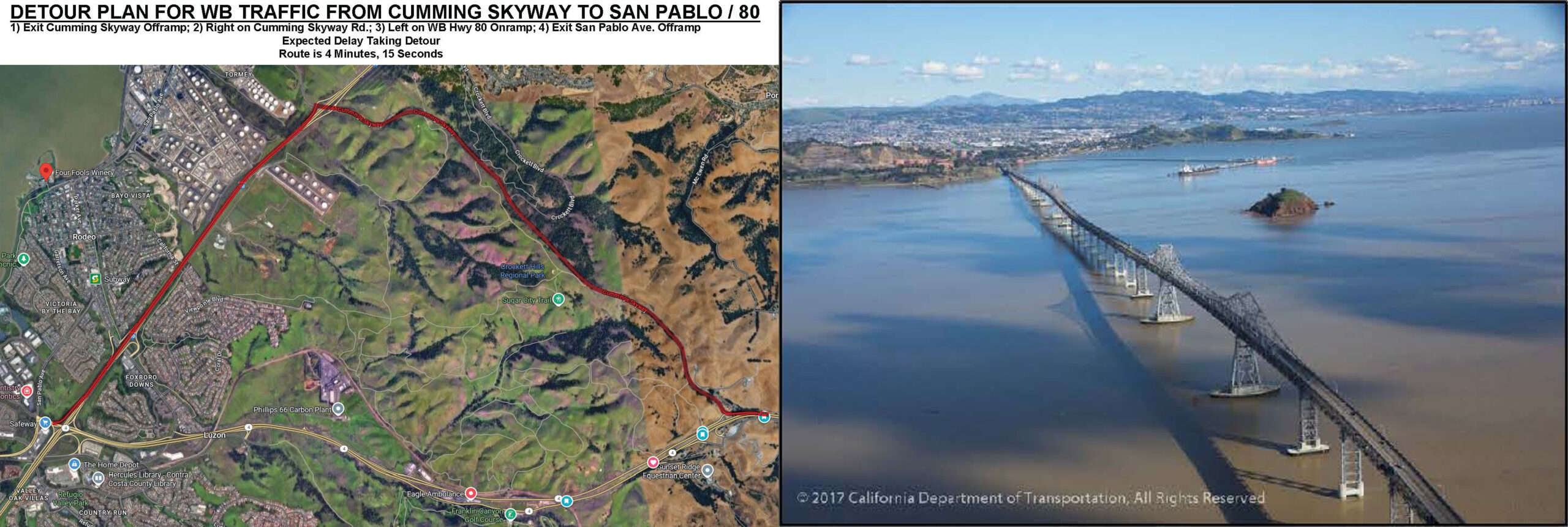
Richmond-San Rafael Bridge. Photo: Caltrans

Sunday, April 20 and Monday, April 21 from 9 p.m. until 5 a.m.

By Matt O’Donnell, PIO & Gia Whiteside, Associate Governmental Program Analys, California Dept of Transportation

Contra Costa County, Marin County — Caltrans is scheduled to close the bike lane in the Westbound direction of the Richmond-San Rafael Bridge (I-580) on Sunday, April 20 and Monday, April 21 from 9 p.m. until 5 a.m. the following mornings to perform sweeping and general maintenance.

Shuttle services will be provided at the Stenmark Drive Bridge entrance and at Vista Point in San Rafael for those impacted by the closure.

Speed limit signs will be posted as 40 mph in construction areas.

Caltrans will turn on Changeable Message Signs (CMS) to notify the public ahead of time.

For 24/7 traffic updates, please visit 511.org: https://x.com/511SFBay
For real-time information, visit Caltrans QuickMap: https://quickmap.dot.ca.gov
Follow us on X: https://x.com/CaltransD4
Or call 1-800-472-7623, 1-800-427-ROAD for state highway conditions statewide.

Filed Under: News, Transportation, West County

City of San Pablo wins 3 major Public Works project awards

March 14, 2025 By Publisher Leave a Comment

These awards from the Northern California Chapter of the American Public Works Association (APWA) highlight the City of San Pablo’s extraordinary vision and dedication that are transforming San Pablo into a safer, greener, and more sustainable community. Source: City of San Pablo

By Carl Dameron, Vice President of Public Relations, Strategy Research Institute

The City of San Pablo took home three major awards at the 2025 APWA Project Awards Ceremony, hosted by the Northern California Chapter of the American Public Works Association, on February 20, 2025.

The Rumrill Blvd. Complete Streets Project won both the Small Cities Transportation Project of the Year award and the prestigious Project of the Year awards.

Rendering of improvements to Rumrill Blvd. between Costa Avenue and Market Avenue. Source: City of San Pablo

Additionally, the San Pablo Public Works Department received the Exceptional Performance in Sustainable Practices award, recognizing the City’s commitment to innovative, sustainable projects that benefit both the community and the environment.

Rendering of improvements to Rumrill Blvd. between Market Avenue and San Pablo Avenue. Source: City of San Pablo

“This is an acknowledgement of the City’s commitment to making San Pablo a wonderful community where to reside,” said Allan Panganiban, Public Works Director/City Engineer.

Filed Under: Honors & Awards, Infrastructure, News, Transportation, West County

Caltrans work on Antioch bridge to continue March 17-21

March 14, 2025 By Publisher Leave a Comment

Source: Caltrans

One-way traffic control for maintenance work.

Expect delays & follow flaggers.

Contra Costa County— Caltrans’ scheduled one-way traffic control on the Antioch John A. Nejedly Bridge (SR-160) to continue Monday March 17th from 7 a.m. until 2 p.m.

Southbound SR-160 from the North End of the bridge to the Antioch Toll Plaza will be closed daily from from March 17-21, 2025. Traffic will be able to flow Southbound in the Northbound Lane when clear by flaggers holding traffic coming Northbound at the South End of the Bridge.
The closure will extend the entire length of the bridge.

A pilot car will be implemented and the speed will be restricted to 25 mph in the work zone.

Caltrans will turn on Changeable Message Signs (CMS) to notify the public ahead of time.
For real-time traffic, click on Caltrans QuickMap: http://quickmap.dot.ca.gov/


Filed Under: East County, Infrastructure, News, State of California, Transportation

  • « Previous Page
  • 1
  • 2
  • 3
  • 4
  • 5
  • …
  • 30
  • Next Page »
Monica's-Riverview-Jan-2026
Liberty-Tax-Jan-Apr-2026
Deer-Valley-Chiro-06-22

Copyright © 2026 · Contra Costa Herald · Site by Clifton Creative Web