• Home
  • About The Herald
  • Local Agencies
  • Daily Email Update
  • Legal Notices
  • Classified Ads

Contra Costa Herald

News Of By and For The People of Contra Costa County, California

  • Arts & Entertainment
  • Business
  • Community
  • Crime
  • Dining
  • Education
  • Faith
  • Health
  • News
  • Politics & Elections
  • Real Estate

Diablo Range officially becomes a California conservation priority

August 18, 2026 By Publisher Leave a Comment

Hikers explore Strathearn Ranch Natural Reserve in the Diablo Range. Photo: Scott Hein. Source: Save Mount Diablo

By Laura Kindsvater, Senior Communications Manager, Save Mount Diablo

SACRAMENTO, CA—On August 13, the California legislature did something historic when they recognized and approved the Diablo Range as an official California conservation priority deemed critical to helping the state meet its 30×30 initiative to address the climate crisis.

A California condor soars over Pinnacles National Park in the Diablo Range. Photo: Scott Hein. Source: Save Mount Diablo

Last year, Save Mount Diablo sponsored an Assembly Concurrent Resolution (ACR), authored by Assemblymember Rebecca Bauer-Kahan, officially recognizing the Diablo Range as a California conservation priority.

Assembly Concurrent Resolution, ACR 107, was reviewed and approved by the Assembly Committee on Water, Parks, and Wildlife on September 10, 2025, after we provided testimony to the committee addressing the need for the resolution.

Our Diablo Range resolution then went before the Assembly, where it was reviewed and approved on September 13, 2025.

On June 9, 2026, we provided testimony in support of ACR 107 to the Senate Natural Resources and Water Committee, and thereafter they approved our Diablo Range resolution.

Then on August 13, 2026, the Senate approved ACR 107 unanimously (33-0). With that final approval, our Diablo Range resolution was adopted, thereby officially recognizing the Diablo Range as a California conservation priority critical to helping the state meet its 30×30 initiative.

Introducing the resolution to the Senate floor for a vote, Senator John Laird remarked, “On behalf of Assemblymember Bauer-Kahan, I rise with alacrity to present ACR 107 . . . which recognizes the importance of the Diablo Range, one of California’s most significant overlooked natural landscapes. This covers 4 million acres, 12 counties, some of which I represent. It was a trivia question at the Senate Democratic Caucus, and not many people knew where the Diablo Range was. Now they do, because this resolution celebrates the ecological, historical, and economic significance of the Diablo Range and encourages continued stewardship of the landscape.”

Tule elk in the San Antonio Valley, part of the Diablo Range. Photo: Sean Burke. Source: Save Mount Diablo

The Diablo Range is over 200 miles long, contains more than 4 million acres that are largely intact and undeveloped, and is less than 30 percent conserved. And this mountain range runs through 12 counties, with Mount Diablo in its northernmost county of Contra Costa.

The Diablo Range is an immense and important wildlife habitat corridor, teeming with biodiversity. It is home to hundreds of rare and endangered species, such as the California condor and blunt-nosed leopard lizard.

More than 10 million people reside in communities immediately surrounding the Diablo Range, so protecting more lands and creating more parks within the range has been identified as a fantastic way to help more people get access to nature.

The Diablo Range provides California with one of its best opportunities to meet multiple goals in its 30×30 initiative set up to help the state address the climate crisis.

California’s 30×30 initiative aims to conserve 30 percent of the state’s lands and coastal waters by 2030, promoting biodiversity, climate resilience, and access to nature.

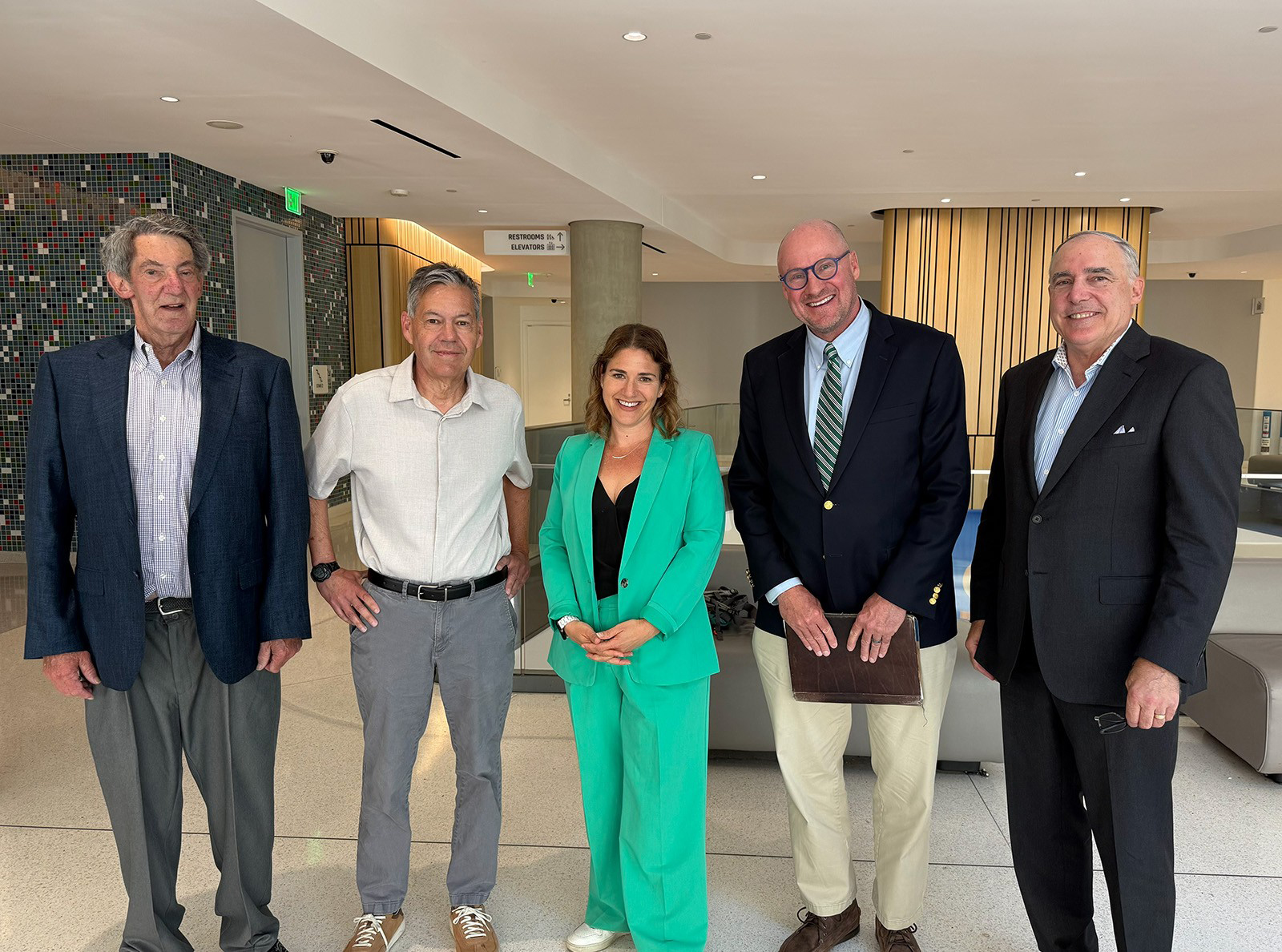
California Assemblymember Rebecca Bauer-Kahan (center) is joined by (L-R) Save Mount Diablo Board member Jim Felton, Board President Robert Phelps, Executive Director Ted Clement and Board member Phil O’Loane. Photo: Dylan Finley. Source: Save Mount Diablo

We thank Assemblymember Rebecca Bauer-Kahan; Senator John Laird, who gave ACR 107 a great introduction on the floor of the Senate before the Senate vote; and the rest of the California legislature that approved our Diablo Range resolution.

We also give thanks to our Save Mount Diablo team who worked hard on this historic effort, including a small group of staff, Board members, and leadership donors to our Diablo Range Campaign.

Further, we thank our legislative advocate, Douglas D. Houston, and his team at Houston Magnani and Associates who assisted us throughout this process. Finally, we thank all our partner organizations, agencies, and supporters who sent ACR 107 support letters to the legislature.

The California legislature’s historic approval of our resolution has just given much needed visibility, attention, and momentum to protecting the previously little-known, yet hugely important, Diablo Range.

Filed Under: Environment, Legislation, News, Parks, Recreation

CA says you must affirm gender ideology to keep your job

August 16, 2026 By Publisher 1 Comment

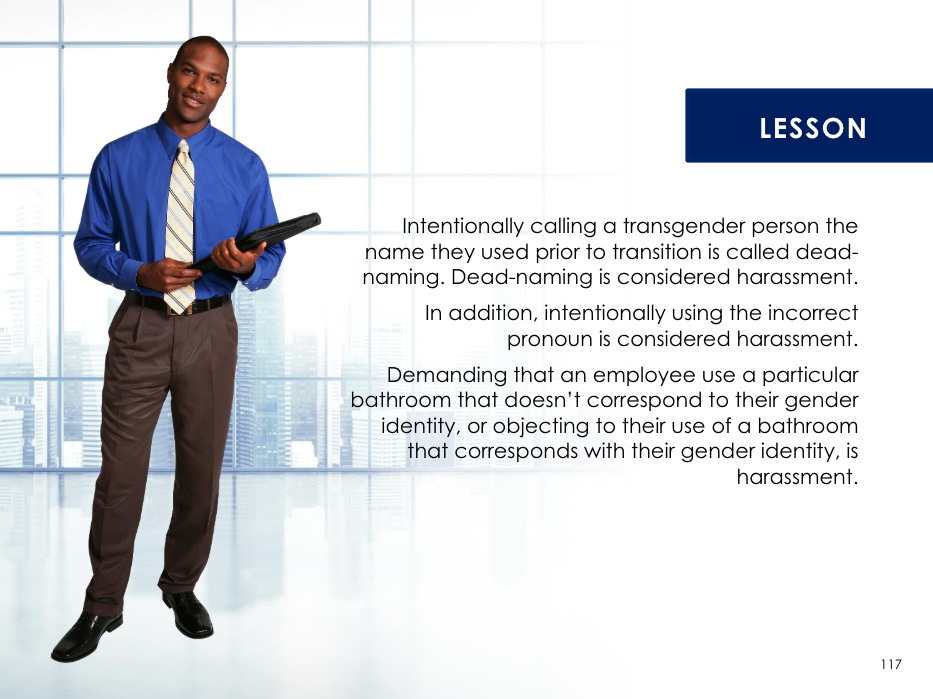
Sexual harassment training slide. Source: CA Civil Rights Department

“Misusing a coworker’s pronouns is sexual harassment”

By California Family Council

SACRAMENTO, CA —  Christian radio host Dennis McCourt sat down at his computer earlier this year to complete a training California law required. He got a few slides in, read a question asking him to affirm that misusing a coworker’s pronouns is sexual harassment, and stopped.

“There’s absolutely no way I’m going to do this,” McCourt said in an interview. “You could put a gun to my head. I won’t do it.”

McCourt works for an out-of-state Christian software company with two employees in California. That was enough to pull his employer into one of the most far-reaching workplace training mandates in the country, a law that requires employees to affirm concepts about gender identity that some religious workers say conflict with their faith. Whether the law exempts religious employers at all is a question no court, regulator, or state agency has definitively answered.

A Law That Grew

California has required sexual harassment training since 2005, but two later bills changed its scope substantially. In 2017, then-state Sen. Ricardo Lara authored SB 396, requiring employers with 50 or more employees to add training on harassment based on gender identity, gender expression and sexual orientation. The following year, then-state Sen. Holly Mitchell authored SB 1343, which dropped the threshold to five employees and extended the one-hour training requirement to all employees, not just supervisors. Both are now part of Government Code section 12950.1, and the next compliance deadline for covered employers is Jan. 1, 2027.

The law’s reach surprises many employers. A company must train its California workers if it has five or more employees anywhere in the country, even if only one works in California and the company is headquartered elsewhere, which is how McCourt’s employer became subject to it.

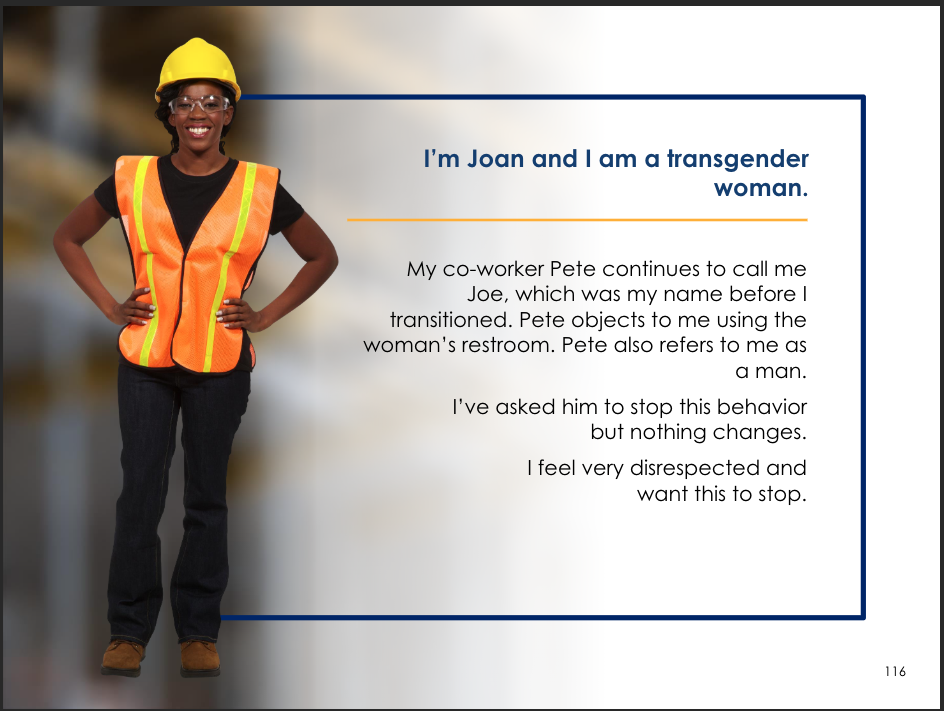
Sexual harassment training slide. Source: CA Civil Rights Department

An Unanswered Exemption Question

California’s Fair Employment and Housing Act generally excludes nonprofit religious organizations from the definition of “employer”, shielding churches and qualifying religious groups from many discrimination and harassment claims. But the training mandate in section 12950.1 defines “employer” on its own terms, covering any business with five or more workers, without mentioning religion or nonprofit status.

The Church Law Center of California, a firm that represents churches and religious nonprofits statewide, tells its clients they are not exempt from the training requirement. Separately, the employment law firm Weintraub Tobin has noted that other FEHA provisions requiring “all” employers to comply only “impliedly” carry forward the religious exemption found elsewhere in the code, leaving open whether that exemption applies to the training mandate specifically.

California Family Council, a Fresno-based Christian advocacy organization that tracks religious liberty issues in state law, says it has found no published court decision, no attorney general opinion, and nothing on the Civil Rights Department’s website that resolves the question. The department’s guidance repeats that the requirement applies to “all employers with five or more employees” without addressing religious organizations directly.

Even if courts eventually find that the law does reach religious employers, a further question remains untested: whether the First Amendment requires an exemption when a religious organization’s staff are asked to affirm gender identity content as a condition of compliance. Employment attorneys say that question has not yet been litigated in this context.

Sexual harassment training slide. Source: CA Civil Rights Department

What the Training Covers (see training slides here…)

The Civil Rights Department’s free supervisor training, posted at calcivilrights.ca.gov/shpt, goes beyond conduct rules into concepts about gender. One slide defines “gender identity” as a person’s internal sense of being male, female, a combination of the two, neither, or nonbinary and states that gender identity can differ from the sex a person was “assigned at birth”.

The training also walks supervisors through a scenario in which a transgender employee reports that a coworker keeps using their prior name and pronouns and has objected to their use of the women’s restroom. The training’s slides state that continuing to use a person’s prior name after a gender transition, known as “dead-naming”, “is considered harassment”, that intentionally using the wrong pronoun “is considered harassment”, and that objecting to a coworker’s restroom use based on their stated gender identity “is harassment”.

Under that framing, an employee who voices disagreement with a coworker’s restroom use, without any complaint, rudeness, or other conduct involved, has engaged in harassment as the state defines it.

Supervisors also required to watch the following video about gender and sexual orientation ideology. Notice how everything in this video is stated as facts with no acknowledgement that some employers and employees might have differing viewpoints that should also be respected. Watch here. 

The training separately warns supervisors that they can be held personally, not just professionally, liable: one slide states that employees who believe they were harassed “can sue the person who harassed them for money damages,” in addition to any action taken against the employer.

California’s own list of protected characteristics places “religion, creed” and “gender identity, gender expression” side by side as equally protected classes. Critics of the training, including McCourt and California Family Council, argue that the material puts those protections in direct tension by casting a sincerely held religious view about sex and gender as itself a form of discrimination.

Sexual harassment training slide. Source: CA Civil Rights Department

One Employee’s Refusal

McCourt’s employer required him to affirm the training’s gender identity statements before he could move to the next slide. The platform allowed a comment field, and McCourt used it on every page to record his objection rather than let a silent click stand in for agreement.

“It’s not simply passively listening to the theory,” McCourt said. “It’s having to affirm it to get to the next page, to comply with the state’s requirement and my employer’s requirement.”

McCourt’s objection is rooted in a traditional Christian reading of Genesis, which he and many other Christians understand as teaching that God created human beings male and female. For McCourt, being asked to affirm a different framework in writing is not a minor technicality but a direct conflict with that belief.

He has told his employer he cannot comply and is seeking either a religious accommodation or an alternative curriculum, and is reaching out to Christian legal organizations for help. Federal and state law both generally require employers to accommodate a sincerely held religious belief unless doing so would impose a genuine undue hardship on the business, a standard that predates this training mandate. Whether that standard applies here, and how, is the question now taking shape.

McCourt is also asking pastors in his network to speak out on the mandate.

“I have a genuine concern regarding my fellow brothers and sisters in Christ being discipled by the state of California regarding their sexual ethic,” he said. “The fact that thousands of pastors in CA are not even aware that their church members are being forced into this indoctrination is very disturbing.”

Greg Burt, vice president of California Family Council, argues the training crosses a line. “California isn’t just regulating workplaces anymore. It’s dictating what its citizens must believe,” Burt said. “No state agency has the authority to force a Christian to affirm, in writing, a view of gender he doesn’t hold. That isn’t harassment prevention. That’s compelled speech.”

McCourt points to a passage in Acts 5:29, in which the apostles tell religious authorities they “must obey God rather than men,” when they were told they should not longer speak about Jesus and his teachings. This is the biblical text he and other Christians draw on when they say conscience should take precedence over a legal requirement they believe conflicts with their faith.

Sexual harassment training slide. Source: CA Civil Rights Department

A Broader Pattern

California Family Council says this case fits a pattern it has documented in other settings, including gender-identity training for public school teachers through the state’s PRISM program, pronoun policies at the University of California, and training mandates for healthcare workers. In each case, the organization argues, Californians have faced pressure to affirm a contested view of sex and gender or risk professional consequences.

What Happens Next

California Family Council is compiling a list of pastors, employers and employees willing to go on record about the training requirement ahead of the Jan. 1, 2027 compliance deadline. The organization says it is continuing to consult attorneys on the exemption question and plans to press the Civil Rights Department and state lawmakers for clarity on whether religious organizations are covered.

About California Family Council

California Family Council works to advance God’s design for life, family, and liberty through California’s Church, Capitol, and Culture. By advocating for policies that reinforce the sanctity of life, the strength of traditional marriages, and the essential freedoms of religion, CFC is dedicated to preserving California’s moral and social foundation.

Filed Under: Employment, Faith, Legal, Legislation, News

The rules just changed for Californians 55 to 64 on food assistance

August 15, 2026 By Publisher 4 Comments

Photo: WPE

Able-bodied must now document 80 hours a month of work, job training or volunteering

By Tyler McCarthy, Outreach Associate and Eve Birge, CEO, White Pony Express

Until this June, if you were 55 to 64 and on CalFresh, you were exempt from the program’s strictest work rules. Not anymore.

Under the One Big Beautiful Bill Act, signed into law in July 2025, adults in that age range who are considered able-bodied and don’t have a child under 14 at home must now document 80 hours a month of work, job training or volunteering — or lose their food assistance after three months. California’s rules changed June 1.

Think about who that catches. Too young for Medicare. Too early for full Social Security without a permanent cut to the check. Often job-hunting in a market that stopped calling back the moment their resume showed 20 years of experience.

Learn about the new rules for other age groups, here.

Nationally, SNAP (Supplemental Nutrition Assistance Program) enrollment has dropped by four and a half million people since the law passed — about 11 percent. Fewer people getting help is not the same as fewer people needing it, and this is exactly the age group already reporting the most hardship. Food insecurity among adults 50 and older has been climbing for two decades, and it shows up later as worse health, poorer diets and a harder time managing chronic disease. Meanwhile, groceries cost around 30 percent more than they did before the pandemic. More than 4 in 10 older adults now say prices at the store have outrun their budget, according to AARP.

White Pony Express meets them where they already are. Nearly all its 144 partner agencies serve older adults; 18 serve seniors exclusively. Its drivers bring fresh produce, dairy and protein to senior housing and community centers, and set it out like a farmers’ market, not a handout, so people choose what they want and stay to visit, share recipes and build community.

The program coordinator at a food pantry in San Pablo explained it best: “We serve seniors who have a fixed income and use it to pay bills and rent. Food is something they have to find. They survive through this kind of service.”

Since 2013, White Pony Express (WPE) has done this at no cost to its nonprofit recipients and no cost to the people they feed. Help WPE reach more neighbors: volunteer or donate at whiteponyexpress.org.

White Pony Express is a food rescue nonprofit based in Concord, California.

Sources:

  1. Until this June, if you were 55 to 64 and on CalFresh, you were exempt from the program’s strictest work rules. Not anymore.
    1. “OBBBA raises the age limit for ABAWD work requirements, from 55 to 64.” (Think Global Health, 2026)
  2. Under the One Big Beautiful Bill Act, signed into law in July 2025, adults in that age range who are considered able-bodied and don’t have a child under 14 at home must now document 80 hours a month of work, job training or volunteering — or lose their food assistance after three months.
    1. “Under the One Big Beautiful Bill Act, more adults need to prove they work or volunteer for at least 80 hours a month to access food benefits. These work requirements now apply to veterans, homeless individuals, young adults aging out of foster care, parents with a child between 14 and 17, and people between 55 and 64.” (NPR, 2026)
    2. “People who have to meet the work or community engagement requirement must participate in qualifying activity for up to 20 hours per week, or 80 hours averaged monthly. Qualifying activities include:
  • Paid employment
  • Volunteer work or community service
  • Job training or work programs
  • Education
  • Workfare
  • Combination of any of the above.” (CDSS, 2026)
  1. California’s rules changed June 1.
    1. “Starting June 1, 2026, the federal government’s rules on CalFresh work and community engagement requirements are changing in California. This means that some CalFresh recipients between the ages of 18-64 will have to meet work and community engagement requirements to keep their CalFresh benefits.” (CDSS, 2026)
  2. Nationally, SNAP enrollment has dropped by four and a half million people since the law passed — about 11 percent.
    1. “We estimate that SNAP participation nationwide fell by more than 4.5 million people (11 percent) between the law’s July 2025 enactment and April 2026, based on the latest month of data from the U.S. Department of Agriculture (USDA) and data from the Georgia Department of Human Services provided in an open records request.” (CBPP, 2026)
  3. Food insecurity among adults 50 and older has been climbing for two decades, and it shows up later as worse health, poorer diets and a harder time managing chronic disease.
    1. “Food insecurity among older adults has risen over the past two decades, contributing to poorer diet quality, declining physical health, heightened risk of cognitive impairment, and more challenging chronic disease management.” (Think Global Health, 2026)
  4. Meanwhile, groceries cost around 30 percent more than they did before the pandemic.
    1. “The price of food purchased for home use rose 33% from 2019 through June 2026.” (AP News, 2026)
  5. More than 4 in 10 older adults now say prices at the store have outrun their budget, according to AARP.
    1. “In a December 2025 AARP survey, more than 4 in 10 adults ages 50-plus said grocery prices now cost more than they can afford, compared with one-third of adults under 50.” (AARP, 2026).

Filed Under: Food, Legislation, News, Seniors

CA State Senate rewrite of “sex offender” bill still allows predators to run for office

August 12, 2026 By Publisher Leave a Comment

Photos by CA Family Council

Vote in Senate as early as Thursday

New language by Senate Elections and Constitutional Amendments Committee chaired by Senator Scott Wiener also exempts crimes against disabled victims and, in some cases, children under 14.

WARNING: Graphic content

By California Family Council

SACRAMENTO, CA — AB 2691, the Public Trust Protection Act, could be voted on the Senate floor as soon as tomorrow morning, Thursday, Aug. 13, 2026. On August 4, the bill’s authors quietly rewrote its central definition. They did not fix the problem California Family Council (CFC) raised in June. They made it bigger, and harder to see.

Background

AB 2691, authored by Assemblywoman Dawn Addis (D-Dawn Addis), passed the Assembly floor 67 to 0. It would bar people convicted of felony sexual assault or human trafficking from holding public office, a policy CFC supports. On June 24, the Senate Elections and Constitutional Amendments Committee, chaired by Senator Scott Wiener (D-San Francisco), added language exempting felony sodomy, oral copulation and sexual penetration when the victim is a minor age 14 to 17.

CFC Vice President Greg Burt testified against that exemption on June 30 and asked the committee to restore the bill to the form the Assembly passed unanimously. The committee advanced the bill anyway, 4 to 1, with only Senator Steven Choi (R-Irvine) voting no.

What Changed on August 4, and How California’s Sex Offender Registry Actually Works

The named exemption for ages 14 to 17 is gone from the bill text. In its place, Addis rewrote the bill to define “sexual assault” using California’s sex offender registration system, and only the most severe part of it.

California sorts every registerable sex offense into one of three tiers, based on how serious the offense is:

  • Tier 1 requires registration for 10 years. It covers misdemeanor sex offenses and the least serious felony sex offenses.
  • Tier 2requires registration for 20 years. It covers felony sex offenses that state law separately classifies as “serious” or “violent”, along with a short list of specifically named crimes.
  • Tier 3 requires registration for life. It is reserved for the most serious sex crimes: forcible rape, forcible sodomy, aggravated sexual assault of a child, and similar offenses.

Under the bill the Assembly passed, a felony conviction under any of six penal code sections covering rape, sodomy, oral copulation, and sexual penetration disqualified a candidate, full stop. Under the August 4 rewrite, a conviction only disqualifies a candidate if it happens to fall into Tier 3 of the sex registry list. A conviction that falls into Tier 1 or Tier 2, no matter how serious the underlying crime actually was, no longer counts.

That single change does not narrow the original exemption. It widens it.

  • Crimes against minors age 14 to 17 remain exempted. The specific carve-out is gone by name, but the conduct it covered, non-forcible sodomy, oral copulation, and sexual penetration of a 14-to-17-year-old, is a Tier 1 offense. It still falls outside the bill’s new definition.
  • Sex crimes against disabled victims are now exempted. Non-forcible sodomy and sexual penetration of a victim who cannot legally consent because of a mental disorder or a developmental or physical disability are Tier 2 offenses and fall below the bill’s new threshold.
  • Under certain circumstances, so do sex crimes against children under 10. A first-time, non-forcible conviction for molesting a child under 14, which includes children under 10, is a Tier 2 offense and no longer disqualifies a candidate under the bill’s new language, unless the act specifically involved intercourse, sodomy, oral copulation, or penetration, which remain covered under a separate, Tier 3 statute.

“We asked this Assemblywoman Addis in June to send this bill back to the form the Assembly passed unanimously. Instead, she took the exemption we objected to, deleted the sentence that named it, and buried the same result inside a much bigger loophole,” said CFC Vice President Burt. “Sex crimes against 14 to 17-year-olds are still exempted. Now sex crimes against people with disabilities are exempted too. And under the right circumstances, so is molesting a child under 14. This bill was supposed to keep sex offenders out of public office. As written, it tells some of them they’re still welcome to run.”

Call to Action

The Senate could vote on AB 2691 as early as tomorrow morning. California Family Council urges senators to vote no on the bill as currently written and urges Californians to contact their state senator today.

About California Family Council

California Family Council works to advance God’s design for life, family, and liberty through California’s Church, Capitol, and Culture. By advocating for policies that reinforce the sanctity of life, the strength of traditional marriages, and the essential freedoms of religion, CFC is dedicated to preserving California’s moral and social foundation.

APPENDIX: Affected Crimes, With Penal Code Citations

This list is limited to items independently confirmed against the text of Penal Code section 290, subdivisions (d)(1) through (d)(3), and Penal Code section 667.5(c). Additional items appear in supplemental research from a California State Senate office; those are not included here pending independent confirmation.

No Longer Disqualifying: Tier 1 Offenses (10-Year Registration)

Penal Code 286(b) — sodomy, non-forcible, victim under 18

Penal Code 287(b), or former 288a(b) — oral copulation, non-forcible, victim under 18

Penal Code 289(h) and (i) — sexual penetration by foreign object, non-forcible, victim under 18

Penal Code 289.5 — fleeing to California to avoid prosecution or custody for a registerable sex offense committed in another state (misdemeanor)

No Longer Disqualifying: Tier 2 Offenses (20-Year Registration)

Penal Code 285 — incest

Penal Code 286(g) — sodomy of a victim who cannot legally consent due to a mental disorder or a developmental or physical disability

Penal Code 286(c)(1) — sodomy of a victim under 14, where the offender is more than 10 years older, without force

Penal Code 288(a) — a lewd or lascivious act on a child under 14, first offense, without force. This is California’s basic child molestation statute.

Penal Code 288.3 — contacting a minor with intent to commit a felony, specifically when the underlying intent was to violate 286(b), 287(b), or 289(h)/(i)

Penal Code 289(b) — sexual penetration of a victim who cannot legally consent due to a mental disorder or a developmental or physical disability

Penal Code 647.6 — annoying or molesting a child, second or subsequent offense

Still Disqualifying: Tier 3 Offenses (Lifetime Registration)

Penal Code 236.1(c) — human trafficking of a minor for a commercial sex act

Penal Code 266h(b) — aggravated pimping of a minor

Penal Code 266i(b) — aggravated pandering of a minor

Penal Code 266j — procuring a child under 16 for a lewd act

Penal Code 269 — aggravated sexual assault of a child

Penal Code 286(c)(2) and (d) — forcible sodomy of a child under 14, including in concert

Penal Code 287(c) and (d), or former 288a — forcible oral copulation of a child under 14, including in concert

Penal Code 288(b) — a lewd act on a child under 14 committed by force

Penal Code 288(c) — a lewd act on a 14- or 15-year-old, where the offender is at least 10 years older

Penal Code 288.2 — sending harmful matter to a minor with intent to seduce, felony

Penal Code 288.3 — contacting a minor with intent to commit a felony, except when the intent was to violate 286(b), 287(b), or 289(h)/(i)

Penal Code 288.5 — continuous sexual abuse of a child

Penal Code 288.7 — sexual intercourse, sodomy, oral copulation, or sexual penetration with a child age 10 or younger

Penal Code 289(a) — forcible sexual penetration

Penal Code 653f(c) — soliciting another person to commit rape, sodomy, oral copulation, or a lewd act on a child

A felony sentenced to a mandatory life term under Penal Code 667.61 (“One Strike” law)

Designation as a habitual sex offender under Penal Code 667.71

A second, separately tried conviction under Penal Code 288(a)

Sources: California Penal Code section 290, subdivisions (d)(1) through (d)(3), and Penal Code section 667.5(c), both available at leginfo.legislature.ca.gov.

Filed Under: Legislation, News, Politics & Elections, State of California, Youth

Contra Costa Health deploys SmartGateway for enhanced security measures

August 8, 2026 By Publisher Leave a Comment

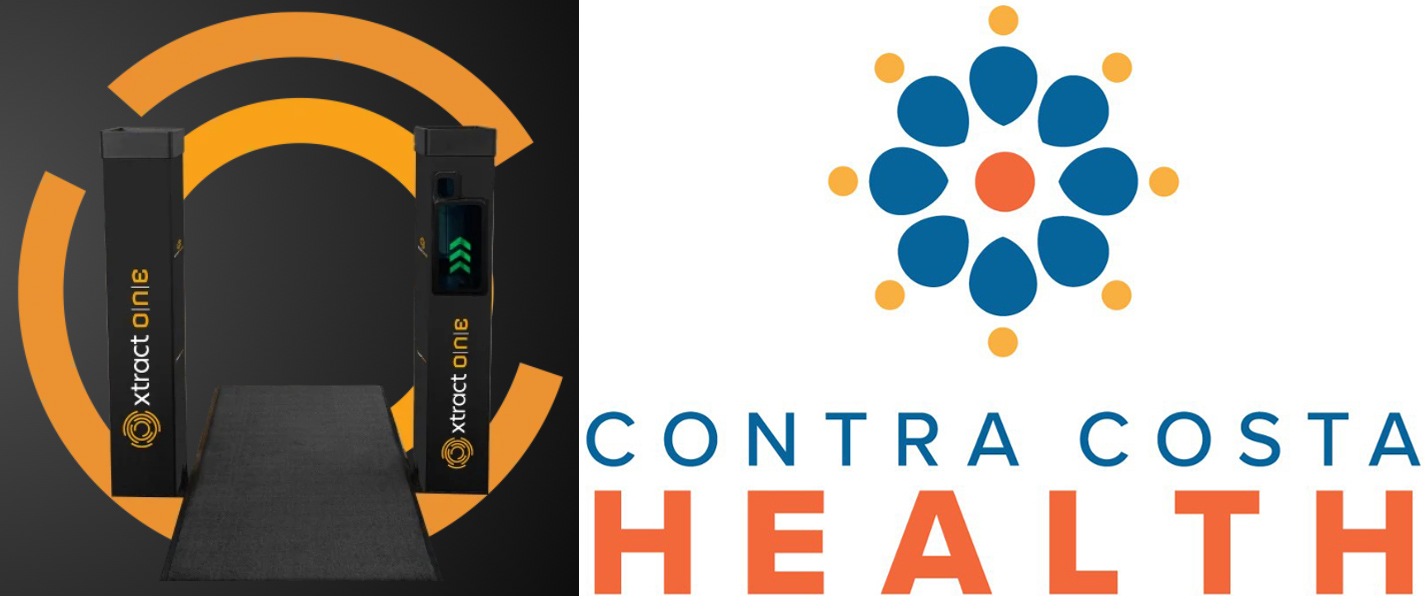
The SmartGateway weapons detector. Graphic source: Xtract-One

Adopts AI-powered weapons detection at medical facilitis ahead of state law compliance deadline

By Kristen Aikey, JMG Public Relations

Toronto, ON –Xtract One Technologies (TSX: XTRA)(OTCQX: XTRAF)(FRA: 0PL) (“Xtract One” or the “Company”) announced recently multiple SmartGateway deployments across California healthcare facilities, reflecting growing demand from health systems across the state ahead of the March 2027 compliance deadline for California Assembly Bill 2975. Deployments are underway at Contra Costa Health in Martinez and Hazel Hawkins Memorial Hospital in Hollister, with expected completion by mid-August, in addition to the previous San Mateo Health deployment.

AB 2975 requires hospitals across California to implement enhanced security measures at high-traffic public entrances by March, 2027. The mandate reflects a broader recognition among healthcare administrators and state regulators that emergency departments and other public-facing hospital entrances require dedicated screening to protect staff and patients from weapons-related violence.

“California health systems are making real procurement decisions right now, and the facilities selecting Xtract One are doing so because the technology fits the environment,” said Peter Evans, CEO of Xtract One. “SmartGateway was built for high patient and visitor volumes, diverse populations, and clinical staff who need to focus on care. What we’re seeing across Hazel Hawkins, Contra Costa Health, and San Mateo – and more broadly with healthcare systems in general – is that once an organization sees accurate, high-throughput detection running in a real hospital environment, expanding the solution across the facility becomes an obvious next step.”

Xtract One’s presence in California healthcare predates the AB 2975 mandate. San Mateo Medical Center deployed SmartGateway at its main campus in 2025 following extensive testing of available solutions, with plans to expand to all satellite clinics. The Contra Costa Health deployments build on that established footprint as health systems across the state accelerate their procurement timelines ahead of the March 2027 deadline.

Xtract One’s SmartGateway is designed specifically for high-throughput environments with lower volumes of personal belongings. The system identifies concealed guns and knives while allowing individuals to walk through at a natural pace without divesting personal items, distinguishing it from traditional walk-through metal detectors that alert broadly on any metal object. For healthcare environments where speed and accessibility are

Contra Costa Health, Martinez, CA

Contra Costa Health has also selected three SmartGateway systems for deployment across its main entrance, emergency department, and psychiatric entrance in the primary hospital facility. The deployment is driven by a clear security mandate of detecting and intercepting firearms and bladed weapons before they reach clinical environments. Contra Costa Health has prioritized detection accuracy above all other operational considerations, implementing a bag check protocol alongside SmartGateway screening at its main entrance to ensure the most thorough possible security posture across all three entry points.

To learn more, visit www.xtractone.com.

About Xtract One

Xtract One Technologies is a leading technology-driven provider of threat detection and security solutions leveraging AI to deliver seamless and secure experiences. The Company makes unobtrusive weapons and threat detection systems that are designed to assist facility operators in prioritizing- and delivering improved “Walk-right-In” experiences while enhancing safety. Xtract One’s innovative portfolio of AI-powered Gateway solutions excels at allowing facilities to discreetly screen and identify weapons and other threats at points of entry and exit without disrupting the flow of traffic. With solutions built to serve the unique market needs for schools, hospitals, arenas, stadiums, manufacturing, distribution, and other customers, Xtract One is recognized as a market leader delivering the highest security in combination with the best individual experience. For more information, visit www.xtractone.com or connect on Facebook, X, and LinkedIn.

About Contra Costa Health

Contra Costa Health is the integrated public health system serving Contra Costa County. The system operates a network of hospitals, clinics and public health programs serving hundreds of thousands of residents across the county, with a focus on accessible care for all community members regardless of ability to pay. For more information, visit www.cchealth.org.

About Threat Detection Systems

Xtract One solutions, when properly configured, deployed, and utilized, are designed to help enhance safety and reduce threats. Given the wide range of potential threats in today’s world, no threat detection system is 100% effective. Xtract One solutions should be utilized as one element in a multilayered approach to physical security.

Forward Looking Statements

This news release contains forward-looking statements within the meaning of applicable securities laws. All statements that are not historical facts, including without limitation, statements regarding future estimates, plans, programs, forecasts, projections, objectives, assumptions, expectations or beliefs of future performance and customer contracts, are “forward-looking statements”. Forward-looking statements can be identified by the use of words such as “plans”, “expects” or “does not expect”, “is expected”, “estimates”, “intends”, “anticipates” or “does not anticipate”, or “believes”, or variations of such words and phrases or statements that certain actions, events or results “may”, “could”, “would”, “might” or “will” be taken, occur or be achieved. Such forward-looking statements involve known and unknown risks, uncertainties and other factors that may cause actual results, events or developments to be materially different from any future results, events or developments expressed or implied by such forward looking statements. Such risks and uncertainties include, but are not limited to, the risks detailed from time to time in the continuous disclosure filings made by the Company with securities regulations. These factors should be considered carefully, and readers are cautioned not to place undue reliance on such forward-looking statements. Although the Company has attempted to identify important risk factors that could cause actual actions, events or results to differ materially from those described in forward-looking statements, there may be other risk factors that cause actions, events or results to differ from those anticipated, estimated or intended. There can be no assurance that forward-looking statements will prove to be accurate, as actual results and future events could differ materially from those anticipated in forward-looking statements. The Company has no obligation to update any forward looking statement, even if new information becomes available as a result of future events, new information or for any other reason except as required by law

Filed Under: Health, Legislation, News

CA’s mixed-sex bathroom law kicks in just before school starts

July 23, 2026 By Publisher Leave a Comment

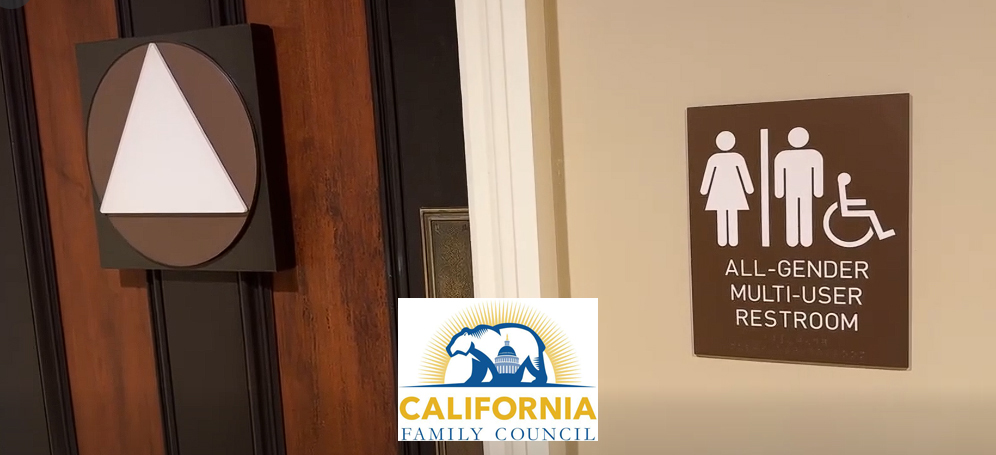
All-gender restroom in California’s State Capitol building. Video screenshot source: CA Family Council

“The law requires that every school campus have at least one all-gender restroom option available to students.”

By Greg Burt, California Family Council

SACRAMENTO, CA — California is quietly moving toward mixed-sex bathrooms in K-12 public schools, and the state’s own Department of Education is leading the way.

A new law California Family Council opposed, SB 760, now requires schools to provide at least one “all-gender” restroom option on campus.

Passed in September 2023, the bill was cosponsored by then-State Senator Steve Glazer (D-Orinda). He, then-State Senator Nancy Skinner, now-State Sen. Tim Grayson and Assemblymembers Rebecca Bauer-Kahan, Buffy Wicks and Lori Wilson who represent Contra Costa County, voted for the bill.

The stated goal was to make transgender-identified students feel safer from bullying. But in the rush to accommodate those students’ feelings, lawmakers apparently gave little thought to a different safety question: what happens when boys are given access to girls’ bathrooms and locker rooms?

The State Is Already Building the Roadmap

The California Department of Education has an entire webpage dedicated to “All Access Restrooms,” describing it as a resource offering background information, planning and design resources, laws and regulations, and references for implementing “gender-inclusive” restrooms in K-12 schools.

The background information on that page acknowledges that “the designs of all-access restrooms have been trending in schools throughout the state, the country, and the world,” while noting there are currently no California design standards for these facilities. In other words, the trend is already underway, and the standards are still catching up.

The planning section of the CDE page is even more candid about the scope of what is being proposed. It describes “shifting from multi-user gendered restrooms and single-user all-gender restrooms to offering blocks of restroom facilities for all students;” meaning the goal is not just a single converted nurse’s bathroom tucked in a hallway. The ambition is to redesign entire blocks of school restroom facilities so that boys and girls share the same space.

What Would It Look Like?

The new all-gender bathroom designs typically eliminate urinals entirely, replacing them with individual private stalls accessible to everyone. The CDE’s resources page recommends an academic article published in the Education Sciences Journal titled “Expanding the Scope of Universal Design: Implications for Gender Identity and Sexual Orientation,” by Ellyn Couillard and Jeanne L. Higbee (2018), as a guide for implementation. That an academic paper on gender identity ideology is among the state’s recommended planning resources tells you something about the ideological framework driving these design decisions.

But keep in mind, SB 760 doesn’t require a complete redesign of a single-sex bathroom for it to become all-gender.

You Already Saw It at the State Capitol

If you want to get a glimpse of what legislators have in mind when they convert a single sex bathroom into an all gender bathroom, take a look at one of the converted male bathrooms at the state capitol, used by legislative staffers, adult visitors, and elementary school children visiting on field trips. California Family Council Vice President Greg Burt recently took a video of the empty bathroom located to one side of the Capitol Dome. “I’m pretty sure most parents would object to their young children sharing a bathroom while men are using the urinals,” Burt said. “Even without the adult issue, I’ve witnessed the chaos that occurs when young boys are pouring into the same bathrooms as the girls while visiting the Capitol. The girls are not happy about it.” (Watch video tour of Capitol bathroom https://www.youtube.com/watch?v=okTcKcP3ACQ)

So, what should parents expect when multi-stall bathrooms are converted to all gender at their child’s school?

What the Law Actually Requires — And What It Doesn’t

It is important to be clear about what SB 760 does and does not mandate. The law requires that every school campus have at least one all-gender restroom option available to students. It could be single-stall or multi-stall. It must be supplied with menstrual products starting in 3rd grade, and it must be unlocked and easily accessible. But there are no requirements that urinals be removed or that additional privacy measures be added to stalls.

Sex-separated restrooms are still permitted, and most schools will continue to have them.

Burt explained what this means in practice for families. “How each school fulfills this new requirement is entirely up to the local school board. A conservative district might simply relabel a single-occupancy nurse’s bathroom and call it done. A progressive district could use this law as a green light to convert entire multi-stall restroom facilities to mixed-sex use. Parents need to find out right now what their district is planning,” he said.

The CDE’s planning resources make clear that the broader vision goes well beyond a single-stall accommodation in the corner of the building. It points toward a wholesale redesign of school bathroom facilities, one that treats sex-separated restrooms as a problem to be solved rather than a common-sense protection for children.

The Question Nobody in Sacramento Answered

SB 760’s supporters argued the law was needed to protect transgender-identified students from harassment, but the legislature never seriously asked the parallel question: does giving boys access to girls’ bathrooms and locker rooms create new opportunities for harassment and assault of girls?

California has seen case after case in recent years where policies designed to accommodate gender identity have created unsafe situations for female students. The discomfort of girls sharing intimate spaces with biological males is not a lesser concern. Lawmakers who refused to weigh it have not protected children. They have simply chosen which children’s safety matters.

Parents: Now Is the Time to Speak Up

Because each school board will decide how to implement SB 760 on its own campuses, parents have a real opportunity to influence what happens at their child’s school, but that window will not stay open indefinitely. Decisions about restroom redesigns and facility changes get made early in the budget and planning process, often before most parents are even aware the conversation is happening.

If you want a say in how your district handles this new requirement, call your school board member and school administrators now. Ask them directly: how does our district plan to fulfill the SB 760 all-gender restroom requirement? Will existing sex-separated restrooms be preserved? Will multi-stall facilities be converted? Every parent deserves to know the answers.

Here is one of the committee hearings from 2023, when SB 760 was discussed, and CFC provided opposition testimony. https://www.youtube.com/watch?v=Bwk7J82Prn8&t=1s

About California Family Council

California Family Council works to advance God’s design for life, family, and liberty through California’s Church, Capitol, and Culture. By advocating for policies that reinforce the sanctity of life, the strength of traditional marriages, and the essential freedoms of religion, CFC is dedicated to preserving California’s moral and social foundation.

Allen D. Payton contributed to this report.


Filed Under: Children & Families, Education, Legislation, News, Opinion, State of California, Youth

SCAMS: Rep. Harder’s advocacy leads to coordinated crackdown on international scammers

June 17, 2026 By Publisher Leave a Comment

Google, FBI partnering on lawsuit against major criminal scam syndicate in China

Google endorsing Harder’s Stop SCAMS Act to create all-of-government response to organized cybercrime

By Kevin Winslow, Communications Director, Office of Congressman Josh Harder

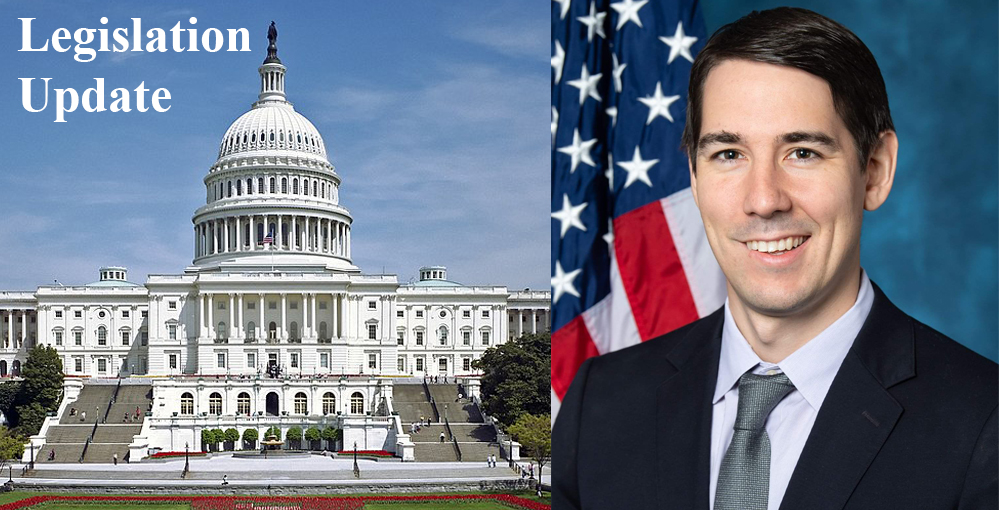
WASHINGTON – On Monday, June 15, 2026, Rep. Josh Harder (D, CA-09) announced that his anti-scam advocacy led to a major coordinated crackdown on international scammers. Google, major tech companies, and the Federal Bureau of Investigation (FBI) announced a lawsuit today against the China-linked cybercriminal network “Outsider Enterprise” alongside Google’s endorsement of Harder’s “Stop Schemes, Cyberfraud, Abuse, Manipulation, and Swindles Act” or Stop SCAMS Act, H.R. 7215, which would establish a government-wide task force to respond to cyberscams.

Organized crime rings are overwhelming law enforcement and victims alike:

  • Groups like Outsider Enterprise have created over 9,000 fake websites, 1 million fraudulent URLs, and supported over 2.5 million scam texts to Android users alone.
  • Californians lost as much as $2.5 billion to online scams in 2024, in the form of robocalls, texts, fake tax collections, phony job ads, card-declined alerts, and cryptocurrency schemes targeting seniors, veterans, and working families.
  • Severe scams like identity theft are growing rapidly and increasingly targeting previous victims multiple times.

“International cybercriminals are robbing our families of their hard-earned savings, and we need a permanent solution to bring them to justice,” said Rep. Harder. “My Stop SCAMS Act would bring every level of government together to aggressively crack down on scams and the organized crime rings behind them. I’m grateful to have Google’s support and look forward to partnering with law enforcement and industry partners to stop cyber scams once and for all.”

“We strongly support the Stop SCAMS Act,” said Halimah DeLaine Prado, Google General Counsel. “Shutting down scammers takes a coordinated effort, and this bill will help government agencies work better together to keep Americans safe. Thank you to Representatives Harder and Fitzpatrick for championing this vital consumer protection.”

How the Stop SCAMS Act cracks down on organized cybercrime:

  • New Task Force – Directs the FBI to organize a coordinated, government-wide task force to prevent and respond to modern scams.
  • Better Data – Aligns inter-agency actions, definitions, and data to improve the efficiency of scam-fighting efforts.
  • Prevention – Measures the effectiveness of scam prevention efforts and improves public education campaigns.

Harder represents California’s 9th Congressional District in the U.S. House of Representatives. The new district boundaries under Prop 50 will include Antioch and other portions of Eastern Contra Costa County following the November election.

Filed Under: Legislation, News, Technology

Rep. Garamendi’s affordable housing bill included in bipartisan Senate package

April 9, 2026 By Publisher Leave a Comment

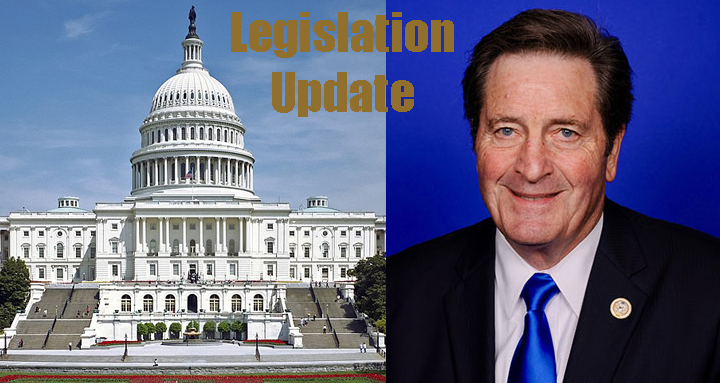
Congressman John Garamendi. Official photo

Funds new units across California

By Cameron Niven, Communications Director, Office of Congressman John Garamendi

WASHINGTON, DC – Today, U.S. Representative John Garamendi (D-CA-08) issued the following statement after the Senate passage of the bipartisan 21st Century ROAD to Housing Act, which includes his HOME Investment Partnerships Reauthorization and Improvement Act—a bill to significantly increase the amount of federal funding available for affordable housing across the country:

“Hardworking Californians face a severe shortage of affordable housing options, and minimum wage workers must work an average of 88 hours per week to afford a modest one-bedroom rental at fair market rates. The HOME Act will help change that,” said Representative Garamendi.

“The Senate’s affordable housing legislation includes my HOME Investment Partnerships Program, which, for the first time since 1994, will bring this crucial program into the 21st century,” Garamendi continued. “It will provide states and local governments with the funding needed to construct and rehabilitate affordable rental housing, as well as expand homeownership opportunities for working families. I’d also like to thank Senator Masto for introducing this bill in the Senate and Representative Beatty for co-leading in the House.”

On February 9th, Garamendi voted in favor of the Housing for the 21st Century Act (H.R. 6644), which passed the House with strong bipartisan support. Then, on March 12, the Senate overwhelmingly passed the 21st Century ROAD to Housing Act. The bipartisan bill combines elements of both the House and Senate-passed legislation. The 21st Century ROAD to Housing Act includes 18 sections drawn from both the House and Senate bills, including Garamendi’s HOME Act.

This comprehensive housing package will take important steps to boost the nation’s housing supply, improve affordability, and increase oversight and efficiency of federal regulators and housing programs.

HOME Background

The HOME Investment Partnerships Program (HOME) is the largest federal affordable housing block grant and is HUD’s flagship affordable housing production program.

Since 1990, HOME has helped state and local housing agencies support a wide variety of housing needs, from financing new construction and home repairs to funding down payment and rental assistance. It also provides additional funding to housing developments financed by the Low-Income Housing Tax Credit, helping the program serve more extremely low-income people, including seniors, veterans, those experiencing homelessness, and people with disabilities.

Since 1992, the HOME program in California has:

  • Invested $5.27 billion into housing across the state;
  • Built or preserved 121,727 homes;
  • Given rental assistance to 43,840 families;
  • Supported 277,318 jobs; and
  • Generated $19.2 billion in local income.

The program was last re-authorized in 1994 and needs critical updates to better address today’s housing crisis. Garamendi’s HOME Investment Partnerships Reauthorization and Improvement Act would reauthorize the HOME program and make several much-needed improvements. Specifically, it would:

  • Authorize $5 billion in HOME funding for fiscal year 2024 and boost the funding for the program by five percent annually through 2028. Garamendi’s legislation would address chronic underfunding of the affordable housing investment program, which received only $1.5 billion in 2023;
  • Improve HOME’s ability to provide downpayment assistance to homebuyers and home repair assistance to homeowners;
  • Enable HOME funds to support Community Land Trusts and other shared equity homeownership programs; and
  • Increase access to HOME funds for nonprofits and provide state and local governments loan guarantee options that would allow them to leverage their future HOME funds for investments today.

Representative Garamendi has spent his entire career advocating for affordable housing, robust homeowner protections, and rental assistance programs. As California’s first-ever elected Insurance Commissioner, Garamendi successfully implemented Proposition 103, which reformed the homeowner insurance industry and lowered homeownership insurance rates.

In 2023, Garamendi and Rep. Zoe Lofgren (D-CA) led members of California’s congressional delegation in sending a letter to California Insurance Commissioner Ricardo Lara urging him to use his power under state law to protect homeowners in the face of an insurance crisis. During his congressional tenure, Garamendi worked with Habitat for Humanity to establish a financing mechanism that utilized existing funding to build new veteran housing units.

Garamendi originally introduced the HOME Investment Partnership Reauthorization Act in 2020 and has continued to champion the legislation in Congress. He is also a cosponsor of the Affordable Housing Credit Improvement Act, which would support the financing of more affordable housing by expanding and strengthening the Low-Income Housing Tax Credit.

The Office of Congressman John Garamendi has also worked with local partners to increase access and support the development of affordable housing projects throughout California’s 8th Congressional District including: Contra Costa County Board of Supervisors, East Bay Housing Organizations, Tiny Village Spirit, Eden Housing, Multi-Faith ACTION Coalition (MFAC), Hope Solutions, Interfaith Council of Contra Costa, Crankstart Foundation, and the California Association of Housing Authorities.

The bill is endorsed by: Hercules Vice Mayor Alexander Walker-Griffin, Hercules Council Member Dilli Bhattarai, Richmond City Council Member Cesar Zapeda, National Council of State Housing Agencies, Institute of Real Estate Management, National Association of Hispanic Real Estate Professionals, National Association of Realtors, Enterprise Community Partners, National Apartment Association, National Multifamily Housing Council, National NeighborWorks Association, National Community Development Association, National Alliance of Community Economic Development Associations, National Association of Local Housing Finance Agencies, Council of State Community Development Agencies, National Coalition for Asian Pacific American Community Development, Local Initiatives Support Corporation, Grounded Solutions Network, and Habitat for Humanity.

Garamendi represents California’s 8th Congressional District in the U.S. House of Representatives which includes the northern and western portions of Contra Costa County and a majority of Solano County.

Filed Under: Finances, Government, Housing, Legislation, News

Rep. DeSaulnier hails $2.6 billion in COVID-relief funding for Concord-based union pension plan

April 7, 2026 By Publisher Leave a Comment

Serves over 138,000 retirees; funding from 2021 American Rescue Plan Act

By Mairead Glowacki, Communications Director, Office of Congressman Mark DeSaulnier

Washington, D.C. – On Thursday, April 2, 2026, Congressman Mark DeSaulnier (CA-10) announced that the Northern California UFCW Plan, which is based in Concord, California, a city he represents, will receive $2.6 billion in pension relief funding made possible by the Democrat-passed $1.9 trillion COVID-relief American Rescue Plan Act (ARPA) that the Congressman was proud to vote for in 2021. This funding will enable the plan to continue to pay retirement benefits for its 138,516 participants in the service industry without reduction for many years into the future.

“In the midst of the COVID epidemic, Democrats fought tooth and nail to protect the lives and livelihoods of working Americans and their families, ultimately passing the American Rescue Plan to prevent cuts to the hard-earned benefits of retirees and workers. This funding, that will benefit hundreds of thousands of workers and retirees, including those here in our district, is a direct result of those efforts and I am proud to have helped bring this money home,” said DeSaulnier.

The application for this funding was submitted to the Special Financial Assistance (SFA) Program by the UFCW – Northern California Employers Joint Pension Plan (Northern California UFCW) and approved by the Pension Benefit Guaranty Corporation (PBGC). The SFA Program provides funding to severely underfunded multiemployer pension plans and will ensure that millions of America’s workers, retirees, and their families receive the pension benefits they earned.

Rep. DeSaulnier is a senior member of the House Committee on Education and Workforce where he is the Ranking Member of the Subcommittee on Health, Employment, Labor, and Pensions.


Filed Under: Central County, Finances, Labor & Unions, Legislation, News, Pensions

Rep. DeSaulnier advances over $46.7 million for local projects in Contra Costa, Alameda counties

April 1, 2026 By Publisher Leave a Comment

Budget requests for infrastructure, transportation, community development, public and environmental health and safety

$10 million for Vasco Road safety & mobility improvements

By Mairead Glowacki, Communications Director, Office of Congressman Mark DeSaulnier

Washington, D.C. – Today, Congressman Mark DeSaulnier (CA-10) announced that he advanced over $46.7 million for 20 projects to benefit Contra Costa and Alameda Counties for consideration by the U.S. House Committee on Appropriations as part of the Fiscal Year 2027 appropriations process. These projects would help to improve quality of life for the people of California’s 10th Congressional District by upgrading infrastructure and transportation accessibility and increasing public and environmental safety.

“Simply put, my number one priority in Congress is to make life better for the people I represent, and the $46.7 million we are advancing will help to do just that by investing in safety and easing congestion for drivers, bikers, and pedestrians alike, housing, emergency preparedness, crime prevention, and more,” said DeSaulnier. “I am continuously grateful to our local governments and organizations for their thoughtful project submissions, and I look forward to fighting to see the projects through the legislative process to bring this important funding home.”

Infrastructure Upgrades, Transportation Accessibility, and Community Development Projects:

  • $5,000,000 for the County of Contra Costa to design a new roadway connection that will improve regional mobility between Contra Costa and San Joaquin Counties using a connector route that shifts interregional traffic from Byron Highway and local roads in the Town of Byron to Vasco Road, to accommodate higher traffic volumes.
  • $5,000,000 for the County of Contra Costa to construct safety countermeasures along a 12.1-mile segment of Vasco Road between Marsh Creek Road and the Alameda County line in unincorporated Byron, California to decrease the number of accidents on this busy thoroughfare.
  • $4,000,000 for the City of Brentwood to construct infrastructure and site improvements to prepare a site to house the Brentwood Agricultural Technology Innovation Center.
  • $2,800,000 for the City of Lafayette to construct the Brown Avenue to Pleasant Hill Road segment of the Aqueduct Pathway, a fully accessible Class I separated bicycle and pedestrian facility located within the East Bay Municipal Utility District (EBMUD) aqueduct corridor in downtown Lafayette, California.
  • $2,000,000 for East Bay Regional Park District to construct a dedicated bus staging and drop-off area designed to accommodate regional transit agencies and other visitors, and remove aging rail infrastructure to replace it with accessible, multi-use pathways as part of the second phase of a project to allow for the Thurgood Marshall Regional Park to be opened up to the public.
  • $2,000,000 for the City of Lafayette to construct a 48-unit development of supportive and affordable housing for individuals with intellectual and developmental disabilities.
  • $2,000,000 for the City of San Ramon to continue buildout and close gaps in the citywide fiber optic network supporting transportation operations, public safety, and future smart city technologies.
  • $1,750,000 to the City of Walnut Creek to install a new traffic signal at the intersection between Treat Boulevard and Arkell Road in Walnut Creek, California, which is currently controlled by stop signs.
  • $1,500,000 for the County of Contra Costa to construct separated wheeled (bicycle, e-bike, and scooter) and pedestrian pathways in the Iron Horse Corridor from Bollinger Canyon Road to Crow Canyon Road in the City of San Ramon to separate wheeled and pedestrian modes and improve user safety.
  • $1,300,000 for the County of Contra Costa to construct a new youth center in Brentwood, California that will provide academic counseling and employment training in the culinary field.
  • $1,296,000 for the City of Orinda to complete pavement rehabilitation work and widening on the Camino Pablo Pathway in Orinda, California to expand and maintain aging infrastructure that currently sees heavy pedestrian use.

Public and Environmental Health and Safety:

  • $5,000,000 for the City of Concord to make improvements to the City of Concord’s Emergency Operations Center (EOC) to ensure that it can continue to function as a critical hub for regional preparedness, response, and recovery efforts during emergencies and disasters.
  • $3,150,000 for Central Contra Costa Sanitary District to add Densified Activated Sludge (DAS) technology to Central San’s existing large-scale Membrane Aerated Biofilm Reactor (MABR) demonstration site and share results with wastewater agencies across the region. DAS and MABR are complementary, cutting-edge technologies that could enhance nitrogen removal and environmental protection while leveraging existing treatment facilities.
  • $2,000,000 for the City of San Ramon to replace the Police Department’s aging Records Management System (RMS), associated software, and supporting equipment. The project will modernize the City’s public safety technology infrastructure by implementing a next-generation RMS, preserving and migrating existing police records, and integrating with electronic files. The project may also incorporate a unified interface that allows officers and investigators to securely access data from multiple regional law enforcement systems within a single platform, improving efficiency, and reducing the need to switch between separate applications.
  • $1,800,000 for the County of Contra Costa to build two mobile communications sites to enhance the resiliency of first responder radio communications in the event of a natural disaster or other widespread threat.
  • $1,684,990 for the City of Antioch to establish a Real-Time Operations Center (RTOC) to serve as the Antioch Police Department’s central hub for intelligence and information-sharing, integrating existing technologies—including gunshot detection, public safety cameras, and Computer-Aided Dispatch (CAD)—into a unified, citywide system that enhances crime monitoring, investigative efficiency, and officer response.
  • $1,650,000 for the County of Contra Costa to expand Contra Costa County’s ability to prioritize and investigate unsolved nonfatal and fatal violent crime, prevent future crimes, and enhance victim/witness safety through coordinated, data driven investigations, focused prosecution, and survivor support services.
  • $1,000,000 for the City of Orinda to maintain and improve the North Orinda Shaded Fuel Break to reduce the probability of catastrophic fire spread while improving firefighter access and operational effectiveness, specifically by maintaining previously treated areas, conducting hazard tree identification and abatement, and expanding interagency coordination.
  • $936,930 for the Town of Moraga to replace and upgrade existing police radios, a combined total of 65 handheld portable radios and 44 vehicle mounted mobile radios, used by the Lafayette, Moraga, and Orinda police departments.
  • $923,000 for Mt. View Sanitary District to initiate pump station and collection systems upgrades by studying the root causes of system stress and the most efficient and effective repair methods.

“For over 135 years the Iron Horse Trail has connected communities in Contra Costa, with the railroad running from 1891-1978, followed by its use as the much-beloved pedestrian and bicycle trail we enjoy today. This $1.5 million investment in the Iron Horse Trail Double Tracking Pilot is about improving safety and enhancing its use as an active transportation corridor. Creating trail separation allows pedestrians to enjoy their walks on the trail without safety concerns related to faster moving bikes. Bicyclists will be able to use their separated bikeway to get to and from work, school, and transit centers more efficiently,” said Candace Andersen, Contra Costa County Supervisor (District II).

“We are deeply grateful to Mark DeSaulnier for selecting the Downtown Aqueduct Pathway Project for Community Project Funding consideration. The Congressman’s support is instrumental in helping Lafayette advance a transformative project that will create a safe, continuous, and car-free route between neighborhoods, downtown destinations, and regional transit,” said Carl Anduri, Mayor of Lafayette.

“We are deeply grateful to have the Congressman’s support of these projects, which reflect San Ramon’s commitment to modernizing critical infrastructure, enhancing public safety, and investing in technology that improves the daily lives of our residents,” said Mark Armstrong, Mayor of San Ramon. “We value the Congressman’s continued partnership and advocacy on behalf of the San Ramon community and appreciate the opportunity to advance to Committee review of these transformative investments that will strengthen mobility, resilience, and public safety citywide.”

“Thank you to Congressman DeSaulnier for championing innovative solutions to one of the Bay Area’s most critical regulatory challenges: reducing nitrogen discharges to the Bay while keeping costs manageable for wastewater customers. The MABR and DAS Bay Area Regional Demonstration Site will advance technologies aimed at better protecting our beautiful Bay, while potentially saving billions of dollars across our region and beyond. We’re grateful for Congressman DeSaulnier’s vision, leadership, and commitment to clean water infrastructure that benefits our communities and the environment both now and, in the future,” said Roger Bailey, General Manager of the Central Contra Costa Sanitary District.

“Thank you to Congressman DeSaulnier for his leadership and support in strengthening community safety and supporting survivors of violence. The Contra Costa Unsolved Violent Crime & Victim Safety Initiative expands the county’s ability to prioritize and investigate unsolved shootings and increase clearance rates – which is the percentage of crimes that result in an arrest or other official resolution. Moreover, the initiative pairs data-driven investigations with survivor-centered services to keep victims and witnesses safe, rebuild community trust, and make sure families affected by violence received the justice and attention they deserve,” said Diana Becton, Contra Costa County District Attorney.

“We appreciate Congressman DeSaulnier for championing investments that expand opportunities for young people in East County. The Brentwood Youth Center Project will create a new 15,000 square foot facility offering culinary training in healthcare, culinary arts and skilled trades, academic support, and mental health counseling spaces—providing local youth with safe, modern, and accessible resources right in their community. This project strengthens workforce development into career pathways, supports whole person development, and ensures Brentwood’s young residents have the tools they need to thrive,” said Tamia Brown, Executive Director, Contra Costa County Workforce Development Board.

“On behalf of Contra Costa County, I want to thank Congressman DeSaulnier for his steadfast support of Contra Costa County projects that will provide wide-benefits to the community—from transportation safety improvements on Vasco Road and the Byron Highway, to critical investments in youth development, public safety communications, and solutions that strengthen justice for victims and families. His continued partnership ensures we can deliver safer roads, stronger emergency response, expanded youth opportunities, and improved community safety for residents across all of Contra Costa and beyond. We are deeply grateful for his leadership and his commitment to bringing meaningful federal resources home to Contra Costa,” said Diane Burgis, Chair of the Contra Costa County Board of Supervisors.

“We are grateful to Representative DeSaulnier and his team for their support of this critical wastewater infrastructure work,” said Lilia Corona, Mt. View Sanitary District General Manager. “The Next-Generation Pump Station and Collection System Projects will bolster the process of replacing equipment at the end of its service life. We’re excited by this major step forward for sanitary operations in Contra Costa County, which will allow Mt. View Sanitary District to continue delivering exceptional service quality to our customers.”

“We are grateful to Congressman DeSaulnier for supporting these important infrastructure and wildfire mitigation projects. The Camino Pablo Pathway will enhance pedestrian mobility and connect key parts of our community, while the North Orinda Shaded Fuel Break will significantly reduce wildfire risk and strengthen emergency response capabilities across the broader Lamorinda region. These projects represent critical investments in Orinda’s safety, sustainability, and quality of life,” said Brandyn Iverson, Mayor of Orinda.

“We are grateful for the support of Congressman DeSaulnier in advancing the Lamorinda Public Safety Radio Replacement project for funding.  Through replacing and upgrading the radios used by the Lafayette, Moraga and Orinda Police Departments, this project will enhance public safety throughout the region and ensure that law enforcement officers are equipped to address emergency situations, evacuations, and other critical incidents. Congressman DeSaulnier’s efforts are helping to keep our communities and law enforcement officers safe with this critical investment in public safety communications equipment,” said Jon King, Chief of Police for the Moraga Police Department.

“Thank you to Congressman DeSaulnier for supporting our community’s continued efforts to make Vasco Road safer for all who rely on it. The Vasco Road Safety Improvements – Phase 3 Project delivers targeted, community‑supported safety upgrades along the corridor, including proven Federal Highway Administration countermeasures designed to reduce collisions and improve visibility. These improvements will help protect commuters and enhance regional mobility along this critical East County route,” said Warren Lai, Director of Public Works, Contra Costa County.

Lai continued, “We are grateful to Congressman DeSaulnier for his continued leadership and support of vital East County transportation investments. The Vasco Road–Byron Highway Connector Project will reduce cut-through traffic in Byron, improve regional mobility between Contra Costa and San Joaquin counties, and enhance safety by providing a more efficient route for commuters and goods movement. This project represents an important step toward long term connectivity and economic opportunity for the region.”

“We are grateful to Congressman DeSaulnier for advancing Antioch’s Real-Time Operations Center project for federal consideration. This investment reflects the kind of forward-looking public safety infrastructure cities need to serve growing communities, improve coordination across government functions, and deliver smarter, more effective services to the public,” said Bessie Marie Scott, Antioch City Manager.

“Brentwood has a robust agricultural history, and a long-standing legacy of providing fresh produce and products from our locally-owned farms to tables across America. This funding investment represents the next chapter in this story and the future of farming. The Agricultural Technology Innovation Center will bring together agriculture, education, and technology to create jobs, support workforce development, and strengthen our nation’s food systems. Federal investment in critical infrastructure is the key to unlocking this opportunity, and we are grateful for Congressman DeSaulnier’s leadership and vision in advancing a project that delivers both regional and national impact,” said Susannah Meyer, Mayor of Brentwood.

“We are grateful to Congressman DeSaulnier for his strong support of Concord’s Emergency Operations Center upgrades. This investment strengthens our ability to protect residents, coordinate a regional response, and ensure our community is prepared when it matters most,” said Laura Nakamura, Mayor of Concord.

“Thank you to Congressman DeSaulnier for his commitment to strengthening public safety and emergency response across the East Bay. The East Bay Regional Communications System – Mobile Communications Sites on Wheels Project will provide deployable, towable mobile towers that ensure backup radio coverage during disasters, domestic terrorism, or large-scale incidents—significantly enhancing the resiliency, reliability, and interoperability of communications for first responders in Contra Costa and Alameda counties. This investment ensures that when emergencies strike, our communities and safety personnel can rely on a stable, redundant system that keeps critical communications operational when they’re needed most,” said David Swing, Executive Director of the East Bay Regional Communications Authority.

“The City of Walnut Creek greatly appreciates Congressman DeSaulnier’s leadership and continued support in advancing safety for our residents. This critical infrastructure project for a new traffic signal will improve the efficiency of regional traffic, emergency vehicle response times, and safety for all modes of transportation,” said Kevin Wilk, Mayor of Walnut Creek.

Selection and submission of projects to the Appropriations Committee is the first stage of the process for Community Project Funding. Each project submitted must meet the criteria set forth by the Committee, which can be found here, and must then be passed in the Committee and by both the House and Senate before it becomes law. The projects are subject to a strict transparency and accountability process, which is detailed here by the Appropriations Committee. Examples of this vetting include certifying that Members have no financial interest in these projects, an audit of a sampling of these projects by the Government Accountability Office, and a requirement for demonstrated community support and engagement for each submission. More information on each project and the certifications of no financial interest can be found here.


Filed Under: Environment, Finances, Government, Infrastructure, Legislation, News, Parks, Police, Transportation

  • 1
  • 2
  • 3
  • …
  • 15
  • Next Page »
RepublicServices-Antioch-ad (1)
Monica's dinner 05-26 CCH
Delta-RC-B 07-26
Deer-Valley-Chiro-06-22

Copyright © 2026 · · Contra Costa Herald · All Rights Reserved