• Home
  • About The Herald
  • Local Agencies
  • Daily Email Update
  • Legal Notices
  • Classified Ads

Contra Costa Herald

News Of By and For The People of Contra Costa County, California

  • Arts & Entertainment
  • Business
  • Community
  • Crime
  • Dining
  • Education
  • Faith
  • Health
  • News
  • Politics & Elections
  • Real Estate

Scathing State Audit confirms Labor Commissioner’s 47,000 backlogged claims at end of 2022-23

May 29, 2024 By Publisher Leave a Comment

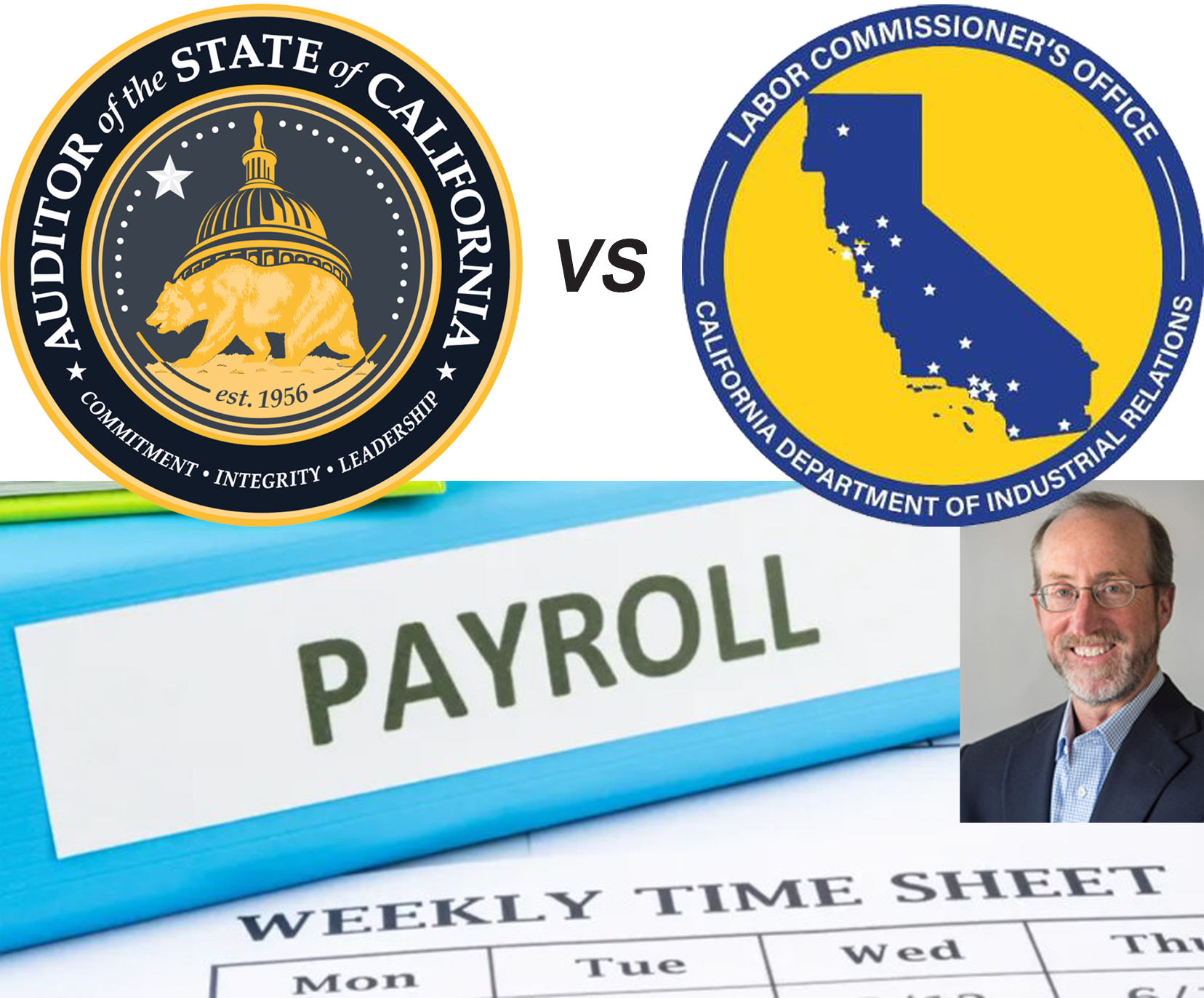
Payroll graphic source: CA State Auditor

Senator Glazer’s request leads to findings of workers cheated out of $63.9 million in past wages

Calls it a failure to act on behalf of workers

Report claims inadequate staffing, poor oversight have weakened protections for workers

SACRAMENTO – California Labor Commissioners have stood idly by as a massive backlog in wage theft cases piled up worth $63.9 million in lost wages to workers as its enforcement unit failed to enforce and collect wages in 76 percent of cases in which employers were found to owe wages, according to a report released Wednesday by Grant Parks, the California State Auditor.

The scathing audit came as a result of a March 2023 request through the Joint Legislative Audit Committee by Senator Steve Glazer, D-Contra Costa, and Assemblyman David Alvarez, D-San Diego. It was based on news reports about the lack of wage theft enforcement.

Parks reported his findings to the Governor, President pro Tempore of the Senate and Speaker of the Assembly about the “Department of Industrial Relations’ Division of Labor Standards Enforcement, also known as the Labor Commissioner’s Office (LCO).” Lilia García-Brower is the current state Labor Commissioner and was appointed to the position by Governor Newsom in July 2019. Neither her name or photo appears on the website for the Labor Commissioner’s Office. Ironically, according to the agency’s website, “The mission of the LCO is to ensure a just day’s pay in every workplace in the State and to promote economic justice through robust enforcement of labor laws. By combating wage theft, protecting workers from retaliation, and educating the public, we put earned wages into workers’ pockets and help level the playing field for law-abiding employers.”

The audit “reviewed the backlog of wage claims submitted by workers from fiscal years 2017–18 through 2022–23, and determined that the LCO is not providing timely adjudication of wage claims for workers primarily because of insufficient staffing to process those claims.”

Furthermore, the state Auditor reported, “In addition to its delays in processing wage claims, the LCO has not been successful in collecting judgments from employers. A possible factor contributing to its low collection rate is that the Enforcement Unit does not consistently use all of the methods available to it for collecting payments owed to workers.”

Senator Glazer released this statement on the audit’s findings:

“The California State Auditor’s report makes clear that our State Labor Commissioner is a toothless enforcer of our wage theft laws. This deeply troubling assessment exposes a system that has fundamentally failed the workers it is supposed to protect. According to the auditor, there is a backlog of 47,000 claims registered on June 30, 2023. This is a state embarrassment and a stain on the department that workers depend on for justice.

The report also highlights an alarming increase in the average number of days to resolve claims, which has skyrocketed from 420 days in 2017/18 to an astounding 890 days in 2022/23. This drastic decline in efficiency is not just a statistic; it represents thousands of workers enduring prolonged injustice and financial hardship.

This lack of enforcement emboldens companies to exploit workers, knowing they can likely escape any real consequences, thus perpetuating and increasing further abuse. These findings paint a grim picture of an agency overwhelmed and ineffective, leaving workers vulnerable and without recourse. Immediate and decisive action to restore integrity and effectiveness to the Labor Commissioner’s office is needed. The workers of California deserve nothing less than a robust system that ensures timely and fair resolution of wage theft claims.”

The report can be found here: www.auditor.ca.gov/reports/the-california-labor-commissioners-office/

Allen D. Payton contributed to this report.
Filed Under: Employment, Finances, Government, Jobs & Economic Development, Labor & Unions, Legal, News, State of California

Non-union construction coalition warns of Project Labor Agreements being considered by local governments in Contra Costa, East Bay

February 15, 2024 By Publisher Leave a Comment

By Allen D. Payton

The Coalition for Fair Employment in Construction (CFEC) issued a warning this week about Project Labor Agreements being considered by local governments throughout the state, including two in Contra Costa County, as well as by the East Bay Municipal Utilities District (East Bay MUD).

PLA’s First Implemented in Contra Costa County

According to CFEC, “In 1992, California construction trade unions were given a new scheme for regaining their severely-eroded market share and making extra money on projects. The U.S. Supreme Court ruled that governments could act as a ‘market participant’ to negotiate and sign Project Labor Agreements (PLAs) and then require contractors to sign those union agreements as a condition of work.

In 1994, the Contra Costa County Board of Supervisors voted 4-1 for the first government-mandated Project Labor Agreement in California. At the instigation of unions, local governments throughout the state soon followed, with their own Project Labor Agreement mandates on public works contracts. These Project Labor Agreements were discouraging bidders, increasing costs, and reducing bid participation from minority and women-owned small businesses.”

CFEC Executive Director Eric Christen claims “PLA’s rob workers of their hard earned pay” and explains the organization’s position in a YouTube video from a presentation to the San Gabriel Unified School District which “illustrates how the non-union worker loses out on over $10,000 in hard earned pay working under a PLA as opposed to working without one.”

Less Than 11% of Construction Workers Nationwide are Union Members, 21% in Contra Costa

The organization offers a variety of studies about the costs of union-only PLA’s. They also shared a Jan. 31, 2024, report entitled, “A Record 89.3% of the U.S. Construction Industry Is Not Part of a Union”. It claims, “According to an Associated Builders and Contractors analysis of the U.S. Bureau of Labor Statistics’ 2023 Union Members Summary released Jan. 23, 2024, a historic low of 10.7% of the construction industry belongs to a union, a decline from 11.7% in 2022.”

Asked for the statistics in Contra Costa County Christen responded, “according to the Bureau of Labor Statistics, CC County has a 21% union density level in the construction industry.”

CFEC warns of three agencies considering PLA’s including, “City of Hercules: This Bay Area city has begun looking into the use of a PLA. Mount Diablo Unified School District: This Contra Costa County school district is considering a Project Labor Agreement for all its bond work. East Bay MUD: This Bay Area entity continues to look into the use of a PLA for some of its work. CFEC and our allies have worked hard to keep it PLA-free for decades.” The organization asks for those interested to contact them to help keep the local governments “PLA-free”.

ABOUT CFEC

Non-union and union contractors, business and community leaders, and taxpayer advocates recognized Project Labor Agreements as a looming threat to fiscal responsibility, fair and open competition, and freedom of choice in training in California. In May 1998, state leaders attended a strategic conference in Sacramento to develop a plan to protect fair and open competition in the awarding of construction contracts.

By the end of the year, the Coalition for Fair Employment in Construction (CFEC) was incorporated. Its sole responsibility: protect fair and open bid competition on construction contracts through education. When the California Supreme Court in 1999 permitted the San Francisco Airport Commission to continue its Project Labor Agreement mandate, the educational role of CFEC became extremely important to stopping this union favoritism.

The Coalition for Fair Employment in Construction is dedicated to guaranteeing genuine accountability and results for taxpayers by ensuring a fair and competitive construction industry. CFEC educates taxpayers and public officials about waste, fraud and abuse associated with lobbyist brokered Project Labor Agreements (PLAs). It’s our right and responsibility to hold our elected officials accountable for pushing special interest backroom deals that favor special interests over the public interest. That’s what we do.

Through education and advocacy, CFEC stands up for taxpayers, construction workers, contractors and developers so that the public can get the best quality work at the best price. To learn more visit http://opencompca.com/.


Filed Under: Construction, East Bay, Government, Jobs & Economic Development, Labor & Unions, News

MTC, ABAG approve Plan Bay Area 2050+ Draft Blueprint Strategies and Growth Geographies

January 30, 2024 By Publisher Leave a Comment

Source: Plan Bay Area 2050+

Include non-transit transportation, environment, housing and economy strategy refinements

The Joint Metropolitan Transportation Commission (MTC) Planning Committee with the Association of Bay Area Governments (ABAG) Administrative Committee on Jan. 12, 2024 approved the revised Plan Bay Area 2050+ Draft Blueprint strategies and Growth Geographies.  This action enables staff to further study the strategies’ performance in meeting critical regional goals for an affordable, connected, diverse, healthy and vibrant Bay Area for all. Staff are aiming for adoption of the Plan Bay Area 2050+ Final Blueprint in summer 2024.

Given Plan Bay Area 2050’s solid foundation of 35 strategies, the Draft Blueprint phase for Plan Bay Area 2050+ is focusing on making targeted refinements to select plan strategies. These refinements reflect Plan Bay Area 2050’s implementation progress, the post-pandemic planning context and insights gathered during engagement with the public and partners in summer 2023.

What is the Plan Bay Area 2050+ Blueprint?

The Plan Bay Area 2050+ Blueprint will integrate strategies across the four elements of the plan — the economy, the environment, housing and transportation — to create a more equitable and resilient future for all.

Beginning in summer 2023 and wrapping up in late 2024, staff will develop the Blueprint over two phases: the Draft Blueprint and the Final Blueprint. Given Plan Bay Area 2050’s solid foundation of 35 strategies, the Draft Blueprint phase for Plan Bay Area 2050+ will focus on making targeted refinements to select plan strategies.

What are Growth Geographies?

Priority Development Areas — Places nominated by local governments served by transit and planned for new homes and jobs at densities necessary to support effective transit service.

Priority Production Areas — Industrial areas of importance to the regional economy and local communities that support middle-wage jobs.

Transit-Rich Areas — Places near rail, ferry or frequent bus service that were not already identified as Priority Development Areas.

High-Resource Areas — State-identified places with well-resourced schools and access to jobs and open space.

Staff previously shared proposed Draft Blueprint strategy refinements in October and November 2023, detailing which of Plan Bay Area 2050’s 35 strategies were likely to see major, minor or no changes in Plan Bay Area 2050+. This month, the MTC and ABAG committees approved moving forward with revisions for further study and analysis, including:

  • Non-transit transportation strategy refinementsfocused on prioritizing equity considerations, adapting to tighter fiscal constraints, promoting active transportation and safety, and expanding pricing strategies;
  • Environment strategy refinementsfocused on further reducing greenhouse gas emissions and proactively adapting to climate change; and
  • Housing and economy strategy refinementsfocused on addressing pressing challenges of housing affordability, homelessness and access to opportunity.

At this time the Draft Blueprint only includes a handful of modified transportation strategies, pending the development of a fiscally constrained Transportation Project List, which will integrate recommendations from the ongoing parallel Transit 2050+ effort. The complete suite of revised transportation strategies will be integrated as part of the Final Blueprint in summer 2024.

The Joint ABAG and MTC Committee also approved targeted updates to the Growth Geographies that were adopted as part of Plan Bay Area 2050. Growth Geographies are places that Plan Bay Area prioritizes for future homes, jobs, services and amenities and serve as a component of the plan’s housing and economy elements. Specifically, draft Growth Geographies for Plan Bay Area 2050+ will include five new Priority Development Areas (PDAs) and 16 modified existing PDAs nominated by local Bay Area jurisdictions; reflect up-to-date information on transit service, natural hazards and demographics; and integrate areas subject to MTC’s revised Transit Oriented Communities Policy.

The Draft Blueprint approval comes six months after MTC and ABAG kicked off the limited and focused update to Plan Bay Area 2050. In November 2023, staff shared progress-to-date with policymakers, including findings from the first round of engagement, core planning assumptions, the draft Regional Growth Forecast, a financial needs and revenue analyses and proposed strategy refinements.

The next round of public and partner organization engagement activities, which will inform the development of the Plan Bay Area 2050+ Final Blueprint, is planned to begin in spring 2024. MTC and the ABAG Executive Board are expected to approve Final Blueprint strategies in summer 2024.

Learn more about the Plan Bay Area 2050+ Draft Blueprint strategies and Growth Geographies. For additional technical resources, please visit the Plan Bay Area 2050+ Draft Blueprint Documents page on our website.

Filed Under: Bay Area, Business, Economy, Government, Homeless, Industry, Jobs & Economic Development, News, Transportation

Boy Scouts of America Golden Gate Area Council seeks District Executive

December 18, 2023 By Publisher Leave a Comment

Job Posting

Position:                         District Executive Position

Position location:           Pleasanton, CA

Council Website:           www.ggacbsa.org

Since 1910, Scouting has helped mold the future leaders of this country by combining educational activities and lifelong values with fun. The Boy Scouts of America believes and understands that helping youth puts us on a path towards a more conscientious, responsible, and productive society.

Today’s professional Scouters are a diverse group of men and women sharing a dynamic career offering independence, achievement, and stability. This is work that makes a difference, work that calls one to continual learning and challenge, work that offers solid compensation, benefits and advancement.

The District Executive selected will:

  • Work with a volunteer board of directors and other community and business leaders to identify, recruit, train, guide, and inspire them to become involved in youth programs.
  • Achieve progress towards specific goals and objectives which include: program development through collaborative relationships, volunteer recruitment and training, fundraising, membership recruitment and retention.
  • Be responsible for extending programs to religious, civic, fraternal, educational, and other community-based organizations through volunteers.
  • Secure adequate financial support for programs in assigned area. Achieve net income and participation objectives for assigned camps and activities.
  • Recruit leadership for finance campaign efforts to meet the financial needs of the organization.
  • Ensure that all program sites are served through volunteers, regular leader meetings, training events and activities.
  • Collaborate with adult volunteers and oversee achievement of training for their respective role.
  • Be a good role model and recognize the importance of working relationships with other professionals and volunteers. The executive must have communication skills and be able to explain the program’s goals and objectives to the public.
  • Provide quality service through timely communication, regular meetings, training events and activities.
  • Have a willingness and ability to devote long and irregular hours to achieve council and district objectives.

Desired Skills:

  • Strong marketing, fund-raising and program development background is highly desired.
  • Non-profit, fundraising or sales experience is a plus.
  • Must be comfortable with public speaking and interacting with diverse audiences. Excellent people skills, enthusiastic, punctual, responsible and creative.
  • Self-motivated individual with solid time management skills and strong organizational skills in management, budgeting, and planning.
  • Committed to personal and professional productivity, while maintaining high ethical and professional working standards.

Requirements:

  • Must be willing to accept and meet the Boy Scout of America’s leadership and membership standards and subscribe to the Scout Oath and Law.
  • Bachelor’s degree from an accredited college or university (transcript with the date degree conferred stated is required for employment).
  • Attained 21 years of age or older unless prohibited by any applicable law.
  • Ability to work varied hours when necessary, evening activities and weekend work is frequently required to achieve positive objectives.
  • Ability to travel for training at least once a year for one to two weeks.
  • A Scouting background is helpful but not required for employment.
  • Offers for employment are subject to criminal, reference and motor vehicle background checks.

Compensation:

All councils are equal opportunity employers. In addition to offering a competitive salary of $64,480, Professional Scouting offers benefits to include major medical, prescription coverage, dental, vision, life-insurance, long-term disability, accidental death, a defined benefit retirement plan, plus compensation for authorized and approved business related expenses to include phone and mileage reimbursement.  We also offer generous vacation policy and ten holiday observances.

How to apply:

Qualified candidates must submit cover letter and resume with salary history to kara.miller@scouting.org only the most qualified candidates will be contacted.

Additional information on a career as a District Executive can be found at this link: http://www.scouting.org/Careers/WorkingWithUs/EssentialSkills.aspx.

Filed Under: Bay Area, Jobs & Economic Development, Youth

State Workforce Board awards $33 million to help rebuild California’s middle class

October 10, 2023 By Publisher Leave a Comment

The Resilient Workforce Program invests in opportunities that advance job quality, environmental resilience

Contra Costa Refinery Transition Partnership program receives $400K

By Anna Champe, Communications Manager, California Workforce Development Board

SACRAMENTO, CA – The California Workforce Development Board (CWDB), in partnership with the Labor & Workforce Development Agency, recently awarded $33,155,915 to nine projects across the state to advance High Road Training Partnerships (HRTPs) that move underserved populations into better jobs.

Monday’s funding announcement is part of a larger, multi-level investment to advance state workforce development efforts to prioritize equity, quality jobs, and climate resilience

while meeting regional labor market needs. With the addition of these nine new projects, California is investing more than $260 million in nearly 100 active state-funded HRTPs.

The Contra Costa Refinery Transition Partnership received $400,000 in RWF funding in Spring/Summer 2022.

“Funding for existing HRTPs, which invest in industry-led worker-informed efforts, deliver on Governor Newsom’s promise of a California for All,” said California Workforce Development Board Chief Deputy Director Curtis Notsinneh. “California continues to lead the nation in investments that recognize and lift up a middle-class, while meeting the skills needs of our employers to stay competitive and innovative.”

Projects receiving funding include:

  • $7.5 million for High Road to Tribal Forest Restoration and Stewardship – expands job pathways with living wages for underserved tribal and rural populations, including tree and native plant nursery work, forest health, and forest and meadow restoration.
  • $5.1 million for Early Care & Education Pathways to Success – this existing apprenticeship program will expand to new under-sourced regions and serve 655 new apprentices to earn certifications in education serving Pre-K to Third-grade students.
  • $5 million for Vocational English as a Second Language Home Care Immersion Training Program – Homebridge will partner with SEIU Local 2015 to provide language skills and advanced home care training to immigrant, refugee, and formerly incarcerated populations. Participants will immediately earn $25 an hour after graduating and have opportunities for advancement.
  • $5 million for Dental Assistant Training Program – will scale successful earn-as-you-learn bootcamps to more regions and fill the gap between unlicensed dental assistants and licensed Registered Dental Assistants. Target populations include low-wage workers, communities of color, youth, immigrants, and workers without a college degree.

Contra Costa Harnessing Change: Refinery Transition Partnership (CCRTP)

Contra Costa County (CCC) communities, particularly low-income communities of color, bear major health burdens inflicted by the refineries and their toxic emissions. Additionally, the Bay Area refineries emit significant amounts of climate warming greenhouse gasses, posing one of the state’s most significant challenges to climate resilience. As California works to establish a carbon neutral economy, the oil refining sector will unavoidably undergo a massive transition. This transition is already taking place in CCC, where two of the four refineries are transitioning to biofuels, resulting in a significant workforce reduction–most notably at the Marathon Martinez Refinery, which laid off approximately 700 workers in 2020.

The Contra Costa Refinery Transition Partnership (CCRTP) is the first effort to bring together frontline workers and community organizations to plan for refinery transition. CCCRTP brings together CCC oil refinery workers, the refinery community, allies, and high-road industry stakeholders to develop shared strategies to prepare for this significant economic shift, including leading research and developing policy recommendations to support refinery communities and workers, as well as the development of a regional high-road economic development vision to advance CCC’s economic resilience as the state transitions to a low-carbon economy.

This project addresses the critical need to plan for economic transition in one of California’s most oil-industry dependent counties, through deep engagement and shared visioning led by impacted workers and community members themselves, in partnership with the broader community of stakeholders.

Project Highlights

  • Strengthen the CCRTP for the long-term, as a coalition of frontline workers, community organizations and allies.
  • Complete and publish a detailed report and recommendations on planning for refinery transition in the Bay Area.
  • Complete and publish a Contra Costa High Road Economic Development Vision.

Key Partners

  • Contra Costa Central Labor Council
  • BlueGreen Alliance Foundation
  • United Steelworkers District 12
  • United Steelworkers Local 5
  • UA Plumbers & Steamfitters Local 342
  • Asian Pacific Environmental Network
  • California Labor Federation, Workforce & Economic Development (WED)
  • UC Berkeley Labor Center

A complete list of awardees can be found on CWDB’s website.

Allen D. Payton contributed to this report.

Filed Under: Environment, Government, Industry, Jobs & Economic Development, News

Brentwood to provide space for remote workers

September 6, 2023 By Publisher 1 Comment

Tech MeetUp launches Sept. 13

By Darin Gale, Brentwood Assistant City Manager

The City of Brentwood will launch the Brentwood Tech MeetUp at the Brentwood Community Center, 35 Oak Street, beginning Wednesday, September 13th at 9 am. The City’s Economic Development team is spearheading this effort in order to provide an alternative workspace for the hundreds of hybrid and remote tech workers residing in the City.

“The Tech MeetUp will serve to provide hybrid and remote tech workers a break from working at home and an opportunity to network with others in similar industries, seek new jobs or ventures with like-minded individuals”, shared Ricardo Noguera, Economic Development Manager.

The Tech MeetUp will operate from 9:00am – 4:00pm on Mondays, Wednesdays and Thursdays in a casual drop-in setting, offering, free Wi-Fi connection and complimentary coffee, refreshments and snacks. “Just bring your laptop, phone, etc. to work and connect with other passionate tech workers in Brentwood”, added Abraham Salinas, Senior Economic Development Analyst.

To learn more please visit, Brentwoodca.gov/tech-meetup or contact Ricardo Noguera, Economic Development Manager at RNoguera@brentwoodca.gov or (925) 516-5118.


Filed Under: Business, East County, Employment, Jobs & Economic Development

State Workforce Board awards $500K to Contra Costa program for equitable employment

August 11, 2023 By Publisher Leave a Comment

Awards more than $40 million statewide for Resilient Workforce Program, invests in workforce opportunities that advance job quality, environmental resilience.

By Anna Champe, Communications Manager, CA Workforce Development Board

The California Workforce Development Board (CWDB), in partnership with the California Labor & Workforce Development Agency, recently awarded more than $41 million to 18 projects across the state to advance High Road Training Partnerships (HRTPs) that move underserved populations into better jobs. Today’s funding announcement is part of a larger, multi-level state investment to promote workforce development efforts that prioritize equity, quality jobs, and climate reliance while meeting regional labor market needs.

“HRTPs invest in industry-led, worker-informed efforts to deliver on the promise of a California for All,” said CWDB Executive Director Tim Rainey. “HRTP’s Resilient Workforce Program is part of California’s high road vision for the state’s workforce development system that focuses on the principles of job quality, worker voice, equity, and environmental sustainability.”

HRTPs are industry-based, worker-focused training partnerships that develop talent for California’s “high road” employers — firms that compete based on the quality of product and service achieved through innovation and investment in human capital and thus can generate family-supporting jobs where workers have agency and voice. The HRTP Resilient Workforce Program initiative will increase access to existing high-road jobs for underserved populations and create pathways for job growth for incumbents already employed with high-road employers.

Projects receiving funding include $500,000 to the Workforce Development Board of Contra Costa County for the East Bay Health Equity Initiative.

The East Bay Health Equity Initiative (EBHEI), which includes East Bay Workforce Boards and the Bay Area Health Workforce Partnership, received funding to replicate a successful Emergency Medical Technicians (EMT) training program and other in-demand health careers. The project will focus efforts on local schools providing career training in a variety of health professions and includes additional resources to enhance financial, academic and career support.

Over the last two years, the Workforce Development Board of Contra Costa County’s (WDBCCC) has established a proven model by identifying existing training providers and then adding supplemental services and resources to make those programs more accessible and better meet the needs of low-income workers, immigrants/refugees, justice-involved, veterans and other priority groups.

The project is expected to begin implementation in Spring 2024.

Additional grants throughout the state include:

  • $5 million for Scaling Proven Allied Healthcare Adult Training Pathways – Jewish Vocational and Career Counseling Service will deliver established allied healthcare training programs in the Bay Area and work to scale them throughout the state using strategic partnerships with various healthcare institutions.
  • $5 million for Public Pathways – the Aggie Square Community Partnership will connect underserved populations with career, education, training, and skills in high-road, high-demand career pathways, including public sector/business, healthcare, biotechnology, and community workers.
  • $5 million for HRTP- Behavioral Health Expansion (BHE) – to expand substance use disorder career pathways in San Diego with the support of many diverse, invested local partners and five different education partners.
  • $4.8 million for Golden State Pathway to Teaching and Leading – to create no-cost pathways for paraeducators and others to earn a teaching license. The Teachers College of Western Governors University will provide education, training, and in-classroom experiences.
  • $4.6 million for High Road to Microelectronics – for specific company-specific and worker-customized training and certificate programs at three community colleges in the Bay Area to bring workers into quality semiconductor careers.
  • $4.5 million for High Road to Correctional Health Professions – to support strategic partnership between Service Employees International Union Local 1000, California Correctional Health Care Services, and multiple community colleges to expand the LVN and RN apprenticeship program, launch an RN residency program, and provide training for correctional health workers.

A complete list of awardees can be found on CWDB’s website.


Filed Under: Jobs & Economic Development, News

East Contra Costa Career & Resource Fair in Pittsburg Aug. 23

August 7, 2023 By Publisher Leave a Comment

By Workforce Development Board of Contra Costa County & Pittsburg Adult Education Center

Get ready for the ultimate East Contra Costa Career & Resource Fair where you’ll have the chance to connect with top employers.

Join us at the East Contra Costa Career & Resource Fair on Wednesday, August 23, 2023! This in-person event is your chance to connect with local employers and explore exciting career opportunities. Located at the Pittsburg Adult Education Center, 1151 Stoneman Avenue in Pittsburg, this fair promises to be a valuable resource for job seekers in the area. Don’t miss out on the chance to network, learn, and potentially secure your dream job. Mark your calendars and be ready to make a great impression.

Register on Eventbrite.

We look forward to seeing you there!

Filed Under: East County, Jobs & Economic Development

East Bay Park District seeking lifeguards for 2023 swim season

March 7, 2023 By Publisher Leave a Comment

Photo source: EBRPD

The East Bay Regional Park District is looking to hire over 50 new lifeguards for the 2023 swim season at its 12 East Bay swim facilities, which include lakes, lagoons, and swimming pools. All new lifeguard positions are seasonal, full-time positions from May through September. Anyone ages 16 and over before April 22, 2023, are encouraged to apply. Starting pay is $20.78 per hour. Applications will be accepted through March 27, 2023.

There are six lifeguard testing dates scheduled in March. Participants will be asked to swim 550 yards in under 10 minutes, carry a rescue board 50 feet, retrieve three dive rings under four to seven feet of water, tread water for two minutes using only their legs, and retrieve a 10-pound brick from underwater. There will also be a short informal interview after successful completion of the swim test on the same day.

Testing Schedule:

•    Saturday, March 11, at Buchanan Pool, Pittsburg

•    Sunday, March 12, at Granada High School Pool, Livermore

•    Saturday, March 18, at San Leandro High School Pool, San Leandro

•    Sunday, March 19, at Granada High School Pool, Livermore

•    Saturday, March 25, at Buchanan Pool, Pittsburg

•    Sunday, March 26, at Castro Valley High School Pool, Castro Valley

Participants who pass the tests will be invited to the Park District’s Lifeguard Academy beginning Saturday April 22, 2023, where they will receive paid training and certification in open water lifeguarding. The Lifeguard Academy takes place over five consecutive weekends in April and May, with the swim season beginning in late May for most facilities.

“Working as a lifeguard is one of the few ways a young adult can give back to their community and learn about public service,” said East Bay Regional Park District Aquatics Manager Pete DeQuincy. “Promoting water safety and educating park visitors on how to safely recreate in, on, and around water is paramount in what a lifeguard does.”

Lifeguards can work at any of the Park District’s swim facilities in various cities in Alameda and Contra Costa counties, such as Antioch, Concord, Livermore, Hayward, Castro Valley, Oakland, Alameda, and Berkeley.

For information and how to apply, visit www.ebparks.org/public-safety/lifeguard/jobs.

The East Bay Regional Park District is the largest regional park system in the nation, comprising 73 parks, 55 miles of shoreline, and over 1,300 miles of trails for hiking, biking, horseback riding, and environmental education. The Park District receives more than 25 million visits annually throughout Alameda and Contra Costa counties in the San Francisco Bay Area.

Filed Under: Jobs & Economic Development, Recreation

New cycle of paid job-training in Contra Costa that transforms lives

February 4, 2023 By Publisher Leave a Comment

Mary Turner (left), a graduate of the WFD program at St. Vincent de Paul, hugs her mentor Gail F. (right) outside of her newly purchased home in Stockton, California. Photo: St. Vincent de Paul of Contra Costa

From St. Vincent de Paul of Contra Costa and the Workforce Development Program

A new session of the Workforce Development Program at St. Vincent de Paul is gearing up to help people in need find gainful and meaningful employment. Participants from past sessions note that the program has transformed their lives – given them the training and confidence to enter the workplace. With introductory sessions in Pittsburg, Brentwood, and Pleasant Hill – the WFD program at St. Vincent de Paul is aiming to help the most vulnerable in Contra Costa County develop the personal tools they will need to find and keep a good job. Interested participants are asked to attend 2 introductory sessions, which will take place in:

  • Pittsburg – at St. Vincent de Paul, 2210 Gladstone Drive, 2/22 & 2/27/23 from 2 – 5 pm
  • Pleasant Hill –at Christ the King Church, 195 Brandon Road, 2/23 & 2/28/23 from 10 am – 1 pm
  • Brentwood – at St. Vincent de Paul, 8890 Brentwood Blvd., 2/26 & 3/3/23 from 2 – 5 pm

The WFD program at St. Vincent de Paul is a job-training program which pairs paid on the job training at one of SVdP’s 3 thrift stores with transformative classroom instruction & 1-on-1 mentorship with dedicated community mentors to help people with barriers to employment find and maintain a good job. Compassionate community volunteers lead participants through paid classroom instruction geared toward helping them develop the interpersonal tools needed to navigate today’s working world and offer transformative 1-on-1 mentorship to help participants overcome the obstacles between them and meaningful employment. Many of the WFD program’s participants have overcome the barriers of homelessness, a criminal record, or the uncertainty of being a refugee in a foreign country.

Afghan refugee and WFD program graduate Ajmal Aria now works as the Director of Operations at Opening Doors, a Sacramento based non-profit that helps refugees acclimate to their new home.

“We were living in a small apartment in Concord, two bedrooms for the seven of us. I have a degree, but I had to support my family, so I was working for DoorDash and Uber to do what I could to feed my family,” Ajmal said. “The WFD program at SVdP gave me the breathing room I needed while making sure my family survives. The volunteers at SVdP helped me adjust to this country and find a job that truly utilizes my training and skills – and lets me provide a good income for my family.”

Today, WFD program graduate James Neitte works as a Shipping and Receiving Specialist for Lowe’s Home Improvement. A former construction worker, James found the WFD program after falling into a life of crime. At age 49 and facing multiple felony charges, he could not foresee a happy ending for himself.

“I was convinced I was going to jail for at least 10 year, I thought my story was over,” James said. “It was just so powerful to be surrounded by people who genuinely cared about seeing me succeed. No one in the program cared that I had a past, they just wanted to help me have a future. It taught me a lot. I’m really thankful for the volunteers at SVdP and for the WFD program.”

A senior citizen, Mary Turner was living in her car when she learned about the WFD program at SVdP. Dependent upon a fixed income between SSI and disability, Mary could not keep up with her rising rent. Today, a graduate from the WFD program, Mary not only works as an Advanced Medical Care Specialist with the Department of Veteran’s Affairs, helping the county veterans, Mary was able to purchase her first home, and is no longer living in her car.

“I’ve lived a fairly hard life,” Mary said. “There were just certain things I never learned, because when I was young you just didn’t need to know those things to find a job. At SVdP they showed me how to do things I’ve never had to do before, like build a resume. It was a lot of hard work, but I was determined to turn my life around and they were there to help me.”

St. Vincent de Paul of Contra Costa County has provided safety-net services in the county for over 58 years, serving 100,000 people annually and distributing over $1.7 million in direct financial assistance and over $2.3 million of in-kind aid. Over 700 SVdP volunteers and a small staff lead operations in Contra Costa including the SVdP Family Resource Center in Pittsburg, 28 branches, and 3 Thrift Stores. One of the largest charitable organizations in the world, St. Vincent de Paul is an international, nonprofit, Catholic lay organization of more than 800,000 men and women who voluntarily join together to grow spiritually by offering person-to-person service to the needy and suffering in 155 countries on five continents.

Applicants are required to attend both a Part 1 and Part 2 session, at the location most convenient for them. Applicants must be at least 18 years of age. To learn more and download an application, visit svdp-cc.org. To RSVP for a session call (925) 439-5060 or email info@svdp-cc.org

Filed Under: Central County, Community, East County, Jobs & Economic Development

  • « Previous Page
  • 1
  • 2
  • 3
  • 4
  • 5
  • Next Page »
Monica's-Riverview-Jan-2026
Liberty-Tax-Jan-Apr-2026
Deer-Valley-Chiro-06-22

Copyright © 2026 · Contra Costa Herald · Site by Clifton Creative Web