• Home
  • About The Herald
  • Local Agencies
  • Daily Email Update
  • Legal Notices
  • Classified Ads

Contra Costa Herald

News Of By and For The People of Contra Costa County, California

  • Arts & Entertainment
  • Business
  • Community
  • Crime
  • Dining
  • Education
  • Faith
  • Health
  • News
  • Politics & Elections
  • Real Estate

Moody’s upgrades Contra Costa County’s Issue Rating to Aa1 reducing cost for floating bonds

February 17, 2021 By Publisher Leave a Comment

Also upgrades LRBs’ to Aa2 and POBs to Aa3; assigned Aa2 to 2021 LRBs; outlook is stable

By Susan Shiu, Contra Costa County Office of Communications & Media

On Tuesday, February 16, 2021, Moody’s Investors Service upgraded the Issuer Rating, an indicator of general creditworthiness, of Contra Costa County from “Aa2” to “Aa1”. In its press release, Moody’s cites the County’s “…strong and sustained financial position supported by robust reserves and liquidity.” On Moody’s credit scale, “Aa1” is just one notch below the coveted “Aaa” credit rating.

The rating upgrade is especially complementary of the County’s efforts since Moody’s has placed the U.S. Local Government sector, as a whole, on negative outlook due to the coronavirus pandemic. The upgrade comes in advance of the County’s planned issuance of lease revenue bonds for the construction of an aviation terminal, fire stations, and a new office complex. In addition, the County will be refunding existing bonds for an estimated net present value savings of $7.8 million, or 16.2%.

Board of Supervisors Chair Diane Burgis (District 3) commented that “The upgrade from Moody’s is a testament to the strong financial management practices that have become a tradition in Contra Costa County.”

County Administrator Monica Nino stated that “Contra Costa County has been a leader throughout the State in prudent financial and budget management, and we plan to continue that into the future.”

Complete Press Release

New York, February 16, 2021 — Moody’s Investors Service has upgraded Contra Costa County’s (CA) issuer rating to Aa1 from Aa2, lease revenue bond rating to Aa2 from Aa3 and pension obligation bond rating to Aa3 from A1. The amount of debt affected is $232.4 million and $85.7 million, respectively. We also assigned a Aa2 rating to the Contra Costa County Public Financing Authority’s $62.4 million Lease Revenue Bonds (Capital Projects and Refunding) 2021 Series A (Capital Projects) and $37.2 million 2021 Series B (Refunding). The outlook is stable.

RATINGS RATIONALE

The upgrade to Aa1 incorporates the county’s strong and sustained financial position supported by robust reserves and liquidity. The Aa1 rating incorporates the county’s large and diverse tax base poised for ongoing solid growth, residents’ favorable income levels and moderate long-term liabilities. The rating also factors the recent increased general fund subsidy for the county’s hospital enterprise because of higher operating costs unrelated to the pandemic. The subsidy will remain manageable when compared to the county’s operating revenue. In addition, the county will benefit from a recently approved sales tax measure that expires in March 2041. These funds can be used to support general operations, providing additional financial flexibility. The county’s strong governance, as demonstrated by management’s prudent fiscal practices and adopted policies, is also factored into the rating.

The Aa2 ratings on the county’s lease revenue bonds are one notch lower than the county’s Aa1 issuer rating, reflecting both the absence of California GO (General Obligation) bond security features, which provide uplift to the GO rating, and the weaker legal structure of standard abatement leases, despite the “more essential” nature of the pledged asset, which is the Contra Costa Regional Medical Center.

The legal provisions for the Lease Revenue Bonds, 2021 Series A and 2021 Series B include that the city will provide rental interruption insurance for 24 months, title insurance, and will not require a debt service reserve fund, which is a negative credit factor. This negative credit factor is mitigated by the county having earthquake insurance that covers the pledged asset, a protective feature that is rare for California abatement leases. The county is not legally obligated to have earthquake insurance, however management expects to renew its policy when it expires next month.

The Aa3 rating on the county’s pension obligations bonds is two notches lower than the county’s issuer rating, reflecting the lack of strong legal features of California GO Bonds. The notching also reflects the relatively poor performance of POBs in Chapter 9 bankruptcies compared to other types of municipal obligations. The POBs are unsecured debt paid by general operating revenues.

RATING OUTLOOK

The stable outlook reflects our expectation that the county will maintain a strong financial position supported by management’s prudent fiscal practices. In addition, we expect that the county will continue to navigate through the economic, operational and financial challenges caused by the coronavirus without materially impacting its long-term credit quality.

FACTORS THAT COULD LEAD TO AN UPGRADE OF THE RATINGS

– Improved income and wealth levels

– Material reduction in long-term liabilities and fixed costs

FACTORS THAT COULD LEAD TO A DOWNGRADE OF THE RATINGS

– Sizeable reduction in reserves and liquidity

– Material increase in long-term liabilities and fixed costs

LEGAL SECURITY

The issuer rating is equivalent to what would be the county’s general obligation bond rating. In California, GO bonds are secured by the levy of ad valorem taxes, unlimited as to rate or amount, upon all taxable property within the county.

The lease revenue bonds are secured by lease payments made by the county for use and occupancy of various leased assets which we view “more essential”. Lease rental payments are payable from any source of legally available funds of the county.

The county’s obligation to make all POB payments of interest and principal are imposed by law and are absolute and unconditional. The POBs are payable from any source of legally available funds of the county, including the county’s general fund.

USE OF PROCEEDS 2021

Series A bonds will finance improvements at the county’s Buchanan Field Airport, the construction of two fire stations and a new county office building. 2021 Series B will refund outstanding lease revenue bonds for savings and there is no extension in maturity.

PROFILE

Contra Costa County is located in the eastern portion of the San Francisco Bay Area, just east of Berkeley and Oakland in northern California. The county seat of Martinez is approximately 24 miles northeast of downtown San Francisco. The county has a population of 1.1 million and the largest industry sectors that drive the local economy are health services, retail trade, and professional/scientific/technical services.

METHODOLOGY

The principal methodology used in the issuer rating was US Local Government General Obligation Debt published in January 2021 and available at https://www.moodys.com/researchdocumentcontentpage.aspx? docid=PBM_1260094. The principal methodology used in the lease and pension obligation bond ratings was Lease, Appropriation, Moral Obligation and Comparable Debt of US State and Local Governments published in January 2021 and available at https://www.moodys.com/researchdocumentcontentpage.aspx? docid=PBM_1260202. Alternatively, please see the Rating Methodologies page on www.moodys.com for a copy of these methodologies.

REGULATORY DISCLOSURES

For further specification of Moody’s key rating assumptions and sensitivity analysis, see the sections Methodology Assumptions and Sensitivity to Assumptions in the disclosure form. Moody’s Rating Symbols and Definitions can be found at: https://www.moodys.com/researchdocumentcontentpage.aspx? docid=PBC_79004.

For ratings issued on a program, series, category/class of debt or security this announcement provides certain regulatory disclosures in relation to each rating of a subsequently issued bond or note of the same series, category/class of debt, security or pursuant to a program for which the ratings are derived exclusively from existing ratings in accordance with Moody’s rating practices. For ratings issued on a support provider, this announcement provides certain regulatory disclosures in relation to the credit rating action on the support provider and in relation to each particular credit rating action for securities that derive their credit ratings from the support provider’s credit rating. For provisional ratings, this announcement provides certain regulatory disclosures in relation to the provisional rating assigned, and in relation to a definitive rating that may be assigned subsequent to the final issuance of the debt, in each case where the transaction structure and terms have not changed prior to the assignment of the definitive rating in a manner that would have affected the rating. For further information please see the ratings tab on the issuer/entity page for the respective issuer on www.moodys.com.

Regulatory disclosures contained in this press release apply to the credit rating and, if applicable, the related rating outlook or rating review.

Moody’s general principles for assessing environmental, social and governance (ESG) risks in our credit analysis can be found at https://www.moodys.com/researchdocumentcontentpage.aspx?docid=PBC_1243406.

Please see www.moodys.com for any updates on changes to the lead rating analyst and to the Moody’s legal entity that has issued the rating.

Please see the ratings tab on the issuer/entity page on www.moodys.com for additional regulatory disclosures for each credit rating.

Filed Under: Finances, News

Did you receive a tax form for unemployment benefits you never applied for? Fraud attorney outlines the steps to take

February 11, 2021 By Publisher Leave a Comment

By Newsroom Newswire

Now that it’s tax season, and tax forms are arriving in the mail, many people are beginning to find a nasty surprise in their mailbox: an IRS form 1099-G reporting unemployment benefit income that they did not actually apply for or receive.

If you receive a form 1099-G but did not file for unemployment, someone may have stolen your identity to commit unemployment fraud.

Attorney David Fleck, who has extensive experience in fraud cases, said this is one of the easiest frauds to perpetrate, which is why it has suddenly become common during the pandemic. As unemployment numbers swelled, unemployment departments across the country became overwhelmed with applications and made thorough background checks of applicants fall by the wayside.

“I’ve seen so many different scams in my career, and frankly there is nothing new under the sun,” he said. “Because these are unusual times, con artists are just using this moment as a way to take advantage of the system.”

Learning that your identity has been used to perpetrate a fraud can be a stressful experience, Fleck said, but there are steps you can protect yourself and mitigate the damage:

  1. Report the fraud to the California employment development department, https://www.edd.ca.gov/. California EDD has a form on their website to use for reporting identity theft and unemployment fraud. You can also call the EDD Fraud Hotline at 1-800-229-6297.
  2. File your taxes as normal, and do NOT report the fraudulent income. If you’ve reported the fraud to EDD, that’s all you need to do. You don’t need to also report it to the IRS.
  3. If you suspect you may be a victim of a broader identify theft, you may want to check the website of The Identity Theft Resource Center, a nonprofit in San Diego. Visit idtheftcenter.orgor call 888-400-5530.

“Fraudsters never let a crisis go to waste,” Fleck said. “But hopefully, now that state officials know this fraud is going on in such large numbers, innocent victims won’t be on the hook.”


Filed Under: Crime, Finances, Legal, News

Senator Glazer calls BART labor contract extension “premature”, “big mistake”, Director Allen one of two to oppose

December 4, 2020 By Publisher 1 Comment

State Senator Steve Glazer and screenshot of BART Board meeting, Thursday, Dec. 3, 2020.

Board approves contract “after secret negotiations were held during BART Directors’ campaign elections” he said.

“…giving space to someone who can’t pronounce our past GM’s name or spell eBART correctly and someone who makes false claim after false claim is a disservice to the public and spreads lies.” – BART Director Li

“These agreements offer BART budgetary stability as we plan our recovery from COVID-19.” – Board V.P. Foley who voted in support.

“The contract extensions come seven months before the contracts are due to expire, locking in employee costs at pre-pandemic levels…at the level that it was when we were carrying 410,000 riders each week day and now we carry about 50 (thousand).” – BART Director Allen

By Allen Payton

In an attempt to get them to reconsider the proposed labor contract with employee unions, State Senator Steve Glazer challenged the BART Board during their meeting on Thursday, Dec. 3. He asked why they were considering the contract long before it’s set to expire, and more is known about the impacts of COVID-19 next year. In response, he was called a liar by one director.

Nevertheless, the BART Board voted 7-2 in favor of the contract, with Directors Debora Allen from Contra Costa County and Liz Ames from Alameda County casting the votes against. Board Vice President Mark Foley who represents other portions of Contra Costa County voted in favor of the contract extension.

Glazer issued a statement earlier this week about BART’s announcement “on Thanksgiving eve…(about) a tentative labor contract with their represented groups, after secret negotiations were held during BART Directors’ campaign elections.”

“Along with other specific contract changes, this tentative agreement is premature and a big mistake and will likely harm BART riders, commuters and taxpayers through fare hikes and service erosion,” his statement continued.

Glazer read most of the statement during the Thursday meeting, but offering additional comment.

“I want to be clear what I have to say reflects my views of accountability and trust that the public expects from all of us,” he said. “I think we all agree that BART is in a financial meltdown due to the pandemic and it’s not clear to me that you have a clear plan for recovery. The district’s own financial analysis projects a shortfall of tens of millions of dollars by next summer amidst the steepest decline in ridership in your agency’s history. My view, the district needs all the flexibility it can to avoid a financial disaster. Yet, BART is tying its hands with this agreement.”

“In the first half of 2021 BART will have a clearer idea about the COVID-19 vaccine availability, ridership improvements, any potential financial bailout assistance from the federal government, and the results of your early retirement incentives that have already been offered to existing employees,” Glazer explained. “All of these potential outcomes will provide important budgetary insight that should shape any new contract terms. But instead of waiting for that information, you are now rushing to approve a contract, negotiated behind closed doors, with no public notice and it will prevent you from making any kind of targeted salary reductions if your revenues do not recover. This will likely lead to service reductions and fare increases which will hurt the very people you are here to serve.”

His statement issued on Monday adds, “BART is leaving few options but to lay off employees and curtail the number of trains, which would further depress ridership and deepen the agency’s financial crisis.

“So, I come here with a question,” Glazer continued during the meeting. “The current labor contract with your representative employee groups doesn’t expire until July 1st, 2021. So, why did the district make an early agreement with so many economic unknowns?”

“It’s my understanding that BART has not even done a salary survey of other transit districts and public agencies to determine if the current salaries called for in this agreement are needed to recruit and retain qualified employees, basic data needed to inform any effective negotiation,” he said. “I question whether the failure to conduct a salary survey is keeping with board policy and procedures.”

“Now, the public was never told when your negotiations started. I’m told these negotiations were initiated by the Board in September and October. If true, that means that directors were negotiating with BART unions on their salaries and benefits on one hand, while asking the same unions for campaign contributions with the other hand. This is an outrageous injection of politics in a hugely consequential employer-employee agreement. And by setting the terms of the agreement at three years rather than four years based on past contract durations, the future contract will be negotiated during another election year.”

“You know that, Board members, before you came to this board for the most of you, had worked for a long time to ensure the contract negotiations would not be immersed in politics and election year circumstances. So, that four-year duration was done purposely. You unravel that in this proposed contract before you.

“In this agreement, for the most part, you’ve abandoned any of the work rule changes that were central to the 2013 contract negotiations. Where have those work rules been laid out, publicly disclosed and discussed, so that we can understand why they’ve been abandoned in this agreement.”

“You know, when the strike happened in 2013, BART management was clear that the work rules were probably more important than the salaries and benefits being negotiated. It had that kind of consequence and impact on the agency. But there’s a complete void of understanding or knowledge about what efforts were made to negotiate those work rules.”

It reversed important e-BART reforms that were instituted by former General Manager Grace Crunican. Again, BART, the board members, and the management (were) very involved in establishing those eBART reforms which you’re throwing out in this proposed contract.”

So, it’s not surprising to me, that you are moving forward with due haste to approve these negotiations and rush this contract through with very little public review, and I think that it’s because the details and the consequences are uncomfortable.

“I would hope that you will reconsider what you are doing, today and take a more deliberate and cautious approach to these negotiations as you consider the full impact of the pandemic on our economy. It would be best for your financial well-being and more importantly for BART riders throughout the Bay Area.”

“In conclusion, let me just say that the foundation of your service as board members is to ensure that this transportation system is able to function during good times and bad times. This contract continues the limitation against training management to run the trains during a work stoppage. So, all of BART riders, many of them low-income people who can’t afford to stay home, will be prevented from getting to work under this contract provision. We’re talking about teachers and nurses, social workers, grocery clerks and other essential workers, who will all be left stranded if your trains stop running because you created this self-inflicted problem.”

“This strike protection provision is an abdication of your sacred duty and will limit future boards from helping the commuters when matters cannot be worked out at the bargaining table. And listen, we all would strongly hope that all matters can be worked out at the bargaining table.”

In  his issued statement, Glazer included, “BART’s management doesn’t want the public to see what they are doing because they know that BART riders and other Bay Area residents would not support this agreement if they understood its details and its consequences.”

The BART Directors then took up the issue of the labor union contract.

General Manager Robert Powers responded to Glazer, saying, “I was the one…negotiating these tentative agreements with our labor partners. There were no elected officials in those discussions. I was supported primarily by our chief labor negotiations officer as well as our AGM of Operations. I wanted to be…crystal clear that it was me leading these negotiations under the authorization granted to me by the BART Board.”

During public comments, Sal Cruz, president of AFSCME Local 3093 said, “Our work has accelerated during this pandemic at great risk to our employees, as we position ourselves for the recovery we know will come. Proper positioning will be critical for the survival of all transit and for the Bay Area economy that is now linked to BART. Thank you for your leadership during these challenging times. Every transit agency in the country is in the same position as you are, now. The decision before you, today, is not an easy one. But it allows us to focus on rebuilding o ur system, continuing to provide safe transportation for our essential workers and preparing for the return of our riders. The workforce is behind you, the riders are behind you and the Bay Area is behind you.”

Li Calls Out Glazer

BART Director Li speaks in favor of the contract. Video screenshot of board meeting, Dec. 3, 2020.

BART Director Janice Li, who represents District 8 which includes portions of San Francisco, spoke next calling out Glazer for lying, mispronouncing the past general manager and misspelling eBART (it was spelled “e-Bart” in his statement from earlier in the week.

“I am proud to vote yes on this action, today. A yes vote, today is a yes vote for BART, is a yes for our riders and a very, very important yes for our workers,” she said. “Voting no makes BART an enemy to our workers and our riders.”

“There has been a lot of talk about this decision coming forward as too early or as a result of private meetings. I just want to be very clear that this claim is factually not true,” she stated. “First, I’m a member of the board’s labor negotiations review committee. We have been meeting since May of this year, then again in July, then again in August. These meetings are open to the public. They are publicly noticed and at subsequent board meetings we always give updates during board reports.”

“Second, we have held multiple closed session meetings regarding labor relations in recent months, and once again they have always been noticed as part of our board agenda,” Li continued. “Third, people who are saying that this is too early are saying that because the financial situation ahead is so unclear and that the board should wait until more is known. The truth is that things will inevitably change. But our staff has been doing excellent work in scenario planning and being transparent about all the potential futures, both good and bad. Furthermore, this contract is not one in the same as our budget revisions. In fact, this does not mean layoffs can’t or won’t happen. So, saying that by voting, yes it ties our hands or limits our options is incorrect.”

“And fourth, respectfully, I strongly refute the false claims made by Senator Glazer. Honestly, giving space to someone who can’t pronounce our past GM’s name or spell eBART correctly and someone who makes false claim after false claim is a disservice to the public and spreads lies. The idea that this was timed with elections is wrong and I will speak for myself, I was not up for election, re-election and I have not raised a cent for re-election, this year and I was not even endorsed by unions when I first ran in 2018.”

“So, what we actually have before us is a result of an incredible collaboration between BART management and labor unions and at the end of the day, who benefits?” she asked. “It’s our riders.”

She then thanked “the entire BART team for rebuilding trust with our labor unions and of course I want to thank our labor union partners for being collaborative at an incredibly difficult time.”

“As a board member I’m incredibly grateful that this decision is coming to us sooner rather than later so we can get back to focusing on running a safe system for our essential workers and implement a successful recovery plan during and through the pandemic that has raged every public transit agency, every public institution and every aspect of our lives. Let’s vote yes on this, today and if you remember our new slogan from the board workshop, earlier this year which, I know feels like years ago, ‘Let’s Go,’” she concluded.

Allen Offers Arguments Against Contract

BART Director Debora Allen speaks during the board meeting on Thursday, Dec. 3, 2020. Video screenshot.

Director Allen spoke against the contracts and supported what Glazer said.

“First, I want to touch on the private meetings because that seems to be a contentious little dialogue. I believe that is absolutely how these contracts come to be,” she said. “It is unfortunate the board discussion about these agreements doesn’t happen in public session. I believe we shouldn’t be discussing the contract extensions in closed door sessions where board members may say things that they would not say in public. In addition, I really do believe not enough of our own closed board discussion has occurred prior to this day of ratification.”

“There’s so much operational uncertainty, right now for BART and I’m not comfortable that the financial projections and plan give us the data we need for this decision,” Allen continued. “It’s really hard to say whether these are fair contracts. But despite having received $377 million in federal CARES Act subsidies already, this year, BART  projects another $210 million deficit over the next 18 months and that is the case after we slashed the capital and pension funding allocations from the Fiscal Year ‘21 budget, along with the load shedding to the capital budget that has occurred throughout this year.”

“From my view we should be receiving regular updates of projected deficits for three years…and that information should be part of any decision by this board to extend labor contracts for three years out. They go together. Labor is 80% of our budget,” she stated.

“So, now we are all hopeful that another $377 million will come to us from D.C. and we’re hopeful that the retirement incentive will induce enough people to retire from exactly the right positions that we can afford to eliminate which we know is not really a reasonable assumption. We already know that some people are retiring from positions that we are going to have to turn around and refill,” Allen said. “We shouldn’t be budgeting to hopeful or aspiration. This is what we did back in June when we passed the budget, and it didn’t work out. We really projected far more revenue than we have. But, if even if those other things come true…it will likely only fund another three-quarters to one year of operating deficits. And it won’t do anything to make up for the lack of capital funding and pension funding that we put aside in ’21 and are likely to do, again in Fiscal Year ’22.”

“The contract extensions come seven months before the contracts are due to expire, locking in employee costs at pre-pandemic levels even as revenue projects remain wildly uncertain well into the next couple of years,” she explained. “Costs will be locked in at the level that it was when we were carrying 410,000 riders each weekday and now, we carry about 50 (thousand).”

Foley Speaks in Support

Board Vice President Mark Foley speaks on the matter during the meeting on Thursday, Dec. 3, 2020. Video screenshot.

Foley shared his thoughts in support of the contract.

“There was a lot of hard work that went in to making this happen. I am fully in support of this prudent approach to labor negotiations during the pandemic,” he said. “These agreements offer BART budgetary stability as we plan our recovery from COVID-19. A wage freeze, next year, coupled with two years, of at most, very modest increases, increases that are directly tied to returning ridership and BART’s financial recovery, is a responsible course of action to take.”

“More importantly, you know these contracts provide language to allow us to reopen negotiations, a necessary safety net during these challenging times,” Foley continued. “These proactive steps are being taken to hopefully avoid further service cuts, like closing stations, eliminating weekend service or laying off employees, employees that will be needed when we ramp up service.”

“And to those employees I say thank you. You are BART’s most important asset,” he stated. “We wouldn’t have been successful if not for the collaboration of your union leadership and union partners.”

“And lastly, I’d like to thank the district secretary’s office for bringing this item, publishing this agenda to the board, two days early rather than publishing it during the Thanksgiving holiday. This gave us additional transparency around this action. I urge my fellow board members to vote in support of these tentative agreements and I fully support this motion,” Foley concluded.

Other board members spoke, mainly in favor of the contract extension and they then voted 7-2 to approve.

Filed Under: BART, Finances, Labor & Unions, News

Brentwood Council candidate Jovita Mendoza boasting of self-funding campaign filed bankruptcy didn’t repay $378,000 in 2017

October 30, 2020 By Publisher 5 Comments

Document showing Jovita Mendoza and her husband Michael Kleeman did not repay almost $378,000 through Chapter 13 bankruptcy finalized on Sept. 11, 2017.

Attacks other candidates for receiving campaign contributions, believes all candidates should self-fund

Jovita Mendoza. From her Facebook page.

By Allen Payton

Candidate for Brentwood City Council in District 1, Jovita Mendoza, has been boasting that she has been self-funding her campaign and attacking others in both her and two other races for city council and mayor for accepting contributions. However, in 2012 she filed for Chapter 13 bankruptcy which on Sept. 11, 2017 ended with Mendoza not repaying almost $378,000 of the debt.

In addition, in a letter to the editor published on this website, yesterday, the writer provided proof that Mendoza and her husband also had a judgment against them and their roofing company, at the time, from Ford Commercial Credit, Inc. of San Jose for over $100,000 in 2007, before the economic downturn occurred in 2008. The writer wrote self-funding her campaign is “easy to do and say when you don’t pay your bills and you’re spending your creditor’s money.”

According to the U.S. Courts website, “A chapter 13 bankruptcy is also called a wage earner’s plan. It enables individuals with regular income to develop a plan to repay all or part of their debts. Under this chapter, debtors propose a repayment plan to make installments to creditors over three to five years.” (See post of letter)

Document filed on Dec. 11, 2017 showing Jovita Mendoza and husband Michael Kleeman’s list of Scheduled Creditors with total debt in claim of $416,633.55 and amount repaid of $81,485.99.

Another document shows a list of creditors with a total of $416,633.55 in debt and total payments of $81,485.99. But that latter amount and the amount discharged of $377,964.93 is greater than the $416,633.55.

An email with the documentation and the following questions was sent to Mendoza at 8:11 a.m. Friday, with a deadline of noon for her to respond:

“How much was the original amount included in your bankruptcy filing? The total from the list of creditors was $416,633.55. But the $378K and $81K add up to more than that.

Have you paid back any of your creditors included in these documents other than the $81,485.99? If not, don’t you think it’s wrong to be paying out-of-pocket for your own campaign expenses instead of paying back at least some of those creditors with those funds?

Someone named Brian commented on the post of Ms. Hauck’s letter on the Contra Costa Herald that ‘Those bills have been paid years ago and Jovita is self funded.’

If that’s true and you have paid any or all of your creditors back, please provide proof, your answers and any other comments you would like to make by 12:00 pm, today.”

However, Mendoza did not respond by publication time of 12:55 p.m. Please check back later for any responses from her and any other updates to this report.


Filed Under: East County, Finances, News, Politics & Elections

Writer asks candidate for Brentwood City Council, Jovita Mendoza if she’s not self-funding her campaign but spending ‘borrowed’ money from creditors she never paid back

October 29, 2020 By Publisher 4 Comments

Judgment against Michael W. Kleeman and Jovita Mendoza from Ford Wholesale Co., Inc. of San Jose for $100,390.86 dated Oct. 16, 2007. Provided by letter writer.

Dear Editor:

Jovita Mendez is running for Brentwood City Council in District 1 and bragging about self-funding her campaign.  That’s easy to do and say when you don’t pay your bills and you’re spending your creditor’s money. That’s because Jovita and her husband appear to have a judgement against them for over $100,000 from Ford Wholesale Co., Inc. of San Jose dating back to 2007.

In addition, she has judgements against her from Discover Bank beginning in 2009 for $13,590.60, with recent court records from late 2019 and early 2020, that appear to indicate the money Jovita took from them hasn’t been paid back.  Additionally, court records show Jovita defaulted on a debt with Capital One in 2011.

Court records for Jovita Mendoza Discover complaint for $13,590.60 dated Feb. 17, 2010 and completed Feb. 25, 2020. Provided by letter writer.

Here’s the question, did Jovita ever pay those creditors back?  If not, she’s spending their money on her campaign to try to get elected!

Yet, Jovita has the audacity and gall to attack other candidates for accepting campaign contributions from people, companies or organizations she doesn’t like. How hypocritical.

Court record of Jovita Mendoza default on Capital One complaint dated June 8, 2011 and dismissed on Aug. 29, 2012. Provided by letter writer.

The voters should reject Jovita Mendoza for Brentwood City Council.  How can we trust that she will “be a good Steward” of our community and handle our tax dollars correctly, when she “appropriates” money from her creditors, avoids paying it back for years (possibly more than a decade!), uses “their money” to promote herself for city council and can’t handle her own personal finances?

Sincerely,

Leila Hauck

Brentwood

Please see above the proof of my claims and click here to see the judgments against Jovita on the Contra Costa Superior Court website.


Filed Under: East County, Finances, Letters to the Editor, Opinion, Politics & Elections

Contra Costa County Businesses* can now apply for Micro-Enterprise Relief Fund grants

October 24, 2020 By Publisher Leave a Comment

By Renaissance Entrepreneurship Center

We are excited to let you know that Renaissance Entrepreneurship Center in partnership with the Contra Costa CDBG has started a Contra Costa County Micro-Enterprise Relief Fund. The Contra Costa County Micro-Enterprise Relief Fund offers grants to Contra Costa County micro-businesses impacted by the COVID-19 pandemic. This program aims to provide relief to micro-enterprises in order to help them survive this crisis and to maintain the provision of goods and services for Contra Costa County residents.

For the purposes of this fund, we define a micro-enterprise as a for profit entity with:

  • A maximum of 5 employees
  • Less than $100,000 in annual revenue
  • *Registered, in good standing with, and operating in Contra Costa County cities except for Walnut Creek, Concord, Pittsburg, and Antioch

If you fit these qualifications, you can now apply for the Contra Costa County Micro-Enterprise Relief Fund!

Please find the application here: https://tinyurl.com/ccc-micro-enterprise-fund

This Relief Fund will provide working capital grants of $1,000 – $10,000. Grants can be used to cover costs such as COVID-19 precaution supplies (PPE), safety remodeling (plexiglass, spacing tape, construction labor), facade improvements and signage, online platform fees and social media marketing to further online sales, commercial rents, employee salaries and other operating costs.

For more eligibility criteria please visit this page: https://www.rencenter.org/contra-costa-county-micro-enterprise-relief-fund/

The application period will end on Wednesday, November 11 at Midnight PST.

Filed Under: Business, Finances, News

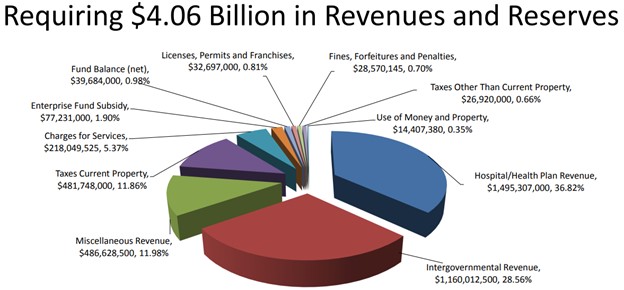
Election costs rise as Contra Costa Supervisors OK $3.6 billion 2020-2021 budget

September 16, 2020 By Publisher Leave a Comment

Source: CoCoCo

Gioia makes his support conditional on reviewing county jail facilities for closure

Includes funding for the Sheriff’s Office to hire 24 deputies for mental health duties at  Martinez jail

By Daniel Borsuk

On the same day Contra Costa County taxpayers were pinched with a new $3.6 billion 2020-2021 fiscal year budget, supervisors also unanimously approved on Tuesday  a County Clerk-Recorder’s request to boost 2021 election ballot printing and mailing costs an additional $1.8 million to a new payment limit of $6 million.

“This is going to be the costliest election year that I have experienced in my 25 year -career,” Assistant Registrar of Voters Scott O. Konopasek said in reference to the upcoming Presidential election and how the county’s contract extension with K&H Printers-Lithographers, Inc. to print and mail ballots and election pamphlets will alarmingly rise again by $8 million for elections held in 2021.

Konopasek said Governor Gavin Newsom’s Emergency Order instructing California counties election officials to mail ballots to every registered voter for the November election means an additional 160,000 Contra Costa voters, or 25 percent of all registered voters, will receive ballots in the mail thereby driving up costs linked to printing and mailing.   That Emergency Order applies to any and all elections conducted in 2021.

While supervisors ignored the Registrar of Voters expense item, they unanimously approved the $3.6 billion 2020-2021 budget that garnered the support of all the supervisors, including Supervisor John Gioia of Richmond, who several weeks ago had said he would vote against the budget when it was ready for formal adoption.  He said he now supports the budget provided supervisors study the closure of the Marsh Creek detention facility, and to have a study conducted on the future of the Orin Allen Youth Rehabilitation Facility in Byron and Juvenile Hall in Martinez.

When Supervisor Karen Mitchoff of Pleasant Hill questioned Gioia why he switched his initial negative vote on the budget, Gioia responded, “I support the county budget as a whole that is over $3 billion and as long as these three issues – Marsh Creek, Orin Allen Youth Rehabilitation Facility and Juvenile Hall are studied and come back to the supervisors for consideration.”

County Administrator David Twa said supervisors can expect Covid-19 related costs to continue to increase over the next 12 to 24 months.  The county spent $131 million overall in Covid-19 connected expenses because it operates a hospital, health services for the homeless, provides Covid-19 testing and numerous other public health services.

Twa said operating costs will increase $28.4 million because of the newly opened County Administration Building and the Emergency Operations Center/Public Safety Building, both located in Martinez.

Supervisors provided funding for the Sheriff’s Office request to hire 24 deputies for the Martinez jail to handle mental health duties, a budget item that met public criticism especially in the summer aftermath of the George Floyd murder case.

Because of rising expenses, the county has placed on the November ballot a half-cent sales tax measure, Proposition X, that county officials counts on to generate new revenues, some $81 million a year for 20 years to fund hospitals, health centers, childhood services, and other community services.

Filed Under: Finances, Government, News, Supervisors

DA Becton supports closing Contra Costa Juvenile Hall, establishes Reimagine Youth Justice Task Force

August 7, 2020 By Publisher 1 Comment

Supervisors Gioia, Glover support her efforts

By Scott Alonso, Public Information Officer, Office of the District Attorney, Contra Costa County 

Contra Costa District Attorney Diana Becton. From CCC website.

On Tuesday, Contra Costa County District Attorney Diana Becton issued the following statement regarding the status of Contra Costa County’s Juvenile Hall and the Orin Allen Youth Rehabilitation Facility.

“These are historic times and we have an opportunity and a responsibility to re-imagine our justice system so that our youth have a greater chance to lead successful and enriching lives.

I am forming a Reimagine Youth Justice Task Force, which will include county departmental and community representatives, that will study and make recommendations on the most effective ways to invest in our justice involved youth through restorative, community-based solutions, with an initial focus on developing an effective process for closing Juvenile Hall.

Youth crime has been on a steady decline over the last twenty years, reinforcing the conclusion that moving away from youth incarceration is in the best interest of rehabilitation, public safety, and fiscal responsibility. Research has shown that youth can be better treated and rehabilitated in community contexts where they can retain ties to family, school, and their community. Programming and services which are based in the home or in the community are more successful at holding youth accountable and positively changing behavior than institutional settings.

Despite the steep decline in youth crime and consequent reduction in numbers of incarcerated youth, the money invested into the operation of youth prisons has not been reduced accordingly. Data shows that the average cost per incarcerated child in Contra Costa Juvenile Hall skyrocketing to over $473,000 per year.

The Reimagine Youth Justice Task Force will make explicit recommendations for financial investments in community-based services for youth instead of investing in youth prisons which have proven to result in worse outcomes for our children and families. Such an approach will allow for critical re-investments in basic needs such as housing, mental health services, and workforce development as well as support the creation of alternatives to incarcerating children in locked facilities.

In the meantime, we should pause and not take any actions to close the Orin Allen Youth Rehabilitation Facility until the Task Force has made its recommendations to the Contra Costa County Board of Supervisors.

This transition is urgent. The Task Force should finish its efforts by the end of this year and make evidence-based recommendations for the process to close Juvenile Hall to the Board of Supervisors in January 2021. The Task Force will present a proposed timeline and transition process for closing Juvenile Hall and will identify alternative investments for our public dollars into community-based services and programming for youth. Implementing these recommendations will create a safer community and help youth get on the right track in their lives.”

“I support District Attorney Becton’s efforts to reimagine youth justice in our County,” said District 1 Supervisor John Gioia. “We need to move away from institutionalization of young people and instead invest in community based restorative justice solutions which make us safer and are more fiscally responsible.”

“I applaud District Attorney Diana Becton’s effort to examine restorative justice alternatives to simply incarcerating our county’s youth,” District 5 Supervisor Federal Glover said. “The factors that lead young people to run afoul of the law are as varied as the youth themselves. In many cases a service-oriented approach will achieve much more in rehabilitating and helping them to become productive members of our community.”


Filed Under: Crime, District Attorney, Finances, Government, News, Youth

Contra Costa Supervisors move forward placing half-cent sales tax increase on November ballot, extend rental eviction moratorium

July 16, 2020 By Publisher Leave a Comment

Andersen only no vote on tax increase measure; support Martizians for Black Lives and mural; approve Grand Jury report on wildfire preparedness; finalize recruitment process for new County Administrator

By Daniel Borsuk

Just as Contra Costa County’s top public health official Anna Roth informed the Contra Costa County Board of Supervisors  on Tuesday the number of COVID-19 positive cases has risen to 2,586 cases, an increase from 92 cases three weeks earlier, and with 79  COVID -19 stricken patients in county hospitals, up from 35 patients in county hospital six weeks previously, Supervisors reacted swiftly by extending a county-wide ordinance prohibiting rental evictions and rental increases until September 30.

Supervisors received overwhelming telephone citizen support to extend the ordinance’s benefits to renters and small businessowners two and half months during Tuesday’s teleconference meeting.  The ordinance that had protected tenants from evictions and rent increases would have expired on Wednesday, July 15.

The new ordinance won unanimous support from supervisors.

“The emergency is not over with the COVID 19 pandemic.  The economic impact our residents face has not subsided, said Board Chair Candace Andersen in a statement.  “We sincerely hope passage of this new ordinance to extend the eviction protection of rent freeze will continue to protect renters and small businesses even as landlords and renters work together to have tenants pay what they can over a longer period of time.

The ordinance contains a no-fault provision that landlords cannot increase the rent on a residential property until Sept. 30, Andersen said in her statement. It applies to all 19 cities in the county as well as all unincorporated areas.

Support Placing Half-Cent Sales Tax Increase on Ballot on Split Vote

The Supervisors, on a 4-1 vote, also flashed the green light to allow county officials to proceed in drafting a county-wide ballot measure possibly for the November election for a half-cent sales tax increase to support county services.

Supervisors reviewed findings from a poll that cost $10,000 and conducted by FM3 Research that found  among 666 persons who were polled, “To keep Contra Costa’s regional hospital open and staff; fund community health centers; provide timely fire and emergency response; support crucial safety-net services; invest in early childhood services; protect vulnerable populations; and for other essential county services, shall the Contra Costa County measure levying a half-cent sales tax, exempting food sales, providing an estimated $81,000,000 annually that the State cannot take, requiring fiscal accountability, with funds benefitting County residents, be adopted?”

The FM3 Research poll found that 62 percent of the respondents would possibly support a tax measure, 31 percent oppose, and 7 percent had no response.

Board Chair Candace Andersen, who represents District 2, cast the lone no vote against the sales tax proposal saying she had “serious concerns” about the measure.  The supervisor from Danville said “it would add further tax burdens to families now stressed by the economic impacts of the  COVID 19 pandemic restrictions.”

“A sales tax is the most regressive form of taxation for those who can least afford it. I think the timing is really, really off,” she added.

But District 1 Supervisor John Gioia of Richmond, who has constantly defended the need for a countywide sales tax to support county services, said, “The need is more apparent now that county services are underfunded and need additional tax support.”

The tax increase would require support of a 50% plus one simple majority of voters to pass. The Supervisors have until August 7 to place the measure on the November ballot. According to the Contra Costa County Elections website, supporters and opponents would have until August 19 to file Arguments in Favor or Against and until August 24 to file rebuttals.

Support Martizians for Black Lives & Mural

Supervisors approved, without opposition, a resolution “supporting Martizians for Black Lives in their legal public commentary through their ‘Blacks Lives Matter’ mural, and strongly condemns those who illegally deface this mural as a racist and illegal act.”  The resolution is in reference to the Black Lives Matter mural that was painted and temporarily defaced in front of the Martinez court house with black paint by a woman and assisted by a man, who said they were defacing the mural with comments such as “Racism is a lie,” “There is no racism,” “This is not happening in my town, “ “No one wants Black Lives Matter,” and “All lives matter.”

Contra Costa District Attorney Diana Becton stated, “The mural completed last weekend was a peaceful and powerful way to communicate the importance of Black lives in Contra Costa County and the country.  We must continue to elevate discussions and actually listen to one another in an effort to heal our community and country.”

Grand Jury Report on Wildfire Preparedness

A Grand Jury Report, “Wildfire Preparedness in Contra Costa County,” was approved as a consent item, but among the panel’s recommendations were:

“The Board of Directors of Contra Costa County Fire Protection District, East Contra Costa Fire Protection District, Rodeo-Hercules Fire Protection District, and San Ramon Valley Fire Protection District should consider directing their Fire Chief to update wildfire evacuation plans and incorporate pre-determined polygons and advanced routing technology, by June 30, 2021.”

The Grand Jury Report also states directors of the five county fire districts “should consider identifying funds to adopt or expand the use of new technologies, such as ground sensors, drones, satellites, and fire spotting cameras, to help detect fires in high-risk areas by June 30, 2021.”

Additionally, the report recommends that directors of the Contra Costa County Fire Protection District, East Contra Costa Fire Protection District, Moraga-Orinda Fire Protection District and Rodeo-Hercules Fire Protection District should review and consider an ordinance similar to the one the San Ramon Valley Fire Protection District passed that would enable their fire district to recover labor and equipment costs from PG&E for overseeing electrical utility work that presents a high fire risk by June 30, 2021. “

In other action, supervisors approved the sale of two parcels of county owned land at 1750 Oak Park Blvd. and 75 Santa Barbara Road, that is the site of the former Pleasant Hill Library, for $13.8 million to developer Davidon Homes. The site is part of a proposed development calling for the construction of a new City-owned library, 34 single-family homes, and open space.  No one spoke either in opposition or in favor of the sale.

Finalize Recruitment Process for New County Administrator

Supervisors also authorized recruitment consultant Peckham & McKenney, a Sacramento firm that supervisors had hired to recruit a new County Administrator to replace David Twa, who will retire at the end of this year to begin the recruitment process.  The supervisors had approved a $30,500 contract last month with Peckham & McKenney.

The successful candidate could earn an annual salary of as much as $381,000.

The recruiter has proposed a schedule that includes resume deadline of Sept. 22, preliminary interview running from Sept. 23 through Oct. 9, Recommendations of Candidates on Oct. 13, Interview – First Round the week of Oct. 26 and Second Round the week of Nov. 2.

The recruiters work is slated to be completed with the successful replacement of a new county administrator before Jan. 31, 2021, the end of the contract with Peckham & McKenney.

Filed Under: Finances, Health, News, Politics & Elections, Taxes

Contra Costa Supervisors to consider extending rent, eviction moratorium during special meeting Tuesday

July 13, 2020 By Publisher Leave a Comment

By Allen Payton

In response to Gov. Newsom’s order on June 30 giving counties and cities the authority to extend their moratoriums on rent payments and evictions to Sept. 30, the Contra Costa County Board of Supervisors will consider extending the county’s moratorium during their meeting on Tuesday, July 14. The current moratorium expires on Wednesday, July 15. (See agenda item D9)

The proposed ordinance offers a variety of reasons for extending the moratorium, including:

“The COVID-19 pandemic and associated public health orders have resulted in the closure of many local small businesses, and have imposed extreme restrictions on other local small businesses.

The COVID-19 pandemic and associated public health orders are expected to result in a loss of income to a widespread portion of the local population that depend on wages or business income to pay rent and result in medical expenses for certain Contra Costa County residents.

Contra Costa County and the cities within the County are also experiencing a housing affordability crisis, which is driving homelessness and displacement of residents.

Many County residents are experiencing or will experience losses of income as a result of the local emergency and shelter-in-place orders, hindering their ability to pay rent and leaving them vulnerable to eviction.

Many of the County’s renters are rent-burdened, paying over 30 percent of their income on rent, and some renters are severely rent-burdened, paying over 50 percent of their income on rent, which leaves less money for families to spend on other necessities like food, healthcare, transportation, and education.

Without local protection, eviction notices, including notices for failure to pay rent, are likely to surge as residents and businesses are unable to earn income due to the COVID19 pandemic, or are forced to pay medical expenses associated with the COVID-19 pandemic; and

Housing displacement due to rent increases and evictions occurring during the local emergency would hinder individuals from complying with state and local directives to shelter at home, and would lead to increased spread of COVID-19, overburdening the healthcare delivery system and potentially resulting in greater loss of life.”

If the board members vote to extend the moratorium, they will have to choose which date, up to September 30th, they want it extended.

The meeting begins at 8:30 a.m. and can be viewed live on Comcast Cable 27, ATT/U-Verse Channel 99, and WAVE Channel 32, and can be seen live online at www.contracosta.ca.gov.

Those who wish to address the board during public comment or with respect to any item that is on the agenda may call in during the meeting by dialing 888-251-2949 followed by the access code 1672589#. To indicate you wish to speak on an agenda item, please push “#2” on your phone.

Filed Under: Finances, Government, News, Supervisors

  • « Previous Page
  • 1
  • …
  • 11
  • 12
  • 13
  • 14
  • 15
  • 16
  • Next Page »
Antioch July 4th 2026 Sponsors (1)
RepublicServices-Antioch-ad (1)
Furn-Clrnc-Outlet-06-26B web
Monica's dinner 05-26 CCH
Celia's-07-26
Delta-RC-B 07-26
Deer-Valley-Chiro-06-22

Copyright © 2026 · · Contra Costa Herald · All Rights Reserved