• Home
  • About The Herald
  • Local Agencies
  • Daily Email Update
  • Legal Notices
  • Classified Ads

Contra Costa Herald

News Of By and For The People of Contra Costa County, California

  • Arts & Entertainment
  • Business
  • Community
  • Crime
  • Dining
  • Education
  • Faith
  • Health
  • News
  • Politics & Elections
  • Real Estate

West County: District 1 Open House on Contra Costa Draft General & Climate Action Plans Feb. 21

February 14, 2024 By Publisher Leave a Comment

Casa Abierta sobre el Borrador del Plan General del Condado y el Plan de Acción Climática

At El Cerrito City Hall

By District 1 Supervisor John Gioia

I invite you to join us for an upcoming open house to learn about the Draft Contra Costa County General Plan and Draft Climate Action Plan Update!

When: Wednesday, February 21 from 5:00 – 7:00 pm

Where: El Cerrito City Hall Lobby, 10890 San Pablo Ave., El Cerrito

Learn about proposed land use policies for the unincorporated areas of West County – Kensington, East Richmond Heights, El Sobrante, North Richmond, Rollngwood, Montalvin Manor/Bayview and Tara Hills; and provide input.

Click on my video explaining the importance of participating in the General Plan!

The Draft Contra Costa County General Plan and Draft Climate Action Plan (CAP) 2024 Update are part of the Envision Contra Costa 2040, the County’s plan to address land use, transportation, housing, climate change, environmental justice and other important issues over the next 20 years. They update is available for public review at envisioncontracosta2040.org. (See related article)

Community feedback has been the driving force behind our planning efforts. Now, we invite you to explore our work and ensure it reflects our collective vision for Contra Costa County’s future.

We’ll be taking questions, providing answers, and encouraging you to share feedback in-person or through our online commenting tool.

View the event flyer here.

Thank you, and we hope to see you there!

En Español

¡Lo invito a unirse a nosotros en una próxima jornada de puertas abiertas para conocer el borrador del Plan General del Condado de Contra Costa y el borrador de la actualización del Plan de Acción Climática!

Cuándo: Miércoles 21 de febrero de 5:00 a 7:00 p.m.

Dónde: Vestíbulo del Ayuntamiento de El Cerrito, 10890 San Pablo Ave., El Cerrito

Conozca las políticas de uso de suelo propuestas para las áreas no incorporadas del oeste del condado: Kensington, East Richmond Heights, El Sobrante, North Richmond, Rollngwood, Montalvin Manor/Bayview, Tara Hills; y proporcionar información.

El borrador del Plan General del Condado de Contra Costa y el borrador del Plan de Acción Climática (CAP) 2024 están disponibles para revisión pública en envisioncontracosta2040.org

Los comentarios de la comunidad han sido la fuerza impulsora detrás de nuestros esfuerzos de planificación. Ahora, lo invitamos a explorar nuestro trabajo y asegurarnos de que refleje nuestra visión colectiva para el futuro del condado de Contra Costa.

Responderemos preguntas, brindaremos respuestas y lo alentaremos a compartir sus comentarios en persona o a través de nuestra herramienta de comentarios en línea.

Vea el folleto del evento aquí.

¡Gracias y esperamos verte allí!

Allen D. Payton contributed to this report.

Filed Under: Environment, Government, Growth & Development, Supervisors, Transportation, West County

Delta Conveyance (tunnel) Project issues Final Environmental Impact Report

December 8, 2023 By Publisher Leave a Comment


Source: CA DWP

To public agencies prior to certification per CEQA requirements

Haga clic aquí para ver este aviso en español

按一下這裡檢視此通知的中文版本。

By California Department of Water Resources

The California Department of Water Resources (DWR) is today releasing the Final Environmental Impact Report to public agencies that commented on the Draft EIR, per the California Environmental Quality Act (CEQA).* Proposed responses to comments, as well as the Final EIR and accompanying informational resources, can be accessed at www.deltaconveyanceproject.com. This action signifies the last step DWR is required to take under CEQA prior to deciding whether to certify the EIR and approve the proposed project.

The Final EIR was prepared by DWR as the lead agency to comply with the requirements of CEQA. The Final EIR is presented in two volumes: 1) the contents of the entire Draft EIR, as revised, and 2) all comments received on the Draft EIR and responses to substantive comments.

At the conclusion of the CEQA process, DWR will determine if the Final EIR has been completed in compliance with CEQA and whether to certify that the Final EIR reflects DWR’s independent judgment and analysis. Following certification of the Final EIR, DWR would then determine whether to approve the proposed project, an alternative or no project. Learn more about the CEQA process here.

The proposed project identified in the Final EIR would modernize the state’s water infrastructure in the Delta to help protect the reliability of this important water supply for 27 million Californians and 750,000 acres of farmland from earthquakes and climate-driven weather extremes.

Accessing the Final EIR

The Final EIR is available online at www.deltaconveyanceproject.com/planning-processes/california-environmental-quality-act/final-eir/final-eir-document.

Informational Materials and Resources

  • Final EIR Overview Fact Sheet

Project Planning Next Steps

  • Community Benefits Program: Should DWR certify the Final EIR and approve the proposed project, DWR plans to release the Community Benefits Program Implementation Plan and Guidelines Discussion Document next year for review. There will be associated public engagement opportunities announced when that document is released.
  • Additional Permitting: DWR continues to pursue additional required federal and state planning processes, including but not limited to federal and state Endangered Species Act compliance, adding points of diversion to existing water rights and Delta Plan consistency. Information and updates related to these processes can be found on the project’s permit portal website.
    *DWR is releasing the Final EIR to public agencies prior to certification per CEQA requirements. While CEQA does not require—and DWR is not providing—a public comment period on a Final EIR, it does require DWR to send its proposed responses at least 10 days prior to a decision on certification of the EIR.

If you need further assistance, contact
Si necesita ayuda adicional, comuníquese con
如果您需要進一步的協助,請洽
Yog koj xav tau kev pab ntxiv, txuas lus rau
ប្រសិនបើអ្នកត្រូវការជំនួយបន្ថែម សូមទាក់ទង
Kung kailangan mo ng karagdagang tulong, kontakin ang
Nếu quý vị cần thêm trợ giúp, vui lòng liên hệ
1-866-924-9955
deltaconveyance@water.ca.gov

Filed Under: Environment, News, The Delta, Water

East Bay Parks use groundbreaking technology to reduce wildfire risks

October 28, 2023 By Publisher 1 Comment

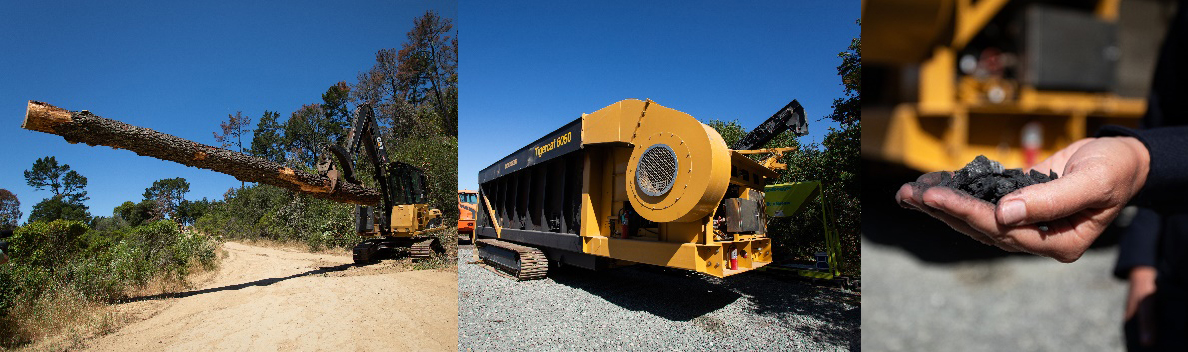
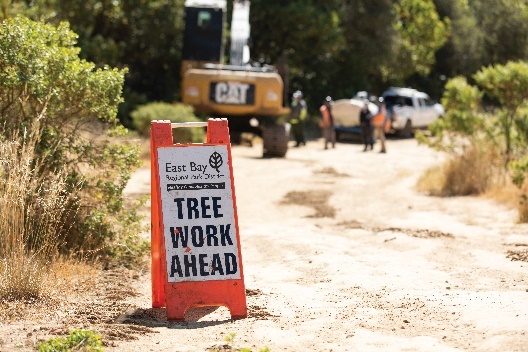
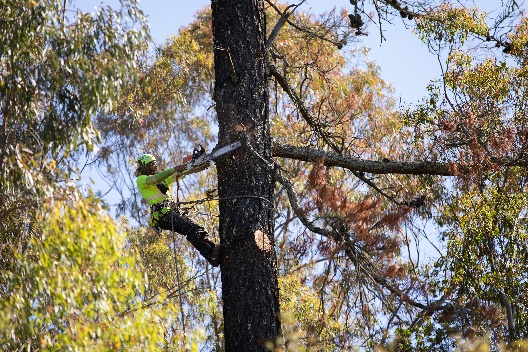
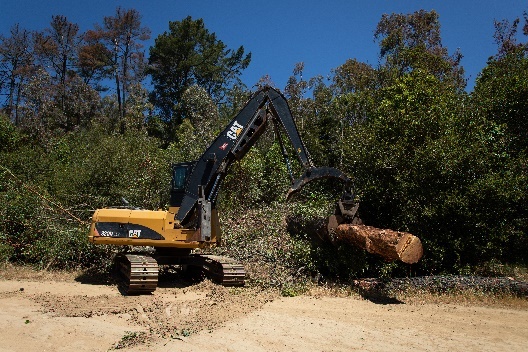
As part of fuels reduction work for fire suppression a dead tree is removed then burned in a low-emission, Tigercat 6050 carbonator machine, resulting in biochar used to enrich soil in the East Bay parks. Photos: EBRPD

Thinking Outside the Box: Leading the Way on Wildfire Protection for the Community

By Dave Mason, Public Information Supervisor, East Bay Regional Park District

The East Bay Regional Park District held a special briefing and tour at Anthony Chabot Regional Park on Tuesday, Oct. 24, 2023, highlighting a first-of-its-kind fuels reduction project (365 acres) in the East Bay hills. The Park District’s wildfire fuels reduction project uses an innovative and climate-friendly carbonator to dispose of vegetation with extremely low emissions, rather than conventional open-pile burning or transporting it long distances in diesel trucks.

In the fall of 2020, while conducting ongoing vegetation management work, Park District staff noticed significant tree die-off in its parks. Further investigation identified over 1,500 acres of tree mortality within Regional Parks, mostly eucalyptus, but also bay and pine. While there are many contributing factors, the overarching cause is believed to be drought-stress due to climate change.

“We were facing a crisis,” said Park District General Manager Sabrina B. Landreth. “I directed staff to assess the situation quickly and come together with a plan of action, including obtaining the necessary funding to begin addressing the die-off.”

The Park District spans Alameda and Contra Costa counties in the San Francisco Bay Area and manages 73 parks, 1,330 miles of trails, and over 125,000 acres. The District has its own fire department and fuels management crew.

“As the largest regional park district of its kind in the nation and a local wildfire prevention leader, we knew we needed to lead the way in finding solutions,” added Landreth.

Much of the identified tree die-off was within the Park District’s approved Wildfire Hazard Mitigation and Resource Management Plan, which meant environmental approvals for fuels reduction work were already in place. However, significant funding was needed.

In 2021, shortly after discovery of tree die-off, the District approached state officials for help addressing the situation, and the state responded with a critical $10 million direct appropriation from the legislature through Senator Nancy Skinner, D-Berkeley, and then-Senator Bob Wieckowski, D-Fremont. The total cost estimate to address the tree die-off issue is over $30 million.

“For a public agency to get a $10 million direct appropriation in the state budget for a specific purpose is extraordinary,” said Landreth.

Groundbreaking, Environmentally Friendly Tool for Fuels Reduction

As efforts to secure funding proceeded, estimates also soared for removal costs and the amount of organic material (biomass) that would need to be disposed of. Adding to the complexity of the situation was the fact that removing so much dead and dying vegetation by traditional means required hauling it in trucks to plants that would burn it for fuel. Transporting the dead trees was cost-prohibitive, disruptive to the residential areas, and potentially dangerous. It would also create greenhouse gases and pollution, causing some of the same environmental factors leading to increasing wildfire risks and perhaps even tree die-off itself.

The innovative solution the Park District found for processing large amounts of biomass was a carbonator. The carbonator machine, a Tigercat 6050, resembles a trucking container with a box-like metal chamber. The device burns organic matter with very little oxygen and at very high temperatures (about 1,300 degrees Fahrenheit), which breaks down the molecules of organic matter into a smaller material called biochar. The process creates extremely low emissions.

The resulting biochar – essentially elemental carbon – provides benefits, such as enriching soil by improving its water retention or pH, accelerating composting of green waste, and filtering toxins from water. The carbonator, having never been used in a metropolitan area for biomass disposal at this scale, was tested as part of an 80-acre pilot project at Anthony Chabot Regional Park in 2022, with the lessons learned being shared with the state and other partner agencies facing similar challenges. When completed in March 2023, the pilot project proved to be a net positive, with only a tiny fraction of emissions compared to open-pile burning or hauling off-site.

“As a large regional park district with a full-time fire department and biologists and ecologists on staff, we can do work that other agencies can’t,” said Park District Fire Chief Aileen Theile.

“The carbonator is another tool for our toolbox to reduce wildfire risks and combat climate change. Going forward, up to half of the biomass removed from parks could be converted into biochar,” said Park District Assistant Fire Chief Khari Helae.

Based on the success of the pilot project, a major fuels reduction project is underway at Anthony Chabot Regional Park on 365 acres and including the use of a carbonator for biomass disposal. The project is using $7.5 million of the $10 million direct appropriation from the state legislature, plus federal funds of $1.5 million secured by U.S. Senator Alex Padilla (D-Calif.).

The 365-acre project currently underway at Anthony Chabot Regional Park involves heavy equipment, including a felling team removing trees from the top down and a mastication team thinning vegetation and trees from the ground up. The resulting biochar is being used at the Park District’s Ardenwood Farms in Fremont to enhance soil health, improve water retention, and ultimately increase productivity.

The innovative, strong partnership approach to securing funding, the use of the carbonator in a pilot project and its subsequent use in a large-scale effort to reduce wildfire danger, and our desire to find a sustainable science-based solution in East Bay Regional Parks “is being seen as a model statewide, as well as nationally,” said Landreth.

“By doing this work now, we will gain a more sustainable eco-system in the long-term to benefit generations to come. We are working and planning for both now and the future, and we’re committed to playing the long game,” said Landreth.

The Park District’s leadership team, firefighters, scientists, park rangers, and dedicated staff across departments continue to focus on wildfire mitigation strategies and the innovative, large-scale fuels management program, all while seeking new partnerships and ways to protect the community.

Read the full-length feature article at www.ebparks.org/sites/default/files/carbonator-feature-article.pdf.

The East Bay Regional Park District is the largest regional park system in the nation, comprising 73 parks, 55 miles of shoreline, and over 1,300 miles of trails for hiking, biking, horseback riding, and environmental education. The Park District receives more than 25 million visits annually throughout Alameda and Contra Costa counties in the San Francisco Bay Area.


Filed Under: East Bay, Environment, Fire, Parks, Technology

Drafts of Contra Costa County General Plan and Climate Action Plan available for public review

October 25, 2023 By Publisher Leave a Comment

By Contra Costa County Department of Conservation and Development

From land use and housing to climate change and environmental justice, residents are invited to explore drafts of the General Plan and Climate Action Plan to ensure they reflect the community’s collective aspirations for Contra Costa County’s future.

View the plans and provide comments on the project website at envisioncontracosta2040.org through Jan. 31, 2024.

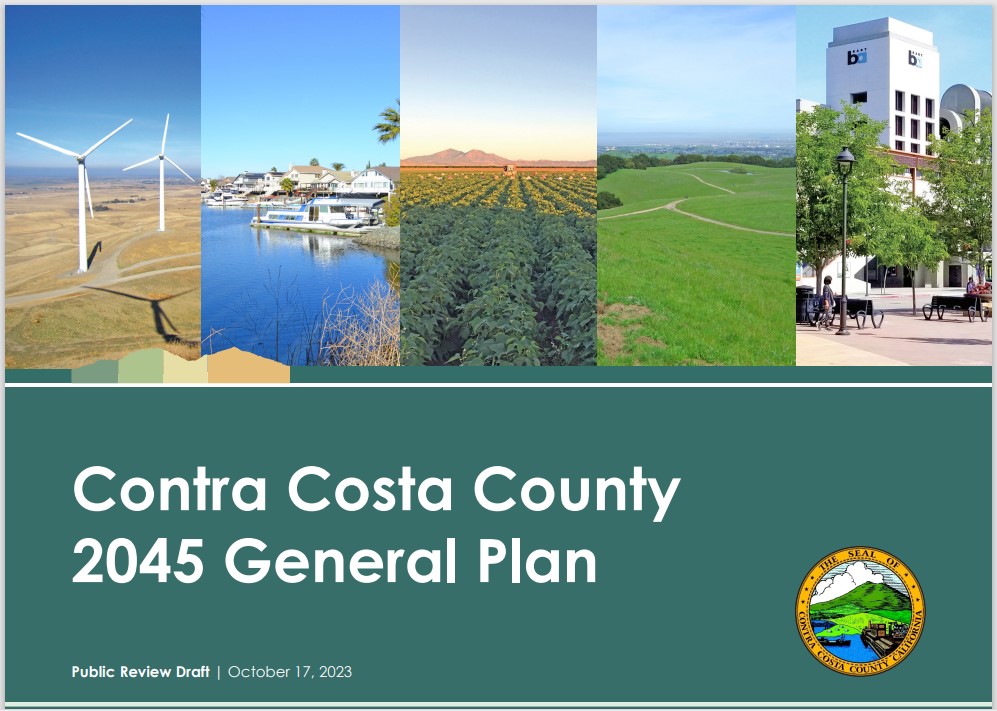
The Public Review Draft of the Contra Costa County 2045 General Plan is the County’s primary policy tool to guide physical changes in the unincorporated areas over the next 20 years. It serves as the basis for planning- and infrastructure-related decisions made by County staff and decision makers. It is built around the themes of environmental justice, community health, economic development, and sustainability.

“Our General Plan establishes the policies that will move us towards a more equitable, healthier, safer and stronger future,” said John Gioia, Chair of the Board of Supervisors. “Public participation and input is vital in creating sound policy and guiding our public decisions on the issues that impact every facet of our lives.”

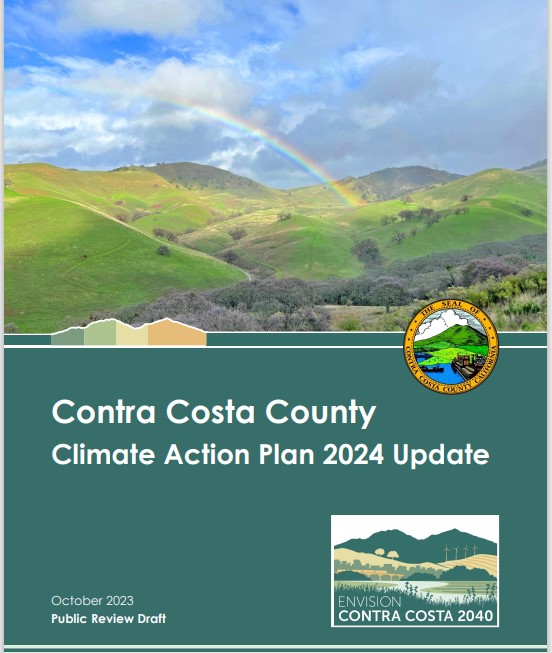
The Public Review Draft Climate Action Plan 2024 Update is the County’s strategic plan to reduce greenhouse gas emissions (GHG) and to adapt to changing climate conditions, such as extreme heat, flooding, droughts, and wildfires, in the unincorporated areas of the County. The 2024 Climate Action Plan implements the General Plan policy guidance and addresses behaviors, regulations, and investment decisions that directly reduce GHG emissions or promote climate resilience.

Community feedback has been the driving force behind these planning efforts. County staff have held over 130 meetings with community members, advocates, stakeholders, and officials. This collaborative effort, including almost 50 community meetings and over 20 with community-based organizations, has shaped the shared vision for Contra Costa County.

Filed Under: Environment, Government, Growth & Development

Recent Delta earthquakes reminder of modernizing water infrastructure’s vital importance

October 23, 2023 By Publisher Leave a Comment

Source: CA DWR

One large quake last Wednesday, two more smaller quakes on Monday

By CA Department of Water Resources

News of yet another earthquake in the heart of the Delta in the last week is a serious reminder about the importance of modernizing and protecting water supply infrastructure. The quake on Wednesday, Oct. 18th measured 4.2 and was centered 5 kilometers southwest of Isleton. Two more quakes measuring 2.9 magnitude and 2.5 mag, with epicenters 4 km southeast of Rio Vista, occurred on Monday, Oct. 23, according to the US Geological Survey (USGS).

In a report by CBS News last week, Austin Elliott with the USGS said that “a very large earthquake, centered near the Delta, would pose a particularly significant threat to both protective systems that the levees provide, as well as the water distribution and intake systems.”

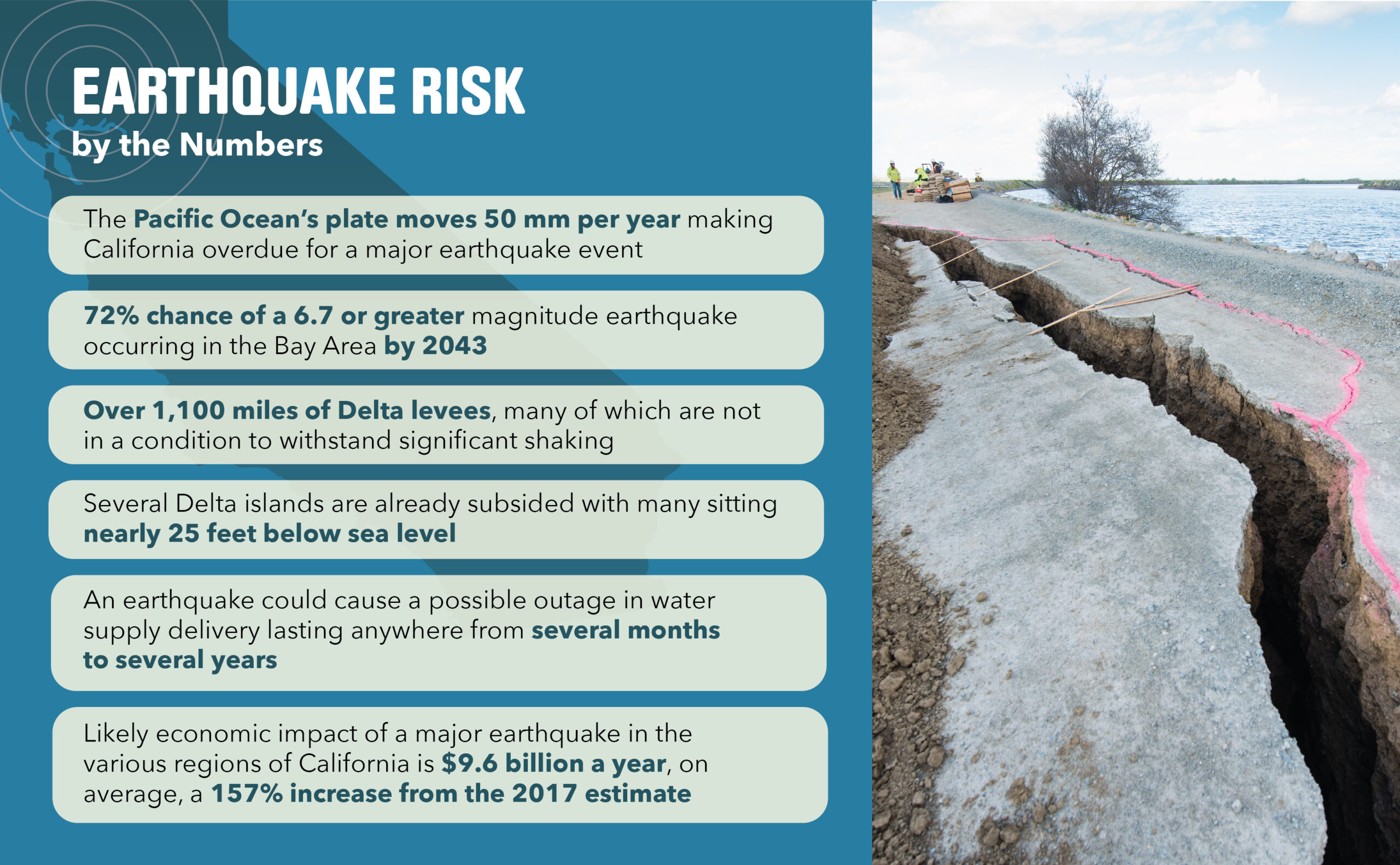
He also said that “Larger earthquakes magnitude — five or six — would begin to produce liquefaction and damage some of the infrastructure and geotechnical work there.” And according to the USGS, there is a 72 percent chance of a 6.7 or greater magnitude earthquake occurring in the Bay Area by 2043.

The Delta Conveyance Project is meant to help the State Water Project guard against these seismic threats.

DWR has also invested millions of dollars to reinforce many Delta levees through the Delta Levees Special Flood Control Projects programs. Additionally, DWR has been planning for and strategizing how to address the earthquake risk and potential disruption to California’s water supply and has developed detailed plans to guide response and recovery efforts.

For more information on how the proposed Delta Conveyance Project would make California’s water supply more earthquake resilient, check out this digital article and these two in-depth videos (Part 1 and Part 2).

Allen D. Payton contributed to this report.


Filed Under: Earthquakes, Environment, Infrastructure, News, The Delta

Join Save Mount Diablo at Party for the Planet benefit bash Nov. 11

October 17, 2023 By Publisher Leave a Comment

By Laura Kindsvater, Senior Communications Manager, Save Mount Diablo

LAFAYETTE, CA—Grab your kids, grandparents and dancing shoes and come on down to Creekside Commons in Lafayette at 6 PM on Saturday, November 11th to Party for the Planet! This fun and lively event is a benefit to support the great work of Save Mount Diablo.

Blue-Eyed Grass, Save Mount Diablo’s house band, will open the show. Later in the evening the Jim Ocean Band will treat the audience to a live performance of their new album, “FrankenClime”—a humor-infused, danceable rock ‘n’ roll monster mash spotlighting the environmental challenges of the times.

Date: Saturday, November 11, 2023

Time: 6:00 PM Doors, 6:45 PM Show

Location: Creekside Commons, 1035 Carol Lane, Lafayette

Admission: $20 adv/$25 door—Ages 18 and under are FREE

Tickets: https://P4TP_SaveMtD.eventbrite.com

Information for the public: https://jimoceanmusic.com

Jim Ocean Band

In addition to the music this action-packed event includes a “Trashy Fashion” runway show produced by Ellie Treanor and RC Ferris. Guests are encouraged to join the fun by wearing their best upcycled/re-designed clothing or homemade costumes sourced from recycled materials.

Plan to arrive at 6 PM to make a trashy fashion accessory—a favorite activity for kids and the young at heart alike. Learn more about Save Mount Diablo and Sustainable Walnut Creek. A selection of vendors will showcase their services or sell their unique “sustainability products,” plus MCE will be on hand to provide education about clean energy options.

Premium beer and wine, and yummy snacks and desserts will be available for sale, courtesy of Sustainable Contra Costa.

Plan to bring something for the sustainability-in-action “Bring an item, take an item” table—a fun way to upcycle a like-new, no-longer-needed household item or an unwanted gift you’ve been holding onto—and perhaps leave with a new treasure of your own.

This is your chance to Party for the Planet while supporting the good work of Save Mount Diablo.

Everyone who buys a ticket in advance will be entered into a drawing for a special “Discover Diablo Experience” led by Save Mount Diablo Executive Director Ted Clement. The lucky winner will be treated to a hike on stunningly beautiful lands not yet open to the public that includes a delicious picnic lunch on a ridgeline with impressive views of the eastern side of Mount Diablo.

Blue-Eyed Grass

Buy your tickets now at https://P4TP_SaveMtD.eventbrite.com! (Ages 18 and under are FREE.)

This concert is part of the band’s “Fossil Fools Tour” in support of the FrankenClime project.

This benefit is made possible by the generosity of our sponsors. Sincere thanks to MCE and Sustainable Walnut Creek.

About Jim Ocean Music

Over the decades, singer/songwriter Jim Ocean has written an impressive collection of thought-provoking, genre-bending songs that explore the nuances and quirks of the human animal. With his new band, he has turned his eye toward the environmental challenges of the day. With soulful harmonies and a tight, driving rhythm section, the Jim Ocean Band has come out swinging with its debut album, “FrankenClime.” Featuring concerned, smart lyrics set to a beat, the in-your-face energy and contagious hooks have audiences dancing, laughing, and thinking all at the same time. As much about the mission as the music, the Jim Ocean Band welcomes collaborations and is available to produce benefit concerts for social justice and environmental organizations. See more information about the band at https://jimoceanmusic.com/epk.

Why this music and why now? Because the Earth needs a good garage band!

About Blue-Eyed Grass

Blue-Eyed Grass is Save Mount Diablo’s house band, made up of Ted Clement, Save Mount Diablo Executive Director; John Gallagher, Save Mount Diablo Board member; and Bob Loomis, Dave Schneider, and Rich Silveira, all Save Mount Diablo supporters.

About Save Mount Diablo

Save Mount Diablo is a nationally accredited, nonprofit land trust founded in 1971 with a mission to preserve Mount Diablo’s peaks, surrounding foothills, watersheds, and connection to the Diablo Range through land acquisition and preservation strategies designed to protect the mountain’s natural beauty, biological diversity, and historic and agricultural heritage; enhance our area’s quality of life; and provide educational and recreational opportunities consistent with protection of natural resources. To learn more, please visit www.savemountdiablo.org.

Filed Under: Arts & Entertainment, Environment

YES Nature to Neighborhoods to host 2nd Annual Rich City Kickback in Richmond Nov. 4

October 10, 2023 By Publisher 2 Comments

Unites Richmond for community wellness, mental health advocacy

By Sabrina Schaefer, Development & Communications Coordinator, YES Nature to Neighborhoods

On Saturday November 4th, Richmond-based nonprofit YES Nature to Neighborhoods (YES) will host the second-annual Rich City Kickback at the Richmond Recreation Complex Social Hall. In addition to YES, local organizations including Urban Tilth, The Watershed Project, Young Women’s Freedom Center, and Alcohol Marijuana Prescription Drug (AMPD) Coalition, will lead hands-on healing and wellness activities at the event. Young adults from YES’s Teaching Racial Environmental Empowerment Series (TREES) program will call on City of Richmond officials to invest in adult mental health by creating safe spaces that empower residents with alternate coping strategies to substance use. Residents of all ages are invited to enjoy the featured wellness and art activities and musical entertainment. This event is free and open to the public.

WHO: Young adults from YES Nature to Neighborhoods’ TREES program; City of Richmond Mayor, Eduardo Martinez (attending)

WHY: The rate of substance use condition among young adults age 18 to 25 is nearly double that of older adults and more than three times that of younger teens. Young adults from the TREES program are advocating for increased access to government-funded mental and emotional health supports as a means to decrease substance use among their age group.

WHEN: 1:00 – 4:00PM, Saturday November 4th, 2023

WHERE: Richmond Recreation Complex Social Hall, 3230 Macdonald Avenue, Richmond

ADDITIONAL INFORMATION:

  • YES Website: www.yesfamilies.org
  • Substance Use in California: Prevalence and Treatment , California Health Care Foundation: www.chcf.org/wp-content/uploads/2022/01/SubstanceUseDisorderAlmanac2022.pdf
  • Social Media:

○ www.instagram.com/trees_program/?hl=en

○ www.instagram.com/yesn2n

○ www.facebook.com/YESNaturetoNeighborhoods/

Filed Under: Community, Environment, Fairs & Festivals, West County

State Workforce Board awards $33 million to help rebuild California’s middle class

October 10, 2023 By Publisher Leave a Comment

The Resilient Workforce Program invests in opportunities that advance job quality, environmental resilience

Contra Costa Refinery Transition Partnership program receives $400K

By Anna Champe, Communications Manager, California Workforce Development Board

SACRAMENTO, CA – The California Workforce Development Board (CWDB), in partnership with the Labor & Workforce Development Agency, recently awarded $33,155,915 to nine projects across the state to advance High Road Training Partnerships (HRTPs) that move underserved populations into better jobs.

Monday’s funding announcement is part of a larger, multi-level investment to advance state workforce development efforts to prioritize equity, quality jobs, and climate resilience

while meeting regional labor market needs. With the addition of these nine new projects, California is investing more than $260 million in nearly 100 active state-funded HRTPs.

The Contra Costa Refinery Transition Partnership received $400,000 in RWF funding in Spring/Summer 2022.

“Funding for existing HRTPs, which invest in industry-led worker-informed efforts, deliver on Governor Newsom’s promise of a California for All,” said California Workforce Development Board Chief Deputy Director Curtis Notsinneh. “California continues to lead the nation in investments that recognize and lift up a middle-class, while meeting the skills needs of our employers to stay competitive and innovative.”

Projects receiving funding include:

  • $7.5 million for High Road to Tribal Forest Restoration and Stewardship – expands job pathways with living wages for underserved tribal and rural populations, including tree and native plant nursery work, forest health, and forest and meadow restoration.
  • $5.1 million for Early Care & Education Pathways to Success – this existing apprenticeship program will expand to new under-sourced regions and serve 655 new apprentices to earn certifications in education serving Pre-K to Third-grade students.
  • $5 million for Vocational English as a Second Language Home Care Immersion Training Program – Homebridge will partner with SEIU Local 2015 to provide language skills and advanced home care training to immigrant, refugee, and formerly incarcerated populations. Participants will immediately earn $25 an hour after graduating and have opportunities for advancement.
  • $5 million for Dental Assistant Training Program – will scale successful earn-as-you-learn bootcamps to more regions and fill the gap between unlicensed dental assistants and licensed Registered Dental Assistants. Target populations include low-wage workers, communities of color, youth, immigrants, and workers without a college degree.

Contra Costa Harnessing Change: Refinery Transition Partnership (CCRTP)

Contra Costa County (CCC) communities, particularly low-income communities of color, bear major health burdens inflicted by the refineries and their toxic emissions. Additionally, the Bay Area refineries emit significant amounts of climate warming greenhouse gasses, posing one of the state’s most significant challenges to climate resilience. As California works to establish a carbon neutral economy, the oil refining sector will unavoidably undergo a massive transition. This transition is already taking place in CCC, where two of the four refineries are transitioning to biofuels, resulting in a significant workforce reduction–most notably at the Marathon Martinez Refinery, which laid off approximately 700 workers in 2020.

The Contra Costa Refinery Transition Partnership (CCRTP) is the first effort to bring together frontline workers and community organizations to plan for refinery transition. CCCRTP brings together CCC oil refinery workers, the refinery community, allies, and high-road industry stakeholders to develop shared strategies to prepare for this significant economic shift, including leading research and developing policy recommendations to support refinery communities and workers, as well as the development of a regional high-road economic development vision to advance CCC’s economic resilience as the state transitions to a low-carbon economy.

This project addresses the critical need to plan for economic transition in one of California’s most oil-industry dependent counties, through deep engagement and shared visioning led by impacted workers and community members themselves, in partnership with the broader community of stakeholders.

Project Highlights

  • Strengthen the CCRTP for the long-term, as a coalition of frontline workers, community organizations and allies.
  • Complete and publish a detailed report and recommendations on planning for refinery transition in the Bay Area.
  • Complete and publish a Contra Costa High Road Economic Development Vision.

Key Partners

  • Contra Costa Central Labor Council
  • BlueGreen Alliance Foundation
  • United Steelworkers District 12
  • United Steelworkers Local 5
  • UA Plumbers & Steamfitters Local 342
  • Asian Pacific Environmental Network
  • California Labor Federation, Workforce & Economic Development (WED)
  • UC Berkeley Labor Center

A complete list of awardees can be found on CWDB’s website.

Allen D. Payton contributed to this report.

Filed Under: Environment, Government, Industry, Jobs & Economic Development, News

First meeting of Contra Costa committee formed to address modeled sea level rise Oct. 12

October 9, 2023 By Publisher Leave a Comment

Martinez Regional Shoreline Park by LisaVorderbrueggen. Source: CC County

Supes Gioia, Burgis lead Contra Costa Resilient Shoreline Ad Hoc Committee

Thursday from 10 a.m. to 11:30 a.m. via Zoom

By Ryan Hernandez, Principal Planner, Contra Costa County Department of Conservation and Development

With warmer temperatures and more extreme weather, sea level rise modeling indicates Contra Costa County’s shoreline, which includes a variety of residential, business, industrial, infrastructure, and natural sites, can expect to be subject to more severe and frequent flooding.

To address sea level rise, the Board established the Contra Costa Resilient Shoreline Ad Hoc Committee at the May 16, 2023, Board of Supervisors meeting. Supervisor John Gioia, whose district borders the San Francisco Bay, was appointed as Chair, and Supervisor Diane Burgis, whose district borders the Sacramento-San Joaquin Delta, was appointed as Vice-Chair of the Committee.

Funded through Measure X, the Committee will develop recommendations to the Board on work the County can do to plan for sea level rise and improve shoreline resiliency, which could potentially include a sea level rise resilience and adaptation plan. This would build on the County’s past work on collaborative regional efforts to characterize sea level rise risks with the San Francisco Bay Conservation and Development Commission and the Delta Stewardship Council.

The Plan could include recommendations for built and natural infrastructure improvements and potential land use planning changes, implementation strategies, and participatory engagement opportunities for stakeholders. With the creation of this Committee, the County will be better prepared to adapt to rising sea levels with strategies specific to the current and future needs of Contra Costa communities.

The Contra Costa Resilient Shoreline Ad Hoc Committee’s first meeting will occur on Thursday, October 12, 2023, from 10 a.m. to 11:30 a.m. via Zoom with in-person meeting locations listed in the published agenda packet. To sign up for email updates, visit the Contra Costa Legistar website.

Allen D. Payton contributed to this report.


Filed Under: Environment, Government

Plan Bay Area 2050+ Draft Blueprint: Tell us what you think

August 17, 2023 By Publisher Leave a Comment

Creating the Blueprint is a key step in developing Plan Bay Area 2050+.

Public engagement is a fundamental element of the plan update process.

Sept. 6th workshop in Contra Costa; Deadline for comment: September 7, 2023

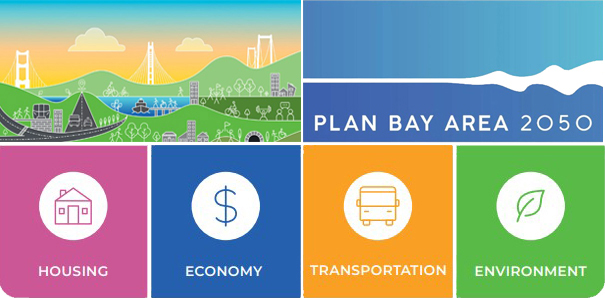
The Plan Bay Area 2050+ Blueprint will integrate strategies across the four elements of the plan — the economy, the environment, housing and transportation — to create a more equitable and resilient future for all.

Beginning in summer 2023 and wrapping up in late 2024, staff will develop the Blueprint over two phases: the Draft Blueprint and the Final Blueprint. Given Plan Bay Area 2050’s solid foundation of 35 strategies, the Draft Blueprint phase for Plan Bay Area 2050+ will focus on making targeted refinements to select plan strategies. (See Plan Bay Area 2050 Executive Summary)

Assumptions for the select Blueprint strategies will be refined to reflect ongoing implementation efforts from Plan Bay Area 2050, while also leveraging findings from previous planning efforts that may be relevant to the post-COVID environment.

Equity and performance analyses will also be conducted during the Draft Blueprint phase to evaluate how the plan’s strategies are supporting progress towards making the Bay Area more affordable, connected, diverse, healthy and vibrant for all.

Furthermore, Transit 2050+ — the comprehensive re-thinking of the six transit-related strategies in Plan Bay Area 2050’s transportation element — will develop an integrated regional transit network that will be incorporated into the Final Blueprint.

While still remaining fiscally constrained per federal planning requirements, the focused plan update approach will consider whether to pursue targeted updates to — or to reaffirm — the Regional Growth Forecast (while maintaining its forecast methodology), as well as to the External Forces, the Growth Geographies and the Needs and Revenue Forecasts.

Culminating in late 2024, the Metropolitan Transportation Commission (MTC) and the Association of Bay Area Governments (ABAG) will consider adoption of the Final Blueprint, which will then move forward in the plan update process as the preferred alternative for environmental review.

Getting Involved

Creating the Blueprint is a key first step toward updating the plan itself, and thus the Blueprint planning phase will require iteration and deep engagement of the public, partners and elected officials.

A first step in developing the Blueprint is to better understand what has changed as the region emerges from the pandemic. This summer, MTC and ABAG staff will be traveling across the region to speak to the community to understand how life has changed for individuals as the Bay Area enters the “new normal.”

MTC and ABAG are taking input from community members and partners to help inform the development of the Draft Blueprint.

You can make your voice heard in a variety of ways! Attend a pop-up workshop near you; participate in our survey; or submit comments via email, telephone or mail.

Find an event near you and join the conversation to help staff better understand how the last three years have impacted life across the Bay Area.

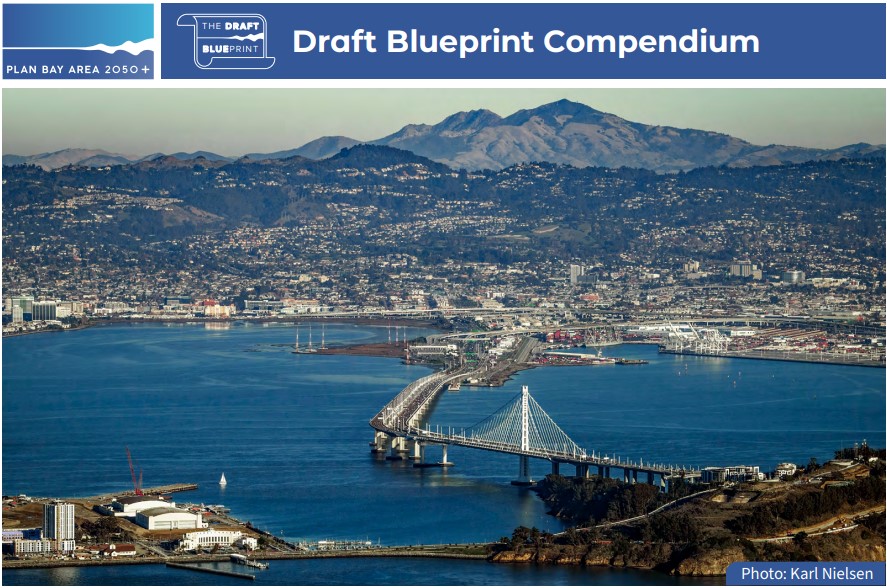
Photo: Plan Bay Area

Participate in Our Survey

A first step in updating the plan is to better understand what has changed for you as the region emerges from the pandemic. MTC and ABAG want to learn how the “new normal” may be impacting your life.

  • Participate in the survey in English(link is external)
  • 快來參與中文版的問卷調查(link is external)
  • Participa en la encuesta en español(link is external)
  • Tham gia khảo sát bằng tiếng Việt(link is external)

The survey will close on September 7, 2023.

The survey also will help inform the development of Transit 2050+, a parallel long-range planning effort that will produce a first-of-its-kind plan to re-envision the future of the public transit network in the nine-county Bay Area, and the expenditure plan for a potential transportation revenue measure. The revenue measure is key in advancing implementation of Plan Bay Area.

Join a Pop-up Workshop

This summer, MTC and ABAG staff will be traveling across the region to speak to the community to understand how life has changed for individuals as the Bay Area emerges from the pandemic. Attend a pop-up workshop near you and tell us what the “new normal” means to you.

Contra Costa County

Diablo Valley College — Pleasant Hill Campus

Wednesday, September 6, 12 to 3 p.m.

321 Golf Club Road, Pleasant Hill, CA

About Plan Bay Area

Plan Bay Area is a long-range regional plan jointly developed and adopted by MTC and ABAG every four years.


Filed Under: Bay Area, Economy, Environment, Government, Growth & Development, Transportation

  • « Previous Page
  • 1
  • 2
  • 3
  • 4
  • 5
  • …
  • 13
  • Next Page »
Monicas-11-25
Deer-Valley-Chiro-06-22

Copyright © 2026 · Contra Costa Herald · Site by Clifton Creative Web