• Home
  • About The Herald
  • Local Agencies
  • Daily Email Update
  • Legal Notices
  • Classified Ads

Contra Costa Herald

News Of By and For The People of Contra Costa County, California

  • Arts & Entertainment
  • Business
  • Community
  • Crime
  • Dining
  • Education
  • Faith
  • Health
  • News
  • Politics & Elections
  • Real Estate

Novel Contra Costa program connects domestic violence survivors with healthcare

July 15, 2024 By Publisher Leave a Comment

Sick woman staying at home and talking to her doctor online on a video call using telemedicine concepts. Source: Sutter Health

TeleCARE improves access to care, resources through video visits

by Monique Binkley Smith, Media Relations Manager, Sutter Health

The distraught woman arrived at an Antioch, California hospital emergency department with nothing: Her car, wallet and cell phone were stolen by her abusive boyfriend. She was treated for her injuries, but many victims of interpersonal violence can’t or won’t go to the hospital because they are afraid, lack access to transportation or childcare or, like the woman, their abuser has taken their ID.

And the problem goes beyond accessing care for injuries. Many interpersonal violence survivors and their children haven’t been seen by a doctor for preventive care or for treatment of a chronic condition such as high blood pressure, diabetes or asthma.

That’s where a unique collaborative telehealth service in Contra Costa County, called TeleCARE, comes in. The program safely connects survivors of interpersonal violence with the healthcare services they desperately need including medical care, mental health counseling, prescriptions and even dental care –all at no-cost to the patient.

Now in its fourth year, TeleCARE was founded by Dr. William Francis, a Sutter Delta Medical Center emergency medicine physician with Emeryville-based Vituity medical group, and Contra Costa Family Justice Center.

“At Contra Costa Family Justice Center, our priority is to help get people to safety. Once they’re safe, we’re able to connect them through the TeleCARE program to the healthcare services they and their children need. Whether it’s for traumatic injuries suffered at the hands of their aggressor or addressing long-term health issues, TeleCARE can help,” says Susun Kim, director of Contra Costa Family Justice Center.

Dr. Francis developed TeleCARE as a way to provide convenient –and safe— access to healthcare for people he treats in the emergency department for injuries sustained at the hands of their aggressors but who also need preventive care and treatment for illnesses and chronic medical conditions. And he wanted a way to offer care to survivors who were too frightened to come to the hospital at all.

“The goal of TeleCARE is to improve healthcare for people suffering interpersonal violence with no need for proof of insurance or requirement for ability to pay before connecting them with a clinician,” says Dr. Francis. “These are people who have immediate need of care for injuries or illnesses but who also often need care to manage their chronic conditions. It can be extremely difficult for them to access care in the traditional model because their aggressor prevents it.”

Dr. Francis says many survivors of interpersonal violence refuse to be taken to the hospital by ambulance when in distress, often because they lack childcare or because of the cost on top of the fear of potentially being revictimized by their aggressors.

Now, instead of just hoping survivors get the care they need, even if they refuse transport to the hospital, Contra Costa EMS responders give them a TeleCARE business card so they can arrange for a video visit with a provider when it’s safe for them to do so.

Seven private and public organizations in Contra Costa County now provide support to TeleCARE through the Green Light Collaborative. Thanks to this broad-based community support, TeleCARE has expanded its offerings to help survivors solve problems like obtaining prescriptions for themselves and their children and finding reliable transportation to work.

Dr. Francis is quick to point out how pervasive—and devastating—interpersonal violence is, with widespread impact on the entire community, especially as a primary cause of homelessness. The National Coalition Against Domestic Violence reports one in three women and one in four men have experienced interpersonal violence from a partner, and according to the National Network to End Domestic Violence, domestic violence is the leading cause of homelessness for women and their children.

“I’m so proud that as a physician practicing at Sutter, my colleagues and I are part of a network that works collaboratively with the community. Together, we can tackle the array of areas where we can improve access to care for underserved populations like survivors of domestic violence,” says Dr. Francis.

TeleCARE is made possible through grant funding, making the program rare, if not entirely unique, in its reach, accessibility and scope of collaboration throughout Contra Costa County. Part of the not-for-profit Sutter Health network of care, Sutter Delta Medical Center works to improve outcomes beyond its walls through investment in community partnerships and programs such as TeleCARE and the Green Light Collaborative.

Need help? County residents can access TeleCARE on-site at Contra Costa Family Justice Center, or call one of three Family Justice Center locations in Contra Costa County for an appointment:

Richmond: (510) 974-7200

Concord: (925) 521-6366

Antioch: (925) 281-0970

Filed Under: Central County, Concord, East County, Health, News, West County

Innovative permanent supportive housing complex to open in San Pablo

July 13, 2024 By Publisher Leave a Comment

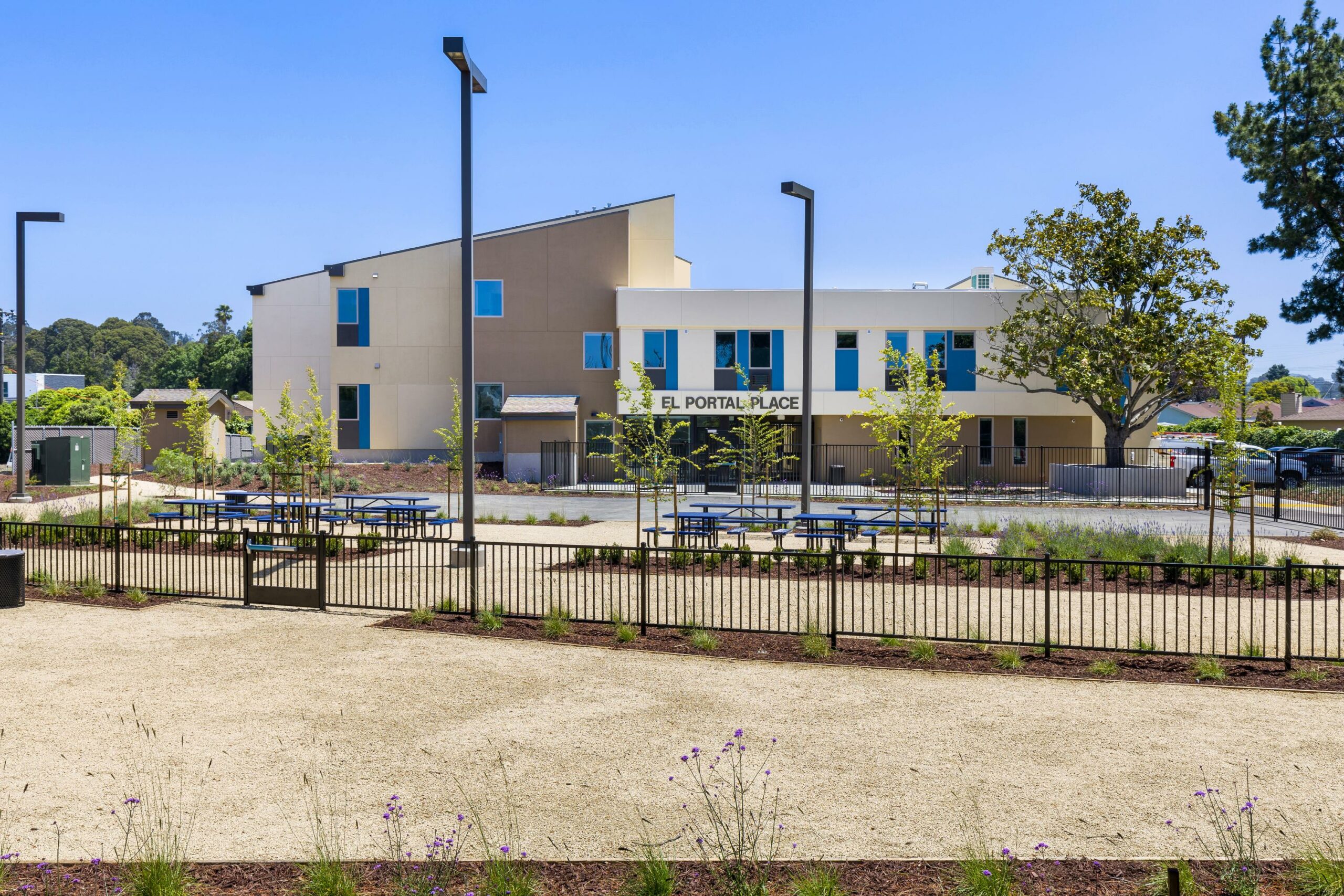
El Portal Place. Photo: Overaa Construction

$21.5 million in public funds for 540 micro-apartments for homeless adults with disabilities; on-site services provided

Originally built by grandfather, renovated by grandson 56 years later

By Contra Costa Health

Contra Costa County Supervisor John Gioia and Contra Costa Health (CCH) hosted a grand opening for El Portal Place, a 54-unit micro-unit apartment building for homeless adults with disabilities, on Saturday, July 13, 2024. The project is the second completed in Contra Costa using state Homekey project funding, as well as funding from the county’s Measure X half-cent sales tax. The event began with prepared comments by elected and CCH homeless services officials followed by guided site tours. will be on hand to interview regarding the project.

Contra Costa County has transformed the vacant office building at 2555 El Portal Drive to serve some of the county’s most vulnerable residents with permanent supportive housing that includes onsite services such as case management, community supports, and referrals to services such as behavioral health, benefits assistance, and healthcare.

According to Overaa Construction, the builder responsible for the renovations, the design-build, adaptive reuse project reimagined an old, two-level, 27,000 square-foot office building as small homes for 60 individuals. Jerry Overaa built the original office building in 1968 and fifty-six years later, his grandson, Jared, spearheaded its conversion. The architectural design for the project was by Studio T Square and Base Landscape architects. (See project video)

El Portal Place Floor Plan. Source: Overaa Construction

“El Portal Place is an innovative project connecting people in desperate need with quality housing and services to improve their health,” said District 1 Supervisor Gioia, whose district includes San Pablo. “We appreciate our strong partnership with the City of San Pablo, and the continued support from Governor Gavin Newsom. These homes help us achieve equity and improved health for county residents.”

The facility will become the first built by the county specifically for residents who meet federal criteria for chronic homelessness, meaning they have been unhoused for a long period of time and have disabilities that prevent them from maintaining permanent housing on their own.

When tenants arrive later this summer, each will live in a micro-unit apartment with bathroom, kitchenette and workspace, in a complex with a community room, courtyard, garden and dog park. Onsite staff will assist in coordinating a comprehensive range of services for residents, supported by federal and state funding.

“Providing stability for people experiencing homelessness not only lifts up those served, but it also lifts our entire community,” said Federal Glover, chair of the county Board of Supervisors. “El Portal Place is an example of putting public funds to work to do something about homelessness.”

Unit kitchenette. Source: Overaa Construction

Contra Costa’s Measure X, approved by county voters in 2020, contributed $5.2 million toward the project, to go along with a $16 million grant from California’s Homekey program, resulting in a cost of slightly more than $398,000 per unit.

A separate $21.5 million award helped the county build the first project, Delta Landing, a 172-unit interim housing site in Pittsburg, in 2022.

“Contra Costa, like all of California, is experiencing a profound housing crisis. Every partnership, collaboration, and new idea to address homelessness is crucial,” said Anna Roth, CEO of Contra Costa Health.

Contra Costa’s point-in-time survey of homelessness in the county in January estimated 2,843 people experiencing homelessness in the county on any given night, an increase of 18.5% from the previous year’s estimate. The county increased its daily capacity of temporary and permanent housing beds by 26% during the same period.

People who need assistance with housing in Contra Costa County can call 211 to reach CCH’s CORE homeless outreach team.

Allen D. Payton contributed to this report.

Filed Under: Construction, Homeless, News, State of California, West County

Point Molate in Richmond on track to become an East Bay Regional Park

July 12, 2024 By Publisher Leave a Comment

Point Molate taken from the SF Bay Trail alignment near Castro Point looking north. Photo: EBRPD

$36 million in state funds will be used for acquisition and clean-up

By Jen Vanya Public Information Specialist, East Bay Regional Park District

The East Bay Regional Park District is poised to acquire the 80-acre Point Molate property located on the Point San Pablo Peninsula in the City of Richmond. The acquisition will ensure that this historic land will be preserved forever as open space and will add it to the Park District’s portfolio. The acquisition supports the Park District’s mission of habitat preservation and providing recreation and public access for all.

Today, Friday, July 12, 2024, the City of Richmond (City) held a Special Council meeting to consider approval of a Letter of Intent (LOI), a three-party agreement between the City, East Bay Regional Park District (EBRPD), and the Guidiville Rancheria of California.

“This step is worthy of heralding and there are many partners to thank who have backed our goal to make this an East Bay Regional Park,” said Park District General Manager Sabrina Landreth. “This Letter of Intent is a major step in the process to secure Point Molate as public open space for the community for decades to come.”

The LOI will be before the EBRPD Board of Directors for approval at its regular board meeting on Tuesday, July 16, 2024. This LOI is a precursor to the Purchase and Sale Agreement which will transfer the property into the hands of the Park District no later than January 15, 2025. The LOI includes a purchase price of $40 million, supported by an independent appraised valuation. Additional details can be found in the Board’s meeting agenda. (See Item III B.)

“This important step toward creating a regional park at Point Molate will preserve stunning bay front land with a rich cultural history for all to enjoy,” said Park District Board President Elizabeth Echols. “It promotes our shared goal of creating equitable access to parks and recreation. I thank the many partners, elected leaders, and community members who have long shared our vision for a regional park at Point Molate.”

Source: EBRPD

Combined with the extension of the San Francisco Bay Trail already scheduled for construction along this shoreline, this historic land is now on track toward public ownership and to provide the type of open, outdoor space the community has come to expect from the Park District.

“Point Molate has been called ‘the most beautiful part of San Francisco Bay no one’s ever heard of,’” said Richmond Councilmember Gayle McLaughlin. “We are now at the point where everyone will come to know Richmond as home to an amazing world-class park at Point Molate.”

The Park District’s 2013 Master Plan and the Bay Conservation and Development Commission’s San Francisco Bay Plan both have called for a regional park at Point Molate. It has been a long-standing vision to have a regional park for all of Richmond and Bay Area residents and to ensure the East Bay shoreline is preserved as open space for all to enjoy. Few opportunities remain to create significant parkland in the Bay Area, especially in the Richmond region.

Rendering of Bay Trail through Winehaven Historic District. Source: EBRPD

Point Molate is located on the San Pablo Peninsula within the City of Richmond, in Contra Costa County. The San Francisco Bay lies to the west, open space parcels to the north and south, and the Chevron Richmond refinery to the east.

Underscoring the support this acquisition has received over the years, State Senator Nancy Skinner championed $36 million in the 2022-23 California budget for acquisition and clean-up of Point Molate.

“This is truly a great day for the East Bay and all of California,” Senator Skinner said. “I am thrilled that Point Molate’s 80 acres will now and forever be preserved as parkland and open space. The acquisition of Point Molate, with its breathtaking views along San Francisco Bay, continues the East Bay’s decades-long mission to protect our bay shoreline. Securing Point Molate within the East Bay Regional Park District is not only an incredible environmental victory, it will also reawaken the area’s significant cultural history, which includes Native sacred sites, a historic Chinese fishing camp, a historic wine port and America’s last whaling station. I was proud to lead the state budget effort to help in the purchase of this property and thank the Guidiville Rancheria of California, the City of Richmond, and the East Bay Regional Park District for their role in securing Point Molate for all to enjoy.”

Looking west from the proposed SF Bay Trail alignment and just south of Point Molate Beach Park. Photo: EBRPD

The East Bay Regional Park District is the largest regional park system in the nation, comprising 73 parks, 55 miles of shoreline, and over 1,330 miles of trails for hiking, biking, horseback riding, and environmental education. The Park District receives an estimated 30 million visits annually throughout Alameda and Contra Costa counties in the San Francisco Bay Area.

Filed Under: East Bay, News, Parks, Recreation, West County

Veolia North America unveils $40 million upgrade to Richmond wastewater treatment plant

July 11, 2024 By Publisher Leave a Comment

Residents tour the Richmond wastewater treatment plant during the open house on Thursday, July 11, 2024. Photos: Veolia

Open house provides community with behind-the-scenes look at significant infrastructure improvements for better air, water quality

Three-year construction project brings substantial improvements to wastewater treatment and odor control systems at Richmond Water Pollution Control Plant

Veolia North America, the leading provider of environmental solutions in the U.S. and Canada, on Thursday, July 11, 2024, unveiled to the public $40 million worth of major upgrades to the Richmond Water Pollution Control Plant. The investment will improve wastewater treatment, environmental compliance and odor control for Richmond and nearby communities on the San Francisco Bay.

Local community leaders and neighbors attended an open house at the plant to see the results of the work and to learn how this infrastructure investment will improve their surroundings. It provided a rare opportunity for an in-depth, guided tour of the major capital improvement.

Richmond’s Water Pollution Control Plant is located at 601 Canal Blvd. in Richmond, California on the southwest side of the city.

Veolia has operated the plant for more than two decades, and the construction project marks a significant step forward in modernizing the plant’s ability to effectively treat the city’s wastewater and protect its environment. Veolia welcomed local community leaders and neighbors to the plant for an open house today to see the results of this work and to learn how this infrastructure investment will improve their surroundings.

“Veolia is proud to be a key partner to the city of Richmond as it continually improves its infrastructure and its resiliency for the future,” said Karine Rougé, CEO for Municipal Water at Veolia North America, who attended the open house. “These vital improvements will make a significant impact in how the wastewater treatment plant functions in the community, by improving the quality of treated water released into San Francisco Bay, delivering more efficient operations to the city, and better controlling the odors produced by the wastewater treatment process.”

The wastewater system improvements are expected to provide additional environmental and financial benefits to Richmond, as more efficient equipment will require less energy and lower levels of chemical treatment to operate, reducing the city’s costs as well as its greenhouse gas emissions. These achievements exemplify the goals of Veolia’s global GreenUp strategy, which strives to lead the ecological transformation of the planet by accelerating water quality improvement, decarbonization and technological innovation. Some 61% of Americans are concerned that worsening climate conditions may result in a deterioration of their quality of life, according to Veolia’s Barometer of Ecological Transformation survey, and projects which respond to ecological threats while also addressing infrastructure needs help build long-term solutions for the environment and public health.

The Richmond Water Pollution Control Plant construction project replaced outdated or ineffective equipment used in major functions at the plant:

  • Fine screens – Two new mechanical fine screens were installed to filter out trash, rags and other larger debris from the wastewater stream. This prevents that material from clogging pipes and pumps, and potentially polluting the San Francisco Bay.
  • Vortex grit removal system – Grit and sand settles at the bottom of wastewater treatment tanks, where it can cause wear and tear on machinery. The new grit removal system allows those fine materials to be easily separated from wastewater.
  • Biofilter – Gases released by the wastewater treatment process are captured and forced through a new filtration system. Many layers of porous materials in the biofilter promote the growth of specialized microorganisms that break down the odor-causing compounds.
  • Blower building – a new structure holds powerful mechanical turbo blowers, which ingest outside air that is diffused into wastewater to promote the treatment process.
  • Aeration basins – a new system in the bottom of wastewater treatment tanks diffuses air into the water as fine bubbles, rather than the previous mechanical mixing system. These fine bubble diffusers are more consistent, efficient and resilient than the prior system.

The completion of this construction project marks another milestone for Veolia’s partnership with Richmond, in which Veolia is responsible for operating and maintaining the city’s wastewater treatment plant, sewer system and stormwater collection system. Since the partnership began in 2002, the city’s environmental performance has improved significantly.

About Veolia North America  

A subsidiary of Veolia Group, Veolia North America (VNA) offers a full spectrum of water, waste and energy management services, including water and wastewater treatment, commercial and hazardous waste collection and disposal, energy consulting and resource recovery. VNA helps commercial, industrial, healthcare, higher education and municipality customers throughout North America. Headquartered in Boston, Mass., Veolia North America has more than 10,000 employees working at more than 350 locations across the continent. www.veolianorthamerica.com

About Veolia Group

Veolia’s ambition is to become the benchmark company for ecological transformation. With nearly 218,000 employees on five continents, the Group designs and deploys useful, practical solutions for managing water, waste and energy that help to radically change the world. Through its three complementary activities, Veolia contributes to developing access to resources, preserving available resources and renewing them. In 2023, the Veolia group served 113 million people with drinking water and 103 million with wastewater services, produced 42 terawatt-hours of energy and recovered 63 million metric tons of waste. Veolia Environnement (Paris Euronext: VIE) generated consolidated sales of €45.3 billion in 2023. www.veolia.com

Filed Under: Construction, Infrastructure, News, West County

Oakland man arrested in Hercules in stolen car from Antioch

July 10, 2024 By Publisher Leave a Comment

The suspect was found with stolen credit cards and driver’s license, a fraudulent check, mailbox keys and a To-Do list inside a stolen car from Antioch on Monday, July 8, 2024. Photos: Hercules PD

Found with stolen credit cards & driver’s license, fraudulent check, To-Do list

By Hercules Police Department

Halfway through the year—how are those New Year’s resolutions holding up? This guy’s definitely been busy…

An officer spotted a Honda Civic with no front plate and a temporary rear plate backing into a Safeway parking spot. The driver quickly exited and walked inside. A records check on the plate and VIN revealed it was a stolen vehicle out of Antioch. Officers apprehended the driver inside Safeway without incident.

A search of the driver (male out of Oakland) was conducted and revealed several stolen credit cards, a stolen driver’s license, mailbox keys, a fraudulent check, and a to-do list in his pocket: 1. Laundry 2. Talk to kids 3. Get some money 4. “Boost.”

Guess he’s keeping up with his goals… sort of.


Filed Under: Crime, News, Police, West County

CHP announces first arrest using state-of-the-art smart Flock cameras in Bay Area

July 5, 2024 By Publisher Leave a Comment

The Flock Safety camera system technology was used to ID the shooting suspect’s vehicle. He was stopped, arrested and his gun, ammunition and drugs were confiscated. Photos (left & center) by Flock Safety, (right) by CHP

Bay Bridge road-rage shooting suspect from San Pablo identified, arrested by Contra Costa Sheriff’s Deputies

6’7″ felon charged with attempted murder, multiple gun crimes

By Jaime Coffee, Director of Communications, CHP Office of Media Relations

A freeway shooting suspect is in custody and a firearm has been recovered after a road rage incident on the San Francisco – Oakland Bay Bridge (SFOBB) early Monday morning, July 1, 2024. The suspect was identified through one of the newly installed high-tech “Flock” cameras, which provide law enforcement with real-time information and alerts to identify and locate vehicles associated with criminal activity. California Governor Gavin Newsom announced the purchase of the cameras as part of the state’s ongoing public safety investments and work in the East Bay to combat criminal activity and freeway violence.

“Through new state-of-the-art technology and the deployment of officers, California is doubling down in our efforts to keep our communities safe. I thank the California Highway Patrol and allied agencies for their persistent work to secure accountability in this case and help ensure that Californians are safe and secure,” said Governor Gavin Newsom.

“The CHP is excited to have this new technology located on freeways in the Bay Area,” said Commissioner Sean Duryee. “Our investigators will utilize this technology to identify and apprehend those who engage in criminal activity and put California’s motorists at risk.”

On Monday, July 1, 2024, at approximately 6:40 a.m., officers assigned to the CHP’s San Francisco Area office were dispatched to a call of a freeway shooting on westbound Interstate-80, just west of the Treasure Island on-ramp. Officers were advised, the victim in the incident was not struck by the bullet; however, she received lacerations from flying glass inside the vehicle. The victim was able to safely exit the freeway, into the city of San Francisco, where he was met by officers and paramedics.

Detectives from the CHP’s Golden Gate Division Special Investigations Unit (SIU) responded to the scene and spoke with the victim, who mentioned the shooting took place following a merging conflict on the Treasure Island on ramp. A description of the suspect vehicle was obtained, allowing detectives to begin a review of Flock camera data. Detectives quickly identified the suspect vehicle and obtained a license plate number, which allowed them to issue a “Be on the lookout” (BOLO) broadcast to Bay Area law enforcement agencies.

At approximately 10:20 a.m., Contra Costa County Sheriff’s deputies located the vehicle traveling on 7th Street near Pennsylvania Avenue in Richmond and conducted an enforcement stop. The driver, 42-year-old Adrian Martinez Emerson of San Pablo, Calif., was detained and turned over to SIU detectives for questioning. A search of Emerson’s 2016 Honda Accord resulted in the recovery of a pistol believed to have been used in the shooting.

Emerson was subsequently booked into San Francisco County Jail on felony charges of attempted murder, assault with a firearm, and discharging a firearm from a vehicle.

According to localcrimenews.com, the six-foot, seven-inch, 170-pound Emerson is Black and was previously arrested by Richmond Police in 2014 on felony parole violation while he was an Antioch resident. No additional information could be located from an online search about Emerson’s previous conviction.

According to the San Francisco Sheriff’s Office, he is being held on no bail and is also include discharge of a firearm at an inhabited enclosure or vehicle, possession of firearm with prior conviction and by a felon, assault with a semi-automatic firearm, carrying a loaded firearm when not the registered owner, possession of ammunition, having a concealed firearm in a vehicle and carrying a loaded firearm. His court date has not yet been set.

The mission of the CHP is to provide the highest level of Safety, Service, and Security.

Allen D. Payton contributed to this report.

Filed Under: CHP, Crime, News, Sheriff, Technology, West County

Richmond graduate to receive CA Charter Schools Association scholarship

July 1, 2024 By Publisher Leave a Comment

One of 10 exceptional recipients statewide

SACRAMENTO, CA – The California Charter Schools Association (CCSA) has selected ten outstanding charter high school students to receive the 2024 Susan Steelman Bragato Scholarship, a statewide award honoring charter high school graduates who have overcome adversity, given back to their communities, and are pursuing post-secondary education in the fall. The list includes Carolina Ayala, a Class of 2024 graduate of Making Waves Academy in Richmond. According to Inayah Baaqee the academy’s Associate Director of Academic Advising, Ayala was one of 81 graduates this year from the Richmond area and throughout Contra Costa County.

“This year’s class of Bragato Scholarship recipients is driven to make the world a better place by using the knowledge and skills they’ve acquired from their charter school experience to help others surmount any hardships in life,” said CCSA President and CEO Myrna Castrejón. “Whether pursuing careers in the mental health field or the arts, these outstanding scholars exemplify California’s charter public schools’ importance in K-12 education.”

The 2024 Bragato Scholarship winners truly represent the diverse communities that charter public schools serve in California. The students’ collective academic achievement also reinforces key findings of CCSA’s 2024 Portrait of the Movement which indicate that charter public schools send more historically disadvantaged students to University of California and California State University campuses.

Each 2024 Bragato Scholarship recipient received $2,000 to defray the costs of attending their first year of college.

Susan Steelman Bragato was the co-founder of the first California charter public school and founder of the California Network of Educational Charters, the precursor to CCSA. Her legacy continues through her namesake scholarship program.

Below is a list of the winners – by region in the state – and summaries of their personal stories:

NORTHERN & CENTRAL CALIFORNIA 

Carolina Ayala 

High School: Making Waves Academy (Richmond)

College bound: University of Southern California

Carolina’s passion for the performing arts emerged during her freshman year when she enrolled in an acting workshop. She soon noticed that the casts of her school’s theatrical productions were not culturally or ethnically diverse. As a student of color, Carolina helped change that by auditioning for lead parts and encouraging others to do the same. She was cast in many musicals during her time at Making Waves, formed the school’s Performing & Visual Arts Club, and organized the school’s first talent show. “A performer is a part of who I am. The stage being my second home … reflecting stories and a chance for representation is what exhilarates me to chase my dreams.” Carolina will attend USC this fall and plans to explore all aspects of acting, theater and cinema.

Janet Huang

High School: Aspire Benjamin Holt College Preparatory Academy (Stockton)

College bound: UC Berkeley

A child of Chinese immigrants, Janet says she’s often felt the pressure of being perfect. Any outward expression of feeling sad, anxious, or depressed was seen as being weak. When Janet began to struggle with mental health issues, she sought the help of a therapist despite her parents’ objections. Janet now wants to change cultural attitudes about self-care and mental health within immigrant communities by becoming a psychologist. “Studying psychology will not only help me understand myself more but also help other children who are reluctant to get help. Being an Asian-American woman in this field could relieve some of the stigma.” Janet was accepted to UC Berkeley where she’ll delve into topics like behavioral and cognitive neuroscience.

Audrey Wilson 

High School: Sutter Peak Charter Academy (Yuba City)

College Bound: Brigham Young University

When Audrey was a child, her parents say she always had crayons or colored pencils in her hands. Audrey’s love for the visual arts is now the discipline she wants to explore when she attends Brigham Young University in Utah this fall. “I am actively pursuing a career that will allow me to integrate my love of the arts and creativity into the business world … I’m excited to combine my two passions, the arts and business, and make the world a more beautiful place.” Audrey is active in her church and has helped local organizations assist Afghan and Ukrainian refugees who have settled in the Sacramento region.

SOUTHERN CALIFORNIA 

Flor Cruz

High School: King-Chavez Community High (San Diego)

College bound: University of California, Santa Barbara

Flor wants to change the world, one smile at a time. After graduating from King-Chavez Community High, Flor plans to study dentistry at UC Santa Barbara so she can improve the oral health of low-income and immigrant families. Flor is the first in her family to graduate high school and attend college. Her interest in dental hygiene stems from her father’s experience. He didn’t have regular dental check-ups due to financial issues. His teeth were badly destroyed by his fifties. “With the aspiration to become a dental hygienist, I will advise my Hispanic community and any other communities on how to improve, manage, and have better oral health.”

Dominic Kalpakgian

High School: Classical Academy High (Escondido)

College bound: Franciscan University of Steubenville

Dominic is one of seven children in his family. He says he learned at a young age the importance of embracing different perspectives. Dominic plans to explore different perspectives as a college student in the fields of criminal justice, entrepreneurial business, and medicine. “I’m drawn to using my inquisitive mind to solve problems and help people … safeguarding communities from threats or disease resonates deeply as an essential, meaningful vocation.” Dominic has already started to safeguard communities at a local level. This year he volunteered to help a local nonprofit raise $125,000 to assist victims of human trafficking and at-risk children.

Aisha Sufi 

High School: Dimensions Collaborative (Escondido)

College bound: Southwestern College

Aisha is one of 12 children in her family. Her hero and inspiration is her mother who fled Somalia as a refugee with three of Aisha’s older siblings. Despite financial issues, her mother made sure Aisha and her brothers and sisters had all the resources to attend school. As a high school graduate, Aisha plans to enroll in Southwestern College’s nursing program. “Nursing is my dream because it’s where I can put my heart into action … with compassion and skill, you can touch lives in the most meaningful ways.” Aisha has already volunteered at a local hospital delivering meals to patients and assisting nurses and other staff.

Rosemarie Umipig 

High School: Sage Oak Charter Schools (Redlands)

College Bound: UC Santa Barbara

Born in Cebu, Philippines, Rosemaire was adopted at four years old and moved to California.
Her dream as a child was to become a detective like Nancy Drew or Sherlock Holmes. Rosemarie plans to fulfill her dream by exploring a new kind of detective work in college: forensic accounting. “Forensic accounting combines investigation and accounting skills to analyze financial data for legal purposes … I wanted to use logical thinking and look at clues to find and fight criminals.” Rosemarie will attend UC Santa Barbara in the fall.

LOS ANGELES 

Ellis Cho 

High School: Larchmont Charter (Los Angeles)

College bound: Pepperdine University

As the child of a low-income immigrant family, Ellis and her siblings often found themselves navigating life on their own in the U.S. They also had to support their family financially. As a high school student, Ellis accepted a part-time position at a family-run daycare which changed the trajectory of her life. “I became immersed in the world of children and their minds, their behaviors, and the way they functioned. I saw myself in these kids and felt a desire to guide them through the various stages of life.” With a passion for improving the mental health and wellness of children, Ellis now plans to attend Pepperdine University to become a child psychologist to help low-income children with autism.

Hayoung Park 

High School: Granada Hills Charter (Granada Hills)

College bound: University of California, Los Angeles

Hayoung immigrated to the U.S. with her family from Korea at the age of three. As she grew older, Hayoung became less connected to her Korean roots and made a concerted effort to change that by exposing herself to a multitude of Korean-centered opportunities like volunteering at her church as a Korean youth leader and participating in Korean essay competitions. “A lot of my experiences and lessons growing up have been rooted in learning the basics of communication … I plan to continue my exploration of communication as this interaction exists everywhere.” Hayoung will attend UCLA in the fall.

Michael Suarez-Russell

High School: Granada Hills Charter (Granada Hills)

College bound: Pierce College

Michael’s passion for computer science took hold of him after enrolling in a computer science class at Granada Hills Charter High School as a freshman. “I fell head over heels in love with the subject. Eager to challenge myself, I became addicted to teaching myself and programming new projects.” Michael also took meaningful steps to connect with others. He established a student club to support academically struggling peers at his school. He also formed a student club to help patients at children’s hospitals. Michael will attend Pierce College in the fall.

About the California Charter Schools Association

The vision of the California Charter Schools Association (CCSA) is to build great public schools of joy and rigor that prepare all California students for success in college, career, community, and life. The mission of CCSA is to meet parent, educator, and community need for great public school options by supporting and advocating for high quality non-profit charter schools and sharing their success throughout California’s public schools. Learn more.

Filed Under: Education, Honors & Awards, News, West County, Youth

West Contra Costa school district officials respond to take over of budget by county Office of Ed

June 29, 2024 By Publisher Leave a Comment

President Jamela Smith-Folds (upper right), Trustees Otheree Christian (bottom left) and Leslie Reckler (bottom right) and Superintendent Dr. Chris Hurst (bottom center) during the West Contra Costa Unified School District Board of Trustees meeting on Wed., June 26, 2024. Video screenshot.

“The school district has shown, repeatedly, that it is unwilling or unable to balance and focus its budget.” – Area 3 Trustee Mister Phillips

“We’re in a budget crisis. I’m no longer rubber-stamping things that should be investigated.” Area 5 Trustee Leslie Reckler

Staff will work “collaboratively” with district, community leaders and “alongside Contra Costa County Office of Education” – Assoc. Superintendent Dr. Kim Moses

By Allen D. Payton

In response to the Thursday article from EdSource.org republished by the Herald on Friday, regarding the takeover of the West Contra Costa Unified School District budget by the county Office of Education, due to the failure to pass their Local Control Accountability Plan (LCAP) budget, WCCUSD board members and staff shared their thoughts, concerns and plans.

As previously reported, WCCUSD may be on the verge of turning over control of its budget and day-to-day running of the district to the county after the school board rejected the district’s Local Control Accountability Plan on Wednesday night, limiting the chance of passing a 2024-25 district budget by July 1, as required by state law.

Without passing an LCAP — a document that sets district goals to improve student outcomes and how to achieve them — the board cannot vote on the proposed budget, said Dr. Kim Moses, associate superintendent of business services at West Contra Costa Unified School District (WCCUSD). The two are linked; the LCAP is a portion of the budget and gives the district a road map on how to allocate funding for its $484 million budget. The district risks losing local control over funding decisions. Trustees voting no said it didn’t reflect priorities of the community and was not transparent.

The vote on the LCAP failed 1-2-1 with Board President and Area 1 Trustee Jamela Smith-Folds voting in favor, Area 3 Trustee Mister Phillips and Area 5 Trustee Leslie Reckler voting against, and Area 2 Trustee Otheree Christian voting to abstain. Board Clerk and Area 4 Trustee Demetrio Gonzalez Hoy was absent.

An email was sent Friday afternoon, June 28, 2024, to all five WCCUSD board members and Superintendent Dr. Chris Hurst. But Hurst is out of the office until July 12, so the question was then sent to Associate Superintendent of Business Services, Dr. Kim Moses. He later forwarded the email to Raechelle Forrest, Director of Communications for the District. They were asked what the board and district will do by this Sunday to avoid the takeover. Calls were also made to each board member.

“I’m waiting to hear from the board president. Because the president is the only one who can call a meeting, said Christian.

Phillips responded, “First, the county Office of Education will not take over the school district. The county office will create a budget for the school district with the school district’s input. Second, I think that is best for the school district. The school district has shown, repeatedly, that it is unwilling or unable to balance and focus its budget.”

“Now, we have a chance at a balanced and focused budget that prioritizes the school district’s strategic plan,” he continued. “That is what we need, and I do not mind working with the county office to get it.”

“As far as I am concerned, the county office is part of local control,” Phillips added.

When asked if a special board meeting would be called, Reckler said, “I don’t have any knowledge of a board meeting, as of now.” But she believes a special board meeting doesn’t require the president to call one and can be called by two members.

“It’s not something I’m going to do,” she added.

Asked about not approving the LCAP Reckler said, “It’s certainly not ideal. I wish we could have done it ourselves. But I needed to send a strong message.”

“It’s been a long-standing concern of mine, the transparency about the LCAP,” she continued. “There are different parts of the budget including the LCAP designated for English-language learners, although districts have wide latitude in how they spend those funds. I’ve been deeply concerned over information we get back on how the programs are working.”

“We’re in a budget crisis” Reckler stated. “I’m no longer rubber-stamping things that should be investigated in this crisis. Is it ideal? No. Am I proud of it? Not really. I’m very thoughtful in my decisions and I needed to put my foot down.”

She later shared, “I looked up the ability to call a meeting. Ed Code 54956 says that the president or a majority of the board can call for a meeting. So, for the WCCUSD, it would be three members.”

On Thursday she posted a statement about the matter her official Facebook page. But first, Reckler wrote, “Last night’s meeting was a memorable one and probably a first.

The LCAP portion of 2024-2025 budget failed to pass. Because the LCAP failed to pass, the 2024-25 site plans and the 2024-2025 budget could not be considered. I voted No, and it is important for you to know why. I have a fiduciary and accountability responsibility, and in these extremely lean fiscal times, I will not vote in the affirmative on a $64.8 million dollar plan that is not transparent to me and to the general public.

Voting NO on the LCAP was not something that I took lightly at all. But after years of asking for changes in how information is presented to me, I am no longer rubber stamping this work.

Thank you to the LCAP committee (past and present) for years of raising issues with the process and the final result.

The Contra Costa County Office of Education will advise further on what will happen next with the budget. I will keep you posted on upcoming information as I receive it.”

Here is the video from the June 12th meeting LCAP public hearing

https://www.youtube.com/watch?v=3UzHxtXawu4 3-hour, 5-minute mark. There are also several comments about the LCAP in public comment at the 28 minute mark.

Here is the Board’s agenda from the June 12th LCAP public hearing meeting.

https://simbli.eboardsolutions.com/…/ViewMeeting.aspx…

When the video is posted for the June 26th meeting, I will post that as well.

My comment on the LCAP from June 26, 2024 meeting is below.

(I may have made some changes on the fly while speaking.)”

Reckler Statement on LCAP Vote

“For the past two years and now this year, making it three years, I find myself making the same comments about the LCAP. That is, the presentations concentrate heavily on state required compliance metrics and do not succinctly show how the programs in the LCAP performed, how money was spent, and how the community’s feedback was incorporated into the plan.

To me, there are three parts to this:

Money, program success and community engagement reflected In the plan.

First, money.

How much money did you get this year and how much money did you get last year and what is the difference? How much carryover do you have and why? Then, where did you miss on big dollars – either wildly overspending or underspending and why?

Second, how did your programs perform?

What programs did you hit, what programs did you miss and what programs don’t you know the answer to and why, and for the programs that you don’t know. What can you guestimate? For all of these metrics, what’s the reasoning that there were successes or misses.

Then, what are you changing in the LCAP and why along with the corresponding dollars.

Finally, community engagement. What feedback did the LCAP committee give you and how did you incorporate it? I think there are only five LCAP members. We used to have a robust, messy, beautifully engaged LCAP committee of probably 30 members and we were feeling heard.

While I value deeply the work of staff, and I do recognize the pressures that you are under, I am frustrated that I have to spend an entire weekend trying to figure out the changes in the LCAP. It should be self-evident.

This new, three-year LCAP seems to have collapsed so many categories into big buckets that it will make it hard to track any success metrics over the next three years. To me, this document seems less transparent than ever before.

I don’t know how else to get your attention, and I will not be held hostage. For all of these reasons, I’ll be voting No.”

District Will Work “Collaboratively” With District, Community Leaders and “Alongside CCC Office of Education

Associate Superintendent Moses, the District’s Chief Business Officer, responded with the following:

“The West Contra Costa Unified School District is dedicated to working collaboratively with district and community leaders to address the expressed concerns related to the 2024-25 LCAP adoption.  District leaders are working alongside the Contra Costa County Office of Education to ensure that the concerns related to the LCAP plan are addressed as quickly as possible.  Unfortunately, this will not occur before the July 1 deadline for adoption.

“West Contra Costa Unified School District is not subject to losing local control of our budgetary functions as a result of the recent inaction by the Board.  We must now revert to the last board-adopted budget which is the 2023-24 third interim budget, adopted on May 29, 2024.  However, without an adopted LCAP plan, we must exclude the LCAP Supplemental/Concentration funding from our current budget.

“If an LCAP plan and budget are not adopted by August 15th, the Contra Costa County Office of Education may impose a budget for our district’s use.  In the interim, WCCUSD will be able to continue processing payroll without interruptions and we will be able to maintain all expenses related to the general operating costs within the district, such as utilities, required materials and supplies, and other operational necessities. Throughout this process, the WCCUSD business services team is dedicated to managing this budget transition while continuing a high level of service for our students, staff, and schools.”


Filed Under: Education, Finances, News, West County

County Office of Education can take over West Contra Costa school budget

June 28, 2024 By Publisher Leave a Comment

For failure to pass LCAP budget; District must operate under last year’s budget; board must act by Sunday to avert take over.

By Monica Velez, EdSource.org (republished with permission)

First Published June 27, 2024 – The West Contra Costa Unified School District may be on the verge of turning over control of its budget and day-to-day running of the district to the county after the school board rejected the district’s Local Control Accountability Plan on Wednesday night, limiting the chance of passing a 2024-25 district budget by July 1, as required by state law.

Without passing a Local Control Accountability Plan (LCAP) — a document that sets district goals to improve student outcomes and how to achieve them — the board cannot vote on the proposed budget, said Dr. Kim Moses, associate superintendent of business services at West Contra Costa Unified School District (WCCUSD). The two are linked; the LCAP is a portion of the budget and gives the district a road map on how to allocate funding for its $484 million budget. The district risks losing local control over funding decisions. Trustees voting no said it didn’t reflect priorities of the community and was not transparent.

It’s a rare situation. Districts routinely pass budgets at the end of June to close the fiscal year and start a new one.

The vote on the LCAP failed 1-2-1 with President and Area 1 Trustee Jamela Smith-Folds voting in favor, Area 3 Trustee Mister Phillips and Area 5 Trustee Leslie Reckler voting against, and Area 2 Trustee Otheree Christian voting to abstain. Board Clerk and Area 4 Trustee Demetrio Gonzalez Hoy was absent.

District and Contra Costa County Office of Education officials warn that a failure to pass a budget and LCAP by July 1 will cede financial control to the county office. The district can still act by midnight Sunday to avert a takeover, but district officials are assuming that will not happen.

The district also would face difficulties getting the county’s approval of the budget. The state Fiscal Crisis and Management Assistance Team (FCMAT), which focuses on helping districts solve and prevent fiscal challenges, found in a recent analysis that the district had overspent, and concluded that the school board had been unable or unwilling to make cuts.

In a statement to EdSource, Moses wrote she was “deeply disappointed” that the board didn’t pass the LCAP. The responsibility to adopt the LCAP and 2024-25 school year budget will be in the hands of county officials. Until they impose the new plan and budget, Moses said, the district will revert to operating under last year’s budget.

“We are confident that the county will review our circumstance with a student-focused lens and do what is necessary to support our students,” the statement said. “In the interim, we will be able to continue processing payroll without interruptions, and we will be able to maintain all expenses related to the general operating costs within the district, such as utilities, required materials and supplies, and other operational necessities.”

But because the district is functioning on last year’s budget, some schools won’t receive the funds they need, and the district can’t move forward with new goals set, said Javetta Cleveland, a school business consultant for West Contra Costa.

“This is really serious to go forward without a budget — the district cannot operate without a budget,” Cleveland said during the meeting. “The district can’t meet or establish priorities without a budget.”

Cleveland asked the board to reconsider approving the LCAP and have the Contra Costa County Office of Education approve the LCAP with conditions that would allow revisions after receiving feedback from parents. But that didn’t happen.

Budget shortfalls

District officials are projecting a $31.8 million budget deficit over the next three school years, with about $11.5 million in shortfalls projected for the upcoming school year. The plan was to use reserve funds over three school years to make up the shortfall.

To address budget shortfalls, the board has also had to eliminate more than 200 positions since last year. The most recent cuts were voted on in March. But at the same time, the district was dealing with three complaints, including allegations that the district is out of compliance with the law because teacher vacancies have not been filled and classes are being covered by long-term or day-to-day substitutes, which district officials acknowledged was true.

“While the result of last night’s board meeting complicates an already challenging financial situation, members of the community should know that WCCUSD schools will continue to operate, and employees will continue to be paid as we work through the LCAP approval process,” said Marcus Walton, communications director for county office. “At this point, it is the role of the Contra Costa County Office of Education to support WCCUSD staff to address the board’s concerns and implement a budget as soon as possible.”

FCMAT conducted a fiscal health risk analysis on West Contra Costa in March and found the district is overspending.

While the FCMAT analysis concluded the district has a “high” chance of solving the budget deficit, it highlighted areas it considers high-risk, including some charter schools authorized by the district also being in financial distress; the district’s failure to forecast its general fund cash flow for the current and subsequent year, and the board’s inability to approve a plan to reduce or eliminate overspending.

FCMAT’s chief executive officer, Michael Fine, was not available for comment.

The vote

President Jamela Smith-Folds was the only trustee to vote yes on the LCAP. She said she wants to see more transparency but that it’s important to keep local control over the LCAP and budget.

“I would be remiss if I didn’t say that there are things we need to do differently, but I think everyone is acknowledging that,” Smith-Folds said. “Now the next step after you acknowledge that is to show change and consistency.”

Trustees Leslie Reckler and Mister Phillips voted down the LCAP. Phillips said it was because he doesn’t believe that what the community asked for is reflected in the document.

“I have consistently advocated for a balanced and focused budget since joining the school board in 2016,” Phillips said in an email. “The proposed budget was neither. With my vote, I invited our local county superintendent to the table. I hope that she will work with us to create a balanced and focused budget that prioritizes the school district’s strategic plan.”

Reckler said that for the last two years, she had continued to ask staff to show how programs and the LCAP performed, how community feedback is being incorporated, and how money is being spent.

“I’m frustrated I have to spend an entire weekend trying to figure out the changes in the LCAP. It should be self-evident,” Reckler said during the meeting. “This document seems to be less transparent than ever before. I don’t know how else to get your attention, and I won’t be held hostage. For these reasons, I am voting ‘no.’”

Trustee Otheree Christian abstained, saying that there needs to be more transparency in the LCAP but did not elaborate further or respond to requests for comments on why he chose not to vote.

Board member Demetrio Gonzalez Hoy was absent because of personal family reasons, according to his social media post. He called the vote a failure of the board, including his absence.

In a recent meeting with the District Local Control Accountability Plan Committee (DLCAP), made up of parents and members of community organizations, committee members shared their frustrations, saying they didn’t feel heard and needed more information about programs, Superintendent Chris Hurst said. Gonzalez Hoy said he agreed with the committee that there needs to be more transparency and in regards to spending priorities, community leaders need to be heard.

“With that said, what we should have done is ensure that this does not happen in the future and that the DLCAP committee is taken seriously in their charge,” Gonzalez Hoy’s post said. “Unfortunately, instead of advocating for that and ensuring this occurs, I believe that some on our board want certain adults leading our district to fail and that’s really what led to a vote last night.”

During Wednesday night’s meeting, many community members asked the board to stop making staffing cuts and to reject the LCAP and budget proposals, saying that both proposals didn’t meet student needs, and disenfranchised low-income, English learners, and students of color. Some speakers questioned if the LCAP complied with the law.

The district team that put together the LCAP said the planning document complies with the law, according to Moses, as do the officials at the county office of education that reviewed the document. The county gives the final stamp of approval after the board passes the LCAP, and if something needs to be fixed, they can approve the document with conditions, she added.

“I do know, with any large document, nothing is perfect in the first draft,” Moses said during the meeting. “I’m not sure if there is something we need to take a look at, but if so, I’ll restate this is a living document; if we do find that there is an area that needs more attention, we’ll give attention to that area.”

Moses said she agrees with the advocates — the district needs to serve students better. She and the district are committed to strengthening communication with the community and explaining how the strategies in the 203-page document are helping students.

As of Thursday evening, an emergency meeting has not been scheduled. The next board meeting is scheduled on July 17.

Monica Velez covers West Contra Costa Unified school district, student well-being and math.

Allen D. Payton contributed to this report.

Filed Under: Education, Finances, News, West County

Richmond, Hayward men charged for cutting 911 service in parts of West Contra Costa

June 27, 2024 By Publisher Leave a Comment

Arraignment scheduled for Thursday afternoon

By Ted Asregadoo, PIO, Contra Costa District Attorney’s Office

The Contra Costa District Attorney’s Office filed charges on June 25th against two men who cut a utility line that severed 911 service for residents in Pinole, Hercules, and San Pablo.

31-year-old Jesus Francisco Arias-Ayala of Hayward and 49-year-old Daniel Antonio Mena-Diaz of Richmond were arrested by Pinole Police on June 22nd. On that evening, around 7:15 pm, officers responded to reports of a 911 system outage. They traced the issue to a bridge near the Pinole-Hercules city line on San Pablo Avenue. Upon arrival, officers found Arias-Ayala and Mena-Diaz under the bridge.

After a brief chase, both suspects were apprehended, arrested, and booked into the Martinez Detention Facility.

After reviewing the case, the Contra Costa District Attorney’s Office charged Arias-Ayala with a felony for cutting utility line [PC 591], felony vandalism [PC 594(a)], a misdemeanor for resisting, obstructing, or delaying a peace officer [PC 148(a)(1)], and a misdemeanor for possession of burglar’s tools [PC 466].

Mena-Diaz’s two felony charges are the same as Arias-Ayala, as is one misdemeanor charge of resisting, obstructing, or delaying a peace officer.

Both men are scheduled to be arraigned at 1:30 pm on Thursday, June 27th in Martinez.

Case No. 02-24-00829 | The People of the State of California v. Arias-Ayala, Jesus Francisco

Case No. 02-24-00830 | The People of the State of California v. Mena Diaz, Daniel Antonio

Filed Under: Crime, District Attorney, News, Police, West County

  • « Previous Page
  • 1
  • …
  • 6
  • 7
  • 8
  • 9
  • 10
  • …
  • 47
  • Next Page »
Liberty-Tax-Jan-Apr-2026
Deer-Valley-Chiro-06-22

Copyright © 2026 · Contra Costa Herald · Site by Clifton Creative Web