• Home
  • About The Herald
  • Local Agencies
  • Daily Email Update
  • Legal Notices
  • Classified Ads

Contra Costa Herald

News Of By and For The People of Contra Costa County, California

  • Arts & Entertainment
  • Business
  • Community
  • Crime
  • Dining
  • Education
  • Faith
  • Health
  • News
  • Politics & Elections
  • Real Estate

MTC to seek legislature’s approval to place Bay Area Transportation tax measure on 2026 ballot

January 25, 2024 By Publisher Leave a Comment

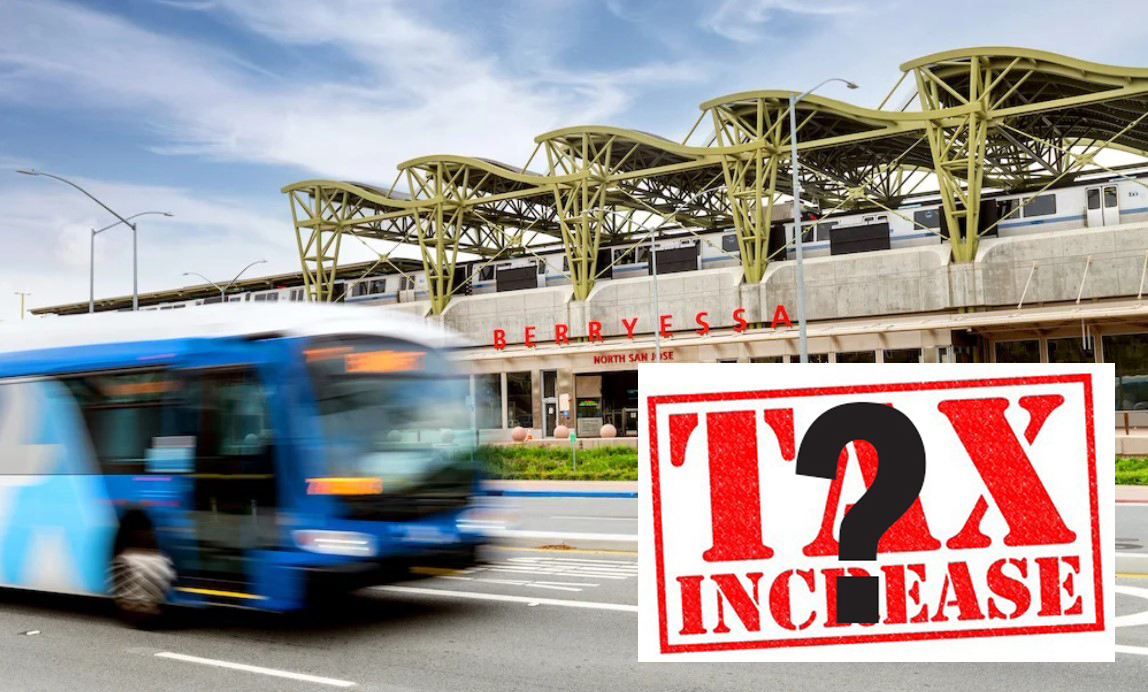
Photo by MTC.

To generate at least $1 to $2 billion annually; priorities include transit, safer streets and roads, resilience

Commissioners considering a variety of tax options

By John Goodwin & Rebecca Long, Metropolitan Transportation Commission

The Metropolitan Transportation Commission (MTC) on Wednesday, Jan. 24, 2024 voted to pursue legislation in Sacramento this year that would enable Bay Area voters to consider a transportation revenue measure as early as November 2026.

The proposed measure aims to advance a climate-friendly Bay Area transportation system that is safe, accessible and convenient for all. This includes preserving and enhancing public transit service; making transit faster, safer and easier to use; repairing local streets and roads; and improving mobility and access for all people, including pedestrians, bicyclists and scooter and wheelchair users.

The vote was approved unanimously by all members present. There are 21 commissioners with three non-voting members. Oakland Mayor Sheng Tao and San Jose Mayor Matt Mahan who are voting members were both absent during the vote.

State Sen. Scott Wiener of San Francisco earlier this month introduced what is known as a spot bill that will be used as the vehicle for authorizing placement of the proposed measure on a future ballot in each of the nine Bay Area counties. The first opportunity to amend Wiener’s Senate Bill 925 will be in mid-February.

While the Commission has not yet identified a revenue source for the proposed measure, MTC Chair and Napa County Supervisor Alfredo Pedroza noted that he and his colleagues are considering a wide range of options.

“Voters traditionally have supported transportation through bridge tolls or sales taxes. Bridge tolls are not an option in this case and we think it’s smart to look at more than a regional sales tax. We’re proposing a few options so we have enough flexibility and enough time to get it right.”

Tax Options & Projected Revenue

Legislators, and MTC staff and commissioners, will consider several options for generating revenue. These may include a sales tax, an income tax, a payroll tax, a square footage-based parcel tax, a Bay Area-specific vehicle registration surcharge with tiered rates based on the value of the vehicle or a regional vehicle-miles traveled charge (VMT) charge subject to prior adoption of a statewide road usage charge not sooner than 2030.

MTC staff recommend raising at least $1 billion to $2 billion per year for robust investments in safe streets and other capital improvements, to improve and expand transit service, and to help Bay Area transit agencies operate their services.

Goals of the Regional Transportation Measure

The revenue measure’s core goal is to advance a climate-friendly transportation system in the Bay Area that is safe, accessible and convenient for all. Focus areas include:

  1. Protect and enhance transit service. Ensure that current resources are maintained and used effectively; and enhance service frequency and areas served.
  2. Make transit faster, safer and easier to use. Create a seamless and convenient Bay Area transit system that attracts more riders by improving public safety on transit; implementing the Bay Area Transit Transformation Action Plan; and strengthening regional network management.
  3. Enhance mobility and access for all. Make it safer and more accessible for people of all ages and abilities to get to where they need to go. Preserve and improve mobility for all transportation system users, including people walking, biking and wheeling.

Proposed Expenditure Categories

  1. Transit transformation: sustain, expand and improve transit service for both current and future riders; accelerate customer-focused initiatives from the Bay Area Transit Transformation Action Plan and other service improvements that are high priorities for Bay Area voters and riders; and help fund the transition to zero-emission transit.
  2. Safe streets: transform local streets and roads to support safety, equity and climate goals, including through pothole repair, investments in bicycle/pedestrian infrastructure, safe routes to transit and other safety enhancements.
  3. Connectivity: fund mobility improvements that close gaps and relieve bottlenecks in the existing transportation network in a climate-neutral way.
  4. Climate resilience: fund planning, design and/or construction work that protects transportation infrastructure and nearby communities from rising sea levels, flooding, wildfires and extreme heat.

Transportation Measure Highlights

This measure reflects feedback from Commissioners, key legislative leaders and other stakeholders, including:

  • Improving transit coordination by strengthening MTC’s role as regional transit network manager;
  • A focus on Bay Area Transit Transformation Action Plan (TAP) action items and other customer facing policies that would benefit from a regional approach, such as ambassadors to assist riders and support a safe atmosphere;
  • Flexibility in the amount of revenue requested, as well as the way that funding could be generated;
  • Flexibility in spending priorities as the region’s needs evolve with time; and
  • The “North Star” vision statement, which includes greenhouse gas emission-reduction tools, such as:
    • A Transportation Demand Management mandate that encourages Bay Area employees to commute to work in ways other than driving to work alone; and
    • A limitation on how money could be spent on highway-widening projects.

Just as MTC commissioners have proposed a range of tax options, so too have they identified multiple expenditure categories.

“We recognize that we’ll be asking voters to take on a heavy lift,” acknowledged Pedroza. “The big lesson from COVID is the need to transform both our transit network and the way we pay to operate it. But we also need to transform our local streets and roads to fix potholes and make the roads safer for walking and biking. We need to improve connectivity and do it in a way that doesn’t encourage people to drive more. And we need to make our transportation infrastructure more resilient to rising sea levels, flooding, wildfires and extreme heat.”

Measure Vision Statement

The commissioners also adopted the following Vision Statement for the measure: “The Bay Area needs a world-class, reliable, affordable, efficient and connected transportation network that meets the needs of Bay Area residents, businesses and visitors while also helping combat the climate crisis; a public transit network that offers safe, clean, frequent, accessible, easy-to-navigate and reliable service, getting transit riders where they want and need to go safely, affordably, quickly and seamlessly; local roads are well maintained; and transit, biking, walking and wheeling are safe, convenient and competitive alternatives to driving; enhancing access to opportunity, lowering greenhouse gas emissions, strengthening the region’s economy and improving quality of life.”

To learn more about the proposed tax measure click, here. To read the supporting documents considered by the Commissioners click, here.

MTC is the transportation planning, financing and coordinating agency for the nine-county San Francisco Bay Area.

Allen D. Payton contributed to this report.
 

Filed Under: Bay Area, Legislation, News, State of California, Taxes, Transportation

San Pablo Dam Road work in El Sobrante begins Monday, Jan. 21

January 19, 2024 By Publisher Leave a Comment

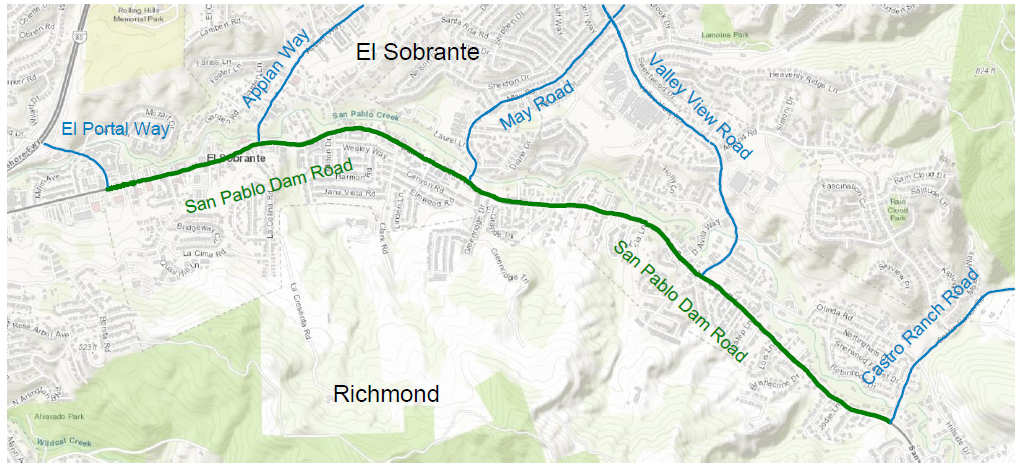
Source: CCC Public Works

By Kelly Kalfsbeek, Community & Media Relations Coordinator, PIO, Contra Costa County Public Works

Contra Costa County Public Works will be upgrading traffic signal hardware to improve pedestrian safety at nine (9) intersections on San Pablo Dam Road between El Portal Drive and Castro Ranch Road. Work will begin on Monday, January 22, 2024, and continue through Friday, June 21, 2024, barring unforeseen circumstances. Work will take place between 8:30 a.m. and 4:00 p.m., Monday through Friday (excluding holidays), weather permitting. Restrictions will be in place to minimize impacts to drivers during commute hours.

Funding for this project is provided by Gas Tax (SB1 Road Repair and Accountability Act) and Highway Safety Improvement Program (HSIP). For more information regarding this work, visit: www.contracosta.ca.gov/San-Pablo-Dam-Road-and-Bailey-Road-Signal-Hardware-Upgrades

About Contra Costa County Public Works Department:

Contra Costa County Public Works Department (CCCPWD) maintains over 660 miles of roads, 150 miles of streams, channels, and other drainage and over 150 County buildings throughout Contra Costa County. CCCPWD provides services such as Parks and Recreation, Sandbag Distribution and Flood Control throughout unincorporated areas of Contra Costa County.  CCCPWD operates two airports, Buchanan Field Airport in Concord, and Byron Airport in Byron. For more information about CCCPWD, please visit us at: www.cccpublicworks.org. Follow us on Facebook, Instagram and X @cccpublicworks.


Filed Under: Construction, News, Transportation, West County

Bikes now allowed on escalators at BART

January 9, 2024 By Publisher Leave a Comment

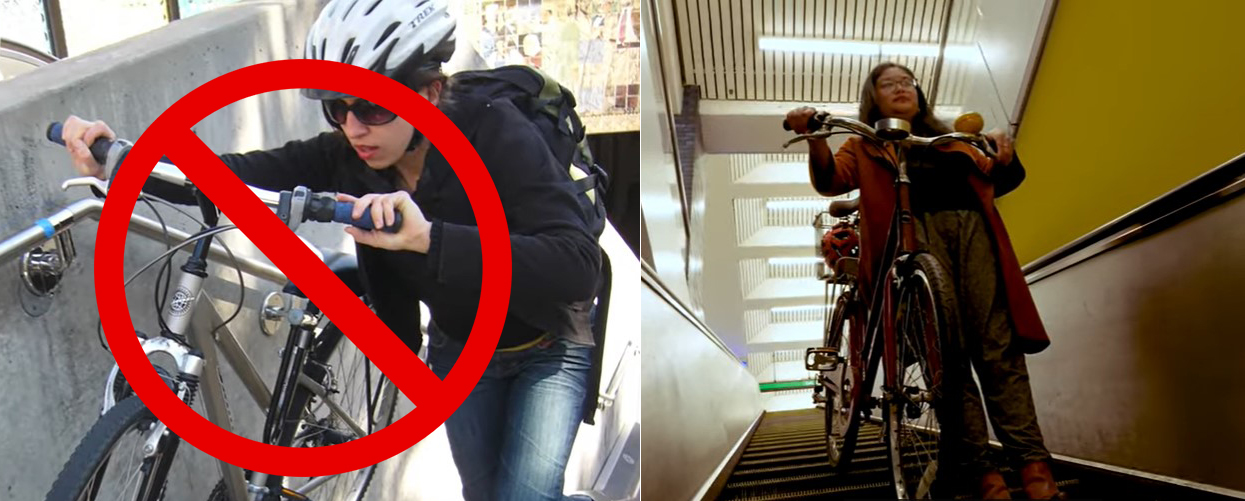
Screenshots source: BART

BART is going all in on bikes! As of January 1, 2024, bikes are allowed on most of the escalators throughout the BART system to help make it easier for people to bring their bikes on board the train.

This change was approved by the BART Board of Directors at the request of Director Rebecca Saltzman. The vote authorizes further changes to BART’s bike rules, including allowing bikes on all train cars except the first car (bikes were previously banned from the first three cars during commute times), and allowing bicyclists to secure bikes on the train using the bike lean bar and straps, instead of holding them.

The bike rules were last changed 10 years ago, when BART ended the ban on bikes on BART during commute hours. Over the last decade, longer and heavier bicycles, such as e-bikes and cargo bikes, have soared in popularity.

“Carrying bikes up and down stairwells can be difficult and not all bikes fit in our elevators,” said BART Director Rebecca Saltzman. “Updating our rules will make BART easier to use for cyclists and families bringing bikes on the train. Bikes play an important role in getting people out of their cars and on public transit and these updated rules encourage environmentally friendly multimodal travel options.”

BART encourages riders to use their best judgment when utilizing system escalators and elevators because individual bikes vary in size and weight.

BART is releasing a new video detailing safety tips for bringing bikes on escalators in the BART system.

See updated Bikes on BART rules here:

*Bikes will remain banned from BART’s ten narrow escalators located at the following three stations: 19th Street Oakland, Antioch and Oakland Airport Connector

Bike + Transit Trips

BART’s Trip Planner offers multi-modal, end-to-end itineraries for bike + transit trips. It features customizable bike speed options including an option for e-bikes (select the settings/tool icon to customize your options). BART’s Trip Planner includes results for more than 30 transit systems in the Bay Area such as bus service, ferries, cable cars, and regional train systems.

BART’s Trip Planner is available on web, mobile, and the official BART app. The BART app also offers station information, including information on secured bike parking.

Elevator Dimension Guid

BART also offers this Elevator Dimension Guide to assist cyclists in navigating BART elevators. It outlines the dimensions of each elevator in the system including measurements of the door, width, length, and diagonal space across the floor. As always, use your best judgment when utilizing system elevators because individual bikes and elevators vary in size.

Filed Under: BART, News, Transportation

New BART schedule with minor changes effective January 15

January 6, 2024 By Publisher Leave a Comment

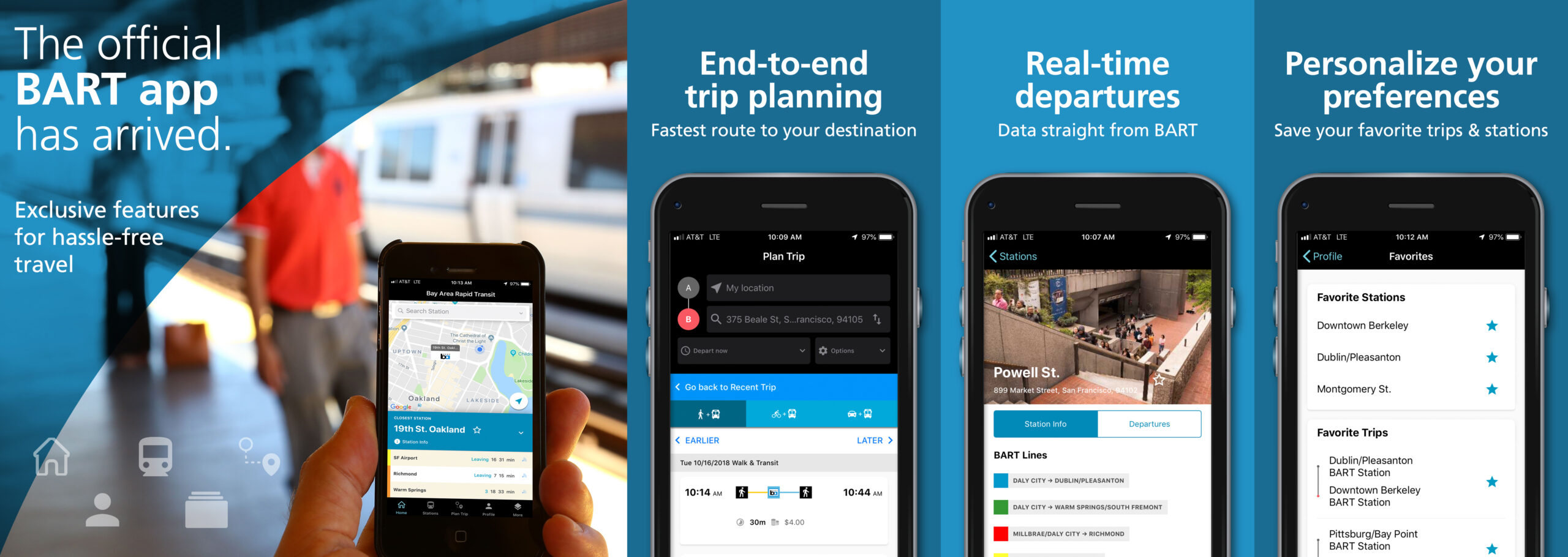
Get customized notifications with the BART app

By Bay Area Rapid Transit District

Some departure times will shift by a few minutes, and we encourage riders to check the schedule before January 15th to see if their trip is impacted.

BART’s Trip Planner has been updated for trips beginning January 15, 2024, and PDF timetables are available here.

The Official BART App offers customized in-app notifications about BART service and news.

Riders can personalize what type of information they get through the app based on when and where they ride BART and what information they care most about.

For example, you can select service advisories for your line and direction of travel and specific times of day. Or you can get real time departures pushed as notifications for the 15 minutes before arriving to a station on the days you ride.

To turn on these features, select the person icon in the upper-right, then select “Notification Settings” and starting adding what you want. This is a great option for people who don’t want to subscribe to text/email alerts or for people who remain on Twitter (X) only for BART Service Advisories.

We also made it easier to pay for parking with the new Tap-and-Go feature on the app that allows customers to pay for parking with just one tap. Check it out!

Filed Under: BART, News, Technology, Transportation

Investigation shows human error caused BART train derailment, fire

January 4, 2024 By Publisher Leave a Comment

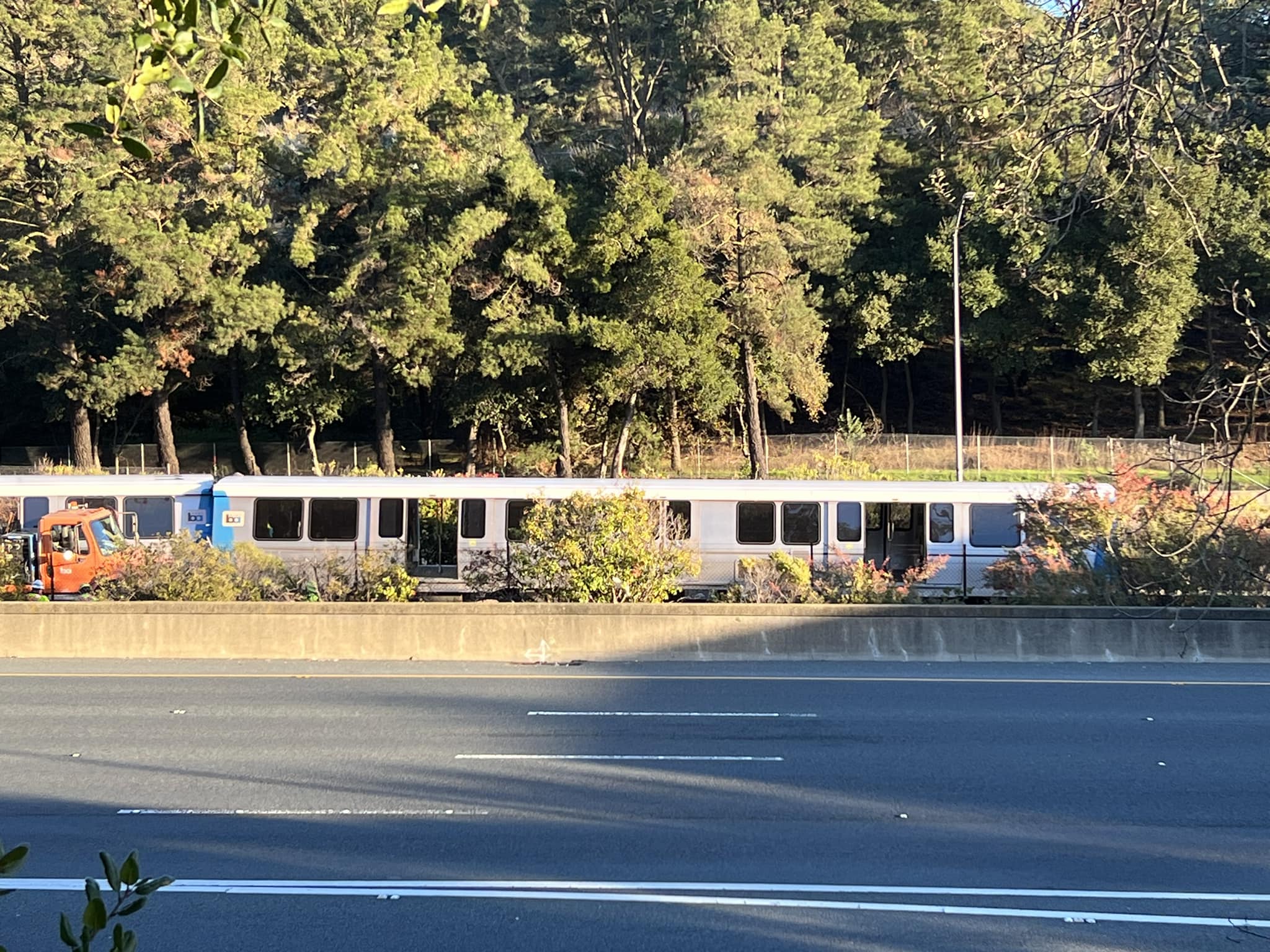
Two cars of the eastbound Antioch line BART train derailed Monday morning, Jan. 1, 2024. Photo by Allen D. Payton

Crossed over to opposite track; some riders self-evacuated

By BART

While the investigation of the January 1, 2024, derailment and fire just east of the Orinda Station continues, BART is providing an update on what occurred and next steps.

Condition of track equipment

That section of track where the derailment occurred, including the interlocking, was recently replaced and was in good operating order. BART’s train control system is being modernized as part of implementing Communications Based Train Control, a major rebuilding project underway.

Timeline of What Happened

At 8:45am on Monday, January 1, 2024, the computer system that monitors and manages BART tracks experienced a localized loss in communication with a field device specific to an area near Orinda Station, including the track interlocking located between Orinda and Lafayette stations. When this occurs, the Operations Control Center does not receive a status indication of route alignments in the area and track positions cannot be controlled remotely. The computer and communication system fails in a safe mode and there are procedures in place to continue to provide train service while crews troubleshoot the loss of computer communication. The system had been operating at the start of revenue service and one train had already travelled eastbound through the area.

At 8:50am the Operations Control Center instructed the train operator of an approaching eight-car Antioch bound train to manually align the route at the interlocking. The route was to be straight through. The train operator left the cab to align the track route. PA announcements were made to riders on board about the delay. The train operator confirmed with the control center they had set the track for a straight through alignment. The control center instructed them to drive the train in manual mode through the area.

Once moving, the train operator reported to the control center the train was crossing over to the opposite track, which was not the correct alignment. In response the control center held all trains in the area and instructed the train operator to move from the Antioch end of the train to the SFO end of the train and to move the train in the SFO direction to clear the interlocking area of the track and correctly align the route for straight through movement. The train operator walked to the other end of the train and moved it in manual mode in the SFO direction. Two cars derailed under slow speed causing electrical arcing, smoke, and flames. Some riders immediately started to self-evacuate by using the emergency door release.

At 9:05am the train operator reported to the control center they believed the train had derailed. The train operator then began to sweep the train, walking through each car to tell people to evacuate. The operator reported the smoke and flames to the control center and advised that people had already started evacuating.

Orinda Police were first to arrive on scene and helped evacuate all riders safely and Orinda Fire Department extinguished the flames.

By 9:23am, the control center was told all riders on board, estimated to be about 100-150 people, had been safely evacuated from the train.

Next Steps

The investigation into the derailment continues. BART has 60 calendar days from the date of the incident to provide a report to the California Public Utilities Commission (CPUC). Until the CPUC accepts and closes the report, the incident is considered “under investigation”, until such time, the report is unavailable to the public.

1/2/24 4:45am Update: Normal Yellow line service will run today following overnight repairs and safety inspections. The headline for this story has been changed to reflect this update.

1/1/24 9:30pm Update:

The incident train is now moving towards the yard. Crews are working on repairs. We will be using our tamper vehicle to surface the track area, pounding down the rocks/ballast. The good news is there was no damage to track switches which would have required more extensive repairs.

The bus bridge will remain in effect through the end of service tonight. Crews will work to make repairs and inspect the tracks this evening and overnight. We hope for full normal service between Walnut Creek and Rockridge tomorrow.

7pm Update:

The crane has successfully re-railed both impacted cars. We will now couple the incident cars with others to tow them out of the way.  Track crews have already begun making repairs to damaged sections of the track so we are hopeful to have, at minimum, single tracking train service through the area for morning service. It could be full normal service depending on progress made.

4:40pm Update:

The crane arrived on scene.

4pm Update:

The two lanes on Eastbound Highway 24 are now closed and crane is enroute for placement.

See remainder of timeline and more photos, here.

Allen D. Payton contributed to this report.
Filed Under: BART, Lamorinda, News, Transportation

BART train derails, catches fire near Orinda Station closes Antioch line on New Year’s Day

January 1, 2024 By Publisher Leave a Comment

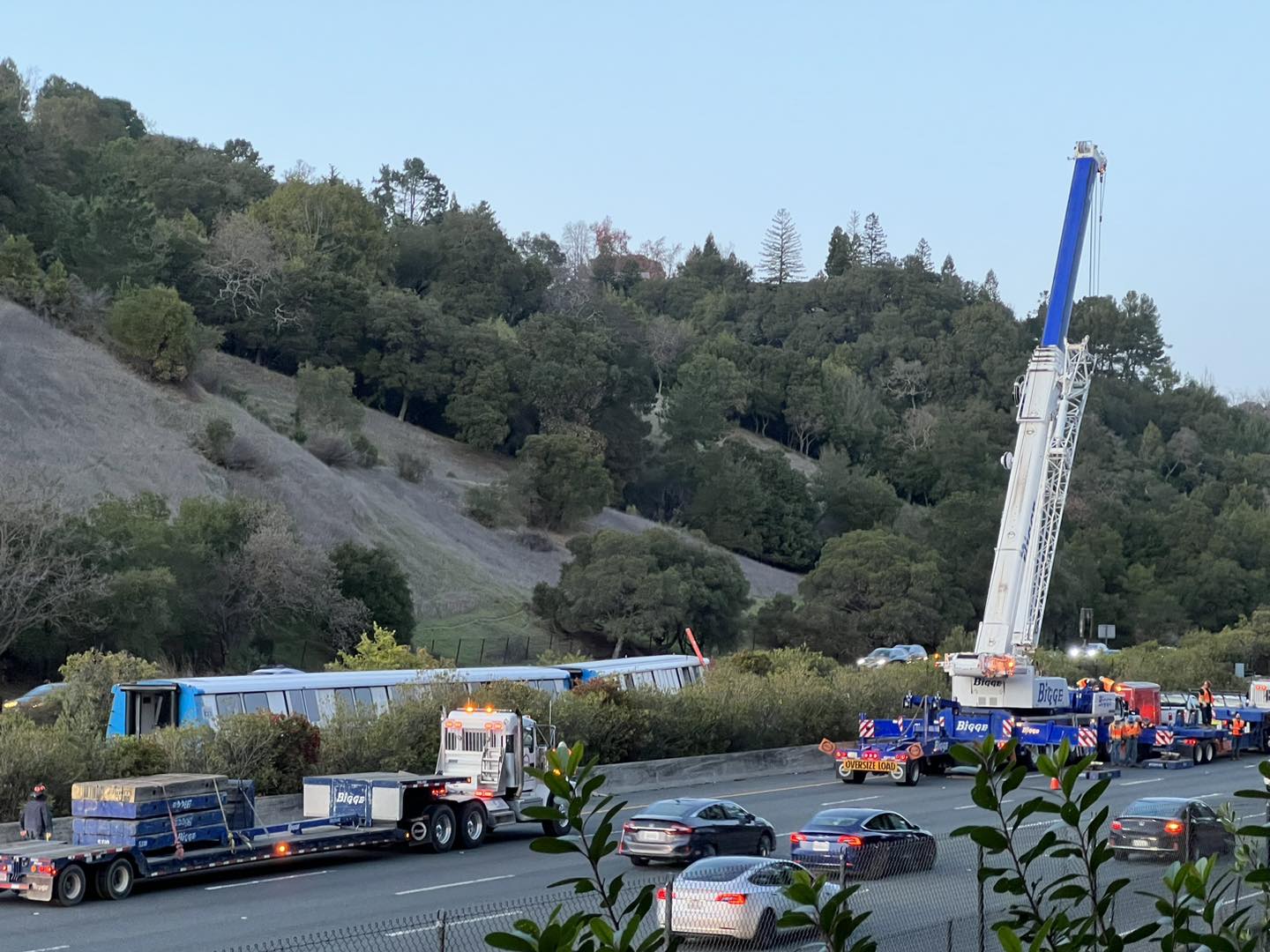
A Bigge company crane prepares to remove the derailed BART car from the tracks on Monday, Jan. 1, 2024. Photos by Allen D. Payton

Nine people transported to medical facilities for evaluation; large crane needed closes two Hwy 24 eastbound lanes; line between Walnut Creek and Rockridge Stations may not reopen by Tuesday morning

By Allen D. Payton

A partial derailment of a BART train between the Orinda and Lafayette stations that occurred shortly after 9:oo AM on Monday, Jan. 1, 2024, just outside the Orinda station stopped service on the Antioch line between Rockridge and Walnut Creek stations. A bus bridge provided by AC Transit is in place providing full bus service between Rockridge and Walnut Creek in both directions. Buses will make all station stops. Yellow line riders should expect major delays all day. Trains are turning around Rockridge and Walnut Creek. No other BART lines are impacted.

BART has learned from first responders that nine people were transported to medical facilities for evaluation.

From BART – Rolling Updates Based on Information we have:

BART Director Deb Allen, who was on the scene, explained what happened.

“The actual cause has not been determined,” she said. “We have fiber optic cables that run under the right-of-way. There’s an interlocking that has to change directions when a train comes out of the Orinda Station. The operator made an announcement that OCC (Operations Control Center) told the operator he had to get out of the train and manually change the interlocking. He does that then gets back in the train and starts moving the train forward. It was fortunate that it was moving from a dead stop. After the interlocking the train switched to the wrong track which resulted in the partial derailment. What caused it is under investigation.”

5:15 PM Update: Two inside eastbound lanes of Hwy 24 east of Orinda are closed for the crane to remove the derailed 65,000 lb. BART car.

4:40 PM Update: BART spokesman Jim Allison held a press conference in the Orinda Station parking lot providing an update to the progress on the train fire and partial derailment.

As he was speaking, a Bigge company crane arrived to move the derailed BART car. The operation should take about six hours, Allison said. But he couldn’t say if there will be BART service on the Antioch line in either direction between Walnut Creek and Rockridge Stations Tuesday morning. If not, hopefully bus service will continue.

In response to a reporter’s question, Allison said there had been upgrades to the interlocking.

According to a BART press release earlier this year, BART made major trackway repairs on the Yellow Line, which is the busiest in the BART system. Over Presidents Day weekend, February 18-20, 2023, BART crews worked around the clock to replace 7,350 feet of worn rail between the Rockridge and Lafayette stations.

3:15pm Update: BART is currently working with Caltrans to close two lanes of eastbound Highway 24 within in the next hour for a large crane that will position the incident BART train back in place. We do not have an ETA on how long it will take but will provide frequent updates on the process.

2pm Update: The derailment occurred at an interlocking located between the Orinda and Lafayette BART stations shortly after 9am. Just prior to the derailment, the train operator was instructed by the Operations Control Center to manually align the route at the interlocking because a signaling issue prevented the computer from doing it. This procedure is not uncommon and train operators are trained to manually align routes. The operator then manually moved the train when it derailed. The train was not under automatic train control. The details into what happened are under investigation.

A large crane will be needed to get the incident train back in place on the tracks. This crane will be positioned on Highway 24 eastbound. Two highway lanes will be closed for this. The train will then be moved to a yard and track inspections and any repairs will need to take place.

The California Public Utilities Commission was notified, and their staff were on scene.

12:30pm Update (Bus Bridge Available): A bus bridge provided by AC Transit is now in place providing full bus service between Rockridge and Walnut Creek in both directions. Buses will make all station stops.

Noon update (injury update and correction): Nine people were transported to medical facilities for evaluation following this incident. Based on the initial report from first responders there were no major injuries. BART Police will be interviewing all people who were transported for evaluation. A correction has been made below.

11:15am update: BART has powered off the rails between Rockridge and Walnut Creek stations. All passengers that were on board trains in that section of track have been off-boarded. BART is working with partner bus agencies to establish a bus bridge but it is not yet in place.

Only the Yellow line (between Walnut Creek and Rockridge is impacted). All other lines are running.

The Official BART App offers customized in-app notifications about BART service and announcements using the official BART app. Riders can personalize what type of information they get through the app based on when and where they ride BART and what information they care most about.

10:15am Update: Shortly after 9am on Monday, January 1, 2024, an east bound Yellow line train partially derailed between Orinda and Lafayette stations just outside the Orinda station.

Passengers were safely evacuated from the train and were escorted to Orinda Station by BART personnel. Nine people were transported to medical facilities for evaluation*. Based on the initial reports from first responders there were no major injuries. BART Police will interview all people who were transported for evaluation to get an update.

Two cars were reported to be on fire with smoke and the Orinda Fire Department responded and extinguished the flames.

The Orinda and Lafayette BART stations were closed and we are advising Yellow line riders to seek alternative transportation at this time. There is no train service between Rockridge and Walnut Creek. There is currently no available bus bridge but staff is working to see if partner bus agencies are available.

BART has extra staff and BART Police at Orinda and Lafayette stations to help.

Other BART lines are not impacted.

9:28am Service Advisory posted: There is a major delay on the Antioch Line in the Antioch and SFO directions due to an equipment problem on a train between Orinda and Lafayette stations. Please seek alternate means of transportation.

9:21am Service Advisory posted: There is a major delay on the Antioch Line in the Antioch and SFO directions due to an equipment problem on a train.

BART Service Advisories are available via SMS text, email, at the top of bart.gov, on the BART app, and on X (Twitter) at @SFBARTalert, the main @SFBART account is also providing updates.

*An earlier update said there were no reported injuries, however BART has learned from first responders that nine people were transported to medical facilities for evaluation.

Check back later for any updates to this report.


Filed Under: BART, Lamorinda, News, Transportation

MTC’s Chief Deputy Executive Director appointed to state Transit Transformation Task Force

December 29, 2023 By Publisher Leave a Comment

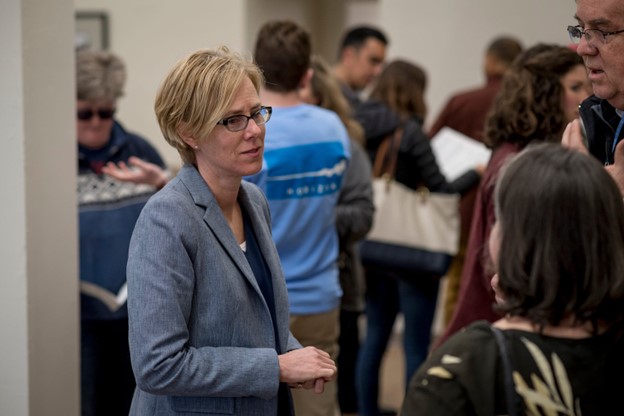
MTC Chief Deputy Executive Director Alix Bockelman. Photo source: MTC. Credit: Karl Nielsen

Will join Tri Delta Transit’s Executive Director to grow ridership, improve experience

California State Transportation Agency (CalSTA) Transportation Secretary Toks Omishakin last week appointed Metropolitan Transportation Commission’s Chief Deputy Executive Director Alix Bockelman to the state’s Transit Transformation Task Force, which will be charged with developing policy recommendations to grow transit ridership, improve the transit experience for riders and address long-term operational funding needs throughout California.

The 25-member task force represents state government, local agencies, academic institutions and advocacy organizations. Bockelman will be joined by other Bay Area representatives, including the executive directors of Eastern Contra Costa Transit Authority (ECCTA/Tri Delta Transit), Napa Valley Transportation (NVTA/Vine Transit), the San Francisco Bay Area Rapid Transit District (BART) and the San Francisco Bay Water Emergency Transportation Authority (WETA/SF Bay Ferry), as well as policy directors from Seamless Bay Area, SPUR and the Bay Area Council. Review the complete roster of task force appointees in the CalSTA news release.

Established by Senate Bill 125 and signed by Governor Gavin Newsom in the transit recovery package as part of the 2023-24 state budget, the task force will kick off with a virtual meeting on Dec. 19 and then will meet in person every two months beginning in Feb. 2024. Agendas, meeting materials and other task force information will be available on the CalSTA website’s Senate Bill 125 Transit Program page.

CalSTA will prepare a report of findings and policy recommendations based on the task force’s efforts and submit it to the Legislature by October 2025.

Filed Under: News, People, State of California, Transportation

Opinion: CCTA experiment with “low cost” transit option could prove costly

December 26, 2023 By Publisher Leave a Comment

Glydways podcars and station rendering. Source: Glydways

By Marc Joffe

The Contra Costa Transportation Authority (CCTA) has announced plans to install a new type of transit system in a suburban area 45 miles northeast of San Francisco. The system, created by transportation startup Glydways, offers some compelling efficiencies, but its application in a relatively low‐​density area does not appear to be cost‐​effective. As such, CCTA’s plan merits a hard look from both local and federal taxpayers who will be obliged to fund it.

Glydways’ system uses small driverless vehicles (with a capacity of up to four passengers) on a narrow, dedicated guideway. Because the vehicles use rubber tires, there is no need to install rail tracks. Vehicles are available on demand, typically within two to five minutes of being summoned on the Glydways app.

The Glydways solution addresses several criticisms of traditional rail transit projects, which involve large (often empty) vehicles operating on fixed schedules piloted by operators entitled to generous pension benefits. Projects of this type, including New York’s Second Avenue Subway and BART’s Silicon Valley extension, not only cost billions to build but they are also expensive to operate.

As such, Glydways offers much needed innovation in public transportation, perhaps because it is looking at the challenge from a startup lens. Formed in 2019, the company has raised over $70 million from a group of investors that includes Bill Gates and Vinod Khosla. Their solution is an interesting attempt to apply ideas pioneered by Uber and Waymo to the requirements of public transit.

But innovation alone is no assurance that government will use taxpayer money effectively. Incentives also have a role to play. When companies simply sell products and services to a public agency, they do not have a strong motive to economize. Indeed, they often benefit from cost overruns.

But the CCTA project promises to resolve this incentive problem by using the public‐​private‐​partnership (or P3) model. The P3 charged with delivering the East Contra Costa County Dynamic Personal Micro Transit (DPMT) project includes Glydways and four other companies, along with CCTA and the local public sector bus operator.

Under a P3, companies are supposed to take some ownership of the project. If a P3 truly transfers risk to the corporate partners, their interests better align with those of the taxpayer. In a transportation context, risk transfer means that private sector players should be required to absorb construction cost overruns, excess operational costs, and lower‐​than‐​expected fare revenues. But from the CCTA press release, it is not clear what risk Glydways and the other companies will be expected to shoulder.

And the risks are substantial. Because this is a system that has yet to be tried in a real‐​world setting, a lot can go wrong with the vehicles and the dispatching technology. The unattended vehicles will be especially vulnerable to vandalism, which, unfortunately, is common in the San Francisco Bay Area.

Further, the cost and ridership projections for DPMT do not look promising. A 2021 presentation listed an annual ridership estimate of seven million, which works out to about 20,000 rides per weekday. The same presentation provided a capital cost estimate of $451 million. That seems like a lot of money to transport not too many people, and this is before operating costs are considered.

Further, if these numbers were re‐​estimated in 2024, they will probably look worse. General inflation has pushed up costs for all construction projects. Meanwhile, ridership on the connecting mass transit line (known as eBART) is running about half of 2019 levels. Since the ridership model for DPMT appears to be based on 2019 transit utilization rates, it is likely that a new model based on post‐​COVID transit use would project more modest ridership.

Potential utilization for DPMT is limited by the area’s relatively low population density. The four cities that would be served by the new transit system average about 4000 people per square mile, compared to over 7500 in Oakland and 17,700 in San Francisco.

Applying a new transit solution to this area sounds intriguing, but the relatively limited number of potential users may be more economically served by a new multi‐​use trail with shared e‑scooter and e‑bike stations.

This column first appeared on the CATO Institute website.

A resident of Walnut Creek, CA Joffe is a Federalism and State Policy Analyst with the CATO Institute.


Filed Under: East County, Opinion, Technology, Transportation

DeSaulnier leads efforts to increase aviation safety, avoid near-miss incidents

December 20, 2023 By Publisher Leave a Comment

Rep. Mark DeSaulnier and Ambassador C.B. “Sully” Sullenberger. Official photos.

Safe Landings Act garners support of “Sully” Sullenberger, Coalition of Airline Pilots Associations

Washington, D.C.– Today, Congressman Mark DeSaulnier (D, CA-10) announced the introduction of the Safe Landings Act (H.R. 6850) to increase aviation safety and avoid near-miss aircraft incidents, like the one that occurred at San Francisco International Airport (SFO) on July 7, 2017, in which over 1,000 passengers were in danger of losing their lives. By creating a new federal task force to research and identify safety risks, expanding training, and addressing new technology needs, this bill would help reduce human error in aviation and save lives. DeSaulnier first introduced this legislation in August 2019, but with runway incursions this year up 25% from a decade ago and expectations of the busiest ever holiday season for air travel, he has updated the bill based on new information and industry needs. 

“As we approach an exceptionally busy air travel season following a year of unprecedented levels of aircraft near-misses, I am doing all I can in Congress to pass aviation safety reforms to help ensure the protection of and convenience for the flying public,” said DeSaulnier. “By taking a proactive approach to identifying flaws and risks in flying before they cause harm, this bill would help ensure the safety of millions of Americans, especially during periods of heavy air travel, and that the United States remains a global leader in aviation.”

“My mission is making all of us safer when we fly,” said Ambassador “Sully” Sullenberger, U.S. Representative to the International Civil Aviation Organization. “There is still much work to be done. This bill closes many of the gaps in safety that still pose a threat.”

“We applaud Representative DeSaulnier’s proactive efforts to improve aviation safety with the Safe Landings Act,” stated Coalition of Airline Pilots Associations (CAPA) President Captain Larry Rooney. “Aviation safety is a direct result of the continued collaborative efforts of all stakeholders to ensure that the safety of the traveling public remains paramount. This legislation provides the latest opportunity to further refine and improve on known and newly discovered safety deficiencies. Additionally, it recognizes that any attempt to reduce pilot flight deck staffing diminishes the tremendous safety strides made through the robust and proven life-saving application of Crew resource management skills (CRM). CAPA looks forward to providing the subject matter expertise necessary to ensure that this important safety legislation becomes enacted into law.”

Following the near-miss incident at SFO when an arriving Air Canada flight came dangerously close to landing on a taxiway occupied by four aircraft loaded with more than 1,000 passengers, Rep. DeSaulnier, a senior member of the House Committee on Transportation and Infrastructure and former chair of both the California Assembly and California Senate transportation committees, spent two years researching aviation and near-miss incidents. In consultation with experts in the field, including Captain Sullenberger, pilot unions, air traffic controllers, mechanics, ground safety crews, and federal agencies (NTSB and the Federal Aviation Administration (FAA) he developed this legislation to ensure that fatal or near-miss incidents—like what occurred at SFO—are prevented in the future.

In addition to this legislation, the FAA announced in September 2023 that it is promoting the use of cockpit-alerting technologies, which is a positive step in the direction toward Congressman DeSaulnier’s provision mandating this technology and the National Transportation Safety Board’s (NTSB) recommendations following the 2017 incident.

Specifically, the Safe Landings Act would:

  • Require the Federal Aviation Administration (FAA) to implement systems that would alert both pilots and air traffic controllers if a plane is not properly aligned to land on a runway;
  • Require FAA to gather data and issue guidance on the most effective techniques for pilots to electronically verify they are landing on the correct runway;
  • Require the “notices to air mission” (NOTAM) system to be evaluated for improvements;
  • Direct the Government Accountability Office (GAO) to conduct a study on the concerns some pilots have with cockpit voice recorders (CVRs)—like inappropriate foreign government use—and provide recommendations to improve CVRs while also protecting pilots;
  • Create a Task Force on Human Factors in Aviation Safetyto review and provide recommendations on crew responses to abnormal events, pilot performance during unexpected events, current flight crew rest and fatigue standards, and other safety related issues;
  • Require that international rules, regulations, or standards regarding flight crew and maintenance personnel rest and fatigue be studied to ensure worker safety;
  • Direct the Department of Transportation Office of Inspector General to audit current FAA standards and programs for whistleblowers to strengthen protections for aviation workers; 
  • Require a report that studies the role of human factors in high-risk professions, including the aviation industry, and recommend best practices to reduce the risk;
  • Require updating of guidelines for air carrier maintenance programs to improve transparency;
  • Ensure that safety data that is voluntarily provided to the Aviation Safety Action Program is protected;
  • Require a review of the International Civil Aviation Organization’s (ICAO) best available technologies and standards and a timeline for adoption in the U.S.;
  • Require a minimum of 2 pilots in all part 121 air carriers providing transportation to passengers and cargo;
  • Require knowledge safety experts on any FAA advisory committee that provides recommendations on topics that impact aviation safety; and
  • Require the FAA Administrator to ensure that air carriers are prohibited from hiding information that is important for any investigations of aircraft incidents.

This legislation is endorsed by the Coalition of Airline Pilots Associations (CAPA) and original cosponsors of the bill include Representative Dina Titus (NV-01) and Delegate Eleanor Holmes Norton (DC-AL).

Filed Under: Legislation, News, Transportation

Geotechnical work on Highland Road east of San Ramon Dec. 22

December 18, 2023 By Publisher Leave a Comment

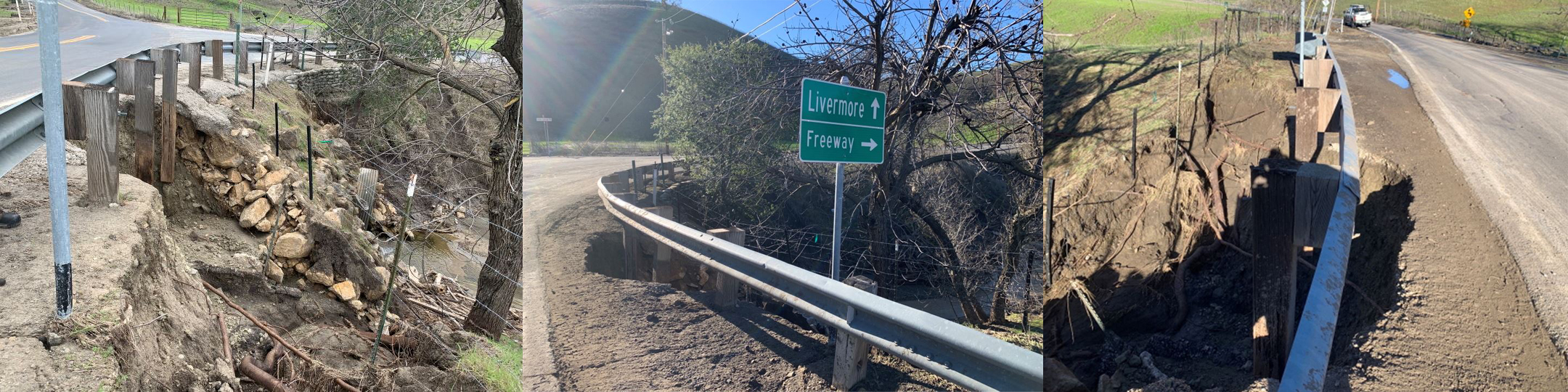
Highland Road damage. Photos: CCC Public Works Dept

By Kelly Kalfsbeek, PIO, Contra Costa County Public Works Department

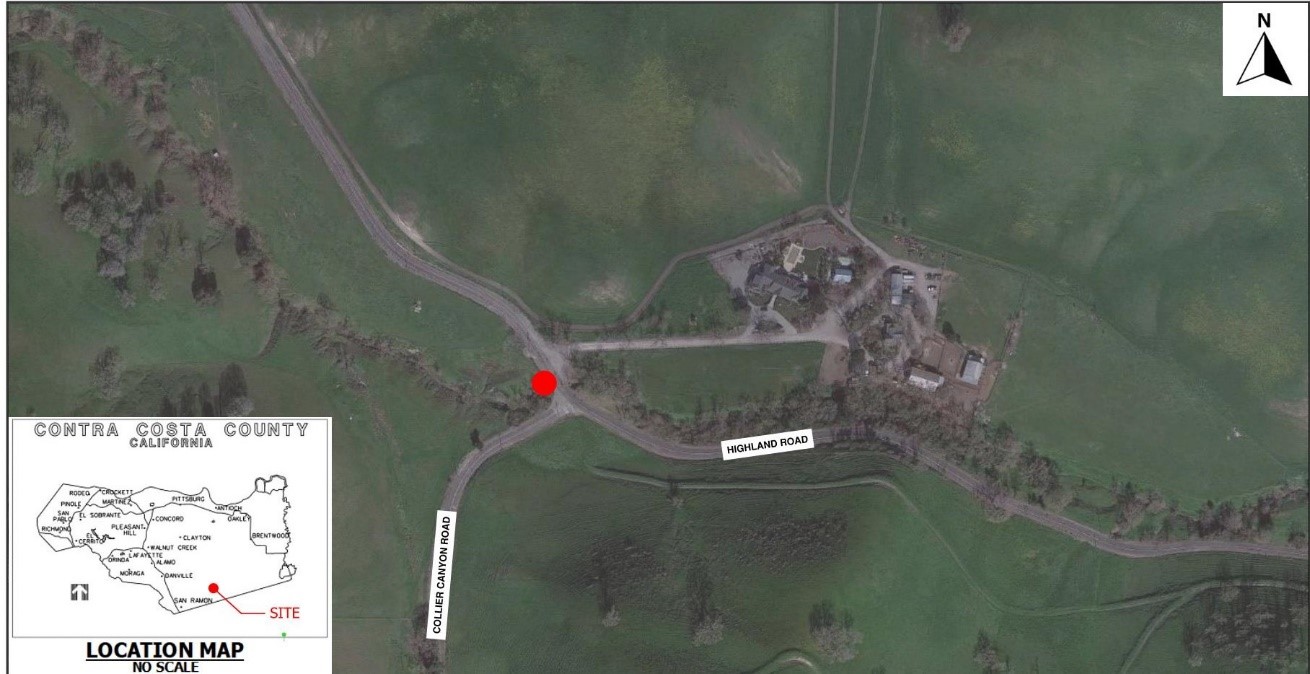
Contra Costa County Public Works will be performing geotechnical borings in preparation for the Highland Road Erosion Repair Project east of San Ramon on Friday, December 22, 2023, between 8:00 am and 5:00 pm, barring unforeseen circumstances. Work will repair the roadway and road embankment along the eastbound shoulder of Highland Road, at a Tassajara Creek tributary crossing, approximately 50-feet west from the intersection with Collier Canyon Road.

The project will, approximately 50 feet northwest of the intersection with Collier Canyon Road.   Repair work will included construction of a soldier pile retaining wall to restore and stabilize the roadway embankment.  The project will also include installing guardrail along the retaining wall and backfilling and reconstructing the damaged roadway and shoulder.

Source: CCC Public Works Dept.

Drivers should expect 15-minute delays and are encouraged to use alternate routes.

For construction and project status contact Jorge Hernandez, 925.313.2346. For more information visit: www.contracosta.ca.gov/Highland-Road-Erosion-Repair

About Contra Costa County Public Works Department:

Contra Costa County Public Works Department (CCCPWD) maintains over 660 miles of roads, 150 miles of streams, channels, and other drainage and over 150 County buildings throughout Contra Costa County. CCCPWD provides services such as Parks and Recreation, Sandbag Distribution and Flood Control throughout unincorporated areas of Contra Costa County.  CCCPWD operates two airports, Buchanan Field Airport in Concord, and Byron Airport in Byron. For more information about CCCPWD, please visit us at: www.cccpublicworks.org


Filed Under: Construction, News, San Ramon Valley, Transportation

  • « Previous Page
  • 1
  • …
  • 8
  • 9
  • 10
  • 11
  • 12
  • …
  • 31
  • Next Page »
Liberty-Tax-Jan-Apr-2026
Deer-Valley-Chiro-06-22

Copyright © 2026 · Contra Costa Herald · Site by Clifton Creative Web