• Home
  • About The Herald
  • Local Agencies
  • Daily Email Update
  • Legal Notices
  • Classified Ads

Contra Costa Herald

News Of By and For The People of Contra Costa County, California

  • Arts & Entertainment
  • Business
  • Community
  • Crime
  • Dining
  • Education
  • Faith
  • Health
  • News
  • Politics & Elections
  • Real Estate

California releases $470 million for program that puts students on track for college and career

June 5, 2024 By Publisher Leave a Comment

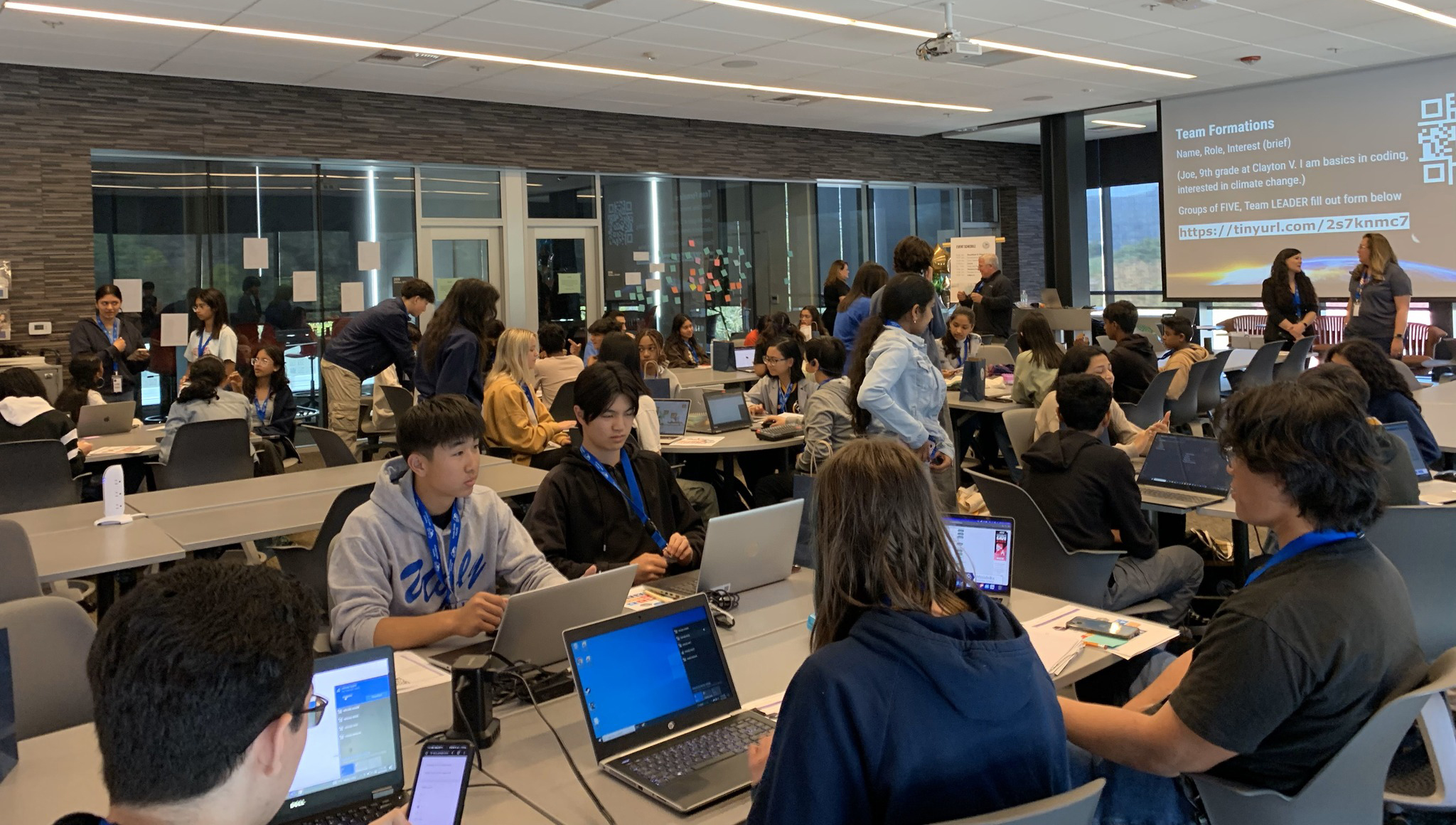
Students in Contra Costa County. Source: CCC Office of Education Facebook page

UPDATE: Contra Costa schools awarded almost $7.7 million in grants

By Emma Gallegos, EdSource.org

California has made good on a promise in the 2022 budget to invest in programs that simultaneously prepare students for both college and career.

Gov. Gavin Newsom’s office announced Friday that the state has released $470 million to 302 school districts, charters and county offices of education to fund the Golden State Pathways program.

The program allows students to “advance seamlessly from high school to college and career and provides the workforce needed for economic growth.”

“It’s an incredibly historic investment for the state,” said Anne Stanton, president of the Linked Learning Alliance, a nonprofit that advocates giving youth opportunities to learn about careers.

Both the state and federal governments previously made big investments in preparing students for college or career at the K-12 level, but the Golden State Pathways program is different in that it challenges school districts, colleges, employers and other community groups to create “pathways” — or a focused series of courses — that prepare K-12 students for college and career at the same time. These pathways aim to prepare students for well-paying careers in fields such as health care, education and technology, while also ensuring that they take 12 college credits through dual enrollment courses and the A-G classes needed to apply to public four-year universities.

“By establishing career technical pathways that are also college preparatory, the Golden State Pathways Program provides a game-changing opportunity for California’s young people,” State Superintendent of Public Instruction Thurmond said in a statement.

The Golden State Pathways are an important part of the new master plan for education — Newsom’s vision to transform career education in California — which is expected by the year’s end.

The state is distributing the vast majority of the funding — $422 million — to enable schools to implement their plans in partnership with higher education and other community partners. The remaining $48 million will assist those who still need grants for planning.

All sorts of schools throughout the state — rural and urban, large and small — benefited from the funding.

Schools in the rural Northern California counties of Tehama and Humboldt — whose K-12 enrollment is under 30,000 students — jointly received about $30 million to implement and plan pathways to help students stay on track for college and careers with livable wages.

“That’s a big deal to have that kind of influx going to that many small schools,” said Jim Southwick, assistant superintendent of the Tehama County Office of Education, which plans to expand career pathways in education, health care, construction, manufacturing and agriculture.

Schools in Tehama had previously begun to implement career pathways at the high school level in concert with local employers and Shasta College. However, many students struggled to complete the pathways because they were ill-prepared in middle school, Southwick said.

But one middle school pilot program did successfully introduce students to career education, he added, leading to an influx of funding through the Golden State Pathways that will expand the program to other middle schools.

Long Beach Unified, the fourth-largest district in the state, received about $12 million through the Golden State Pathways program. District spokesperson Elvia Cano said the funding will provide counseling and extra support for students navigating dual enrollment, Advanced Placement courses, college aid, externships and other work-based learning opportunities.

The district also plans to increase access to dual enrollment through partner Long Beach Community College and to create a new pathway in arts, media and entertainment at select high schools.

Advocates are celebrating the governor’s commitment to the program despite the uncertainty surrounding the budget this year.

Linda Collins, founder and executive director of Career Ladders Project, which supports redesigning community colleges to support students, said, “It’s an impressive commitment at a time that it’s desperately needed.”

Newsom said in a statement that this funding will help students even if they don’t go to college, saying it “will be a game-changer for thousands of students as the state invests in pathways to good-paying, high-need careers — including those that don’t require college degrees.”

UPDATE:

Antioch Unified Awarded Funding

A total of almost $7.7 million in Implementation and Planning Grants were awarded to schools in Contra Costa County.

Asked if the Antioch Unified School District has or will be receiving any of the funding, Acting Superintendent Dr. Rob Martinez shared, “While the District has not received formal notification as of yet from the California Department of Education, the information below has been listed on the CDE websites as reports of funding allocations.

The first link is for fund to districts as direct funding, which shows Antioch Unified School District receiving $522,500” for an Implementation Grant.

“There will also be an award to the Contra Costa County Consortium Grant which we opted to be part of which is listed at $1,775,000 (We anticipate that we will see a portion of those funds, to be determined by the consortium),” he added.

Other Contra Costa Districts, One School Also Awarded Grants

According to the CA Department of Education’s Implementation Grant Funding chart posted last month, the West Contra Costa Unified School District received the greatest amounts in the county with two grants for $2,680,000 and $2,050,000, respectively for a total of $4,730,000.  John Swett Unified School District also in West County was awarded  $465,100.

In addition, the Aspire Richmond California College Preparatory Academy qualified for $199,955 in funding for a Planning Grant,

Allen D. Payton contributed to this report.


Filed Under: Education, Finances, News, State of California

Short of signatures for fall, organizers target California’s 2026 ballot for initiative on students’ transgender issues

May 30, 2024 By Publisher Leave a Comment

Conservative groups and LGBTQ+ rights supporters protest outside the Glendale Unified School District offices in Glendale, Calif., Tuesday, June 6, 2023. Several hundred people gathered in the parking lot of the district headquarters, split between those who support or oppose teaching about exposing youngsters to LGBTQ+ issues in schools. (Keith Birmingham/The Orange County Register via AP)

Protect Kids California’s effort would require schools to tell parents if their child signals gender changes, prevent biological males in girls’ sports and ban sterilization of children

Claim Attorney General’s ballot title and language change hurt signature gathering effort, lawsuit filed

“Our message is simple. Schools shouldn’t keep secrets from parents” – Protect Kids CA

By Allen D. Payton

California activists seeking to empower parents over their children’s decisions to identify as transgender failed to place a trifecta of restrictions on the November ballot known by the organizers as the Protect Kids of California Act of 2024. Attorney General Rob Bonta changed the ballot title to Restricts Rights of Transgender Youth. Initiative Statute and he changed the ballot language, as well which hampered the signature gathering efforts organizers claim.

According to Students First: Protect Kids California, the initiative will: (1) repeal the California law that permits students to compete in female’s sports and students to be in females’ locker rooms and bathrooms; (2) prohibit schools from deceiving parents about their student’s gender identity crisis and stop them from secretly transitioning a child; and (3) stop sex change operations and chemical castrations on minors.

The organization started late last fall to consolidate their three separate initiatives into one, and its signature-gathering efforts supported by 400,000 voters fell short of the 546,651 verifiable signatures that had to be collected within six months to make the presidential election ballot. The goal was to collect 800,000 signatures to be safe.

Organizers posted their complaint about Bonta’s ballot language changes on the group’s Facebook page on April 2. Initiative committee Executive Team member Nicole C Pearson wrote, “Every Californian, regardless of whether they agree with the initiative, should be concerned about an attorney general who ignores the law and uses his power to sabotage ballot initiatives. We plan to hold Bonta accountable for allowing his political agenda to get in the way of doing his job.”

The post included a link to an opinion on the Orange County Register website  decrying the changes which reads, “As required by California law, proponents submitted the measure to Bonta to receive a neutral official title and summary to use in petitions. Bonta then returned the measure with a new title with a negative and misleading slant: the “Restricts Rights of Transgender Youth Initiative.” And he gave it a summary that was not only completely prejudicial and designed to mislead the electorate — it also contained lies.”

Then on Tuesday, May 28 the group issued a press release announcing the setback in a post on their Facebook page which reads, “We want to thank our tens of thousands of supporters and volunteers for this truly historic effort!Together, we collected over 400,000 signatures – an unprecedented achievement for a 100% grassroots effort. You really are amazing! While it is unfortunate we did not have enough signatures to make the 2024 ballot, we will build off this momentum to continue to fight for the principles set forth in the Protect Kids of California Act.”

The press release reads, “Protect Kids California announced on Tuesday, May 28, 2024, they collected an impressive 400,000 signatures for their proposed ballot measure but fell short of the 546,651 required to be collected within a 180-day timeframe to appear on the ballot.

Tens of thousands of volunteers gathered signatures from every county in California. The largest collection areas were Los Angeles, Orange, Riverside, San Bernardino, San Diego, Santa Clara and Alameda Counties.

A completely grassroots effort, Protect Kids California raised close to $200,000 from over 1,200 donors. This equates to less than 50 cents per signature, a fraction of the amount standard ballot measure committees spend.

“While we are disappointed we didn’t meet the threshold to qualify for the ballot, we are encouraged by the amount of support from every sector of the state. We gathered more signatures for a statewide initiative than any all-volunteer effort in the history of California.” “We had severe headwinds from the beginning. California Attorney General Rob Bonta issued a false and misleading Title & Summary for our initiative. That made our fundraising efforts more difficult. While we sued the Attorney General, a Superior Court Judge denied our motion in April. We plan to appeal the Superior Court Judge’s decision, at which time we will decide how to proceed in the future. If we had a little more time or a little more money, we would have easily qualified for the ballot.”

But battles over transgender issues will continue to burn bright in courts, school districts and the Legislature. Despite a setback, initiative organizers were buoyed by the 400,000 signatures that thousands of volunteers collected. They are confident that they will attract more donations and enough signatures to qualify for the November ballot two years from now — and find more support than leaders in heavily Democratic California assume exists.

“We’re very confident that voters would pass this if it gets to the ballot box,” said Jonathan Zachreson, a Roseville City school board member, co-founder of Protect Kids California and an official proponent of the initiative. “We gathered more signatures for a statewide initiative than any all-volunteer effort in the history of California.”

“We started around the holidays which didn’t help,” he added. “It was an all-volunteer effort. It usually takes about $7 million to get something on the ballot. We raised just under $200,000 which covered our costs. But we didn’t have money to pay signature-gatherers. We had around 25,000 to 30,000 volunteers. Our efforts really took off in the past two months. In the past few weeks, we were collecting so many signatures it was hard to keep up.”

The organizers proposed language for the three-pronged initiative read:

  • REQUIRES schools to notify parents regarding children’s mental health concerns identified in school settings, including gender identification issues.
  • PROTECTS girls’ competitive sports and school spaces to be for biological girls only.
  • PREVENTS the sterilization of children by prohibiting the use of puberty blockers, cross-sex hormones, mastectomies and genital surgeries for minors

But Bonta’s ballot language for the initiative was changed to read instead:

  • Requires public and private schools and colleges to: restrict gender-segregated facilities like bathrooms to persons assigned that gender at birth; prohibit transgender female students (grades 7+) from participating in female sports. Repeals law allowing students to participate in activities and use facilities consistent with their gender identity.
  • Requires schools to notify parents whenever a student under 18 asks to be treated as a gender differing from school records without exception for student safety.
  • Prohibits gender-affirming health care for transgender patients under 18, even if parents consent or treatment is medically recommended.

The second issue has sparked a firestorm within the past year.

Last week, a Democratic legislator introduced a late-session bill that would preempt mandatory parental notification. Assembly Bill 1915, by Assemblymember Chris Ward, D-San Diego, would prohibit school districts from adopting a mandatory parental notification policy and bar them from punishing teachers who defy outing policies of LGBTQ+ students.

Last year, Assemblymember Bill Essayli, R-Corona, introduced a bill that would require parental notification, but AB 1314 died in the Assembly Education Committee without getting a hearing. Committee Chair Al Muratsuchi, D-Torrance, reasoned the bill would “potentially provide a forum for increasingly hateful rhetoric targeting LGBTQ youth.”

Ward cited surveys of transgender and gender nonconforming youths that found most felt unsafe or unsupported at home. In one national survey, 10% reported someone at home had been violent toward them because they were transgender, and 15% had run away or were kicked out of home because they were transgender.

The California Department of Education has issued guidance that warns that parental notification policies would violate students’ privacy rights and cites a California School Boards Association model policy that urges districts to protect students’ gender preferences.

But Zachreson argues that even if children have a right to gender privacy that excludes their parents, which he denies exists, students waive it through their actions.  “At school, their teachers know about it, their peers and volunteers know about it, other kids’ parents know about it —  and yet the child’s own parent doesn’t know that the school is actively participating in the social transition,” he said.

In some instances, he said, schools are actively taking steps to keep name changes and other forms of gender expression secret from the parents.

“What we’re saying is, no, you can’t do that. You have to involve the parents in those decisions,” he said.

Ward responds that many teachers don’t want to be coerced to interfere with students’ privacy and gender preferences. “Teachers have a job to do,” he said. “They are not the gender police.”

A half-dozen school districts with conservative boards, including Rocklin, Temecula Valley and Chino Valley, have adopted mandatory parental notification policies. Last fall, California Attorney General Rob Bonta sued Chino Valley, arguing its policy is discriminatory. A state Superior Court judge in San Bernardino agreed that it violated the federal equal protection clause and granted a preliminary injunction. The case is on appeal.

Last July, U.S. District Court judge for Eastern California threw out a parent’s lawsuit against Chico Unified for its policy prohibiting disclosure of a student’s transgender status to their parent without the student’s explicit consent. The court ruled that it was appropriate for the district to allow students to disclose their gender identity to their parents “on their own terms.” Bonta and attorney generals from 15 states filed briefs supporting Chico Unified; the case, too, is on appeal.

While some teachers vow to sue if required to out transgender students to their parents, a federal judge in Southern California sided with two teachers who sued Escondido Union School District for violating their religious beliefs by requiring them to withhold information to parents about the gender transition of children. The judge issued a preliminary injunction against the district and then ordered the return of the suspended teachers to the classroom.

No California appellate court has issued a ruling on parent notification, and it will probably take the U.S. Supreme Court for a definitive decision. Essayli pledged to take a case there.

The National Picture

Seven states, all in the deeply red Midwest and South, have laws requiring identification of transgender students to their parents, while five, including Florida and Arizona, don’t require it but encourage districts to adopt ther own version., according to the Movement Advancement Project or MAP, an independent nonprofit.

Two dozen states, including Florida, Texas, and many Southern and Midwest states ban best-practice health care, medication and surgical care for transgender youth, and six states, including Florida, make it a felony to provide surgical care for transgender care. Proponents cite the decision in March by the English public health system to prohibit youths under 16 from beginning a medical gender transition to bolster the case for tighter restrictions in the United States.

California has taken the opposite position; it is one of 15 like-minded states and the District of Columbia with shield laws to protect access to transgender health care. They include New York, Oregon, Washington, Colorado and Massachusetts.

Twenty-five states have laws or regulations banning the participation of 13- to 17-year-old transgender youth in participating in sports consistent with their gender identification.

Not one solidly blue state is among those that have adopted the restrictions that Protect Kids California is calling for. But Zachreson and co-founder Erin Friday insist that contrary to the strong opposition in the Legislature, California voters would be open to their proposals. They point to favorable results in a survey of 1,000 California likely voters by the Republican-leaning, conservative pollster Spry Strategies last November.

  • 59% said they would support and 29% would oppose legislation that “restricts people who are biologically male, but who now identify as women, from playing on girl’s sports teams and from sharing facilities that have traditionally been reserved for women.”
  • 72% said they agreed, and 21% disagreed that “parents should be notified if their child identifies as transgender in school.”
  • 21% said they agreed, and 64% disagreed that “children who say they identify as transgender should be allowed to undergo surgeries to try to change them to the opposite sex or take off-label medications and hormones.”

The voters surveyed were geographically representative and reflective of party affiliation, but not demographically, The respondents were mostly white and over 60, and, in a progressive state, were divided roughly evenly among conservatives, moderates and liberals.

Two Versions of Protecting Children

Both sides in this divisive cultural issue say they’re motivated to protect children. One side says it’s protecting transgender children to live as they are, without bias and prejudice that contribute to despair and suicidal thoughts. The other side says it’s protecting kids from coercion to explore who they aren’t, from gender confusion, and exposure to values at odds with their family’s.

Zachreson and Friday wanted to title their initiative “Protect Kids of California Act of 2024.” But Bonta, whose office reviews initiatives’ titles and summaries, chose instead “Restrict Rights of Transgender Youth. Initiative Statute.” Zachreson and Friday, an attorney, appealed the decision, but a Superior Court Judge in Sacramento upheld Bonta’s wording, which he said was accurate, not misleading or prejudicial.

“The ballot title was obviously biased and the summary was intentionally meant to deceive voters and hampered our efforts to get this on the ballot this year,” Zachreson continued. “The statutory requirement is to be impartial and factual. He did the opposite. He was biased and he had descriptions that were false. Bonta claimed there were no exceptions for student safety when notifying parents. But that’s not correct. It’s already in the law.”

Zachreson is appealing again. A more objective title and summary would make a huge difference, he said, by attracting financial backing to hire signature collectors and the support and resources of the California Republican Party, which declined to endorse the initiative. That was a strategic mistake in an election year when turnout will be critical.

“The people who support the initiative are passionate about it,” he said.

Effort for November 2026 Ballot Continues

The organizers may have to start over but a lawsuit about the biased title and summary was filed asking for a change in the language, to use the signatures already gathered and to grant an extension.

“The appeal won’t be heard until after the November election,” Zachreson shared.

If a judge rules in their favor it will make it easier for the group to complete the signature gathering to qualify for the next General Election ballot which will be in November 2026.

Political observer Dan Schnur, who teaches political communications at USC, UC Berkeley and Pepperdine University, agreed that the gender debate could have motivated Republicans and swing voters to go to the polls.

“There’s no question that the Attorney General’s ballot language had a devastating effect on the initiative’s supporters and it could have almost as much of an impact on Republican congressional candidates this fall,” he said.

John Fensterwald who writes about education policy and its impact in California for EdSource.org contributed to this report.

Filed Under: Attorney General, Children & Families, Education, News, Politics & Elections, State of California

Scathing State Audit confirms Labor Commissioner’s 47,000 backlogged claims at end of 2022-23

May 29, 2024 By Publisher Leave a Comment

Payroll graphic source: CA State Auditor

Senator Glazer’s request leads to findings of workers cheated out of $63.9 million in past wages

Calls it a failure to act on behalf of workers

Report claims inadequate staffing, poor oversight have weakened protections for workers

SACRAMENTO – California Labor Commissioners have stood idly by as a massive backlog in wage theft cases piled up worth $63.9 million in lost wages to workers as its enforcement unit failed to enforce and collect wages in 76 percent of cases in which employers were found to owe wages, according to a report released Wednesday by Grant Parks, the California State Auditor.

The scathing audit came as a result of a March 2023 request through the Joint Legislative Audit Committee by Senator Steve Glazer, D-Contra Costa, and Assemblyman David Alvarez, D-San Diego. It was based on news reports about the lack of wage theft enforcement.

Parks reported his findings to the Governor, President pro Tempore of the Senate and Speaker of the Assembly about the “Department of Industrial Relations’ Division of Labor Standards Enforcement, also known as the Labor Commissioner’s Office (LCO).” Lilia García-Brower is the current state Labor Commissioner and was appointed to the position by Governor Newsom in July 2019. Neither her name or photo appears on the website for the Labor Commissioner’s Office. Ironically, according to the agency’s website, “The mission of the LCO is to ensure a just day’s pay in every workplace in the State and to promote economic justice through robust enforcement of labor laws. By combating wage theft, protecting workers from retaliation, and educating the public, we put earned wages into workers’ pockets and help level the playing field for law-abiding employers.”

The audit “reviewed the backlog of wage claims submitted by workers from fiscal years 2017–18 through 2022–23, and determined that the LCO is not providing timely adjudication of wage claims for workers primarily because of insufficient staffing to process those claims.”

Furthermore, the state Auditor reported, “In addition to its delays in processing wage claims, the LCO has not been successful in collecting judgments from employers. A possible factor contributing to its low collection rate is that the Enforcement Unit does not consistently use all of the methods available to it for collecting payments owed to workers.”

Senator Glazer released this statement on the audit’s findings:

“The California State Auditor’s report makes clear that our State Labor Commissioner is a toothless enforcer of our wage theft laws. This deeply troubling assessment exposes a system that has fundamentally failed the workers it is supposed to protect. According to the auditor, there is a backlog of 47,000 claims registered on June 30, 2023. This is a state embarrassment and a stain on the department that workers depend on for justice.

The report also highlights an alarming increase in the average number of days to resolve claims, which has skyrocketed from 420 days in 2017/18 to an astounding 890 days in 2022/23. This drastic decline in efficiency is not just a statistic; it represents thousands of workers enduring prolonged injustice and financial hardship.

This lack of enforcement emboldens companies to exploit workers, knowing they can likely escape any real consequences, thus perpetuating and increasing further abuse. These findings paint a grim picture of an agency overwhelmed and ineffective, leaving workers vulnerable and without recourse. Immediate and decisive action to restore integrity and effectiveness to the Labor Commissioner’s office is needed. The workers of California deserve nothing less than a robust system that ensures timely and fair resolution of wage theft claims.”

The report can be found here: www.auditor.ca.gov/reports/the-california-labor-commissioners-office/

Allen D. Payton contributed to this report.

Filed Under: Employment, Finances, Government, Jobs & Economic Development, Labor & Unions, Legal, News, State of California

State allocates $10.2 million for Contra Costa transportation improvements

May 27, 2024 By Publisher Leave a Comment

Nearly $2 billion in statewide investments to improve, protect state’s infrastructure

By Edward Barrera, Division Chief of Public Affairs, California Department of Transportation 

SACRAMENTO — Earlier this month, the California Transportation Commission (CTC) allocated $1.9 billion to support transportation infrastructure projects that play a starring role in powering the world’s fifth largest economy. The approved funding provides significant investments for bridges, roadways, transit and improved facilities for people who walk and bike.

The latest allocations also include nearly $430 million from the federal Infrastructure Investment and Jobs Act of 2021 (IIJA) and $740 million via Senate Bill (SB) 1, the Road Repair and Accountability Act of 2017.

A total of $10.183 million was allocated for improvements in Contra Costa County with most of it for 20 miles of BART track and $3.6 million for I-680 in San Ramon and Danville.

Among the efforts spurred by the $1.9 billion commitment include several projects prioritizing the state’s vital bridge network, highlighted more than $4 million to repair bridge damage along Interstate 80 in Alameda County.

Also included are projects that will build or renovate shoreline embankments, bus, bicycle and pedestrian infrastructure, and railroad overcrossings.

“California’s transportation infrastructure is critical to the economic and cultural lifeblood of our state, and this funding provides key support in our mission to provide a safe, equitable and sustainable transportation system for all users,” said Tony Tavares, Caltrans Director.

Contra Costa County Projects

  • $6 million allocation for BART Expansion and Contraction of Steel Rail in Contra Costa County which will destress twenty miles of rail track within the BART operating corridor that has been identified as being affected by such conditions in Contra Costa County. (Funding description and source: Locally-Administered Local Transportation Climate Adaptation Program Project off the State Highway System – Resolution LTCAP-A-2324-04)
  • $3.6 million allocation for I-680 in San Ramon and Danville, from Alcosta Boulevard to north of Diablo Road. Rehabilitate pavement, upgrade guardrail, and upgrade facilities to Americans with Disabilities Act (ADA) standards.
  • $500,000 allocation for the Pavement Resurfacing Project, which will focus on applying pavement rehabilitation treatments in various streets located in the southeast area of the City of Martinez to improve the City’s overall pavement condition index and reduce on-going maintenance. Project will also include ADA curb ramp improvements, restoration of vehicle detection sensors at signalized intersections, striping restoration, and green infrastructure improvements. (Funding description and source: Locally-Administered SB 1 Local Partnership Program (LPP) (Formulaic) Projects Off the State Highway System – Resolution LPP-A-2324-38)
  • $83,000 allocation for the Morello Avenue sidewalk gap closure in Martinez will address gaps of concrete sidewalk on the east side of Morello Avenue, south of Village Oaks Drive; and the east side of Morello Avenue, north of Arnold Drive. Improvements will also new curb and gutter, and a new ADA curb ramp at the southeast corner of Morello Avenue/Village Oaks Drive. (Funding description and source: Locally-Administered SB 1 LPP (Formulaic) Projects Off the State Highway System – Resolution LPP-A-2324-38)

The Contra Costa projects funded are among multiple approved projects in District 4 – Bay Area / Oakland which includes Alameda, Contra Costa, Marin, Napa, San Francisco, San Mateo, Santa Clara, Solano and Sonoma counties.

IIJA, known as the “Bipartisan Infrastructure Law,” is a once-in-a-generation investment in our nation’s infrastructure to improve the sustainability and resiliency of our energy, water, broadband and transportation systems. Since 2021, California has received more than $42 billion in IIJA funds, including more than $29 billion for transportation-related projects.

In addition, SB 1 provides $5 billion in transportation funding each year that is shared between state and local agencies. Road projects progress through construction phases more quickly based on the availability of SB 1 funds, including those partially funded by SB 1.

See the complete list of the latest CTC-approved projects in each of the other nine Caltrans Districts in the state:

District 1 – Eureka (Del Norte, Humboldt, Lake and Mendocino counties)

District 2 – Redding (Lassen, Modoc, Plumas, Shasta, Siskiyou, Tehama and Trinity counties)

District 3 – Marysville / Sacramento (Butte, Colusa, El Dorado, Glenn, Nevada, Placer, Sacramento, Sierra, Sutter, Yolo and Yuba counties)

District 5 – San Luis Obispo / Santa Barbara (Santa Barbara, San Luis Obispo, Monterey, San Benito and Santa Cruz counties)

District 6 – Fresno / Bakersfield (Kings, Tulare, Fresno, Madera and Kern counties)

District 7 – Los Angeles (Los Angeles and Ventura counties)

District 8 – Riverside and San Bernardino counties

District 9 – Bishop (Inyo, Kern and Mono counties)

District 10 – Stockton (Alpine, Amador, Calaveras, Mariposa, Merced, San Joaquin, Stanislaus and Tuolumne counties)

District 11 – San Diego (San Diego and Imperial counties)

District 12 – Orange County

For more information about California transportation projects funded by IIJA and SB-1, visit RebuildingCA.ca.gov and www.build.ca.gov.

Allen D. Payton contributed to this report.


Filed Under: Finances, Infrastructure, News, State of California, Transportation

Public asked to participate in CalTrans test on DeSaulnier’s per mile “Road Charge” to replace gas tax

May 26, 2024 By Publisher Leave a Comment

Video screenshot source: Caltrans

Due to purchase and use of hybrid and electric vehicles

Receive up to $400 in gift cards for 6-month Pilot program beginning Aug. 2024

By Allen D. Payton

Caltrans has launched a test on the proposed per mile Road Charge to possibly replace the state’s current gas tax and invites the state’s drivers to participate. The Pilot program will last six months and participants can earn up to $400 in gift cards.

With the passage of Senate Bill 1077 introduced in 2014 by then-State Senator (now-Congressman) Mark DeSaulnier, California began investigating a long-term, sustainable transportation funding mechanism as a potential replacement to the gas tax, known as a “road charge” due to the advent of hybrid and electric vehicles. As of 2022, state officials estimate that there were about 1.1 million electric cars and 1.3 million hybrids on California roads.

Source: Caltrans

Taking direction from the Legislature, California completed the largest road charge research effort to date piloting more than 5,000 vehicles that reported in excess of 37 million miles over a nine-month duration. According to the program’s report, the statistics only serve to reinforce Californians’ desire for mobility, a safe and reliable transportation system, and an improved overall quality of life. Below please find the California State Transportation Agency’s release of the California Road Charge Pilot Program final report.

History of Transportation Funding

According to the Road Charge Pilot Program Summary Report, Nearly all of the 350 billion miles driven each year on California’s highways and roads are  powered by gasoline or diesel fueled vehicles. Historically, the taxes on those fuels provided the majority of the revenue required to maintain and operate our transportation network. As future consumption of gasoline and diesel fuel declines, due to increased fleet efficiency, California will be challenged to sustain its $2.5 trillion economy. Continuing to depend on a consumption-based transportation model, while at the same time adopting policies to increase vehicle fuel efficiency and promote the reduction of vehicle miles traveled, puts into question the long-term viability of the gas tax as a sustainable revenue model.

Source: Caltrans

Historically, transportation funding has been impacted by two main factors: inflation and vehicle fuel efficiency. Until this year, with the passage of the Road Repair and Accountability Act of 2017 (Senate Bill 1), the state gas tax had not been adjusted for inflation since 1994, which significantly reduced its purchasing power. Senate Bill 1 adjusted fuel rates for past inflation and includes future inflation adjustments: hence, solving the inflation issue and delaying the expected transportation funding shortage by a decade or more. However, the impact of improving vehicle fuel efficiency remains an issue, especially as new vehicles sold in the coming decades are expected to be much more fuel efficient.

The report claims, “Without Senate Bill 1’s inflation adjustments, the transportation funding shortfall would be quickly approaching. The new Senate Bill 1 revenues, as illustrated in Figure 1, stabilize the state’s short-term transportation infrastructure funding needs and provides time to explore alternatives to continued reliance on fuel taxes.”

Source: Caltrans

How Transportation Funding Works

Currently, it costs approximately $8.5 billion annually to maintain California’s roads.

  • Approximately 80% of highway and road repairs are funded by a tax on gasoline charged at the pump when you buy gas. The more gas you buy, the more you pay in gas taxes and the more you contribute to highway and road repairs.
  • On average, Californians pay about $300 a year in state gas taxes.
  • Various state fees also support transportation. Trucks pay weight fees and zero-emission vehicle owners pay $118 each year, and all vehicle owners pay a transportation improvement fee.
  • Some counties also charge a local sales tax to further invest in road and transit needs or have tolls on bridges or certain highways.
  • The public may also pass state bonds to invest in additional transportation needs.

What is Road Charge?

California relies on gas tax and other fuel tax revenues to fund its roadway maintenance and repairs. But as cars get more fuel efficient or use other energy sources, such as electricity and hydrogen, the gas tax will no longer fund the infrastructure California needs. California is researching a potential gas tax replacement that’s both sustainable and equitable: road charge. A road charge is a “user pays” system where all drivers pay to maintain the roads based on how much they drive, rather than how much gas they purchase. Under a road charge, all drivers share roadway maintenance and repair costs based on what they actually use. (https://dot.ca.gov/programs/road-charge)

  • California could replace the gas tax with a mileage-based user fee charged to drivers who use the roads. The more you drive, the more you pay for highway and road repairs. The less you drive, the less you pay.
  • Everyone would pay their fair share for road repairs based on how much they drive, not the kind of car they own.
  • California is working to develop a road charge program that is fair, transparent, and sustainable so that it meets our road maintenance needs now and in the future.

Most States Pursuing Vehicle Miles Traveled Taxes

According to the Tax Foundation, most states are taking steps toward a vehicle miles traveled (VMT) tax. “Oregon was the first state to begin research into VMT taxes in 2001 and was the first to implement a program in 2015. Four states now have active programs for passenger vehicles and four other states have active programs targeting heavy commercial vehicles (Oregon has both), with pilot programs carried out in 16 states. Only Hawaii has a mandatory program, which requires EVs to participate by 2028 and all light vehicles by 2033.”

Video screenshot source: Caltrans

Calculator Compares Road Charge vs. State Fuel Tax Costs

The “Road Charge” vs. gas tax calculator for a sample cost comparison of paying the current gas tax of $0.579 per gallon as of July 1, 2023, versus a per mile road charge offers options of $0.02, $0.03 and $0.04. At two cents per mile the Total Monthly Road Charge would be less than the Total Monthly State Fuel Tax for a gas-powered vehicle. But at three cents per mile, the monthly cost of the Road Charge would be greater than the current fuel tax.

For a 2024 Chevrolet Equinox EV driven an average of 1,000 miles per month the Road Charge annual costs would be $240 at two cents, $360 at three cents and $480 at four cents per mile versus the current $118 annual fee. The calculator “Does not include any federal or local taxes” and shows, “Rates are hypothetical and would be set by the California Legislature.”

Video screenshot source: Caltrans

Participate in 2024 Road Charge Collection Pilot

The Road Charge policy idea is still being explored and developed. The public’s input and ideas can help inform what the best way might be to implement a program in California. Drivers are asked to participate in the 2024 Road Charge Collection Pilot and earn up to $400!

  • Receive up to $400* in gift cards
  • Participate for 6 months; Aug 2024 – Jan 2025
  • Pay road charges each month
  • Gas tax refunded end of pilot
  • Take 2 surveys to tell us about your pilot experience

*Complete all required activities throughout the Pilot and earn up to $400: $100 distributed in September 2024 and up to $300 will be distributed in February 2025.

To learn more and participate in the pilot program visit https://caroadcharge.com/engage/contact-us-pilot/, call (916) 619-6283 toll-free or email info@caroadcharge.com.


Filed Under: News, State of California, Taxes, Transportation

CA Department of Justice clears Antioch Police of criminal charges in 2021 officer-involved shooting

May 24, 2024 By Publisher Leave a Comment

Cover of CA DOJ Policy and Practice Recommendations for APD and Figure 1. photograph from Brentwood Police Department drone footage showing Guadalupe Zavala taking aim and shooting at a police drone. Source: CA DOJ

Guadalupe Zavala caused 6-hour stand-off ending in his death while unarmed; son later sued City of Antioch

CA DOJ “commends APD” for manner in which they handled situation

CA Attorney General issues “policy and practices recommendations”

By California Department of Justice

OAKLAND – California Attorney General Rob Bonta, pursuant to Assembly Bill 1506 (AB 1506), today released a report on Guadalupe Zavala’s death from an officer-involved shooting involving the Antioch Police Department in Antioch, California on December 10, 2021. The report is part of the California Department of Justice’s (DOJ) ongoing efforts to provide transparency and accountability in law enforcement practices. The report provides a detailed analysis of the incident and outlines DOJ’s findings. After a thorough investigation, DOJ concluded that criminal charges were not appropriate in this case. However, DOJ recognizes the important lessons to be learned from this incident. As required by AB 1506, the Attorney General has issued specific policy and practice recommendations related to the incident.

Figure 2: Distance between Mr. Zavala’s house and the location where Officer Duggar and Sergeant Chang were when they fired their shots. Figure 6: This image shows that the distance between Officer Rombough and Detective McDonald (both positioned on the Antioch armored vehicle) and were about 103 feet from Mr. Zavala when they fired. Source: CA DOJ

“Loss of life is always a tragedy,” said Attorney General Bonta. “AB 1506 is a critical transparency and accountability tool, and our hope for this report is to provide some understanding and aid in advancing towards a safer California for all. The California Department of Justice remains steadfast in our commitment to working together with all law enforcement partners to ensure an unbiased, transparent, and accountable legal system for every resident of California.”

Figure 11: Bullet holes photographed in residence neighboring Mr. Zavala’s home where neighbors reported shots fired by Mr. Zavala. Figures 11A&B: Bullets holes in neighbor’s vehicles outside Mr. Zavala’s residence. Source: CA DOJ

On December 10, 2021, Antioch Police Department responded to multiple calls regarding a man who was barricaded in his home with a rifle after shooting at neighboring homes and vehicles. A standoff lasting more than six hours ensued, during which Mr. Zavala fired multiple rounds from various locations towards law enforcement personnel, vehicles, and nearby residences. De-escalation measures, communications from the crisis negotiations team, and attempts to coerce Mr. Zavala from his residence were unsuccessful. At one point, Mr. Zavala exited his front door carrying what appeared to be a “full AR-15 style rifle.” Two snipers with the Antioch Police Department each fired one round hitting Mr. Zavala, causing him to fall back. However, because Mr. Zavala was wearing body armor, he was able to regain his footing and moved back inside the residence. Later, a fire started in Mr. Zavala’s home, and he ran out and took cover in his backyard. When law enforcement knocked down the fence of Mr. Zavala’s yard with an armored vehicle, Mr. Zavala ran towards the armored vehicle and was fatally shot.

Zavala’s son, Diego Zavala, joined in a 2023 federal lawsuit against the City of Antioch and six Antioch Police officers. (See related articles here, here and here)

Figure 25: Still frame from armored vehicle video of Mr. Zavala getting up halfway after the first round of shots were fired by officers. Figure 4: Mr. Zavala lying prone outside the North side of his home, under a barbecue, with what the helicopter reported to possibly be a handgun in his hands (circled). Figure 9: Cellphone image from Mr. Zavala’s phone from the day of the incident. Source: CA DOJ

Under AB 1506, which requires DOJ to investigate all incidents of officer-involved shootings resulting in the death of an unarmed civilian in the state. DOJ conducted a thorough investigation into this incident and concluded that the evidence does not show, beyond a reasonable doubt, that the officers involved did not act in lawful self-defense or defense of others. Therefore, there is insufficient evidence to support a criminal prosecution of the officers. As such, no further action will be taken in this case.

Figure 19. Assault rifle found in the hallway of a bedroom in Mr. Zavala’s residence. Figure 21. Ballistic vest recovered from the backyard. Figure 23: A box of unfired .40 caliber S&W ammunition found in the safe of the master bedroom of Mr. Zavala’s residence. Source: DOJ

CA DOJ “Commends APD” for How They Handled Situation

In addition, the report shows the California DOJ Police Practices Section conducted a supplemental review of the information and “PPS commends APD for the manner in which they handled this volatile, dangerous situation, coordinating with neighboring agencies, exploring less-lethal options, and rapidly deploying the SWAT and CNT teams to the incident to attempt to achieve a peaceful surrender.”

Source: CA DOJ

CA DOJ Recommendations

As part of its investigation, DOJ has identified several policy recommendations that it believes will help prevent similar incidents from occurring in the future. These recommendations include:

COMMUNICATION

Antioch Police Department should ensure that officers are equipped with effective communications devices that can operate in the hilly areas covered by their department. Antioch Police Department can seek additional coverage or upgrades through their department-issued cell phone or radio carriers or, if that is impracticable or not feasible, examine whether there are other cell phone carriers or radio channels that would work in all areas they serve.

COMMUNICATION BETWEEN AGENCIES

Antioch Police Department should ensure that their officers can effectively and efficiently communicate with officers from other agencies in future incidents by setting up regional radio channel systems for interagency communication.

See CA DOJ APD Policy Recommendations from Zavala_AB1506 Report

Emails were sent early Friday afternoon to Acting Antioch Police Chief Brian Addington, Antioch Police Officers Association leaders and their attorney, Mike Rains for comment on the report, as well as City Attorney Thomas L. Smith, Addington and Rains with questions regarding the 2023 lawsuit that included Zavala’s son. The efforts were unsuccessful prior to publication time, except for a response by Rains.

Early Friday evening he said, “That was good news from the DOJ. I think the findings were appropriate. The DOJ does a very good job, in my opinion, in these 1506 cases analyzing the facts and clearing the officers of any wrongdoing. I also see the PPS commends the department for de-escalation.”

About the lawsuit Rains said, “I don’t know on the civil side if the lawsuit is settled or not,” as Rains’ firm does not represent former officer Eric Rombough.

“We represented the officers in the 1506 case, including Duggar and Chang, who were the two primary officers who fired their weapons and were part of the DOJ investigation,” he added.

A copy of the complete report can be found here.

Please check back later for any updates to this report.

Allen D. Payton contributed to this report.

Filed Under: Attorney General, Crime, DOJ, East County, Legal, News, Police, State of California

South Gate Road to Mt. Diablo closed weekdays for 5 weeks starting May 28

May 24, 2024 By Publisher Leave a Comment

Source: CA State Parks

ROAD CLOSURE STARTS TUESDAY for construction of new bike turnouts

By CA State Parks

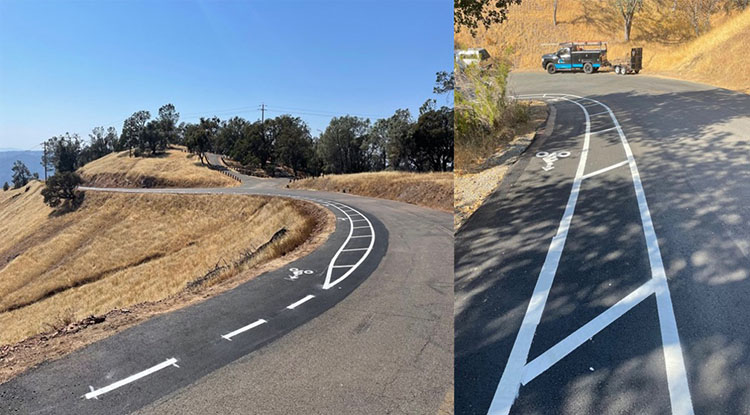
Starting Tuesday, May 28 South Gate Road will be closed weekdays to all traffic including cars, bicyclists, and pedestrians. Each week for approximately five weeks, the road will be closed from Monday 8 a.m. through Friday 2 p.m. It will be open weekends.

All trails and fire roads will remain open, and visitors who walk or cycle to the park will be able to access Summit Trail at the South Gate Entrance.

During the road closure period, camping at Live Oak Campground, and the Buckeye, Wildcat, and Barbecue Terrace Group Camps will only be available Friday and Saturday nights.

This closure is for the construction of additional bike turnout lanes to enhance road safety. This latest phase of the project was made possible by fundraising coordinated by our partner organization California State Parks Foundation.

Yellow circle indicates South Gate Road entrance. Map source: CA State Parks

There are three other entrances to Mount Diablo State Park: Mitchell Canyon Road, North Gate Road and Green Valley Road (Macedo Ranch). Please check under Brochures/Campground Map for more details. There is no vehicle access to the Summit from Macedo Ranch or Mitchell Canyon.

Thank you for your cooperation during this temporary closure.

For more information about Mt. Diablo click, here.

Allen D. Payton contributed to this report.


Filed Under: News, Parks, Recreation, San Ramon Valley, State of California, Transportation

Contra Costa Fair Board president says “two temporary staffers” robbed of “a little under $100,000” during bank deposit

May 23, 2024 By Publisher Leave a Comment

Photos of the 2024 Contra Costa County Fair by Allen D. Payton. See more photos on the @cocoherald Facebook page.

“Not any business, including any business I worked for would take a deposit at night” – Craig Cannon, Contra Costa County Fair Board President

Shares more details, says policies and procedures will be discussed at next Board meeting June 12

Positive Fair news: Mexican rodeo group working to bring Hispanic-themed events to former arena

By Allen D. Payton

Following the armed robbery of proceeds from the Contra Costa County Fair during an attempted bank deposit early Monday morning, May 20, 2024, after the end of this year’s fair Sunday night, on Thursday, Fair Board President Craig Cannon shared additional details about the incident. (See related article)

Asked to confirm the amount of $90,000 that was stolen he said, “I got it as a little under $100,000. I got that from the police. (Fair CEO) Joe Brengle’s not even talking to me.”

However, according to another board member, John Pence, Brengle sent out an email Wednesday night to him and the other board members about the matter. Cannon said he hadn’t seen it.

“Not any business, including any business I worked for would take a deposit at night,” Cannon continued. “It’s unusual. It’s one of the things I want to get the board together to talk about. Why would you make such a poor decision? The only one who has a deposit key is the fair manager.”

“A lot of information is not being shared when it’s supposed to be,” he stated. “It all boils down to the fair manager. He handles the overall money receipts, personnel, hiring and firing. But Joe works for the board. We hire and fire him.”

Asked if insurance will cover any of the loss, Cannon said, “I don’t believe so because it wasn’t during Fair hours or on property and it wasn’t in the bank. There’s a really thin line, there.”

Asked why the people depositing the funds weren’t joined by armed escorts by either the contracted security firm or county sheriff’s deputies, he responded, “That’s the question I’m trying to find out. But he’s (Brengle’s) not being forthright. That’s what we will discuss at the next board meeting. I’ve talked to the State of California, and they said I can’t have an emergency meeting. In my eyes, almost a hundred grand is a major crime against us.”

About the security firm, Praetorian and this year’s Fair, Cannon said, “They were great. This year’s fair was a good one and safe.”

He then reiterated what was shared with other media, that the loss of that amount of money could impact the fair’s music headliners and animal attractions for next year.

“This whole thing stinks,” he stated.

Two Temporary Staffers Handled Deposit

Asked who handled the deposit Cannon said, “Two temporary staffers hired by the Fair, this year in charge of parking and ticket sales. That’s another red flag. Something’s really wrong. Joe seems like a sensible guy. I don’t know why he would make that decision.”

Asked why the money wasn’t left in a safe on the fairgrounds and deposited during daylight, he said, “That’s a decision for the fair manager” and shared that the Fair, technically state’s 23rd District Agricultural Association, currently only has two full-time employees, Brengle and an administrative assistant who works in the office with him.

Since it’s the public’s money Cannon said, “That’s my concern. I also suggested the state bring in the CHP which oversees county fairs in the state. They delegate the authority to the county sheriff’s office.”

“I don’t work for the state,” he explained. “I’m appointed by the governor. Not this governor, the past one. The appointments are renewed. We can barely have a meeting quorum. If someone is sick, we can’t hold a meeting. The governor’s busy with the budget.”

Asked why the funds weren’t taken to the bank by the fair manager and a board member for a check and balance and if there is a procedure in place Cannon stated, “There will be. The Fair Board is all about policies and procedures. The manual is about 50 pages. But we don’t handle the day-to-day. Taking funds to the bank during daylight hours should be the policy.”

“He (Brengle) hasn’t been forthcoming to anyone on the board about this,” the fair board president reiterated. “This is crazy. It makes no sense at all.”

One positive thing Cannon shared is that a Mexican rodeo group is working to bring Hispanic-themed events to the former arena that was used as the paintball park.

The next board meeting, which is open to the public, will be held Wednesday, June 12 at 7:00 p.m. in the Fair Board Directors’ Room at the Contra Costa Event Center (fairgrounds) located at 1201 W. 10th Street in Antioch.


Filed Under: Crime, East County, Fairs & Festivals, News, State of California

Armed robbery of Contra Costa County Fair funds during bank deposit

May 22, 2024 By Publisher Leave a Comment

Possibly $90,000, police seek public’s help

By Antioch Police Department

On Monday, May 20, 2024, at approximately 2:18 AM, Antioch police officers responded to the 2500 block of Somersville Road for the report of an armed robbery.

When officers arrived, they contacted two victims. Officers learned the victims were employees of the Contra Costa County Event Park (Fairgrounds). The Contra Costa County Fair had ended, and two employees were tasked with conducting the night deposit. While conducting the night deposit at the BMO Bank they were approached by an unknown suspect. The suspect robbed the victims of the money and personal belongings at gunpoint.

Other news reports have pegged the amount stolen at $90,000. When asked, a county fair representative offered no comment but didn’t know how that amount was known by other media. Questions were emailed late Wednesday night to Fair CEO Joe Brengle asking if that’s correct, why the deposit was made at that time instead of leaving it in a safe on the fairgrounds and waiting until Monday morning to make the deposit, what is the usual procedure and for any additional information he could share.

We are asking for anyone with information regarding the incident to contact the Antioch Police Department Investigations Bureau. Additional inquiries or information can be directed to Antioch Police Detective Sgt. Palma at (925) 779-6876 or by emailing kpalma@antiochca.gov.

Please check back later for any updates to this report.

Allen D. Payton contributed to this report.

Filed Under: Crime, East County, Fairs & Festivals, News, Police, State of California

California State Parks encourages visitors to recreate safely, responsibly during Memorial Day Weekend

May 22, 2024 By Publisher Leave a Comment

Photos from top left: Riders wear helmets while on horseback in Auburn State Recreation Area. Life jacket loaner programs are available in many state parks and other recreation areas. A family practices safe riding in Hollister Hills State Vehicular Recreation Area. Hiking with a buddy amongst the big trees on a trail in Humboldt Redwoods State Park. Source: CA Department of Parks and Recreation

SACRAMENTO, Calif. – California State Parks invites Californians and visitors from around the world to recreate responsibly during the upcoming Memorial Day weekend, one of the busiest outdoor holiday weekends of the year. California’s diverse landscape has recreational activities for everyone, from swimming in lakes, rivers, and oceans to hiking among giant redwoods or sequoias to off-highway vehicle riding in deserts and mountains to camping along the coastline. Following simple safety precautions, such as wearing a properly fitted life jacket or proper riding gear, avoiding alcohol, and knowing one’s limits while engaged in aquatic activities, can help save lives.

With 280 state parks, California State Parks manages over 340 miles of coastline, 970 miles of lake and river frontage, and 5,200 miles of trails. There are plenty of outdoor opportunities to spend time with family and friends, reconnect with nature and enjoy the benefits state parks offer to your mental and physical health. But keep in mind, preparing for recreational activities should include simple precautions for safe recreation.

Safety around water is important as people seek cool activities during hot weather, as demonstrated by this swimmer wearing a life jacket at Caswell Memorial State Park. ©2009, California State Parks photo by Brian Baer

Here are some helpful tips to stay safe during this holiday weekend:

  • Wear a Life Jacket Around Water: Water-related accidents can happen suddenly and rapidly. Make sure you and those with you wear properly fitting, U.S. Coast Guard-approved life jackets, especially children. Wearing a life jacket is the best way to increase your chances of survival during an incident. View locations where public agencies and private organizations offer to loan life jackets to the public.
  • Prepare an Itinerary: No matter what type of recreational activity you are planning, leave an itinerary of your trip with a family member or friend with information such as the names and ages of all participants, your travel destination, and your expected return date. This will provide law enforcement personnel with essential information if an emergency response may be needed.
  • Know Before You Go: Prior to leaving home, check the statusof the state park you want to visit to find out what current restrictions and guidelines are in place. Have a back-up plan in case your destination is crowded. On arrival, park only in designated spaces.
  • Check the Weather:
    • Plan activities based on temperatures throughout the day.
    • Dress in proper clothing for the activities you are planning.
    • Shield yourself from the sun with a hat, sunglasses, and sunscreen.
    • Drink plenty of water and avoid alcoholic and caffeinated fluids.
  • Protect Your Loved Ones Around Water:
    • Always supervise children by appointing a designated “water watcher,” taking turns with other adults. Never assume someone is watching your children.
    • Know your limits. Swimming in a lake, ocean, or river is different than swimming in a pool. Waves, tides, strong rip currents, and other water hazards can appear quickly and provide little time to act.
    • If someone is in distress, seek help from a lifeguard or call 9-1-1 if one is not available.
    • Obey posted warnings and swim in designated areas or near a lifeguard tower, if available.
  • Avoid Alcohol: Operating a recreational vehicle, including a boat or an off-highway vehicle (OHV), with a blood alcohol concentration (BAC) of 0.08% or more is against the law. Impaired boaters can be arrested even with a lower BAC if the conditions are not safe and your boat can be impounded. Some parks do have alcohol bans. Check each specific park website to determine if there are local ordinances concerning alcohol.
  • Ocean Rip Currents:If you get caught in a rip current, stay calm and do not fight the current. Swim or float parallel to the shore until you are out of the current and then swim toward the shore.
  • Learn the Rules of Recreating in Boats and OHVs: There are laws specific to operating OHVs on public lands and boats on California’s waterways. Learn about these laws by visiting the webpage of your state park destination. For boating laws, please visit com. OHV regulationsare also available to review online.
  • Trails: Whether you are hiking, horseback riding, or operating an OHV, stay on designated trails. This includes boardwalks in sensitive ecological areas. You are not only protecting natural resources, but also ensuring you do not get lost. Check with State Park staff or volunteers about trails best suited for your abilities. Make sure to hike with a buddy.
  • Leave No Trace: Leave areas better than you find them by packing out all trash. Put food waste and other waste in the bags until it can be disposed of properly. For human waste, the use of waste alleviation (WAG) gel bags or other portable toilet options is recommended. WAG bags can be safely disposed of in regular trash. Do not disturb wildlife or plants.

You can find additional safety tips and information on backpacking, biking, camping, horseback trails, and laws at parks.ca.gov/SafetyTips.

California State Parks is honoring the service of veterans, and active and reserve military members, by offering free admission to 143 participating state park units on Memorial Day – Monday, May 27, 2024. The list of participating park units can be found at State Parks Memorial Day 2024.

About CA State Parks

The California Department of Parks and Recreation, popularly known as State Parks, and the programs supported by its Office of Historic Preservation and divisions of Boating and Waterways and Off-Highway Motor Vehicle Recreation provide for the health, inspiration and education of the people of California by helping to preserve the state’s extraordinary biological diversity, protecting its most valued natural and cultural resources, and creating opportunities for high-quality outdoor recreation. Learn more at parks.ca.gov.

Filed Under: Holiday, News, Parks, Recreation, State of California

  • « Previous Page
  • 1
  • …
  • 7
  • 8
  • 9
  • 10
  • 11
  • …
  • 22
  • Next Page »
Monica's-Riverview-Jan-2026
Liberty-Tax-Jan-Apr-2026
Deer-Valley-Chiro-06-22

Copyright © 2026 · Contra Costa Herald · Site by Clifton Creative Web