• Home
  • About The Herald
  • Local Agencies
  • Daily Email Update
  • Legal Notices
  • Classified Ads

Contra Costa Herald

News Of By and For The People of Contra Costa County, California

  • Arts & Entertainment
  • Business
  • Community
  • Crime
  • Dining
  • Education
  • Faith
  • Health
  • News
  • Politics & Elections
  • Real Estate

State Controller responds to Newsom’s May Budget Revision, issues April Cash Report

May 10, 2024 By Publisher Leave a Comment

“…contains challenging financial choices for the Governor and the Legislature…”- Malia Cohen

Fiscal year-to-date revenues still trend below expectations

SACRAMENTO — California State Controller Malia M. Cohen today, Friday, May 10, 2024, issued the following statement in response to Governor Gavin Newsom’s May budget revision:

“This morning, Governor Newsom released the May Revision to his proposed 2024-25 State Budget. The blueprint to address the remaining shortfall contains challenging financial choices for the Governor and the Legislature to maintain the state’s commitment to protecting essential programs and services and continuing critical investments in the state’s future.”

“As the state’s chief fiscal officer, it is my job to ensure the state has sufficient cash to pay our bills and to make certain that expenditures are transparent, accountable, and align with their intended purpose and expected outcomes. My office stands ready to assist both the Governor and the Legislature as they make their final push to finalize and approve the 2024-25 budget.”

In addition, Cohen today released her monthly cash report covering the state’s General Fund revenues, disbursements and actual cash balance for the fiscal year through April 30, 2024. The state ended April with $95.8 billion in unused borrowable resources, while fiscal year-to-date receipts continue below estimates contained in the 2024-25 Governor’s proposed budget.

The Governor’s Budget estimated that the state would collect nearly $16.3 billion in personal income taxes in April. As shown on the State Controller’s Office April 2024 Personal Income Tax Tracker webpage, the state exceeded the revenue target by approximately $150 million.

“With April personal income tax revenues just tracking with the most recent budget estimates, fiscal year-to-date revenues continue at lower-than-expected levels,” said Controller Cohen. “The high level of borrowable resources is due in large part to the $26 billion the state has prudently built up and reserved for rainy days and economic uncertainties. Maintaining enough cash to cushion against economic downturns has been one of California’s strengths in its credit ratings, and ensures the state will continue to meet its payment obligations.”

Fiscal year-to-date receipts through April were $169.8 billion, nearly $4.8 billion below the Governor’s Budget estimates, or 2.7 percent. The state’s cash position is $7.6 billion better than expected with disbursements of $184.9 billion for the fiscal year nearly $12.4 billion, or 6.3 percent, less than proposed budget projections.

As the chief fiscal officer of California, Controller Cohen is responsible for accountability and disbursement of the state’s financial resources. The Controller has independent auditing authority over government agencies that spend state funds. She is a member of numerous financing authorities, and fiscal and financial oversight entities including the Franchise Tax Board. She also serves on the boards for the nation’s two largest public pension funds. Follow the Controller on Twitter at @CAController and on Facebook at California State Controller’s Office.


Filed Under: Finances, Government, News, State of California

California colleges agree on how to interpret in-state tuition law for illegal immigrant students

May 8, 2024 By Publisher Leave a Comment

Students between classes at California Polytechnic State University, San Luis Obispo. Credit: Ashley Bolter / EdSource

Some have been exempt from paying out-of-state tuition since 2001

By Zaidee Stavely, EdSource – Republished with permission

More than 20 years ago, California passed a law allowing some undocumented immigrant students to attend college with in-state tuition, if they meet certain requirements.

But immigrant rights advocates say many students who should have been eligible have been wrongfully denied in-state tuition because of confusion over requirements, misinformation and different interpretations of the law at different college campuses.

“We lose that incredible brain power and colleges are losing enrollment,” said Nancy Jodaitis, director of higher education for Immigrants Rising, a nonprofit organization that advocates for undocumented people to achieve educational and career goals.

Immigrants Rising brought together officials from all three public college systems — California Community Colleges, California State University and University of California — to discuss and agree on answers to frequently-asked questions about the law.

Source: Immigrants Rising

The result is a document called the Systemwide AB 540 FAQ, which all three systems have now signed. The document includes answers to 59 questions, such as:

  • What if a student graduated from a California high school (completing three years’ worth of high school credits), but did not attend three years at a California high school?
  • Does a student have to take classes full time for their attendance to count?
  • Does all their coursework have to be taken at the same school?

Spokespeople from UC, CSU and California Community Colleges all celebrated the document.

Paul Feist, vice chancellor of communications and marketing for the California Community Colleges Chancellor’s Office, said the document is particularly important because there are several different laws regarding the nonresident tuition exemption.

The first bill exempting some undocumented immigrants from out-of-state tuition, Assembly Bill 540, was signed into law in 2001. Since then, three other bills have been passed to expand the law, in 2014, 2017 and 2022.

“While the intent was to expand access to AB 540 financial assistance, they had the unintended effect of making it more difficult to navigate,” Feist said. “This FAQ is designed to provide clearer explanations and provide additional resources in advising students.”

Under current California law, students who are undocumented or have temporary protection from deportation such as Deferred Action for Childhood Arrivals (DACA), or who are U.S. citizens or permanent residents, are eligible for in-state tuition and state financial aid, if they attended at least three years of high school, adult school or community college in California and obtained a high school diploma or equivalent, an associate degree or fulfilled the minimum requirements to transfer to a UC or CSU.

Access to state financial aid and in-state tuition can be a critical factor for undocumented students, who are barred from receiving federal financial aid. Without the law in place, some of them would be charged tuition rates for international students, often much higher than in-state tuition.

“This is huge,” said Maria Gutierrez, a college counselor at Chabot College in Hayward and a doctoral student at San Francisco State University. “It helps us be aligned and have something in writing.”  Before the FAQ document, Gutierrez says college staff in charge of approving exemptions from out-of-state tuition were sometimes afraid to make decisions without written proof of how to interpret the law.

Gutierrez herself has benefited from AB 540. She came to the U.S. when she was 5 years old on a visa, which later expired. She attended elementary, middle and most of high school in California. She also graduated from high school in California. But when she applied to attend community college in California, different campuses disagreed on whether she was eligible for in-state tuition because she had spent two years of high school in Utah. At the time, a second law had recently been passed to allow colleges to consider years of attendance in elementary and middle school for AB 540 eligibility.

“One college that I went to in So Cal, I was approved for AB 540. When I had to go back to the Bay Area, I was not approved for AB 540. So then I was confused that there was this inconsistency,” Gutierrez said.

A few years later, when she applied to transfer to a four-year college, both UC and CSU campuses told her she was not eligible for in-state tuition, even though by then, a law had passed that clarified that attendance at community college could be counted toward the requirements. She spent a semester paying out-of-state tuition at San Jose State University, before the university finally acknowledged she was legally eligible for in-state tuition.

As a college counselor, Gutierrez continues to meet students who have been incorrectly told they are not eligible for in-state tuition.

“It’s crazy because in reality it hasn’t changed much,” she said. However, she said, the financial burden is harder now, because most students graduating from high school cannot apply for work permits under DACA, because the government has not accepted new applications since 2017.

“I see my students now and I see the struggles they’re going through. If I didn’t have DACA, I honestly don’t think I would be where I am now,” Gutierrez said. “There’s no way that I would’ve been able to pay nonresident fees or wait for whoever it is that is determining that to learn what they need to do for me to be able to go to college.”

Advocates say they hope the document will help colleges give correct information and avoid students having to research on their own for information.

California also recently streamlined the process for undocumented students to apply for financial aid and exemption from in-state tuition on the same application when they fill out the California Dream Act application. In the past, students had to both fill out a California Dream Act application and an AB 540 affidavit form for each college. Now, the AB 540 form will be part of the same application.

Diana Aguilar-Cruz said that change is significant. Aguilar-Cruz is currently pursuing a master’s degree in public health at Cal State Fullerton. When she first began her undergraduate education at Cal Poly Pomona, she was charged nonresident tuition, which was almost double the in-state tuition. She had immigrated to the U.S. from Mexico City in 2015, when she was 14 years old, and lived with her grandmother in Baldwin Park while attending high school.

She had completed a California Dream Act application, but no one told her she also had to complete a separate form. After researching it herself online, she found the form and completed it, at which point the university finally changed her tuition to in-state.

“If I didn’t find it in my Google search, would I be paying in-state tuition for my four years of college?” Aguilar-Cruz said. “I always think to myself, what would have happened if I was a more fearful student or a student who did not have a strong support system at home?”

According to the Renewing the Dream page on the California Student Aid Commission’s website, “In 2021-22,  only 29% to 30% of undocumented college students who applied for financial aid through the California Dream Act Application (CADAA) ultimately enrolled in school. Moreover, only 14% of California’s estimated undocumented student population in postsecondary education ultimately received state financial aid.”

Allen D Payton contributed to this report.

 

Filed Under: Education, Finances, Immigration, News, State of California, Youth

Senator Glazer to honor first and only CA Supreme Court Chief Justice to be voted out of office

May 6, 2024 By Publisher Leave a Comment

Former California Supreme Court Chief Justice Rose Bird (Photo: CSCHS) and Senator Steve Glazer. (Official photo)

For reversing death sentences; plaques to be unveiled for Rose Bird at new plaza named for her in Capitol World Peace Rose Garden during Tuesday ceremony

Glazer was her spokesman during her failed 1986 retention campaign

SACRAMENTO – Former California Supreme Court Chief Justice Rose Elizabeth Bird will be recognized Tuesday, May 7, for her trailblazing work as a jurist – the first such public dedication in California.

Current Chief Justice of the California Supreme Court, Patricia Guerrero, and retired Chief Justice Tani Cantil-Sakauye, will lead the 10 a.m. unveiling of two plaques at the new Chief Justice Rose Elizabeth Bird Justice For All Plaza at the State Capitol World Peace Rose Garden 25 years after her death in 1999.

Speakers will also include Stephen Buehl, former Justice Bird’s chief of staff, Senator Nancy Skinner, D-Berkeley, the chair of the California Legislative Women’s Caucus, and Kathryn Meola, president of the Women Lawyers of Sacramento.

“Honoring Chief Justice Rose Elizabeth Bird is long overdue,” said Senator Steve Glazer, D-Contra Costa, who authored a resolution, SCR 47 (2023) to create her place of honor in the Capitol Rose Garden. Senator Glazer was Bird’s spokesman during her retention campaign in 1986. “We now have the benefit of time in recognizing her courage and integrity in upholding the Constitution and rule of law – especially in protecting the poor and oppressed.”

Justice Bird was the first woman Chief Justice of California; the first woman Chair of the Judicial Council; the first woman on a California Governor’s Cabinet and the first woman deputy public defender in Santa Clara County. She served as the Chief Justice under Governor Jerry Brown from 1977-1986.

She was also the first and only chief justice in state history to be voted out of office. Bird and three other justices voted to reverse murderers’ sentences, and she, two of her colleagues, Reynoso and Grodin, were subsequently voted off the state supreme court. Bird was overwhelmingly removed in the November 4, 1986, election by a margin of 67% to 33%.

What: The Unveiling of the Chief Justice Rose Elizabeth Bird Justice For All Plaza

When: May 7, 2024, 10 a.m.

Where: State Capitol World Peace Rose Garden

Speakers: Senator Steve Glazer; Patricia Guerrero, Chief Justice of California; Tani Cantil-Sakauye, retired Chief Justice of California; Stephen Buehl, chief of staff to Chief Justice Rose  Bird, Senator Nancy Skinner, D-Berkeley, the chair of the California Legislative Women’s Caucus, and Kathryn Meola, president of the Women Lawyers of Sacramento.

Livestream: https://www.youtube.com/watch?v=yaE6NUxkuv0

https://sd07.senate.ca.gov/video/honoring-chief-justice-rose-elizabeth-bird

Allen D. Payton contributed to this report

Filed Under: History, News, People, State of California

CPUC follows State Senate Republicans’ recommendation, scraps income-based utility bill scheme

April 1, 2024 By Publisher Leave a Comment


Sacramento, CA – March 28, 2024 – After immense pressure from California Senate Republicans, the California Public Utilities Commission (CPUC) has finally listened and is scrapping the income-based utility bill scheme proposed by California’s largest utilities, which came to fruition as a result of Assembly Bill 205 (2022). The non-elective commission released a flat fixed rate proposal, with reduced charges for low-income customers, and is expected to vote on it on May 9, 2024. (See related article)

“I’m cautiously optimistic to see that CPUC’s preliminary decision on a new fixed-rate plan for electrical billing includes a flat rate rather than one of the ludicrous income-based charges that had been proposed,” said Senate Minority Leader Brian W. Jones (R-San Diego). “I’m looking deeper into the proposal and studying how it will affect my constituents and ratepayers across the state. Still, I hope this may be a compromise Californians can live with. At the same time, I anticipate that electricity rates will continue to be a huge affordability issue in California, even under this new flat rate proposal.”

“As vice chair of the Senate Energy, Utility and Communications Committee, l have strongly advocated for affordable and reliable energy for Californians, but the majority party’s misguided approach has been driving up the rates for years,” said Senator Brian Dahle (R-Bieber). “This income-based utility scheme was another disastrous measure. I appreciate the CPUC heeding Republicans’ advice to pause this nonsensical bill, and I will continue to work tirelessly with my colleagues to make energy reform a reality in our state.”

The CPUC’s fixed rate proposal has a 20-day comment period and is eligible for a vote at the next CPUC public meeting on May 9, 2024.

California Senate Republicans have been leading the fight against the income-based electricity charge after Capitol Democrats rammed it through budget trailer bill AB 205 in 2022. In 2023, and as recent as January 2024, Senate Democrats thwarted Senate Republicans’ efforts to provide Californians a lifeline by repealing AB 205. Additionally, this year, Senate Minority Leader Jones and the entire Senate Republican Caucus introduced SB 1326 to repeal the income-based fixed charge mandated by AB 205. Click here to learn more about the caucus’ efforts.

After immense pressure from California Senate Republicans, the California Public Utilities Commission (CPUC) has finally listened and is scrapping the income-based utility bill scheme, which came to fruition as a result of Assembly Bill 205 (2022). The non-elective commission released a flat fixed rate proposal and is expected to vote on it on May 9, 2024.

Filed Under: Energy, Finances, News, State of California

What to know about money waiting in CalKIDS state-funded savings accounts | Quick Guide

March 26, 2024 By Publisher Leave a Comment

Photo: EdSource.org

Webinar April 17

By Lasherica Thornton, EdSource.org

Over 3.6 million school-aged children across the state qualify for at least $500 in savings with the California Kids Investment and Development Savings program (CalKIDS), a state initiative to help children from low income families save money for college or career.

Just 8.3% of eligible students, or 300,000, have claimed their accounts as many families are unaware of CalKIDS or face challenges accessing the accounts once aware.  The money is automatically deposited into the savings account under a student’s name, but families must claim the accounts by registering online.

Here is information you should know about the state-funded accounts:

What is CalKIDS?

The CalKIDS program was created to help students, especially those from underserved communities, gain access to higher education. It helps families save for post high school training by opening a savings account and depositing between $500 and $1,500 for eligible low-income students in the public school system. Gov. Gavin Newsom, who launched the program in August 2022, invested about $1.9 billion in the accounts.

Who qualifies?

Low-income students and all newborns qualify.

According to program details, low-income public school students are awarded $500 if they:

  • Were in grades 1-12 during the 2021-22 school year
  • Were enrolled in first grade during the 2022-23 school year, or
  • Will be in first grade in subsequent school years.

An additional $500 is deposited for students identified as foster youth and another $500 for students classified as homeless.

For newborns,

  • Children born in California after June 2023, regardless of their parents’ income, are granted $100.
  • Those born in the state between July 1, 2022, and June 30, 2023, were awarded $25 before the seed deposit increased to $100.
  • Newborns get an additional $25 when they claim the account and an additional $50 if parents link the CalKIDS account to a new or existing ScholarShare 529 college savings account.

The California Department of Education determines eligibility based on students identified as low income under the state’s Local Control Funding Formula or English language learners. The California Department of Public Health provides information on newborns.

How can students use the money?

The money can be used at eligible higher education institutions across the country, including community colleges, universities, vocational or technical schools and professional schools, according to CalKIDS.

The funds can be used for: tuition and fees, books and supplies, on or off-campus room and board as well as computer or other required equipment, according to the CalKIDS program guide.

Click here to search for schools that qualify as an eligible higher ed institution. 

Does the CalKIDS account have restrictions similar to those for a 529 savings account?

CalKIDS accounts are a part of the ScholarShare 529 program — California’s official tax-advantaged college savings plan — and administered by the state’s ScholarShare Investment Board.

Transportation and travel costs are usually not considered qualified expenses for 529 savings accounts.

According to the guide for CalKIDS, if a student has no account balance with their higher education institution — which receives the CalKIDS distribution check —  the institution can pay the funds directly to the student.

Does the money in the CalKIDS accounts earn interest?

The deposits grow over time because CalKIDS accounts are interest-bearing.

How aggressive that growth is depends on the age of the student, said Joe DeAnda, communications director with the California State Treasurer’s Office, which oversees the CalKIDS program.

“If it’s a newborn, (the seed deposits are) invested in a fairly aggressive portfolio that assumes 18 years of investing time,” DeAnda said. “If they are school-aged, they’re invested in a more conservative portfolio that assumes a shorter investing timeline and is a more secure portfolio.”

Even among students, the younger a child is, the more aggressive the savings portfolio will be. The investment provides “opportunity to grow savings while the child is younger and better safeguard savings against market fluctuations when the child nears college age,” according to the CalKIDS program guide.

Specifically, accounts for newborns, each new class of first graders and students in grades 1-5 during the 2021-22 school year are invested in a portfolio that corresponds to the year that they’re expected to enter a program after high school, or at age 18. The portfolio will become more conservative as the child gets older.

For students in grades 6-12 during the 2021-22 school year, the accounts are invested with a guaranteed, or fixed, rate of return on the investment.

Can I add to the account?

No, you cannot add money to the CalKIDS account. Parents or guardians can open a ScholarShare 529 account, which can be linked to the CalKIDS account so they can view the accounts in one place.

In fact, CalKIDS encourages families to open a ScholarShare 529 college savings account, which is a way for families to save even more money for their children, DeAnda said.

What if my student already graduated? What happens to unclaimed money?

The accounts remain active under a student’s name until the student turns 26 years old. Up until that age, students can claim the money.

If the account is not claimed by age 26, the account closes, and the money is reallocated to others in the CalKIDS program, DeAnda said.

What if I’m not sure if my child is considered low income?

CalKIDS has sent notification letters of program enrollment to over 3.3 million eligible students and nearly 270,000 students in last school year’s class of first graders.

Without the letters, to check student eligibility, families must enter students’ Statewide Student Identifier (SSID), a 10-digit number that appears on student transcripts or report cards, according to the CalKIDS website.

The California Department of Education provides CalKIDS with data on first graders in the late spring or early summer and asks parents to wait until then before checking for their child’s eligibility.

How do I access that SSID number to check eligibility or to register the account?

The SSID may be found on the parent’s or student’s school portal, transcript or report card.

The CalKIDS website instructs families to contact their child’s school or school district if they’re unsure of how or unable to locate the number.

How do I access or ‘claim’ the account?

The notification letter that CalKIDS sends families contains a unique CalKIDS Code that can be used to register the accounts. Even without the code, families can register the accounts.

To claim the student account:

  1. Visit the CalKIDS registration page to claim the account. Click here to register. 
  2. Enter the county where the student was enrolled (for a student in grades 1-12 in the 2021-22 school year; for a first grader, where the student was enrolled in 2022-23 or subsequent years)
  3. Enter student’s date of birth
  4. Enter the SSID or CalKIDS Code from the notification letter
  5. Click Register
  6. Set up the account, either as the child or as the parent/guardian, with a username and password

To claim the newborn account, which should be available about 90 days after birth:

  1. Visit the CalKIDS registration page to claim the account.
  2. Enter the county where the child was born
  3. Enter child’s date of birth
  4. Enter the Local Registration Number on the child’s birth certificate or CalKIDS Code from the notification letter
  5. Click Register
  6. Set up the account, either as the child or as the parent/guardian, with a username and password

I still need help. How do I get additional support?

Contact CalKIDS at (888) 445-2377 or https://calkids.org/contact-us/

The CalKIDS team is also hosting an April 17 webinar to outline the program, eligibility, account registration, fund distribution and benefits. To sign up for the webinar, click here. 

How does my high school graduate make a withdrawal to use the money?

According to the CalKIDS program guide, to request a distribution, log into the claimed CalKIDS account and request a distribution, which doesn’t have to be for the entire amount. The funds are tax-free for the qualified expenses of tuition, books, fees, computers and equipment.

The student must be at least 17 years old and enrolled at an eligible institution.

The CalKIDS money, which will be sent to the institution, is considered a scholarship from the state of California.


Filed Under: Education, Finances, News, State of California

Richmond man arrested again, charged with multiple felonies for illegal weapons possession

March 22, 2024 By Publisher Leave a Comment

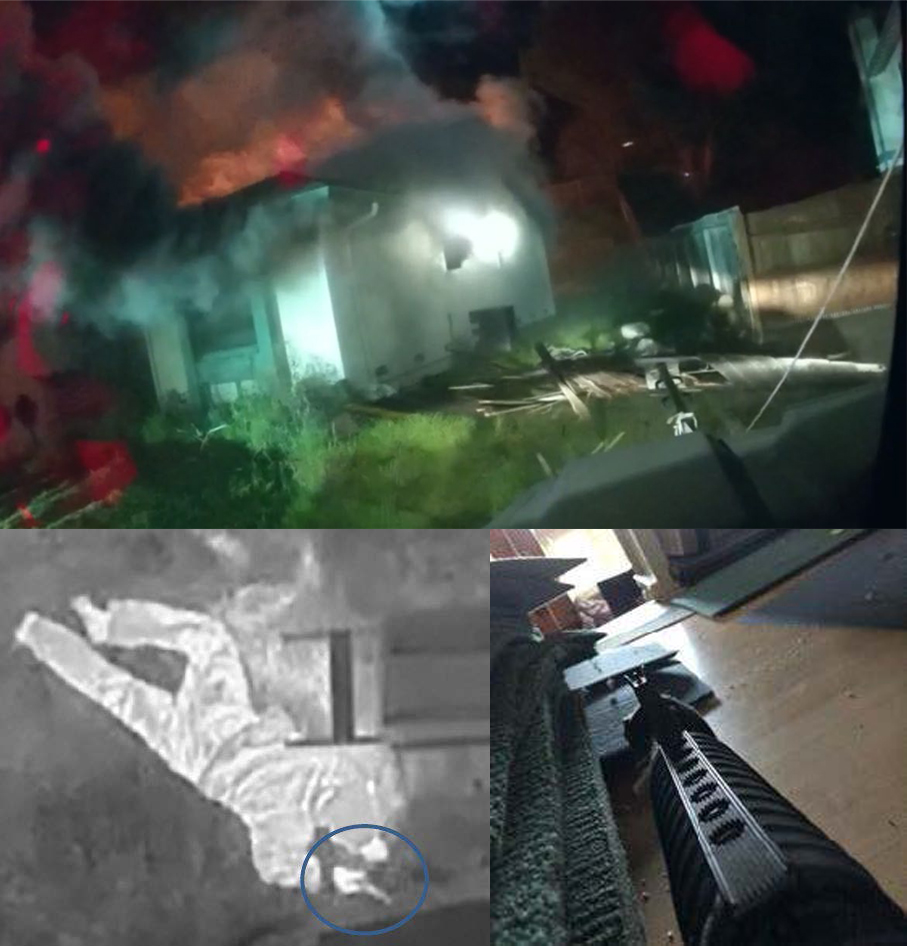
Guns seized from Hansen’s home in Richmond during his first arrest announced in February. Photos: CA DOJ

Cache of weapons included machine guns, assault rifles, silencers, homemade explosives

CA Attorney General announced first arrest in Feb., but state DOJ didn’t request prosecution and suspect was released, re-arrested March 17

By Ted Asregadoo, PIO, Contra Costa District Attorney’s Office

Martinez, California – The Contra Costa District Attorney’s Office filed a 21-count felony complaint against a Richmond man for possessing a large cache of illegal weapons, high-capacity magazines, and homemade explosives.

68-year-old Lawrence Robert Hansen (born 7/15/55) of Richmond is in custody after he was arrested on an outstanding warrant on March 17th by Richmond Police. Hansen is also listed on the Armed and Prohibited Persons System which tracks individuals who are barred from owning or possessing firearms.

Between 2022-2023, Hansen made several violent firearm-related threats to medical staff at a Walnut Creek clinic while seeking treatment. Staff members reported those threats to Walnut Creek Police on September 18th, 2023. In a separate incident, Hansen was transported to a hospital in Walnut Creek on September 26th, 2023, for a medical issue. During an examination, a staff member saw that Hansen had a handgun (later determined to be loaded) in his waistband area. The weapon was taken from Hansen and police were informed.

Because of the legal prohibition against Hansen possessing firearms, as well as threats made to medical employees, members from the Contra Costa Anti-Violence Support Effort Task Force, California Department of Justice’s (DOJ) Bureau of Firearms, and Contra Costa County Probation Officers searched Hansen’s residence with a court-ordered warrant in Richmond on January 31, 2024. During the search, agents found 11 machine guns, more than 130 handguns, 37 rifles, 60 assault rifles, 7 shotguns, 3,000 large capacity magazines, several grenades (inert), homemade explosives, incendiary ammunition, and around one million rounds of ammunition.

Hansen was arraigned on March 18th in Martinez. He entered a plea of not guilty and is being held without bail in the Martinez Detention Facility. A preliminary hearing is scheduled for March 27th in Department 23 at 8:30 am.

As previously reported, following the Jan. 31 search, California Attorney General Rob Bonta announced on Feb. 15 the arrest of Hansen. Asked why he was out of custody and arrested again on March 17, Asregadoo responded, “Upon receiving a request for prosecution (RFP) from the arresting police agency, a case undergoes review to determine whether to file charges. The RFP should include investigative reports and evidence relevant to the case. In the instance of Lawrence Robert Hansen, the arresting agency, Cal DOJ, did not immediately request prosecution at the time of arrest. Instead, Cal DOJ chose to finalize their investigation before submitting the request for prosecution along with associated reports and evidence to the Contra Costa District Attorney’s Office.”

According to the Contra Costa County Sheriff’s Office, Hansen is a 5-foot, 11-inch, 190-pound Hispanic man.

Case No. 02-24-00234 | The People of the State of California v. Hansen, Lawrence Robert

Allen D. Payton contributed to this report.
Filed Under: Crime, District Attorney, DOJ, News, State of California, West County

Californians face higher electricity rates based on income

March 16, 2024 By Publisher Leave a Comment

If you earn $28K per year or more; unless state legislature reverses course; 5 local legislators voted for bill

By Allen D. Payton

Bill Votes – AB-205 Energy. (ca.gov)

In 2022, the California legislature passed and Governor Gavin Newsom signed AB205 – Energy into law, which requires that the Public Utilities Commission (CPUC) “shall, no later than July 1, 2024, authorize a fixed charge for default residential rates.” As a result, the CPUC is currently reviewing proposals for a tiered, fixed-price structure, as directed by the bill.

According to FOX Business, the state’s three main, investor-owned utilities – Pacific Gas and Electric (PG&E), Southern California Edison (SCE) and San Diego Gas and Electric (SDG&E) – proposed a tiered rate plan: “Households earning $28,000-$69,000 would be charged an extra $20 to $34 per month. Those earning $69,000-$180,000 would pay $51 to $73 per month, and those earning more than $180,000 would pay a $85-to-$128 monthly surcharge.”

According to California Energy Markets, “The first version of the income-graduated fixed charge, or IGFC, could be implemented by SDG&E and SCE by 2026, according to Freedman. PG&E is in the process of changing its billing system, he said, so its implementation would likely be in 2027.”

That’s on top of the 13% increase for both electricity and natural gas rates for PG&E customers approved by a unanimous vote of the CPUC last November that went into effect on January 1, 2024. Plus, another vote on March 7 for $4-$6 in additional monthly fees for the typical ratepayer that will take effect in April, was approved for PG&E to recover $516 million in costs for wildfire mitigation, gas safety and electric modernization.

According to a Canary Media report, “The utilities are also proposing to significantly lower the per-kilowatt-hour charges that customers pay to counterbalance the big increase in fixed charges, and to structure both fixed and volumetric charges in a way that allows lower-income customers to save money overall. Still, the proposal, if enacted, would instantly make California the home of the nation’s highest monthly utility fixed fees, according to analysis by clean energy research firm EQ Research.”

The IGFC would require the CPUC to evaluate every ratepayer’s income annually in order to assess the appropriate fee.

Local Legislators Voted for Bill

Five of Contra Costa’s state legislators supported AB205 on party-line votes including Assemblymembers Tim Grayson, Rebecca Bauer-Kahan, Buffy Wicks, Lori Wilson and State Senator Nancy Skinner. The first four each voted for the bill, twice.

Assemblyman Jim Frazier didn’t vote on the bill in 2021 and State Senator Steve Glazer didn’t vote on AB205 during the State Senate’s floor vote in 2022. Newsom signed the bill into law on June 30, 2022.

Details of New Law

As of July 1, 2022, the applicable portion of the law now reads as follows:

“SEC. 10. Section 739.9 of the Public Utilities Code is amended to read:

(d)  The commission may adopt new, or expand existing, fixed charges for the purpose of collecting a reasonable portion of the fixed costs of providing electrical service to residential customers. The commission shall ensure that any approved charges do all of the following:

(1) Reasonably reflect an appropriate portion of the different costs of serving small and large customers.

(2) Not unreasonably impair incentives for conservation, energy efficiency, and beneficial electrification and greenhouse gas emissions reduction.

(3) Are set at levels that do not overburden low-income customers.

(e)(1) For the purposes of this section and Section 739.1, the commission may authorize fixed charges for any rate schedule applicable to a residential customer account. The fixed charge shall be established on an income-graduated basis with no fewer than three income thresholds so that a low-income ratepayer in each baseline territory would realize a lower average monthly bill without making any changes in usage. The commission shall, no later than July 1, 2024, authorize a fixed charge for default residential rates.

(2) For purposes of this subdivision, ‘income-graduated’ means that low-income customers pay a smaller fixed charge than high-income customers.”

Source: Energy Sage published 3/10/24

Californians Pay 27% More for Electricity Than National Average

According to Energy Sage, California residents currently pay 31 cents per kilowatt-hour compared to the national average of 18 cents per kilowatt-hour. “On average, California residents spend about $256 per month on electricity. That adds up to $3,072 per year. That’s 27% higher than the national average electric bill of $2,426.”

Effort to Reverse Course

Now, some members of the legislature are trying to backpedal on their votes and stop the IGFC increases from being approved. As they had unsuccessfully attempted last September, on Jan. 30, Republican lawmakers tried to bring an immediate vote to repeal AB 205 to the Senate floor, but Democrats who have the majority, voted to table the motion.

That same day, Assemblymember Jacqui Irwin, (D-Thousand Oaks) and 10 others introduced a bill to repeal AB205. According to Irwin’s press release about the new bill, “The CPUC has had the authority to implement a fixed rate charge, up to $10, since 2015, but has declined to do so. I see no need to rush now. It’s time to put some reasoning back into how we charge for electricity in California.” Bauer-Kahan is listed as a principal coauthor. It was also introduced in the State Senate.

According to the aforementioned Canary Media report, “The newly introduced bill, AB 1999, would limit the CPUC to adding a fixed charge of no greater than $10 a month on customers’ bills to pay for the rising costs of maintaining the state’s utility grids, regardless of household income.”

The bill is in the committee process, was referred to the Assembly Committee on Utilities and Electricity. If approved it will then head to the floors of both houses of the state legislature for votes and if passed, the bill will head to the governor’s desk for his signature or veto.

3/27/24 UPDATE: According to Sylvie Ashford, Energy & Climate Policy Analyst for The Utility Reform Network (TURN) which supports the implementation of an income-graduated fixed charge, and is one of the authors of the organization’s IGFC proposal,

  • “The IOUs are no longer proposing the charge levels that you cite (e.g. up to $128 per month). The CPUC has already ruled that the first iteration of the fixed charge will have income tier cut-offs based only on the existing CARE/FERA programs, with no ‘high-income’ tier. The IOUs submitted new proposals in the fall, with a max charge of $51-$73 (page 5 of their brief).
  • It’s not that utilities will “also” lower $/kWh rates. The fixed charge itself lowers rates, as is comprised only of costs that are included in rates today. It shifts some fixed costs out of electricity rates and into a separate line item.
  • Thus, your headline that “Californians face higher electricity rates based on income” is incorrect. All customers will pay lower electricity rates (15% lower under TURN’s proposal). Some higher income customers will see higher overall bills only if their assigned fixed charge exceeds their savings from the reduced rates. (For example, TURN’s proposal has a maximum monthly fixed charge of $30, and we estimate those customers will see $3-7 bill increases, depending on their usage).”

Iin addition, she shared, “TURN believes that the fixed charge presents a critical opportunity to reduce low-income energy bills in the state. TURN also believes much more is needed to make bills affordable and intervenes widely at the CPUC to oppose rate increases. A few quick points:

  • The fixed charge will not increase utility revenue/profits; it removes costs from rates and shifts them to a separate line item on your bill.
  • This will reduce electricity rates ($/kWh) for all Californians, making it more feasible to operate electric vehicles and appliances.
  • Because the new line item is based on income, it will also reduce overall bills for low-income Californians (likely to be defined as the low-income CARE/FERA discount programs, which cover 30% of the state) and it will make electricity bills less regressive.
  • TURN strongly opposes the joint proposal of the utilities for fixed charges, and the CPUC is not considering it. The CPUC has already ruled that the first iteration of the fixed charge will have income tier cut-offs based only on the existing CARE/FERA programs, with no ‘high-income’ tier, so the average fixed charge will be low (TURN proposes an average of $23.50, which is the same charge already offered by the Sacramento Municipal Utility District).

Ashford was asked to explain how, if the cost of providing electricity does not differ from one user to the next in one of the three utility company’s service areas, it’s fair to charge one customer more based on their income. She was also asked weren’t renewals supposed to reduce electricity costs and aren’t we relying more on them, now for electricity generation in California,

Ashford responded, to your questions about the fairness of paying based on income, and why rates have been increasing when generation keeps getting cheaper (thanks to renewables): the problem is that your $/kWh electricity rates today are largely comprised of costs that have nothing to do with your personal usage. They are bloated with the fixed costs of the grid, like the utilities’ wildfire mitigation programs and infrastructure projects.

As a result, a UC Berkeley study found that California’s electric rates are highly regressive; low-income households pay more of their income on shared system costs. Households in hot climates, that need to use more electricity to keep cool, also pay more than their fair share of these costs. On the flipside, solar customers are paying less than their fair share, which has created a ‘cost shift’ that hikes rates for everyone else (source).

TURN is a strong advocate of reducing utility spending, which is the most important step to reduce rates. The fixed charge alone doesn’t address that problem, as it simply shuffles the collection of existing costs, but it will make bills more affordable for those that are disproportionately burdened by shared system costs.”


Filed Under: Energy, Government, News, State of California

Homeless, Drug Addiction, Retail Theft Reduction Act to reform Prop 47 collects 75% of required California voters’ signatures

March 4, 2024 By Publisher Leave a Comment

Over 400,000 have signed petitions to place the measure that will stop theft and fentanyl crimes onto the November 2024 ballot

Gains support of Californians Against Retail and Residential Theft, over 30 mayors & local leaders

See below to get petition and help gather signatures

Over 400,000 California voters have signed the petition to place the Homeless, Drug Addiction, Retail Theft Reduction Act on the November 2024 ballot.

“We have seen a record number of voters seeking to sign the petition to place this measure on the ballot – sometimes waiting in line to do so,” said campaign chair Greg Totten who is also chief executive officer for the California District Attorneys Association. “This is consistent with polling that has shown that 70% of likely California voters support the Homeless, Drug Addiction, Retail Theft Reduction Act. The measure is commonsense and injects accountability back into our laws for repeat offenders of theft and for crimes involving fentanyl and other serious drug crimes.”

Californians Against Retail and Residential Theft endorses proposed initiative to reform Proposition 47

Californians Against Retail and Residential Theft (CARRT) announced last week its support for the proposed initiative called the Homeless, Drug Addiction and Theft Reduction Act.

“Our current system puts Californians at risk as crime continues to rise without any real repercussions. That is why Californians Against Retail and Residential Theft is supporting the Homeless, Drug Addiction and Theft Reduction Initiative,” said Matt Ross, spokesman for Californians Against Retail and Residential Theft.

“The initiative focuses on repeat offenders of retail crime. It provides an opportunity for those with substance abuse and mental health problems to seek help through diversion programs. At the same time, it also ensures that there are real consequences for individuals who continue to break the law.”

“Moreover, this initiative is a significant step towards putting an end to retail and residential theft in both Main Street and neighborhood areas.”

According to data from the Public Policy Institute of California, there has been a significant increase in commercial shoplifting, with a 28.7% rise in 2022 alone. Commercial burglary and robbery have also seen an increase of 5.8% and 9%, respectively. Furthermore, a recent survey revealed that 88% of retailers are experiencing more aggressive and violent shoplifters compared to the previous year.

CARRT is a diverse coalition consisting of over 200 business associations, local groups, and victim organizations. Their main goal is to advocate for California officials to take action and equip law enforcement with the necessary tools to reduce theft. Prominent members of the coalition include local Chambers of Commerce, California Asian Pacific Chamber of Commerce, California Business Roundtable, California Black Chamber of Commerce, California Grocers Association, California Peace Officers Association, Crime Victims United, Klaas Kids Foundation, and the National Federation of Independent Business.

CARRT has been engaging in discussions with local officials, law enforcement, and legislators to ensure that they comprehend the true impact of retail and residential crime. They aim to provide public safety officials with additional resources to effectively address this problem. For more information about CARRT, please visit their website at www.carrt.org.

Over 30 mayors and local elected leaders endorse Prop 47 reform initiative

Bipartisan support continues to grow with over 30 mayors and local elected officials from across the state have endorsed the Homelessness, Drug Addiction, Retail Theft Reduction Act. The measure will increase community safety by holding those who repeatedly steal or traffic hard drugs accountable. The measure has collected 75% of the needed signatures from California voters to place it on the November ballot.

“Our city has continued to prioritize safety for our residents, businesses and visitors. We realize that the laws must adapt to the circumstances we see on our streets today. Retail theft and drug offenders repeat their crimes without any accountability or consequence which is why I am supporting this ballot measure,” said Santa Monica Mayor Phil Brock. “We need smart changes to Prop 47 so that we can stop crime and hold repeat offenders accountable. Consequences act as a deterrent while at the same time, this measure prioritizes effective drug treatment and rehabilitation programs. This ballot measure will provide the tools our city needs to improve community safety.”

Local mayors and elected officials from every region across the state continue to endorse a measure that balances accountability and rehabilitation programs.

Bay Area Elected Leaders

Mayor Matt Mahan, City of San Jose

Mayor London Breed, City and County of San Francisco

Mayor Lily Mei, City of Fremont

Mayor Carmen Montano, City of Milpitas

Vice Mayor Renee Golder, City of Santa Cruz

Councilmember Shebreh Kalantari-Johnson, City of Santa Cruz
Former Mayor Ryan Coonerty, City of Santa Cruz

Vice Mayor Sherry Hu, City of Dublin

Councilmember Liang Chao, City of Cupertino (title for identification purposes only)

Councilmember Kitty Moore, City of Cupertino (title for identification purposes only)

Mayor Yan Zhao, City of Saratoga

Councilmember Rishi Kumar, City of Saratoga

Councilmember Javed Ellahie, City of Monte Sereno

Northern & Central CA Elected Leaders

Mayor Jerry Dyer, City of Fresno

Mayor Karen Goh, City of Bakersfield

Supervisor Rich Desmond, Sacramento County

Southern California Elected Leaders

Mayor Phil Brock, City of Santa Monica
Mayor Mark Arapostathis, City of La Mesa
Mayor Richard Bailey, City of Coronado
Mayor Keith Blackburn, City of Carlsbad

Mayor John Franklin, City of Vista
Mayor Lesa Heebner, City of Solana Beach
Mayor Rebecca Jones, City of San Marcos
Mayor Tony Kranz, City of Encinitas
Mayor John McCann, City of Chula Vista
Mayor John Minto, City of Santee

Mayor Ron Morrison, City of National City
Mayor Esther Sanchez, City of Oceanside
Mayor Steve Vaus, City of Poway
Mayor Bill Wells, City of El Cajon
Mayor Dane White, City of Escondido

A survey of likely California voters found that 70% of voters support the title and summary of the Homeless, Drug Addiction, Retail Theft Reduction Act. The overwhelming support was consistent across every demographic and geography including the Bay Area and Los Angeles. Furthermore, 89% of likely voters support amending Proposition 47 for stronger penalties for those engaged in repeated retail theft and trafficking hard drugs like fentanyl. The measure also includes incentives to complete drug and mental health treatment for people who are addicted to hard drugs. The survey was conducted online from November 8-November 13, 2023, with a margin of error of +/- 2.28%.

To qualify the measure for the November 2024 ballot, the law requires 546,651 valid signatures. The campaign is required to notify the Secretary of State after 25% of the signatures from California voters have been collected.

For more information, go to www.CASafeCommunities.com and to obtain a petition and help gather signatures visit https://blog.electkevinkiley.com/prop47/ .

Filed Under: Crime, Homeless, News, Politics & Elections, State of California

Impressive spring wildflower blooms anticipated in desert state parks

March 2, 2024 By Publisher Leave a Comment

Cutline: Top: Current wildflower bloom at Anza-Borrego Desert SP. Bottom left: Sparse flowers are starting to show at Antelope Valley California Poppy Reserve State Natural Reserve (SNR). Bottom right: Goldfields currently adorn the Tule Elk SNR. Source: CA State Parks

Public asked to keep the beauty in the bloom by staying on designated trails and taking only photos, not flowers.

SACRAMENTO, Calif. – This spring, California’s desert state parks could potentially be adorned with a sea of rainbow colors as the wildflower season is expected to be an impressive one, and California State Parks is asking all visitors to enjoy them responsibly.

“In recent years, California has been lucky to see spectacular wildflower blooms in many public lands, including in state parks,” said State Parks Director Armando Quintero. “We welcome all Californians and visitors from around the world to experience this natural phenomenon and ask all to keep the ‘Beauty in the Bloom’ by staying on designated trails and taking only photos, not flowers.”

Current Bloom Situation

Depending on the park, visitors may see colorful lupine, coreopsis, desert sunflowers, evening or brown-eyed primroses, desert bells, desert poppies or desert lilies.

  • Anza-Borrego Desert State Park: Blooms are arriving in the heart of Borrego Springs along Henderson Canyon Road, the lower sandy dune portions of Coyote Canyon and in the southern portion of the state park along Highway S2 southeast of Agua Caliente County Park. Additionally, areas near June Wash moving northeast toward Fish Creek and Arroyo Tapiado are beginning to show the early bloomers like primrose, phacelia, and wooly sunflower. If moving south along the Highway S2, four-wheel-drive vehicles are recommended on any unpaved park road.
  • Antelope Valley California Poppy Reserve State Natural Reserve: Sporadic individual poppies are already starting to bloom. From mid-March to May, this park expects a variety of wildflowers to bloom. Poppies, fiddleneck, and red stem filaree have sprouted throughout the Poppy Reserve in large, dense quantities. Live updates from this park are available through the PoppyCam live feed. If the weather remains mild, the bloom is expected to be better this year compared to last year. If the weather turns hot, this could affect the bloom in the next few months.
  • Red Rock Canyon State Park, Eastern Kern County Onyx Ranch State Vehicular Recreation Area, Chino Hills State Park, Hungry Valley State Vehicular Recreation Area, Fort Tejon State Historic Park: These parks are expected to have good wildflower blooms from mid-March to May, and into the spring season.

Detailed information, in Spanish and English, on this year’s potential wildflower blooms and park rules is available at parks.ca.gov/WildflowerBloom.

Recreate Responsibly

For those wishing to visit areas where the blooms are popping, State Parks is providing visitors with tips on how to explore safely and responsibly, especially in the desert parks where the landscapes may have changed due to recent storms.

Understand the Area

  • Cell coverage can be spotty or nonexistent in some parks—be prepared.
  • Read about your state park destination online and download a map prior to your visit, especially if you are visiting a desert. Many GPS and map apps will take you to dirt roads requiring four-wheel drive vehicles.
  • Know your vehicle’s limits. Know which areas allow off-highway vehicle recreation.
  • Visit the parks during the week and arrive early to beat the crowds.
  • Remember to pull off the roadway when viewing wildflowers, wildlife or to take photos. Please leave roadways clear for vehicle traffic.
  • Leave an itinerary of your trip with a family member or friend with information such as time of departure and expected return, site visit location and names of everyone in your group. This will ensure law enforcement personnel have a better understanding of your location in the event of a rescue.

Check the Weather

  • While planning your trip, check weather conditions. Be prepared and plan for all types of weather.
  • Make sure your equipment and clothing are appropriate for the expected weather.

Respect the Landscapes

  • Each park has unique landscapes. Stay on designated trails whenever possible. Tread lightly in the desert. Do not trample flowers.
  • When viewing the blooms, take only pictures. Flower picking is prohibited.
  • If dogs are permitted, they must remain on leash, on designated roads, in campgrounds and in picnic areas. Dogs are not allowed on hiking trails, in the backcountry or in the wildflower fields. Do not leave dogs unattended in your vehicles—temperatures can reach lethal levels.
  • Drone use may be prohibited. If drone use is allowed, a filming permit from individual state park units must be requested.
  • Help keep the landscapes pristine, leaving it better than when you arrived by packing out anything you packed in—pack it in, pack it out.

Know Your Body Limitations

  • Bring plenty of food and water. There are often no restaurants, gasoline stations or stores near the bloom areas.
  • Drink plenty of water prior to your visit to remain hydrated and avoid heat-related emergencies.
  • Outdoor conditions can change quickly, especially in the desert. Bring sunscreen, a hat, layers of clothing and closed-toe shoes to avoid injury.
  • Walk at a pace that allows you to talk easily. If you are too out of breath to speak, you are probably working too hard. Take a rest or stop exercising.
  • In the event of an emergency, call 911.

Background

In 2017, 2019 and 2023, wildflowers carpeted state parks like Antelope Valley California Poppy Reserve SNR, Anza-Borrego Desert SP and Ocotillo Wells State Vehicular Recreation Area (SVRA), attracting hundreds of thousands of people from around the world to view this rare occurrence in nature. These wildflower blooms vary from year to year based on multiple factors: Precipitation levels, the timing of that precipitation, amount of sunlight, humidity levels and seasonal temperature patterns can all affect both the bloom timing and number of flowers seen across the region. Since California was fortunate to receive more rain last fall and this winter, public land managers are expecting a “good” to “better-than-average” wildflower blooms in spring, depending on the continued weather conditions.

Filed Under: News, Parks, State of California

CTA-sponsored legislation would remove one of state’s last required tests for teachers

February 25, 2024 By Publisher Leave a Comment

First grade teacher Sandra Morales discusses sentences with a student. Credit: Zaidee Stavely / EdSource

State could retain unpopular written literacy test

By Dana Lambert, EdSource.org – Republished with permission

Newly proposed legislation sponsored by the California Teachers Association would eliminate all performance assessments teachers are required to pass, including one for literacy that it supported three years ago. The result could leave in place an unpopular written test that the literacy performance assessment was designed to replace.

Senate Bill 1263, authored by state Sen. Josh Newman, D-Fullerton, would do away with the California Teaching Performance Assessment, known as the CalTPA, through which teachers demonstrate their competence via video clips of instruction and written reflections on their practice.

Eliminating the assessment will increase the number of effective teachers in classrooms, as the state continues to contend with a teacher shortage, said Newman, chairman of the Senate Education Committee.

“One key to improving the educator pipeline is removing barriers that may be dissuading otherwise talented and qualified prospective people from pursuing a career as an educator,” Newman said in a statement to EdSource.

The bill also would do away with a literacy performance assessment of teachers and oversight of literacy instruction in teacher preparation programs mandated by Senate Bill 488, authored by Sen. Susan Rubio, D-West Covina, in 2021.

The literacy performance assessment is scheduled to be piloted in the next few months. It is meant to replace the Reading Instruction Competence Assessment (RICA) set to be scrapped in 2025.

New law could leave RICA in place

The proposed legislation appears to leave in place a requirement that candidates for a preliminary multiple-subject or education specialist credential pass a reading instruction competence assessment, said David DeGuire, a director at the California Commission on Teacher Credentialing.

“At this time, it is unclear what that assessment would look like, but it could be that the state continues to use the current version of the RICA,” he said.

Newman will present the legislation to the Senate Education Committee in the next few months. Discussions about whether the RICA remains in use are likely to take place during the legislative process.

Rubio recently became aware of the new legislation and had not yet discussed it with Newman.

“For three years, I worked arduously and collaboratively with a broad range of education leaders, including parent groups, teacher associations and other stakeholders to modernize a key component of our educational system that in my 17 years as a classroom teacher and school administrator I saw as counterproductive to our students’ learning,” Rubio said of Senate Bill 488.

Teachers union changes course 

The California Teachers Association, which originally supported Senate Bill 488, now wants all performance assessments, including the literacy performance assessment, eliminated.

“We are all scratching our heads,” said Yolie Flores, of Families in Schools, a Los Angeles-based education advocacy organization. “We were really blindsided by this (legislation), given the momentum around strengthening our teacher prep programs.”

The results of a survey of almost 1,300 CTA members last year convinced the state teachers union to push for the elimination of the CalTPA, said Leslie Littman, vice president of the union. Teachers who took the survey said the test caused stress, took away time that could have been used to collaborate with mentors and for teaching, and did not prepare them to meet the needs of students, she said.

“I think what we were probably not cognizant of at that time, and it really has become very clear of late, is just how much of a burden these assessments have placed on these teacher candidates,” Littman said.

Teacher candidates would be better served if they were observed over longer periods of time, during student teaching, apprenticeships, residencies and mentorship programs, to determine if they were ready to teach, Littman said. This would also allow a mentor to counsel and support the candidate to ensure they have the required skills.

California joins science of reading movement

California has joined a national effort to change how reading is being taught in schools. States nationwide are rethinking balanced literacy, which has its roots in whole language instruction or teaching children to recognize words by sight, and replacing it with a method that teaches them to decode words by sounding them out, a process known as phonics.

Smarter Balanced test scores, released last fall, show that only 46.6% of the state’s students who were tested met academic standards in English.

Last week Assemblymember Blanca Rubio, D-Baldwin Park, introduced Assembly Bill 2222, which would mandate that schools use evidence-based reading instruction. California, a “local control” state, currently only encourages school districts to incorporate fundamental reading skills, including phonics, into instruction.

“It (Newman’s SB 1263) goes against not only the movement, but everything we know from best practices, evidence, research, science, of how we need to equip new teachers and existing teachers, frankly, to teach literacy,” Flores said. “And that we would wipe it away at this very moment where we’re finally getting some traction is just very concerning.”

Lori DePole, co-director of DeCoding Dyslexia California, said the proposed legislation would cut any progress the state has made “off at the knees.”

Among her concerns is the elimination of the requirement, also authorized by Senate Bill 488, that the California Commission on Teacher Credentialing certify that teacher preparation programs are teaching literacy aligned to state standards and a provision that requires the commission to report to the state Legislature annually on how stakeholders are meeting the requirements of the law.

“It would be going away,” DePole said. “Everyone agreed with SB 488, all the supporters agreed, this was the direction California needed to go to strengthen teacher prep with respect to literacy. And before it can even be fully implemented, we’re going to do a 180 with this legislation. It makes no sense.”

Flores said teachers want to be equipped to teach reading using evidence-based techniques, but many don’t know how.

“We know that reading is the gateway, and if kids can’t read, it’s practically game over, right?” said Flores. “And we are saying with this bill that it doesn’t matter, that we don’t really need to teach and show that teachers know how to teach reading.”

Teacher tests replaced by coursework, degrees

California has been moving away from standardized testing for teacher candidates for several years as the teacher shortage worsened. In July 2021, legislation gave teacher candidates the option to take approved coursework instead of the California Basic Education Skills Test, or CBEST, or the California Subject Examinations for Teachers, or CSET. In January’s tentative budget, Gov. Gavin Newsom proposed eliminating the CBEST and allowing the completion of a bachelor’s degree to satisfy the state’s basic skills requirement.

Littman disagrees with the idea that there will be no accountability for teachers if the legislation passes. “There’s always been, and will continue to be, an evaluation component for all of our teachers in this state,” she said. “It just depends on what your district does and how they implement that. There’s always been a system of accountability for folks.”

Filed Under: Education, Labor & Unions, Legislation, News, State of California

  • « Previous Page
  • 1
  • …
  • 8
  • 9
  • 10
  • 11
  • 12
  • …
  • 22
  • Next Page »
Monica's-Riverview-Jan-2026
Liberty-Tax-Jan-Apr-2026
Deer-Valley-Chiro-06-22

Copyright © 2026 · Contra Costa Herald · Site by Clifton Creative Web