• Home
  • About The Herald
  • Local Agencies
  • Daily Email Update
  • Legal Notices
  • Classified Ads

Contra Costa Herald

News Of By and For The People of Contra Costa County, California

  • Arts & Entertainment
  • Business
  • Community
  • Crime
  • Dining
  • Education
  • Faith
  • Health
  • News
  • Politics & Elections
  • Real Estate

Public Transit Revenue Measure District formed, governed by MTC Board

August 18, 2026 By Publisher 1 Comment

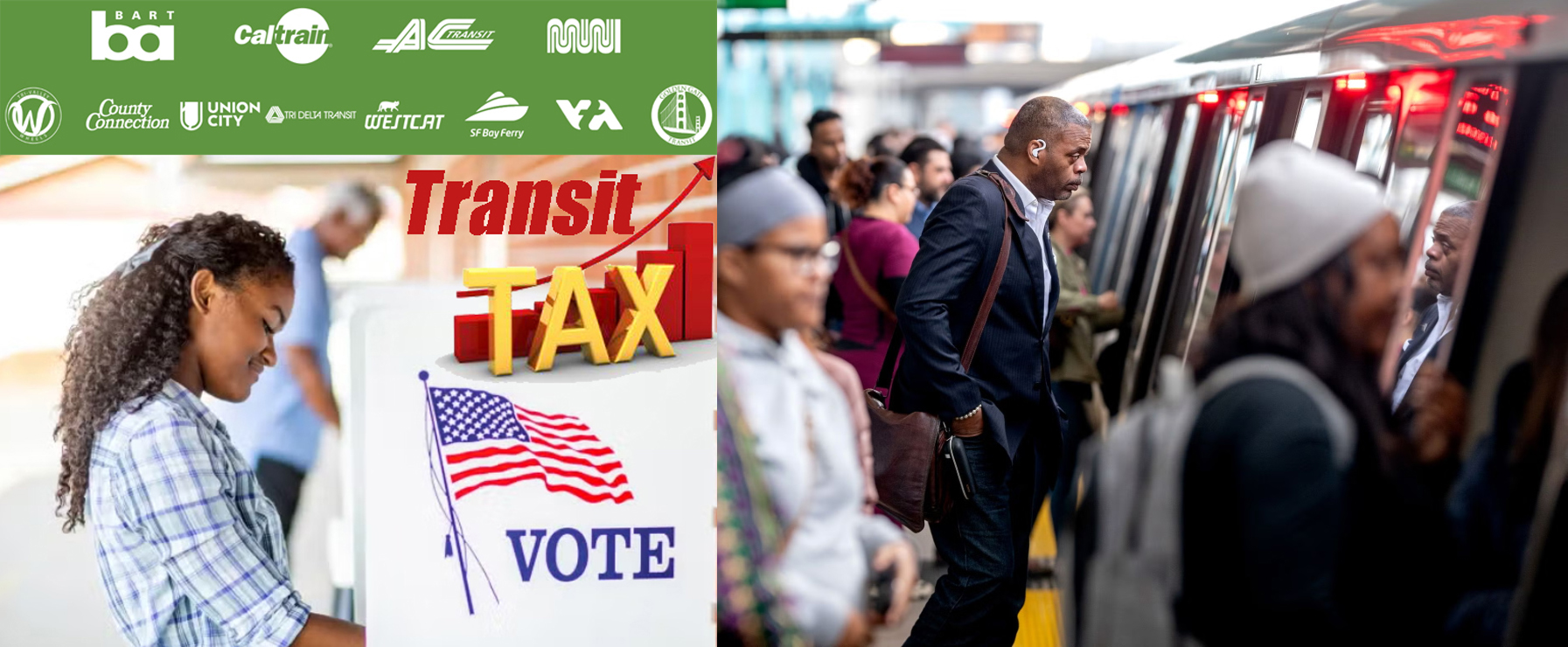
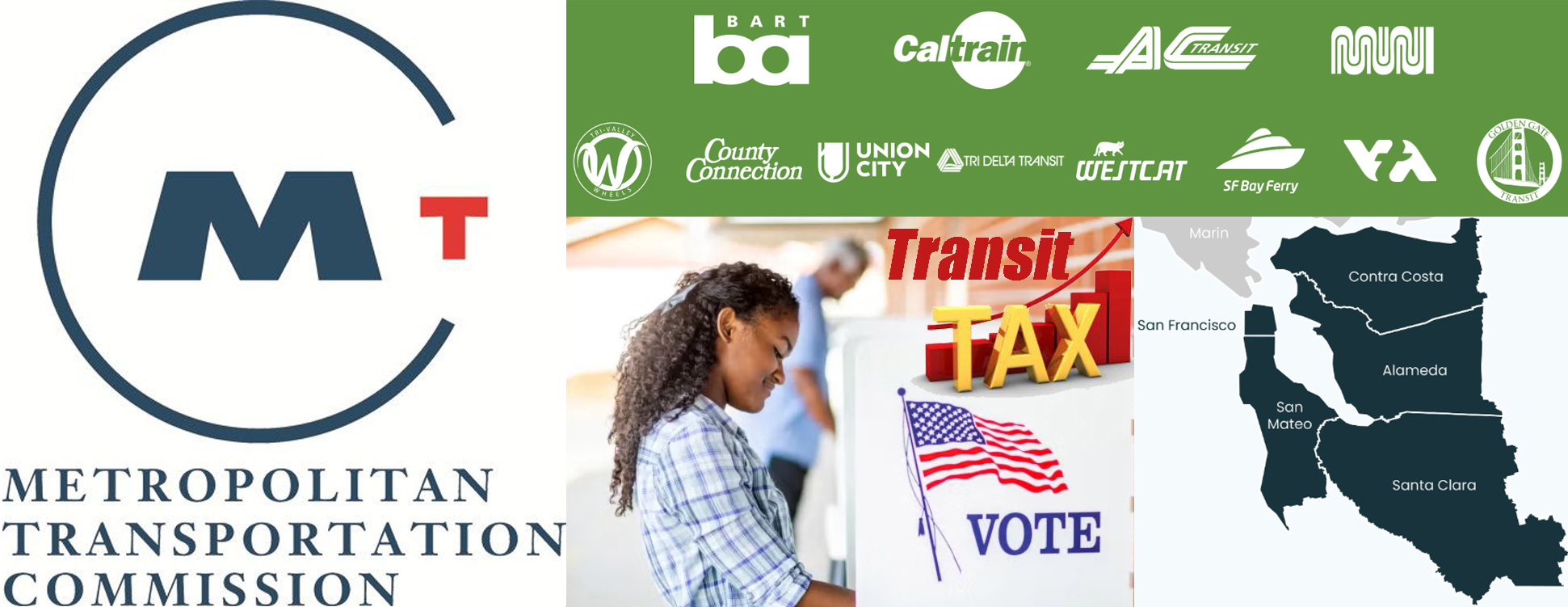
Photo, agency & map graphics: MTC

To oversee process for Bay Area transit tax on Nov. ballot

By Metropolitan Transportation Commission

OAKLAND, CA – Updated Aug. 17, 2026 – The Public Transit Revenue Measure District (PTRMD) was established under Government Code Title 7.85, by Senate Bill 63 (2025), which also authorizes a regional transportation revenue measure to be placed on the November 2026 ballot, known as the Connect Bay Area Transit Initiative.

District Members

The Public Transit Revenue Measure District is comprised of the same individuals that govern the Metropolitan Transportation Commission (MTC).

The PTRMD on Jan. 16, 2026, received a notice of intent from the Connect Bay Area Transit Committee to place a citizen’s initiative on the November 2026 ballot. Senate Bill 63, authored by state senators Scott Wiener of San Francisco and Jesse Arreguín of Berkeley, authorized a qualified voter initiative to impose a retail transactions and use tax ordinance applicable to the entire district for a duration of 14 years, in an amount of 0.5% in each of the counties located within the district and 1% in the City and County of San Francisco, subject to voter approval at the November 3, 2026, statewide general election.

On July 1, 2026, the District Elections Official issued a Certificate to Initiative Petition, certifying that proponents of the Connect Bay Area Transit Initiative submitted sufficient valid signatures for the measure to qualify for placement on the ballot.

The District at its July 24, 2026, meeting formally approved a resolution accepting the District Elections Official’s certification of the Connect Bay Area Transit initiative measure and requesting the Boards of Supervisors in Alameda, Contra Costa, San Francisco, San Mateo and Santa Clara counties to call a special election on the measure and to consolidate this special election with the November 3, 2026, statewide general election.

Impartial Analysis of Regional Transit Measure 

Legal counsel for the Public Transit Revenue Measure District has prepared an impartial analysis of the  Regional Transit Measure pursuant to subdivision (d) of Government Code 67740. This text will also be included in each county’s voter information guide per state law.

Notices of Election Provided by Santa Clara County

Santa Clara County Registrar of Voters provided the following notices of election:

  • Notice of General Election
  • 大選通告
  • AVISO DE ELECCIÓN GENERAL
  • THÔNG BÁO TỔNG TUYỂN CỬ
  • Paunawa Sa Pangkalahatang Halalan

Election-Related Deadlines 

Established election dates related to the measure can be found on the Santa Clara County Registrar of Voters (ROV) website. Please reference the most recently published Public Transit Revenue Measure District (PTRMD) calendars, which may be accessed at the SantaClaraCounty.gov website.  If you are unable to access the link, please contact the Santa Clara County ROV directly for assistance.

Staff Contact

Kimberly Ward, District Elections Official
Phone: 415-778-5367
Email: kward@bayareametro.gov

請求協助! | ¡Solicita ayuda! | Request assistance! 

您是否需要我們翻譯其中一份文件的內容? 您是否需要大字體或盲文印刷的書面資料? 您是否需要手語或您所說語言的口譯服務才能參與?

如需協助,請致電 (415) 778-6757。若需使用 TDD 或為聽障人士,請致電 711,加州轉接服務,或 (800) 735-2929 (TTY) ,(800) 735-2922 (語音),然後要求轉接至(415) 778-6700。請至少提前三個工作日提出申請,以便我們能為您提供適當的安排。

¿Necesita que alguno de nuestros documentos sea traducido? ¿Necesita nuestras comunicaciones escritas en letra grande o en Braille? ¿Necesita un intérprete del lenguaje de señas o un intérprete que hable su idioma para poder participar?

Para solicitar asistencia, por favor llamemos al (415) 778-6757. Para telecomunicaciones para personas sordas y discapacitadas, favor de llamar al 711, el Servicio de Retransmisión de California (CRS) para TTY/VCO/HCO a Voz o para Voz a TTY/VCO/HCO al (800) 855-3000 y pedir que lo conecten al (415) 778-6700. Necesitamos aviso de al menos tres días hábiles de anticipación para proporcionar la asistencia adecuada.

Do you need one of our documents translated? Do you need written materials in large type or in Braille? Do you need a sign language interpreter or an interpreter who speaks your language in order to participate?

To request accommodation, please call (415) 778-6757. For TDD or hearing impaired, call 711, California Relay Service, or (800) 735-2929 (TTY), (800) 735-2922 (voice) and ask to be relayed to (415) 778-6700. We require at least three working days’ notice to accommodate requests.

For more information visit Public Transit Revenue Measure District.

Allen D. Payton contributed to this report.
 

Filed Under: Bay Area, Government, News, Politics & Elections, Taxes, Transportation

Steve Hilton brings his campaign for California governor to Brentwood for fundraiser

August 16, 2026 By Publisher 3 Comments

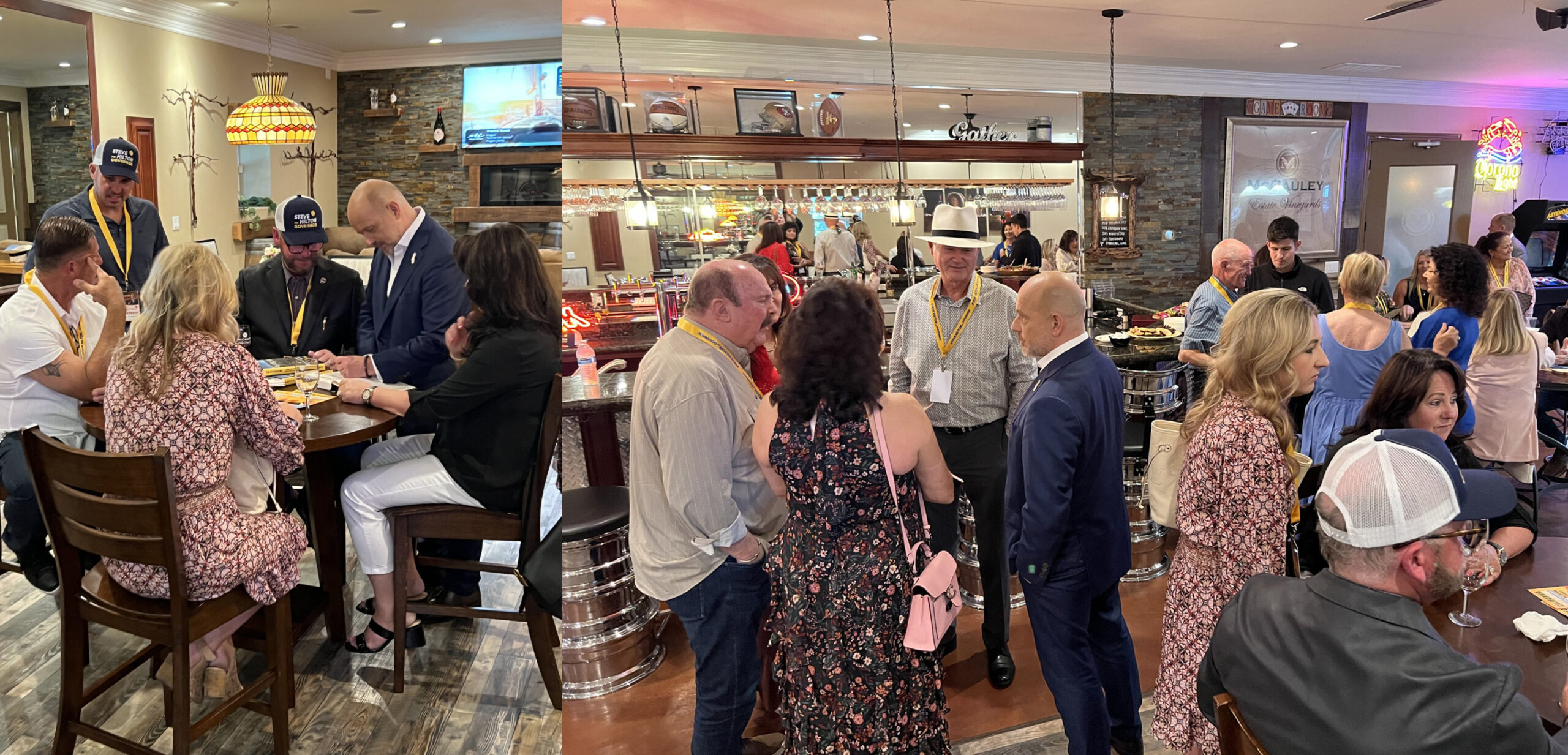
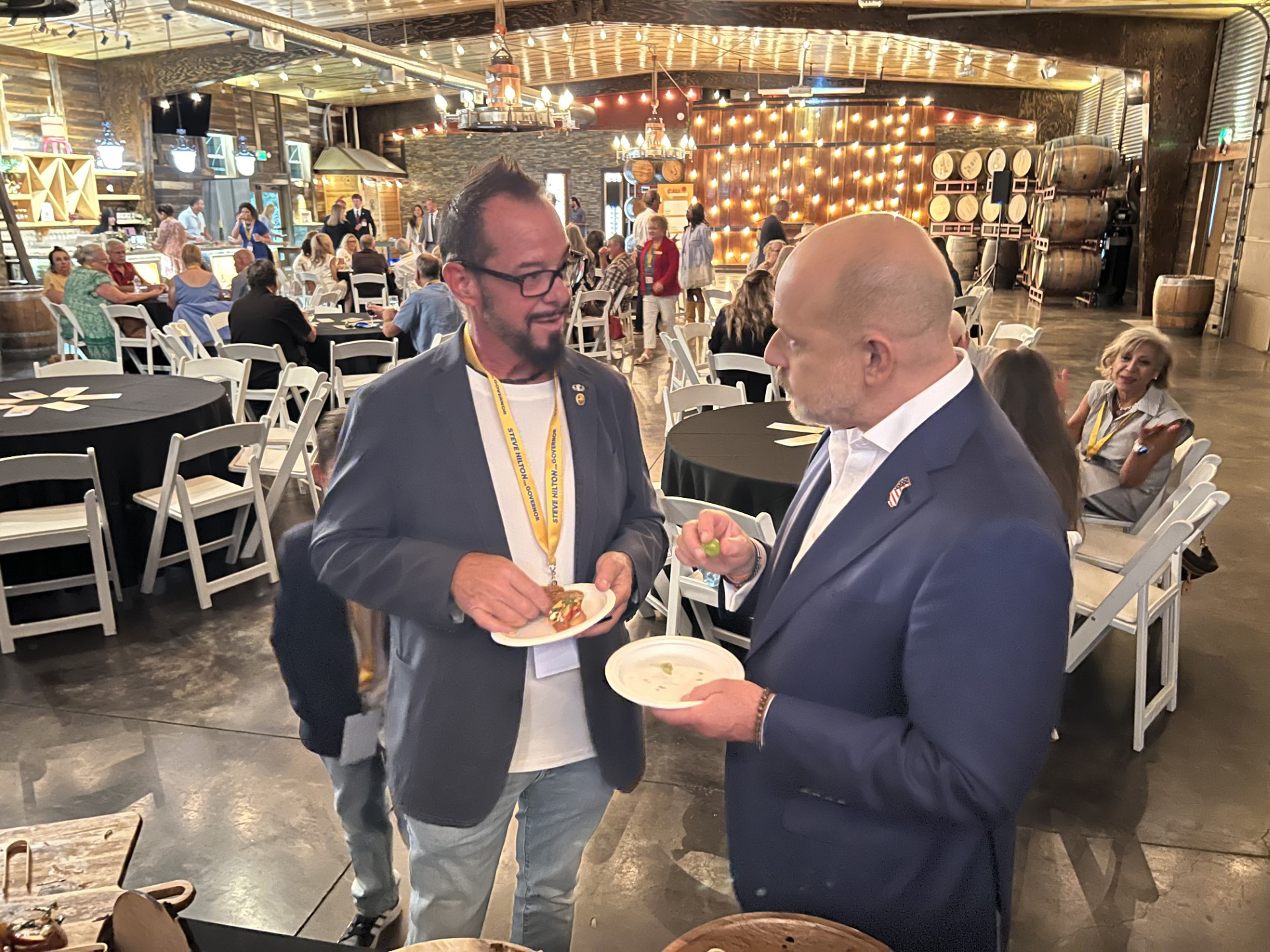
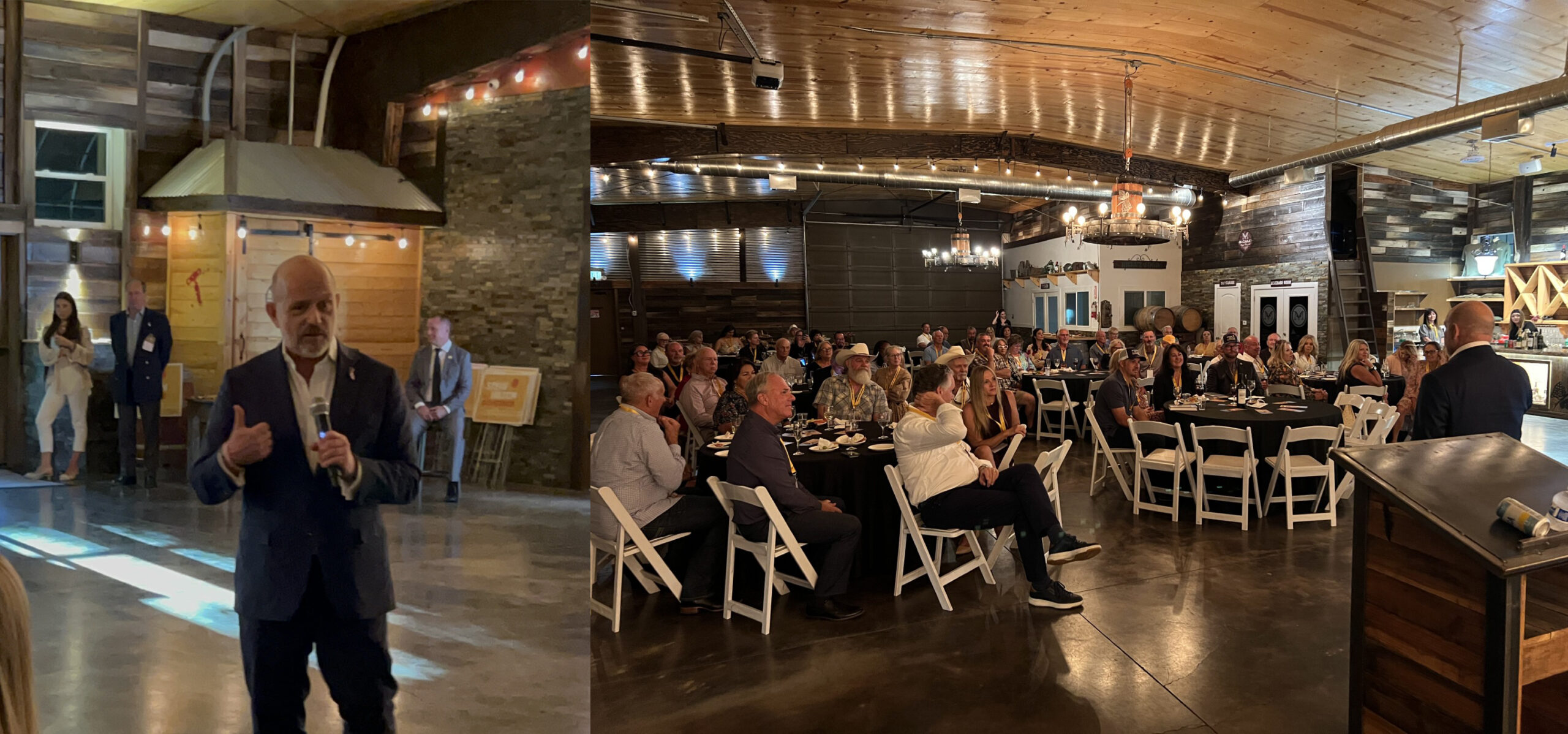
Steve Hilton shares about his campaign for California governor at a fundraiser in Brentwood in Eastern Contra Costa County on Tuesday, August 11, 2026. Photos by Allen D. Payton

Calls Delta tunnel “completely ridiculous”; will make first $150 grand of residents’ income tax free

By Allen D. Payton

Steve Hilton, the Republican candidate for governor of California, stopped in Brentwood on Tuesday, Aug. 11th, and shared about his campaign platform during a fundraiser. He specifically addressed a concern to Eastern Contra Costa County residents when he stated his opposition to the proposed and planned tunnel to move more water south, known as the Delta Conveyance. (See related articles here and here)

In answering a question from Discovery Bay Town Councilwoman Carolyn Graham, Hilton called it a “scheme” and said, “it seems to me like another high-speed rail” which he also opposes. “I think it’s completely ridiculous and I’m totally, dead against it and will do everything in my power to stop it,” Hilton exclaimed.

The event was held at the McCauley Estate Vineyards, hosted by the McCauley and Billheimer families and catered by Lavish Grazing. Prior to the main event, a VIP reception with the candidate was held for those who contributed additional funds, where he autographed copies of his book entitled, Califailure.

Hilton autographs his book, Califailure and speaks with VIP guests at a pre-reception to the fundraiser on Aug. 11, 2026.

Shares About Campaign Platform

After being introduced by Contra Costa Republican Party Central Committee District 3 Chair and the campaign’s Contra Costa Volunteer Director Pamela Neitte-Garcia, Hilton shared a new part of his platform that he just announced that day. He said, “Your first $150 grand tax free” meaning no state income tax on the first $150,000 Californians earn each year. It will cost the state budget $20 billion he later shared.

“That means cutting spending. You can only cut taxes if you cut spending,” Hilton stated.

“Do you know what they’ve done to the budget of California in the last 10 years?” he asked. “It actually more than doubled. Ten years ago, the budget was $170 billion. The one that Newsom just signed off…$350 billion.”

“Is everything twice as good?” Hilton asked. “Don’t tell me we can’t find some savings to go with those tax cuts.”

“We’re calling it Operation Zero Waste,” he continued. “The best way to help people with the cost of living is to get more money in their pocket. Right? Well, what’s the quickest, most direct, simple, way of getting more money in people’s pockets? The government to take less out in the first place.”

East County veterans leader J.R. Wilson speaks with Steve Hilton during the fundraiser Aug. 11, 2026.

Hilton then shared how he would cut spending.

“Number one, cancel high-speed rail,” he stated to cheers and a loud round of applause. “That is $4 billion, right there.”

“It’s a fiasco of epic proportions,” Hilton added. “We’re going to shut it down and stop it in its tracks. Except they haven’t laid any tracks,” which garnered laughter from the attendees.

“Secondly, no more free health care for illegal immigrants,” he stated, next. “That will save $11 billion.”

“Next, we’re going to cancel the vanity projects…all this stuff is so much bloat in this budget,” Hilton continued. “We’re going to shut down the non-profit scam and rip-off.”

“We’re going to shut down the homeless industrial complex where billions of dollars are going into these apartment units for homeless people at about a million dollars each,” he stated.

“We’re going to be doing a very modest, five percent efficiency saving across all government departments in Sacramento,” Hilton shared. “That’s $18 billion, right there. We’re over the twenty billion already.”

He then mentioned his final cost saving proposal of reducing the number of “bureaucrats in Sacramento,” which increased by 40,000 people during Newsom’s terms.

“We’re going to take the headcount right down, back to where it was,” Hilton stated. “We’re basically at thirty-seven billion and we haven’t even had to try very hard.”

“So, there’s no question we will find that money to deliver what we need, especially for working people in California,” he said. “We’ve done the work. I’ve been at this for a long time.”

Hilton mentioned his latest campaign slogan of, “Enough is enough.”

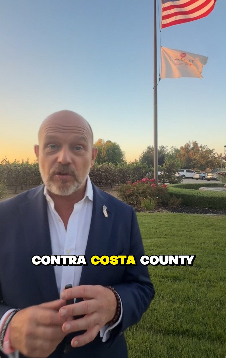
Steve Hiton speaks from the McCauley Estate Vineyards in a video on his X account Aug. 11, 2026. Video screenshot.

He also touched on the other planks of his campaign platform under what he calls “Califordable” which were displayed on a banner, including $3.00 per gallon gas, cut utility bills in half and starter homes for young families. In response to a question about education, Hilton shared briefly about part of what he calls the “Califuture” portion of his campaign platform showing another of the large banners in the room with the list. It read, “Every Student Reads by 3rd Grade” and “Skills Training in Every School.” The list also included, “Bust the $745 Billion Job-Killer Bloat” and “Abolish $800 Small Business Tax.”

Hilton concluded by saying he wants “to make California the best place of anywhere in the world to start and raise a family, to start and grow a business. That’s California and we will be back.”

In a video of the candidate posted on his personal X account the next morning recorded at the McCauley Estate Vineyard following the event he said, “Alright everyone. I know you think of wine country as Napa and Sonoma. But look at this. Beautiful vines. It’s so mellow. Lovely evening. We’ve had an event here in Brentwood, Contra Costa County. You don’t think of that when you think of wine. But we’ve had a wonderful time, and this is what it’s all about. Every part of our state, every business, every family, we’re here for you to save our beautiful state of California. Please join us.”

For more information about Hilton’s campaign visit https://stevehiltonforgovernor.com. His next event in the county will be another fundraiser at the Blackhawk Country Club on Sept. 2. For details call (916) 849-1546 or email julie@stevehiltonforgovernor.com.

Hilton faces Democrat Xavier Becerra in the General Election on November 3rd.

Filed Under: East County, News, Politics & Elections, State of California

CA State Senate rewrite of “sex offender” bill still allows predators to run for office

August 12, 2026 By Publisher Leave a Comment

Photos by CA Family Council

Vote in Senate as early as Thursday

New language by Senate Elections and Constitutional Amendments Committee chaired by Senator Scott Wiener also exempts crimes against disabled victims and, in some cases, children under 14.

WARNING: Graphic content

By California Family Council

SACRAMENTO, CA — AB 2691, the Public Trust Protection Act, could be voted on the Senate floor as soon as tomorrow morning, Thursday, Aug. 13, 2026. On August 4, the bill’s authors quietly rewrote its central definition. They did not fix the problem California Family Council (CFC) raised in June. They made it bigger, and harder to see.

Background

AB 2691, authored by Assemblywoman Dawn Addis (D-Dawn Addis), passed the Assembly floor 67 to 0. It would bar people convicted of felony sexual assault or human trafficking from holding public office, a policy CFC supports. On June 24, the Senate Elections and Constitutional Amendments Committee, chaired by Senator Scott Wiener (D-San Francisco), added language exempting felony sodomy, oral copulation and sexual penetration when the victim is a minor age 14 to 17.

CFC Vice President Greg Burt testified against that exemption on June 30 and asked the committee to restore the bill to the form the Assembly passed unanimously. The committee advanced the bill anyway, 4 to 1, with only Senator Steven Choi (R-Irvine) voting no.

What Changed on August 4, and How California’s Sex Offender Registry Actually Works

The named exemption for ages 14 to 17 is gone from the bill text. In its place, Addis rewrote the bill to define “sexual assault” using California’s sex offender registration system, and only the most severe part of it.

California sorts every registerable sex offense into one of three tiers, based on how serious the offense is:

  • Tier 1 requires registration for 10 years. It covers misdemeanor sex offenses and the least serious felony sex offenses.
  • Tier 2requires registration for 20 years. It covers felony sex offenses that state law separately classifies as “serious” or “violent”, along with a short list of specifically named crimes.
  • Tier 3 requires registration for life. It is reserved for the most serious sex crimes: forcible rape, forcible sodomy, aggravated sexual assault of a child, and similar offenses.

Under the bill the Assembly passed, a felony conviction under any of six penal code sections covering rape, sodomy, oral copulation, and sexual penetration disqualified a candidate, full stop. Under the August 4 rewrite, a conviction only disqualifies a candidate if it happens to fall into Tier 3 of the sex registry list. A conviction that falls into Tier 1 or Tier 2, no matter how serious the underlying crime actually was, no longer counts.

That single change does not narrow the original exemption. It widens it.

  • Crimes against minors age 14 to 17 remain exempted. The specific carve-out is gone by name, but the conduct it covered, non-forcible sodomy, oral copulation, and sexual penetration of a 14-to-17-year-old, is a Tier 1 offense. It still falls outside the bill’s new definition.
  • Sex crimes against disabled victims are now exempted. Non-forcible sodomy and sexual penetration of a victim who cannot legally consent because of a mental disorder or a developmental or physical disability are Tier 2 offenses and fall below the bill’s new threshold.
  • Under certain circumstances, so do sex crimes against children under 10. A first-time, non-forcible conviction for molesting a child under 14, which includes children under 10, is a Tier 2 offense and no longer disqualifies a candidate under the bill’s new language, unless the act specifically involved intercourse, sodomy, oral copulation, or penetration, which remain covered under a separate, Tier 3 statute.

“We asked this Assemblywoman Addis in June to send this bill back to the form the Assembly passed unanimously. Instead, she took the exemption we objected to, deleted the sentence that named it, and buried the same result inside a much bigger loophole,” said CFC Vice President Burt. “Sex crimes against 14 to 17-year-olds are still exempted. Now sex crimes against people with disabilities are exempted too. And under the right circumstances, so is molesting a child under 14. This bill was supposed to keep sex offenders out of public office. As written, it tells some of them they’re still welcome to run.”

Call to Action

The Senate could vote on AB 2691 as early as tomorrow morning. California Family Council urges senators to vote no on the bill as currently written and urges Californians to contact their state senator today.

About California Family Council

California Family Council works to advance God’s design for life, family, and liberty through California’s Church, Capitol, and Culture. By advocating for policies that reinforce the sanctity of life, the strength of traditional marriages, and the essential freedoms of religion, CFC is dedicated to preserving California’s moral and social foundation.

APPENDIX: Affected Crimes, With Penal Code Citations

This list is limited to items independently confirmed against the text of Penal Code section 290, subdivisions (d)(1) through (d)(3), and Penal Code section 667.5(c). Additional items appear in supplemental research from a California State Senate office; those are not included here pending independent confirmation.

No Longer Disqualifying: Tier 1 Offenses (10-Year Registration)

Penal Code 286(b) — sodomy, non-forcible, victim under 18

Penal Code 287(b), or former 288a(b) — oral copulation, non-forcible, victim under 18

Penal Code 289(h) and (i) — sexual penetration by foreign object, non-forcible, victim under 18

Penal Code 289.5 — fleeing to California to avoid prosecution or custody for a registerable sex offense committed in another state (misdemeanor)

No Longer Disqualifying: Tier 2 Offenses (20-Year Registration)

Penal Code 285 — incest

Penal Code 286(g) — sodomy of a victim who cannot legally consent due to a mental disorder or a developmental or physical disability

Penal Code 286(c)(1) — sodomy of a victim under 14, where the offender is more than 10 years older, without force

Penal Code 288(a) — a lewd or lascivious act on a child under 14, first offense, without force. This is California’s basic child molestation statute.

Penal Code 288.3 — contacting a minor with intent to commit a felony, specifically when the underlying intent was to violate 286(b), 287(b), or 289(h)/(i)

Penal Code 289(b) — sexual penetration of a victim who cannot legally consent due to a mental disorder or a developmental or physical disability

Penal Code 647.6 — annoying or molesting a child, second or subsequent offense

Still Disqualifying: Tier 3 Offenses (Lifetime Registration)

Penal Code 236.1(c) — human trafficking of a minor for a commercial sex act

Penal Code 266h(b) — aggravated pimping of a minor

Penal Code 266i(b) — aggravated pandering of a minor

Penal Code 266j — procuring a child under 16 for a lewd act

Penal Code 269 — aggravated sexual assault of a child

Penal Code 286(c)(2) and (d) — forcible sodomy of a child under 14, including in concert

Penal Code 287(c) and (d), or former 288a — forcible oral copulation of a child under 14, including in concert

Penal Code 288(b) — a lewd act on a child under 14 committed by force

Penal Code 288(c) — a lewd act on a 14- or 15-year-old, where the offender is at least 10 years older

Penal Code 288.2 — sending harmful matter to a minor with intent to seduce, felony

Penal Code 288.3 — contacting a minor with intent to commit a felony, except when the intent was to violate 286(b), 287(b), or 289(h)/(i)

Penal Code 288.5 — continuous sexual abuse of a child

Penal Code 288.7 — sexual intercourse, sodomy, oral copulation, or sexual penetration with a child age 10 or younger

Penal Code 289(a) — forcible sexual penetration

Penal Code 653f(c) — soliciting another person to commit rape, sodomy, oral copulation, or a lewd act on a child

A felony sentenced to a mandatory life term under Penal Code 667.61 (“One Strike” law)

Designation as a habitual sex offender under Penal Code 667.71

A second, separately tried conviction under Penal Code 288(a)

Sources: California Penal Code section 290, subdivisions (d)(1) through (d)(3), and Penal Code section 667.5(c), both available at leginfo.legislature.ca.gov.

Filed Under: Legislation, News, Politics & Elections, State of California, Youth

Candidate filing period now open for November General Election

July 16, 2026 By Publisher Leave a Comment

County Board of Education, College Board, city councils, school boards, special districts

By Dawn Kruger, Community and Media Relations Coordinator, Contra Costa County, Clerk-Recorder-Elections Department 

The Candidate Filing Period for the November 3rd General Election will began, Monday, July 13, 2026, and nomination papers will be available for candidates running for office. The nomination period runs through 5:00 p.m. Friday, August 7, 2026.

A list of offices anticipated for the election can be found here: www.contracostavote.gov/wp-content/uploads/26Nov03_PositionsUpForElection.pdf.  Offices on this list are subject to change as resolutions are still being filed.

Papers for offices that are up for election will be available at the Contra Costa Elections Office, 555 Escobar Street, Martinez. Papers for Municipal Offices will be available from the City Clerk’s office in the city the position represents.

For further information on the General Election and key dates, go to www.contracostavote.gov

“Our Candidate Services team is ready to work with Candidates who will be running in the November General Election,” said Kristin B. Connelly, Contra Costa Registrar of Voters. “Candidate Filing begins Monday July 13 and our office is here to help potential candidates.”

If an incumbent does not file to run for office by the August 7th deadline, the filing period for that office will extend until 5:00 pm on Wednesday, August 12, 2026. This rule does not apply to incumbents that have reached their term limit and are unable to run again.

Interested candidates can schedule an appointment by emailing candidate.services@vote.cccounty.us or by calling (925) 335-7800. Walk-ins are accepted, but service is subject to the availability of staff. Appointments are available on weekdays from 8:30 am to 4:30 pm. Filing documents and information will be provided to interested constituents at their appointment. The process takes approximately 20 minutes.

Filed Under: News, Politics & Elections

Five-county coalition launches campaign against $14 billion+ Bay Area transit tax

July 7, 2026 By Publisher Leave a Comment

Photo: MTC

Committee for Affordable Bay Area Transit demands transit agencies address waste, alternative funding sources, and non-binding oversight loopholes before locking in a 14-year tax hike.

WALNUT CREEK, CA — A five-county coalition of taxpayer advocates, transit reformers and civic leaders today announced Monday, July 6, 2026, a campaign to defeat the regional transit sales tax slated for the November ballot. The newly formed Committee for Affordable Bay Area Transit warns that the 14-year measure will push total sales tax rates up to or over a crushing 11 percent in nine Bay Area cities across Alameda, Contra Costa, San Francisco, San Mateo, and Santa Clara counties.

Authorized by SB 63 (Wiener, 2025), the measure seeks to raise sales taxes by a half-percent in four counties and a full one percent in San Francisco. The Metropolitan Transportation Commission (MTC) projects the tax, at inception, will extract roughly $1 billion annually from the local economy and rising with inflation to surpass $14 billion over its term. This funding would come on top of the estimated $6 billion in tax and toll subsidies regional transit operators already receive each year.

Campaign organizers highlighted a strategic maneuver by the tax’s proponents, who utilized a citizens’ initiative route rather than having the MTC or transit districts place it on the ballot directly. This path lowers the voter approval threshold from the standard two-thirds supermajority to a simple majority.

“Bay Area voters are being asked to approve more than $14 billion in new taxes at a time when transit agencies are carrying fewer riders and receiving enormous subsidies,” said Marc Joffe, President of the Contra Costa Taxpayers Association and campaign committee member. “Before squeezing working families and seniors with sales tax rates of over 11 percent in some Bay Area cities and over 10 percent in many others, these agencies must explain why administrative overhead surged since 2019.”

“This measure locks taxpayers into an obsolete, pre-pandemic transit cost structure for 14 years, entirely ignoring how remote work and convenient, emerging transportation alternatives are reshaping regional mobility at no taxpayer expense,” said Gregg Dieguez of SHIFT-Bay Area, representing San Mateo County. “Furthermore, the oversight language in SB 63 is completely non-binding. It allows these agencies to continue wasteful business-as-usual operations with a guaranteed, unaccountable blank check.”

The committee emphasizes that defeating the measure will not shut down public transit. Instead, the coalition argues that the state should redirect a portion of the $1 billion annual cap-and-invest funds currently flowing to high-speed rail. They also propose pausing the region’s two largest capital megaprojects—BART’s Silicon Valley Phase II extension and Caltrain’s Portal downtown extension—to free up existing state and local dollars directly for operations while a leaner funding mechanism is designed for 2028. The committee notes that BART could potentially save hundreds of millions annually through targeted management actions alone, adding that the San Jose VTA does not require this funding for operations, labeling the measure a fiscal “hidden ball trick” to cover a bloated BART extension recently criticized by the Santa Clara County Grand Jury.

The Committee for Affordable Bay Area Transit is actively recruiting volunteers, distributing lawn signs beginning in August, and accepting contributions at transitaccountability.com. The campaign website features a localized household tax calculator where residents across all five counties can instantly check the tax’s impact on their family.

About the Committee for Affordable Bay Area Transit

The Committee for Affordable Bay Area Transit (CABAT) is a campaign committee sponsored by the Contra Costa Taxpayers Association, a nonpartisan civic organization founded in 1937 and based in Walnut Creek. The committee has leadership and representation from all five counties affected by the so-called Connect Bay Area Transit sales tax:  Alameda, Contra Costa, San Francisco, San Mateo, and Santa Clara counties. Contributions to the committee are not tax-deductible. The committee expects to amend its formal name to incorporate the official alphanumeric ballot designation of the “Connect Bay Area Transit” measure once assigned by election officials.


Filed Under: News, Politics & Elections, Taxes

MTC announces Connect Bay Area half-cent sales tax transit measure qualifies for Nov. 2026 election

July 1, 2026 By Publisher Leave a Comment

Photos: MTC

Will appear on Bay Area ballots across five counties including Contra Costa

By Jeff Cretan, West Advisors

SAN FRANCISCO BAY AREA — The Metropolitan Transportation Commission (MTC) has announced that the Connect Bay Area regional transit funding measure has officially qualified for the November 2026 ballot after elections officials confirmed the campaign submitted enough valid signatures across Contra Costa, Alameda, San Francisco, San Mateo and Santa Clara counties.

The announcement follows the Connect Bay Area campaign’s submission of more than 305,000 signatures in May, far exceeding the 186,000 valid signatures required to qualify the measure. The MTC’s official certification sent on June 30 declared that the registrars of voters across the five counties each conducted their individual county counts and submitted the results to the MTC and the total submitted far exceeded the qualification threshold.

The measure if adopted would increase the sales tax in Contra Costa, Alameda San Mateo and Santa Clara counties by a half cent and one cent in San Francisco County for 14 years. As previously reported, the measure would generate approximately $980 million annually across the five counties.

The success of this effort was built on one of the largest grassroots transit organizing efforts the region has ever seen and unprecedented support from business, labor, and community organizations across the Bay Area.

The Connect Bay Area five-county sales tax measure would provide long-term operational funding for major Bay Area transit agencies while supporting projects to strengthen and better connect transit systems across the region. It will protect major transit agencies like BART, Muni, Caltrain and AC Transit from devastating service cuts, help VTA grow to better serve residents, workers, and businesses, and provide direct support to counties for transit improvements.

Connect Bay Area also strengthens accountability for transit agencies. SB 63 – the legislation authored by Senators Scott Wiener and Jesse Arreguín that enabled Connect Bay Area – requires independent financial reviews, continued efficiency improvements, and stronger regional coordination before the measure even appears on the ballot.

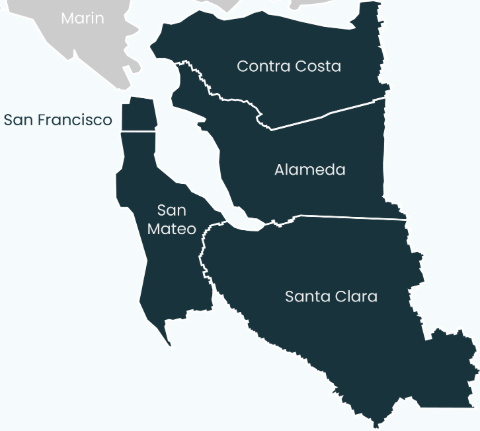
The five counties that would be included in the tax measure vote. Source: Connect Bay Area

Unprecedented Grassroots, Labor and Business Support

The Connect Bay Area campaign has grown in support over the last several months with more than 80 elected officials and more than 90 labor, business, and advocacy organizations signing on in support. Major businesses from across the region helped raise more than $5.5 million to qualify the measure and prepare for the November election.

Since launching in January, Connect Bay Area mobilized more than 1,000 volunteers and advocates across Alameda, Contra Costa, San Francisco, San Mateo, and Santa Clara counties. Supporters gathered signatures at transit stations, farmers markets, community events, neighborhood meetings, and major public gatherings throughout the Bay Area.

The overwhelming signature total that led to the measure’s qualification for the ballot reflects broad public support for transit and growing awareness of the urgency surrounding the future of Bay Area public transportation.

Without sustainable transit funding, the Bay Area could face catastrophic service reductions:

  • BART: Up to 15 station closures, elimination of two lines, and service cuts of up to 70%
  • Caltrain: Hourly train service, no weekend service, and weekday shutdowns after 9 p.m.
  • Muni: At least 20 bus routes eliminated and service reductions of 30% or more
  • AC Transit: Service cuts of at least 16%

The campaign will now turn its full attention toward the November election, building on the unprecedented coalition of volunteers, businesses, labor organizations, transit riders, and community advocates who helped qualify the measure.

About Connect Bay Area

The Connect Bay Area campaign is a five-county Regional Transit Measure on the November 2026 ballot. The measure would establish a 0.5% sales tax in Alameda, Contra Costa, San Mateo, and Santa Clara counties and a 1% sales tax in San Francisco to provide additional support for Muni. It would provide long-term operational funding for major Bay Area transit agencies while supporting regional projects that strengthen transit throughout the region.

The Regional Transit Measure will:

  • Protect and improve service on BART, Muni, Caltrain, SamTrans, VTA, and AC Transit.
  • Prevent catastrophic transit service cuts across the Bay Area.
  • Reduce traffic congestion and emissions while supporting California’s climate goals.
  • Support the Bay Area economy by strengthening downtown recovery and regional mobility.

The measure includes strong accountability and oversight provisions, including independent financial reviews for every transit operator, regional coordination requirements to ensure systems work better together, and a citizen oversight committee to monitor spending and performance. A recent independent study required under SB 63 found Bay Area transit agencies have already achieved approximately $1 billion in operational efficiencies while identifying additional opportunities to improve service and reduce costs.

The Connect Bay Area Transit Committee is comprised of labor, business, and transit advocates, including Bay Area Council, SEIU 1021, ATU 1555, South Bay Labor Council, SPUR, and SAMCEDA, alongside an advocacy council of more than 20 organizations representing transit, housing, environmental, equity, senior, and disability organizations.

For more information about the Connect Bay Area campaign or to get involved, visit connectbayarea.com.

Filed Under: BART, Bay Area, News, Politics & Elections, Taxes, Transportation

Who wants to run for office? Candidate Workshops June 22-24

June 20, 2026 By Publisher Leave a Comment

In Antioch, Lafayette & Pinole

By Contra Costa Elections Division

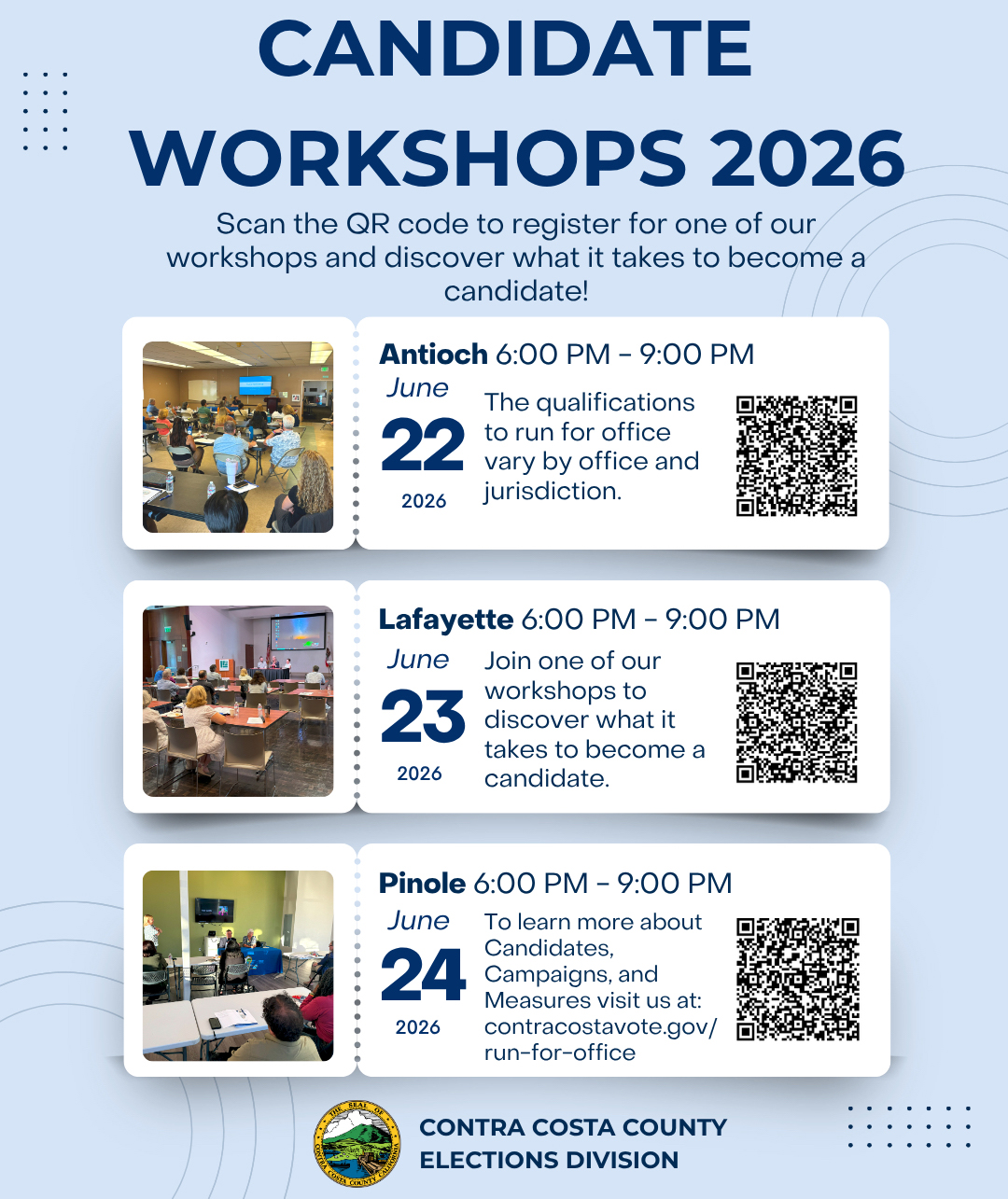
Have you ever considered running for office? Learn the basics of running for office at the Contra Costa Elections Division’s Candidate Workshops.

This engaging candidate workshop is designed to remove the mystery from running for office. Experts will cover what’s involved with running for office, including how to file and appear on the ballot, campaign finance disclosure requirements, strategies for spreading your message (including social media), and what happens when you’re in the public eye.

They will be held in Antioch on Monday, June 22, Lafayette on Tuesday, June 23 and in Pinole on Wednesday, June 24. All three will run from 6:00 p.m. to 9:00 p.m.

Last call to reserve a free ticket below:

– Antioch: https://ow.ly/A0WJ50YYv5P

– Lafayette: https://ow.ly/1YIF50YYv5N

– Pinole: https://ow.ly/aqNa50YYv5O

The Contra Costa Elections Division is part of the County Clerk-Recorder-Registrar’s Office.

Filed Under: Politics & Elections

With almost all ballots processed elections in Contra Costa confirmed

June 11, 2026 By Publisher Leave a Comment

No changes in new leaders elected, countywide ballot measures

But lead change in 14th Assembly District second place for November run-off

By Allen D. Payton

According to the Contra Costa Elections Division, with the seven-day deadline to receive mail-in ballots passed on Tuesday and only 2,100 ballots remaining to be processed and 4,000 ballots to be cured, the results are confirmed as of June 10th at 3:23 p.m.: three new leaders have been elected, three re-elected, one ballot measure passed and two failed.  A total of 323,422 ballots were cast in the county resulting in a 44.21% turnout.

Plus, according to the California Secretary of State as of 7:25 p.m., second place in two of the closest races in the state have been determined, including one lead change since last Friday’s update.

Source: CCC Elections

County Leader Elections

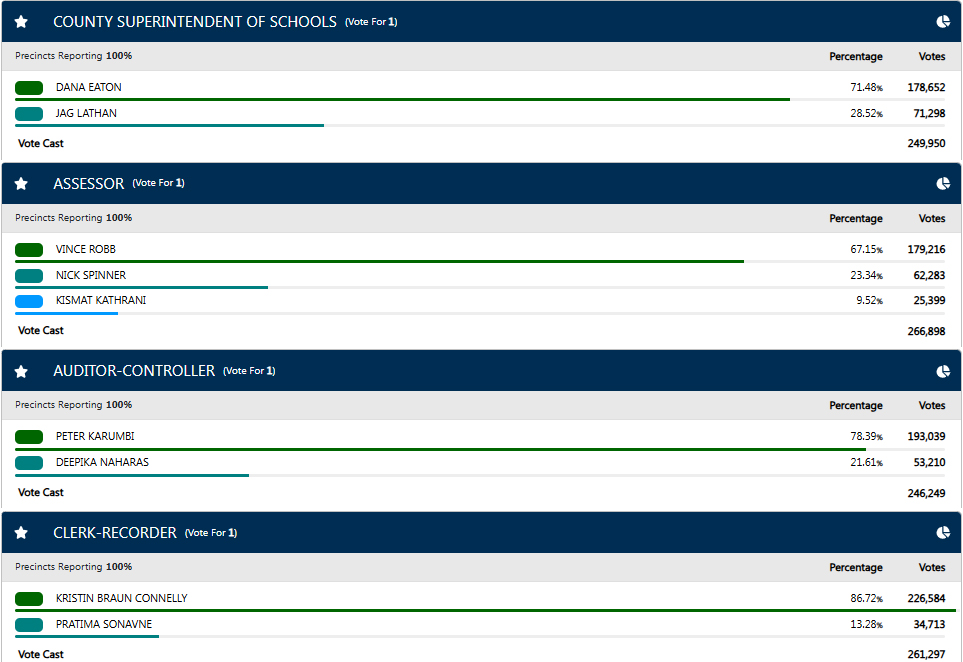
In the four contested races for countywide positions no changes occurred. Dr. Dana Eaton defeated Dr. Jag Lathan for Superintendent of Schools; Vince Robb defeated his two opponents, Nick Spinner and Kismat Kathrani, for Assessor; Peter Karumbi defeated Deepika Naharas for Auditor-Controller; and incumbent County Clerk-Recorder-Registrar Kristin Connelly was re-elected having defeated challenger Pratima Sonavne.

Source: CCC Elections

Countywide Ballot Measures – A Passes, B & G Fail

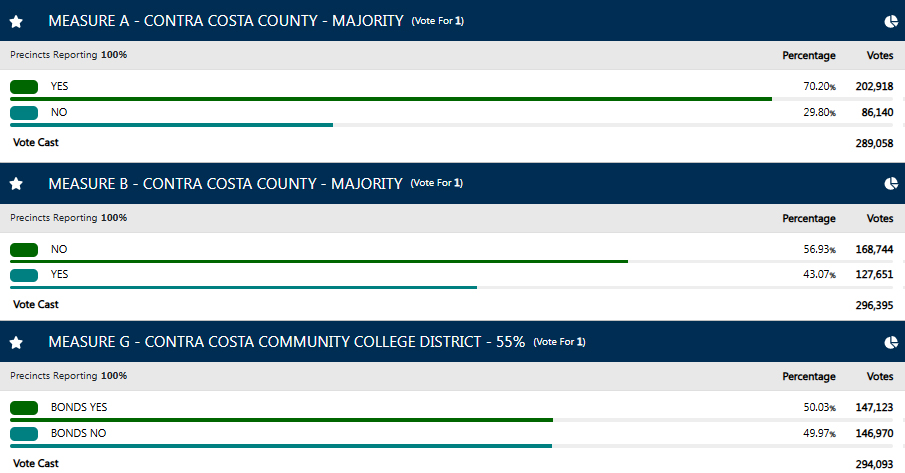
In the three countywide ballot measure elections, Measure A, the Urban Limit Line renewal, passed overwhelmingly while Measure B, the County’s sales tax increase and Measure G, the college district’s bond, were defeated.

Measure A increased its margin of victory to 70.2% of the vote in favor to 29.8% opposed.

In the Measure B contest, while more “no” than “yes” votes were counted since last Friday’s update and the margin of defeat increased from 36,562 votes to now 41,093, the percentage of defeat decreased from 57.41% to 56.93% of the vote against. Yet, there are not enough votes remaining to be counted in the county for it to pass.

Although the “yes” votes overtook the “no” votes in the Measure G contest and currently lead by 253 votes, it requires 55% of the vote to pass. There are now 50.03% of the vote in favor to 49.97% opposed. Yet, even if all the remaining 6,100 ballots in the county included favorable votes, the bond measure would still fall about 12,000 votes short of passing.

Source: CA Secretary of State

Lead Change in 14th Assembly District

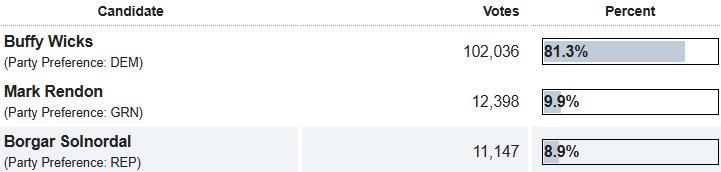
In the race for second place to determine who will face incumbent Democrat Assemblywoman Buffy Wicks in November in the 14th Assembly District, which includes most of West County and portions of Alameda County, a lead change occurred. Green Party candidate Mark Rendon has overtaken Republican Borgar Solnordal by 1,251 votes, a reversal of 2,201 votes since last Friday’s update and 3,336 votes since Election Night.

Source: CA Secretary of State

10th Congressional District

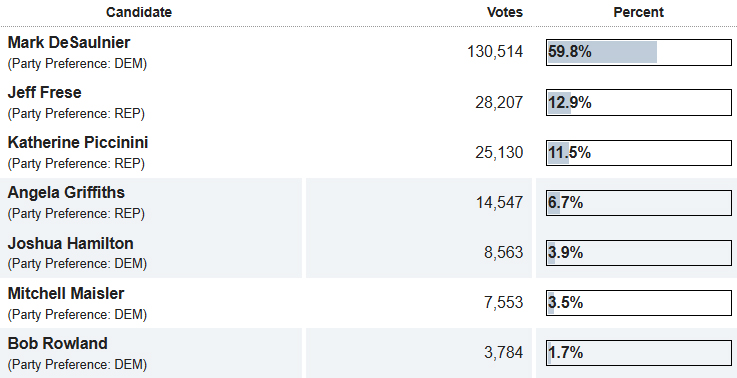
In the second-place contest to determine who will take on incumbent Democrat Rep. Mark DeSaulnier in November in the 10th Congressional District, which includes most of Contra Costa and portions of Alameda County, Republican Jeff Frese has 3,077 more votes than third-time candidate Katherine Piccinini. He increased his lead by 121 votes since the last update and 233 since Election Night.

The mystery candidate has a website, Facebook page with two followers, X/Twitter feed with zero followers and an Instagram account with one post and one follower as of June 10th. But Frese does not provide a photo of himself or description of what he does for work as a Small Business Owner, which is his ballot designation. Only an email address is provided. An effort to reach him comment about his advancing to the General Election and details about his business were unsuccessful prior to publication time.

Estimated number of unprocessed ballots in Contra Costa County:

Ballots voted at a voting location – 0

Vote-by-mail ballots received on or before Election Day – 0

Vote-by-mail ballots received after Election Day – 0

Provisional ballots – 100

Conditional Voter Registration Provisional ballots – 1,000

Other (In Review, Damaged) – 1,000

Total – 2,100

Ballots Left to Cure – 4,000

Next Results Expected (date and time): Friday, 6/12/2026, 4:00PM

Estimated number of unprocessed ballots in Alameda County:

Ballots voted at a voting location – 0

Vote-by-mail ballots received on or before Election Day – 0

Vote-by-mail ballots received after Election Day – 18,058

Provisional ballots – 233

Conditional Voter Registration Provisional ballots – 1,467

Other (In Review, Damaged) – 293

Total – 20,051

Ballots Left to Cure – 1,600

Next Results Expected: Friday, 6/12/2026, 4:00PM

According to the Secretary of State, “State law requires county elections officials to report final official results to the Secretary of State by July 3, 2026. The Secretary of State has until July 10, 2026, to certify the results of the election.”

Please check back later for any updates to this report.

Filed Under: News, Politics & Elections

CoCoTax welcomes apparent defeat of Measure B sales tax, Measure G bond issue

June 8, 2026 By Publisher Leave a Comment

By Contra Costa Taxpayers Association

Election night final results show Contra Costa Measure B trailing with less than 41% of the vote in favor. A relatively small number of late arriving votes are unlikely to change the outcome, given the 29,182-vote gap between the NO and YES totals.  Measure G is also likely to fail.

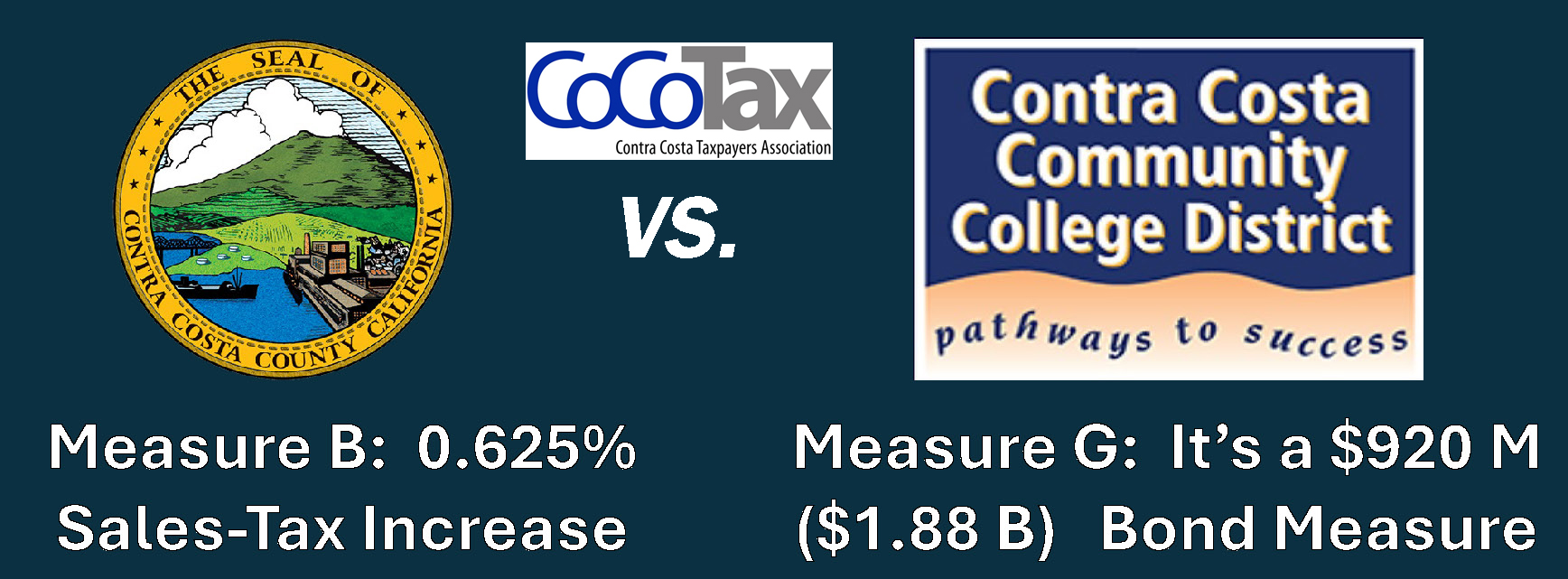
Measure B would have raised sales taxes by 0.625% around the county, would have cost consumers more than $750 million during its five-year life, and would have pushed total sales tax rates over 10% in most of the County.   Measure G was yet a fourth bond measure for the county colleges, adding to our indebtedness and long-term payment of interest.  The bond measures appear not to have ever been enough and with falling student numbers, huge investments make no sense.

As the official ballot opponent to Measure B, Contra Costa Taxpayers Association (CoCoTax) showed voters the deceptiveness of the proponents’ case, which included exaggerated claims about Medi-Cal funding losses, alarmism over emergency room overcrowding, and the false assertion that the tax did not apply to groceries (prepared foods, OTC medications, and non-food groceries would have been subject to the tax).  For Measure G, we showed the math behind it and how the only people looking to support it with money were unions whose contracts expire this month.  The unions also planned to take advantage of Measure B funds.

CoCoTax rallied volunteers to get the message out with signage, verbal appeals, videos, text messages and more. The organization made its first set of campaign finance expenditures, reporting approximately $20,000 of independent expenditures to the County’s campaign finance system. This spending paled in comparison to the $450,000 raised by the Yes on B campaign, mostly from unions seeking to maximize dues revenue.

Denise Kalm, a CoCoTax Executive Committee who agreed to serve as the group’s President Pro Tem this Spring led the successful effort against Measures B and G.

Reacting to the results, Kalm said, “Measure B would have given the Board of Supervisors another big infusion of cash; they already had burdened us in 2020 with Measure X and haven’t even found ways to spend/waste it all.  And yet, they came back with a 0.625% increase in sales tax demand, purportedly to fix the healthcare shortfall they claim President Trump caused.  None of it was true; none of their math added up.“

Though CoCoTax initially started only going after B, we made an effort to get G to fail, which worked.

CoCoTax welcomes more Contra Costa residents to join us and volunteer. We’re expecting many tax and bond measures in November and then again in 2028. While some may be reasonable, others, like the regional transit tax, require informed and active opposition. Neighbors who want to join us in “Fighting for Good Government at Affordable Cost in Contra Costa, are encouraged to check out our website at https://www.cocotax.org.

Filed Under: Opinion, Politics & Elections

Contra Costa elections update shows no changes in county races, measures

June 5, 2026 By Publisher 1 Comment

But margin of defeat for Measure G’s college district bond narrows

Second place races for 14th Assembly District narrows, in 10th Congressional District widens but still too close to call

By Allen D. Payton

According to the Contra Costa Elections Division Update 1, as of Friday, June 5, 2026, at 3:44 PM a total of 267,760 ballots have been counted for a 36.6 percent voter turnout in the county, so far. But the additional ballots have not resulted in any changes to the winners in the four contested countywide races of Superintendent of Schools, Assessor, Auditor-Controller and Clerk-Recorder-Registrar. Nor in the races for the 11th, 15th and 16th Assembly Districts or 8th and 9th Congressional Districts. While Measure A is still passing and Measures B and G are still failing, the margin of defeat for Measure G has narrowed. (See related article)

Election Results from Update 1 as of Friday, June 5, 2026. Source: CCC Elections Division

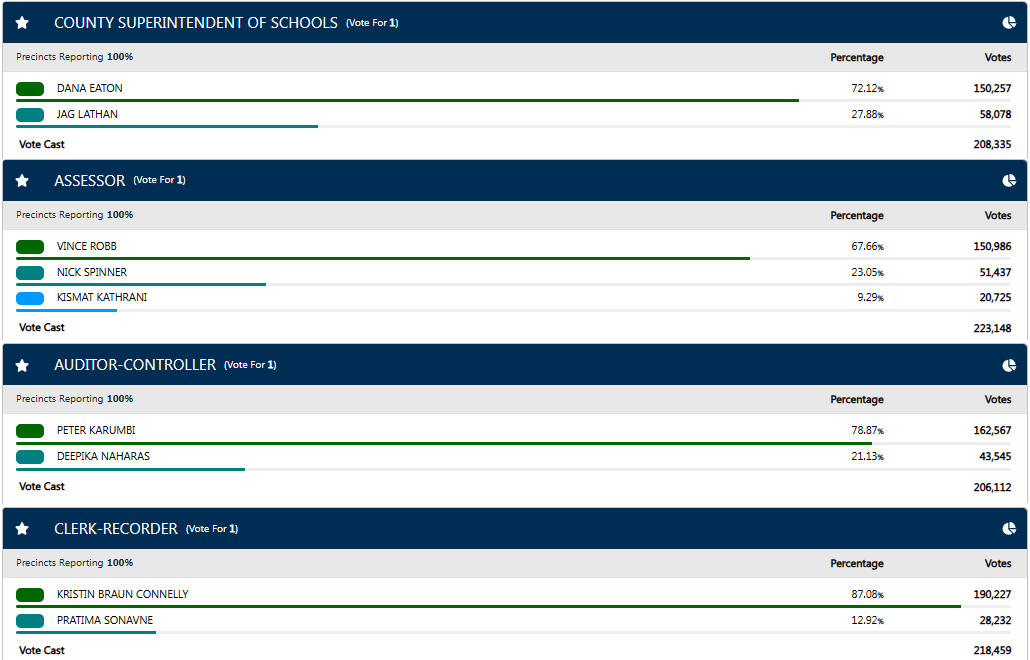
Dr. Dana Eaton’s dominating lead over Dr. Jag Lathan for Superintendent has increased from 63,800 votes on Election Night to 92,179. But Eaton’s share of the vote decreased from 73.44% to 72.12%.

Vince Robb’s commanding lead in the Assessor’s race over his two opponents, Nick Spinner and Kismat Kathrani, has increased from 66,516 to 99,549 and from 85,909 to 130,261 votes, respectively. But Robb’s share of the vote decreased slightly from 67.99% to 67.66%. Because he has received more than 50% of the vote, he will not have to face off against the second-place finisher in November.

In the Auditor-Controller’s race, Peter Karumbi’s insurmountable lead increased from 79,449 votes on Election Night to 119,202 over Deepika Naharas. But his share of the vote decreased from 79.23% to 78.87%.

Finally, in the Clerk-Recorder-Registrar’s race, incumbent Kristin Connelly is soundly defeating her opponent, Pratima Sonavne by the widest margin of the four countywide contests by 161,995 votes for 87.08% of the vote. That is a slight increase over the Election Night results of 87.02% of the vote.

Election Results from Update 1 as of Friday, June 5, 2026. Source: CCC Elections Division

No Changes to Results for Countywide Ballot Measures

In the three countywide ballot measures, no changes occurred due to the additional votes included in Friday’s updated results as Measure A is still passing and Measures B and G still failing.

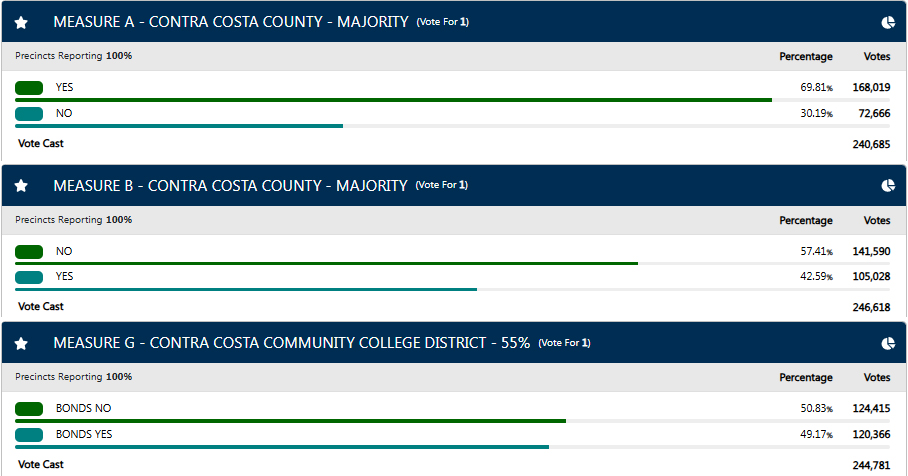
Measure A, the Urban Limit Line renewal vote is still winning, now by 95,353 votes or 69.81% of the vote, an increase over Election Night results of 67.91%.

Measure B, the County’s 0.625% sales tax increase is now failing by 36,562 votes with 57.91% of the vote against, a slight decrease over Election Night results of 59.04% opposing.

Finally, the updated results for Measure G, the community college district’s bond measure, which requires a 55% vote to pass, show an increase in support. It is now failing by just 4,049 votes or 50.83% to 49.17% of voters in favor, closing the margin of defeat by 6,285 votes. In order to pass, the measure will need over 62% of the remaining votes to be in support.

Election results as of Friday, June 5, 2026. Source: CA Secretary of State

Two Contests Too Close to Call

There are two races in the county listed on the California Secretary of State’s Close Contests webpage.

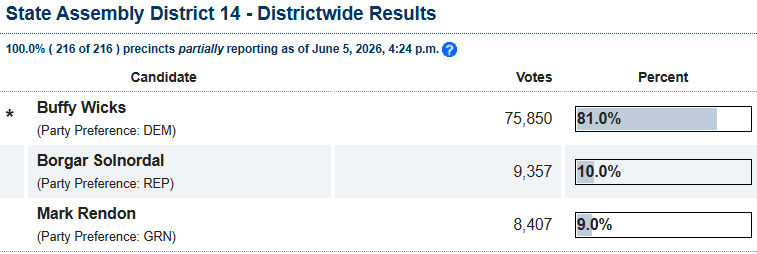
In the 14th Assembly District, the race for second place to determine who will take on incumbent Democrat Buffy Wicks in November, has narrowed from 2,085 votes on Election Night to just 950 votes. Republican Borgar Solnordal now has 9,357 votes or 10.0% and Green Party candidate Mark Rendon has 8,407 or 9.0% of the vote. That seat includes most of West County and portions of Alameda County.

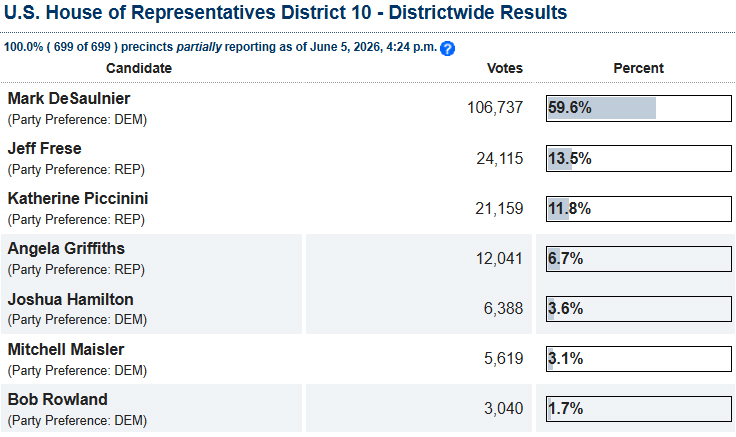
In the 10th Congressional District, which covers most of Contra Costa County, the current second place finisher, Republican Jeff Frese has expanded his lead over fellow Republican challenger, Katherine Piccinini to 2,956, a total of 112 more votes than on Election Night. Frese now has 24,115 votes or 13.5% to Piccini’s 21,159 or 11.8% of the vote. The winner between the two will determine who will face incumbent Democrat Representative Mark DeSaulnier in November.

Election results as of Friday, June 5, 2026. Source: CA Secretary of State

Remaining Ballots, More Arriving

There are currently 55,200 ballots remaining to be processed. But according to Contra Costa County Assistant Registrar Helen Nolan, ballots postmarked by election day can still arrive at the Elections office by next Tuesday, June 9th at 5:00 p.m. So, the total number of remaining ballots is expected to increase.

Following is the breakdown of the estimated number of current unprocessed ballots:

Ballots voted at a voting location – 100

Vote-by-mail ballots received on or before Election Day – 28,500

Vote-by-mail ballots received after Election Day – 24,000

Provisional ballots – 100

Conditional Voter Registration Provisional ballots – 1,000

Other (In Review, Damaged) – 1,500

Total – 55,200

The next results update is expected on Wednesday, June 10, 2026, at 4:00 PM.

Filed Under: News, Politics & Elections

  • « Previous Page
  • 1
  • 2
  • 3
  • 4
  • 5
  • …
  • 50
  • Next Page »
RepublicServices-Antioch-ad (1)
Monica's Riverview 10-26 B
Celia's-10-26
Delta-RC-B 07-26
Deer-Valley-Chiro-06-22

Copyright © 2026 · · Contra Costa Herald · All Rights Reserved