• Home
  • About The Herald
  • Local Agencies
  • Daily Email Update
  • Legal Notices
  • Classified Ads

Contra Costa Herald

News Of By and For The People of Contra Costa County, California

  • Arts & Entertainment
  • Business
  • Community
  • Crime
  • Dining
  • Education
  • Faith
  • Health
  • News
  • Politics & Elections
  • Real Estate

Plan Bay Area 2050+ Draft Blueprint: Tell us what you think

August 17, 2023 By Publisher Leave a Comment

Creating the Blueprint is a key step in developing Plan Bay Area 2050+.

Public engagement is a fundamental element of the plan update process.

Sept. 6th workshop in Contra Costa; Deadline for comment: September 7, 2023

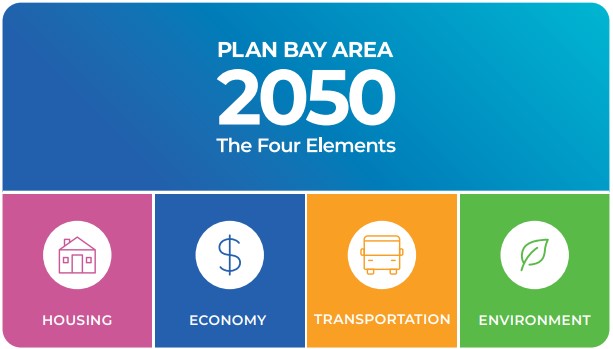
The Plan Bay Area 2050+ Blueprint will integrate strategies across the four elements of the plan — the economy, the environment, housing and transportation — to create a more equitable and resilient future for all.

Beginning in summer 2023 and wrapping up in late 2024, staff will develop the Blueprint over two phases: the Draft Blueprint and the Final Blueprint. Given Plan Bay Area 2050’s solid foundation of 35 strategies, the Draft Blueprint phase for Plan Bay Area 2050+ will focus on making targeted refinements to select plan strategies. (See Plan Bay Area 2050 Executive Summary)

Assumptions for the select Blueprint strategies will be refined to reflect ongoing implementation efforts from Plan Bay Area 2050, while also leveraging findings from previous planning efforts that may be relevant to the post-COVID environment.

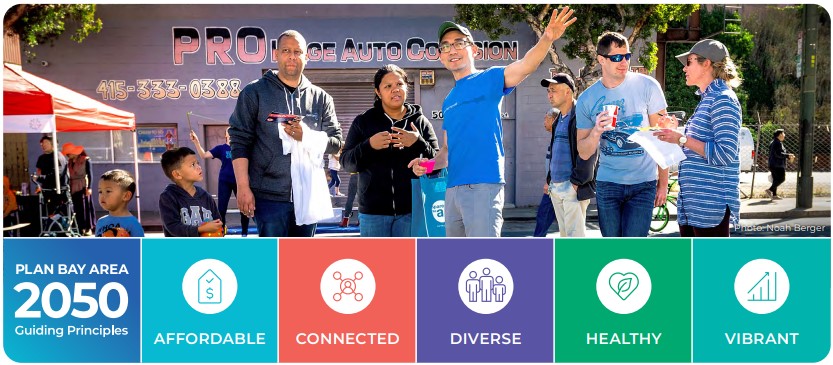
Equity and performance analyses will also be conducted during the Draft Blueprint phase to evaluate how the plan’s strategies are supporting progress towards making the Bay Area more affordable, connected, diverse, healthy and vibrant for all.

Furthermore, Transit 2050+ — the comprehensive re-thinking of the six transit-related strategies in Plan Bay Area 2050’s transportation element — will develop an integrated regional transit network that will be incorporated into the Final Blueprint.

While still remaining fiscally constrained per federal planning requirements, the focused plan update approach will consider whether to pursue targeted updates to — or to reaffirm — the Regional Growth Forecast (while maintaining its forecast methodology), as well as to the External Forces, the Growth Geographies and the Needs and Revenue Forecasts.

Culminating in late 2024, the Metropolitan Transportation Commission (MTC) and the Association of Bay Area Governments (ABAG) will consider adoption of the Final Blueprint, which will then move forward in the plan update process as the preferred alternative for environmental review.

Getting Involved

Creating the Blueprint is a key first step toward updating the plan itself, and thus the Blueprint planning phase will require iteration and deep engagement of the public, partners and elected officials.

A first step in developing the Blueprint is to better understand what has changed as the region emerges from the pandemic. This summer, MTC and ABAG staff will be traveling across the region to speak to the community to understand how life has changed for individuals as the Bay Area enters the “new normal.”

MTC and ABAG are taking input from community members and partners to help inform the development of the Draft Blueprint.

You can make your voice heard in a variety of ways! Attend a pop-up workshop near you; participate in our survey; or submit comments via email, telephone or mail.

Find an event near you and join the conversation to help staff better understand how the last three years have impacted life across the Bay Area.

Photo: Plan Bay Area

Participate in Our Survey

A first step in updating the plan is to better understand what has changed for you as the region emerges from the pandemic. MTC and ABAG want to learn how the “new normal” may be impacting your life.

  • Participate in the survey in English(link is external)
  • 快來參與中文版的問卷調查(link is external)
  • Participa en la encuesta en español(link is external)
  • Tham gia khảo sát bằng tiếng Việt(link is external)

The survey will close on September 7, 2023.

The survey also will help inform the development of Transit 2050+, a parallel long-range planning effort that will produce a first-of-its-kind plan to re-envision the future of the public transit network in the nine-county Bay Area, and the expenditure plan for a potential transportation revenue measure. The revenue measure is key in advancing implementation of Plan Bay Area.

Join a Pop-up Workshop

This summer, MTC and ABAG staff will be traveling across the region to speak to the community to understand how life has changed for individuals as the Bay Area emerges from the pandemic. Attend a pop-up workshop near you and tell us what the “new normal” means to you.

Contra Costa County

Diablo Valley College — Pleasant Hill Campus

Wednesday, September 6, 12 to 3 p.m.

321 Golf Club Road, Pleasant Hill, CA

About Plan Bay Area

Plan Bay Area is a long-range regional plan jointly developed and adopted by MTC and ABAG every four years.


Filed Under: Bay Area, Economy, Environment, Government, Growth & Development, Transportation

Contra Costa, other councilmembers warn SB 423 is state’s “endgame” to eliminate local control over development

March 30, 2023 By Publisher 2 Comments

Our Neighborhood Voices, a growing statewide coalition of communities, claims the bill is a permanent extension of SB 35, gives developers unlimited ability to develop nearly anything, anywhere in California

California lawmakers recently introduced legislation that would permanently strip local communities of nearly all important land use decisions. While the legislation – SB 423 – is touted as a tool to solve our affordable housing crisis, local elected leaders say that the legislation undermines local democracy by removing the ability of communities to plan and prepare for what is built in their neighborhoods. It also can accelerate damaging ‘Builders Remedy’ projects across the state that see massive projects built in residential neighborhoods without adequate planning for water, schools, transit, safety fire danger and other priorities.

SB 423 also removes vital protections in our Coastal Zones – something no other housing bill has dared to do. Californians have consistently supported protecting our coasts – this bill removes many of those protections forever.

“I was hoping SB 423 might be a tool to help us solve our affordable housing crisis, but it is not,” said Susan Candell, Lafayette City Councilmember. “Instead, it is the state’s final end game to undermine local democracy in cities and counties, and unleash unlimited development, including the ‘Builders Remedy,’ even in our treasured coastal zones.”

SB 423 can potentially release the ‘Builders Remedy’ where developers can just about build anything, anywhere. SB 423 is a permanent extension of SB 35 – a 2018 law that forces local governments to approve certain developments under a streamlined process if they fail to build, not just approve, but build enough housing to meet their Regional Housing Needs Allocation (RHNA) numbers. Complex interactions with many other bills lead cities again to be subject to the ‘Builders Remedy’ in 2025 for Southern California and 2027 in Northern California.

The RHNA numbers – which are set every eight years – “laid out impossible goals this cycle,” explains Jovita Mendoza, Brentwood City Councilmember. “Virtually no cities or counties will be able to meet their RHNA numbers. Cities and counties are now set up to fail, and as a result, local governments will lose their ability to have a say about what gets built in our communities. Instead, under SB 423, that approval process will be turned over to developers permanently.”

Coastal zones have been protected from profit-driven overdevelopment since the passage of the California Coastal Act of 1976. This new proposed legislation would virtually undo decades of work to protect California’s coastlines.

“Now local oversight, those who are the stewards of the coastal zone, is removed. Instead, those decisions are handed over to developers and their allies in Sacramento. We all know we need affordable housing in every part of California, but this bill drastically reduces the required affordable units,” said Redondo Beach City Councilmember Nils Nehrenheim.

Our Neighborhood Voices is a non-partisan coalition of residents and elected officials from every corner of California who believe that land use decisions should be determined by local communities and their elected leaders – not one-size-fits-all laws from Sacramento and for-profit developers.

To get these important questions in front of voters, Our Neighborhood Voices is organizing to qualify a citizen-led ballot initiative that would protect the ability of local communities to adopt laws that shape local growth, preserve the character of neighborhoods, and require developers to produce more affordable housing and contribute to the costs associated with it.

Filed Under: Growth & Development, Opinion

CA Supreme Court allows City of Lafayette’s approval of Terraces apartment project

March 17, 2023 By Publisher Leave a Comment

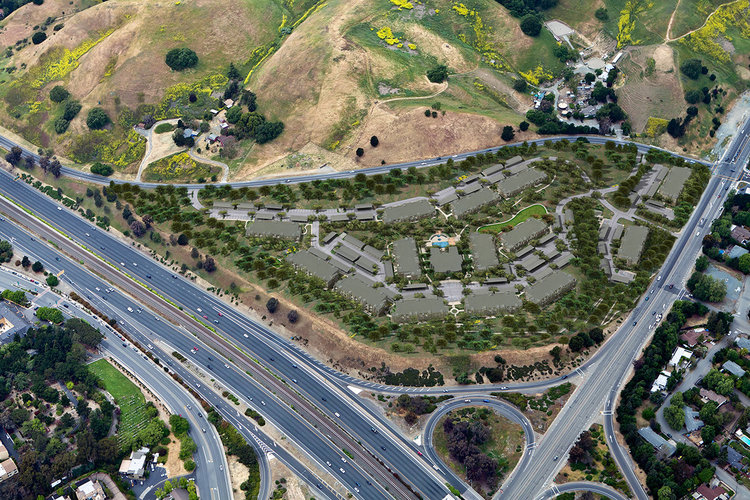
The planned Terraces of Lafayette apartment project. Source: O’Brien Homes

Denies request to review lower court’s decision, ends litigation, leaving in place earlier rulings that the City acted properly in approving the development

“This decision is a win for housing, but the fact that this project has taken so long is exactly why we have such a catastrophic housing shortage” – Sonja Trauss, President and Founder of YIMBY Law

By Suzanne Iarla, Communications Analyst/Public Information Officer

After more than two years, litigation against the City of Lafayette and developer O’Brien Land Company (O’Brien) regarding the City’s approval of the 315-unit Terraces of Lafayette development project has ended and is in favor of the City and O’Brien.

In 2020, Save Lafayette, a citizens group, sued the City and O’Brien to overturn the City’s approval of the Terraces of Lafayette. In November 2021, the Contra Costa County Superior Court rejected Save Lafayette’s claims and upheld the City’s approval of the Terraces of Lafayette. Save Lafayette appealed the Superior Court’s decision.

In November 2022, the Court of Appeal issued a unanimous opinion holding that the City’s environmental review complied with the California Environmental Quality Act (CEQA) and that the City properly followed the Housing Accountability Act in approving the project. Save Lafayette requested that the California Supreme Court exercise its discretion and review the Court of Appeal’s decision.

On Wednesday, March 15, 2023, the California Supreme Court denied Save Lafayette’s request for review, making the Court of Appeal opinion in favor of the City the final word in the long-running dispute.

“The Courts have once again affirmed that the City complied with the Housing Accountability Act and the California Environmental Quality Act in its environmental review and approval of this 20%-affordable housing project. The litigation is over, and we should now focus on welcoming new residents to our community,” said Lafayette Mayor Carl Anduri.

Now that litigation has ended, O’Brien will be able to proceed with the development of 315 for-rent apartments, including 63 below-market-rate units on a vacant a 22-acre site at the southwest corner of Pleasant Hill and Deer Hill Roads, adjacent to Highway 24 in Lafayette.

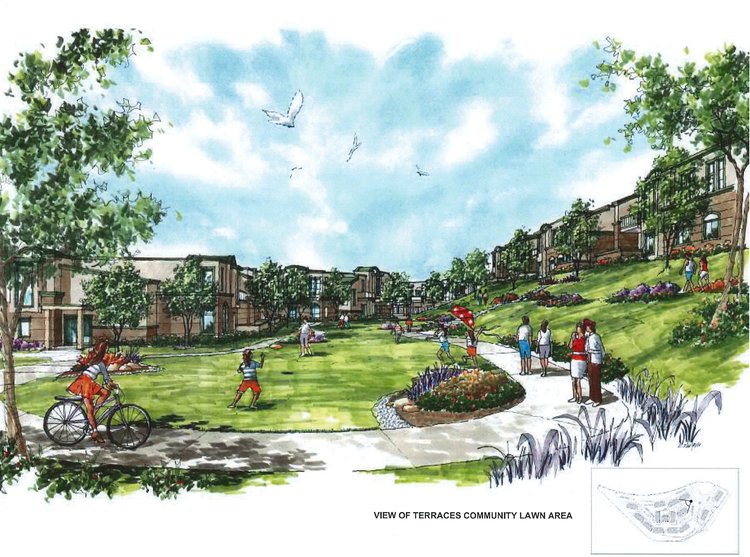
Terraces of Lafayette rendering. Source: O’Brien Homes

In response O’Brien Land Company issued the following press release regarding the court decision:

In a landmark victory for housing rights and state housing law, the California Supreme Court denied review of the unanimous California Court of Appeal ruling in favor of the Terraces of Lafayette

As the last step to finally end the litigation over the Terraces of Lafayette apartment community, the Supreme Court of California denied Save Lafayette’s request to review the First District Court of Appeal’s unanimous ruling that upheld the City of Lafayette’s project approvals. In a published opinion, the Court of Appeal rejected in full Save Lafayette’s lawsuit challenging the Terraces of Lafayette, a 315-unit apartment community by O’Brien Land Company. After nearly 10 years of processing and 120 public hearings, the Lafayette City Council had finally approved the project by a 4-1 vote in August 2020.

The Court’s decision can be found here. Project information can be found at https://www.terracesoflafayette.com.
The project site is in an urbanized area adjacent to Highway 24 and located one mile from the Lafayette BART station. With 20%, or 63, of its dwelling units set aside for lower income households, the Terraces is considered an affordable housing project under the Housing Accountability Act (HAA). This will substantially assist Lafayette in meeting its Regional Housing Needs Allocation (RHNA) for the lower income categories assigned to it by long-standing state law.
Despite the project’s robust legal protections under controlling state law, Save Lafayette has actively opposed the project and all development on the project site for years. The anti-development group also opposed a 44 single-family home compromise project the City approved in 2015 after the City and O’Brien contractually paused processing of the apartment project to consider an alternative the group might accept. Save Lafayette responded by filing litigation and a ballot referendum that overturned the smaller project. Once the voters rejected the smaller project, O’Brien and the City resumed processing the apartments.

“Despite the fact that the project, located on a former quarry site, is supported by the Sierra Club and Greenbelt Alliance, and provides critically-needed, affordable housing, it took 12 years to get to this point after finally getting the project approved and through this and other wasteful litigation,” said Dennis O’Brien, President and Founder of O’Brien Land Company. “It’s been disheartening the last few years to have to tell local residents and workers that we weren’t yet able to build the apartments the City approved. People have long been in need of housing like this for themselves, family members, and local workers, and all we could do was add their name to an interest list and ask them to be patient while we saw the project through an incredibly difficult and time-consuming process. We are elated that we can now move forward.”

Although the apartment project included a full environmental impact report, Save Lafayette’s lawsuit claimed the City’s approval violated the California Environmental Quality Act, a law frequently employed by anti-development NIMBY groups to challenge new housing. The lawsuit also claimed the project was not entitled to the protection of the HAA, which protects housing developments from changes in local land use laws after an application is deemed complete by, among other things, substantially curtailing the circumstances under which a housing project may lawfully be disapproved. As the Superior Court did in 2021, the Court of Appeal rejected Save Lafayette’s arguments and agreed that the City complied with the law in approving the project.

Matt Regan, Senior Vice President of Public Policy for the Bay Area Council added his voice in support of the Supreme Court’s decision saying, “When anyone asks why we have a housing affordability crisis in California, I just show them the history of the Terraces in Lafayette. This is a site where the City said they wanted housing, a developer offered a proposal that met their requirements, and here we are 12 years later after multiple plan changes, referendums, lawsuits, delay after delay after delay, needless costs piled on top of needless costs, and still no homes,” he added.

“The team at O’Brien Homes should be given every credit for refusing to be bullied and sticking with this project.”

The Court of Appeal recognized the HAA’s statutory mandate to interpret and implement the HAA to “afford the fullest possible weight to the interest of, and the approval and provision of, housing” and accordingly held that the trial court “rightly refused to disturb the City’s approval of the project.”

About the decision, Sonja Trauss, President and Founder of YIMBY Law, stated, “This decision is a win for housing, but the fact that this project has taken so long is exactly why we have such a catastrophic housing shortage. The people involved with Save Lafayette should be ashamed of themselves. They have denied housing for more than 700 middle income people for the last 10 years while they fought this project. Imagine if Save Lafayette had spent their time and money actually helping people.”

Allen D. Payton contributed to this report.


Filed Under: Courts, Growth & Development, Lamorinda, News

Bay Area transportation agency adopts landmark policy to promote housing, commercial development near transit stations

September 29, 2022 By Publisher Leave a Comment

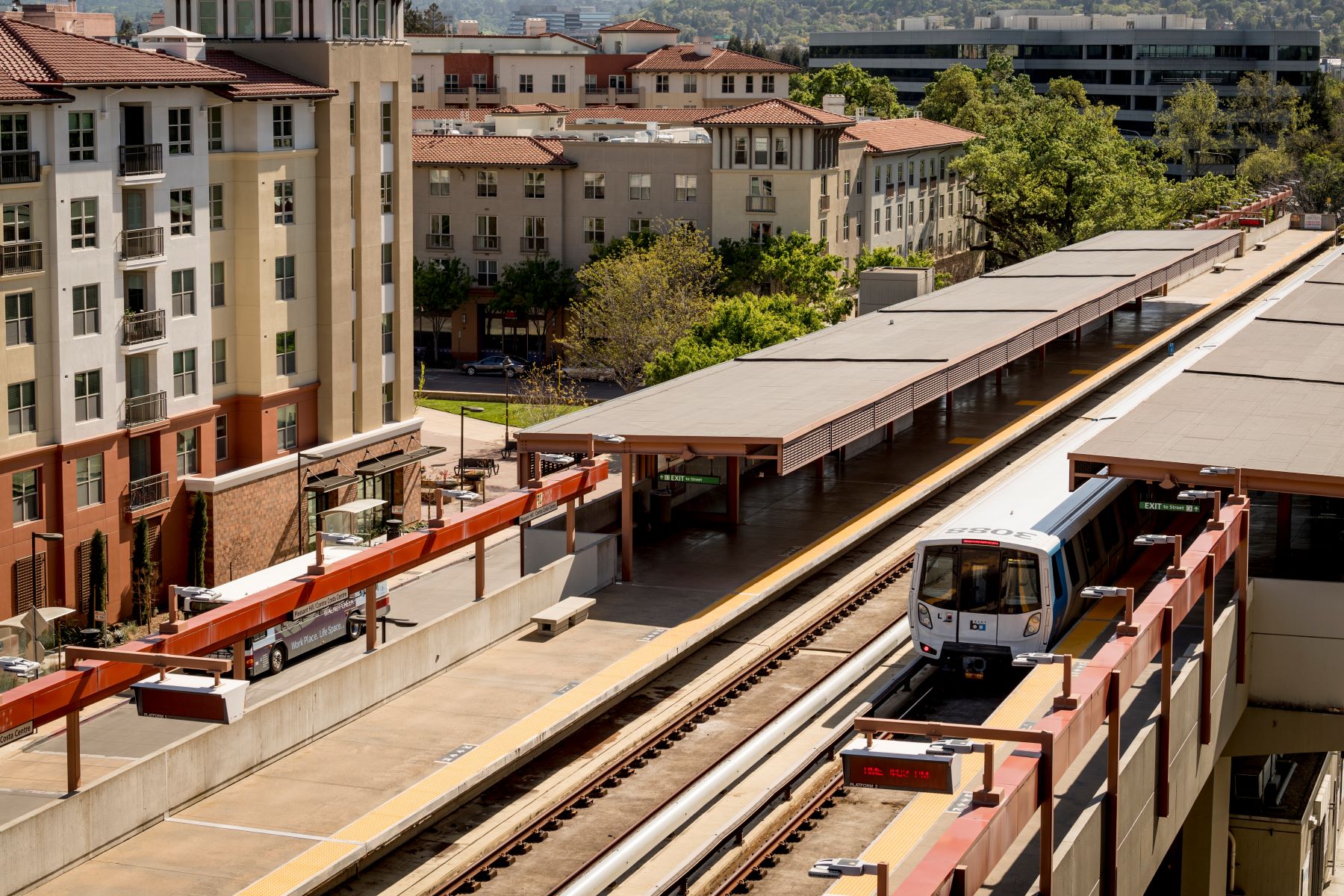
TOD projects adjacent to a BART station. Source: MTC. Credit: Karl Nielsen

The Metropolitan Transportation Commission (MTC), yesterday, Wednesday, Sept. 28, 2022, adopted a new Transit-Oriented Communities (TOC) Policy designed to boost the overall housing supply and increase residential densities in transit-rich areas throughout the Bay Area; spur more commercial development near transit hubs served by multiple agencies; promote bus transit, walking, biking and shared mobility in transit-rich areas; and foster partnerships to create transit-oriented communities where people of all income levels, racial and ethnic backgrounds, ages and ability levels can live, work and thrive. The newly adopted policy applies specifically to transit priority areas within a half-mile of BART, Caltrain, SMART, Capitol Corridor and ACE stations; Muni and VTA light-rail stations; Muni and AC Transit bus rapid transit stops; and ferry terminals.

Studies show people are more likely to ride transit if they live within half a mile of a rail station, ferry terminal or bus line. And jobs that are within a quarter-mile of transit often are more attractive to the Bay Area’s workforce.

The TOC Policy is the update to MTC’s 2005 Transit-Oriented Development (TOD) Policy. That set minimums for the average number of housing units (both existing and/or permitted housing units) within a half-mile of each new rail station funded through Regional Measure 2. However, according to MTC spokesperson Rebecca Long the new policy applies to any all existing and future transit priority areas.

“The Transit-Oriented Communities Policy is truly groundbreaking,” explained MTC Chair and Napa County Supervisor Alfredo Pedroza. “Using transportation funds as an incentive, the policy encourages cities and counties to upzone transit-rich areas so transit, walking and biking can be viable travel choices for more people, and so we can generate maximum value from the billions of taxpayer dollars that have been invested in our transit network over the years as well as new transit lines that will be built in the years to come. The policy specifically encourages the development of affordable housing and protects current residents from being displaced by new development.”

The TOC Policy links all four of the themes — transportation, housing, the economy and the environment — of Plan Bay Area 2050, the long-range transportation plan and sustainable communities strategy adopted by MTC and the Association of Bay Area Governments in 2021. Minimum residential density requirements range from 25 units per acre for locations within a half-mile of ferry terminals; SMART, ACE and Capitol Corridor stations; and Caltrains stations south of San Jose’s Tamien station up to 100 units per acre within a half-mile of BART stations in downtown San Francisco and Oakland, and within a half-mile of San Jose’s Diridon Station. The policy also eliminates minimum parking requirements in many transit-rich areas, allows for shared parking between residential and commercial uses, and mandates at least one secure bike parking space for each new dwelling unit.

MTC is the regional transportation planning, financing and coordinating agency for the nine-county San Francisco Bay Area.

Allen D. Payton contributed to this report.


Filed Under: BART, Growth & Development, Jobs & Economic Development, News, Transportation

Board of Equalization holds first of three Tax Abatement Workgroup meetings to spur development of affordable housing in California

July 29, 2022 By Publisher Leave a Comment

Sacramento – On Wednesday, July 27, 2022, the California State Board of Equalization (BOE) held the first of at least three public Property Tax Abatement Workgroup meetings. The Board received presentations from policy experts and stakeholders on the development of new housing, focusing on how to best address the need to build 2.5 million new housing units to address California’s housing gap, including how to provide new housing opportunities for the “missing middle.” The workgroup consists of Board Chair Malia M. Cohen, who represents District 2 and District 3 Board Member Antonio Vazquez.

“As Chair of the Board of Equalization, which administers California’s $85 billion property tax system, I am deeply encouraged by today’s discussion with housing policy experts,” said Chair Malia M. Cohen. “The presentations of these experts both highlighted the reality of our housing crisis, associated equity issues, and the opportunity to address the development of new housing through creative and innovative solutions.”

“Today’s meeting focused on property tax abatements as a tool to incentivize new housing construction and increase the inventory of affordable housing. Property tax abatements have been used before, particularly in New York City, to build tens of thousands of new housing units to address the housing needs of the ‘missing middle’. It makes sense to consider whether similar property tax abatement strategies could work in California,” Cohen concluded.

In upcoming meetings of the Property Tax Abatement Workgroup, the BOE will examine strategies to ensure that revenue for schools and local governments are protected under any property tax abatement programs. The BOE will also explore how local government, labor, businesses, and developers can work collaboratively to build new housing under such abatement programs.

The BOE will hold additional meetings of the Property Tax Abatement Workgroup at the Board’s upcoming August 31st and September 28th board meetings. At the conclusion of the BOE’s Property Tax Abatement Workgroup, the Board will issue a report.

The agenda of the July 27, 2022 meeting of the Property Tax Abatement Workgroup can be found at this link: https://www.boe.ca.gov/meetings/pdf/2022/072622-PAN-Jul.pdf

As the BOE Board Member for District 2 Cohen represents nearly 10 million constituents residing in 23 counties in Northern and Central California, extending from Del Norte County in the north to Santa Barbara County in the south, including Contra Costa County. She is the youngest Constitutional Officer serving in California and is the first African American woman to be elected as chair of the Board of Equalization in its 141-year history.

The Board of Equalization is California’s statewide elected tax board. Its five members include four members elected in districts, and the State Controller. Under its constitutional mandate, the BOE oversees the assessment practices of the state’s 58 county assessors, who are charged with establishing values for approximately 13.6 million assessments each year. In addition, the BOE assesses the property of regulated railroads and specific public utilities and is responsible for the alcoholic beverage tax and tax on insurers.

Note: This news release may discuss complex tax laws and concepts. It may not address every situation and is not considered written advice. Changes in law or regulations may have occurred since the time this news release was written. If there is a conflict between the text of this news release and the law, decisions will be based upon the law and not this news release.

Filed Under: Growth & Development, News, Taxes

Seeno’s attorneys request new trial following Save Mount Diablo legal victory against Faria project in Pittsburg hills

March 3, 2022 By Publisher 2 Comments

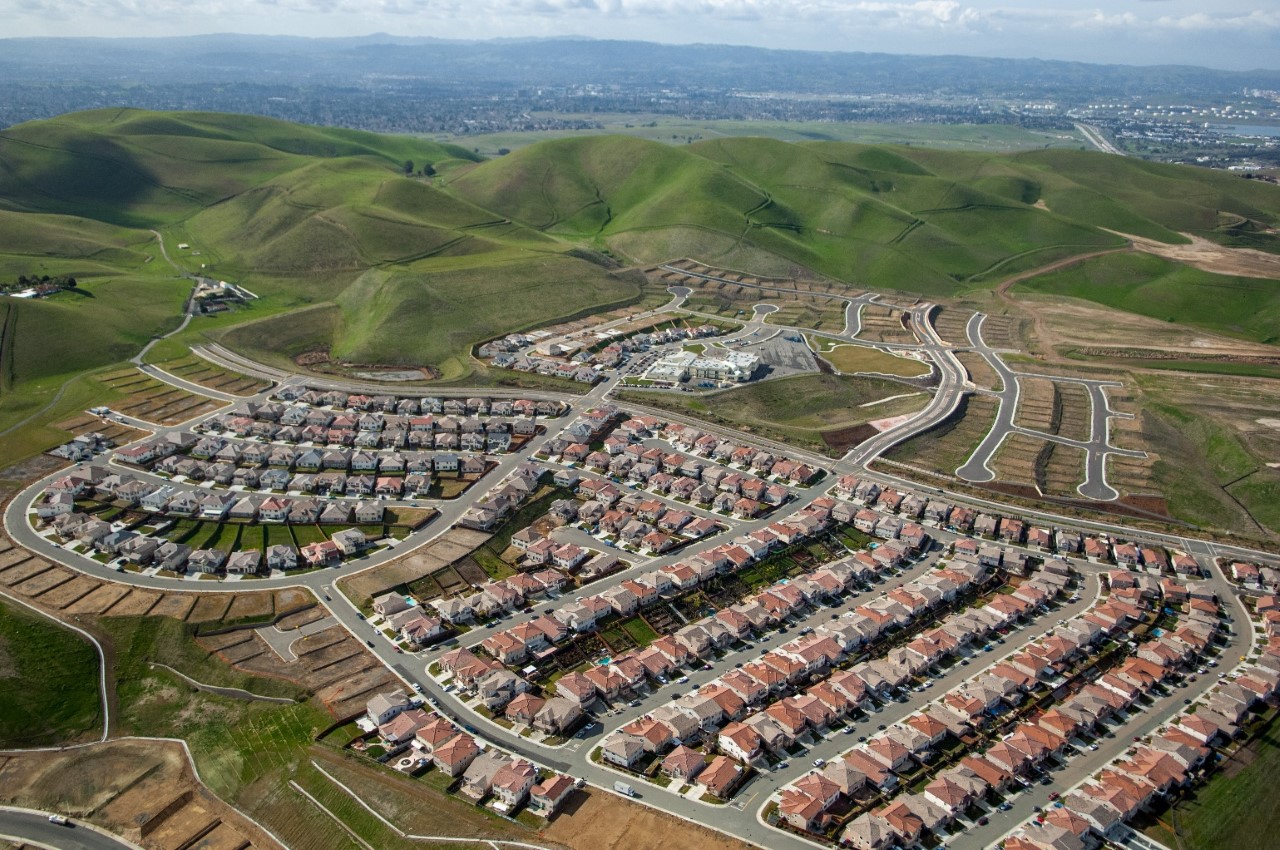
The Pittsburg hills where the Faria project has been approved for construction, as seen from the San Marco neighborhood in Pittsburg. Photo: Scott Hein

607-acre, 1,650-home development next to planned Thurgood Marshall Regional Park

SMD leader says motion for new trial “should be denied”

By Allen D. Payton

Last Friday, Feb. 25, 2022, attorneys representing Discovery Builders and their Faria new home development requested a new trial for the lawsuit by Save Mount Diablo, following a judge’s decision in favor of the environmental group to stop the project. As previously reported, on March 30, 2021, Save Mount Diablo filed a lawsuit challenging the City of Pittsburg’s approval of the 1,650-unit Faria project, on the ridgeline between Pittsburg and Concord. According to the agenda item documents, the master plan overlay district encompasses approximately 607 acres of land. (See related article)

The motion for a new trial was filed “on the basis that the Court’s decision is not supported by the evidence and controlling legal authorities. Specifically…that there were several portions of this Court’s February 10, 2022, Statement of Decision that may not have fully considered evidence in the administrative record.” In addition, the motion asks that the “Court vacate its Statement of Decision and enter a new decision denying SMD’s motion” and “conduct a new hearing”. Faria project Motion for New Trial Parsons Dec. ISO Mot for New Trial      Raskin Dec. ISO Mot for New Trial    Faria project new trial Proof of Service

A hearing date on the motion for a new trial has been set for April 14, 2022.

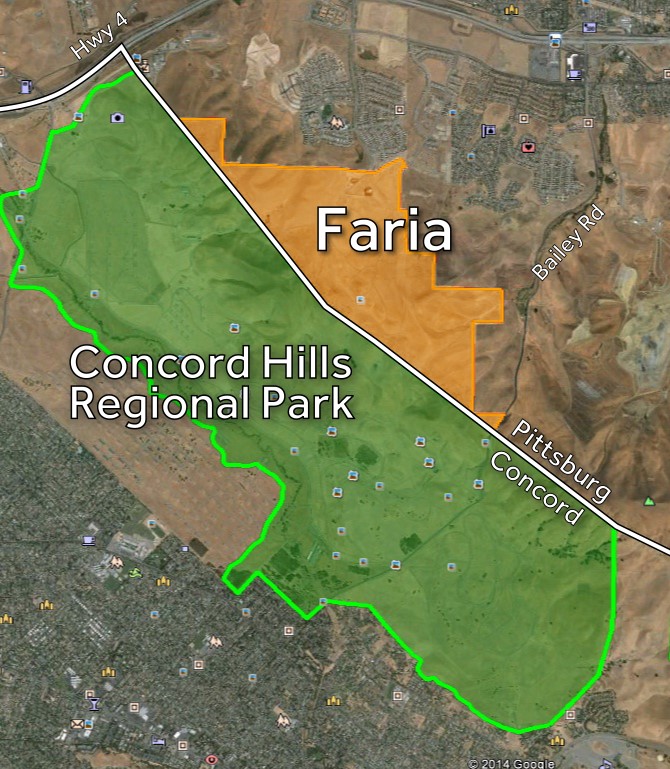
The now named Thurgood Marshall Regional Park is directly adjacent to the Pittsburg City Council approved Faria project. Herald file graphic. Credit: Save Mount Diablo/Google Earth.

On the day of the decision, Save Mount Diablo issued the following press release about their legal victory:

“On February 10, 2022, the Contra Costa County Superior Court handed Save Mount Diablo a major victory in its legal challenge to the City of Pittsburg’s approval of the 1,650-unit Faria/Southwest Hills Project.

According to the ruling, the city’s environmental review was inadequate in numerous ways. Faria was proposed by Seeno companies/Discovery Builders, Inc./Faria Investors LLC on the spectacular and highly visible major ridgeline between Pittsburg and Concord and could include grading and houses visible across the ridge.

As a result, the City of Pittsburg is required to overturn approvals for the project and correct environmental review. The city and Seeno/Discovery Builders will also be required to pay Save Mount Diablo’s legal fees.

It remains to be seen whether the developers, Discovery Builders, Inc. and Faria Land Investors, LLC, or the City of Pittsburg will appeal the decision.

The Pittsburg City Council—then-Mayor Merl Craft; then–Vice Mayor Holland Barrett White; and Councilmembers Shanelle Scales-Preston, Juan Antonio Banales, and Jelani Killings—all voted to approve the proposal in February 2021. (The mayor and vice-mayor designations rotate among the councilmembers.) They ignored hundreds of letters and public comments that opposed the project. Save Mount Diablo filed a lawsuit challenging the project’s approval in March 2021.

If the project had moved forward, it would have meant the development of a major, new residential subdivision on 606 acres of ridgeline and hillside grazing land in what is currently unincorporated Contra Costa County, immediately south of the City of Pittsburg.

The biologically rich site supports sensitive wildlife species and rare plants and is in one of the most visible and most environmentally constrained areas of the county. The Faria project would have fragmented open space and damaged wildlife corridors.

The proposed housing development would have changed the beautiful green hills forever by annexing the property to the City of Pittsburg and locating 1,650 new residences far from jobs, transit, and services.

The Faria project would have also impacted the new East Bay Regional Park District (EBRPD) Thurgood Marshall Regional Park – Home of the Port Chicago 50 at the Faria site’s southwestern edge, formerly part of the Concord Naval Weapons Station. Save Mount Diablo and its partners advocated for the creation of this new park over many years. The Faria project would have been located directly above the new park on a ridgeline, degrading views from surrounding areas.

The Contra Costa Superior Court ruled that the City of Pittsburg’s environmental review of the project was inadequate in four major ways:

  1. It failed to analyze any impacts that would results from the 150 accessory dwelling units that were added by the City of Pittsburg at the last minute. This is important because the number of units affects every part of environmental review from traffic to water supply to schools, etc. and will make correcting the environmental review complicated;
  2. It failed to include a baseline description of biological resources that could be impacted by the project, specifically special-status plant species;
  3. It failed to consider the water supply impacts of adding 1,650 new housing units in the area, which is especially important given years of drought and increasing fire danger; and
  4. It failed to adequately disclose or mitigate the project’s air quality impacts, including greenhouse gas impacts, without which development will continue to make the climate crisis much worse.

“The court’s decision says to developers: ‘You don’t get to kick the can down the road. You have to do a thorough analysis of your project’s impacts before you lock in project approvals,’” said Winter King, Save Mount Diablo’s attorney from Shute, Mihaly & Weinberger. “The court got it right.”

The court’s ruling means that the City of Pittsburg’s approval of the project is null and void.

The court also noted that additional impacts—such as geologic hazard impacts resulting from grading and filling, and impacts on streams and agricultural lands—would need to be addressed in more detail.

Save Mount Diablo Executive Director Ted Clement said, “Throughout the East Bay, residents have worked hard to protect our ridges and views, flora and fauna, and to defend our parks. In this case that was just decided in our favor, Save Mount Diablo had to stand up against some very powerful interests to help further the work of protecting these treasured resources, which add so much to our collective quality of life.”

“Although I’ve worked for Save Mount Diablo on this issue, I’m also a Concord resident,” said Juan Pablo Galván Martínez, Save Mount Diablo’s Senior Land Use Manager. “This project infuriated me as an open-space lover, a wildlife enthusiast, and someone who is deeply worried and taking action to stop catastrophic climate change. Since this affects both cities, I want both city councils to work together to protect the hills and ridgeline.”

“This is a major victory for Pittsburg’s hills,” stated Save Mount Diablo Land Conservation Director Seth Adams. “Open space, habitat for wildlife, and the community’s scenic views have won the day, and poorly planned development will not go forward, for now. We are very happy with the court’s decision.”

“On the other hand,” said Adams, “while our victory is costly for the city and Seeno/Discovery Builders in time and money, it does not stop the project forever. After correcting environmental documents, the Pittsburg City Council can approve Seeno’s huge project again if they choose. But now they have a second chance to make it better by protecting the ridgeline and neighboring regional park. We don’t have to argue about protecting ridgelines in other cities. The Pittsburg City Council should do the right thing.”

Save Mount Diablo Says Motion for New Trial “Should Be Denied”

Asked about the motion for a new trial, Save Mount Diablo Executive Director, Ted Clement responded, “Regarding the Seeno companies/Pittsburg request for a new trial, the Court has already rejected their arguments for reasons fully set forth in its decision. Their Motion for New Trial does not question the adequacy of the administrative record on which the Court properly based its decision (and which the City itself prepared) or suggest there was any other irregularity or unfairness in the hearing. Instead, they seek a second bite of the apple.”

“Their Motion reargues issues that were fully briefed and addressed in the Court’s Decision,” he continued. “They also seek to introduce irrelevant and improper extra-record evidence, violating black letter law that CEQA actions must be decided on the record that was before the agency when it made its decision.”

“Because their Motion provides no basis for this Court to order a new trial solely on the issues decided adverse to them, it should be denied,” Clement concluded.

Filed Under: East County, Environment, Growth & Development, Legal, News

Housing construction is key to Contra Costa’s economic rebound in “Post-COVID New World Order” Supervisors told

January 29, 2022 By Publisher Leave a Comment

Construction Activity in Contra Costa County. Source: Beacon Economics

By Daniel Borsuk

A housing boom in the single family and multi-family residential construction sectors will jump start Contra Costa County’s economy in the post-COVID 19 era, economist Dr. Christopher Thornberg told the Contra Costa County Board of Supervisors during their retreat on Tuesday.

“Housing, housing, housing is the wave of the future for Contra Costa County,” Dr. Thornberg of Beacon Economics said during a two-hour remote presentation entitled “The Post-Covid New World Order: It’s a seller’s market for now.”

In 2021, Contra Costa County outpaced other Bay Area counties especially San Francisco and Alameda counties in issuing single family and multi-family residential permits, the economist said.  Housing construction serves as an economic sparkplug for the local economy – stores and services, especially public schools.

From this increased economic activity, the county will draw increased sales tax revenue particularly from the newly voter approved Measure X sales tax measure.  County officials estimate Measure X will pump in $170 million of additional revenue for county health and social programs for the 2022-23 fiscal year.

Contra Costa County had issued 1,687 permits in 2021 for single family residential units, an increase of 466 permits from 2019 and 1,336 permits for multi-family residential units, an increase of 580 units from 2019, based on statistics that Dr. Thornberg showed.

In the meantime, San Francisco City and County issued only 86 single-family housing permits in 2021, an increase of only nine permits from 2020, and 2,075 multi-family residential unit permits in 2021, a decrease of 552 permits, from 2020.

Residential construction in Alameda County was down in both categories. Single family was declined 41 permits with 1,241 permits issued overall in 2021.  Multi-family residential construction was also down 126 units to 2,953 units multi-family residential unit permits overall.

“Offices are going to take a beating in the suburbs,” the economist forecast. More people are working from home, and it appears this remote trend is here to stay for a while, he said.

In San Francisco’s Financial District, where it is nearly deserted because of the pandemic, there are office buildings that are practically empty of workers, Thornberg said.  He said it would be very costly to convert unused office buildings into residential buildings in the city.

79.8 Percent Fully Vaccinated 

Meanwhile, Contra Costa County Health Services Director Anna Roth reported that 79.8 percent of the county’s population is fully vaccinated.

“Mask-wearing has become a priority and wearing cloth masks are not that protective,” said Roth

Even then there has been a surge in the number of COVID-19 cases in the county Deputy Health Officer Dr. Ori Tzvieli said with 281 patients hospitalized with COVID-19 or the Omicron variant.

Supervisors also learned the county on average administers 12,000 COVID-19 tests daily.

Nino Recommends Postponing $59 Million of American Rescue Plan Funds

Supervisors also, on the recommendation of County Administrator Monica Nino, voted 5-0 to postpone the acceptance of $59 million of the second-year allocation of American Rescue Plan funds “until the status of the COVID-19 pandemic and related impacts on Contra Costa County is better understood in January 2023,” she stated.

In the meantime, some $53 million in year two American Rescue Plan funds be accept by the county.

Nino had cited bureaucratic red-tape issues both at the state and federal levels for temporarily halting portions of the federal funds used for rental assistance, employment assistance and other federal government subsidy programs developed during the COVID-19 pandemic.


Filed Under: Construction, Growth & Development, Health, News, Supervisors

Contra Costa Supervisors on 4-1 vote approve all-electric buildings ordinance banning natural gas installations

January 19, 2022 By Publisher Leave a Comment


Starting June 1, 2022; 200-gallon natural gas tanks still permitted for rural users

“Many of my constituents view this ordinance as an overreach ordinance and I happen to agree with them” – Supervisor Andersen

By Daniel Borsuk

Starting June 1, Contra Costa County will be the first county in the Golden State requiring all new residential, business, commercial and hospitality developments have electricity, and outlawing natural gas installation. On a 4-1 vote Contra Costa County Board of Supervisors approved the ordinance that attracted scant public opposition. District 2 Supervisor Candace Andersen was the lone opposition vote.

The new ordinance applies to all new residential, commercial, office, and hospitality developments proposed for unincorporated Contra Costa County.  It does not apply to incorporated areas, except the City of Richmond that has adopted its own electricity building ordinance.

“Many of my constituents view this ordinance as an overreach ordinance and I happen to agree with them,” said Andersen of Danville, who cast the lone opposition vote.  “It is my concern this ordinance might impact commercial development nearby the Byron and Buchanan airports.”

There was no opposition to the Board’s ordinance that was up for second reading.

“This is a good environmental policy for the county,” said District 1 Supervisor John Gioia, who championed the resolution.

“I am concerned about the equity issue.  This could raise rents of low-income housing tenants,” said Board Chair Karen Mitchoff of Pleasant Hill, who voted in favor of the ordinance anyway.

“I am supportive of this ordinance,” commented District 3 Supervisor Diane Burgis after planning department staff answered her question on whether rural constituents could still own and use 200-gallon natural gas tanks for “emergency use.”  Planning officials confirmed 200-gallon natural gas tanks will be permitted for rural users.

“While this proposed ordinance has been charactered as an electrification ordinance, its purpose is to stop new buildings from burning fossil fuels,” wrote Gary Farber on behalf of the environmental group, 350 Contra Costa. “Therefore, solar thermal space heating and water heating systems ought to be allowed and encouraged.  We look forward to working with the County on additional programs to phase out fossil fuels in transportation and all buildings, new and existing.”

The move by the Board of Supervisors occurs when there is skepticism on whether the State has an adequate supply of wind and solar renewable energy in the Golden State to meet the demand for all electric homes and businesses.  The California Clean Energy Act of 2018 established a target for renewable zero-carbon resources to supply 100 percent of electrical needs throughout the state by 2045, 23 years from now.

Retain $2,500 Campaign Contribution Limit

Even though briefly considered a recommendation boost, the Election Campaign Contribution limit from $2,500 to $4,900, Supervisors voted to retain the Election Campaign limit at $2,500.

“I feel comfortable at the $2,500 limit,” commented District 2 Supervisor Andersen.

Supervisor Glover said as much as he’d preferred to go with the State-recommended $4,900 limit, he said “I’d vote for more money, but I don’t think we should.  Elections are getting more expensive.” Glover is not up for re-election this year.

44th Annual Dr. Martin Luther King Jr Ceremony Honorees

Supervisors also recognized 44th Annual Dr. Martin Luther King Jr. honorees – Gigi Crowder, an Antioch resident, who is the Executive Director of the National Alliance on Mental Illness as the Adult Humanitarian of the Year and Pittsburg resident, Kaia Morgan, a Senior at Ygnacio Valley High School as the Student Humanitarian of the Year. (See related articles here and here)


Filed Under: Business, Environment, Growth & Development, News, Supervisors

Final Regional Housing Needs Allocation Plan requires 441,176 more homes in Bay Area by 2031

December 17, 2021 By Publisher 2 Comments

Source: ABAG

44,000 more in Contra Costa

After two years of collaboration, plan to expand Bay Area’s housing opportunities approved during public hearing, Thursday night

“The next steps are for (the 110) Bay Area cities, towns and counties to update their housing elements by January 31, 2023…and plan for housing at all income levels.” – ABAG President and Berkeley Mayor Jesse Arreguín

SAN FRANCISCO, December 17, 2021 . . . The Association of Bay Area Governments (ABAG) at last night’s Executive Board meeting approved the Final Regional Housing Needs Allocation (RHNA) Plan for the San Francisco Bay Area, 2023-2031.  The state Housing and Community Development Department requires the Bay Area to plan for and revise local zoning to accommodate 441,176 additional housing units during the 2023-31 period.  The approved final RHNA plan distributes this requirement among the region’s nine counties and 101 cities and towns, with allocations ranging from 72 units in the Napa County town of Yountville to more than 82,000 units in San Francisco.

The plan requires communities in Contra Costa County to add 43,970 housing units, almost 10% of the total, during the time period, with Walnut Creek (5,805 units), San Ramon (5,111) and Concord (5,073) being allocated the highest number of housing units, followed by Richmond and Antioch being allocated 3,614 and 3,016 units, respectively.

Source: ABAG

“The Final RHNA Plan’s passage concludes a two-year regional collaborative process, reflecting hundreds of hours of work by staff, elected officials and stakeholders,” noted ABAG President and Berkeley Mayor Jesse Arreguín. “This is an important step in our region’s efforts to address our housing crisis. Every city and county must do their part to address our housing and homelessness crises. With this RHNA Plan, local governments will have to rezone and plan for significantly more housing than before. This plan also affirmatively furthers fair housing by distributing housing growth equitably throughout the region addressing decades of racial and economic segregation. This is also part of a much bigger effort being undertaken by ABAG and the Metropolitan Transportation Commission to provide resources and technical assistance to local agencies and generate new funding sources for affordable housing in the Bay Area.”

Source: ABAG

“The next steps,” Arreguín continued, “are for Bay Area cities, towns and counties to update their housing elements by January 31, 2023, to reflect the new RHNA allocations and plan for housing at all income levels. The Regional Housing Technical Assistance Program (RHTA) is ready to provide local jurisdictions with the financial support and technical assistance they need to complete these steps.”

Funded by the state’s Regional Early Action Planning grant, ABAG created RHTA to help local agencies update the housing elements of their general plans, ensuring that Bay Area cities, towns and counties take the steps to move from plans to implementation and remain competitive for various state funding programs to increase housing opportunities. RHTA includes some $11 million in direct assistance to local governments as well as other support.

Source: ABAG

The Bay Area Housing Finance Authority (BAHFA) is another part of ABAG’s and the Metropolitan Transportation Commission’s expanded regional housing portfolio. “As the first regional housing finance authority in California, BAHFA has the potential to raise hundreds of millions of dollars to help meet the Bay Area’s urgent housing affordability challenges,” explained Oakland Mayor Libby Schaaf, who chairs the BAHFA Oversight Committee. “The RHNA Plan establishes the housing at each income level that Bay Area’s communities need to plan for, but BAFHA provides an opportunity to fund the solution: providing more housing for everyone in the Bay Area. This makes it an important part of the Bay Area’s housing toolbox as we work together to protect existing affordable housing, to prevent displacement of current residents and to promote the construction of more new housing units.”

ABAG is the council of governments and the regional planning agency for the 101 cities and towns, and nine counties of the Bay Area. Additional information is available on the regional housing programs’ individual webpages:

RHNA: https://abag.ca.gov/our-work/housing/rhna-regional-housing-needs-allocation

RHTA: https://abag.ca.gov/our-work/housing/regional-housing-technical-assistance

BAFHA: https://abag.ca.gov/our-work/housing/bahfa-bay-area-housing-finance-authority

Allen Payton contributed to this report.

Filed Under: Bay Area, Growth & Development, News

Superior Court upholds City of Lafayette’s approval of 315-unit Terraces apartment project

November 18, 2021 By Publisher 1 Comment

The planned Terraces of Lafayette apartment project that will overlook Highway 24. Source: O’Brien Land Company

By Suzanne Iarla, Communications Analyst, City of Lafayette

Terraces of Lafayette rendering. Source: O’Brien Land Company

On Friday, November 12, 2021, the Contra Costa Superior Court upheld the City of Lafayette’s approval of the Terraces of Lafayette project of the O’Brien Land Company. The project would build 315 apartments, including 63 affordable housing units, on a 22-acre parcel at the southwest corner of Deer Hill Road and Pleasant Hill Road. In its ruling, the Court rejected claims by Save Lafayette, a citizens group, and found that the City’s environmental review complied with the California Environmental Quality Act (CEQA) and that the Terraces project was consistent with the City’s General Plan.

The Terraces project has been in process for over ten years — the developer’s application dates back to March 2011.  Since then, the City has worked to address community and regional concerns, including by considering a proposed alternative 44 single-family home project with a community park. The City approved the alternative project in 2015. Save Lafayette initiated the referendum process to overturn that approval in 2018.

After the alternative project was rejected by the voters, the City resumed processing the original Terraces project application. In compliance with the strict requirements of State law, including the Housing Accountability Act, the City approved the Terraces project in August 2020.

Save Lafayette sued in September 2020 to overturn the approval, in an effort to stop the Terraces project on environmental and General Plan consistency issues.  After over a year of litigation, the Superior Court rejected Save Lafayette’s claims and affirmed that the City’s CEQA review and approval of the Project complied with the law. The Court’s ruling will become final unless Save Lafayette appeals within 60 days following the notice of entry of judgment.

Terraces of Lafayette Site Plan updated 2-11-20. Source: O’Brien Land Company.

Developer Calls Court Decision “Major Victory”

The developer issued their own press release announcing last Friday court’s decision:

In a major victory for housing rights, the Contra Costa Superior Court on Friday, Nov. 12 issued a ruling rejecting in full Save Lafayette’s lawsuit challenging the Terraces of Lafayette, a 315-unit apartment community by O’Brien Land Company.  After nearly 10 years of processing and 120 public hearings, the Lafayette City Council approved the project by a 4-1 vote in August 2020.

“We have had many local people reach out to us to ask when they can rent an apartment at the Terraces,” said Dennis O’Brien of O’Brien Land Company. “The need for this type of housing is apparent, and we look forward to no further delays so we can provide homes for those individuals and families.”

Terraces of Lafayette vicinity map. Source: O’Brien Land Company.

The project site is adjacent to Highway 24 and located one mile from the Lafayette BART station.  The Terraces is considered an affordable housing project under state housing law and will set aside 20%, or 63, of its dwelling units for lower income households.  This will substantially assist Lafayette in meeting its Regional Housing Needs Allocation (RHNA) for the lower income categories assigned to it by long-standing state law.

Despite the project’s robust legal protections under controlling state law, Save Lafayette has been opposing the project for years. The anti-development group also opposed a 44 single-family home compromise project by filing litigation and a ballot referendum that overturned the smaller project.  Once the voters rejected the smaller project, O’Brien and the City of Lafayette resumed processing the apartments.

Terraces of Lafayette clubhouse and pool area rendering.  Source: O’Brien Land Company.

Although the affordable housing development included a full Environmental Impact Report, Save Lafayette’s lawsuit claimed the City’s approval of the project violated the California Environmental Quality Act, a law frequently employed by anti-development groups to challenge new housing.  The lawsuit also claimed the project was not entitled to the protection of the Housing Accountability Act, which shields housing developments from changes in local land use laws after an application is deemed complete.  The Superior Court rejected Save Lafayette’s arguments and agreed that the City complied with the law.

“When people ask why we have a housing crisis in California, they should look no further than this project for answers,” Bay Area Council Senior Vice President Matt Regan emphasized. “Over 10 years of foot dragging, goalpost moving, ballot measures and lawsuits, finally the construction of these much- needed homes can now begin.  This saga highlights the need for more reforms to state law so that good housing projects no longer have to run this sort of gauntlet and can be approved swiftly and fairly.”

For more information on the project, visit www.lovelafayette.org/Terraces.

Allen Payton contributed to this report.

Filed Under: Growth & Development, Lamorinda, Legal, News

  • « Previous Page
  • 1
  • 2
  • 3
  • 4
  • 5
  • 6
  • Next Page »
Free Kids Fishing Derby 10-10-26
RepublicServices-Antioch-ad (1)
Monica's Riverview 10-26 B
Celia's-10-26
Delta-RC-B 07-26
Deer-Valley-Chiro-06-22

Copyright © 2026 · · Contra Costa Herald · All Rights Reserved