• Home
  • About The Herald
  • Local Agencies
  • Daily Email Update
  • Legal Notices
  • Classified Ads

Contra Costa Herald

News Of By and For The People of Contra Costa County, California

  • Arts & Entertainment
  • Business
  • Community
  • Crime
  • Dining
  • Education
  • Faith
  • Health
  • News
  • Politics & Elections
  • Real Estate

BAHFA to place $20 billion affordable housing bond measure on Nov. ballot in Bay Area counties

June 27, 2024 By Publisher Leave a Comment

Source: BAHFA

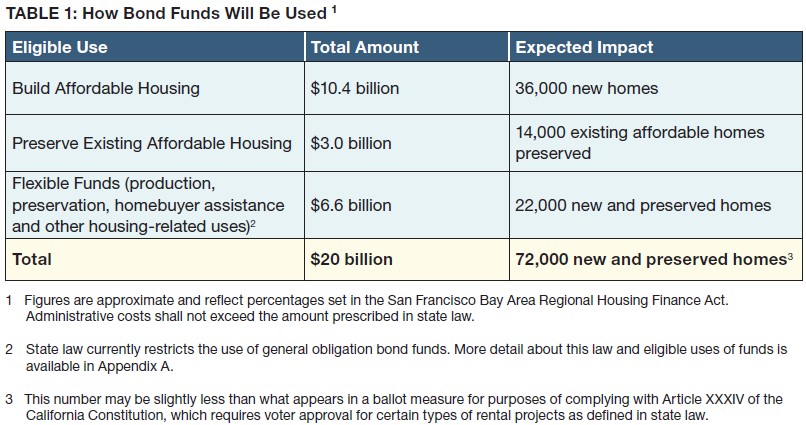
First-of-its-kind measure to help build, preserve more than 70,000 additional homes

Contra Costa County would receive $1.9 billion

By John Goodwin, Assistant Director of Communications & Rebecca Long, Director, Legislation & Public Affairs, Metropolitan Transportation Commission

The Bay Area Housing Finance Authority (BAHFA) on Wednesday, June 26, 2024, adopted a resolution to place a general obligation bond measure on the November 5 general election ballot in each of the nine Bay Area counties to raise and distribute $20 billion for the production of new affordable housing and the preservation of existing affordable housing throughout the region. BAHFA is jointly governed by the Association of Bay Area Governments (ABAG)’s Executive Board and by the BAHFA Board, which is comprised of the same membership as the Metropolitan Transportation Commission (MTC).

The bond could create 72,000 new affordable homes – more than double what would be possible without a bond. Without more funding, only about 71,000 affordable homes will be built or preserved in the Bay Area over the next 15 years – a status quo that is failing to meet the needs of the people who live and work here.

Currently, the Bay Area doesn’t have enough homes for the people who live here. As a result of the region’s housing shortage:

  • In 2022, 37,000 people were unhoused in the Bay Area.
  • 1.4 million people—23% of Bay Area renters—spend over half their income on rent.
  • High rents and home prices force people to live far from work, making congestion and pollution much worse, and putting a major strain on working families.
  • Too many Bay Area residents live in overcrowded and unsafe housing.
  • Vital employees and community members are leaving the area.

Wednesday’s unanimous vote by the BAHFA Board marks the final discretionary step in the process to place the measure on the November ballot. Under state law, each Bay Area county will now take a non-discretionary, ministerial vote to place the measure on the ballot in that county, in accordance with election deadlines.

The BAHFA bond measure currently would require approval by at least two-thirds of voters to pass. Voters throughout California this November will consider Assembly Constitutional Amendment 1 (ACA 1) — which would set the voter threshold at 55 percent for voter approval of bond measures for affordable housing and infrastructure. If a majority of California voters support ACA 1, the 55 percent threshold will apply to the BAHFA bond measure.

“Today’s vote is the culmination of so many years of effort by so many people all around our region,” observed BAHFA Chair and Napa County Supervisor Alfredo Pedroza. “The Bay Area’s longstanding housing affordability problems affect all of us, our friends, our neighbors and our family members. This vote is about preserving opportunity for everyone.”

Source: BAHFA

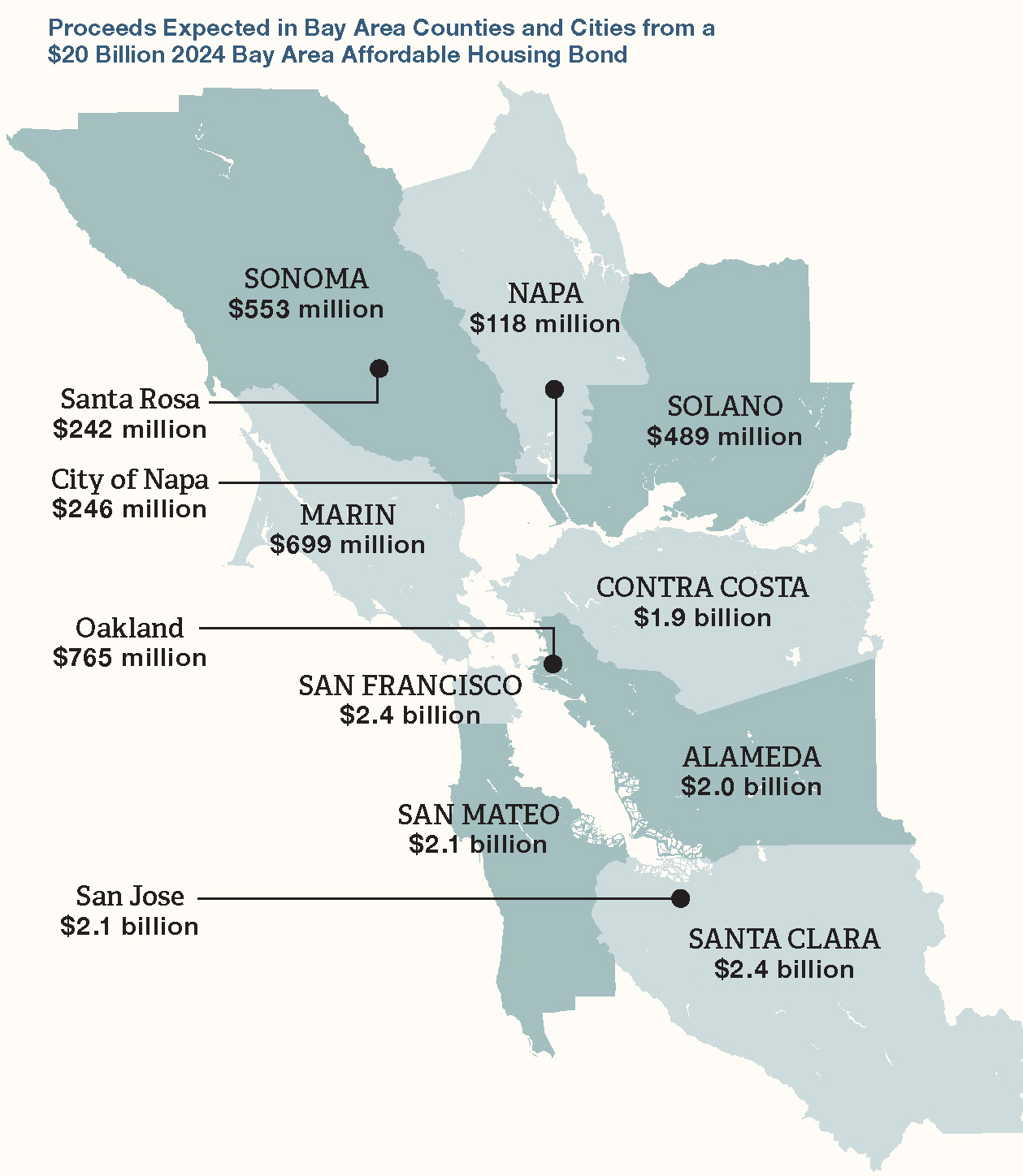
The proposed BAHFA bond measure calls for 80 percent of the funds to go directly to the nine Bay Area counties (and to the cities of San Jose, Oakland, Santa Rosa and Napa, each of which carries more than 30 percent of their county’s low-income housing need), in proportion to each county’s tax contribution to the bond. In consultation with its cities and towns, each county would determine how to distribute bond funds to best meet its jurisdictions’ most pressing housing needs. These distributions would include:

  • Contra Costa County: $1.9 billion
  • Alameda County: $2 billion
  • Marin County: $699 million
  • Napa County: $118 million
  • San Francisco County: $2.4 billion
  • San Mateo County: $2.1 billion
  • Santa Clara County: $2.4 billion
  • Solano County: $489 million
  • Sonoma County: $553 million
  • City of Napa: $246 million
  • City of Oakland: $765 million
  • City of San Jose: $2.1 billion
  • City of Santa Rosa: $242 million

The remaining 20 percent, or $4 billion, would be used by BAHFA to establish a new regional program to fund affordable housing construction and preservation projects throughout the Bay Area. Most of this money (at least 52 percent) must be spent on new construction of affordable homes, but every city and county receiving a bond allocation must also spend at least 15 percent of the funds to preserve existing affordable housing. Almost one-third of funds may be used for the production or preservation of affordable housing, or for housing-related uses such as infrastructure needed to support new housing.

Source: BAHFA

The California Constitution currently does not allow bond funds to be used for tenant protections such as rental assistance, but planned investments in new housing and affordable housing preservation will protect tens of thousands of low-income renters and vulnerable residents.

The BAHFA Board also adopted on Wednesday, resolutions approving the Authority’s Business Plan and its Regional Expenditure Plan, which explain the prioritization for use of the funds that would be directly administered by BAHFA.

Oversight and accountability provisions to be included in the BAHFA bond measure include the creation of a special bond proceeds account; establishment of a Citizens’ Oversight Committee that would review the expenditure of bond proceeds and report to the BAHFA and ABAG Executive Boards on whether the funds were spent appropriately; an independent annual performance audit; a requirement that all bond-projects be consistent with state laws on labor standards; a requirement that administrative costs not exceed the amount prescribed in state law; and a prohibition against any public official who voted to send the ballot measure to the voters bidding on any work funded with proceeds from the bond.

The ABAG Executive Board voted unanimously at its April meeting to adopt a resolution approving BAHFA’s Business Plan and its Expenditure Plan, as well as to endorse placement of the bond measure on the November ballot. In her remarks preceding the vote, ABAG President and Napa County Supervisor Belia Ramos noted, “This is a remarkable milestone moment for our region. Housing stability is essential for our community to thrive, and this proposal is a once-in-a-generation opportunity.”

Read the Bond Report and learn more about the bond measure, here and here.

Filed Under: Bay Area, Finances, Growth & Development, Homeless, News, Politics & Elections

Report: Bay Area needs $9.7 billion to subsidize 40,000 affordable homes in predevelopment pipeline

June 3, 2024 By Publisher Leave a Comment

Photo Credit Joey Kotfica. Source: MTC

Proposed $20 billion regional November bond measure seen as way to close the gap

By Kate Hartley, BAHFA & Justine Marcus, Enterprise Community Partners

Enterprise Community Partners (Enterprise) and the Bay Area Housing Finance Authority (BAHFA) released the Bay Area Affordable Housing Pipeline 2024 Report, last month, which analyzes affordable housing projects in various stages of predevelopment and identifies solutions for moving them toward completion. The updated research reveals there are now 433 projects in various stages of predevelopment that would create more than 40,896 affordable homes across the nine-county Bay Area. These would account for nearly a quarter of the 180,000 affordable homes the state’s Regional Housing Needs Allocation (RHNA) Plan determined are needed in the Bay Area by 2031. (See related article)

Affordable housing developments typically are supported by a capital “stack” investment that includes a commercial mortgage; Low-Income Housing Tax Credits; tax-exempt bonds; and additional local, regional and state dollars that fill the gap between the cost of the development and the financing secured through debt and equity. The new report calculates that the hundreds of Bay Area projects now in the predevelopment pipeline need $9.7 billion in public funds to move forward, and that a $20 billion regional bond measure proposed for the ballot in Bay Area counties this fall would help close this gap.

“We’ve been stuck in an affordable housing crisis that has overwhelmed the region. The November ballot presents an opportunity to unlock thousands of affordable homes for Bay Area residents,” said Heather Hood, VP and Northern California Market Leader at Enterprise. “We expect voters to have a chance to end our housing crisis and deliver the dignified, healthy homes the Bay Area community needs and deserves.”

Source: Enterprise Community Partners

The predevelopment pipeline includes projects in all nine Bay Area counties. These include more than 10,000 units in both Alameda and Santa Clara counties, with another 8,400 affordable homes pending development in San Francisco and more than 3,000 units in both San Mateo and Sonoma counties. Project pipelines in other Bay Area counties range from over 300 affordable homes in Solano County to 1,173 units in Marin County; nearly 1,500 homes in Napa County; and over 2,500 units in Contra Costa County. Each Bay Area city, town or county currently is working on its own to meet the challenges of housing affordability and homelessness.

“The need for affordable housing transcends jurisdictional boundaries. BAHFA’s proposed bond measure would finally allow our Bay Area to take a regional approach to a regional problem,” said BAHFA Director Kate Hartley. “With significant new resources for every county, we can build at scale, deliver equitable solutions, and create a better way to deliver the affordable homes Bay Area residents need.

The updated Bay Area Housing Pipeline research brief was presented at today’s regularly scheduled meeting of the Metropolitan Transportation Commission’s Bay Area Housing Finance Authority Oversight Committee.

About Enterprise Community Partners 

Enterprise is a national nonprofit that exists to make a good home possible for the millions of families without one. We support community development organizations on the ground, aggregate and invest capital for impact, advance housing policy at every level of government, and build and manage communities ourselves. Since 1982, we have invested $54 billion and created 873,000 homes across all 50 states – all to make home and community places of pride, power and belonging.

About the Bay Area Housing Finance Authority

Established by the state legislature in 2019, BAHFA’s mandate is to create regional solutions that meet the Bay Area’s affordable housing needs. It is the first regional housing finance authority in California. BAHFA works together with the Metropolitan Transportation Commission and Association of Bay Area Governments (ABAG).

Filed Under: Finances, Government, Growth & Development, News

Natural gas ban lifted for new buildings in Contra Costa County

February 28, 2024 By Publisher Leave a Comment

Supervisors suspend all-electric requirements following U.S. Court of Appeals ruling

(Martinez, CA) – The Contra Costa County Board of Supervisors Tuesday suspended enforcement of its requirement that most new buildings be constructed as all-electric buildings.  The County’s all-electric building requirement, as part of the County’s building code, had prohibited the installation of natural gas infrastructure in most new buildings and required developers to use electricity as the sole source of energy in the building.  With Tuesday’s action, the County’s all-electric building requirement will not be enforced.

Last month, the U.S. Court of Appeals for the Ninth Circuit invalidated a City of Berkeley ordinance that prohibited natural gas infrastructure in new buildings. The court held that the federal Energy Policy and Conservation Act precludes cities and counties from adopting building codes that prohibit the installation of gas plumbing in buildings.

Contra Costa County’s all-electric building requirement, like the invalidated City of Berkeley ordinance, prohibits the installation of gas plumbing in new buildings.  The County is therefore suspending this requirement in response to the Ninth Circuit’s decision.

At the same time, the Board of Supervisors remains committed to the goals that prompted it to adopt the all-electric requirement: improving public health and fighting what they believe contributes to climate change. The Board referred the topic of reducing greenhouse gas emissions from buildings to its Sustainability Committee and directed staff to report on alternatives for advancing this objective at the Committee’s next meeting.

“Contra Costa County remains committed to reducing the use of fossil fuels in buildings and continues to support the construction of new buildings using all-electric technologies.  We are eager to identify new and innovative ways to continue to pursue our goal of reducing greenhouse gas emissions from buildings.” said Board Chair Federal D. Glover, District 5 Supervisor.

The County encourages residents and businesses to continue to install all-electric building systems and appliances. There are many benefits of all-electric construction, some of which include:

  • Cleaner air and better health outcomes from eliminating the emissions associated with burning fossil fuels, particularly indoors.
  • Not having to pay to install gas pipes in new buildings.
  • Taking advantage of financial incentives and rebates for all-electric appliances.
  • Resilience against power outages, particularly when electric technologies are paired with battery storage.
  • Hedging against high electricity costs by being able to schedule electric appliances to operate at times of day when electricity costs are lowest.
  • Preparing for the potential discontinuation of gas appliances in the future that could occur from possible regulatory actions by regional, state, or federal agencies.

There are many good resources on the benefits of all-electric buildings, including:

The County’s sustainability web site has information on state and federal incentives, rebates, and other ways to fund all-electric upgrades.

The Bay Area Regional Energy Network has information on training opportunities, rebates and incentives, and contractors.

MCE, the community choice energy provider for most of Contra Costa County, offers rebates and incentives.

The Switch Is On, sponsored by the Building Decarbonization Coalition, is a collaborative campaign to support all-electric home conversion by providing tools, support, and resources to Californians.

Rewiring America provides information about the benefits of all-electric technologies, and helps generate a personalized plan for individuals, including costs and savings.

PG&E also has resources on all-electric buildings, including rebates, incentives, rate plans, and design guides.

Allen D. Payton contributed to this report.

Filed Under: Business, Construction, Dining, Energy, Growth & Development, Legal, News, Supervisors

West County: District 1 Open House on Contra Costa Draft General & Climate Action Plans Feb. 21

February 14, 2024 By Publisher Leave a Comment

Casa Abierta sobre el Borrador del Plan General del Condado y el Plan de Acción Climática

At El Cerrito City Hall

By District 1 Supervisor John Gioia

I invite you to join us for an upcoming open house to learn about the Draft Contra Costa County General Plan and Draft Climate Action Plan Update!

When: Wednesday, February 21 from 5:00 – 7:00 pm

Where: El Cerrito City Hall Lobby, 10890 San Pablo Ave., El Cerrito

Learn about proposed land use policies for the unincorporated areas of West County – Kensington, East Richmond Heights, El Sobrante, North Richmond, Rollngwood, Montalvin Manor/Bayview and Tara Hills; and provide input.

Click on my video explaining the importance of participating in the General Plan!

The Draft Contra Costa County General Plan and Draft Climate Action Plan (CAP) 2024 Update are part of the Envision Contra Costa 2040, the County’s plan to address land use, transportation, housing, climate change, environmental justice and other important issues over the next 20 years. They update is available for public review at envisioncontracosta2040.org. (See related article)

Community feedback has been the driving force behind our planning efforts. Now, we invite you to explore our work and ensure it reflects our collective vision for Contra Costa County’s future.

We’ll be taking questions, providing answers, and encouraging you to share feedback in-person or through our online commenting tool.

View the event flyer here.

Thank you, and we hope to see you there!

En Español

¡Lo invito a unirse a nosotros en una próxima jornada de puertas abiertas para conocer el borrador del Plan General del Condado de Contra Costa y el borrador de la actualización del Plan de Acción Climática!

Cuándo: Miércoles 21 de febrero de 5:00 a 7:00 p.m.

Dónde: Vestíbulo del Ayuntamiento de El Cerrito, 10890 San Pablo Ave., El Cerrito

Conozca las políticas de uso de suelo propuestas para las áreas no incorporadas del oeste del condado: Kensington, East Richmond Heights, El Sobrante, North Richmond, Rollngwood, Montalvin Manor/Bayview, Tara Hills; y proporcionar información.

El borrador del Plan General del Condado de Contra Costa y el borrador del Plan de Acción Climática (CAP) 2024 están disponibles para revisión pública en envisioncontracosta2040.org

Los comentarios de la comunidad han sido la fuerza impulsora detrás de nuestros esfuerzos de planificación. Ahora, lo invitamos a explorar nuestro trabajo y asegurarnos de que refleje nuestra visión colectiva para el futuro del condado de Contra Costa.

Responderemos preguntas, brindaremos respuestas y lo alentaremos a compartir sus comentarios en persona o a través de nuestra herramienta de comentarios en línea.

Vea el folleto del evento aquí.

¡Gracias y esperamos verte allí!

Allen D. Payton contributed to this report.

Filed Under: Environment, Government, Growth & Development, Supervisors, Transportation, West County

During election season Save Mt. Diablo sends mailer showing 10-month-old votes by Pittsburg councilmembers

February 13, 2024 By Publisher Leave a Comment

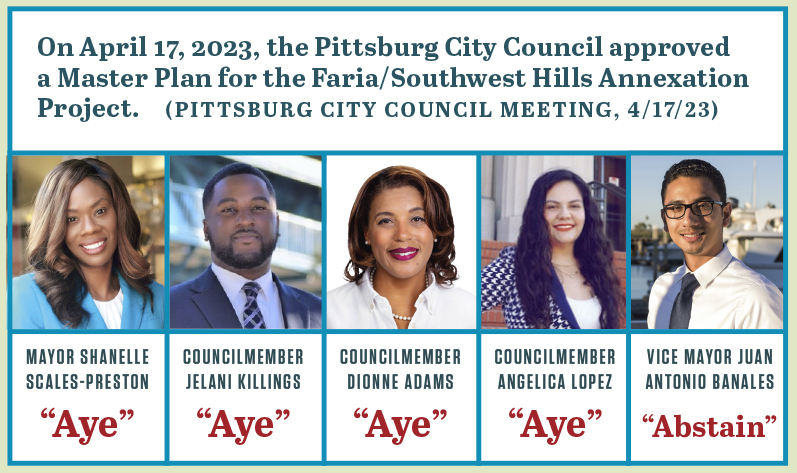
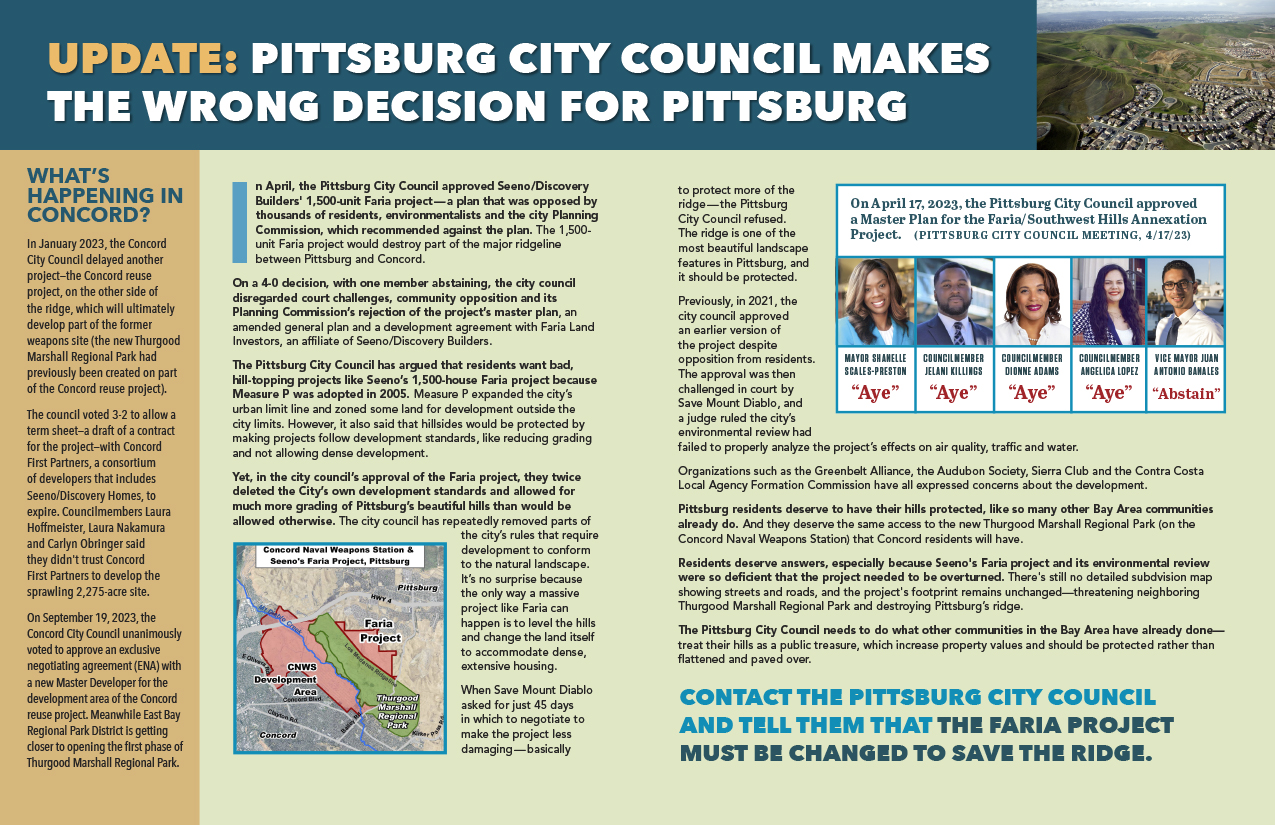
Mailer from Save Mount Diablo shows how the five Pittsburg councilmembers voted on the Faria housing development last year. Source: Save Mount Diablo

Two running for county supervisor on March 5th ballot; org leader says they have no position in race

By Allen D. Payton

A week before the ballots for the March 5th primary election began arriving in mailboxes, a mailer from Save Mount Diablo (SMD) was sent to all households in Pittsburg asking for public support of their effort to get the council members to reverse their vote last April for Discovery Builders’ hillside housing development. Known as the Faria project, the project includes 1,500 homes on 341 acres with 265 acres of open space on the south side of the city which borders the new Thurgood Marshall Regional Park in Concord.

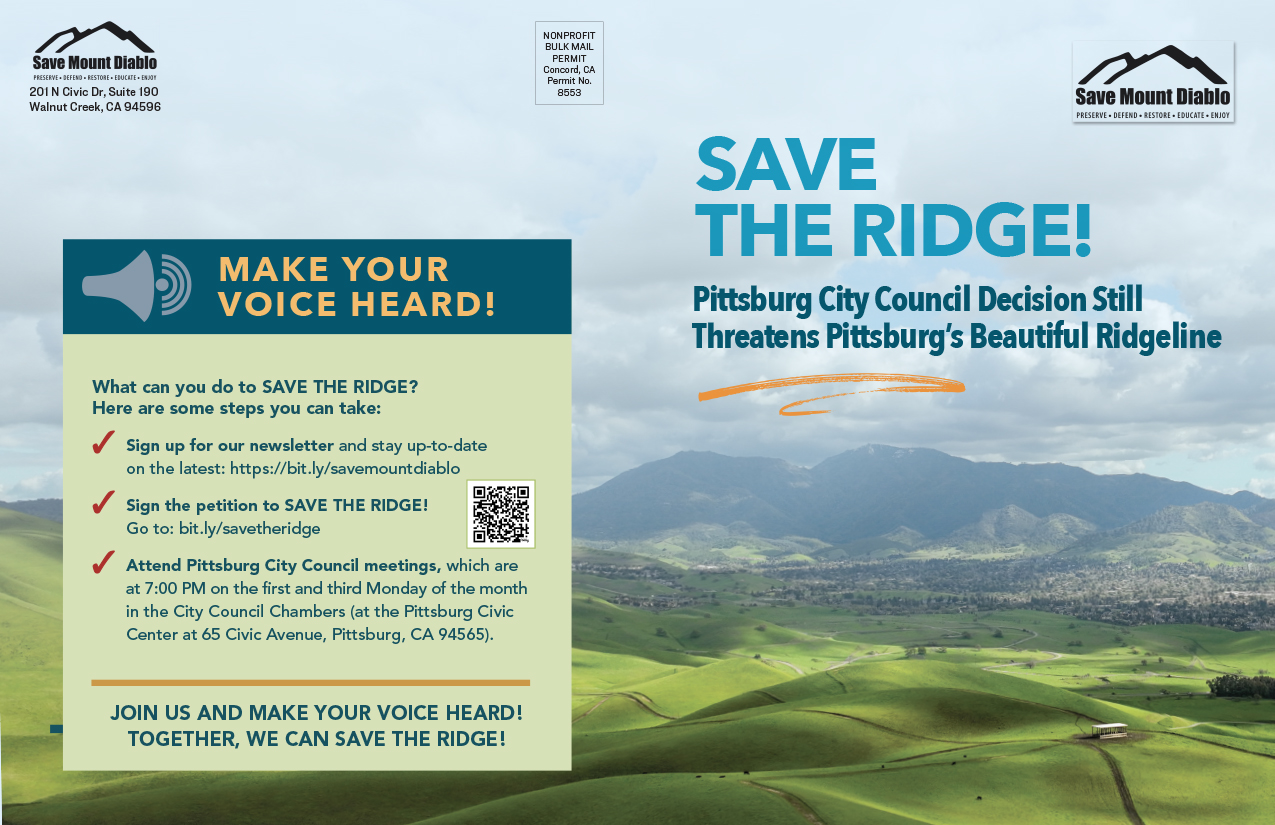
The mailer reads, “On April 17, 2023, the Pittsburg City Council approved a Master Plan for the Faria/Southwest Hills Annexation Project.” It shows photos of and “aye” votes by then Mayor Shanelle Preston-Scales, Councilmember Jelani Killings, who are both running for county supervisor in the March 5th primary election, as well as Councilmembers Dionne Adams and Angelica Lopez. But the leader of SMD claims they have no position in the race for supervisor. The mailer also shows then-Vice Mayor Juan Antonio Banales who voted to abstain.

In addition, the mailer claims, the “plan…was opposed by thousands of residents, environmentalists and the city Planning Commission, which recommended against the plan.”

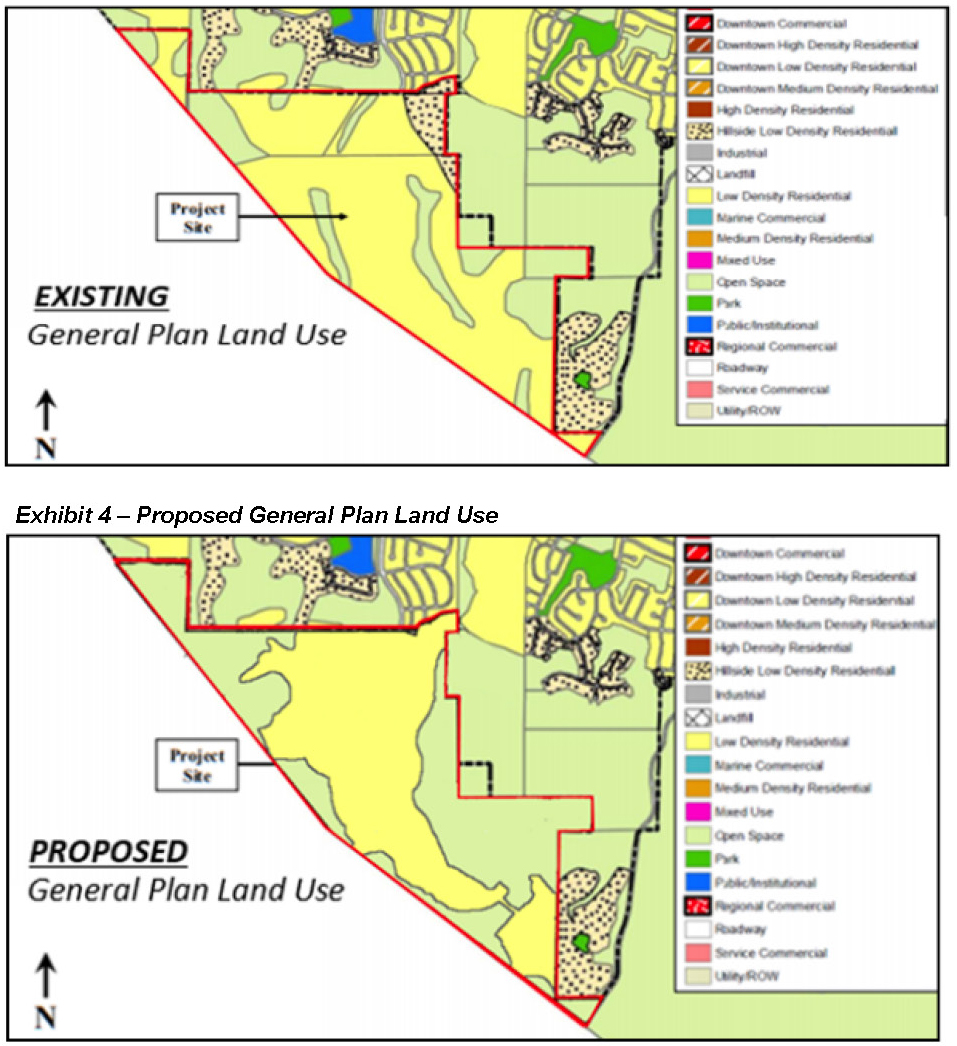
Faria project General Plan Land Use map, adopted 4-17-23 (bottom) versus map of the previously adopted General Plan Land Use. Source: City of Pittsburg

Read mailer, here: Save-the-Ridge-Pittsburg-2024 mailer

It’s part of the organization’s campaign, including an online petition, to keep the homes from being built along the ridgeline. The effort has also included a successful lawsuit filed by SMD in May 2021. On February 10, 2022, a Contra Costa County Superior Court judge sided with SMD. Discovery Builders then appealed the decision but lost again when the court ruled in favor of SMD on April 4, 2022 rejecting all of the developer’s arguments. (See related articles here, here and here)

SMD refers to the Faria project as a Seeno development because Discovery Builders is owned and operated by Albert Seeno, III.

On the organization’s website, SMD wrote, “We stopped Faria for two years, but now it’s back” and asks the public to “Save the Ridge!” The organization says, “We’re not opposed to all development; we just think the Pittsburg City Council and the developer should move it off the ridgetop.” SMD claims the project “would also betray the voters who approved Measure P in 2005 and placed the entire site in the protective hillside zoning. Now Seeno wants to change the zoning to bulldoze the steep hills for massive subdivisions. Because the site is almost entirely over 30 percent slope, with substantial parts at 50 to 70 percent slope, Seeno’s proposed new zoning will allow up to 25 times as many houses as the current Measure P zoning that the voters approved.”

Save Mount Diablo’s Save the Ridge 2024 mailer to Pittsburg residents, side 1. Source: SMD

However, according to the City staff report for the agenda item 13 for the April 2023 meeting, “the current General Plan allows for up to 478 acres of residential use and 129 acres of open space.” It also reads, “The proposed amendments would not change the existing maximum development potential (1,500 single family units), but rather would focus the development to the center of the site within the valley area.”

The effort’s webpage further reads, “Thee Pittsburg City Council should SAVE THE RIDGE for everyone and ensure public access to the new regional park for Pittsburg residents.

Save the ridge to keep our area a beautiful and desirable place to live, work, and visit!

Join us and sign our Save Pittsburg Hills/Save Mount Diablo petition urging the Pittsburg City Council to SAVE THE RIDGE and require the Seeno/Discovery Builders Faria development to be relocated off the top of Pittsburg’s ridge.”

Save Mount Diablo’s Save the Ridge 2024 mailer to Pittsburg residents, side 2. Source: SMD

SMD Asked If Attempting to Impact the Election

Questions were sent to SMD’s Executive Director Ted Clement asking when the effort began and why the mailer was sent during election season. He was further asked if it was timed to impact the election of Killings and Scales-Preston in their campaigns for county supervisor.

Clement responded, “We’ve been working to protect the Los Medanos ridge between Concord and Pittsburg for years. That effort is ongoing. We’re working to educate as many people as possible. We don’t have a position on the county supervisor campaigns.”

He was again asked if the mailer was sent to all homes in Pittsburg and if not, how many were mailed. But he did not respond.

Efforts to reach Killings and Preston-Scales asking if they had any comments about the mailer and their votes for the project were unsuccessful, as were efforts to reach Albert Seeno, III or anyone at Discovery Builders for comment.

Please check back later for any updates to this report.

Filed Under: East County, Growth & Development, News, Politics & Elections

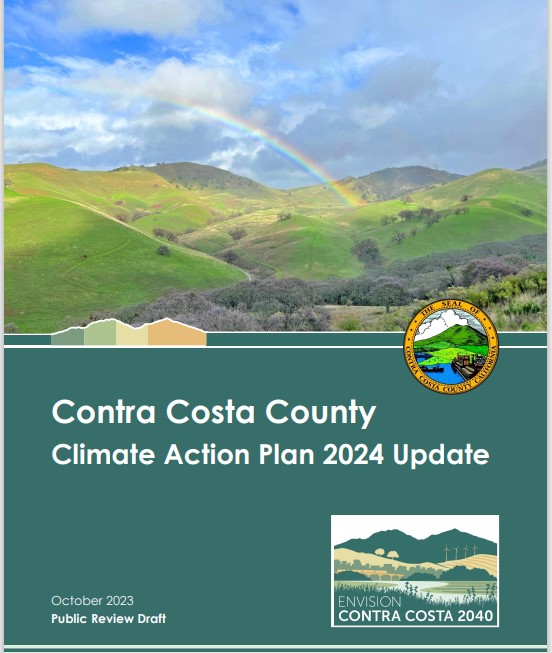
Drafts of Contra Costa County General Plan and Climate Action Plan available for public review

October 25, 2023 By Publisher Leave a Comment

By Contra Costa County Department of Conservation and Development

From land use and housing to climate change and environmental justice, residents are invited to explore drafts of the General Plan and Climate Action Plan to ensure they reflect the community’s collective aspirations for Contra Costa County’s future.

View the plans and provide comments on the project website at envisioncontracosta2040.org through Jan. 31, 2024.

The Public Review Draft of the Contra Costa County 2045 General Plan is the County’s primary policy tool to guide physical changes in the unincorporated areas over the next 20 years. It serves as the basis for planning- and infrastructure-related decisions made by County staff and decision makers. It is built around the themes of environmental justice, community health, economic development, and sustainability.

“Our General Plan establishes the policies that will move us towards a more equitable, healthier, safer and stronger future,” said John Gioia, Chair of the Board of Supervisors. “Public participation and input is vital in creating sound policy and guiding our public decisions on the issues that impact every facet of our lives.”

The Public Review Draft Climate Action Plan 2024 Update is the County’s strategic plan to reduce greenhouse gas emissions (GHG) and to adapt to changing climate conditions, such as extreme heat, flooding, droughts, and wildfires, in the unincorporated areas of the County. The 2024 Climate Action Plan implements the General Plan policy guidance and addresses behaviors, regulations, and investment decisions that directly reduce GHG emissions or promote climate resilience.

Community feedback has been the driving force behind these planning efforts. County staff have held over 130 meetings with community members, advocates, stakeholders, and officials. This collaborative effort, including almost 50 community meetings and over 20 with community-based organizations, has shaped the shared vision for Contra Costa County.

Filed Under: Environment, Government, Growth & Development

Coalition calls CA AG’s ballot initiative title, summary false, misleading

September 30, 2023 By Publisher Leave a Comment

Source: Our Neighborhood Voices

Effort “to bring back a local voice in community planning” co-sponsored by Brentwood Councilwoman

By Daniel Payne, Our Neighborhood Voices

This past week the Our Neighborhood Voices initiative received a title and summary from the office of Attorney General Rob Bonta that is false, misleading and likely to create prejudice against the initiative.

The title and summary provided by Bonta’s office falsely claims that the measure “automatically” overrides the state’s affordable housing laws. It does no such thing. It gives communities the power to shape local growth in a way that better meets affordable housing requirements – and it restores the ability of local communities to negotiate even higher affordable housing rates, which one-size-fits-all laws passed in Sacramento have taken away.

In 2021, Bonta’s own office issued a title and summary for the first draft of this initiative that did not include this misleading language. It correctly stated that the Our Neighborhood Voices initiative would return land-use and zoning decisions back to local communities – instead of forcing top-down mandates on cities that damage neighborhoods and only benefit for-profit developers.

Brentwood District 1 Councilmember Jovita Mendoza is one of the three co-sponsors of the initiative which has been endorsed by the Contra Costa County city councils of Brentwood and Clayton, as well as Oakley Vice Mayor Randy Pope.

In fact, the Our Neighborhood Voices initiative will increase the chances of more affordable housing being built according to the Legislative Analyst’s Office. In their report, the LAO states that the initiative “May enable additional flexibility for affordable housing development.” This is exactly the intent of the initiative – to help local cities choose which state housing laws work best for them and modify them in ways that will make them more successful.

The only substantial changes in the new version of the initiative submitted to Bonta’s office this year was the addition of a provision that exempts 100% affordable housing projects at 80% of AMI, and a repeal of Article 34 of the California Constitution that makes it more difficult to create affordable housing.

Yet Bonta’s office still added the argumentative and prejudicial language that the initiative would “automatically override” affordable housing laws.

“Bonta’s claim that our initiative would ‘automatically override’ affordable housing laws is clearly and provably false,” Brentwood City Councilmember and initiative proponent Jovita Mendoza said. “Our initiative would allow cities to choose where and how new housing projects get built, instead of forcing them to comply with blanket mandates from Sacramento that give for-profit developers a blank check to gentrify and destroy our communities.”

The laws that the Attorney General’s office is apparently referring to are not even correctly called “affordable housing” laws. Sacramento politicians have given developers the ability to override local communities and governments to build luxury housing with affordable requirements so low that these new projects contribute to displacement and gentrification.

A law like SB9, which eliminated single family zoning in California, is being challenged in court because it was passed on the premise that it WILL create affordable housing, but clearly will not. “There is nothing in laws like SB9 that would get us anywhere close to the number of new affordable units that the state says we need,” said Kalimah Priforce, an Emeryville City Councilmember and advocate for BIPOC homeownership. “Instead, we will continue to see projects that are largely unaffordable to most working families, communities of color, or other Californians who need housing most. ‘Trickle down housing’ doesn’t work – and we certainly shouldn’t be relying on debunked theories to guide important housing decisions in our state.”

“Without a fair and accurate title and summary, our initiative cannot go forward on the 2024 ballot,” explained Susan Candell, Lafayette City Councilmember and proponent of the Our Neighborhood Voices initiative. “We are weighing our options to sue, although such a delay will run out the clock for an initiative like ours – which relies on volunteer efforts to qualify. But our fight for local democracy will go forward – and we won’t stop until we restore our right to have a say in the future of our own communities.”

“In fact this politicized attack against our initiative is just further evidence that Sacramento will continue to put developer profits over the needs of our communities – unless we stand up and fight back. And while we focus our efforts on seeing that this misleading language is changed, we will continue to grow our grassroots coalition and fight back for our neighborhood voice,” said Redondo Beach City Councilmember and supporter of the initiative Nils Nehrenheim.

Learn more about the Our Neighborhood Voices coalition and

how you can get involved at www.OurNeighborhoodVoices.com

Filed Under: Attorney General, Growth & Development, News, Opinion, Politics & Elections, State of California

Concord City Council selects new master developer for base reuse project

September 7, 2023 By Publisher Leave a Comment

The former Concord Naval Weapons Station land south of Highway 4. Photo: Brookfield Properties presentation

Brookfield Properties plans to develop the 2,300 acres of former Naval Weapons Station in 5 phases

By City of Concord

The Concord City Council, sitting as the Local Reuse Authority (LRA), interviewed and designated Brookfield Properties as the preferred master developer for Concord’s Base Reuse Project.

At a special meeting on Aug. 26, the LRA received a presentation from Brookfield about their plan to develop 2,300 acres of the former Concord Naval Weapons Station.

Following Council questions and public comment, the LRA voted unanimously to select the global real estate developer for this project.

The Concord Base Reuse Project Area Plan. Source: Brookfield Properties presentation

With an office in San Ramon, and part of New York-based developer and real estate conglomerate Brookfield Partners, the developer agreed to a variety of requests including designating at least 25% of the housing as affordable and hiring 40% of its construction workforce from within the county. They propose a multi-phase approach beginning with connecting the community to the nearby BART station within the first phase of construction,

The next steps include outlining the terms of an Exclusive Negotiating Agreement (ENA) and a “term sheet”, a document that establishes procedures and standards for the negotiation of a comprehensive proposed Disposition and Development Agreement and drafting a Specific Plan for the property.

The Concord Base Reuse Project Phases. Source: Brookfield Properties presentation

Previously, the council had selected Lennar in 2020 and Seeno’s Concord First Partners in 2022 as master developers.

The city council acting as the LRA is expected to consider the ENA at a meeting tentatively scheduled for Sept. 19.

A recording of the Aug. 26 meeting and supporting documents can be found online.

Allen D. Payton contributed to this report.


Filed Under: Central County, Concord, Growth & Development, News

Plan Bay Area 2050+ Draft Blueprint: Tell us what you think

August 17, 2023 By Publisher Leave a Comment

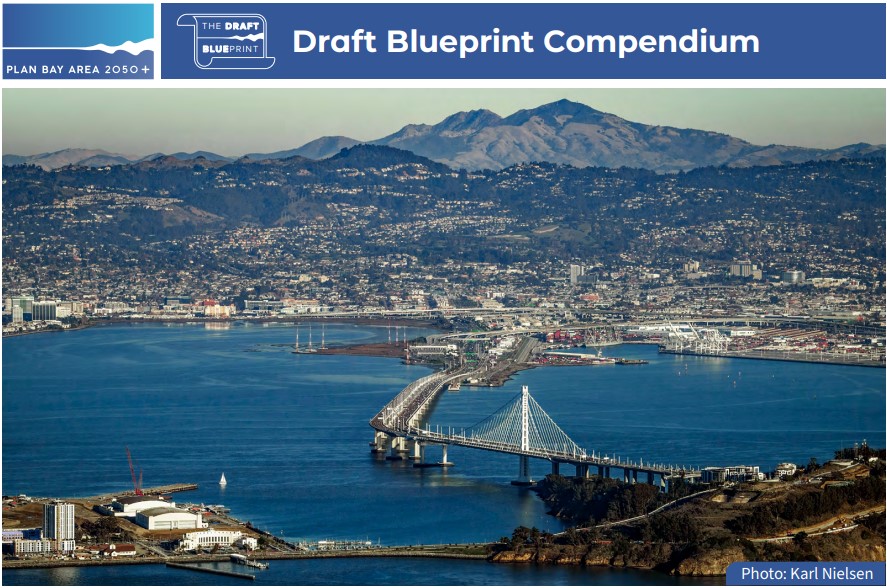
Creating the Blueprint is a key step in developing Plan Bay Area 2050+.

Public engagement is a fundamental element of the plan update process.

Sept. 6th workshop in Contra Costa; Deadline for comment: September 7, 2023

The Plan Bay Area 2050+ Blueprint will integrate strategies across the four elements of the plan — the economy, the environment, housing and transportation — to create a more equitable and resilient future for all.

Beginning in summer 2023 and wrapping up in late 2024, staff will develop the Blueprint over two phases: the Draft Blueprint and the Final Blueprint. Given Plan Bay Area 2050’s solid foundation of 35 strategies, the Draft Blueprint phase for Plan Bay Area 2050+ will focus on making targeted refinements to select plan strategies. (See Plan Bay Area 2050 Executive Summary)

Assumptions for the select Blueprint strategies will be refined to reflect ongoing implementation efforts from Plan Bay Area 2050, while also leveraging findings from previous planning efforts that may be relevant to the post-COVID environment.

Equity and performance analyses will also be conducted during the Draft Blueprint phase to evaluate how the plan’s strategies are supporting progress towards making the Bay Area more affordable, connected, diverse, healthy and vibrant for all.

Furthermore, Transit 2050+ — the comprehensive re-thinking of the six transit-related strategies in Plan Bay Area 2050’s transportation element — will develop an integrated regional transit network that will be incorporated into the Final Blueprint.

While still remaining fiscally constrained per federal planning requirements, the focused plan update approach will consider whether to pursue targeted updates to — or to reaffirm — the Regional Growth Forecast (while maintaining its forecast methodology), as well as to the External Forces, the Growth Geographies and the Needs and Revenue Forecasts.

Culminating in late 2024, the Metropolitan Transportation Commission (MTC) and the Association of Bay Area Governments (ABAG) will consider adoption of the Final Blueprint, which will then move forward in the plan update process as the preferred alternative for environmental review.

Getting Involved

Creating the Blueprint is a key first step toward updating the plan itself, and thus the Blueprint planning phase will require iteration and deep engagement of the public, partners and elected officials.

A first step in developing the Blueprint is to better understand what has changed as the region emerges from the pandemic. This summer, MTC and ABAG staff will be traveling across the region to speak to the community to understand how life has changed for individuals as the Bay Area enters the “new normal.”

MTC and ABAG are taking input from community members and partners to help inform the development of the Draft Blueprint.

You can make your voice heard in a variety of ways! Attend a pop-up workshop near you; participate in our survey; or submit comments via email, telephone or mail.

Find an event near you and join the conversation to help staff better understand how the last three years have impacted life across the Bay Area.

Photo: Plan Bay Area

Participate in Our Survey

A first step in updating the plan is to better understand what has changed for you as the region emerges from the pandemic. MTC and ABAG want to learn how the “new normal” may be impacting your life.

  • Participate in the survey in English(link is external)
  • 快來參與中文版的問卷調查(link is external)
  • Participa en la encuesta en español(link is external)
  • Tham gia khảo sát bằng tiếng Việt(link is external)

The survey will close on September 7, 2023.

The survey also will help inform the development of Transit 2050+, a parallel long-range planning effort that will produce a first-of-its-kind plan to re-envision the future of the public transit network in the nine-county Bay Area, and the expenditure plan for a potential transportation revenue measure. The revenue measure is key in advancing implementation of Plan Bay Area.

Join a Pop-up Workshop

This summer, MTC and ABAG staff will be traveling across the region to speak to the community to understand how life has changed for individuals as the Bay Area emerges from the pandemic. Attend a pop-up workshop near you and tell us what the “new normal” means to you.

Contra Costa County

Diablo Valley College — Pleasant Hill Campus

Wednesday, September 6, 12 to 3 p.m.

321 Golf Club Road, Pleasant Hill, CA

About Plan Bay Area

Plan Bay Area is a long-range regional plan jointly developed and adopted by MTC and ABAG every four years.


Filed Under: Bay Area, Economy, Environment, Government, Growth & Development, Transportation

Contra Costa, other councilmembers warn SB 423 is state’s “endgame” to eliminate local control over development

March 30, 2023 By Publisher 2 Comments

Our Neighborhood Voices, a growing statewide coalition of communities, claims the bill is a permanent extension of SB 35, gives developers unlimited ability to develop nearly anything, anywhere in California

California lawmakers recently introduced legislation that would permanently strip local communities of nearly all important land use decisions. While the legislation – SB 423 – is touted as a tool to solve our affordable housing crisis, local elected leaders say that the legislation undermines local democracy by removing the ability of communities to plan and prepare for what is built in their neighborhoods. It also can accelerate damaging ‘Builders Remedy’ projects across the state that see massive projects built in residential neighborhoods without adequate planning for water, schools, transit, safety fire danger and other priorities.

SB 423 also removes vital protections in our Coastal Zones – something no other housing bill has dared to do. Californians have consistently supported protecting our coasts – this bill removes many of those protections forever.

“I was hoping SB 423 might be a tool to help us solve our affordable housing crisis, but it is not,” said Susan Candell, Lafayette City Councilmember. “Instead, it is the state’s final end game to undermine local democracy in cities and counties, and unleash unlimited development, including the ‘Builders Remedy,’ even in our treasured coastal zones.”

SB 423 can potentially release the ‘Builders Remedy’ where developers can just about build anything, anywhere. SB 423 is a permanent extension of SB 35 – a 2018 law that forces local governments to approve certain developments under a streamlined process if they fail to build, not just approve, but build enough housing to meet their Regional Housing Needs Allocation (RHNA) numbers. Complex interactions with many other bills lead cities again to be subject to the ‘Builders Remedy’ in 2025 for Southern California and 2027 in Northern California.

The RHNA numbers – which are set every eight years – “laid out impossible goals this cycle,” explains Jovita Mendoza, Brentwood City Councilmember. “Virtually no cities or counties will be able to meet their RHNA numbers. Cities and counties are now set up to fail, and as a result, local governments will lose their ability to have a say about what gets built in our communities. Instead, under SB 423, that approval process will be turned over to developers permanently.”

Coastal zones have been protected from profit-driven overdevelopment since the passage of the California Coastal Act of 1976. This new proposed legislation would virtually undo decades of work to protect California’s coastlines.

“Now local oversight, those who are the stewards of the coastal zone, is removed. Instead, those decisions are handed over to developers and their allies in Sacramento. We all know we need affordable housing in every part of California, but this bill drastically reduces the required affordable units,” said Redondo Beach City Councilmember Nils Nehrenheim.

Our Neighborhood Voices is a non-partisan coalition of residents and elected officials from every corner of California who believe that land use decisions should be determined by local communities and their elected leaders – not one-size-fits-all laws from Sacramento and for-profit developers.

To get these important questions in front of voters, Our Neighborhood Voices is organizing to qualify a citizen-led ballot initiative that would protect the ability of local communities to adopt laws that shape local growth, preserve the character of neighborhoods, and require developers to produce more affordable housing and contribute to the costs associated with it.

Filed Under: Growth & Development, Opinion

  • « Previous Page
  • 1
  • 2
  • 3
  • 4
  • …
  • 6
  • Next Page »
Antioch Juneteenth 2026
RepublicServices-Antioch-ad (1)
Furniture-Clrnc-Outlet-0626
Monica's dinner 05-26 CCH
Celia's-06-26
Delta-RC-A (2)
Deer-Valley-Chiro-06-22

Copyright © 2026 · · Contra Costa Herald · All Rights Reserved