• Home
  • About The Herald
  • Local Agencies
  • Daily Email Update
  • Legal Notices
  • Classified Ads

Contra Costa Herald

News Of By and For The People of Contra Costa County, California

  • Arts & Entertainment
  • Business
  • Community
  • Crime
  • Dining
  • Education
  • Faith
  • Health
  • News
  • Politics & Elections
  • Real Estate

MTC, ABAG release draft of new long-range plan for Bay Area

October 22, 2025 By Publisher Leave a Comment

Source: Plan Bay Area

Public comment through Dec. 18 on Draft Plan Bay Area 2050+, EIR for housing, transportation, economic development and the environment

East Bay Webinar Nov. 5

By Veronica Cummings, Principal Public Information Officer, Engagement & John Goodwin, Assistant Director of Communications, Metropolitan Transportation Commission 

After more than two years of public discussion, technical analyses and refinement, the Metropolitan Transportation Commission (MTC) and the Association of Bay Area Governments (ABAG) today released Draft Plan Bay Area 2050+ and the Plan Bay Area 2050+ Draft Environmental Impact Report for public review and comment.

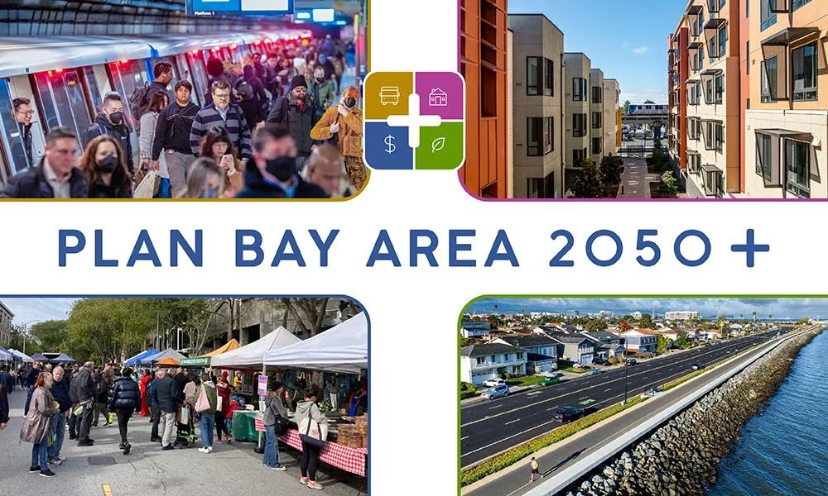
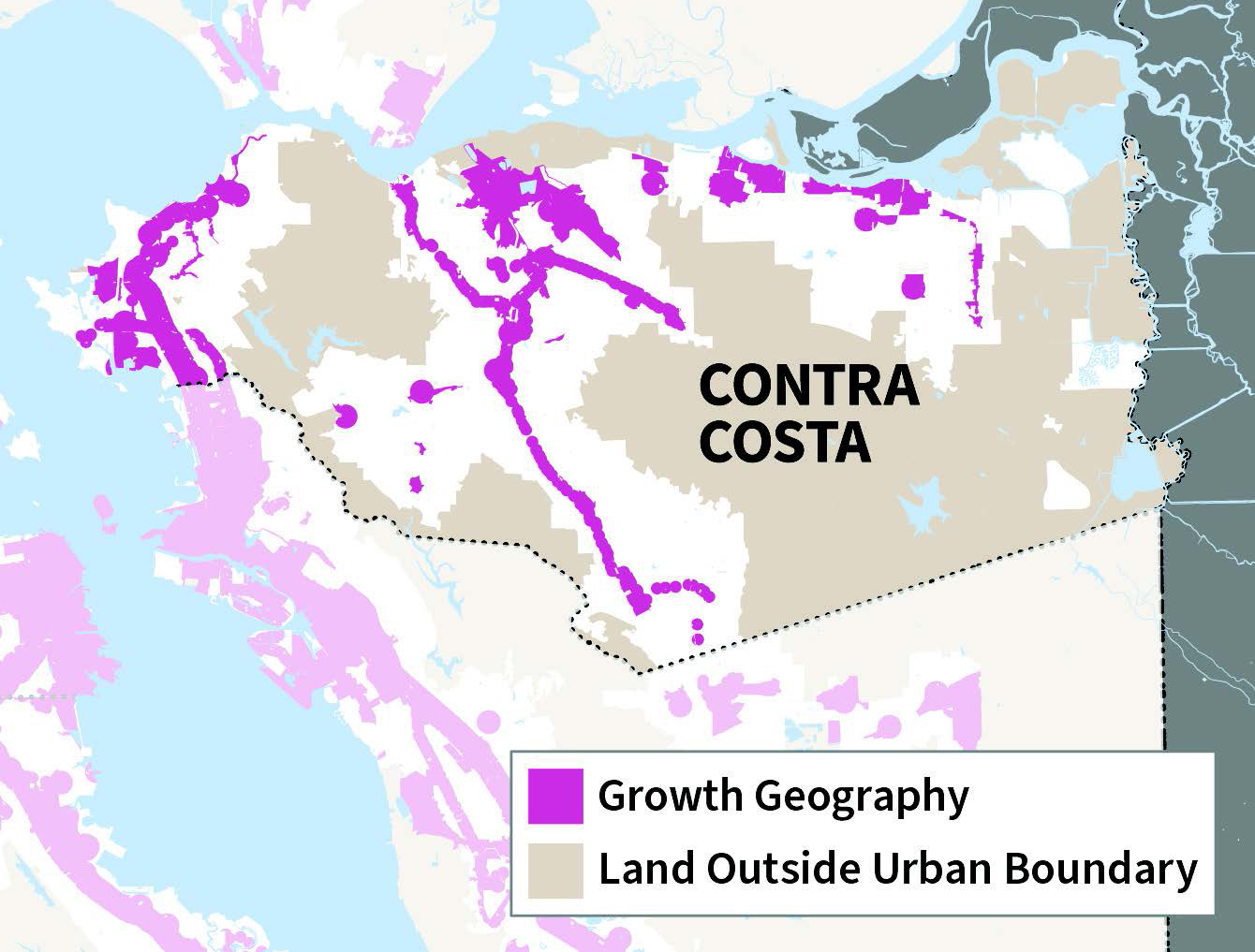
Draft Plan Bay Area 2050+ charts a course for the future of the Bay Area over the next 25 years. Designed to guide growth and investment across the region’s nine counties and 101 cities, the latest plan aims to advance an integrated vision for a Bay Area that is affordable, connected, diverse, healthy and vibrant for all. The plan contains 35 strategies for public policies and investments that can be implemented to help the Bay Area build more homes, reduce commute times, and create vibrant downtowns and natural areas for everyone to enjoy. These strategies also aim to keep people safe from natural hazards, support a strong economy and provide stable housing.

Unique to this plan cycle is Transit 2050+, a parallel and first-of-its-kind planning effort conducted by MTC and ABAG in partnership with Bay Area transit agencies to re-envision the future of Bay Area public transit.

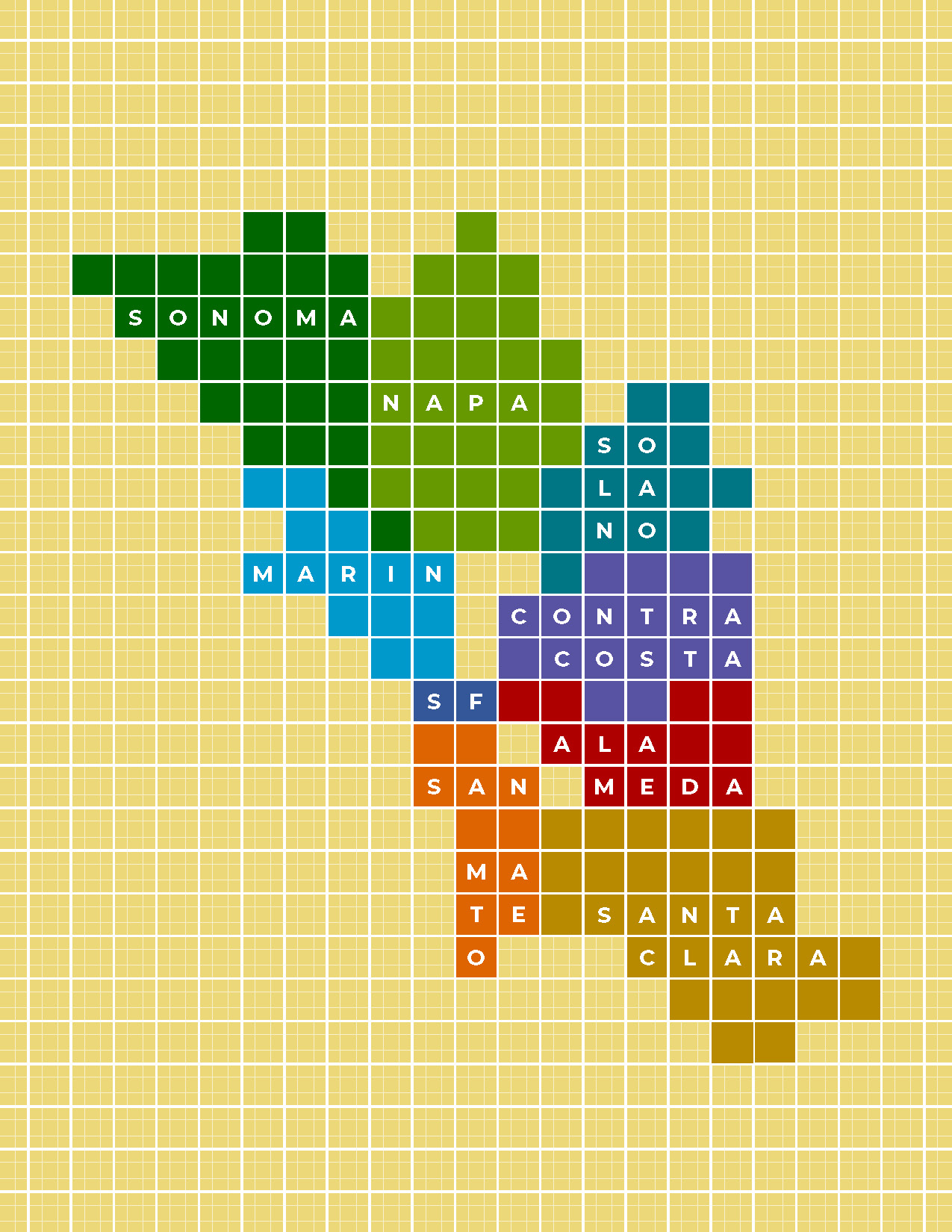
Plan Bay Area includes all nine Bay Area counties and 101 cities. Source: Plan Bay Area

MTC and ABAG have scheduled a series of webinars and public hearings for comment on Draft Plan Bay Area 2050+ and associated supplemental reports, as well as on the Draft Environmental Impact Report for Plan Bay Area 2050+. All interested people, agencies and other organizations are encouraged to attend a webinar or public hearing, where they can ask questions and offer comments on these documents. Full event details are listed below:

  • Webinar #1 — North Bay
    Wednesday, October 29, 2025
    12-1:30 p.m.
    Zoom link: https://bit.ly/northbaywebinar
  • Webinar ID: 892 3077 8001
  • Passcode: 256814
  • 888-788-0099 US Toll Free
  • Webinar #2 — West Bay
    Wednesday, October 29, 2025
    6-7:30 p.m.
    Zoom link: https://bit.ly/westbaywebinar
    Webinar ID: 831 4140 5598
    Passcode: 096944
    888-788-0099 US Toll Free
  • Webinar #3 — South Bay
    Thursday, October 30, 2025
    6-7:30 p.m.
    Zoom link: https://bit.ly/southbaywebinar
    Webinar ID: 822 2561 7467
    Passcode: 356845
    888-788-0099 US Toll Free
  • Webinar #4 — East Bay
    Wednesday, November 5, 2025
    6-7:30 p.m.
    Zoom link: https://bit.ly/eastbaywebinar
    Webinar ID: 869 8283 4999
    Passcode: 682098
    888-788-0099 US Toll Free

In addition to these webinars, MTC and ABAG will host three public hearings around the Bay Area to provide opportunities for all interested agencies, organizations and individuals to comment on the Draft Plan and Draft Environmental Impact Report. The full list of hearings is as follows:

  • Public Hearing #1 — MTC Planning Committee and ABAG Administrative Committee
    Friday, November 14, 2025, at 9:40 a.m. or upon the conclusion of the Bay Area Infrastructure Financing Authority Network and Operations Committee, whichever is later.
    Bay Area Metro Center -or- Zoom
    Boardroom, 1st Floor
    375 Beale Street, San Francisco  Instructions to join by Zoom
  • Public Hearing #2 — Fremont
    Wednesday, December 3, 2025, at 6 p.m.
    Olive Hyde Art Center and Gallery -or- Zoom
    123 Washington Boulevard, Fremont
    Zoom link: https://bit.ly/drafthearing2
    Webinar ID: 875 7625 3306
    Passcode: 178983
    888 788 0099 US Toll Free
  • Public Hearing #3 — Novato
    Thursday, December 4, 2025, at 6 p.m.
    Best Western Plus Novato Oaks Inn -or- Zoom
    215 Alameda del Prado, Novato
    Zoom link: https://bit.ly/drafthearing3
    Webinar ID: 898 0347 9624
  • Passcode: 129009
  • 888 788 0099 US Toll Free

Interested Bay Area residents, agencies and organizations also are encouraged to view and comment on the draft plan online at planbayarea.org/draftplan. Comments will be reviewed by officials from both ABAG and MTC as they consider the adoption of Final Plan Bay Area 2050+, slated for early 2026.

Written comments will be accepted via mail to MTC Public Information Office, Attn: Plan Bay Area -or- Draft EIR Comments, 375 Beale Street, Suite 800, San Francisco, CA, 94105; or via email (Draft Plan Bay Area 2050+ inbox: info@planbayarea.org; Draft EIR inbox: eircomments@bayareametro.gov). Comments by phone can made at (415) 778-2292.

The comment period for all documents will close Dec. 18, 2025, at 5 p.m.

Questions? Visit planbayarea.org, email info@planbayarea.org or call (415) 778-6757.

Accessible Meetings

Do you need an interpreter or any other assistance to participate? Please call (415) 778-6757. For TDD or hearing impaired, call 711, California Relay Service, or (800) 735-2929 (TTY), (800) 735-2922 (voice) and ask to be relayed to (415) 778-6700. We require at least three working days’ notice to accommodate requests.

¿Necesita un intérprete u otra asistencia para participar? Por favor llámenos con tres días de anticipación al (415) 778-6757. Para telecomunicaciones para personas sordas y discapacitadas, favor de llamar al 711, el Servicio de Retransmisión de California (CRS) para TTY/VCO/HCO a Voz o para Voz a TTY/VCO/HCO al (800) 855-3000 y pedir que lo retrasmitan al (415) 778-6700.

您是否需要口譯或任何其他協助才能參加?請致電(415)778-6757。若需使用TDD或為聽障人士人士,請致電711,加州轉接服務,或(800)735-2929(TTY),(800)735-2922(語音),然後要求轉接至(415)778-6700。請至少提前三個工作日提出申請,以便我們能為您提供適當的口譯安排。

ABAG is the council of governments and the regional planning agency for the 101 cities and towns, and nine counties of the Bay Area. MTC is the transportation planning, financing and coordinating agency for the nine-county San Francisco Bay Area.

Filed Under: Bay Area, Economy, Growth & Development, Housing, Jobs & Economic Development, News, Transportation

Contra Costa Water District working to repair canal for $1 billion

June 9, 2025 By Publisher 1 Comment

The Contra Costa Water District Canal Replacement Project includes 20 miles of the waterway. Photo: CCWD

Lake Shasta is source of all water, Los Vaqueros Reservoir will not be expanded, CoCoTax members learn

By Allen D. Payton

During the Contra Costa Taxpayers Association Members and Leaders monthly luncheon in May, Contra Costa Water District Board President, Ernesto Avila provided an update on the district’s current work and plans. They include repairing 20 of the 48-mile canal at a cost of $1 billion, keeping water rates as low as possible and expanding service to keep up with growth.

The district includes the Central County cities and communities of Martinez, Pleasant Hill, Concord, Clayton, Pacheco, Clyde, Port Costa and portions of Walnut Creek, and in East County, the cities and communities of Pittsburg, Antioch, Oakley, Bay Point, and portions of Brentwood.

CCWD Board President Ernesto Avila provides an update during the CoCo Taxpayers Association luncheon on May 23, 2025. Photo: Allen D. Payton

Half of the district’s water is provided to treated water customers and the other half to raw water customers, Avila stated and then spoke about ensuring adequate “water supply during disasters such as fire and earthquake emergencies.”

“When PG&E outages occur all of our tanks go full,” he shared. “Water only stays sweet for six to seven days to meet the water quality requirements of the state.”

“Lake Shasta is where we get all of our water from through the Central Valley Project,” he continued. “It’s currently 94% full.”

The district owns Los Vaqueros Reservoir for storage, which is currently 93% full. But “we can’t just draw water whenever we want,” Avila stated. “All of our intakes are screened to protect fish.”

“We are out of our drought,” Avila added. However, “during the drought there were no constraints on water supply for development and growth.”

Source: CCWD

Canal Replacement Program

There have been “landslides on the west side of the canal and repairs can cost millions,” he stated and spoke of the district’s “Canal Replacement Program” which will cost “$1 billion”.

“Nobody likes to raise rates,” Avila continued. “We’ve replaced four miles, so far and have 16 miles to go. It will be a pipeline”

Asked what happens to the pipe during an earthquake he said, “If it’s an older pipe, it will probably crack. We’re looking at a very ductile pipe that can move easily.”

Asked if there will be solar panels over the canl

Click here to learn more about the Contra Costa Canal.

Water Supply

Avila then spoke about providing enough water to meet the demands of residential growth including “redevelopment of the Concord Naval Weapons station” where “15,000 homes” are projected to be built.

“Ten percent of the district’s water is provided through recycling,” he stated. “We want to bump that up to fifteen percent.”

Budget & Water Costs to Users

“Energy costs have been the greatest increases from 2020 to 2024, medical coverage is second greatest,” he shared. Those are followed by “pension and OPEB (other post employee benefit) liabilities.”

“The average customer spends about $3.00 per day for water,” Avila stated. “The cost is 1.3 cents per gallon per day.”

He compared that to EBMUD rates which are at 2.0 cents per gallon.

Contra Costa Water District Production Costs. Source: CCWD

According to the slide show from his presentation, costs to the district for water production include the following:

INVESTMENTS IN INFRASTRUCTURE – Pipeline Renewal, Canal Replacement, Water Treatment Plant Upgrades;

PURCHASED WATER

WATER SUPPLY AND RESOURCE PROTECTION – Water Supply Planning, Watershed Management, Recreation;

SYSTEM OPERATIONS & MAINTENANCE – Water Treatment, Water Delivery, Leak Inspection and Repair;

ADMINISTRATION – Human Resources, Safety, Accounting and Payroll;

CUSTOMER CARE – Customer Service, Billing, Water Efficiency Support, and Public Affairs; and

COMMUNITY EDUCATION AND WORKFORCE DEVELOPMENT K-12 Water Education and Field Trips, and Internships.

The district as an AAA Bond Rating which keeps interest costs on bonds down, Avila shared.

He was then asked about “money going to DEI programs. I this something you should be doing anymore?” Avila responded, “there are three employees dedicated to it. There are 317 employees which is 30-40% of the budget We have one person in Human Resources dedicated to it. We have a $200 million per year budget. Not even one percent is dedicated to it.”

“It’s about trying to enhance the culture for our employees to work together better,” he added. “We review it every six months. Our Master Plan is on the website.”

Asked about “EPA clean water requirements getting tougher each year” Avila spoke about “unfunded mandates we have to comply with. We work with various associations and collaborate on a national level as regulations are mostly at the federal level.”

“Our biggest concern is the issue of diminishing return on conservation,” he explained. “During the drought, people in our area reduced use by 25 percent while Southern California only reduced 2-3 percent.”

According to the chart in Avila’s presentation total water use has actually decreased over the past 17 years even though the population has significantly increased.

Source: CCWD

No Los Vaqueros Capacity Increase Due to Too Much Cost and Regulation, Offline for Too Long

Asked about increasing capacity at Los Vaqueros, Avila said, “The district spent $10 million on raising the…reservoir, for a cost/benefit analysis funded by the state. It was over subscribed with more customer demand than supply, 250,000 versus 120,000 acre feet.”

“But with so many constraints on pumping water into the reservoir, demand dropped to 50,000 acre feet then to zero,” he continued. “The cost increase with inflation went from $800 million to $1.6 billion, mainly from more material and labor cost increases, plus, engineering costs.”

Finally, Avila shared, “Los Vaqueros Reservoir would have had to be offline for six to seven years. It just wasn’t viable. They knew that, going in. The issue was negotiating supply from EBMUD and others” who “couldn’t guarantee any water.”

He also spoke about future supply including the proposed offstream Sites Reservoir project west of Colusa in the Sacramento Valley.

“In California, for every one million acre-feet of storage, there is eight to nine acre-feet of surface storage,” Avila stated.

Finally, in response to a question, he said, “Water from a canal behind a house is not grandfathered in if the home is sold.”

See Avila’s complete CCWD CocoTax Presentation 052325.

CoCoTax June Luncheon

The next CoCoTax Members and Board Luncheon will be held on Friday June 27, 2025, at 11:45 AM at Denny’s Restaurant, 1313 Willow Pass Road in Concord, and will feature Oakland Mayor recall leader Seneca Scott as the speaker. Advance registration is available on the CoCoTax website where you can pay online, or bring cash or check on Friday and pay at the door: $25 for members, $30 for guests. www.cocotax.org/event-6189658/Registration

About CoCoTax

Founded in 1937, CoCoTax leads the way in providing fiscal oversight of local government.  We actively resist unwarranted taxes and fees, discriminatory regulations, ill-advised public expenditures and government secrecy, inefficiency and waste. For more information and membership visit www.cocotax.org.

About CCWD

The Contra Costa Water District delivers safe, clean water to approximately 520,000 people in central and eastern Contra Costa County in Northern California. Formed in 1936 to provide water for irrigation and industry, we are now one of the largest urban water districts in California and a leader in drinking-water treatment technology and source water protection. For more information visit www.ccwater.com.


Filed Under: Finances, Government, Growth & Development, News, Water

Concord-based developers charged in scheme to bribe Antioch City Councilmember, one denies wrongdoing

April 23, 2025 By Publisher Leave a Comment

Coffee mug and cash allegedly used in the bribery scheme. Source: U.S. DOJ

Co-founder and son, a company VP, of DeNova Homes

Corporate attorney responds saying company “not implicated”

Target, referred to as “he” and “him”, could be either former Mayor Hernández-Thorpe or Councilman Barbanica

“We are confident the facts will show that Dave is innocent, and that he was unfairly targeted,” – attorney Winston Chan

By Allen D. Payton

On Tuesday, April 22, 2025, the U.S. Attorney’s Office for the Northern District of California issued the following announcement about an indictment for alleged bribery of an Antioch Councilmember by the father and son, former and current, leaders of Concord-based DeNova Homes. The company developed the Aviano new home project in Antioch’s Sand Creek Area and The Pointe at Wildflower Station project overlooking the condominiums near the Hillcrest Avenue/Davison Drive and Deer Valley Road intersection. In addition, the Sansons’ Yellow Roof Foundation is coordinating with DeNova homes to pursue a smaller housing project on the north side of the city,

A two-count indictment was unsealed today charging property developers David Sanson and Trent Sanson with conspiracy and bribery in connection with offering to pay an Antioch City Councilmember $10,000 and later giving the Councilmember a company travel mug with $5,000 in cash, in exchange for favorable treatment for one of their development projects.  The Councilmember reported the alleged bribe to the Federal Bureau of Investigation (FBI).  Both defendants made their initial appearances in federal court this morning.

According to the indictment filed April 3, 2025, David Sanson, 60, of Philipsburg, Mont., is the owner and Chief Executive Officer of a home building and development company based in Concord, Calif., and his son, Trent Sanson, 33, of Walnut Creek, Calif., is the Vice President.  The development company has a number of projects in Antioch and neighboring areas, including the Aviano project, a multi-phase 533-unit residential development project.

Dave Sanson is DeNova Homes’ Co-Founder and CEO Emeritus, and his son Trent Sanson is the company’s Vice President for Land Acquisition & Entitlements. Source: Yellow Roof Foundation

As alleged, the Antioch Engineering and Development Services Division indicated that the development company had not completed all of its required public infrastructure improvements and that Phase 3 of the Aviano project should not be deemed complete or approved by the City Council until those improvements were completed.  As a result, the City of Antioch had not approved the release of bonds secured for the project.  To get the Antioch Engineering and Development Services Division to affirm completion and release the bonds associated with the project, Trent Sanson allegedly contacted an Antioch City Councilmember via iMessage on May 29, 2024, stating that he wanted to discuss with the Councilmember issues that the development company was facing with the Antioch “Engineering department” on a number of projects, including Phase 3 of the Aviano project.

“The indictment describes a video-recorded meeting between the Councilmember and Trent Sanson on June 12, 2024, during which Trent Sanson allegedly stated that he wanted the Councilmember to place on the City Council agenda, and vote in favor of, “acceptance for Phase 3 at Aviano to release the completion and guarantee bonds . . . .”  Trent Sanson allegedly stated that David Sanson was willing to pay the Councilmember $10,000 in exchange for the requested actions.  A second video-recorded meeting took place on June 20, 2024, at which David Sanson allegedly paid the Councilmember $5,000 in cash concealed in a travel coffee mug branded with the logo of the Sansons’ development company.

“This indictment alleges that the defendants tried to bribe an Antioch City Councilmember to take favorable action on their real estate project and to evade having to make the public infrastructure improvements that the City required,” said Acting United States Attorney Patrick D. Robbins.  “This case is another example of my Office’s commitment to working closely with our partners at the FBI to root out bribery and attempts to corrupt public office.”

“Attempting to bribe a public official is a blatant attack on the integrity of our government and the trust of the communities we serve,” said FBI Special Agent in Charge Sanjay Virmani.  “The allegations in this case reflect a clear attempt to manipulate the system for personal gain. The FBI will continue to aggressively investigate and hold accountable anyone who seeks to corrupt public institutions through bribery or abuse of power.”

The defendants are next scheduled to appear in district court on June 12, 2025, for a status conference before U.S. District Judge Yvonne Gonzalez Rogers.

The indictment charges each defendant with one count of conspiracy to commit bribery in violation of 18 U.S.C. § 371 and one count of bribery concerning programs receiving federal funds in violation of 18 U.S.C. § 666(a)(2).  The bribery count also includes an allegation that defendants aided and abetted one another in bribing the Antioch City Councilmember.

An indictment merely alleges that crimes have been committed, and all defendants are presumed innocent until proven guilty beyond a reasonable doubt.  If convicted, defendants each face a maximum sentence of five years in prison for the count under 18 U.S.C. § 371 and 10 years in prison for the count under 18 U.S.C. §§ 666(a)(2).  Any sentence following conviction would be imposed by the court after consideration of the U.S. Sentencing Guidelines and the federal statute governing the imposition of a sentence, 18 U.S.C. § 3553.

Assistant U.S. Attorneys Thomas R. Green and Benjamin K. Kleinman are prosecuting the case with the assistance of Amala James and Laurie Worthen.  The prosecution is the result of an investigation by the FBI.

Two Former Councilmembers Respond

The two current and two former council members and former Mayor Lamar Hernández-Thorpe, who were serving during the time the alleged incidents occurred, were asked if they were aware of the indictment and if they were the unnamed councilmember. Former District 3 Councilwoman Lori Ogorchock said simply, “It wasn’t me,” and former District 2 Councilman Mike Barbanica responded, “I won’t comment on an active federal investigation. I took the same stance when I was on the council.”

No responses were received from Hernández-Thorpe nor District 1 and 4 Councilwomen Tamisha Torres-Walker and Monica Wilson. An additional effort to reach Hernández-Thorpe’s re-election campaign’s spokesman and former City of Antioch Public Information Officer Rolando Bonilla asking if he is the political consultant mentioned in the indictment was also unsuccessful prior to publication time.

DeNova Homes’ Chief Legal Officer Responds

Efforts to reach the Sansons were unsuccessful. But DeNova Homes, Inc.’s Chief Legal Officer, Dana Tsubota, responded with the following statement:

“DeNova Homes is aware of the legal matter involving our founder, Dave Sanson, and his son, Trent. While Mr. Sanson has been an important figure in the company’s history, he semi-retired in 2020 when he moved to Montana and he is no longer involved in the leadership or daily operations.

“Importantly, DeNova Homes is not implicated in the government’s investigation. DeNova remains financially sound and fully focused on delivering for our customers, partners, and communities without disruption.

“Under the leadership of President Ryan Parlett and our experienced executive team, DeNova continues its mission of building high-quality homes and supporting the communities we serve.”

According to the company’s website, Dave is a Co-Founder and CEO Emeritus, and according to theorg.com website, Trent is the company’s Vice President for Land Acquisition & Entitlements.

Source: U.S. DOJ

Indictment Claims Request Made “to place” Item “on the…Council agenda, and vote in favor”

The indictment claims, “TRENT SANSON and DAVID SANSON bribed the Councilmember during video recorded meetings, including a meeting at which TRENT SANSON offered the $10,000 bribe to the Councilmember and a subsequent meeting at which DAVID SANSON gave the Councilmember a travel coffee mug branded with the Development Company’s logo and name containing $5,000 in cash.”

The indictment includes quotes from the unnamed councilmember but uses the term “him” in reference in Section 17. Sections 15 through 17 lay out the allegations which read as follows:

June 12, 2024: T. SANSON Bribes the Councilmember

  1. On or about June 12, 2024, T. SANSON met with the Councilmember and stated that he wanted the Councilmember to place on the Antioch City Council agenda, and vote in favor of, the following item: “A tract acceptance for Phase 3 at Aviano to release the completion and guarantee bonds ….” T. SANSON asked the Councilmember for the Councilmember’s assistance and vote in the hopes that the Antioch City Council would approve release of the bond and effectively override the Antioch Engineering and Development Services Division’s position that further work was required by the Development Company to complete its obligations on Phase 3 of Aviano.
  2. In exchange for the Councilmember’s actions, T. SANSON told the Councilmember that he spoke with his father, D. SANSON, in advance of the meeting, and D. SANSON was “willing” to pay the Councilmember $10,000. T. SANSON stated, “[YJou’re not going to see anything directly, but Dave will be doing something for you[.]” T. SANSON then added, “I don’t know if it’s an IE or through a PAC because we … can give to a PAC and then the PAC isn’t limited, you know what I mean?” Shortly thereafter, T. SANSON reiterated, “I’m pretty sure we’ll go through one of the PACs.” T. SANSON ultimately told the Councilmember that he’d check with D. SANSON to determine if they could pay $5,000 to the Councilmember’s IE account and $5,000 in cash. T. SANSON stated that the split “sounds fair.” The Councilmember informed the FBI of the bribe offer by T. SANSON.

Mentions “the primary” and “the general” Elections; Refers to Councilmember as “He” and “Him”

Upon reading the indictment, the terms “he” and “him” are used to describe the unnamed councilmember.

June 20. 2024: D. SANSON Pays the Bribe Initiated bv T. SANSON

  1. On or about June 20, 2024, D. SANSON met with the Councilmember. During the meeting, D. SANSON told the Councilmember, “Anyways, Trent called me and told me that he met with you last week, and 1 told him OK let me take care of it. 1 don’t want you involved.” D. SANSON thanked the Councilmember for meeting with him, stating, “1 know it was last minute, but this had to be done in person.” D. SANSON informed the Councilmember that he’d been in touch with the political consultant running the Councilmember’s IE, stating, “[That’s all still on track for round two. We did it during the primary, and now for the general – we’re back committed to supporting you and all that. So, 1 just want you to know that’s happening – that it’s not just a false commitment or anything like that; and then Trent told me you needed a little extra shot.” D. SANSON then handed the Councilmember a travel coffee mug branded with the Development Company insignia, which contained $5,000 in cash. The Councilmember informed D. SANSON that he had a detailed conversation with T. SANSON, and that he understood what D. SANSON and T. SANSON were asking him to do. D. SANSON replied, “Yeah – Phase 3,” and reiterated, “the project has been finished.” The Councilmember informed the FBI of D. SANSON’s bribe and gave the money to the FBI.

Dave Sanson’s Attorney Responds

In response to a request for comment, Dave Sanson’s attorney Winston Chan of the San Francisco office for the Gibson Dunn & Crutcher law firm denied the accusations against the developer.

“My client Dave Sanson is a respected business leader and philanthropist with a 30-year track record of building homes and supporting communities across Northern California.

We are reviewing the government’s allegations closely and caution against any rush to judgment based on mere allegations that present a one-sided story. We are confident the facts will show that Dave is innocent, and that he was unfairly targeted without cause to be dragged out of near retirement from out-of-state, to be trapped into a web of deceit manufactured to ‘take down’ Dave and his family by a controversial local politico, whose own suspect personal motivations we look forward to exposing.

It’s incredibly disappointing that Dave’s reputation—built on a decades-long career of creating opportunities for residents of cities like Antioch, that have struggled for years to keep up with housing needs and other challenges—is being dragged through the mud.

Dave and our team look forward to addressing this matter in court.”

Unnamed Councilmember Could Be Either Hernández-Thorpe or Barbanica

While only the mayor has the authority to place items on a city council meeting agenda, Barbanica was the only candidate of the five incumbent council members, last year, who ran during both the primary and general elections for the County Board of Supervisors. So, the “him” could refer to either one.

Sanson company contribution to Thorpe’s #Beat the Karen Recall committee made on Jan. 14, 2022. Source: Thorpe committee Form 460

2022 Recall Campaign Contribution from Sanson Company to Hernández-Thorpe

During the effort to recall Hernández-Thorpe in 2022, the then-mayor’s campaign committee received a $10,000 contribution from another of the Sansons’ companies, Civic Park Properties, Inc. State law has since changed and the maximum contribution a developer who has business before a local agency can contribute to one of its elected members is $250.

No Contributions to Either Hernández-Thorpe, Barbanica or IE Committee Supporting Either in 2024

But a search of Form 460 campaign finance reports showed no contributions could be found of any amount over $100 from either of the Sansons, DeNova Homes or their companies that were made last year to either Hernández-Thorpe’s re-election committee, Barbanica’s campaign committee or the independent expenditure (IE) committee supporting Barbanica’s election entitled, “Citizens for a Safer Contra Costa County Supporting Mike Barbanica for Supervisor 2024, Sponsored by Contra Costa County Deputy Sheriff’s Association, ID #1347607.” In addition, no IE committee supporting Hernández-Thorpe’s re-election could be found in a search on the City Clerk’s or California Secretary of State’s campaign reporting websites.

Political Consultant Who Handled IE Supporting Barbanica’s Home Raided by FBI

Last month, according to news reports, Mary Jo Rossi, a longtime political consultant in Contra Costa County, whose company, Rossi Communications, was paid by the IE committee of the Deputy Sheriff’s Association supporting Barbanica, had her home raided by the FBI.

Laura Stephens of Stephen Company, the treasurer for the committee confirmed Rossi was its paid consultant.  But whether the raid was related to the investigation into the alleged bribery is unclear.

Sansons Have History of Serving the Community

Dave Sanson, and his wife Lori, have a history of giving back to the communities in which DeNova has done business, and founded the Yellow Roof Foundation to provide low-income housing to facilitate their efforts. The organization helped open a new home development with four rentals in Oakley in December and is pursuing another, 143-unit housing project, which will include six affordable rental units, located between E. 18th Street and Wilbur Avenue on the north side of Antioch.

The Sansons are most likely best known to the public for their 2004 work on the ABC-TV “Extreme Makeover: Home Edition” project in which they led a team of 1,200 volunteers “to tear down and rebuild a two-story home in Martinez. It was done for a 17-year-old “teen, who suffers from a rare degenerative disorder, had been forced to move out of her home because her fragile immune system would not tolerate its mold issues.”

According to Builder Magazine, the pair received the 2017 Hearthstone BUILDER Humanitarian Award.

Dave and Trent serve on the foundation’s board of directors.

Filed Under: Crime, DOJ, East County, Growth & Development, News, Politics & Elections, U S Attorney

Housing, transit advocates decry $20 billion regional housing bond measure pulled from Bay Area ballot

August 21, 2024 By Publisher Leave a Comment

Photo source: Transform

Transform’s leader calls it “a tragic missed opportunity” and “major setback for our climate and transportation goals”; labels opponents who successfully challenged measure, “extremist anti-housing and anti-government activists”

“RM4 barely polled 54% before we even had a chance to open our mouths about it. Are 46% of the citizens of the Bay Area ‘extremist anti-housing and anti-government activists’?” – 20 Billion Reasons campaign opposition leader Gus Mattammal

By Allen D. Payton

In an email to supporters and an announcement this week, Jenn Guitart, Executive Director of Transform decried the removal of the $20 billion Bay Area housing measure from the November ballot and demonized those who successfully challenged it. According to polling commissioned by the Bay Area Housing Finance Authority which placed the measure on the ballot, they found that only 54% of likely voters supported the bond. That’s much lower than the 66.7% support of voters required for it to pass. (See related articles here and here)  CCH: (See related articles here and here)

Labeled “What It Means for Our Movement” Guitart’s email and identical announcement on the Transform’s website read:

On Wednesday morning, the Bay Area Housing Finance Authority (BAHFA) unanimously voted to remove Regional Measure 4 from the 2024 ballot. The measure would have raised $20 billion to alleviate the Bay Area’s housing and homelessness crisis. Unfortunately, the measure was scuttled in response to a series of eleventh-hour challenges by extremist anti-housing and anti-government activists. This is a tragic missed opportunity for voters to say yes to urgently needed affordable housing and homelessness funding.

This decision is heartbreaking for Transform and other housing advocates, and, more importantly, for the hundreds of thousands of people in our region who now must wait longer for the affordable housing and homelessness solutions Bay Area residents need and deserve.

The decision is also a major setback for our climate and transportation goals. By funding the construction of over 40,000 new affordable homes near transit, the measure would have reduced greenhouse gas emissions by over three million tons and spurred an additional five million transit trips per year.

While it is frustrating that a well-resourced group of naysayers halted progress on housing and homelessness this election, Transform and our partners will continue to build the necessary power to win big on these critical issues.

Looking Forward

All is not lost in the fight for affordable housing. Transform and our partners will be working hard to pass Prop 5 this November, which will lower the voter approval threshold for housing and public infrastructure bond measures (from a two-thirds vote) to 55%. This measure is critical to advancing future affordable housing bond measures across the state.

Beyond November, our region continues to face significant challenges, from the housing and homelessness crisis to a looming transit fiscal cliff. New regional funding measures for both transportation and affordable housing are urgently needed. Passing both measures in the coming years will take unprecedented collaboration, creativity, and courage.

Transform will play a leading role in both these efforts as we continue our work to empower communities of color, innovate solutions, and advocate for policies and funding — all with the aim of helping people thrive and averting climate disaster. And we will need supporters like you in this fight to build up the necessary resources, political will, and movement organizing to beat the anti-taxers in future election cycles.

In the meantime, get ready to vote yes on Prop 5 in November, and stay tuned for future calls to action in the fight for housing, transportation, and climate justice for our region.

Transform Executive Asked Why She Demonized Measure’s Opponents

Guitart was asked why she would demonize the opponents to the measure when it only polled at 54% support prior to it being placed on the ballot, which is much lower than the 2/3rds vote currently required and also less than the 55% threshold required for a future vote should Prop 5 pass. She was also asked if she’s claiming 46% of the public who opposed it in the poll are also “extremist anti-housing and anti-government activists” and isn’t she risking angering those who opposed the measure from the start, some of whose support will be needed for passage of a future ballot measure.

Guitart was then asked with such a low level of support, shouldn’t the measure have been revised before it was placed on the ballot in order to address some of the concerns of the opposition to ensure a better possibility of it passing.

She was also asked instead wouldn’t it be better if Transform worked with the opponents to try and find common ground or a ballot measure that will be less anathema to them for a possible future vote or to achieve her organization’s goals

Finally, Guitart was asked if she is willing to offer a public apology to the measure’s opponents, revise her public statement removing the swipes at them and tone down the divisive rhetoric.

However, in response Guitart shared that she is unable to respond right now due to a family issue but wrote, “I will pass your concerns on to our team.”

Ballot Measure Opponent Leader Responds

When asked about the swipes at the opponents made by Transform’s executive director, Gus Mattammal, the leader of the opposition campaign, 20 Billion Reasons, responded, “I have a couple of responses to that characterization:

1) 20 Billion Reasons comprised Democrats, Republicans, Libertarians, and Independents – the entire political spectrum. And to be clear, Democrats were about half the group.

2) Almost everyone in the group has willingly voted for tax increases before, so it’s silly to label folks as ‘anti-tax’. If someone comes to you with an idea for a pizza with pickles, sardines, and mayonnaise, and you say ‘um, no thanks!’, does that make you anti-pizza? Or are you just anti- “this particular idea for pizza”?

No one in this group is against well-constructed policies to alleviate housing unaffordability. Unfortunately, nothing about Regional Measure 4 was ‘well-constructed policy’.

3) RM4 barely polled 54% before we even had a chance to open our mouths about it, and the polling was destined to only go down from there. That means 46% of the voters were against this from the beginning. Are 46% of the citizens of the Bay Area ‘extremist anti-housing and anti-government activists’? I’m a registered Republican, and I feel like our fortunes as a party would be very different here in the Bay Area if that were true.”

About Transform

Founded in 1997 as Bay Area Transportation and Land Use Coalition (BATLUC), according to the organization’s website, Transform works “with organizations, advocates, and community members for improved transportation and housing policies and funding. Together, we can invest in climate and equity, promote innovative transportation, support transportation shifts, and address climate-related housing issues.”

The group claims to have moved “the Overton window”, which is an approach to identifying the ideas that define the spectrum of acceptability of governmental policies that says politicians can act only within the acceptable range, “steadily toward equity and climate resilience.”

They, “envision vibrant neighborhoods, transformed by excellent, sustainable mobility options and affordable housing, where those historically impacted by racist disinvestment now have power and voice.”

For more information about Transform visit www.TransFormCA.org or call (510) 740-3150.

Filed Under: Bay Area, Growth & Development, News, Politics & Elections, Taxes

ABAG, BAHFA leaders withdraw $20 billion housing bond measure from November ballot

August 14, 2024 By Publisher Leave a Comment

High-density, high-rise housing construction would have been funded by the bond measure. Photo: BAHFA

Removed from all nine Bay Area counties after Contra Costa attorney opposed to measure filed lawsuit claiming ballot language was slanted, forced BAHFA to correct more than $240 million error

20 Billion Reasons opposition campaign responds

By Allen D. Payton

Bay Area Housing Finance Authority (BAHFA) Chair Alfredo Pedroza and Belia Ramos, president of the Association of Bay Area Governments (ABAG)’s Executive Board today, Wednesday, August 14, 2024, issued a joint statement following BAHFA’s decision this morning to remove a $20 billion general obligation bond measure for the production and preservation of affordable housing from the November 5 general election ballot in all nine Bay Area counties:

“The BAHFA Board’s decision to withdraw the affordable housing bond measure from this November’s ballot is not one that was taken lightly. The Bay Area’s housing affordability crisis has been decades in the making and is far too big for any one city or county to solve on its own. This is the reason the state Legislature established BAHFA. A robust source of funding for safe and affordable housing across our diverse, nine-county region is essential to the Bay Area’s economic and environmental health and to its residents’ quality of life.

The decision followed the action of a group of Bay Area residents, known as Opportunity Now, who opposed the $20 billion regional housing bond measure and filed a court challenge on Thursday, Aug. 8, 2024, to Regional Measure 4’s (RM4) 75-word ballot question claiming it was slanted.

Source: Opportunity Now

Following is the press release from the group announcing the lawsuit, entitled “BAHFA blunders on ballot language for Bay Area tax measure” and “Gets busted for wildly lowballing cost to taxpayers”:

“Talk about misinformation. The discredited Bay Area Housing Finance Authority yesterday admitted that they’d misrepresented in ballot language the annual cost to taxpayers of the mammoth bond by (hold on) more than $240 million (you read that right) per year.

“The Bay Area Housing Finance Authority (BAHFA), a recently created regional agency, placed RM4 on the November 5 ballot. The unprecedented size of the bond measure has already drawn opposition.

The 20BillionReasons.com group helped pull together ballot arguments rebutting the claims for the measure. The lawsuit asserts that the ballot question is slanted to prejudice voters to vote in favor of the measure.

BAHFA conducted multiple polls to test various phrases in relation to the measure and picked the most popular ones. The lawsuit asserts that the ballot question contains a series of phrases that are not found in the language of the measure. The legal standard is that the ballot question must be an accurate synopsis.

Opponents’ Attorney Jason Bezis sent BAHFA a letter last Friday demanding a series of nine language changes to remove prejudicial language. Opponents assert that the true annual cost of the measure is nearly 36% higher than the amount shown in the ballot question.

The very name of the measure is deceptive: Bay Area Affordable Plan. This measure’s taxes will make the Bay Area even less affordable. In response, BAHFA held a special meeting of its Executive Committee this morning.

The lawsuit has already had success: The Committee adopted General Counsel Kathleen Kane’s recommendation “to correct the Ballot Question for Regional Measure 4 by deleting ‘$670,000,000’ from the Ballot Question and replacing it with ‘$910,976,423’.” No other changes to the ballot question were adopted today.

General Counsel Kane described this as a “mathematical error”. Plaintiff Marc Joffe retorted: “How can the public trust an agency that can’t do basic arithmetic with nearly $50 billion of its taxes? Ridiculous.”

“By law, Regional Measure 4 is coordinated by the Santa Clara County Registrar of Voters, so the Santa Clara County Superior Court is where this challenge was filed. The final language of the RM4 ballot question will now be determined by the court. See www.NoOnRM4.com for further information.”

“This public body, MTC in the form BAHFA, they finally acknowledged the public is not willing to support more taxes. It’s completely new to them. They’ve never recognized it before. They exist in this world in which the public is there to give them all the resources they want to monkey around with,” said David Schonbrunn, paralegal for the lawsuit said after the measure was removed from the ballot. “The worst part is MTC, when it comes to their transportation decision making, they have a dismal record on outcomes. Their outcomes are horrible. What I see them doing is it’s all about political deal making and it’s not about delivering solutions to the public.”

The BAHFA statement continued, “The BAHFA Board has always understood that it would be a steep climb to establish this source of funding. Recent developments have led the Board to conclude that the wise choice is to look ahead to another election season for a regional housing measure when there is more certainty and the voters have weighed in affirmatively on Proposition 5.

“In the meantime, BAHFA will continue to work on increasing the production of housing at all income levels, to preserve existing affordable housing, and to protect current residents from displacement. This includes maintaining, refining and expanding pilot programs such as the online Doorway Housing portal that makes it easier for prospective tenants to find and apply for affordable housing throughout the region and easier for developers and property managers to lease up their apartments; working to move thousands of planned housing units through the predevelopment pipeline; and implementing innovative programs to preserve affordable housing and prevent homelessness.

“BAHFA’s commitment to a regional approach toward solving the Bay Area’s housing affordability problems is stronger than ever. When the climb toward passage of a regional revenue measure resumes, the Board looks forward to teaming with every one of the Bay Area’s nine counties and 101 cities; and with the hundreds of other public, private and nonprofit partners who already have invested so much energy into this effort. Their work to prepare for a November bond measure, and the relationships built along the way, have laid a strong foundation for future success. Each step brings us closer to the summit.”

BAHFA is jointly governed by the ABAG’s Executive Board and by the BAHFA Board, which is comprised of the same membership as the Metropolitan Transportation Commission (MTC). BAHFA and MTC Chair Pedroza and ABAG Executive Board President Ramos both also serve as members of the Napa County Board of Supervisors.

20 Billion Reasons Campaign Responds

In response to the withdrawal of the measure from the ballot, the opposition campaign, 20 Billion Reasons, responded with their own statement on Wednesday, August 14, 2024:

“This morning, the Bay Area Housing Finance Authority (BAHFA) voted to pull Regional Measure 4, the $20 billion dollar regional bond measure, off the November ballot. Gus Mattammal, President of the 20 Billion Reasons campaign to defeat the bond measure in November, hailed the move.

Said Mattammal, “This decision is a win for Bay Area taxpayers, and a win for affordable housing. To address housing affordability in a meaningful way, we have to address root causes, not soak taxpayers for billions of dollars to pay bonds that would waste two thirds of their tax money on interest and overhead while barely making a dent in the issue.”

The 20 Billion Reasons campaign brought together Democrats, Republicans, Libertarians, and Independents in a single campaign, a rarity in recent times, but a necessity.

“Actually, working on the root causes of the housing crisis in California – a crisis created by our legislature and the corporate interests to which they are beholden – is politically difficult. It’s much easier to simply raise taxes,” said Mattammal. “That’s why it’s so important for voters to say ‘no’ to deeply flawed proposals such as Regional Measure 4: every time we do say no, it helps create the political conditions to work on the problem in a meaningful way.”

Though Regional Measure 4 is off the ballot for November, many other expensive proposals remain on that ballot. The $20 Billion Reasons campaign team is excited to regroup and consider the best way forward to help ensure that Bay Area taxpayers are getting real solutions for the taxes they pay and that they have a real voice in what is done with their tax money.”

John Goodwin, Assistant Director of Communications, Rebecca Long, Director, Legislation & Public Affairs, Metropolitan Transportation Commission contributed to this report.

Filed Under: Construction, Finances, Growth & Development, News, Politics & Elections

Draft Plan Bay Area 2050+ Blueprint includes 840,000 more affordable homes, guaranteed monthly income

July 8, 2024 By Publisher Leave a Comment

Source: MTC & ABAG

“Demonstrates continued progress toward key plan goals” of housing, transportation, economy and environment in the nine counties including “a gradual shift away from the use of single-occupancy cars and trucks.”

Includes over $1.2 trillion to maintain existing transportation system, build and buy affordable housing, “Provide an income-based monthly payment to all Bay Area households” and to “Adapt to Sea Level Rise.”

Also working on parallel Transit 2050+ plan

Public input opportunities

By MTC & ABAG staff

The Metropolitan Transportation Commission (MTC)’s and the Association of Bay Area Governments (ABAG)’s newly released Plan Bay Area 2050+ Draft Blueprint analysis outlines how the nine-county region can advance an affordable, connected, diverse, healthy and vibrant Bay Area for all residents by the year 2050.

The Blueprint is essentially a draft version of the plan. It is a foundational framework for a future vision of the Bay Area that includes:

  • Forecasts and Assumptionsabout the Bay Area’s future (population, jobs, financial needs and revenues, sea level rise, etc.);
  • Strategiesfor public investment and policy reform; and
  • Geographieswhere future housing and/or job growth can be focused under the plan’s Strategies.

The Blueprint is then analyzed through computer-generated models and simulations to measure how successful the strategies are in achieving shared goals for the future, such as housing affordability, reduced greenhouse gas emissions and much more.

As the first draft of the Bay Area’s next long-range plan, the Draft Blueprint demonstrates significant progress toward reaching key goals for housing affordability, post-pandemic economic recovery and environmental health and sustainability. This includes the addition of 840,000 affordable homes, with a total of nearly 1 million permanently affordable homes regionwide by 2050; a 17 percent increase in the number of lower-income households living within a half-mile of transit service; and a gradual shift away from the use of single-occupancy cars and trucks. MTC and ABAG planning staff stress that the expected progress would only come about if all the strategies to be detailed in Plan Bay Area 2050+ are implemented.

Source: MTC & ABAG

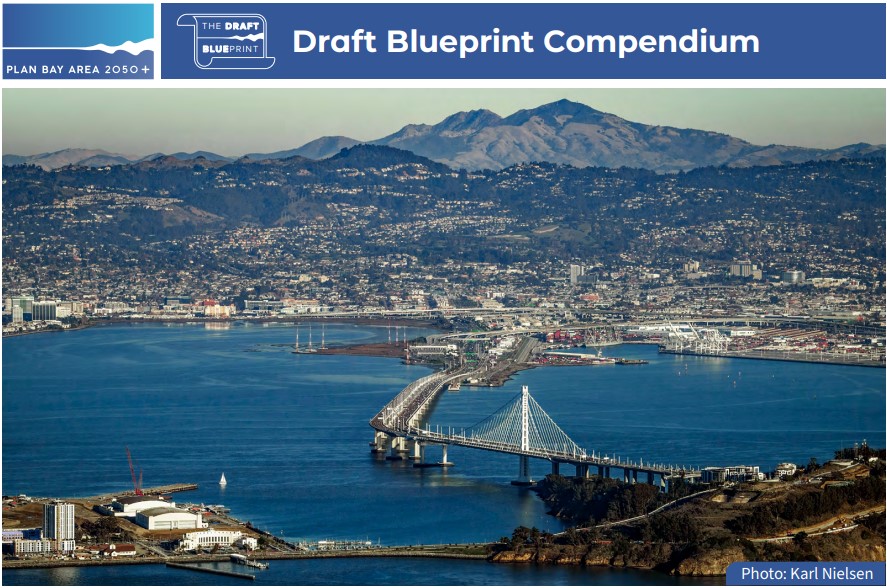
The full range of performance and equity outcomes from the Plan Bay Area 2050+ Draft Blueprint analysis may be found in the Draft Blueprint Compendium, which also demonstrates how the Bay Area can accommodate some 1.3 million additional jobs and nearly 1 million new households by the year 2050.

The Compendium shows the following proposed budget highlights for three of the Plan’s categories:

Transportation Strategies

$382 billion for T1 – Operate and Maintain the Existing System. Commit to operate and maintain the Bay Area’s roads and transit infrastructure while transitioning to zero-emission transit vehicles.

Housing Strategies

$250 billion for H2 – Preserve Existing Affordable Housing. Acquire homes currently affordable to low- and middle-income residents for preservation as permanently deed-restricted affordable housing, including opportunities for resident ownership.

$302 billion for H4 – Build Adequate Affordable Housing to Ensure Homes for All. Construct enough deed-restricted affordable homes to fill the existing gap in housing for the unhoused community and to meet the needs of low-income households.

Economic Strategies

$205 billion for EC1 – Implement a Statewide Guaranteed Income. Provide an income-based monthly payment to all Bay Area households to improve family stability, promote economic mobility and increase consumer spending.

Environment Strategies

$94 billion for EN1 – Adapt to Sea Level Rise. Adapt shoreline communities, infrastructure and ecosystems affected by sea level rise.

These outcomes were first presented at the May meeting of MTC’s Policy Advisory Council, and then at the June 14 joint meeting of the MTC Planning Committee and the ABAG Administrative Committee.

The Draft Blueprint also identifies challenges that will have to be addressed as part of the Final Blueprint process over the coming months. More work is needed to reduce greenhouse gas emissions as well as to identify transportation investment priorities for the plan’s fiscally constrained transportation project list. The Draft Blueprint does not include significant transportation expansion or enhancement investments, as these will be identified through Transit 2050+ and the Final Blueprint process.

Photo source: MTC. Credit: Joey Kotfica

What’s Next?

In light of the pandemic’s lasting impact to public transportation, MTC is collaborating with the region’s transit operators on Transit 2050+ , a parallel planning effort to re-envision the future of public transit in the nine-county Bay Area. Two key updates in this process will be released in July: the Draft Project Performance Assessment and the Transit 2050+ Draft Network. It will be a comprehensive overhaul of the six transit-related strategies included in Plan Bay Area 2050.

The Draft Project Performance Assessment will analyze the costs and benefits of major capacity-increasing projects being considered for inclusion in Plan Bay Area 2050+, the vast majority of which are transit projects. These investments, including those adopted in Plan Bay Area 2050, now face a significantly reduced projected revenue stream. This is due largely to slow post-pandemic transit ridership recovery and other economic changes.

The Transit 2050+ Draft Network will identify strategies and investments (capital and operating) envisioned through 2035 and over the long term through 2050. Development of the Draft Network has been guided in part by public engagement conducted in summer 2023, when nearly 3,000 Bay Area residents provided input on the future of Bay Area transit. The Draft Network also is being informed by an existing needs and gaps assessment conducted in partnership with local transit agencies, the Draft Project Performance Assessment, local priorities and improvements to transit network connectivity and customer experience.

Source: MTC & ABAG

Summer 2024 Public Engagement

Beginning in August, MTC staff will conduct a second round of public engagement for Plan Bay Area 2050+, the content of which will focus on:

  • Sharing both the Draft Blueprint outcomes and the Transit 2050+ Draft Network
  • Gathering feedback to inform the development of the Final Blueprint and address identified Draft Blueprint challenges
  • Identifying early priorities for implementing Plan Bay Area 2050+

There will be a variety of in-person and virtual opportunities for the public to participate. Stay up-to-date on upcoming engagement activities in your community by subscribing to the Plan Bay Area 2050+ mailing list. There also will be dedicated engagement opportunities for technical partners and stakeholders, which will be publicized on the Plan Bay Area website’s Partner Engagement page.

Following an analysis of public input, the Commission and the ABAG Executive Board are expected to consider approval of the Final Blueprint in late 2024.

Allen D. Payton contributed to this report.
Filed Under: Bay Area, Economy, Environment, Government, Growth & Development, Infrastructure, News, Transportation

BAHFA to place $20 billion affordable housing bond measure on Nov. ballot in Bay Area counties

June 27, 2024 By Publisher Leave a Comment

Source: BAHFA

First-of-its-kind measure to help build, preserve more than 70,000 additional homes

Contra Costa County would receive $1.9 billion

By John Goodwin, Assistant Director of Communications & Rebecca Long, Director, Legislation & Public Affairs, Metropolitan Transportation Commission

The Bay Area Housing Finance Authority (BAHFA) on Wednesday, June 26, 2024, adopted a resolution to place a general obligation bond measure on the November 5 general election ballot in each of the nine Bay Area counties to raise and distribute $20 billion for the production of new affordable housing and the preservation of existing affordable housing throughout the region. BAHFA is jointly governed by the Association of Bay Area Governments (ABAG)’s Executive Board and by the BAHFA Board, which is comprised of the same membership as the Metropolitan Transportation Commission (MTC).

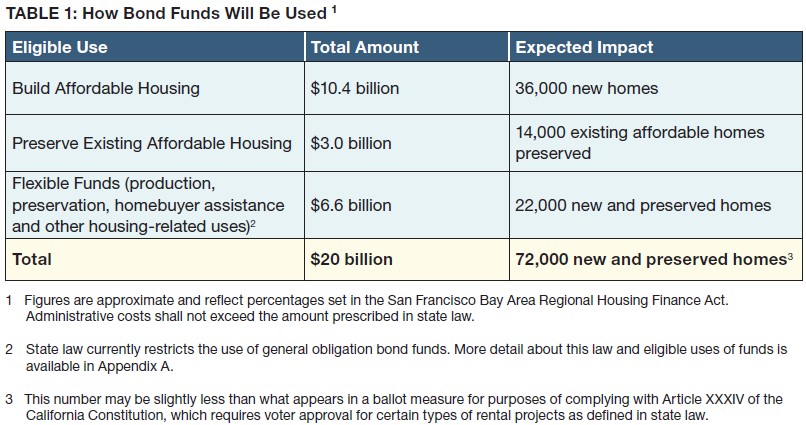
The bond could create 72,000 new affordable homes – more than double what would be possible without a bond. Without more funding, only about 71,000 affordable homes will be built or preserved in the Bay Area over the next 15 years – a status quo that is failing to meet the needs of the people who live and work here.

Currently, the Bay Area doesn’t have enough homes for the people who live here. As a result of the region’s housing shortage:

  • In 2022, 37,000 people were unhoused in the Bay Area.
  • 1.4 million people—23% of Bay Area renters—spend over half their income on rent.
  • High rents and home prices force people to live far from work, making congestion and pollution much worse, and putting a major strain on working families.
  • Too many Bay Area residents live in overcrowded and unsafe housing.
  • Vital employees and community members are leaving the area.

Wednesday’s unanimous vote by the BAHFA Board marks the final discretionary step in the process to place the measure on the November ballot. Under state law, each Bay Area county will now take a non-discretionary, ministerial vote to place the measure on the ballot in that county, in accordance with election deadlines.

The BAHFA bond measure currently would require approval by at least two-thirds of voters to pass. Voters throughout California this November will consider Assembly Constitutional Amendment 1 (ACA 1) — which would set the voter threshold at 55 percent for voter approval of bond measures for affordable housing and infrastructure. If a majority of California voters support ACA 1, the 55 percent threshold will apply to the BAHFA bond measure.

“Today’s vote is the culmination of so many years of effort by so many people all around our region,” observed BAHFA Chair and Napa County Supervisor Alfredo Pedroza. “The Bay Area’s longstanding housing affordability problems affect all of us, our friends, our neighbors and our family members. This vote is about preserving opportunity for everyone.”

Source: BAHFA

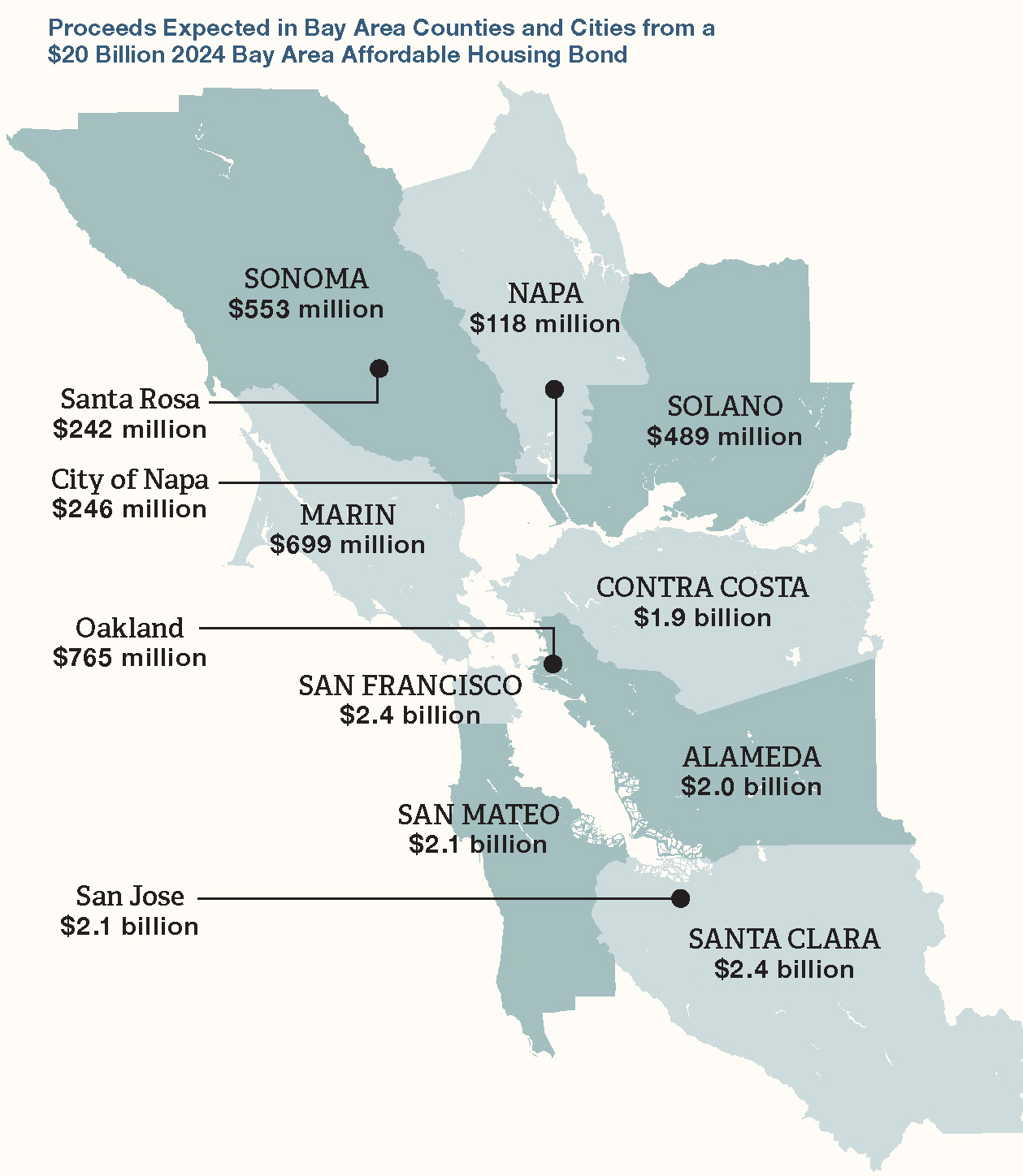
The proposed BAHFA bond measure calls for 80 percent of the funds to go directly to the nine Bay Area counties (and to the cities of San Jose, Oakland, Santa Rosa and Napa, each of which carries more than 30 percent of their county’s low-income housing need), in proportion to each county’s tax contribution to the bond. In consultation with its cities and towns, each county would determine how to distribute bond funds to best meet its jurisdictions’ most pressing housing needs. These distributions would include:

  • Contra Costa County: $1.9 billion
  • Alameda County: $2 billion
  • Marin County: $699 million
  • Napa County: $118 million
  • San Francisco County: $2.4 billion
  • San Mateo County: $2.1 billion
  • Santa Clara County: $2.4 billion
  • Solano County: $489 million
  • Sonoma County: $553 million
  • City of Napa: $246 million
  • City of Oakland: $765 million
  • City of San Jose: $2.1 billion
  • City of Santa Rosa: $242 million

The remaining 20 percent, or $4 billion, would be used by BAHFA to establish a new regional program to fund affordable housing construction and preservation projects throughout the Bay Area. Most of this money (at least 52 percent) must be spent on new construction of affordable homes, but every city and county receiving a bond allocation must also spend at least 15 percent of the funds to preserve existing affordable housing. Almost one-third of funds may be used for the production or preservation of affordable housing, or for housing-related uses such as infrastructure needed to support new housing.

Source: BAHFA

The California Constitution currently does not allow bond funds to be used for tenant protections such as rental assistance, but planned investments in new housing and affordable housing preservation will protect tens of thousands of low-income renters and vulnerable residents.

The BAHFA Board also adopted on Wednesday, resolutions approving the Authority’s Business Plan and its Regional Expenditure Plan, which explain the prioritization for use of the funds that would be directly administered by BAHFA.

Oversight and accountability provisions to be included in the BAHFA bond measure include the creation of a special bond proceeds account; establishment of a Citizens’ Oversight Committee that would review the expenditure of bond proceeds and report to the BAHFA and ABAG Executive Boards on whether the funds were spent appropriately; an independent annual performance audit; a requirement that all bond-projects be consistent with state laws on labor standards; a requirement that administrative costs not exceed the amount prescribed in state law; and a prohibition against any public official who voted to send the ballot measure to the voters bidding on any work funded with proceeds from the bond.

The ABAG Executive Board voted unanimously at its April meeting to adopt a resolution approving BAHFA’s Business Plan and its Expenditure Plan, as well as to endorse placement of the bond measure on the November ballot. In her remarks preceding the vote, ABAG President and Napa County Supervisor Belia Ramos noted, “This is a remarkable milestone moment for our region. Housing stability is essential for our community to thrive, and this proposal is a once-in-a-generation opportunity.”

Read the Bond Report and learn more about the bond measure, here and here.

Filed Under: Bay Area, Finances, Growth & Development, Homeless, News, Politics & Elections

Report: Bay Area needs $9.7 billion to subsidize 40,000 affordable homes in predevelopment pipeline

June 3, 2024 By Publisher Leave a Comment

Photo Credit Joey Kotfica. Source: MTC

Proposed $20 billion regional November bond measure seen as way to close the gap

By Kate Hartley, BAHFA & Justine Marcus, Enterprise Community Partners

Enterprise Community Partners (Enterprise) and the Bay Area Housing Finance Authority (BAHFA) released the Bay Area Affordable Housing Pipeline 2024 Report, last month, which analyzes affordable housing projects in various stages of predevelopment and identifies solutions for moving them toward completion. The updated research reveals there are now 433 projects in various stages of predevelopment that would create more than 40,896 affordable homes across the nine-county Bay Area. These would account for nearly a quarter of the 180,000 affordable homes the state’s Regional Housing Needs Allocation (RHNA) Plan determined are needed in the Bay Area by 2031. (See related article)

Affordable housing developments typically are supported by a capital “stack” investment that includes a commercial mortgage; Low-Income Housing Tax Credits; tax-exempt bonds; and additional local, regional and state dollars that fill the gap between the cost of the development and the financing secured through debt and equity. The new report calculates that the hundreds of Bay Area projects now in the predevelopment pipeline need $9.7 billion in public funds to move forward, and that a $20 billion regional bond measure proposed for the ballot in Bay Area counties this fall would help close this gap.

“We’ve been stuck in an affordable housing crisis that has overwhelmed the region. The November ballot presents an opportunity to unlock thousands of affordable homes for Bay Area residents,” said Heather Hood, VP and Northern California Market Leader at Enterprise. “We expect voters to have a chance to end our housing crisis and deliver the dignified, healthy homes the Bay Area community needs and deserves.”

Source: Enterprise Community Partners

The predevelopment pipeline includes projects in all nine Bay Area counties. These include more than 10,000 units in both Alameda and Santa Clara counties, with another 8,400 affordable homes pending development in San Francisco and more than 3,000 units in both San Mateo and Sonoma counties. Project pipelines in other Bay Area counties range from over 300 affordable homes in Solano County to 1,173 units in Marin County; nearly 1,500 homes in Napa County; and over 2,500 units in Contra Costa County. Each Bay Area city, town or county currently is working on its own to meet the challenges of housing affordability and homelessness.

“The need for affordable housing transcends jurisdictional boundaries. BAHFA’s proposed bond measure would finally allow our Bay Area to take a regional approach to a regional problem,” said BAHFA Director Kate Hartley. “With significant new resources for every county, we can build at scale, deliver equitable solutions, and create a better way to deliver the affordable homes Bay Area residents need.

The updated Bay Area Housing Pipeline research brief was presented at today’s regularly scheduled meeting of the Metropolitan Transportation Commission’s Bay Area Housing Finance Authority Oversight Committee.

About Enterprise Community Partners 

Enterprise is a national nonprofit that exists to make a good home possible for the millions of families without one. We support community development organizations on the ground, aggregate and invest capital for impact, advance housing policy at every level of government, and build and manage communities ourselves. Since 1982, we have invested $54 billion and created 873,000 homes across all 50 states – all to make home and community places of pride, power and belonging.

About the Bay Area Housing Finance Authority

Established by the state legislature in 2019, BAHFA’s mandate is to create regional solutions that meet the Bay Area’s affordable housing needs. It is the first regional housing finance authority in California. BAHFA works together with the Metropolitan Transportation Commission and Association of Bay Area Governments (ABAG).

Filed Under: Finances, Government, Growth & Development, News

Natural gas ban lifted for new buildings in Contra Costa County

February 28, 2024 By Publisher Leave a Comment

Supervisors suspend all-electric requirements following U.S. Court of Appeals ruling

(Martinez, CA) – The Contra Costa County Board of Supervisors Tuesday suspended enforcement of its requirement that most new buildings be constructed as all-electric buildings.  The County’s all-electric building requirement, as part of the County’s building code, had prohibited the installation of natural gas infrastructure in most new buildings and required developers to use electricity as the sole source of energy in the building.  With Tuesday’s action, the County’s all-electric building requirement will not be enforced.

Last month, the U.S. Court of Appeals for the Ninth Circuit invalidated a City of Berkeley ordinance that prohibited natural gas infrastructure in new buildings. The court held that the federal Energy Policy and Conservation Act precludes cities and counties from adopting building codes that prohibit the installation of gas plumbing in buildings.

Contra Costa County’s all-electric building requirement, like the invalidated City of Berkeley ordinance, prohibits the installation of gas plumbing in new buildings.  The County is therefore suspending this requirement in response to the Ninth Circuit’s decision.

At the same time, the Board of Supervisors remains committed to the goals that prompted it to adopt the all-electric requirement: improving public health and fighting what they believe contributes to climate change. The Board referred the topic of reducing greenhouse gas emissions from buildings to its Sustainability Committee and directed staff to report on alternatives for advancing this objective at the Committee’s next meeting.

“Contra Costa County remains committed to reducing the use of fossil fuels in buildings and continues to support the construction of new buildings using all-electric technologies.  We are eager to identify new and innovative ways to continue to pursue our goal of reducing greenhouse gas emissions from buildings.” said Board Chair Federal D. Glover, District 5 Supervisor.

The County encourages residents and businesses to continue to install all-electric building systems and appliances. There are many benefits of all-electric construction, some of which include:

  • Cleaner air and better health outcomes from eliminating the emissions associated with burning fossil fuels, particularly indoors.
  • Not having to pay to install gas pipes in new buildings.
  • Taking advantage of financial incentives and rebates for all-electric appliances.
  • Resilience against power outages, particularly when electric technologies are paired with battery storage.
  • Hedging against high electricity costs by being able to schedule electric appliances to operate at times of day when electricity costs are lowest.
  • Preparing for the potential discontinuation of gas appliances in the future that could occur from possible regulatory actions by regional, state, or federal agencies.

There are many good resources on the benefits of all-electric buildings, including:

The County’s sustainability web site has information on state and federal incentives, rebates, and other ways to fund all-electric upgrades.

The Bay Area Regional Energy Network has information on training opportunities, rebates and incentives, and contractors.

MCE, the community choice energy provider for most of Contra Costa County, offers rebates and incentives.

The Switch Is On, sponsored by the Building Decarbonization Coalition, is a collaborative campaign to support all-electric home conversion by providing tools, support, and resources to Californians.

Rewiring America provides information about the benefits of all-electric technologies, and helps generate a personalized plan for individuals, including costs and savings.

PG&E also has resources on all-electric buildings, including rebates, incentives, rate plans, and design guides.

Allen D. Payton contributed to this report.
Filed Under: Business, Construction, Dining, Energy, Growth & Development, Legal, News, Supervisors

West County: District 1 Open House on Contra Costa Draft General & Climate Action Plans Feb. 21

February 14, 2024 By Publisher Leave a Comment

Casa Abierta sobre el Borrador del Plan General del Condado y el Plan de Acción Climática

At El Cerrito City Hall

By District 1 Supervisor John Gioia

I invite you to join us for an upcoming open house to learn about the Draft Contra Costa County General Plan and Draft Climate Action Plan Update!

When: Wednesday, February 21 from 5:00 – 7:00 pm

Where: El Cerrito City Hall Lobby, 10890 San Pablo Ave., El Cerrito

Learn about proposed land use policies for the unincorporated areas of West County – Kensington, East Richmond Heights, El Sobrante, North Richmond, Rollngwood, Montalvin Manor/Bayview and Tara Hills; and provide input.

Click on my video explaining the importance of participating in the General Plan!

The Draft Contra Costa County General Plan and Draft Climate Action Plan (CAP) 2024 Update are part of the Envision Contra Costa 2040, the County’s plan to address land use, transportation, housing, climate change, environmental justice and other important issues over the next 20 years. They update is available for public review at envisioncontracosta2040.org. (See related article)

Community feedback has been the driving force behind our planning efforts. Now, we invite you to explore our work and ensure it reflects our collective vision for Contra Costa County’s future.

We’ll be taking questions, providing answers, and encouraging you to share feedback in-person or through our online commenting tool.

View the event flyer here.

Thank you, and we hope to see you there!

En Español

¡Lo invito a unirse a nosotros en una próxima jornada de puertas abiertas para conocer el borrador del Plan General del Condado de Contra Costa y el borrador de la actualización del Plan de Acción Climática!

Cuándo: Miércoles 21 de febrero de 5:00 a 7:00 p.m.

Dónde: Vestíbulo del Ayuntamiento de El Cerrito, 10890 San Pablo Ave., El Cerrito

Conozca las políticas de uso de suelo propuestas para las áreas no incorporadas del oeste del condado: Kensington, East Richmond Heights, El Sobrante, North Richmond, Rollngwood, Montalvin Manor/Bayview, Tara Hills; y proporcionar información.

El borrador del Plan General del Condado de Contra Costa y el borrador del Plan de Acción Climática (CAP) 2024 están disponibles para revisión pública en envisioncontracosta2040.org

Los comentarios de la comunidad han sido la fuerza impulsora detrás de nuestros esfuerzos de planificación. Ahora, lo invitamos a explorar nuestro trabajo y asegurarnos de que refleje nuestra visión colectiva para el futuro del condado de Contra Costa.

Responderemos preguntas, brindaremos respuestas y lo alentaremos a compartir sus comentarios en persona o a través de nuestra herramienta de comentarios en línea.

Vea el folleto del evento aquí.

¡Gracias y esperamos verte allí!

Allen D. Payton contributed to this report.
Filed Under: Environment, Government, Growth & Development, Supervisors, Transportation, West County

  • 1
  • 2
  • 3
  • …
  • 6
  • Next Page »
Monicas-11-25
Deer-Valley-Chiro-06-22

Copyright © 2026 · Contra Costa Herald · Site by Clifton Creative Web