• Home
  • About The Herald
  • Local Agencies
  • Daily Email Update
  • Legal Notices
  • Classified Ads

Contra Costa Herald

News Of By and For The People of Contra Costa County, California

  • Arts & Entertainment
  • Business
  • Community
  • Crime
  • Dining
  • Education
  • Faith
  • Health
  • News
  • Politics & Elections
  • Real Estate

MTC, transit agencies debut Bay Area’s new transit maps and signs

December 14, 2024 By Publisher Leave a Comment

Source: MTC. Credit: Noah Berger

Test signs and maps now installed at El Cerrito del Norte BART station

By John Goodwin, Assistant Director Of Communications, Metropolitan Transportation Commission

SAN FRANCISCO, December 12, 2024…Bay Area transit agencies and the Metropolitan Transportation Commission (MTC) Thursday, at the El Cerrito del Norte BART station unveiled new test transit maps and signs designed to help make transit journeys easier to understand for both existing and new riders by delivering information that is clear, predictable and familiar across service areas and county lines. A new, comprehensive regional transit map, which will enable riders to discover key destinations they can reach on the Bay Area’s extensive bus, rail and ferry network, also was released.

Thursday’s event kicked off the start of an evaluation period for the Regional Mapping & Wayfinding project, in which MTC and its transit partners invite Bay Area residents and visitors alike to share their thoughts about the test signs and maps now installed at the El Cerrito del Norte BART station. Several “test” prototype signs and other communication materials also will be installed at the Santa Rosa Transit Mall/Downtown Santa Rosa SMART station later this month.

“Transit in the Bay Area and elsewhere is still suffering the effects of the pandemic,” said Sue Noack, Vice chair of MTC’s Regional Network Management Committee and Pleasant Hill City Councilmember. “But these maps and signs are tangible examples of the work MTC, and the transit agencies are doing together to make the Bay Area’s system simpler, easier to use and more affordable.”

Transit riders will be able to engage with the test materials during their journeys and share with MTC their ideas about how to make new signs and maps work better for them. This public feedback will help inform the next stage of the project, in which the new maps and wayfinding materials are expected to be installed at seven additional locations across the Bay Area in 2025 and 2026.

New BART station sign and map. Source: MTC Credit: Gordon Hansen

Members of the public who are unable to visit one of the test locations in El Cerrito or Santa Rosa are invited to take an online survey. Full details are available on the MTC website at mtc.ca.gov/MappingWayfinding.

A new, comprehensive regional transit map, which will enable riders to discover key destinations they can reach on the Bay Area’s extensive bus, rail and ferry network, also was released.

The new maps and signs are part of the larger Regional Mapping and Wayfinding initiative aimed at making it easier to ride transit in the Bay Area. Whether a rider is traveling by bus, rail, ferry or a combination, the signs, maps, screens and other communication systems will be consistent and easy to identify across all nine Bay Area counties.

The Regional Mapping and Wayfinding Project is the result of a first-of-its-kind effort — led by MTC with the partnership of transit riders, Bay Area cities and counties, and over two dozen Bay Area transit agencies — to redesign and harmonize maps and signage across all nine Bay Area counties to help people navigate transit more easily. This project is just one piece of a broader effort, outlined by the Bay Area Transit Transformation Action Plan, focused on making Bay Area transit easier and more convenient for riders of all ages and abilities to use.

The Regional Network Management Council includes top executives from MTC, the San Francisco Municipal Transportation Agency, BART, AC Transit, the Santa Clara Valley Transportation Authority (VTA), Caltrain, SamTrans and the Golden Gate Bridge, Highway and Transportation District as well as three general managers representing all other transit agencies serving Bay Area communities.

MTC is the regional transportation planning, financing and coordinating agency for the nine-county San Francisco Bay Area.


Filed Under: BART, News, Transportation, West County

BART fares will increase 5.5% on January 1, 2025

November 29, 2024 By Publisher Leave a Comment

While working to increase ridership currently averaging on weekdays about 40% of pre-COVID figures

By Bay Area Rapid Transit District

As BART strives to increase ridership, which is averaging about 40% of weekday pre-COVID figures, BART fares will increase January 1, 2025, to keep pace with inflation so that the agency is able to pay for continued operations and to work toward restoring financial stability. BART’s current funding model relies on passenger fares to pay for operations.

Fares will increase 5.5 percent on New Year’s Day. The increase is tied to the rate of inflation minus a half-percentage point. It’s the second such increase – the first took effect January 1, 2024.

The average fare will increase 25 cents, from $4.47 to $4.72. BART’s fare calculator and Trip Planner have been updated with the new fares for trips with the date 1/1/25 and beyond. Riders can learn how the increase will affect their travels by entering a 2025 date for their trip.

“We understand that price increases are never welcome, but BART fares remain a vital source of funds even with ridership lower than they were before the pandemic,” said BART Board Vice President Mark Foley. “My Board colleagues and I voted in June 2023 to spread necessary fare increases over two years rather than catching up all at once. At the same time, we voted to increase the Clipper START means-based discount from 20 percent to 50 percent to help those most in need.”

The fare increase is expected to raise about $14 million per year for operations. Combined with the previous year’s fare adjustment, BART will use this $30 million per year to fund train service, enhanced cleaning, additional police and unarmed safety staff presence, and capital projects such as the Next Generation Fare Gates project.

Discounts available for those who are eligible

The regional Clipper START program is an important resource for low-income riders of BART and other Bay Area transit systems. The program is for adult riders with a household income of 200% of the federal poverty level or less. Administered by the Metropolitan Transportation Commission, program participants receive a personalized Clipper card that cuts half the cost of fares on more than 20 transit systems.

  • Limited income riders get 50% off with Clipper START.
  • Youth 5-18 years old get 50% off with a Youth Clipper card.
  • Seniors 65 and over get 62.5% off with a Senior Clipper card.
  • The RTC Clipper card is a version of Clipper created for passengers under 65 with qualifying disabilities to provide 62.5% off.

Regular, predictable increases a long-term strategy

January’s fare increase is the latest adjustment in a strategy to provide BART funding while providing riders predictable, scaled changes to the costs of riding. In 2004, BART first implemented this inflation-based fare increase program that calls for small, regular, less-than-inflation increases every two years, allowing fares to keep up with the cost of providing reliable and safe service.

BART is also much less expensive than driving on a cost per mile basis. The Internal Revenue Service standard mileage rate for driver is 67 cents per mile; BART riders pay an average of 27 cents per mile, 60% less than the cost of driving.

Outdated funding model

BART’s current funding model relies on passenger fares to pay for operations. Even with the fare increase, BART is facing a $35 million operating deficit in FY26 and $385 million in FY27. Since BART’s outdated model of relying on passenger fares to pay most operating costs is no longer feasible because of remote work, the agency must modernize its funding sources to better match other transit systems throughout the country that receive larger amounts of public funding. BART needs a more reliable long-term source of operating funding and continues to advocate at the federal, state, and regional levels for the permanent funding needed to sustainably provide the quality transit service the Bay Area needs.

Addressing BART’s ongoing financial crisis will take a variety of solutions including securing new revenue and continuing to find internal cost savings. BART costs have grown at a rate lower than inflation, showing we have held the line on spending. We have implemented a service schedule that better matches ridership and we are running shorter trains, reducing traction power consumption and maintenance costs.

Allen D. Payton contributed to this report.


Filed Under: BART, Bay Area, Finances, Transportation

Unnecessary toll hikes will strap middle income drivers in Contra Costa and beyond

November 21, 2024 By Publisher Leave a Comment

The Richmond-San Rafael Bridge. Photo: MTC

By Marc Joffe

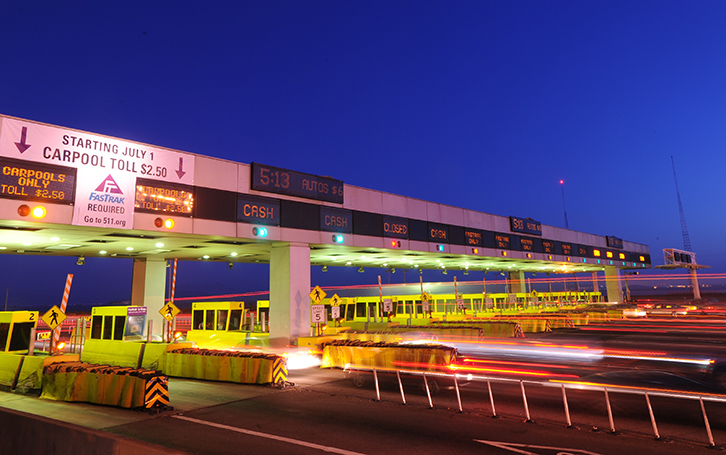
As if the $1 toll hike on January 1, 2025, is not enough, commissioners at the Bay Area Toll Authority (BATA) plan to approve a series of five fifty cent increases starting in 2026. By 2030, tolls on the Bay Area’s seven state-owned bridges will reach $10.50 for FasTrak users and $11.50 for drivers paying by invoice. Included in the increase are these four bridges with landings in Contra Costa County:

  • Antioch (Senator John A. Nejedly) Bridge
  • Benicia-Martinez (George Miller) Bridge
  • Carquinez Bridge
  • Richmond-San Rafael Bridge

Aside from toll hikes, motorists are facing a gasoline price increase arising from the California Air Resources Board’s recent imposition of the Low Carbon Fuel Standard. According to a research center at the University of Pennsylvania, LCFS could cost drivers up to 85 cents extra per gallon. And this is on top of California’s highly elevated fuel prices, driven by taxes that rise annually under SB1 (2018).

Despite increasing maintenance costs, the Bay Area bridges are quite profitable. BATA expects total revenue of $1.058 billion this year. The costs of operating the bridges, running FasTrak, and paying debt service are projected to total just $757 million, leaving $300 million to spare.

As BATA admits in its own FAQ on the toll increase, $3.00 of the current $7.00 toll is already being siphoned off for purposes other than bridge operations, maintenance, and seismic safety (this will increase to $4.00 of $8.00 on January 1). For example, almost $6 million is diverted annually to the Transbay Joint Powers Authority to operate its empty bus terminal and to pursue its hopeless plan to bring high-speed rail trains into the Salesforce Transit Center. Bridge toll money is also being used to subsidize Bay Area ferries, SF Muni, AC Transit, Golden Gate Transit, and the NAPA Vine bus service.

The toll hike on the Antioch Bridge is especially egregious. BATA is charging the same tolls on all its bridges despite their vastly different lengths. The Bay Bridge is 8.4 miles long while the Antioch Bridge is just 1.8 miles long. Also, unlike all other Bay Area bridges, the Antioch Bridge has just one lane in each direction.

And then there is the question of income. While many Bay Area drivers are wealthy enough to easily absorb the toll hike, that is less true of people living near the Antioch Bridge. According to Census Reporter, Antioch’s per capita income is only 56 percent of the average for the San Francisco-Oakland-Fremont metro region. Rio Vista, the first sizable community on the north side of the bridge, clocks in at just 67 percent of the metro area’s income per person.

At minimum, BATA should exempt the Antioch Bridge from its planned toll hikes. But better yet, the Authority should shelve its entire toll increase plan, stop siphoning off toll money for other purposes, and live within its means.

Marc Joffe is President of the Contra Costa Taxpayers Association.

Filed Under: Bay Area, Finances, Government, Infrastructure, Opinion, Taxes, Transportation

Bay Area Toll Authority extends public comment period on proposed 2026 toll hike, carpool policy changes

November 21, 2024 By Publisher Leave a Comment

Bay Bridge Toll Plaza from MTC website. By Noah-Berger

Until Dec. 18

Authority board considering increasing to as high as $11.50 to pay “exclusively for bridge preservation and operations” in spite of three voter-approved $1 increases

“A Thanksgiving/holiday season decision is a hide the ball strategy. Not good.” – State Senator Steve Glazer

By John Goodwin & Rebecca Long, MTC

November 20, 2024 update: The public comment period on the Bay Area Toll Authority’s proposed toll increase and HOV policy changes is extended through the end of public comment heard on the agenda item for BATA’s December 18, 2024 meeting.  All public written and oral comments provided through that time will be incorporated into the record. However, in order for comments to be summarized and published in the agenda packet and distributed in advance of consideration of this item at the December 11, 2024, BATA Oversight Committee meeting, they must be submitted by 5 p.m. December 3, 2024. 

BATA — which is required by state law to fund projects to preserve and protect the Bay Area’s seven state-owned toll bridges — today heard again a proposal for a toll increase that would be used only to pay for the maintenance, rehabilitation and operation of the San Francisco-Oakland Bay Bridge and the Antioch, Benicia-Martinez, Carquinez, Dumbarton, Richmond-San Rafael and San Mateo-Hayward bridges. If approved by BATA at its December 18 meeting, the toll increase would be phased in over five years, beginning Jan. 1, 2026. 

Source: BATA

The toll increase proposal includes a tiered rate structure aimed at encouraging more customers to pay electronically with FasTrak® toll tags, as this form of payment carries lower administrative costs than payment through a license plate account or returning payment with an invoice received by mail. Under the proposal, customers would pay a premium for using a pre-registered license plate account or for invoiced tolling. To give customers ample time to sign up for FasTrak, this premium would not begin until 2027. 

The proposed toll hike is separate from the $3 increase approved by Bay Area voters in 2018 through Regional Measure 3 to finance a comprehensive suite of highway and transit improvements around the region. The first of the three $1 Regional Measure 3 toll increases went into effect in 2019, followed by another in 2022. The last of the RM 3 toll hikes will go into effect Jan. 1, 2025, bringing the toll for regular two-axle cars and trucks to $8.

The proposal heard today by BATA calls for tolls for all regular two-axle cars and trucks to increase to $8.50 on Jan. 1, 2026. Tolls for customers who pay with FasTrak tags would then rise to $9 in 2027; to $9.50 in 2028; to $10 in 2029; and then to $10.50 in 2030. Tolls for customers who use a pre-registered license plate account would rise to $9.25 in 2027; to $9.75 in 2028; to $10.25 in 2029 and to $10.75 in 2030. Invoiced tolls would rise to $10 in 2027; $10.50 in 2028; $11 in 2029; and $11.50 in 2030. The Golden Gate Bridge has used a tiered pricing schedule since 2014. Golden Gate Bridge tolls by July 2028 will range from $11.25 for FasTrak to $11.50 for license plate accounts to $12.25 for invoice customers.

Under the proposed toll increase, tolls for large freight trucks and other vehicle/trailer combinations with three or more axles would rise by 50 cents per axle each year from 2026 through 2030. 

Removing spalled on concrete on pier cap 305. Photo: CalTrans

“I’m sensitive to the overall cost of living in the Bay Area,” acknowledged Napa County Supervisor Alfredo Pedroza, who also serves as chair of both BATA and the Metropolitan Transportation Commission (MTC). “Working families really feel the impact, not just in transportation but back at home with utilities, groceries, children. This one is hard. But it’s the right thing to do.”

BATA and MTC invite members of the public to weigh in on the proposed toll increase during a comment period that begins Monday, Nov.4, and continues through the end of BATA’s Dec. 18 meeting. Comments may be sent via email to info@bayareametro.gov. As part of its regular November meeting, BATA today held a public hearing in San Francisco to receive testimony about the proposal from Bay Area residents, businesses and other interested parties. 

Today’s presentation by BATA and MTC staff also proposed updates to the policies for high-occupancy vehicles on approaches to the Bay Area’s state-owned toll bridges. These updates would take effect Jan. 1, 2026, concurrent with the proposed toll increase. BATA’s  existing toll schedule allows vehicles with three or more occupants (HOV 3+) a discounted toll, with a two-person (HOV 2) occupancy requirement for half-price tolls at the Dumbarton and San Mateo-Hayward bridges. BATA and MTC staff propose to establish a uniform three-person occupancy requirement for half-price tolls during weekday commute periods at all seven bridges. Carpool vehicles at all state-owned bridges must use a dedicated carpool lane and pay their tolls with a FasTrak Flex toll tag set to the ‘3’ position to receive the 50 percent discount available weekdays from 5 a.m. to 10 a.m. and from 3 p.m. to 7 p.m.

Source: BATA

The proposed carpool policy changes also would allow vehicles with two occupants and a switchable FasTrak Flex toll tag set to the ‘2’ position to use the carpool lanes on the approaches to the Antioch, Benicia-Martinez, Carquinez, Dumbarton, Richmond-San Rafael and San Mateo-Hayward bridges. These two-occupant vehicles would not receive the 50 percent carpool discount but would be able to use the carpool lanes to save time traveling through the toll plazas. Use of the carpool lanes on approaches to the San Francisco-Oakland Bay Bridge still would require a minimum of three occupants.

The new carpool policy proposals are designed to improve safety on the toll bridge approaches by minimizing ‘weaving’ between lanes and to increase person-throughput by prioritizing access for buses and carpools. The policy change also would optimize lane configurations as now-obsolete toll booths are removed as part of the coming transition to open-road tolling.  

BATA, which is directed by the same policy board as MTC, administers toll revenues from the Bay Area’s seven state-owned toll bridges. Toll revenues from the Golden Gate Bridge are administered by the Golden Gate Bridge, Highway and Transportation District, which joined with BATA to operate a single regional FasTrak customer service center in San Francisco. MTC is the transportation planning, financing and coordinating agency for the nine-county San Francisco Bay Area.

In response to a post of the link to this press release on X/Twitter on Wednesday, Nov. 30, State Senator Steve Glazer, who represents most of Contra Costa County, protested the proposed toll hikes writing, “Why was this need not identified and incorporated during the last toll increase in 2018? You don’t buy a boat and a new car when you don’t have the $ to fix the roof! A Thanksgiving/holiday season decision is a hide the ball strategy. Not good.”

Allen D. Payton contributed to this report.


Filed Under: Bay Area, Government, Infrastructure, News, Taxes, Transportation

Richmond: Free Ferry Fridays begin today, Nov. 1

November 1, 2024 By Publisher Leave a Comment

Source: CCTABIG, exciting news for Richmond passengers! CCTA and SF Bay Ferry have teamed up to offer Free Ferry Fridays on the Richmond/SF route for the rest of 2024! Hop on board starting Nov. 1 for a stress-free, cost-free ride every Friday across the Bay! #FreeFerryFridays

Source: SF Bay Ferry

All trips between Richmond and Downtown San Francisco are FREE ON FRIDAYS until the end of the year, thanks to a partnership with Contra Costa Transportation Authority – CCTA. Check the Richmond route schedule here: https://sanfranciscobayferry.com/richmond-ferry-route.

Filed Under: News, Transportation, West County

Contra Costa Transportation Authority’s INNOVATE 680 Program to receive over $166 million mega-boost

November 1, 2024 By Publisher Leave a Comment

U.S. Representatives Mark DeSaulnier, Nancy Pelosi join CCTA Officials to announce DOT Bipartisan Infrastructure Law grant for improvements

WALNUT CREEK, CA – Yesterday, Thursday, Oct. 31, 2024, U.S. Representatives Mark DeSaulnier and Nancy Pelosi joined regional transportation officials from Contra Costa Transportation Authority (CCTA) and the Metropolitan Transportation Commission (MTC) to announce CCTA will receive over $166 million in Bipartisan Infrastructure Law funding to improve mobility along the Interstate 680 (I-680) corridor. This mega-boost is the largest 2024 transportation award earmarked for California.

The funds will upgrade I-680, which is critical to the region’s economy and prosperity—providing for the movement of goods, services, and people throughout northern California and beyond. The federal investments to CCTA’s INNOVATE 680 project were made through the U.S. Department of Transportation’s (US DOT) National Infrastructure Project Assistance (Mega) Program.

“As a senior member of the House Transportation and Infrastructure Committee and longtime champion for policies that would reduce commute times, cut harmful pollution, and improve our quality of life, I was proud to advocate for this funding and am delighted it has been granted and will begin making a difference in the lives of Bay Area and California residents,” Congressman Mark DeSaulnier said. “I am thankful to CCTA and DOT for their partnership in working to improve transportation across our region.”

“When President Biden signed Democrats’ historic Infrastructure Law in 2021, it was an opportunity to strengthen our nation’s crumbling infrastructure, fund projects to address equity issues and create millions of good-paying jobs throughout America,” Speaker Emerita Nancy Pelosi said. “Thanks to Biden-Harris Administration’s MEGA grant program made possible by the Infrastructure Law, $166 million in federal funding is coming to the CCTA’s INNOVATE I-680 project to improve quality of life for people throughout the Bay Area. Democrats remain relentlessly committed to investing in America, building a fairer economy and delivering For The People.”

The highly competitive Mega Grant program funds major projects that are too large or complex for traditional funding programs and are likely to generate national or regional economic, mobility, or safety benefits. More information on the program is available here.

The federal funding will go toward CCTA’s INNOVATE 680 Program to address the northbound I-680 express lane gap from California State Route (SR) 24 to SR-242 and to convert the existing northbound high-occupancy vehicle lane from SR-242 to north of Arthur Road into an express lane. The project will also construct a braided ramp system between the North Main Street and Treat Boulevard interchanges in Walnut Creek to address an existing bottleneck caused by weaving and implement Coordinated Adaptive Ramp Metering for a 19-mile segment of Northbound I-680.
“CCTA is grateful for the efforts our federal delegates made to secure much needed federal dollars from the Bipartisan Infrastructure Law for California infrastructure improvements,” CCTA Chair Newell Arnerich said. “Upgrading I-680 will truly improve our quality of lives as they ease congestion, make our roads safer, and boost our economy by creating 3,500 direct and indirect jobs per year for the duration of the projects.”

CCTA is Contra Costa’s congestion management agency. CCTA’s full project plan to alleviate congestion on I-680 may be found here.

“This is a monumental award for Contra Costa County and the greater Bay Area,” CCTA Executive Director Tim Haile said. “Thousands rely on this corridor and increased congestion has led to unacceptable delays. CCTA is excited to advance the I-680 corridor through focused modernizations that will maximize efficiency and promote shared transportation.”

“I-680 is one of the major north-south corridors in the San Francisco Bay Area and frequently ranks among our most congested corridors,” MTC Executive Director Andy Fremier said. “This $166 million grant will support projects that improve safety, smooth traffic, and increase access while aligning with federal, state and local safety, equity, and emissions goals.”

About the Contra Costa Transportation Authority:

The Contra Costa Transportation Authority (CCTA) is a public agency formed by Contra Costa voters in 1988 to manage the county’s transportation sales tax program and oversee countywide transportation planning efforts. CCTA is responsible for planning, funding, and delivering critical transportation infrastructure projects and programs that connect our communities, foster a strong economy, increase sustainability, and safely and efficiently get people where they need to go. CCTA also serves as the county’s designated Congestion Management Agency, responsible for putting programs in place to keep traffic levels manageable. More information about CCTA is available at ccta.net.

Filed Under: Central County, Finances, Government, News, Transportation

CHP secures $700K federal grant to boost motorcycle safety, awareness across state

October 15, 2024 By Publisher Leave a Comment

By CHP Media Relations

SACRAMENTO, Calif. – The California Highway Patrol (CHP) is launching Get Educated and Ride Safe VII (GEARS VII), a yearlong program that focuses on education and enforcement strategies to reduce motorcycle-related crashes and fatalities. The CHP received a $700,000 federal grant to fund the program.

Provisional data from the federal fiscal year 2022-23 highlights the urgent need for such measures, with more than 7,000 motorcycle-involved crashes, resulting in 336 fatalities and more than 6,300 injuries within CHP jurisdiction.

“This grant will significantly enhance the CHP’s motorcycle safety and awareness programs by allowing us to continue educating both motorcyclists and drivers on safe practices,” said CHP Commissioner Sean Duryee. “It’s a vital reminder that whether you’re driving a car or riding a motorcycle, everyone shares the responsibility for keeping our roads safe.”

Throughout the grant period, CHP is ramping up motorcycle safety activities in regions with high crash rates and will participate in statewide and national traffic safety public awareness campaigns, including “National Motorcycle Ride Day” which was held on Saturday, October 12, 2024. These efforts will promote the use of U.S. Department of Transportation-compliant helmets and emphasize the importance of sharing the road with motorcyclists. Additionally, the CHP will increase enforcement in areas with motorcycle-involved crashes caused by speed, improper turns, and driving under the influence of alcohol and/or drugs.

Funding for this program is provided by a grant from the California Office of Traffic Safety through the National Highway Traffic Safety Administration.

The mission of the CHP is to provide the highest level of Safety, Service, and Security.


Filed Under: CHP, News, State of California, Transportation

CoCoTax Luncheon with BART Director Debora Allen Oct. 25

October 2, 2024 By Publisher Leave a Comment

District 1 BART Board Director Debora Allen. Herald file photo.

The Contra Costa Taxpayers Association (CoCoTax) invites you to attend a Luncheon and Board  and  Members Meeting at Denny’s Restaurant 1313 Willow Pass Road, Concord, on Friday October 25, 2024, from 11:45 am to 1:10 pm.

Please register in advance on the CoCoTax website where you can pay online or bring cash or check on Friday and pay at the door-$25 for members, $30 for guests.

About Our Speaker: Debora Allen

Debora Allen was first elected to the BART Board of Directors in 2016 and re-elected in November 2020, representing eight cities in central Contra Costa County’s District 1. She leaves the BART Board at the end of this year having led the charge for improved fare gates, safe and reliable transit, and fiscal sanity.

In her lunch time remarks to CoCoTax, Debora will look back on her time on the BART board and discuss the transit district’s future.

Debora has over 30 years of financial and business management experience in both private and public sectors, primarily in construction and real estate industries. She received a Bachelor of Science in Business Administration (accounting) from CSU Sacramento and completed numerous continuing professional education courses in the areas of financial audit, taxation, accounting systems, institutional investing, and pension administration. She practiced as a Certified Public Accountant in California for almost 20 years and currently still holds an inactive CPA license.

Prior to election to BART, Debora spent decades volunteering on boards in youth sports programs, taxpayer oversight groups, and other non-profits including six years as a pension board trustee for the Contra Costa County Employees’ Retirement Association.

Since 2016, she served on regional transportation boards including Capitol Corridor JPA, Contra Costa Transportation Authority, West Contra Costa Transportation Advisory Committee, CCTA Accessible Transportation Strategic Policy Advisory Committee, and the Pleasant Hill BART Leasing Authority.  She has also served on several BART Board subcommittees.

For more information call (925) 289-6900 or email info@cocotax.org.

Filed Under: BART, Central County, Community, Government, Taxes, Transportation

DeSaulnier announces over $166 million to modernize the region’s transportation systems along I-680 Corridor

September 23, 2024 By Publisher Leave a Comment

Funding for Contra Costa Transportation Authority through the Bipartisan Infrastructure Law

Will benefit two projects on I-680

By Mairead Glowacki, Communications Director at U.S. House of Representatives, Office of Congressman Mark DeSaulnier

Washington, D.C. – Today, Monday, September 23, 2024, Congressman Mark DeSaulnier (CA-10) announced that the Contra Costa Transportation Authority (CCTA) will receive over $166 million in funding he advocated for to the Department of Transportation (DOT) that will help to improve safety, reduce congestion, and reduce air pollution along the I-680 corridor through Contra Costa County. This funding was made possible through the Bipartisan Infrastructure Law.

“As a senior member of the House Transportation and Infrastructure Committee and longtime champion for policies that would reduce commute times, cut harmful pollution, and improve our quality of life, I was proud to advocate for this funding and am delighted it has been granted and will begin making a difference in the lives of Bay Area and California residents,” said DeSaulnier. “I am thankful to CCTA and DOT for their partnership in working to improve transportation across our region.”

“The Contra Costa Transportation Authority (CCTA) is grateful to Congressman DeSaulnier for his support in securing this monumental award. This federal grant speaks to the Congressman’s long-standing leadership in transportation and vision for our community,” said Tim Haile, Executive Director, CCTA. “Interstate 680 (I-680) is critical to the region’s economy and prosperity. It provides for the movement of goods, services, and people throughout northern California and beyond. Thousands rely on this corridor and increased congestion has led to unacceptable delays. The Contra Costa Transportation Authority is excited to advance the I-680 corridor through focused modernizations that will maximize efficiency and promote shared transportation. We are grateful for Congressman DeSaulnier’s dedication to improving quality of life and embracing innovation at both the local and national levels.”

Will Benefit Two Projects on I-680

This funding will go to two projects in Contra Costa County, which are part of the INNOVATE 680 Program, to complete the northbound I-680 express lane gap from SR-24 to SR-242 and convert the existing northbound High Occupancy Vehicle (HOV) Lane from SR-242 to north of Arthur Road into an express lane, construct a braided ramp system between North Main Street and Treat Boulevard interchanges in Walnut Creek to address an existing bottleneck caused by weaving at this location, and implement Coordinated Adaptive Ramp Metering for a 19-mile segment of NB I-680.

More information about this funding can be found in the letters Congressman DeSaulnier sent to DOT in support of this grant.

Congressman DeSaulnier has been a longtime champion of improving transportation in the Bay Area and along the I-680 corridor, including by consistently supporting CCTA in its work to advance projects that innovate our transportation systems, ease congestion, and make our roadways safer.


Filed Under: Crime, Finances, News, Transportation

Contra Costa Transportation Authority, May Mobility launch autonomous vehicle service in Martinez

September 20, 2024 By Publisher Leave a Comment

(L-R) Brianne Zorn, Mayor of Martinez; Newell Arnerich, Chair, Contra Costa Transportation Authority; Tim Haile, Executive Director, Contra Costa Transportation Authority; Michelle Grey, President, Transit Union Local 1605; Manik Dhar, Chief Commercial Officer, May Mobility and Dr. Sergio Urcuyo, Contra Costa Regional Medical Center with one of May Mobility’s PRESTO autonomous shuttles at the launch of the service in Martinez on Thursday, Sept. 12, 2024. Photo: CCTA

The free service aims to improve access to healthcare and eliminate transportation barriers for community residents

MARTINEZ, Calif. – Contra Costa Transportation Authority (CCTA) and May Mobility, an autonomous driving (AD) technology company, on Thursday, Sept. 12, 2024, launched PRESTO, a shared autonomous vehicle (AV) service for the general public in Martinez, California and Contra Costa Regional Medical Center (County Hospital) patients. A goal of the service is to improve access to healthcare in the area by providing another reliable and convenient mode of transportation.

The free service will run Monday through Friday, first offering County Hospital patients rides from 2 p.m. to 6 p.m. and then opening to the general public from 6 p.m. to 10 p.m. Patients can book rides to or from the County Hospital and to a preferred pharmacy from a set list of locations by calling (925) 995-3797 or by arranging travel with a hospital representative.

From 6 p.m. to 10 p.m., the service will be open to all residents in the area. Those interested can book rides to a list of designated stops within the service zone by using the May Mobility app, powered by transit tech leader Via, or by calling (925) 995-3797. In addition to stops at the County Hospital healthcare facilities and local pharmacies, the service zone includes stops that help connect Martinez residents to their community, including residential areas, shopping districts and downtown Martinez.

“CCTA is once again making history here in Northern California by offering a free, autonomous vehicle transportation service to City of Martinez residents,” said CCTA Chair Newell Arnerich. “We established the County Hospital element to aid patients who may need rides in the afternoon to resources in the community. As an added benefit to residents, during the evening hours, the service will carry passengers to an array of destinations in the City of Martinez.”

A second PRESTO autonomous shuttle presented during the launch in Martinez. Photo: CCTA

May Mobility equipped a fleet of seven Toyota Sienna Autono-MaaS vehicles with its patented Multi-Policy Decision Making (MPDM) AD technology. MPDM uses in-situ AI to learn in real-time by imagining thousands of “what-if” scenarios every second while it drives and then commits to the safest and most comfortable maneuvers within milliseconds. Each shared AV seats five passengers and all will have an attendant on board to answer questions and assist with passenger entry and exit if needed. Three of the AVs are also wheelchair accessible, with an ADA-compliant wheelchair ramp allowing entry and exit via the rear of the vehicle. The wheelchair-accessible vehicles seat up to three passengers, including one wheelchair user.

“May Mobility is dedicated to filling gaps in public transportation. With the PRESTO shared AV pilot in Martinez, we’re redefining how communities connect and move,” said May Mobility Chief Commercial Officer Manik Dhar. “We’re excited to see how our patented MPDM technology will service local residents and contribute to the broader adoption of AVs.”

CCTA and May Mobility have also partnered with County Connection, which provides fixed-route and paratransit bus service for communities in Central Contra Costa County.

“County Connection has partnered with our paratransit contractor to provide union drivers to serve as safety stewards in each Martinez ADS vehicle,” said County Connection General Manager Bill Churchill, “underscoring our commitment to innovative transportation deployments ensuring everyone has the freedom to travel safely and independently.”

Passenger feedback will play a critical role in shaping the future of autonomous mobility, as data from the City of Martinez PRESTO pilot will be used by federal transportation officials to advance standards in automated mobility. The pilot is funded by a grant from the U.S. Department of Transportation. Martinez marks the third location where CCTA has introduced an autonomous vehicle pilot program.

To learn more about PRESTO, visit  https://ridepresto.com/martinez/


Filed Under: Central County, News, Transportation

  • « Previous Page
  • 1
  • …
  • 3
  • 4
  • 5
  • 6
  • 7
  • …
  • 30
  • Next Page »
Monica's-Riverview-Jan-2026
Liberty-Tax-Jan-Apr-2026
Deer-Valley-Chiro-06-22

Copyright © 2026 · Contra Costa Herald · Site by Clifton Creative Web