• Home
  • About The Herald
  • Local Agencies
  • Daily Email Update
  • Legal Notices
  • Classified Ads

Contra Costa Herald

News Of By and For The People of Contra Costa County, California

  • Arts & Entertainment
  • Business
  • Community
  • Crime
  • Dining
  • Education
  • Faith
  • Health
  • News
  • Politics & Elections
  • Real Estate

Antioch native opens Hawai’i’s first flagship location for line of all-electric two-wheel vehicles

August 9, 2022 By Publisher Leave a Comment

Nathan Bingham inside his NIU Honolulu store. Photos Poi Planet.

NIU Honolulu offers mopeds, kick scooters, motor scooters and e-bikes

2004 Antioch High grad Nathan Bingham inspiring others to “Make Life Electric”

NIU Honolulu owner Nathan Bingham.

Honolulu, HI — NIU (pronounced “NEW”) Technologies, the world’s leading provider of smart and eco-friendly two-wheelers, officially opened its first flagship store in Kaimuki in Honolulu on the island of Oʻahu in Hawai’i. With gas prices soaring at an average of $5.40 per gallon in the Hawaiʻi islands, Nathan Bingham, owner of Hawaiian Style Rentals & Sales (see related article), proudly partners with NIU Technologies to bring Hawaiʻi a more cost-effective, alternative mode of transportation. Featuring all-new electric mopeds, kick scooters, motor scooters, and e-bikes, NIU provides riders a stylish, more convenient, and economical way to travel in Hawaiʻi.

Initially founded in 2014, NIU currently has retail stores in over 38 countries. With their goal to create a modern mode of transportation that is environmentally friendly, NIU built two-wheeler vehicles designed to perform, backed with an innovative electric system. Bingham partnered with NIU in 2021, as he was fully aware of the need for a dependable, affordable, and eco-friendly alternative to Hawaiʻi’s traditional, gas-operated transportation.

He opened the NIU Honolulu store in February, this year.

“Providing Hawaiʻi customers a modern mode of transportation is our goal. NIU provides a safe, comfortable, efficient, and fun way to get around town,” Bingham said. “The all-electric mopeds, kick scooters, motor scooters, and e-bikes aren’t just beautiful in design, but are very easy to maneuver. They are better for the environment in so many ways, including a significant reduction in noise pollution as NIU products make no sound.”

“We think NIU may inspire many to ‘make life electric,’ leave their cars in the garage, and give the electric lifestyle a go,” he added.

About his Hawaiian Style Rentals business Bingham said, “we expanded into a second location right before the pandemic, but we had to shut it down two months later. Then we reopened in Dec. 2020. Then from the middle of March to the middle of August, because of a rental car shortage, business was unimaginable. We had lines out the door. We then opened our third location in May 2022. We’ve staffed up from nine employees before the pandemic to 25, today.”

“Our rental shops are all in Waikiki for tourism,” he explained. “The NIU store is a few miles away in Honolulu to serve the locals. It’s the flagship store for all the Hawiai’ian islands and the third in the U.S.”

Bingham graduated from Antioch High in 2004. His mom went to Pittsburg High, his wife, Martina (maiden name Cacciaroni) is also from Antioch. Her mother graduated from Antioch High, and her father graduated from Pittsburg High and owned Cacci’s Deli in Pittsburg. Nathan’s grandfather ran the train station in Pittsburg, he shared. They’ve been in East County and Northern California this past weekend and this week with their one-year-old baby boy celebrating his birthday with family.

Nathan’s love for mopeds started at age 18, when he and his family experienced scooter rides around O’ahu while on vacation.

After high school, Bingham went to BYU in Utah for a semester, then transferred to BYU Hawai’i on the North Shore. With the help of his brothers while visiting him during Spring Break, he rented scooters and decided to go into the business and didn’t return to school. Bingham ran the business out of the back of his truck for a few years, delivering and picking up scooters.

“It took me a while to get the business going,” Bingham shared.

About the NIU product line he said, “because it’s such a new product, the electric mopeds, there’s a lot of legislation being pushed. It’s just the way things are going. China went fully electric a few years ago. NIU is selling about a million units a year, internationally. They have a big presence in Asia and Europe.”

NIU products have state-of-the-art features that put them at the forefront of the electric mobility industry. The NIU Energy Lithium Battery is light and dependable, built with an aluminum casing to prevent overheating and a handle to carry on the go. Because they are removable, they make an intelligent security feature. All NIU vehicles are linked to the “NIU Cloud” app, allowing customers to be connected to their electric vehicle 24/7 through their smartphone devices. Customers can check their battery status, view riding history, locate their vehicle, and be alerted of any unauthorized movement of their scooter. Every NIU vehicle has movement sensors that alert the rider if there are unauthorized vibrations detected. This feature is proven to prevent theft, and the GPS tracking system can pinpoint where each vehicle is according to your location. There are “easy” settings on ECO mode for beginning riders, limiting the speed and automatically adjusting the brakes’ sensitivity. For quick journeys, sport mode can be activated while keeping the ride smooth and seamless. According to the user’s preferences, these two modes can be interchanged. All motorbikes, scooters, and mopeds also come with a digital LED display, with lights that output greater luminosity while reducing energy, and an intuitive dashboard.

With the 100% electric design, users of NIU products will be saving money on transportation. For less than two cents per mile, NIU riders pay as low as 47 cents per charge, giving them ranges from 28 miles up to 87 miles depending on the vehicle and battery size. Also, with any electric two-wheel rides, regular maintenance usually performed on gas-powered models is not needed, such as oil changes, air filters, or fuel filters.

Asked about future plans, in what he referred to as ‘the micro-mobility market’, Bingham said, “what’s great about NIU is they’re always coming out with new products, including an electric motorcycle. So, we will continue to build the brand. The goal is to get a presence in all the islands.”

So, the next time you’re in Honolulu, stop by the NIU Honolulu store or one of Bingham’s Hawaiian Style Rentals and say “hello” and be sure to rent one of their electric, two-wheel vehicles.

To learn more please visit niuhonolulu.com, or follow NIU Honolulu on Instagram (@niuhonolulu) and Facebook (NIU Honolulu).

About NIU Honolulu

NIU (pronounced “NEW”) Technologies, the world’s leading provider of smart and eco-friendly two-wheelers, officially opened its first flagship store in Kaimuki, Oʻahu. Begun in 2021 by owner, Nathan Bingham, NIU Honolulu is Hawaiʻi’s first store that sells electric mopeds, kick scooters, motor scooters, and e-bikes. The modern two-wheeler vehicles are 100% electric and have the option to remove the battery as needed, keeping the NIU scooters safe from theft. Interested guests can book a test ride at the shop, and servicing for all two-wheeled vehicles is completed within the store.

Allen D. Payton contributed to this report.

Filed Under: Business, East County, News, People, Transportation

Amtrak San Joaquins will run Special Event Train to August 7th “Battle of the Bay” baseball game

July 25, 2022 By Publisher Leave a Comment

Deeply discounted; by leaving the car at home, Oakland A’s and San Francisco Giant’s fans can relax, save cash and enjoy the game!

By David Lipari, San Joaquin Joint Powers Authority

Contra Costa residents will be able to take a deeply discounted special event train to the “Battle of the Bay” baseball game between the Oakland Athletics and San Francisco Giants on Sunday, August 7th.

Amtrak San Joaquins tickets to the Oakland Coliseum (OAC) will include an automatically applied 50% discount. Travelers can also apply additional discounts, including the Disabled Rider Discount, Veteran & Active Military Discounts, Student Discount, and others available on the Amtrak San Joaquins promotions page.

Amtrak San Joaquins has modified its route and schedule for the Sunday, August 7th Battle of the Bay game between the Oakland Athletics and the San Francisco Giants, scheduled to begin at 1:07 pm. Train 711 has been modified to travel all the way to the Oakland Coliseum, past its usual stop at Jack London Square and is scheduled to arrive at 10:39 am. After the game, Amtrak Train 718 will depart directly from the Oakland Coliseum at 5:25 pm.

“Amtrak San Joaquins riders utilize our service for a variety of transportation purposes. One of these purposes is to travel to fun, family-oriented events such as the Battle of the Bay,” said David Lipari, San Joaquin Joint Powers Authority marketing manager. “With the price of gas so high, people are looking for opportunities to travel, save cash, and still have a fun and memorable experience. We are happy to be able to provide that with our Battle of the Bay special train.”

For an additional fee of only $10, travelers aboard the 711 train can purchase the Battle of the Bay food bundle, which includes a hotdog and 12oz. beer of any choice, available for pickup in the Café Car.

Special Event Train will serve the following counties:

Contra Costa, San Joaquin, Stanislaus, Merced, Madera, Fresno, Kings and Kern

Date: Sunday, August 7, 2022

Schedule:

For passengers interested in monitoring capacity levels for trains and buses, travelers can utilize Amtrak’s capacity indicator system. This online tool allows customers to see in real-time the percentage of seats sold for each trip option. This gives customers the opportunity to book a train that is less crowded if they choose or cancel the reservation if needed.

All discounts can be accessed at amtraksanjoaquins.com/promotions/. Passengers are encouraged to purchase tickets prior to boarding at stations, online at AmtrakSanJoaquins.com, on the Amtrak app, or at a station kiosk.

About the San Joaquin Joint Powers Authority (SJJPA) Since July 2015, SJJPA has been responsible for the management and administration of Amtrak San Joaquins. SJJPA is governed by Board Members representing each of the ten (10) Member Agencies along the 365-mile San Joaquins Corridor. For more information on SJJPA see www.sjjpa.com.

Amtrak San Joaquins is Amtrak’s 6th busiest route with 18 train stations throughout the Central Valley and Bay Area, providing a safe, comfortable and reliable way to travel throughout California. Amtrak San Joaquins is currently running six daily round-trips. In addition to the train service, Amtrak San Joaquins Thruway buses provide connecting service to 135 destinations in California and Nevada including Los Angeles, Santa Barbara, San Diego, Napa Valley, Las Vegas and Reno.

Filed Under: Bay Area, Sports, Transportation

Three killed two injured when Amtrak train hits car near Brentwood Sunday afternoon

June 27, 2022 By Publisher Leave a Comment

By Allen D. Payton

Three people were killed, and two others were injured when an Amtrak train hit a car near Brentwood Sunday afternoon, June 26, 2022.

According to Con Fire PIO Steve Hill, at 1:00 P.M. in the 3000 block of Orwood Road located in unincorporated Brentwood, a single passenger vehicle was struck by a west bound train with 85 people aboard. Three people were pronounced dead on scene. Two other victims were air lifted due to major injuries. The scene was turned over to CCC Sheriff’s Office and BNSF.

According to CHP-Contra Costa PIO Lane Adams, “the collision is being investigated by BNSF railroad police.”

“A third person was transported due to unrelated medical conditions,” East Contra Contra Fire PIO Steve Aubert added.

A report by CBS13 Sacramento included video of the scene showing the damaged car and according to that report, nobody on board the train was hurt.

The Contra Costa Coroner’s Office has not yet released the identities of the victims. An effort to reach BNSF Rail spokesman Juan Acosta for additional details on Monday was unsuccessful.

Please check back later for any updates to this report.

Filed Under: CHP, East County, News, Police, Sheriff, Transportation

Bay Area Bike to Wherever Days in May

May 2, 2022 By Publisher Leave a Comment

Bike to Work Day returns May 20 after two-year absence

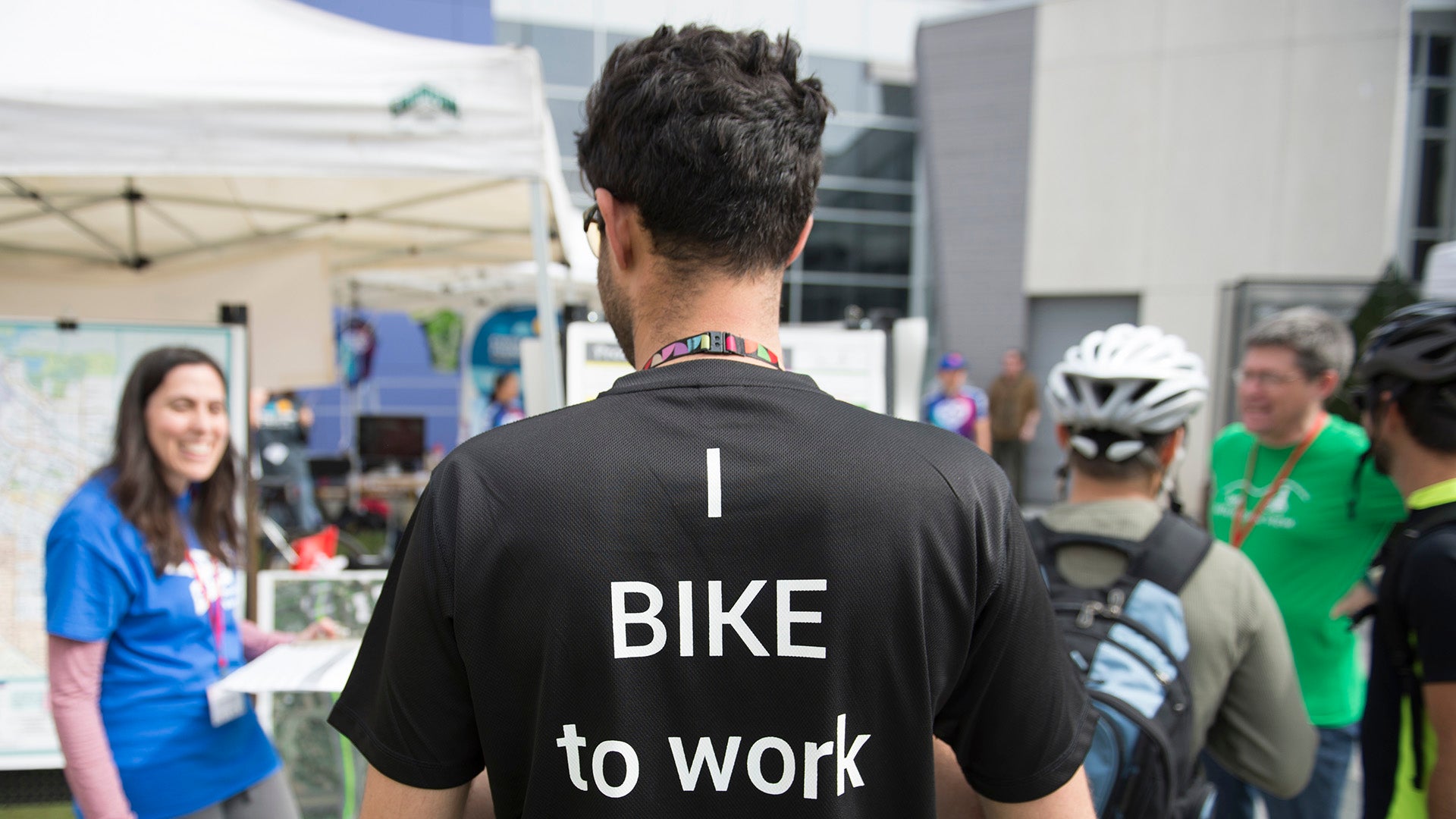
This month, Bike Month and “Bike to Wherever Days” (BTWD) once again will roll across the nine counties of the Bay Area, and include the return of Bike to Work Day on May 20.

For the first time in two years, many employees are beginning to return to their offices, small businesses are seeing a rise in customers and clients, and bicycles once again are being used for commuting – as well as exercise, recreation, traveling to school, running errands and more.

As a result, BTWD 2022 – the event’s 28th year – will be a celebration throughout the entire month of May and will be highlighted by Bike to Work Day, which was modified the last two years due to the pandemic.

“The return of Bike to Work Day is another indicator that life in the Bay Area is slowly, but surely, getting back to normal,” said Alfredo Pedroza, MTC Chairman and Napa County Supervisor. “What better way to celebrate than by getting outdoors and biking. The May events highlight all the many benefits of bicycling, and we want everyone to participate.”

BTWD brings together the nine Bay Area counties to celebrate bicycling, helps new and experienced riders build community, promotes pedaling as a means of transportation, while benefitting the health of residents and the environment.

During Bike Month, county bike coalitions offer classes, activities, education and more. And while each county celebrates all cyclists within its boundaries, one dedicated rider is chosen as its Bike Champion of the Year. This year’s award winners will be announced in late April.

For those who need a little extra encouragement to ride during May – and after Bike Month is over – riders are encouraged to make a pledge to cycle through their respective county coalitions. Details on how to make that pledge – and to learn more about what’s going on in each county – can be found at Bayareabiketowork.com.

Details about Bike to Wherever Days can also be found online at Bayareabiketowork.com. Follow on Facebook at @biketoworkday, Twitter @BikeToWorkSFBay, and Instagram @biketoworkday_bayarea.

Bay Area Bike to Wherever Days is presented by MTC (the transportation planning, financing and coordinating agency for the nine-county San Francisco Bay Area), 511 (the region’s traveler information system) and Amazon. BTWD 2022 also receives regional support from the Bay Area Air Quality Management District (BAAQMD), and Bay Area Rapid Transit (BART), as well as from many sponsors at the local level. Prizes for the Bike Champion of the Year winners were donated by the Association of Bay Area Governments (ABAG), the Bay Area Air Quality Management District, Better World Club and Mike’s Bikes.

Filed Under: Bay Area, News, Transportation

Officials, bicycle advocates celebrate groundbreaking of Mokelumne Trail overcrossing in Brentwood

March 23, 2022 By Publisher Leave a Comment

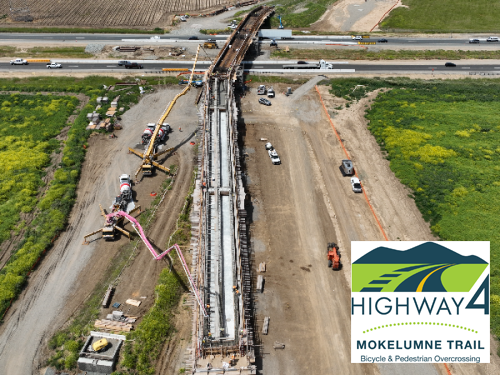
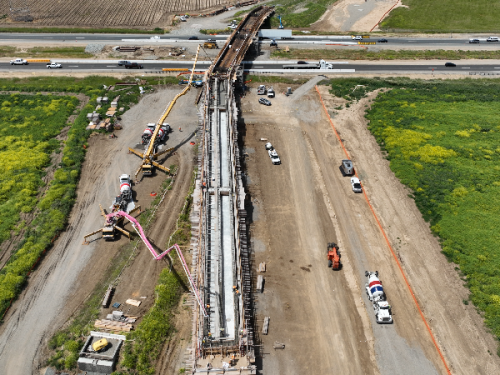
City of Brentwood and transportation officials ceremonially break ground for construction of the Highway 4 overcrossing for the Mokelumne Trail in Brentwood on Friday, March 18, 2022. Photo by Allen D. Payton

Will close gap caused by Hwy 4, complete Contra Costa section by early 2023

“This is one of my dreams that really did come true.” – former Brentwood Mayor Bob Taylor

By Allen D. Payton

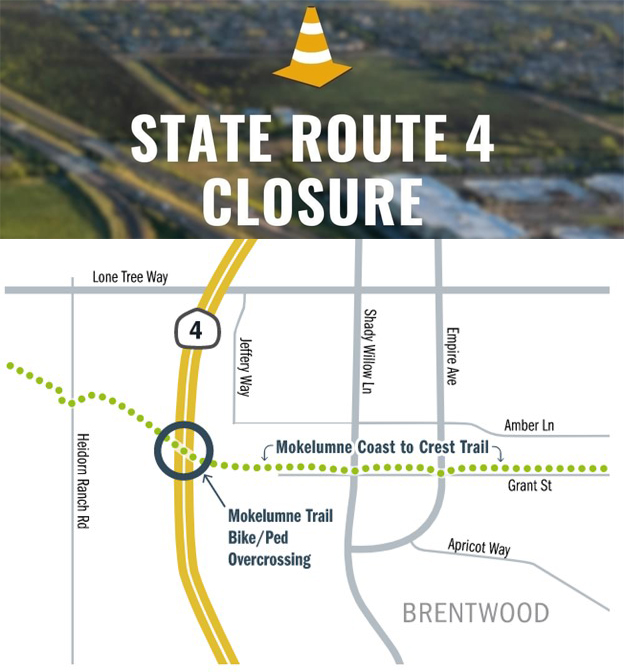
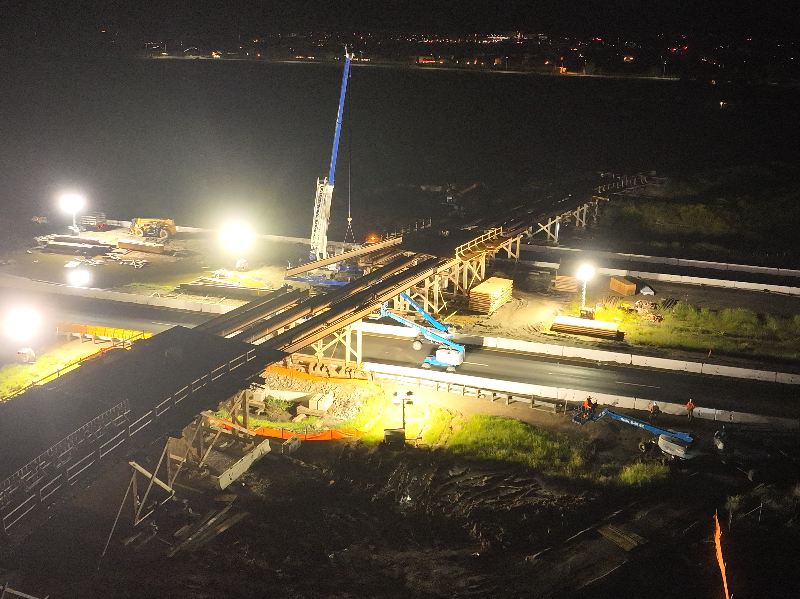
Officials from the Contra Costa Transportation Authority (CCTA), State Route 4 Bypass Authority and the City of Brentwood celebrated the beginning of construction on the Mokelumne Trail Bike and Pedestrian Overcrossing Friday morning, March 18 with a ceremonial groundbreaking. The multi-span bridge will connect two sides of the Mokelumne Trail, providing safe access to cyclists and pedestrians across Highway 4 for recreational travel and commuting. When completed, the overcrossing will provide access to the future Brentwood Transit Center and BART Station.

When completed, the overcrossing will also provide access to the future Brentwood Transit Center and BART Station. It is part of the Mokelumne Coast to Crest Trail which includes the Delta de Anza Regional Trail that runs through Antioch and Oakley.

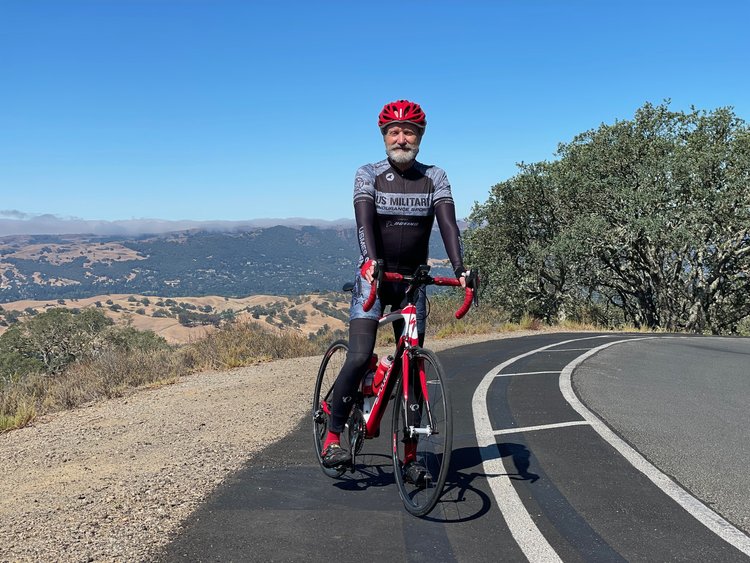
Also in attendance at the groundbreaking were local bicycle advocates including Bruce Ohlson from Bay Point, who rode his bike to the event.

It’s been the plan since the right-of-way for the Highway 4 Bypass/extension between Lone Tree Way and Balfour Road was purchased in 1998 to provide a connection to both sides of the trail and close the gap with an overcrossing.

“The highway splits the trail that was not in place but merely planned at the time the first phase of the Bypass was built in 2002,” said Dale Dennis, Program Manager for the State Route 4 Bypass Authority. “With the understanding that the regional trail would connect. and we would have to provide that connection in the future.”

“The Bypass Authority did the right of way acquisition for the trail,” he added.

Construction on the $8.6 million project is expected to be completed by early 2023 if not sooner. Funding has been provided through the county’s Measure J half-cent sales tax dollars, the Bypass Authority, and regional bridge toll funding from the Metropolitan Transportation Commission (MTC).

The project will have one of the shortest construction timelines in CCTA’s history. The 850-foot bridge structure includes a wider trail width of sixteen feet to accommodate bicyclists and pedestrians using the trail or accessing potential future transit and meets Americans with Disabilities Act (ADA) standards to support use by all community members.

“Total construction costs are $8.6 million with total project costs of $13 million,” said Timothy Haile, CCTA Executive Director. “It’s turned into a focal point for the community….for transit in Eastern Contra Costa County…for the transit center…and for Brentwood’s Innovation Center” for commercial development and employment.

Supervisor Federal Glover spoke representing the MTC saying, “This is going to be major for some visionary individuals as we connect to other areas. It’s been a very collaborative effort and very well thought out through the years. But it doesn’t happen until someone brings the money together.”

He acknowledged and thanked former Brentwood Mayor Bob Taylor, “who was banging on the door of (former CCTA Executive Director) Randy Iwasaki and Tim Haile asking, ‘how…are we going to get the money to get this done?’”

Glover then thanked the partners and all those who helped

“I started working with the City of Brentwood in 2017” Haile said, then thanked the city staff “and the city council that has been very supportive.”

Brentwood Mayor Joel Bryant said, “the overcrossing is part of a greater vision…part of a larger Mokelumne to Crest Trail. This is very exciting. We have a lot of residents who are pedestrians and bicyclists.”

“We provide everything the future is going to need as far as economic development and living as the Bay Area moves our way,” he added.

Bryant acknowledged his predecessor, Mayor Taylor and said, “this is his project that he handed to us”.

“I made a promise 16 years ago that I would do this,” Taylor then said. “I was very naive. After 10 years, I said ‘we’re going to do this’. After 12 years, ‘we’re going to do this’. Well, we’re going to do this.”

“This is not just a Brentwood thing. It couldn’t have been done without a whole lot of people,” he continued. “This is one of my dreams that really did come true.”

“When I came to CCTA the first thing that happened was Bob came into my office and asked how we were going to get the Mokelumne Trail Overcrossing?” Tim Haile added to the credit given to Taylor for the project.

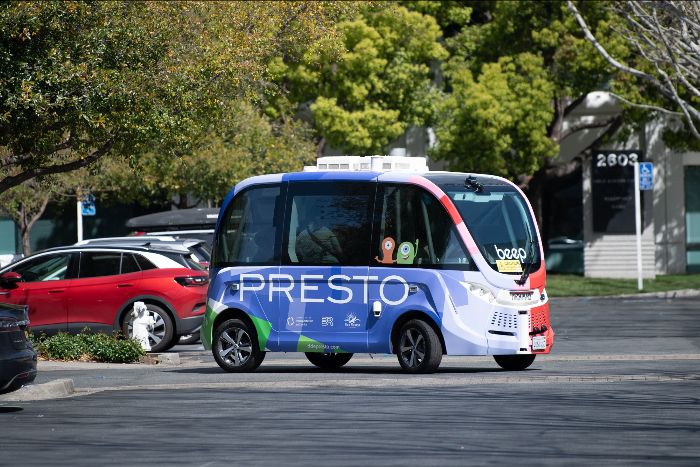
“This new bicycle and pedestrian overcrossing will improve the community’s connections to nature, jobs, housing, and transit opportunities – and serves as an example of what can be accomplished through collaboration,” said Contra Costa Transportation Authority Board Chair Chris Kelley. “But just as important, this bridge is designed with the future in mind and could accommodate potential future autonomous shuttles as well as bicycles and pedestrians to help local residents get where they need to go.”

Options for Brentwood’s East County Intermodal Transit Center are currently being evaluated as part of the East County Integrated Transit Study. The overcrossing also provides a connection to the planned Innovation Center at Brentwood, a 200+ acre parcel that city officials have zoned for employer and development partners to create a workplace community.

According not the trail map website, “For 28 years, dozens of citizens and government agencies have been working to complete the 300+ mile-long Mokelumne Coast to Crest Trail. First envisioned by ‘Father of CA Trails’ and ‘Grandfather of National Trails’ George H. Cardinet, Jr., the Trail Council is proud to share three open sections for day hikes and more.”


Filed Under: East County, News, Recreation, Transportation

BART issues new schedule for 2022

February 9, 2022 By Publisher Leave a Comment

BART System Map. Source: BART.gov

BART’s schedule will change on Monday, February 14, 2022, with significant improvements to Sunday service. With this schedule change, BART will operate midnight service every night of the week representing a full restoration of pre-pandemic service hours.

Highlights include:

  • Extend service to midnight on Sundays
  • Run 5-line service every day (except for single-tracking Sundays) until about 9pm
  • Consistent 3-line service every day after 9pm
  • 4 trains an hour at SFO station on Sundays until 9pm
  • 15-minute even headways on the Yellow line as far as Pittsburg Bay Point on Saturdays until about 8pm
  • New transfer opportunity at Bay Fair for Dublin to Berryessa transfers every day
  • Improved connections with Caltrain at Millbrae on Sundays before 9pm
  • 12 single-tracking Sundays in 2022 when 3-line service will be provided

Some departure times will shift slightly. All riders are encouraged to look up their specific trips.

Sunday Service Improvements

Since the pandemic began BART has been closing at 9pm on Sundays to help accelerate infrastructure rebuilding projects. Beginning Sunday, February 20th, BART will extend Sunday service to midnight. Sunday service hours will be 8am-midight.

Starting Sunday, February 20, 2022, for the first time in history, BART will operate 5-line service on Sundays (except on 12 single-tracking Sundays when power cable replacement work takes place in San Francisco. 3-line service will run on single tracking Sundays). It is important to note the frequency of Sunday single tracking days that will remain as 3-line service with single tracking. March will have two Sundays of 5-line service. Some months will offer 5-line service on Sundays every other week. We’ve listed the 2022 Sunday single tracking days here.

Providing 5-line service on Sundays reduces the need to transfer for most riders and provides more frequency through the busiest core areas of our system. From 8am until evening (about 9pm), the Red line (Richmond to Millbrae + SFO) and Green line (Berryessa to Daly City) will run.

Running 5-Line service on Sundays provides more equitable service to Richmond and Berryessa line riders who previously had to transfer to complete their transbay trip-while other lines provided direct service. Based on ridership data 97% of Sunday riders will get to their destination without the need to transfer, up from 82%. Of those passengers who benefit from this change, about twice as many will ride the Red line than the Green line.

3-line service (Yellow, Blue and Orange lines) will operate every evening after around 9pm and on 12 select single-tracking Sundays. During 3-line service, the Yellow and Blue line will continue to run very close together through San Francisco to enable singling track through work zones. BART plans to improve this service pattern and run Yellow and Blue line trains more evenly spaced apart in the September 2022 schedule change.

Trains will continue to run on 30-minute headways on Sundays with some 15-minute levels of service due to running the Red and Green line. While some outlying areas will see 2 trains per hour on Sunday, most BART stations will see 4, 6, or 8 trains per hour.

New Transfer Opportunity at Bay Fair

More riders are coming in from the Dublin line and heading towards Berryessa. The schedule change includes a new transfer opportunity at Bay Fair every day during all service hours. Riders from Dublin on the Blue line will see a Green or Orange line train across the platform. This transfer has a tight window but the September 2022 schedule change will increase the window to allow for more flexibility to make the meet if there are delays.

Improved Connections with Other Transit Agencies

Most agencies operate the same schedule on Saturday and Sunday, making it difficult for them to design ideal transfers when BART schedules are different on Saturday and Sunday.  Starting in February, the seven night 3-Line service that begins about 9:00 pm is matched all seven days which allows partner agencies to match their schedules with BART more successfully.  The final trains of the night, all seven days in the week, share the same times.

We’ve updated the BART and Caltrain transfer timetable to outline the wait times of each connecting train. Offering 5-line service on Sundays reduces some wait times by 8 or 11 minutes. While weekdays and Saturday connections are very similar to what they were before, there are small improvements of 1-3 minutes shorter wait. For example, a 12-17 minute connection, becomes 9-14 minute connection.

Saturday Service

Saturday service hours will remain unchanged (6am-midnight). Trains will continue to run at 30-minute frequency with added trains on the Yellow line as far as Pittsburg/Bay Point until 8pm. This schedule change improves the Yellow line frequency with more even spaced 15 minute headways as far as Pittsburg/Bay Point compared to what was being offered before.

Weekday Service

Weekday service remains unchanged though some departure times have slightly shifted. Service hours continue to be 5am-midnight.

Pictured above is the system map showing 5-line service every day of the week for Sundays we are not single tracking.

Filed Under: BART, News, Transportation

Planning for proposed 4-lane State Route 239 between Brentwood and Tracy moves forward

January 7, 2022 By Publisher Leave a Comment

Proposed State Route 239 Alternative A alignment. Source: Caltrans/CCTA

Public input requested; legislatively designated for over 62 years

The proposed State Route 239 Project will provide a new, four-lane highway from State Route 4 at Marsh Creek Road in Contra Costa County to Interstate 580 in Alameda County or Interstate 205 in San Joaquin County. This new state route will ultimately improve the transportation network for an area that has few viable north-south roadway connections in this approximately 17-mile stretch between eastern Contra Costa and the Central Valley.

This project is sponsored by the Contra Costa County Transportation Authority (CCTA) in partnership with Contra Costa County and the California Department of Transportation (Caltrans) – District 4. The proposed State Route 239 Project is critical to the region and needed to provide relief from increasing commute traffic through the town of Byron, enhance mobility in eastern Contra Costa, and improve access to the Byron Airport.

Source: Caltrans/CCTA

Brief History

State Route 239 has been a legislatively designated route since 1959. In 2005, Contra Costa County secured federal funds to initiate a feasibility study and a project initiation document (PID). The PID was completed in 2015 and the environmental study phase has been initiated.

Why Now?

Supporting the growing communities of eastern Contra Costa County and providing mobility options for the area are two key reasons to implement this corridor. It will serve as an important backbone for the region while helping people who live and work in eastern Contra Costa County (including Pittsburg, Antioch, Brentwood, Oakley, Byron, and Discovery Bay) and western San Joaquin County (including Tracy and Mountain House) connect, move and prosper.

roposed State Route 239 Alternative B alignment. Source: Caltrans/CCTA

Considerations

During the study phase of this project, which occurred between the spring of 2012 and the winter of 2013, a variety of stakeholder meetings were held, and several important themes emerged, including consideration of how a new route in eastern Contra Costa might affect conservation areas, agricultural lands, bird flight paths, and growth in the area. These considerations are still important, today and have set the stage for continued outreach during future project development phases.

Proposed State Route 239 cross section. Source: Caltrans/CCTA

Environmental Phase

Caltrans and CCTA are currently engaged in the environmental phase of the project development process for the State Route 239 Project. During this phase, the team will study and analyze all environmental impacts for the project area and will prepare a Draft Environmental Impact Report/ Environmental Impact Statement (EIR/EIS) for public review and comment in 2023.

The public is invited to join the conversation about the environmental scoping phase of the State Route 239 Project during the public comment period.

COMMENT PERIOD: DECEMBER 17, 2021- FEBRUARY 4, 2022

The State Route 239 Project is offering an environmental scoping virtual open house. The purpose of environmental scoping is to identify the environmental topics that the project team should study to assess the potential environmental impacts of a construction project. Public input on this project will be critical for ensuring the SR 239 project team’s studies are comprehensive and thorough. Within the website you will be able to review informational materials about this phase of the work.

Please use the online comment form provided to send your thoughts and questions to the project team.

Virtual Environmental Scoping Meeting

Live presentation and Q&A session scheduled for January 20, 2022 at 5:30 p.m.

Recorded scoping presentation will be posted on the page on January 21, 2022.

On January 20, 2022, please visit the website for a link to the interactive virtual scoping meeting that will start at 5:30 p.m. Visitors will be permitted to join the meeting 15 minutes before the start time. The team will make a presentation about this project and a panel of experts will be available to answer your questions about State Route 239.

For additional information about this project, please contact Stephanie Hu – Director, Projects at stephanieh@ccta.net.


Filed Under: East County, News, Transportation

Violation penalties lowered on 7 Bay Area toll bridges

January 5, 2022 By Publisher 1 Comment

Benicia-Martinez Bridge. Photo by John Huseby, Caltrans

Retroactive to Jan. 1: Cost for Initial Notice Drops to $5 from $25; Second Notice to $15 from $70; affects all but Golden Gate

The Bay Area Toll Authority (BATA) today announced a sharp reduction in the penalties associated with toll violation notices sent by the FasTrak® customer service center to customers with unpaid invoices for toll bridge crossings.

Effective immediately — and retroactive to all violation notices since Jan. 1 of this year for outstanding tolls at the San Francisco-Oakland Bay, Antioch, Benicia-Martinez, Richmond-San Rafael, Carquinez, Dumbarton and San Mateo-Hayward bridges — the penalty for first violation notices drops to $5 from the previous $25 and the penalty for second violation notices falls to $15 from the previous $70.

Bridge customers who paid toll violation penalties earlier this year will receive a refund for the difference between the amount(s) they paid and the amount(s) due under the new policy. Distribution of these refunds is expected to begin in February 2022 and continue over the next several months, after which a claim process will be posted at www.bayareafastrak.org for customers who believe they are owed a refund and did not receive one.

The new policy toward violation penalties was approved by BATA at its October 2021 meeting and marks the first policy change adopted as part of its Bay Area tolling equity action plan unveiled in May 2021. BATA at its November 2021 meeting approved several additional policy changes slated to become effective in the spring of 2022. These include dropping the cost of the FasTrak toll tag deposit for new customers who choose not to link their account to a credit card to $5 from the previous $20; crediting $15 to the prepaid toll accounts of existing customers who paid a $20 tag deposit; reducing the minimum opening balance for a FasTrak account for customers who pay with cash or check to $25 from the previous $50; and eliminating transaction fees for customers who replenish FasTrak accounts or pay violation penalties at a cash network location. BATA and the FasTrak customer service center in the coming months are expected to implement additional recommendations designed to make enrollment in the FasTrak electronic toll payment system more convenient, accessible and affordable. The toll payment system is fully automated for FasTrak customers, with the cost of each crossing automatically deducted from their accounts, allowing them to avoid invoices, violation notices and penalties altogether.

FasTrak customers already account for about three-quarters of all crossings at the Bay Area’s state-owned toll bridges. BATA encourages customers who do not already have FasTrak to open accounts online at www.bayareafastrak.org or by phone at 1-877-229-8655 (BAY-TOLL). Customers also may obtain FasTrak tags at select Costco and Walgreens stores. A map of retail locations at which FasTrak tags are available may be found at https://www.bayareafastrak.org/en/howitworks/retailmap.html. Tags purchased at Costco or Walgreens must be registered online. Drivers who would rather replenish their FasTrak accounts with cash can do so at more than 100 Cash Payment Network locations, now including Walmart stores. A map of these locations may be found at https://www.bayareafastrak.org/en/tolls/cashLocationsMap.html.

Drivers also may open a License Plate Account, which is a pay-as-you-go option that links a license plate to an account and charges that account whenever the vehicle crosses a toll bridge; or make a one-time payment, which allows the customer to pay a toll online up to 30 days in advance of a bridge crossing or within 48 hours afterwards. There are no fees for either of these services. More information about License Plate Accounts and one-time payments is available at www.bayareafastrak.org.

Customers who do not have FasTrak or a License Plate Account — and who do not use the online one-time payment option — are required to return invoices with payment within 21 days. Customers who neglect to return payment by the due date on the invoice will receive a “Notice of Toll Evasion” with a $5 penalty for each toll crossing. Customers who do not return payment by the due date on the “Notice of Toll Evasion” will receive a “Second Notice of Delinquent Toll Evasion” with a violation penalty of $15 per crossing. Customers who do not return payment after a second notice may have a hold put on their vehicle registration by the DMV or have the amount owed referred to a collection agency.

BATA administers all toll revenues from the region’s seven state-owned toll bridges.


Filed Under: Bay Area, News, Transportation

Tolls on seven Bay Area bridges increased by $1 on New Year’s day to fund $4.45 billion of transportation projects

January 4, 2022 By Publisher Leave a Comment

The Richmond-San Rafael Bridge and Bay Trail. Photo: MTC

Second of three voter-approved increases, this one to $7; funds held in escrow pending State Supreme Court decision

Bay Bridge Toll Plaza from MTC website. By Noah-Berger

By Bay Area Toll Authority

With the new year, the Bay Area Toll Authority (BATA) reminds drivers that tolls at the region’s seven state-owned toll bridges increased by $1 on Jan. 1, 2022. This is the second of the three $1 toll increases approved by the Legislature in 2017 through state Senate Bill 595 and by voters through Regional Measure 3 in June 2018. The first of these toll hikes went into effect on Jan. 1, 2019. The last of the Regional Measure 3 toll increases will go into effect on Jan. 1, 2025.

Regular tolls for two-axle cars and trucks (as well as for motorcycles) at the San Francisco-Oakland Bay, Antioch, Benicia-Martinez, Carquinez, Dumbarton, Richmond-San Rafael and San Mateo-Hayward bridges rose to $7 from the current $6 on Jan. 1, 2022.

Tolls for vehicles with three or more axles also rose by $1 on Jan. 1, 2022, at all seven of the state-owned toll bridges: to $17 for three axles, $22 for four-axles, $27 for five axles, $32 for six axles, and $37 for combinations with seven or more axles.

Senate Bill 595 and Regional Measure 3 continue the peak-period toll discount for motorcycles, carpools and qualifying clean-air vehicles crossing any of the state-owned toll bridges on weekdays from 5 a.m. to 10 a.m. and from 3 p.m. to 7 p.m. The discounted toll increased to $3.50 on Jan. 1, 2022, from the previous $3. To qualify for this discount, carpoolers, motorcyclists and drivers of qualifying clean-air vehicles must use FasTrak® to pay their tolls electronically and must use a designated carpool lane at each toll plaza.

Senate Bill 595 and Regional Measure 3 also established a 50-cent toll discount for two-axle vehicles crossing more than one of the state-owned toll bridges during weekday commute hours of 5 a.m. to 10 a.m. and 3 p.m. to 7 p.m. To be eligible for the toll discount, which is to be applied to the second toll crossing of the day, motorists must pay their tolls electronically with FasTrak®. Carpools, motorcycles and qualifying clean-air vehicles making a second peak-period toll crossing in a single day will qualify for an additional 25-cent discount off the already-discounted carpool toll.

Funding for Transportation Projects

The funds collected from the additional toll will fund a $4.45 billion list of transportation improvement projects throughout the nine-county Bay Area, which includes $470 million in Contra Costa County.

Source: MTC

Source: MTC

New FasTrak® customers can obtain toll tags at hundreds of Walgreens and Costco stores around the Bay Area. A complete list of participating locations — as well as an online enrollment and registration feature — is available on the FasTrak® Web site at bayareafastrak.org. Customers also may enroll in the FasTrak® program by phone at 1-877-229-8655; by calling 511 and asking for “FasTrak” at the first prompt; or in person at the FasTrak® customer service center at 375 Beale Street in San Francisco. Phone service is available Monday-Thursday from 8 a.m. to 6 p.m. and on Fridays from 8 a.m. to 5 p.m. The walk-in customer service center is open Monday-Friday from 9 a.m. to 5 p.m. FasTrak® can be used in all lanes at all Bay Area toll plazas.

Because a legal challenge to Senate Bill 595 and Regional Measure 3 remains pending before the California Supreme Court, the January 1, 2022 toll increase, as collected, is placed into an escrow account managed by an independent trustee. Revenue from the 2019 toll increase also is being held in escrow. If BATA prevails in the litigation, the funds will be applied to BATA-approved programs.

Major projects in the Regional Measure 3 expenditure plan include improvements to State Route 37 in the North Bay, freeway interchange improvements in Alameda, Contra Costa and Solano counties, the purchase of more new BART cars, extension of the BART system from Berryessa to downtown San Jose and Santa Clara, extension of the Caltrain corridor to the Salesforce Transit Center in downtown San Francisco, expansion of Muni’s transit vehicle fleet, expansion of San Francisco Bay Ferry service and more frequent transbay bus service, a direct freeway connector from northbound U.S. 101 in Marin County to the Richmond-San Rafael Bridge, upgrades to the Dumbarton Bridge corridor, and extension of the SMART rail system to Windsor and Healdsburg in Sonoma County.

BATA, which is directed by the same policy board as the Metropolitan Transportation Commission (MTC), administers toll revenues from the Bay Area’s seven state-owned toll bridges. Toll revenues from the Golden Gate Bridge are administered by the Golden Gate Bridge, Highway and Transportation District, which joined with BATA to operate a single regional FasTrak® customer service center in San Francisco. MTC is the transportation planning, financing and coordinating agency for the nine-county San Francisco Bay Area.

Allen Payton contributed to this report.


Filed Under: Bay Area, News, Taxes, Transportation

Biden issues Executive Order on Implementation of the Infrastructure Investment and Jobs Act

November 21, 2021 By Publisher Leave a Comment

Executive Order on Implementation of the Infrastructure Investment and Jobs Act

NOVEMBER 15, 2021

By the authority vested in me as President by the Constitution and the laws of the United States of America, and in order to effectively implement the historic infrastructure investments in the Infrastructure Investment and Jobs Act (the Act), it is hereby ordered as follows:

Section 1.  Background.  The Infrastructure Investment and Jobs Act is a once-in-a-generation investment in our Nation’s infrastructure and competitiveness. It will help rebuild America’s roads, bridges, and rails; expand access to clean drinking water; work to ensure access to high-speed Internet throughout the Nation; tackle the climate crisis; advance environmental justice; and invest in communities that have too often been left behind.  It will accomplish all of this while driving the creation of good-paying union jobs and growing the economy sustainably and equitably for decades to come.

Critical to achieving these goals will be the effective implementation of the Act by my Administration, as well as by State, local, Tribal, and territorial governments.

President Biden signed the infrastructure bill during a ceremony on the back lawn of the White House surrounded by members of his cabinet, the House and Senate on Monday, Nov. 15, 2021. Source: U.S. Speaker of the House website.

Sec. 2.  Implementation Priorities.  In implementing the Act, all agencies (as described in section 3502(1) of title 44, United States Code, except for the agencies described in section 3502(5) of title 44), shall, as appropriate and to the extent consistent with law, prioritize:

(a)  investing public dollars efficiently, working to avoid waste, and focusing on measurable outcomes for the American people;

(b)  increasing the competitiveness of the United States economy, including through implementing the Act’s Made-in-America requirements and bolstering United States manufacturing and supply chains;

(c)  improving job opportunities for millions of Americans by focusing on high labor standards for these jobs, including prevailing wages and the free and fair chance to join a union;

(d)  investing public dollars equitably, including through the Justice40 Initiative, which is a Government-wide effort toward a goal that 40 percent of the overall benefits from Federal investments in climate and clean energy flow to disadvantaged communities;

(e)  building infrastructure that is resilient and that helps combat the crisis of climate change; and

(f)  effectively coordinating with State, local, Tribal, and territorial governments in implementing these critical investments.

Sec. 3.  Infrastructure Implementation Task Force.  (a)  There is established within the Executive Office of the President the Infrastructure Implementation Task Force (Task Force).  The function of the Task Force is to coordinate effective implementation of the Infrastructure Investment and Jobs Act and other related significant infrastructure programs within the executive branch.

(b)  The Assistant to the President for Economic Policy and Director of the National Economic Council shall serve as Co‑Chair of the Task Force.

(c)  There is established within the Executive Office of the President the position of White House Infrastructure Coordinator, who shall serve as Co-Chair of the Task Force.

(d)  In addition to the Co-Chairs, the Task Force shall consist of the following members:

(i)     the Secretary of the Interior;

(ii)    the Secretary of Agriculture;

(iii)   the Secretary of Commerce;

(iv)    the Secretary of Labor;

(v)     the Secretary of Transportation;

(vi)    the Secretary of Energy;

(vii)   the Administrator of the Environmental Protection Agency;

(viii)  the Director of the Office of Management and Budget;

(ix)    the Director of the Office of Personnel Management;

(x)     the Assistant to the President and Director of the Domestic Policy Council;

(xi)    the Assistant to the President and National Climate Advisor; and

(xii)   the heads of such other executive departments, agencies, and offices as the Co-Chairs may from time to time invite to participate.

(e)  The Co-Chairs may coordinate subgroups consisting of Task Force members or their designees, as appropriate.

Sec. 4.  General Provisions.  (a)  Nothing in this order shall be construed to impair or otherwise affect:

(i)   the authority granted by law to an executive department or agency, or the head thereof; or

(ii)  the functions of the Director of the Office of Management and Budget relating to budgetary, administrative, or legislative proposals.

(b)  This order shall be implemented consistent with applicable law and subject to the availability of appropriations.

(c)  This order is not intended to, and does not, create any right or benefit, substantive or procedural, enforceable at law or in equity by any party against the United States, its departments, agencies, or entities, its officers, employees, or agents, or any other person.

JOSEPH R. BIDEN JR.

THE WHITE HOUSE,

November 15, 2021.


Filed Under: Government, Infrastructure, News, Technology, Transportation

  • « Previous Page
  • 1
  • …
  • 14
  • 15
  • 16
  • 17
  • 18
  • …
  • 32
  • Next Page »
Deer-Valley-Chiro-06-22

Copyright © 2026 · · Contra Costa Herald · All Rights Reserved