• Home
  • About The Herald
  • Local Agencies
  • Daily Email Update
  • Legal Notices
  • Classified Ads

Contra Costa Herald

News Of By and For The People of Contra Costa County, California

  • Arts & Entertainment
  • Business
  • Community
  • Crime
  • Dining
  • Education
  • Faith
  • Health
  • News
  • Politics & Elections
  • Real Estate

Connect Bay Area campaign raises nearly $3 million to support signature gathering for regional transit tax measure

January 15, 2026 By Publisher Leave a Comment

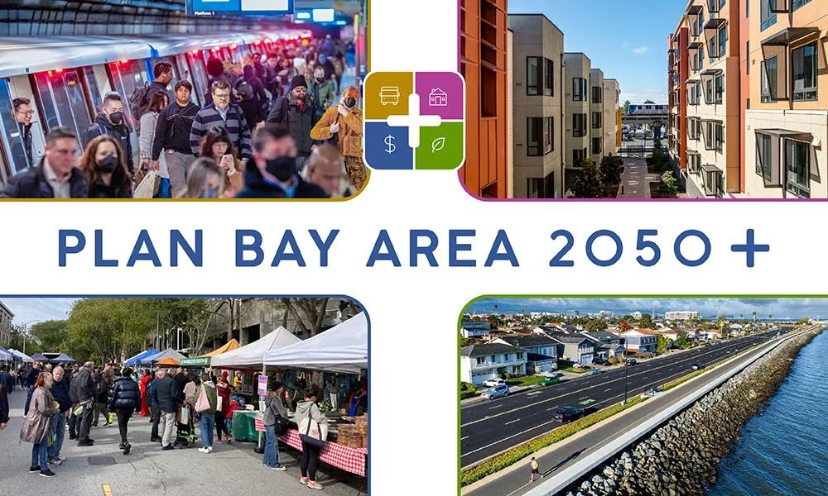
Multiple Bay Area transit agencies would benefit from the five-county sales tax measure. Photo: MTC. Graphics source: Connect Bay Area

Businesses, labor unions, civic foundations join effort for 5-county Nov. 2026 ballot measure to prevent threatened catastrophic transit service cuts, promote reliable, safe public transit

Includes Contra Costa; would generate about $1 billion per year

SAN FRANCISCO BAY AREA, CA — The Connect Bay Area Transit committee today announced that it has already raised nearly $3 million to support a region-wide effort to qualify Connect Bay Area, a voter-proposed regional transportation funding measure, for the November 2026 ballot. With strong early financial backing secured, the campaign will now begin signature gathering while continuing to fundraise to qualify and pass a five-county sales tax to save public transit.

About the Tax Measure

The measure if adopted would increase the sales tax in Contra Costa, Alameda San Mateo and Santa Clara Counties by a half cent and one cent in San Francisco County for 14 years. As previously reported, the measure would generate approximately $980 million annually across the five counties.

Revenue from the tax measure will benefit multiple transit agencies in the region including Tri Delta Transit, County Connection and WestCat, as well as AC Transit and BART which serve Contra Costa County residents.

Following is a county-by-county breakdown of the County Specific Dollars. It does not include money going to BART, Muni, AC Transit and Caltrain, or to regional improvements that aren’t designated by county, such as coordinated fare programs and accessibility improvements.

County Agencies:

  • Contra Costa County Transportation Authority (2.5%, $26.51M)
  • Alameda County Transportation Commission (1%, $10.26M)
  • San Mateo County Transit District (4.7%, $50M)
  • Santa Clara Valley Transportation Authority (25.1%, $264.07M)

Small Operators:

  • Contra Costa County small operators (1.5%, $15.75M)
  • Alameda County small operators (0.5%, $5.25M)
  • SF Bay Ferry (0.7%, $7M)
  • Golden Gate Transit (0.1%, $1M)

Without new and sustainable operations funding, the Bay Area will face a true emergency:

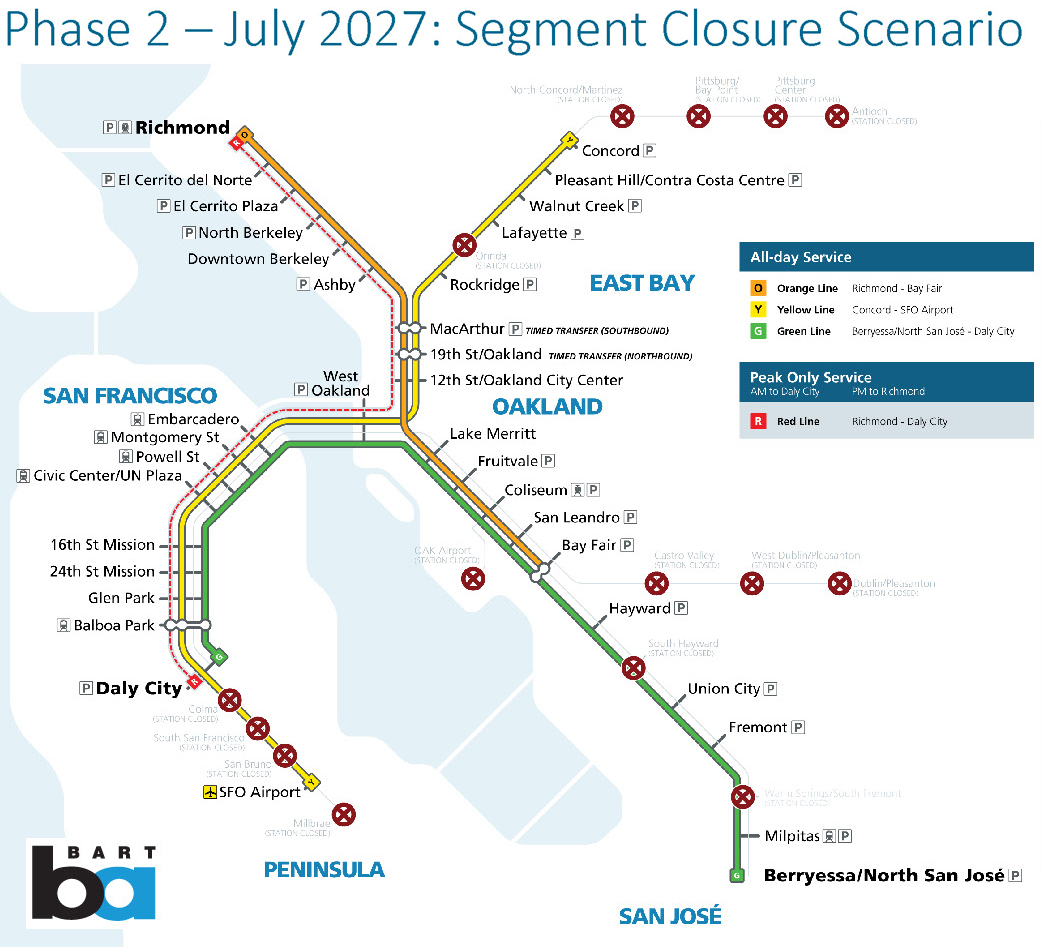
  • BART: Could shut down two of its five lines, reducing service from 4,500 trains per week to just 500, with trains running only hourly and no weekend service.
  • AC Transit: Would reduce service by 37%, bringing operations down to just half of pre-pandemic levels.
  • Muni: Would face 50% cuts to all bus and Metro lines, including elimination of entire neighborhood routes and San Francisco’s iconic historic trolleys and cable cars.
  • Caltrain: Trains would run only once per hour, end service by 9 p.m. on weekdays, and eliminate all weekend service.

The Connect Bay Area measure will support the future of public transportation in the Bay Area:

  • Protect and improve service on BART, Muni, Caltrain, SamTrans, VTA and AC Transit
  • Prevent catastrophic service cuts that could devastate the Bay Area
  • Keep traffic and emissions down, preventing gridlock and protecting climate progress;
  • Support the Bay Area’s economy, ensuring that downtown recovery and regional mobility remain strong.

The Connect Bay Area Transit measure will include strong accountability provisions. This ensures new funding delivers real improvements, not just short-term fixes. Transit agencies must:

  • Independent financial review and cost-efficiency: Operators will undergo a third-party financial review and be required to improve financial efficiency and use public funds wisely
  • Better regional coordination to benefit riders: Operators will be required to comply with MTC’s Regional Network Management Policies to coordinate across systems and simplify fares and signage to create a more seamless experience for riders.
  • Oversight Committee: An oversight committee will ensure that the expenditure plan is adhered to and hold MTC and operators accountable to all provisions of SB63.

About the Campaign

The campaign’s initial fundraising success reflects broad alignment across business, labor, philanthropy, and community leaders that a reliable, safe, and efficient public transportation system is vital to the future of the Bay Area. Major early donors include Chris Larsen, Herzog Contracting Corporation, Genentech, HNTB Corporation, Meta, and SEIU 1021. For a full list of donors, see below.

“Public transportation connects everyone. We are proud of the broad coalition uniting to prevent catastrophic service cuts and to build an affordable, safe, and efficient public transportation system,” said Jeff Cretan, a spokesperson for the Connect Bay Area Transit Committee. “The commitments we are seeing from business, labor, and civic leaders shows that everyone is ready to get this measure across the finish line in November.”

Connect Bay Area is a five-county regional tax measure designed to prevent catastrophic transit service cuts and provide reliable operating funding for major transit systems and local bus operators throughout the region. The measure also funds improvements to transit systems, capital projects within counties, and targeted road improvements. The measure is critical to supporting the Bay Area’s economy, promoting an affordable region, reducing traffic congestion, and ensuring access to jobs, schools, and healthcare.

Early financial support for the campaign includes commitments from:

  • Chris Larsen
  • Herzog Contracting Corporation
  • Genentech
  • HNTB Corporation
  • Meta
  • SEIU 1021
  • Jacobs
  • Silicon Valley Community Foundation
  • ATU Local 1555
  • PG&E
  • San Francisco Foundation
  • WSP
  • Golden State Warriors
  • AFSCME Local 3993
  • Boston Properties
  • Visa
  • AFSCME Council 57
  • T.Y. Lin
  • GILLIG
  • HDR, Inc.
  • Fehr & Peers
  • AFSCME 3916
  • Arup North America
  • Olson Remcho

Additional major employers, labor organizations, and philanthropic partners have indicated commitments that are expected to be finalized as the campaign continues to build momentum.

With signature gathering starting, the Connect Bay Area campaign will focus on qualifying the measure for the ballot while continuing to expand its coalition across the region. The Campaign must secure over 186,000 signatures from the five counties by June 6, 2026 to qualify for the November ballot.

The campaign’s early momentum comes as Bay Area transit agencies face an unprecedented funding crisis. Without a sustainable solution, public transportation in the the region could see devastating impacts, including:

  • BART could eliminate 2 full lines, stop service at 9pm on weekdays, and eliminate all weekend service.
  • Muni could eliminate entire routes, make 50% cuts to major bus and metro lines, gut historic train and cable car service.
  • Caltrain could cut weekday service to once an hour, stop service at 9pm on weekdays, and eliminate all weekend service.
  • AC Transit could cut up to 37% of overall service.

Recent polling on the proposed Connect Bay Area measure shows a clear path to passage, with strong support across counties and voter demographics. A survey conducted by EMC Research for the Metropolitan Transportation Commission found that 59% of Bay Area voters would support a proposed regional sales tax measure for public transportation. The threshold for passage for a signature-gathering initiative is 50%+1.

For more information about Connect Bay Area, visit ConnectBayArea.com.

About the Connect Bay Area Transit Committee

The Connect Bay Area Transit Committee is led by labor, business, and transit supporters, including the Bay Area Council, SEIU 1021, ATU 1555, SPUR, SAMCEDA, among others, as well as a broad advocacy council. The advocacy council includes more than 20 organizations including transit advocates, housing advocates, safe streets advocates, senior and disability advocates, and environmentalists. The Committee is focused on delivering a successful 2026 ballot measure that will strengthen public transportation to keep the Bay Area affordable for residents and support critical economic growth and climate resilience.

Allen D. Payton contributed to this report.

Filed Under: BART, Bay Area, News, Politics & Elections, Taxes, Transportation

CA Office of Traffic Safety awards Contra Costa DA’s Office over $300k grant for DUI Prosecution Team

January 8, 2026 By Publisher Leave a Comment

By Ted Asregadoo, PIO, Contra Costa County District Attorney’s Office

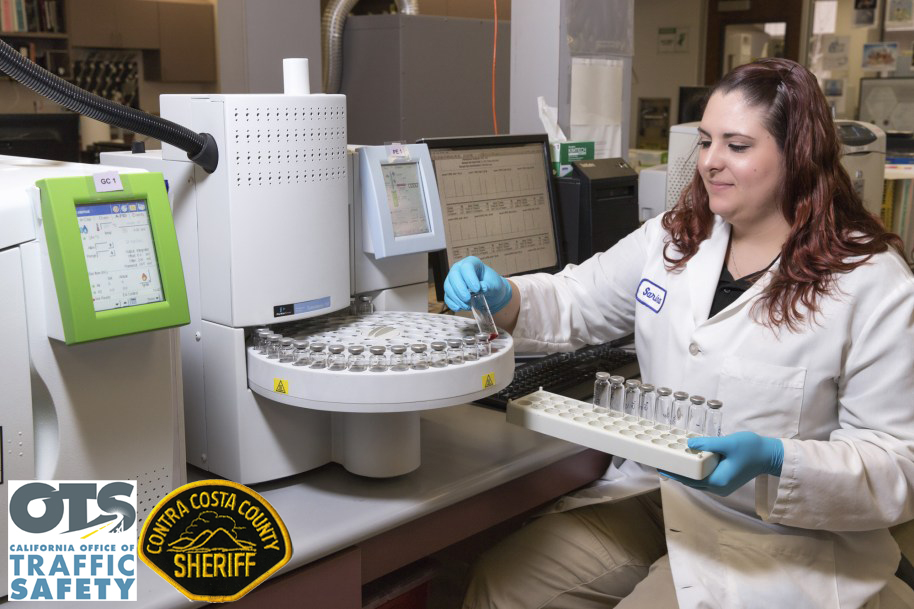
Martinez, California – The Contra Costa County District Attorney’s Office received a grant from the California Office of Traffic Safety (OTS) of $323,500 to support a specialized prosecution team dedicated to alcohol and drug-impaired driving cases.

“We are grateful for this grant, which will allow us to focus specifically on holding individuals accountable for impaired driving and making the roads in our community safer for everyone,” District Attorney Diana Becton said. “Driving Under the Influence remains a significant danger on our roads. This funding strengthens our commitment to improving road safety and making sure justice is served effectively and efficiently.”

The specialized prosecution team will also partner with the statewide Traffic Safety Resource Prosecutor Training Program (TSRP) to train other prosecutors and investigators and collaborate with law enforcement agencies on best practices for handling and managing driving under the influence (DUI) cases.

“Through focused prosecution efforts and strong partnerships, we are working toward a future where all people will be safe on California roads,” OTS Director Stephanie Dougherty said. “Together, we’re holding impaired drivers accountable and encouraging safe, responsible choices that help build a culture where safety comes first.”

This is the first year the Contra Costa County District Attorney’s Office has received funding from the OTS for a specialized DUI prosecution program. The grant program runs through September 2026.

Funding for this program was provided by a grant from the California Office of Traffic Safety, through the National Highway Traffic Safety Administration.

Filed Under: District Attorney, Finances, News, State of California, Transportation

Law firm offers free New Year’s Eve Uber rides across California

December 31, 2025 By Publisher Leave a Comment

Source: Setareh Law, LLC

Includes major regions such as the Bay Area, Stockton, Santa Rosa, Sacramento, Modesto, Madera, Fresno, Bakersfield, Ventura/Oxnard, Salinas, Los Angeles and San Diego

By Karla Fernandez, Public Relations, Market My Market

New Year’s Eve is consistently one of the deadliest nights of the year to be on the road. According to the National Highway Traffic Safety Administration, alcohol-impaired driving accounts for about 37% of traffic deaths during the New Year’s holiday period, with fatal crashes peaking during late-night hours between 9 p.m. and 3 a.m.

Nationwide, the National Safety Council projects more than 500 traffic fatalities during major holiday travel periods, and NHTSA reports that roughly one-third involve alcohol-impaired drivers – a risk that intensifies during overnight celebrations like New Year’s Eve.

To help reduce that risk, Setareh Law is offering free Uber rides (up to $20 each) across eligible California counties, giving people a safe way to get home on New Year’s Eve without getting behind the wheel.

This initiative is part of a broader community safety effort aimed at reducing impaired driving and helping more people get home safely during one of the busiest travel nights of the year.

Daniel Setareh, Founder of Setareh Law, explains, “New Year’s Eve is a time for celebration, not tragedy. After fighting for justice for families who have been forever impacted by impaired drivers, we want to do our part to help prevent these accidents before they happen. If one free ride will keep someone safe, then this effort is worth every bit of it.”

Here’s How It Works (Step by Step):

Step 1: Request Your Voucher

Fill out the short form on the official campaign page to request your Uber voucher. Once approved, you’ll receive a unique Uber voucher link by email.

Step 2: Add Your Voucher to the Uber App

Click the link in your email and the voucher will automatically load into your Uber app.

Step 3: Take Your Free Ride (Dec 31–Jan 1)

Use the voucher anytime between:

5:00 PM on December 31 through 10:00 AM on January 1

Your ride must start or end in one of the eligible California counties.

Eligibility Requirements:

To qualify for the free ride, users must:

  • Be 21 years or older
  • Have an active Uber account
  • Take the ride during the campaign window (Dec 31–Jan 1)
  • Start or end the ride in an eligible California county
  • Limit: one voucher per Uber account
  • Offer is limited to the first 300 vouchers

The voucher covers one one-way ride up to $20 (tip not included).

Eligible California Counties

Contra Costa, Alameda, San Francisco, San Mateo, Santa Clara, Sacramento, Fresno, San Joaquin, Stanislaus, Sonoma, Kern, Ventura, Monterey, and Madera, Los Angeles, Orange, Riverside, San Bernardino and San Diego.

Only rides that start or end in an eligible county will qualify. The Uber app will automatically prevent the voucher from applying outside approved areas.

About Setareh Law

Setareh Law, APLC, is a California-based personal injury law firm dedicated to representing individuals and families harmed by negligence. Founded by attorney Daniel Setareh, the firm handles serious injury cases including car accidents, drunk-driving crashes, catastrophic injuries, and wrongful death. With offices across California, Setareh Law is committed to providing hands-on legal representation, personalized client care, and strong advocacy both inside and outside the courtroom.


Filed Under: Bay Area, Holiday, Legal, News, Transportation

Toll increases at 7 Bay Area bridges beginning Jan. 1

December 24, 2025 By Publisher Leave a Comment

Richmond-San Rafael Bridge. Credit: Karl Nielsen. Photos source: BATA

$8.50 for all regular two-axle cars & trucks

First in series of 5 increases each year through 2030 – not voter approved

Plus, new policies for carpool lanes on bridge approaches

By John Goodwin, Assistant Director of Communications & Rebecca Long, Director, Legislation & Public Affairs, Metropolitan Transportation Commission

With the new year starting next Thursday, the Bay Area Toll Authority (BATA) reminds drivers that tolls at the region’s seven state-owned toll bridges will go up by 50 cents on Jan. 1, 2026. This will be the first in a series of five toll increases to be phased in each January through 2030, with the additional funds to be used only to pay for the maintenance, rehabilitation and operation of the San Francisco-Oakland Bay Bridge and the Antioch, Benicia-Martinez, Carquinez, Dumbarton, Richmond-San Rafael and San Mateo-Hayward bridges, and to service debt on BATA bond issues.

Approved by the BATA board in late 2024, not the voters, the new toll schedule includes a tiered rate structure  aimed at encouraging more customers to pay electronically with FasTrak® toll tags. Because payment with FasTrak carries lower administrative costs than payment through a license plate account or by returning payment with an invoice received in the mail, customers will pay a premium for using a pre-registered license plate account or for invoiced tolling. To give customers ample time to sign up for FasTrak, BATA last year voted to delay the start of the tiered pricing structure until 2027.

Tolls for all regular two-axle cars and trucks will increase to $8.50 from the current $8 on Jan. 1, 2026. Tolls for customers who pay with FasTrak tags will then rise to $9 in 2027; to $9.50 in 2028; to $10 in 2029; and then to $10.50 in 2030. Tolls for customers who use a pre-registered license plate account will climb to $9.25 in 2027; to $9.75 in 2028; to $10.25 in 2029 and to $10.75 in 2030. Invoiced tolls will go to $10 in 2027; $10.50 in 2028; $11 in 2029; and $11.50 in 2030.

Tolls for large freight trucks and other vehicle/trailer combinations with three or more axles will rise by 50 cents per axle each year from 2026 through 2030.

History of Bay Area Bridge Tolls

Tolls include the $5 of voter approved toll increases on the region’s seven state-owned toll bridges. They include:

  • The $1 uniform base toll on the bridges from Regional Measure 1 approved by voters in 1988, except for tolls at the Richmond-San Rafael Bridge, which were already set at $1, and unchanged by passage of RM1.
  • Voters also approved Regional Measure 2 in 2004 which raised the toll price on the bridges by another $1.
  • The $3 from Regional Measure 3 approved by voters in June 2018 which raised tolls in three $1 increments that went into effect on January 1, 2019, January 1, 2022, and January 1, 2025.

Updated HOV Policies

BATA last year also set a Jan. 1, 2026, start date for updated policies about the use of high-occupancy vehicles on approaches to the Bay Area’s state-owned toll bridges. These include a uniform three-person occupancy requirement for half-price tolls during weekday commute periods at all seven bridges. Carpool vehicles approaching the San Francisco-Oakland Bay Bridge must use a dedicated carpool lane, but can use either a standard FasTrak tag or a FasTrak Flex tag set to the ‘3+” position to receive the 50 percent discount available weekdays from 5 a.m. to 10 a.m. and from 3 p.m. to 7 p.m. Carpoolers at the six other state-owned bridges must use a dedicated carpool lane and pay their tolls with a FasTrak Flex toll tag set to the ‘3+’ position to receive the peak-period discount.

The new policies also will allow vehicles with two occupants and a switchable FasTrak Flex toll tag set to the ‘2’ position to use the carpool lanes on the approaches to the Antioch, Benicia-Martinez, Carquinez, Dumbarton, Richmond-San Rafael and San Mateo-Hayward bridges. These two-occupant vehicles will not receive the 50 percent carpool discount but will be able to use the carpool lanes to save time traveling through the toll plazas. Use of the carpool lanes on approaches to the Bay Bridge still will require at least three occupants.

The new carpool policies are designed to improve safety on the toll bridge approaches by minimizing ‘weaving’ between lanes and to increase person-throughput by prioritizing access for buses and carpools. The policy change will optimize lane configurations as now-obsolete toll booths are removed as part of the coming transition to open-road tolling. The Richmond-San Rafael Bridge will be the first of the state-owned bridges to convert to open-road tolling. Crews are expected to begin work later this month on the construction and demolition projects at the Richmond end of the bridge needed to institute open-road tolling. Completion is scheduled sometime in the new year.

BATA, which is directed by the same policy board as the Metropolitan Transportation Commission (MTC), administers toll revenues from the Bay Area’s seven state-owned toll bridges. Toll revenues from the Golden Gate Bridge are administered by the Golden Gate Bridge, Highway and Transportation District, which joined with BATA to operate a single regional FasTrak customer service center in San Francisco. MTC is the transportation planning, financing and coordinating agency for the nine-county San Francisco Bay Area.

The 21 BATA board members aren’t directly elected by the voters but are appointed to represent the nine Bay Area counties and cities in each county, the mayors of San Francisco, Oakland and San Jose, plus, various agencies. Contra Costa County’s representatives are Chair Sue Noack, Mayor of Pleasant Hill, representing Cities of Contra Costa County, who was appointed in February 2023 (contact: 415-602-9929 or snoack@pleasanthillca.org) and District 2 Supervisor Candace Andersen representing the County, who was appointed January 2025 (contact 925-655-2300 or candace.andersen@bos.cccounty.us).

Allen D. Payton contributed to this report.

Filed Under: Bay Area, News, Taxes, Transportation

Hercules Police Department awarded $75,000 STEP grant from state Office of Traffic Safety

December 7, 2025 By Publisher Leave a Comment

For Selective Traffic Enforcement Program

By City of Hercules

At the Nov. 12 City Council meeting, the Hercules Police Department accepted a $75,000 Selective Traffic Enforcement Program (STEP) Grant from the California Office of Traffic Safety (OTS). This funding will support traffic enforcement efforts that reduce impaired driving and other primary collision factors.

“This grant serves our commitment to keeping Hercules’ drivers and pedestrians safe,” said Police Chief Joseph Vasquez. “With this funding, we are able to further educate our community on safe driving practices and enforce regulations on speeding and impaired driving.”

According to the staff report for the agenda item, “The grant will allow the City to focus on a comprehensive approach to enforce, educate, and encourage compliance with seatbelt use, impaired driving, speed limit, and other traffic laws. Education and enforcement are two very important components of collision reduction. The acceptance of the grant will allow the Hercules Police Department to bolster its enforcement and education efforts in the aforementioned areas of concern.”

The STEP grant will enhance the City’s ongoing efforts to improve roadway safety by focusing on critical enforcement areas such as impaired driving, distracted driving, pedestrian safety and seatbelt and speed laws while also supporting community education initiatives that encourage safe driving behaviors. The funding will allow the Hercules Police Department to perform overtime operations for DUI checkpoints, saturation patrols and traffic enforcement operations linked to distracted and impaired driving.

Hercules has previously used STEP grant funding to purchase electronic citation writers, collision-investigation software and a speed trailer with a digital message board for special events, road closures and speed deterrence. This new funding will allow the Hercules Police Department to continue strengthening its enforcement and education efforts.

Filed Under: Finances, News, Police, Transportation, West County

Rep. DeSaulnier to host Town Hall on improving transportation, education in San Ramon Dec. 6

November 25, 2025 By Publisher Leave a Comment

By Mairead Glowacki, Communications Director, Office of Congressman Mark DeSaulnier

Walnut Creek, CA – Today, Tuesday, November 25, 2025, Congressman Mark DeSaulnier (CA-10) announced that he will host a town hall in San Ramon to discuss improving transportation and education in the East Bay on Saturday, December 6th from 11:00 a.m. – 12:00 p.m. PT.

As a senior member of the Committee on Transportation and Infrastructure and the Committee on Education and Workforce, Congressman DeSaulnier will provide updates on his work to improve quality of life in the East Bay by reducing commute times and supporting families, students, and public education. He will also take questions from constituents.

“Two of the issues that impact people’s lives most are transportation and education,” DeSaulnier said. “I’ll highlight my work as a senior member of @EdWorkforceDems and @TransportDems and how I’m working to reduce commutes, make transportation safer, and invest in quality public education to make life better for our whole community.”

Town Hall on Improving Transportation and Education in the East Bay

Saturday, December 6th

11:00 a.m. – 12:00 p.m. PT

Live Oak Elementary School

5151 Sherwood Way, San Ramon

The event is open to the public and press. To RSVP or request special accommodations, visit https://desaulnier.house.gov/town-hall-rsvp or call (925) 933-2660. Please note that space is limited.

This will be Congressman DeSaulnier’s 253rd town hall and mobile district office hour since coming to Congress in January 2015.

Allen D. Payton contributed to this report.

Filed Under: Community, Government, San Ramon Valley, Transportation

State Office of Traffic Safety awards $60,000 grant to the Oakley Police Department

November 19, 2025 By Publisher Leave a Comment

For traffic enforcement program to increase road safety

By Danielle Navarro, Oakley Assistant City Manager

Oakley, Calif. – The Oakley Police Department announced today that it has received a grant from the California Office of Traffic Safety (OTS) to support its ongoing enforcement and education programs to help reduce the number of serious injuries and deaths on our roads. The grant program runs through September 2026.

“We are grateful to receive this grant, which will strengthen our traffic enforcement efforts and improve road safety,” said Oakley Police Department Sergeant Steve Soares. “Through a combination of education and enforcement efforts, our goal is to reduce dangerous driving behaviors, prevent crashes, and make our roads safer for everyone.”

The grant will provide additional programs and resources, including:

  • DUI checkpoints and patrols focused on stopping suspected impaired drivers.
  • High-visibility distracted driving enforcement operations targeting drivers in violation of California’s hands-free cell phone law.
  • Enforcement operations focused on the most dangerous driver behaviors that put the safety of people biking or walking at risk.
  • Enforcement operations focused on top violations that cause crashes: speeding, failure to yield, stop sign and/or red-light running, and improper turning or lane changes.
  • Community presentations on traffic safety issues such as distracted driving, impaired driving, speeding and bicycle and pedestrian safety.
  • Collaborative enforcement efforts with neighboring agencies.
  • Officer training and/or recertification: Standard Field Sobriety Test (SFST), Advanced Roadside Impaired Driving Enforcement (ARIDE) and Drug Recognition Expert (DRE).

“Through focused traffic enforcement and education, we’re working toward a future where everyone will be safe on California roads,” said OTS Director Stephanie Dougherty. “By encouraging people to prioritize safety in their daily choices, we are creating a strong road safety culture together.”

Funding for this program was provided by a grant from the California Office of Traffic Safety, through the National Highway Traffic Safety Administration.

Filed Under: Finances, News, Police, State of California, Transportation

Amtrak San Joaquins rebrands as Gold Runner

November 13, 2025 By Publisher Leave a Comment

Marking new era for California passenger rail

By Ahdel Ahmed, Public Relations Manager, San Joaquin Joint Powers Authority

Stockton, CA – The San Joaquin Joint Powers Authority (SJJPA) is proud to introduce a new chapter in the history of California’s intercity passenger rail services with the rebrand from Amtrak San Joaquins to Gold Runner, effective November 3, 2025.

Gold Runner signals a bold new era for intercity passenger rail and bus service in California’s heartland, an identity that honors the past while moving confidently toward the future.

One of the founding goals of the Joint Powers Authority was to ensure local, dedicated management of the service, including control over marketing and brand direction. With continued investment from the State of California, SJJPA has been able to develop and implement strategies that elevate the service’s profile, strengthen ridership, and align messaging more closely with the communities it serves. The Gold Runner brand marks an important milestone in this mission, giving SJJPA the ability to steward the brand, one that reflects the Authority’s vision, values, and regional identity.

SJJPA has been proud to partner with Amtrak in managing and growing the service since 2015. The transition to the Gold Runner brand builds on this strong collaboration and shared commitment to passengers. Amtrak remains a critical partner, and together both organizations will continue to pursue co-branding opportunities that enhance connectivity and ensure a seamless, unified experience for riders across California.

“Gold Runner represents more than a new name, it’s a symbol of our commitment to our passengers and California’s communities,” said David Lipari, Interim Executive Director of the San Joaquin Joint Powers Authority. “This new identity captures the energy and optimism of our region while positioning us for the future of passenger rail and intercity bus service. It reflects the spirit of partnership, innovation, and service that defines everything we do.”

The Gold Runner identity is designed to align with SJJPA’s long-term expansion plans and California’s broader rail strategy, while fostering stronger connections with neighboring rail services. Just as important, it highlights what makes the system unique: an expansive Thruway Bus network that connects more than half of all riders to destinations across the state.

By uniting rail and bus service under a single, cohesive identity, SJJPA can more effectively communicate the full scope of mobility it provides, support future expansion, and deliver a clearer, more consistent experience for passengers. The Gold Runner name reflects both the heritage and momentum of the Central Valley, representing speed, connection, and California pride.

To celebrate this milestone, SJJPA will host a launch event on Friday, November 14, 2025, from 11:00 A.M. to 1:00 P.M. at the ACE Rail Maintenance Facility, located at 1020 E Alpine Avenue, Stockton, CA. The event will feature the unveiling of Gold Runner-branded trains and Thruway buses, remarks from transportation leaders, and a ribbon-cutting ceremony marking the beginning of this exciting new era for California’s passenger rail.

About the San Joaquin Joint Powers Authority (SJJPA)

Since July 2015, SJJPA has been responsible for the management and administration of Gold Runner, previously Amtrak San Joaquins. SJJPA is governed by Board Members representing each of the ten (10) Member Agencies along the 365-mile Gold Runner Corridor. For more information on SJJPA see www.sjjpa.com. Gold Runner is Amtrak’s 6th busiest route with 18 train stations throughout the Central Valley and Bay Area, providing a safe, comfortable and reliable way to travel throughout California. Gold Runner is currently running six daily round-trips. In addition to the train service, Gold Runner Thruway buses provide connecting service to 135 destinations in California and Nevada including Los Angeles, Santa Barbara, San Diego, Napa Valley, Las Vegas and Reno.

Filed Under: News, Transportation

New calculator by transit advocates helps Bay Area residents view savings with Clipper 2.0

November 6, 2025 By Publisher Leave a Comment

Use it for trips on BART, County Connection, Tri Delta Transit, WestCAT, AC Transit and more

Multi-agency trip to Mount Tamalpais State Park Dec. 14 to celebrate

By Carter Lavin, Co-Founder, Transbay Coalition

The Bay Area transit advocacy group Transbay Coalition, along with Seamless Bay Area and Hiking By Transit has launched new calculator, created by Evan Tschuy, to help show Bay Area residents how much they will save with the new Clipper 2.0 set to launch in December. It will automatically provide discounts of up to $2.85 per trip to people when they transfer between transit agencies (e.g. AC Transit to WestCAT, Muni to BART, VTA to Caltrain, SolTrans to the Ferry, The Vine to the Ferry, Sonoma County Transit to SMART, etc).

You are about to be able to save a bunch of money when taking transit in the Bay Area. Right now, when you transfer between bus and rail services, you generally have to pay the full fare for both legs of the trip, or if you’re lucky you might get a small discount. But starting in December, when you transfer between agencies, your fare gets reduced by $2.85 — down to potentially free — with the new Clipper 2.0.

Plus, under Clipper 2.0 you will be able to tap on to transit with your credit or debit card – no Clipper Card needed. So next time you want to bring friends, family, and out-of-town visitors onto transit with you, they don’t need to get a new card, they can just use their credit or debit card to tap in.

Bay Area transit trips are about to get a lot more affordable, and to help folks understand how much they’ll save, Transbay Coalition launched The Clipper 2.0 Savings Calculator with our friends at Hiking By Transit and Seamless Bay Area. Go to the Calculator, enter in the information about a trip you want to take that would require switching between agencies and check out how much you’ll save.

For Clipper 2.0 fares, the following rules are applied:

  • Each time you transfer to a new agency, your next fare is discounted up to:
    • Adult: $2.85
    • Youth & Senior/RTC: $1.40
    • Senior/RTC on BART: $1.10 (to reflect the further Senior/RTC fare discount on BART)
  • The discount value does not depend on your previous fare, so AC Transit ($2.50) to BART will give a $2.85 discount off of your BART fare
  • AC Transit is introducing a new transfer policy with Clipper 2.0, allowing one free transfer between local buses

Example of a trip from Antioch using Tri Delta Transit and BART to the Embarcadero Station in San Francisco. Source: Clipper 2.0 Calculator screenshot

For example:

  • Take AC Transit to BART to Muni? A $9.85 trip will become just $4.65.
  • Visiting a friend in Palo Alto from your home in the Inner Sunset? A $13.90 trip will become just $8.20.
  • Taking Sonoma County Transit to SMART? Save an additional $1.35 per trip
  • The Napa Vine to the Ferry? You’ll save $2.85 per trip
  • Use the tool here: https://clipper2.hikingbytransit.com/.

Other agencies may have updated their transfer policies, but at this time this tool is not aware of any other changes. This tool does not take into account the transfer time limit; Clipper 2.0 interagency transfers have a 2-hour time limit from first tap, while Clipper 1.0 fares have various different time limits depending on the specific agency pairs.

Fares on the website are an estimation only, based on the current information provided by the Metropolitan Transportation Commission. As some details have yet to be released, some assumptions have been made. This website will be updated as possible to reflect new information.

Multi-Agency Trip to Mt. Tamalpais State Park Dec. 14

To celebrate this big transit win, Hiking by Transit is hosting a multi-agency trip to Mount Tamalpais State Park on December 14th to celebrate. Come on out!

Plus, this Sunday, you’re invited to the garden party joint fundraiser for Transbay Coalition & Seamless Bay Area – get your tickets here.

Want to know more about what Clipper 2.0 means for you? Check out the Transbay Coalition blog.

About Transbay Coalition

The Transbay Coalition is a grassroots public transportation advocacy group championing bold near-term solutions to the Bay Area’s regional transportation crisis. Founded to campaign for dedicated bus-only lanes on the Bay Bridge and its approaches, we’re striving to create an equitable and efficient public transit system and reduce greenhouse gas emissions. Learn more about the Transbay Coalition

About Seamless Bay Area

Seamless Bay Area is a not-for-profit project whose mission is to transform the Bay Area’s fragmented and inconvenient public transit into a world-class, unified, equitable, and widely-used system by building a diverse movement for change and promoting policy reforms. Learn more about Seamless Bay Area

About Hiking by Transit

Hiking by Transit connects people in the Bay Area to our beautiful parks and preserves, car-free, by providing maps and hiking guides across the nine-county region and through advocacy for increased access and increased understanding. Visit Hiking by Transit

Allen D. Payton contributed to this report.

Filed Under: Bay Area, Finances, News, Transportation

Vasco Road Safety Improvements Project construction continues through Nov. 21

November 6, 2025 By Publisher Leave a Comment

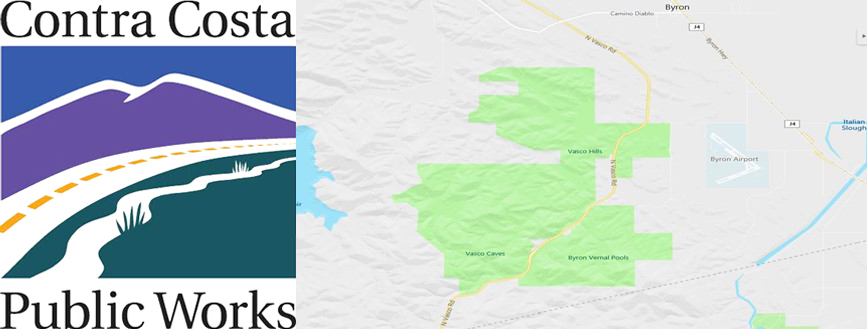
Source: CCC Public Works

Walnut Boulevard to Frisk Creek Bridge

By Kelly Kalfsbeek, Community & Media Relations Coordinator, PIO, Contra Costa County Public Works Department

November 6, 2025, Byron, CA- The Contra Costa County Public Works Department is continuing construction on the Vasco Road Safety Improvements Project – Walnut Boulevard to Frisk Creek Bridge. Work will continue through Friday, November 21, 2025, barring unforeseen circumstances and weather permitting. Message boards will alert drivers about the work. Drivers should expect delays of up to 10 minutes through the construction zone and consider alternative routes during working hours.

The work will occur in multiple phases:

Phase 1 (continuing through Friday, November 14) work will occur between 8:30 a.m. and 3:30 p.m. Monday through Saturday (excluding holidays) and consists of centerline rumble strip installation, centerline striping, and channelizer placement.

Phase 2 (Wednesday, November 19, through Friday, November 21) work will occur Wednesday through Friday nights, starting at 8:00 p.m. and lasting until 5:00 a.m. the following morning. The work includes improvements to the traffic signal lights for increased visibility at the intersections of Vasco Road and Walnut Boulevard, and Vasco Road and Camino Diablo.

Additional work on the signals may occur during the day, with minimal to no impacts to traffic expected.

Funding for this project is provided by State Highway Safety Improvement Program (HSIP) funds and Local Road Funds.  For more information, visit: https://www.contracosta.ca.gov/9962/Vasco-Road-Safety-Improvements-Project–.

For Construction Status contact at Carlos Melendez (510) 385-0506.

About Contra Costa County Public Works Department:

Contra Costa County Public Works Department (CCCPWD) maintains over 660 miles of roads, 150 miles of streams, channels, and other drainage, and over 150 County buildings throughout Contra Costa County. CCCPWD provides services such as Parks and Recreation, Sandbag Distribution, and Flood Control throughout unincorporated areas of Contra Costa County.  CCCPWD operates two airports, Buchanan Field Airport in Concord and Byron Airport in Byron. For more information about CCCPWD, please visit us at: www.cccpublicworks.org.

Filed Under: Construction, East County, News, Transportation

  • 1
  • 2
  • 3
  • …
  • 30
  • Next Page »
Monica's-Riverview-Jan-2026
Liberty-Tax-Jan-Apr-2026
Deer-Valley-Chiro-06-22

Copyright © 2026 · Contra Costa Herald · Site by Clifton Creative Web