• Home
  • About The Herald
  • Local Agencies
  • Daily Email Update
  • Legal Notices
  • Classified Ads

Contra Costa Herald

News Of By and For The People of Contra Costa County, California

  • Arts & Entertainment
  • Business
  • Community
  • Crime
  • Dining
  • Education
  • Faith
  • Health
  • News
  • Politics & Elections
  • Real Estate

Slay California’s Death Tax

January 19, 2024 By Publisher Leave a Comment

About 1.2 million signatures needed by February 5th to qualify the Repeal the Death Tax Act for November’s ballot

Download your petition below to help

By Katy Grimes

This article was first by the California Globe. Republished with permission.

Last week when Gov. Gavin Newsom was sharing his proposed 2024-2025 budget, he insisted that he was opposed to a proposed wealth tax. And sure enough, Assembly Bill 259 by Assemblyman Alex Lee (D-Palo Alto), which will impose an annual “worldwide net worth” tax of 1 percent on net worth above $50 million, rising to 1.5 percent on net worth over $1.0 billion, was killed in committee that afternoon.

However, the governor has been mum about another type of wealth tax – California’s sneaky Death Tax, which adds a new tax on property inherited by a family member, which was already was taxed over the years of ownership.

In 2020, Proposition 19 resurrected the Death Tax on families whose property is left to loved ones when they die, putting their homes, property and businesses at significant risk. While the initiative was cleverly disguised as a benefit for the elderly and disabled communities, Proposition 19 caused far more harm than good.

In May, Senator Kelly Seyarto (R-Murrieta) introduced Senate Constitutional Amendment 4, to restore taxpayers’ property rights by reversing the state’s “death tax” written into in Proposition 19. Deviously titled “the Property Tax Transfers, Exemptions, and Revenue for Wildfire Agencies and Counties Amendment,”

SCA 4 would have reversed one of the largest property tax increases in state history, a little-noticed provision of Proposition 19 that revoked the ability of families and parents to pass property to their children without any change to the property tax bill, according to the Howard Jarvis Taxpayers Association.

However, Democrats killed Seyarto’s SCA 4 in a legislative committee.

I remember when the Death Tax was first slayed.

“It was 1986 when the parent-child exclusion from reassessment was first added to the state constitution,” Susan Shelly recently wrote. “A growing number of Californians were angry to discover that state law treated death and inheritance as a “change of ownership” under Prop. 13, triggering reassessment to current market value just as if it was a sale. The legislature proposed a constitutional amendment that would allow parent-child transfers of a home and a limited amount of other property, such as a small business or a rental property, without reassessment.”

“The parent-child transfer protection passed by a unanimous vote in both houses of the legislature, and then was approved by 75% of voters statewide.”

Howard Jarvis Taxpayers Association elaborates on how Proposition 19 hurts taxpayers:

Proposition 19, had two main elements. The first was expanded “portability” of base-year property taxes. Homeowners who are 55 years of age or older, who are victims of a wildfire, or who are disabled may now move to a replacement home anywhere in the state, of any value, and take the base-year property tax assessment of the old home with them to a new home up to three times.

Now to the other part of Proposition 19. Previously under the state constitution, property transfers between parents and children, and sometimes grandparents and grandchildren, were excluded from reassessment. These family members could transfer a home of any value and up to $1 million of assessed value of other property, such as a small business property, a vacation cabin, or a rental property, without any increase in the property tax bill. This taxpayer protection was added to the state constitution in 1986 by Proposition 58 (parents and children) and in 1996 by Proposition 193 (grandparents and grandchildren) with overwhelming public support.

Proposition 58 was approved by more than 75% of California voters, and Proposition 193 was approved by nearly the same margin. Now, these taxpayer protections are gone.

Proposition 19 has replaced 58 and 193 with a very narrow exclusion for family transfers of property. Only a principal residence that the inheriting child occupies as his or her permanent primary residence is eligible for an exclusion from reassessment. Unless the new owner can move in within one year, the property is reassessed to market value. Business properties and rental properties lose the protection entirely.

So, what can be done?

Susan Shelly continues, “the Howard Jarvis Taxpayers Association, where I am on staff as VP of Communications, is collecting signatures to put an initiative on the ballot that would repeal the tax increase that was hidden in Prop. 19, without touching the other provisions in it. The official petition is available at RepealTheDeathTax.com and can be downloaded and printed on one sheet of ordinary letter-size paper. This enables instant distribution of the petition throughout the state. Theoretically, a million people could download the petition at the same time, fill it out and sign it, and have one other registered voter in the household also sign it.”

It’s easy. Click on RepealTheDeathTax.com and/or

Click here to DOWNLOAD the official petition RIGHT NOW

RepealTheDeathTax.com has more details HERE:

Read the Initiative here.

Please note: You must print and sign the petition with paper and ink. It’s not electronic.

Follow the easy instructions. And please note:

DEADLINE EXTENDED! Return signed petitions to HJTA postmarked by FEBRUARY 5

Download the official, legal petition to put the REPEAL THE DEATH TAX initiative on the November 2024 ballot.

Complete instructions are included in the pdf file.

Get your petition in the mail ASAP – before February 5th.

Katy Grimes, the Editor in Chief of the California Globe, is a long-time Investigative Journalist covering the California State Capitol, and the co-author of California’s War Against Donald Trump: Who Wins? Who Loses?
 

Filed Under: Opinion, Politics & Elections, State of California, Taxes

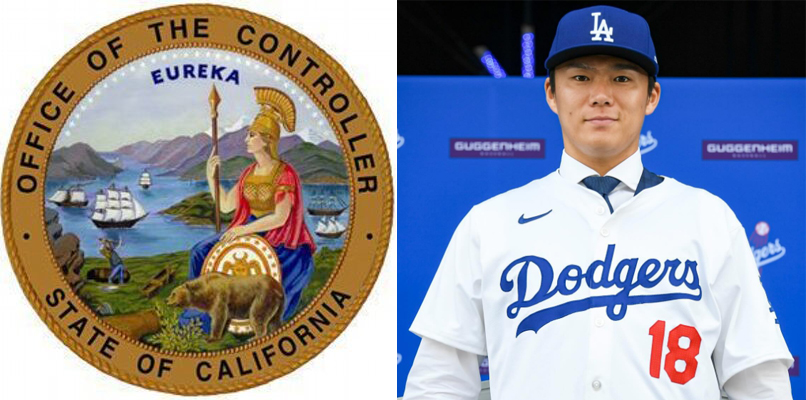
CA State Controller complains about inability to tax largest portion from L.A. Dodgers pitcher’s contract

January 8, 2024 By Publisher Leave a Comment

L.A. Dodgers’ pitcher Shohei Ohtani. Source: L.A. Dodgers Instagram

Wants Congress to approve caps on deferred compensation

SACRAMENTO — State Controller Malia M. Cohen released the following statement following last month’s announcement that the L.A. Dodgers signed a 10-year, $700 million contract with pitcher Shohei Ohtani. The contract is structured so that Ohtani will receive $2 million per year and defer the balance approximately 10 years, when he could potentially return to Japan and escape payment of California state income taxes on the deferred amount:

“The current tax system allows for unlimited deferrals for those fortunate enough to be in the highest tax brackets, creating a significant imbalance in the tax structure.” said Cohen. “The absence of reasonable caps on deferral for the wealthiest individuals exacerbates income inequality and hinders the fair distribution of taxes. I would urge Congress to take immediate and decisive action to rectify this imbalance.”

“Introducing limits on deductions and exemptions for high-income earners promotes social responsibility and contributes to a tax system that is just and beneficial for all. This action would not only create a more equitable tax system, but also generate additional revenue that can be directed towards addressing pressing important social issues and fostering economic stability,” Cohen stated.

About Controller Cohen

As the chief fiscal officer of California, Controller Cohen is responsible for accountability and disbursement of the state’s financial resources. The Controller has independent auditing authority over government agencies that spend state funds. She is a member of numerous financing authorities, and fiscal and financial oversight entities including the Franchise Tax Board. She also serves on the boards for the nation’s two largest public pension funds. Follow the Controller on X at @CAController and on Facebook.

Filed Under: Legislation, News, Opinion, Sports, State of California, Taxes

Opinion: Will California’s budget woes impact tax reform?

December 20, 2023 By Publisher Leave a Comment

By Jon Coupal, President, Howard Jarvis Taxpayers Association

The Taxpayer Protection and Government Accountability Act (TPA) is a proposed constitutional amendment which has already qualified for the November 2024 ballot. It is sponsored by taxpayer and business organizations to restore key provisions of Proposition 13 and other pro-taxpayer laws that give voters more control over when and how new tax revenue is raised.

Although TPA, unlike previous tax reform measures, doesn’t reduce or eliminate any state or local tax, it does impose both enhanced voter approval requirements for fee and tax increases as well as robust accountability and transparency provisions.

For obvious reasons, tax-and-spend interests hate TPA and have launched a multi-front assault hoping to either defeat it or keep it off the ballot entirely.

The motivation for these schemes is that politicians and their enablers are fully aware that TPA is highly likely to pass if it stays on the ballot. Californians are sick and tired of having the nation’s highest tax rates jammed down their throats, especially when these heavy tax burdens are not accompanied by higher levels of public services; in fact, the opposite is true, as evidenced by California’s high cost of living, crime, homelessness, hostile business climate, and other ills.

But now, there may be another reason why anti-taxpayer interests are waging this war on TPA. A recent report by the California Legislative Analyst’s office threw a bucket of cold water on progressives’ plans to continue to increase taxes with virtually no restraint. The LAO now estimates “2022-23 revenues to be $26 billion below Budget Act projections. Historical experience suggests this weakness is likely to carry into this fiscal year and next. Overall, our updated revenue outlook anticipates collections to come in $58 billion below Budget Act projections across 2022-23 to 2024-25.” (Note that in less than a week after this news, the LAO upped the shortfall from $58 billion to $68 billion).

If there is any saving grace to the current financial situation it is that California still has substantial budget reserves. That, plus some creative accounting, can probably blunt the negative impacts of a severe drop in revenues – at least for a while.

Nonetheless, if California’s tax revenue spigot is curtailed any significant amount, will the enemies of the Taxpayer Protection Act argue that this provides another justification for removing all restraints on raising taxes?

Economic growth in Texas and Florida is outpacing that in California, due in part to a top marginal income tax rate of zero. What is happening in other smaller states is less well known. The smart move would be to follow the lead of other states which are aggressively pursuing pro-growth strategies which in turn lead to more tax revenue.

Take Iowa for example. Defying critics who claimed that tax reductions would crush the state budget, Iowa’s Governor Kim Reynolds slashed top marginal tax rates, previously some of the highest in the nation. Not only did revenues not crash, but they shot up by huge percentage points. According to a report in Center Square, “Iowa led the ‘tax-cutting wave’ in 2022, with the most comprehensive and aggressive tax reform in the United States. This will gradually replace the nine-bracket, progressive income tax with a flat tax, bringing the top rate, which was close to 9 percent, down to a flat 3.9 percent by 2026.”

Other states have provided California with a roadmap for economic growth and healthy budgets by cutting taxes and pursuing other pro-freedom policies. However, the political realities in this one-party state – governed by hardcore progressives – render the odds of politicians even looking at the roadmap extremely slight.

That being said, if the Governor and the Legislature won’t do what’s necessary to prevent a budget disaster, the least they can do is get out of the way of those who have offered the Taxpayer Protection Act to the voters so that ordinary citizens can do what politicians won’t: impose fiscal discipline on a fiscally reckless state.

This column originally appeared in the Orange County Register. Republished with permission.

Filed Under: Finances, Opinion, State of California, Taxes

Serve on Contra Costa’s Measure X sales tax Community Fiscal Oversight Committee

September 30, 2023 By Publisher Leave a Comment

The Contra Costa County Board of Supervisors is seeking individuals interested in serving on the Measure X Community Fiscal Oversight Committee. Measure X is the countywide half-cent sales tax that passed by voters in Nov. 2020 “to keep Contra Costa’s regional hospital open and staffed; fund community health centers; provide timely fire and emergency response; support crucial safety-net services; invest in early childhood services; protect vulnerable populations; and for other essential county services, shall the Contra Costa County measure levying a ½ cent sales tax, exempting food sales, providing an estimated $81,000,000 annually for 20 years that the State cannot take, requiring fiscal accountability, with funds benefiting County residents.”

The committee was established by the Board of Supervisors on May 16, 2023 to advise the Board of Supervisors on financial audits of Measure X tax funds. There are currently five vacancies on the committee.

The Committee has the following duties:

  1. Review, on an annual fiscal year basis, the expenditure of tax revenue generated by Measure X, to ensure it conforms to (i) the stated intent of the ballot measure, and (ii) the Board’s direction for specific allocations.
  2. Oversee an annual audit of expenditures of tax revenue generated by Measure X.
  3. Prepare an annual report of expenditures of tax revenue generated by Measure X.

Requirements:

  • Civic-minded
  • Interested in volunteering for public service
  • Experience with auditing principles and financial management best practices

If you have the skills and experience required, we want to hear from you!

How do I apply?

Submit an application online here: https://www.contracosta.ca.gov/6408/Boards-and-Commissions-Database

For more information, contact Adam Nguyen at 925-655-2048 or Adam.Nguyen@cao.cccounty.us.


Filed Under: Government, Supervisors, Taxes

State taxpayers association warns of two tax impacting bills in CA legislature

August 21, 2023 By Publisher Leave a Comment

Urges voters, taxpayers to call the Capitol to protect Prop 13, see committee members phone numbers below

ACA 1 would make it easier to raise local special taxes by removing the Prop. 13 taxpayer protection of the two-thirds vote of the electorate required to pass

ACA 13 was just introduced last week as a devious attempt to stop the Taxpayer Protection and Government Accountability Act from passing when it’s on the ballot in Nov. 2024.

By Jon Coupal

Prior to the successful passage of Proposition 13 in 1978, Howard Jarvis tried several times to bring property tax relief to beleaguered California homeowners. While coming close, it wasn’t until 1978 when voters overwhelmingly passed Proposition 13 over the opposition of virtually every political institution and newspaper in California.

As they say, timing is everything. What changed the political dynamic so abruptly in 1978 was the fact that thousands of California homeowners were being taxed out of their homes. That also explains why, to this day, Proposition 13 retains its popularity even as the state has become more “progressive.”

Last week there were two competing press events over Assembly Constitutional Amendment 1 (ACA 1), a proposal that would erase part of Proposition 13. As the head of the Howard Jarvis Taxpayers Association, I was joined at a news conference on the Capitol’s west steps on Wednesday by several legislators who have unequivocally expressed their continued support for Proposition 13 and opposition to ACA 1. Also present were several representatives of other taxpayer groups as well as business organizations suffering under California’s excessive tax burdens.

ACA 1 is a direct attack on Proposition 13 because it would cut the vote threshold needed to pass local special taxes, dropping it from the current two-thirds vote required by Proposition 13 to only 55%. That change would make it easier for local governments to raise taxes.

Since Proposition 13 was enacted in 1978, voters have continued to support the important two-thirds vote protection. That support was reaffirmed with the passage of pro-taxpayer initiatives in 1986, 1996 and 2010.

Many people may not know that the two-thirds vote requirement did not originate in 1978. It has been in the California Constitution since 1879! For more than a century, local property owners have been protected against excessive bond debt by the requirement that local bonds – repaid only by property owners – need a two-thirds vote of the local electorate.

ACA 1 repeals the two-thirds vote protection for tax increases to support “infrastructure,” a term so expansive that local governments would be able to raise taxes for almost any purpose with a vote of just 55% of the electorate. This is a hatchet that chops away at the taxpayer protections in Proposition 13.

ACA 1 proponents are aware of Prop. 13’s enduring popularity, so not once in their over one-hour press event did they mention Proposition 13 by name. Instead, they talked about “protecting democracy,” “local control,” and taking on “right-wing interests.” (Are Californians “right wing” for wanting to keep their home instead of being taxed out of it?) Nor did the supporters of ACA 1 provide any specific example of exactly what lowering the two-thirds vote would purchase, other than to claim that it was essential to address California’s dual crises of housing and homelessness.

Opponents of ACA 1 have noted that making it easier to raise taxes makes no sense in one of the highest taxed states in America. No other state comes close to California’s 13.3% top marginal income tax rate, and we also have the highest state sales tax in America as well as the highest gas tax, not to mention gas prices. And even with Prop. 13, we rank 14th out of 50 states in per capita property tax collections. Californians pay enough.

This is a critical time. As of this writing, ACA 1 has cleared one legislative committee and may be heard by the full Assembly as early as this week. However, its main proponent, Assemblymember Cecilia Aguiar-Curry, admitted at her press conference that she didn’t quite have the votes yet. For that reason, the time is now for all defenders of Proposition 13 and advocates for limited taxation to contact their Assembly representatives and let them know that a vote for ACA 1 is a vote against Proposition 13.

This issue is so important to the Howard Jarvis Taxpayers Association that we will withhold our endorsement from any current legislator who fails to vote no on ACA 1.

Committee Hearings this Week, Taxpayers Urged to Call the Capitol

Your immediate help is needed to fight against two proposed constitutional amendments moving fast through the state Assembly. Both of these measures are attacks on PROPOSITION 13. We’re asking all HJTA members and supporters to please call the members of two committees that will be hearing these bills on Wednesday. Please call as soon as possible! Here’s all the information:

NO on ACA 1 – Hearing date: Wednesday, 8/23, Assembly Appropriations Committee

ACA 1 is a direct attack on Proposition 13 that would remove the taxpayer protection of the two-thirds vote of the electorate required to pass local special taxes. If this measure is enacted, local taxes and bonds for “infrastructure” (nearly everything) and public housing projects would pass with just 55% of the vote instead of 66.67%. This makes it easier to raise taxes, and your taxes could go up after every election.
Please call the members of the Assembly Appropriations Committee and urge a NO vote on ACA 1:

Chris Holden (Chair) – (916) 319-2041
Megan Dahle (Vice Chair) – (916) 319-2001
Isaac Bryan – (916) 319-2055
Lisa Calderon – (916) 319-2056
Wendy Carrillo – (916) 319-2052
Diane Dixon – (916) 319-2072 (Please thank Assemblywoman Dixon for opposing ACA 1)
Mike Fong – (916) 319-2049
Gregg Hart – (916) 319-2037
Josh Lowenthal – (916) 319-2069
Devon Mathis – (916) 319-2033 (Please thank Assemblyman Mathis for opposing ACA 1)
Diane Papan – (916) 319-2021
Gail Pellerin – (916) 319-2028
Kate A. Sanchez – (916) 319-2071
Esmeralda Soria – (916) 319-2027
Akilah Weber, M.D. – (916) 319-2079
Lori Wilson – (916) 319-2011 – Represents portions of Eastern Contra Costa County

NO on ACA13 – Hearing date: Wednesday, 8/23, Assembly Elections Committee

ACA 13 was just introduced last week as a devious attempt to stop the Taxpayer Protection and Government Accountability Act from passing when it’s on the ballot in November 2024. The Taxpayer Protection and Government Accountability Act is our initiative constitutional amendment that will restore the Proposition 13 protections that have been eroded by the courts.

Some of the measure’s key provisions include:

  • Require all new taxes passed by the Legislature to be approved by voters
  • Restore two-thirds voter approval for all new local special tax increases
  • Clearly define what is a tax or fee
  • Require truthful descriptions of new tax proposals
  • Hold politicians accountable by requiring them to clearly identify how revenue will be spent before any tax or fee is enacted

But ACA 13 would create special rules that make it harder to pass citizen initiatives like this one. If ACA 13 is enacted, the Taxpayer Protection and Government Accountability Act would require a two-thirds vote to pass, instead of the simple majority vote that has been required for all other constitutional amendments since 1849!

Please call the members of the Assembly Elections Committee and urge a NO vote on ACA 13:

Gail Pellerin (Chair) – (916) 319-2028
Tom Lackey (Vice Chair) – (916) 319-2034
Steve Bennett – (916) 319-2038
Bill Essayli – (916) 319-2063
Alex Lee – (916) 319-2024
Evan Low – (916) 319-2026
Blanca Rubio – (916) 319-2048

Please also call your own state representatives and urge them to vote NO on ACA 1 and NO on ACA 13. You can look up their names and contact information at findyourrep.legislature.ca.gov.

Thank you for your help in this critical fight to protect Proposition 13. We greatly appreciate you!
Jon Coupal is president of the Howard Jarvis Taxpayers Association.

Filed Under: Legislation, News, Opinion, State of California, Taxes

Bay Area toll agencies offer new programs for drivers with outstanding tolls, penalties, fees

August 1, 2023 By Publisher Leave a Comment

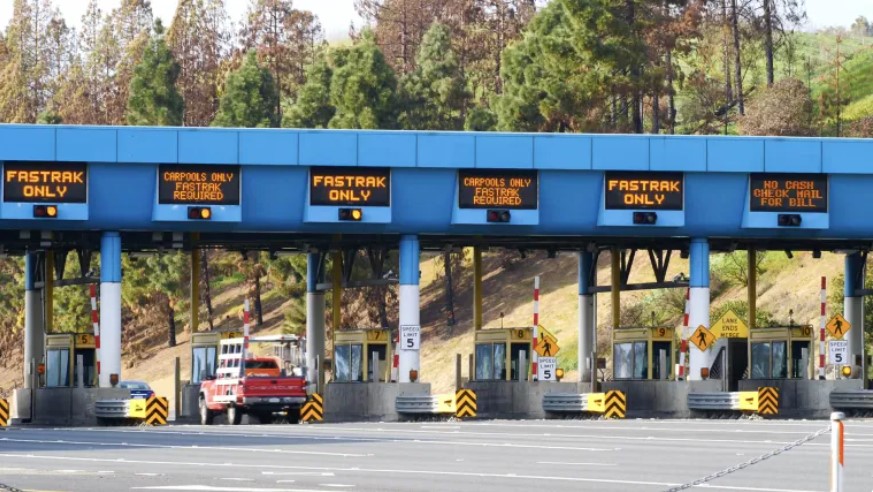
Carquinez Bridge toll plaza. Photo: Mark Jones

Payment plan for low-income customers, penalty waivers for all bridges, Express Lanes

The Metropolitan Transportation Commission (MTC)’s Bay Area Toll Authority (BATA) today launched a public information campaign to raise travelers’ awareness of two new programs available through the Bay Area FasTrak® customer service center to help people with overdue tolls, penalties and fees get out of debt.

Bay Area FasTrak® now offers a payment plan program for individuals with outstanding toll debt whose household income is no more than 200 percent of the federal poverty level (about $60,000 for a family of four). The Bay Area Toll Payment Plan is open to all who have received toll violations on Bay Area bridges or express lanes. For those who qualify, violation penalties will be waived and any remaining balance of at least $100 can be paid off over time in the payment plan.

This program is intended to provide a way for people with overdue tolls, fees and penalties to get out of debt, and it is not limited to Bay Area residents.

Eligible participants may apply at the program website at bayareatollpaymentplan.org or by mailing or faxing a paper application. Both the website and the paper application are available in English, Spanish, Chinese and Vietnamese.

To ensure those who are income eligible are aware of and have assistance applying for Bay Area Toll Payment Plan, BATA is conducting extensive outreach to social services and housing agencies, as well as to dozens of community-based organizations and other human services programs.

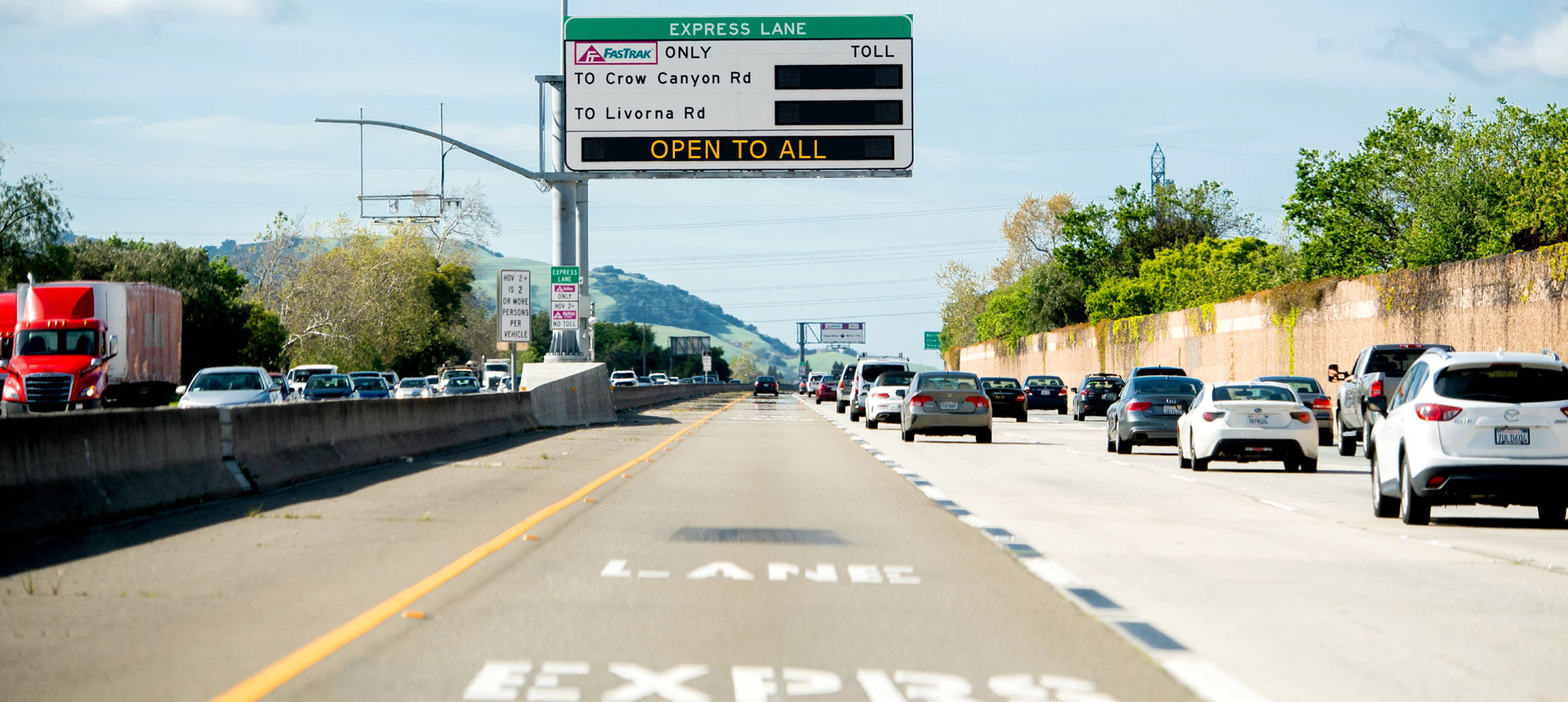
Photo: MTC.

BATA and partner toll agencies last month also began offering full or partial one-time violation penalty waivers that are available to all customers, regardless of income. BATA, the Golden Gate Bridge Highway & Transportation District and MTC’s Bay Area Infrastructure Financing Authority unit will waive all penalties associated with toll violations on their facilities on a one-time basis. The Alameda County Transportation Commission, the San Mateo County Express Lanes Joint Power Authority and the Santa Clara Valley Transportation Authority (VTA) each will waive one penalty per customer for toll violations on their Express Lane facilities.

The one-time penalty waivers will be available to customers through September 2024. To obtain a waiver or to find out if you have overdue toll violations, customers must call the Bay Area FasTrak® Customer Service center at 877-BAY-TOLL (877-229-8655) and pay all outstanding tolls and any DMV fees owed. Eligible customers who choose to enter into a payment plan must make their first payment to receive the penalty waiver.

MTC is the regional transportation planning, financing and coordinating agency for the nine-county San Francisco Bay Area. BATA manages the Bay Area’s FasTrak electronic toll payment system and administers all toll revenue from the Bay Area’s seven state-owned toll bridges.

Filed Under: Bay Area, News, Taxes, Transportation

Property Tax Reduction Scam Alert: important warning from Contra Costa County Assessor Gus Kramer

July 28, 2023 By Publisher 1 Comment

Don’t pay a fee to have your property taxes reduced

(Martinez, CA) – Many property owners throughout Contra Costa County are receiving an official looking document in the mail regarding a fee-based service to have their property’s taxable value reduced. Although these mailers have the appearance of an official government document, the correspondence is not from the Contra Costa County Assessor or any other Contra Costa County Office.

The California Attorney General’s Office has posted warnings to California property owners on their website about the practices of these companies. For more information, please visit the Attorney General’s Consumer Alert at https://oag.ca.gov/consumers/general/prop_tax_scam.

Current scam mailers are requiring both a $40 county filing fee with the Clerk of the Assessment Appeals Board for a formal appeal, and a contingent fee of 30% of any tax savings as a result of filing the application. 

It is important for property owners to know that the Contra Costa County Assessor’s Office does not charge a fee to complete an informal value review for our taxpayers.

Property owners who believe the current market value of their property is less than the assessed value, can file a FREE “Request for Value Review (Prop 8)” form with the Contra Costa County Assessor’s Office. Please visit our webpage at http://www.cccounty.us/assessor and select “Review Your Value” to find a downloadable application.


Filed Under: News, Real Estate, Taxes

Just in time for Independence Day: Contra Costa Assessor certifies, delivers 2023-24 County Assessment Roll for property taxes

July 3, 2023 By Publisher 1 Comment

Local tax base increases by almost $15 billion, to over $267 billion

Oakley, Antioch, Lafayette had greatest increases, San Pablo, San Ramon and Hercules had the lowest

By Allen D. Payton

Just in time for Independence Day, when Americans celebrate our victory over the British in the battle against King George III and his onerous taxes, the “2023-2024 Assessor’s Close of Roll Affidavit” was signed by Assessor Gus S. Kramer and subscribed and sworn to the County Clerk-Recorder’s Office, on June 30. The 2023-2024 Assessment Roll has been delivered to the County Auditor, as required by law.

The increase to the local tax base for 2023-2024 is over $14.96 billion. This represents a 5.94% increase in assessed value and brings the total net local assessment roll to more than $266.67 billion. The 2023-2024 assessment roll is the highest to date in Contra Costa County’s history.

Cities with the largest increases in assessed value include Antioch, Oakley and Lafayette with increases ranging up to 8.49%. San Pablo, San Ramon and Hercules saw the lowest assessed value increases ranging from 4.30% down to 3.86%.  The assessment roll now consists of 379,442 parcels, an increase of 1,202 over the previous year.

“I would like to acknowledge and commend the employees of the Assessor’s Office for their continued dedication and hard work which resulted in the completion and delivery of the 2023-2024 assessment roll,” Kramer wrote in his letter.

The Assessor’s annual letter to the Assessment Roll Reports can be found at: https://www.contracosta.ca.gov/DocumentCenter/View/79697/2023-2024-BOS-Close-of-Assessment-Roll-Letter-and-Reports-to-the-CCC-Board-of-Supervisors?bidId= 

The report shows the total Secured Value of property in the county, which includes all the real estate, is now over $267.6 billion. The Unsecured Value is the business equipment which includes computers, desks, chairs and machinery, Kramer explained. That total is now almost $7.8 billion.

“Local Exemptions (which total almost $8.7 billion) are what churches and non-profits enjoy, as well as all the homeowners’ exemptions. That’s a $7,000 deduction you have to apply for which saves you about $70 a year on your property taxes,” he shared. “That’s something I’m livid with the legislature for not increasing. In Idaho the homeowners’ exemption is 50%. Prior to Prop 13 in California, it was 25% but the legislature has never adjusted it. It should have been indexed or something.”

Asked about the difference between the charts in the report of $1 billion in the total Secured Value Kramer said. “It’s less than one-third of one percent, but we know what it is and we’re working it out. We had to get the report in by the July 1 due date.”

To learn more about your property taxes visit Assessor | Contra Costa County, CA Official Website, call (925) 313-7400 or email customerservice@assr.cccounty.us.

Filed Under: News, Taxes

Contra Costans get tax return deadline extension until October 16

March 3, 2023 By Publisher Leave a Comment

Due to impact of winter storms; includes quarterly tax payments

The Internal Revenue Service announced on Feb. 24, 2023, that California storm victims, including Contra Costa County residents and businesses, now have until October 16, 2023, to file various federal individual and business tax returns and make tax payments. The deadline was previously extended to May 15 on January 10 and didn’t include Contra Costa. But that changed the following day. Then on Thursday, Gov. Gavin Newsom announced state tax returns will also not be due until Oct. 16, as well.

The IRS is offering relief to any area designated by the Federal Emergency Management Agency (FEMA). This means that individuals and households that reside or have a business in Alameda, Colusa, Contra Costa County qualify for tax relief. The current list of eligible localities is always available on the Tax Relief in Disaster Situations page on IRS.gov.

The tax relief postpones various tax filing and payment deadlines that occurred starting on January 8, 2023. As a result, affected individuals and businesses will have until Oct. 16, 2023, to file returns and pay any taxes that were originally due during this period.

This includes 2022 individual income tax returns due on April 18, as well as various 2022 business returns normally due on March 15 and April 18. Among other things, this means that eligible taxpayers will have until Oct. 16 to make 2022 contributions to their IRAs and health savings accounts.

The Disaster Assistance and Emergency Relief for Individuals and Businesses page has details on other returns, payments and tax-related actions qualifying for the additional time.

The IRS automatically provides filing and penalty relief to any taxpayer with an IRS address of record located in the disaster area. Therefore, taxpayers do not need to contact the agency to get this relief. However, if an affected taxpayer receives a late filing or late payment penalty notice from the IRS that has an original or extended filing, payment or deposit due date falling within the postponement period, the taxpayer should call the number on the notice to have the penalty abated.

In addition, the IRS will work with any taxpayer who lives outside the disaster area but whose records necessary to meet a deadline occurring during the postponement period are located in the affected area. Taxpayers qualifying for relief who live outside the disaster area need to contact the IRS at 866-562-5227. This also includes workers assisting the relief activities who are affiliated with a recognized government or philanthropic organization.

Individuals and businesses in a federally declared disaster area who suffered uninsured or unreimbursed disaster-related losses can choose to claim them on either the return for the year the loss occurred (in this instance, the 2023 return normally filed next year), or the return for the prior year (2022, normally filed this tax season). Be sure to write the FEMA declaration number – 3591-EM − on any return claiming a loss. See Publication 547 for details.

The tax relief is part of a coordinated federal response to the damage caused by these storms and is based on local damage assessments by FEMA. For information on disaster recovery, visit disasterassistance.gov.

California Extension Matches IRS

In addition, California is extending the tax filing deadline for Californians impacted by December and January winter storms to October 16, 2023 – aligning with the IRS

In addition to tax relief measures that Governor Gavin Newsom announced in January, California is also extending the state tax filing and payment due dates to October 16, 2023 for Californians impacted by the winter storms in December and January. This aligns California with the Biden Administration, which announced that the IRS extended various due dates until October 16, as well.

“As communities across the state continue recovering from the damage caused by the winter storms, California is working swiftly to help recovering Californians get back on their feet,” said Governor Newsom. “The state is aligning with the Biden Administration and extending the tax filing deadline in addition to the tax relief announced earlier this year.”

Last month, Governor Newsom announced tax relief for those impacted by winter storms, giving people the ability to claim a deduction for disaster loss and extending certain filing deadlines.

The following counties are eligible for this extended tax relief, per the IRS announcements here and here:

Residents and businesses in Alameda, Alpine, Amador, Butte, Calaveras, Colusa, Contra Costa, Del Norte, El Dorado, Fresno, Glenn, Humboldt, Inyo, Kings, Lake, Los Angeles, Madera, Marin, Mariposa, Mendocino, Merced, Mono, Monterey, Napa, Nevada, Orange, Placer, Riverside, Sacramento, San Benito, San Bernardino, San Diego, San Francisco, San Joaquin, San Luis Obispo, San Mateo, Santa Barbara, Santa Clara, Santa Cruz, Siskiyou, Solano, Sonoma, Stanislaus, Sutter, Tehama, Trinity, Tulare, Tuolumne, Ventura, Yolo, and Yuba counties who have been affected by severe winter storms, flooding, landslides, and mudslides are eligible for tax relief.

TAX EXTENSION

To help alleviate some of the hardship many have endured during this trying period, the FTB has extended the filing and payment deadlines for individuals and businesses in California until October 16, 2023.

This relief applies to deadlines falling on or after January 8, 2023, and before October 16, 2023, including the 2022 individual income tax returns due on April 18 and the quarterly estimated tax payments, typically due on January 17, 2023 and April 18, 2023. Those payments were previously extended to May 15, 2023 for those impacted by winter storms.

The IRS announced tax relief for Californians affected by these winter storms. Taxpayers affected by these storms qualify for an extension to October 16, 2023 to file individual and business tax returns and make certain tax payments. This includes:

  • Individuals whose tax returns and payments are due on April 18, 2023.
  • Quarterly estimated tax payments due January 17, 2023, April 18, 2023, June 15, 2023, and September 15, 2023.
  • Business entities whose tax returns are normally due on March 15 and April 18.
  • PTE Elective Tax payments due on June 15, 2023.

CLAIMING DISASTER LOSSES

Taxpayers affected by a presidentially declared disaster may claim a deduction for a disaster loss. Taxpayers may claim a disaster loss when filing either an original or amended tax year 2022 tax return.

When filing their return, taxpayers should write the name of the disaster in blue or black ink at the top of their tax return to alert FTB. If filing electronically, taxpayers should follow the software instructions to enter disaster information. If a taxpayer receives a late filing or payment penalty notice related to the postponement period, they should call the number on the notice to have the penalty abated.

Additional information and instructions are available in FTB Publication 1034, 2022 Disaster Loss: How to Claim a State Tax Deduction.

Disaster victims can receive free copies of their state returns to replace those lost or damaged. To do so, they should use form FTB 3516 and write the name of the disaster in blue or black ink at the top of the request.

For a complete list of all disasters declared in California, see the chart on FTB’s disaster loss webpage.


Filed Under: Business, News, State of California, Taxes

Board of Equalization holds first of three Tax Abatement Workgroup meetings to spur development of affordable housing in California

July 29, 2022 By Publisher Leave a Comment

Sacramento – On Wednesday, July 27, 2022, the California State Board of Equalization (BOE) held the first of at least three public Property Tax Abatement Workgroup meetings. The Board received presentations from policy experts and stakeholders on the development of new housing, focusing on how to best address the need to build 2.5 million new housing units to address California’s housing gap, including how to provide new housing opportunities for the “missing middle.” The workgroup consists of Board Chair Malia M. Cohen, who represents District 2 and District 3 Board Member Antonio Vazquez.

“As Chair of the Board of Equalization, which administers California’s $85 billion property tax system, I am deeply encouraged by today’s discussion with housing policy experts,” said Chair Malia M. Cohen. “The presentations of these experts both highlighted the reality of our housing crisis, associated equity issues, and the opportunity to address the development of new housing through creative and innovative solutions.”

“Today’s meeting focused on property tax abatements as a tool to incentivize new housing construction and increase the inventory of affordable housing. Property tax abatements have been used before, particularly in New York City, to build tens of thousands of new housing units to address the housing needs of the ‘missing middle’. It makes sense to consider whether similar property tax abatement strategies could work in California,” Cohen concluded.

In upcoming meetings of the Property Tax Abatement Workgroup, the BOE will examine strategies to ensure that revenue for schools and local governments are protected under any property tax abatement programs. The BOE will also explore how local government, labor, businesses, and developers can work collaboratively to build new housing under such abatement programs.

The BOE will hold additional meetings of the Property Tax Abatement Workgroup at the Board’s upcoming August 31st and September 28th board meetings. At the conclusion of the BOE’s Property Tax Abatement Workgroup, the Board will issue a report.

The agenda of the July 27, 2022 meeting of the Property Tax Abatement Workgroup can be found at this link: https://www.boe.ca.gov/meetings/pdf/2022/072622-PAN-Jul.pdf

As the BOE Board Member for District 2 Cohen represents nearly 10 million constituents residing in 23 counties in Northern and Central California, extending from Del Norte County in the north to Santa Barbara County in the south, including Contra Costa County. She is the youngest Constitutional Officer serving in California and is the first African American woman to be elected as chair of the Board of Equalization in its 141-year history.

The Board of Equalization is California’s statewide elected tax board. Its five members include four members elected in districts, and the State Controller. Under its constitutional mandate, the BOE oversees the assessment practices of the state’s 58 county assessors, who are charged with establishing values for approximately 13.6 million assessments each year. In addition, the BOE assesses the property of regulated railroads and specific public utilities and is responsible for the alcoholic beverage tax and tax on insurers.

Note: This news release may discuss complex tax laws and concepts. It may not address every situation and is not considered written advice. Changes in law or regulations may have occurred since the time this news release was written. If there is a conflict between the text of this news release and the law, decisions will be based upon the law and not this news release.

Filed Under: Growth & Development, News, Taxes

  • « Previous Page
  • 1
  • 2
  • 3
  • 4
  • 5
  • 6
  • …
  • 9
  • Next Page »
Furniture-Clearance-02-26B
Celia's-3-26-A
Delta-RC-A
Deer-Valley-Chiro-06-22

Copyright © 2026 · Contra Costa Herald · Site by Clifton Creative Web