• Home
  • About The Herald
  • Local Agencies
  • Daily Email Update
  • Legal Notices
  • Classified Ads

Contra Costa Herald

News Of By and For The People of Contra Costa County, California

  • Arts & Entertainment
  • Business
  • Community
  • Crime
  • Dining
  • Education
  • Faith
  • Health
  • News
  • Politics & Elections
  • Real Estate

Draft Plan Bay Area 2050+ Blueprint includes 840,000 more affordable homes, guaranteed monthly income

July 8, 2024 By Publisher Leave a Comment

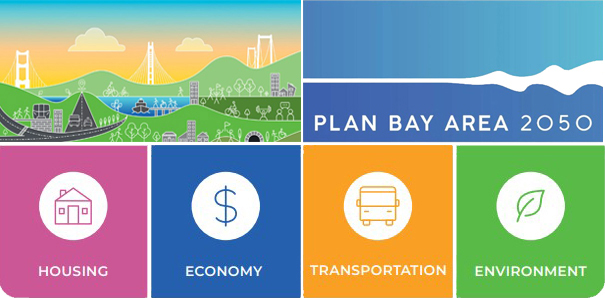
Source: MTC & ABAG

“Demonstrates continued progress toward key plan goals” of housing, transportation, economy and environment in the nine counties including “a gradual shift away from the use of single-occupancy cars and trucks.”

Includes over $1.2 trillion to maintain existing transportation system, build and buy affordable housing, “Provide an income-based monthly payment to all Bay Area households” and to “Adapt to Sea Level Rise.”

Also working on parallel Transit 2050+ plan

Public input opportunities

By MTC & ABAG staff

The Metropolitan Transportation Commission (MTC)’s and the Association of Bay Area Governments (ABAG)’s newly released Plan Bay Area 2050+ Draft Blueprint analysis outlines how the nine-county region can advance an affordable, connected, diverse, healthy and vibrant Bay Area for all residents by the year 2050.

The Blueprint is essentially a draft version of the plan. It is a foundational framework for a future vision of the Bay Area that includes:

  • Forecasts and Assumptionsabout the Bay Area’s future (population, jobs, financial needs and revenues, sea level rise, etc.);
  • Strategiesfor public investment and policy reform; and
  • Geographieswhere future housing and/or job growth can be focused under the plan’s Strategies.

The Blueprint is then analyzed through computer-generated models and simulations to measure how successful the strategies are in achieving shared goals for the future, such as housing affordability, reduced greenhouse gas emissions and much more.

As the first draft of the Bay Area’s next long-range plan, the Draft Blueprint demonstrates significant progress toward reaching key goals for housing affordability, post-pandemic economic recovery and environmental health and sustainability. This includes the addition of 840,000 affordable homes, with a total of nearly 1 million permanently affordable homes regionwide by 2050; a 17 percent increase in the number of lower-income households living within a half-mile of transit service; and a gradual shift away from the use of single-occupancy cars and trucks. MTC and ABAG planning staff stress that the expected progress would only come about if all the strategies to be detailed in Plan Bay Area 2050+ are implemented.

Source: MTC & ABAG

The full range of performance and equity outcomes from the Plan Bay Area 2050+ Draft Blueprint analysis may be found in the Draft Blueprint Compendium, which also demonstrates how the Bay Area can accommodate some 1.3 million additional jobs and nearly 1 million new households by the year 2050.

The Compendium shows the following proposed budget highlights for three of the Plan’s categories:

Transportation Strategies

$382 billion for T1 – Operate and Maintain the Existing System. Commit to operate and maintain the Bay Area’s roads and transit infrastructure while transitioning to zero-emission transit vehicles.

Housing Strategies

$250 billion for H2 – Preserve Existing Affordable Housing. Acquire homes currently affordable to low- and middle-income residents for preservation as permanently deed-restricted affordable housing, including opportunities for resident ownership.

$302 billion for H4 – Build Adequate Affordable Housing to Ensure Homes for All. Construct enough deed-restricted affordable homes to fill the existing gap in housing for the unhoused community and to meet the needs of low-income households.

Economic Strategies

$205 billion for EC1 – Implement a Statewide Guaranteed Income. Provide an income-based monthly payment to all Bay Area households to improve family stability, promote economic mobility and increase consumer spending.

Environment Strategies

$94 billion for EN1 – Adapt to Sea Level Rise. Adapt shoreline communities, infrastructure and ecosystems affected by sea level rise.

These outcomes were first presented at the May meeting of MTC’s Policy Advisory Council, and then at the June 14 joint meeting of the MTC Planning Committee and the ABAG Administrative Committee.

The Draft Blueprint also identifies challenges that will have to be addressed as part of the Final Blueprint process over the coming months. More work is needed to reduce greenhouse gas emissions as well as to identify transportation investment priorities for the plan’s fiscally constrained transportation project list. The Draft Blueprint does not include significant transportation expansion or enhancement investments, as these will be identified through Transit 2050+ and the Final Blueprint process.

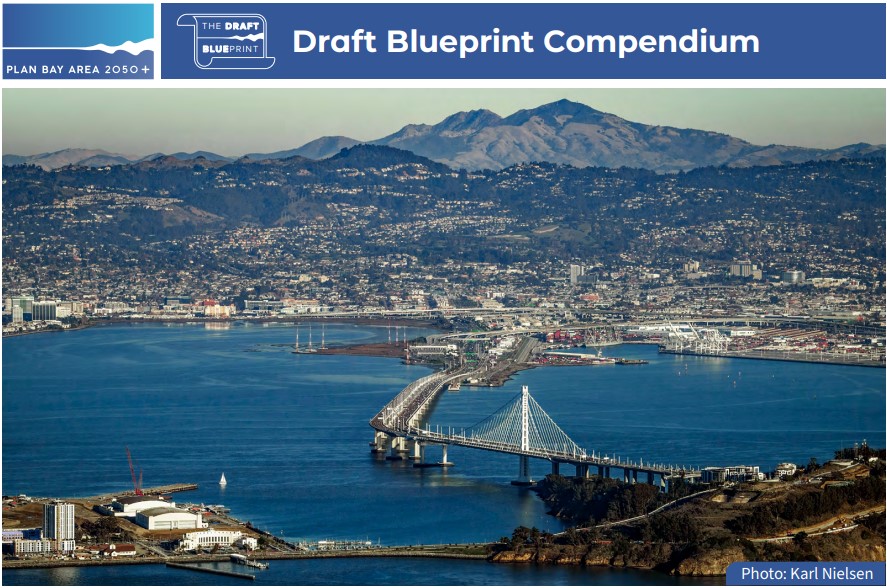
Photo source: MTC. Credit: Joey Kotfica

What’s Next?

In light of the pandemic’s lasting impact to public transportation, MTC is collaborating with the region’s transit operators on Transit 2050+ , a parallel planning effort to re-envision the future of public transit in the nine-county Bay Area. Two key updates in this process will be released in July: the Draft Project Performance Assessment and the Transit 2050+ Draft Network. It will be a comprehensive overhaul of the six transit-related strategies included in Plan Bay Area 2050.

The Draft Project Performance Assessment will analyze the costs and benefits of major capacity-increasing projects being considered for inclusion in Plan Bay Area 2050+, the vast majority of which are transit projects. These investments, including those adopted in Plan Bay Area 2050, now face a significantly reduced projected revenue stream. This is due largely to slow post-pandemic transit ridership recovery and other economic changes.

The Transit 2050+ Draft Network will identify strategies and investments (capital and operating) envisioned through 2035 and over the long term through 2050. Development of the Draft Network has been guided in part by public engagement conducted in summer 2023, when nearly 3,000 Bay Area residents provided input on the future of Bay Area transit. The Draft Network also is being informed by an existing needs and gaps assessment conducted in partnership with local transit agencies, the Draft Project Performance Assessment, local priorities and improvements to transit network connectivity and customer experience.

Source: MTC & ABAG

Summer 2024 Public Engagement

Beginning in August, MTC staff will conduct a second round of public engagement for Plan Bay Area 2050+, the content of which will focus on:

  • Sharing both the Draft Blueprint outcomes and the Transit 2050+ Draft Network
  • Gathering feedback to inform the development of the Final Blueprint and address identified Draft Blueprint challenges
  • Identifying early priorities for implementing Plan Bay Area 2050+

There will be a variety of in-person and virtual opportunities for the public to participate. Stay up-to-date on upcoming engagement activities in your community by subscribing to the Plan Bay Area 2050+ mailing list. There also will be dedicated engagement opportunities for technical partners and stakeholders, which will be publicized on the Plan Bay Area website’s Partner Engagement page.

Following an analysis of public input, the Commission and the ABAG Executive Board are expected to consider approval of the Final Blueprint in late 2024.

Allen D. Payton contributed to this report.

Filed Under: Bay Area, Economy, Environment, Government, Growth & Development, Infrastructure, News, Transportation

State allocates $10.2 million for Contra Costa transportation improvements

May 27, 2024 By Publisher Leave a Comment

Nearly $2 billion in statewide investments to improve, protect state’s infrastructure

By Edward Barrera, Division Chief of Public Affairs, California Department of Transportation 

SACRAMENTO — Earlier this month, the California Transportation Commission (CTC) allocated $1.9 billion to support transportation infrastructure projects that play a starring role in powering the world’s fifth largest economy. The approved funding provides significant investments for bridges, roadways, transit and improved facilities for people who walk and bike.

The latest allocations also include nearly $430 million from the federal Infrastructure Investment and Jobs Act of 2021 (IIJA) and $740 million via Senate Bill (SB) 1, the Road Repair and Accountability Act of 2017.

A total of $10.183 million was allocated for improvements in Contra Costa County with most of it for 20 miles of BART track and $3.6 million for I-680 in San Ramon and Danville.

Among the efforts spurred by the $1.9 billion commitment include several projects prioritizing the state’s vital bridge network, highlighted more than $4 million to repair bridge damage along Interstate 80 in Alameda County.

Also included are projects that will build or renovate shoreline embankments, bus, bicycle and pedestrian infrastructure, and railroad overcrossings.

“California’s transportation infrastructure is critical to the economic and cultural lifeblood of our state, and this funding provides key support in our mission to provide a safe, equitable and sustainable transportation system for all users,” said Tony Tavares, Caltrans Director.

Contra Costa County Projects

  • $6 million allocation for BART Expansion and Contraction of Steel Rail in Contra Costa County which will destress twenty miles of rail track within the BART operating corridor that has been identified as being affected by such conditions in Contra Costa County. (Funding description and source: Locally-Administered Local Transportation Climate Adaptation Program Project off the State Highway System – Resolution LTCAP-A-2324-04)
  • $3.6 million allocation for I-680 in San Ramon and Danville, from Alcosta Boulevard to north of Diablo Road. Rehabilitate pavement, upgrade guardrail, and upgrade facilities to Americans with Disabilities Act (ADA) standards.
  • $500,000 allocation for the Pavement Resurfacing Project, which will focus on applying pavement rehabilitation treatments in various streets located in the southeast area of the City of Martinez to improve the City’s overall pavement condition index and reduce on-going maintenance. Project will also include ADA curb ramp improvements, restoration of vehicle detection sensors at signalized intersections, striping restoration, and green infrastructure improvements. (Funding description and source: Locally-Administered SB 1 Local Partnership Program (LPP) (Formulaic) Projects Off the State Highway System – Resolution LPP-A-2324-38)
  • $83,000 allocation for the Morello Avenue sidewalk gap closure in Martinez will address gaps of concrete sidewalk on the east side of Morello Avenue, south of Village Oaks Drive; and the east side of Morello Avenue, north of Arnold Drive. Improvements will also new curb and gutter, and a new ADA curb ramp at the southeast corner of Morello Avenue/Village Oaks Drive. (Funding description and source: Locally-Administered SB 1 LPP (Formulaic) Projects Off the State Highway System – Resolution LPP-A-2324-38)

The Contra Costa projects funded are among multiple approved projects in District 4 – Bay Area / Oakland which includes Alameda, Contra Costa, Marin, Napa, San Francisco, San Mateo, Santa Clara, Solano and Sonoma counties.

IIJA, known as the “Bipartisan Infrastructure Law,” is a once-in-a-generation investment in our nation’s infrastructure to improve the sustainability and resiliency of our energy, water, broadband and transportation systems. Since 2021, California has received more than $42 billion in IIJA funds, including more than $29 billion for transportation-related projects.

In addition, SB 1 provides $5 billion in transportation funding each year that is shared between state and local agencies. Road projects progress through construction phases more quickly based on the availability of SB 1 funds, including those partially funded by SB 1.

See the complete list of the latest CTC-approved projects in each of the other nine Caltrans Districts in the state:

District 1 – Eureka (Del Norte, Humboldt, Lake and Mendocino counties)

District 2 – Redding (Lassen, Modoc, Plumas, Shasta, Siskiyou, Tehama and Trinity counties)

District 3 – Marysville / Sacramento (Butte, Colusa, El Dorado, Glenn, Nevada, Placer, Sacramento, Sierra, Sutter, Yolo and Yuba counties)

District 5 – San Luis Obispo / Santa Barbara (Santa Barbara, San Luis Obispo, Monterey, San Benito and Santa Cruz counties)

District 6 – Fresno / Bakersfield (Kings, Tulare, Fresno, Madera and Kern counties)

District 7 – Los Angeles (Los Angeles and Ventura counties)

District 8 – Riverside and San Bernardino counties

District 9 – Bishop (Inyo, Kern and Mono counties)

District 10 – Stockton (Alpine, Amador, Calaveras, Mariposa, Merced, San Joaquin, Stanislaus and Tuolumne counties)

District 11 – San Diego (San Diego and Imperial counties)

District 12 – Orange County

For more information about California transportation projects funded by IIJA and SB-1, visit RebuildingCA.ca.gov and www.build.ca.gov.

Allen D. Payton contributed to this report.


Filed Under: Finances, Infrastructure, News, State of California, Transportation

City of Clayton kicking off widespread infrastructure upgrades

February 7, 2024 By Publisher Leave a Comment

Using $1.9 million state loan, plus $150K COVID-relief funds

The City of Clayton is happy to announce the launch of the construction phase of its new Comprehensive Infrastructure Renewal and General Fund Savings Program. Faced with aging infrastructure and limited staff bandwidth, the City developed this program to advance conservation efforts, combat PG&E rate increases, and provide staff support via technology enhancements.

“Our energy program is really moving the needle on our fiscal and environmental priorities,” said City Manager Bret Prebula. “Clayton’s infrastructure is in the process of becoming smarter, safer and more efficient and that impact has a ripple effect across our community.”

Funding for the initiative comes primarily from a $1.9 million California Energy Commission 1% Loan through the Energy Conservation Assistance Act, as well as less than $150,000 in American Rescue Plan Act (ARPA) dollars.

“We believe that actions speak louder than words,” said Mayor Jim Diaz. “By progressing with this infrastructure renewal program, we reaffirm our commitment to building a future for generations of Claytonians.”

The improvements target core areas of Clayton’s infrastructure needs: lighting, water, HVAC and Building Automation Systems (BAS), electric vehicle charging and solar. All modernizations drastically reduce energy consumption and maintenance and operations needs. The result: savings for years to come.

New LED lights will soon replace street, pathway and building lighting, enhancing public safety around the City after hours. The LED system plugs into a modern dashboard that allows City staff to monitor the lights remotely, making it faster than ever to identify and repair outages. The City’s new smart irrigation system will feature a similar dashboard, tracking on major leaks and reducing water waste in the event of a break.

The City’s incoming HVAC modernizations improve air quality and occupancy comfort, while complementary BAS ensures the HVAC system maintains the same temperature in facilities. Occupancy sensors automatically turn off indoor lighting when facilities aren’t being used.

“With the constant rise in energy costs, the City of Clayton needed to identify new strategies to save funds so that we may continue to invest in our great community,” added Councilmember Jeff Wan. “The modernizations will bring significant energy savings that will mitigate the impact of double-digit utility rate increases felt in Clayton and across California. It brings me great pride to see these growth opportunities come to fruition. Especially in a fiscally responsible manner.”

The City is also pursuing renewable energy by way of a new EV charging station at the Library for both City and public use as well as a solar-mounted parking structure placed in the Maintenance Building parking lot. After construction is complete, the complex, including City Hall and the Clayton Community Library and maintenance yard, is projected to achieve Net Zero Energy status, meaning it will generate more renewable energy on-site than it consumes annually.

“This project also brings the attention needed to staff and residents on the importance of sustainability and the benefits we can reap from making these modernizations,” said Councilmember Peter Cloven. “This project elevates Clayton to become a leader in the green space, especially with a Net Zero Energy complex for City Service areas… while staying true to the core values and soul of our small town.” Council Member Holly Tillman adds, “We are very excited for what the program will do for Clayton and its residents. The City is committed to creating the best and most sustainable version of Clayton we can. This project is a big step in that direction.”

“As a member of the Energy Services and Infrastructure Renewal Ad Hoc Committee, it was a privilege to help move forward this important community program while the City underwent a transition in city managers,” said Vice-Mayor Kim Trupiano. “The collaborative effort of Ad Hoc Committee Member Wan, City Council, residents, Climatec, and other stakeholders brought this project to a new level, putting Clayton on the path other local cities can mimic. Thanks to the work of everyone involved, the City of Clayton will benefit for decades to come.”

About the City of Clayton

The City of Clayton lies on the outskirts of the San Francisco Bay Area, at the base of Mt. Diablo. The City of over 11,000 residents highly values civic partnership with business leaders, community leaders and neighbors. This safe, scenic community has been listed three times running in CNN’s Money Magazine’s “Top 100 Places to Live in the Nation” for small cities.

Filed Under: Central County, Government, Infrastructure, News

ACA 1 going to voters in 2024 will make it easier to pass local special taxes, bonds if approved

November 17, 2023 By Publisher Leave a Comment

Source: MTC. Credit: Edmond Dantès photo via Pexels

Expected to boost Bay Area housing bond; Cal Chamber opposes; requires majority of voters to approve

By Allen D. Payton

MTC/ABAG-backed Assembly Constitutional Amendment 1, which would lower the vote threshold for local special taxes and bonds to fund affordable housing, transportation, resilience and other public infrastructure projects from two-thirds to 55%, will go to voters in November 2024.

The state Legislature in September approved sending the amendment, authored by Assemblymember Cecilia Aguiar-Curry, to voters with the backing of the entire Bay Area legislative delegation. MTC and ABAG sent letters of support to Sacramento and MTC/ABAG legislative staff actively lobbied the bill to help get it over the finish line.

Similar bills have been proposed over the past two decades but until now none were approved by the house of origin, a hurdle that itself requires a two-thirds vote. Other supporters included Nonprofit Housing Association of Northern California, Enterprise Community Partners, the California Professional Firefighters, and individual cities and counties.

The Bay Area is preparing to place a regional housing bond on the November 2024 ballot, with 80% of funds flowing to counties and several large cities and 20% designated for regionwide programs administered by the Bay Area Housing Finance Authority (BAHFA).

“While Bay Area voters have a long history of generously supporting taxes to fund transportation and housing improvements, measures in some parts of the region have repeatedly fallen short of the two-thirds margin,” MTC-ABAG Executive Director Andrew Fremier noted.  “ACA 1 would reinstate the ability of voting majorities to address vital community needs.”

The election of ACA 1 co-author Robert Rivas to the Assembly speakership helped build momentum for the proposed amendment, as did the nonprofit housing community’s raising of $10 million to gather signatures for a citizen’s initiative if the legislature didn’t approve the amendment.

California Chamber of Commerce Opposes

The constitutional amendment is opposed by the California Chamber of Commerce. In a report by policy advocate Preston Young before it passed, he claims ACA1 would increase costs for key sectors, will erode taxpayer safeguards and would harm California workers.

Preston wrote, “This would provide increased tax authority for many local government agencies in California—not just cities and counties, but thousands of potentially overlapping special districts.

In a letter sent to legislators recently, the CalChamber pointed out that while it’s important to improve infrastructure and increase housing availability, higher property, sales and parcel taxes on working Californians run counter to the goal of making the state more affordable for all.

Businesses engaged in manufacturing, research and development, teleproduction and post-production, and agriculture face a significant sales and use tax burden in California.

The sales and use tax is supposed to be a tax on the final point of sale of a product, yet many businesses—including businesses conducting research and development, manufacturing, filming activities, and agriculture—are taxed for equipment purchases.

Taxation of business inputs for these industries leads to a pyramiding effect throughout the production process, leading to higher costs for purchases made by consumers, the CalChamber explained in its letter. To counter this pyramiding effect and incentivize business growth in the state, California offers a partial state-level sales tax exemption for purchases made by these industries. However, purchases made by these businesses are still subject to local transactions and use taxes.

Equipment purchases represent a significant portion of capital investment for existing businesses and start-ups. Tax increases promoted by ACA 1 would defeat the purpose of the state-level exemption provided by the state and make it more cost-prohibitive to conduct these business activities in California, the CalChamber warned.

ACA 1 would allow local jurisdictions to approve Bradley-Burns sales tax increases with a 55% vote of the electorate, eliminating the uniformity and certainty provided by the Bradley-Burns sales tax.

This would represent a monumental change to sales and use tax policy in the state, the CalChamber said. Unlike the transactions and use tax—which is capped at 2% per county and requires statutory authority to exceed the cap—the local 1.25% sales tax (referred to as the Bradley-Burns sales tax) is uniformly applied across the state and voters are not authorized to approve increases to the rate.

“California already has the highest state-imposed sales tax in the country, and the combined sales tax rates in some jurisdictions are among the highest in the United States,” the CalChamber said. “Allowing localities to modify their Bradley-Burns sales tax rates, without a cap on rate increases, paves the way for excessive combined sales tax rates in parts of the state—increasing costs for residents and businesses.”

More than four decades ago, prompted by years of rising taxes, Californians resoundingly approved Proposition 13 to provide a check on local governments’ taxing authority, and to ensure a greater representative voice for those who would be taxed. Proposition 13 also limits taxes on property to 1% of the property’s assessed value.

Reducing the vote threshold would diminish the people’s voice on tax increases and would erode property tax safeguards. The CalChamber pointed out that a May 2022 Public Policy Institute of California poll found that 64% of registered voters believe Proposition 13 has benefitted taxpayers, and this support reaches across nearly every major demographic.

After comparing the costs of operating in California versus other states, many employers left the state in recent years. A Hoover Institution report found that from 2018 to 2022, at least 352 companies relocated their headquarters out of California—with many businesses citing the state’s tax burden as the deciding factor in their relocation.

The relocation of these companies and their employees to lower-cost states has a major impact on state and local tax revenue, causes unemployment for workers who cannot move to the new location, and is a sign that California must find ways to be more competitive, the CalChamber stressed.

“Tax increases such as those promoted in ACA 1 would be a step in the wrong direction and would encourage more companies to move workers and investments to other states,” the CalChamber said.

Indeed, Californians are sensitive to this problem. A 2020 Berkeley Institute of Governmental Studies poll found that 78% of voters “agreed that taxes in California were already so high that they were driving many people and businesses out of the state.”

Majority Vote Needed to Pass

According to a report by the California Globe,  Article XVIII, Section 4 of the California Constitution, “requires a proposed amendment or revision to be submitted to the electors and, if approved by a majority of votes, takes effect on the fifth day after the Secretary of State files the statement of the vote for the election at which the measure is voted on, but the measure may provide that it becomes operative after its effective date.”

Filed Under: Homeless, Infrastructure, News, Politics & Elections, State of California

Recent Delta earthquakes reminder of modernizing water infrastructure’s vital importance

October 23, 2023 By Publisher Leave a Comment

Source: CA DWR

One large quake last Wednesday, two more smaller quakes on Monday

By CA Department of Water Resources

News of yet another earthquake in the heart of the Delta in the last week is a serious reminder about the importance of modernizing and protecting water supply infrastructure. The quake on Wednesday, Oct. 18th measured 4.2 and was centered 5 kilometers southwest of Isleton. Two more quakes measuring 2.9 magnitude and 2.5 mag, with epicenters 4 km southeast of Rio Vista, occurred on Monday, Oct. 23, according to the US Geological Survey (USGS).

In a report by CBS News last week, Austin Elliott with the USGS said that “a very large earthquake, centered near the Delta, would pose a particularly significant threat to both protective systems that the levees provide, as well as the water distribution and intake systems.”

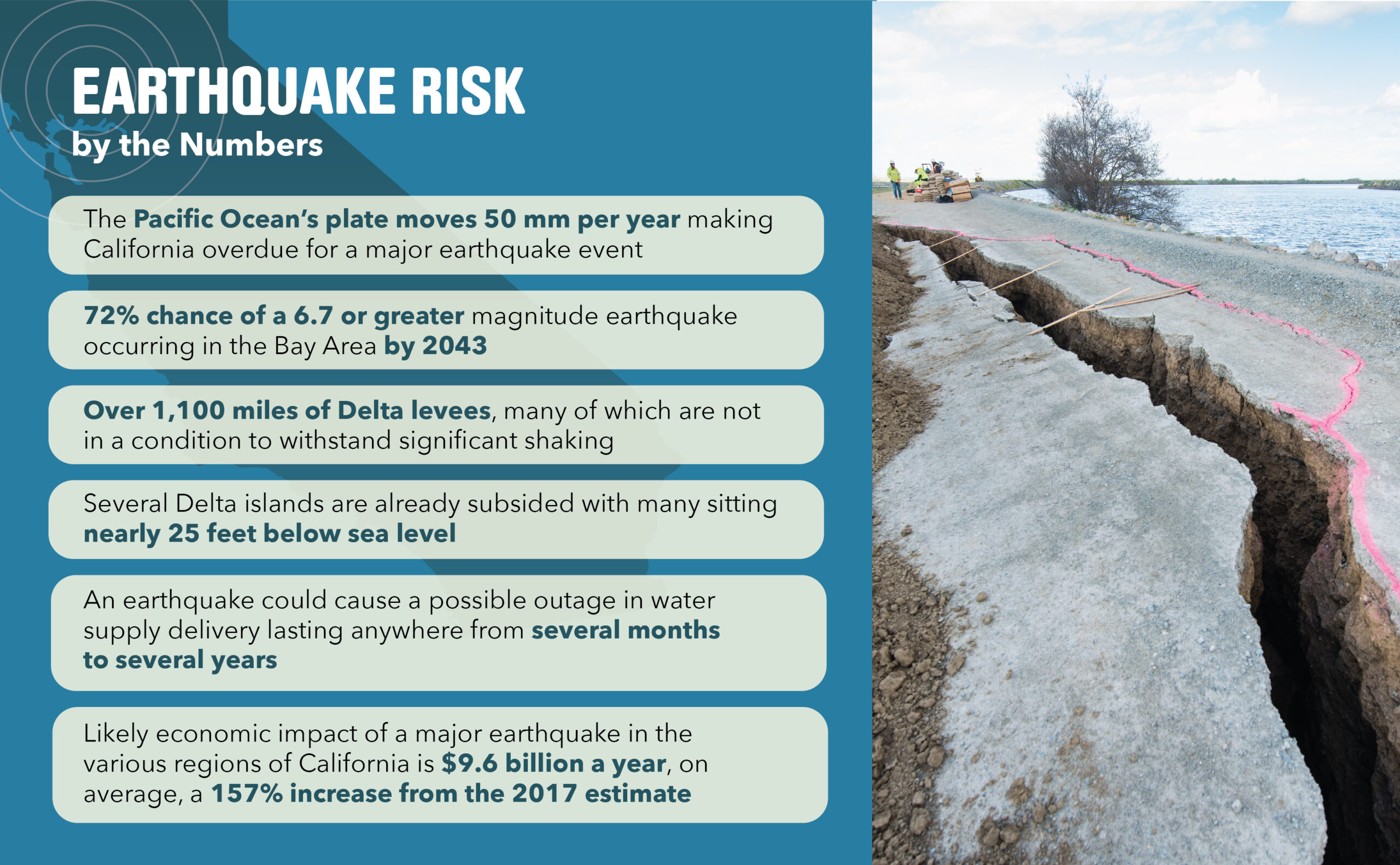
He also said that “Larger earthquakes magnitude — five or six — would begin to produce liquefaction and damage some of the infrastructure and geotechnical work there.” And according to the USGS, there is a 72 percent chance of a 6.7 or greater magnitude earthquake occurring in the Bay Area by 2043.

The Delta Conveyance Project is meant to help the State Water Project guard against these seismic threats.

DWR has also invested millions of dollars to reinforce many Delta levees through the Delta Levees Special Flood Control Projects programs. Additionally, DWR has been planning for and strategizing how to address the earthquake risk and potential disruption to California’s water supply and has developed detailed plans to guide response and recovery efforts.

For more information on how the proposed Delta Conveyance Project would make California’s water supply more earthquake resilient, check out this digital article and these two in-depth videos (Part 1 and Part 2).

Allen D. Payton contributed to this report.
 

Filed Under: Earthquakes, Environment, Infrastructure, News, The Delta

Alhambra Valley Road Slope Failure Repairs Project work Aug. 29 & 30

August 28, 2023 By Publisher Leave a Comment

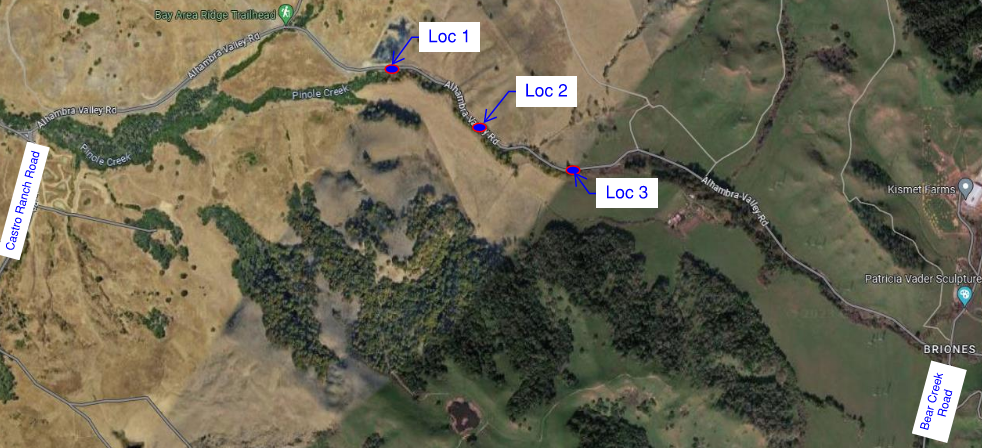
Alhambra Valley Road geotechnical work map. Source: CCC Public Works

By Kelly Kalfsbeek, PIO, Contra Costa County Public Works

Contra Costa County Public Works will be performing geotechnical borings in preparation for the Alhambra Valley Road Slope Failure Repairs Project. Work will take place on Alhambra Valley Road at three locations between Castro Ranch Road and Bear Creek Road located 1-mile, 1.3-miles, and 1.6-miles east of the intersection with Castro Ranch Road. Work will occur on Tuesday, August 29, 2023, and Wednesday, August 30, 2023, between 8:00 am and 5:00 pm., barring unforeseen circumstances. Drivers should expect delays up to 30 minutes during construction and are encouraged to use alternate routes.

For more information visit: www.contracosta.ca.gov/AlhambraValleyRoadRepair

About Contra Costa County Public Works Department:

Contra Costa County Public Works Department (CCCPWD) maintains over 660 miles of roads, 150 miles of streams, channels, and other drainage and over 150 County buildings throughout Contra Costa County. CCCPWD provides services such as Parks and Recreation, Sandbag Distribution and Flood Control throughout unincorporated areas of Contra Costa County.  CCCPWD operates two airports, Buchanan Field Airport in Concord, and Byron Airport in Byron. For more information about CCCPWD, please visit us at: www.cccpublicworks.org

For Construction and Project status contact, Xiuwei Tang, 925.313.2105


Filed Under: Construction, Infrastructure, News, West County

Traffic Advisory: Overnight Hwy 4 closure planned in Brentwood May 19-20

May 18, 2023 By Publisher Leave a Comment

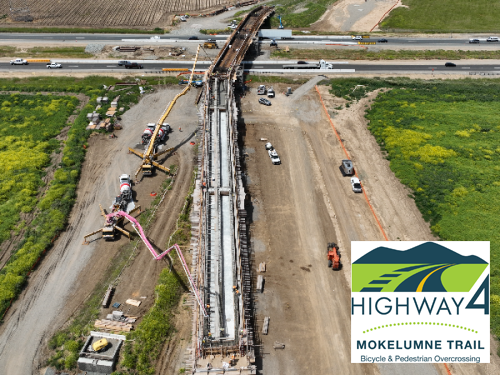
Mokelumne Trail Overcrossing April 2023 progress. Photo: CCTA

For Mokelumne Trail Bicycle and Pedestrian Overcrossing

By Linsey Willis, Director of External Affairs, CCTA

BRENTWOOD, CA – In partnership with the City of Brentwood, the Contra Costa Transportation Authority (CCTA) is constructing the Mokelumne Trail Bicycle and Pedestrian Overcrossing to provide safe access to cyclists and pedestrians for commuting and recreational travel, reconnecting two sides of the trail that were separated by the expansion of State Route 4.  The overnight closure will enable the contractor to pour concrete for the superstructure as part of the construction work installing the pedestrian and bicyclist crossing over State Route 4.  This closure will impact State Route 4 in both the Eastbound and Westbound directions.  CCTA and the California Department of Transportation (Caltrans) have scheduled the closure during the early morning hours in order to minimize impacts to the motoring public.

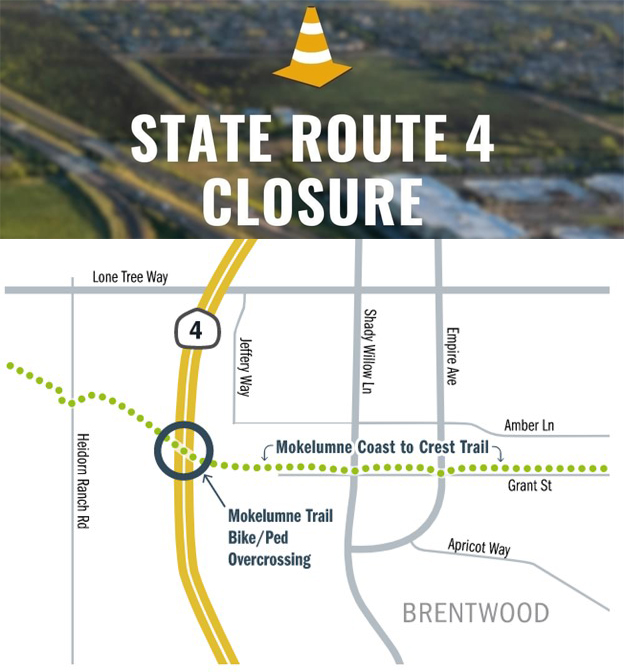
Overnight Freeway Closure of State Route 4 between Lone Tree Way and Sand Creek Road

In order to ensure crew and public safety during the planned construction work, a temporary nighttime freeway closure in both directions of State Route 4 will occur between Friday, May 19, 2023 and Saturday, May 20, 2023 on the following schedule (weather permitting): Eastbound and Westbound Highway 4 will be closed from 9:00pm on Friday, May 19 until 6:00am on Saturday, May 20, 2023.

Detours

Detours will be in place to reroute drivers around the closure and are planned as follows:

Eastbound

traffic will be directed to exit at Lone Tree Way, go eastbound to Shady Willow Lane, then southbound on Shady Willow Lane to Sand Creek Road, before proceeding westbound on Sand Creek Road to the eastbound State Route 4 on-ramp.

Westbound drivers having to detour will exit on Sand Creek Road and go eastbound on Sand Creek Road to Shady Willow Lane, then northbound on Shady Willow Lane to Lone Tree Way, and proceed westbound on Lone Tree Way to the westbound State Route 4 on-ramp.

Future Freeway Closures

Additional overnight closures will be needed over the course of the next eight weeks (weather dependent) to facilitate concrete pours for the stem and soffit and deck of the future Mokelumne Trail Bicycle and Pedestrian Overcrossing.  Additional information regarding dates and detours will be provided once the schedule is confirmed. This project is anticipated to be complete in late summer or early fall of 2023.

About the Mokelumne Trail Bicycle and Pedestrian Overcrossing

In partnership with the City of Brentwood, the Contra Costa Transportation Authority (CCTA) is constructing the Mokelumne Trail Bicycle and Pedestrian Overcrossing to provide safe access to cyclists and pedestrians for commuting and recreational travel, reconnecting two sides of the trail that were separated by the expansion of State Route 4.

When completed, the overcrossing will provide access to the future East County Intermodal Transit Center and BART Station in Brentwood, as well. It is part of the larger Mokelumne Coast to Crest Trail which also includes the Delta de Anza Regional Trail that runs through Antioch and Oakley,  that will, when completed, connect six counties across California from the East Bay to the Sierra Nevada Mountains.

The cost to design and build the bridge is approximately $13 million, with funding provided through Measure J taxpayer dollars, the State Route 4 Bypass Authority, and bridge toll funds.

About the Contra Costa Transportation Authority

The Contra Costa Transportation Authority (CCTA) is a public agency formed by Contra Costa voters in 1988 to manage the county’s transportation sales tax program and oversee countywide transportation planning efforts. With a staff of twenty people managing a multi-billion-dollar suite of projects and programs, CCTA is responsible for planning, funding and delivering critical transportation infrastructure projects and programs that connect our communities, foster a strong economy, increase sustainability, and safely and efficiently get people where they need to go. CCTA also serves as the county’s designated Congestion Management Agency, responsible for putting programs in place to keep traffic levels manageable. More information about CCTA is available at

ccta.net.

Allen D. Payton contributed to this report.
Filed Under: Construction, East County, Infrastructure, News, Recreation, Transportation

Governor Newsom announces Water Supply Strategy for a hotter, drier California in Antioch on Thursday

August 12, 2022 By Publisher Leave a Comment

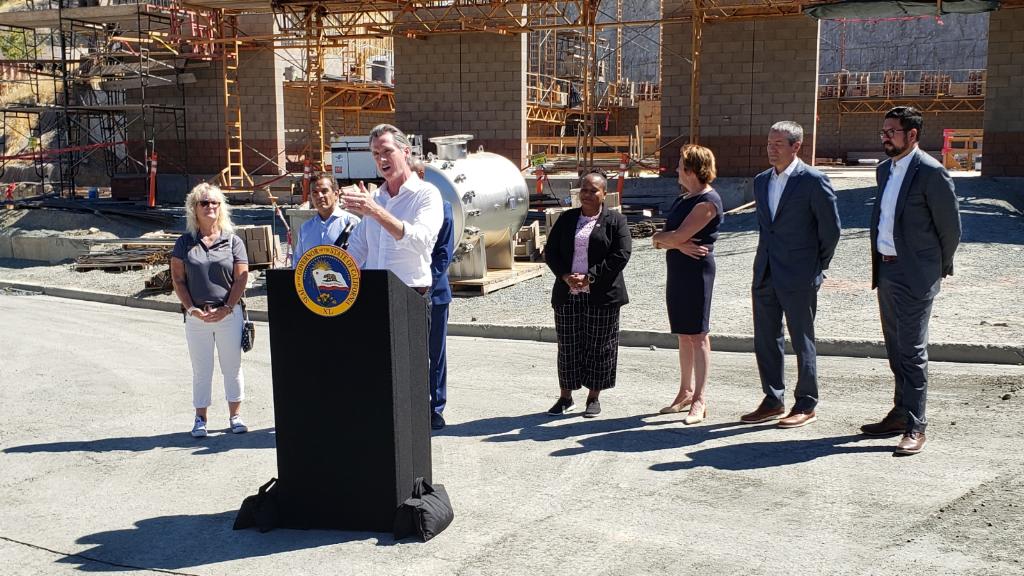
With local and state officials joining him, Gov. Newsom speaks during a press conference at the site of the Antioch Brackish Water Desalination project to announce his Water Supply Strategy on Thursday, August 11, 2022. Photos by Allen D. Payton

Outlines actions needed now to invest in new sources, transform water management

Without action, state officials believe California’s water supply could diminish by up to 10% by 2040

Introduces former L.A. Mayor Villaraigosa as state’s new infrastructure czar

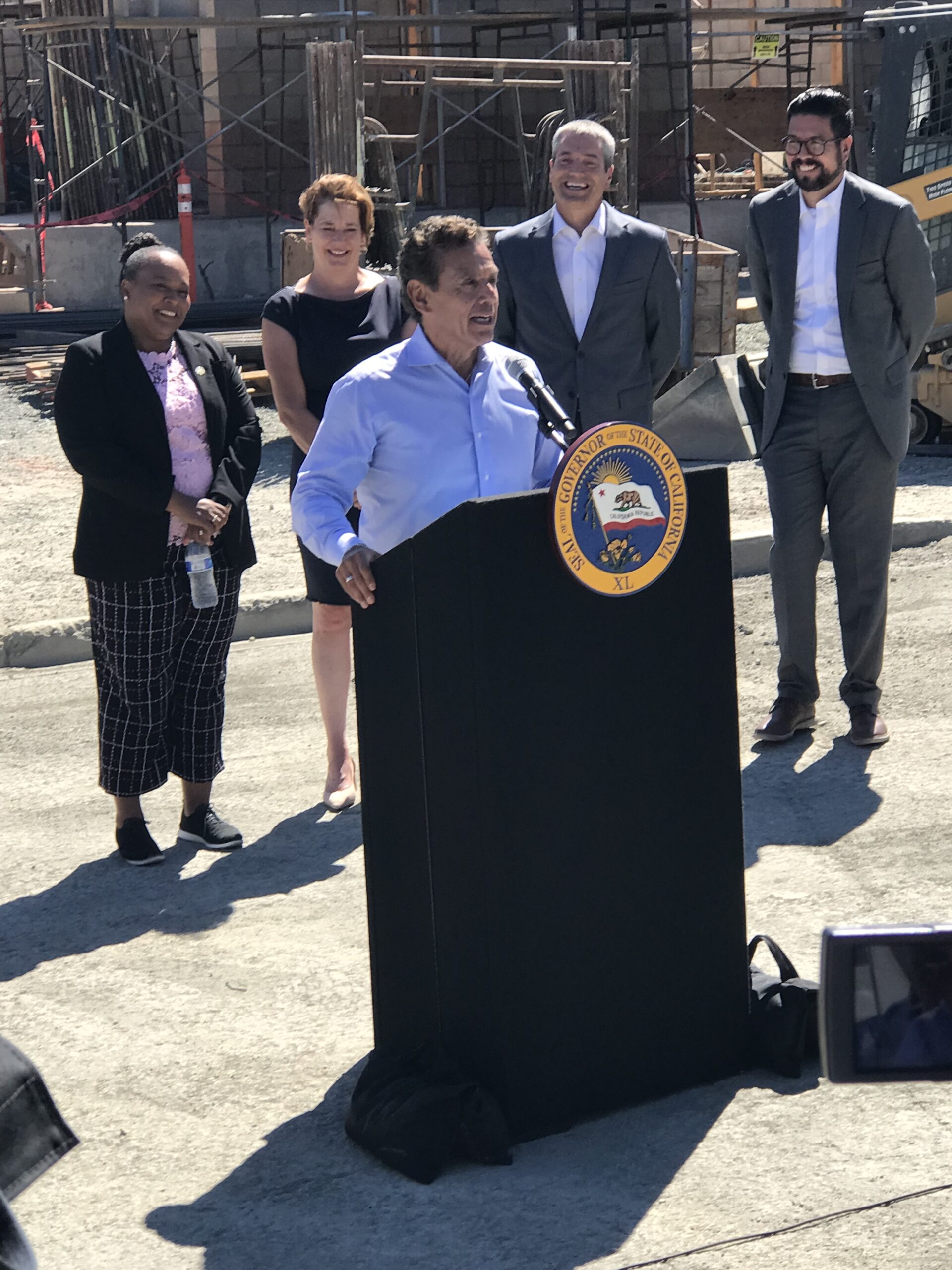
Antonio Villaraigosa was introduced by the governor as the state’s new infrastructure czar.

ANTIOCH – Hotter and drier weather conditions could reduce California’s water supply by up to 10% by the year 2040. To replace and replenish what we will lose to thirstier soils, vegetation, and the atmosphere, Governor Gavin Newsom on Thursday announced in California’s latest actions to increase water supply and adapt to more extreme weather patterns caused by climate change. Click here to read California’s Water Supply Strategy.

Thursday’s announcement at Antioch’s $110 million Brackish Water Desalination project follows $8 billion in state investments over the last two years to help store, recycle, de-salt and conserve the water it will need, generating enough water in the future for more than 8.4 million households by 2040.

The actions, outlined in a strategy document published by the Administration called “California’s Water Supply Strategy, Adapting to a Hotter, Drier Future” calls for investing in new sources of water supply, accelerating projects and modernizing how the state manages water through new technology.

This approach to California’s water supply management recognizes the latest science that indicates the American West is experiencing extreme, sustained drought conditions caused by hotter, drier weather. The warming climate means that a greater share of the rain and snowfall California receives will be absorbed by dry soils, consumed by thirsty plants, and evaporated into the air. This leaves less water to meet the state’s needs.

“The best science tells us that we need to act now to adapt to California’s water future. Extreme weather is a permanent fixture here in the American West and California will adapt to this new reality,” Newsom said. “California is launching an aggressive plan to rebuild the way we source, store and deliver water so our kids and grandkids can continue to call California home in this hotter, drier climate.”

To help make up for the water supplies California could lose over the next two decades, the strategy prioritizes actions to capture, recycle, de-salt and conserve more water. These actions include:

  • Creating storage space for up to 4 million acre-feet of water, which will allow us to capitalize on big storms when they do occur and store water for dry periods
  • Recycling and reusing at least 800,000 acre-feet of water per year by 2030, enabling better and safer use of wastewater currently discharged to the ocean.
  • Freeing up 500,000 acre-feet of water through more efficient water use and conservation, helping make up for water lost due to climate change.
  • Making new water available for use by capturing stormwater and desalinating ocean water and salty water in groundwater basins, diversifying supplies and making the most of high flows during storm events.

These actions are identified broadly in the Newsom Administration’s Water Resilience Portfolio – the state’s master plan for water released in 2020 – but they will be expedited given the urgency of climate-driven changes. To advance the infrastructure and policies needed to adapt, the strategy enlists the help of the Legislature to streamline processes so projects can be planned, permitted and built more quickly, while protecting the environment.

Over the last three years, at the urging of the governor, state leaders have earmarked more than $8 billion to modernize water infrastructure and management. The historic three-year, $5.2 billion investment in California water systems enacted in 2021-22 has enabled emergency drought response, improved water conservation to stretch water supplies, and enabled scores of local drought resilience projects. The 2022-23 budget includes an additional $2.8 billion for drought relief to hard-hit communities, water conservation, environmental protection for fish and wildlife and long-term drought resilience projects.

Newsom also introduced former Los Angeles Mayor and Speaker of the Assembly Antonio Villaraigosa as the state’s new infrastructure czar.

“With this influx of federal dollars, we have an incredible opportunity to rebuild California while creating quality jobs, modernizing crucial infrastructure and accelerating our clean transportation progress, benefiting communities up and down the state,” Newsom said. “Antonio has the extensive experience and relationships to deliver on this promise and bring together the many partners who will be key to our success. I look forward to his collaboration with the administration as we build up communities across California.”

Antioch’s $110 million Brackish Water Desalination plant project is currently under construction.

Construction on Antioch’s desalination plant is expected to be completed next year, city Public Works Director John Samuelson shared following the governor’s press conference.

Filed Under: East County, Environment, Infrastructure, News, State of California, The Delta, Water

Biden issues Executive Order on Implementation of the Infrastructure Investment and Jobs Act

November 21, 2021 By Publisher Leave a Comment

Executive Order on Implementation of the Infrastructure Investment and Jobs Act

NOVEMBER 15, 2021

By the authority vested in me as President by the Constitution and the laws of the United States of America, and in order to effectively implement the historic infrastructure investments in the Infrastructure Investment and Jobs Act (the Act), it is hereby ordered as follows:

Section 1.  Background.  The Infrastructure Investment and Jobs Act is a once-in-a-generation investment in our Nation’s infrastructure and competitiveness. It will help rebuild America’s roads, bridges, and rails; expand access to clean drinking water; work to ensure access to high-speed Internet throughout the Nation; tackle the climate crisis; advance environmental justice; and invest in communities that have too often been left behind.  It will accomplish all of this while driving the creation of good-paying union jobs and growing the economy sustainably and equitably for decades to come.

Critical to achieving these goals will be the effective implementation of the Act by my Administration, as well as by State, local, Tribal, and territorial governments.

President Biden signed the infrastructure bill during a ceremony on the back lawn of the White House surrounded by members of his cabinet, the House and Senate on Monday, Nov. 15, 2021. Source: U.S. Speaker of the House website.

Sec. 2.  Implementation Priorities.  In implementing the Act, all agencies (as described in section 3502(1) of title 44, United States Code, except for the agencies described in section 3502(5) of title 44), shall, as appropriate and to the extent consistent with law, prioritize:

(a)  investing public dollars efficiently, working to avoid waste, and focusing on measurable outcomes for the American people;

(b)  increasing the competitiveness of the United States economy, including through implementing the Act’s Made-in-America requirements and bolstering United States manufacturing and supply chains;

(c)  improving job opportunities for millions of Americans by focusing on high labor standards for these jobs, including prevailing wages and the free and fair chance to join a union;

(d)  investing public dollars equitably, including through the Justice40 Initiative, which is a Government-wide effort toward a goal that 40 percent of the overall benefits from Federal investments in climate and clean energy flow to disadvantaged communities;

(e)  building infrastructure that is resilient and that helps combat the crisis of climate change; and

(f)  effectively coordinating with State, local, Tribal, and territorial governments in implementing these critical investments.

Sec. 3.  Infrastructure Implementation Task Force.  (a)  There is established within the Executive Office of the President the Infrastructure Implementation Task Force (Task Force).  The function of the Task Force is to coordinate effective implementation of the Infrastructure Investment and Jobs Act and other related significant infrastructure programs within the executive branch.

(b)  The Assistant to the President for Economic Policy and Director of the National Economic Council shall serve as Co‑Chair of the Task Force.

(c)  There is established within the Executive Office of the President the position of White House Infrastructure Coordinator, who shall serve as Co-Chair of the Task Force.

(d)  In addition to the Co-Chairs, the Task Force shall consist of the following members:

(i)     the Secretary of the Interior;

(ii)    the Secretary of Agriculture;

(iii)   the Secretary of Commerce;

(iv)    the Secretary of Labor;

(v)     the Secretary of Transportation;

(vi)    the Secretary of Energy;

(vii)   the Administrator of the Environmental Protection Agency;

(viii)  the Director of the Office of Management and Budget;

(ix)    the Director of the Office of Personnel Management;

(x)     the Assistant to the President and Director of the Domestic Policy Council;

(xi)    the Assistant to the President and National Climate Advisor; and

(xii)   the heads of such other executive departments, agencies, and offices as the Co-Chairs may from time to time invite to participate.

(e)  The Co-Chairs may coordinate subgroups consisting of Task Force members or their designees, as appropriate.

Sec. 4.  General Provisions.  (a)  Nothing in this order shall be construed to impair or otherwise affect:

(i)   the authority granted by law to an executive department or agency, or the head thereof; or

(ii)  the functions of the Director of the Office of Management and Budget relating to budgetary, administrative, or legislative proposals.

(b)  This order shall be implemented consistent with applicable law and subject to the availability of appropriations.

(c)  This order is not intended to, and does not, create any right or benefit, substantive or procedural, enforceable at law or in equity by any party against the United States, its departments, agencies, or entities, its officers, employees, or agents, or any other person.

JOSEPH R. BIDEN JR.

THE WHITE HOUSE,

November 15, 2021.


Filed Under: Government, Infrastructure, News, Technology, Transportation

Federal Infrastructure bill brings major investment to California Rail Network

November 19, 2021 By Publisher Leave a Comment

Funding package supports several capital projects for ACE Rail and Amtrak San Joaquins which serves Antioch,  Martinez and Richmond stations; provides up to $102 billion in total spending for passenger railroad infrastructure including $28.5 billion for Amtrak

By Harlo Pippenger, San Joaquin Joint Powers Authority

The San Joaquin Regional Rail Commission and San Joaquin Joint Powers Authority are applauding the passage of the federal Infrastructure Investment and Jobs Act (IIJA) of 2021 and highlighting the bill’s series of investments in California rail projects.

The transportation reauthorization package passed out of the House on November 5th and President Biden signed the measure this past Monday. It provides up to $1.2 trillion in infrastructure spending, including nearly $550 billion in new spending to address the nation’s aging transportation networks. Specifically, the bill provides up to $102 billion in total spending for passenger railroad infrastructure.

“This bill brings meaningful investments to our rail system in the Central Valley and Northern California,” said Stacey Mortenson, Executive Director of both the San Joaquin Regional Rail Commission (SJRRC), which runs Altamont Corridor Express (ACE Rail), and the San Joaquin Joint Powers Authority (SJJPA), which runs Amtrak San Joaquins. “We have capital projects underway throughout our service territories, and this new federal funding package comes at the right time to support route improvements, station buildout, and equipment modernization.”

ACE Rail, a commuter service that runs between the Bay Area and Stockton, and Amtrak San Joaquins, an intercity service that runs through the Central Valley and connects to the Bay Area, will benefit from several funding streams in the legislation:

  • The infrastructure package includes a 43% increase to Federal Transit Administration formula funds, which directly support ACE’s capital program on a yearly basis.
  • The legislation provides up to $28.5 billion for Amtrak’s National Network – these funds will support routes like the San Joaquinsand help the system acquire modern rolling stock, enhance station accessibility and amenities, and address backlogged capital projects.
  • The package provides up to $10 billion for Consolidated Rail Infrastructure and Safety Improvement (CRISI) grants, which is a competitive grant program. The funding will expand eligibilities for the CRISI grants to allow state-supported routes like the San Joaquinsto acquire and develop clean energy locomotives.
  • The IIJA creates a new railroad grade-crossing elimination program – with up to $5.5 billion in funding – to improve railroad safety across the nation and our state. In FY 2020, California experienced the second most highway-rail grade crossing incidents in the nation.

“These investments will not only transform our transportation system, but will also help transform our communities,” said Christina Fugazi, SJRRC Chair. “It is essential that local, state and federal governments make it a priority to enhance and modernize our rail networks. Improving access and increasing rail service are key strategies for reducing congestion, supporting environmental and climate change goals, and strengthening our economy.”

“California is unique in how it manages passenger rail systems,” said Patrick Hume, SJJPA Chair.“So, we appreciate how this funding package will allow our state-supported San Joaquins route service to compete for new grant dollars, while also positioning us to work together with the Federal Railroad Administration and CalSTA to use this funding to modernize equipment and pursue key capital projects.”

On a local and regional level, advocacy efforts are also accelerating on behalf of a series of projects aimed at expanding passenger rail service throughout the “megaregion.”  The Metropolitan Transportation Commission (MTC), San Joaquin Council of Governments (SJCOG), and Sacramento Area Council of Governments (SACOG) have come together in a Working Group and jointly identified the “MegaRegion Dozen,” which are a variety of multi-modal transportation projects that would benefit the connected Northern California and Central Valley region. The MegaRegion Dozen plan calls for more than $400 million in additional funding priorities for Amtrak San Joaquins and ACE Rail; it will help organize how the different agencies and local governments pursue different grant or funding opportunities.

“We see a lot of momentum right now in support of a strong, reliable, accessible passenger rail network in California,” Fugazi added. “We appreciate the dedication of Senator Padilla, Senator Feinstein, and our congressional representatives from Northern California and the San Joaquin Valley who helped push through the IIJA legislation that brings tangible benefits for our programs, and we are ready to put the new funds to good use immediately.”

President Biden also signed an Executive Order for implementing the bill on Monday, in which he wrote, “The Infrastructure Investment and Jobs Act is a once-in-a-generation investment in our Nation’s infrastructure and competitiveness. It will help rebuild America’s roads, bridges, and rails; expand access to clean drinking water; work to ensure access to high-speed Internet throughout the Nation; tackle the climate crisis; advance environmental justice; and invest in communities that have too often been left behind. It will accomplish all of this while driving the creation of good-paying union jobs and growing the economy sustainably and equitably for decades to come.”

Allen Payton contributed to this report.
Filed Under: Infrastructure, Legislation, News, Transportation

  • « Previous Page
  • 1
  • 2
  • 3
  • Next Page »
Monica's-Riverview-Jan-2026
Liberty-Tax-Jan-Apr-2026
Deer-Valley-Chiro-06-22

Copyright © 2026 · Contra Costa Herald · Site by Clifton Creative Web