• Home
  • About The Herald
  • Local Agencies
  • Daily Email Update
  • Legal Notices
  • Classified Ads

Contra Costa Herald

News Of By and For The People of Contra Costa County, California

  • Arts & Entertainment
  • Business
  • Community
  • Crime
  • Dining
  • Education
  • Faith
  • Health
  • News
  • Politics & Elections
  • Real Estate

First meeting of Contra Costa committee formed to address modeled sea level rise Oct. 12

October 9, 2023 By Publisher Leave a Comment

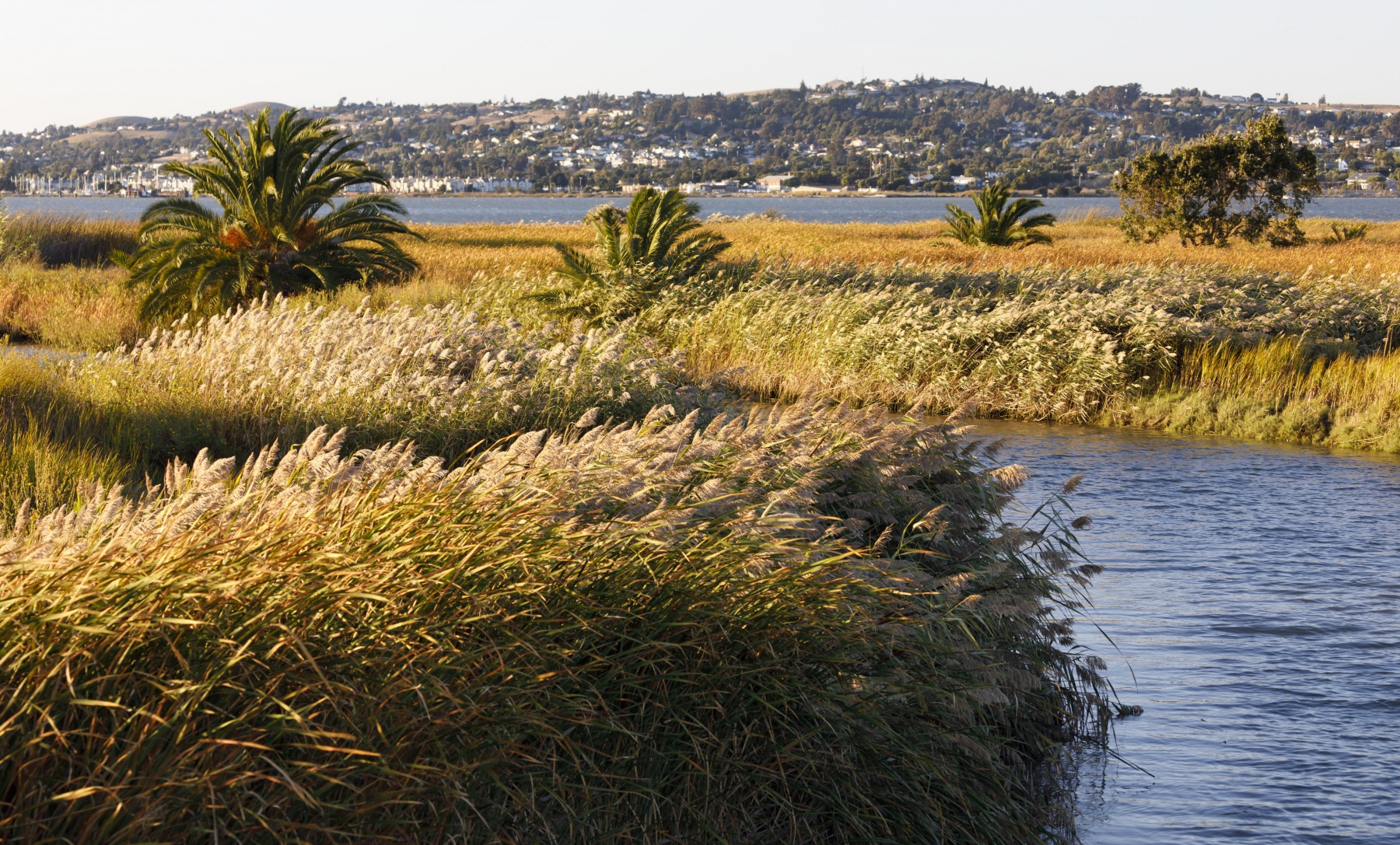
Martinez Regional Shoreline Park by LisaVorderbrueggen. Source: CC County

Supes Gioia, Burgis lead Contra Costa Resilient Shoreline Ad Hoc Committee

Thursday from 10 a.m. to 11:30 a.m. via Zoom

By Ryan Hernandez, Principal Planner, Contra Costa County Department of Conservation and Development

With warmer temperatures and more extreme weather, sea level rise modeling indicates Contra Costa County’s shoreline, which includes a variety of residential, business, industrial, infrastructure, and natural sites, can expect to be subject to more severe and frequent flooding.

To address sea level rise, the Board established the Contra Costa Resilient Shoreline Ad Hoc Committee at the May 16, 2023, Board of Supervisors meeting. Supervisor John Gioia, whose district borders the San Francisco Bay, was appointed as Chair, and Supervisor Diane Burgis, whose district borders the Sacramento-San Joaquin Delta, was appointed as Vice-Chair of the Committee.

Funded through Measure X, the Committee will develop recommendations to the Board on work the County can do to plan for sea level rise and improve shoreline resiliency, which could potentially include a sea level rise resilience and adaptation plan. This would build on the County’s past work on collaborative regional efforts to characterize sea level rise risks with the San Francisco Bay Conservation and Development Commission and the Delta Stewardship Council.

The Plan could include recommendations for built and natural infrastructure improvements and potential land use planning changes, implementation strategies, and participatory engagement opportunities for stakeholders. With the creation of this Committee, the County will be better prepared to adapt to rising sea levels with strategies specific to the current and future needs of Contra Costa communities.

The Contra Costa Resilient Shoreline Ad Hoc Committee’s first meeting will occur on Thursday, October 12, 2023, from 10 a.m. to 11:30 a.m. via Zoom with in-person meeting locations listed in the published agenda packet. To sign up for email updates, visit the Contra Costa Legistar website.

Allen D. Payton contributed to this report.


Filed Under: Environment, Government

Plan Bay Area 2050+ Draft Blueprint: Tell us what you think

August 17, 2023 By Publisher Leave a Comment

Creating the Blueprint is a key step in developing Plan Bay Area 2050+.

Public engagement is a fundamental element of the plan update process.

Sept. 6th workshop in Contra Costa; Deadline for comment: September 7, 2023

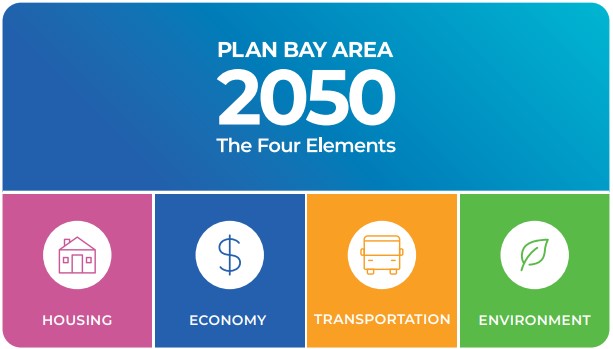
The Plan Bay Area 2050+ Blueprint will integrate strategies across the four elements of the plan — the economy, the environment, housing and transportation — to create a more equitable and resilient future for all.

Beginning in summer 2023 and wrapping up in late 2024, staff will develop the Blueprint over two phases: the Draft Blueprint and the Final Blueprint. Given Plan Bay Area 2050’s solid foundation of 35 strategies, the Draft Blueprint phase for Plan Bay Area 2050+ will focus on making targeted refinements to select plan strategies. (See Plan Bay Area 2050 Executive Summary)

Assumptions for the select Blueprint strategies will be refined to reflect ongoing implementation efforts from Plan Bay Area 2050, while also leveraging findings from previous planning efforts that may be relevant to the post-COVID environment.

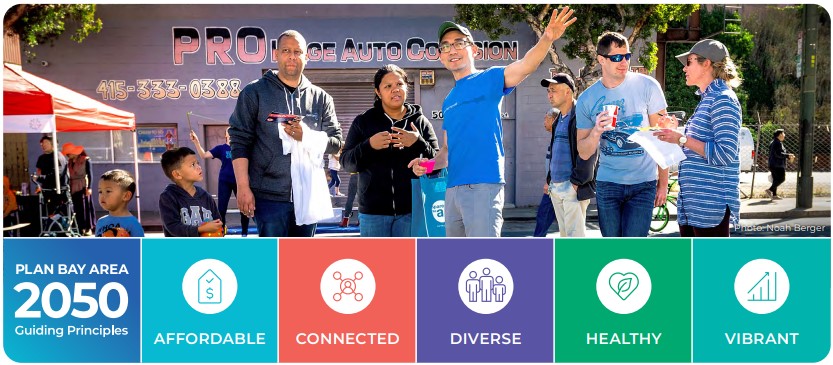
Equity and performance analyses will also be conducted during the Draft Blueprint phase to evaluate how the plan’s strategies are supporting progress towards making the Bay Area more affordable, connected, diverse, healthy and vibrant for all.

Furthermore, Transit 2050+ — the comprehensive re-thinking of the six transit-related strategies in Plan Bay Area 2050’s transportation element — will develop an integrated regional transit network that will be incorporated into the Final Blueprint.

While still remaining fiscally constrained per federal planning requirements, the focused plan update approach will consider whether to pursue targeted updates to — or to reaffirm — the Regional Growth Forecast (while maintaining its forecast methodology), as well as to the External Forces, the Growth Geographies and the Needs and Revenue Forecasts.

Culminating in late 2024, the Metropolitan Transportation Commission (MTC) and the Association of Bay Area Governments (ABAG) will consider adoption of the Final Blueprint, which will then move forward in the plan update process as the preferred alternative for environmental review.

Getting Involved

Creating the Blueprint is a key first step toward updating the plan itself, and thus the Blueprint planning phase will require iteration and deep engagement of the public, partners and elected officials.

A first step in developing the Blueprint is to better understand what has changed as the region emerges from the pandemic. This summer, MTC and ABAG staff will be traveling across the region to speak to the community to understand how life has changed for individuals as the Bay Area enters the “new normal.”

MTC and ABAG are taking input from community members and partners to help inform the development of the Draft Blueprint.

You can make your voice heard in a variety of ways! Attend a pop-up workshop near you; participate in our survey; or submit comments via email, telephone or mail.

Find an event near you and join the conversation to help staff better understand how the last three years have impacted life across the Bay Area.

Photo: Plan Bay Area

Participate in Our Survey

A first step in updating the plan is to better understand what has changed for you as the region emerges from the pandemic. MTC and ABAG want to learn how the “new normal” may be impacting your life.

  • Participate in the survey in English(link is external)
  • 快來參與中文版的問卷調查(link is external)
  • Participa en la encuesta en español(link is external)
  • Tham gia khảo sát bằng tiếng Việt(link is external)

The survey will close on September 7, 2023.

The survey also will help inform the development of Transit 2050+, a parallel long-range planning effort that will produce a first-of-its-kind plan to re-envision the future of the public transit network in the nine-county Bay Area, and the expenditure plan for a potential transportation revenue measure. The revenue measure is key in advancing implementation of Plan Bay Area.

Join a Pop-up Workshop

This summer, MTC and ABAG staff will be traveling across the region to speak to the community to understand how life has changed for individuals as the Bay Area emerges from the pandemic. Attend a pop-up workshop near you and tell us what the “new normal” means to you.

Contra Costa County

Diablo Valley College — Pleasant Hill Campus

Wednesday, September 6, 12 to 3 p.m.

321 Golf Club Road, Pleasant Hill, CA

About Plan Bay Area

Plan Bay Area is a long-range regional plan jointly developed and adopted by MTC and ABAG every four years.


Filed Under: Bay Area, Economy, Environment, Government, Growth & Development, Transportation

Los Vaqueros Reservoir Expansion Project receives $10 million from Bureau of Reclamation

July 27, 2023 By Publisher Leave a Comment

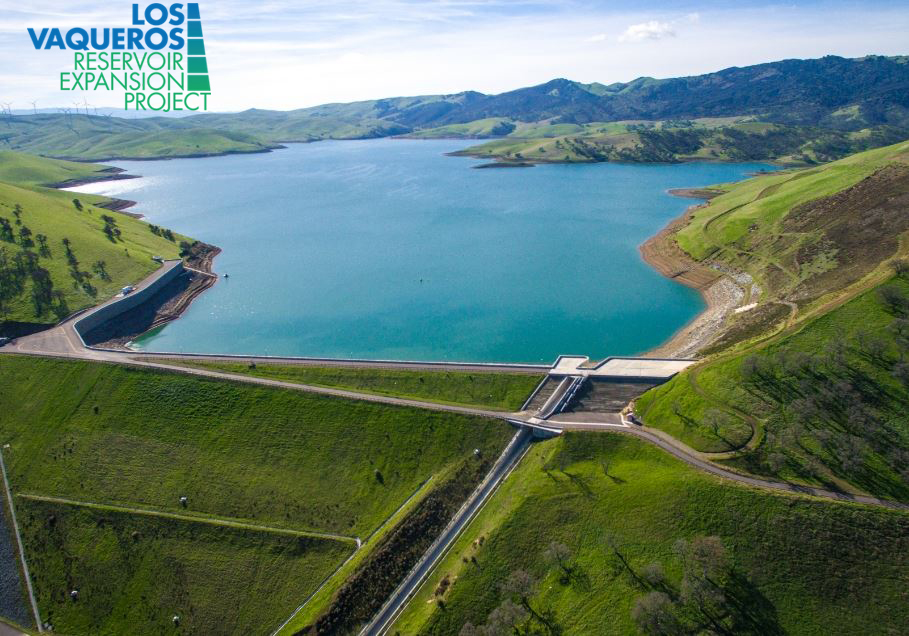
Los Vaqueros Reservoir and Dam. Source: LVREP JPA

Funding to benefit regional water supply improvements and protection of critical bird populations

Expansion will increase capacity by 115,000 acre-feet, cost about $1.25 billion

The Los Vaqueros Reservoir Expansion Project Joint Powers Authority today (July 27, 2023) was notified that it will receive $10 million in federal funding from the U.S. Department of the Interior, Bureau of Reclamation. The funding will be used to further the project’s goals of improving Bay Area and Central Valley water supply and supporting wildlife refuges along the Pacific Flyway, a vital migratory route for critical bird populations.

According to the National Audubon Society, each year at least one billion birds migrate along the flyway, which is only a fraction of those that used it a century ago. Wildlife refuges along the Pacific Flyway provide protection against habitat loss, water shortages, diminishing food sources and climate change.

Additionally, the expansion will increase the Los Vaqueros Reservoir capacity from 160,000 acre-feet to 275,000 acre-feet and add new and modified conveyance facilities to provide environmental, water supply reliability, operational flexibility, water quality and recreational benefits.

The dam will be increased by 55 feet from its current height of 226 feet to 281 feet from toe to crest.

“We are grateful to Reclamation for acknowledging the importance of the Los Vaqueros Reservoir Expansion Project and the role it will play in providing water supply reliability for 11 million customers and protection of critical bird populations from the Bay Area to the Central Valley,” said Board Chair Angela Ramirez Holmes. “Our partnership with Reclamation is invaluable and will help ensure quality of life now and for future generations.”

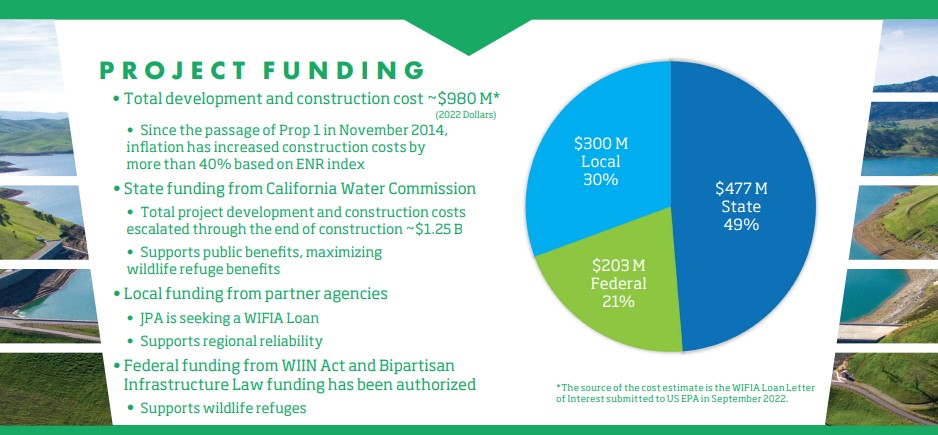
Source: LVREP Fact Sheet

The $10 million allocation today is authorized under the Bipartisan Infrastructure Law, approved by Congress in November 2021, and is in addition to a previously awarded $164 million from all federal sources for the reservoir expansion project. The project was previously authorized for federal funding under the Water Infrastructure Improvements for the Nation (WIIN) Act of 2016.

According to the project Fact Sheet, the total development and construction cost of the expansion is budgeted at approximately $980 million in 2022 dollars and $1.25 billion in escalated costs through the end of construction. Construction is expected to last from 2023 through 2030.

“We appreciate the ongoing federal support of this project that is vital to millions of Californians and key wildlife refuges,” said Los Vaqueros Reservoir Joint Powers Authority Executive Director Taryn Ravazzini. “The allocation of these funds marks another milestone and allows the LVR JPA and its members to continue our progress toward regional resilience.”

Source: LVREP Fact Sheet

About the LVRJPA

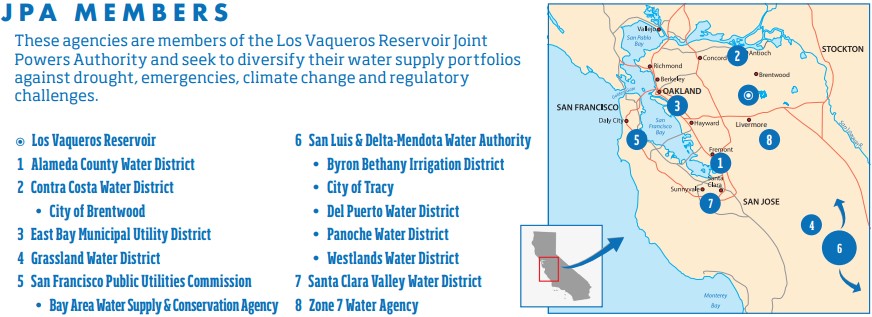
The Los Vaqueros Reservoir Joint Powers Authority (JPA) was formed in 2021 and provides governance and administration for the Phase 2 Los Vaqueros Reservoir Expansion Project (Project).  The Los Vaqueros Reservoir is an off-stream reservoir owned and operated by the Contra Costa Water District.

The Project will increase Bay Area and Central Valley water supply reliability, develop water supplies for wildlife refuges, and improve water quality while protecting Delta fisheries and providing additional Delta ecosystem benefits. When completed, it will increase the Los Vaqueros Reservoir capacity from 160,000 acre-feet to 275,000 acre-feet and add new and modified conveyance facilities to provide environmental, water supply reliability, operational flexibility, water quality, and recreational benefits.

Allen D. Payton contributed to this report.

Filed Under: Animals & Pets, East County, Environment, News, Water

First San Ramon Valley InterFaith EarthFest April 23

April 11, 2023 By Publisher Leave a Comment

See Hope – Seed Change theme

By Barb Kusha, Interfaith – San Ramon Valley

Interfaith – San Ramon Valley (I-SRV) and the Town of Danville have partnered to launch a fresh kind of Earth Day celebration, one focused on what is working right here, instead of on the gloomy eco-forecast. Its goals are to provide inspiration and to spur behavior change and ongoing commitment to sustainability as a way of life through recognizing and honoring our sacred relationship to nature.

The first annual InterFaith EarthFest, See Hope – Seed Change, celebration will bring together the San Ramon Valley’s interfaith community along with civic leaders, students, environmental, and community groups to channel their collective energies for the common purpose of moving toward a more responsible relationship with the planet. “Through an afternoon of ritual, art, music, pop-up speakers, booths, eco-activities and ceremony, the partnering groups and participants will draw hope from one another and inspire ongoing commitment to local action,” says Rabbi Dan Goldblatt of Beth Chaim.

“This new partnership is a big deal,” notes Pastor Steve Harms of Peace Lutheran Church. “The town’s leaders are coming together with religious leaders and the public and various interfaith congregants for the express purpose of meeting our urgent environmental issues head on with combined resources, ideas and energies. It has created a wonderful synergy of resolve and devotion.”

The event is Sunday, April 23, 1 p.m. to 4 p.m. at the Peace Lutheran Church, 3201 Camino Tassajara, Danville. It is free and open to the public. Parking is limited, but more is available at nearby commercial shopping plazas.

InterFaith – San Ramon Valley has been around for nearly 20 years, and includes members from many faith traditions. Participants in the InterFaith EarthFest include representatives from the following groups: Baha’i, Buddhist, Christian, Hindu, Jewish, LDS, Muslim, Sihk, Sufi, and Taoist.

The afternoon will also include:

  • youth chorus group, drumming and dance performances
  • specially-curated art exhibit from local students and makers
  • kids activities, food, and booths
  • break-out sessions for in-depth learning
  • labyrinth walks
  • special displays of sacred texts from participating faiths that speak to the divine obligation we all share to preserve nature

Community partners for the event include Save Mount Diablo, Sustainable Contra Costa, Centre for Information Policy Leadership (CIPL), San Ramon Valley Unified School District, The Crayon Initiative, Cool the Earth, White Pony Express, Central Sanitation District, Republic Services, Rewire Community, SOJA and others.

EkoLinq, a Tri-Valley based recycling company, will collect for resale and recycling, on the spot free of charge unwanted textiles of all types including clothes, towels and sheets, from gently-used to rags.

About Interfaith – San Ramon Valley

I-SRV is a community group of diverse faith congregations from across the valley who are committed to learning, sharing, listening, and acting together. Learn more at https://www.interfaithsrv.org.


Filed Under: Environment, Faith, San Ramon Valley

Save Mount Diablo expands free Discover Diablo Hikes and Outings Program for 2023

January 15, 2023 By Publisher Leave a Comment

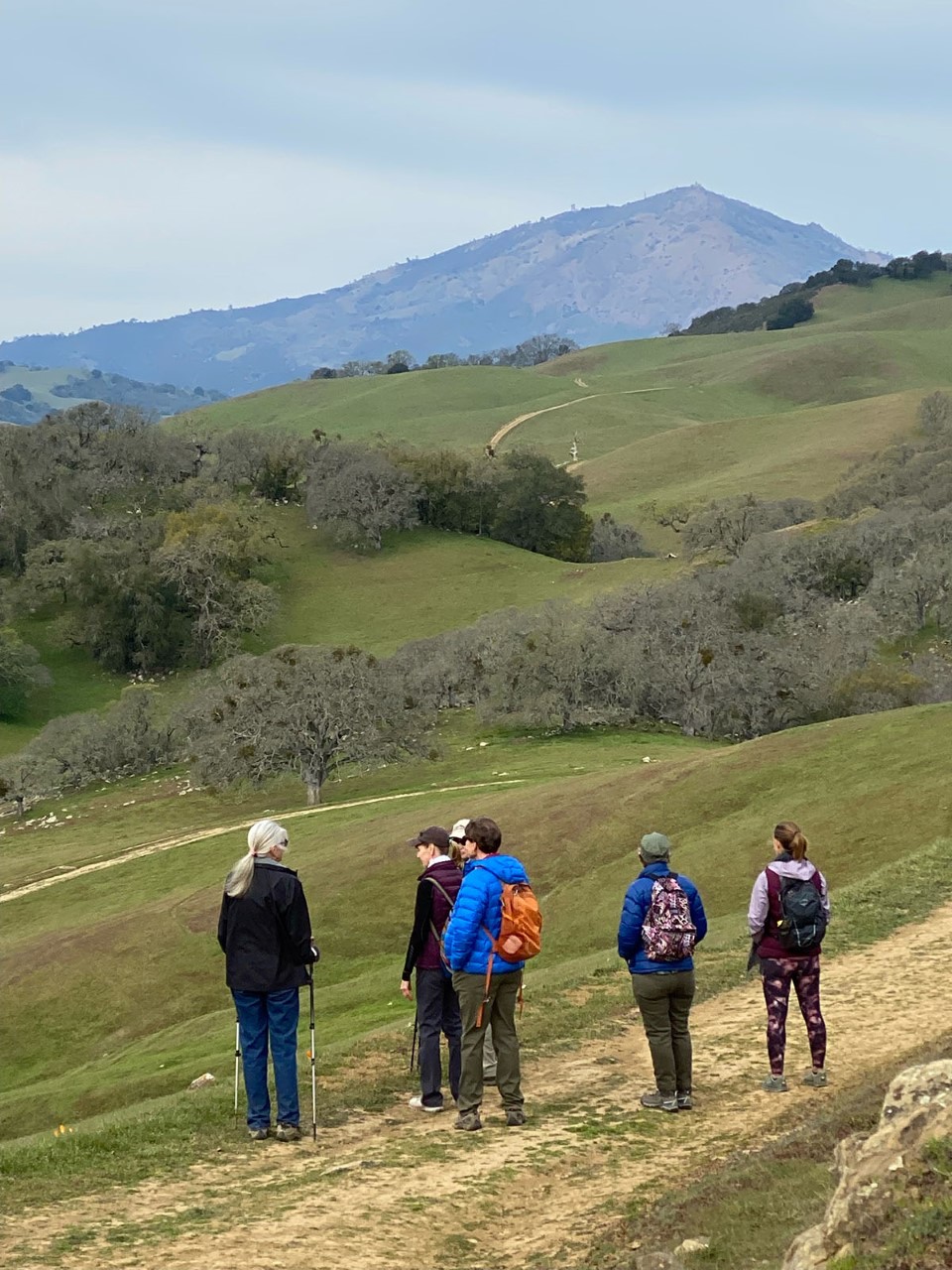
Discover Diablo hikers exploring in Del Puerto Canyon. Credit: Sean Burke.

Begins January 21st

By Laura Kindsvater, Communications Manager, Save Mount Diablo

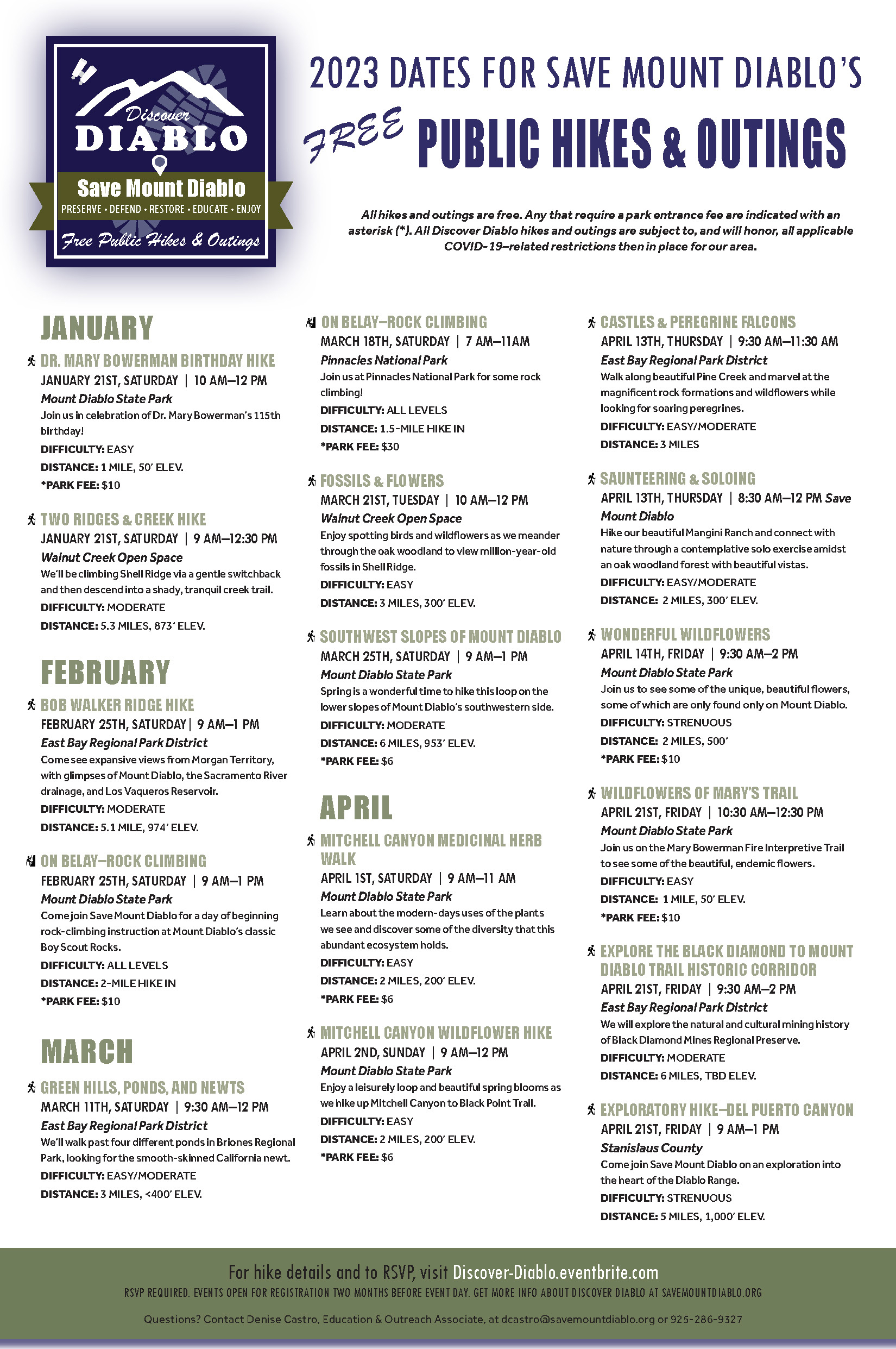
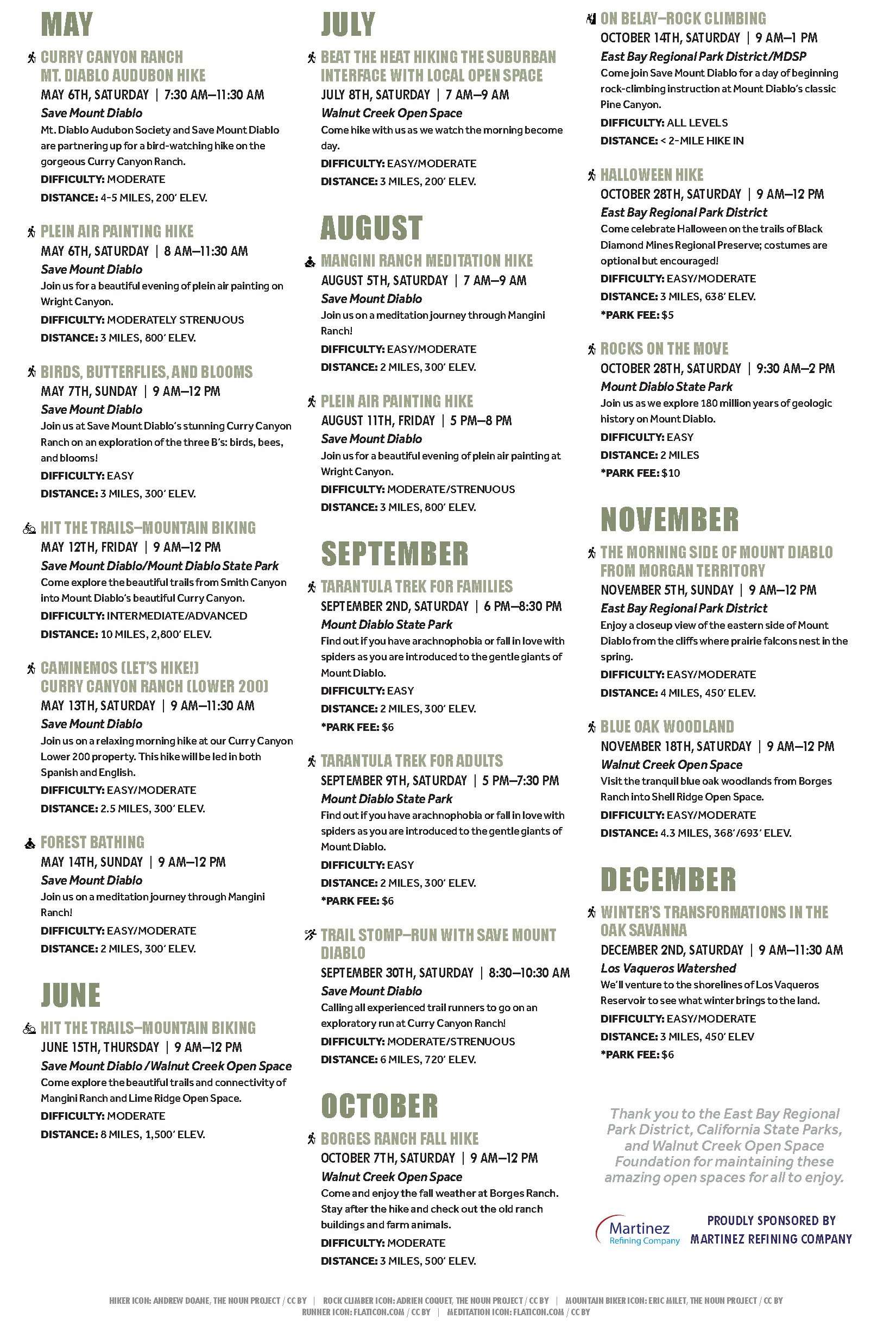
CONTRA COSTA, STANISLAUS, AND SAN BENITO COUNTIES— Explore some of the East Bay’s premiere hiking and natural areas with Save Mount Diablo in 2023, including places rarely open to the public. The Discover Diablo outings series offers guided hikes, themed walks, and other outdoor activities: mountain biking; rock climbing; trail running; meditation in nature; plein air painting events; and property tours. All are free to the public. Trailblazers of all ages and skill levels are welcome to choose appropriate outings from our extensive offerings.

In response to growing demand, Save Mount Diablo is offering a total of 36 excursions. The ever-popular tarantula walk will be offered twice, and we are offering two plein air painting walks, two meditation hikes, and a trail run in 2023.

We will also be offering rock-climbing outings, mountain-biking events, and bilingual hikes in Spanish and English.

Generously sponsored by the Martinez Refining Company, the 2023 Discover Diablo free public hikes and outings series will begin on January 21.

“Through the Discover Diablo series, people are fortunate to be able to explore and discover the beauty of Mount Diablo with experienced guides,” said Ann Notarangelo, Community Relations Manager for the Martinez Refining Company. “Our refinery has sponsored these hikes since 2017 in the hopes people will enjoy learning more about the mountain, while spending quality time with family and friends.”

Discover Diablo hikers checking out the view from Bob Walker Ridge in Morgan Territory Regional Preserve. Credit: Jennifer Willen

The Discover Diablo program was started by Save Mount Diablo in 2017 to connect local communities with the spectacular natural world of the Mount Diablo area and to build awareness about land conservation.

Hikes and outings take place on one of Save Mount Diablo’s conserved properties or on park lands in the Diablo Range. These include Mount Diablo State Park, East Bay Regional Park District, Walnut Creek Open Space Foundation, Stanislaus County, and National Park Service lands.

Discover Diablo hikes are guided by experts steeped in the natural history and lore of the region, who both educate and entertain while emphasizing the breathtaking beauty that the Diablo Range has to offer.

Save Mount Diablo hopes the Discover Diablo series will spark a passion for the Diablo Range and deepen people’s connections to the land and nature. All Discover Diablo hikes are subject to, and will honor, all applicable COVID-19–related restrictions then in place for our area.

According to Ted Clement, Executive Director of Save Mount Diablo, “It is the goal of the Discover Diablo program to build connections between people, Save Mount Diablo, and the land, helping our communities develop a strong sense of place and a deepened appreciation for our collective backyard. Most importantly, we want to cultivate a love of the land in participants, as that is what it will take to ensure the precious Mount Diablo associated natural areas are taken care of for generations to come.”

There is something for us all to discover in the nooks and crannies surrounding Mount Diablo and within its sustaining Diablo Range, so be sure to hit the trails in 2023 and find your own individual inspiration!

RSVP required. To ensure everyone has an equal opportunity to attend, registration for hikes and outings in March onward will open two months prior to each hike’s date.

See our schedule of upcoming hikes and outings below or view and RSVP online here: https://savemountdiablo.org/what-we-do/educating-and-inspiring-people/discover-diablo-hikes-outings/

You can also download and print a flyer of the schedule here: http://bit.ly/DiscoverDiablo

Questions about hike program details and RSVP information: Denise Castro, Education and Outreach Associate, Save Mount Diablo C: 925-286-9327, dcastro@savemountdiablo.org

Filed Under: Bay Area, Environment, Parks, Recreation

In response to DEIR Restore the Delta claims tunnel project “will not save the Delta”

December 16, 2022 By Publisher Leave a Comment

Source: Restore the Delta

“The Tunnel Project will not save the Delta, and it probably will not save the State Water Project’s and Central Valley Project’s reliance on Delta exports either.” – letter from Restore the Delta on DEIR

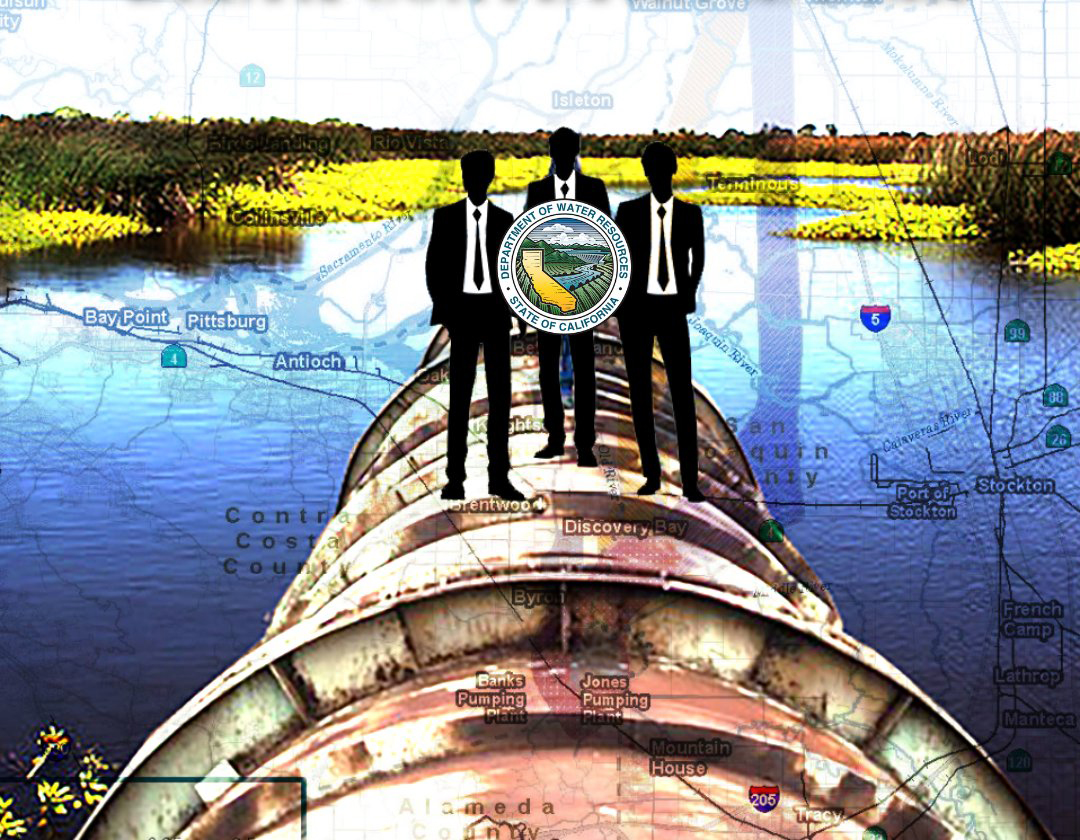
The proposed Delta Conveyance Project (Delta Tunnel) would construct new water intake facilities on the Sacramento River in the north Delta to fill a single tunnel with diverted freshwater flows. That water would be shipped to large farming operations and water wholesalers south of the Delta. The Delta Conveyance project would divert up to 6,000 cubic feet of water per second. The project is estimated to cost between $16-40 billion and won’t be completed until at least 2040.

After the Draft Environmental Impact Report for the Delta Conveyance Project was released in July, the comment period was extended to today, Friday, December 16, 2022. The Draft EIR was prepared by the state Department of Water Resources (DWR) as the lead agency to comply with the requirements of the California Environmental Quality Act by evaluating a range of alternatives to the proposed project and disclosing potential environmental effects of the proposed project and alternatives, and associated mitigation measures for potentially significant impacts.

No decisions will be made on whether to approve the project until the conclusion of the environmental review process, after consideration of public comments submitted on the Draft EIR and issuances of a Final EIR. At that time, DWR will determine whether to approve the proposed project an alternative or no project.

On Wednesday, Dec. 14, 2022, Restore the Delta submitted detailed comments on the DEIR to the DWR.

“The California Department of Water Resources should be embarrassed by the lack of climate change planning in the DEIR for the proposed Delta Tunnel. The DEIR was out of date for climate change science when it was released in July 2022,” said Tim Stroshane, Policy Analyst, Restore the Delta. “If completed in 2040 it will be obsolete, then. Meanwhile, California will have spent big money on a project the state will be unable to use as Delta water levels rise. Instead, we should invest in the resilience of Delta environmental justice communities and the rest of the state for flood and water supplies, reducing the big projects’ reliance on the Delta for future water needs, using water use efficiency and water recycling, and increasing local and regional water supply self-sufficiency to ward off drought and megafloods.”

“DWR has learned nothing since California WaterFix. Their sales pitch, that the tunnel is a climate project, is built on incomplete data and faulty analysis,” said Barbara Barrigan-Parrilla, Executive Director of Restore the Delta. “They have continued their pattern of erasing how the project will impact Delta urban environmental justice communities. And they are minimizing how construction will ruin small Delta farming towns, and the natural resources essential to the cultural and spiritual practices of historic Delta tribes. The tunnel is a failed idea that nobody supports, except for the Department of Water Resources.”

Read the comment letter and attachments by Restore the Delta.

Highlights from the Comments

Environmental impact of Tunnel:

“Reviewing the Executive Summary, we count 17 significant and unavoidable impacts of the proposed Tunnel project on the environment. Among these impacts will be loss of prime agricultural farmland, loss of local non-tribal cultural resources, transportation and air quality impacts, and painful loss of tribal cultural resources. There are other impacts omitted, belittled, or greenwashed by the Tunnel DEIR.”

Flow and salinity impacts when Tunnel in operation:

“The Tunnel Project has region-scale impacts on the Delta, should it be built. The Tunnel DEIRacknowledges that a major operational impact will be, reducing Sacramento River flows (and hence flows to its distributaries in north and central Delta channels) and reducing the estuary’s ability to repel tidal salt waters which are ever-present (see Attachment 9 to this letter). Such operational impacts will have economic and ecological impact on the Delta region, and a Community Benefits Program must be developed to mitigate the economic and ecological effects of Tunnel operations on Delta communities, especially environmental justice communities.”

Failure to consider alternatives:

“DWR in particular is hide-bound in its loyalty to a Delta conveyance approach eclipsed by the emerging and growing effects of extreme heat and extreme storms.

“A huge failure of imagination by DWR is on display in this DEIR. Each of these alternatives is vulnerable to the slings and arrows of expected climate change effects, which we will go into further below when commenting on project modeling methods and results. But what we see displayed in the Tunnel DEIR is a complete failure of state water officials to imagine alternative approaches these last few years since the demise of California WaterFix in early 2019.”

Faulty consideration of Delta Environmental Justice impacts:

“We are deeply disappointed that DWR resorted to ignoring its ‘Your Delta, Your Voice’ Survey as a basis for informing how and what kind of environmental, environmental justice, and community impacts the Delta Tunnel Project would impose on the Delta EJ community both of the direct Legal Delta and of the Delta Region as a whole. It is plainly obvious that 1) the Legal Delta as well as the Delta Region are bona fide environmental justice communities, with relatively small proportions of white and wealthy populations; 2) Delta residents AND Delta region community members rely substantially on the Delta directly, and the north Delta in particular, for subsistence fishing, and it is thus an environmental impact to have both fishing spots taken away from anglers and fish removed from the vicinity for North Delta Intakes construction activities; and 3) in the operational phase, lost flows in the Delta will increase salinity in the Delta as it reduces flows in north and central Delta channels, and thereby contributing to the spread of harmful algal blooms which will disproportionately injure Delta people who rely on fishing and broad outdoor activities to enjoy the Delta. In sum, the Delta Tunnel Project will harm such beneficial users of water as fish, outdoor water-contact recreation, and environmental justice communities.”

About Restore the Delta
Restore the Delta (RTD) is a grassroots campaign of residents and organizations committed to restoring the Sacramento-San Joaquin Delta so that fisheries, communities, and family farming can thrive there together again; so that water quality is protected for all communities, particularly environmental justice communities; and so that Delta environmental justice communities are protected from flood and drought impacts resulting from climate change while gaining improved public access to clean waterways. Ultimately our goal is to connect communities to our area rivers and to empower communities to become the guardians of the estuary through participation in government planning and waterway monitoring. RTD advocates for local Delta stakeholders to ensure that they have a direct impact on water management decisions affecting the well-being of their communities, and water sustainability policies for all Californians.

ICYMI 12/10/22: Delta Tunnel Meeting, Greenhouse Gaslighting, HABs in 2022 

Allen D. Payton contributed to this report.

Filed Under: East County, Environment, News, The Delta, Water

John Muir Land Trust to hold Winter Festival Dec. 10

November 25, 2022 By Publisher Leave a Comment

YOU’RE INVITED

Join John Muir Land Trust at Family Harvest Farm for our Winter Festival on Saturday, December 10, 11 am – 3 pm.

Get outside and celebrate the holiday season with the whole family! Festivities include:

  • Educational farm tour
  • Wreathmaking workshops
  • Food trucks, free hot cocoa and cider
  • Free Facepainting
  • Music by DJ Kendo and The Fresh Crew
  • Holiday toy drive for foster youth*

The event is free and open to the public. We hope to see you there!

UPDATE: At this time, all wreathmaking workshops are full.

*Please bring unwrapped gifts and gift certificates for children and youth in foster care ages 5-21 years old to the event or send to: Court Appointed Special Advocates of Contra Costa County, 2151 Salvio Street, Suite 295, Concord, CA 94520.

Located in Pittsburg, CA, Family Harvest Farm is a program of John Muir Land Trust that employs transition age foster youth as apprentices and leaders in the community. Through on-the-job training in organic farming, the farm provides a healthy, nurturing environment for program participants and affordable, high-quality food for the community.

To register click here.

Filed Under: Community, East County, Environment, Holiday

Governor Newsom announces Water Supply Strategy for a hotter, drier California in Antioch on Thursday

August 12, 2022 By Publisher Leave a Comment

With local and state officials joining him, Gov. Newsom speaks during a press conference at the site of the Antioch Brackish Water Desalination project to announce his Water Supply Strategy on Thursday, August 11, 2022. Photos by Allen D. Payton

Outlines actions needed now to invest in new sources, transform water management

Without action, state officials believe California’s water supply could diminish by up to 10% by 2040

Introduces former L.A. Mayor Villaraigosa as state’s new infrastructure czar

Antonio Villaraigosa was introduced by the governor as the state’s new infrastructure czar.

ANTIOCH – Hotter and drier weather conditions could reduce California’s water supply by up to 10% by the year 2040. To replace and replenish what we will lose to thirstier soils, vegetation, and the atmosphere, Governor Gavin Newsom on Thursday announced in California’s latest actions to increase water supply and adapt to more extreme weather patterns caused by climate change. Click here to read California’s Water Supply Strategy.

Thursday’s announcement at Antioch’s $110 million Brackish Water Desalination project follows $8 billion in state investments over the last two years to help store, recycle, de-salt and conserve the water it will need, generating enough water in the future for more than 8.4 million households by 2040.

The actions, outlined in a strategy document published by the Administration called “California’s Water Supply Strategy, Adapting to a Hotter, Drier Future” calls for investing in new sources of water supply, accelerating projects and modernizing how the state manages water through new technology.

This approach to California’s water supply management recognizes the latest science that indicates the American West is experiencing extreme, sustained drought conditions caused by hotter, drier weather. The warming climate means that a greater share of the rain and snowfall California receives will be absorbed by dry soils, consumed by thirsty plants, and evaporated into the air. This leaves less water to meet the state’s needs.

“The best science tells us that we need to act now to adapt to California’s water future. Extreme weather is a permanent fixture here in the American West and California will adapt to this new reality,” Newsom said. “California is launching an aggressive plan to rebuild the way we source, store and deliver water so our kids and grandkids can continue to call California home in this hotter, drier climate.”

To help make up for the water supplies California could lose over the next two decades, the strategy prioritizes actions to capture, recycle, de-salt and conserve more water. These actions include:

  • Creating storage space for up to 4 million acre-feet of water, which will allow us to capitalize on big storms when they do occur and store water for dry periods
  • Recycling and reusing at least 800,000 acre-feet of water per year by 2030, enabling better and safer use of wastewater currently discharged to the ocean.
  • Freeing up 500,000 acre-feet of water through more efficient water use and conservation, helping make up for water lost due to climate change.
  • Making new water available for use by capturing stormwater and desalinating ocean water and salty water in groundwater basins, diversifying supplies and making the most of high flows during storm events.

These actions are identified broadly in the Newsom Administration’s Water Resilience Portfolio – the state’s master plan for water released in 2020 – but they will be expedited given the urgency of climate-driven changes. To advance the infrastructure and policies needed to adapt, the strategy enlists the help of the Legislature to streamline processes so projects can be planned, permitted and built more quickly, while protecting the environment.

Over the last three years, at the urging of the governor, state leaders have earmarked more than $8 billion to modernize water infrastructure and management. The historic three-year, $5.2 billion investment in California water systems enacted in 2021-22 has enabled emergency drought response, improved water conservation to stretch water supplies, and enabled scores of local drought resilience projects. The 2022-23 budget includes an additional $2.8 billion for drought relief to hard-hit communities, water conservation, environmental protection for fish and wildlife and long-term drought resilience projects.

Newsom also introduced former Los Angeles Mayor and Speaker of the Assembly Antonio Villaraigosa as the state’s new infrastructure czar.

“With this influx of federal dollars, we have an incredible opportunity to rebuild California while creating quality jobs, modernizing crucial infrastructure and accelerating our clean transportation progress, benefiting communities up and down the state,” Newsom said. “Antonio has the extensive experience and relationships to deliver on this promise and bring together the many partners who will be key to our success. I look forward to his collaboration with the administration as we build up communities across California.”

Antioch’s $110 million Brackish Water Desalination plant project is currently under construction.

Construction on Antioch’s desalination plant is expected to be completed next year, city Public Works Director John Samuelson shared following the governor’s press conference.

Filed Under: East County, Environment, Infrastructure, News, State of California, The Delta, Water

After Con Fire ends flooding Marsh peat fire in Pittsburg with 200 million gallons of water “no apparent…smoke remains”

July 23, 2022 By Publisher Leave a Comment

Con Fire ends flooding the Marsh peat fire in Pittsburg on Saturday, July 23, 2022. Photos: Con Fire

“Nearly 20,000 gallons per minute”

By Allen D. Payton

After burning and filling the air over Antioch and Pittsburg with smoke for almost two months the Marsh peat fire in Pittsburg appears to be extinguished. (See related article)

In a post on their Facebook page on Saturday, July 23, the Contra Costa County Fire Protection District (Con Fire) reported that they have “ended flooding today that has, for 7 days, with help from CC Water Dist. & the property owner, put some 200 M gallons of water on the Marsh peat fire in Pittsburg. No apparent hotspots or smoke remain, though we continue to monitor for flareups.”

On Friday, they reported that the “Marsh peat fire flooding is proving extremely effective with only small areas continuing to put off some limited smoke today. Flooding continues at nearly 20,000 gallons per minute. Con Fire is hopeful of complete extinguishment in coming days.”

Filed Under: East County, Environment, Fire, Health, News

Major Bay protection and restoration efforts in S.F. Estuary Blueprint get federal boost

March 24, 2022 By Publisher Leave a Comment

San Rafael Bay. Photo by Mark Prado

$24 million for clean water program

Money to restore San Francisco Bay and address impacts from climate change received a $24 million boost via the federal omnibus spending bill signed into law this week by President Biden.

The Consolidated Appropriations Act of 2022 provides funds to implement the priority actions identified in the San Francisco Estuary Partnership’s Blueprint. Specifically, the money will go toward the U.S. EPA’s San Francisco Bay Area Water Quality Improvement Fund, which has focused work on removing pollutants, improving wetlands and reducing runoff.

The $24 million annual earmark is the biggest increase to the fund since it began in 2008, with a push from Sen. Dianne Feinstein. The Water Quality Improvement Fund currently receives about $5 million annually to advance wetland restoration, water quality improvement and green urban development projects.

“Thanks to the efforts of Rep. Jackie Speier and our members of Congress, the new law provides funds to implement the priority actions identified in the Estuary Blueprint,” said Caitlin Sweeney, Director of the Estuary Partnership. “This is a huge development and is critical for the long-term health of San Francisco Bay.”

With the support from the Appropriations Act, federal funding for San Francisco Bay will be on par with regional funding from sources like the Bay Area’s Measure AA, which passed in 2016 and dedicates $25 million annually to fund multi-benefit shoreline projects that protect and restore the bay.

The new law also provides a bump in funding for the National Estuary Program, bringing the San Francisco’s Estuary Partnership appropriation this year to $750,000, a $50,000 increase.

Enactment of the omnibus spending bill augments the Bipartisan Infrastructure Law passed by Congress in November 2021, which allocates approximately $5 million annually over the next five years to the Water Quality Improvement Fund and dedicates about $4.5 million over the same period to the Estuary Partnership for implementation of the Estuary Blueprint.

The San Francisco Estuary Blueprint — being updated for 2022-2027 and due out later this year — is a five-year roadmap for restoring the estuary’s chemical, physical, biological, and social-ecological processes to health. The Blueprint identifies the top actions needed for thriving habitats and wildlife, improved water quality for animals and people, increased scale and pace of climate change adaptation and planning, and healthier human and wildlife communities.

Hosted by the Association of Bay Area Governments (ABAG), the San Francisco Estuary Partnership is a collaboration of local, state and federal agencies; non-governmental organizations; and academic and business leaders working to protect and restore the San Francisco Bay-Delta Estuary. The Estuary Partnership was established in 1988 by the state of California and the U.S. Environmental Protection Agency under the Clean Water Act’s National Estuary Program when the San Francisco Estuary was designated as an estuary of national significance.

Filed Under: Bay Area, Environment, News, Water

  • « Previous Page
  • 1
  • 2
  • 3
  • 4
  • 5
  • 6
  • …
  • 13
  • Next Page »
Furniture-Clearance-02-26B
Liberty-Tax-Jan-Apr-2026
Deer-Valley-Chiro-06-22

Copyright © 2026 · Contra Costa Herald · Site by Clifton Creative Web