• Home
  • About The Herald
  • Local Agencies
  • Daily Email Update
  • Legal Notices
  • Classified Ads

Contra Costa Herald

News Of By and For The People of Contra Costa County, California

  • Arts & Entertainment
  • Business
  • Community
  • Crime
  • Dining
  • Education
  • Faith
  • Health
  • News
  • Politics & Elections
  • Real Estate

Report: The CSU fuels nearly every aspect of California’s growing economy

November 19, 2025 By Publisher Leave a Comment

Source: CSU

From strengthening California’s workforce to contributing billions in statewide industry activity, the CSU’s massive economic impact is undeniable.

By Jason Maymon, Senior Director & Amy Bentley-Smith, Director of Strategic Communications, CSU Media Relations & Public Affairs

(November 18, 2025) Today, the California State University (CSU) released its 2025 economic impact report, underscoring the system’s broad contributions to fueling nearly every aspect of California’s economy

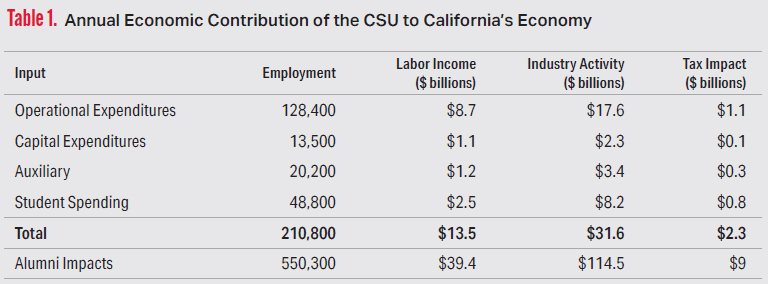
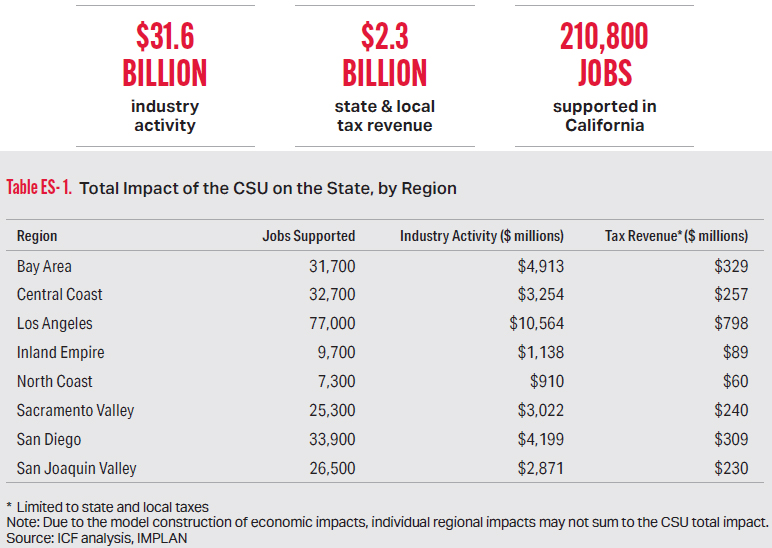
The report, Moving California Forward: The Economic Power of the CSU, details the role the CSU plays in strengthening the state’s key industries and preparing a skilled workforce essential to driving economic vitality. The report finds that in 2023–24 alone, CSU-related spending contributed more than $20 billion directly to California’s economy, generating $31.6 billion in statewide industry activity, supporting 210,800 jobs, and producing $2.3 billion in state and local tax revenue.

“This comprehensive report clearly demonstrates that resources entrusted to the CSU should not be considered an expenditure, but rather an investment – and an investment with a powerful and tangible return,” said CSU Chancellor Mildred García. “Importantly, the report measures not only dollars, jobs and industry activity, but also the CSU’s impact on our students’ lives and families, our contributions as a research powerhouse, and the countless benefits our universities deliver to our workforce, to communities across California, and to our nation.”

Source: CSU

“Education opens doors — and there is no greater or more prestigious educational system than California’s public universities,” said Governor Gavin Newsom. “These schools are a lifeline for first-generation and working-class students and channel vital talent straight into our workforce. From classrooms to clinics, fields to film sets, CSU graduates power the services, industries, and innovation that make California dominate and thrive.”

“Across California, the CSU is moving California and the state’s workforce forward,” said Stewart Knox, secretary of the California Labor & Workforce Development Agency. “Nearly half of all bachelor’s degrees awarded in our state come from the CSU – preparing talent that meets California’s evolving workforce needs in every region and major industry.”

Source: CSU 2025 Economic Impact Report

A Strong Return on Investment for California 

For every dollar California invests in the CSU, the system generates $7.69 in statewide industry activity, which increases to $35.53 when factoring in alumni earnings, the report finds. CSU alumni, whose incremental earnings totaled $97.8 billion in 2024, create a ripple effect across industries and communities statewide.

Beyond the financial return, CSU’s role in educating more than half a million students delivers transformative social value by expanding access to higher education and accelerating upward mobility for the nearly 125,000 graduates who walk the commencement stage every year prepared to contribute and lead in their fields.

Source: CSU’s 2025 Economic Impact Report

Powering California’s Workforce and Key Industries

As the producer of nearly half of California’s bachelor’s degrees, the CSU is providing the diverse, educated and skilled professionals required to meet workforce needs in the state’s top in-demand industries. Specifically, within the education and health services and professional and business services sectors, which together account for more than 1 million projected job openings by 2033, the CSU is producing over half of related bachelor’s degrees. CSU’s engineering and construction program also provides more than half of the state’s general engineering graduates, which supports infrastructure growth.

In the 2023-24 academic year, CSU campuses conferred:

  • 29,000 degrees in health care (representing 46% of such degrees awarded in the state)
  • 23,000 degrees in business and professional services (48%)
  • 14,000 degrees in humanities and social sciences (56%)

The CSU also produces:

  • 78% of the state’s agriculture graduates
  • 46% of graduates in public policy and criminal justice
  • 49% of graduates in media, culture and design
  • 37% of new multiple subject credentialed teachers

Source: CSU’s 2025 Economic Impact Report

Regional Impact: Strengthening Communities Across California 

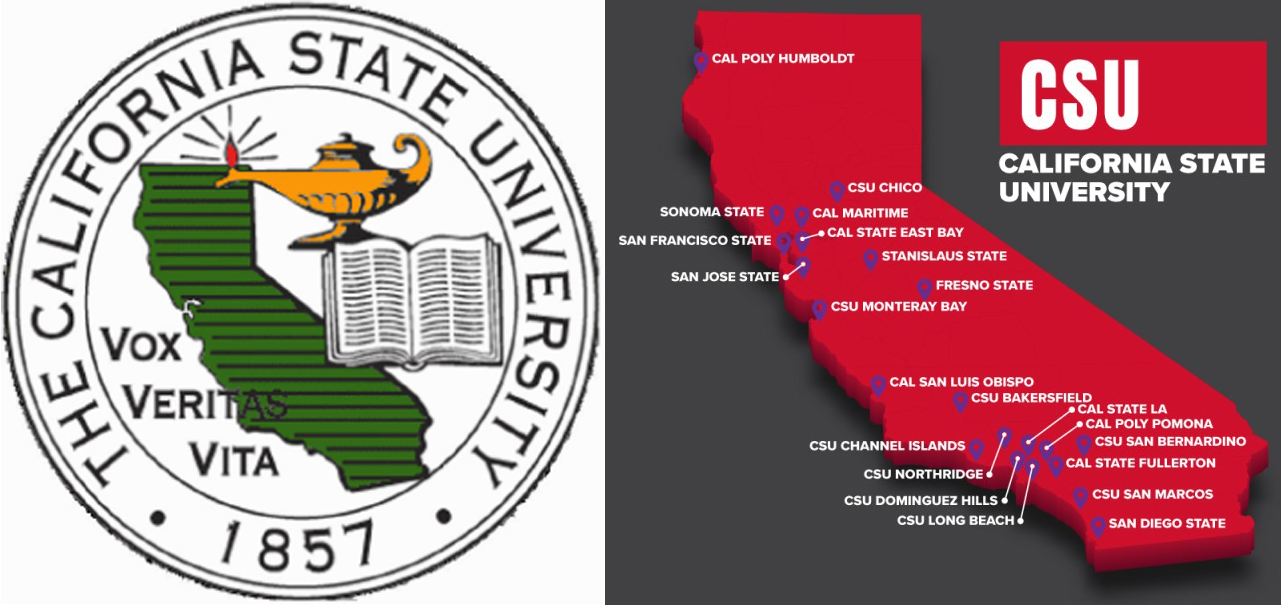
Each of the CSU’s 22 universities serve as anchor institutions, fueling job creation, innovation, and opportunity in their local community. The Economic Impact Report highlights significant regional benefits:

  • Bay Area: $4.8 billion in industry activity and 31,000 jobs supported.
  • Central Coast: $3 billion in industry activity and 31,500 jobs supported.
  • Inland Empire: $1 billion in industry activity and 9,218 jobs supported.
  • Los Angeles: $10 billion in industry activity and 74,900 jobs supported
  • North Coast: $718 million in industry activity and 6,598 jobs supported.
  • Sacramento Valley: $2.8 billion in industry activity and 24,613 jobs supported.
  • San Diego: $3.9 billion in industry activity and 32,760 jobs supported.
  • San Joaquin Valley: $2.6 billion in industry activity and 25,300 jobs supported.

These impacts demonstrate how the CSU powers California’s regional economies, ensuring that every corner of the state benefits from higher education, innovation, and workforce development.

Source: CSU’s 2025 Economic Impact Report

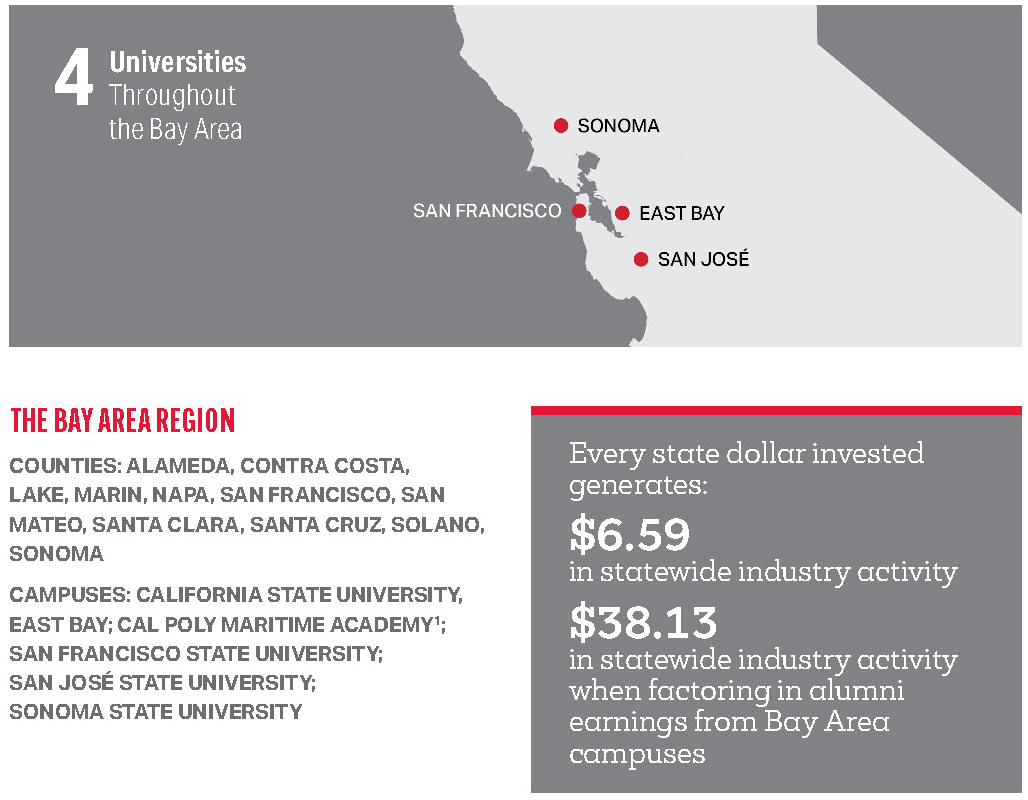
Bay Area Regional Impact

CSU spending through campus operations, capital investment and student spending on and off campus stimulate the economy of the Bay Area region. As detailed in Appendix B of the report, the direct spending for each campus is estimated using CSU financial data, enrollment figures, average student budget estimates and an analysis of California-based alumni earnings over time.

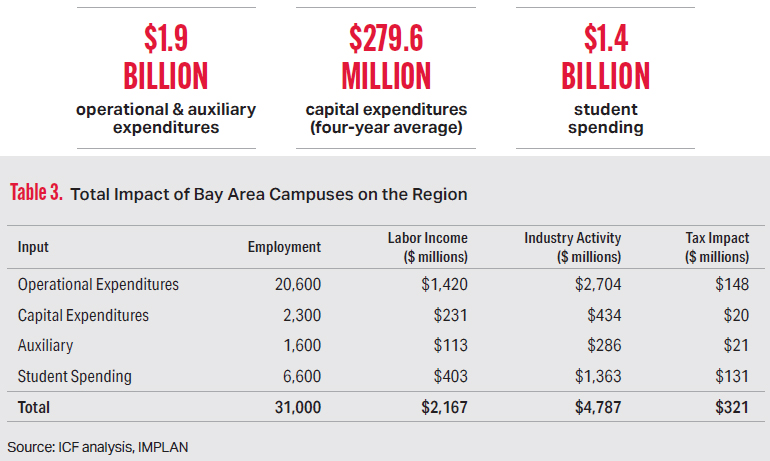
CSUs in the Bay Area had a direct spend of over $3.6 billion during the 2023-24 academic year, comprising the following four categories:

  • $1.7 billion on operational expenditures
  • $279.6 million on capital expenditures (four-year average)
  • $206.2 million on auxiliary expenditures
  • $1.4 billion on student expenditures

Many CSU alumni from campuses in the Bay Area region remain in California, contributing to the local economy. In 2024, they earned $19.5 billion in incremental earnings due to their CSU degree. That money, when spent in the local economy, sparked secondary impacts.

Source: CSU’s 2025 Economic Impact Report

During the 2023-24 academic year, CSUs in the Bay Area region generated a substantial economic impact across the region, supporting over 31,000 jobs and contributing $2.2 billion in labor income. Campus operational activities were the largest driver, accounting for more than 20,000 jobs and $1.4 billion in wages. Student spending and auxiliary services supported more than 8,000 jobs and injected nearly $1.7 billion into industry activity. Capital expenditures, while smaller in scale, supported 2,300 jobs and over $230 million in wages. Altogether, these activities culminated in $4.8 billion in industry activity and $321 million in tax revenues, underscoring the campuses’ vital role in regional economic vitality and public finance. Table 3 provides a further breakdown of results.

For more information, view CSU’s 2025 Economic Impact Report at calstate.edu/impact.

About the California State University

The California State University is the nation’s largest four-year public university system, providing transformational opportunities for upward mobility to more than 470,000 students from all socioeconomic backgrounds. More than half of CSU students are from traditionally underrepresented backgrounds, and more than one-quarter of undergraduates are first-generation college students. Because the CSU’s 22 universities* provide a high-quality education at an incredible value, they are rated among the best in the nation for promoting social mobility in national college rankings from U.S. News & World Report, the Wall Street Journal and Washington Monthly. The CSU powers California and the nation, sending nearly 125,000 career-ready graduates into the workforce each year. In fact, one in every 20 Americans holding a college degree earned it at the CSU. Connect with and learn more about the CSU in the CSU newsroom.​

* Transition to 22 universities in progress (Cal Poly SLO and Cal Maritime integrating). The integration process is anticipated to be complete by fall 2026. 

Filed Under: Economy, Education, News, State of California

MTC, ABAG release draft of new long-range plan for Bay Area

October 22, 2025 By Publisher Leave a Comment

Source: Plan Bay Area

Public comment through Dec. 18 on Draft Plan Bay Area 2050+, EIR for housing, transportation, economic development and the environment

East Bay Webinar Nov. 5

By Veronica Cummings, Principal Public Information Officer, Engagement & John Goodwin, Assistant Director of Communications, Metropolitan Transportation Commission 

After more than two years of public discussion, technical analyses and refinement, the Metropolitan Transportation Commission (MTC) and the Association of Bay Area Governments (ABAG) today released Draft Plan Bay Area 2050+ and the Plan Bay Area 2050+ Draft Environmental Impact Report for public review and comment.

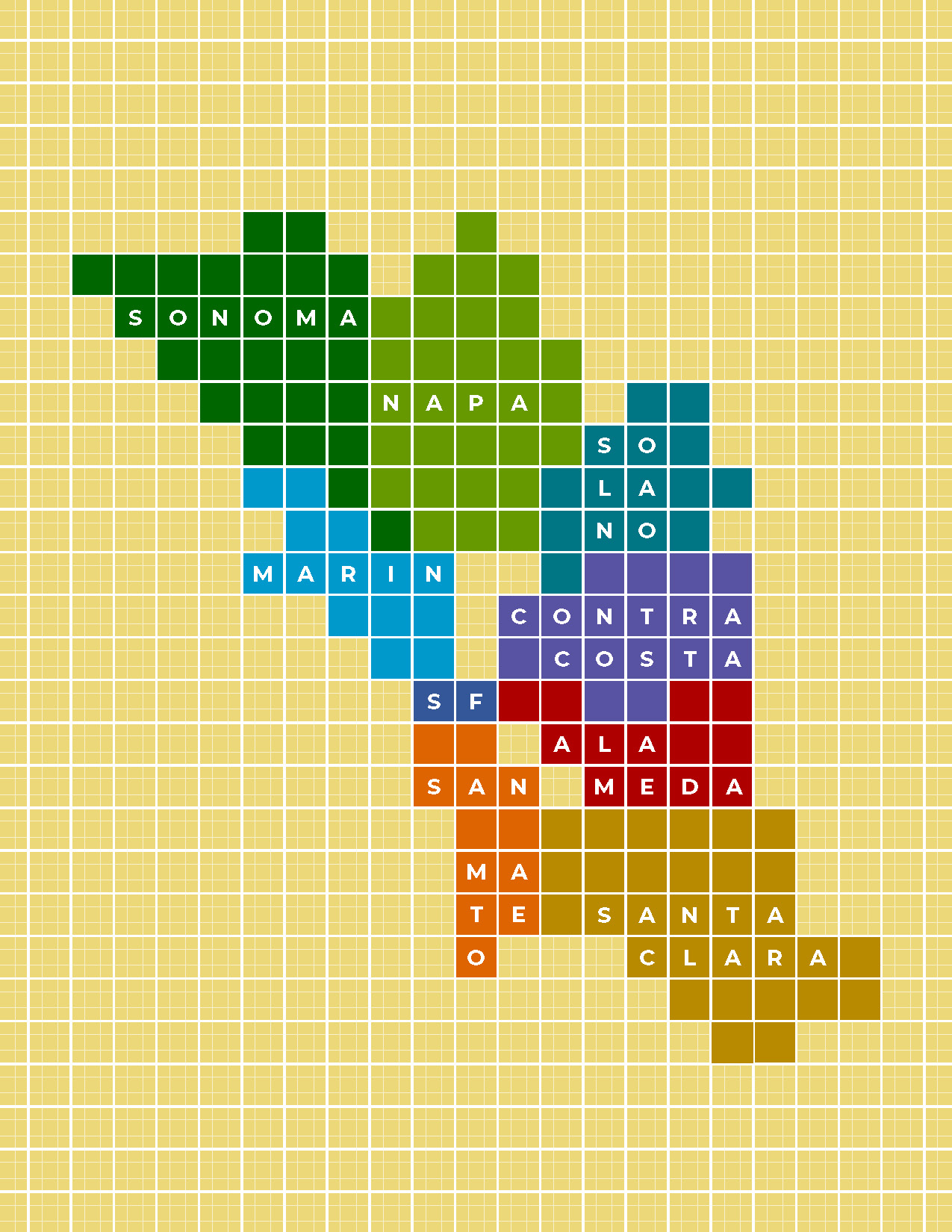
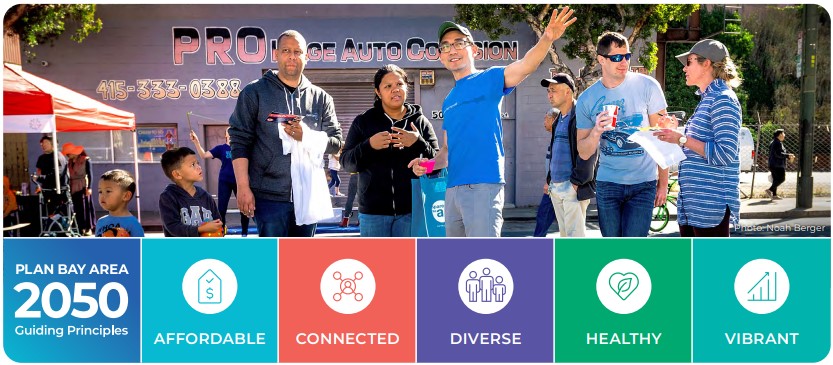
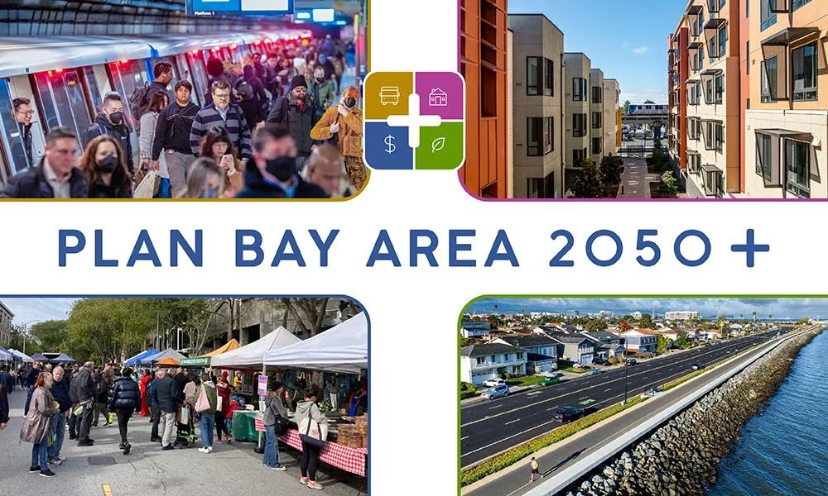
Draft Plan Bay Area 2050+ charts a course for the future of the Bay Area over the next 25 years. Designed to guide growth and investment across the region’s nine counties and 101 cities, the latest plan aims to advance an integrated vision for a Bay Area that is affordable, connected, diverse, healthy and vibrant for all. The plan contains 35 strategies for public policies and investments that can be implemented to help the Bay Area build more homes, reduce commute times, and create vibrant downtowns and natural areas for everyone to enjoy. These strategies also aim to keep people safe from natural hazards, support a strong economy and provide stable housing.

Unique to this plan cycle is Transit 2050+, a parallel and first-of-its-kind planning effort conducted by MTC and ABAG in partnership with Bay Area transit agencies to re-envision the future of Bay Area public transit.

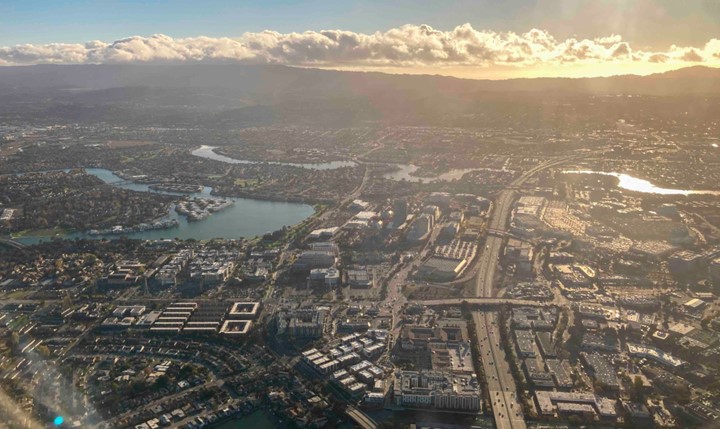
Plan Bay Area includes all nine Bay Area counties and 101 cities. Source: Plan Bay Area

MTC and ABAG have scheduled a series of webinars and public hearings for comment on Draft Plan Bay Area 2050+ and associated supplemental reports, as well as on the Draft Environmental Impact Report for Plan Bay Area 2050+. All interested people, agencies and other organizations are encouraged to attend a webinar or public hearing, where they can ask questions and offer comments on these documents. Full event details are listed below:

  • Webinar #1 — North Bay
    Wednesday, October 29, 2025
    12-1:30 p.m.
    Zoom link: https://bit.ly/northbaywebinar
  • Webinar ID: 892 3077 8001
  • Passcode: 256814
  • 888-788-0099 US Toll Free
  • Webinar #2 — West Bay
    Wednesday, October 29, 2025
    6-7:30 p.m.
    Zoom link: https://bit.ly/westbaywebinar
    Webinar ID: 831 4140 5598
    Passcode: 096944
    888-788-0099 US Toll Free
  • Webinar #3 — South Bay
    Thursday, October 30, 2025
    6-7:30 p.m.
    Zoom link: https://bit.ly/southbaywebinar
    Webinar ID: 822 2561 7467
    Passcode: 356845
    888-788-0099 US Toll Free
  • Webinar #4 — East Bay
    Wednesday, November 5, 2025
    6-7:30 p.m.
    Zoom link: https://bit.ly/eastbaywebinar
    Webinar ID: 869 8283 4999
    Passcode: 682098
    888-788-0099 US Toll Free

In addition to these webinars, MTC and ABAG will host three public hearings around the Bay Area to provide opportunities for all interested agencies, organizations and individuals to comment on the Draft Plan and Draft Environmental Impact Report. The full list of hearings is as follows:

  • Public Hearing #1 — MTC Planning Committee and ABAG Administrative Committee
    Friday, November 14, 2025, at 9:40 a.m. or upon the conclusion of the Bay Area Infrastructure Financing Authority Network and Operations Committee, whichever is later.
    Bay Area Metro Center -or- Zoom
    Boardroom, 1st Floor
    375 Beale Street, San Francisco  Instructions to join by Zoom
  • Public Hearing #2 — Fremont
    Wednesday, December 3, 2025, at 6 p.m.
    Olive Hyde Art Center and Gallery -or- Zoom
    123 Washington Boulevard, Fremont
    Zoom link: https://bit.ly/drafthearing2
    Webinar ID: 875 7625 3306
    Passcode: 178983
    888 788 0099 US Toll Free
  • Public Hearing #3 — Novato
    Thursday, December 4, 2025, at 6 p.m.
    Best Western Plus Novato Oaks Inn -or- Zoom
    215 Alameda del Prado, Novato
    Zoom link: https://bit.ly/drafthearing3
    Webinar ID: 898 0347 9624
  • Passcode: 129009
  • 888 788 0099 US Toll Free

Interested Bay Area residents, agencies and organizations also are encouraged to view and comment on the draft plan online at planbayarea.org/draftplan. Comments will be reviewed by officials from both ABAG and MTC as they consider the adoption of Final Plan Bay Area 2050+, slated for early 2026.

Written comments will be accepted via mail to MTC Public Information Office, Attn: Plan Bay Area -or- Draft EIR Comments, 375 Beale Street, Suite 800, San Francisco, CA, 94105; or via email (Draft Plan Bay Area 2050+ inbox: info@planbayarea.org; Draft EIR inbox: eircomments@bayareametro.gov). Comments by phone can made at (415) 778-2292.

The comment period for all documents will close Dec. 18, 2025, at 5 p.m.

Questions? Visit planbayarea.org, email info@planbayarea.org or call (415) 778-6757.

Accessible Meetings

Do you need an interpreter or any other assistance to participate? Please call (415) 778-6757. For TDD or hearing impaired, call 711, California Relay Service, or (800) 735-2929 (TTY), (800) 735-2922 (voice) and ask to be relayed to (415) 778-6700. We require at least three working days’ notice to accommodate requests.

¿Necesita un intérprete u otra asistencia para participar? Por favor llámenos con tres días de anticipación al (415) 778-6757. Para telecomunicaciones para personas sordas y discapacitadas, favor de llamar al 711, el Servicio de Retransmisión de California (CRS) para TTY/VCO/HCO a Voz o para Voz a TTY/VCO/HCO al (800) 855-3000 y pedir que lo retrasmitan al (415) 778-6700.

您是否需要口譯或任何其他協助才能參加?請致電(415)778-6757。若需使用TDD或為聽障人士人士,請致電711,加州轉接服務,或(800)735-2929(TTY),(800)735-2922(語音),然後要求轉接至(415)778-6700。請至少提前三個工作日提出申請,以便我們能為您提供適當的口譯安排。

ABAG is the council of governments and the regional planning agency for the 101 cities and towns, and nine counties of the Bay Area. MTC is the transportation planning, financing and coordinating agency for the nine-county San Francisco Bay Area.

Filed Under: Bay Area, Economy, Growth & Development, Housing, Jobs & Economic Development, News, Transportation

Draft Plan Bay Area 2050+ Blueprint includes 840,000 more affordable homes, guaranteed monthly income

July 8, 2024 By Publisher Leave a Comment

Source: MTC & ABAG

“Demonstrates continued progress toward key plan goals” of housing, transportation, economy and environment in the nine counties including “a gradual shift away from the use of single-occupancy cars and trucks.”

Includes over $1.2 trillion to maintain existing transportation system, build and buy affordable housing, “Provide an income-based monthly payment to all Bay Area households” and to “Adapt to Sea Level Rise.”

Also working on parallel Transit 2050+ plan

Public input opportunities

By MTC & ABAG staff

The Metropolitan Transportation Commission (MTC)’s and the Association of Bay Area Governments (ABAG)’s newly released Plan Bay Area 2050+ Draft Blueprint analysis outlines how the nine-county region can advance an affordable, connected, diverse, healthy and vibrant Bay Area for all residents by the year 2050.

The Blueprint is essentially a draft version of the plan. It is a foundational framework for a future vision of the Bay Area that includes:

  • Forecasts and Assumptionsabout the Bay Area’s future (population, jobs, financial needs and revenues, sea level rise, etc.);
  • Strategiesfor public investment and policy reform; and
  • Geographieswhere future housing and/or job growth can be focused under the plan’s Strategies.

The Blueprint is then analyzed through computer-generated models and simulations to measure how successful the strategies are in achieving shared goals for the future, such as housing affordability, reduced greenhouse gas emissions and much more.

As the first draft of the Bay Area’s next long-range plan, the Draft Blueprint demonstrates significant progress toward reaching key goals for housing affordability, post-pandemic economic recovery and environmental health and sustainability. This includes the addition of 840,000 affordable homes, with a total of nearly 1 million permanently affordable homes regionwide by 2050; a 17 percent increase in the number of lower-income households living within a half-mile of transit service; and a gradual shift away from the use of single-occupancy cars and trucks. MTC and ABAG planning staff stress that the expected progress would only come about if all the strategies to be detailed in Plan Bay Area 2050+ are implemented.

Source: MTC & ABAG

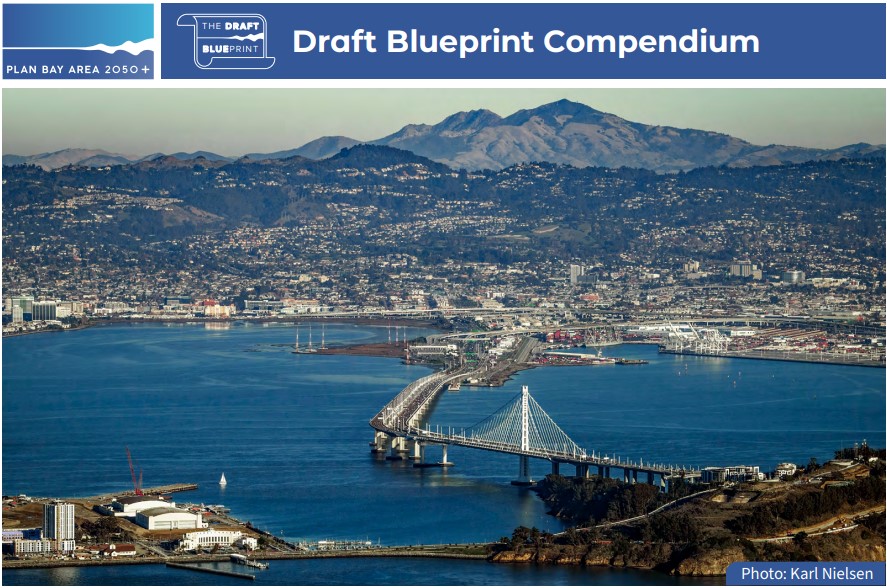
The full range of performance and equity outcomes from the Plan Bay Area 2050+ Draft Blueprint analysis may be found in the Draft Blueprint Compendium, which also demonstrates how the Bay Area can accommodate some 1.3 million additional jobs and nearly 1 million new households by the year 2050.

The Compendium shows the following proposed budget highlights for three of the Plan’s categories:

Transportation Strategies

$382 billion for T1 – Operate and Maintain the Existing System. Commit to operate and maintain the Bay Area’s roads and transit infrastructure while transitioning to zero-emission transit vehicles.

Housing Strategies

$250 billion for H2 – Preserve Existing Affordable Housing. Acquire homes currently affordable to low- and middle-income residents for preservation as permanently deed-restricted affordable housing, including opportunities for resident ownership.

$302 billion for H4 – Build Adequate Affordable Housing to Ensure Homes for All. Construct enough deed-restricted affordable homes to fill the existing gap in housing for the unhoused community and to meet the needs of low-income households.

Economic Strategies

$205 billion for EC1 – Implement a Statewide Guaranteed Income. Provide an income-based monthly payment to all Bay Area households to improve family stability, promote economic mobility and increase consumer spending.

Environment Strategies

$94 billion for EN1 – Adapt to Sea Level Rise. Adapt shoreline communities, infrastructure and ecosystems affected by sea level rise.

These outcomes were first presented at the May meeting of MTC’s Policy Advisory Council, and then at the June 14 joint meeting of the MTC Planning Committee and the ABAG Administrative Committee.

The Draft Blueprint also identifies challenges that will have to be addressed as part of the Final Blueprint process over the coming months. More work is needed to reduce greenhouse gas emissions as well as to identify transportation investment priorities for the plan’s fiscally constrained transportation project list. The Draft Blueprint does not include significant transportation expansion or enhancement investments, as these will be identified through Transit 2050+ and the Final Blueprint process.

Photo source: MTC. Credit: Joey Kotfica

What’s Next?

In light of the pandemic’s lasting impact to public transportation, MTC is collaborating with the region’s transit operators on Transit 2050+ , a parallel planning effort to re-envision the future of public transit in the nine-county Bay Area. Two key updates in this process will be released in July: the Draft Project Performance Assessment and the Transit 2050+ Draft Network. It will be a comprehensive overhaul of the six transit-related strategies included in Plan Bay Area 2050.

The Draft Project Performance Assessment will analyze the costs and benefits of major capacity-increasing projects being considered for inclusion in Plan Bay Area 2050+, the vast majority of which are transit projects. These investments, including those adopted in Plan Bay Area 2050, now face a significantly reduced projected revenue stream. This is due largely to slow post-pandemic transit ridership recovery and other economic changes.

The Transit 2050+ Draft Network will identify strategies and investments (capital and operating) envisioned through 2035 and over the long term through 2050. Development of the Draft Network has been guided in part by public engagement conducted in summer 2023, when nearly 3,000 Bay Area residents provided input on the future of Bay Area transit. The Draft Network also is being informed by an existing needs and gaps assessment conducted in partnership with local transit agencies, the Draft Project Performance Assessment, local priorities and improvements to transit network connectivity and customer experience.

Source: MTC & ABAG

Summer 2024 Public Engagement

Beginning in August, MTC staff will conduct a second round of public engagement for Plan Bay Area 2050+, the content of which will focus on:

  • Sharing both the Draft Blueprint outcomes and the Transit 2050+ Draft Network
  • Gathering feedback to inform the development of the Final Blueprint and address identified Draft Blueprint challenges
  • Identifying early priorities for implementing Plan Bay Area 2050+

There will be a variety of in-person and virtual opportunities for the public to participate. Stay up-to-date on upcoming engagement activities in your community by subscribing to the Plan Bay Area 2050+ mailing list. There also will be dedicated engagement opportunities for technical partners and stakeholders, which will be publicized on the Plan Bay Area website’s Partner Engagement page.

Following an analysis of public input, the Commission and the ABAG Executive Board are expected to consider approval of the Final Blueprint in late 2024.

Allen D. Payton contributed to this report.
Filed Under: Bay Area, Economy, Environment, Government, Growth & Development, Infrastructure, News, Transportation

MTC, ABAG approve Plan Bay Area 2050+ Draft Blueprint Strategies and Growth Geographies

January 30, 2024 By Publisher Leave a Comment

Source: Plan Bay Area 2050+

Include non-transit transportation, environment, housing and economy strategy refinements

The Joint Metropolitan Transportation Commission (MTC) Planning Committee with the Association of Bay Area Governments (ABAG) Administrative Committee on Jan. 12, 2024 approved the revised Plan Bay Area 2050+ Draft Blueprint strategies and Growth Geographies.  This action enables staff to further study the strategies’ performance in meeting critical regional goals for an affordable, connected, diverse, healthy and vibrant Bay Area for all. Staff are aiming for adoption of the Plan Bay Area 2050+ Final Blueprint in summer 2024.

Given Plan Bay Area 2050’s solid foundation of 35 strategies, the Draft Blueprint phase for Plan Bay Area 2050+ is focusing on making targeted refinements to select plan strategies. These refinements reflect Plan Bay Area 2050’s implementation progress, the post-pandemic planning context and insights gathered during engagement with the public and partners in summer 2023.

What is the Plan Bay Area 2050+ Blueprint?

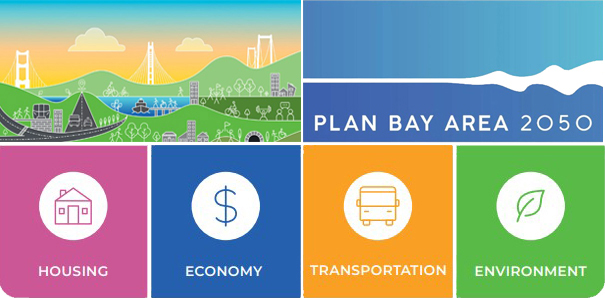
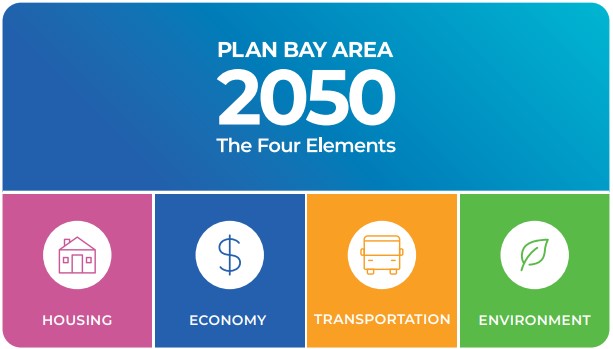
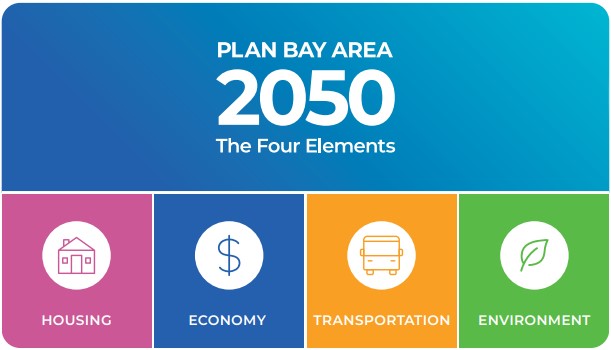
The Plan Bay Area 2050+ Blueprint will integrate strategies across the four elements of the plan — the economy, the environment, housing and transportation — to create a more equitable and resilient future for all.

Beginning in summer 2023 and wrapping up in late 2024, staff will develop the Blueprint over two phases: the Draft Blueprint and the Final Blueprint. Given Plan Bay Area 2050’s solid foundation of 35 strategies, the Draft Blueprint phase for Plan Bay Area 2050+ will focus on making targeted refinements to select plan strategies.

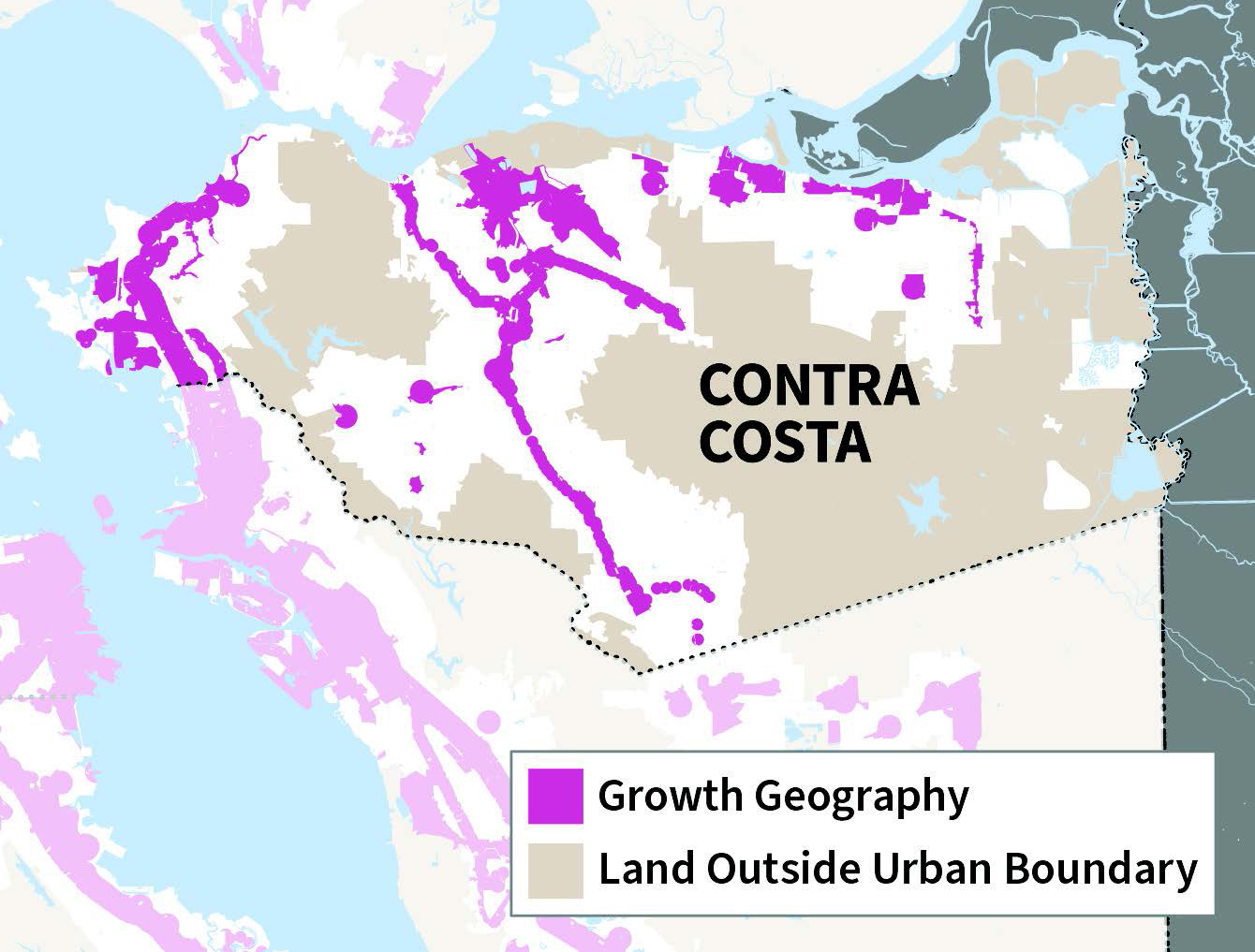
What are Growth Geographies?

Priority Development Areas — Places nominated by local governments served by transit and planned for new homes and jobs at densities necessary to support effective transit service.

Priority Production Areas — Industrial areas of importance to the regional economy and local communities that support middle-wage jobs.

Transit-Rich Areas — Places near rail, ferry or frequent bus service that were not already identified as Priority Development Areas.

High-Resource Areas — State-identified places with well-resourced schools and access to jobs and open space.

Staff previously shared proposed Draft Blueprint strategy refinements in October and November 2023, detailing which of Plan Bay Area 2050’s 35 strategies were likely to see major, minor or no changes in Plan Bay Area 2050+. This month, the MTC and ABAG committees approved moving forward with revisions for further study and analysis, including:

  • Non-transit transportation strategy refinementsfocused on prioritizing equity considerations, adapting to tighter fiscal constraints, promoting active transportation and safety, and expanding pricing strategies;
  • Environment strategy refinementsfocused on further reducing greenhouse gas emissions and proactively adapting to climate change; and
  • Housing and economy strategy refinementsfocused on addressing pressing challenges of housing affordability, homelessness and access to opportunity.

At this time the Draft Blueprint only includes a handful of modified transportation strategies, pending the development of a fiscally constrained Transportation Project List, which will integrate recommendations from the ongoing parallel Transit 2050+ effort. The complete suite of revised transportation strategies will be integrated as part of the Final Blueprint in summer 2024.

The Joint ABAG and MTC Committee also approved targeted updates to the Growth Geographies that were adopted as part of Plan Bay Area 2050. Growth Geographies are places that Plan Bay Area prioritizes for future homes, jobs, services and amenities and serve as a component of the plan’s housing and economy elements. Specifically, draft Growth Geographies for Plan Bay Area 2050+ will include five new Priority Development Areas (PDAs) and 16 modified existing PDAs nominated by local Bay Area jurisdictions; reflect up-to-date information on transit service, natural hazards and demographics; and integrate areas subject to MTC’s revised Transit Oriented Communities Policy.

The Draft Blueprint approval comes six months after MTC and ABAG kicked off the limited and focused update to Plan Bay Area 2050. In November 2023, staff shared progress-to-date with policymakers, including findings from the first round of engagement, core planning assumptions, the draft Regional Growth Forecast, a financial needs and revenue analyses and proposed strategy refinements.

The next round of public and partner organization engagement activities, which will inform the development of the Plan Bay Area 2050+ Final Blueprint, is planned to begin in spring 2024. MTC and the ABAG Executive Board are expected to approve Final Blueprint strategies in summer 2024.

Learn more about the Plan Bay Area 2050+ Draft Blueprint strategies and Growth Geographies. For additional technical resources, please visit the Plan Bay Area 2050+ Draft Blueprint Documents page on our website.

Filed Under: Bay Area, Business, Economy, Government, Homeless, Industry, Jobs & Economic Development, News, Transportation

Plan Bay Area 2050+ Draft Blueprint: Tell us what you think

August 17, 2023 By Publisher Leave a Comment

Creating the Blueprint is a key step in developing Plan Bay Area 2050+.

Public engagement is a fundamental element of the plan update process.

Sept. 6th workshop in Contra Costa; Deadline for comment: September 7, 2023

The Plan Bay Area 2050+ Blueprint will integrate strategies across the four elements of the plan — the economy, the environment, housing and transportation — to create a more equitable and resilient future for all.

Beginning in summer 2023 and wrapping up in late 2024, staff will develop the Blueprint over two phases: the Draft Blueprint and the Final Blueprint. Given Plan Bay Area 2050’s solid foundation of 35 strategies, the Draft Blueprint phase for Plan Bay Area 2050+ will focus on making targeted refinements to select plan strategies. (See Plan Bay Area 2050 Executive Summary)

Assumptions for the select Blueprint strategies will be refined to reflect ongoing implementation efforts from Plan Bay Area 2050, while also leveraging findings from previous planning efforts that may be relevant to the post-COVID environment.

Equity and performance analyses will also be conducted during the Draft Blueprint phase to evaluate how the plan’s strategies are supporting progress towards making the Bay Area more affordable, connected, diverse, healthy and vibrant for all.

Furthermore, Transit 2050+ — the comprehensive re-thinking of the six transit-related strategies in Plan Bay Area 2050’s transportation element — will develop an integrated regional transit network that will be incorporated into the Final Blueprint.

While still remaining fiscally constrained per federal planning requirements, the focused plan update approach will consider whether to pursue targeted updates to — or to reaffirm — the Regional Growth Forecast (while maintaining its forecast methodology), as well as to the External Forces, the Growth Geographies and the Needs and Revenue Forecasts.

Culminating in late 2024, the Metropolitan Transportation Commission (MTC) and the Association of Bay Area Governments (ABAG) will consider adoption of the Final Blueprint, which will then move forward in the plan update process as the preferred alternative for environmental review.

Getting Involved

Creating the Blueprint is a key first step toward updating the plan itself, and thus the Blueprint planning phase will require iteration and deep engagement of the public, partners and elected officials.

A first step in developing the Blueprint is to better understand what has changed as the region emerges from the pandemic. This summer, MTC and ABAG staff will be traveling across the region to speak to the community to understand how life has changed for individuals as the Bay Area enters the “new normal.”

MTC and ABAG are taking input from community members and partners to help inform the development of the Draft Blueprint.

You can make your voice heard in a variety of ways! Attend a pop-up workshop near you; participate in our survey; or submit comments via email, telephone or mail.

Find an event near you and join the conversation to help staff better understand how the last three years have impacted life across the Bay Area.

Photo: Plan Bay Area

Participate in Our Survey

A first step in updating the plan is to better understand what has changed for you as the region emerges from the pandemic. MTC and ABAG want to learn how the “new normal” may be impacting your life.

  • Participate in the survey in English(link is external)
  • 快來參與中文版的問卷調查(link is external)
  • Participa en la encuesta en español(link is external)
  • Tham gia khảo sát bằng tiếng Việt(link is external)

The survey will close on September 7, 2023.

The survey also will help inform the development of Transit 2050+, a parallel long-range planning effort that will produce a first-of-its-kind plan to re-envision the future of the public transit network in the nine-county Bay Area, and the expenditure plan for a potential transportation revenue measure. The revenue measure is key in advancing implementation of Plan Bay Area.

Join a Pop-up Workshop

This summer, MTC and ABAG staff will be traveling across the region to speak to the community to understand how life has changed for individuals as the Bay Area emerges from the pandemic. Attend a pop-up workshop near you and tell us what the “new normal” means to you.

Contra Costa County

Diablo Valley College — Pleasant Hill Campus

Wednesday, September 6, 12 to 3 p.m.

321 Golf Club Road, Pleasant Hill, CA

About Plan Bay Area

Plan Bay Area is a long-range regional plan jointly developed and adopted by MTC and ABAG every four years.


Filed Under: Bay Area, Economy, Environment, Government, Growth & Development, Transportation

East County NAACP requests federal oversight of Antioch Police Department

April 17, 2023 By Publisher Leave a Comment

Says it’s “known as…the most corrupt police department in Contra Costa County”; wants officers in jail

It has taken me more than two days of reading through the vile, malicious texts written by 20% of the Antioch Police Officers.  Citizens are appalled by Officers who were sworn to protect and serve the residents of Antioch.

These Police Officers are under investigation on paid administrative leave, this is unacceptable. Residents are paying for moderate salaries to the Police Officers with funds from Measure C and W. These officers should be proud they have risen above the corruption of the Oakland Riders.

Antioch PD has a known reputation in the Bay Area as the most corrupt police department in Contra Costa County.  The NAACP has reported numerous complaints about the policing practices of the Antioch Police Department. While trying to retrieve information from the department, there was always the blue wall of stonewalling done, even with the Chief of Police Tammany Brooks.

We have a district attorney who has heard the pleas of residents of police brutality by this Police Department. Many thanks to the DA and FBI unit for coming to the aid of these victims.

No apologies from the Police Department, City Manager, Chief of Police or the City Council of Antioch will ever return the lives of a child or loved one to their families or return the life loss of an innocently incarcerated resident.

Citizen expectations are transparency in the investigative process. We are asking for indictments, convictions, and prison time suitable for the crime committed to those who were injured or injuries resulting in death.

Our request would be no possibility of “Pass Go and collect generous pensions”. We are no longer accepting light sentences; we want police officers who commit such heinous crimes to go directly to jail. These officers should never have the opportunity of returning to any aspect of law enforcement again.

East County NAACP is requesting Federal Oversight of the Antioch Police Department immediately.

Odessa Lefrancois, President

East County NAACP


Filed Under: Crime, Economy, News, Police

ABAG, MTC adopt final Plan Bay Area 2050 and Environmental Impact Report

October 25, 2021 By Publisher 1 Comment

“$1.4 trillion vision for a more equitable and resilient future for Bay Area residents” in the areas of housing, the economy, transportation and the environment

“Roadmap toward a more affordable, connected, diverse, healthy and vibrant region for all”

Includes “strategies that would produce more than 1 million new permanently affordable homes” and an effort to “Implement a statewide universal basic income” to “provide an average $500 per month payment to all Bay Area households”

The Association of Bay Area Governments (ABAG) and the Metropolitan Transportation Commission (MTC), during their joint meeting Thursday evening, Oct. 21, 2021, unanimously adopted Plan Bay Area 2050 and its associated Environmental Impact Report. The unanimous votes by both boards cap a nearly four-year process during which more than 20,000 Bay Area residents contributed to the development of the new plan.

All six representatives from Contra Costa County, including Supervisors Candace Andersen and Karen Mitchoff, Richmond Mayor Tom Butt and San Ramon Councilman Dave Hudson, who serve on ABAG, as well as Supervisor Federal Glover and Contra Costa City Representative Amy Worth, Mayor of Orinda, who serve on MTC, voted to adopt the plan.

Defined by 35 strategies for housing, transportation, economic vitality and the environment, Plan Bay Area 2050 lays out a $1.4 trillion vision for policies and investments to make the nine-county region more affordable, connected, diverse, healthy and economically vibrant for all its residents through 2050 and beyond. From housing strategies that would produce more than 1 million new permanently affordable homes by 2050 to transit-fare reforms that would reduce cost burdens for riders with low incomes and paths to economic mobility through job training and a universal basic income, the goal of a more equitable Bay Area is interwoven throughout the plan. With a groundbreaking focus on climate change, strategies also are crafted for resilience against future uncertainties, including protection from hazards such sea-level rise and wildfires.

It is a long-range plan charting the course for the future of the nine-county San Francisco Bay Area. Plan Bay Area 2050 will focus on four key issues—the economy, the environment, housing and transportation—and will identify a path to make the Bay Area more equitable for all residents and more resilient in the face of unexpected challenges. Building on the work of the Horizon initiative, this new regional plan outlines strategies for growth and investment through the year 2050, while simultaneously striving to meet and exceed federal and state requirements. The Metropolitan Transportation Commission and the Association of Bay Area Governments are expected to adopt Plan Bay Area 2050 in fall 2021.

“Plan Bay Area 2050 reflects a shared vision that can’t be implemented by any single agency,” explained ABAG Executive Board President and Berkeley Mayor Jesse Arreguín. “To bring all these strategies to fruition will require ABAG and MTC to strengthen our existing partnerships and to form new ones — not just with our cities and counties and the state government, but also with the federal government, businesses and nonprofits.”

What will Plan Bay Area 2050 do? What won’t it do?

Plan Bay Area 2050 outlines a roadmap for the Bay Area’s future. While it pinpoints policies and investments necessary to advance the goal of a more affordable, connected, diverse, healthy and vibrant Bay Area, Plan Bay Area 2050 neither funds specific infrastructure projects nor changes local policies. Cities and counties retain all local land use authority. Plan Bay Area 2050 does identify a potential path forward for future investments – including infrastructure to improve our transportation system and to protect communities from rising sea levels – as well as the types of public policies necessary to realize a future growth pattern for housing and jobs.

Ultimately, Plan Bay Area 2050 reflects a shared vision – one that cannot be implemented by any single organization or government agency. Only through partnership with local, state and federal governments – as well as with businesses and non-profit organizations – will the Plan’s vision come to fruition. Before the Plan is adopted in 2021, MTC and ABAG, along with partner organizations, will create an implementation plan that will advance the strategies outlined in Plan Bay Area 2050.

MTC Chair and Napa County Supervisor Alfredo Pedroza acknowledged the work ahead. “Building and preserving affordable housing. Adapting to sea level rise. Getting more people closer to their jobs and more jobs closer to the people. Sharing prosperity equitably. All of these are big lifts. But the new plan can serve as a north star for the Bay Area’s journey to 2050.”

Among the features that distinguish Plan Bay Area 2050 from previous regional plans is an associated Implementation Plan that details the specific actions ABAG and MTC can take in the next five years to put the new plan into action.

“The Implementation Plan is a commitment to do hard things, not just think about them,” said ABAG-MTC Executive Director Therese W. McMillan. “Even if these steps have to be taken incrementally, they will lead us to a more equitable and resilient Bay Area.”

Housing Strategies

Costs for housing are estimated at $468 billion, with $237 billion budget to preserve existing affordable housing by acquiring “homes currently affordable to low- and middle-income residents for preservation as permanently deed-restricted affordable housing”. An additional $219 billion is budgeted for new, deed-restricted affordable housing and $2 billion to “further strengthen renter protections beyond state law” by limiting “annual rent increases to the rate of inflation, while exempting units less than 10 years old.”

Economic Strategies

The total cost for economic strategies in the plan is $234 billion. Of that amount $205 billion is budgeted to “Implement a statewide universal basic income” and “provide an average $500 per month payment to all Bay Area households to improve family stability, promote economic mobility and increase consumer spending.”

Transportation Strategies

The plan projects to spend a total of $578 billion is projected to be spent on transportation over the next 20 years, with most of that, $389 billion, to “restore, operate and maintain the existing system”. An additional $81 billion will be spent to “expand and modernize the regional rail network” to “better connect communities while increasing frequencies by advancing the Link21 new transbay rail crossing, BART to Silicon Valley Phase 2, Valley Link, Caltrain Downtown Rail Extension and Caltrain/High-Speed Rail grade separations, among other projects.” The third largest budget item for transportation is $32 billion to “enhance local transit frequency, capacity and reliability. Improve the quality and availability of local bus and light rail service, with new bus rapid transit lines, South Bay light rail extensions, and frequency increases focused in lower-income communities.”

Environmental Strategies

A total of $108 billion is programmed for Environmental Strategies. The largest portion of that is $30 billion to “modernize and expand parks, trails and recreation facilities”. An additional $19 billion is budgeted to “adapt to sea level rise” by protecting affected “shoreline communities…prioritizing low-cost, high-benefit solutions and providing additional support to vulnerable populations.

In addition, the plan includes $18 billion to “fund energy upgrades to enable carbon neutrality in all existing commercial and public buildings” through “electrification and resilient power system upgrades”, and another $15 billion to “provide means-based financial support to retrofit existing residential buildings.” To “protect and manage high-value conservation lands”, an additional $15 billion is included in the plan.

The adopted final Plan Bay Area 2050, the EIR, and all the supplemental reports accompanying the new plan are available online at planbayarea.org/finalplan2050.

ABAG is the council of governments and the regional planning agency for the 101 cities and towns, and nine counties of the Bay Area. MTC is the transportation planning, financing and coordinating agency for the nine-county San Francisco Bay Area.

Filed Under: Bay Area, Economy, Environment, Government, Growth & Development, News, Transportation

Public workshops, hearings announced for Draft Plan Bay Area 2050

May 26, 2021 By Publisher Leave a Comment

Regional plan for transportation, housing, the economy, and the environment

Interested agencies, organizations and individuals are invited by the Metropolitan Transportation Commission (MTC) and the Association of Bay Area Governments (ABAG) to comment on the Draft Plan Bay Area 2050. As required by state and federal law, MTC and ABAG have jointly developed this regional plan for transportation, housing, the economy, and the environment, which will serve as the San Francisco Bay Area’s Regional Transportation Plan (RTP) and Sustainable Communities Strategy (SCS) upon its adoption. Draft Plan Bay Area 2050 is defined by 35 integrated strategies designed to advance the region towards a more equitable and resilient future.

A Draft Environmental Impact Report (DEIR) prepared on the Draft Plan Bay Area 2050 will be subject to public review pursuant to a separate notice.

The following online public workshops have been scheduled to receive comment on the Draft Plan Bay Area 2050:

ONLINE PUBLIC WORKSHOP

East Bay Workshop
Contra Costa and Alameda Counties
Monday, June 14, 5:00 to 6:30 p.m.
https://bit.ly/33uXj0y
Passcode: 179826
Webinar ID: 862 3482 0389

ONLINE PUBLIC HEARINGS

Additionally, MTC and ABAG will hold three (3) public hearings to receive oral testimony and written comments about the Draft Plan Bay Area 2050. Copies of the draft plan are on file with the Secretary of the Board of MTC and open to public inspection at planbayarea.org/learnmore. Should you require a hard copy of the draft plan, please submit your request to info@bayareametro.gov or call 415-778-6757 and one will be mailed to you.

The first public hearing will be held during the regular meeting of the Joint MTC Planning Committee with the ABAG Administrative Committee on:

Friday, June 11, 2021 at 9:40 a.m. (Remotely)
https://bit.ly/33xhpav
Webinar ID: 874 2787 4017
Bay Area Metro Center
Board Room, 1st Floor
375 Beale Street, San Francisco, CA 94105

In light of Governor Newsom’s State of Emergency declaration regarding the COVID-19 outbreak and in accordance with Executive Order N-29-20 issued by Governor Newsom on March 17, 2020 and the Guidance for Gatherings issued by the California Department of Public Health, the meeting will be conducted via webcast, teleconference, and Zoom for all participants. Detailed instructions on participating via Zoom are available at: https://mtc.ca.gov/how-provide-public-comment-board-meeting-zoom. The meeting accessibility instructions also will be posted to: https://mtc.ca.gov/whats-happening/events/public-hearings no less than 72 hours prior to the hearing.

Two additional online public hearings have been scheduled for:

Hearing 2
Tuesday, June 22, 5:30 p.m.
https://bit.ly/3y0ZiYp
Passcode: 177176

Webinar ID: 812 0345 4209

Hearing 3
Wednesday, July 7, 1:30 p.m.
https://bit.ly/2SIduFK
Passcode: 908706

Webinar ID: 854 5833 8822

The Draft Plan Bay Area 2050 will be available for public review beginning Wednesday, May 26, 2021, online at https://mtc.ca.gov/whats-happening/events/public-hearings,  https://abag.ca.gov/meetings-events/public-hearings, and planbayarea.org. In an effort to reduce printing costs and conserve paper and in accordance with EO N-29-20 and the Guidance for Gatherings issued by the California Department of Public Health, you are urged to review the Draft Plan Bay Area 2050 on the website listed above. Should you require a hard copy of the Draft Plan Bay Area 2050, please submit your request to info@bayareametro.gov or call 415-778-6757 and one will be mailed to you.

The public comment period for the Draft Plan Bay Area 2050 begins on Wednesday, May 26, 2021 and ends on Tuesday, July 20, 2021 by 5:00pm. All written comments must be received no later than Tuesday, July 20, 2021 by 5:00pm. All written comments on the Draft Plan Bay Area 2050 are being accepted via mail to MTC Public Information, Attn: Draft Plan Comments, 375 Beale Street, Suite 800, San Francisco, CA 94105; via e-mail to info@planbayarea.org; and online at planbayarea.org/learnmore. Comments also are being accepted by phone by leaving a voicemail at (415) 778-2292.

Public comment on the Draft Environmental Impact Report (DEIR) for the Draft Plan Bay Area 2050 will be sought pursuant to a separate notice. After considering public comment, MTC and ABAG are slated to adopt Plan Bay Area 2050 in fall 2021. For more information, call the MTC Public Information Office at (415) 778-6757.

Do you need an interpreter or any other assistance to participate? Please call 415-778-6757. We require at least three working days’ notice to accommodate assistance requests. For TDD or hearing impaired, call 711, California Relay Service, or 1-800-735-2929 (TTY), 1-800-735-2922 (voice) and ask to be relayed to 415-778-6700.

您需要口譯員或任何其他幫助才能參加嗎?請致電415-778-6757。我們要求至少提前三個工作日通知,以便滿足您的請求。對於TDD或聽障人士,請致電711,加州中繼服務,或1-800-735-2929(TTY),1-800-735-2922(語音),並要求轉接到415-778-6700。

¿Necesita un intérprete o cualquier otra ayuda para participar? Llame al 415-778-6757. Requerimos un aviso de al menos tres días hábiles para atender las solicitudes de asistencia. Para personas con discapacidad auditiva o TDD, llame al 711, California Relay Service, o al 1-800-735-2929 (TTY) o al 1-800-735-2922 (voz) y pida que lo comuniquen al 415-778-6700.

Filed Under: Bay Area, Economy, Environment, Growth & Development, News, Transportation

Supervisors chastise DA Becton over outdoor wedding, OK demolishing old admin, county jail buildings

February 10, 2021 By Publisher 1 Comment

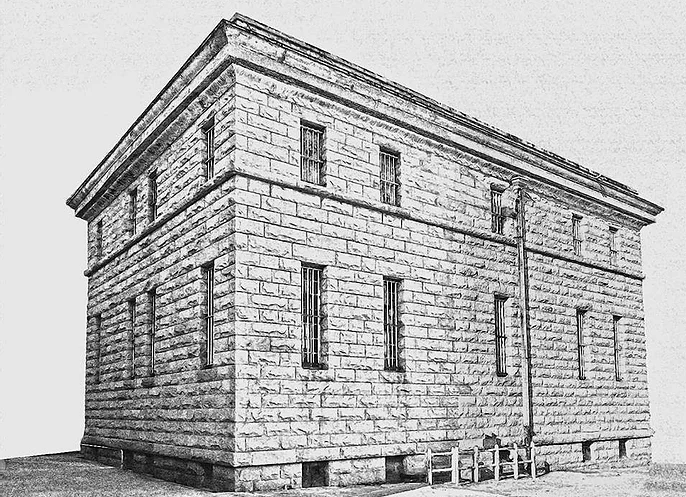
Historic photo of old Contra Costa County jail. Source: Architectural Preservation Foundation of Contra Costa

Architectural Preservation Foundation wants old jail preserved for other uses; Board hears from Budget Justice Coalition on COVID related equity issues; COVID-19 variant draws concern

By Daniel Borsuk

Contra Costa Supervisors Candace Andersen and Karen Mitchoff chastised Contra Costa District Attorney Diana Becton, during the Board’s meeting on Tuesday, for holding her wedding reception in the backyard of her El Sobrante home in August in violation of COVID-19 health protocols.

“I think we give up hope when our top public officials improperly conduct themselves,” District 4 Supervisor Mitchoff of Pleasant Hill said.

“What District Attorney Becton did was wrong.  There were so many events that so many of us had to give up that were important,” Mitchoff later said. “It just needs to be called out.  We cannot sweep it under the rug and act as if this did not happen.”

“I feel very frustrated about the wedding District Attorney Becton had at her home” remarked District 2 Supervisor Andersen of Danville.  “I was very surprised that she would have a party after a wedding, knowing it was in violation of county health codes.”

In her defense, Becton said: “I did everything I believe was in proper guidance with what I thought was allowed.  I realize public officials like myself are held to a higher standard as we should be.”

Becton married Rev. Dr. Alvin C. Bernstine, a fourth-generation preacher and the author of his most recently published book, Hope Us, Lord. (See related article)

Approve Demolition of Old County Administration Building, Old County Jail

Over the concerns of preservationists, supervisors flashed the green light for Contra Costa County Public Works officials to hire a design-build contractor to demolish the old 12-story county administration complex at 651 Pine Street in Martínez and the old county jail across the street from the administration complex so that either a two or three-story office building can be constructed on the site of the old administration building.

In December, the county opened a new four-story, 71,000 square foot Administration Building across the street from old the Pine Street building.

It would cost about $65 million to demolish the old building and then build a two-story building and $75 million to build a three-story office building.  The County plans to provide parking and open public space on the land cleared through demolition.

“Four years ago, we presented over 300 signatures to you for preservation,” said Architectural Preservation Foundation of Contra Costa President Cheryll Grover. “There has been no current relevant community outreach on this issue.”

According to the organization’s website, “In 1989 the entire Contra Costa County ‘Court House Block’ was listed on the National Register of Historic Places, including the 1903 County Jail and the present-day Finance Building.  The National Register described these as classically inspired dignified structures of Vermont granite ‘designed to represent stability and permanence.’”

County officials have shown interest in using the Pine Street site for office space for the Sheriff’s Office, District Attorney’s Office, Public Offender’s Office, Health Services and the Office of Racial Justice and Equality.

Supervisors said because of the old jails building material – concrete to keep prisoners inside along with concerns about the presence of asbestos, made it problematic to renovate the old jail.  Grover said her preservation group did propose alternative proposals to rehabilitate the old jail, but their proposals apparently fell short of the mark as far as meeting County Public Works criteria.

From slide show presentation to CCCBOS 020921.

Hear from Budget Justice Coalition on COVID Related Equity Issues

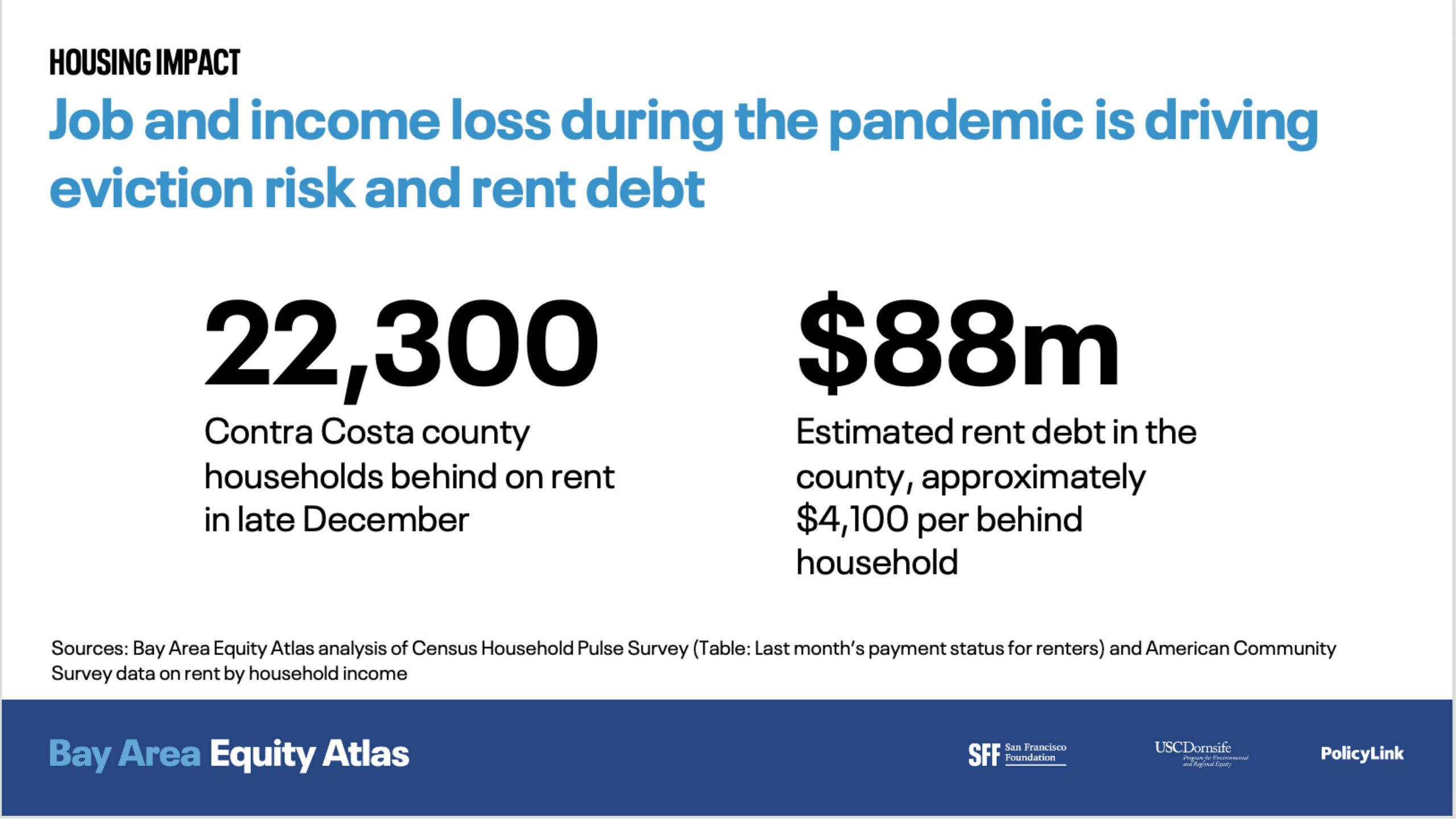
In other action, the Board heard a presentation from the Contra Costa Budget Justice Coalition and the Bay Area Equity Atlas on COVID Related Equity Issues, to ensure all county residents are treated fairly during recovery from the pandemic.

According to their slide show, “The Contra Costa Budget Justice Coalition advocates for community engagement in the Contra Costa County budgeting process and for a set of values-based budgeting principles that support safe and affordable housing, stable employment with fair wages, sufficient healthy food, essential health care, access to critical social services, and quality early care and education.”

Presenters spoke on the subjects of Disparate COVID Health, Housing, and Economic Impacts, BIPOC (Black, Indigenous and People of Color) Community Challenges and Stabilizing Neighborhoods and Equitable Relief.

They offered proposed solutions and plans of action in response including: “Producing and Maintaining lasting affordable housing”; “Prioritize equity and those most in need – evictions, food, housing, health, essential services”; “Protect and stabilize vulnerable households and workers”; “Connect low-wage workers with economic opportunities”; and “‘Build Back Better’ through equitable investments in a stronger, fairer, more sustainable economy”; among others.

Santa Clara County COVID-19 Variant Draws County Warning

A deadly Coronavirus variant now prevalent in Santa Clara County could surface in Contra Costa County, Contra Costa County Health Department Health Officer Dr. Chris Farnitano informed supervisors.

“Getting a vaccine is still the most important thing one can do to protect oneself,” said Dr. Farnitano upon informing supervisors about the Santa Clara County variant.  So far, 800 patients in Santa Clara County have been stricken with this variant and “there have been a couple of cases of this variant in Contra Costa County,” he said.  “We expect to be more knowledgeable about this variant in the next couple of weeks.”

The Santa Clara County COVID-10 variant is one of a number of Coronavirus strains to have surfaced globally, particularly in Brazil, Nigeria, South Africa and the United Kingdom.

Dr. Farnitano said because Contra Costa County remains in the Purple Tier, at or under 46.2 new infections as it was in late January, school grade levels K to 6 can “bring back students as soon as tomorrow (Wednesday).”  The restart of school for grade levels 7 to 12 will be determined later.

County health officials made the COVID-19 announcements at the same time United States health officials announced Tuesday that the most severe surge of the COVID-19 pandemic in the nation has weakened significantly based on major metrics.  Nationally, newly reported cases have declined 56 percent over the past 30 days.  Hospitalizations have declined 38 percent since January 6.  The seven-day average of COVID-19 tests returning positive declined to 6.93 percent over the past week, the lowest rate since October 31.

Dr. Farnitano announced religious institutions can reopen at 25 percent occupancy, but chanting, singing and the serving of food are prohibited, he said.

Contra Costa Health Services Director Anna Roth also confirmed the county will receive $40 million in stated COVID-19 vaccine distribution funding but, could not provide details.  Last week, there were initial reports the state aid the county would receive would be shared with health organizations Kaiser Permanente and Blue Shield.

County Health Equity Officer Gilbert Salinas said the county’s efforts to equitably distribute the vaccine throughout the county, especially in parts of the county where there are more people of color or economically disadvantaged is gaining traction.  He reported that about 70,000 vaccine shots had been administered to county residents and retailers like Safeway, RiteAid, and WalMart are participating in the administration of vaccine shots.

Allen Payton contributed to this report.
Filed Under: District Attorney, Economy, Employment, Families, Food, Health, News, Supervisors

Gov. Newsom signs exec order phasing out gas-powered cars, passenger trucks sold in state by 2035

September 23, 2020 By Publisher Leave a Comment

To “drastically reduce demand for fossil fuel in California’s fight against climate change”

Transportation currently accounts for more than 50 percent of California’s greenhouse gas emissions   

Zero-emission vehicles are a key part of California’s clean, innovation economy – already California’s second largest global export market  

Order also directs state to take more actions to tackle the dirtiest oil extraction and support workers and job retention and creation as we make a just transition away from fossil fuels  

SACRAMENTO – Governor Gavin Newsom announced Wednesday that he will aggressively move the state further away from its reliance on climate change-causing fossil fuels while retaining and creating jobs and spurring economic growth – he issued an executive order requiring sales of all new passenger vehicles to be zero-emission by 2035 and additional measures to eliminate harmful emissions from the transportation sector. (The text of today’s executive order can be found here and a copy can be found here.)

The transportation sector is responsible for more than half of all of California’s carbon pollution, 80 percent of smog-forming pollution and 95 percent of toxic diesel emissions – all while communities in the Los Angeles Basin and Central Valley see some of the dirtiest and most toxic air in the country.

“This is the most impactful step our state can take to fight climate change,” said Governor Newsom. “For too many decades, we have allowed cars to pollute the air that our children and families breathe. Californians shouldn’t have to worry if our cars are giving our kids asthma. Our cars shouldn’t make wildfires worse – and create more days filled with smoky air. Cars shouldn’t melt glaciers or raise sea levels threatening our cherished beaches and coastlines.”

Following the order, the California Air Resources Board will develop regulations to mandate that 100 percent of in-state sales of new passenger cars and trucks are zero-emission by 2035 – a target which would achieve more than a 35 percent reduction in greenhouse gas emissions and an 80 percent improvement in oxides of nitrogen emissions from cars statewide. In addition, the Air Resources Board will develop regulations to mandate that all operations of medium- and heavy-duty vehicles shall be 100 percent zero emission by 2045 where feasible, with the mandate going into effect by 2035 for drayage trucks. To ensure needed infrastructure to support zero-emission vehicles, the order requires state agencies, in partnership with the private sector, to accelerate deployment of affordable fueling and charging options. It also requires support of new and used zero-emission vehicle markets to provide broad accessibility to zero-emission vehicles for all Californians. The executive order will not prevent Californians from owning gasoline-powered cars or selling them on the used car market.

California will be leading the nation in this effort – joining 15 countries that have already committed to phase out gasoline-powered cars and using our market power to push zero-emission vehicle innovation and drive down costs for everyone.

By the time the new rule goes into effect, zero-emission vehicles will almost certainly be cheaper and better than the traditional fossil fuel powered cars. The upfront cost of electric vehicles are projected to reach parity with conventional vehicles in just a matter of years, and the cost of owning the car – both in maintenance and how much it costs to power the car mile for mile – is far less than a fossil fuel burning vehicle.

The executive order sets clear deliverables for new health and safety regulations that protect workers and communities from the impacts of oil extraction. It supports companies who transition their upstream and downstream oil production operations to cleaner alternatives. It also directs the state to make sure taxpayers are not stuck with the bill to safely close and remediate former oil fields. To protect the health and safety of our communities and workers, the Governor is also asking the Legislature to end the issuance of new hydraulic fracturing permits by 2024.

The executive order directs state agencies to develop strategies for an integrated, statewide rail and transit network, and incorporate safe and accessible infrastructure into projects to support bicycle and pedestrian options, particularly in low-income and disadvantaged communities.

This action continues the Governor’s commitment to strengthening California’s resilience while lowering carbon emissions – essential to meeting California’s air quality and climate goals. In the last six months alone, the California Air Resources Board has approved new regulations requiring truck manufacturers to transition to electric zero-emission trucks beginning in 2024 and the Governor signed an MOU with 14 other states to advance and accelerate the market for electric medium- and heavy-duty vehicles. Last fall, California led a multi-state coalition in filing a lawsuit challenging the U.S. Environmental Protection Agency’s attempt to revoke portions of a 2013 waiver that allows the state to implement its Advanced Clean Car Standards.

Last September, Governor Newsom took action to leverage the state’s transportation systems and purchasing power to strengthen climate mitigation and resiliency and to measure and manage climate risks across the state’s $700 billion pension investments. To mitigate climate threats to our communities and increase carbon sequestration, the Governor invested in forest health and fuel reduction and held utilities accountable for building resiliency. The Governor also directed state agencies to develop a comprehensive strategy to build a climate-resilient water system and made a historic investment to develop the workforce for California’s future carbon-neutral economy.


Filed Under: Business, Economy, Environment, Government, News, State of California

  • 1
  • 2
  • Next Page »
Monica's-Riverview-Jan-2026
Liberty-Tax-Jan-Apr-2026
Deer-Valley-Chiro-06-22

Copyright © 2026 · Contra Costa Herald · Site by Clifton Creative Web