• Home
  • About The Herald
  • Local Agencies
  • Daily Email Update
  • Legal Notices
  • Classified Ads

Contra Costa Herald

News Of By and For The People of Contra Costa County, California

  • Arts & Entertainment
  • Business
  • Community
  • Crime
  • Dining
  • Education
  • Faith
  • Health
  • News
  • Politics & Elections
  • Real Estate

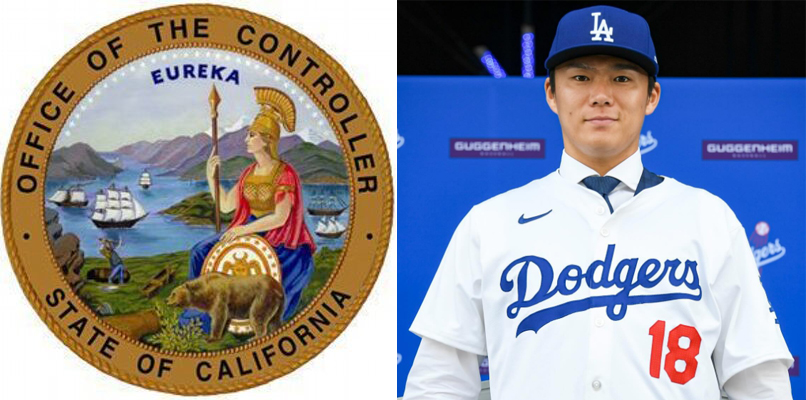
CA State Controller complains about inability to tax largest portion from L.A. Dodgers pitcher’s contract

January 8, 2024 By Publisher Leave a Comment

L.A. Dodgers’ pitcher Shohei Ohtani. Source: L.A. Dodgers Instagram

Wants Congress to approve caps on deferred compensation

SACRAMENTO — State Controller Malia M. Cohen released the following statement following last month’s announcement that the L.A. Dodgers signed a 10-year, $700 million contract with pitcher Shohei Ohtani. The contract is structured so that Ohtani will receive $2 million per year and defer the balance approximately 10 years, when he could potentially return to Japan and escape payment of California state income taxes on the deferred amount:

“The current tax system allows for unlimited deferrals for those fortunate enough to be in the highest tax brackets, creating a significant imbalance in the tax structure.” said Cohen. “The absence of reasonable caps on deferral for the wealthiest individuals exacerbates income inequality and hinders the fair distribution of taxes. I would urge Congress to take immediate and decisive action to rectify this imbalance.”

“Introducing limits on deductions and exemptions for high-income earners promotes social responsibility and contributes to a tax system that is just and beneficial for all. This action would not only create a more equitable tax system, but also generate additional revenue that can be directed towards addressing pressing important social issues and fostering economic stability,” Cohen stated.

About Controller Cohen

As the chief fiscal officer of California, Controller Cohen is responsible for accountability and disbursement of the state’s financial resources. The Controller has independent auditing authority over government agencies that spend state funds. She is a member of numerous financing authorities, and fiscal and financial oversight entities including the Franchise Tax Board. She also serves on the boards for the nation’s two largest public pension funds. Follow the Controller on X at @CAController and on Facebook.

Filed Under: Legislation, News, Opinion, Sports, State of California, Taxes

CA Attorney General issues Race-Blind Charging Guidelines for prosecutors

January 4, 2024 By Publisher Leave a Comment

Two-step process redacts identifying information as required by new state law

OAKLAND – California Attorney General Rob Bonta released Race-Blind Charging Guidelines that address the specific statutory requirements listed in Assembly Bill 2778 (D-McCarty) and Penal Code Section 741, as well as provide prosecutors practical guidance as to how to implement the requirements. The guidelines outline a new two-step process for evaluating charging, including how to redact identifying information, how to document charging decisions, when a crime is excluded from this process, and the requirements to collect and make available for research anonymous data. The guidelines are intended to help reduce the potential for unconscious bias to influence the initial charging decision in legal cases, in accordance with the spirit, law, and goals of PC 741.

“Unconscious bias has no place in the criminal justice system and should not play a role in charging,” Bonta said. “Unfortunately, we know the criminal justice system is not infallible and charging decisions are vulnerable to unconscious bias. This is a reality we cannot ignore and must work to correct. These guidelines will help prosecutors perform their duties in accordance with California law and most importantly, help promote a more fair and equitable charging process for all individuals.”

Studies have shown that unconscious bias may infect decisions within the criminal justice system, despite the best intentions of the parties involved. The guidelines will assist all California prosecution agencies in implementing this new process by January 1, 2025. It includes nine critical components to reduce unconscious bias:

  1. Redaction of Cases Received from Law Enforcement Agencies and Suspects Criminal History Documentation: Prosecution agencies are required to review initial charging decisions based on information, including police reports and suspect criminal history documentation, from which all direct means of identifying the race of suspect(s), victim(s), and witness(es) race is removed.
  2. Race-Blind Initial Charging:Prosecution agencies are required to follow a two-step process for charging cases: a “race-blind initial charging evaluation” based on redacted reports and then an “ordinary charging evaluation” based on the unredacted reports and all available evidence. The initial charge evaluation is intended to perform a gate-keeping and recording function prior to the actual charging process. It contemplates an initial evaluation on whether to file any charges, without specifying what charges might be filed. The more thorough second review will be used to determine individual charges or decide charges with certainty.
  3. Redaction Process for Initial Charging Evaluation:Each prosecution agency must create a redaction process for the materials used in the initial charging evaluation. It must be performed by personnel not association with evaluating or charging the case and may either be done manually or through automation as long as the process ensures correct redaction.
  4. Use of Artificial Intelligence (AI) Tools for Redaction:If an AI system is used, it must be validated before implementation that appropriate safeguards are in place to prevent unauthorized access to sensitive information.
  5. Second Review for Charging: After completion of the race-blind initial charging evaluations, the case shall proceed to a second, complete review for charging. This would include a review of unredacted reports and all available evidence, which may include additional materials, such as video footage, photographs, and complete witness statements, that reveals race but must be reviewed to assess whether the requisite elements have been met to warrant the filing of criminal charges. This is the “ordinary charging evaluation” and must be performed by the same prosecutors who performed the initial charging review.
  6. Documentation of Charging Decision: Prosecution agencies are required to follow a two-step process for charging cases: a “race-blind initial charging evaluation” based on redacted reports and then an “ordinary charging evaluation” based on the unredacted reports and all available evidence. The initial charge evaluation is intended to perform a gate-keeping and recording function prior to the actual charging process. It contemplates an initial evaluation on whether to file any charges, without specifying what charges might be filled. The more thorough second review will be used to determine individual charges or decide charges with certainty.
  7. Inability to Conduct Race-Blind Initial Charging Evaluation:If a prosecution agency was unable to put a case through a race-blind initial charging evaluation, the reason for that inability must be documented and retained by the agency.
  8. Collection of Data and Availability for Research Purposes: Each county in which a prosecution agency resides must, on a usual basis, collect the data resulting from the race-blind initial charging evaluation process, except as such information is protected by privilege including, but not limited to, that found in Penal Code section 1054.6. Each county must ensure that the data is collected, stored, and transmitted in a way appropriate to protect sensitive information.
  9. Exception to the Race-Blind Process: The prosecution agency may exclude the crimes listed at the Penal Code section 741, subdivision (c) from the race-blind charging process. Each prosecution agency may further remove or exclude certain classes of crimes or factual circumstances from a race-blind initial charging evaluation and shall keep a list of the exclusion and their reason for review.

Attorney General Bonta, is committed to fighting for racial justice. In May of 2021 he established the Racial Justice Bureau which, among other things, supports the California Department of Justice’s broader mandate to advance the civil rights of all Californians by assisting with new and ongoing efforts to combat hate and bias. This year, the Attorney General has also engaged with local leaders through roundtables through hate crime roundtables in Bakersfield, Fresno, Anaheim and Irvine.

More broadly, the Attorney General is deeply committed to responding to the needs of historically marginalized and underrepresented communities and, last year, also launched the Office of Community Awareness, Response, and Engagement to work directly with community organizations and members of the public as part of the effort to advance justice for all Californians.

A copy of the Guidelines can be found here.


Filed Under: Attorney General, Crime, District Attorney, Legislation, News, State of California

Delta Levees Investment Strategy becomes California state law

January 4, 2024 By Publisher Leave a Comment

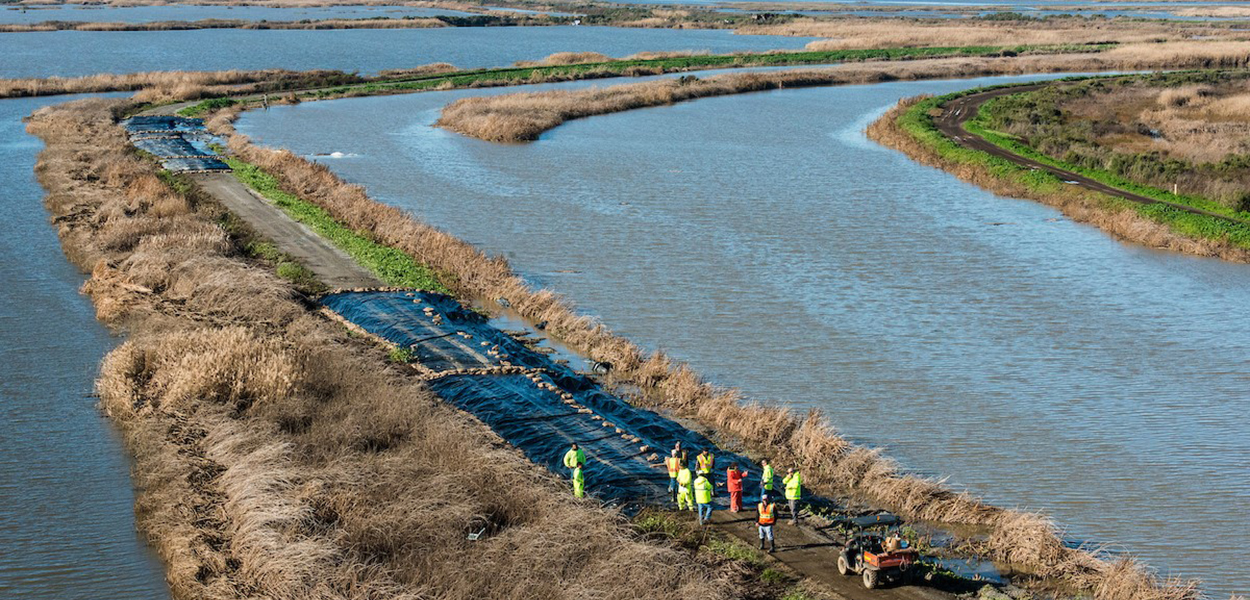
Delta levee work. Photo: Delta Stewardship Council

New flood-related regulations prioritize levee investments in the Delta and Suisun Marsh

By Delta Stewardship Council

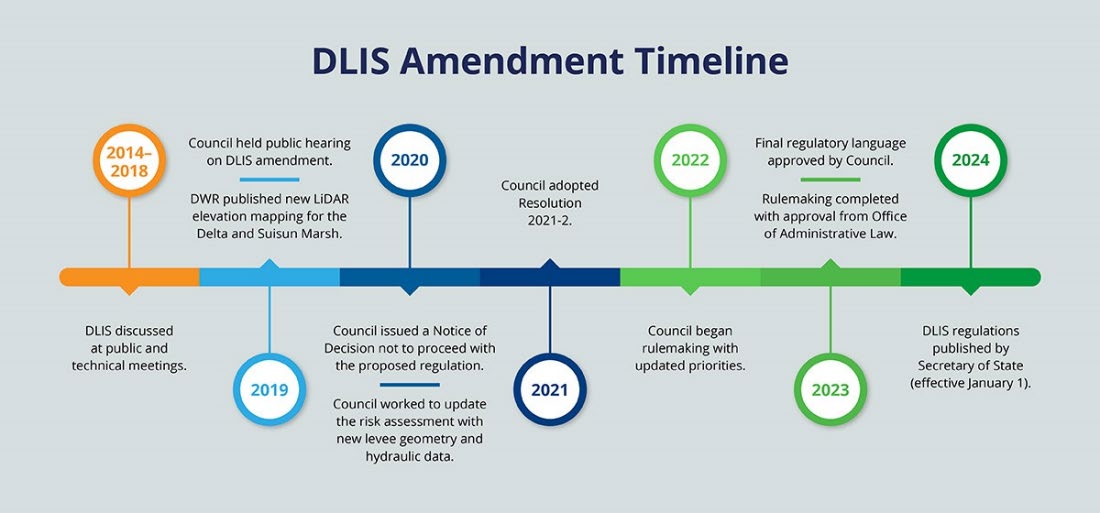
SACRAMENTO – The new year has brought new flood protections for the Sacramento-San Joaquin Delta. The Delta Stewardship Council has successfully amended the Delta Levees Investment Strategy (DLIS), a tool the state uses to prioritize investments in Delta levee operations, maintenance and improvements, thus reducing the likelihood and consequences of levee failures.

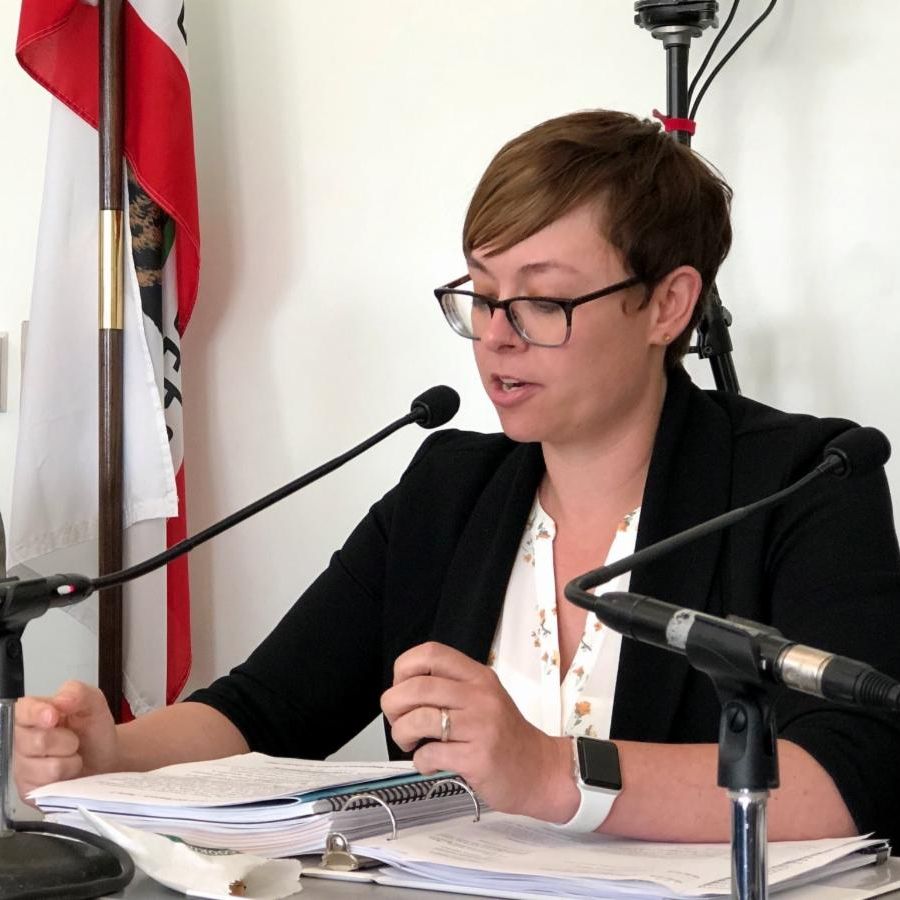
Executive Officer Jessica R. Pearson at a Delta Stewardship Council meeting. Photo: DSC

The amendment assigns very high, high, or other priority to islands or tracts within the Delta and Suisun Marsh and directs the California Department of Water Resources (DWR) to fund levee improvement projects by order of priority. Additionally, it requires the DWR to submit an annual report to the Council describing Delta levee investments relative to the established priorities. The amended regulation took effect on January 1, 2024.

“Delta flood risk is one of the most urgent threats to California and will continue to worsen in the future with changes in sea levels and storm patterns,” says the Council’s Executive Officer Jessica R. Pearson. “Limited funding to address that risk demands clear priorities. The product of nearly a decade of public input and collaboration, the strategy represents one of the Council’s greatest milestone achievements.”


The amendment assigns very high, high, or other priority to islands or tracts within the Delta and Suisun Marsh and directs the California Department of Water Resources (DWR) to fund levee improvement projects by order of priority. Additionally, it requires the DWR to submit an annual report to the Council describing Delta levee investments relative to the established priorities.

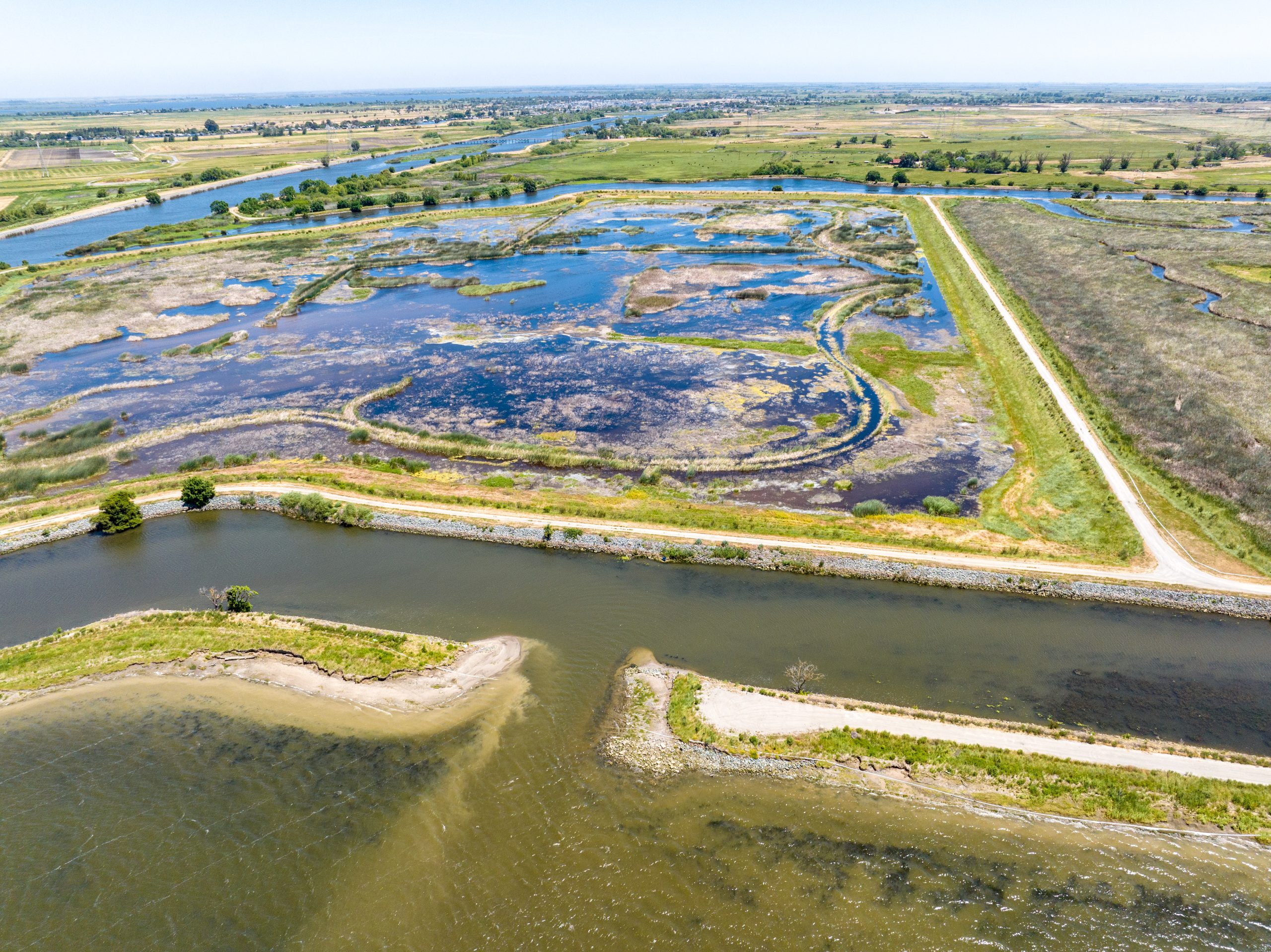
The Dutch Slough Tidal Marsh Restoration Project site, located in the Sacramento-San Joaquin Delta near Oakley, California.
The restoration project implemented by the California Department of Water Resources will restore 1,187 acres into a tidal marsh to provide habitat for salmon and other native fish and wildlife. Photo taken May 18, 2023, by Florence Low / California Department of Water Resources,

“Flood protection is a key piece of DWR’s work to increase water resilience as California moves toward a hotter, drier future,” says DWR Director Karla Nemeth. “DWR stands in partnership with the Delta Stewardship Council across multiple initiatives, including the Delta Levees Investment Strategy. These efforts will provide needed protections to the diverse communities that call the Delta home.”

The Delta’s 1,100 miles of levees provide protection for residences, agricultural lands, and infrastructure, which need deliberate and sustainable maintenance and funding. Many of the levees date back to when the Delta was reclaimed for agricultural purposes in the late 1800s.

The updated strategy prioritizes the protection of people, property, and state interests and advances statewide water supply reliability and Delta ecosystem resilience in a manner that protects and enhances the Delta as a place where people live, work, and recreate.

Source: DSC

On September 21, 2023, the Office of Administrative Law approved the Council’s Administrative Procedure Act process to amend the California Code of Regulations, title 23, sections 5001 and 5012, to implement the Council’s Delta Levees Investment Strategy. The amended regulation took effect on January 1, 2024, and is available at on the Delta Levees Investment Strategy web page at deltacouncil.ca.gov/DLIS.

ABOUT THE COUNCIL

The Delta Stewardship Council was created by the California Legislature in 2009 to advance California’s water supply reliability and the Delta’s ecosystem resiliency in a manner that protects and enhances the region’s unique characteristics. It is composed of seven members, advised by an independent 10-member science board, and supported by a dedicated staff. For more information, visit the Council’s website at deltacouncil.ca.gov.

Filed Under: Finances, News, State of California, The Delta

CA Racial and Identity Profiling Advisory Board releases report on 2022 Police Stop Data

January 3, 2024 By Publisher Leave a Comment

Photo: Policing Project

560 law enforcement agencies made 4,575,725 stops

Black individuals were searched at a rate 1.66 times the rate of White individuals

By California Attorney General’s Office

The California Racial and Identity Profiling Advisory Board (Board) today, Wednesday, Jan. 3, 2024, announced the release of its annual report on police stops across California. The report analyzes millions of vehicle and pedestrian stops conducted in 2022 by 560 law enforcement agencies in California — a major expansion from the 58 participating agencies in the previous report — under the Racial and Identity Profiling Act (RIPA). In addition to providing an in-depth look into policing in 2022, the Board’s report contains a wide array of best practice recommendations related to policing, with a particular focus on the impact of pretext stops, law enforcement interactions with youth, civilian complaint processes, police union effects on law enforcement accountability, and trainings on racial and identity profiling. Overall, the findings from the latest RIPA report are consistent with the disparities observed in prior years’ data with respect to perceived race, age, and disability status.

“California is leading the nation in identifying and addressing racial and identity profiling,” said Andrea Guerrero, Co-Chair of the RIPA Board and Executive Director of Alliance San Diego. “This report marks a major milestone as the first to include stop data from law enforcement agencies across the entire state. The scale of data that California is collecting allows us to say definitively that profiling exists — it is a pervasive pattern across the state. We must now turn to the hard work of ending profiling by bringing all the stakeholders to the table to ascertain and change the policies and the practices that enable it. I’m proud to work alongside community and law enforcement leaders on the RIPA Board who are having the tough conversations needed to bring about change. Public safety depends on all of us, and we invite all stakeholders to join the RIPA Board on our path to progress.”

“The annual collection of the RIPA stop data is making California communities safer by directing thoughtful and reflective reform,” said California Attorney General Rob Bonta. “Over the last several years, we’ve collected and analyzed information on more than 16 million police encounters in our state. In turn, with the support of our staff at the California Department of Justice, the RIPA Board has continued to issue key recommendations for our law enforcement agencies to promote transparency and take critical steps to enhance, and in some cases, repair the public trust.”

The information collected under RIPA includes data on peace officers’ perceptions of the demographics of stopped individuals, such as race or ethnicity, gender identity, sexual orientation, age, and disability. The Board collects this information to determine whether disparities can be found across demographic groups. The Board uses several well-established methodologies to analyze stop data to determine if bias may exist.

Some of the key findings from the Board’s report include:

  • Number of Stops: A total of 4,575,725 stops were conducted by 560 agencies from January 1, 2022 to December 31, 2022.
  • Population Comparison: Overall, the disparity between the proportion of stops and the proportion of residential population was greatest for Black individuals, who were stopped 131.5 % more frequently than expected.
  • Search Rates: Black individuals were searched at a rate 1.66 times the rate of White individuals. Although stopped individuals perceived to be Black or Hispanic/Latino were searched at a higher rate relative to individuals perceived to be White, officers discovered contraband or evidence during stops in which they conducted searches at a lower rate for individuals perceived to be Black or Hispanic/Latino.
  • Actions Taken: Officers reported not taking any reportable action during 75% of stops and taking actions during 25% of stops. Of all the racial or ethnic groups, stopped individuals whom officers perceived to be Native American had the highest rate of being searched (22.4%) and handcuffed (17.8%). Stopped individuals whom officers perceived to be Black had the highest rate of being detained curbside or in a patrol car (20.2%) and ordered to exit a vehicle (7.1%). Individuals perceived to be transgender men/boys also had actions taken towards them during half of their stops (50.0%).

In addition to the data analysis, the Board issues best practice recommendations that law enforcement agencies, the Legislature, local policymakers, the Commission on Peace Officer Standards and Training (POST), community members, and advocates should consider when implementing evidence-based and data-driven policy reforms geared to eliminate racial and identity profiling and improve law enforcement and community relations. Examples of the Board’s recommendations from the report include:

  • Ending all pretextual stops and searches by taking actions such as ending consent or supervision searches as well as limiting law enforcement roll in the enforcement of traffic laws;
  • Prohibiting the collection of field interview cards and entries into CalGang or any agency database in absence of an arrest;
  • Adopting internal policies that prohibit law enforcement agencies and district attorneys from pursuing criminal charges for standalone resisting arrest without other citable offenses;
  • Prioritizing a care-first model, reducing unnecessary criminal justice intervention or law enforcement response in favor of a community-based response for youth with disabilities and youth experiencing mental health crises;
  • Considerations related to the efficacy of school police and law enforcement contacts, such as identifying specific student conduct or statutory violations that require disciplinary action that should be handled by school staff, and for which law enforcement officers should not be involved;
  • Calling for further research on how Police Officer Bills of Rights and provisions or agreements with unions affect police accountability;
  • Amending Penal Code section 832.5 to include a standardized definition of “civilian complaint”;
  • Reviewing all available video footage and incorporating root cause analysis into complaint investigations; and
  • Seeking community and Board input early in POST’s course development process and integrating feedback into the course curriculum before finalizing the course.

For more on RIPA and other criminal justice data, members of the public are encouraged to visit OpenJustice, a data-driven initiative that works to increase access to criminal justice data and support the development of public policy.

A copy of the report announced today is available here. More information about the Board is available here.


Filed Under: Attorney General, News, Police, State of California

California State Parks awards $41.9 million in grants to create new parks across state

December 30, 2023 By Publisher Leave a Comment

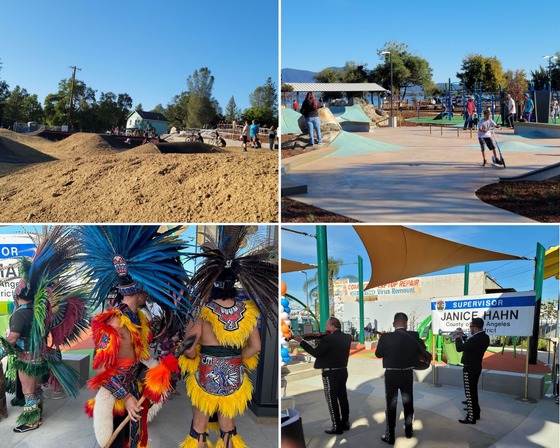
Images of previous park projects funded by the Statewide Park Development and Community Revitalization Grant Program. Top left: Old Depot Bike Park grand opening in Placerville, California. Top right: Xabatin Park grand opening in Lakeport, California. Bottom photos: Nogales Park grand opening in Walnut Park, California. Photos from California State Parks.

SACRAMENTO, Calif.— California State Parks announced Thursday, Dec. 28, 2023, $41.9 million in grant funding to support the diversity of California’s park needs. Under “Round Four” of the Statewide Park Development and Community Revitalization Grant Program, the state of California is delivering new park access to an additional eight communities across the state.

To date, the Statewide Park Development and Community Revitalization Grant Program has provided approximately $1.2 billion to California’s communities. Round Four received the highest amount requested in State Parks’ nearly 50-year history of grant administration.

“Having access to outdoor spaces is critical for all Californians and these projects will contribute to the quality of life for many people who seek local parks to improve their physical, mental and social well-being,” said California State Parks Director Armando Quintero. “State Parks is incredibly grateful to all the organizations who applied for grant funding this round.”

The eight awarded grant projects are:

Fresno County

  • Reedley: City of Reedley, Camacho Park Project: $4,049,992 to construct a new walking path, group picnic area, restroom, signage, and public art. Renovate three existing baseball/softball fields, existing restroom/storage/concession stand, and landscaping and lighting throughout the park.

Kern County

  • Bakersfield: County of Kern, Potomac Park Neighborhood Project: $7,384,000 to construct a new soccer field with lighting, splash pad with shade, dog park, basketball court with lighting, three shade structures over existing picnic tables, walkways with lighting, parking lot with lighting, and restroom. Renovate the existing group picnic pavilion, basketball court with lighting, inclusive playground with lighting, and landscaping throughout the park.

Los Angeles County

  • Hawthorne: Los Angeles Neighborhood Land Trust, Zela Davis Park Renovation: $963,060 to construct a new playground with shade, basketball court, picnic area with shade, walking path and hardscape elements, exercise equipment, public art, restroom building, and landscaping and lighting throughout the park.
  • Los Angeles: Los Angeles Neighborhood Land Trust, Jefferson Park Project: $5,800,000 to create a new park which will include a new playground with shade, sand and water play area, picnic area with shade, exercise area, public art, skate spot, walking path, and lighting and landscaping throughout the park.
  • Paramount: City of Paramount, Paramount Park Community Center Expansion: $7,372,213 to construct a new expansion of an overused Center’s Senior Center and renovate existing building spaces to create dedicated senior activity spaces. The expansion and renovations would include fitness, music, craft, billiards, card, and conference rooms, two screened outdoor lounge areas, reconfiguration of the stage area to make it fully accessible and viewable from the auditorium/dining space, and installation of landscaping along the exterior of the center.

Sacramento County

  • Sacramento: Southgate R.P.D., Jack N. Sheldon Park & Florin Creek Trail: $8,500,000 to acquire approximately 8.77 acres and construct a new dog park with lighting, disc golf course, basketball court, exercise equipment stations, four pickleball courts with lighting, gazebo and BBQ area, practice wall, playground, soccer field with lighting, multiuse trails, informal trails, electric vehicle charging stations, ping-pong with shade cover, educational arboretum, pathways with lighting, two shade structures with picnic tables, public art, and lighting and landscaping throughout the park. Renovate six tennis courts with lighting, a multiuse trail, playground, soccer field and parking with lighting.

San Joaquin County

  • Stockton: City of Stockton, Van Buskirk Park Renovation: $7,016,086 to construct a new skate park, two full-size basketball courts, and BMX/Bike Trails with lighting and landscaping.

Yolo County

  • Knight’s Landing: County of Yolo, Knights Landing Community Park: $814,649 to create a new park which will include a new soccer field, little league/softball field, full-size basketball court, ball wall, children’s playground, perimeter 6’ wide walking/jogging path, shaded picnic and BBQ area, open natural grass area, parking lot, plaza area with picnic tables, shade trees, and farmers market/food truck areas for community gathering space. Renovate the existing restroom.

On March 21, 2021, California State Parks’ Office of Grants and Local Services (OGALS) received $2.42 billion in grant requests for Round 4 of the Statewide Park Program. The department was able to award $548.3 million to projects throughout California; however, approximately, $1.87 billion in requests were left unfunded. An additional appropriation of $41.9 million was provided through the 2023/2024 State Budget. This additional funding is now being awarded to unfunded Round 4 applications.

Funding for the grant program was first made available through Proposition 84 (2006 Bond Act) Sustainable Communities and Climate Change Reduction. Proposition 68 (2018 Bond Act) and additional general fund money continue this program’s legacy.

Since 2000, California State Parks’ OGALS has administered more than $3 billion in local assistance grants from a variety of funding sources. The funding has established indoor and outdoor recreation in every corner of the state, built trails, acquired and restored sensitive habitat, built natural and cultural interpretative facilities, and fostered outdoor natural experiences for thousands of children, youth and families. Approximately 8,000 California parks have been created or improved through these grant programs. To view previous park projects created through OGALS, visit this link.

The California Department of Parks and Recreation, popularly known as State Parks, and the programs supported by its Office of Historic Preservation and divisions of Boating and Waterways and Off-Highway Motor Vehicle Recreation provide for the health, inspiration and education of the people of California by helping to preserve the state’s extraordinary biological diversity, protecting its most valued natural and cultural resources, and creating opportunities for high-quality outdoor recreation. Learn more at parks.ca.gov.


Filed Under: News, Parks, State of California

MTC’s Chief Deputy Executive Director appointed to state Transit Transformation Task Force

December 29, 2023 By Publisher Leave a Comment

MTC Chief Deputy Executive Director Alix Bockelman. Photo source: MTC. Credit: Karl Nielsen

Will join Tri Delta Transit’s Executive Director to grow ridership, improve experience

California State Transportation Agency (CalSTA) Transportation Secretary Toks Omishakin last week appointed Metropolitan Transportation Commission’s Chief Deputy Executive Director Alix Bockelman to the state’s Transit Transformation Task Force, which will be charged with developing policy recommendations to grow transit ridership, improve the transit experience for riders and address long-term operational funding needs throughout California.

The 25-member task force represents state government, local agencies, academic institutions and advocacy organizations. Bockelman will be joined by other Bay Area representatives, including the executive directors of Eastern Contra Costa Transit Authority (ECCTA/Tri Delta Transit), Napa Valley Transportation (NVTA/Vine Transit), the San Francisco Bay Area Rapid Transit District (BART) and the San Francisco Bay Water Emergency Transportation Authority (WETA/SF Bay Ferry), as well as policy directors from Seamless Bay Area, SPUR and the Bay Area Council. Review the complete roster of task force appointees in the CalSTA news release.

Established by Senate Bill 125 and signed by Governor Gavin Newsom in the transit recovery package as part of the 2023-24 state budget, the task force will kick off with a virtual meeting on Dec. 19 and then will meet in person every two months beginning in Feb. 2024. Agendas, meeting materials and other task force information will be available on the CalSTA website’s Senate Bill 125 Transit Program page.

CalSTA will prepare a report of findings and policy recommendations based on the task force’s efforts and submit it to the Legislature by October 2025.

Filed Under: News, People, State of California, Transportation

CA Secretary of State denies Lt. Governor’s request to remove Trump from ballot

December 29, 2023 By Publisher Leave a Comment

“As California’s chief elections officer…I must place the sanctity of these elections above partisan politics.” – Secretary of State Shirley Weber

Issues list of candidates including the former president

By Allen D. Payton

Sacramento, CA – California Secretary of State Shirley N. Weber, Ph.D. responded on Friday, Dec. 22 to the letter from California Lt. Governor Eleni Kounalakis requesting the removal of former President Donald Trump from California’s 2024 presidential primary ballot. (See related article)

In her letter, Weber reinforced that, because this is an issue of particular concern to the public, she is obligated to address it within legal parameters and in the best interests of all California voters.

“It is incumbent upon my office to ensure that any action undertaken regarding any candidate’s inclusion or omission from our ballots be grounded firmly in the laws and processes in place in California and our Constitution,” she wrote.

“As California’s chief elections officer, I am a steward of free and fair elections and the democratic process. I must place the sanctity of these elections above partisan politics,” Weber continued. “Removing a candidate from the ballot under Section Three of the Fourteenth Amendment is not something my office takes lightly and is not as simple as the requirement be at least 35 years old to be president.”

“I am guided by my commitment to follow the rule of law,” she added.

While Trump is on the March 5 primary election ballot, Weber concluded her letter with, “My office will continue to assess all our options, including those that may arise as a result of any action taken by the United States Supreme Court or other changing circumstances.”

The full text of her response letter can be found here.

On Thursday, Dec. 28, Weber issued the Certified List of Candidates for the March 5, 2024 Presidential Primary Election which included Trump as one of the nine Republicans on the state’s primary ballot. The list also includes eight Democrats, with President Biden at the top of the alphabetical list. Finally, the list of presidential candidates includes three Peace and Freedom party candidates, with Cornel West the most well-known among them, as well as one candidate each from the American Independent Party, Green Party and Libertarian Party.

Independent candidate Robert F. Kennedy, Jr.’s name will not appear on the state’s presidential primary ballot. When asked why not, his campaign explained, “Robert F. Kennedy Jr. is running as an independent candidate for the presidency and therefore will not be participating in any primary elections, including the California March 5 Presidential Primary. As an Independent, he will be working towards securing a place on the ballot for the general election in November 2024 by collecting the necessary signatures and meeting state requirements.”

Filed Under: News, Politics & Elections, State of California

Moraga company hired for Pigeon Point Lighthouse rehabilitation project

December 21, 2023 By Publisher Leave a Comment

Pigeon Point Lighthouse at night. Photo by California State Parks using Fresnel lens.

To begin in early 2024

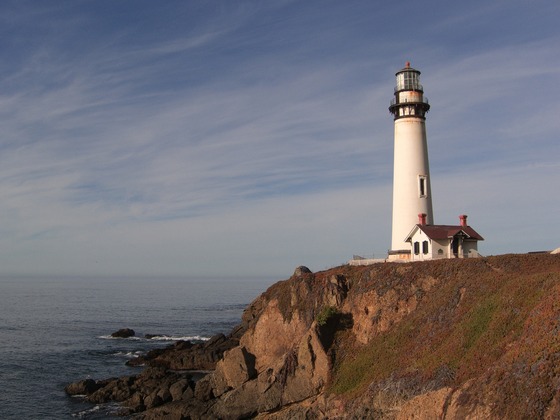
PESCADERO, Calif.— California State Parks today announced the selection of a contractor to rehabilitate the Pigeon Point Lighthouse, located within Pigeon Point Light Station State Historic Park. The $16 million rehabilitation project will start construction in early 2024 and is expected to be completed within two years.

Named for the 1853 wreck of the clipper ship Carrier Pigeon, Pigeon Point Lighthouse was first lit on Nov. 15, 1872. The 115-foot structure is the tallest operating lighthouse on the West Coast. Pigeon Point Light Station is listed on the National Register of Historic Places—a reminder of the days when whalers and Gold Rush-era clipper ships fought gales, stiff seas, jagged coastal rocks, and unforgiving fog. The lighthouse has been closed to the public since late 2001, when it was deemed unsafe after two large pieces of brick and iron fell from the top of the building. Funding issues, COVID-19 and a thoughtful process to ensure a contractor with the special skills to work on a lighthouse was selected have been the reasons for the continued closure of this historic building.

“California State Parks looks forward to once again providing public access to this historic landmark that continues to guide mariners along the rocky San Mateo County coast,” stated Santa Cruz District Superintendent Chris Spohrer. “Thank you to our partners for their support over the years and the public for their patience.”

Pigeon Point Lighthouse during the day. Photo from California State Parks by J. Barrow

Sustainable Group, Inc. of Moraga, CA, and subcontractor ICC Commonwealth of North Tonawanda, New York, have extensive experience in lighthouse rehabilitation and restoration in the United States. Jointly, they have worked on nearly 100 lighthouses, including several built to the same blueprints as Pigeon Point, including Bodie Island, North Carolina; Currituck Beach, North Carolina; and Yaquina Head, Oregon, as well as numerous other tall lighthouses. For the Pigeon Point Lighthouse, the contractors will refurbish or replace all the ironwork throughout the building. Masonry elements will also be repaired or replaced as needed. A major focus of the project will be the upper belt course or cast-iron ring where two large pieces broke away in late 2001, compromising the building’s structural integrity.

Pigeon Point Light Station State Historic Park relies upon its collaborative relationships with its nonprofit partners, including Coastside State Parks Association, California State Parks Foundation and Friends of Santa Cruz State Parks. These organizations provide support for the tower restoration, the operation of the park and the development of visitor-serving programs and amenities.

To learn how the public can support the Pigeon Point Lighthouse Restoration project or enhance the visitor experience at Pigeon Point Light Station State Historic Park, please visit CoastSideStateParks.org. Restoration project updates are available at parks.ca.gov/PigeonPointLighthouseRestoration.

The California Department of Parks and Recreation, popularly known as State Parks, and the programs supported by its Office of Historic Preservation and divisions of Boating and Waterways and Off-Highway Motor Vehicle Recreation provide for the health, inspiration and education of the people of California by helping to preserve the state’s extraordinary biological diversity, protecting its most valued natural and cultural resources, and creating opportunities for high-quality outdoor recreation. Learn more at parks.ca.gov.

Filed Under: Business, Lamorinda, News, Parks, State of California

CA Lt. Governor calls for Secretary of State to explore legal options to remove Trump from ballot 

December 20, 2023 By Publisher 1 Comment

Photo source: Trump for President Facebook page

The state’s presidential primary is on March 5, 2024

By Allen D. Payton

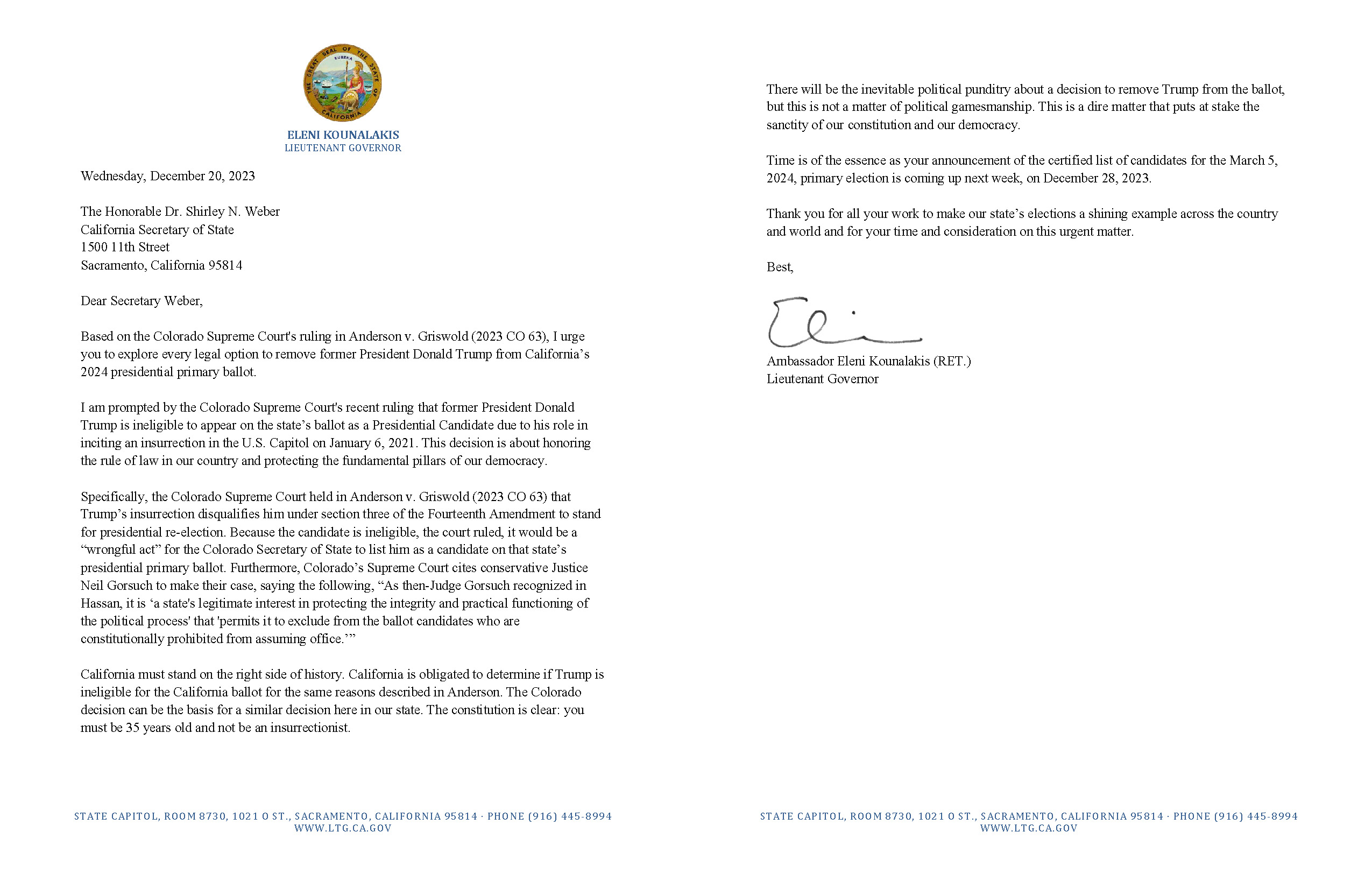
Today, Wednesday, Dec. 20, 2023, California Lieutenant Governor Eleni Kounalakis sent a letter to Secretary of State, Dr. Shirley Weber, urging her to explore legal options to remove former President Donald Trump from California’s 2024 presidential primary ballot following the Colorado Supreme Court’s ruling in Anderson v. Griswold (2023 CO 63). The Colorado Supreme Court held that Trump’s role in inciting the actions at the U.S. Capitol Building on January 6, 2021, disqualifies him from standing for presidential election under section three of the Fourteenth Amendment.

The Lt. Governor claims the riot at the U.S. Capitol was an insurrection. However, as reported elsewhere, the former president has not been convicted of insurrection nor inciting one.

Copy of Lt. Gov . Kounalakis’ letter to Secretary of State Weber dated Dec. 20, 2023.

Kounalakis’ letter reads:

Dear Secretary Weber,

Based on the Colorado Supreme Court’s ruling in Anderson v. Griswold (2023 CO 63), I urge you to explore every legal option to remove former President Donald Trump from California’s 2024 presidential primary ballot.

I am prompted by the Colorado Supreme Court’s recent ruling that former President Donald Trump is ineligible to appear on the state’s ballot as a Presidential Candidate due to his role in inciting an insurrection in the U.S. Capitol on January 6, 2021. This decision is about honoring the rule of law in our country and protecting the fundamental pillars of our democracy.

Specifically, the Colorado Supreme Court held in Anderson v. Griswold (2023 CO 63) that Trump’s insurrection disqualifies him under section three of the Fourteenth Amendment to stand for presidential re-election. Because the candidate is ineligible, the court ruled, it would be a “wrongful act” for the Colorado Secretary of State to list him as a candidate on that state’s presidential primary ballot. Furthermore, Colorado’s Supreme Court cites conservative Justice Neil Gorsuch to make their case, saying the following, “As then-Judge Gorsuch recognized in Hassan, it is ‘a state’s legitimate interest in protecting the integrity and practical functioning of the political process’ that ‘permits it to exclude from the ballot candidates who are constitutionally prohibited from assuming office.’”

California must stand on the right side of history. California is obligated to determine if Trump is ineligible for the California ballot for the same reasons described in Anderson. The Colorado decision can be the basis for a similar decision here in our state. The constitution is clear: you must be 35 years old and not be an insurrectionist.

There will be the inevitable political punditry about a decision to remove Trump from the ballot, but this is not a matter of political gamesmanship. This is a dire matter that puts at stake the sanctity of our constitution and our democracy.

Time is of the essence as your announcement of the certified list of candidates for the March 5, 2024, primary election is coming up next week, on December 28, 2023.

Thank you for all your work to make our state’s elections a shining example across the country and world and for your time and consideration on this urgent matter.

————-

However, Trump’s lawyer, Alina Habba, said on Wednesday, she expects the Colorado state Supreme Court’s ruling will be overturned by the U.S. Supreme Court.

Filed Under: News, Politics & Elections, State of California

Opinion: Will California’s budget woes impact tax reform?

December 20, 2023 By Publisher Leave a Comment

By Jon Coupal, President, Howard Jarvis Taxpayers Association

The Taxpayer Protection and Government Accountability Act (TPA) is a proposed constitutional amendment which has already qualified for the November 2024 ballot. It is sponsored by taxpayer and business organizations to restore key provisions of Proposition 13 and other pro-taxpayer laws that give voters more control over when and how new tax revenue is raised.

Although TPA, unlike previous tax reform measures, doesn’t reduce or eliminate any state or local tax, it does impose both enhanced voter approval requirements for fee and tax increases as well as robust accountability and transparency provisions.

For obvious reasons, tax-and-spend interests hate TPA and have launched a multi-front assault hoping to either defeat it or keep it off the ballot entirely.

The motivation for these schemes is that politicians and their enablers are fully aware that TPA is highly likely to pass if it stays on the ballot. Californians are sick and tired of having the nation’s highest tax rates jammed down their throats, especially when these heavy tax burdens are not accompanied by higher levels of public services; in fact, the opposite is true, as evidenced by California’s high cost of living, crime, homelessness, hostile business climate, and other ills.

But now, there may be another reason why anti-taxpayer interests are waging this war on TPA. A recent report by the California Legislative Analyst’s office threw a bucket of cold water on progressives’ plans to continue to increase taxes with virtually no restraint. The LAO now estimates “2022-23 revenues to be $26 billion below Budget Act projections. Historical experience suggests this weakness is likely to carry into this fiscal year and next. Overall, our updated revenue outlook anticipates collections to come in $58 billion below Budget Act projections across 2022-23 to 2024-25.” (Note that in less than a week after this news, the LAO upped the shortfall from $58 billion to $68 billion).

If there is any saving grace to the current financial situation it is that California still has substantial budget reserves. That, plus some creative accounting, can probably blunt the negative impacts of a severe drop in revenues – at least for a while.

Nonetheless, if California’s tax revenue spigot is curtailed any significant amount, will the enemies of the Taxpayer Protection Act argue that this provides another justification for removing all restraints on raising taxes?

Economic growth in Texas and Florida is outpacing that in California, due in part to a top marginal income tax rate of zero. What is happening in other smaller states is less well known. The smart move would be to follow the lead of other states which are aggressively pursuing pro-growth strategies which in turn lead to more tax revenue.

Take Iowa for example. Defying critics who claimed that tax reductions would crush the state budget, Iowa’s Governor Kim Reynolds slashed top marginal tax rates, previously some of the highest in the nation. Not only did revenues not crash, but they shot up by huge percentage points. According to a report in Center Square, “Iowa led the ‘tax-cutting wave’ in 2022, with the most comprehensive and aggressive tax reform in the United States. This will gradually replace the nine-bracket, progressive income tax with a flat tax, bringing the top rate, which was close to 9 percent, down to a flat 3.9 percent by 2026.”

Other states have provided California with a roadmap for economic growth and healthy budgets by cutting taxes and pursuing other pro-freedom policies. However, the political realities in this one-party state – governed by hardcore progressives – render the odds of politicians even looking at the roadmap extremely slight.

That being said, if the Governor and the Legislature won’t do what’s necessary to prevent a budget disaster, the least they can do is get out of the way of those who have offered the Taxpayer Protection Act to the voters so that ordinary citizens can do what politicians won’t: impose fiscal discipline on a fiscally reckless state.

This column originally appeared in the Orange County Register. Republished with permission.

Filed Under: Finances, Opinion, State of California, Taxes

  • « Previous Page
  • 1
  • …
  • 11
  • 12
  • 13
  • 14
  • 15
  • …
  • 23
  • Next Page »
Furniture-Clearance-02-26B
Celia's-3-26-A
Delta-RC-A
Deer-Valley-Chiro-06-22

Copyright © 2026 · Contra Costa Herald · Site by Clifton Creative Web