• Home
  • About The Herald
  • Local Agencies
  • Daily Email Update
  • Legal Notices
  • Classified Ads

Contra Costa Herald

News Of By and For The People of Contra Costa County, California

  • Arts & Entertainment
  • Business
  • Community
  • Crime
  • Dining
  • Education
  • Faith
  • Health
  • News
  • Politics & Elections
  • Real Estate

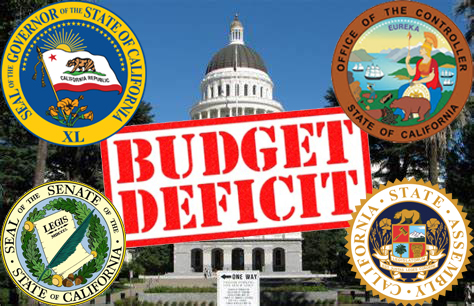
CA Legislative Analyst’s Office increases state deficit by $15 billion to $73 billion

February 21, 2024 By Publisher Leave a Comment

The 2024‑25 Budget

Deficit Update

Under LAO Revenue Update, Budget Problem Grows by $15 Billion

February 20, 2024

From the California Legislative Analyst’s Office, The California Legislature’s Non-Partisan Fiscal and Policy Advisor

The state already faces a significant deficit this year—we estimate it totaled $58 billion under the administration’s revenue forecast at the time the Governor’s budget was proposed in January. However, recent revenue collections data reflect even further weakness relative to those estimates. Specifically, our forecast is about $24 billion below the Governor’s budget across 2022‑23 to 2024‑25. All else equal, this means the budget problem is likely to be higher at the time of the May Revision. The actual increase in the state’s budget problem will depend on a number of factors, including formula-driven spending changes, most notably Proposition 98 spending requirements for schools and community colleges. (Due to specific circumstances this year, changes in revenues are unlikely to have a significant effect on the state’s other major formula-driven spending requirements, specifically related to Proposition 2.) Roughly, a $24 billion erosion in revenues corresponds to a $15 billion increase in the budget problem. This would expand the $58 billion estimated deficit to $73 billion under our updated revenue forecast.

Options to Address $15 Billion in Additional Budget Problem

If the budget problem increases by $15 billion, the Legislature will need to find a like amount of new budget solutions to ensure the budget is balanced for 2024‑25. Budget solutions include, for example: revenue increases and spending reductions (on both a one-time and ongoing basis), as well as other tools, like reserves and cost shifts. As the Legislature considers how to address this increased budget problem, we have put together a set of tables identifying one-time and temporary spending that could be pulled back or reduced in order to achieve budgetary savings. Below, we explain why we set forth these amounts as a possible first option to addressing a larger budget problem and then walk through our method for estimating the amounts potentially available in more detail.

Why Reduce One-Time and Temporary Spending?

The Legislature will weigh the implications of each possible solution—including increasing revenues and spending reductions—against others and, ultimately, choose a mix of solutions based on its priorities. We recommend the Legislature start by reviewing whether recent augmentations for one-time and temporary spending could be pulled back or reduced. We recommend this approach for two key reasons. First, when this one-time and temporary spending was adopted, it was understood that doing so would provide a cushion for future budget problems. For example, the administration frequently displayed “operating surpluses” in its multiyear forecasts excluding this type of spending—implying that the administration understood that the state could not afford all of the commitments under its own projections, but the state could afford the ongoing budget.

Second, the more the Legislature reduces one-time and temporary spending this year, the more other tools it can preserve for future budget problems. Reducing one-time and temporary spending is a “use or lose” tool for addressing the budget problem—once the funds are disbursed to recipients, pulling them back becomes practically impossible. Other tools, like reserve withdrawals and cost shifts, also can be used only once, but at any time. Saving them to deploy in the future can help the Legislature avoid cuts to ongoing services—which involve very difficult decisions. For example, in the Great Recession, the programs with some of the largest expenditure reductions were in health and human services, including to Medi-Cal, which provides health coverage to low-income individuals and the California Work Opportunity and Responsibility to Kids (CalWORKs) program, which provides income assistance to low-income individuals. Although the federal government has certain requirements for minimum state participation in these programs, California provides services well above these minimums. As a result, reductions tend to be concentrated in these areas because they are the ones where the state has the most flexibility to reduce spending without raising issues related to requirements imposed by courts, the voters, and the federal government. As such, maintaining other tools like reserves and cost shifts now could help mitigate reductions in these areas in the future.

Options Possibly Available to Reduce One-Time and Temporary Spending

State Allocated Large Shares of Surpluses to Temporary Purposes, Although Some Has Been Disbursed or Already Proposed for Reduction. Recent budgets allocated tens of billions of dollars in surpluses to one-time and temporary spending, including in 2023‑24, 2024‑25, and 2025‑26. Some spending, most notably for 2023‑24, has already been disbursed or encumbered. This means, for example, that grants have been awarded, funds have been transferred to other entities of government, and contracts or leases have been signed. (In some cases, funds have also been committed for 2024‑25 and 2025‑26, for example, through grant awards.) In addition, the Governor has already proposed pulling back much—but not all—of the undisbursed spending associated with these augmentations.

State Has Nearly $16 Billion in Recent One-Time and Temporary Spending That Could Possibly Still Be Pulled Back or Reduced. After setting aside disbursements and Governor’s budget proposals, we estimate the state possibly could pull back and reduce one-time and temporary augmentations by as much as $6.4 billion in 2023‑24, $4.1 billion in 2024‑25, and $5.1 billion in 2025‑26. Figure 1 shows the distribution of these amounts by program area, while the Appendix includes a complete list of them. These figures represent our current estimates of the amounts for which the Legislature has broad authority to make reductions, which could help the state address a larger budget problem in May. (In some cases, however, further disbursements could occur between now and May, such smaller amounts would be available for reduction at that time.)

Figure 1

Summary of Possible Remaining One‑Time and Temporary Spending

(In Millions)

2023‑24 2024‑25 2025‑26
Business and Labor $266 $284 $198
Criminal Justice 130 40 —
Education 602 1,195 1,109
Health and Human Services 867 301 701
Housing and Homelessness 1,599 — 260
Other 1,752 557 432
Resources and Environment 1,049 1,005 1,377
Transportation 146 739 1,000
Totals $6,411 $4,121 $5,076
Note: Amounts reflect one‑time and temporary spending adopted in the 2021 and 2022 budget packages.

This Information Reflects Our Best Current Understanding. While these estimates reflect the best information we have available, in many cases we do not have perfect information from the administration about the current status of funds. As such, we would view this list as a starting place for the Legislature as it begins crafting the final budget package. For any specific reductions, particularly in 2023‑24, the Legislature could ask the administration for detailed and up-to-date information on disbursements and encumbrances.

More Could Be Pulled Back From Earlier Years. For the purposes of this analysis, we only reviewed disbursements and encumbrances authorized for 2023‑24 and later. There is, however, additional spending attributable to 2022‑23 and earlier that has not yet been disbursed. The Legislature could ask the administration to provide information about the amount of unspent funds from these earlier years.

Appendix Tables

Appendix Figure 1

Possible Remaining One‑Time and Temporary Spending:
Business and Labor

(In Millions)

Department/
Program Area
Description 2023‑24 2024‑25 2025‑26
EDD New IT overhaul—EDDNext $99 — —
GO Biz California Competes Grants 10 — —
HCAI Health and home care workforce package 85 $259 $198
HCAI Behavioral health workforce capacity 52 — —
HCAI Various other health care workforce initiatives 20 25 —
Totals $266 $284 $198
Note: This table includes allocations from the 2021 and 2022 budget packages that remain after accounting for Governor’s budget proposals and known disbursements and encumbrances, as of February 2024. In some cases our office does not have full information on disbursements from the administration, which means these estimates reflect our best understanding at this time.

Note: Amounts reflect one‑time and temporary spending adopted in the 2021 and 2022 budget packages.

EDD = Employment Development Department; IT = information technology; GO Biz = Governor’s Office of Business and Economic Development; and HCAI = Department of Health Care Access and Information.

Appendix Figure 2

Possible Remaining One‑Time and Temporary Spending:
Criminal Justice

(In Millions)

Department/
Program Area
Description 2023‑24 2024‑25 2025‑26
BSCC Adult Reentry Grant $20 — —
CDCR Expansion of community reentry centers 40 $40 —
CDCR Various capital projects at San Quentin Rehabilitation Center 20 — —
OES Nonprofit Security Grant Program 40 — —
OES Family Justice Centers 10 — —
Totals $130 $40 —
Note: This table includes allocations from the 2021 and 2022 budget packages that remain after accounting for Governor’s budget proposals and known disbursements and encumbrances, as of February 2024. In some cases our office does not have full information on disbursements from the administration, which means these estimates reflect our best understanding at this time.

Note: Amounts reflect one‑time and temporary spending adopted in the 2021 and 2022 budget packages.

BSCC = Board of State and Community Corrections; CDCR = California Department of Corrections and Rehabilitation; and OES = Governor’s Office of Emergency Services.

Appendix Figure 3

Possible Remaining One‑Time and Temporary Spending:
Education

(In Millions)

Department/
Program Area
Description 2023‑24 2024‑25 2025‑26
CSAC Golden State Teacher Grants $91 $128 $1
CSU CSU Dominguez Hills Dymally Institute facility 15 — —
DGS State share for school construction projects 472 994 485
DGS Construction and renovation of transitional kindergarten, State Preschool, and full‑day kindergarten facilities — — 550
OPR California College Corps Program — 73 73
UC Cancer Research Relating to Firefighters 7 — —
UC UC Berkeley School of Journalism Police Records Access Project 7 — —
UC UC Los Angeles Ralph J. Bunche Center 5 — —
UC UC Davis Equine Performance and Rehabilitation Center 5 — —
Totals $602 $1,195 1,109
Note: This table includes allocations from the 2021 and 2022 budget packages that remain after accounting for Governor’s budget proposals and known disbursements and encumbrances, as of February 2024. In some cases our office does not have full information on disbursements from the administration, which means these estimates reflect our best understanding at this time.

Note: Amounts reflect one‑time and temporary spending adopted in the 2021 and 2022 budget packages.

CSAC = Student Aid Commission; DGS = Department of General Services; and OPR = Governor’s Office of Planning and Research.

Appendix Figure 4

Possible Remaining One‑Time and Temporary Spending:
Health and Human Services

(In Millions)

Department/
Program Area
Description 2023‑24 2024‑25 2025‑26
CalHHS Health innovation accelerator initiative — — $43
CDPH Carryover from certain one‑time funds in previous years $268 — —
CDPH COVID‑19 response 25 — —
CDPH Public health IT systems 9 — —
CDPH Public education and change campaign — $40 5
Aging Modernizing the Older Californians Act — 37 37
DHCS Behavioral Health Bridge Housing program — — 235
DHCS Behavioral Health Continuum Infrastructure Program — 100 381
DHCS Evidence‑based and community‑defined behavioral health programs — 109 —
DSS CalFresh minimum nutrition benefit pilot — 15 —
HCAI Carryover from certain one‑time funds in previous years 565 — —
Totals $867 $301 $701
Note: This table includes allocations from the 2021 and 2022 budget packages that remain after accounting for Governor’s budget proposals and known disbursements and encumbrances, as of February 2024. In some cases our office does not have full information on disbursements from the administration, which means these estimates reflect our best understanding at this time.

Note: Amounts reflect one‑time and temporary spending adopted in the 2021 and 2022 budget packages.

CalHHS = Health and Human Services Agency; CDPH = California Department of Public Health; Aging = Department of Aging; DHCS = Department of Health Care Services; DSS = Department of Social Services; and HCAI = Department of Health Care Access and Information.

Appendix Figure 5

Possible Remaining One‑Time and Temporary Spending:
Housing and Homelessness

(In Millions)

Department/
Program Area
Description 2023‑24 2024‑25 2025‑26
BCH Agencya Homeless Housing, Assistance, and Prevention Program (HHAPP) $1,100 — $260
BCH Agency Encampment Resolution Grants 299 — —
HCD Portfolio Reinvestment Program 100 — —
HCD Multifamily Housing Program 75 — —
HCD Infill Infrastructure Grant Program 25 — —
Totals $1,599 — $260
aBy the time the HHAPP costs are incurred, the program will have transferred to from BCSH Agency to HCD.
Note: This table includes allocations from the 2021 and 2022 budget packages that remain after accounting for Governor’s budget proposals and known disbursements and encumbrances, as of February 2024. In some cases our office does not have full information on disbursements from the administration, which means these estimates reflect our best understanding at this time.

Note: Amounts reflect one‑time and temporary spending adopted in the 2021 and 2022 budget packages.

BCH Agency Business, Consumer Services, and Housing Agency and HCD = Department of Housing and Community Development.

Appendix Figure 6

Possible Remaining One‑Time and Temporary Spending:
Other

(In Millions)

Department/
Program Area
Description 2023‑24 2024‑25 2025‑26
CDT Broadband infrastructure—increased middle‑mile network costs $420 $250 —
CPUC Broadband infrastructure—last‑mile projects 900 100 $200
CPUC Broadband infrastructure—Broadband Loan Loss Reserve Fund 175 150 175
GO‑Biz Fresno Infrastructure Plan 50 — —
OPR Establish new office of public outreach 60 57 57
SCO California State Payroll System 147 — —
Totals $1,752 $557 $432
Note: This table includes allocations from the 2021 and 2022 budget packages that remain after accounting for Governor’s budget proposals and known disbursements and encumbrances, as of February 2024. In some cases our office does not have full information on disbursements from the administration, which means these estimates reflect our best understanding at this time.

Note: Amounts reflect one‑time and temporary spending adopted in the 2021 and 2022 budget packages

CDT = California Department of Technology; CPUC = California Public Utilities Commission; GO‑Biz = Governor’s Office of Business and Economic Development; OPR = Governor’s Office of Planning and Research; and SCO = State Controller’s Office.

Appendix Figure 7

Possible Remaining One‑Time and Temporary Spending:
Resources and Environment

(In Millions)

Department/
Program Area
Description 2023‑24 2024‑25 2025‑26
CalEPA Environmental Justice Initiative (Community Resilience Package) $5 — —
CalFire Post‑fire reforestation and regeneration (Wildfire Resilience Package) 50 — —
CalFire Emergency surge (helitanker contract component) 45 $45 —
CalFire Forest Improvement Program (Wildfire Resilience Package) 13 — —
CalFire Tribal engagement (Wildfire Resilience Package) 10 — —
CARB FARMER program 75 — —
CARB Clean Cars 4 All (ZEV Package) 50 — —
CARB AB 617 (Community Resilience Package) 50 — —
CARB Equitable Building Decarbonization (Energy Package) 20 — —
CEC Clean Energy Reliability Investment Plan (SB 846) 100 400 $500
CEC Distributed Electricity Backup Assets (Energy Package) 100 25 25
CEC Demand Side Grid Support (Energy Package) 95 — —
CEC Equitable Building Decarbonization (Energy Package) — 53 92
CNRA Water resilience projects (Drought‑Water Resilience Package) 171 — —
CNRA Tribal nature‑based solutions program (Nature‑Based Solutions Package) 30 — —
CPUC Residential Solar and Storage (Energy Package) — 50 100
DTSC Brownfield cleanups — 85 15
DWR Flood and dam safety (Drought‑Water Resilience Package) 53 — —
DWR Oroville Pump Storage (Energy Package) 4 10 20
DWR American River flood project — 27 —
DWR Urban flood risk reduction — 35 —
DWR Strategic Reliability Assets (Energy Package) — 75 75
DWR Water conveyance, water storage (Drought‑Water Resilience Package) — — 500
Go‑Biz or CNRA Diablo Canyon land use planning — — 50
IBank Transmission Financing (Energy Package) 25 — —
OPC Ocean protection (Coastal Resilience Package) 13 — —
OPC Coastal resilience SB 1 implementation (Coastal Resilience Package) 1 — —
OPR Community‑Based Public Awareness Campaign (Extreme Heat Package) 14 — —
SWRCB Water recycling, groundwater cleanup (Drought‑Water Resilience Package) 17 — —
SWRCB Drinking water and wastewater projects (Drought‑Water Resilience) — 200 —
Various Misc Nature‑Based Solutions Package 9 — —
Various Misc Wildfire Resilience Package 5 — —
WCB Protect fish and wildlife from changing conditions (Nature‑Based Solutions) 49 — —
WCB Various WCB programs (Nature‑Based Solutions Package) 46 — —
Totals $1,049 $1,005 $1,377
Note: This table includes allocations from the 2021 and 2022 budget packages that remain after accounting for Governor’s budget proposals and known disbursements and encumbrances, as of February 2024. In some cases our office does not have full information on disbursements from the administration, which means these estimates reflect our best understanding at this time.

Note: Amounts reflect one‑time and temporary spending adopted in the 2021 and 2022 budget packages

CalEPA = California Environmental Protection Agency; CalFire = California Department of Forestry and Fire Protection; CARB = California Air Resources Board; CEC = California Energy Commission; CNRA = California Natural Resources Agency; CPUC = California Public Utilities Commission; DTSC = Department of Toxics and Substances Control; DWR = Department of Water Resources; Go‑Biz = Governor’s Office of Business and Economic Development; IBank =California Infrastructure and Economic Development Bank; OPC = Ocean Protection Council; OPR = Governor’s Office of Planning and Research; SWRCB = State Water Resources Control Board; and WCB = Wildlife Conservation Board.

Appendix Figure 8

Possible Remaining One‑Time and Temporary Spending:
Transportation

(In Millions)

Department/
Program Area
Description 2023‑24 2024‑25 2025‑26
Caltrans Clean California $146 — —
CalSTA Transit and rail funding (Transportation Infrastructure) — $739 $1,000
Totals $146 $739 $1,000
Note: This table includes allocations from the 2021 and 2022 budget packages that remain after accounting for Governor’s budget proposals and known disbursements and encumbrances, as of February 2024. In some cases our office does not have full information on disbursements from the administration, which means these estimates reflect our best understanding at this time.

Note: Amounts reflect one‑time and temporary spending adopted in the 2021 and 2022 budget packages.

Caltrans = California Department of Transportation and CalSTA = California State Transportation Agency.


Filed Under: Finances, Government, News, State of California

Contra Costa Advisory Council on Equal Employment Opportunity seeks three members

February 20, 2024 By Publisher Leave a Comment

One Business member, two Community members

The Contra Costa County Advisory Council on Equal Employment Opportunity (ACEEO) has one vacant Business seat and two vacant Community seats open to applicants. The successful candidate for the Business seat must own a business within the county, and candidate(s) for the Community seats must either work or reside within the county. All candidates must have an interest in equal employment matters. The ACEEO meets on the fourth Friday of each month from 9:30 a.m. to 11:30 a.m., except for holidays.

The ACEEO assists with the implementation of the County’s Equal Employment Opportunities and Contracting Programs and serves as an advisory committee to the Board of Supervisors. The ACEEO reviews the Equal Employment Opportunities Program and recommends actions to facilitate the attainment of the County’s goals for equal employment opportunities regardless of gender and race/ethnicity.

The Board of Supervisors established the ACEEO on July 9, 1991. The Council has thirteen (13) seats representing the following groups: 4 Community seats; 2 Labor seats; 2 Management seats; 1 Educational seat; 1 Disability seat; 1 Business seat; 1 Veteran seat; and 1 Labor/Trade seat.

Application forms can be obtained from the Clerk of the Board of Supervisors by calling (925) 655- 2000 or visiting the County webpage at www.contracosta.ca.gov/3418. Applications should be returned to the Clerk of the Board of Supervisors, 1025 Escobar St., 1st Floor, Martinez, CA 94553. Applications can also be emailed to ClerkoftheBoard@cob.cccounty.us.

Applicants should plan to be available for public interviews. For further information about the ACEEO, please contact Antoine Wilson at antoine.wilson@riskm.cccounty.us or (925) 335-1455. You can also visit the web page at www.contracosta.ca.gov/4503/Advisory-Council-on-Equal- Employment-Opp.


Filed Under: Employment, Government, News

DeSaulnier announces 2024 Congressional Art Competition for high school students

February 20, 2024 By Publisher Leave a Comment

2022 District CA-11 Congressional Art Competition winner, “Growing Up” by Menglin Cai of Danville. Source: Office of Congressman Mark DeSaulnier (when he represented the 11th District)

Deadline for submittals is April 5th

Walnut Creek, CA – Today, Congressman Mark DeSaulnier (D, CA-10) announced he will participate in the nationwide 2024 Congressional Art Competition. High school artists living in California’s 10th Congressional District may begin submitting original artwork to his office virtually from now through Friday, April 5th. The winning piece will be selected by a panel of local judges who will view all artwork electronically and announced at a reception to celebrate all participants following the submission deadline.

Participants may submit one photograph or scan of their artwork, taken in the highest possible resolution, to kaylee.deland@mail.house.gov. Submissions must include the Student Release Form. Artwork entered in the contest may be up to 26 inches by 26 inches, may be up to 4 inches in depth, and not weigh more than 15 pounds. If your artwork is selected as the winning piece, it must arrive framed and must still measure no larger than the above maximum dimensions.

  • Paintings – including oil, acrylics, and watercolor
  • Drawings – including pastels, colored pencil, pencil, charcoal, ink, and markers (It is recommended that charcoal and pastel drawings be fixed.)
  • Collages – must be two dimensional
  • Prints – including lithographs, silkscreen, and block prints
  • Mixed Media – use of more than two mediums such as pencil, ink, watercolor, etc.
  • Computer-generated art
  • Photography

All entries must be original in concept, design and execution and may not violate any U.S. copyright laws. Any entry that has been copied from an existing photo or image (including a painting, graphic, or advertisement) that was created by someone other than the student is a violation of the competition rules and will not be accepted. Work entered must be in the original medium (that is, not a scanned reproduction of a painting or drawing).

The rules for the 2024 competition are available here or on House.gov.

“Every year I am so impressed by the talent of the students in our district who participate in the Congressional Art Competition,” said DeSaulnier. “I am pleased to again host this event as an opportunity for young artists to showcase and be recognized for their creativity.”

The competition is open to all high school students living in California’s 10th Congressional District. The winning piece will be displayed in the U.S. Capitol and the winner will be invited to Washington D.C. to attend a national reception honoring winners from around the country. All submissions must be emailed to Kaylee.deland@mail.house.gov no later than 5:00 p.m. PT on April 5, 2024.

The Congressional Art Competition is a nationwide high school visual art competition to recognize and encourage artistic talent in the nation and in each congressional district. Since the Competition began in 1982, more than 650,000 high school students have participated. Complete contest guidelines and submissions forms are available on the Congressman’s website here. For more information or help submitting artwork, please contact DeSaulnier’s office at 925-933-2660.

Filed Under: Arts & Entertainment, Education, Government, News, Youth

Non-union construction coalition warns of Project Labor Agreements being considered by local governments in Contra Costa, East Bay

February 15, 2024 By Publisher Leave a Comment

By Allen D. Payton

The Coalition for Fair Employment in Construction (CFEC) issued a warning this week about Project Labor Agreements being considered by local governments throughout the state, including two in Contra Costa County, as well as by the East Bay Municipal Utilities District (East Bay MUD).

PLA’s First Implemented in Contra Costa County

According to CFEC, “In 1992, California construction trade unions were given a new scheme for regaining their severely-eroded market share and making extra money on projects. The U.S. Supreme Court ruled that governments could act as a ‘market participant’ to negotiate and sign Project Labor Agreements (PLAs) and then require contractors to sign those union agreements as a condition of work.

In 1994, the Contra Costa County Board of Supervisors voted 4-1 for the first government-mandated Project Labor Agreement in California. At the instigation of unions, local governments throughout the state soon followed, with their own Project Labor Agreement mandates on public works contracts. These Project Labor Agreements were discouraging bidders, increasing costs, and reducing bid participation from minority and women-owned small businesses.”

CFEC Executive Director Eric Christen claims “PLA’s rob workers of their hard earned pay” and explains the organization’s position in a YouTube video from a presentation to the San Gabriel Unified School District which “illustrates how the non-union worker loses out on over $10,000 in hard earned pay working under a PLA as opposed to working without one.”

Less Than 11% of Construction Workers Nationwide are Union Members, 21% in Contra Costa

The organization offers a variety of studies about the costs of union-only PLA’s. They also shared a Jan. 31, 2024, report entitled, “A Record 89.3% of the U.S. Construction Industry Is Not Part of a Union”. It claims, “According to an Associated Builders and Contractors analysis of the U.S. Bureau of Labor Statistics’ 2023 Union Members Summary released Jan. 23, 2024, a historic low of 10.7% of the construction industry belongs to a union, a decline from 11.7% in 2022.”

Asked for the statistics in Contra Costa County Christen responded, “according to the Bureau of Labor Statistics, CC County has a 21% union density level in the construction industry.”

CFEC warns of three agencies considering PLA’s including, “City of Hercules: This Bay Area city has begun looking into the use of a PLA. Mount Diablo Unified School District: This Contra Costa County school district is considering a Project Labor Agreement for all its bond work. East Bay MUD: This Bay Area entity continues to look into the use of a PLA for some of its work. CFEC and our allies have worked hard to keep it PLA-free for decades.” The organization asks for those interested to contact them to help keep the local governments “PLA-free”.

ABOUT CFEC

Non-union and union contractors, business and community leaders, and taxpayer advocates recognized Project Labor Agreements as a looming threat to fiscal responsibility, fair and open competition, and freedom of choice in training in California. In May 1998, state leaders attended a strategic conference in Sacramento to develop a plan to protect fair and open competition in the awarding of construction contracts.

By the end of the year, the Coalition for Fair Employment in Construction (CFEC) was incorporated. Its sole responsibility: protect fair and open bid competition on construction contracts through education. When the California Supreme Court in 1999 permitted the San Francisco Airport Commission to continue its Project Labor Agreement mandate, the educational role of CFEC became extremely important to stopping this union favoritism.

The Coalition for Fair Employment in Construction is dedicated to guaranteeing genuine accountability and results for taxpayers by ensuring a fair and competitive construction industry. CFEC educates taxpayers and public officials about waste, fraud and abuse associated with lobbyist brokered Project Labor Agreements (PLAs). It’s our right and responsibility to hold our elected officials accountable for pushing special interest backroom deals that favor special interests over the public interest. That’s what we do.

Through education and advocacy, CFEC stands up for taxpayers, construction workers, contractors and developers so that the public can get the best quality work at the best price. To learn more visit http://opencompca.com/.


Filed Under: Construction, East Bay, Government, Jobs & Economic Development, Labor & Unions, News

West County: District 1 Open House on Contra Costa Draft General & Climate Action Plans Feb. 21

February 14, 2024 By Publisher Leave a Comment

Casa Abierta sobre el Borrador del Plan General del Condado y el Plan de Acción Climática

At El Cerrito City Hall

By District 1 Supervisor John Gioia

I invite you to join us for an upcoming open house to learn about the Draft Contra Costa County General Plan and Draft Climate Action Plan Update!

When: Wednesday, February 21 from 5:00 – 7:00 pm

Where: El Cerrito City Hall Lobby, 10890 San Pablo Ave., El Cerrito

Learn about proposed land use policies for the unincorporated areas of West County – Kensington, East Richmond Heights, El Sobrante, North Richmond, Rollngwood, Montalvin Manor/Bayview and Tara Hills; and provide input.

Click on my video explaining the importance of participating in the General Plan!

The Draft Contra Costa County General Plan and Draft Climate Action Plan (CAP) 2024 Update are part of the Envision Contra Costa 2040, the County’s plan to address land use, transportation, housing, climate change, environmental justice and other important issues over the next 20 years. They update is available for public review at envisioncontracosta2040.org. (See related article)

Community feedback has been the driving force behind our planning efforts. Now, we invite you to explore our work and ensure it reflects our collective vision for Contra Costa County’s future.

We’ll be taking questions, providing answers, and encouraging you to share feedback in-person or through our online commenting tool.

View the event flyer here.

Thank you, and we hope to see you there!

En Español

¡Lo invito a unirse a nosotros en una próxima jornada de puertas abiertas para conocer el borrador del Plan General del Condado de Contra Costa y el borrador de la actualización del Plan de Acción Climática!

Cuándo: Miércoles 21 de febrero de 5:00 a 7:00 p.m.

Dónde: Vestíbulo del Ayuntamiento de El Cerrito, 10890 San Pablo Ave., El Cerrito

Conozca las políticas de uso de suelo propuestas para las áreas no incorporadas del oeste del condado: Kensington, East Richmond Heights, El Sobrante, North Richmond, Rollngwood, Montalvin Manor/Bayview, Tara Hills; y proporcionar información.

El borrador del Plan General del Condado de Contra Costa y el borrador del Plan de Acción Climática (CAP) 2024 están disponibles para revisión pública en envisioncontracosta2040.org

Los comentarios de la comunidad han sido la fuerza impulsora detrás de nuestros esfuerzos de planificación. Ahora, lo invitamos a explorar nuestro trabajo y asegurarnos de que refleje nuestra visión colectiva para el futuro del condado de Contra Costa.

Responderemos preguntas, brindaremos respuestas y lo alentaremos a compartir sus comentarios en persona o a través de nuestra herramienta de comentarios en línea.

Vea el folleto del evento aquí.

¡Gracias y esperamos verte allí!

Allen D. Payton contributed to this report.

Filed Under: Environment, Government, Growth & Development, Supervisors, Transportation, West County

Contra Costa’s Measure X sales tax: Living Up to the Promise?

February 7, 2024 By Publisher Leave a Comment

Zoom discussion Feb. 16 sponsored by League of Women Voters, Contra Costa County Library, Contra Costa TV

Voters passed Measure X, a new countywide 20-year, half-cent sales tax to support health and human services for our neighbors and families, in November 2020. The ballot measure language stated that the intent of Measure X is “to keep Contra Costa’s regional hospital open and staffed; fund community health centers, emergency response; support crucial safety-net services; invest in early childhood services; protect vulnerable populations; and for other essential county services.” Learn whether it’s living up to what was promised to voters in a Zoom discussion on Thursday, February 16 at 4 p.m.

How is the Board of Supervisors providing accountability to the public about the impact of the tax monies? What did we learn from this first year of sales tax allocations? What does this mean for the future? A panel of experts will discuss what was funded by Measure X and what gaps remain:

  • John Gioia, Contra Costa County Supervisor
  • Marianna Moore, Chair of the Measure X Community Advisory Board
  • Kanwarpal Dhaliwal, Co-Director of RYSE, a non-profit for Richmond youth
  • Sara Gurdian, Contra Costa County Budget Justice Coalition

Shanelle Scales-Preston will moderate the panel discussion.

Decisions about the first year’s Measure X allocations, as analyzed by the Measure X Community Advisory Board, will be presented as well as the remaining gaps they identified. Other topics will include changes to the Advisory Board’s bylaws and any barriers encountered during the first year.

Register for the Zoom webinar with your email here.

REGISTER FOR THIS EVENT »

Information on how to access the Zoom webinar will be sent to your email address 24 hours before the program.

The Library will provide closed captioning for this event. The program will be recorded and posted on the following sites after the meeting:

LWVDV YouTube channel

Contra Costa County Library YouTube channel

Sponsors include the League of Women Voters of Diablo Valley, the League of Women Voters of West Contra Costa County, the Contra Costa County Library and Contra Costa TV.

Contact programs@lwvdv.org for more information.

Filed Under: Government, Taxes

City of Clayton kicking off widespread infrastructure upgrades

February 7, 2024 By Publisher Leave a Comment

Using $1.9 million state loan, plus $150K COVID-relief funds

The City of Clayton is happy to announce the launch of the construction phase of its new Comprehensive Infrastructure Renewal and General Fund Savings Program. Faced with aging infrastructure and limited staff bandwidth, the City developed this program to advance conservation efforts, combat PG&E rate increases, and provide staff support via technology enhancements.

“Our energy program is really moving the needle on our fiscal and environmental priorities,” said City Manager Bret Prebula. “Clayton’s infrastructure is in the process of becoming smarter, safer and more efficient and that impact has a ripple effect across our community.”

Funding for the initiative comes primarily from a $1.9 million California Energy Commission 1% Loan through the Energy Conservation Assistance Act, as well as less than $150,000 in American Rescue Plan Act (ARPA) dollars.

“We believe that actions speak louder than words,” said Mayor Jim Diaz. “By progressing with this infrastructure renewal program, we reaffirm our commitment to building a future for generations of Claytonians.”

The improvements target core areas of Clayton’s infrastructure needs: lighting, water, HVAC and Building Automation Systems (BAS), electric vehicle charging and solar. All modernizations drastically reduce energy consumption and maintenance and operations needs. The result: savings for years to come.

New LED lights will soon replace street, pathway and building lighting, enhancing public safety around the City after hours. The LED system plugs into a modern dashboard that allows City staff to monitor the lights remotely, making it faster than ever to identify and repair outages. The City’s new smart irrigation system will feature a similar dashboard, tracking on major leaks and reducing water waste in the event of a break.

The City’s incoming HVAC modernizations improve air quality and occupancy comfort, while complementary BAS ensures the HVAC system maintains the same temperature in facilities. Occupancy sensors automatically turn off indoor lighting when facilities aren’t being used.

“With the constant rise in energy costs, the City of Clayton needed to identify new strategies to save funds so that we may continue to invest in our great community,” added Councilmember Jeff Wan. “The modernizations will bring significant energy savings that will mitigate the impact of double-digit utility rate increases felt in Clayton and across California. It brings me great pride to see these growth opportunities come to fruition. Especially in a fiscally responsible manner.”

The City is also pursuing renewable energy by way of a new EV charging station at the Library for both City and public use as well as a solar-mounted parking structure placed in the Maintenance Building parking lot. After construction is complete, the complex, including City Hall and the Clayton Community Library and maintenance yard, is projected to achieve Net Zero Energy status, meaning it will generate more renewable energy on-site than it consumes annually.

“This project also brings the attention needed to staff and residents on the importance of sustainability and the benefits we can reap from making these modernizations,” said Councilmember Peter Cloven. “This project elevates Clayton to become a leader in the green space, especially with a Net Zero Energy complex for City Service areas… while staying true to the core values and soul of our small town.” Council Member Holly Tillman adds, “We are very excited for what the program will do for Clayton and its residents. The City is committed to creating the best and most sustainable version of Clayton we can. This project is a big step in that direction.”

“As a member of the Energy Services and Infrastructure Renewal Ad Hoc Committee, it was a privilege to help move forward this important community program while the City underwent a transition in city managers,” said Vice-Mayor Kim Trupiano. “The collaborative effort of Ad Hoc Committee Member Wan, City Council, residents, Climatec, and other stakeholders brought this project to a new level, putting Clayton on the path other local cities can mimic. Thanks to the work of everyone involved, the City of Clayton will benefit for decades to come.”

About the City of Clayton

The City of Clayton lies on the outskirts of the San Francisco Bay Area, at the base of Mt. Diablo. The City of over 11,000 residents highly values civic partnership with business leaders, community leaders and neighbors. This safe, scenic community has been listed three times running in CNN’s Money Magazine’s “Top 100 Places to Live in the Nation” for small cities.

Filed Under: Central County, Government, Infrastructure, News

MTC, ABAG approve Plan Bay Area 2050+ Draft Blueprint Strategies and Growth Geographies

January 30, 2024 By Publisher Leave a Comment

Source: Plan Bay Area 2050+

Include non-transit transportation, environment, housing and economy strategy refinements

The Joint Metropolitan Transportation Commission (MTC) Planning Committee with the Association of Bay Area Governments (ABAG) Administrative Committee on Jan. 12, 2024 approved the revised Plan Bay Area 2050+ Draft Blueprint strategies and Growth Geographies.  This action enables staff to further study the strategies’ performance in meeting critical regional goals for an affordable, connected, diverse, healthy and vibrant Bay Area for all. Staff are aiming for adoption of the Plan Bay Area 2050+ Final Blueprint in summer 2024.

Given Plan Bay Area 2050’s solid foundation of 35 strategies, the Draft Blueprint phase for Plan Bay Area 2050+ is focusing on making targeted refinements to select plan strategies. These refinements reflect Plan Bay Area 2050’s implementation progress, the post-pandemic planning context and insights gathered during engagement with the public and partners in summer 2023.

What is the Plan Bay Area 2050+ Blueprint?

The Plan Bay Area 2050+ Blueprint will integrate strategies across the four elements of the plan — the economy, the environment, housing and transportation — to create a more equitable and resilient future for all.

Beginning in summer 2023 and wrapping up in late 2024, staff will develop the Blueprint over two phases: the Draft Blueprint and the Final Blueprint. Given Plan Bay Area 2050’s solid foundation of 35 strategies, the Draft Blueprint phase for Plan Bay Area 2050+ will focus on making targeted refinements to select plan strategies.

What are Growth Geographies?

Priority Development Areas — Places nominated by local governments served by transit and planned for new homes and jobs at densities necessary to support effective transit service.

Priority Production Areas — Industrial areas of importance to the regional economy and local communities that support middle-wage jobs.

Transit-Rich Areas — Places near rail, ferry or frequent bus service that were not already identified as Priority Development Areas.

High-Resource Areas — State-identified places with well-resourced schools and access to jobs and open space.

Staff previously shared proposed Draft Blueprint strategy refinements in October and November 2023, detailing which of Plan Bay Area 2050’s 35 strategies were likely to see major, minor or no changes in Plan Bay Area 2050+. This month, the MTC and ABAG committees approved moving forward with revisions for further study and analysis, including:

  • Non-transit transportation strategy refinementsfocused on prioritizing equity considerations, adapting to tighter fiscal constraints, promoting active transportation and safety, and expanding pricing strategies;
  • Environment strategy refinementsfocused on further reducing greenhouse gas emissions and proactively adapting to climate change; and
  • Housing and economy strategy refinementsfocused on addressing pressing challenges of housing affordability, homelessness and access to opportunity.

At this time the Draft Blueprint only includes a handful of modified transportation strategies, pending the development of a fiscally constrained Transportation Project List, which will integrate recommendations from the ongoing parallel Transit 2050+ effort. The complete suite of revised transportation strategies will be integrated as part of the Final Blueprint in summer 2024.

The Joint ABAG and MTC Committee also approved targeted updates to the Growth Geographies that were adopted as part of Plan Bay Area 2050. Growth Geographies are places that Plan Bay Area prioritizes for future homes, jobs, services and amenities and serve as a component of the plan’s housing and economy elements. Specifically, draft Growth Geographies for Plan Bay Area 2050+ will include five new Priority Development Areas (PDAs) and 16 modified existing PDAs nominated by local Bay Area jurisdictions; reflect up-to-date information on transit service, natural hazards and demographics; and integrate areas subject to MTC’s revised Transit Oriented Communities Policy.

The Draft Blueprint approval comes six months after MTC and ABAG kicked off the limited and focused update to Plan Bay Area 2050. In November 2023, staff shared progress-to-date with policymakers, including findings from the first round of engagement, core planning assumptions, the draft Regional Growth Forecast, a financial needs and revenue analyses and proposed strategy refinements.

The next round of public and partner organization engagement activities, which will inform the development of the Plan Bay Area 2050+ Final Blueprint, is planned to begin in spring 2024. MTC and the ABAG Executive Board are expected to approve Final Blueprint strategies in summer 2024.

Learn more about the Plan Bay Area 2050+ Draft Blueprint strategies and Growth Geographies. For additional technical resources, please visit the Plan Bay Area 2050+ Draft Blueprint Documents page on our website.

Filed Under: Bay Area, Business, Economy, Government, Homeless, Industry, Jobs & Economic Development, News, Transportation

Want to serve on the Contra Costa Measure X sales tax Community Advisory Board?

January 24, 2024 By Publisher Leave a Comment

February 23 deadline to submit application

The Contra Costa County Board of Supervisors is seeking applicants for appointment to the Measure X sales tax Community Advisory Board. The Measure X Community Advisory Board (MXCAB) was established on February 2, 2021 following passage of the countywide sales tax measure providing general purpose revenue for County programs.

The Supervisors are seeking diverse representation from individuals with broad experience with programs that align with the Measure’s voter-approved purpose “to keep Contra Costa’s regional hospital open and staffed; fund community health centers, emergency response; support crucial safety-net services; invest in early childhood services; protect vulnerable populations; and for other essential county services.”

The main responsibilities of the Measure X Community Advisory Board are:

  • Providing input on the scope and methodology of the regular written assessment of community needs and priorities;
  • Using the assessment findings to develop general funding priorities to be recommended to the Board of Supervisors on Measure X net revenues available for allocation;
  • Receiving annual status reports on the implementation, milestones, impact, and outcomes of Measure X funded programs;

Appointments for seven (7) At-Large and five (5) At-Large Alternate seats will be considered at the Board of Supervisors Finance Committee, with public interviews scheduled March 4, 2024 at 9:30 a.m. To have your application considered at the March Finance Committee meeting, please submit an application online by February 23, 2024 at 5:00 p.m.

For further information, please call Emlyn Struthers, Deputy County Administrator, at (925) 655-2045 or Emlyn.Struthers@cao.cccounty.us.

Filed Under: Government, News, Taxes

Jan. 25th deadline for Lafayette City Council vacancy appointment

January 10, 2024 By Publisher Leave a Comment

The Lafayette City Council announced an upcoming vacancy on the City Council and laid out the process for filling the vacancy at their January 8, 2024 meeting.

On December 15, 2023, Councilmember Teresa Gerringer announced her plan to resign from the Council effective Tuesday, January 23, 2024. Gerringer has served on the Lafayette City Council since 2018 and previously served for 18 years on the Lafayette School Board. The announcement coincided with Gerringer’s retirement as District III Chief of Staff for Contra Costa Supervisor Diane Burgis in December.

“I’m looking forward to a happy, healthy next chapter of life with my family in the Pacific Northwest,” Gerringer said. “In the meantime, I will continue to fulfill my duties as a Lafayette City Councilmember.”

The Lafayette City Council is obligated to fill the vacancy by March 23, 2024. The appointed person will serve on the City Council until the next regularly scheduled municipal election in November 2024.

Applicants must be a resident of the City of Lafayette and registered to vote. Applicants will be interviewed on Monday, January 29th and Wednesday January 31st (if necessary).

Click here for the application.

Applications must be received by 8:00 a.m. on Thursday, January 25, 2024.

Completed applications can be submitted to the City Clerk via email at JRobbins@lovelafayette.org, mail or in-person at 3675 Mt. Diablo Blvd., #210, Lafayette CA  94549.


Filed Under: Government, Lamorinda, News

  • « Previous Page
  • 1
  • …
  • 8
  • 9
  • 10
  • 11
  • 12
  • …
  • 42
  • Next Page »
Monicas-11-25
Deer-Valley-Chiro-06-22

Copyright © 2026 · Contra Costa Herald · Site by Clifton Creative Web