• Home
  • About The Herald
  • Local Agencies
  • Daily Email Update
  • Legal Notices
  • Classified Ads

Contra Costa Herald

News Of By and For The People of Contra Costa County, California

  • Arts & Entertainment
  • Business
  • Community
  • Crime
  • Dining
  • Education
  • Faith
  • Health
  • News
  • Politics & Elections
  • Real Estate

Save Mount Diablo protects almost 154 critical open space acres on Mount Diablo

January 14, 2022 By Publisher Leave a Comment

Aerial view of the nearly 154 acres of open space on Mount Diablo’s North Peak, owned by the Concord Mt. Diablo Trail Ride Association, which has been permanently protected. Credit: Cooper Ogden.

Purchases land, uses conservation easement

By Queenie Li and Ted Clement, Save Mount Diablo  

In December 2019, Save Mount Diablo and the Concord Mt. Diablo Trail Ride Association (CMDTRA) signed a two-year option agreement, giving Save Mount Diablo time to raise over $1.04 million to permanently protect almost 154 acres of open space on Mount Diablo’s North Peak with a conservation easement.

Save Mount Diablo raised the necessary funds. And on Tuesday, January 11, 2022, the parties closed escrow, with Save Mount Diablo successfully purchasing the conservation easement and thereby forever protecting this highly strategic land.

“We are so happy and grateful to start 2022 by permanently protecting almost 154 acres on Mount Diablo! The land that we just conserved is contiguous with Mount Diablo State Park and other lands protected by Save Mount Diablo. I want to thank our terrific Save Mount Diablo supporters and our wonderful partners at Concord Mt. Diablo Trail Ride Association for making this possible,” said Ted Clement, Save Mount Diablo’s Executive Director.

This Mount Diablo open space land that was protected by Save Mount Diablo on January 11 had been vulnerable. More than 15 houses and other buildings had been constructed near the approximate 154 acres just conserved with a Save Mount Diablo conservation easement.

A conservation easement is a perpetual legal agreement between a landowner and a qualified organization, like a nonprofit land trust or government agency. It restricts future activities and development on the land to protect its conservation values for the benefit of the public.

The newly protected land will continue to be owned by the Concord Mt. Diablo Trail Ride Association with Save Mount Diablo overseeing its conservation easement with annual monitoring.

“It is with great happiness and a sense of future vision that the Conservation Easement Agreement between the Concord Mt. Diablo Trail Ride Association and Save Mount Diablo is signed. This agreement will assure that future generations will be able to fully enjoy the natural beauty of this area of California without the threat of development. Save Mount Diablo took into consideration the history of our equine needs while sculpting the agreement,” said Diane Jorgensen, CMDTRA Board member.

“It is almost surreal that after more than 15 years in the making, we are finalizing the Conservation Easement between Concord Mt. Diablo Trail Ride Association and Save Mount Diablo. This agreement affords us the security of knowing that a beautiful piece of the mountain will be forever protected from urban development without sacrificing land ownership,” said Elaine Baker, CMDTRA Board President. “The heritage of horses on Mt. Diablo can continue indefinitely. We are eternally grateful that Save Mount Diablo has been so supportive and patient, tirelessly navigating us through the entire process. I hope that other landowners will follow in our footsteps to protect their land too.”

“I would like to thank Ron Brown, Seth Adams and Ted Clement for their patience, determination and love for Mt Diablo that facilitated the formation of the unique Save Mount Diablo/CMDTRA Conservation Easement,” said Chris Barnhart, CMDTRA Board Treasurer. “This partnership allows all of us to protect this vital, beautiful piece of Mt Diablo for perpetuity while allowing CMDTRA to retain ownership and the right to use the property as we always have in the past and will in the future. This agreement took over 15 years to finalize. Save Mount Diablo was very supportive of the needs of CMDTRA and are a wonderful group of caring and dedicated people who are dedicated to preserving Mt Diablo in perpetuity for future generations to come. It is with pride and love for Mt Diablo that CMDTRA has agreed to place the Conservation Easement on 154 acres of CMDTRA land.”

The $1.04 million needed to purchase this permanent conservation easement, along with additional transaction costs, was raised through Save Mount Diablo’s Forever Wild Campaign, which was completed in 2021.

The mile-wide property is part of the “Missing Mile,” a square mile of privately owned open space land on Mount Diablo’s North Peak. The property is adjacent to Save Mount Diablo’s Young Canyon property and our North Peak Ranch project and is also surrounded by Mount Diablo State Park on three sides.

It rises from 1,100 feet to 2,010 feet with views from the Carquinez Strait and Suisun Bay to Lassen Peak and the Sierra Nevada Range.

The property’s rich biodiversity is due to the complicated geology of Mount Diablo’s main peaks, including serpentine soils that host dozens of rare plant species like the Mount Diablo globe lily.


The now protected property will help secure the extremely important Mount Diablo high peaks area local ecosystem and preserve the scenic value the mountain affords to countless numbers of people.

The Concord Mt. Diablo Trail Ride Association will keep a separate approximate 47 acres where the association’s buildings are located, next to the almost 154 acres of open space just conserved with Save Mount Diablo’s conservation easement.

­­­­­About Concord Mt. Diablo Trail Ride Association (CMDTRA)

Nestled on the northeast slope of Mt. Diablo, you’ll find one of the best kept secrets in the East Bay—the Concord Mt. Diablo Trail Ride Association. CMDTRA is a family-oriented nonprofit organization founded in 1941 dedicated to horsemanship, land preservation, and fun! In 1959, CMDTRA purchased more than 500 undeveloped acres on Mount Diablo and began building trails, a clubhouse, residences, and other horse-related recreational facilities. In 1965, CMDTRA sold 312 acres to Mount Diablo State Park and retained about 200 acres. Learn more at https://www.cmdtra.org/.

About Save Mount Diablo

Save Mount Diablo is a nationally accredited, nonprofit land trust founded in 1971 with a mission

to preserve Mount Diablo’s peaks, surrounding foothills, watersheds, and connection to the Diablo Range through land acquisition and preservation strategies designed to protect the mountain’s natural beauty, biological diversity, and historic and agricultural heritage; enhance our area’s quality of life; and provide educational and recreational opportunities consistent with protection of natural resources. To learn more, please visit www.savemountdiablo.org.

Filed Under: Environment, News, Parks

Save Mount Diablo expands free Discover Diablo hikes and outings program for 2022

January 5, 2022 By Publisher Leave a Comment

Hikers trekking through Curry Canyon Ranch in May 2021. Photo by James Fong.

By Laura Kindsvater, Communications Manager, Save Mount Diablo  

Explore some of the East Bay’s premiere hiking spots with Save Mount Diablo in 2022, including areas rarely open to the public. The Discover Diablo hikes and outings series offers guided hikes and themed walks; mountain biking, rock climbing, and trail running events; and property tours, all free to the public. Trailblazers of all ages and skill levels are welcome.

In response to growing demand, Save Mount Diablo is offering hikes as well as new activities in the series for a total of 36 excursions. New offerings will include a plein air painting walk and a trail run.

The ever-popular tarantula walk will be offered twice, and we are offering three meditation hikes in 2022. We will also be offering rock-climbing and mountain-biking events, and bilingual hikes in Spanish and English.

Generously sponsored by the Martinez Refining Company, the 2022 Discover Diablo free public hikes and outings series will begin on January 22nd.

“Through the Discover Diablo series, people are fortunate to be able to explore and discover the beauty of Mount Diablo with experienced guides,” said Ann Notarangelo, Community Relations Manager for the Martinez Refining Company. “Our refinery has sponsored these hikes since 2017 in the hopes people will enjoy learning more about the mountain, while spending quality time with family and friends.”

The Discover Diablo program was started by Save Mount Diablo in 2017 to connect local communities with the amazing natural world of the Mount Diablo area and to build awareness about land conservation.

Hikes take place on one of Save Mount Diablo’s conserved properties or on a collaborating partner’s land that Save Mount Diablo helped to protect in years past. These include Mount Diablo State Park, East Bay Regional Park District, and Walnut Creek Open Space Foundation lands.

Discover Diablo hikes are guided by experts steeped in the natural history and lore of the region, who both educate and entertain while emphasizing the breathtaking beauty that the Diablo Range has to offer.

Save Mount Diablo hopes the Discover Diablo series will spark a passion for the Diablo Range and deepen people’s connections to the land and nature. All Discover Diablo hikes are subject to, and will honor, all applicable COVID-19–related restrictions then in place for our area.

According to Ted Clement, Executive Director of Save Mount Diablo, “It is the goal of the Discover Diablo program to build connections between people, Save Mount Diablo, and the land, helping our communities develop a strong sense of place and a deepened appreciation for our collective backyard. Most importantly, we want to cultivate a love of the land in participants, as that is what it will take to ensure the precious Mount Diablo natural area is taken care of for generations to come.”

There is something for us all to discover in the nooks and crannies surrounding Mount Diablo, so be sure to hit the trails in 2022 and find your own individual inspiration!

RSVP required. To ensure everyone has an equal opportunity to attend, registration for hikes and outings in March onward will open two months prior to each hike’s date.

See our full schedule of upcoming hikes and outings; view and RSVP online here: bit.ly/Discover-Diablo-Hikes-Calendar

You can also download and print a flyer of the schedule here: http://bit.ly/DiscoverDiablo

Filed Under: Environment, News, Recreation

U.S. Fish & Wildlife seeks public comment on proposed Endangered Species Act protections for Foothill yellow-legged frog

December 27, 2021 By Publisher Leave a Comment

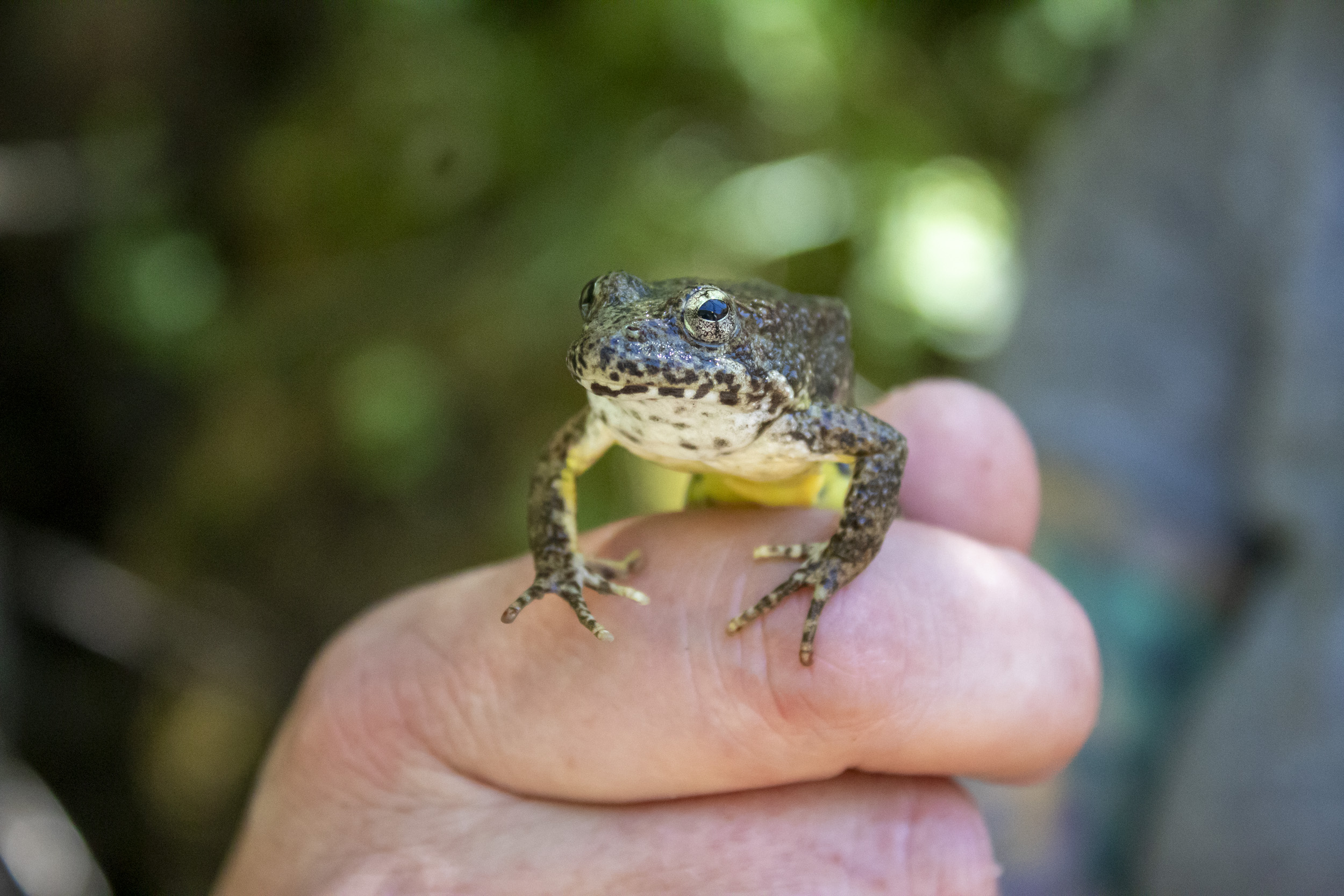
Juvenile Foothill yellow-legged frogs look similar to adults except for their smaller size, more contrasting dorsal coloration and lack of significant yellow on their undersurfaces. Credit: Rebecca Fabbri, USFWS

Four of the Six Distinct Population Segments of the Frog Warrant Protection; comment period Dec. 27, 2021 – February 28, 2022

In response to a Center for Biological Diversity petition and lawsuit, the U.S. Fish and Wildlife Service is proposing Endangered Species Act (ESA) protections for four geographically and genetically distinct population segments (DPS) of the Foothill yellow-legged frog.

“At last, these little lemon-legged frogs, who are such an integral part of our natural stream ecosystems, have gotten the protection they need to survive,” said Jeff Miller, a senior conservation advocate at the Center. “Protecting these precious creatures will also help safeguard the coastal and Sierra foothill rivers and creeks we all rely on for clean drinking water and recreation.”

The Foothill yellow-legged frog, named for its yellow belly and underside of its rear legs, is found from the Willamette Valley in Oregon to the Santa Lucia mountain range in southern California and from the Pacific coast to the western slopes of the Cascade and Sierra Nevada mountains. The amphibian faces several threats, including altered waterflows related to water infrastructure; competition with and predation by non-native species; disease; precipitation and temperature changes related to climate change; high-severity wildfires; water-related recreation; and habitat conversion and degradation.

“We closely examined the condition of each DPS and the threats they face. Using the best available science, we determined which populations warranted protections under the ESA and where future recovery efforts should be focused,” said Michael Fris, field supervisor of the Service’s Sacramento Fish and Wildlife Office.

To assess the condition of each DPS, the Service evaluated data collected on the frog’s occupancy of streams in its historical range. The Service is proposing to list the South Coast DPS and South Sierra DPS as endangered due to a strong pattern of declining stream occupancy, as well as rapid reductions in occupied range. The North Feather DPS and Central Coast DPS are proposed to be listed as threatened due to decreasing levels of stream occupancy and the potential for a variety of threats to cause additional declines. The North Coast DPS and North Sierra DPS are not warranted for listing after the data showed high levels of occupancy in streams located throughout their ranges, making them more resilient to environmental changes and catastrophic events.

“Our goal is to help the foothill yellow-legged frog recover across its range,” said Fris. “Ongoing collaboration with a number of partners will result in positive conservation gains and put this frog on the road to recovery.”

The Service is working closely with partners at the Oakland Zoo, U.S. Forest Service, Garcia and Associates, Pacific Gas and Electric and California Department of Fish and Wildlife to raise foothill yellow-legged frogs in captivity and release them into Plumas National Forest. The first group of captive-reared frogs, 115 in total, was released in July 2020. A second group of 36 was released in April 2021.

A copy of the finding will publish in the Federal Register on December 28, 2021, and is available for public inspection now. The Service plans to develop and propose critical habitat at a later date. The public can submit comments on the proposed listing and read supporting information at www.regulations.gov by searching Docket Number FWS–R8–ES–2021–0108. Comments should be submitted by February 28, 2022.

About USFWS

The U.S. Fish and Wildlife Service works with others to conserve, protect, and enhance fish, wildlife, plants, and their habitats for the continuing benefit of the American people. For more information about our work and the people who make it happen, visit the Sacramento Fish and Wildlife Office website. Connect with us via Facebook, Twitter, YouTube, and Flickr.

The mission of the U.S. Fish and Wildlife Service is working with others to conserve, protect, and enhance fish, wildlife, plants, and their habitats for the continuing benefit of the American people. We are both a leader and trusted partner in fish and wildlife conservation, known for our scientific excellence, stewardship of lands and natural resources, dedicated professionals, and commitment to public service. For more information on our work and the people who make it happen, visit www.fws.gov.

For more information on our work and the people who make it happen, visit http://www.fws.gov/. Connect with our Facebook page, follow our tweets, watch our YouTube Channel and download photos from our Flickr page.

Meghan Snow, Public Affairs Officer, U.S. Fish and Wildlife Service – Sacramento Fish and Wildlife Office and Herald Publisher Allen Payton contributed to this report.


Filed Under: Environment, News

Contra Costa, 22 other DA’s reach settlement with gas station owner for underground storage tank environmental violations

November 22, 2021 By Publisher 1 Comment

Gas station underground storage tank diagram. Source: EPA

$1.1 million in civil penalties; 113 tanks statewide, seven in Contra Costa County

By Bobbi Mauler, Executive Assistant, Contra Costa County Office of the District Attorney

Contra Costa County District Attorney Diana Becton announced today that the Contra Costa County District Attorney’s Office, together with 22 other California District Attorneys and City Attorneys, have reached a settlement with the Orange, California-based Hassan & Sons, Inc., H&S Energy, LLC and H&S Energy Products, LLC (formerly known as Colonial Energy, LLC),  (collectively referred to as “H&S Energy”) over allegations that the companies violated state laws regarding the operation and maintenance of motor vehicle fuel underground storage tanks (“USTs”). The settlement includes $1,100,000 in civil penalties, and investigative costs. H&S Energy has 113 fueling stations in California, of which, seven locations are in Contra Costa County. The settlement follows an investigation by local environmental health agencies of H&S Energy stations’ non-compliance with many provisions of the UST regulations.

The companies, started in 1996, have built and acquired gasoline and convenience stores throughout the state under the Chevron, Texaco, Shell, Extra Mile, and their own, Power Market brand, including locations in Bay Point, Brentwood, Oakley, Pittsburg and Martinez.

“UST owners and operators must comply with the applicable regulations in order to prevent potential harm to the environment,” said D.A. Becton. “H&S Energy was cooperative with the People’s investigation and expended significant resources in order to bring their stations into compliance.”

Under the settlement, which includes a Final Judgment and Permanent Injunction entered in Solano County Superior Court Case No. FCS057332 by the Honorable E. Bradley Nelson, H&S Energy must implement certain compliance assurance programs including hiring an environmental compliance manager and bi-annual environmental audits and reports submitted to the People. In addition, H&S Energy must pay $900,000 in civil penalties and $200,000 in costs. $550,000 is due within five days after entry of judgment, and the remaining $550,000 is due October 22, 2022.

Allen Payton contributed to this report.


Filed Under: Business, District Attorney, Environment, News

Delta Conveyance (tunnel) Project Case Study Workshop on community benefits programs Nov. 17

November 6, 2021 By Publisher 1 Comment

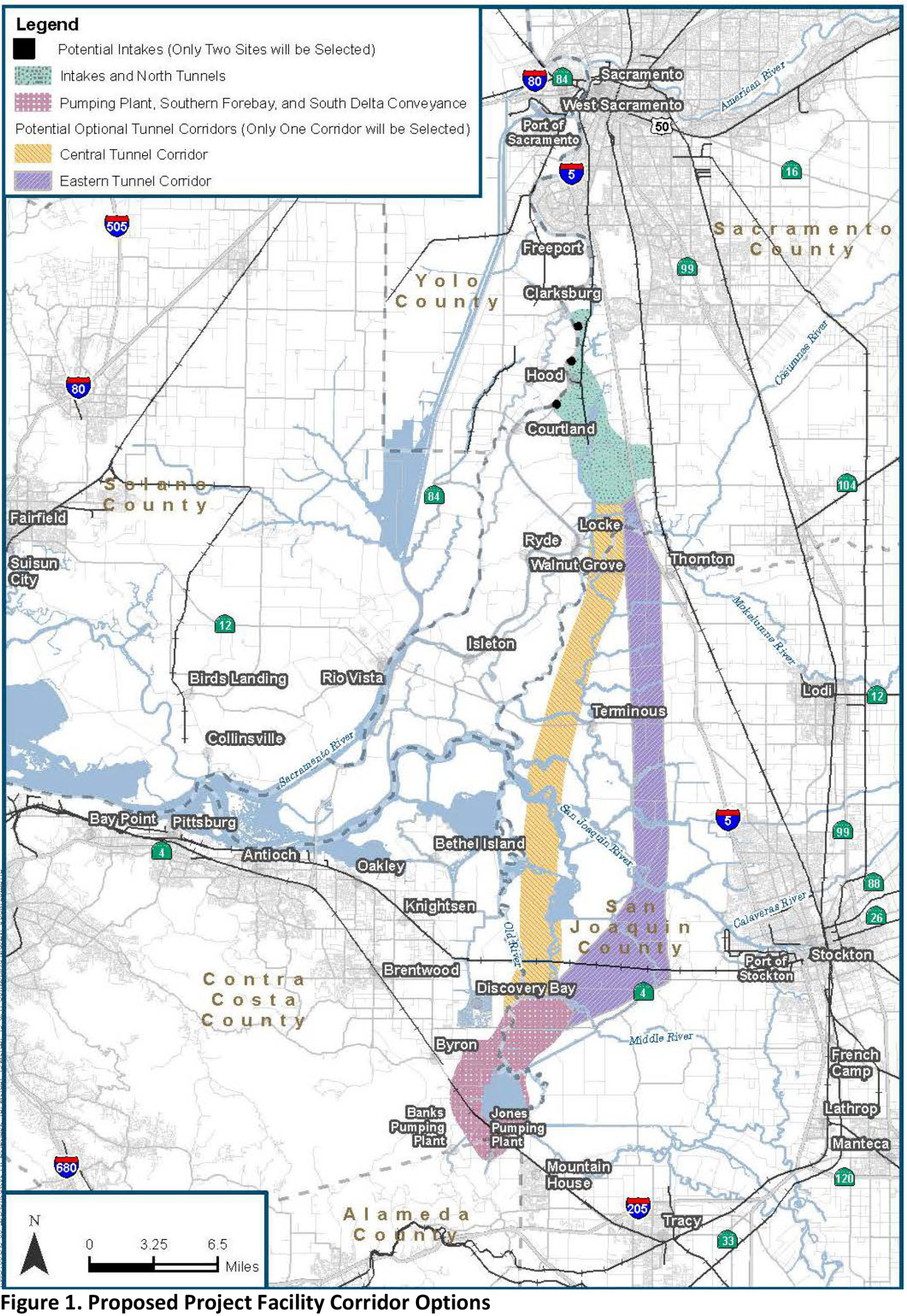
Proposed Delta Conveyance Project Facility Corridor Options. From Scoping Summary Report.

Learn from other projects

Haga clic aquí para ver este aviso en español.

As part of ongoing development of the Community Benefits Program for the proposed Delta Conveyance (tunnel) Project, the Department of Water Resources (DWR) is holding a virtual workshop on Wednesday, November 17th from 6:00pm – 8:00pm to hear and learn from representatives of several different example community benefits programs around the country. (See related articles here and here)

Members of the local Delta community are encouraged to attend this event and hear firsthand experiences about the development and implementation of these programs, including different organizational structures, development timing, important milestones and lessons learned.

There will also be an opportunity to ask the panelists questions and engage in dialogue about their experiences and insights. Although these types of programs are not uncommon, there are various ways to go about setting them up. This workshop gives both DWR and the local community the chance to learn more about how it could be done for the proposed Delta Conveyance Project. (See details of the proposed system, here)

The workshop panelists represent a diverse set of projects and community benefits programs from different parts of the country:

  • Oakland, California, Partnership for Working Families 
    • Ben Beach, Legal Director
  • North Charleston, South Carolina, LowCountry Alliance for Model Communities Port Authority Redevelopment and Transfer Station
    • Omar Muhammed, Executive Director, LowCountry Alliance for Model Communities
  • Morro Bay, California, Castle Offshore Wind Project 
    • Scott Collins, City Manager, City of Morro Bay

While no other project or community benefits program exactly matches the specifics of the proposed Delta Conveyance Project and what might be most appropriate for the Community Benefits Program for this project, the example projects that will be discussed in this workshop offer different and valuable perspectives and examples with varying structures, locations and challenges. In preparing for this workshop, DWR researched community benefits programs for large infrastructure projects that had long-term construction impacts, where the benefits of the project were not local, but impacts of the project were, and where location and potential for environmental justice and economically disadvantaged community concerns were also involved.

Photo: CA Dep’t of Water Resources.

Workshop Details & Registration

  • Wednesday, November 17, 2021 | 6:00pm – 8:00pm | REGISTER HERE
  • Workshop will be conducted on Zoom with a call-in option available

Agenda

  • Welcome and Introductions
  • Presentations from the three project representatives
  • Focused panelist discussion:
    • How did the idea develop in your project?
    • How did the community come together to provide input?
    • When in the project lifecycle did people come together?
    • How did you solicit priorities?
    • How did you formalize the program?
    • How are community benefit funds distributed?
    • How are you measuring and monitoring community benefits?
  • Public questions/discussion

Participation Accommodations & Additional Information

  • Closed captioning will be provided
  • Workshop materials will be available in English and Spanish, and a simultaneous Spanish translation will be offered
  • Workshop access information and materials will be sent out prior to the workshop through Eventbrite
  • If you cannot participate in the workshop but have questions, please email us at DeltaConveyanceCBP@water.ca.gov
  • A recording of the workshop will be posted on the project website, along with the background material, when available

To register, click here.

Filed Under: East County, Environment, News, Recreation, State of California, The Delta

ABAG, MTC adopt final Plan Bay Area 2050 and Environmental Impact Report

October 25, 2021 By Publisher 1 Comment

“$1.4 trillion vision for a more equitable and resilient future for Bay Area residents” in the areas of housing, the economy, transportation and the environment

“Roadmap toward a more affordable, connected, diverse, healthy and vibrant region for all”

Includes “strategies that would produce more than 1 million new permanently affordable homes” and an effort to “Implement a statewide universal basic income” to “provide an average $500 per month payment to all Bay Area households”

The Association of Bay Area Governments (ABAG) and the Metropolitan Transportation Commission (MTC), during their joint meeting Thursday evening, Oct. 21, 2021, unanimously adopted Plan Bay Area 2050 and its associated Environmental Impact Report. The unanimous votes by both boards cap a nearly four-year process during which more than 20,000 Bay Area residents contributed to the development of the new plan.

All six representatives from Contra Costa County, including Supervisors Candace Andersen and Karen Mitchoff, Richmond Mayor Tom Butt and San Ramon Councilman Dave Hudson, who serve on ABAG, as well as Supervisor Federal Glover and Contra Costa City Representative Amy Worth, Mayor of Orinda, who serve on MTC, voted to adopt the plan.

Defined by 35 strategies for housing, transportation, economic vitality and the environment, Plan Bay Area 2050 lays out a $1.4 trillion vision for policies and investments to make the nine-county region more affordable, connected, diverse, healthy and economically vibrant for all its residents through 2050 and beyond. From housing strategies that would produce more than 1 million new permanently affordable homes by 2050 to transit-fare reforms that would reduce cost burdens for riders with low incomes and paths to economic mobility through job training and a universal basic income, the goal of a more equitable Bay Area is interwoven throughout the plan. With a groundbreaking focus on climate change, strategies also are crafted for resilience against future uncertainties, including protection from hazards such sea-level rise and wildfires.

It is a long-range plan charting the course for the future of the nine-county San Francisco Bay Area. Plan Bay Area 2050 will focus on four key issues—the economy, the environment, housing and transportation—and will identify a path to make the Bay Area more equitable for all residents and more resilient in the face of unexpected challenges. Building on the work of the Horizon initiative, this new regional plan outlines strategies for growth and investment through the year 2050, while simultaneously striving to meet and exceed federal and state requirements. The Metropolitan Transportation Commission and the Association of Bay Area Governments are expected to adopt Plan Bay Area 2050 in fall 2021.

“Plan Bay Area 2050 reflects a shared vision that can’t be implemented by any single agency,” explained ABAG Executive Board President and Berkeley Mayor Jesse Arreguín. “To bring all these strategies to fruition will require ABAG and MTC to strengthen our existing partnerships and to form new ones — not just with our cities and counties and the state government, but also with the federal government, businesses and nonprofits.”

What will Plan Bay Area 2050 do? What won’t it do?

Plan Bay Area 2050 outlines a roadmap for the Bay Area’s future. While it pinpoints policies and investments necessary to advance the goal of a more affordable, connected, diverse, healthy and vibrant Bay Area, Plan Bay Area 2050 neither funds specific infrastructure projects nor changes local policies. Cities and counties retain all local land use authority. Plan Bay Area 2050 does identify a potential path forward for future investments – including infrastructure to improve our transportation system and to protect communities from rising sea levels – as well as the types of public policies necessary to realize a future growth pattern for housing and jobs.

Ultimately, Plan Bay Area 2050 reflects a shared vision – one that cannot be implemented by any single organization or government agency. Only through partnership with local, state and federal governments – as well as with businesses and non-profit organizations – will the Plan’s vision come to fruition. Before the Plan is adopted in 2021, MTC and ABAG, along with partner organizations, will create an implementation plan that will advance the strategies outlined in Plan Bay Area 2050.

MTC Chair and Napa County Supervisor Alfredo Pedroza acknowledged the work ahead. “Building and preserving affordable housing. Adapting to sea level rise. Getting more people closer to their jobs and more jobs closer to the people. Sharing prosperity equitably. All of these are big lifts. But the new plan can serve as a north star for the Bay Area’s journey to 2050.”

Among the features that distinguish Plan Bay Area 2050 from previous regional plans is an associated Implementation Plan that details the specific actions ABAG and MTC can take in the next five years to put the new plan into action.

“The Implementation Plan is a commitment to do hard things, not just think about them,” said ABAG-MTC Executive Director Therese W. McMillan. “Even if these steps have to be taken incrementally, they will lead us to a more equitable and resilient Bay Area.”

Housing Strategies

Costs for housing are estimated at $468 billion, with $237 billion budget to preserve existing affordable housing by acquiring “homes currently affordable to low- and middle-income residents for preservation as permanently deed-restricted affordable housing”. An additional $219 billion is budgeted for new, deed-restricted affordable housing and $2 billion to “further strengthen renter protections beyond state law” by limiting “annual rent increases to the rate of inflation, while exempting units less than 10 years old.”

Economic Strategies

The total cost for economic strategies in the plan is $234 billion. Of that amount $205 billion is budgeted to “Implement a statewide universal basic income” and “provide an average $500 per month payment to all Bay Area households to improve family stability, promote economic mobility and increase consumer spending.”

Transportation Strategies

The plan projects to spend a total of $578 billion is projected to be spent on transportation over the next 20 years, with most of that, $389 billion, to “restore, operate and maintain the existing system”. An additional $81 billion will be spent to “expand and modernize the regional rail network” to “better connect communities while increasing frequencies by advancing the Link21 new transbay rail crossing, BART to Silicon Valley Phase 2, Valley Link, Caltrain Downtown Rail Extension and Caltrain/High-Speed Rail grade separations, among other projects.” The third largest budget item for transportation is $32 billion to “enhance local transit frequency, capacity and reliability. Improve the quality and availability of local bus and light rail service, with new bus rapid transit lines, South Bay light rail extensions, and frequency increases focused in lower-income communities.”

Environmental Strategies

A total of $108 billion is programmed for Environmental Strategies. The largest portion of that is $30 billion to “modernize and expand parks, trails and recreation facilities”. An additional $19 billion is budgeted to “adapt to sea level rise” by protecting affected “shoreline communities…prioritizing low-cost, high-benefit solutions and providing additional support to vulnerable populations.

In addition, the plan includes $18 billion to “fund energy upgrades to enable carbon neutrality in all existing commercial and public buildings” through “electrification and resilient power system upgrades”, and another $15 billion to “provide means-based financial support to retrofit existing residential buildings.” To “protect and manage high-value conservation lands”, an additional $15 billion is included in the plan.

The adopted final Plan Bay Area 2050, the EIR, and all the supplemental reports accompanying the new plan are available online at planbayarea.org/finalplan2050.

ABAG is the council of governments and the regional planning agency for the 101 cities and towns, and nine counties of the Bay Area. MTC is the transportation planning, financing and coordinating agency for the nine-county San Francisco Bay Area.

Filed Under: Bay Area, Economy, Environment, Government, Growth & Development, News, Transportation

Contra Costa County Fish and Wildlife Committee accepting grant applications

October 10, 2021 By Publisher Leave a Comment

Source: California Department of Fish & Wildlife

By Maureen Parkes, Office of Communications & Media, Contra Costa County

The Contra Costa County Fish and Wildlife Committee is now accepting applications from individuals and groups interested in enhancing the fish and wildlife resources of the County. Grant applications must be received by Wednesday, January 5, 2022, at 5:00 pm.

The Fish and Wildlife Committee strongly encourages applications related to public education, improving habitat, scientific research, threatened and endangered species, and resolving human/wildlife interaction issues. In addition, the Committee wishes to fund one or more projects that increase collaboration with law enforcement agencies, the court, and community cultural organizations on enforcement issues and education, focusing on communities that may be unaware of local fish and game laws. Projects that provide multilingual signage and educational materials are encouraged.

The Fish and Wildlife Committee awards grants for prospective expenditures to non-profit organizations, schools and government agencies. The Committee generally does not recommend funding for operating costs and overhead, such as benefits or utilities, or ongoing staff support for an organization. Further, projects awarded monies from the Fish and Wildlife Propagation Fund must meet the requirements of Section 13103 of the Fish and Game Code.

Funding for the grant program is generated from fines for violations of the Fish and Game Code and Title 14 of the California Code of Regulations. The Contra Costa County Board of Supervisors receives the Committee’s recommendations and holds final decision-making authority over the awarding of grants.

During the 2021 grant cycle, a total of $60,830.71 was awarded to seven projects. The awards ranged from $4,973.00 to $16,000.00. Application materials may be obtained on the Fish and Wildlife Committee website or by contacting Maureen Parkes of the Contra Costa County Conservation and Development Department by phone at 925-655-2909 or e-mail maureen.parkes@dcd.cccounty.us.


Filed Under: Environment, News

Settlement reached with Ulta Beauty stores for hazardous waste violations

September 20, 2021 By Publisher Leave a Comment

$752,000 in civil penalties

By Scott Alonso, PIO, Contra Costa County Office of the District Attorney

Contra Costa County District Attorney Diana Becton announced today that the Contra Costa County District Attorney’s Office, together with 33 other California District Attorneys and City Attorneys, have reached a settlement for violations of hazardous waste regulations with Ulta Beauty, Inc., Ulta Salon, Cosmetics & Fragrance, Inc., Ulta, Inc., and Possibilities AB, Inc., (collectively referred to as “Ulta”) that includes $752,000 of civil penalties, supplemental environmental projects, and costs. Ulta has five stores in Contra Costa County and 161 facilities overall in California. The settlement follows an investigation of Ulta stores’ improper storage, handling, and disposal of hazardous and other regulated waste and inadequate employee training.

Ulta stores in Contra Costa County are located in Brentwood, Concord, Pinole Pleasant Hill and San Ramon.

“Companies must be held responsible for business practices that pose a harm to the environment.,” said DA Becton. “Ulta was cooperative throughout the investigation and in correcting the issues.”

In fact, Ulta stores in California have adopted and implemented new policies and procedures and enhanced existing training programs designed to properly manage and dispose of hazardous waste products, other regulated waste, and confidential customer consumer information.

Under the settlement, which includes a Final Judgment and Permanent Injunction entered in Solano County Superior Court Case No. FCS057080, by the Honorable Alesia Jones, the corporations must pay $439,500 in civil penalties, $250,000 in costs and $62,500 in supplemental environmental projects. Defendants must also implement certain compliance assurance programs.

Filed Under: Business, Crime, District Attorney, Environment, News

Thousands of acres of East Bay wilderness to be preserved under agreement

September 8, 2021 By Publisher Leave a Comment

Tesla Park ridgetops. Photos courtesy Friends of Tesla Park

Governor, Senator Glazer and Assembly Member Bauer-Kahan reach accord on protecting Tesla’s 3,100-acre unique habitat

CONTRA COSTA – Thousands of acres of East Bay wilderness threatened by the expansion of an off-highway vehicle park will instead be preserved under an agreement reached Monday by Gov. Gavin Newsom and the Legislature, state Sen. Steve Glazer (D-Contra Costa) and Assembly Member Rebecca Bauer-Kahan (D-Orinda) announced.

Carnegie SVRA Trails Only Area. Feb. 2012

The agreement, if approved by the Legislature next week, will end plans to expand the Carnegie State Vehicular Recreation Area into the 3,100-acre Tesla parcel in the southeast corner of Alameda County, east of Livermore along the San Joaquin County line, which scientists have described as a biologically unique habitat and Native Americans have long considered to be a sensitive historical site.

That land will now become a new state park closed to motorized recreation. The state will reimburse the Off-Highway Vehicle fund for the purchase price of the land, its appreciation in value, and the money spent planning the expansion, which was opposed from the start 20 years ago by nearby residents and public agencies. That money will go toward the purchase and development of an off-road park at another location.

“This is a win-win for all involved,” Sen. Glazer said. “Our community and region gets to preserve this natural and cultural treasure while the off-road enthusiasts will keep their current park and receive funding to develop another park on land that’s more suitable to that kind of recreation.”

Assembly Member Bauer-Kahan said she was pleased that the agreement will end years of doubt about the fate of the area’s rich biological and cultural resources.

“We are incredibly thankful that the governor has seen Tesla Park’s value and included it in the ongoing protection of critical natural resources,” Bauer-Kahan said. “It has been my great honor to fight alongside Senator Glazer, the Sierra Club, Friends of Tesla Park and countless organizations and individuals to ensure this land will be protected and enjoyed by all of California’s citizens.”

Preserving the Tesla land was a major priority for environmentalists, including the Sierra Club.

East Bay Regional Park District 2013 Master Plan Map designating Tesla site (yellow area) as a potential regional preserve. Source: EBRPD

“We applaud the decision by the California Legislature and Administration to preserve the important ecological value and biodiversity of Tesla Park by banning off-highway vehicle recreational use,” said Brandon Dawson, director of the Sierra Club California. “Sierra Club California and our local allies have advocated for decades to protect Tesla Park. This agreement represents a major victory for environmentalists across the state.”

“I want to thank Senator Steve Glazer and Assembly member Rebecca Bauer-Kahan for their persistence to protect this valued land,” Dawson said. “This would not be possible without their championing of the area.”

Nancy Rodrigue, a leading member of the Friends of Tesla Park steering committee and Livermore resident, said she was proud that years of hard work and persistence paid off.

“Tesla Park will now forever be protected with no motorized recreation. The future holds Tesla as a protected native landscape for hikers, history buffs, nature lovers, research and education,” Rodrigue said. “Saving Tesla Park has been a long, difficult, and now rewarding journey. We want to thank the many local officials, public agencies, community organizations and citizens who saw Tesla’s true value – its irreplaceable biodiversity and cultural riches. We are grateful for the tremendous work of so many, including Senator Glazer and Assemblymember Bauer-Kahan, for saving Tesla Park as a legacy for future generations.”

Historic Tesla townsite.

Senator Glazer has been a leading voice in the Legislature to preserve Tesla and turn it into a park for non-motorized use. He has carried legislation every year since 2018 to allow or require the Department of Parks and Recreation to end its plans to expand the Carnegie off-road park and instead preserve the Tesla land, either by selling it to a third party or keeping it under state control.

That effort began as a partnership with former Assembly Member Catharine Baker of Livermore. Baker helped rally local officials to the cause, but Glazer’s early bills, while passing in the Senate, were blocked in the Assembly despite Baker’s support.

Assembly Member Bauer-Kahan joined the battle to save the Tesla parcel after her 2018 election and was able to persuade her fellow Assembly members, including the leadership, to join the Senate’s effort to preserve the land.

With both houses of the Legislature united, Glazer and Bauer-Kahan were finally able to convince the Newsom Administration this year that the idea of expanding the Carnegie park was doomed to failure.

 Their argument was bolstered by a Superior Court judge’s ruling that the State Department of Parks and Recreation’s 2016 environmental impact report and general plan for Carnegie State Vehicular Recreation Area, which included opening the Tesla land to off highway vehicle (OHV) recreation, was legally invalid.

Corral Hollow Creek in Tesla Park.

“I want to thank Senate President Pro Tem Toni Atkins and Assembly Speaker Anthony Rendon for their vision in seeing that this land was not appropriate for off-road vehicle use and for finding a way to preserve it,” Glazer said. “I also want to thank Gov. Newsom for taking a fresh look at this issue and agreeing to move in a new and better direction.”

The agreement will repay the Off-Highway Vehicle Trust Fund $18.3 million for the estimated current value of the land plus $2.4 million that the fund used for planning the current park’s expansion. Another $11.5 million will be set aside for planning and construction of an alternative off-road park, while $1 million will go toward turning the Tesla property into a non-OHV park.

The Tesla land offers rare and valuable diversity such as Blue Oak woodland, mountain savannah grassland, scrub sage, and riparian woodlands. It is a richly biodiverse area that has drawn naturalists, ecologists, zoologists, and other scientists to that land for more than 100 years to study nature and natural systems.

It has been known by generations of scientists for its extraordinary biodiversity, including numerous threatened and endangered species. It is a critical linkage wildlife habitat corridor, a California Native Plant Society botanical priority protection area and Audubon important bird area. Native Californian archaeological and ceremonial sites and the historic town site and coal mine of Tesla are also located on the 3,100-acre Tesla site.

See more photos and information at SaveTeslaPark.org.

Filed Under: Environment, News, Parks

Save Mount Diablo earns national recognition

August 27, 2021 By Publisher 1 Comment

Save Mount Diablo’s stunning Curry Canyon Ranch is surrounded on three sides by Mount Diablo State Park. Save Mount Diablo currently owns and manages 19 properties and, with its partners, has protected more than 120,000 acres in 50 parks and preserves in the region. Photo credit: Al Johnson.

Strong commitment to public trust and conservation excellence

By Laura Kindsvater, Communications Manager, Save Mount Diablo

One thing that unites us as a nation is land: Americans strongly support saving the open spaces they love. Since 1971, Save Mount Diablo has been doing just that for the people of the San Francisco Bay Area. Save Mount Diablo has just earned an important recognition and distinction receiving its renewed national land trust accreditation award – proving once again that, as part of a network of over 450 accredited land trusts across the nation, it is committed to professional excellence and to maintaining the public’s trust in its conservation work.

Save Mount Diablo provided extensive documentation and was subject to a comprehensive third-party evaluation prior to achieving this distinction. The Land Trust Accreditation Commission awarded renewed accreditation, signifying its confidence that Save Mount Diablo’s lands will be protected forever. Accredited land trusts now steward almost 20 million acres – the size of Denali, Yellowstone, Grand Canyon, Glacier, Everglades, and Yosemite National Parks combined.

“It is exciting to recognize Save Mount Diablo’s continued commitment to national standards by renewing this national mark of distinction,” said Melissa Kalvestrand, executive director of the commission. “Donors and partners can trust the more than 450 accredited land trusts across the country are united behind strong standards and have demonstrated sound finances, ethical conduct, responsible governance, and lasting stewardship.”

Save Mount Diablo is one of 1,363 land trusts across the United States according to the Land Trust Alliance’s most recent National Land Trust Census. A complete list of accredited land trusts and more information about the process and benefits can be found at www.landtrustaccreditation.org.

“Renewing our national accreditation shows Save Mount Diablo’s ongoing commitment to permanent land conservation in the Mount Diablo area,” said Ted Clement, Executive Director. “We are a stronger organization than ever for having gone through the rigorous accreditation renewal process. Our strength means the special natural places we protect have a better chance of being protected forever, making the Mount Diablo area an even greater place for us and our children.”

About Save Mount Diablo

Save Mount Diablo is a nationally accredited, nonprofit land trust founded in 1971 with a mission to preserve Mount Diablo’s peaks, surrounding foothills, watersheds, and connection to the Diablo Range through land acquisition and preservation strategies designed to protect the mountain’s natural beauty, biological diversity, and historic and agricultural heritage; enhance our area’s quality of life; and provide educational and recreational opportunities consistent with the protection of natural resources. Learn more at www.savemountdiablo.org.

About the Land Trust Accreditation Commission

The Land Trust Accreditation Commission inspires excellence, promotes public trust, and ensures permanence in the conservation of open lands by recognizing organizations that meet rigorous quality standards and strive for continuous improvement. The commission, established in 2006 as an independent program of the Land Trust Alliance, is governed by a volunteer board of diverse land conservation and nonprofit management experts. For more, visit www.landtrustaccreditation.org.

Filed Under: Environment, News

  • « Previous Page
  • 1
  • …
  • 3
  • 4
  • 5
  • 6
  • 7
  • …
  • 13
  • Next Page »
Monicas-11-25
Deer-Valley-Chiro-06-22

Copyright © 2026 · Contra Costa Herald · Site by Clifton Creative Web