• Home
  • About The Herald
  • Local Agencies
  • Daily Email Update
  • Legal Notices
  • Classified Ads

Contra Costa Herald

News Of By and For The People of Contra Costa County, California

  • Arts & Entertainment
  • Business
  • Community
  • Crime
  • Dining
  • Education
  • Faith
  • Health
  • News
  • Politics & Elections
  • Real Estate

California colleges agree on how to interpret in-state tuition law for illegal immigrant students

May 8, 2024 By Publisher Leave a Comment

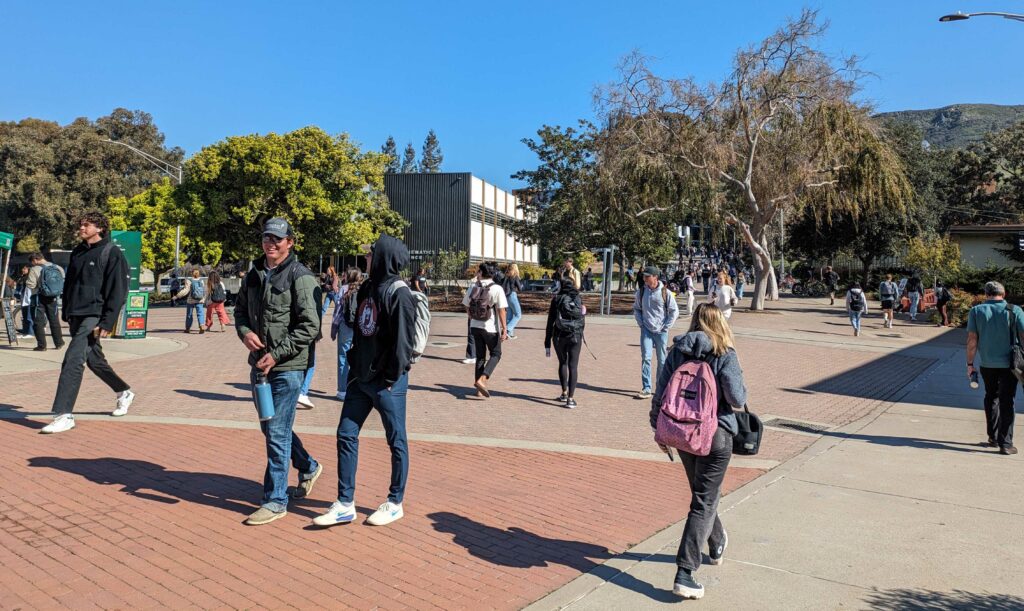
Students between classes at California Polytechnic State University, San Luis Obispo. Credit: Ashley Bolter / EdSource

Some have been exempt from paying out-of-state tuition since 2001

By Zaidee Stavely, EdSource – Republished with permission

More than 20 years ago, California passed a law allowing some undocumented immigrant students to attend college with in-state tuition, if they meet certain requirements.

But immigrant rights advocates say many students who should have been eligible have been wrongfully denied in-state tuition because of confusion over requirements, misinformation and different interpretations of the law at different college campuses.

“We lose that incredible brain power and colleges are losing enrollment,” said Nancy Jodaitis, director of higher education for Immigrants Rising, a nonprofit organization that advocates for undocumented people to achieve educational and career goals.

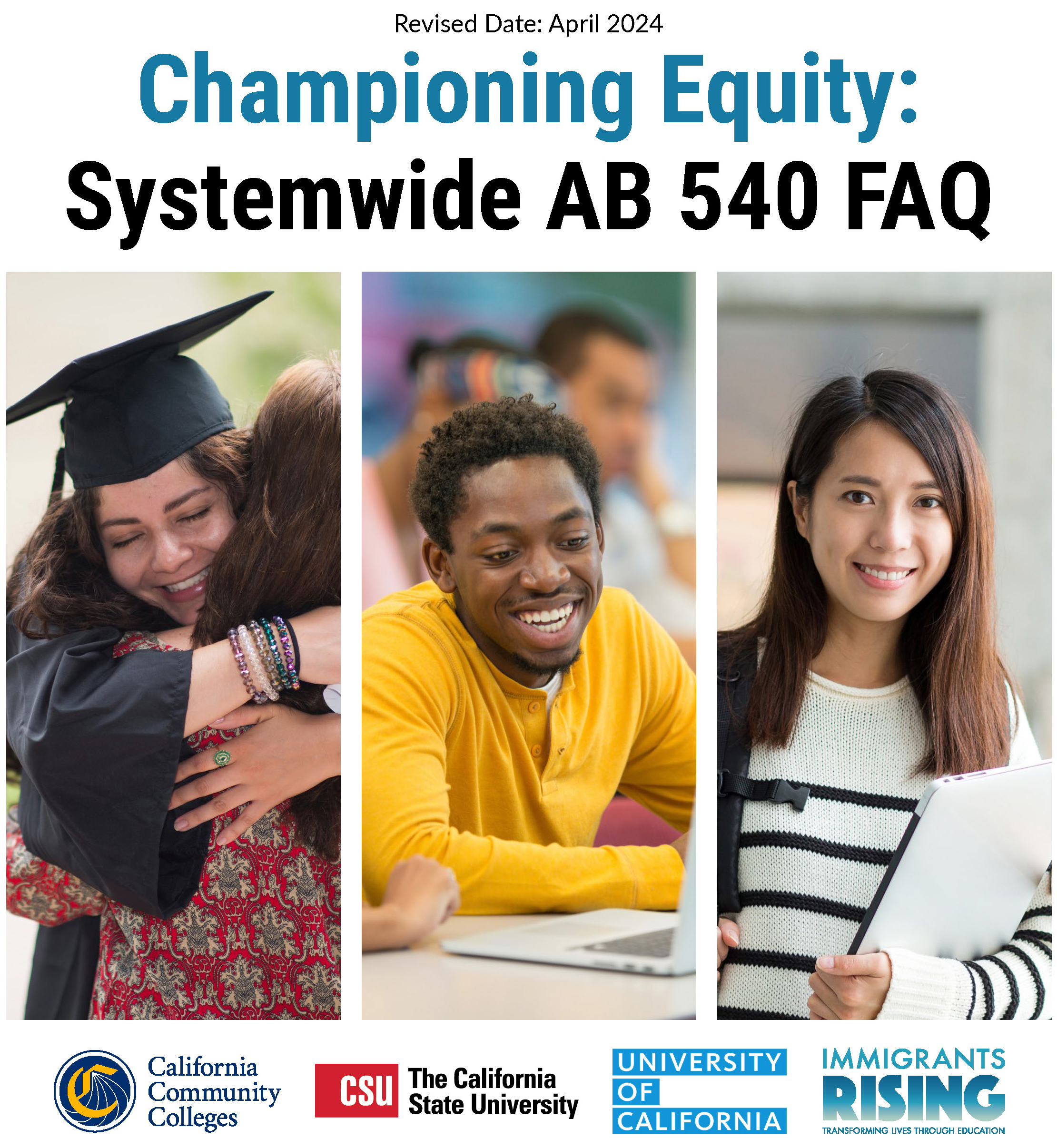
Immigrants Rising brought together officials from all three public college systems — California Community Colleges, California State University and University of California — to discuss and agree on answers to frequently-asked questions about the law.

Source: Immigrants Rising

The result is a document called the Systemwide AB 540 FAQ, which all three systems have now signed. The document includes answers to 59 questions, such as:

  • What if a student graduated from a California high school (completing three years’ worth of high school credits), but did not attend three years at a California high school?
  • Does a student have to take classes full time for their attendance to count?
  • Does all their coursework have to be taken at the same school?

Spokespeople from UC, CSU and California Community Colleges all celebrated the document.

Paul Feist, vice chancellor of communications and marketing for the California Community Colleges Chancellor’s Office, said the document is particularly important because there are several different laws regarding the nonresident tuition exemption.

The first bill exempting some undocumented immigrants from out-of-state tuition, Assembly Bill 540, was signed into law in 2001. Since then, three other bills have been passed to expand the law, in 2014, 2017 and 2022.

“While the intent was to expand access to AB 540 financial assistance, they had the unintended effect of making it more difficult to navigate,” Feist said. “This FAQ is designed to provide clearer explanations and provide additional resources in advising students.”

Under current California law, students who are undocumented or have temporary protection from deportation such as Deferred Action for Childhood Arrivals (DACA), or who are U.S. citizens or permanent residents, are eligible for in-state tuition and state financial aid, if they attended at least three years of high school, adult school or community college in California and obtained a high school diploma or equivalent, an associate degree or fulfilled the minimum requirements to transfer to a UC or CSU.

Access to state financial aid and in-state tuition can be a critical factor for undocumented students, who are barred from receiving federal financial aid. Without the law in place, some of them would be charged tuition rates for international students, often much higher than in-state tuition.

“This is huge,” said Maria Gutierrez, a college counselor at Chabot College in Hayward and a doctoral student at San Francisco State University. “It helps us be aligned and have something in writing.”  Before the FAQ document, Gutierrez says college staff in charge of approving exemptions from out-of-state tuition were sometimes afraid to make decisions without written proof of how to interpret the law.

Gutierrez herself has benefited from AB 540. She came to the U.S. when she was 5 years old on a visa, which later expired. She attended elementary, middle and most of high school in California. She also graduated from high school in California. But when she applied to attend community college in California, different campuses disagreed on whether she was eligible for in-state tuition because she had spent two years of high school in Utah. At the time, a second law had recently been passed to allow colleges to consider years of attendance in elementary and middle school for AB 540 eligibility.

“One college that I went to in So Cal, I was approved for AB 540. When I had to go back to the Bay Area, I was not approved for AB 540. So then I was confused that there was this inconsistency,” Gutierrez said.

A few years later, when she applied to transfer to a four-year college, both UC and CSU campuses told her she was not eligible for in-state tuition, even though by then, a law had passed that clarified that attendance at community college could be counted toward the requirements. She spent a semester paying out-of-state tuition at San Jose State University, before the university finally acknowledged she was legally eligible for in-state tuition.

As a college counselor, Gutierrez continues to meet students who have been incorrectly told they are not eligible for in-state tuition.

“It’s crazy because in reality it hasn’t changed much,” she said. However, she said, the financial burden is harder now, because most students graduating from high school cannot apply for work permits under DACA, because the government has not accepted new applications since 2017.

“I see my students now and I see the struggles they’re going through. If I didn’t have DACA, I honestly don’t think I would be where I am now,” Gutierrez said. “There’s no way that I would’ve been able to pay nonresident fees or wait for whoever it is that is determining that to learn what they need to do for me to be able to go to college.”

Advocates say they hope the document will help colleges give correct information and avoid students having to research on their own for information.

California also recently streamlined the process for undocumented students to apply for financial aid and exemption from in-state tuition on the same application when they fill out the California Dream Act application. In the past, students had to both fill out a California Dream Act application and an AB 540 affidavit form for each college. Now, the AB 540 form will be part of the same application.

Diana Aguilar-Cruz said that change is significant. Aguilar-Cruz is currently pursuing a master’s degree in public health at Cal State Fullerton. When she first began her undergraduate education at Cal Poly Pomona, she was charged nonresident tuition, which was almost double the in-state tuition. She had immigrated to the U.S. from Mexico City in 2015, when she was 14 years old, and lived with her grandmother in Baldwin Park while attending high school.

She had completed a California Dream Act application, but no one told her she also had to complete a separate form. After researching it herself online, she found the form and completed it, at which point the university finally changed her tuition to in-state.

“If I didn’t find it in my Google search, would I be paying in-state tuition for my four years of college?” Aguilar-Cruz said. “I always think to myself, what would have happened if I was a more fearful student or a student who did not have a strong support system at home?”

According to the Renewing the Dream page on the California Student Aid Commission’s website, “In 2021-22,  only 29% to 30% of undocumented college students who applied for financial aid through the California Dream Act Application (CADAA) ultimately enrolled in school. Moreover, only 14% of California’s estimated undocumented student population in postsecondary education ultimately received state financial aid.”

Allen D Payton contributed to this report.


Filed Under: Education, Finances, Immigration, News, State of California, Youth

Contra Costa County renews partnership with CHP to launch Start Smart

April 18, 2024 By Publisher Leave a Comment

Free class to develop responsible, young drivers

By Isiah Thompson, Departmental Community and Media Relations Coordinator, Contra Costa County Probation Dept. 

Martinez, CA – Contra Costa County Probation has renewed their partnership with California Highway Patrol (CHP) to prepare and develop responsible young drivers. The partners will host the CHP’s Start Smart classes at 50 Douglas Drive, Ste. 200, in Martinez. Dates will be offered in the future and will be posted on the Probation Department’s website and social media sites.

According to the National Highway Traffic Safety Administration, the leading cause of death for Americans 15-20 years old is motor vehicle collisions. The California Highway Patrol’s goal is to reduce the death rate among teenagers caused by these collisions. Start Smart provides teens and their parents/guardians with an interactive safe driving awareness class that will illustrate how poor choices behind the wheel of a vehicle can affect the lives of numerous people. Start Smart also focuses on the responsibilities of newly licensed drivers, the responsibilities of parents/guardians, and the collision-causing elements for new drivers, especially males, such as excessive speed, driving under the influence, and distracted driving. Start Smart teaches what precautions to take to stay safe, such as seatbelt safety, collision avoidance techniques, and what to do when involved in a collision.

“We are excited to host Smart Start. This partnership with California Highway Patrol provides youth in Contra Costa County with the opportunity to gain invaluable knowledge, that ultimately creates safer drivers, and safer communities,” said Esa Ehmen-Krause, Chief Probation Officer.

The classes are FREE to the participants, who will receive a certificate of completion that may be utilized to reduce vehicle insurance fees.


Filed Under: Central County, CHP, Probation, Youth

Cutting-edge procedure puts Clayton Valley Charter star athlete back on track

April 5, 2024 By Publisher Leave a Comment

Zoe Lahanas, a star athlete at Clayton Valley Charter High School, is excelling after surgery and sports rehab at Kaiser Permanente. Photo: Kaiser Permanente

The Kaiser Permanente Diablo Sports Medicine Department takes a whole-team, integrated approach to treating injured athletes.

By Eunice Park, Kaiser Permanente

In 2021, Zoe Lahanas, then a high school freshman at Clayton Valley Charter in Concord, was a competitive athlete in soccer, swim, and track and field.

Lahanas strained her left knee playing soccer, so she took a break from it. She continued with track, winning a medal for high jump. The day after that win, she returned to soccer and injured her meniscus and tore her anterior cruciate ligament (ACL) in her right knee.

The family wanted a physician who could perform a newer technique for ACL reconstruction, called a quad tendon autograft.

“Our team approach has created an incredibly unique partnership, which has been the secret to our success.” – Colin Mansfield, MD

“We interviewed three doctors to find the best one,” said Lahanas’ mother, Samantha Strong, a retired doctor.

The best one was Colin Mansfield, MD, a sports surgeon in the Kaiser Permanente Diablo Sports Medicine Department.

“Dr. Mansfield is on the cutting edge,” Dr. Strong said. “Zoe went from not being able to do anything in July to winning huge track meets the following April because of the ACL surgery.”

She benefited from Kaiser Permanente’s integrated sports rehab teams, which operate under a data-driven approach that focuses on getting athletes back to their chosen sport. Lahanas’ diligence and dedication, as well as the care from the surgical and physical therapy teams led to her successful recovery.

“Zoe has really been able to excel,” Dr. Mansfield said. “As soon as she returned to sports, she was making personal records.”

A whole-team approach

Sports medicine doctors work with athletic trainers at local high schools. Zoe’s athletic trainer at her high school diagnosed her ACL tear and contacted a Kaiser Permanente sports medicine doctor who got Lahanas an appointment within two days.

“That kind of communication and facilitation of care is really what makes the system so phenomenal,” Dr. Strong said.

As a busy referral site for challenging surgeries and injuries from other areas, the department offers the full spectrum of sports care, from advanced athlete recovery programs to state-of-the-art joint restoration procedures.

“Something that maybe not everyone understands about Kaiser is that we really are working at the highest levels with the newest technology,” Dr. Mansfield said. “Our team approach has created an incredibly unique partnership, which has been the secret to our success. I’ve been so fortunate to be inspired and learn from so many talented mentors and colleagues within our department.”

Brigham Wise, MD, a sports medicine physician with the Kaiser Permanente Diablo Sports Medicine Department, says the department’s strengths are its integration and collaboration.

“It’s a whole-team approach, and we’ve got great physicians and surgeons and excellent [physical] therapists,” Dr. Wise said. “We also focus on prevention to keep patients on the field rather than in our office.”

Getting patients back to doing what they love

The Kaiser Permanente Diablo Sports Medicine Department’s priority is to return patients to their normal activities as soon and as safely as possible. The group serves a large and diverse population. Patients range in age and goals.

“I really enjoy helping people get back to doing what they love,” said Dr. Wise. “That includes high school and college athletes, as well as the weekend warriors who just want to get back to playing pickleball or running their next marathon.”

Now a high school senior, Lahanas was able get back to the sport she loves.

Lahanas is a track star winning medals in the Junior Olympics and is being recruited actively by NCAA Division 1 colleges.

“What they have done at Kaiser Permanente in making things right is amazing,” Dr. Strong said. “Kaiser has done an incredible job of taking care of us.”


Cutline: Zoe Lahanas, a star Clayton Valley Charter High School athlete, is excelling after surgery and sports rehab at Kaiser Permanente. Photo: Kaiser Permanente


Filed Under: Central County, Health, News, Sports, Youth

30th Contra Costa Annual César E. Chávez commemorative celebration & 2024 Youth Hall of Fame Awards presentation March 26

March 25, 2024 By Publisher Leave a Comment

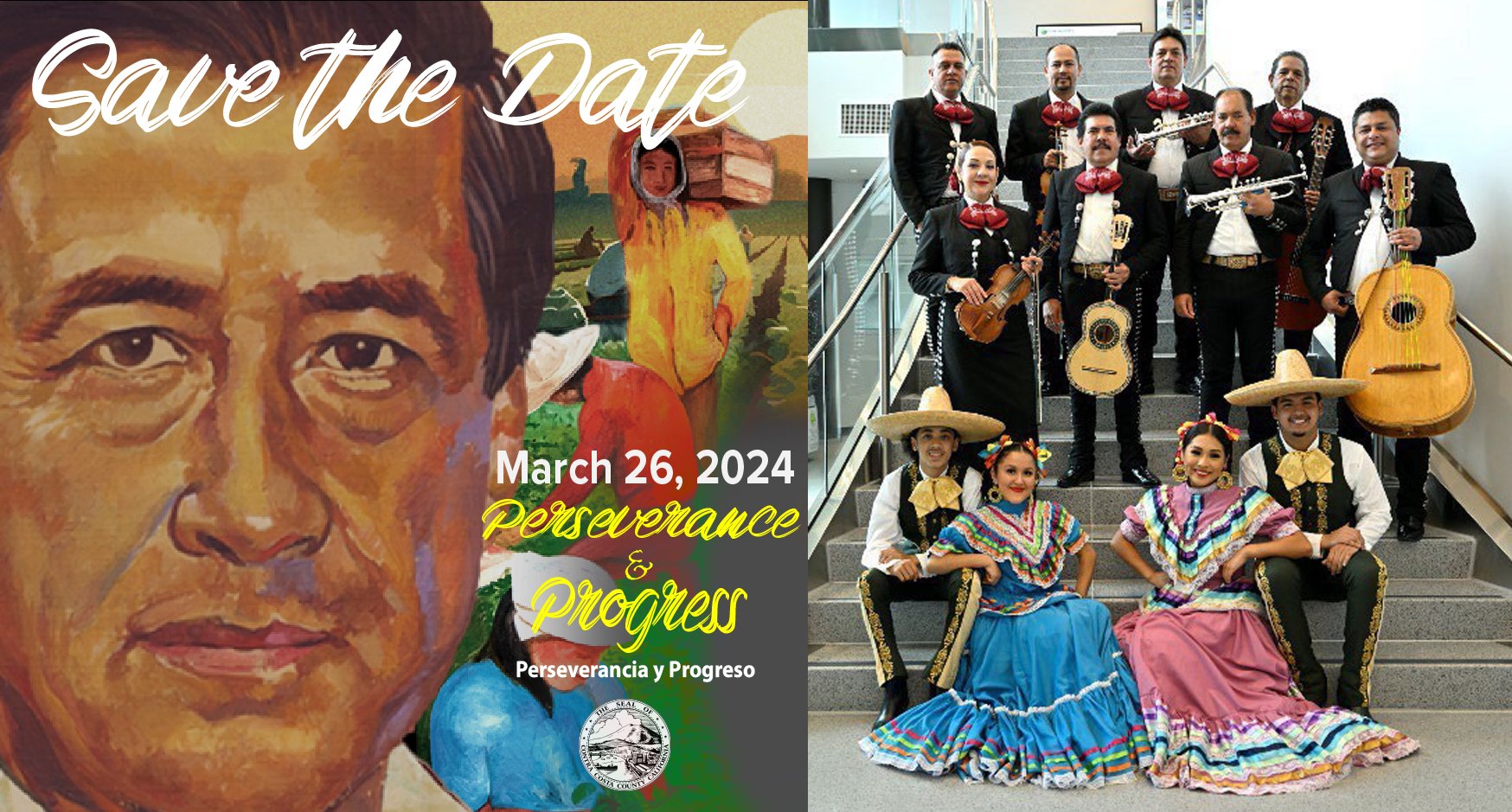
Ballet Folklórico Netzahualcoyotl dancers will perform accompanied by Mariachi Monumental. Photo from Contra Costa County District 5 Chief of Staff David Fraser.

Únase a nosotros el martes 26 de marzo de 2024 para la 30ª Celebración Conmemorativa Anual de César E. Chávez.

During Contra Costa County Board of Supervisors meeting

This year’s theme: Perseverance & Progress – Perseverancia y Progreso.

By Kristi Jourdan, PIO, Contra Costa County

(Martinez, CA) – The Contra Costa County Board of Supervisors will honor César E. Chávez in a celebration recognizing his commitment to social justice and respect for human dignity. The 30th Annual César E. Chávez Commemorative Celebration will be at 11 a.m., Tuesday, March 26, in Board Chambers at 1025 Escobar Street in Martinez.

“We honor César E. Chávez and recognize his legacy of fighting injustice and improving the lives of farmworkers, their families, and so many others. We are inspired to once again commit ourselves to service to others,” said Board Chair Supervisor Federal Glover. “We also recognize our 2024 Youth Hall of Fame awardees whose commitment to service and community are to be celebrated and are the force moving forward Cesar Chavez’s legacy.”

The theme for this year’s celebration is Perseverance & Progress – Perseverancia y Progreso. The festival will feature keynote speaker Contra Costa Community College District Trustee Fernando Sandoval who was raised in the City of Pittsburg where he also attended school. Fernando joined the U.S. Navy like Cesar Chavez. Fernando played an instrumental role aboard the USS Enterprise during the Vietnam War, where his expertise in data systems previewed the vital importance of STEM education, a field he continues to support passionately. Fernando’s book, “From Tortilla Chips to Computer Chips,” is a testament to his life’s work and an educational and motivational touchstone for students and educators alike. Fernando continues to embody the value of education, community, and family like Cesar Chavez.

The event will include presentation of the 2024 Youth Hall of Fame Awards to students who make outstanding community contributions, live performances by Mariachi Monumental and Ballet Folklórico Netzahualcoyotl, spoken word performance by Jose Cordon, and celebratory remarks from members of the Board of Supervisors.

County’s 2024 Youth Hall of Fame Awards winners:

High School Awardees:

Volunteerism: Mariella Cajina, Carondelet High School

Teamwork: Neil Chandran, Monte Vista High School

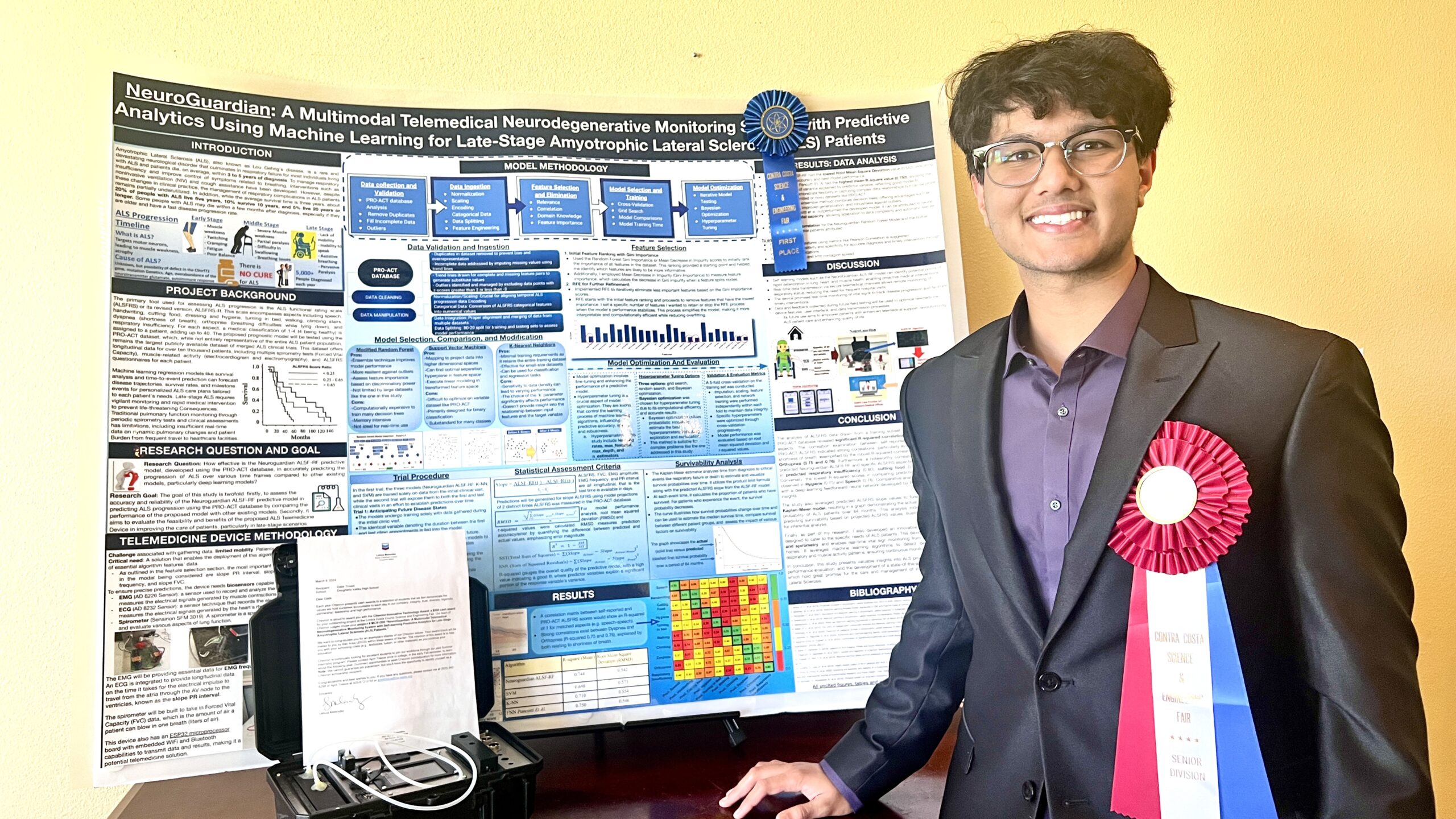
Perseverance: Aditya Narayan, Dougherty Valley High School

Leadership & Civic Engagement: Morelia Gil-Cubillo, Antioch High School

Good Samaritan: Nitya Varanasi, California High School

Innovation and Empowerment: Alice Zhou, Miramonte High School

Middle School Rising Stars:

Volunteerism Rising Star: Samhita Chikoti, Gale Ranch Middle School

Leadership & Civic Engagement Rising Star: Dhruv Subramanian, Windermere Ranch Middle School

The annual celebration honors the diversity and richness of our community. Community members can also join the event live on Contra Costa Television channels and the County’s website.

To learn more about the César E. Chávez Ceremony, visit www.contracosta.ca.gov/6039 on the Contra Costa County website. The community can also watch the event live online at www.contracosta.ca.gov/6086 or www.contracostatv.org. The celebration will broadcast live on Contra Costa Television channels: Comcast Cable 27, ATT/U-Verse 99, and Astound 32 & 1027.

Filed Under: Community, Education, History, News, Supervisors, Youth

DeSaulnier announces 2024 Congressional Art Competition for high school students

February 20, 2024 By Publisher Leave a Comment

2022 District CA-11 Congressional Art Competition winner, “Growing Up” by Menglin Cai of Danville. Source: Office of Congressman Mark DeSaulnier (when he represented the 11th District)

Deadline for submittals is April 5th

Walnut Creek, CA – Today, Congressman Mark DeSaulnier (D, CA-10) announced he will participate in the nationwide 2024 Congressional Art Competition. High school artists living in California’s 10th Congressional District may begin submitting original artwork to his office virtually from now through Friday, April 5th. The winning piece will be selected by a panel of local judges who will view all artwork electronically and announced at a reception to celebrate all participants following the submission deadline.

Participants may submit one photograph or scan of their artwork, taken in the highest possible resolution, to kaylee.deland@mail.house.gov. Submissions must include the Student Release Form. Artwork entered in the contest may be up to 26 inches by 26 inches, may be up to 4 inches in depth, and not weigh more than 15 pounds. If your artwork is selected as the winning piece, it must arrive framed and must still measure no larger than the above maximum dimensions.

  • Paintings – including oil, acrylics, and watercolor
  • Drawings – including pastels, colored pencil, pencil, charcoal, ink, and markers (It is recommended that charcoal and pastel drawings be fixed.)
  • Collages – must be two dimensional
  • Prints – including lithographs, silkscreen, and block prints
  • Mixed Media – use of more than two mediums such as pencil, ink, watercolor, etc.
  • Computer-generated art
  • Photography

All entries must be original in concept, design and execution and may not violate any U.S. copyright laws. Any entry that has been copied from an existing photo or image (including a painting, graphic, or advertisement) that was created by someone other than the student is a violation of the competition rules and will not be accepted. Work entered must be in the original medium (that is, not a scanned reproduction of a painting or drawing).

The rules for the 2024 competition are available here or on House.gov.

“Every year I am so impressed by the talent of the students in our district who participate in the Congressional Art Competition,” said DeSaulnier. “I am pleased to again host this event as an opportunity for young artists to showcase and be recognized for their creativity.”

The competition is open to all high school students living in California’s 10th Congressional District. The winning piece will be displayed in the U.S. Capitol and the winner will be invited to Washington D.C. to attend a national reception honoring winners from around the country. All submissions must be emailed to Kaylee.deland@mail.house.gov no later than 5:00 p.m. PT on April 5, 2024.

The Congressional Art Competition is a nationwide high school visual art competition to recognize and encourage artistic talent in the nation and in each congressional district. Since the Competition began in 1982, more than 650,000 high school students have participated. Complete contest guidelines and submissions forms are available on the Congressman’s website here. For more information or help submitting artwork, please contact DeSaulnier’s office at 925-933-2660.

Filed Under: Arts & Entertainment, Education, Government, News, Youth

Winners of first Contra Costa Shark Tank Youth Competition winners announced

February 12, 2024 By Publisher Leave a Comment

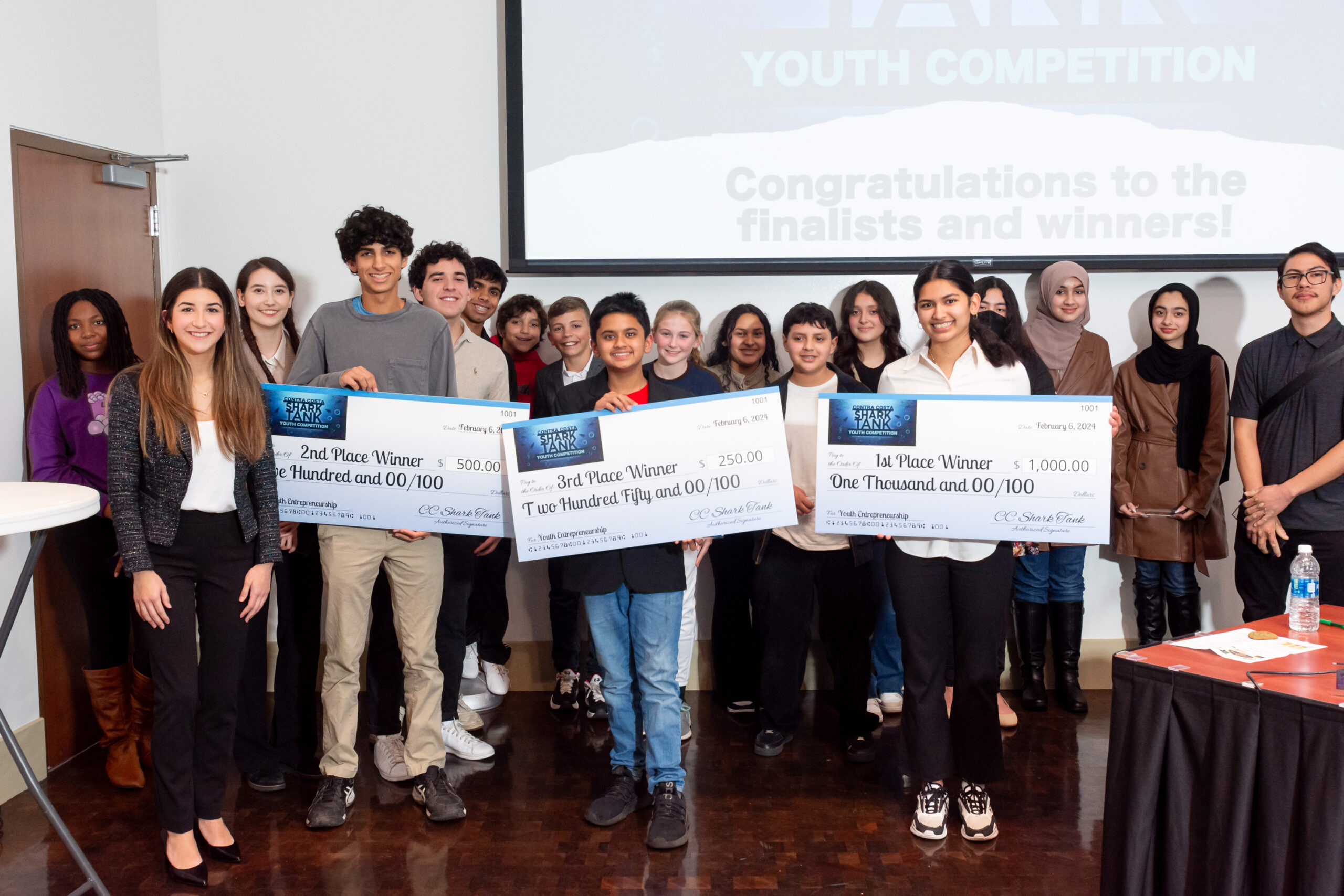
Competition founder Maya Hammerman with second place winner Ronen Jain, third place winner Archit Kundu and first place winner Fatimah Hussain holding their ceremonial checks, as the other finalists look on following the Finalist Pitch Event on Tues., Feb. 6, 2024. Source: Contra Costa Shark Tank

Three winners receive $1,750 in prizes at Finalist Pitch Event

By Maya Hammerman, Founder, Contra Costa Shark Tank Youth Competition

Three winners were declared in the first Contra Costa Shark Tank Youth Competition. The competition, open to all Contra Costa County students in grades Kindergarten through 12th grade, is a fun way to promote youth entrepreneurship.

“The Finalist Pitch Event was a wonderful culmination of over a year of planning to bring the competition to life,” explains high school junior Maya Hammerman, the competition founder and one of the judges. “The ten finalists did an incredible job presenting their businesses to the judges and community members at the sold-out event. They have inspired many young people in our county to explore entrepreneurship.”

First Place

The first-place prize of $1,000 was awarded to Fatimah Hussain, a senior at Dougherty Valley High School, for her business Workout Wizard. “From the moment I got the finalist letter to the day I presented on the Contra Costa Shark Tank’s stage, the entrepreneurship journey has been extremely rewarding,” said Hussain. “To win the first-place prize is a dream come true, and I hope to continue inspiring fellow youth entrepreneurs to follow their passions and never give up. The best time to build a business is now, so what are you waiting for?”

Second Place

The second-place prize of $500 was awarded to Ronen Jain, a sophomore at Monte Vista High School, for his business ElderSafe. “I’m beyond thrilled to be one of the winners of this competition after the countless hours I’ve spent perfecting my app,” said Jain. “It was super exciting to get direct feedback from the judges and attendees about my business and how they would use it.”

Third Place

The third-place prize of $250 was awarded to Archit Kundu, a 5th grade student at Bella Vista Elementary School, for his business Experimental Kids. “Contra Costa Shark Tank is a great opportunity and winning third place gives me the confidence to take this business to the next level and make STEM learning fun for all the kids (5- 12 years old),” said Kundu. “Also, it was a learning experience to present my views in front of such great judges and such a large audience.”

Learn more about all the finalists, here and here.

See video of the Finalist Pitch Event. For more video and photos from the event visit www.contracostasharktank.org.

Follow on Instagram to stay updated on future competitions.

Sponsors for the competition include Chevron, Visa, PG&E, Lafayette Chamber of Commerce, Girls Crushing It, and Campolindo Parents Club.

Filed Under: Business, Education, News, Youth

7 San Ramon Valley Unified students advance in local Shark Tank Competition 

January 27, 2024 By Publisher Leave a Comment

SRVUSD student entrepreneurs of 10 finalists to be judged by global business executives Feb. 6

By Ilana Israel, Director of Communications, Family and Community Engagement, San Ramon Valley Unified School District

Of the top ten finalists in the Contra Costa Shark Tank Youth Competition that have been announced, including three teams, five placements went to seven students from Bella Vista, Venture, Dougherty Valley High School, Monte Vista High School, and San Ramon Valley High School in the San Ramon Valley Unified School District. The seven students’ entrepreneurial projects cover various industries, including health care, environmentalism, and health and wellness.

The over 300 Contra Costa Shark Tank Youth Competition applicants were evaluated based on their enthusiasm for entrepreneurship, how the business is presented, the viability of the business and how the prize money will be used to launch a new business or grow an existing business.

The annual competition is open to all Contra Costa County students in kindergarten to 12th grade. The program promotes youth entrepreneurship and teaches important life skills, including perseverance, self-confidence, and financial literacy. Winners receive $1,000 (first place), $500 (second place), and $250 (third place). The competition was created by Maya Hammerman, an entrepreneur and Campolindo High School student, to inspire kids in Contra Costa County to explore entrepreneurship and new business ideas.

The finalists from San Ramon Valley Unified School District are:

  • Nicolas Angel-Ordonez & Shashank Koundinya, 11th Grade, San Ramon Valley High School – MiracleAlgae
  • Fatimah Hussain, 12th grade, Dougherty Valley High School – Workout Wizard
  • Himna Imam & Mahum Malik, 9th grade, Venture & Dougherty Valley High School – Tied Up in a Bow
  • Ronen Jain, 10th grade, Monte Vista High School – ElderSafe
  • Archit Kundu, 5th grade, Bella Vista Elementary School – Experimental Kids

“I congratulate our students who have followed their entrepreneurial spirit and worked very hard to bring their business ideas to life,” said Dr. John Malloy, Superintendent, San Ramon Valley Unified School District. “I wish our students the best of luck at the final pitch.”

As previously reported, the other five finalists are:

  • Valerie Castellanos, Angie Alvarenga, Giovanny Perez, 7th Grade, Summit Tamalpais, Richmond – Loonies
  • Hector Espinoza, 12th Grade, Freedom High, Oakley – Synchroma Studio
  • Beatrice Roberge, 12th Grade, Campolindo High, Moraga – ScrubWoofer™
  • Hunter Smith, 5th Grade, Burton Valley Elementary, Lafayette – SportzCity
  • Lydia Stewart, 7th Grade, Homeschool, Antioch – Lydia’s Soap

The top ten finalists will compete in the Finalist Pitch Event on February 6, 2024, at the Lafayette Library (3491 Mt. Diablo Blvd, Lafayette, CA). The judges include Jason Gardner, Founder, Chairman, and Former CEO of Marqeta, Inc.; Stephanie Williams, CFO and Controller of Pacific Gas & Electric Company; Roxanne Christophe, Founder and CEO of Girls Crushing It; Anthony Marino, President of thredUp; and Maya Hammerman, Founder of Moon Blossom Collection.

More information about the event, including tickets, is available at https://contracostasharktank.org/.

About San Ramon Valley Unified School District: Located in the San Francisco Bay Area, San Ramon Valley Unified School District (SRVUSD) is one of the highest-achieving school districts in California. With approximately 29,000 students, the district encompasses the communities of Alamo, Danville, San Ramon, and a small portion of Walnut Creek and Pleasanton.

SRVUSD has been recognized at state and national levels with many awards and achievements. The district is designated by AASA, The School Superintendents Association, as a Learning 2025 Lighthouse District because it serves as a model of positive change in public education and is committed to the whole child. Based on a foundation of academic excellence, SRVUSD’s work is guided by the district’s Strategic Directions, and broadening the definition of success so all students can thrive. The district maintains graduation rates above 96%. The Learner Profile outlines the competencies the district aspires for students to possess upon graduation, preparing students to be Critical Thinkers, Creative Contributors, Intentional Collaborators, Adaptable Learners, and Effective Communicators.

Allen D. Payton contributed to this report.

Filed Under: Business, Education, News, San Ramon Valley, Youth

Bay Area teens invited to submit an original poem for the BART Lines Teen Poetry Contest

January 26, 2024 By Publisher Leave a Comment

Submissions open Friday, Feb. 9, 2024

By BART.gov

Today, January 19, we are pleased to announce the 2024 BART Lines Teen Poetry Contest. This will be BART’s first writing contest for youth, following last year’s short story contest for adults.

With the BART Lines Teen Poetry Contest, BART is thrilled to lift and amplify the voices of Bay Area youth, whose perspectives, opinion, and ideas are providing us with a roadmap for the future – one that is informed by their lived experiences as well as the unique histories of their communities. We are listening and learning from you!

One of BART’s free story dispensers, where the winning poems will be uploaded. The dispensers are like vending machines for creative writing, dispensing stories on eco-friendly recyclable, receipt-like paper. They’re touchless; you just hover your finger over the button to get your story. Photo: BART

By providing a forum for teens’ voices and creativity with BART Lines, we are underlining our belief that the words, ideas, and foresight of youth matter. One day soon, they will be the leaders and visionaries that decide the future of public transportation, and therefore, the future of our region.

BART Lines was created by BART Communications and BART’s Art Program. BART is organizing programs such as BART Lines to get people excited about transit and to emphasize the variety of ways you can use our system, as well as the places it can take you. By partnering with local organizations, including BART Lines partners and judges 826 Valencia and Youth Speaks, we are reinforcing the value arts and cultural organizations bring to BART and our community of riders. These partnerships also highlight the key role public transportation plays in connecting people to experiences that have the power to change and enrich their lives.

BART’s new ridership model emphasizes weeknight and weekend travel, which reinforces the notion that we are not simply a commuter service that transports people to and from work. Our system also carries people to impactful encounters and locations, be it museums, theaters, libraries, public parks, and people, too.

The BART Lines Teen Poetry Contest is one piece of BART’s robust rider engagement strategy that seeks to bring riders together through unique experiences in both virtual and IRL formats. Recent efforts include the BART Anime Project , the One Book One BART book club, Twitch livestreams, creative and informative TikTok content, shareable rider guides, and free celebratory events in stations and trains.

When we ride transit, we hold space for one another. On a crowded train, we remove our backpacks and latch our bikes; we stand for someone who needs to sit; and we scooch to the window seat when space is sparse. Riding transit reminds us that we exist in an interconnected web of others – your fellow passengers, who carry with them their dreams, imaginings, and aspirations (along with their shopping bags and suitcases). BART Lines seeks to celebrates this.

A BART Lines winner reads his poem at Glen Park Station. Photo: BART

Theme: Bay is Home

The theme for the BART Lines Teen Poetry Contest is “Bay is Home.” We want to read your poems related to the Bay Area. Your submission might describe a location – somewhere you take BART, for example – or maybe a specific spot that inspired your piece. With this theme, we’re asking: How do the many places, people, and aspects of the region make the Bay home?

Source: BART

Submissions-Timeline-Prizes  

To submit an entry, authors must be between the ages of 13 and 19 as of March 8, 2024, and reside in one of the five counties where BART operates: San Francisco, San Mateo, Alameda, Contra Costa, and Santa Clara.

To learn more, view the contest rules, and submit your poem, click here.

Thirty finalists will be selected by BART Lines partners 826 Valencia and Youth Speaks, two standout Bay Area organizations lifting the voices of teen poets. Each finalist will receive a $75 honorarium and their poem will be published in BART’s Short Édition Story Dispensers and Story Discs (scroll down for locations), as well as the BART Short Edition website. Select finalists will be invited to participate in a series of readings in and around BART stations (not a requirement for submitting a poem for consideration).

Judges/Partners

826 Valencia is a nonprofit organization dedicated to supporting under-resourced students ages six to eighteen with their creative and expository writing skills and to helping teachers inspire their students to write. Our services are structured around the understanding that great leaps in learning can happen with individualized attention and that strong writing skills are fundamental to future success.

Youth Speaks is a leading presenter of Spoken Word performance, education, and youth development programs that was founded in San Francisco in 1996. Founded in 1996 in San Francisco, Youth Speaks is a leading presenter of Spoken Word performance, education, and youth development programs. Trailblazers of local and national youth poetry slams, festivals, and more, Youth Speaks offers a comprehensive slate of literary arts education programs and provides numerous opportunities for youth to be published and heard.

About BART’s Short Édition Story Dispensers and Story Discs

Short Édition is a French publishing house of short literature: poetry, short stories, and flash fiction. In addition to its online platform, Short Édition publishes fiction around the world via its Short Story Dispensers and Story Discs (a digital version of the dispensers that allow you to access unlimited content for free on a smartphone) for the public to enjoy a serendipitous literary experience, free of charge.

The dispensers are like vending machines for creative writing, dispensing stories on eco-friendly recyclable, receipt-like paper. They’re touchless; you just hover your finger over the button to get your story.

BART’s Story Dispensers are currently located at the following stations:

  • Balboa Park
  • Downtown Berkeley
  • Fruitvale
  • Pleasant Hill
  • San Leandro (pending installation)

BART will soon install Story Discs at the following stations:

  • Daly City
  • Dublin/Pleasanton
  • Embarcadero


About the Artist Behind the Contest Art 

Amy Wibowo is a public transit fan and a creative technologist whose art ranges from sweaters made on a hacked knitting machine to RFID jewelry. Her work has been featured in The New Yorker, Forbes, and Vox. She is also the author and illustrator of Bubblesort Zines, a zine series making computer science topics more accessible to a wider audience. Wibowo was chosen from a pool of artists selected from an open call for California-based artists for BART’s Anime Project.

Quotes from Contest Organizers and Partners 

Alicia Trost, Chief Communications Officer at BART:

“BART Lines is another way for us to connect with current riders while also attracting new riders. Our adult short story contest helped increase ridership as people came to BART seeking out the story dispensers to read local content. It was thrilling to see people post about their experience on social media, noting they rode just to get a story. I’ll never forget the time our General Manager asked a crowd what their favorite thing about BART was, and someone shouted out: ‘The short story dispensers!’ We have no doubt the teen poetry contest will produce the same results.”

Jennifer Easton, BART Art Program Manager: 

“The BART Art Program strives to bring the voices of artists into transit spaces in fresh and compelling ways to reflect our communities, to be in dialogue with our riders, to intrigue and compel. By engaging visual artists, writers, musicians and others in our transit spaces they become dynamic, humane, and more Bay Area. Youth poetry in the Bay is so strong right now, and we’re thrilled to bring a small bit of it to the story dispensers.”

Michelle Robertson, BART Storyteller: 

“What do BART and poetry have in common? On BART, not only are we given space to read, write, doze, and dream, but we’re also given the gift of sharing space with other people and the stories they hold in their bodies and minds. BART is the ‘great connector of the Bay Area,’ and with BART Lines, we’re gratified to highlight the sometimes-unexpected connections our system enables, not solely in physical space, but also in transcendental space, where poetry lives and breathes.”

Bita Nazarian, 826 Valencia Executive Director:

“826 Valencia is thrilled to partner with BART to bring youth voices to transit stations across the Bay Area. Seeing one’s writing in print can have a transformative impact on a young person’s life, and we are excited to be a part of such a unique publishing project.”

Michelle Mush Lee, Youth Speaks Executive Director: 

“Youth Speaks is thrilled to partner with BART on this unique public art project celebrating youth voice and poetry. I see poetry as a universal journey, much like public transportation. Just as BART transports passengers across city lines and social jurisdictions, poetry transcends political and cultural barriers. In each line and verse, lies an invitation to journey beyond our immediate surroundings, to explore landscapes of emotion and thought. It is our vision at Youth Speaks to harness this power, creating a world where words are not just a means of expression, but a vehicle for transformative change, carrying Bay Area residents closer to ourselves and each other.”

Filed Under: Arts & Entertainment, BART, News, Youth

Contra Costa County Fair Queen Scholarship Pageant seeks participants

January 22, 2024 By Publisher Leave a Comment

Information meeting Jan. 24; application deadline Feb. 2

Contra Costa County Fair Queen serves as a role model for young women in our community.

The pageant is seeking young women who are intelligent, articulate, charming, talented, sincere and healthy (in mind and body) with warm outgoing personalities.

The winner and her court will reign for one year.

Closing date for Application is Friday, February 2nd, 2024.

Contestants must be between the ages of 17 – 21 years old, on the day of the pageant (May 16th, 2024). Contestant must be female, single, have never been married nor is planning to be married until after her reign, and have never given birth to a child.

Pageant Information Meeting:

Wednesday, January 24th at 6pm, to assist and answer any questions regarding the pageant,

completing the application form and the required activities.

Location: Fair Administration Office

1201 West 10th Street, Antioch

For more information contact Devon Baldocchi, Pageant Director at office@ccfair.org or (925) 783-2275.

2024 Fair Queen Application

Visit www.contracostafair.com for Contra Costa County Fair updates on shows, exhibits, entertainers, fair-time sponsors, fair maps, promotions, ticket sales and more!

Filed Under: Fairs & Festivals, Youth

Princeton University student from Antioch wins Projects for Peace award

January 20, 2024 By Publisher Leave a Comment

Princeton University senior and Dozier-Libbey Medical High School of Antioch graduate Carlos Cortez, 2023 Projects for Peace grant recipient. Photo by Gwen McNamara.

It takes a village: Carlos Cortez – Class of ’24 – and the people of Zináparo bring music and soccer to their youth

By Lou Chen, Trenton Arts at Princeton Program Manager

Originally published by Princeton University’s Pace Center for Community Service. Republished with permission.

Carlos Cortez ’24 straddles two worlds.

The 2020 Dozier-Libbey Medical High School gradaute’s family is from Zináparo, a small rural village in Michoácan, Mexico, where few people have ever heard of Princeton University.

The son of Carlos and Eréndira Cortez is a senior at Princeton University, where few people have ever heard of Zináparo.

But Carlos, the student, had an idea to bring these two worlds together. Last year, with the funding he won as Princeton’s 2023 Projects for Peace award recipient, he started a music and soccer summer camp for Zináparo youth.

Now everyone in Zináparo knows Princeton. And Princeton is just getting to know Zináparo.

Carlos Cortez (back right) and his soccer team. Photo by Lou Chen.

An Idea

Even though Carlos was born and raised in Antioch, California, he considers his real hometown to be Zináparo, where most of his extended family still lives. Twice every year, he travels to Zináparo to enjoy the balmy summers and festive winters, hiking in the nearby mountains and participating in the annual peregrinación (religious pilgrimage).

Accepted into Princeton as a Questbridge scholar, Carlos chose to major in neuroscience and committed to the pre-med track, supplementing his coursework with research and tutoring jobs. Despite his busy schedule, he felt restless. His thoughts constantly returned to Zináparo.

Carlos in Zináparo’s town square. Photo by Lou Chen.

“My dream was to become a doctor and open a pediatric clinic in Zináparo,” he says. “But I realized that it would be many years before I could accomplish this. I didn’t want to wait that long. I wanted a chance to do something now.”

That chance soon arrived. During his junior year, he heard about the Pace Center for Civic Engagement’s Projects for Peace initiative, which provides Princeton undergraduates with a $10,000 award to implement a service project anywhere in the world. With his family’s encouragement, he proposed a music and soccer summer camp for children in Zináparo.

“Growing up in California, music and soccer were very important for me in making community,” he says. “I wanted the kids in Zináparo to have the same experience.”

In the spring of 2023, he won the award.

According to a preview article about his project, “He saw his project as an opportunity to not only influence the youth of his town, but to have positive reverberations for the entire community and surrounding communities as well.

He summarizes this hope as he looks forward to this summer by saying, ‘just like a musical note can travel through both time and space when it is played, I am hopeful of learning how my project’s ideals and goals are going to have transgenerational effects on the future generations of Zináparo and ultimately transcend beyond the borders of my hometown,” he shared before the project began.’”

Carlos and his music students. Photo by Adrián Pimentel.

A Village

As any entrepreneur will tell you, the road from idea to execution is a winding one. “Right before arriving in Zináparo, I was feeling that the process would be easy,” Carlos says. “But when I landed in Zináparo, I started to realize that it was going to be a long journey with a lot of challenges.”

The first challenge was recruiting children for the camp, which Carlos had titled, “Musical Notes: A Composition for Peace.” Even though Carlos was a frequent visitor to Zináparo, he remained an unfamiliar face to many people. It didn’t matter that Princeton was supporting the camp; none of the children knew what Princeton even was.

Carlos purchases a bass in Paracho. Photo by Adrián Pimentel.

He began by visiting the local high school where his aunt Noemí taught history and ethics, going from classroom to classroom and telling students about his new program. He later found out that one of the students called up Noemí, a widely respected community leader in Zináparo, and told her that someone from Princeton University wanted to start a summer camp. “Do you know about this?” the student asked. “Can we trust him?”

“Of course, you can,” Noemí replied. “He’s my nephew!”

Another challenge was procuring instruments. Almost 40 kids wanted to learn guitar, violin, or bass—but none of them had their own instrument. One hot summer day, Carlos, his younger sister Natalia, his mother, his uncle Adrián, and his grandfather Guillermo piled into the family van and drove two hours to Paracho, a small town in Michoácan that specializes in making instruments. (Paracho inspired the setting of the Oscar-winning animated film Coco.)

Once in Paracho, they purchased several instruments from a local luthier. Somehow, they crammed one bass, five guitars, and seven violins into a van that already contained five people. “I was pressed up against the side of the van,” says Carlos. “It was definitely an experience.” They made several return trips to Paracho for more instruments, and on one occasion, the aforementioned luthier drove a second bass all the way to Zináparo by himself.

Carlos was surprised by how enthusiastically the Zináparo community rallied around the camp. Countless people pitched in: the neighbor who let them use his house for rehearsals; the business owner who let them use his shop for a private recital; and Carlos’ 10-year-old student Hector and Hector’s mother Luz, who cleaned up after every rehearsal. “Without everyone’s help, this project would not have been possible,” says Carlos.

The camp exceeded even Carlos’ wildest expectations. Every Monday through Thursday for two and a half months, almost 100 children aged four to 17 participated in one or more classes: soccer, choir, guitar, and violin/bass. Carlos coached the soccer team and hired teachers for the other subjects. “I wanted teachers who were passionate about working with kids,” says Carlos. “I didn’t want them to treat this as just another way to make money.”

On the last day of camp, his soccer team surprised him with a loud round of applause. One student cried out, “Carlos for president!” Carlos promised to buy them jerseys out of his own money if they continued to practice soccer.

Carlos and his soccer team. Photo by Adrián Pimentel.

Continue they did. Even though Carlos had to return to Princeton for his senior year, he was determined to keep the camp going. He found two people to coach the soccer team on a volunteer basis; they had recently moved to Zináparo and had long dreamed of coaching their own team. He used his leftover Projects for Peace funding to pay for weekly choral and instrumental lessons for his students until December and let them keep their instruments. Noemí took his place as the point person for the program.

For Carlos, the experience was a blessing. “I just wanted to change the future of even one of the kids,” he says. “I’m seeing that difference already.”

A Debut

On January 7, Carlos woke up with butterflies in his stomach. Today was the debut of Musical Notes: A Composition for Peace. Since the summer, the choir and orchestra (consisting of guitar, violin, and bass) had been rehearsing weekly for a big concert in the Zináparo town square. The entire community had been invited, and Carlos’ extended family in California had flown out to watch.

Carlos’ soccer team wears their new Princeton-themed jerseys. Photo by Lou Chen.

First, Carlos stopped by the soccer field to observe a match between his team and a team from a neighboring town. He had kept his promise: His team was wearing brand-new orange and black jerseys. Natalia had designed the jerseys, including the iconic image of a Princeton tiger glaring through claw marks.

“In one of our first games, we played against a team from a much wealthier town,” says Carlos. “I could tell how discouraged my students were to see how much nicer [the opposing team’s] field was. I got them jerseys because I wanted them to feel proud to be on this team. I wanted them to feel like they were a part of something bigger…like they had the support of Princeton University.” The new jerseys seemed to do the trick: After putting them on, his team won the next game.

After the match, Carlos and his parents walked to the town square to set up for the performance. The owner of the local funeral home, whose daughter was in the choir, had donated 150 chairs for the audience—and had even purchased new ones so that there would be enough.

The audience seated (and standing) in the town square. Photo by Lou Chen.

Carlos was worried that not enough people were going to show up to fill the seats. But as people started entering the town square, he realized that he had the opposite problem: He didn’t have enough seats. His family raced to the rehearsal space, grabbed as many chairs as they could, carried them back, and set them up with only minutes to spare. The new chairs were quickly occupied, and latecomers had to stand. At least 350 people were in the audience.

The choir performs “Noche de paz.” Photo by Lou Chen.

As Natalia helped tune the guitars, she noticed a student looking forlorn. She asked him what was wrong, and he quietly asked if this was the last day of the program. “Of course not,” Natalia assured him. He smiled.

The choir opened the concert with six Christmas carols. During “Noche de paz” (Silent Night), they cradled candles in their hands, their faces glowing as if lit from within. For their final song, “Ven a Cantar” (Sing with Us), they rolled up their sleeves, revealing bracelets made of jingle bells. As they clapped their hands, the ringing of bells filled the crisp winter air.

The orchestra was up next, performing two songs that featured a 15-year-old choral student named Andrea. Her voice, initially hesitant and wavering, gradually grew in power. The guitarists kept the orchestra together with their steady strumming, and the violinists trained their eyes on the conductor, determined not to miss their tremolo entrance. In the very back, a student plucked away at the bass that Carlos had brought back from Paracho.

José delivers his speech. Photo by Lou Chen.

After the orchestra finished, Noemí invited Hector and Luz to the stage and thanked them for keeping the rehearsal space clean. She presented them with gifts and embraced a clearly overcome Luz. The crowd cheered.

Next to speak was Carlos’ student José, who at 17 years old was the oldest member of the program. “I want to give a special thank you to Carlos for giving me and the children of this town the opportunity to learn music,” he said. “I hope this continues…Zináparo needs these programs.”

Carlos walked onstage to deliver the concluding remarks. “Thank you to my grandparents for giving me a love of Zináparo,” he said, choking back tears. “I know I wasn’t born here, but this is my home.”

As Carlos left the stage, he was mobbed by students, parents, complete strangers—all of whom wanted to take a picture with him. Grown men were crying and little kids were beaming. “Before this camp, the children of Zináparo didn’t have anything like this,” says Eréndira. “But now, they do.”

Carlos hopes that the camp will take place every summer, with weekly programming throughout the rest of the year. He hopes that someday his music students will be paid to perform or even to teach. (This is already happening: José has been invited by his guitar teacher to perform in a mariachi band, and Carlos wants him to teach for the camp.) He hopes to solicit donations from Zináparo residents who have immigrated to the United States, and to potentially seek funding from the Mexican government.

Musical Notes: A Composition for Peace. Photo by Lou Chen.

These are all big dreams. It’s a lot for one Princeton student—and soon-to-be-alum—to take on alone.

But Carlos knows he isn’t alone. “I feel honored to have so many different communities believe in the project,” he says. “It ensures the life of the project, because there are so many people invested in wanting to see the kids succeed.”

To learn more about Musical Notes: A Composition for Peace, follow them on Instagram. Their full debut performance can be viewed on YouTube.

Allen D. Payton contributed to this report.

Filed Under: Arts & Entertainment, Community, East County, Education, International, News, Sports, Youth

  • « Previous Page
  • 1
  • …
  • 3
  • 4
  • 5
  • 6
  • 7
  • …
  • 18
  • Next Page »
Furniture-Clearance-02-26B
Liberty-Tax-Jan-Apr-2026
Deer-Valley-Chiro-06-22

Copyright © 2026 · Contra Costa Herald · Site by Clifton Creative Web