• Home
  • About The Herald
  • Local Agencies
  • Daily Email Update
  • Legal Notices
  • Classified Ads

Contra Costa Herald

News Of By and For The People of Contra Costa County, California

  • Arts & Entertainment
  • Business
  • Community
  • Crime
  • Dining
  • Education
  • Faith
  • Health
  • News
  • Politics & Elections
  • Real Estate

CA Attorney General announces $49 million settlement with Kaiser for illegal disposal of hazardous & medical waste, patient info

September 21, 2023 By Publisher Leave a Comment

Kaiser responds

OAKLAND – In partnership with six district attorneys, California Attorney General Rob Bonta on Friday, Sept. 8, announced a settlement with Kaiser Foundation Health Plan, Inc., and Kaiser Foundation Hospitals (collectively “Kaiser”) resolving allegations that the healthcare provider unlawfully disposed of hazardous waste, medical waste, and protected health information at Kaiser facilities statewide. As part of the settlement, Kaiser will be liable for a total of $49 million and be required to take significant steps to prevent future unlawful disposals.

“The illegal disposal of hazardous and medical waste puts the environment, workers, and the public at risk. It also violates numerous federal and state laws,” said Bonta. “As a healthcare provider, Kaiser should know that it has specific legal obligations to properly dispose of medical waste and safeguard patients’ medical information. I am pleased that Kaiser has been cooperative with my office and the district attorneys’ offices, and that it took immediate action to address the alleged violations.”

The settlement is the result of undercover inspections conducted by the district attorneys’ offices of dumpsters from 16 different Kaiser facilities. During those inspections, the district attorneys’ offices reviewed the contents of unsecured dumpsters destined for disposal at publicly accessible landfills, finding hundreds of items of hazardous and medical waste (aerosols, cleansers, sanitizers, batteries, electronic wastes, syringes, medical tubing with body fluids, and pharmaceuticals) and over 10,000 paper records containing the information of over 7,700 patients. The California Department of Justice subsequently joined the district attorneys and expanded the investigation of Kaiser’s disposal practices further throughout the state. In response to this joint law enforcement investigation, Kaiser immediately hired a third-party consultant and conducted over 1,100 trash audits at its facilities in an effort to improve compliance. Kaiser also modified its operating procedures to improve its handling, storage, and disposal of waste.

Kaiser is headquartered in Oakland, California and operates over 700 facilities statewide, making it the largest healthcare provider in California. Kaiser provides healthcare to approximately 8.8 million Californians, as well as members of the public who seek emergency care from Kaiser facilities. In announcing the settlement, Attorney General Bonta was joined by the district attorneys of Alameda, San Bernardino, San Francisco, San Joaquin, San Mateo, and Yolo counties.

“As a major corporation in Alameda County, Kaiser Permanente has a special obligation to treat its communities with the same bedside manner as its patients,” said Alameda County District Attorney Pamela Price. “Dumping medical waste and private information are wrong, which they have acknowledged. This action will hold them accountable in such a way that we hope means it doesn’t happen again.”

“I am confident that this case shows the residents of San Bernardino County that our Office will not stand by as hospitals and other medical clinics dispose of medical waste including biohazards, hazardous waste and personal health information into our landfills, jeopardizing medical confidentiality,” said San Bernardino County District Attorney Jason Anderson. “Deputy District Attorney’s Stephanie Weissman and Supervising Deputy District Attorney Doug Poston dedicated years of their time and expertise to ensure the residents of our County are protected from the mishandling of medical waste and Kaiser policies are improved to safeguard the public moving forward.”

“My office takes patient privacy and the protection of the environment very seriously,” said San Francisco District Attorney Brooke Jenkins. “Hazardous waste, medical waste, and confidential patient information must be disposed of properly. When it is not, we will not hesitate to take action. Protecting patient privacy and the environment is just as important as protecting public safety.”

“This resolution further protects the health and safety of the residents of San Joaquin County and the state as a whole,” said San Joaquin County District Attorney Ron Freitas. “The unlawful disposal of hazardous medical waste has no place in this county, or any county, and the mishandling of confidential patient information will not be tolerated. The settlement with Kaiser places the appropriate safeguards to ensure that this never happens again.”

“As the largest healthcare provider in the state, Kaiser has an extraordinary responsibility to the public and to its own patients to ensure that hazardous waste, potentially infectious human waste materials, and highly sensitive patient health information are handled according to state laws and not sent to municipal landfills not equipped to handle those wastes,” said San Mateo County District Attorney Stephen M. Wagstaffe. “Our Environmental Unit continues to work with San Mateo County environmental regulators and colleagues across the state to investigate and prosecute entities that break the law and endanger the environment.”

As part of the settlement, Kaiser:

  • Will pay $47.250 million. That amount includes $37,513,000 in civil penalties; $4,832,000 in attorneys’ fees and costs; and $4,905,000 for supplemental environmental projects, primarily environmental prosecutor training.
  • Must pay an additional $1.75 million in civil penalties if, within 5 years of the entry of the final judgment, Kaiser has not spent $3.5 million at its California facilities to implement enhanced environmental compliance measures to ensure compliance with relevant provisions of the law that are alleged to have been violated.
  • Must retain an independent third-party auditor — approved by the Attorney General’s Office and the district attorneys — who will: perform no less than 520 trash compactor audits at Kaiser’s California facilities to help ensure that regulated wastes (including items containing protected health information) are not unlawfully disposed of; and conduct at least 40 programmatic field audits each year, for a period of five years after entry of the final judgment, to evaluate Kaiser’s compliance with policies and procedures designed to ensure compliance with applicable laws related to hazardous waste, medical waste, and protected health information.

Kaiser’s unlawful disposals are alleged to violate California’s Hazardous Waste Control Law, Medical Waste Management Act, Confidentiality of Medical Information Act, Customer Records Law, and Unfair Competition Law. The disposals are also alleged to violate the federal Health Insurance Portability and Accountability Act of 1996, known as HIPAA.

In 2014, the California Department of Justice filed a lawsuit against Kaiser after it delayed notifying its employees about an unencrypted USB drive that was discovered at a Santa Cruz thrift store. The USB drive contained over 20,000 employee records. Kaiser paid $150,000 in penalties and attorneys’ fees, and agreed to comply with California’s data breach notification law in the future, provide notification of any future breach on a rolling basis, and implement additional training regarding the sensitive nature of employee records. In addition, Kaiser has been the subject of prior enforcement actions by local prosecutors for mismanagement of regulated wastes.

A copy of the complaint and proposed stipulated judgment, which details the aforementioned settlement terms and remains subject to court approval, can be found here and here.

Kaiser Issues Statement in Response

Kaiser responded with the following statement:

“Kaiser Permanente is committed to the health and well-being of our members, patients, employees, physicians, and the communities we serve, which includes proper waste disposal and protecting the confidentiality of member and patient information. Millions of people receive care and support in our hundreds of medical facilities across California each year and we have well-established policies and procedures for disposing of the different kinds of resulting waste items.

About six years ago we became aware of occasions when, contrary to our rigorous policies and procedures, some facilities’ landfill-bound dumpsters included items that should have been disposed of differently. Upon learning of this issue, we immediately completed an extensive auditing effort of the waste stream at our facilities and established mandatory and ongoing training to address the findings. All Kaiser Permanente staff and physicians in California take this required annual training. We also introduced specialized equipment, instructions, and receptacles placed closest to where waste is generated to ensure all types of waste are disposed of properly, and we introduced more environmentally friendly products to enhance our long-standing environmental compliance measures.

We take this matter extremely seriously and have taken full responsibility to acknowledge and, in cooperation with the California Attorney General and county district attorneys, correct our performance regarding landfill-bound trash where it may have fallen short of our standards. We dedicated many hours to identifying and closing gaps to strengthen our regulated waste disposal program and are confident in our ability not only to meet the monitoring and reporting requirements of this settlement, but to comply with the numerous requirements that apply to the different kinds of waste that result from caring for millions of Californians.

In order to address this issue, Kaiser Permanente developed a three-step approach that includes:

  1. Assessment of hospitals, medical office buildings, and other facilities to identify the types of waste generated and to provide the right receptacles so that it is as easy and convenient as possible for our staff and physicians to dispose of waste in the appropriate receptacles;
  2. Worksite rounding to observe disposal techniques and to provide just-in-time training to ensure compliance with proper practices; and
  3. Training, which every employee and physician in California is required to participate in annually, on proper waste disposal processes.

We are not aware of body parts being found at any time during this investigation. There were isolated examples of what appeared to be small amounts of tissue debris.”


Filed Under: Crime, DOJ, Health, News, State of California

Celebrate California Biodiversity Day Sept. 7

August 31, 2023 By Publisher Leave a Comment

With more than 60 events at over 40 State Parks

More activities taking place week of September 2-10

California State Parks invites the public to become community scientists and celebrate California Biodiversity Day, September 7. More than 40 parks statewide will be hosting more than 60 special events and engaging activities all week long from September 2 to 10. The public is also invited to a friendly bioblitz competition to see who can record the highest number of species of plants and animals in California’s State Park System. Humboldt Redwoods State Park currently holds the record of 380 species identified in 2022.

This year marks the fifth annual celebration of California Biodiversity Day since it was first established in 2018. Since then, several executive orders and other actions by the Newsom Administration – such as the Pathways to 30×30 strategy, California’s initiative to conserve 30 percent of lands and coastal waters by 2030 – have built on this foundation to understand and protect California’s unique and precious natural resources.

In 2023, the public can choose from a variety of activities like “Perk Up in the Park” where visitors can enjoy a hot beverage and learn about Mount Tamalpais State Park’s unique biodiversity or appreciate birds with an environmental scientist at Cuyamaca Rancho State Park, or they can go on self-guided bioblitzes. Using the free iNaturalist app, participants can use their smartphones to record the different species of animals, insects, plants, fungi and more thriving within the parks. The photographs and locations of species captured during the bioblitzes in iNaturalist will help monitor the presence and range of species and contribute to an overall understanding of California’s extraordinary biodiversity.

Below are additional activities taking place throughout the week of September 2 to 10:

  • Salton Sea State Recreation Area – During California Biodiversity Week, visitors can go on self-guided bioblitzes and observe as many species as they can to show off the amazing biodiversity the desert has to offer. Download the iNaturalist app, take a picture, and share your findings. Get more details on the iNaturalist app.
  • Sue-meg State Park – Participate in a tidepool bioblitz from 8 to 10 a.m. on Saturday, September 2. Join the interpreters to explore the tidepools at Agate Beach and learn about the plants and animals that live there. Meet at the Agate Beach trailhead at 8 a.m. to hike down to the tidepools with the interpreters or meet them at the tidepools anytime from 8 to 10 a.m. The hike to Agate Beach is approximately half a mile downhill.
  • Crystal Cove State Park – Celebrate California Biodiversity Day on September 7 at 9 a.m. with a biodiversity bioblitz hike. Join staff for an easy one-mile hike down Moro Canyon to explore the park’s beautiful backcountry while identifying and documenting animal and plant species using the iNaturalist app. Ages 8 and up are welcome. Wear sturdy hiking shoes, bring water, and dress in layers. No registration necessary. Participants can meet at the Berns Amphitheater in the lower Moro Day Use Area.
  • Folsom Lake State Recreation Area – Join staff for a biodiversity themed Junior Ranger program on Saturday, September 9, from 3:30 to 5 p.m. at Nimbus Flat and Black Miners Bar Day Use Areas. The event may include a scavenger hunt and introduction to iNaturalist. Get more details on the iNaturalist app.

Past events in celebration of California Biodiversity Day have included a wide range of activities that help the public observe, understand, appreciate, and protect the amazing diversity of life in California’s State Park System. Some favorite activities have included guided nature hikes, birding walks, tide pool tours, nighttime forays, creek sampling and virtual events. The public can find this year’s full list of events at parks.ca.gov/Biodiversity and additional events at California Natural Resources Agency’s Biodiversity Day website.

What will you find during California Biodiversity Week? Observe and record the unique diversity of life within California’s State Park System using the iNaturalist app.

Subscribe to California State Parks News online at parks.ca.gov/newsroom.

The California Department of Parks and Recreation, popularly known as State Parks, and the programs supported by its Office of Historic Preservation and divisions of Boating and Waterways and Off-Highway Motor Vehicle Recreation provide for the health, inspiration and education of the people of California by helping to preserve the state’s extraordinary biological diversity, protecting its most valued natural and cultural resources, and creating opportunities for high-quality outdoor recreation. Learn more at parks.ca.gov.

Filed Under: News, Parks, Recreation, State of California

CA Boating and Waterways reminds public to boat responsibly over Labor Day weekend

August 31, 2023 By Publisher Leave a Comment

Fishing at Lake Clementine in Auburn State Recreation Area. Photo from Division of Boating and Waterways.

SACRAMENTO, Calif.— With the unofficial end of summer approaching this Labor Day holiday weekend, California State Parks’ Division of Boating and Waterways (DBW) is reminding boaters and water enthusiasts to take extra precautions to stay safe and prevent tragedies on the water. Taking a boating safety course, wearing a life jacket while recreating in the water and actively supervising children when in or near a body of water are simple actions all can take to help improve safety on California’s waterways.

Here are some key safety tips:

  • Always wear a life jacket. Life jackets are the easiest way to reduce the chances of drowning and increase your chances of survival if you are involved in an accident.
    • By California law, all children under 13 are required to wear life jackets on a moving vessel, and DBW urges everyone on a vessel, regardless of age, to always wear a life jacket as a preventative measure.
    • Life jackets are also required on personal watercrafts, also known as Jet Skis, regardless of age. Paddle sports, including stand-up paddleboards and kayaks, are considered vessels and the same life jacket rules apply to people aboard the paddle craft.
    • Ensure each life jacket is U.S. Coast Guard-approved, the right fit for the user and approved for the intended activity by checking the label. The label can be found on the inside of each life jacket along with the U.S. Coast Guard approval number.
    • If you don’t have a life jacket, borrow one through DBW’s Life Jacket Loaner Program.
  • Take a boating safety course and get your California Boater Card. Even the most experienced boaters can learn from boating safety courses. As of Jan. 1, 2023, all operators of motorized vessels on California waterways who are 50 years of age and younger are required to carry a lifetime boater card. By 2025, all operators of motorized vessels will be required to carry one, regardless of age.
  • File a float plan before you head out. Share a float plan with a family member or friend with the details of your trip in the event of an emergency.
  • Check the weather. Know the latest weather forecast prior to going out and check regularly for changing conditions.
  • Leave the alcohol at home. Alcohol and boating never mix. It is against the law to operate a boat with a blood alcohol concentration (BAC) of 0.08% or more. You can be arrested even when the BAC is less than 0.08% if conditions are deemed to be unsafe. The sun, wind and wave action intensify the effects of alcohol.
  • Protect your loved ones:
    • Always supervise children by appointing a designated “water watcher,” taking turns with other adults. Do not assume that someone is watching your children.
    • Know your limits. Swimming in a lake, ocean or river is different than swimming in a pool.
    • If someone is in distress, seek help from a lifeguard or call 911 if one is not available.
  • Stow it, don’t throw it. Keep your trash on board. Never throw cigarette butts, fishing lines or any other garbage into waterways. Take advantage of shoreside facilities to recycle plastic, glass, metal and paper. Avoid excess packaging. Used fishing line can be deposited at a fishing line recycling station.

Download helpful boating apps to your phone. The BoatCA App is a free mobile app with information on boating facilities, life jacket loan stations, laws, boat registration and more.

Subscribe to California State Parks News online at parks.ca.gov/newsroom.

The California Department of Parks and Recreation, popularly known as State Parks, and the programs supported by its Office of Historic Preservation and divisions of Boating and Waterways and Off-Highway Motor Vehicle Recreation provide for the health, inspiration and education of the people of California by helping to preserve the state’s extraordinary biological diversity, protecting its most valued natural and cultural resources, and creating opportunities for high-quality outdoor recreation. Learn more at parks.ca.gov.

Filed Under: Recreation, State of California, The Delta

State taxpayers association warns of two tax impacting bills in CA legislature

August 21, 2023 By Publisher Leave a Comment

Urges voters, taxpayers to call the Capitol to protect Prop 13, see committee members phone numbers below

ACA 1 would make it easier to raise local special taxes by removing the Prop. 13 taxpayer protection of the two-thirds vote of the electorate required to pass

ACA 13 was just introduced last week as a devious attempt to stop the Taxpayer Protection and Government Accountability Act from passing when it’s on the ballot in Nov. 2024.

By Jon Coupal

Prior to the successful passage of Proposition 13 in 1978, Howard Jarvis tried several times to bring property tax relief to beleaguered California homeowners. While coming close, it wasn’t until 1978 when voters overwhelmingly passed Proposition 13 over the opposition of virtually every political institution and newspaper in California.

As they say, timing is everything. What changed the political dynamic so abruptly in 1978 was the fact that thousands of California homeowners were being taxed out of their homes. That also explains why, to this day, Proposition 13 retains its popularity even as the state has become more “progressive.”

Last week there were two competing press events over Assembly Constitutional Amendment 1 (ACA 1), a proposal that would erase part of Proposition 13. As the head of the Howard Jarvis Taxpayers Association, I was joined at a news conference on the Capitol’s west steps on Wednesday by several legislators who have unequivocally expressed their continued support for Proposition 13 and opposition to ACA 1. Also present were several representatives of other taxpayer groups as well as business organizations suffering under California’s excessive tax burdens.

ACA 1 is a direct attack on Proposition 13 because it would cut the vote threshold needed to pass local special taxes, dropping it from the current two-thirds vote required by Proposition 13 to only 55%. That change would make it easier for local governments to raise taxes.

Since Proposition 13 was enacted in 1978, voters have continued to support the important two-thirds vote protection. That support was reaffirmed with the passage of pro-taxpayer initiatives in 1986, 1996 and 2010.

Many people may not know that the two-thirds vote requirement did not originate in 1978. It has been in the California Constitution since 1879! For more than a century, local property owners have been protected against excessive bond debt by the requirement that local bonds – repaid only by property owners – need a two-thirds vote of the local electorate.

ACA 1 repeals the two-thirds vote protection for tax increases to support “infrastructure,” a term so expansive that local governments would be able to raise taxes for almost any purpose with a vote of just 55% of the electorate. This is a hatchet that chops away at the taxpayer protections in Proposition 13.

ACA 1 proponents are aware of Prop. 13’s enduring popularity, so not once in their over one-hour press event did they mention Proposition 13 by name. Instead, they talked about “protecting democracy,” “local control,” and taking on “right-wing interests.” (Are Californians “right wing” for wanting to keep their home instead of being taxed out of it?) Nor did the supporters of ACA 1 provide any specific example of exactly what lowering the two-thirds vote would purchase, other than to claim that it was essential to address California’s dual crises of housing and homelessness.

Opponents of ACA 1 have noted that making it easier to raise taxes makes no sense in one of the highest taxed states in America. No other state comes close to California’s 13.3% top marginal income tax rate, and we also have the highest state sales tax in America as well as the highest gas tax, not to mention gas prices. And even with Prop. 13, we rank 14th out of 50 states in per capita property tax collections. Californians pay enough.

This is a critical time. As of this writing, ACA 1 has cleared one legislative committee and may be heard by the full Assembly as early as this week. However, its main proponent, Assemblymember Cecilia Aguiar-Curry, admitted at her press conference that she didn’t quite have the votes yet. For that reason, the time is now for all defenders of Proposition 13 and advocates for limited taxation to contact their Assembly representatives and let them know that a vote for ACA 1 is a vote against Proposition 13.

This issue is so important to the Howard Jarvis Taxpayers Association that we will withhold our endorsement from any current legislator who fails to vote no on ACA 1.

Committee Hearings this Week, Taxpayers Urged to Call the Capitol

Your immediate help is needed to fight against two proposed constitutional amendments moving fast through the state Assembly. Both of these measures are attacks on PROPOSITION 13. We’re asking all HJTA members and supporters to please call the members of two committees that will be hearing these bills on Wednesday. Please call as soon as possible! Here’s all the information:

NO on ACA 1 – Hearing date: Wednesday, 8/23, Assembly Appropriations Committee

ACA 1 is a direct attack on Proposition 13 that would remove the taxpayer protection of the two-thirds vote of the electorate required to pass local special taxes. If this measure is enacted, local taxes and bonds for “infrastructure” (nearly everything) and public housing projects would pass with just 55% of the vote instead of 66.67%. This makes it easier to raise taxes, and your taxes could go up after every election.
Please call the members of the Assembly Appropriations Committee and urge a NO vote on ACA 1:

Chris Holden (Chair) – (916) 319-2041
Megan Dahle (Vice Chair) – (916) 319-2001
Isaac Bryan – (916) 319-2055
Lisa Calderon – (916) 319-2056
Wendy Carrillo – (916) 319-2052
Diane Dixon – (916) 319-2072 (Please thank Assemblywoman Dixon for opposing ACA 1)
Mike Fong – (916) 319-2049
Gregg Hart – (916) 319-2037
Josh Lowenthal – (916) 319-2069
Devon Mathis – (916) 319-2033 (Please thank Assemblyman Mathis for opposing ACA 1)
Diane Papan – (916) 319-2021
Gail Pellerin – (916) 319-2028
Kate A. Sanchez – (916) 319-2071
Esmeralda Soria – (916) 319-2027
Akilah Weber, M.D. – (916) 319-2079
Lori Wilson – (916) 319-2011 – Represents portions of Eastern Contra Costa County

NO on ACA13 – Hearing date: Wednesday, 8/23, Assembly Elections Committee

ACA 13 was just introduced last week as a devious attempt to stop the Taxpayer Protection and Government Accountability Act from passing when it’s on the ballot in November 2024. The Taxpayer Protection and Government Accountability Act is our initiative constitutional amendment that will restore the Proposition 13 protections that have been eroded by the courts.

Some of the measure’s key provisions include:

  • Require all new taxes passed by the Legislature to be approved by voters
  • Restore two-thirds voter approval for all new local special tax increases
  • Clearly define what is a tax or fee
  • Require truthful descriptions of new tax proposals
  • Hold politicians accountable by requiring them to clearly identify how revenue will be spent before any tax or fee is enacted

But ACA 13 would create special rules that make it harder to pass citizen initiatives like this one. If ACA 13 is enacted, the Taxpayer Protection and Government Accountability Act would require a two-thirds vote to pass, instead of the simple majority vote that has been required for all other constitutional amendments since 1849!

Please call the members of the Assembly Elections Committee and urge a NO vote on ACA 13:

Gail Pellerin (Chair) – (916) 319-2028
Tom Lackey (Vice Chair) – (916) 319-2034
Steve Bennett – (916) 319-2038
Bill Essayli – (916) 319-2063
Alex Lee – (916) 319-2024
Evan Low – (916) 319-2026
Blanca Rubio – (916) 319-2048

Please also call your own state representatives and urge them to vote NO on ACA 1 and NO on ACA 13. You can look up their names and contact information at findyourrep.legislature.ca.gov.

Thank you for your help in this critical fight to protect Proposition 13. We greatly appreciate you!
Jon Coupal is president of the Howard Jarvis Taxpayers Association.

Filed Under: Legislation, News, Opinion, State of California, Taxes

Groundbreaking maps dispel former misconception about gun homicides in California

August 9, 2023 By Publisher Leave a Comment

Source: California Gun Homicides 2014-2022 dashboard

The maps show that while urban centers are often characterized as the leading settings of gun violence, this data shows two-thirds of gun homicides occurred outside urban settings and California’s most populated cities.

By Antonia Ehlers, PR & Media Relations, Kaiser Permanente Northern California

Hope and Heal Fund in partnership with RomoGIS Enterprise today launched a groundbreaking statewide Geographical Information System (GIS) maps of gun homicides from 2014-2022. The California Gun Homicides 2014 – 2022 dashboard was collaboratively built to visualize available data of reported gun homicides and raise awareness about where gun-related homicides have occurred in California communities.

For the first time, Californians can view where gun violence happens in communities, filtered by county and showing street-level incidents. The maps reveal a compelling insight into the patterns of gun homicides in California. The maps show that approximately two-thirds of gun homicides over the past nine years occurred outside urban settings and California’s most populated cities. This finding underscores the urgent need to extend support beyond urban centers and address the rising rates of gun violence in rural, semi-rural, and suburban areas.

This research was made possible by grant funding from long-time gun violence prevention supporter Kaiser Permanente. With this support Hope and Heal Fund has also built a Northern California network of community leaders focused on gun violence data collection and mapping and to better understand when and where California gun-related deaths occur.

Cuco Rodriguez, Hope and Heal Fund’s Chief Strategist and Equity Officer led this initiative, sharing, “One important finding from the data is the need to separate and examine different types of gun homicides, particularly those related to intimate partner violence. Currently, general homicide data from law enforcement agencies often overlook the impact and frequency of intimate partner homicides, leading to misconceptions about the primary drivers of gun violence.”

Gun Homicides in Contra Costa County 2014-22.

Through further mapping and by analyzing disaggregated homicide data, we can better understand the unique challenges posed by intimate partner homicides and allocate appropriate resources to address this specific issue.

This effort initially set out to counter inaccurate assumptions regarding urban centers being drivers of gun homicides in California. With access to timely data, stakeholders should consider the implications of this information and data and how it can best be leveraged to develop opportunities that are strategic, focused, and surgical in reducing all forms of gun violence across the state.

“As a health care organization that is committed to improving health in our communities and addressing health equity, we are proud to support the work of the Hope and Heal fund to raise awareness and reduce gun-related homicides in California,” said Yvette Radford, Kaiser Permanente Northern California vice president for External and Community Affairs. “Far too often our clinical teams see the devastating effects of gun violence on individuals and families. Together with all health care organizations, we must do more to support evidence-based community interventions that prevent gun violence.”

To explore the GIS maps and gain insights into gun violence data, please visit our CA Gun Homicides GIS Mapping Report.

About Hope and Heal Fund

Hope and Heal Fund is the only state-based donor collaborative fund investing in a public health, racial equity, and community-based approach to decreasing firearm suicides and gun homicides, injuries, and trauma. Hope and Heal Fund partners with impacted communities on strategies to prevent and interrupt gun violence and heal from the trauma, harm, and generational iniquities exacerbated by the lethality and coercive effects of guns in homes and communities.

About RomoGIS Enterprises

RomoGIS Enterprises specializes in geospatial solutions, specifically GIS mapping and analysis. With its expertise in data visualization and interactive tools, RomoGIS empowers organizations to gain valuable insights and make informed decisions.


Filed Under: Crime, Health, News, State of California

Richmond receives $700K from California State Parks’ Outdoor Equity Grants Program

August 1, 2023 By Publisher Leave a Comment

$57 million provided for projects during first round of grants, a part of Outdoors for All Initiative

Applications open for Round Two – $50 million more to be funded for nature-based outdoor programs

SACRAMENTO, Calif.— California State Parks today announced the second application period for the Outdoor Equity Grants Program (OEP), which offers $50 million in grant funding for nature-based outdoor programs. The funding helps establish hubs for local activities and trips to natural areas for underserved communities. The program also empowers youth and families with outdoor leadership education, career pathways, environmental justice engagement and access to nature. The application deadline for this competitive statewide program is Thursday, Dec. 14, 2023.

“The Outdoor Equity Grants Program increases the ability for youth, families and other community members in park-poor communities to improve their health and wellness by connecting them to natural areas throughout California,” said California State Parks Director Armando Quintero. “We are excited to continue developing California’s future environmental leaders.”

The grant program is part of the Newsom Administration’s Outdoors for All Initiative.

State Parks will host eight in-person workshops for potential applicants throughout California between Labor Day and the end of September. Additionally, there will be three virtual application workshops scheduled in October. All workshops will be from 9 a.m. to 12:30 p.m. RSVP links to the workshops will be available on Department of Parks and Recreation’s Office of Grants and Local Services webpage at parks.ca.gov/oep.

The program funds transportation, program operations, staffing, supplies and equipment, and other costs that traditionally presented barriers for historically underserved urban and rural communities throughout California. Eligible applicants include non-profit organizations with 501(c)3 status and all local, state and federal agencies. Examples include school districts and other public education agencies, cities and counties, joint powers authorities, open-space authorities, regional open-space districts, California Native American tribes, and other relevant public agencies.

For the first grant cycle of the program, State Parks evaluated 384 grant applications totaling $167.78 million in requests. A total of $57 million in grant funding was made available through general funds approved by the California Legislature and Governor Gavin Newsom in the 2020/21 and 2021/22 state budgets, and awarded on May 27, 2022.

One example of the projects that received funding during the first round of grants include:

Contra Costa County – City of Richmond: $700,000 was awarded to conduct the Youth Outdoors Richmond Program for residents near Nevin Community Center. This program will include approximately 99 activity days in the community for 12,000 participants and 36 trips to natural areas for 1,200 participants during three years of programming. Some of the activities in the community will include leadership and skill development and stewardship in local parks. A Calaveras Big Trees State Park Camping Trip, located about 158 miles east of Richmond in the counties of Calaveras and Tuolumne, is one of the trips that will be available to the community. 

In 2019, the Outdoor Equity Grants Program was enacted when Governor Gavin Newsom signed Assembly Bill 209 which is now part of the Administration’s Outdoors for All Initiative. The concept for the grant program began with Proposition 68, which proposed to utilize bond funds for community access projects that included transportation, physical activity programming, resource interpretation, natural science, workforce development and career pathways, and education. Subsequently, the public expressed a desire to expand access to parks and outdoor programs for underserved communities and urban populations. These discussions became a catalyst for AB 209 and the development of the Outdoor Equity Grants Program. Californians shared a similar vision in 2017 during 30 focus groups with over 500 participants for the Statewide Comprehensive Outdoor Recreation Plan. Throughout the state, from heavily urbanized to rural areas, Californians emphasized a desire for multi-generational programs that bring families together, activate local parks and take residents with transportation challenges to natural areas outside their communities.

To learn more about this grant program and the application guide, sign up for email notices to access application workshop schedules, and for technical assistance, contacts are available at parks.ca.gov/oep.

Filed Under: News, Parks, Recreation, State of California, West County

Mt. Diablo State Park temporarily closes North Gate Road for emergency slide repair through mid-Sept.

July 23, 2023 By Publisher Leave a Comment

Storm damage on North Gate Road in Mt. Diablo State Park. Source: CA State Parks

WALNUT CREEK, Calif.— California State Parks announced on May 17, 2023 the temporary closure of North Gate Road at Mount Diablo State Park to pedestrians, vehicles, equestrians and bicyclists. The road will be closed May 19 through mid-September to stabilize and rebuild a section damaged by the 2023 winter storms. (Apologies to our readers. The Herald publisher just learned of this, yesterday).

Visitors will be able to access the summit and developed areas of the park from the South Gate Entrance (2675 Mt. Diablo Scenic Boulevard in Blackhawk, 94506) on the Danville side of the mountain. Whether driving or riding your bike, please ensure you are travelling at a safe speed for you, wildlife, and fellow visitors.

For updates on the progress of the project, visit Mount Diablo’s Facebook page at Facebook.com/MountDiabloStatePark.

North Gate Road closed at the Junction Ranger Station near the intersection with South Gate and Summit Roads on July 22, 2023. Photo by Allen D. Payton

About Mount Diablo State Park

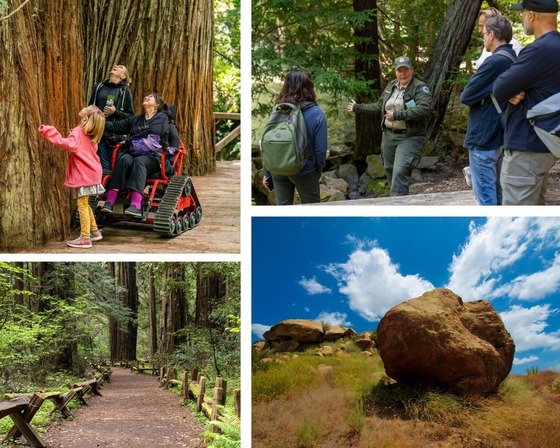
Located in the San Francisco Bay Area to the east of Walnut Creek, people have been drawn for generations to Mount Diablo for its spectacular views from the summit which extend over 100 miles in all directions on a clear day. Visitors have been attracted by the complex geology that has created amazing rock formations such as the “wind caves” at Rock City, and by the mountain’s variety of habitats which are home to over 600 species of plants and an amazing array of wildlife such as butterflies, bats and birds of prey, tarantulas, bobcats, lizards, snakes, and deer.

In 2021 Mount Diablo celebrated its 100th year as a state park. Though more than 100-years is a long history as a park, the importance of Mount Diablo was recognized long before that. For thousands of years Native Americans were the caretakers of this land. Many groups considered and treated the mountain as a sacred place and continue to do so today.

Since becoming a park in 1921, Mount Diablo has been protected as a natural area, and over the past 100 years the park has grown from only a few hundred acres to over 20,000 acres. Today it is a destination for those who would like to view wildlife and wildflowers, experience beautiful views, hike, camp, picnic, run, cycle, climb, ride horses, or gaze at the stars.


Filed Under: Central County, News, Parks, State of California

Contra Costa Commission for Women and Girls to host state Commissions Appointments Workshop

July 18, 2023 By Publisher Leave a Comment

July 29th in Brentwood

By Contra Costa County Office of Communications & Media

(Martinez, CA) – The Contra Costa Commission for Women and Girls is partnering with California Women Lead to host a State of California Commissions Appointments Workshop on July 29.

The workshop will provide information on state and local commissions, the application process, and tips for strong applications. The Commission encourages participation of active community members seeking to learn about public governance, preparing for elected office, or aiming to make more significant community impact. Learn about the value of serving on boards and commissions and why there needs to be more women at the table.

Date and Location:

Saturday, July 29 – 11 am to 1:30 pm

Brentwood Library – 104 Oak Street, Brentwood

Register here: https://www.eventbrite.com/e/669132712957

The Contra Costa Commission for Women and Girls was formed in 1984 as an advisory committee to the Board of Supervisors. The Commission provides information and advice to the Board relating to the health and welfare of women and girls in the County. The Commission strives to increase awareness of women’s and girls’ issues, celebrate achievements of local deserving women, champion opportunities for women and girls, and recommend legislative solutions at the city, county, state, and federal levels.

For further information about the California Commissions Appointments Workshop and the Contra Costa Commission for Women and Girls, please email cccwomenscommission@gmail.com.

Filed Under: East County, Government, State of California

California clears largest cache of criminal records in U.S. history

July 7, 2023 By Publisher Leave a Comment

More than 11 million arrest and conviction records automatically cleared including old arrests that never turned into charges and provides relief to people who completed all conditions of their sentence

Due to legislation pioneered by Los Angeles DA George Gascón

By Max Szabo, Prosecutors Alliance of California

SACRAMENTO–New data from the California Department of Justice (CAL DOJ) indicates that 11,164,458 records of arrest and conviction were automatically cleared between July 1, 2022 and December 31, 2022 pursuant to Assembly Bill 1076. The historic reform automated a process that individuals were already entitled to but had to seek out through an arduous process. AB 1076 requires CAL DOJ to automatically clear old arrests that never turned into charges and provides relief to people who completed all the conditions of their sentence, thereby expanding education, employment and housing opportunities for countless Californians.

“People who were arrested or convicted of low-level crimes and did what was asked of them are entitled to a second chance under the law, but bureaucratic barriers kept them in a paper prison,” said Cristine DeBerry, Founder and Executive Director of the Prosecutors Alliance of California.  “That wasn’t just unfair, it was unsafe, as a criminal record hangs over people, hampering their access to employment and housing opportunities, primary factors that drive recidivism. The system had taken away hope and opportunity, but commonsense and technology enabled one of the most important reforms in years.”

The automated record clearance is due to a 2019 law, Assembly Bill 1076, which was authored by Phil Ting (D-San Francisco) and sponsored by then-San Francisco District Attorney George Gascón.  The legislation mandated that the state Department of Justice automatically clear records of arrests that did not result in a conviction after the statute of limitations had passed as well as convictions involving probation and jail once an offender’s sentence was completed. Individuals sentenced to prison and anyone who had to register as a sex offender or who violated their probation is not eligible.  The record clearance largely benefits individuals who had committed drugs or property crimes.

“It’s a vicious cycle, as communities of color are more likely to be arrested, they are therefore more likely to have a record that includes an arrest or conviction, and yet they were less likely to be aware that they were entitled to relief,” said LA County District Attorney George Gascón.  “These were unnecessary barriers that make it more difficult to successfully reenter and break the cycle by limiting access to jobs, education and housing.  Breaking down these barriers makes our system more just and our communities more safe.”

During the appropriations process that bill was limited to prospective arrests and convictions.  However, a subsequent effort in 2021, AB 1038, authored again by Assemblymember Ting, and sponsored by the Prosecutors Alliance of California, made the record clearance provided under AB 1076 retroactive.  That bill took effect July 1, 2023.  The newly released DOJ data indicates that the relief granted thus far was pursuant to AB 1076, the initial authorizing legislation only, suggesting that the expanded eligibility profile now in effect under AB 1038 will result in the clearance of millions of additional records.

Prior to the automated record clearance, 8 million California residents had criminal convictions on their records that hampered their ability to find work and housing, secure public benefits, or even get admitted to college.  Studies indicate approximately two million of them were eligible for record clearance. Millions more have old arrests on their record that never resulted in a conviction but, remain as obstacles to employment.

Under the law arrests that didn’t result in a conviction may be cleared. Convictions that carry probation or jail time are also eligible for record clearance after the individual completes all the terms and conditions of their sentence. Prior to AB 1076, however, this required individuals to be aware of their eligibility and to retain an attorney to proactively file the necessary petition.  As a result, millions of Californians have been entitled to relief for years that they never realized because they had to jump through hoops to get it. In fact, nationally, only 6.5% of eligible people have been estimated to obtain record clearance within five years of eligibility. With more affluent communities more able to afford a private attorney, this bureaucracy disproportionately impacted socioeconomically disadvantaged communities and communities of color in particular.

Nearly 90% of employers, 80% of landlords, and 60% of colleges screen applicants’ criminal records.  According to a 2012 study conducted by the Society for Human Resource Management, many prospective employees and housing applicants are rejected solely based on having an arrest record on file.  Studies also show people with unsealed arrest records have a substantially increased chance of living in poverty, earning lower wages, with fewer educational opportunities.

The concept for the legislation grew out of DA Gascón’s effort to clear old cannabis convictions that were eligible for clearance pursuant to Proposition 64.  That effort has now been adopted by prosecutors’ offices across the nation.  Notably, the algorithm that enabled automated record clearance pursuant to AB 1076–much like the cannabis clearance effort–would not be possible without the help and support of Code For America. Research by the California Policy Lab of the University of California provided supporting evidence regarding the feasibility of large-scale record clearance automation, as well as its enormous potential impact on the lives of Californians.  Assemblymember Phil Ting has the sincere gratitude of the Prosecutors Alliance for leading the historic initiative and seeing that all eligible and impacted Californians would obtain the relief to which they are entitled.

The Prosecutors Alliance of California is fiscally sponsored by Tides Advocacy, a social welfare organization. Contra Costa District Attorney Diana Becton is a founding member. For more information about the Prosecutors Alliance go to www.ProsecutorsAlliance.org and keep up with our work on Twitter, Instagram and Facebook.


Filed Under: Crime, District Attorney, News, State of California

Raids of 20 East County homes net over $15.3 million in illegal weed

June 22, 2023 By Publisher 6 Comments

Illegal weed seized and red tagged house in Antioch on Tuesday, June 20, 2023. Top photos by CA Dept of Cannabis Control. Bottom photo by Antioch resident who chose to remain anonymous.

By Moorea Warren, Information Officer, California Department of Cannabis Control

Thanks to the continued dedication and collaboration of the Governor’s Unified Cannabis Enforcement Taskforce (UCETF) 20 East Bay illegal indoor cannabis cultivators were shut down on June 20, and a total estimated value of over $15.3 million of illegal cannabis was seized.

An investigation spanning several weeks culminated in the operation led by the Department of Cannabis Control (DCC). There were 20 search warrants served by four units of officers and local and state partners, including the Department of Fish & Wildlife, the Department of Tax and Fee Administration, the California National Guard, and local law enforcement – five in Antioch, three in Brentwood, two in Discovery Bay and ten in Pittsburg, resulting in the seizures of:

  • 742 pounds of cannabis flower estimated valued of $1,244,762
  • 17,121 cannabis plants estimated valued of $14,124,825
  • 7 firearms (including 1 assault rifle)
  • $24,197 in cash

Several of the locations were red-tagged for safety and code violations.

Filed Under: Crime, East County, News, State of California

  • « Previous Page
  • 1
  • …
  • 14
  • 15
  • 16
  • 17
  • 18
  • …
  • 23
  • Next Page »
RepublicServices-Antioch-ad (1)
Monica's dinner 05-26 CCH
Delta-RC-A (2)
Deer-Valley-Chiro-06-22

Copyright © 2026 · · Contra Costa Herald · All Rights Reserved