• Home
  • About The Herald
  • Local Agencies
  • Daily Email Update
  • Legal Notices
  • Classified Ads

Contra Costa Herald

News Of By and For The People of Contra Costa County, California

  • Arts & Entertainment
  • Business
  • Community
  • Crime
  • Dining
  • Education
  • Faith
  • Health
  • News
  • Politics & Elections
  • Real Estate

Candidate for Contra Costa DA, Mary Knox offers three-point plan to prevent smash-and-grab retail theft

November 30, 2021 By Publisher Leave a Comment

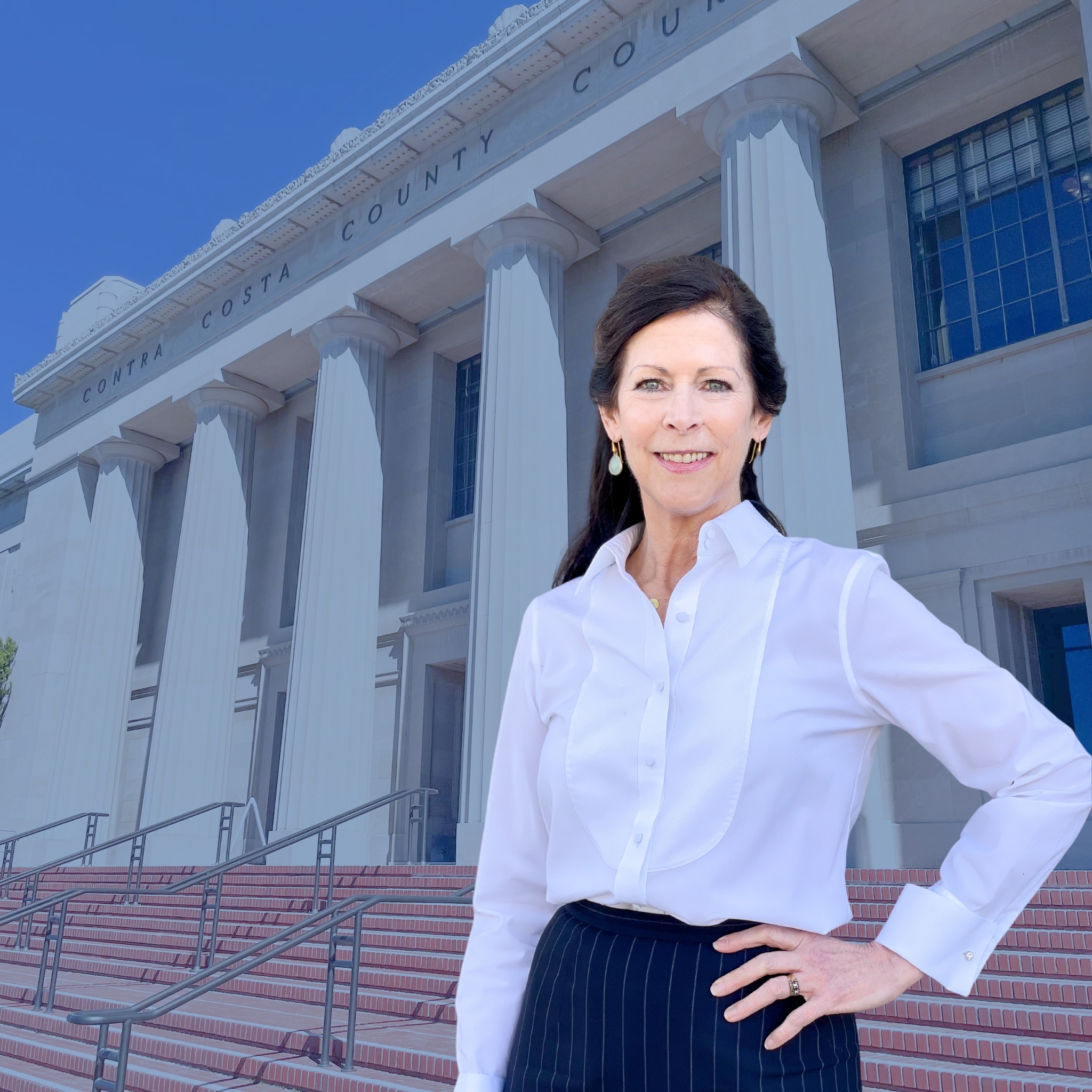
Sources: (Left) Herald file photo and (Right) Mary Knox for DA campaign.

The current DA has been slow to respond to flash mob robberies, and once she responds, she’s ineffective. Given my 36 years of experience as a Contra Costa Deputy District Attorney, I know the District Attorney can do more. We need to implement these three steps immediately:

  1. Convene a Bay Area-wide law enforcement response to track and apprehend suspects 

Contra Costa law enforcement agencies are partnered to provide mutual aid during emergency situations.  This “mutual aid” concept should be employed throughout the Bay Area to strategically shut down access routes for potential retail targets to intervene and prevent crime before it happens.

The investigative and technological expertise of this team will:

  • Identify the criminal syndicates who organize the smash-and-grab robberies
  • Intercept the “chatter” on social media planning these events
  • Share information between law enforcement agencies to quickly locate and arrest perpetrators

The ideal team to coordinate this activity is the DA/FBI Safe Streets Task Force, comprised of local, state, and federal task force agents who are partnered with prosecutors assigned to the Community Violence Reduction Unit (a unit that I created in the Contra Costa District Attorney’s Office).

Given the violence involved and the value of the merchandise being stolen, the Task Force will collaborate with the U.S. Attorney’s Office to charge qualifying cases under the Hobbs Act and prosecute them in federal court.

The criminal syndicates committing the smash-and-grab robberies, as well as strings of residential burglaries in Contra Costa, are mobile and active in surrounding counties.  During the past four years, regional law enforcement agencies have done an impressive job of sharing information to identify the true scope of the criminality of these crews and to provide investigative support.  The information supplied by this well-coordinated network provided me with the evidence required to file multiple counts following very significant organized retail theft and residential robberies.  I worked with the Walnut Creek and Pleasant Hill Police Departments through the investigative challenges of the looting in 2020 and filed charges on a number of suspects.  As District Attorney, I will continue to support this allied inter-county effort.

  1. Prevent the use of our freeways as crime corridors, deploy cameras 

Organized shoplifting gangs have been using the regional freeway system to quickly move between targets in neighboring law enforcement jurisdictions.  By the time an investigation starts at the first crime, the gang has moved on to loot another store in the next county.

Contra Costa’s Freeway Security Network has the technological capability to combat organized retail theft.  The Allied Freeway Agencies have received additional funding for the Network and direction to develop a plan to augment and expand the Network county-wide in order to provide technological leads in preventing and investigating criminal syndicates involved in the violent organized retail theft.

I am proud to have originated the creation of this freeway camera system to combat freeway shootings.  Since the network was installed, freeway shootings have been reduced by 90% in Contra Costa while remaining all too frequent in neighboring counties. I continue to work with law enforcement and elected leaders to propose that additional funding that Governor Newsom included in the state budget be used to incorporate additional technology to target organized retail theft into the Freeway Security Network.

  1. Disrupt the use of social media as a key enabler of looting 

Organized retail theft would not exist without social media, which is the key element to planning and profiting from these crimes.

Looting is coordinated through social media 

Social media platforms provide the means of communication which allows criminals to conspire to commit take-over robberies. These platforms are directly aiding and abetting the commission of large-scale crimes, which may result in criminal liability for the social media platforms.  I will call on the social media platforms, as well as private communication platforms, to monitor and immediately report to law enforcement any communications planning a smash-and-grab robbery or the “fencing” of stolen property.

We must make it clear to technology companies that failure to monitor and report the coordination of criminal enterprise should not be a protected business activity and should instead be considered as aiding and abetting that crime.

Stolen goods are sold via online marketplaces 

If a market for the merchandise that is being stolen did not exist, the criminal syndicates would have no motive to steal.  While I am out talking with community members, most are surprised to learn that the merchandise that is stolen from CVS, Walgreens, Lululemon and the high-end retailers is often sold on the internet via OfferUp, LetGo, and the Facebook and Amazon Market Places.

As District Attorney, I will actively engage and educate our community members about the crime occurring in our county and ways we can work together to combat it, such as not buying merchandise off the internet that does not have a means of guaranteeing that it is not stolen merchandise.  I will also work with retail stores to modify their return/exchange policies to ensure that they are not accepting the return of their own stolen merchandise.

———————————————————-

About Mary Knox: Mary Knox was born and raised in Walnut Creek and has 36 years of experience advocating and fighting for victims, their families, and the larger community. She is a lead prosecutor in the Contra Costa County District Attorney’s office, who has prosecuted and won high profile cases against some of the most notorious criminals in county history. She has broken the chokehold that criminal gangs have had on the most disadvantaged communities and has engaged in meaningful violence reduction by instituting effective strategies to reduce crime and prosecute violent criminals. Learn more about Mary at maryknox4da.com


Filed Under: Crime, District Attorney, Opinion, Politics & Elections

Contra Costa Supervisors vote 5-0 to finalize 2021 redistricting map

November 26, 2021 By Publisher 2 Comments

Contra Costa Board of Supervisors approved the 2021 Redistricting Map D. Source; Contra Costa County

Only 93 people provided public, nine alternate maps submitted; splits Walnut Creek, Concord and Antioch; reunites Pinole and the San Ramon Valley

By Daniel Borsuk

During their final public hearing for the 2021 redistricting process on Tuesday, Nov. 23, the Contra Costa County Board of Supervisors voted 5-0 to approve the 2021 Redistricting Map D on Tuesday that shows Supervisor Candace Andersen’s District 2 and Supervisor Federal Glover’s District 5 gaining territory at the expense of District 3 Supervisor Dianne Burgis and District 1 Supervisor John Gioia. (See agenda item D.1)

The supervisors’ action on the final redistricting map beat the mandatory Dec. 15 deadline by 22 days after county officials conducted a series of public hearings and workshops that drew meager citizen input. (See related article)

“For the six workshops a total of 21 individuals provided public comment either in person or by Zoom or phone call; and an additional 72 individuals were on the Zoom or phone call in portions of the workshops but chose not to speak,” a county document stated in defense of the public participation.

No matter how uneven the county process might have been in attracting public participation, two districts – District 2 and District 5 – scored the most territory and potential political clout from the decennial redistricting process.

After the final vote on the map, Board Chair Burgis of Brentwood put a positive spin on the two-month redistricting activity stating.

“The Contra Costa County Board of Supervisors thanks the community for its participation in this decennial process,” she said. “We have been committed to a robust Redistricting and public outreach process with public hearings, a dedicated website at CoCoRedistricting.org, public workshops, and multiple ways for the public to share input, including an online mapping tool to draw maps and submit comments.  We want to thank you for staying informed and playing a role in this important process.”

“I’d like you to not vote on this today,” requested Sherrill Grower, one of three persons who spoke at Tuesday’s meeting. “I feel like this map disenfranchises the public particularly along the northern waterfront. I am not pleased with the proposed district boundaries.”

Map D with population statistics. Source: Contra Costa County

With the new map, District 4 now covers most of Walnut Creek split at Highway 24 and Interstate 680 with District 2 Supervisor Andersen representing the other portion of the city, primarily Rossmoor.

District 4 underwent the smallest population gain of the five districts with a 1.65 percent increase from 2010 to 2020, to 229,348 residents, according to Census data. Whites represent 51.7 percent of District 4’s population followed by Latinos at 22.4 percent, Asians at 15.2 percent, Blacks at 3 percent and 7.7 percent for others.

District 4 Supervisor Karen Mitchoff, who has announced she won’t seek re-election in 2022, also saw the city of Concord, which is in District 4, split with Glover’s District 5 by Highways 4 and 242 and the former railroad right-of-way.

Mainly because Andersen’s District 2 experienced the biggest population gain of any of the other districts, from 2010 to 2020 it gained more territory. Population-wise, District 2’s population rose from 218,017 in 2010 to 243,565 in 2020. Whites make up 55 percent of the district’s population followed by Asians at 28 percent, Latinos at 8.5 percent, and Blacks at 1.6 percent and others at 6.8 percent.

District 2 will now cover Tassajara Valley, Blackhawk, Diablo and Camino Tassajara, all formerly were represented by Supervisor Burgis.

District 3, which saw its population rise 2.85 percent to 203,711 from 2010 to 2020, covers most of Antioch and the other growing cities of Brentwood and Oakley and communities of Bethel Island, Knightsen, Discovery Bay, and Byron.

District 2 also contains the cities of San Ramon, Danville, Moraga, Lafayette, and Orinda. The census designated Alamo, Blackhawk, Diablo, Camino Tassajara, Saranap, and Castle Rock as contained in District 2.

In addition to the cities of Pleasant Hill and Clayton, the Contra Costa Centre, Acalanes Ridge, Shell Ridge, San Miguel and North Gate are in District 4.

Glover, who offered no comment on the final redistricting map, also gained territory. He not only retains the Northern Waterfront, an area now under planning study for future industrial and economic development from Crockett to Oakley, but District 5 now, no longer has a portion of Pinole that was formerly split by District 1’s Gioia and District 5’s Glover.

Not mentioned publicly, District 5 is due to benefit economically and demographically when bulldozers rev up at the former Concord Naval Weapons Station where the Seeno Company has won City of Concord approval to build 13,000 housing units and commercial developments on 5,046 acres on the former Naval weapons base property in north Concord. Construction should be well underway over the next 10 years.

Map D keeps Antioch split in two between Districts 3 and 5, as the city currently is, but in different ways. This time the districts are split along Somersville Road and Auto Center Drive and the Union Pacific Railroad right-of-way. Herald publisher Allen Payton asked the supervisors to consider splitting Antioch along the city boundary line with Pittsburg and Highway 4, which he said makes more sense for residents to know what district they live in and to match the current and expected district boundaries for Antioch City Council District 1. Burgis said she tried to make that happen but the population figures to comply with the 5% deviation legal requirement, didn’t work.

Based on U.S. Census data, District 5’s population increased from 203,744 in 2010 to 228,463 in 2020. Thirty-five percent of the district’s population is Latino, 27.5 percent is White, 17.9 percent is Asian and 12.4 percent is Black.

Supervisor John Gioia was pleased with the redistricting results, especially when more urban-like district contains the cities of Richmond, San Pablo, El Cerrito, and Pinole. Kensington, North Richmon, East Richmond Heights, El Sobrante, Rollingwood, Tara Hills, Montalvin Manor, and Bayview are also included in District 1.

District 1’s population grew from 203,437 persons in 2010 to 224,726 in 2020, according to U.S. Census data. Latinos represent 40.9 percent of the district’s population followed by whites at 21.7 percent, Asians at 16.8 percent and Blacks at 16.8 percent

“The boundaries are very similar to our local transportation district,” observed Gioia. “There is no gerrymandering.”

Overall, Contra Costa County’s population increased 11.4 percent to 1,168,064.


Filed Under: News, Politics & Elections, Supervisors

With minimal public input Contra Costa Supervisors choose redistricting map

November 14, 2021 By Publisher 1 Comment

Contra Costa County Board of Supervisors 2021 Redistricting Map D.

Endorse Map D keeping their districts mostly the same

Splits Concord minimally; keeps Antioch split but along different lines; reunites Pinole; moves Alamo, Blackhawk and Camino Tassajara into the same district as the rest of the San Ramon Valley

By Daniel Borsuk

With scant public testimony and only three complete community map submissions, during their meeting on Tuesday, Nov. 9, Contra Costa Supervisors decided to move forward with the 2021 redistricting effort by selecting Map D as the preferred alternative. It creates proposed supervisorial boundaries that will be in place for the next 10 years.  CCCBOS Redistricting 2021 NOV 9 presentation-part 1    CCCBOS Redistricting 2021 NOV 9 presentation-part 2

With the clock ticking for supervisors to wrap up the federally mandated redistricting effort by Dec. 15, county officials have not received an abundance of public input at public hearings and workshops on proposed supervisorial maps, but after supervisors again heard meager public input on the proposed maps, the elected officials decided to move forward to comply with federal law.

At the end of day, of the four maps proposed by county staff and the three complete alternative maps submitted by the public, supervisors chose Map D mainly because it presents the fewest revisions from the current districts. However, it offers districts with the greatest deviation of 9.77% in population between districts of all four maps offered by county staff. It only splits up the cities of Concord, Antioch and Walnut Creek.

Impacts

The chosen map results in Districts 3 and 5 with the least population, 11,568 and 11,425 fewer residents than average, respectively, and Districts 2 and 4 with the most population of 11,264 and 9,273 greater than average. So, Districts 3 and 5 Supervisors will represent about 21,000 to 23,000 fewer residents than Districts 2 and 4. District 1 will have the lowest deviation from average population of just 2,455 residents or 1.05%.

Map D reunites Pinole moving a portion from the current District 5 into District 1 in West County.

It moves Alamo, Blackhawk and Tassajara Valley from the current District 3 into District 2, allowing them to join the rest of the San Ramon Valley.

It keeps Antioch split in two between Districts 3 and 5, as the city currently is, but along different streets and the Union Pacific Railroad right-of-way, in one part.

It keeps the Rossmoor community of Walnut Creek split from the rest of that city, and leaves it in District 2, while the rest of the city will be in District 4.

The map also shifts a portion of Concord from District 4 into District 5.

District 4 Supervisor Karen Mitchoff, who announced she will not seek re-election next year, liked Map D because it presents the “least intrusion into Concord.”  District 4 would also pick up the Morgan Territory area.

“If I could have all of Antioch I would,” said Board Chair Burgis.

District 1 Supervisor John Gioia, whose seat is also up for election next year, acknowledged with Map D his district cannot go beyond Pinole and El Sobrante. The neighboring and nearby communities of Hercules and Crockett will be fully represented by District 5 Supervisor Federal Glover.

Contra Costa Herald proposed CCC Board of Supervisors Redistricting Map and statistics. (Note: The district numbers are incorrect as the Herald’s publisher couldn’t figure out how to choose the correct ones while using the county’s online mapping tool.)

Alternative Maps

There were only 12 community submissions with eight complete maps and four community of interest maps, using the county’s online mapping tool. Two of the complete maps were submitted by one person and three by another, So, only five people submitted complete, alternative maps.  CCCBOS Redistricting 2021 Community Submission Maps Oct05&19    CCCBOS Redistricting 2021 Community Submission Maps Nov09

Two of the complete maps offered total population deviations between the districts of 10.55% and 13.38%, which is greater than the 10% maximum deviation legally allowed. The population of each district can only be 5% greater or lesser than average. The other five maps split up communities of interest

The community submission of a complete map of the five districts, by the Contra Costa Herald, complied with the population deviation requirement of no greater or fewer than 5% from average. The map offers districts with the least population deviation of just 1.67% compared to the four maps proposed by county staff, while respecting both city and community boundaries, except for Concord and Antioch, the county’s largest cities. In general, the Contra Costa Herald map uses major city streets as the dividing lines, such as A Street in Antioch, and the districts are as compact as possible.

Allen Payton contributed to this report.

Filed Under: News, Politics & Elections, Supervisors

California Citizens Redistricting Commission releases draft district maps for 2022 elections

November 12, 2021 By Publisher 1 Comment

Proposed new Congressional Districts for Contra Costa for the next 10 years divide the county into two instead of among five districts, as it is currently. Source: California Citizens Redistricting Commission

For Congressional, State Senate, State Assembly, Board of Equalization districts; changes will affect who represents Contra Costa.

The draft State Senate district maps split Contra Costa into three districts, placing Brentwood with communities as far away as Rohnert Park, Calistoga and Dunigan.

More public input encouraged.

SACRAMENTO, CA—On Wednesday, the 2020 California Citizens Redistricting Commission released draft maps for the state’s Congressional, State Senate, Assembly and Board of Equalization districts ahead of the CA Supreme Court mandated November 15, 2021 deadline.

“We are finally here. We proudly present these draft maps to the people of California as a starting point for public discussion. These are not intended to be final maps and we strongly encourage Californians to continue weighing in until we get it right,” stated Commission Chair Trena Turner. “A global pandemic and delayed census data would not stop this commission from delivering on its promise to create maps that encourage fair representation. We will have final maps completed and certified by the December 27, 2021 deadline. There is still plenty of time for the public to get involved. We urge you to join us because everything is on the lines.”

A major consideration in redrawing the Congressional districts was the fact that California lost a seat in the decennial reapportionment due to population shifts away from the state. That reduces the delegation in the House of Representatives from 53 to 52. According to the U.S. Census Bureau, across the country, the Golden State was joined by Illinois, Michigan, Ohio, New York, Pennsylvania and West Virginia in losing one Congressional seat each. Oregon, Montana, Colorado, North Carolina and Florida each gained one seat, while Texas gained two Congressional seats.

Proposed new State Senate Districts for Contra Costa County puts Far East County in the same district as all of Solano and Yolo Counties and portions of Sacramento, Napa and Sonoma Counties.

Impacts to Contra Costa County Districts

The draft maps show Contra Costa County split in just two Congressional districts compared to four, currently. The draft State Senate district maps split Contra Costa into three districts, with Far East County cities and communities of Brentwood, Oakley, Discovery Bay, Byron, Bethel Island and Knightsen included with all of Solano and Yolo Counties and portions of Sacramento, Napa and even Sonoma County communities as far away as Rohnert Park, Calistoga and Dunigan. The draft State Assembly districts map split the county into four districts, with Pinole, Hercules, Rodeo, Crockett and Port Costa included in the same district as Solano County.

According to an SFGate.com news report, “In the Bay Area…Contra Costa County has been the biggest source of complaints…some…Antioch residents have complained about African American neighborhoods being split up, while residents south of them in the Tri-Valley area are annoyed that San Ramon and Dublin were kept in separate congressional districts.”

Using the multitude of communities of interest testimony the Commission received throughout the summer, they assessed how that testimony could potentially inform district boundaries considering the tradeoffs that needed to be made in eventual maps. The Commission produced three sets of visualizations (October 27-29, November 2-4, November 7-9) that incorporated additional public input to evolve into draft maps.

Draft maps can be found here and below.

Approved Draft Maps
CONGRESS

  • 11.10.21 Congressional Draft Map
  • 11.10.21 Congressional Shape Files
  • 11.10.21 Congressional Equivalency Files

STATE SENATE

  • 11.10.21 State Senate Draft Map
  • 11.10.21 State Senate Shape Files
  • 11.10.21 State Senate Equivalency Files

ASSEMBLY

  • 11.10.21 Assembly Draft Map
  • 11.10.21 Assembly Shape Files
  • 11.10.21 Assembly Equivalency Files

BOARD OF EQUALIZATION

  • 11.10.21 Board of Equalization Draft Map
  • 11.10.21 Board of Equalization Shape Files
  • 11.10.21 Board of Equalization Equivalency Files

We encourage the public to provide feedback using this form.

Proposed new Assembly Districts for Contra Costa County would include Pinole, Hercules and Crockett with Solano County in the same district.

Public comment shall be taken for at least 14 days from the date of public display of the first preliminary statewide (draft) maps of the Congressional, State Senatorial, Assembly, and State Board of Equalization districts. The Commission shall not display any other map for public comment during the 14-day period.

Draft Map Public Input Meeting Schedule
November 17, 2021—Congressional District Feedback
November 18, 2021—Assembly District Feedback
November 19, 2021—Senate District Feedback
November 20, 2021—Board of Equalization & Any District Feedback
November 22, 2021—Any District Feedback
November 23, 2021—Any District Feedback

Public input meeting appointments can be made here.

In accordance with the California Constitution, the Commission followed these criteria, in this order, to draw district maps:

  1. Districts must be of equal population to comply with the U.S. Constitution.
  2. Districts must comply with the Voting Rights Act to ensure that minorities have an equal opportunity to elect representatives of their choice.
  3. Districts must be drawn contiguously, so that all parts of the district are connected to each other.
  4. Districts must minimize the division of cities, counties, neighborhoods and communities of interest to the extent possible.
  5. Districts should be geographically compact: such that nearby areas of population are not bypassed for a more distant population. This requirement refers to density, not shape. Census blocks cannot be split.
  6. Where practicable each Senate District should be comprised of two complete and adjacent Assembly Districts, and Board of Equalization districts should be comprised of 10 complete and adjacent State Senate Districts.

In addition, the place of residence of any incumbent or political candidate may not be considered in the creation of a map, and districts may not be drawn for the purpose of favoring or discriminating against an incumbent, political candidate, or political party.

Every 10 years, after the federal government publishes updated census information, California must redraw the boundaries of its electoral districts so that the state’s population is evenly allocated among the new districts.

In 2008, California voters passed the Voters First Act, authorizing the creation of the independent California Citizens Redistricting Commission to draw new State Senate, State Assembly, and State Board of Equalization district lines. In 2010, the Voters First Act for Congress gave the Commission the responsibility of drawing new Congressional districts following every census.

For more information, please visit www.WeDrawTheLinesCA.org.

Allen Payton contributed to this report.


Filed Under: News, Politics & Elections

Contra Costa Supervisors’ new chambers to remain publicly unused until at least January

November 6, 2021 By Publisher 4 Comments

New Contra Costa County Administration Building which was completed last year and dedicated in December. Source: KMD Architects

Blame placed on unvaccinated including children ages 5-11

“We need 92,000 more people to get vaccinated,” Contra Costa Health Services Director Anna Roth

Next redistricting hearing Nov. 9

By Daniel Borsuk

The Contra Costa County Board of Supervisors will not meet in their gleaming new state-of-the-art hearing room for the first time in the new $95 million Contra Costa County Administration Building until January, if then.

It all depends on how the county’s fight against COVID-19 goes. At least for now, Contra Costans will have to continue to remotely view and participate in supervisors’ meetings.

While the new three-story Contra Costa County Administration building at 1025 Escobar St. in Martinez is open for administrative services, the public hearing room goes unused by the public.

Only county administrative and county counsel use the hearing room during board of supervisors’ meetings.

On a 4-0 vote, supervisors approved, during their meeting on Tuesday, Nov. 2, its second consecutive order recommended from County Counsel Mary Ann Mason to extend for at least through December, the teleconference public meeting order that applies to all county governmental entities.

The edict also applies to the board of supervisors’ advisory commissions.  Meetings conducted for the planning commission, airports commission, library commission, merit board, and Proposition X advisory commission among other advisory panels must continue to be conducted via Zoom or other teleconference media.

The supervisors’ action to extend the COVID-19 public meeting teleconference order arose from the fact that 92,000 five- to 11-year-old children in the county are now eligible to get vaccinated, Contra Costa Health Services Director Anna Roth announced.

This announcement will add more burden to county health officials to vaccinate residents. She informed supervisors the county’s total vaccination rate is 73.2 percent.

“We need 92,000 more people to get vaccinated,” Roth informed supervisors.

Mason recommended supervisors adopt the resolution because “the COVID-19 case rate in Contra Costa County is in the ‘substantial’ community transmission tier, the second-highest tier of the CDC’s four community transmission tiers and the County Health Officer’s recommendations for safely holding public meetings, which recommend virtual meetings and other measures to promote social distancing, are still in effect.”

In October, supervisors had adopted a similar resolution authored by County Counsel Mason to continue teleconference meetings for public health reasons at least until November, but obviously the public health landscape had not improved sufficiently for state health officials to lift all the burdensome public meeting restrictions.

While county health officials reported the county is making progress in getting Contra Costa residents vaccinated, “A Statewide state of emergency and the Countywide local emergency continue to directly impact the ability of the Board of Supervisors, in all of its capacities, and its subcommittees and advisory bodies.”

Another COVID-19 oriented state of emergency edict ordering Contra Costa County governmental agencies to conduct meetings remotely means the board of supervisors won’t conduct its inaugural meeting until January, if then, in the new $95 million administration building in downtown Martinez.

In the meantime, the gleaming new public hearing hall remains closed to the public.

Redistricting Public Hearing on Nov. 9

The county’s fourth public hearing on supervisorial redistricting will be held starting at 9 a.m. on Tuesday, Nov. 9. The hearing will start at 9 a.m. during the Board of Supervisors meeting. The hearing will be held via Zoom and can be viewed online. (See related article)

“The County Board of Supervisors welcomes your community input in this important, decennial process,” said Board Chair Dianne Burgis of Brentwood. “We are committed to a robust Redistricting and public outreach process with public hearings, a dedicated website at CoCoRedistricting.org. public workshops, and multiple ways to share your input.”

Redistricting is based on the U.S. Census data, which was released in legacy format on August 12, 2021. The actual drawing of Supervisorial District Maps requires the official California State Adjusted Redistricting data, which was released Sept. 20, 2021 and includes updated data to ensure that individuals in the prison population are counted by each jurisdiction.

Acknowledge Black Maternal and Infant Health Day

Supervisors proclaimed Nov. 3, 2021 as Black Family Health Day to acknowledge the disparities in adverse birth outcomes among Black birthing patients and ways to turnaround those negative outcomes using pioneering technologies such as the early warning system, Partners in Pregnancy Fatherhood Program, Black Infant Health Program, and other programs.

From 2018 to 2020, 9.5 percent of Black mothers had preterm births compared to 5.8 percent of White mothers. Black babies are twice as likely to die within the first year of life as White babies (6.3/1,000 v. 3.2/1,000 from 2016 to 2020) and Black mothers experienced health-impacting, life-threatening events during childbirth at more than double the rate of White mothers from 2016 to 2018.

Filed Under: News, Politics & Elections, Supervisors

BART board begins redistricting process to redraw election districts Nov. 10

November 5, 2021 By Publisher Leave a Comment

Public involvement is encouraged. Districts 1, 2, 3 and 7 currently include  portions of Contra Costa County

The BART Board of Directors’ Redistricting Committee is scheduled to hold its first meeting since receiving the 2020 Census data to begin the process of redrawing election districts to align with current population information. The virtual meeting will be held Wednesday, November 10, 2021 from 1 to 3pm.

The BART Redistricting Committee consists of Directors Lateefah Simon (Chairperson), Elizabeth Ames and Mark Foley.

BART election districts are redrawn every 10 years following the U.S. Census. The primary purpose of redistricting is to ensure population equality among districts.  This process is guided by traditional redistricting principles as well as the U.S. Constitution, the California Constitution, the federal Voting Rights Act and the BART District Act.

Information about current District boundaries

BART 2011 Election Districts Final Report – Adopted 12/1/2011 (10 Mb .pdf file)

All BART Districts
Counties Included: Alameda, Contra Costa, San Francisco
Map: All BART Districts (.pdf file)

District: 1
Counties Included: Contra Costa
Cities Included: Acalanes Ridge, Alamo, Alhambra Valley, Blackhawk, Camino Tassajara, Castle Hill, Clayton, Concord, Contra Costa Centre, Danville, Diablo, Lafayette, Martinez, Mountain View, Norris Canyon, North Gate, Pacheco, Pleasant Hill, Port Costa, Reliez Valley, San Miguel, San Ramon, Saranap, Shell Ridge, Vine Hill, Walnut Creek
Map: BART District 1 (.pdf file)

District: 2
Counties Included: Contra Costa
Cities Included: Antioch, Bay Point, Bethel Island, Brentwood, Byron, Clyde, Concord, Discovery Bay, Knightsen, Oakley, Pacheco, Pittsburg, Vine Hill
Map: BART District 2 (.pdf file)

District: 3
Counties Included: Alameda, Contra Costa
Cities Included: Albany, Ashland, Berkeley, Castro Valley, Cherryland, El Cerrito, Kensington, Lafayette, Moraga, Oakland, Orinda, Piedmont, San Lorenzo
Map: BART District 3 (.pdf file)

District: 4
Counties Included: Alameda
Cities Included: Alameda, Oakland, San Leandro
Map: BART District 4 (.pdf file)

District: 5
Counties Included: Alameda
Cities Included: Castro Valley, Cherryland, Dublin, Fairview, Hayward, Livermore, Pleasanton, Sunol
Map: BART District 5 (.pdf file)

District: 6
Counties Included: Alameda
Cities Included: Fremont, Hayward (partial), Newark, Sunol, Union City
Map: BART District 6 (.pdf file)

District: 7
Counties Included: Alameda, Contra Costa, San Francisco
Cities Included: Albany, Bayview, Berkeley, Crockett, East Richmond Heights, El Cerrito, El Sobrante, Emeryville, Hercules, Kensington, Montalvin Manor, North Richmond, Oakland, Pinole, Richmond, Rodeo, Rollingwood, San Francisco, San Pablo, Tara Hills
Map: BART District 7 (.pdf file)

District: 8
Cities Included: San Francisco
Counties Included: San Francisco
Map: BART District 8 (.pdf file)

District: 9
Cities Included: San Francisco
Counties Included: San Francisco
Map: BART District 9 (.pdf file)


Filed Under: BART, News, Politics & Elections

Contra Costa to hold Community Redistricting Workshops for Supervisor districts October 23-28

October 20, 2021 By Publisher 1 Comment

Contra Costa County Board of Supervisors 2021 Redistricting Draft Map 1. Source: CCC Department of Conservation and Development

By Susan Shiu, PIO, Office of Communications & Media, Contra Costa County

Contra Costa County’s Redistricting effort is a once-a-decade process of redrawing the boundaries for Supervisorial districts after the U.S. Census. As part of that process,

a series of Community Redistricting Workshops to be held in each region of the County will take place October 20 – 29, 2021. To register for mapping workshops and to learn more, visit CoCoRedistricting.org.

The county is also offering easy-to-use mapping tools for public input. Five proposed maps have been created for review by the public and Supervisors. See Redistricting Concept Maps 1-5.

Redistricting is the regular process of adjusting the lines of voting districts in response to accordance with population shifts within the County. Every ten years, after the decennial census, supervisorial districts must be redrawn so that each district is substantially equal in population. This process is important in ensuring that each Supervisor represents about the same number of people.

Redistricting is based on the U.S. Census data, which was released in legacy format on August 12, 2021.  The actual drawing of Supervisorial District Maps requires the official California State Adjusted Redistricting data, which was released September 20, 2021 and includes updated data to ensure that individuals in the prison population are counted by each jurisdiction.

“The Contra Costa County Board of Supervisors welcomes your engagement and input in this important process,” said Board Chair, Supervisor Diane Burgis. “We are committed to a robust Redistricting and public outreach process with public hearings, a dedicated website at CoCoRedistricting.org, and public workshops.”

Workshop Schedule

Community Redistricting Workshop – District 2, San Ramon City Hall

October 23, 2021, 9:00 AM - 11:00 AM @ San Ramon City Hall, 7000 Bollinger Canyon Road. Hosted by Supervisor Candace Andersen

Community Redistricting Workshop – District 3 Zoom Workshop

October 24, 2021, 12:00 PM - 2:00 PM This workshop will be by zoom only. Hosted by Supervisor Diane Burgis

Community Redistricting Workshop – District 4, Pleasant Hill Community Center

October 25, 2021, 7:00 PM - 9:00 PM @ Pleasant Hill Community Center. Hosted by Supervisor Karen Mitchoff

Community Redistricting Workshop – East County Zoom Workshop

October 26, 2021, 7:00 PM - 9:00 PM This workshop will be by zoom only. Hosted by Supervisors Diane Burgis & Federal Glover

Community Redistricting Workshop – District 1, San Pablo City Hall

October 27, 2021, 6:30 PM - 8:30 PM @ San Pablo City Hall, 1000 Gateway Avenue, San Pablo 94806 Hosted by Supervisor John Gioia

Community Redistricting Workshop – District 5 Zoom Workshop

October 28, 2021, 7:00 PM - 9:00 PM This workshop will be by zoom only. Hosted by Supervisor Federal Glover

For more information about Redistricting and how to provide input, visit www.CoCoRedistricting.org or the County website’s homepage at www.contracosta.ca.gov.

Allen Payton contributed to this report.

Filed Under: News, Politics & Elections, Supervisors

Free online mapping tools for redistricting now available for public use

October 3, 2021 By Publisher Leave a Comment

Help draw your representatives’ districts the way you’d like to see them; provided by 2020 California Citizens Redistricting Commission and Statewide Database

SACRAMENTO, CA—On Saturday, Oct. 2, the 2020 California Citizens Redistricting Commission announced the Statewide Database’s release of two free-to-use tools to help Californians submit redistricting plans to the Commission. These are the only redistricting applications through which users can submit their input directly to the state of California’s official redistricting process.

“The Commission is excited to share these free resources to help people draw their own district maps,” stated Commission Chair Sara Sadhwani. “The success of this decennial process depends on the participation of all Californians. We want to hear from everyone and want to know if our line drawing is heading in the right direction.”

“The Statewide Database is proud to provide two map creation tools that are free of charge,” said Karin Mac Donald, Director of the Statewide Database. “The key to participation is access. These online tools aim to expand access to every Californian in hopes that they have the tools necessary to participate in the redistricting process.”

Tell the CRC about your community today!

The previously released Draw My CA Community allows users to draw a map of and respond to a few simple prompts about their Communities of Interest. When finished, users can submit community input directly to the California Citizens Redistricting Commission for consideration in the statewide redistricting process. (https://drawmycacommunity.org/)

Draw My CA Districts is a free-to-use online tool for creating district maps

Through the newly released Draw My CA Districts web application, users can create district maps throughout the state of California and submit those maps directly to the Commission. (https://drawmycadistricts.org/)

Draw My CA is a free-to-use plugin for the open-source GIS platform, QGIS

Today’s release of the Draw My CA QGIS plugin allows users to download a California redistricting application to their own computer.  With this plugin, users can create redistricting plans for the state of California and submit those maps directly to the Commission while having access to a full GIS platform. Draw My CA will be available 10/03/2021 at: https://www.redistrictinggroup.org/installer/.

To learn more about these tools, please visit https://drawmycalifornia.org/.

Both the online district mapping tools (Draw My CA Districts and Draw My CA) include functionality to assist users to comply with population deviation, contiguity and assignment checks.

  • % Deviation check – tells the user to what extent any of their districts are above or below the ideal population of the distinct type they are working on
  • Contiguity check – lets the user know if their districts are contiguous or not
  • Assignment check – lets the user know if they have unassigned areas in their redistricting plan

The Commission must follow the following criteria, in this order, when drawing district maps:

  1. Districts must be of equal population to comply with the US Constitution.
  2. Districts must comply with the Voting Rights Act to ensure that minorities have an equal opportunity to elect representatives of their choice.
  3. Districts must be drawn contiguously, so that all parts of the district are connected to each other.
  4. Districts must minimize the division of cities, counties, neighborhoods and communities of interest to the extent possible.
  5. Districts should be geographically compact: such that nearby areas of population are not bypassed for a more distant population. This requirement refers to density, not shape. Census blocks cannot be split.
  6. Where practicable each Senate District should be comprised of two complete and adjacent Assembly Districts, and Board of Equalization districts should be comprised of 10 complete and adjacent State Senate Districts.

In addition, the place of residence of any incumbent or political candidate may not be considered in the creation of a map, and districts may not be drawn for the purpose of favoring or discriminating against an incumbent, political candidate, or political party.

Every 10 years, after the federal government publishes updated census information, California must redraw the boundaries of its electoral districts so that the state’s population is evenly allocated among the new districts.

In 2008, California voters passed the Voters First Act, authorizing the creation of the independent California Citizens Redistricting Commission to draw new State Senate, State Assembly, and State Board of Equalization district lines. In 2010, the Voters First Act for Congress gave the Commission the responsibility of drawing new Congressional districts following every census.

For more information, please visit WeDrawTheLinesCA.org.


Filed Under: News, Politics & Elections

California school choice initiative for Nov. 2022 ballot filed with Attorney General

October 3, 2021 By Publisher Leave a Comment

Source: www.californiaschoolchoice.org

Would allow creation of “Education Savings Account” for each K-12 student; organizers will need to gather signatures of one million voters

By Michael Alexander

Labor Day is the traditional end of the summer and the beginning of fall.  Before government created the perpetual school year, Labor Day also marked the beginning of the school year. This year, Labor Day marked the beginning of what will be a decisive and tumultuous year.  Californians will have the opportunity to establish true educational freedom in our wonderful Golden State.

School Choice Initiative Filed with Attorney General

In August, key leaders of the California School Choice Foundation joined other Californians to formally present a school choice initiative to the California Attorney General’s office for what is known as “Title and Summary.”  We expect to receive that summary no later than October 12, 2021.  Once that happens, we can then begin to gather the 1.0 million valid signatures necessary to place it on the November 2022 ballot.  Just to make sure, we plan to gather 1.5 million signatures.

Empowers Parents and Revolutionizes Education in California

The key four points of the initiative are these:

Educational Freedom Act

  1. An Education Savings Account (“ESA”) will be established for each K-12 child in California on request.
  2. Each year, that account will be credited with the student’s share of what are known as Prop 98 funds. That share will begin at $14,000 per year per student.
  3. The parent will be able to direct the ESA trust funds to a participating, accredited private or parochial school. The money will follow the student not the politicians.
  4. Any unspent funds will accumulate and can be spent on college, vocational training or other qualified educational expense.

This plan is both simple and revolutionary.  Once passed, California will become the first state to enact universal school choice.  More important, it will be the first state to recognize that It’s Your Kids, Your Money and Your Choice!

Get Ready and Get Involved NOW!

I need not tell you that school choice is the hottest issue in the country.  It was the linchpin of at least two candidates in the recall election:  Larry Elder and Kevin Kiley.  Each endorsed our school choice initiative. You can understand why this is initiative is already driving bureaucrats and social engineers insane.  No matter what happened in the recall election, school choice is not going anywhere.  Thousands of supporters are now mobilizing to get it on the ballot and pass it.  Scores of candidates for statewide and local offices will make school choice the focal point of their campaigns.

This is why you need to get involved right now.  We don’t have a moment to lose.

Super Sunday – Happy Halloween!  Trick or Treat? 

As I mentioned above, we are not standing still for a moment.  We know we will be able to start gathering signatures a month from now.  We have been organizing and advocating for the last three years.

We want to hit the ground running.  That’s why we are pre-planning a major event for October 30-31.  Whether you call it Super Sunday or Halloween, you need to let us know what church or other venue you will be covering on that weekend.  Our goal is to calendar at least 1,000 events statewide.  Nothing will send a more powerful message than this.  Friends and foes alike will know we are serious about our freedom and the future of our children.

This campaign will run for the next 13 months, ending in victory on Tuesday, November 8, 2022.

The following was provided by Stephen Smith:

Q1.  What about California’s public education system led to this grassroots effort for the initiative?

The reasons are legion.

  1. California schools can hardly be called an “education” system. Despite spending $20,000 per student per year – – that’s an average of $500,000 per classroom of 25 – – California schools rank near the bottom of the nation at 48th place. This has happened even though per pupil spending has almost doubled in the last decade.
  2. Increasingly, California schools preferred to indoctrinate rather than educate. In the face of vigorous parental opposition, social engineers (*1) disguised as “educators” continue their efforts to implement critical race theory. They also have frustrated efforts of parents to opt out of equally controversial “sex-ed” programs. (*2)
  3. Parents are outraged by the closure of the schools and mask mandates. Eighteen months after the start of the Covid panic, schools are still not fully reopened.
  4. Parents are frustrated by being ignored by school boards, teachers’ unions and politicians. They feel strongly – – and correctly – – that they are the parents and should be making basic decisions about the health, education and formation of their children. This is a basic human right that is frustrated daily by a leviathan system that cares little for them for their children. (*3)

(*1) https://freebeacon.com/coronavirus/la-teachers-union-president-there-is-no-such-thing-as-learning-loss/  “There is no such thing as learning loss,” the union president told Los Angeles Magazine. “Our kids didn’t lose anything. It’s OK that our babies may not have learned all their times tables. They learned resilience. They learned survival. They learned critical thinking skills. They know the difference between a riot and a protest. They know the words insurrection and coup.” Cecily Myart-Cruz, president of the United Teachers Los Angeles (UTLA)

(*2) https://capitolresource.org/ca-sex-education/

(*3) CPC report and polling data https://californiapolicycenter.org/new-polling-shows-covid-19-shifted-california-voters-opinions-on-schools-2/

Q2. How will the state provide the $14K per student?

  1. The principal source will be Proposition 98 tax revenues which, in the coming school year, will average approximately $14,000 per student. In fact, as noted above, the State spends approximately $20,000 per student per year.
  2. Ultimately, of course, parents, like every other taxpayer in California, will pay dearly for their own K-12 education as well as that of their children. Politicians and other advocates of centralized, inefficient, and incompetent government schools, never let on that under proposition 98, 40% of California state tax revenues are earmarked for what they are pleased to call “education.” As a practical matter, therefore, everyone in California will pay for K-12 education their entire lives. The only question is whether they get the education they pay for. Therefore, we say: It’s Your Kids, Your Money, and Your Choice.

Q3. Why do students and families need school choice?

  1. It should be recognized that what we call “school choice” is another way of describing parental choice. As discussed above, California schools, dominated by corrupt teachers’ unions and politicians have utterly failed to educate our children. This system particularly affects poor and minority communities who have no ability to escape the system. Therefore, they have no opportunity to escape the cycle of poverty and ignorance that so often characterizes our inner cities.
  2. It is not only that they need school choice. It benefits all of us. In California, indeed in America itself, real progress depends upon economic, social, and political mobility. The foundation of this mobility is a decent education without which our poorest citizens cannot hope to participate fully in our complex economy and our form of government. The current government school monopoly both creates and sustains a permanent underclass. This system is not only immoral, but also dangerous.  Therefore, our school choice initiative must first be understood as a preferential option for the poor.
  3. School choice is wildly popular among parents and citizens at large. There are several polls showing that approximately 70% of black and Latino Democrat parents desire some form of school choice.
  4. Another example is homeschooling. It is estimated that there were only 73,000 homeschooled children in 1973.  In the wake of school closures and the rapid decline in education, that number has swollen to as much as 5 million.  These parents are tired of arguing with the teacher unions and politicians.

Q4. Is this the first ballot initiative of its kind in the U.S.?

  1. This is not the first time that Californians have tried to get some form of school choice. There was an initiative on the ballot in the early 90’s and again in 2000.  Both failed.  That said, there are several states that have various forms of school choice that often include the ability of parents to choose a public school to attend but only within the system.  Other state programs do allow limited funds to attend a private school or provide funds for certain educational expenses procured outside the system.  Arizona and Florida are examples of each.  Some states have put Education Savings Accounts into place to implement parental choice.
  2. The Educational Freedom Act initiative goes further than any other proposal of which we are aware. It grants the right of any parent to request the creation and funding of an Education Savings Account that they can use to enroll their child in any accredited school of their choice and save anything left over for college or vocational training.  It is both simple and revolutionary.

Q5. Why does it need to happen through a voter referendum instead of the state legislature?

  1. This is simple. The politicians, special interests and the teachers’ unions have a monopoly on what millions of Californians say, think and do.  They also control for their own benefit 40% — over $100 billion – of the California budget.  They will not give up this power willingly.  We anticipate that the enemies of educational freedom will spend $100 – 200 million to defeat parents’ rights.

Q6. What is most important for people to know?

  1. The most important thing for people to know is that help is on the way. For the first time:
  2. Parents, not politicians, bureaucrats or zip codes, will determine how and where their children will be education.
  3. Because all schools, both public and private, will have to compete for students, ALL schools will get better.
  4. Because of competition, all schools will have to deal respectfully with parents who will be customers with a choice.
  5. Parents, including homeschoolers, will be able to shape their children’s education in a way best suited to their needs and talents, not the government’s.
  6. Because educational funding will now follow the student and empower parents, California will experience unprecedented innovation in education. California will once again lead the nation in educational innovation and excellence.

For more information visit www.CaliforniaSchoolChoice.org or our Facebook page.

Michael Alexander is President and Chairman of the Board and Stephen Smith is Vice President of Californians for School Choice.

Allen Payton contributed to this report.

Filed Under: Education, News, Politics & Elections

Gubernatorial Recall Election results available Tuesday night

September 13, 2021 By Publisher Leave a Comment

Initial unofficial results for the Recall Election will be available shortly after 8:00 pm

By Dawn Kruger, Civic Outreach/Engagement Specialist, Contra Costa County Clerk-Recorder-Elections Department

The first unofficial results report for the Gubernatorial Recall Election will be released shortly after at 8:00 pm on election night, September 14 and posted to the Elections Division website www.cocovote.us immediately afterward. The initial posted results will be Vote by Mail ballots that are returned through Monday, September 13 and in person early votes from prior to election day.

The second report, with results from the polls, will be issued at approximately 9:30 pm with subsequent updates approximately every half hour until all poll precincts have reported. The final unofficial election night report is expected to be issued by 1:00 am.

The first interim report will be posted by 5:00 pm on Friday, September 17 and will contain results from timely Vote by Mail ballots received on and after Election Day. The second interim report will be posted by 5:00 pm on Friday, September 24. Additional results will be posted each Friday afternoon up to certification which is expected to be October 8. All results remain unofficial until certification.

The availability of updated reports will be communicated via Twitter and Facebook. Changes to the reporting schedule, if any, will also be communicated on these social media sites.

The Contra Costa Elections Division social media pages are:
https://www.Twitter.com/CoCoElections
https://www.facebook.com/ContraCostaElections/


Filed Under: News, Politics & Elections

  • « Previous Page
  • 1
  • …
  • 17
  • 18
  • 19
  • 20
  • 21
  • …
  • 46
  • Next Page »
Monica's dinner 05-26 CCH
Celia's-05-26-A
Delta-RC-A (2)
Deer-Valley-Chiro-06-22

Copyright © 2026 · · Contra Costa Herald · All Rights Reserved