• Home
  • About The Herald
  • Local Agencies
  • Daily Email Update
  • Legal Notices
  • Classified Ads

Contra Costa Herald

News Of By and For The People of Contra Costa County, California

  • Arts & Entertainment
  • Business
  • Community
  • Crime
  • Dining
  • Education
  • Faith
  • Health
  • News
  • Politics & Elections
  • Real Estate

College board trustees ask for more public input on ward redistricting, staff offers workshop, two more gerrymandered maps, online survey

December 22, 2021 By Publisher 2 Comments

Proposed Contra Costa Community College District Ward Realignment Map 3 balances populations using the county Supervisor’s newly adopted map as a guide and includes the locations of the high schools (the name of Deer Valley High in Antioch added by the Herald). But Trustee Ward 3 in this proposed map is significantly different than the new Supervisorial District 5. See the other two proposed maps at www.4cd.edu/gb/redistricting/. Source: 4CD

Sandoval pushes for more community input, transparency; he and Barrett ask for more maps; Walters asks for informal, round table meeting; one new proposed map similar to Board of Supervisors’ new map; Community Roundtable on Ward Redistricting during special Zoom meeting Jan. 6 for community input; second public hearing on redistricting during regular board meeting Jan 12.

By Allen Payton

In response to public pressure, the Contra Costa Community College District (4CD) Governing Board is seeking additional community input to adjust trustee ward boundaries and ensure population balance based on county demographic changes identified in the 2020 Census. During the Dec. 8 board meeting, (see 36-minute mark) Ward 5 Trustee Fernando Sandoval and Ward 2 Trustee Rebecca Barrett pressed for more public input, and wanted to review more than just the one map provided by the district’s staff and attorney David Saldani. They only provided slight changes to the current, gerrymandered map. (See related article)

Board Calls for More Public Input

At their December 8, 2021, meeting, (see item 10.A.) the Board reviewed only one staff-recommended map that highlighted how trustee area boundaries could change and received community input on the proposed map before determining the need for additional community input. In 2010, both the college board and the Contra Costa County Board of Education adopted the same exact maps, according to Saldani. The 4CD staff is expected to collaborate with the board of education, again, this year.

Only two members of the public offered comments during the hearing, including former college board trustee Greg Enholm who said “I hope the trustees agree that voters should choose their representatives not the reverse.  He also said he agreed with this reporter “regarding his concerns about the proposed ward map,” referring to the current map being drawn based on political considerations to protect incumbents at the time it was adopted.

“I also hope that Board Vice President Walters and Board Secretary Sandoval will explain why they are not advocating for an independent redistricting body to redraw the wards as they pledged to do,” Enholm stated.

“The map must be the best one possible meeting all requirements,” he concluded and said he provided to the trustees a copy of the 1990 ward map.

“We support a good governance model which includes community meetings. We are a little surprised that…the college district did not engage in a community participation process,” said Maria Alegria, representing Latinx for Inclusion. “It looks like you’ve done this in-house for the past three decades.”

Barrett had questions about the process, including the FAIR Maps Act.

“Certainly, this year, more than ever, the politics surrounding redistricting is greater,” said Executive Vice Chancellor, Education and Technology Mojdeh Mehdizadeh. “This is the first year that the Census data was released six months later than usual.”

“Can you explain the California FAIR Maps Act of 2017 and how it impacts the way cities and counties conduct their post-Census redistricting?” Barrett asked.

“We don’t have to comply with the provisions. It gives more direction with the criteria,” Saldani responded. “The FAIR Maps Act requires cities and counties have…two pre-map hearings then two post-map hearings. It doesn’t apply to the college district.”

“We used traditional redistricting criteria,” he added.

Sandoval said “you spoke about population balance. You guys really didn’t talk about communities of interest. What Mr. Enholm stated…there was some work that was done for political boundary changes in the past and I’m concerned those still haven’t been addressed.”

“It’s not just population balance, it’s communities,” Sandoval continued. “We’re here to make sure the maps represent the communities of interest as they go forward.”

“The other thing I’m concerned about is, the map itself that we have in there, is not an interactive map. You should be able to show that,” he stated. “The fact that we only have one map says that we only have one option. I’m all about transparency. When I talked about the independent commission it’s really about transparency and making sure that the public has an opportunity to weigh in and put a comment…so the board can go ahead and try to understand what the concerns of the community are. We don’t know what they are, right now. I think we need to do more.”

“From my perspective there’s not have enough transparency and we need to ensure we go ahead and take care of the public interest,” he concluded.

“In fact, we heard public feedback, tonight,” said Saldani.

“I think we haven’t done enough,” Sandoval responded. “Give them more of an opportunity. Publicizing it and just having it on our website is not enough. We should have more than one map.”

Barrett then said, “I do have some concerns. I would like to have a more detailed map. Are the politicians giving feedback? Because it’s self-serving. The staff and demographer have worked to keep this away from board input. In some respects, I would hope the board and public could get a more detailed map with geographic markers…things to help identify. I would appreciate a little more detail and understanding. I think the board could give you more input that communities of interest don’t fit nicely…in your statistical analysis. I do think multiple maps would have been helpful. It would give the public a sense that there are choices.”

“I think most of us won’t be here, in 10 years on this board,” she continued. “So, one of the things we can do as a board is to codify our expectations around the redistricting process. Do we want to look at an independent redistricting commission or some kind of hybrid? But that’s a more long-term project.”

“Your free of the accusation that you’re trying to benefit yourself,” Barrett added.

“Would it be possible to have, I’ll use the word workshop, or gathering?” asked Board Vice President Judy Walters.

“Certainly. I thought that’s what we were doing, here, tonight,” responded Mehdizadeh.

Walters suggested a meeting that is “less formal…more of a roundtable kind of thing.”

“On a personal level, I’m happy with the work done, tonight,” she said. “I’m concerned that we have to meet our deadline and we don’t spend a jillion dollars doing stuff.”

“We’re happy to answer any additional questions and do a deeper dive from an interactive perspective,” Mehdizadeh responded. “While we would love to do that, we’re not resourced to do that.”

“We tried to keep it in-house. Let them do their independent work,” Board President Andy Li said. “I’m supportive of some open, community input.”

“The document…that’s…showing racial demographics is wonderful,” Walters added. But she didn’t call for an independent citizen redistricting commission as she committed to do during her campaign, last year.

“I heard some requests to follow the county in drawing our districts,” Li said. “But I found that there are three trustees in the same ward.”

However, where incumbents live is not a requirement that must be considered when redrawing ward boundaries.

“I appreciate the work done by the county. But they have different communities of interest than we do,” Barrett said. “We could be drawing our maps off of the school district boundaries.”

“We tried to keep as many as communities together as possible,” Mehdizadeh said.

Staff agreed to consider offering more public meetings and has since offered two more maps and post all three on the district’s website.

January 6 Community Roundtable on Ward Redistricting

The public can review three mapping options of how trustee boundaries could be balanced on the 4CD website located at www.4cd.edu/gb/redistricting. Community members can use a new interactive mapping feature that will help identify how each mapping option could change your trustee representation. The website also gives the public the opportunity to provide online comments and feedback that will be considered by the Board. In addition, 4CD will conduct a Community Roundtable on Ward Redistricting during a special Governing Board meeting via Zoom on Thursday, January 6, 2022, beginning at 5:00 p.m. to conduct a community roundtable to review the different mapping options and receive additional community input. Zoom details can be found in the official Governing Board meeting agenda for this community roundtable.

January 12 Second Redistricting Public Hearing

The Board will review the additional community input and hold a second redistricting public hearing at their regularly scheduled public meeting on January 12, 2022, beginning at 6:00 p.m. The public is invited to attend this meeting in-person at 500 Court Street, 2nd Floor Board Room, in Martinez or via Zoom. Zoom details for this meeting are contained in the official Board meeting agenda located on the 4CD website.

“Based on the community input we received so far, the Board decided it was prudent to expand the redistricting choices available and provide more opportunity for the public to weigh in on this important decision,” said Walters. “The additional steps we are taking, which are beyond what is legally required, are appropriate and convey to our community we are rebalancing our trustee wards in a transparent way, and is being completed in a fair, objective, and non-partisan manner.”

Special districts like 4CD are legally obligated to follow Education Code Section 5019.5, which highlights the process to follow, ensuring the population of trustee wards is balanced based on the changing demographics of the community. Legally, the population can be as great as 10% between districts. Despite receiving the 2020 Census data six months late, 4CD is still required to complete this process by February 28, 2022.

After receiving the 2020 Census data in September 2021, staff began working with legal counsel to analyze and prepare its ward redistricting recommendation. The Board received a report outlining the plan to rebalance the ward boundaries at their November 10, 2021, meeting, including a review of the population changes throughout Contra Costa County.

Public Participation

Should you wish to make public comment in person, please fill out the yellow public comment card (sample attached) that will be available at the meeting and give it to the Executive Coordinator.  For those attending remotely, the Governing Board President will ask for general comments or those specific to a certain agenda item.

  • Please note that submissions of public comments will be considered a public record under the Public Records Act and are therefore subject to public disclosure; submissions must either address an item on the agenda or be within the subject matter jurisdiction of the Governing Board.
  • If a translator for the speaker is needed, please contact the Executive Coordinator at pkaya@4cd.edu or leave a message at 925.229.6821, the Friday prior to the meeting so appropriate accommodations may be made.

According to Government Code Section 54954.2(a), when responding to public comment, Governing Board members and staff may respond as summarized below.

  • Briefly respond to statements made or questions posed by persons making public comment;
  • ask questions for clarification or make a brief announcement;
  • provide a reference to staff or other resources for factual information;
  • request staff to report back to the body at a later meeting; or
  • direct staff to place the matter on a future agenda.

Timothy Leong, 4CD Public Information Officer, contributed to this report.

Filed Under: Education, Government, News, Politics & Elections

Two more days to offer input on California Citizens Redistricting Commission’s final maps for state districts

December 21, 2021 By Publisher 4 Comments

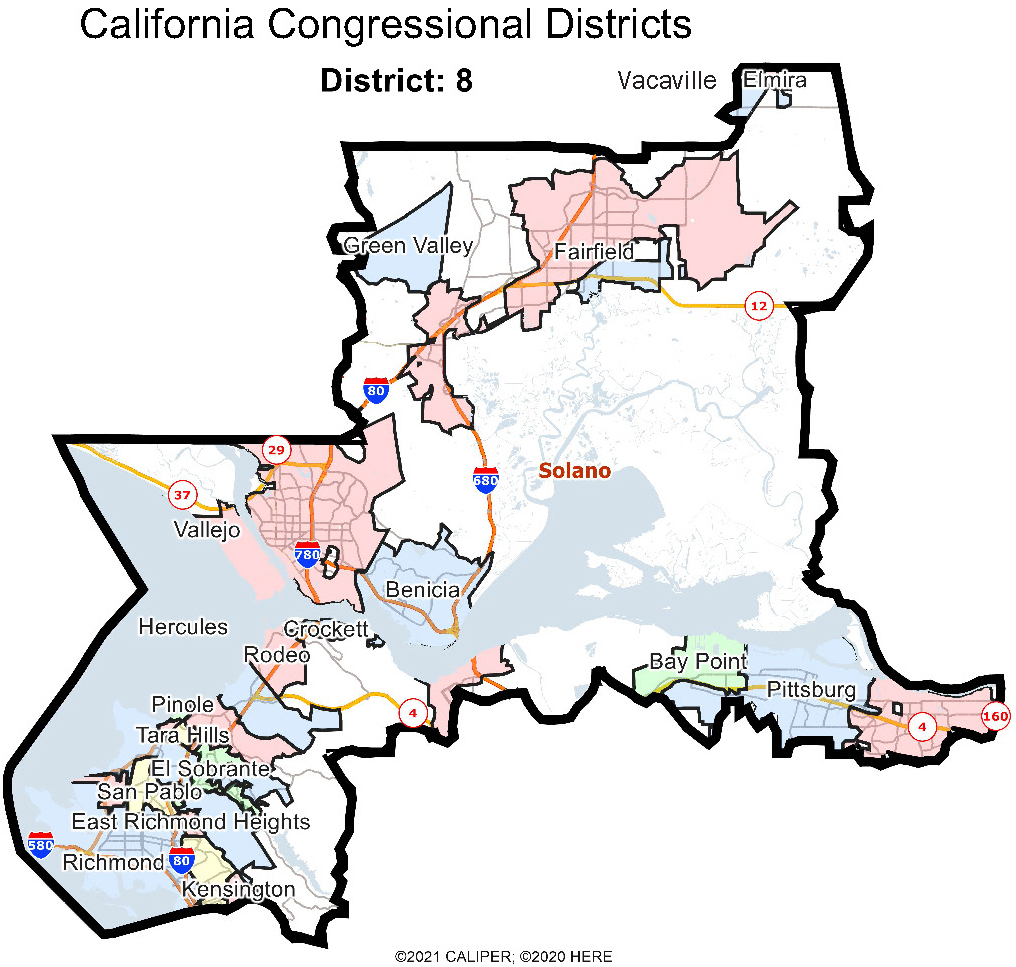
The commission’s final maps show Contra Costa County divided into Congressional Districts 8, 9 and 10. Source: WeDrawTheLinesCA.org

Divides Contra Costa County in multiple ways, combining portions with communities in other counties as far away as Sonoma and Yolo Counties over 90 miles away

By Allen Payton

On Monday, the 2020 California Citizens Redistricting Commission completed and approved final maps for the state’s Congressional, Senate, Assembly, and Board of Equalization districts that are significantly different than the draft maps presented last month. The new maps, which will be in place and affect elections for the  next 10 years, split up Contra Costa County in multiple ways and combine portions with other counties and communities as much as 93 miles away.

The California Constitution states that public comment shall be taken for at least three days from the date of public display of any final statewide maps. Additionally, the Commission shall not display any other map for public comment during that period. (To offer additional public comment click here)

“We have reached the finish line for the people’s redistricting process in California. When voters approved the Voters FIRST Act, it created a monumental shift in this decennial process,” stated Commission Chair Alicia Fernandez. “As Californians, my colleagues on this Commission and I answered the call to serve for this great state we honor and love. We conclude our map drawing responsibilities with pride in our final product. We started this process leaving politics out of the equation in hopes of achieving fairer and more equitable maps. I think I speak for my colleagues when I say mission accomplished! Thank you to all that participated in this process.”

The Commission drew 4 Board of Equalization districts, 52 Congressional districts, 40 Senatorial districts, and 80 Assembly districts. All districts were drawn within the permissible population deviation.

The commission’s final maps show Contra Costa County divided into State Senate Districts 3, 7 and 9. Source: WeDrawTheLinesCA.org

Maps Split Up Contra Costa County More

While the current maps approved in 2011 divide the county amongst four Congressional, two State Senate and three State Assembly districts, what the Commission did to Contra Costa, this time, was split it up even more into three Congressional, three State Senate, and four Assembly districts.

For the State Senate map, the majority of the county, from Crockett in West County to Antioch in East County is combined with San Leandro, Castro Valley and San Lorenzo in southwest Alameda County. Like the draft maps issued by the Commission in November, the new Senate map includes the Far East County cities of Brentwood and Oakley and communities of Discovery Bay, Byron, Bethel Island and Knightsen in the same district as Vallejo, Napa, Rohnert Park in Sonoma County, over 90 miles away.  In addition, the map combines all of West County with the cities of Berkeley, Oakland and Alameda.

For the State Assembly map, the Commission keeps the county split in four districts keeping Far East County except for Brentwood, in the same district as most of Solano County including Vallejo, Fairfield, Vacaville and Dixon. It keeps most of West County in the same district, except for Crockett, which is included in the same district as Martinez, Pleasant Hill, Concord, Clayton, Bay Point, Pittsburg, Antioch and Brentwood.

The commission, only split the county amongst three districts for the Congressional map. But it splits up East County into those three, new separate districts by carving out Discovery Bay and Byron and leaving them in the same district as most of San Joaquin County. The proposed final map also combines the southern portion of Antioch, plus Brentwood, Oakley, Bethel Island and Knightsen with Central County, including most of Concord, plus Lamorinda, the San Ramon Valley and a portion of Dublin in the same congressional district. Finally, it splits off the northern portion of Antioch, plus Pittsburg and Bay Point, and includes it in a district with the other part of Concord, plus Martinez, West County cities of Richmond, El Cerrito, San Pablo, Pinole, Hercules and Crockett with most of Solano County.

Independent Commission Creates Maps That Benefit Democrats

The place of residence of any incumbent or political candidate may not be considered in the creation of a map, and districts may not be drawn for the purpose of favoring or discriminating against an incumbent, political candidate, or political party.

However, according to a news report by the left-leaning Politico, “California’s new congressional map boosts Democrats” in their “uphill quest to maintain their minuscule House majority”. The new lines “create more challenging districts for Republican incumbents without substantially undermining the prospects of vulnerable Democrats.” The “map could point to Democrats holding ground or picking up seats.”

The commission’s final maps show Contra Costa divided into Assembly Districts 11, 14, 15 and 16. Source: WeDrawTheLinesCA.org

Shape Files/Equivalency Files/Stats and Map Viewer: https://www.wedrawthelinesca.org/final_maps

In accordance with the California Constitution, the Commission followed these criteria, in this order, to draw district maps:

  1. Districts must be of equal population to comply with the U.S. Constitution.
  2. Districts must comply with the Voting Rights Act to ensure that minorities have an equal opportunity to elect representatives of their choice.
  3. Districts must be drawn contiguously, so that all parts of the district are connected to each other.
  4. Districts must minimize the division of cities, counties, neighborhoods and communities of interest to the extent possible.
  5. Districts should be geographically compact: such that nearby areas of population are not bypassed for a more distant population. This requirement refers to density, not shape. Census blocks cannot be split.
  6. Where practicable each Senate District should be comprised of two complete and adjacent Assembly Districts, and Board of Equalization districts should be comprised of 10 complete and adjacent State Senate Districts.

The last of the criteria makes sense, as there are twice as many Assembly districts as Senatorial districts, and the Commission could have simply divided each Senatorial district into two. But they chose not to follow it when drawing the new maps.

Additional Commission Meetings

The Commission is continuing to hold meetings Sunday and next Monday and accepting additional public comments on the final maps. At the start of Tuesday’s meeting, Chair Fernandez announced that the meetings scheduled for tomorrow (Wednesday) and Thursday, as shown on the Commission’s website, have been cancelled.

December 26, 2021 CRC Business Meeting – 2020 Citizens Redistricting Commission Meeting – 11:00 A.M. – 1:00 P.M. daily or upon conclusion of business  Public Input Form

December 27, 2021 CRC Business Meeting – 2020 Citizens Redistricting Commission Meeting – 11:00 A.M. – 1:00 P.M. daily or upon conclusion of business  Public Input Form

Background on Redistricting and Commission

Every 10 years, after the federal government publishes updated census information, California must redraw the boundaries of its electoral districts so that the state’s population is evenly allocated among the new districts.

In 2008, California voters passed the Voters First Act, authorizing the creation of the independent California Citizens Redistricting Commission to draw new State Senate, State Assembly, and State Board of Equalization district lines. In 2010, the Voters First Act for Congress gave the Commission the responsibility of drawing new Congressional districts following every census.

For more information, please visit www.WeDrawTheLinesCA.org. To offer additional comments to the Commission about the proposed final maps visit www.wedrawthelinesca.org/contact by Thursday, Dec. 23 at 5:00 p.m.

Filed Under: News, Politics & Elections, State of California

BART Director Debora Allen announces candidacy for District 4 Contra Costa County Supervisor 2022

December 18, 2021 By Publisher 4 Comments

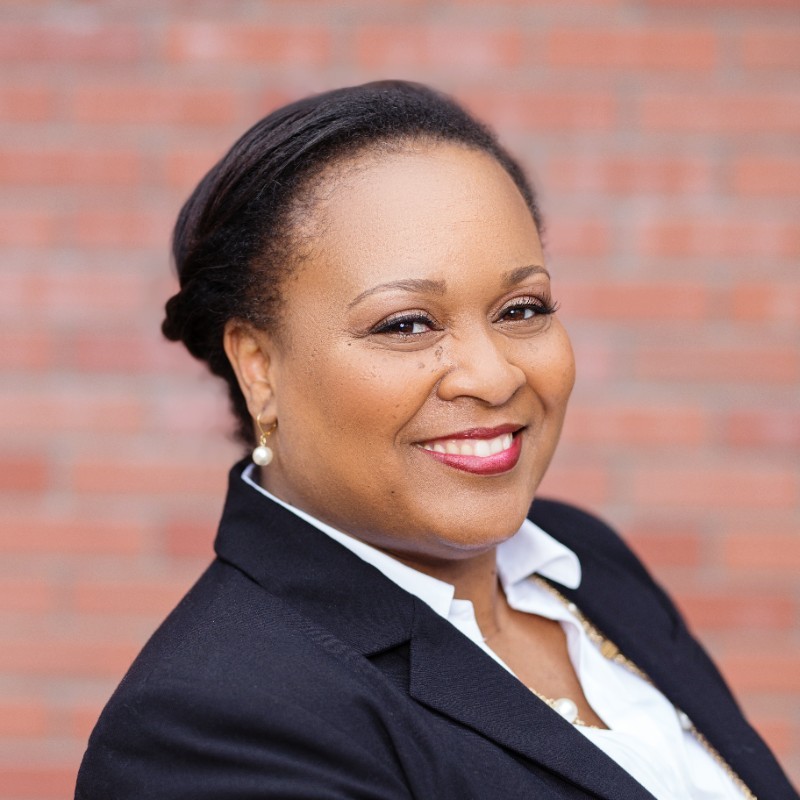
Deborah Allen

BART Director Debora Allen, a long-time advocate for improved public safety and a common-sense approach to government spending, today announced her candidacy for Contra Costa Supervisor District 4.

“I’m excited to take this important step in my fight to improve the quality of life of all Contra Costa residents,” said Allen, a 35-year Contra Costa resident. “I believe my close scrutiny of government spending, my background as a business owner and my experience fighting for fiscal transparency and stability for the region’s largest transportation agency make me uniquely qualified to serve as county supervisor. I’m looking forward to the upcoming campaign and the June primary.”

Allen was first elected as Board Director for BART District 1 in 2016 and easily won re-election in 2020, besting her nearest opponent by 75,000 votes. Her willingness to stand up for suburban taxpayers and fight for quality-of-life improvements for transit riders – including station hardening, a ban on panhandling, and tougher crime and fare evasion enforcement – often put her at odds with the urban city-backed majority on the board.

Allen was instrumental in the creation and development of the Office of BART Inspector General and serves as the first Chair of the Standing BART Audit Committee, important steps in eliminating wasteful spending practices at the transportation agency.

If elected supervisor, she would bring that same tenacity, accountability and common-sense approach to government spending to the county board. Allen says that as supervisor her priorities would include public safety, regional transportation issues, improved mental health services and the efficient use of taxpayer money. Though a supporter of new housing, she would also fight to bring new jobs to the county in order to improve the overall jobs-housing balance.

“Building new housing alone won’t solve the issues facing working-class families and average county taxpayers,” Allen said. “We need to fund effective and successful mental health programs, bring in new jobs and improve our transportation network in a coordinated approach that addresses the quality of life for all residents. We must also address why the cost of new housing construction is so unaffordable and take steps to reduce the burden placed on small businesses to fund basic services.”

Allen, a Clayton resident, spent 30 years in financial management as a CPA, tax manager, CFO and business owner. Prior to her time on the BART board, she served six years on the Contra Costa employees’ pension board, where she fought for reforms in the public pension system.

Allen currently serves on several transportation-related boards and regional commissions, including Capitol Corridor JPA, Innovate 680 and the Contra Costa Transportation Authority.

Allen is seeking the District 4 supervisor seat being vacated by Karen Mitchoff, who served three terms. District 4 covers Concord, much of Walnut Creek, Pleasant Hill, Clayton and unincorporated areas around Mount Diablo. CCCBOS 2021 District Map

For more information about Debora Allen for Contra Costa County Supervisor visit DeboraAllen.com.


Filed Under: Central County, News, Politics & Elections, Supervisors

Letters: Attorney reveals Contra Costa Democrats supported defunding police, sheriff’s office last year

December 8, 2021 By Publisher Leave a Comment

Former Central Committee member claims he was kicked out for voting against resolutions

“It is crucial to reallocate funds from police and sheriff departments” – approved CCC Democratic Party resolution

Segments of the Contra Costa County Democratic Party July 31, 2020 letter to the Board of Supervisors. Source: Jason Bezis

Dear Editor:

Please see the PDF attachment, which I received from the County of Contra Costa this morning in response to a Public Records Act/Better Government Ordinance request. CCCDP – Alegria Communications (12.6.21 Response)

This is the Contra Costa County Democratic Party’s local homage to the national “Defund the Police” movement:

(1) In the July 31, 2020 County Democratic Party letter to the Contra Costa County Board of Supervisors: “What is needed is an unprecedented and urgent redirection of funds from law enforcement …  It is crucial to reallocate funds from police and sheriff departments …”

[The earlier version that the County Democratic Central Committee passed called for “divestment.”  After I protested use of the word “divestment”, due to its very strong connotation in connection with 1980s “divestment” from the South Africa apartheid regime, County Party leaders softened it with the language above.]

(2)  July 2020 Contra Costa County Democratic Party resolution: “Shift Funding from Police and Sheriff Departments to Community Services … Therefore, be it resolved that we, the Democratic Party of Contra Costa County, encourage city councils to decrease police department funding and that County Boards of Supervisors decrease Sheriff Department funding, and instead shift these funds …”

I voted “no” on both actions.  The County Democratic Party retaliated by kicking me out of their organization (as the Contra Costa Herald already has reported, in part, in April of 2021).

The Contra Costa County Democratic Party buffoons who approved this resolution and letter enabled the recent horrifying robbery at Broadway Plaza in Walnut Creek and similar criminal conspiracies at Stoneridge Mall in Pleasanton, Southland Mall in Hayward, and at Union Square in San Francisco.

DPCCC 2020 endorsement promos for Kevin Wilk and Cindy Darling. Provided by Jason Bezis

Walnut Creek Mayor Kevin Wilk and Councilmember Cindy Darling sought and secured endorsements for their 2020 re-election campaigns from the County Democratic Party at the same time all of these “Shift Funds from Police” actions were taken by the County Democratic Party. The “Herald” should ask Wilk and Silva to publicly disclose their answers to Democratic Party written questionnaires in 2020, especially about any police funding questions.  Were they asked about police funding in oral interviews? (Police funding/oversight was a major issue in Walnut Creek in 2020 with the “Justice for Miles Hall” movement.) CADEM2020 Slate Cards – WalnutCreek

The “Herald” also ought to ask Sheriff Livingston and his announced opponent(s) about what they think of the July 2020 Democratic Party letter and resolution about police and sheriff funding.  I expect that candidates might make themselves unavailable for public comment. The District 4 Supervisorial District candidates (Birsan, Obringer, and ???) also should be asked whether or not they supported this resolution and letter, both then in 2020 and now in 2021 after the nationally notorious crime wave that struck Broadway Plaza.  Birsan now is on the Cal. Dem. Party Executive Board. Again, watch for candidates to be unavailable for public comment.

The PDF attachment is a public record.

Best regards,

Jason Bezis

Lafayette, Calif.

Filed Under: Letters to the Editor, Opinion, Politics & Elections

CC Community College Board proposed redistricting map keeps wards gerrymandered protecting incumbents

December 4, 2021 By Publisher 2 Comments

COE refers to County Office of Education and indicates the residence location of a county Board of Education Trustee. Source: 4CD. Additional city and community information added by the Herald.

Will hold their only public hearing on Wed., Dec. 8; staff’s one map makes few changes to wards, keeps six cities split, splits two more including Clayton, violates community of interest and compactness guidelines

By Allen Payton

The Contra Costa Community College District (4CD) will hold a public hearing at the December 8, 2021, Governing Board meeting to seek community input on a staff proposal to adjust trustee area boundaries and ensure population balance that keeps the wards gerrymandered with few changes to the politically drawn 2011 map. The regular meeting begins at 6:00 p.m., and will include a review of the proposed ward map based on population changes unveiled in the 2020 Census. (See related article)

The current trustee ward boundary map approved in 2011, was drawn to benefit the late Trustee Sheila Grilli, who represented Ward 3, and include Bay Point, where former Trustee Greg Enholm lives, in a separate district, so he couldn’t run against her, again. He was elected to the board the following year. The current map also benefited the late Trustee John Nejedly, who represented Ward 4, by including most of San Ramon with the more politically conservative portions of Antioch and Brentwood in East County.

It also combined the southern portions of Pittsburg with Concord, rather than use the hills as a natural boundary. It also splits Alamo from the rest of the San Ramon Valley, and includes Lamorinda with portions of Martinez and Hercules, as well as Rodeo and Crockett, again, not using the hills as a natural boundary. The trustee representing that ward must travel outside of their ward to get to the other sections. Such politically based drawing of representative district maps is referred to as gerrymandering.

Both the current and proposed maps violate two basic principles for drawing district or ward boundary maps including keeping communities of interest together and compactness. That’s in spite of the fact Board president Andy Li recently wrote “4CD is following a process to re-draw ward boundaries to ensure population balance and proportion as stipulated in Education Code. Other considerations presented and discussed at the Governing Board’s November 10, 2021, meeting, included ensuring compliance with the federal voter rights act, compact and contiguous areas, respecting communities of interest as much as possible, and respecting incumbency.”

However, respecting incumbency is not one of the guidelines in the state education code and is not a requirement for redrawing boundary maps. It’s a political consideration. For example, the Antioch School Board drew their area boundary map in 2019 resulting in two incumbents residing in the same district. The same can occur with the new college board ward map.

Proposed Trustee Wards Map

While the proposed trustee ward map has a total population deviation of just 1.7% between wards – which is closer to the intent of the Constitution of ensuring one-person-one-vote than the new map recently approved by the Board of Supervisors with a 9.77% population deviation between districts – it keeps things pretty much the same as the 2011 map. It continues to split Antioch, Brentwood, Pittsburg in East County, Martinez, Concord, Walnut Creek and one of the county’s smallest cities, Clayton, in Central County, and in West County, instead of splitting Pinole, as the current map does, the proposed map splits Hercules.

The proposed map indicates where the incumbents currently live, labeled as W’s and shows both Ward 2 Trustee and Board Vice President Judy Walters and Ward 3 Trustee Rebecca Barrett both live in Martinez.

The proposed map also indicates where the county Board of Education (labeled with A’s and COE for County Office of Education) trustees live, because that board normally uses the same map that the college board approves.

Source: 4CD

Incorrect List of Ward Member Cities and Communities for Both Maps

The staff report includes a list of cities and unincorporated communities associated with each ward for both maps. But it is incorrect. The correct information is as follows:

Ward 1 John E. Márquez 2011: El Cerrito, El Sobrante, Kensington, Richmond, San Pablo, parts of Pinole

2021: El Cerrito, El Sobrante, Kensington, Pinole, Richmond, San Pablo, and parts of Hercules

Ward 2 Judy E. Walters 2011: Alamo, Canyon, Crockett, Hercules, Lafayette, Moraga, Orinda, Port Costa, Rodeo, parts of Pinole, parts of Pleasant Hill and parts of Walnut Creek

2021: Alamo, Canyon, Crockett, Lafayette, Moraga, Orinda, Port Costa, Rodeo, parts of Clayton, parts of Hercules, parts of Pleasant Hill and parts of Walnut Creek

Ward 3 Rebecca Barrett 2011: Pacheco, parts of Bay Point, parts of Concord, parts of Martinez and parts of Pleasant Hill

2021: Pacheco, parts of Clayton, parts of Concord, parts of Martinez, parts of Pittsburg and parts of Pleasant Hill

Ward 4 Andy Li 2011: Blackhawk, Byron, Danville, Discovery Bay, San Ramon, Camino Tassajara, and parts of Antioch, parts of Brentwood and parts of Clayton

2021: Blackhawk, Byron, Danville, Discovery Bay, San Ramon, Camino Tassajara, parts of Antioch and parts of Brentwood

Ward 5 Fernando Sandoval 2011: Bay Point, Bethel Island, Clyde, Knightsen, Oakley, parts of Antioch, parts of Brentwood and parts of Pittsburg

2021: Bay Point, Bethel Island, Clyde, Knightsen, Oakley, parts of Antioch, parts of Brentwood and parts of Pittsburg.

Public Hearing In-Person and Online

The community is invited to participate in this conversation by either attending the meeting in-person at 500 Court Street, Second Floor Board Room, Martinez, California, or by joining the meeting via Zoom. A link to the public meeting is located on the 4CD website at www.4cd.edu in the December 8, 2021, Governing Board meeting agenda.

Special districts like 4CD are legally obligated to follow Education Code Section 5019.5, which highlights the process to follow, ensuring the population of trustee wards is balanced based on the changing demographics of the community. Community college districts are required to complete this process by February 28, 2022.

The first phase of this work began at the Governing Board’s November 10, 2021, meeting, when trustees received a presentation that outlined the demographic changes of Contra Costa County highlighted in the 2020 Census. Under the direction of legal counsel, 4CD research staff analyzed the 2020 Census information to develop the proposed ward map.

4CD Regular Governing Board Meeting – 12.8.21 agenda

The agenda for the above meeting and a memo highlighting certain reports are attached. The agenda can also be accessed at:  2021-12-08-GB Agenda

If you are attending in person, public session will begin at 6:00 p.m. and will be held in the Second Floor Board Room.  Please note that according to Contra Costa Health Services and effective August 3, 2021, masks are required for everyone, regardless of vaccination status, in indoor public spaces such as businesses, classrooms and offices.

If you are attending remotely, please see the information below to access the meeting.

Meeting link:                https://tinyurl.com/2021-12-08-GB-Agenda                       

            Meeting ID No.:           972 7628 0768

            Passcode:                     205040         

            Phone option:               1.669.900.6833          

Public Comment:  You may address an item on the agenda or a subject of your choice. The desired goal is to create an environment of mutual respect between participants of Governing Board meeting discussions; to enhance intellectual thought; and to insure that all present have an opportunity to present their views in an orderly fashion.  If you would like to make public comment at this meeting, please see the information listed on the attached agenda.  A fillable public comment card is also attached within the agenda and included here: 4CD Board Mtg Public Comment Card

Filed Under: Education, News, Politics & Elections

Antioch mayor recall petition finally approved signature gathering begins

December 2, 2021 By Publisher Leave a Comment

Antioch Mayor Lamar Thorpe tossed his recall notice out of his car after being served by organizer Kathy Cabrera in the City Hall parking lot on Sept. 24, 2021. Screenshot of video courtesy of Kathy Cabrera. Thorpe then framed his recall notice and posed with it, later that day. Photo from Thorpe’s official Facebook page.

City Clerk, a Thorpe ally, provides copy of letter on day it’s due instead of only mailing it as she did three times, previously

“She was very accommodating, this time.” – Recall organizer Kathy Cabrera

160 days to collect 9,511 signatures of registered Antioch voters.

By Allen Payton

After being served with recall papers on Tuesday for abusing her position to benefit political ally, Antioch Mayor Lamar Thorpe, City Clerk Ellie Householder approved the petition for his recall in a letter to organizer Kathy Cabrera, today, Thursday, December 2, 2021. It was the 10th day since the fourth version of the petition was submitted, which is the legal limit. Unlike with her previous three letters rejecting Thorpe’s recall petition, this time Householder didn’t just send it by certified mail delaying the signature gathering by two more days, she also left a copy for the organizers at her office in City Hall. (See related articles here and here)

Antioch City Clerk Ellie Householder’s letter to organizer Kathy Cabrera approving the fourth Thorpe recall petition on Thursday, Dec. 2, 2021. Photo courtesy of Kathy Cabrera.

That allows signature gathering to begin, today. Organizers now have 160 days to collect 9,511 signatures of registered Antioch voters. Cabrera and Lindsey Amezcua, who is also helping lead the recall to remove Householder from the Antioch School Board, were the first to sign their names to Thorpe’s recall petition. Any registered voter in Antioch can sign the petition and help gather signatures. Approved Thorpe recall petition

Recall organizers Lindsey Amezcua and Kathy Cabrera sign and show the approved recall petition for Antioch Mayor Lamar Thorpe on Thursday, Dec. 2, 2021. Photos courtesy of Kathy Cabrera.

What took the County Clerk two days to do for Householder’s recall from the school board, took her and the Thorpe recall organizers almost two months to complete. The petition for the mayor’s recall was first submitted to the city clerk on Oct. 11th. (See related articles here and here)

“She was very accommodating, this time,” Cabrera said about Householder.

“The recall of Antioch Mayor Lamar Thorpe is ready to move ahead into the signature gathering phase,” Cabrera stated. “Signature gathering events are planned for this Saturday and Sunday.”

“This is bigger than anyone’s own personal views,” she continued. “The group of proponents and supporters are committed and have begun collecting the 9,511 signatures required to put the recall of Lamar Thorpe on the ballot.”

“We will follow the recall process and let the Antioch citizens’ voices be heard,” Cabrera added. “We believe the residents of Antioch deserve better as too many good people in City Hall, Antioch residents and Antioch businesses are leaving under Mayor Thorpe’s tenure.”

The mayor had the opportunity to provide a response which would have been printed on each petition copy. But he chose not to. Efforts to reach Thorpe for comment were unsuccessful prior to publication time.

The recall organizers will hold their first official signing event during the annual Holiday Delites celebration in historic, downtown Rivertown on Saturday. Following is the schedule they provided for this weekend:

Saturday 12/4/21 10am to 5pm
RiverTown Sweets on W. 2nd Street.
Rivertown Treasure Chest on G Street
Sunday 12/5/21 10am to 2pm
Bluerock Starbucks – This will be a drive-up signing event.

Please check back later for any updates to this report.

Filed Under: East County, News, Politics & Elections

Frazier announces resignation from Assembly to pursue career in transportation, spend time with family, friends

December 2, 2021 By Publisher 3 Comments

Assemblyman Jim Frazier. Source: Twitter

“It was the best job in the world, helping people and solving problems.”– Jim Frazier

Currently serves most of East County

By Allen Payton

In a post on his official Facebook page and Twitter feed, Wednesday, Dec. 1, 2021 State Assemblyman Jim Frazier (D-11) announced he will be resigning from his position at the end of the month.

In addition to posting his letter of resignation, at 12:32 pm Wednesday, he tweeted, “It has been a joy and a privilege to represent District 11. I extend my sincerest appreciation to each of you. Thank you all.” Frazier posted a similar comment on his Facebook page, writing, “It has been a joy and a privilege to represent District 11. I extend my sincerest appreciation and love for an incredible 9 years of service. Thank you all.”

His announcement dispels the rumors that Frazier, who moved from Oakley to Fairfield a few years ago, would run for supervisor in Solano County, State Senate or Congress, if Rep. John Garamendi was going to retire. But the Assemblyman, was first elected to the Assembly in 2012 following his time on the Oakley City Council, could have served one more term, since members of the state legislature can only serve a total of 12 years in either the Assembly or State Senate or a combination of both, due to term limits in Proposition 28 passed by voters in 2012.

When reached for comment Frazier said, “it’s time to move on and I have a strong urge to get back into the transportation sector, pursue my passion, and help people achieve their goals in transportation.”

“It was the best job in the world, helping people and solving problems,” he continued. I’ve served for 14 years in public service. It’s time to move on.”

Asked about the rumors he might run for another office, Frazier laughed and said, “nobody asked me.”

The press release reads: Jim Frazier resignation ltr 12-02-21

“California State Assemblymember Jim Frazier (D-Fairfield) today announced his resignation from the California State Assembly, District 11, effective December 31, 2021. Mr. Frazier will be seeking new opportunities in the field of transportation.

Assemblymember Frazier said, “This is the best job that I have ever had. I have enjoyed serving the State of California and the 11th Assembly District and greatly appreciate the confidence that my constituents have shown in me over the last nine years. I am proud of the many successes that we achieved together. My future plans are to put to use my passion and experience in the transportation sector, explore new career opportunities and spend additional time with family and friends.”

Mr. Frazier was elected to the California State Assembly, District 11 in November of 2012. The 11th District encompasses portions of Solano, Contra Costa and Sacramento counties and includes the following cities, towns, and areas: Antioch, Bethel Island, Birds Landing, Brentwood, Byron, Collinsville, Discovery Bay, Fairfield, Isleton, Knightsen, Locke, Oakley, Pittsburg (partial), Rio Vista, Suisun City, Travis Air Force Base, Vacaville and Walnut Grove.

Assemblymember Frazier currently serves as Chair of the powerful Assembly Governmental Organization Committee, providing oversight of open meeting laws, Offices of the Governor, Lieutenant Governor, State Controller, and State Treasurer, State holidays, seals, and official acts, emergency services, Outdoor Advertising Act (billboards), alcohol, gaming, horse racing, the State Lottery, and tobacco. He has been an advocate for enhanced unemployment and disability policy as chairman of Select Committee on Intellectual and Developmental Disabilities. As a key member of the Assembly Veteran’s Committee, he supported legislation to improve lives of veterans. Mr. Frazier oversaw and helped coordinate state public works activities while serving as the Assembly Speaker’s appointee to the State Public Works Board. Mr. Frazier previously served as chairman of the Assembly Transportation Committee, overseeing transportation infrastructure managing $2.3T in annual commerce, and promoting system improvements and job creation.

Additional key accomplishments:

  • Delivered numerous improvements to transportation infrastructure across high-speed rail, highways, and public transportation, securing $30B in total transportation funding and $5.2B for highly impactful SB1 infrastructure project.
  • Fostered legislation to obtain $1.2B in funding for special needs population, supporting and overseeing series of hearings throughout the State of California, evaluating the mission and effectiveness of relevant state agencies.
  • Established reputation as champion for California Delta, serving as key member of Delta Protection Commission focused on protecting fish and wildlife, safeguarding farmers, and ensuring continuous environmental and economic viability of delta by promoting water conservation, improved water quality, and improved management of land use and development.
  • Secured $12 million to remove abandoned and derelict commercial marine vessels throughout the Delta region through the 2021 State Budget.
  • Secured funding for Special Olympics for 6 years, including $20M funding through the 2021 State Budget.
  • Secured funding for Solano First 5 in the amount of $2 million to create a Fairfield First 5 Center through the 2021 State Budget.
  • Secured $500,000 for East Contra Costa Fire Protection District’s training program.
  • Authored legislation for a Veteran Designation of CA Driver’s License to recognize military service, resulting in hundreds of thousands of additional dollars for Veterans.

Mr. Frazier’s was recognized with many awards during his Assembly career. His accomplishments include (partial list): 2018, Legislator of the Year from the California State Commanders Veterans Council, 2017 California Transportation Foundation Elected Official of the Year, Director’s Special Recognition for Infrastructure Advocacy by American Society of Civil Engineers, 2016 Special Olympics Volunteer of the Year, 2016 AMVETS Legislator of the Year, 2015 Decoding Dyslexia: Assemblymember of the Year, 2015 California Transportation Foundation: Elected Official of the Year, 2015 Small Business Legislator of the year by California Small Business Association (CSBA) and California Small Business Roundtable (CSBR), 2015 CA Waterfowl Association, Grant Kenyon Award, Legislator of the Year, Appreciation Award: Sikh Communities of Napa and Solano Counties and Fairfield- Suisun Unified School District.

An avid supporter of non-profits, Mr. Frazier was a Founder and Vice President of the Friends of Oakley Community Foundation from 2007 until 2013. A dedicated volunteer, Mr. Frazier served on the Boys and Girls Club Advisory Board, a Board of Director member for Impact Teen Drivers and dearest to his heart, he has been a volunteer with Special Olympics since 2005.”

Filed Under: East County, News, People, Politics & Elections

Contra Costa college board to hold redistricting hearing Dec. 8, but no online mapping tool offered for public input

December 1, 2021 By Publisher 2 Comments

Source: 4CD

Only one proposed map to be presented by district staff, attorney and only one public hearing will be held; wards aren’t required to be equal in size, can have a 5% population deviation from average, so they can match the Supervisors’ new map; Trustees Walters, Sandoval committed to an independent redistricting body/commission during their 2020 campaigns; Sandoval will request it at Dec. 8 meeting; Board President Li offers to consider one after process is completed; deadline is Feb. 28, 2022

By Allen Payton

During their meeting on Nov. 10, the Contra Costa Community College District (4CD) Board of Trustees received a presentation about Ward Equalization Based on the 2020 Census. The process will begin during a public hearing at their Dec. 8 meeting, with one map presented by District staff and attorney, and must be completed by the end of February. However, there will be no online mapping tool for the public to use to submit proposed, alternative maps, like the Board of Supervisors and some cities like Antioch and Brentwood have offered. 111021-4CD Trustee Area Redistricting presentation

According to the 2020 Census, the population of the District is now 1,165,927 a growth of 116,902 since 2010. That results in an average ward population of 233,186. Ward 5 has experienced the greatest population growth in the previous decade and is now 7.1% over average. Although state education code requires the population of each ward be equal “as nearly as may be”, according to 4CD staff the wards can legally have a population deviation from one to the other as great as 10%, just like the Board of Supervisors are allowed. Their final map has a total deviation of 9.77%. (See related article)

Current CCCCD Trustee Ward Boundaries map.

The 2011 ward map splits a variety of cities, including Pinole in West County, Martinez and Concord in Central County, and Pittsburg, Antioch and Brentwood in East County. Concord, Pleasant Hill, Pacheco and portions of Martinez and Pittsburg are included in Ward 2 The map includes Clayton and portions of Antioch and Brentwood with Danville, San Ramon, Blackhawk and Camino Tassajara in the Ward 4. Alamo is included in Ward 2 with Walnut Creek, Lafayette, Moraga and Orinda, as well as Hercules, Rodeo and Crockett, and portions of Pinole and Martinez.

In which cities the current board members live will be taken into consideration. Ward 2 Trustee Dr. Judy Walters lives in Martinez, and Ward 5 Trustee Fernando Sandoval, a Pittsburg resident, were elected last year. Ward 1 Trustee and Richmond resident, John Marquez, Ward 3 Trustee Rebecca Barrett who also lives in Martinez and Ward 4 Trustee Andy Li, a San Ramon resident, are up for election, next year.

According to the staff report on the Nov. 10th presentation, “Pursuant to Education Code Section 5019.5, following each decennial federal census, and using population figures as validated by the Demographic Research Unit of the Department of Finance as a basis, the governing board of each school district or community college district in which trustee areas have been established, and in which each trustee is elected by the residents of the area the trustee represents, shall adjust the boundaries of any or all of the trustee areas of the district such that the population of each is, as nearly as may be, the same proportion of the total population of the district as each of the other areas. 4CD must update ward boundaries as needed to achieve this equalization by February 28, 2022. The attached presentation is informational and represents the first phase of this process.”

Since there was nothing mentioning the districts ward equalization process on the 4CD website, several questions were asked of Executive Vice Chancellor Mojdeh Mezhdizadeh, in charge of the redistricting process, and District PIO Timothy Leong.

Q. Will there be an online mapping tool for the public to use to submit proposed maps on the district’s website, as other agencies, including Contra Costa County and the Cities of Antioch and Brentwood, as well as the state are offering.?

A. No. The process you are referring to are related to municipality actions being done in compliance with the Fair Maps Act, which are to be followed when cities and counties address the redistricting challenge following the 2020 Census. Community college districts are governed by different legal standards, specifically Education Code section 5019.5.

That code also reads:

“(a)(1) The population of each area is, as nearly as may be, the same proportion of the total population of the district as the ratio that the number of governing board members elected from the area bears to the total number of members of the governing board.

(2) The population of each area is, as nearly as may be, the same proportion of the total population of the district as each of the other areas.

(b) The boundaries of the trustee areas shall be adjusted by the governing board of each school district or community college district, in accordance with subdivision (a), before the first day of March of the year following the year in which the results of each decennial census are released. If the governing board fails to adjust the boundaries before the first day of March of the year following the year in which the results of each decennial census are released, the county committee on school district organization shall do so before the 30th day of April of the same year.”

Q. Will there be a hearing schedule for the public to participate in the process?

A. A public hearing on redistricting will be scheduled at the Governing Board’s December 8, 2021, meeting, to obtain community input on the District’s draft redistricting recommendation. In addition, a proposed draft map will be shared and described at this meeting.

Q. The presentation during the Nov. 10th board meeting and the staff report reads, “4CD must update ward boundaries as needed to achieve this equalization by February 28, 2022” and the “presentation is informational and represents the first phase of this process.” What is that process going to beand when, please? When will the next board meeting be held? It doesn’t show on the Board Docs webpage.

A. The presentation at the November 10, 2021, Governing Board meeting, was the first phase of the redistricting process. Since that meeting, 4CD research staff, under the direction of legal counsel, have been analyzing the 2020 Census information and are finalizing a draft recommendation to adjust the five wards in order to meet the population balance and proportions as required by Education Code.  This will be presented at the December 8, 2021, Governing Board meeting.

Q. Why doesn’t the board simply use the same map approved by the Contra Costa County Board of Supervisors? While I recognize there is a small portion of the county on the south end, east of San Ramon and Camino Tassajara is outside of the district. That would not change the deviation percentage much.

A. The development of supervisorial wards were done at a different time and separately from those of the 4CD trustees. The processes are also governed by different legal requirements. The College District is in the process of following applicable laws to meet the needs of its constituency.

Q. But why would that preclude the board from offering an online mapping tool for the public to use to submit proposed maps for consideration?

A. The opportunity for community input on 4CD’s redistricting process and proposal will be available during the Governing Board’s December 8, 2021, meeting. I understand you submitted a proposed redistricting map to the Board of Supervisors, and if you wish for our trustees to consider that map, I would recommend you submit it to Pat Kaya atpkaya@4cd.eduby December 3, 2021, so that it can be considered.

Q. Why will only one draft map be shared by staff at the Dec. 8 board meeting and not several alternatives?

A. Our recommendation to the Governing Board at the November 10, 2021, meeting, and based on past practice, was for staff to provide one map of a proposed adjustment to the ward boundaries. Trustees will have the opportunity to review the proposal at their December 8, 2021, meeting, and along with community input, can decide if it meets their approval or ask staff to make further adjustments to the proposal for review at their January 12, 2022, meeting.

Q. A very small portion of the county east of San Ramon and Camino Tassajara, is not in the 4CD, but is part of the Chabot-Las Positas Community College District. What is the population of the area of Contra Costa County not included in the district?

A. We are seeking the County’s assistance to determine the population of the county that is not covered within the 4CD service territory because we do not track that information.

Q. After reading that education code section, it appears school and college district boards must follow the same guideline as the U.S. House of Representatives in having equal population per district, with no 5% maximum deviation like the Board of Supervisors can have.

A. Legal counsel advises us that we do not follow the same standard as the House of Representatives. For example, school (districts) having a 10% and below deviation are presumptively balanced for legal purposes.

Q. In response Mezhdizadeh and Leong were asked, “does that mean a 5% deviation from average? If so, why can’t the maps created for the Board of Supervisors work for the college district?”

12/2/21 UPDATE: Leong responded, “We are required to assess based on variance, and our max is 10%. Based on the data we received from the 2020 Census, we learned the variance was over 10%, triggering the work to rebalance our wards. Our recommended draft ward boundaries now have a variance of 1.7%.”

As for using the map created for the Board of Supervisors, he responded, “That is a conversation and decision for the Governing Board to make.”

Regarding the population of the area of Contra Costa County not included in the district, Leong wrote, “According to the County Elections Office, Census Tract 3551.12 contains 116 census blocks, and has a population of 1,593.”

Two Trustees Committed to Independent Redistricting Body/Commission

During the 2020 election campaign, Ward 2 Trustee Dr. Walters said she would support an independent redistricting body to redraw districts, in response to a question from the League of Women Voters.

“After the 2020 Census is completed, districts will need to be redrawn in 2021. If elected, will you support an independent redistricting body to redraw districts? Why or why not?

Answer from Judy E. Walters: Yes, independent redistricting bodies have drawn impartial boundaries and avoid gerrymandering, or drawing district lines that benefit certain incumbent legislators and/or the political party in power.”

In response to the same question, Ward 5 Trustee Fernando Sandoval also gave his support for an independent redistricting commission.

“Answer from Fernando Sandoval: I will wholeheartedly support an independent redistricting commission to redraw districts for Contra Costa Community Colleges. Both the State of California and municipalities like the City of Berkeley and several others have passed measures to create commissions that are free of political influence. This, in turn, has ensured that the districts that are ultimately agreed upon are more representative of the communities of interest that reside there.”

Board Can Increase the Number of Trustees

That same code section also reads: “the authority to establish or abolish trustee areas, rearrange the boundaries of trustee areas, increase or decrease the number of members of the governing board, or adopt any method of electing governing board members may be exercised only as otherwise provided under this article.”

Q. Does that mean the college board can increase the number of trustees on the board and corresponding districts? If they choose to do so, does that need to occur during the redistricting process? What is the maximum number of trustees allowed on the board?

A. The Governing Board can decide to change the number of elected trustees at any time and does not have to coincide with this redistricting process. It is a completely separate topic from the post-census Redistricting process, which is the District’s main focus at this time in order to meet the February 28, 2022, deadline.

Questions for Trustees

In an email on Saturday afternoon, all five trustees were asked the following questions:

Will you support forming an independent redistricting commission of residents to assist you with the Ward Equalization, this year?

Will you also commit to basing the new boundaries on principles of:

  1. One person one vote with as little population deviation from one district to the other;
  1. Compactness;
  2. Communities of Interest – such as keeping all the San Ramon Valley cities and communities together, and not including East County with the San Ramon Valley as the current Ward 4 does; and
  3. Splitting the larger cities, first, such as Concord, Antioch and Walnut Creek

If you choose to have ward populations with a deviation as much as 10%, recognizing a very small portion of the county is not in the college district, why not simply adopt the same map the Board of Supervisors adopted?

Would you support increasing the number of trustees and corresponding districts to seven, as the Las Positas-Chabot Community College District and Peralta Community College District have? Why or why not?

Finally, in which city do each of you live? Only President Li includes that he lives in San Ramon in his bio on the 4CD website Board page. Since that will be a consideration in redrawing the ward boundaries, that’s important for the public to know when giving input to you during the process.

Board President Li Responds

Only Board President Li responded to the Herald’s questions with the following:

“The Contra Costa Community College District (4CD) is working closely with legal counsel to ensure we administer a fair and impartial redistricting process following Education Code section 5019.5. Since 2020 Census data was released about 6 months later than usual, 4CD did not receive the final 2020 census data until the last week of September and we are required to complete our post-census redistricting process by February 28, 2022 as required by law.

4CD is following a process to re-draw ward boundaries to ensure population balance and proportion as stipulated in Education Code. Other considerations presented and discussed at the Governing Board’s November 10, 2021, meeting, included ensuring compliance with the federal voter rights act, compact and contiguous areas, respecting communities of interest as much as possible, and respecting incumbency.

The questions in your November 27, 2021, email refers to your interest in obtaining support for an independent redistricting body to redraw our ward boundaries that could be consistent with ward areas similar to those recently approved by the Board of Supervisors. This was not the direction we provided staff during our November 10, 2021, public meeting.

If there was interest by the trustees to pursue this idea to completely redraw our ward boundaries and other proposals such as increasing the number of trustees, the Governing Board would place this item on a future meeting agenda so the conversation could be done publicly, and it would take place after we have rebalanced our existing wards based on populations changes outlined in the 2020 Census.

Regarding the use of a public mapping tool, the Governing Board did not feel this it was necessary to rebalancing the population as required by Education Code 5019.5. If, after the completion of the redistricting work is completed, and the Governing Board chooses to pursue the idea to completely revamp our trustee wards, a mapping tool could also be considered.”

Since he didn’t answer some of the questions, Li was asked the following, again: “If you choose to have ward populations with a deviation as much as 10%, recognizing a very small portion of the county is not in the college district, why not simply adopt the same map the Board of Supervisors adopted? Would you support increasing the number of trustees and corresponding districts to seven, as the Las Positas-Chabot Community College District and Peralta Community College District have? Why or why not?”

Four Other Board Members Asked, Again

The other four board members were sent the same questions, again asking for each of them to respond. In addition, Walters and Sandoval were specifically asked, “why didn’t you propose appointing an independent citizens commission for redistricting as you committed during your campaigns, last year?”

Sandoval Responds, Commits to Requesting Independent Commission

“The board in open session has not had a discussion on redistricting, yet because we haven’t seen the data,” Sandoval said when reached for comment. “I want to ensure the public has the opportunity to weigh in on the process and the work that will be done by district staff. That’s part of the transparency we need to have for the process.”

“I will fulfill my commitment to ask for the independent redistricting commission,” he added. “Speaking on my own behalf, I will also ask for more transparency.”

Regarding expanding the board to seven members, Sandoval said, “that’s something for the board to discuss. It isn’t something I ran on in 2016 or 2020 and was elected to do. But I’m open to having that discussion. Having seven board members is a mixed bag for several different reasons. But we have to discuss it and let the public weigh in on it.

Minutes of the November 10th board meeting was not yet available on the 4CD website as of publication time. It has been requested of Leong, Wednesday afternoon, Dec. 1. Minutes of past meetings are only available in the agenda of the next meeting. The Dec. 8 board meeting agenda is not yet posted on the 4CD’s Board Docs website. The links to the archive of board meeting videos are also not easy to find. They’re available, here: https://www.4cd.edu/gb/videos.html.

To contact each of the trustees, please see their phone and email contact information, here.

Please check back later for updates to this report.

Filed Under: Education, News, Politics & Elections

Candidate for Contra Costa DA, Mary Knox offers three-point plan to prevent smash-and-grab retail theft

November 30, 2021 By Publisher Leave a Comment

Sources: (Left) Herald file photo and (Right) Mary Knox for DA campaign.

The current DA has been slow to respond to flash mob robberies, and once she responds, she’s ineffective. Given my 36 years of experience as a Contra Costa Deputy District Attorney, I know the District Attorney can do more. We need to implement these three steps immediately:

  1. Convene a Bay Area-wide law enforcement response to track and apprehend suspects 

Contra Costa law enforcement agencies are partnered to provide mutual aid during emergency situations.  This “mutual aid” concept should be employed throughout the Bay Area to strategically shut down access routes for potential retail targets to intervene and prevent crime before it happens.

The investigative and technological expertise of this team will:

  • Identify the criminal syndicates who organize the smash-and-grab robberies
  • Intercept the “chatter” on social media planning these events
  • Share information between law enforcement agencies to quickly locate and arrest perpetrators

The ideal team to coordinate this activity is the DA/FBI Safe Streets Task Force, comprised of local, state, and federal task force agents who are partnered with prosecutors assigned to the Community Violence Reduction Unit (a unit that I created in the Contra Costa District Attorney’s Office).

Given the violence involved and the value of the merchandise being stolen, the Task Force will collaborate with the U.S. Attorney’s Office to charge qualifying cases under the Hobbs Act and prosecute them in federal court.

The criminal syndicates committing the smash-and-grab robberies, as well as strings of residential burglaries in Contra Costa, are mobile and active in surrounding counties.  During the past four years, regional law enforcement agencies have done an impressive job of sharing information to identify the true scope of the criminality of these crews and to provide investigative support.  The information supplied by this well-coordinated network provided me with the evidence required to file multiple counts following very significant organized retail theft and residential robberies.  I worked with the Walnut Creek and Pleasant Hill Police Departments through the investigative challenges of the looting in 2020 and filed charges on a number of suspects.  As District Attorney, I will continue to support this allied inter-county effort.

  1. Prevent the use of our freeways as crime corridors, deploy cameras 

Organized shoplifting gangs have been using the regional freeway system to quickly move between targets in neighboring law enforcement jurisdictions.  By the time an investigation starts at the first crime, the gang has moved on to loot another store in the next county.

Contra Costa’s Freeway Security Network has the technological capability to combat organized retail theft.  The Allied Freeway Agencies have received additional funding for the Network and direction to develop a plan to augment and expand the Network county-wide in order to provide technological leads in preventing and investigating criminal syndicates involved in the violent organized retail theft.

I am proud to have originated the creation of this freeway camera system to combat freeway shootings.  Since the network was installed, freeway shootings have been reduced by 90% in Contra Costa while remaining all too frequent in neighboring counties. I continue to work with law enforcement and elected leaders to propose that additional funding that Governor Newsom included in the state budget be used to incorporate additional technology to target organized retail theft into the Freeway Security Network.

  1. Disrupt the use of social media as a key enabler of looting 

Organized retail theft would not exist without social media, which is the key element to planning and profiting from these crimes.

Looting is coordinated through social media 

Social media platforms provide the means of communication which allows criminals to conspire to commit take-over robberies. These platforms are directly aiding and abetting the commission of large-scale crimes, which may result in criminal liability for the social media platforms.  I will call on the social media platforms, as well as private communication platforms, to monitor and immediately report to law enforcement any communications planning a smash-and-grab robbery or the “fencing” of stolen property.

We must make it clear to technology companies that failure to monitor and report the coordination of criminal enterprise should not be a protected business activity and should instead be considered as aiding and abetting that crime.

Stolen goods are sold via online marketplaces 

If a market for the merchandise that is being stolen did not exist, the criminal syndicates would have no motive to steal.  While I am out talking with community members, most are surprised to learn that the merchandise that is stolen from CVS, Walgreens, Lululemon and the high-end retailers is often sold on the internet via OfferUp, LetGo, and the Facebook and Amazon Market Places.

As District Attorney, I will actively engage and educate our community members about the crime occurring in our county and ways we can work together to combat it, such as not buying merchandise off the internet that does not have a means of guaranteeing that it is not stolen merchandise.  I will also work with retail stores to modify their return/exchange policies to ensure that they are not accepting the return of their own stolen merchandise.

———————————————————-

About Mary Knox: Mary Knox was born and raised in Walnut Creek and has 36 years of experience advocating and fighting for victims, their families, and the larger community. She is a lead prosecutor in the Contra Costa County District Attorney’s office, who has prosecuted and won high profile cases against some of the most notorious criminals in county history. She has broken the chokehold that criminal gangs have had on the most disadvantaged communities and has engaged in meaningful violence reduction by instituting effective strategies to reduce crime and prosecute violent criminals. Learn more about Mary at maryknox4da.com


Filed Under: Crime, District Attorney, Opinion, Politics & Elections

Contra Costa Supervisors vote 5-0 to finalize 2021 redistricting map

November 26, 2021 By Publisher 2 Comments

Contra Costa Board of Supervisors approved the 2021 Redistricting Map D. Source; Contra Costa County

Only 93 people provided public, nine alternate maps submitted; splits Walnut Creek, Concord and Antioch; reunites Pinole and the San Ramon Valley

By Daniel Borsuk

During their final public hearing for the 2021 redistricting process on Tuesday, Nov. 23, the Contra Costa County Board of Supervisors voted 5-0 to approve the 2021 Redistricting Map D on Tuesday that shows Supervisor Candace Andersen’s District 2 and Supervisor Federal Glover’s District 5 gaining territory at the expense of District 3 Supervisor Dianne Burgis and District 1 Supervisor John Gioia. (See agenda item D.1)

The supervisors’ action on the final redistricting map beat the mandatory Dec. 15 deadline by 22 days after county officials conducted a series of public hearings and workshops that drew meager citizen input. (See related article)

“For the six workshops a total of 21 individuals provided public comment either in person or by Zoom or phone call; and an additional 72 individuals were on the Zoom or phone call in portions of the workshops but chose not to speak,” a county document stated in defense of the public participation.

No matter how uneven the county process might have been in attracting public participation, two districts – District 2 and District 5 – scored the most territory and potential political clout from the decennial redistricting process.

After the final vote on the map, Board Chair Burgis of Brentwood put a positive spin on the two-month redistricting activity stating.

“The Contra Costa County Board of Supervisors thanks the community for its participation in this decennial process,” she said. “We have been committed to a robust Redistricting and public outreach process with public hearings, a dedicated website at CoCoRedistricting.org, public workshops, and multiple ways for the public to share input, including an online mapping tool to draw maps and submit comments.  We want to thank you for staying informed and playing a role in this important process.”

“I’d like you to not vote on this today,” requested Sherrill Grower, one of three persons who spoke at Tuesday’s meeting. “I feel like this map disenfranchises the public particularly along the northern waterfront. I am not pleased with the proposed district boundaries.”

Map D with population statistics. Source: Contra Costa County

With the new map, District 4 now covers most of Walnut Creek split at Highway 24 and Interstate 680 with District 2 Supervisor Andersen representing the other portion of the city, primarily Rossmoor.

District 4 underwent the smallest population gain of the five districts with a 1.65 percent increase from 2010 to 2020, to 229,348 residents, according to Census data. Whites represent 51.7 percent of District 4’s population followed by Latinos at 22.4 percent, Asians at 15.2 percent, Blacks at 3 percent and 7.7 percent for others.

District 4 Supervisor Karen Mitchoff, who has announced she won’t seek re-election in 2022, also saw the city of Concord, which is in District 4, split with Glover’s District 5 by Highways 4 and 242 and the former railroad right-of-way.

Mainly because Andersen’s District 2 experienced the biggest population gain of any of the other districts, from 2010 to 2020 it gained more territory. Population-wise, District 2’s population rose from 218,017 in 2010 to 243,565 in 2020. Whites make up 55 percent of the district’s population followed by Asians at 28 percent, Latinos at 8.5 percent, and Blacks at 1.6 percent and others at 6.8 percent.

District 2 will now cover Tassajara Valley, Blackhawk, Diablo and Camino Tassajara, all formerly were represented by Supervisor Burgis.

District 3, which saw its population rise 2.85 percent to 203,711 from 2010 to 2020, covers most of Antioch and the other growing cities of Brentwood and Oakley and communities of Bethel Island, Knightsen, Discovery Bay, and Byron.

District 2 also contains the cities of San Ramon, Danville, Moraga, Lafayette, and Orinda. The census designated Alamo, Blackhawk, Diablo, Camino Tassajara, Saranap, and Castle Rock as contained in District 2.

In addition to the cities of Pleasant Hill and Clayton, the Contra Costa Centre, Acalanes Ridge, Shell Ridge, San Miguel and North Gate are in District 4.

Glover, who offered no comment on the final redistricting map, also gained territory. He not only retains the Northern Waterfront, an area now under planning study for future industrial and economic development from Crockett to Oakley, but District 5 now, no longer has a portion of Pinole that was formerly split by District 1’s Gioia and District 5’s Glover.

Not mentioned publicly, District 5 is due to benefit economically and demographically when bulldozers rev up at the former Concord Naval Weapons Station where the Seeno Company has won City of Concord approval to build 13,000 housing units and commercial developments on 5,046 acres on the former Naval weapons base property in north Concord. Construction should be well underway over the next 10 years.

Map D keeps Antioch split in two between Districts 3 and 5, as the city currently is, but in different ways. This time the districts are split along Somersville Road and Auto Center Drive and the Union Pacific Railroad right-of-way. Herald publisher Allen Payton asked the supervisors to consider splitting Antioch along the city boundary line with Pittsburg and Highway 4, which he said makes more sense for residents to know what district they live in and to match the current and expected district boundaries for Antioch City Council District 1. Burgis said she tried to make that happen but the population figures to comply with the 5% deviation legal requirement, didn’t work.

Based on U.S. Census data, District 5’s population increased from 203,744 in 2010 to 228,463 in 2020. Thirty-five percent of the district’s population is Latino, 27.5 percent is White, 17.9 percent is Asian and 12.4 percent is Black.

Supervisor John Gioia was pleased with the redistricting results, especially when more urban-like district contains the cities of Richmond, San Pablo, El Cerrito, and Pinole. Kensington, North Richmon, East Richmond Heights, El Sobrante, Rollingwood, Tara Hills, Montalvin Manor, and Bayview are also included in District 1.

District 1’s population grew from 203,437 persons in 2010 to 224,726 in 2020, according to U.S. Census data. Latinos represent 40.9 percent of the district’s population followed by whites at 21.7 percent, Asians at 16.8 percent and Blacks at 16.8 percent

“The boundaries are very similar to our local transportation district,” observed Gioia. “There is no gerrymandering.”

Overall, Contra Costa County’s population increased 11.4 percent to 1,168,064.


Filed Under: News, Politics & Elections, Supervisors

  • « Previous Page
  • 1
  • …
  • 18
  • 19
  • 20
  • 21
  • 22
  • …
  • 48
  • Next Page »
The Lemon Tree generic
RepublicServices-Antioch-ad (1)
Furn-Clrnc-Outlet-06-26B web
Monica's dinner 05-26 CCH
Celia's-07-26
Delta-RC-B 07-26
Deer-Valley-Chiro-06-22

Copyright © 2026 · · Contra Costa Herald · All Rights Reserved