• Home
  • About The Herald
  • Local Agencies
  • Daily Email Update
  • Legal Notices
  • Classified Ads

Contra Costa Herald

News Of By and For The People of Contra Costa County, California

  • Arts & Entertainment
  • Business
  • Community
  • Crime
  • Dining
  • Education
  • Faith
  • Health
  • News
  • Politics & Elections
  • Real Estate

CCWD Division 2 Director Burgh to step down March 31st

February 19, 2026 By Publisher Leave a Comment

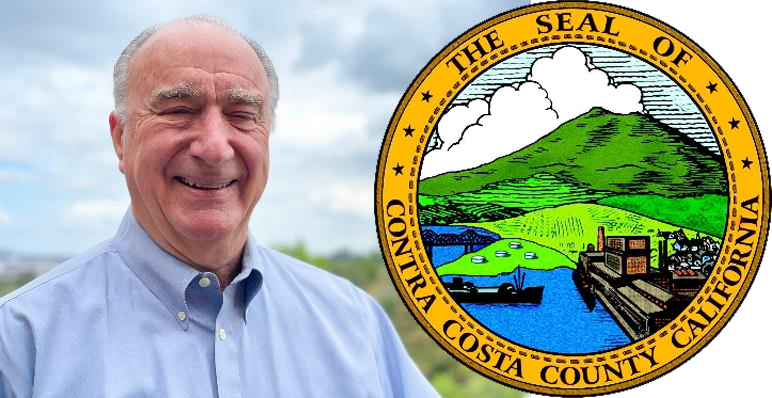
CCWD Division 2 Director John Burgh will step down after 22 years on March 31, 2026. Photo: CCWD

After representing Central County communities for 22 years on Board

“CCWD is on a solid path investing in the next generation of water service with a collaborative Board and innovative staff.” – Director Burgh

By Nicola McCluney, Management Assistant, Public Affairs, Contra Costa Water District

Concord – During the Board meeting on February 18, Contra Costa Water District’s Board Director, John A. Burgh, announced that after 22 years representing the community on water issues, he will step down from the Board effective March 31, 2026.

Director Burgh was appointed to the Contra Costa Water District (CCWD) Board of Directors in 2004. He represents Division 2, which includes Pleasant Hill, Martinez, Port Costa and a portion of Concord. During his 22-year tenure, he served on the Public Information & Conservation, Operations & Engineering, Finance and Retirement & OPEB Joint Advisory Committees.

Director Burgh’s 42-year professional career, working as an engineer on water and wastewater projects throughout the world, gave him a unique perspective joining the CCWD Board.  His technical expertise translated to thoughtful policy decisions ensuring CCWD makes sound investments in critical infrastructure to the benefit of all customers, including future generations. While serving on the CCWD Board, his highest priorities have been transparency in spending public dollars, regional collaboration and smart infrastructure investments based on the best available data.

“It has been my honor to represent my neighbors on the CCWD Board for 22 years,” said Burgh. “This Board operates at the highest level of transparency and accountability. I have learned so much from each of my colleagues and always appreciated the respectful discussions, especially when we had differing points of view.”

When asked about his decision to step down from the board, Burgh responded, “While a tough decision, CCWD is on a solid path investing in the next generation of water service with a collaborative Board and innovative staff. For my own personal reasons, this felt like the right time for me to step down and provide an opening for the next generation of water policy leaders.”

According to his bio on the CCWD website, Burgh is a retired engineer who has worked on water and wastewater projects throughout the world. He has a total of 42 years of experience in the administration, project management and design of public works projects.

For the last 30 years of his career, he worked for an environmental engineering consulting firm, where he retired as vice president.

Burgh holds a Bachelor of Science degree from the University of Notre Dame and a master’s degree in management from the University of New Mexico. He is a registered civil engineer in California and an Air Force veteran.

He is a past President of the Contra Costa County Historical Society. A resident of Concord for over 35 years, he is a member of the Pleasant Hill Rotary Club and is a volunteer driver for Meals on Wheels, delivering meals to shut-in senior citizens in the area.

Director Burgh’s last day is March 31, and the Board will need to decide to fill the vacancy for Division 2 by appointment or election.

Allen D. Payton contributed to this report.

Filed Under: Central County, Government, News, People, Politics & Elections, Water

Following chase to Oakland four arrested for Walnut Creek auto burglary

February 19, 2026 By Publisher Leave a Comment

Video screenshots including from a helicopter infrared camera and police body cam footage show Walnut Creek auto burglary suspects, fleeing car during police chase on the Hwy 13 onramp in Oakland, hunt and apprehension on Jan. 31, 2026. Source: Walnut Creek PD

Connected to other auto burglaries; ground and air assist from Contra Costa Sheriff’s Office, CHP

By Walnut Creek Police Department

In the early morning hours of January 31, 2026, Walnut Creek Police officers responded to a report of a vehicle burglary in a residential neighborhood.

Shortly after the initial call, officers observed a vehicle leaving the area at a high rate of speed. A pursuit was initiated and continued until the vehicle became disabled on Highway 13 in Oakland. Several individuals fled from the vehicle as ground and air resources from Walnut Creek Police, the Contra Costa County Sheriff’s Office, and the California Highway Patrol assisted with a coordinated search of the area.

During the investigation, officers determined the group was connected to additional vehicle burglaries occurring within a similar timeframe.

In total, four suspects were located and taken into custody. One adult was arrested on multiple charges related to vehicle burglary, possession of stolen property, evading, conspiracy, and resisting. Additional involved individuals were identified and released to responsible parties in accordance with department policy.

See video of auto burglary, chase and arrests.

Filed Under: Central County, Crime, East Bay, News, Police

Robbery suspects wanted in multiple Contra Costa jurisdictions in custody

February 18, 2026 By Publisher Leave a Comment

Jarmaya Tillman of Antioch (left) and Allen Charles Benjamin Foster of Oakland (right) were arrested for bank robbery on Tuesday, Feb. 17, 2026. Photos: CCC Sheriff’s Office

From Antioch and Oakland, each with history of arrests

By Jimmy Lee, Director of Public Affairs, Contra Costa County Office of the Sheriff

On Tuesday, February 17, 2026, at about 1:01 PM, Contra Costa Sheriff’s Office Valley Station deputy sheriffs responded to a report of a robbery at a bank on the 3100 block of Danville Boulevard in Alamo.

The suspect and vehicle descriptions were broadcast to area law enforcement agencies. Danville police were able to identify a license plate associated with the suspect vehicle and began searching for it.

Lafayette police officers also began searching for the suspect vehicle in the downtown area and witnessed an attempted robbery outside a bank on the 3600 block of Mt. Diablo Blvd. The suspect ran to a waiting vehicle, which fled toward Lafayette Circle. Lafayette police later located the unoccupied car parked on Lafayette Circle.

A replica firearm found in one of the suspects’ backpacks. Photo: CCC Sheriff’s Office

Lafayette police were able to detain two suspects near East Street and determine they were the suspects in the Lafayette attempted robbery and the Alamo robbery. A search of the suspect’s backpack found a replica Glock firearm. Another police department in the area is investigating a similar incident just prior to the Alamo robbery.

Jarmaya Tillman, 23-years-old from Antioch (born 4/13/2002) and 20-year-old Allen Charles Benjamin Foster of Oakland (born 3/28/2005), were arrested for robbery, attempted robbery and two counts of conspiracy.

Both suspects were booked into the Martinez Detention Facility.

Tillman is being held in lieu of $200,000 bail, while Foster’s bail is set at $150,000.

During the search for the suspects, Valley Station deputy sheriffs and Lafayette police were assisted by Danville PD, Orinda PD, Moraga PD and Concord PD.

According to the Contra Costa Sheriff’s Office, Tillman is five-feet, 11-inches tall and 160-pounds and Foster is five-feet, 10-inches tall and 195-pounds.

According to localcrimenews.com, Tillman is Black and while an Oakland resident was arrested three times in 2020 and 2021 for burglary, with one arrest including charges for minor in possession of live ammunition and minor shall not be in possession of any concealed firearm.

Foster is Black and this is his ninth arrest since 2023 by five other agencies for crimes including multiple counts of vehicle theft, grand theft, robbery, receiving stolen property and gun charges.

The investigation is ongoing. Anyone with any information on this incident is asked to contact the Investigation Division at (925) 313-2600. For any tips, email: tips@so.cccounty.us or call (866) 846-3592 to leave an anonymous voice message.

Allen D. Payton contributed to this report.

Filed Under: Central County, Crime, Lamorinda, News, Police, Sheriff

Breakfast Never Looked Better: Enjoy a FREE Chick-fil-A Chicken Biscuit for breakfast until Feb. 28

February 18, 2026 By Publisher Leave a Comment

Nationwide breakfast giveaway available exclusively to all Chick-fil-A One Members

(ATLANTA) – Chick-fil-A® is rolling out a nationwide giveaway guaranteed to make cold, winter mornings a little brighter. From now through Saturday, Feb. 28 during breakfast hours, Chick-fil-A One® Members can claim a FREE Chick-fil-A® Chicken Biscuit* through the Chick-fil-A App, no purchase necessary.

“We love finding ways to surprise and delight our guests, especially during this years’ ‘Newstalgia’ celebration in honor of 80 years,” said Khalilah Cooper, vice president of brand strategy, advertising & media. “What better way to celebrate than by giving a breakfast classic to our Chick-fil-A One® Members? It’s our small way of thanking guests for being part of our story, then and now.”

The Chick-fil-A Chicken Biscuit is a breakfast classic, featuring a boneless breast of chicken, seasoned to perfection, hand-breaded and served on a buttermilk biscuit baked fresh daily at each restaurant. The breakfast entreé debuted in 1986, coinciding with the launch of the brand’s first ever standalone restaurant.

For nearly four decades, Chick-fil-A has offered Guests a variety of delicious ways to start their morning. From the classic Chick-fil-A Chicken Biscuit to lighter options like the Egg White Grill and heartier favorites like the Hash Brown Scramble Burrito with Jalapeño Salsa, breakfast remains a favorite time of day for Guests of all ages.

Throughout 2026 Chick-fil-A is delivering a year of ‘Newstalgia’, celebrating its 80-year heritage of quality, service and care. The campaign serves up beloved classics and fresh new twists, fun Guest experiences and moments of surprise and delight, from the new Frosted Sodas and Floats to Classic Cups and all-new, retro packaging.

Guests can download the Chick-fil-A App through their phone’s App Store or by visiting
Chick-fil-A.com/one. For more on our menu and information about Chick-fil-A’s food, people and Guests across the country, visit chick-fil-a.com.

*The breakfast reward can be redeemed during breakfast hours, from restaurant open until 10:30 a.m., while supplies last, and is limited to one reward per person, per Chick-fil-A One® account.

About Chick-fil-A, Inc.

Chick-fil-A, Inc. is the third largest quick-service restaurant company in the United States, known for its freshly-prepared food, signature hospitality and unique franchise model. More than 200,000 Team Members are employed by local Owner-Operators in more than 3,000 restaurants across the United States, Canada, Puerto Rico, the United Kingdom and Singapore.

Chick-fil-A local Owner-Operators live and work in the communities their restaurants serve, each supporting local efforts and making a positive impact. Chick-fil-A gives back through programs including the Chick-fil-A Shared Table® Program, True Inspiration Awards and Scholarships. The family-owned and privately held company got its start in 1946, founded by S. Truett Cathy. More information on Chick-fil-A is available at  www.chick-fil-a.com  and  Chick-fil-A Press Room.

Filed Under: Business, Dining, News

The Raley’s Companies announce leadership changes

February 18, 2026 By Publisher Leave a Comment

Chelsea Carbahal (left) and Carol Barsotti (right). Photos: The Raley’s Companies

Chelsea Carbahal transitions to advisory role after 10 years’ service to Raley’s, begins new consulting firm, CMC Strategies; Carol Barsotti appointed Chief Communications Officer

By Ashley Shick, The Raley’s Companies

West Sacramento, CA – In 2015, Chelsea Minor, now Chelsea Carbahal, joined Raley’s and quickly became an integral part of the executive leadership team. As the senior leader of Public Relations, Government Affairs, and Community Impact, Carbahal helped shape the company’s growth strategy. She guided strategic communications during a period of significant transformation when Raley’s doubled in size through acquisitions and strategic divestitures. Throughout this process, she advanced the organizational vision of “changing the way the world eats, one plate at a time.”

“Chelsea was instrumental in communicating our transformation, including introducing a healthier assortment and exiting products and categories no longer aligned with our brand and vision,” said
Keith Knopf, president & CEO, The Raley’s Companies. “We relied on her expertise during the challenges of the pandemic and trusted her ability to anticipate and shape our response to regulatory changes and evolving consumer sentiment. Chelsea’s leadership was central to these pivotal moments and so much more.”

In 2020, Carbahal’s role expanded to The Raley’s Companies, a multifaceted, multi-state organization.
She skillfully navigated complex state landscapes, building strong relationships with government leaders at the local and state levels, as well as Tribal Nations. She also served as the Executive Director of Raley’s charitable foundation, Food For Families. In partnership with Foundation President Julie Teel, Carbahal broadened the program’s reach, diversifying donations to increase revenue and deepen its impact across food banks in Northern California and Nevada.

“Chelsea has been a vital contributor to the strategic and operational success and expansion of Raley’s Food For Families,” said Julie Teel, president of Food For Families Board of Directors. “I am forever grateful for her compassionate, empathetic, and courageous leadership in our shared mission to help those who are
food insecure.”

Beyond her contributions to The Raley’s Companies, Carbahal worked closely with Owner and Chairman Mike Teel to advance the vitality of the Greater Sacramento Economic Council (GSEC) and engage on statewide issues critical to the business. She built a high-performing governmental affairs strategy that played a central role in legislative and regulatory efforts, including the passage of Proposition 36 related to retail theft.

“Chelsea’s impact, both internally and externally, has been substantial. Her insight, expertise, and steady guidance helped drive meaningful progress for the communities we serve,” said Mike Teel, owner and chairman, The Raley’s Companies. “With her leadership, Raley’s engaged in critical conversations, advanced key projects, and contributed to important regional and statewide growth.”

After a decade of dedicated service, Carbahal is embarking on a new chapter, both professionally and personally. In July 2025, she and her husband welcomed twins into their family. Following maternity leave, she returned this fall and, in partnership with Raley’s leadership, began planning her next steps. Effective January 16, she will launch her own strategic advisory firm, CMC Strategies, with Raley’s as its inaugural client under a retainer agreement.

“Over the past decade, I’ve had the privilege of working alongside an exceptional team and contributing to a company whose mission has always inspired me. Together, we navigated transformative growth, embraced bold changes, and strengthened our commitment to the communities we serve,” said Carbahal.

“I am deeply grateful for the trust, collaboration, and friendships that have shaped my journey at Raley’s and the greater community. As I begin this next chapter with CMC Strategies, I look forward to continuing our partnership and supporting the company’s vision in new and meaningful ways.”

“Chelsea has been an important and transformative leader for The Raley’s Companies. Her impact on our team, our brand, and our leaders is indelible. While we will miss working with Chelsea day-to-day, we look forward to continuing our partnership through CMC Strategies,” said Knopf.

The company has a succession plan in place for an incumbent executive leader to assume these responsibilities as well as a capable team that will carry on the important and critical work. An announcement will be forthcoming.

Carol Barsotti Promoted to Chief Communications Officer

The Raley’s Companies announced in January the appointment of Carol Barsotti as Chief Communications Officer, expanding her leadership role within the organization. Barsotti will assume responsibility for public relations, government affairs, and community impact as The Raley’s Companies continue to focus on transformation and sustainable growth.

“We are fortunate to have Carol as an integral part of our executive leadership team,” said Keith Knopf, President and CEO, The Raley’s Companies. “She is purpose-driven, creative, versatile, impactful and proven at developing and leading high-performing teams. Carol is the epitome of a servant leader, always willing to step up to support the needs of the team, company and community.”

Barsotti is also President of fieldTRUE, the nation’s leading farm-box subscription business, and will continue in this role moving forward. She is a member of The Raley’s Companies executive leadership team as well as a board member of Raley’s Food For Families. She will continue to report to Knopf with a strong connection to The Raley’s Companies Owner and Chairman, Mike Teel, and President of Food For Families, Julie Teel.

“Having such an accomplished leader assume these critical responsibilities positions us well for what’s ahead,” said Mike Teel, Owner and Chairman of The Raley’s Companies. “As we continue our purpose‑driven transformation, I look forward to working closely with Carol to drive our mission of changing the way the world eats, one plate at a time.”

Carol brings deep expertise in public service and community impact. She holds a Master of Public Administration and Policy from American University and began her career working for the U.S. House of Representatives in Washington, D.C. and California. Today, she continues her commitment to community impact as President of the Kathleen Barsotti Non-Profit for Sustainable Agriculture.

“Carol has already been a meaningful partner in growing support for Food For Families,” said Julie Teel, President of Food For Families. “Her partnership with me and the board has been significant in our ability to have an ever-increasing impact on supporting local food banks.”

“It’s a privilege to lead with purpose at the center of our strategy,” Barsotti said. “When we align communications, policy and community engagement, we create impact that matters for our business and for the people we serve.”

About The Raley’s Companies

The Raley’s Companies is a private, family-owned and purpose-driven retail company headquartered in West Sacramento, CA. Since our founding in 1935, our store operations have grown to include more than 200 locations across eight states and four Tribal Nations under 10 well-known banners: Raley’s, Bel Air, Nob Hill Foods, Raley’s O-N-E Market, Bashas’, Bashas’ Diné, Food City, AJ’s Fine Foods, Full Circle, and Farm Fresh To You. In addition, The Raley’s Companies bridges the divide between the physical and digital retail experiences through the operation of Apium Logistics, Fieldera and fieldTRUE. Built on a higher purpose, the organization and our more than 21,000 employees are committed to quality offerings, exceptional service and doing right by our team members, communities, and planet.

Raley’s currently has four locations in Contra Costa County in Brentwood, Oakley, San Pablo and the Antioch store which will be closing at the end of April. In addition, Nob Hill Foods has a location in Martinez. To learn more, visit theraleyscompanies.com.

Allen D. Payton contributed to this report.

Filed Under: Business, News, People

ICE arrests “monster” from El Salvador living in San Pablo with six criminal convictions

February 14, 2026 By Publisher 19 Comments

ICE announced Friday the arrest of Jose Lopez-Arevalo of El Salvador living in San Pablo. Photo: ICE

For assault with a deadly weapon, hit-and-run, false imprisonment, grand theft, evading police and DUI in Contra Costa, Marin and Alameda counties

State releasing thousands of criminal undocumented immigrants

By Allen D. Payton

U.S. Immigration and Customs Enforcement (ICE) announced on Friday, February 13, 2026, the arrest of multiple criminal undocumented immigrants across the country, convicted of what they referred to as “repulsive crimes” including child sex crimes, assault with a deadly weapon and conspiring to traffic cocaine. Among those arrested was Jose Lopez-Arevalo of El Salvador living in San Pablo in Western Contra Costa County.

“Yesterday, the brave men and women of ICE arrested heinous criminal illegal aliens convicted for sex crimes against children, felony battery and one monster convicted for SIX offenses including a hit-and-run and grand theft,” said Assistant Secretary Tricia McLaughlin. “There is absolutely no reason these violent criminals should remain in this country. While sanctuary politicians and activist judges release criminals into our communities, our law enforcement officers are risking their lives to remove public safety threats from American neighborhoods.”

Lopez-Arevalo has previously been convicted for assault with a deadly weapon, vehicle hit-and-run, false imprisonment, grand theft, evading police and driving under the influence in Contra Costa, Marin and Alameda counties.

According to localcrimenews.com, the five-foot, five-inch tall, 145-pound suspect is 26 years old and was arrested twice by the Marin County Sheriff’s Department. First, on February 5, 2025, for false imprisonment by violence, driving without a license, DUI alcohol/drugs with blood alcohol content above .08, possession of drug paraphernalia and evading a peace officer. Lopez-Alvarado was previously arrested on August 10, 2020, for possession of a controlled substance, driving without a license, hit-and-run resulting in property damage, following emergency vehicles, DUI Alcohol with BAC above .08, possession of alcohol in an open container and for no display of license plates. He was also arrested by the Contra Costa County Sheriff’s Department on June 15, 2024, and earlier this month, on warrants or holds only.

According to the Contra Costa County Office of the Sheriff, Lopez-Arevalo was booked on Feb. 4 and out of custody on Feb. 11 as his sentence was served.

According to a Feb. 6th press release by ICE, “There are currently 33,179 aliens in the custody of a California jurisdiction with active detainers. The crimes of these aliens include 399 homicides, 3,313 assaults, 3,171 burglaries, 1,011 robberies, 8,380 dangerous drugs offenses, 1,984 weapons offenses and 1,293 sexual predatory offenses.

“California’s failure to honor ICE detainers has resulted in the release of 4,561 criminal illegal aliens since January 20,” the press release continued. “The crimes of these aliens include 31 homicides, 661 assaults, 574 burglaries, 184 robberies, 1,489 dangerous drugs offenses, 379 weapons offenses, and 234 sexual predatory offenses.”

Americans can see more individuals posing public safety threats arrested in their communities on the Department of Homeland Security webpage WOW.DHS.Gov.

Filed Under: Crime, Homeland Security, Immigration, News, Sheriff, West County

Two former Antioch cops sentenced to time served, community service

February 13, 2026 By Publisher Leave a Comment

Former Antioch Police Officers Timothy Manly Williams (left) and Daniel Harris (right) were sentenced on Jan. 13, 2026, to time served. Herald file photos

No prison time; both testified against former colleagues

By Allen D. Payton

The final cases of Antioch Police Officers that were the focus of the Contra Costa DA and FBI investigations were settled last month with two former officers given sentences of time served. As a result, Daniel Harris and Timothy Manly Williams will not face any time in prison. Both testified against their former colleagues.

According to a previously published report by the U.S. Attorney’s Office Northern California District, Daniel Manly Williams pleaded guilty on Nov. 28, 2023, to destruction, alteration and falsification of records in federal investigations, obstruction of official proceedings and deprivation of rights under color of law. Manly Williams was sentenced to “six months’ custody, followed by three years of supervised release, and 100 hours of community service.

Harris pleaded guilty on Sept. 17, 2024 to conspiracy to distribute and possess with intent to distribute anabolic steroids, and possession with intent to distribute anabolic steroids as well as bank fraud. Harris was sentenced to “twelve months and a day of custody, followed by three years of supervised release, and 100 hours of community service.”

Both men’s sentencing hearings were held on Jan. 13, 2026, but no statement was issued by the U.S. Attorney’s Office Northern District of California, which prosecuted both cases.

Manly Williams’ Case Details

According to the Sentencing Memorandum for Manly Williams, “In May 2021, the Antioch Police Department (“APD”) discovered during a routine audit something surprising: their own police officer, Timothy Manly Williams, had called a subject of a wiretap he was monitoring. From all appearances, he had intentionally burned the wire and attempted to cover it up. A sprawling federal investigation would eventually result in various criminal charges against ten Antioch or Pittsburg Police Department (“PPD”) officers or employees, including Manly Williams.

“In August 2023, Manly Williams was indicted for his concealment of that call during the wiretap, which constituted criminal falsification of records and obstruction of justice, as well as for his unconstitutional destruction of a citizen’s cell phone following his then-roommate APD Officer Morteza Amiri’s release of a police canine to bite a suspect.

“By September 2023, Manly Williams had already met with the government a first time. By November 2023, he had promptly pleaded guilty to his crimes. In March 2025, he testified in the jury trial involving that same former roommate regarding another dog bite for which he was present, and Amiri’s concealment of facts surrounding that bite. He also admitted to additional criminal conduct not specifically referenced in the indictments.

“Manly Williams’ crimes were very serious, particularly given his role as a police officer sworn to uphold the law and protect his fellow citizens. However, his immediate acceptance of responsibility and cooperation with the government was also very significant, particularly given that same role, and the government accordingly moves for a downward variance pursuant to § 5K1.1 for his substantial assistance to authorities.

“Based on the nature and circumstances of the serious offenses, the defendant’s history and characteristics (including his role as a sworn police officer), the need for deterrence, and the need to avoid unwarranted sentence disparities given the sentences already imposed by this Court, as well as the government’s motion for the equivalent of a five-level downward departure pursuant to § 5K1.1, the government recommends that the Court impose a sentence of six months’ custody, followed by three years of supervised release, and 100 hours of community service. This proposed sentence is sufficient, but not greater than necessary, to achieve the goals set forth in 18 U.S.C. § 3553(a)(2).

“The government’s investigation also revealed other relevant criminal conduct, which Manly Williams admitted carrying out, including:

  • While employed as a police officer with PPD and APD, Manly Williams illegally purchased anabolic steroids, Schedule III controlled substances, from PPD Officer Patrick Berhan and APD Officer Daniel Harris.
  • While employed as a police officer with PPD and APD, Manly Williams misused confidential law enforcement databases by performing searches for the benefit of himself or friends without a proper law enforcement purpose. For instance, in approximately December 2020 he searched for the criminal history of his friend for no legitimate law enforcement purpose; and in approximately February 2021 he searched or caused law enforcement databases to be searched for warrants for no legitimate law enforcement purpose.
  • While employed as APD police officers, Manly Williams and APD Officer Morteza Amiri illegally took marijuana and/or marijuana products seized from APD law enforcement activity, including in approximately December 2020 when Amiri stated to Manly Williams, “i got a basketball size bag of weed in my trunk.” Instead of filing reports with APD on the seizures of marijuana or submitting the marijuana into evidence, Amiri and Manly Williams personally consumed the marijuana in violation of APD policy and, in at least one instance in approximately November 2020, Manly Williams arranged for the sale of such marijuana and received proceeds from its sale.
  • While employed as an APD police officer, Manly Williams illegally facilitated the removal or dismissal of traffic tickets for the benefit of himself, friends, or colleagues without a proper law enforcement purpose, including in approximately October 2020 via other APD officers in which the recipient of a ticket provided tequila bottles in exchange for those officers not appearing in court for a traffic ticket, and in approximately April 2021 at the behest of a PPD, who requested that a particular traffic ticket be disregarded.
  • While employed as an APD police officer, Manly Williams wrongfully posted law enforcement-sensitive information to his Instagram account using the story feature to “close friends” who were outside the law enforcement community.”

The Memorandum also explained, Manly Williams had no previous arrests and did not have criminal convictions resulting in any Criminal History Points, placing him in Criminal History Category I and “the government agreed with the Sentencing Guidelines calculation of the United States Probation Office.

Read more details in Manly Williams’ Sentencing Memorandum.

Harris’ Case Details

According to his Sentencing Memorandum, “Defendant Daniel Harris, a police officer with the Antioch Police Department (“APD”), began purchasing illegal anabolic steroids for his own personal use around 2019. He then began selling and distributing these Schedule III controlled substances to numerous other law enforcement officers at APD and neighboring law enforcement agencies. Among others, Harris sold illegal anabolic steroids to fellow APD officer Devon Wenger, and also agreed with Wenger to distribute them to Wenger’s friend B.M. Harris’ prolific sale and distribution of illegal anabolic steroids continued through March 2022 as he was in the process of moving from California to Texas, only coming to a halt after the FBI executed search warrants that located and seized troves of illegal anabolic steroids from a postal package destined for Harris (including steroids for Wenger’s friend), from Harris’ California residence, and from Harris’ new residence in Weatherford, Texas.

“The government’s investigation also revealed that Harris’ criminal activity while employed as an APD officer was not limited to the purchase and distribution of illegal anabolic steroids: he further committed bank fraud by falsifying information in his application for a mortgage to purchase his Texas residence.

“Harris’ crimes were particularly serious given Harris’ role as a law enforcement officer sworn to uphold the law. However, following his indictment and arrest, Harris took responsibility for his actions and pleaded guilty to all of these crimes, agreed to meet with the government and cooperate, and ultimately testified before the jury as to his and Wenger’s conduct involving the distribution of illegal anabolic steroids.

“Based on the nature and circumstances of the serious offenses, the defendant’s history and characteristics (including his role as a sworn police officer), the need for deterrence, and the need to avoid unwarranted sentence disparities given the sentences already imposed by this Court, as well as the government’s motion for the equivalent of a three-level downward departure pursuant to § 5K1.1, the government recommends that the Court impose a sentence of twelve months and a day of custody, followed by three years of supervised release, and 100 hours of community service. This proposed sentence is sufficient, but not greater than necessary, to achieve the goals set forth in 18 U.S.C. § 3553(a)(2).”

In addition the Memorandum explains, “In February 2022, Harris knowingly supplied inaccurate information to a financial institution in connection with his application for a mortgage. During this time, Harris applied for, and subsequently received, a $494,000 loan from Mortgage Financial Services LLC with the intent to defraud the financial institution to purchase a residence…in Weatherford, Texas. Harris provided false information in and omitted material facts from his application.”

Read more details in Harris’ Sentencing Memorandum.


Filed Under: Crime, DOJ, Drugs, East County, News, Police, U S Attorney

Steve Hilton’s CAL DOGE claims $370M for substance abuse education funneled to “Leftwing political activism”

February 13, 2026 By Publisher 1 Comment

“Califraudia” estimated at $250 billion of fraud, waste and abuse

By Jenny Rae Le Roux, Director, CAL DOGE

SACRAMENTO, CA — Today, CAL DOGE, the unofficial California Department of Government Efficiency, launched on Jan. 26th by candidates for governor, Steve Hilton and for state controller, Herb Morgan, announced it has untangled a web of funding from the Prop 64 (state marijuana legalization law) authorized California Cannabis Tax Fund (CCTF) – supposed to be used for substance abuse prevention – that instead is building the Democrat political machine in California.

An investigation into Elevate Youth California, which is one of the financial intermediaries that received $370M from the CCTF, found that Elevate Youth distributed 517 micro-grants, with an average grant size of $700K, to multiple organizations that do nothing related to substance abuse and instead build the Democrat voter base. These organizations explicitly fund “social justice youth development”, “civic engagement”, and “power building.”

According to Prop 64 and the supposed oversight group for Elevate Youth, The Center at Sierra Health Foundation, the tax is designated to support “funding and technical assistance for organizations that are developing or increasing community substance use disorder prevention, outreach and education focused on youth.” Instead, Elevate Youth is distributing funds to organizations – such as $1M for “civic engagement” to Young Invincibles, which has stated values of “Young Adult Power, Equity, Community, Collaboration, and Bold Ideas” but says and does nothing related to substance abuse prevention.

“After collecting $1 billion annually from the Cannabis Tax, that money should be spent on substance abuse prevention as stated in the law, not political organizing to keep Democrats in charge of California’s decline,” said Jenny Rae Le Roux, Director of CAL DOGE. “Funneling money through financial intermediaries to hundreds of non-profits that spend those funds on partisan Democrat political organizing must stop, and the age of accountability must begin.”

Other grantee organizations, such as the Jakara Movement Grant, which was provided $1M for Sikh youth empowerment and voter registration, and Asian Refugees United, which was granted $800K for LGBTQ+ Asian Storytelling, have no connection to substance abuse prevention.

Estimates $250 Billion of Fraud, Waste and Abuse

Based on a preliminary review by Hilton, and his running mate Morgan, entitled “Califraudia”, California’s exposure to fraud, waste, and abuse across major state programs is estimated at $250 billion. This estimate, based on independent analysis, underscores the urgent need for formal audits, investigations, and enforcement as a matter of basic fiscal responsibility.

Hilton added, “In seven days of work, CAL DOGE has already uncovered more fraud than Gavin Newsom and his regime have done in their seven years in power. And we’re not even elected yet! This is exactly why I set up CAL DOGE in the first place, to expose fraud and corruption in the system so we can act to stop it on day one. Democrats and their shadow network of leftist front organizations are stealing taxpayers’ money for their own partisan ends. We pay the highest taxes in the country yet get the worst results – and now we are finding out why, and where our money is really going. There is much more to come from CAL DOGE and its work will play a huge part in ending 16 years of Democrat one party rule this November.”

Following are additional details on the investigation and the team that connected the dots:

Californians Voted For the $370 Million in Cannabis Tax Dollars to Fund “Drug Prevention.” Instead, the Tax Bankrolls Leftwing Political Activism.

When California voters approved Proposition 64 in 2016, they were told cannabis tax revenue would fund youth substance abuse prevention. Six years and $370.25 million later, Rhetor’s AI-powered forensic audit — conducted in partnership with CalDOGE — reveals where that money actually went: into a sprawling network of 517 grants funding political organizing, voter registration drives and “social justice youth development,” all administered by a single nonprofit intermediary operating as a shadow agency of the state.

How the Money Moves

The California Department of Health Care Services does not distribute Proposition 64 cannabis tax funds directly to community organizations. Instead, they issue a master contract to The Center at Sierra Health Foundation, a 501(c)(3) that has become the de facto bank for the state’s equity, prevention and youth funding.

The Center at Sierra Health Foundation retains 15 to 20 percent in administrative fees then sub-grants the remaining funds to community-based organizations through its own application process.

The state does not pick who gets the grants. The intermediary does, bypassing the rigorous procurement processes mandated for direct government contracts under the Department of General Services and State Controller oversight.

The result is a three-stage pipeline — master contract to fiscal intermediary to sub-grants — that creates layers of separation between taxpayer dollars and their ultimate use.

Lining the Governor’s Pockets

The pipeline starts with the governor’s office, and the relationship between The Center at Sierra Health Foundation and the governor extends well beyond a standard contract. According to the California Fair Political Practices Commission’s Behested Payment Transparency Report (pg.19-20), in 2020 alone, Sierra Health Foundation was the third-largest payor of behested payments statewide at $14,747,724 and the single largest payee of behested payments statewide at $30,869,901 — payments Newsom solicited from private companies.

Newsom himself was the top behesting official in the state that year at $226.8 million total (pg. 20), and Sierra Health Foundation ranked among his top three financial partners in the system.

The financial trajectory of The Center at Sierra Health Foundation tracks accordingly. IRS Form 990 filings show The Center’s revenue exploded from $11.8 million in 2018 to $197 million in 2024 — with 96.5 percent of that revenue coming from government contracts. The Center’s CEO Chet Hewitt’s total compensation rose from $407,726 to $612,730 over the same period, a 50 percent increase that mirrors the growth in state contract volume almost perfectly. Behested payments are legal in California with no dollar limits, but the California Fair Political Practices Commission itself flagged the scale as concerning enough to implement new transparency regulations.

The Grants Say the Quiet Part Out Loud

The pipeline flows from the governor’s office to the The Center at Sierra Health Foundation, the fiscal intermediary, who determines grant recipients. Rather than awarding grants to recipients that qualify for Proposition 64’s original purpose — fighting substance abuse — The Center uses Prop. 64’s taxpayer dollars to fund leftwing activist organizations.

Elevate Youth, for example, the most significant vertical managed by The Center, is funded exclusively by Prop. 64 taxpayer dollars. Yet Elevate Youth’s grant application form explicitly names “social justice youth development” and “civic engagement” as criteria for grantees, terms that appear nowhere in the statutory language of Prop. 64’s Youth Education, Prevention, Early Intervention, and Treatment Account.

Similarly, grant recipients, like United Way of Santa Cruz County, which was awarded $834,075.00 from Elevate Youth, focuses on “activism” and “BILPOC (Black, Indigenous, Latino, and People of Color) and LGBTQ+ youth and families.”

Voters approved cannabis tax revenue for substance abuse prevention. DHCS redefined “prevention” to include political organizing — then buried it inside the grant criteria of a nonprofit intermediary most Californians have never heard of.

Political Activism at Clinical Prices

The math exposes the disconnect.

According to the DHCS YEPEITA report, the Elevate Youth program reached 89,727 participants. Divide $370.25 million by that figure and the cost per participant is $4,126.

Actual clinical substance abuse treatment costs between $2,000 and $5,000 per patient. Elevate Youth California is charging clinical-grade prices for non-clinical projects, including “civic engagement” workshops, leadership development seminars and “community mobilizing” training. These are not treatment programs. They are organizing programs priced like treatment programs.

The Receipts

Elevate Youth’s specific grant awards make the mislabeling undeniable.

Since 2020, the Jakara Movement has received $1.8 million for “Sikh youth empowerment and prevention.” Grant activities include voter registration drives. Under the program’s framework, registering voters is classified as substance abuse prevention.

Pacific Clinics received $1 million for its “Youth IMPACT Project” — designed to “strengthen the leadership skills” of immigrant youth and “mobilize people to achieve change.”

The Center does not hide its ideological aims. They are codified in its program descriptions. The San Joaquin Valley Health Fund lists “power building” and “civic engagement” as core pillars of its health equity strategy. The Center has funded partners to conduct door-to-door canvassing for the Census and voter registration — explicitly linking political capital to health outcomes.

Hidden in a Sea of Grants.

The $370.25 million was not distributed through a handful of large, auditable contracts. It was dispersed across 517 individual grants, averaging $716,150 each.

This fragmentation makes traditional auditing nearly impossible. No single grant is large enough to trigger intensive audit scrutiny. The dispersal prevents consolidated oversight of outcomes. And because The Center — not the state — manages the sub-granting process, no single state auditor has a comprehensive view of where the money lands or what it produces.

How Rhetor Found It

This is the kind of fraud pattern that manual auditors miss by design. When grants are deliberately fragmented across hundreds of recipients, the mislabeling only becomes visible at scale.

Rhetor’s AI analysis — deployed as part of its CAL DOGE partnership — cross-referenced RFA language, grant award descriptions, cost-per-participant calculations and program outcome reporting across the full portfolio of 517 grants. The pattern detection surfaced what no individual audit could: a systematic reclassification of political organizing as public health spending, replicated across hundreds of awards.

What This Means

Californians voted for youth drug prevention. They got a taxpayer-funded political organizing infrastructure — administered by an unelected nonprofit, shielded from procurement oversight and priced at clinical treatment rates for activities that have nothing to do with substance abuse.

The receipts are public. The grant guidelines are public. The cost-per-participant math is public. None of this was hidden. It was just fragmented enough that no one was supposed to connect the dots.

Rhetor and CAL DOGE connected them. The question now is whether Californians will act or wait until Sacramento sends the next $370 million into the same pipeline.

Note: The original figure cited for Elevate Youth’s funding for the Jakara Movement was $350,000. Our updated data found that Elevate Youth has granted $1.8 million to the Jakara Movement since 2020.

See CAL DOGE Elevate Youth report.

About CAL DOGE

The CAL DOGE team includes investigators, tech advisors and citizen journalists. If you have a tip, send it to Califraud.com, a secure whistleblower platform, paid for by the Steve Hilton for Governor 2026 campaign, that allows current and former state employees and members of the public to report fraud, waste, abuse and systemic mismanagement without fear of retaliation.

CAL DOGE, named after Elon Musk’s DOGE which was formed and worked to find wasteful spending, fraud and abuse in the federal government and disbanded last November, is not the same as California DOGE, started in Nov. 2024. The new effort publishes findings, tracks spending at the program level, and advances reform proposals to restore trust, lower costs, and make California government work again for the people who pay for it. For more information see https://caldoge.rhetor.ai.

Allen D. Payton contributed to this report.

Filed Under: Cannabis, Finances, Government, News, Politics & Elections, State of California

Get married on Valentine’s Day at the Contra Costa Clerk’s Office Saturday, Feb. 14

February 13, 2026 By Publisher Leave a Comment

Couples being married by Assistant Clerk Recorder and Deputy Commissioner of Marriages Elizabeth Gutierrez (left) and by a Deputy Commissioner of Marriages (right) at the Contra Costa County Clerk-Recorder’s Office with stained glass windows in the background. Photos: CCC Clerk-Recorder’s Office

By Dawn Kruger, Community and Media Relations Coordinator, Contra Costa County Clerk-Recorder-Elections Department 

The Contra Costa County Clerk’s Office will be open to perform in-office wedding ceremonies on Valentine’s Day, Saturday, February 14, 2026.  All 47 ceremony appointments have been reserved at this time due to the popularity of our Valentine’s Day Event.

“We know there is high demand for weddings on Valentine’s Day and we are grateful to our employees for being willing to work on a Saturday to create this opportunity for dozens of couples,” said Kristin B. Connelly, Contra Costa County Clerk-Recorder and Commissioner of Marriages. “Last year our team performed 52 Valentine’s Day ceremonies at our office on a Friday and this year we have already booked all 47 appointments for this special Saturday event.”

Typically, the County Clerk’s Office officiates Valentine’s Day ceremonies as part of the Destination Weddings program in a picturesque or historic location. Because Valentine’s Day is on a Saturday this year, the staff will open the office for wedding services only to provide a memorable experience for couples wanting to get married on this sentimental day.

A marriage license must be obtained before a ceremony can be performed. Couples may purchase a marriage license the same day, prior to their Valentine’s Day ceremony at the County Clerk-Recorder’s office at 555 Escobar Street in Martinez. The fee for a public marriage license is $95, while a confidential license is $100. The Marriage Ceremony fee is $75. Couples who only wish to purchase a marriage license are invited to come to the office as this is one of our wedding services.

For more information about this event or other Clerk’s Office services, please visit http://www.contracostavote.gov or call 925-335-7900.

Filed Under: Families, Holiday, News

Contra Costa Supervisors vote 5-0 to place 5-year 5/8-cent sales tax increase on June ballot

February 11, 2026 By Publisher 1 Comment

To pay for healthcare costs, offsetting cuts in federal budget

If passed, sales tax rate in 10 of the 19 cities in the county would increase by 0.625% to over 10%

By Allen D. Payton

During their regular, weekly meeting on Tuesday, Feb. 10, 2026, the Contra Costa County Board of Supervisors decided to tell the taxpayers that they love our money by giving an early Valentine’s Day gift of a 5/8-cent sales tax increase measure on the June ballot. As a general tax, a simple majority of voters will have to give it their support in order to pass. If they do, it will generate an estimated $150 million per year for five years for a total of $750 million, intended to pay for healthcare for county residents impacted by federal budget cuts.

To adopt the sales tax ordinance a 4/5 vote of the Board was required but it passed unanimously. According to the proposed “2026 Retail Transactions (Sales) and Use Tax Ordinance”, all of the proceeds from the tax will be placed in the County’s general fund and used for purposes consistent with general fund expenditures of the County.

Screenshot of Board of Supervisors 5-0 vote on Tuesday, Feb. 10, 2026, to adopt resolution placing sales tax increase on the June 2026 ballot.

Timeline to the Supes Vote

In the staff presentation for the proposed ordinance, the supervisors were provided with the timeline of events that led up to their vote: On November 18, 2025, the County Administrator’s Office offered a presentation on the State Budget and impacts of H.R.1, known as the One Big Beautiful Bill, passed by Congress and signed into law by President Trump which cuts healthcare expenditures. Then, on December 16th, the Health, Employment and Human Services departments provided an in-depth presentation on federal and state financial impacts. That was followed on January 20th by Board direction for seeking legislation allowing for an additional 0.625% general sales tax and development of a related taxing ordinance for a period of five years. Finally, during last Tuesday, February 3rd’s Board Retreat, presentations from Beacon Economics, the County Finance Director, California Welfare Director’s Association (CWDA) and the California Association of Public Hospitals & Health Systems (CAPH) were made to the Board.

Projected Sales Tax Levels by City

If the measure passes, the amount of sales tax collected in each city in the county will increase by 0.625% or 62.5 cents for each $100 spent on taxable items. The presentation shows the sales tax increase would cause 15 of the 19 cities in the county to be above the local sales tax cap, including the tax cap changes from SB1349. That law, passed in 2020, allowed Contra Costa County to impose a sales tax of up to 0.5% for transportation projects, which is exempt from the state’s 2% cap. According to an April 2025 Issue Brief on Sales and Use Tax by the California State Association of Counties, “Today, the statewide sales tax rate on eligible taxable goods is 7.25%.”

According to the CA Department of Tax and Fee Administration, “The…7.25%…is made up of three parts:

  • 6.00% State
  • 1.00% Local Jurisdiction
  • 0.25% Local Transportation Fund

Some components of the state rate go to various local revenue funds.”

In addition, “Cities may impose a rate of up to one percent (1%).”

In California, the local sales tax cap is generally set at 3.5% above the 6% state sales tax rate for a total of 9.5%.

Following is the list of the new sales tax amounts by city if the county measure passes:

Source: Contra Costa County

The cities with the highest current sales tax rates in the state are Alameda and Albany at 10.75%. With the proposed Contra Costa sales tax increase, El Cerrito and Pinole would have the highest sales tax rate in both the county and state at 10.875%. Antioch would have the second highest in the county at 10.375%. That does not include other sales taxes that may be passed in 2026 including the regional transit tax slated for the November 2026 ballot, which would be an additional 0.5% Countywide. (See related article)

Gioia Offers Comments on Facebook, in TV Interview

In a post by John Gioia on his Facebook page, today, Feb. 11th, he shared a video of his comments during a KTVU FOX2 interview “about why a unanimous bi-partisan Board of Supervisors is placing a 5/8 cent temporary 5-year sales tax on this June’s ballot to protect our county’s hard working families from Trump’s devastating health, human services and food assistance cuts.”

“The average Contra Costan would pay about $10 per month to prevent over 50,000 people from losing healthcare and crowding emergency rooms that we all use and protecting emergency response times,” he added.

Resolution Details

The Resolution adopted by the Board includes the following clauses, “On July 4, 2025, the President signed H.R. 1, which enacted the deepest cuts in our country’s history to Medicaid and the federal food assistance programs;

“Medicaid and Medicare are the largest sources of revenue for the County’s public health and hospital/clinic system, which provide lifesaving and essential care to county residents, including Medi-Cal beneficiaries, Medicare recipients, and uninsured residents.

“H.R. 1 immediately freezes supplemental Medicaid funding and blocks the County from drawing down expected supplemental payments, producing escalating negative impacts on the County’s budget, while simultaneously making significant eligibility changes which will cause thousands of county residents to lose health coverage;

“Lack of health coverage often causes people to delay medical care resulting in sicker residents and will increase demand for emergency care sought by residents no longer able to access preventative healthcare after losing insurance coverage;

“More than 335,000 County residents rely on Medi-Cal for their health care, and the County is the primary health-care provider for this population;

“H.R. 1 also makes substantial reductions to Supplemental Nutrition Assistance Program (SNAP), limiting food assistance relied upon by approximately 110,000 county residents;

“As a result of the federal funding cuts and rising costs, the County projects annual revenue losses exceeding $300 million by 2029;

“The combination of decreased federal funding with the increased demands on the County’s healthcare and social services threatens ALL County services, from public safety to homeless services;

“An additional five-eighths of one cent countywide general transaction and use tax (sales tax) would generate an estimated $150 million annually for five years…”

Adopted Proposed Ballot Measure Language

The resolution also includes the proposed ballot measure language pending approval by the County Clerk’s Office:

“To help Contra Costa County address deep cuts in federal funding; support critical local services such as health care, supplemental food assistance, and other general county services; and reduce the risk of closures at Contra Costa’s regional hospital and health clinics, shall Contra Costa County adopt a five-eighths of one cent general sales tax for 5 years, providing an estimated $150,000,000 annually, not available to the federal government and subject to annual audits and independent citizens oversight?”

The primary election will be held Tuesday, June 2, 2026.

For more details see Discussion Item D.2. on the Board Agenda for their meeting on Feb. 10, 2026, and watch the meeting video beginning at the 2:20:18-minute mark.

Filed Under: Finances, Government, Health, News, Politics & Elections, Taxes

  • « Previous Page
  • 1
  • 2
  • 3
  • 4
  • …
  • 370
  • Next Page »
Furniture-Clearance-02-26B
Celia's-3-26-A
Delta-RC-A
Deer-Valley-Chiro-06-22

Copyright © 2026 · Contra Costa Herald · Site by Clifton Creative Web