• Home
  • About The Herald
  • Local Agencies
  • Daily Email Update
  • Legal Notices
  • Classified Ads

Contra Costa Herald

News Of By and For The People of Contra Costa County, California

  • Arts & Entertainment
  • Business
  • Community
  • Crime
  • Dining
  • Education
  • Faith
  • Health
  • News
  • Politics & Elections
  • Real Estate

Contra Costa Supervisor’s son undergoes successful bone marrow stem cell transplant for aplastic anemia

January 3, 2026 By Publisher 2 Comments

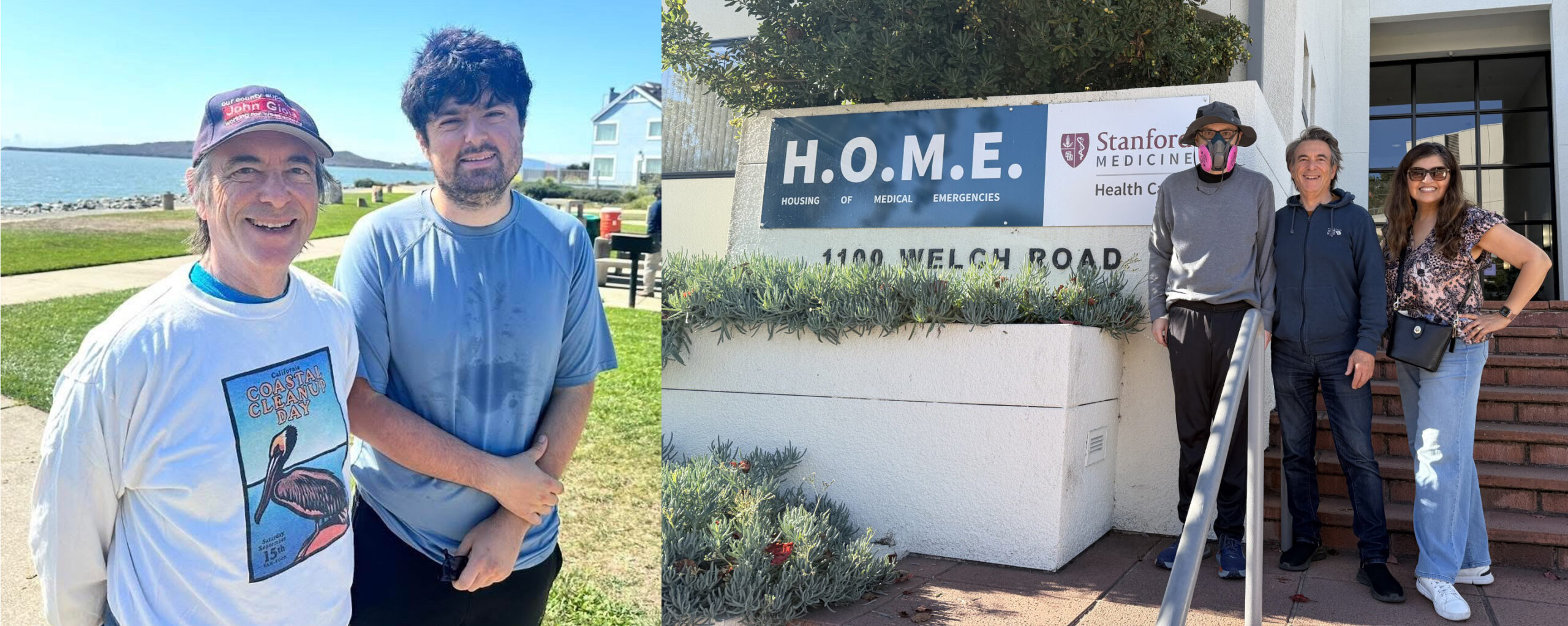
Contra Costa County Supervisor John Gioia with his son, Chris at past Coastal Cleanup in Richmond, and with Chris’ mother Maria “Charo” Gioia at the Stanford Medical Center housing. Photos courtesy of John Gioia

Family members share of Chris Gioia’s health journey, call for donors

By Allen D. Payton

Last summer, Chris Gioia, the 33-year-old son of Contra Costa County District 1 Supervisor John Gioia, underwent a bone marrow stem cell transplant for his aplastic anemia and Gioia, Chris’s mother, Maria “Charo” Gioia, and her husband, Marc Joffe recently shared about his experience. Spanish-language television channel, Telemundo first reported about Chris’ health challenges and journey on Friday, Nov. 28, 2025.

In a Facebook post later that day, Supervisor Gioia wrote, “During Thanksgiving, I give thanks and express gratitude for the positive things in my life.

This year I am especially thankful for my son Chris’ health after his successful bone marrow stem cell transplant at Stanford Hospital to cure his rare life threatening autoimmune disease – Aplastic Anemia.

Thanks to Pilar Nino and Telemundo 48’s great TV story about my son’s recovery and publicizing the need for more stem cell donors. They interviewed Chris, his mom, me and a Contra Costa Health Doctor.

If you’re under 36 you can register to be a stem cell donor at nmdp.org and help save a life.”

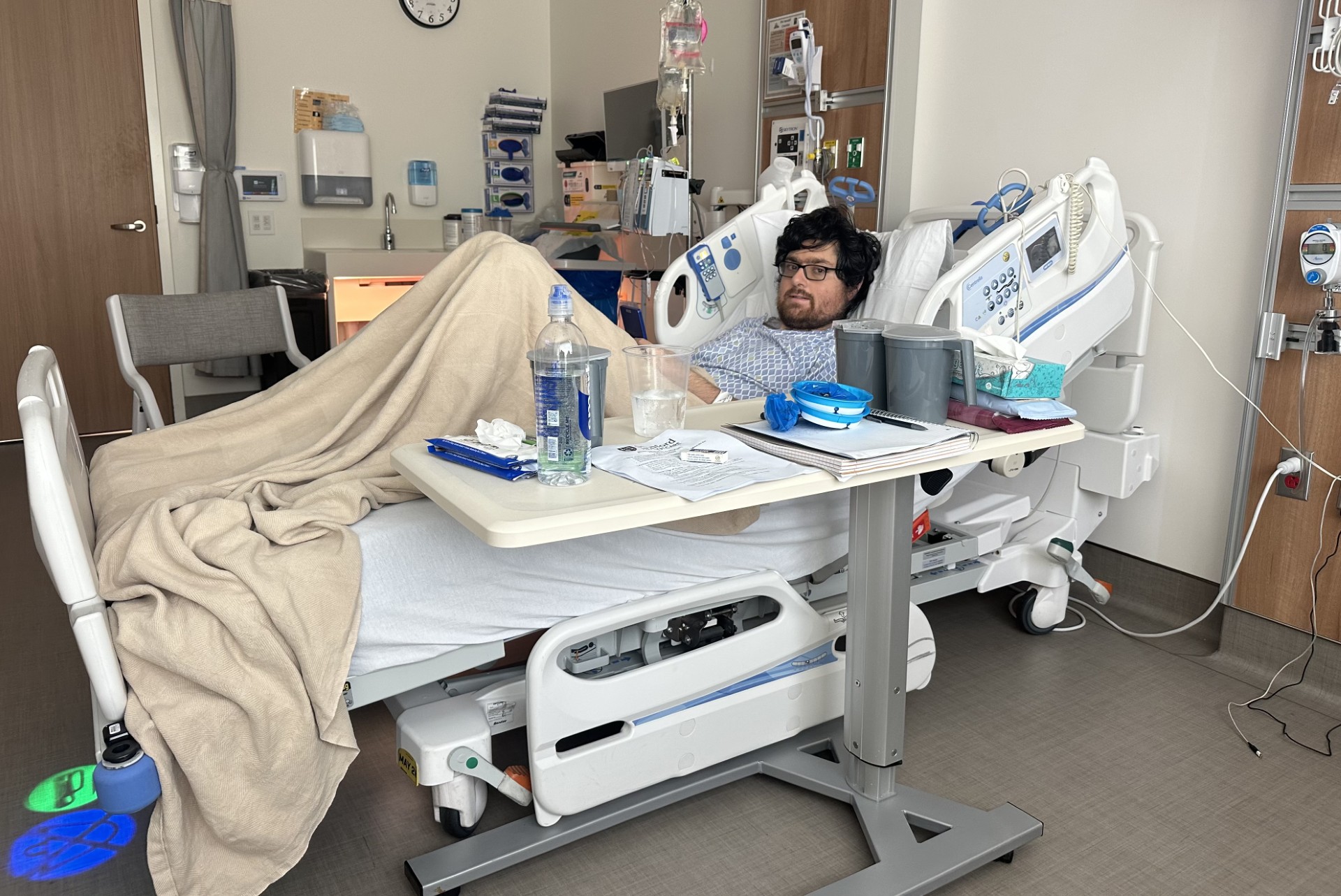
Chris Gioia in hospital bed preparing for the transplant.

About Aplastic Anemia

According to the Mayo Clinic, “Aplastic anemia is a condition that happens when your bone marrow stops making enough new blood cells. The condition leaves you tired and more prone to infections and uncontrolled bleeding.

“A rare and serious condition, aplastic anemia can develop at any age. It can happen suddenly, or it can come on slowly and worsen over time. It can be mild or severe.

“Treatment for aplastic anemia might include medicines, blood transfusions or a stem cell transplant, also known as a bone marrow transplant.

Mom Shares Details of Successful Transplant

In an interview with the Herald, Charo Gioia shared more details about her son’s experience.

“The whole process began in early April, this year. Marc and I were in Europe, in Croatia. Chris was with his dad, John who called me and told me what happened,” she shared.

“He was diagnosed in April, and he was hospitalized at Kaiser in Oakland. He was there for almost two months,” Charo continued. “He stopped working, and basically all activities. He was receiving daily transfusions. Once his numbers related to platelets became higher than 10, the doctors felt he could go home until the bone marrow transplant. Chris went to his dad’s home.”

“In late July, Stanford Hospital called and said they were ready for the transplant. Chris was hospitalized again to receive chemo, radiation and other treatments to prepare for the transplant,” she explained. “He was in the hospital for about one month before and after the bone marrow transplant. The actual transplant was on August 5.”

“We were very lucky because then the doctors at Stanford wanted him to stay close to the hospital for two months and we were provided an apartment by Stanford across from the hospital,” Charo said. “I stayed with Christopher and my sister helped out.”

“His autoimmune system was down, he had to be isolated and have his meals prepared by someone else,” she shared. “Chris’s autoimmune system improved immediately after the transplant. He then stayed with me and Marc at our house for about a month. His numbers improved. His platelet count was at like 10. Right now, they’re at 140. So, it’s a huge jump.”

Donor from Germany, Amazing News

“He received new stem cells from a donor in Germany. She’s 24 and that’s all we know,” Charo stated.

But first, Chris received some amazing news.

“This is very important. Stanford has a worldwide bank of donors. They go all over the world,” she explained. “Chris received a letter telling him that his match was his own stem cells from a donation he made 10 years ago while in college. But they wouldn’t work. I was not a match, his dad was not a match, nor his sister.”

“The donor from Germany, a young lady took a lot of tests to make sure that she’s very healthy inside and out,” Charo continued. “They took the mother cells from her bone marrow. They have to be taken from Germany all the way to Stanford within 48 hours after they’re extracted. The blood had to be fresh.”

“After a year, the hospital can contact her and ask her if she wants contact with us to say, ‘thank you’ and have an exchange. She can either accept or decline,” Charo stated. “She does not get any compensation as it’s against the law. But she gets her expenses covered.”

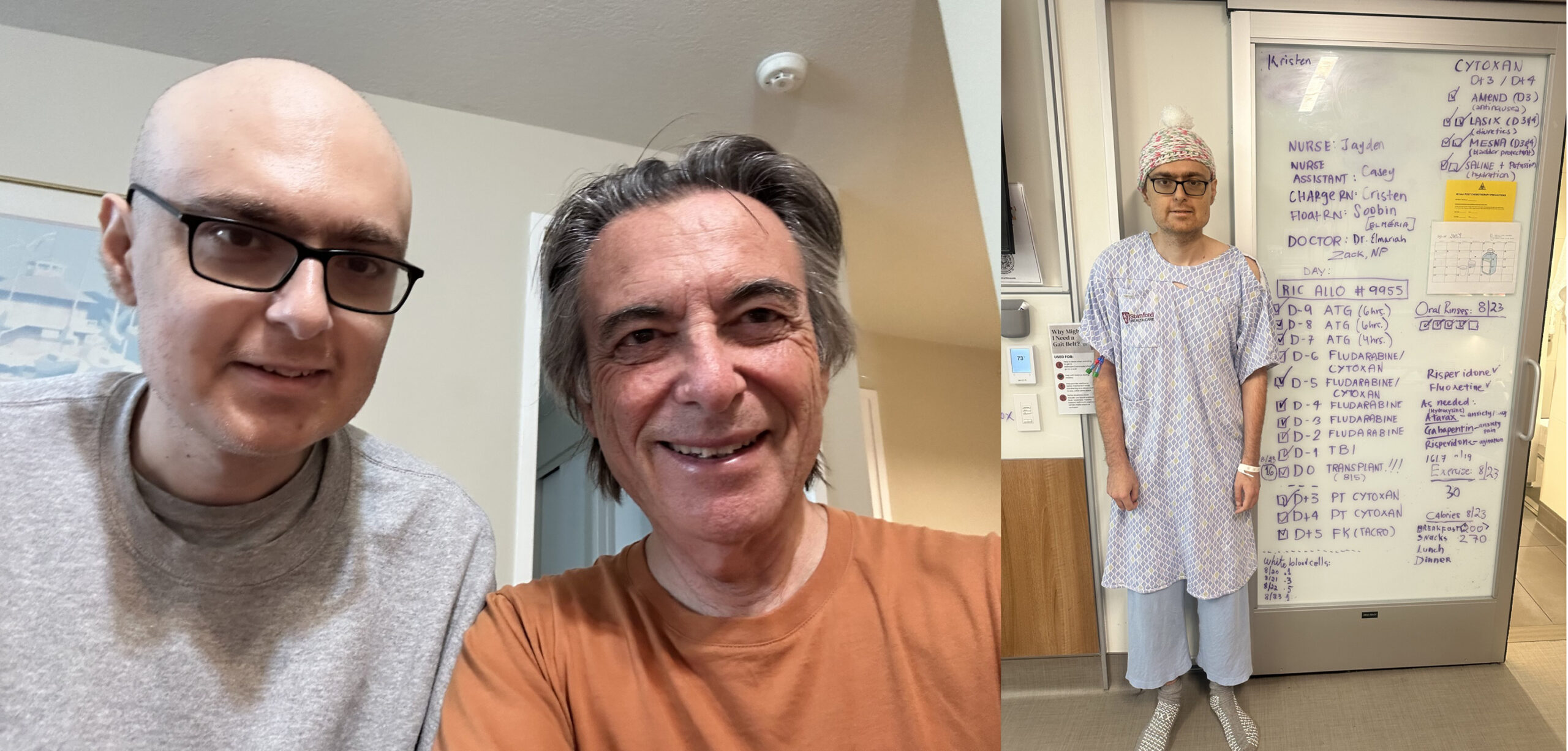
Chris with dad, John after the transplant and standing next to his list of treatments two weeks after the procedure.

Greater Need for Donations from African Americans, Asians and Latinos

“The donors, if you are white, you have a much higher percent of finding a match,” she said. “But if you’re African American, Asian or Latino the numbers go down because people don’t donate. Either they’re not aware or don’t donate enough. So, they’re pushing for people in those communities to donate.”

“Doctors mentioned a possible fear,” as the reason for the lack of donations, Charo explained. “But nothing is going to be cut from your body. This is not an organ donation. It’s a blood donation.”

“For Chris’ aplastic anemia, which is not cancer but a blood disease, the lady had to go through total anesthesia. They had to inject a needle into her bone to extract the bone marrow. There was some pain after,” she shared. “For other cancers, the donor doesn’t have to go through that. It would be a regular blood donation. The donor can always say, ‘no’. It’s all voluntary, of course.”

“We are forever thankful to that young woman, because she’s a total stranger. An angel,” Charo exclaimed. “For aplastic anemia, if Chris chose not to have the transplant, he would have had to stay in doors for the rest of his life and go have transfusions.”

“Eleanor Roosevelt died of the same disease. This one is a miracle story,” she added

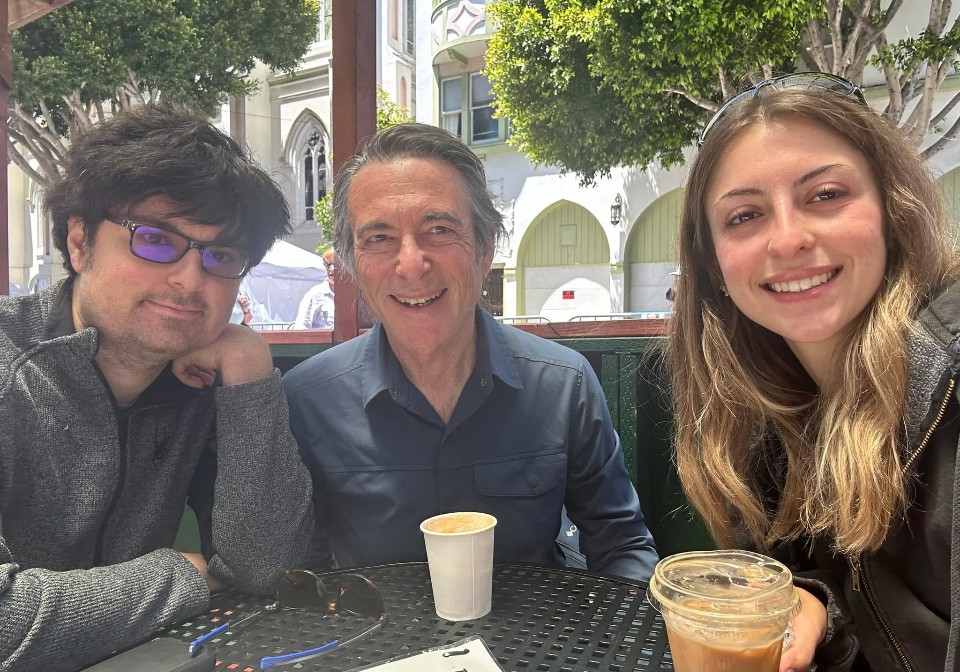
Chris with dad, John and sister, Emilia Gioia in San Francisco for Father’s Day 2024.

Stepdad Shares

Joffe posted on Facebook a link to the Telemundo report on Nov. 29 and wrote, “My stepson Chris is recovering nicely from a bone marrow transplant he received in August. In this Spanish language news story he and my wife Maria Iberico Gioia discuss the experience and thank the as-yet anonymous donor. She’ll have the option of making herself known to us one year after the transplant.

Earlier this year, Chris’ blood counts suddenly fell to near zero due to a case of aplastic anemia, a rare condition in which the patient’s bone marrow stops producing platelets as well as red and white blood cells.

He got great care at Stanford Medical Center and benefited from the advocacy and support provided by his mom, aunt, and his dad, John Gioia who arranged for this story to appear on Telemundo.

If you’re between 18 and 35 and want the chance to be someone else’s hero, please join the bone marrow donor registry: https://www.nmdp.org/get-involved/join-the-registry

County Health Now Partners with NMDP

“The Contra Costa County Health Department has now formed a partnership with NMDP and is hosting events to get donors,” Supervisor Gioia added.

About NMDP, formerly National Marrow Donor Program

NMDP is a global nonprofit leader in cell therapy, helping find cures and save lives for patients with blood cancers and disorders. Since our founding in 1987, the world has evolved—and so have we. Throughout the years, we’ve been known by many names, including the National Marrow Donor Program® and Be The Match®. In early 2024, we changed our name to NMDPSM—a single, modernized brand that’s flexible enough to meet our ambitious future.

Filed Under: Health, News, People

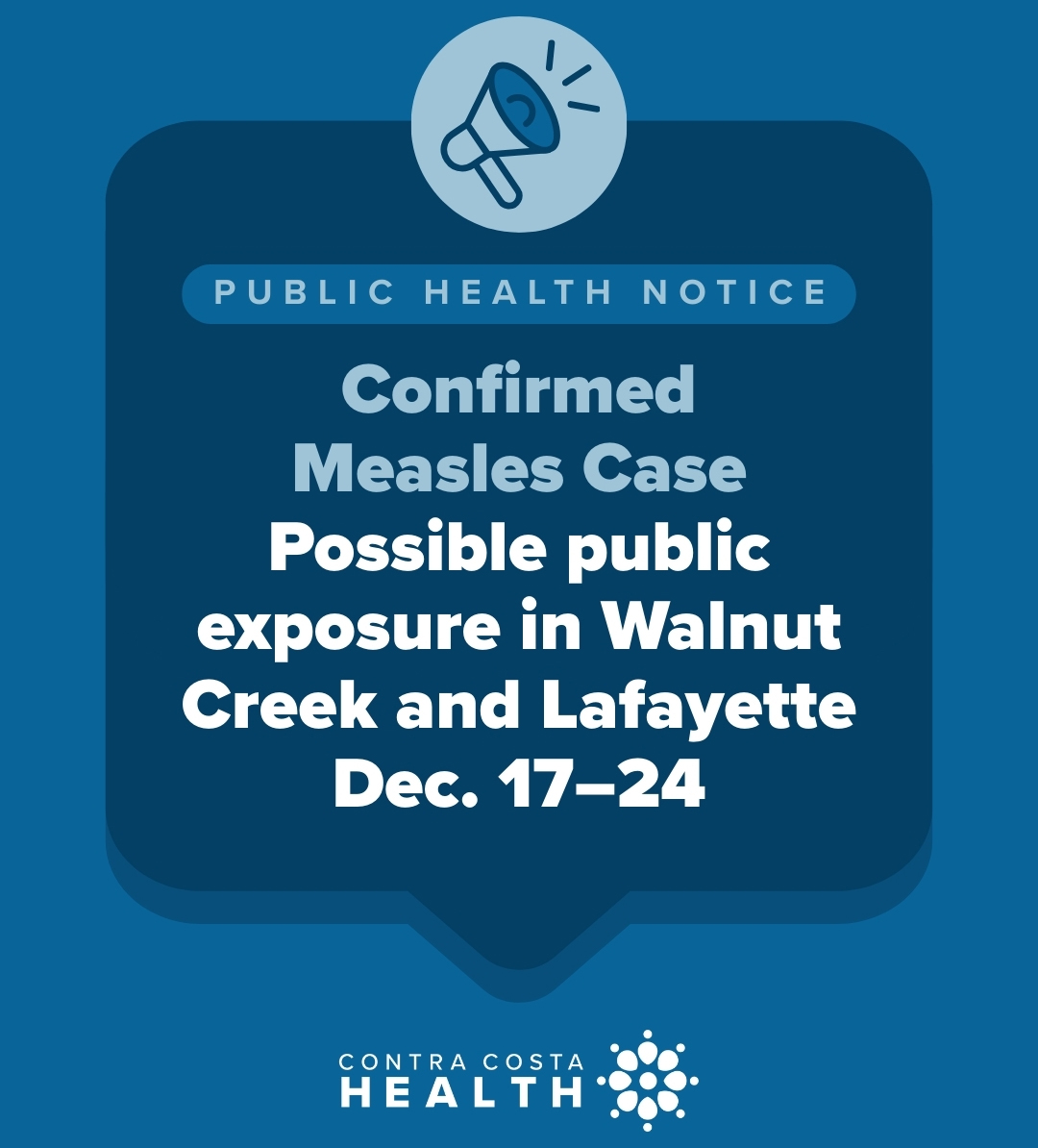
Measles case confirmed in Contra Costa County

January 3, 2026 By Publisher Leave a Comment

Possible exposure in Walnut Creek Dec. 17-19, 23, 24 or Lafayette Dec. 21

By Contra Costa Health

Contra Costa Health (CCH) is notifying the public of a confirmed case of measles in the county, identified on Dec. 24, 2025. The individual was contagious in public between Dec. 17 and Dec. 24, and people may have been exposed at the locations listed below.

Locations of potential measles exposure:

  • Dec. 17 or Dec. 19: Anthropologie, 1149 South Main St., Walnut Creek
  • Dec. 18: Macy’s, 1320 Broadway Plaza, Walnut Creek; ALO, 1292 Broadway Plaza, Suite 1106, Walnut Creek; Apple Store, 1200 South Main St., Walnut Creek
  • Dec. 21: STAT Med, 3799 Mount Diablo Blvd. #100, Lafayette
  • Dec. 23-24: Kaiser Permanente Walnut Creek Emergency Department, 1425 South Main St., Walnut Creek

People who were at these locations during the dates listed above may be at risk of developing measles, especially if unvaccinated, pregnant or immunocompromised. Measles can develop seven to 21 days after exposure. If you were at these locations during these times, you should confirm with your healthcare provider that you have been fully vaccinated against measles or have had measles infection in the past.

If symptoms develop, stay home and call your healthcare provider immediately before seeking care so they are prepared to take care of you. Those who have been symptom free for more than 21 days after being exposed are no longer at risk for developing measles.

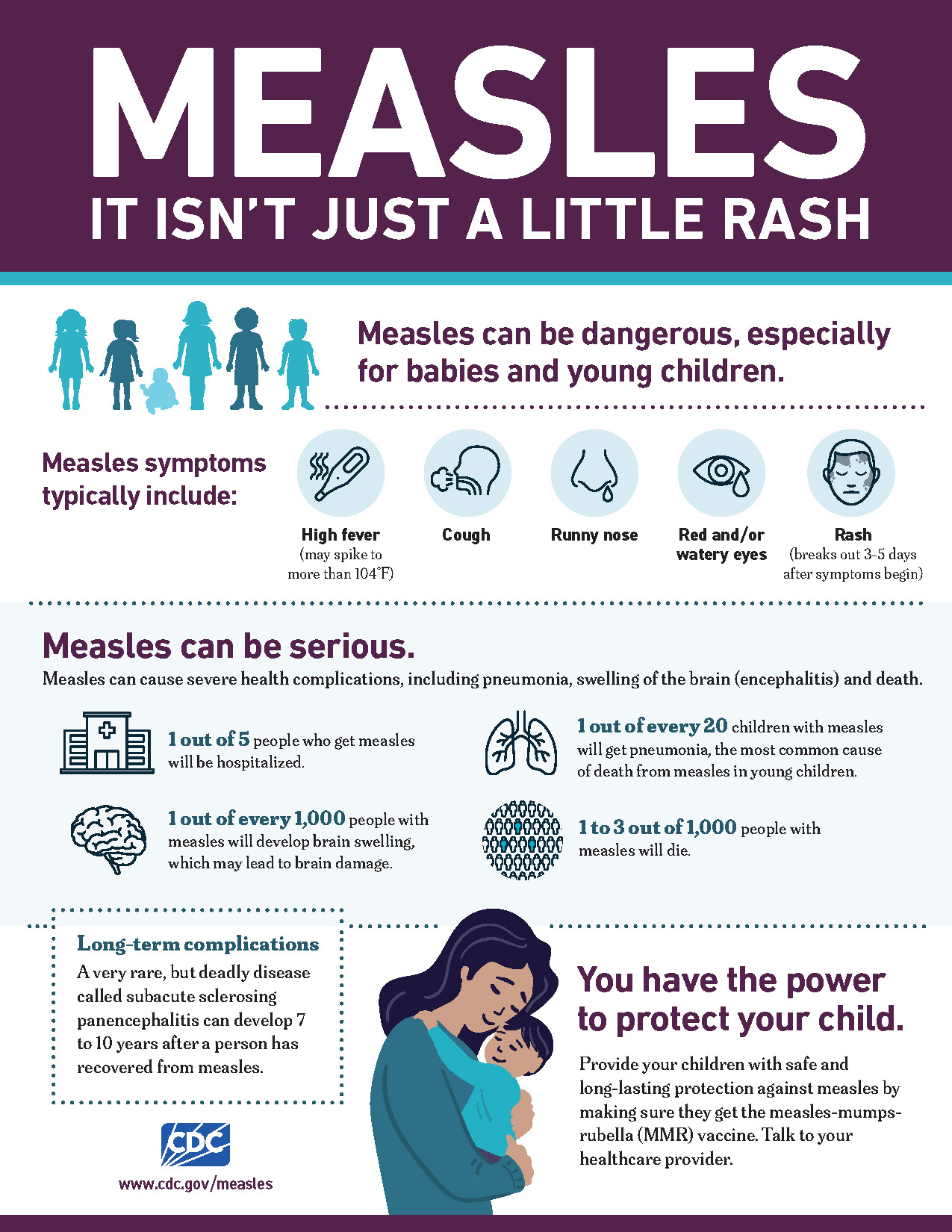
A large majority of Contra Costa County residents are fully vaccinated against measles and have lifetime protection against infection. CCH encourages all eligible unvaccinated residents to get immunized against measles with two doses of the measles-mumps-rubella (MMR) vaccine to ensure their protection.
Measles is a highly contagious respiratory virus that can linger in the air or on surfaces for over an hour after the contagious individual leaves an area. This makes it even easier to spread to those who do not have protection. Also, a person can spread the virus to others even before they develop symptoms.   Symptoms of measles include fever, cough, runny nose, red eyes and a rash that spreads over the body.
Although the risk of contracting measles is low for those who are fully vaccinated, members of the public should be aware of the situation and watch for symptoms.

CCH is conducting contact tracing and notifying local healthcare providers to be vigilant for possible measles cases. CCH continues to monitor the situation and will provide updates if more information becomes available.

More information about measles can be found on our website.


Filed Under: Central County, Health, Lamorinda, News

Kaiser Permanente Antioch recognized as top maternity hospital by U.S. News & World Report

December 23, 2025 By Publisher Leave a Comment

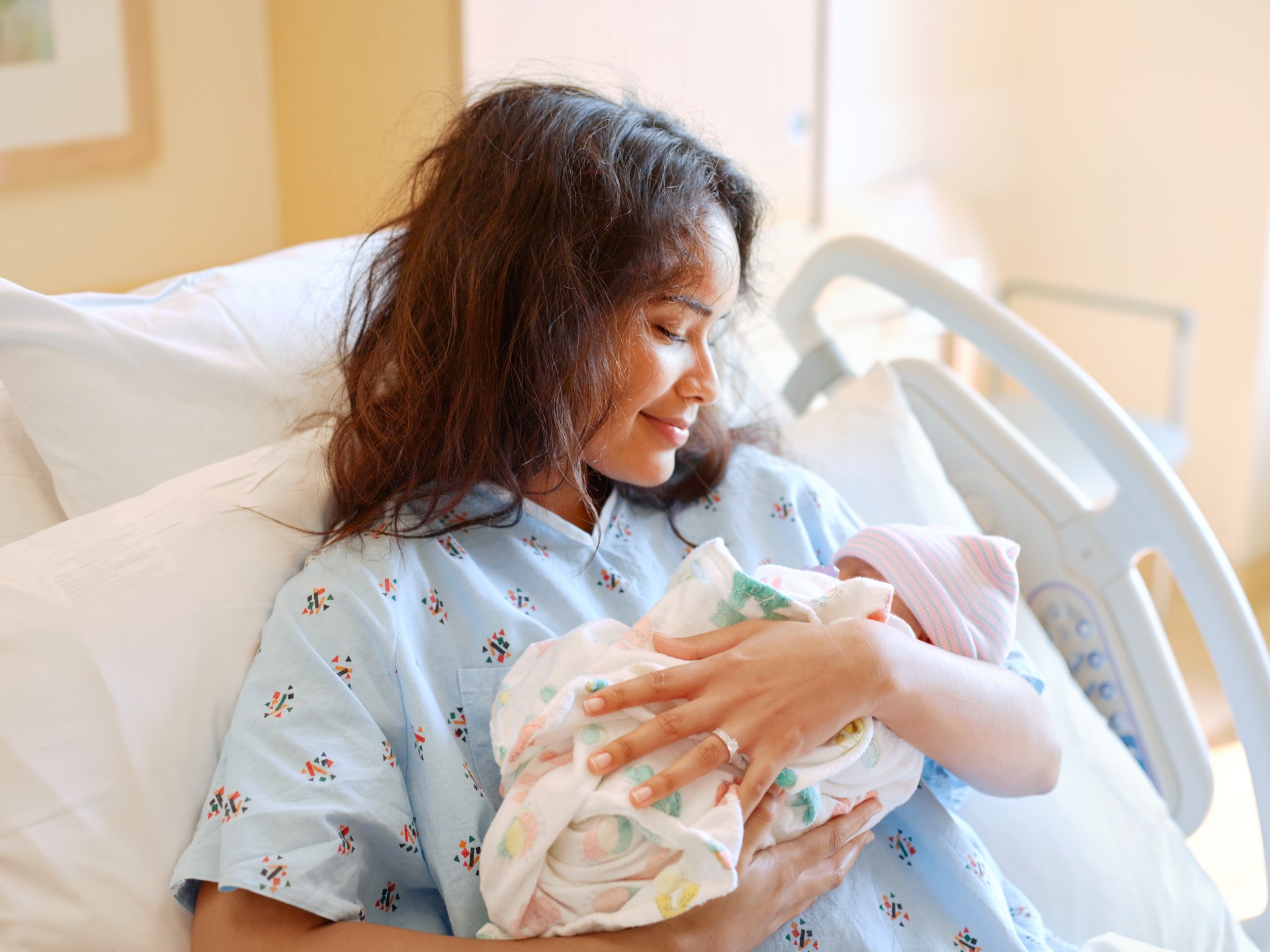
Photo by Kaiser Permanente

One of 8 Kaiser Nor Cal hospitals to meet rigorous standards and demonstrate their commitment to high-quality maternity care

By Elissa Harrington, Sr. Media Relations & PR Rep, Kaiser Permanente Northern California

ANTIOCH, CA – Eight Kaiser Permanente Northern California hospitals are designated as “2026 Best Hospitals for Maternity Care” by U.S. News & World Report for providing high-quality maternity care to patients.

The eight Kaiser Permanente Northern California hospitals to receive the prestigious honor are: Antioch, Manteca, Modesto, Redwood City, Roseville, San Jose, Santa Clara and Vacaville.

This is the highest award a hospital can earn as part of U.S. News’s Best Hospitals for Maternity Care annual study.

U.S. News recognizes hospitals that meet rigorous standards in caring for patients with uncomplicated pregnancies. These ratings are intended to help expectant parents, in consultation with their prenatal care team, make informed decisions about where to receive maternity services that best meet their family needs.

Last year, nearly 40,000 babies were delivered within Kaiser Permanente Northern California hospitals.

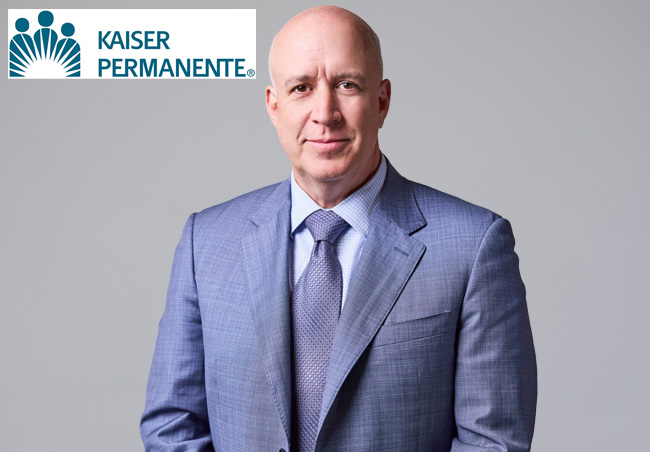
“Kaiser Permanente Northern California is continually recognized for providing high-quality, exceptional maternity care to families as they embark on this exciting time in their lives,” said Mike Bowers, FACHE, interim president of Kaiser Permanente’s Northern California region. “Our labor and delivery teams focus every day on caring for our patients in a warm and nurturing environment, providing them with a positive birth experience.”

Kaiser Permanente Northern California has a long-standing commitment to excellence in maternal health and creating a positive maternity care experience for our patients and members. Our comprehensive maternity care focuses on safe, high-quality care from prenatal to postpartum, including midwife services, prenatal classes, and support for breastfeeding and mental health.

“This recognition highlights the unwavering dedication of our physicians, midwives, nurses, and staff, who consistently provide high-quality care for parents and their newborns,” said Maria Ansari, MD, FACC, chief executive officer and executive director of The Permanente Medical Group. “We take great pride in delivering safe, compassionate, and exceptional maternity care, supporting parents through every stage—before, during, and after birth.”

U.S. News & World Report, the global authority in hospital rankings and consumer advice, began evaluating maternity care hospitals in 2021, rating hospitals that provide labor and delivery services and submit detailed data to the publication for analysis.

This year, the national designation was awarded to only 495 hospitals in the United States, or about 55 percent of the 899 hospitals that participated.

Methodology is based entirely on objective measures of quality, such as C-section rates in lower-risk pregnancies, severe unexpected newborn complication rates, exclusive breast milk feeding rates, birthing-friendly practices, and reporting on racial/ethnic disparities, among other measures.

About Kaiser Permanente Antioch Medical Center Birthing Center

As you prepare to welcome your new baby, the care team at Kaiser Permanente Antioch looks forward to taking this journey with you. Count on us to support you through your pregnancy, empower you to have the birth experience you want to have, and give your baby a happy, healthy start in life.

Kaiser Permanente Antioch features CenteringPregnancy. This is a nationally-recognized style of prenatal care in a group setting. Its aim is to build a community that empowers women to be actively involved in their own care and equips them to make healthy choices throughout their pregnancy and beyond.

Kaiser Permanente Antioch Medical Center is located at 4501 Sand Creek Road off Deer Valley Road in Antioch.

About Kaiser Permanente

Kaiser Permanente is committed to helping shape the future of health care. We are recognized as one of America’s leading health care providers and not-for-profit health plans. Founded in 1945, Kaiser Permanente has a mission to provide high-quality, affordable health care services and to improve the health of our members and the communities we serve. We currently serve 12.5 million members in 8 states and the District of Columbia. Care for members and patients is focused on their total health and guided by their personal Permanente Medical Group physicians, specialists, and team of caregivers. Our expert and caring medical teams are empowered and supported by industry-leading technology advances and tools for health promotion, disease prevention, state-of-the-art care delivery, and world-class chronic disease management. Kaiser Permanente is dedicated to care innovations, clinical research, health education, and the support of community health. For more information, go to about.kp.org

About U.S. News & World Report

U.S. News & World Report (USNWR, U.S. NEWS) is an American media company publishing news, consumer advice, rankings, and analysis. The company was launched in 1948 as the merger of domestic-focused weekly newspaper U.S. News and international-focused weekly magazine World Report. In 1995, the company launched its website, usnews.com, and, in 2010, ceased printing its weekly news magazine, publishing only its ranking editions in print. U.S. News licenses its name to the subjects it ranks, so they may then use the annual rankings in promotional literature. www.usnews.com

Filed Under: Children & Families, East County, Health, News

Contra Costa preparing for Medi-Cal coverage loss, funding reductions

December 16, 2025 By Publisher Leave a Comment

By Contra Costa Health

Contra Costa County must prepare for significant reductions in Medi-Cal coverage and hundreds of millions of dollars in long-term funding loss as a result of recent federal and state policy changes, county officials said Tuesday.

New federal requirements under H.R. 1, the “One Big Beautiful Bill Act,” combined with state Medi-Cal eligibility and reimbursement changes, will make it harder for many residents to enroll in or keep healthcare coverage. While final details are still emerging, county estimates indicate that as many as 93,000 Contra Costa residents could be affected by 2029.

At the same time, Contra Costa Health (CCH) projects more than $300 million in cumulative state and federal funding reductions through 2029, driven by Medi-Cal disenrollment and cuts to supplemental funding that public hospitals rely upon. These impacts are expected to grow year over year and reflect a broader trend affecting counties and public health systems across California.

“These changes mean fewer people covered and fewer dollars coming into the system at the same time,” said Candace Andersen, Chair of the Contra Costa County Board of Supervisors. “Our responsibility is to face that reality head-on, plan carefully, and ensure the county continues to provide essential care for residents who have nowhere else to turn.”

During a presentation to the Board on Tuesday, leaders of CCH and the county’s Employment & Human Services Department (EHSD) emphasized that the projected impacts are a result of external policy decisions, not local performance, and that significant uncertainty remains around timelines, enforcement and the response from California.

Federal guidance on several provisions of H.R. 1 has not yet been issued, and California’s approach to mitigating coverage losses is still evolving.

The presentation outlined how specific provisions of H.R. 1 and recent state Medi-Cal policy changes are expected to reduce enrollment, increase administrative barriers to coverage, and lower reimbursement to safety-net providers. It also reviewed projected enrollment losses, funding impacts to CCH and Contra Costa Health Plan, and the anticipated timing of changes, along with areas of ongoing uncertainty.

The Board directed CCH to return in early 2026 with a proposal to update and strengthen the county’s existing supports for people who are not eligible for Medi-Cal and have no other healthcare options.

Contra Costa County will share additional updates as federal and state guidance becomes available and planning continues.

Filed Under: Finances, Government, Health, Legislation, News

County urges immigrants eligible for Medi-Cal to enroll before end of 2025

November 19, 2025 By Publisher 1 Comment

El condado insta a los inmigrantes elegibles para Medi-Cal a inscribirse antes de finales de 2025

By Contra Costa County Office of Communications & Media

(Martinez, CA) – Contra Costa County strongly encourages adult undocumented residents without health insurance to enroll in Medi-Cal this year while they are still eligible.

Starting Jan. 1, people ages 19 and older with what the state defines as unsatisfactory immigration status (UIS) – a category that includes undocumented residents and others who do not meet federal eligibility criteria – will no longer be able to enroll in full-scope Medi-Cal benefits, including seniors. The change in eligibility is the result of state budget cuts.

“We want undocumented members of our community to know they need to act quickly and sign up for Medi-Cal before it’s too late,” said Board of Supervisors Chair Candace Andersen. “Enrolling now will ensure they’re covered when the rules change.”

State residents with UIS status who are already enrolled in Medi-Cal before Jan. 1, 2026, will be able to keep and renew most of their benefits, though adults 19 and older will lose dental coverage beginning in July 2026.

“Under the new rules starting on January 1, 2026, it is very important for Medi-Cal recipients who meet the definition of UIS, to stay in contact with the county and check their mail for any notices or renewal forms. One good way to stay in touch is to create an account in BenefitsCal,” said Marla Stuart, Director of Contra Costa County Employment & Human Services Department (EHSD). “Current UIS Medi-Cal recipients who do not complete a renewal on time will lose their Medi-Cal full coverage and will only be eligible for emergency services when they reapply.”

After the new rules take effect, immigration status will not affect Medi-Cal coverage for children under 19 and pregnant women and their infants. Adults 19 and older who are classified as UIS will still be able to receive Emergency Medi-Cal, which covers emergency medical treatment.

“Sign up today. Having Medi-Cal is one of the best investments you can make in your health,” said Dr. Grant Colfax, CEO of Contra Costa Health. “Whether it is through a primary provider, specialist, in urgent care or in the emergency room, having Medi-Cal it key to getting healthcare for you and your family.”

In Contra Costa, residents can call EHSD at (866) 663-3225 for information about enrolling in Medi-Cal or apply online at BenefitsCal.com.

For more information, read the Department of Health Care Services’ Medi-Cal Immigrant Eligibility FAQs.

En Español

(Martinez, CA) – El condado de Contra Costa recomienda encarecidamente a los residentes adultos indocumentados sin seguro médico que se inscriban en Medi-Cal este año mientras aún sean elegibles.

A partir del 1 de enero, las personas mayores de 19 años con lo que el estado define como estatus migratorio insatisfactorio (UIS), una categoría que incluye a los residentes indocumentados y otras personas que no cumplen con los criterios federales de elegibilidad, ya no podrán inscribirse en los beneficios completos de Medi-Cal, incluidas las personas mayores. El cambio en la elegibilidad es el resultado de los recortes presupuestarios estatales.

“Queremos que los miembros indocumentados de nuestra comunidad sepan que deben actuar rápidamente e inscribirse en Medi-Cal antes de que sea demasiado tarde”, dijo la presidenta de la Junta de Supervisores, Candace Andersen. “Inscribirse ahora asegurará que estén cubiertos cuando cambien las reglas”.

Los residentes del estado con estatus de UIS que ya estén inscritos en Medi-Cal antes del 1 de enero de 2026 podrán mantener y renovar la mayoría de sus beneficios, aunque los adultos mayores de 19 años perderán la cobertura dental a partir de julio de 2026.

“Según las nuevas reglas que comienzan el 1 de enero de 2026, es muy importante que los beneficiarios de Medi-Cal que cumplan con la definición de UIS, se mantengan en contacto con el condado y revisen su correo para ver si hay avisos o formularios de renovación. Una buena manera de mantenerse en contacto es crear una cuenta en BenefitsCal”, dijo Marla Stuart, directora del Departamento de Empleo y Servicios Humanos del Condado de Contra Costa (EHSD). “Los beneficiarios actuales de Medi-Cal del UIS que no completen una renovación a tiempo perderán su cobertura total de Medi-Cal y solo serán elegibles para los servicios de emergencia cuando vuelvan a presentar la solicitud”.

Después de que entren en vigor las nuevas reglas, el estado migratorio no afectará la cobertura de Medi-Cal para niños menores de 19 años y mujeres embarazadas y sus bebés. Los adultos de 19 años o más que estén clasificados como UIS aún podrán recibir Medi-Cal de emergencia, que cubre el tratamiento médico de urgencia.

“Inscríbase hoy. Tener Medi-Cal es una de las mejores inversiones que puede hacer en su salud”, dijo el Dr. Grant Colfax, director ejecutivo de Contra Costa Health. “Ya sea a través de un proveedor de atención primaria, un especialista, en atención urgente o en la sala de emergencias, tener Medi-Cal es clave para obtener atención médica para usted y su familia.”

En Contra Costa, los residentes pueden llamar a EHSD al (866) 663-3225 para obtener información sobre cómo inscribirse en Medi-Cal o presentar una solicitud en línea en BenefitsCal.com.

Para obtener más información, lea las preguntas frecuentes sobre la elegibilidad de inmigrantes de Medi-Cal del Departamento de Servicios de Atención Médica.

Filed Under: Health, Immigration, News, State of California

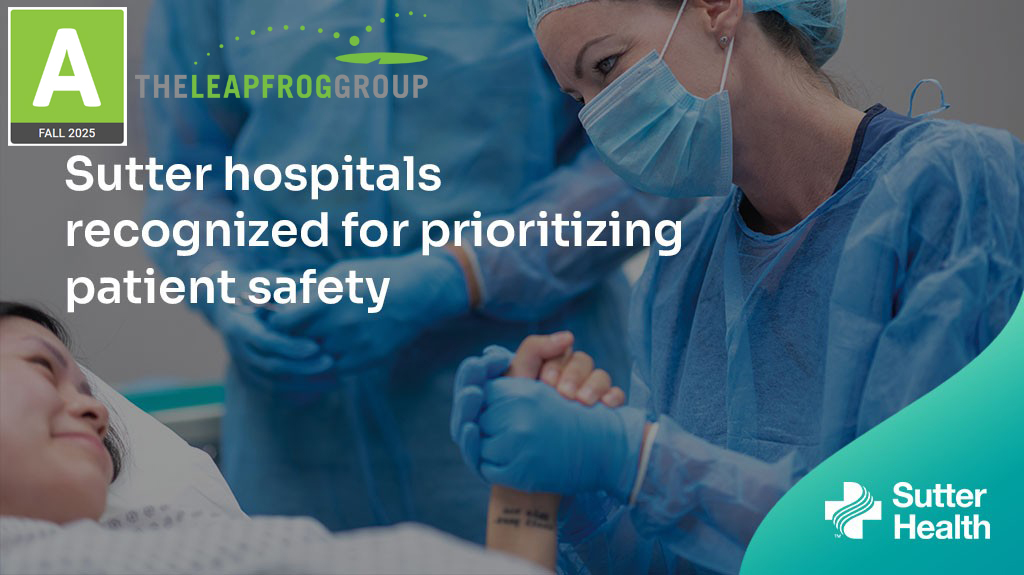
Sutter Hospitals honored by Leapfrog for Safe Patient Care

November 18, 2025 By Publisher Leave a Comment

Photo: Sutter Health

Sutter Delta Medical Center in Antioch earns an “A” – the only hospital in Contra Costa County to do so

By Monique Binkley Smith, Manager, Media Relations, Sutter Health 

Fifteen Sutter hospitals earned an “A” Hospital Safety Grade from The Leapfrog Group, an independent national nonprofit focused on patient safety. This recognition is awarded to hospitals for their exceptional performance in patient safety and quality of care.

“This achievement reflects our unwavering commitment to patient safety and quality care,” said Dr. William Isenberg, chief medical and quality officer at Sutter Health. “Earning an ‘A’ grade is a testament to the dedication of our teams and their focus on delivering the safest possible care for our communities. This recognition reflects the trust our patients place in us and our shared commitment to creating safer, healthier neighborhoods across California.”

Hospitals that did not receive an “A” grade have established workplans to improve performance in the next evaluation cycle, drawing on best practices from Sutter hospitals that have consistently earned “A” grades.

Locally, Sutter Delta Medical Center in Antioch earned an “A” grade for safe patient care –the only hospital in Contra Costa County to do so.

“Earning an ‘A’ from The Leapfrog Group is a tremendous honor for Sutter Delta Medical Center — and even more meaningful because we are the only hospital in Contra Costa County to achieve this distinction for Fall 2025,” said Trevor Brand, CEO. “This recognition reflects the relentless dedication of our entire team to put patient safety at the heart of every decision and every interaction. Our community trusts us with their health, and we embrace that responsibility with a commitment to excellence today and a vision for even safer, higher-quality care tomorrow.”

Commitment to Safety

As a high-reliability organization, Sutter promotes a culture of safety in which everyone is empowered to speak up about potential safety concerns. Being high-reliability is more than a process — it’s a promise to make care safer and more consistent for every patient, every time. Efforts around this work include:

  • The launch of Sutter Safe Care in 2018. The program kicked off Sutter’s journey to becoming a high-reliability organization, with comprehensive training of over 65,000 leaders, physicians, advanced practice clinicians and staff.
  • Targeted training to onboard new leaders, employees and physicians, to ensure everyone adopts Sutter Safe Care’s high-reliability behaviors and key practices.
  • A reliability coach program empowering frontline staff to support their peers with high-reliability behaviors. Currently, there are over 1,100 frontline reliability coaches across Sutter Health, and participation in the program continues to grow, year over year.

Leapfrog assigns an “A,” “B,” “C,” “D” or “F” grade to general hospitals across the country based on more than 30 measures of errors, accidents, injuries and infections as well as the systems hospitals have in place to prevent them.

The Leapfrog Hospital Safety Grade stands as the only hospital ratings program focused solely on preventable medical errors, infections and injuries. The program is peer-reviewed, fully transparent and free to the public. Grades are updated twice annually, in the fall and spring.

To explore full grade details, visit HospitalSafetyGrade.org.

Sutter hospital campuses earning an “A” grade include:

  • Sutter Delta Medical Center (improved from “B” in Spring)
  • Sutter’s Alta Bates Summit Medical Center – Summit Campus
  • Sutter Amador Hospital
  • Sutter Auburn Faith Hospital
  • Sutter’s CPMC – Mission Bernal Campus
  • Sutter Davis Hospital
  • Sutter’s Eden Medical Center
  • Sutter Medical Center, Sacramento
  • Sutter’s Memorial Hospital Los Banos
  • Sutter’s Mills-Peninsula Medical Center
  • Sutter’s Novato Community Hospital
  • Sutter Roseville Medical Center
  • Sutter Santa Rosa Regional Hospital
  • Sutter Solano Medical Center
  • Sutter Tracy Community Hospital

Sutter hospital campuses earning a “B” grade include:

  • Sutter’s Alta Bates Summit Medical Center – Alta Bates Campus
  • Sutter’s CPMC – Van Ness Campus
  • Sutter Coast Hospital
  • Sutter’s Memorial Medical Center

Sutter hospital campuses earning a “C” grade include:

  • Sutter’s CPMC – Davies Campus


Filed Under: East County, Health, Honors & Awards, News

Donors urged to give thanks by giving blood to help patients through the holidays    

October 27, 2025 By Publisher Leave a Comment

Photo: Vitalant

Two Vitalant donors in November will win $10,000

By Kevin Adler, Communications Manager, Vitalant

Every two seconds, a patient in the U.S. needs blood but fewer donors give as end-of-year holiday activities start to fill calendars. That’s why nonprofit Vitalant is urging all eligible donors to give thanks for their good health and make an appointment to give blood this November. Just an hour time commitment helps ensure every patient’s blood need can be met all through the holidays.

It takes donors of all blood types to keep the blood supply stable, especially type O and platelet donors. O-negative blood can help any patient. O-positive, the most common blood type, can help anyone with a positive blood type.

Blood Helps Even the Littlest of Patients

November is also National Prematurity Awareness Month. Premature infants commonly have anemia and need blood transfusions to help them thrive. The National Institutes of Health cites more than 80% of extremely preterm infants need at least one transfusion in their first month.

Vitalant is thanking donors in November with a chance to win one of two $10,000 prepaid gift cards in the Shopping Spree Giveaway.

Learn more and make an appointment to give by visiting vitalant.org, download the Vitalant app or call 877-25-VITAL (877-258-4825).

Upcoming Blood Drives in Contra Costa County

November 4, Tuesday – Walnut Creek, Mt. Diablo Unitarian Universalist Church, 10:00 AM – 2:30 PM

November 11, Tuesday – Pleasant Hill, Stokley Properties, 10:00 AM – 2:00 PM

November 12, Wednesday – Martinez, Alhambra High School, 9:00 AM – 1:30 PM

November 19, Wednesday – Antioch, Kaiser Sand Creek, 9:00 AM – 1:15 PM

November 22, Saturday – El Cerrito, Sycamore Christian Preschool, 10:00 AM – 2:00 PM

These are just a few of the nearly 100 community blood drives being held in November. Donors can also give at any of the six Vitalant donation centers in the area.

About Vitalant

Vitalant (Vye-TAL-ent) is one of the nation’s largest nonprofit blood and biotherapies healthcare organizations, providing hospitals and patients across the U.S. a safe blood supply, specialized laboratory services, transfusion medicine expertise and world-renowned research. Individuals generously donating blood, volunteering and giving financially are essential to our lifesaving mission. Learn more at vitalant.org.

Filed Under: Community, Health

CA nurses’ union celebrates new worker protection law

October 14, 2025 By Publisher Leave a Comment

AB 692 will prohibit ‘stay-or-pay’ contracts that trap nurses and other workers in exploitative debt arrangements with employers

By California Nurses Association

California Nurses Association (CNA), the largest union of registered nurses in the state of California, applauds Governor Gavin Newsom for taking action to protect workers from employers’ use of predatory debt contracts and signing Assembly Bill 692 (A.B. 692) into law on Monday, Oct. 13. A.B. 692 prohibits employers from requiring workers to pay a debt, fee, or penalty if the workers wants to leave their job, expressly making these kinds of exploitative workplace debt arrangements unlawful.

“California is taking a proactive step forward to support the thousands of nurses and nearly one in 12 workers who are in exploitative stay-or-pay contracts,” said Sandy Reding, RN and CNA president. “We are grateful for Assemblymember Kalra championing this bill and to Governor Newsom for stepping up with the labor movement to stand up to Trump’s assaults on worker protections. California leads the rest of the country by signing this bill into law.”

A.B. 692 was authored by Assemblymember Ash Kalra (D-San Jose) and sponsored by CNA, as well as a broad coalition of co-sponsoring organizations, including the California Federation of Labor Unions, California Employment Lawyers Association, Protect Borrowers, and the American Economic Liberties Project.

“It has been an honor to work with CNA in abolishing exploitative stay-or-pay contracts and stopping employers from creating debt to trap and intimidate workers,” said Assemblymember Kalra. “I am grateful Governor Newsom signed A.B. 692, ensuring workers are not coerced into employment debt agreements and can be empowered to leave bad jobs.”

“Today, Governor Newsom signed an important bill to ban employer debt traps and protect nurses, actors, athletes and so many other workers. Employers use training repayment schemes to trap workers in jobs with low wages, unsafe conditions, and abusive managers,” said California Labor Federation President Lorena Gonzalez. “It doesn’t matter if you work in a hospital or play professional sports, no worker should have to pay an employer back if they leave a job. We are proud of California’s progress that will help workers level the playing field.”

A.B. 692 addresses the growing number of employers that are using debt as an exploitative tool to trap workers in jobs, often with low wages and substandard working conditions, and to bust unions. Sometimes called “stay-or-pay” contracts, employers coerce workers into predatory arrangements that require the worker to pay an alleged debt or other financial penalty to their employer if the worker leaves their job before a prescribed period of time–whether the worker is fired, laid off, or quits. With the threat of having to pay back a debt or fee to their employer, “stay-or-pay” contracts indenture workers to remain at a job and chills workers from seeking better wages or working conditions.

California Nurses Association/National Nurses United is the largest and fastest-growing union and professional association of registered nurses in the nation with more than 100,000 members in more than 200 facilities throughout California and more than 225,000 RNs nationwide.


Filed Under: Finances, Health, Jobs & Economic Development, Labor & Unions, News, State of California

Strike averted: Sutter Health, SEIU-UHW reach tentative agreements on contracts 

October 13, 2025 By Publisher Leave a Comment

For more than 4,700 frontline healthcare workers across Northern California, securing progress on staffing, pay, working conditions 

By Jennifer Kelly, Media Relations, SEIU-United Healthcare Workers West (SEIU-UHW)

OAKLAND, CA – As of Saturday, Oct. 11, 2025, frontline healthcare workers at eight Sutter Health facilities across Northern California have reached a tentative contract agreement with Sutter executives, averting the strike workers had overwhelmingly authorized. The new agreement addresses critical issues around staffing and working conditions by ensuring fair pay and benefits for frontline healthcare workers, allowing them to continue serving patients without disruption. (See related article)

“This tentative agreement shows that when we stand united, we can win improvements that protect both healthcare workers and our patients,” said Dinora Garcia, a dietary clerk from Sutter Lakeside. “Reaching this agreement wasn’t easy but we stood together to advocate for worker and patient safety, improved staffing levels, and fair wages and benefits that reflect the vital work we do every day.”

The tentative contract agreement needs to be voted on and approved by the members before it is final. If approved, the agreement will provide 14 percent across-the-board raises for workers. The agreement also protects healthcare and retirement benefits for these frontline healthcare workers.

The tentative agreement averts a strike at eight Sutter Health facilities in Oakland, Santa Rosa, Roseville, Berkeley, Lakeport, Vallejo, Antioch, Castro Valley and San Francisco, where thousands of workers had been preparing to strike.

SEIU-UHW represents a variety of workers across Sutter Health, including nursing assistants, respiratory therapists, licensed vocational nurses, environmental services, food services, x-ray technicians, respiratory therapists and others. The ratification vote will be scheduled for later this month.

Sutter Health Issues Statement

According to a Sutter Health spokesperson, “Sutter Health and SEIU-UHW reached tentative agreements for new contracts on Saturday covering more than 4,400 employees at eight hospitals.

The parties have negotiated in good faith since July for an agreement that recognizes and rewards employees while supporting our ability to deliver safe, high-quality care. We believe the tentative agreements meet those goals.

SEIU-UHW will soon hold a ratification vote for its membership. We encourage all eligible employees to participate in the vote and support this fair contract offer.”

About SEIU-UHW

SEIU-United Healthcare Workers West (SEIU-UHW) is a healthcare justice union of more than 120,000 healthcare workers, patients, and healthcare activists united to ensure affordable, accessible, high-quality care for all Californians provided by valued and respected healthcare workers. Learn more at www.seiu-uhw.org.

About Sutter Health

Sutter Health’s integrated, not-for-profit system of associated clinicians, employees and volunteers support more than 3 million patients in diverse communities across two dozen counties. Headquartered in Northern California, Sutter provides access to high quality, affordable care through its hospitals, medical foundations, ambulatory surgery centers, urgent and walk-in care centers, telehealth, home health and hospice services.

Allen D. Payton contributed to this report.

Filed Under: Health, Labor & Unions, News

Dialysis workers in California file complaints over safety, working conditions at Satellite Healthcare, Fresenius clinics

October 10, 2025 By Publisher Leave a Comment

Workers demand public health department investigations into claims of unsafe staffing, unsanitary conditions, dangerous care practices

Fresnenius denies workers’ allegations, Satellite does not respond

By Renée Saldaña, SEIU, Press Secretary, SEUI – United Healthcare Workers West

CALIFORNIA –  Dialysis healthcare workers in counties across California delivered complaints to local Departments of Public Health on Tuesday and Wednesday that detail alarming and persistent violations inside dialysis clinics operated by Satellite Healthcare and Fresenius Medical Care in Stockton, Santa Rosa, San Diego, Imperial Valley, Riverside, San Bernardino, Sacramento, and the Bay Area.

The complaints, filed by members of SEIU–United Healthcare Workers West (SEIU-UHW), outline conditions that workers say create unsafe working conditions and put vulnerable dialysis patients at serious risk, including chronic understaffing, infection control failures, unsanitary facilities, and unsafe equipment.

“Dialysis patients deserve safe, quality care – but instead, we’re seeing clinics where workers are stretched so thin that even basic safety protocols can’t be followed,” said Mike Badilla, a patient care technician at Satellite Healthcare in Gilroy.  “We’re speaking up because these conditions are unacceptable for workers and our patients. These companies know what the problems are. They’ve been warned before. But until they’re forced to change, patients will keep paying the price.”

The complaints detail a disturbing pattern of systemic issues across multiple facilities, including:

  • Unsafe staffing levels leaving workers responsible for more patients and tasks than can be safely managed, leading to skipped safety checks, improper infection control procedures, and missed treatments.
  • Equipment failures and unsafe environments such as broken Hoyer lifts requiring firefighters to move patients, leaking water treatment rooms, broken air conditioning systems, and debris left around treatment areas during renovations.
  • Infection control lapses including visible blood stains in patient areas, improper disinfection procedures, and insufficient time between treatments to safely clean equipment.

“Our clinics are understaffed, under-resourced, and run by executives more focused on profits than worker and patient safety,” said Bonnie Oconer, a patient care technician at Fresenius Medical Care in Riverside. “We’re calling on public health departments to investigate these conditions and hold these companies accountable.

Dialysis workers have been raising alarms for years about unsafe conditions in the dialysis industry. Despite past citations from state inspectors, similar safety failures continue, and caregivers say that without stronger enforcement and meaningful changes from employers, workers and patients will remain at risk.

SEIU-UHW represents more than 700 dialysis caregivers at Fresenius, Satellite Healthcare and U.S. Renal in various job classes, including registered nurses, patient care technicians, licensed vocational nurses, certified clinical hemodialysis technicians, dietitians, social workers, clinical administrative coordinators, and receptionists.

SEIU-United Healthcare Workers West (SEIU-UHW) is a healthcare justice union of more than 120,000 healthcare workers, patients, and healthcare activists united to ensure affordable, accessible, high-quality care for all Californians, provided by valued and respected healthcare workers. Learn more at www.seiu-uhw.org.

UPDATE: Fresenius Responds, Denies Workers’ Allegations

In response, Kirsten Stratton, Senior Manager for Media Relations, Global Communications of Fresenius Medical Care provided the following company statement:

“SEIU-UHW’s allegations are not supported by facts. Objective government quality metrics routinely demonstrate that our dialysis centers in California lead and outperform the rest of the industry.

The latest Centers for Medicare & Medicaid Services 5-star quality ratings showed that our California centers have a higher ratio of 4- and 5-star ratings than any other dialysis provider across the country. Our employee hiring and retention far outpace California and nationwide trends. From 2022 through 2024 in California, our average time to fill a position improved by 22%, open positions by 68%, and voluntary turnover from 22% to 10%.

As has been the case throughout this process, our focus will be on bargaining in good faith and providing high-quality, life-sustaining care.”

An effort to also reach Satellite Healthcare for comment was unsuccessful prior to publication time. Please check back later for any additional updates.

Allen D. Payton contributed to this report.


Filed Under: Health, Labor & Unions, News

  • 1
  • 2
  • 3
  • …
  • 52
  • Next Page »
Monicas-11-25
Deer-Valley-Chiro-06-22

Copyright © 2026 · Contra Costa Herald · Site by Clifton Creative Web