• Home
  • About The Herald
  • Local Agencies
  • Daily Email Update
  • Legal Notices
  • Classified Ads

Contra Costa Herald

News Of By and For The People of Contra Costa County, California

  • Arts & Entertainment
  • Business
  • Community
  • Crime
  • Dining
  • Education
  • Faith
  • Health
  • News
  • Politics & Elections
  • Real Estate

Pres. Trump approves California’s Major Disaster Declaration to support state’s COVID-19 emergency response

March 23, 2020 By Publisher Leave a Comment

Will provide assistance to state and local government, individuals for crisis counseling

Washington, D.C. – FEMA announced on Sunday that federal emergency aid has been made available for the state of California to supplement state, tribal and local recovery efforts in the areas affected by the Coronavirus Disease 2019 (COVID-19) pandemic beginning on January 20, 2020, and continuing.

The President’s action makes federal funding available for Crisis Counseling for affected individuals in all areas of the state of California.

Federal funding is also available to state, tribal, and eligible local governments and certain private nonprofit organizations on a cost-sharing basis for emergency protective measures (Category B), including direct federal assistance under Public Assistance, for all areas affected by COVID-19 in the state of California. The federal cost share is 75 percent.

Robert J. Fenton has been named as the Federal Coordinating Officer for federal recovery operations in the affected area. Fenton said additional designations may be made at a later date if requested by the state and warranted by the results of further assessments.

Governor Gavin Newsom also announced on Sunday that President Donald Trump has approved California’s request, submitted earlier that day, for a presidential Major Disaster Declaration to bolster California’s COVID-19 emergency response efforts. See the governor’s request here.

“Earlier today we requested a presidential Major Disaster Declaration and this afternoon we got it,” Newsom said on Sunday. “The declaration will supplement our state’s comprehensive COVID-19 surge planning and make vital resources available. We appreciate the quick response and partnership from the White House.”

The Major Disaster Declaration makes federal funding available to state, tribal and local governments for emergency protective measures, including direct federal assistance, and makes funding available for crisis counseling for impacted individuals. It will include any and all individual assistance programs to assist those affected by the outbreak and lessen the economic impacts of the crisis. The request would provide additional assistance, including but not limited to, mass care and emergency assistance, crisis counseling, disaster case management, disaster unemployment assistance, disaster legal services and Disaster Supplemental Nutrition Assistance.

The State of California and local governments have taken extraordinary steps to protect public health in response to the COVID-19 outbreak. Last week, the Governor signed emergency legislation allocating $1.1 billion toward the state’s response, issued a Stay at Home order, deployed the National Guard to help support food banks, and signed an executive order to prepare the health care system for a possible surge in cases. Learn more about the state’s ongoing COVID-19 emergency response here.

Filed Under: Finances, Government, Health, News, State of California

Gov. Newsom waives various state regulations to fight the Coronavirus surge

March 22, 2020 By Publisher Leave a Comment

Order expands capacity to combat COVID-19 in health care facilities

SACRAMENTO – Governor Gavin Newsom on Saturday issued an executive order that expands the state’s response to the COVID-19 outbreak. The order gives the state the ability to increase the health care capacity in clinics, mobile health care units and adult day health care facilities. It also allows local governments more flexibility to utilize the skills of retired employees and reinforces the importance of the delivery of food, medicine and emergency supplies.

“The State of California is fighting hard to get the resources that Californians need to meet the COVID-19 surge. These emergency legal tools will increase California’s health care capacity and help facilities treat more patients,” said Newsom.

Among the various clauses in the order are the following –

“IT IS HEREBY ORDERED THAT:

1) In order to assist in the care or to protect the health of individuals not in a hospital or health facility, as defined in Health and Safety Code section 1250, and due to the COVID-19 outbreak, the director of the State Department of Public Health may, for the duration of the declared emergency, waive any of the licensing and staffing requirements of chapters 1, 3.3, 8.5, and 9 of division 2 of the Health and Safety Code and any accompanying regulations with respect to any clinic, adult day health care, hospice, or mobile health care unit. Any waiver shall include alternative measures that, under the circumstances, will allow the clinic, adult day health care, hospice, or mobile health care unit to assist in the care or protect the health of individuals while protecting public health and safety. Any waivers granted pursuant to this paragraph shall be posted on the Department’s website.

3) The suspension of statutes…shall also apply to local governments, as applicable, to ensure adequate staffing to appropriately respond to the COVID-19 pandemic.

4) Any local ordinance, including those relating to noise limitations, is suspended to the extent it restricts, delays, or otherwise inhibits the delivery of food products, pharmaceuticals, and other emergency necessities distributed through grocery stores and other retail or institutional channels, including, but not limited to, hospitals, jails, restaurants, and schools.

5) To ensure that patients with mental or behavioral health conditions continue to receive the services and support they need, notwithstanding disruptions caused by COVID-19; and to protect the health, safety and welfare of patients with mental or behavioral health conditions committed to the State Department of State Hospitals facilities, as defined by Welfare and Institutions Code Sections 4100 and 7200; the Director of the State Department of State Hospitals may issue directives waiving any provision or requirement of the Welfare and Institutions Code; any provision or requirement of the Penal Code that affects the execution of laws relating to care, custody, and treatment of persons with mental illness committed to or in the custody of the State Department State Hospitals; and the accompanying regulations of Title 9, Division 1 of the California Code of Regulations…Any waiver granted by a directive shall expire 30 days from the date of its issuance, except that the Director may grant one or more 30-day extensions if the waiver continues to be necessary to protect health or safety or to ensure delivery of services. The Director shall rescind a waiver once it is no longer necessary to protect public health or safety or ensure delivery of services. Any waivers and extensions granted pursuant to this paragraph shall be posted on the Department’s website.

6) As needed to safeguard health of persons already admitted, committed, or ordered to the facilities described in this paragraph and notwithstanding the Penal Code, the Welfare and Institutions Code, or any other statute or regulation, the Director of the Department of Developmental Disabilities is authorized to deny admission or delay discharge of all individuals judicially or otherwise admitted, committed or ordered to the Porterville Developmental Center; the Canyon Springs Community Facility; a Stabilization, Training Assistance, and Reintegration (STAR) home; or any other facility under the jurisdiction or control of the Department for 30 days after the issuance of this Order. The Director may grant one or more 30-day extensions if such action is necessary to protect the public health or safety (including, but not limited to, the health or safety of the individuals served at any Department-operated facility or the staff serving such individuals) from the threat of COVID-19. The Director of the Department shall describe the need justifying the closure of admissions to and delay in discharges from the Department-operated facility. The Director shall authorize admissions and discharges once the actions described in this paragraph are no longer necessary to protect the public health or safety (including, but not limited to, the health or safety of the individuals served at any Department-operated facility or the staff serving such individuals). The Director shall post the notice of closure of admissions and discharges and the extension of closure to the Department facility on the Department’s website.”

A copy of the Governor’s executive order can be found here.

Filed Under: Government, Health, News, State of California

Gov. Newsom signs order to expand vote-by-mail options and extend deadlines for Presidential Primary canvass

March 22, 2020 By Publisher Leave a Comment

SACRAMENTO – Governor Gavin Newsom on Friday issued an executive order to permit vote-by-mail procedures to be used in three upcoming special elections, protecting public health and safety during the COVID-19 outbreak.

The order also extends the deadlines for ballot counting, tabulation, and other responsibilities related to the official canvass of California’s Presidential Primary Election that could risk undermining social distancing measures, and suspends the timeframes for public hearings required by political subdivisions that are in the process of changing from an at-large method of election to district elections.

A copy of the Governor’s executive order can be found here and the text of the order can also be found here.

Filed Under: Government, Health, News, Politics & Elections, State of California

Gov. Newsom deploys CA National Guard to help distribute food at food banks & protect California’s most vulnerable

March 22, 2020 By Publisher Leave a Comment

Food banks are seeing a shortage in volunteers and experiencing greater need due to COVID-19. Governor calls for California food bank volunteers & launches partnership Neighbor-to-Neighbor campaign with Nextdoor.com & California Volunteers to safely deploy volunteers to help the most vulnerable Californians  

It’s in these times of crisis that Californians are at their best, coming to the aid of those in their community who are most in need. I ask all Californians who are able to join our Neighbor-to-Neighbor campaign to safely assist those in need in your community.” – Gov. Newsom

Californians can learn about ways to assist their community at serve.ca.gov

SACRAMENTO — California Governor Gavin Newsom on Friday announced the deployment of California National Guard members to provide short-term food security to isolated and vulnerable Californians. Building on Governor Newsom’s prioritization of protecting the most vulnerable from the COVID-19 pandemic, the short deployment will help to stabilize the immediate need of food banks.

“It’s in these times of crisis that Californians are at their best, coming to the aid of those in their community who are most in need. Food banks provide a critical lifeline for families, and are needed now more than ever. Families across our state are suddenly losing work, and millions of Californians most vulnerable to COVID-19 are staying home to protect their health and the health of others. I ask all Californians who are able to join our Neighbor-to-Neighbor campaign to safely assist those in need in your community.”

“The Neighbor-to-Neighbor campaign is a testament to the strength of our larger California community,” said First Partner Jennifer Siebel Newsom. “Now more than ever we must create a culture of WE over me. I am so proud that Californians across the state stand ready to meet this moment by embracing our California values of inclusivity, generosity and community.”

Due to COVID-19, many food banks have been affected by a significant decline in volunteerism, impacting logistical and local infrastructure for food distribution. The California Guard will initially deploy personnel and logistical equipment to a food bank distribution warehouse in Sacramento County starting today, and will conduct immediate site assessments statewide for those counties that have requested short-term support and stabilization. This short-term assistance from the California National Guard allows time to mobilize AmeriCorps, California Conservation Corps and Local Conservation Corps members, and other volunteers where counties have identified serious gaps.

The Administration’s food deployment strategy also launches the Neighbor-to-Neighbor campaign, which calls on neighbors to be first line of support for California’s most vulnerable residents who have been advised to stay at home during the COVID-19 pandemic. The Neighbor-to-Neighbor campaign is focused on older adults and promotes ways to safely check on your neighbors, family and friends, and will be run by California Volunteers, the state office tasked with engaging Californians in service, volunteering and civic action.

The Administration is partnering with the social networking service Nextdoor to provide valuable information to California communities about the state’s response to COVID-19. The collaboration will allow the state to reach more than 22,000 neighborhoods using the platform. Neighbors use Nextdoor to exchange helpful information and California Volunteers will use this site to share ways residents can safely check on each other during the COVID-19 outbreak. The platform will also be used to share ways to safely ensure community members have the basic necessities they may need during periods of home isolation.

The State of California has also released information to promote resources and options for those facing food insecurity. A resource list will be posted to serve.ca.gov on ways Californians can support vulnerable members of our community that may have limited food resources, in ways that are in line with CDPH guidelines.

Californians can learn about ways to assist their community at serve.ca.gov.

Filed Under: Government, Health, Military, News, State of California

Newsom takes action to strengthen state’s health care delivery system response to COVID-19

March 22, 2020 By Publisher Leave a Comment

State leasing two hospitals to increase availability of beds for COVID-19 patients

California receives shipment of medical personal protective equipment and medical supplies from the Strategic National Stockpile

Video released of California Receiving, Storing and Staging Warehouse

SACRAMENTO – Governor Gavin Newsom on Saturday directed more than $42 million in emergency funding to expand California’s health care infrastructure and secure equipment and services to support California’s response to COVID-19.

Of this amount, $30 million will allow the state to lease Seton Medical Center in Daly City and St. Vincent Medical Center in Los Angeles for a three-month basis. Seton Medical Center is currently operating and will expand capacity to provide care for up to 120 COVID-19 patients beginning as soon as next Wednesday. Verily will operate Seton Medical Center on the state’s behalf. St. Vincent Medical Center closed in January, but California is readying the facility to begin providing care for up to 366 COVID-19 patients as soon as possible.

This builds on California’s previous work, in partnership with local officials, to reopen Community Hospital in Long Beach for the specific purpose of accepting patients transferred from other hospitals in the area. The hospital will begin accepting transfer patients on Saturday and has a capacity of 158 beds.

“California is mobilizing every part of government to support our health care delivery system, its workers, and those among us who are most vulnerable to COVID-19,” said Governor Newsom.

California is making historic investments to strengthen our health care delivery system:

  • $30 million to lease and operate two facilities and to expand the state’s hospital capacity.
    • Seton Medical Center in Daly City.
    • Vincent Medical Center in Los Angeles.
  • $1,420,000 to expand capacity of the state’s public health lab in Richmond.
  • $8,647,000 to purchase new ventilators, as well as IV fusion pumps, and refurbish additional ventilators.
  • $2 million to contract with American Medical Response to provide patient transportation.

Click here to see the letter submitted by the Department of Finance to the Legislature specifying the use of emergency funds for this purpose.

This past week, California began receiving shipments from a prior request from the Strategic National Stockpile. The request included:

Personal Protective Equipment:

  • 358,381 N95 masks
  • 853,730 surgical masks
  • 162,565 face shields
  • 132,544 surgical gowns
  • 678 coveralls
  • 471,941 gloves

In addition, California this week requested the following additional supplies from the Strategic National Stockpile:

Personal Protective Equipment:

  • 20 million N95 masks
  • 10 million surgical masks
  • 600,000 surgical gowns
  • 600,000 face shields
  • 600,000 gloves
  • 300,000 goggles
  • 100,000 coveralls
  • Medical Supplies:
  • 10,000 ventilators
  • Lab and Diagnostic Supplies:
  • 2 million swabs
  • 200,000 RNA extraction kits

* Video available of personal protective equipment and medical supplies at the California Receiving, Storing and Staging Warehouse.

California Expands Tele-Health Options

This week, California acted to remove barriers to telehealth services for 22 million Californians. Increasing access to medical and behavioral care through telehealth allows individuals to receive the care and treatment they need remotely, while isolating at home and practicing social distancing, thus limiting potential exposure to COVID-19 and unnecessary impacts to the health care delivery system during this time when we want to preserve the system for our sickest and most critically ill neighbors. Commercial and Medi-Cal managed care plans were directed to allow members to obtain health care via telehealth when medically appropriate to do so. Providers will be reimbursed at the same rate, whether a service is provided in-person or through telehealth. For example, if a provider is paid $100 for an in person visit, they will be paid $100 for an equivalent visit done via telehealth. Removing barriers to telehealth will improve access and help ensure that hospitals and health systems can focus on providing care to those who need it most.


Filed Under: Government, Health, News, State of California

Governor Newsom issues Executive Order to protect renters and homeowners during COVID-19 pandemic

March 16, 2020 By Publisher Leave a Comment

The Executive Order authorizes local governments to halt evictions, slows foreclosures, and protects against utility shut offs; The protections are in effect through May 31, 2020

SACRAMENTO – Governor Gavin Newsom today, Monday, March 16, 2020 issued an executive order that authorizes local governments to halt evictions for renters and homeowners, slows foreclosures, and protects against utility shutoffs for Californians affected by COVID-19.

The Executive Order comes as Californians are experiencing substantial loss of hours or wages, or layoffs related to COVID-19, affecting their ability to keep up with their rents, mortgages, and utility bills.

“People shouldn’t lose or be forced out of their home because of the spread of COVID-19,” said Governor Newsom. “Over the next few weeks, everyone will have to make sacrifices – but a place to live shouldn’t be one of them. I strongly encourage cities and counties take up this authority to protect Californians.”

The order does not relieve a tenant from the obligation to pay rent, or restrict the landlord’s ability to recover rent that is due. The protections are in effect through May 31, 2020, unless extended. The order also requests banks and other financial institutions to halt foreclosures and related evictions during this time period.

The Governor’s Executive Order asks the California Public Utilities Commission to monitor measures undertaken by public and private utility providers to implement customer service protections for critical utilities, including electric, gas, water, internet, landline telephone, and cell phone service on a weekly basis.

The full Executive Order can be found here.

Filed Under: Finances, Government, Health, News

Rep. DeSaulnier misses coronavirus relief bill vote while in hospital for pneumonia from fractured rib caused by fall while jogging Friday night

March 16, 2020 By Publisher 2 Comments

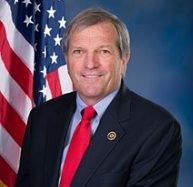
Rep. Mark DeSaulnier

The following Statement on Congressman DeSaulnier Missing Families First Vote was issued Monday morning, March 16, 2020:

Washington, DC – “On Friday night, Congressman DeSaulnier was admitted to a local hospital to treat complications of pneumonia from a traumatic rib fracture that occurred after falling during a run. He is in serious, but stable condition and will likely be in the hospital for at least the next several days. The office operations remain unchanged and staff will continue to serve our constituents. We are grateful for your thoughts and well wishes during this time. We will provide additional updates as they come,” said Betsy Arnold Marr, Chief of Staff for Congressman DeSaulnier.

The Families First Coronavirus Response Act, H.R. 6201, was passed early Saturday morning, March 14 by the House of Representatives on a bipartisan vote of 363-40 with one Member voting Present. According to the bill summary, it provides “paid sick leave and free coronavirus testing, expanding food assistance and unemployment benefits, and requiring employers to provide additional protections for health care workers.

Specifically, the bill provides FY2020 supplemental appropriations to the Department of Agriculture (USDA) for nutrition and food assistance programs, including

  • the Special Supplemental Nutrition Program for Women, Infants, and Children (WIC);
  • the Emergency Food Assistance Program (TEFAP); and
  • nutrition assistance grants for U.S. territories.

The bill also provides FY2020 appropriations to the Department of Health and Human Services for nutrition programs that assist the elderly.

The supplemental appropriations provided by the bill are designated as emergency spending, which is exempt from discretionary spending limits.

The bill modifies USDA food assistance and nutrition programs to

  • allow certain waivers to requirements for the school meal programs,
  • suspend the work requirements for the Supplemental Nutrition Assistance Program (SNAP, formerly known as the food stamp program), and
  • allow states to request waivers to provide certain emergency SNAP benefits.

In addition, the bill requires the Occupational Safety and Health Administration to issue an emergency temporary standard that requires certain employers to develop and implement a comprehensive infectious disease exposure control plan to protect health care workers.

The bill also includes provisions that

  • establish a federal emergency paid leave benefits program to provide payments to employees taking unpaid leave due to the coronavirus outbreak,
  • expand unemployment benefits and provide grants to states for processing and paying claims,
  • require employers to provide paid sick leave to employees,
  • establish requirements for providing coronavirus diagnostic testing at no cost to consumers,
  • treat personal respiratory protective devices as covered countermeasures that are eligible for certain liability protections, and
  • temporarily increase the Medicaid federal medical assistance percentage (FMAP).

The bill is now with the Senate for their vote. If it passes, it will then move on to the president for him to sign into law. This is in addition to H.R. 6074, the $8.3 billion Coronavirus Preparedness and Response Supplemental Appropriations Act, 2020 passed by Congress and signed into law by President Trump on Friday, March 6.

Allen Payton contributed to this report.

Filed Under: Government, Health, Legislation, News

Want to serve on the county’s Treasury Oversight Committee?

February 28, 2020 By Publisher Leave a Comment

The Contra Costa County Board of Supervisors is seeking an individual with sound knowledge and experience in the field of public and private finance to serve on the Treasury Oversight Committee (Committee) in the Public Representative Seat #3.  To be considered, candidates must be County residents, may not be employed by an entity that has contributed to the reelection campaign of the County Treasurer or a member of the Board of Supervisors in the previous three years, may not directly or indirectly raise money for the County Treasurer or a member of the Board of Supervisors while a member of the Committee, and may not work for bond underwriters, bond counsel, security brokerages or dealers, or financial services firms with whom the County Treasurer does business, either during his or her tenure on the committee or for one year after leaving the Committee. (Government Code §27132.3).

The Committee meets at 3:00 p.m. on the third Tuesday of the month following each quarter at 625 Court Street, Room B001, Martinez, CA 94553.  Each meeting lasts approximately one hour.  The Committee’s duties include reviewing and monitoring the County Treasurer’s annual investment policy, and ensuring an annual audit is conducted to determine the County Treasurer is in compliance with Government Code §§27130-27137. The annual audits, meeting agendas and minutes of the Committee are available online. Members of the Committee receive no compensation for their service.  The Board of Supervisors will appoint the selected individual to complete the four-year term on May 1, 2020 through April 30, 2024.

Application forms can be obtained from the Clerk of the Board of Supervisors by calling (925) 335-1900 or by clicking on the following link: Application Form.  Applications should be returned to the Clerk of the Board of Supervisors, Room 106, County Administration Building, 651 Pine Street, Martinez, CA 94553 no later than Friday, March 27, 2020 by 5 p.m.  More information about the Treasury Oversight Committee can be obtained by calling Russell Watts at (925) 957-2888 or visiting the Treasurer-Tax Collector’s Treasury Oversight Committee webpage.

Filed Under: Finances, Government, Taxes

Want to serve on the county Airport Land Use Commission?

February 27, 2020 By Publisher Leave a Comment

Photo courtesy of Contra Costa County.

County Board of Supervisors Appointee #1 

The County is seeking individuals interested in serving on Contra Costa County’s Airport Land Use Commission (“ALUC”).  The Commission’s role and responsibilities are as follows:

  • Formulate land use policies that restrict the development of lands to assure compatibility with planned operations of public use airports;
  • Review the general plans of local agencies for consistency with the Airport Land Use Compatibility Plan; and
  • Review proposed modification to the airport master plans for consistency with the Airport Land Use Compatibility Plan.

Photo courtesy of Contra Costa County.

Commission members are expected to attend at least one meeting per month. Regular meetings are held on the third Thursday of each month at 7:00 p.m. in the Department of Conservation and Development Zoning Administrator Room at 30 Muir Road, Martinez, CA 94553.  At times there may be additional background studies, occasional field trips and extra meetings.  Members shall serve without compensation, and during the term of office, each member shall reside or work in Contra Costa County.

There are seven members on the ALUC. There is currently one vacancy for a commissioner appointed by the Board of Supervisors. Appointed members are required to comply with the Fair Political Practices Commission reporting requirements under State law. The term of office for each member is four years, and or until the appointment of a successor.

Applications can be obtained at the Clerk of the Board of Supervisors website www.contracosta.ca.gov/3418, or by calling them at (925) 335-1900.  They should be submitted to the Clerk of the Board of Supervisors, in Room 106 of the County Administration Building at 651 Pine Street, Martinez, CA 94553, or emailed to ClerkoftheBoard@cob.cccounty.us.  The deadline to apply is Friday, March 27, 2020.

For further information, please call Jamar Stamps, ALUC staff, with the Department of Conservation & Development, Transportation Planning Division, at (925) 674-7832.

Filed Under: Government

County health officials tell Supervisors they’re taking extra steps to control Coronavirus

February 5, 2020 By Publisher Leave a Comment

Supes finalize appointment of County Clerk, approve agriculture land use policy

By Daniel Borsuk

Contra Costa County Health Department officials told the Board of Supervisors Tuesday that the county is “taking extra steps to control” the global Novel Coronavirus epidemic.

Dr. Louise McNitt, Director of the Contra Costa County Communicable Disease Unit, told supervisors, “We are still learning about it, but we are taking the extra steps to control it, who to test.”

As of Tuesday, there were no Novel Coronavirus cases reported in Contra Costa County while four cases had been reported elsewhere in the Bay Area. Overall, six Novel Coronavirus cases had been reported in California. There were 11 cases reported throughout the United States. McNitt reported there were 20,000 cases worldwide.

McNitt said the county checks daily with the Centers for Disease Control in Atlanta to get the most recent information on how to medically combat Novel Coronavirus.

“The Centers for Disease Control answers a lot of our questions,” she said.

“What happens if in four months there are a large number of cases?” asked District 1 Supervisor John Gioia of Richmond. “We cannot build new hospitals overnight like how China does.”

“We have the tight network of health officials in the Bay Area to quickly respond to this virus should it get out of control,” said Contra Costa Health Services Director Anna Roth. “We are ready if we have a case that comes to us.

“The risk is low,” added Roth. “We are continuously updating our website and advice line.”

“I have every confidence any hospital is ready to treat patients with this disease” said District 4 Supervisor Karen Mitchoff of Pleasant Hill. But the supervisor said that citizens can get help by getting flu shots and frequently washing their hands.

McNitt agreed with Mitchoff about the flu shots. “Right now, there are more people who have the flu than have this virus,” she said.

Supervisor Federal Glover of Pittsburg, who requested that the Novel Coronavirus topic be placed on the Board Agenda, requested that the county’s health department’s website be continuously updated with information about this virus.

Finalize Appointment of Deborah Cooper as County Clerk

Newly appointed Contra Costa County Clerk-Recorder-Registrar of Voters Deborah Cooper at the Board of Supervisors meeting on Tuesday, Jan. 21, 2020. Photo by Daniel Borsuk.

The Supervisors appointed Deborah Cooper as the County Clerk-Recorder to the remaining term of the office that will expire on January 2, 2023.

“The Board held an open process over the past three months to find, interview, select and appoint a new County Clerk-Recorder,” said Board Chair, Supervisor Candace Andersen. “During this time, the Board of Supervisors has strongly affirmed the integrity and the professional work of County staff in the Clerk-Recorder-Elections Division. We have every confidence that Debi Cooper will continue to move the team forward during this important election year and beyond with the utmost integrity.”

Deborah Cooper, County Clerk-Recorder, said, “Our primary purpose is to serve the public, whether conducting elections or providing Clerk and Recorder services. Maintaining the public trust while remaining impartial and neutral is crucial. I appreciate our talented and dedicated staff. We will continue to provide great customer service to the people of Contra Costa.”

Most recently, Cooper served as the Acting County Clerk-Recorder since November 1, 2019 and, prior to that, as the Deputy County Clerk-Recorder since 2012.

County Administrator David J. Twa who announced the recruitment for selecting and appointing a Clerk-Recorder, remarked, “It was important to conduct a clear and transparent process with each step. The public was able to attend or watch Board of Supervisors meetings, make public comment, and see the timeline and other key information on the website.”

Ag Land Use Policy Gets Green Light

Supervisors flashed the green light for the county planners to proceed in the development of an Agricultural Land Use Policy that envisions the transformation of agricultural land use to various types of lodging accommodations and food services.

Funded on a $150,000 Livable Communities Trust Grant since 2016, the Department of Conservation and Development presented an update to supervisors on where the study stands.

So far, more work needs to be done since there is no consensus on the study’s recommendations about different types of lodging accommodations, including short-term rentals for 9-days or less, farm stays for up to 90 days, bed-and-breakfast, and camping, yurts or little houses on wheels.

Food service use proposals include farm dinners, farm-to-table restaurants, updating the Winery Ordinance, and allowing hosting of large events. These uses may require a zoning permit like an administerial permit or a land use permit or other permits required by other agencies.

“This is not a total road map. We are checking into with the Board to see if you accept the report,” said Contra Costa County Conservation & Development Department Director John Kopchik.

“There’s tension in the farm community,” Supervisor Mitchoff said about the preliminary land use plan. “You need to work it out.”

Where once fertile farmland once stood with real estate prices might fetch $10,000 an acre, some farmland is being snapped up by developers at $100,000 an acre or higher.

The county’s Agricultural Land Use Policy is in response to the skyrocketing real estate prices shaking up the rural areas in Brentwood, Oakley, Knightsen in East County and Danville.

The planning study occurs at a pivotal time in the county’s steadily declining agricultural economy. In 2017, county crop production from corn, berries, and other crops fell to $120.4 million, a six percent decline from 2016 due mainly to crop marketplace conditions.

The planning study also includes recommendations to promote agriculture use to include equestrian and bike trails to connect farms, consider allowing equestrian facilities within additional agricultural districts, exploring funding for signage to promote farming in the county, updating the county’s sign ordinance, and working with other agencies to promote agricultural vitality in the County.

Funds for 30-Unit Pittsburg Rental Housing Project Approved

Supervisors unanimously approved as part of the consent agenda items, the issuance of $18 million in state Multifamily Housing Revenue Bonds to finance the cost of the acquisition and construction of a 30-unit rental housing development at 901 Los Medanos Street and 295 E. 10th Street in Pittsburg.

Veterans Square will provide 29 units of affordable housing and one manager’s unit. Fifteen units will be reserved for households with incomes at or below 50 percent of the area median income and 14 units will be reserved at or below 30 percent of the area median income.

The Board of Supervisors had previously allocated about $2.2 million in HOME Investment Partnerships Program funds for Veterans Square and approved the county submission of an application to the state for $3.6 million in No Place Like Home funds. On Dec. 17, 2019, the Board of Supervisors approved a Reimbursement Resolution for this prospective issuance of bonds.

When asked why it’s costing $600,000 for each of the one-bedroom apartments, county Affordable Housing Program Manager Kristen Lackey said, “That is what we are seeing in affordable housing units, and with other projects, as well. Construction costs are going up. Affordable housing is typically more expensive to develop based on the different sources of funds, which adds to the complexity and they have to pay prevailing wage, so the labor costs on it are higher, than what normal residential construction will be.”

“It’s an unfortunate reality of the housing crisis,” she added.

Allen Payton contributed to this report.

Filed Under: Agriculture, Government, Health, News, Supervisors

  • « Previous Page
  • 1
  • …
  • 28
  • 29
  • 30
  • 31
  • 32
  • …
  • 45
  • Next Page »
Antioch July 4th 2026 Sponsors (1)
RepublicServices-Antioch-ad (1)
Furn-Clrnc-Outlet-06-26B web
Monica's dinner 05-26 CCH
Celia's-06-26
Delta-RC-A (2)
Deer-Valley-Chiro-06-22

Copyright © 2026 · · Contra Costa Herald · All Rights Reserved