• Home
  • About The Herald
  • Local Agencies
  • Daily Email Update
  • Legal Notices
  • Classified Ads

Contra Costa Herald

News Of By and For The People of Contra Costa County, California

  • Arts & Entertainment
  • Business
  • Community
  • Crime
  • Dining
  • Education
  • Faith
  • Health
  • News
  • Politics & Elections
  • Real Estate

PG&E power shut-offs in Contra Costa “likely” Oct. 17-19

October 16, 2024 By Publisher Leave a Comment

By Allen D. Payton

According to Con Fire, “A Public Safety Power Shutoff (PSPS) may be possible in parts of Contra Costa County from 10/17 to 10/19 to help prevent wildfires. For details and resources on how to prepare visit PG&E Outage Center – PSPS 7-Day Forecast (pge.com)

PG&E provided the following details:

10/17: PSPS Watch – Shutoffs likely

Affected Areas:

  • Some parts of the following counties may be affected
  • Specific addresses, maps, and shutoff details are typically available 2 days before shutoff.

Counties under Watch: Due to high winds and dry conditions, a shutoff is likely

  • Alameda
  • Colusa
  • Contra Costa
  • Glenn
  • Lake
  • Mendocino
  • Napa
  • Santa Clara
  • Shasta
  • Solano
  • Sonoma
  • Tehama
  • Yolo

Get notifications for your address

Forecast

This forecast is based on weather conditions and fuel moisture content only. It does not include other criteria used to determine whether a PSPS may be necessary. This forecast only provides a broad overview for a potential PSPS event in the next 7 days. It is determined from an analysis of forecast weather, the potential for wind-related damage, and fuel moisture content in dead and live vegetation. It is not a fire danger forecast. The forecast is broken down by county. PSPS decisions are made at more granular levels. Only a portion of a county may experience a PSPS event. While a PSPS event may not be expected for an area, due to the interconnectivity of the grid any location within PG&E territory may be subject to PSPS event.

PG&E 7 Day Public Safety Power Shutoff (PSPS) and Enhanced Powerline Safety Settings (EPSS) Potential: Wednesday October 16, 2024 Evening Update: The forecast remains on track for a weather system to enter the Great Basin resulting in breezy to locally gusty offshore winds tomorrow through Saturday afternoon. The PSPS 7-day forecast continues to highlight Watch status for counties that are expected to experience potential PSPS weather conditions tomorrow through Saturday. Note that entire counties will not be deenergized and this forecast is only intended to show counties that have a non-zero customer impact from a potential PSPS event. The exact areas in scope for PSPS will be available at the public outage map here, https://pgealerts.alerts.pge.com/outage-tools/outage-map/, by selecting future PSPS outages.

Previous Discussion: A weather system is beginning to push into Northern California this morning and is bringing showers to portions of the North Coast, with those showers expected to continue to develop across portions of northern California through this afternoon, mainly across the Southern Cascades and northern Sierra Nevada. Behind today’s system, dry northerly winds will develop along the western side of the Sacramento Valley tomorrow before more widespread offshore flow develops tomorrow night through midday Saturday. The strongest winds are expected in the Sierra Nevada foothills, the western Sacramento Valley, elevated Bay Area terrain and elevated terrain in portions of the Central Coast.

Winds will decrease in strength but remain offshore through Sunday, before more settled weather returns early next week. Multiple Red Flag Warnings go into effect tomorrow night across the territory as well as High Risk indications from other federal agencies. The PSPS 7 day forecast is in Watch status for counties that are expected to experience potential PSPS weather conditions Thursday through Saturday. Note that entire counties will not be deenergized and this forecast is only intended to show counties that have a non-zero customer impact from a potential PSPS event. The exact areas in scope for PSPS will be available at the public outage map here, https://pgealerts.alerts.pge.com/outage-tools/outage-map/, by selecting future PSPS outages.

Fuels: An abundant and fully cured grass crop is present at all elevations. Dead fuel moisture values are expected to remain very low due to recent hot temperatures. Live fuel moisture values have largely fallen to below normal levels over the course of this hot summer and are below critical values and near seasonal minimums.

The latest 4 Month Seasonal Outlook from Northern Operations Predictive Services is forecasting normal to above normal fire activity in October and normal fire activity November through January. Southern Operations Predictive Services is forecasting normal to above normal significant fire potential across the territory October through December and normal fire activity for January. There are 646 of 788 circuits in High Fire Risk Areas (HFRA) that are EPSS-enabled today, with 48 of these circuits having at least one EPSS Buffer device enabled. The remaining 142 circuits in HFRA will have devices postured in normal settings due to seasonable temperatures.

Additionally, zero EPSS Buffer-only circuits are enabled today. Please note: This forecast is published daily by an operational meteorologist from PG&E’s Meteorology and Analytics team. This forecast has been customized for PG&E utility operations and should not be used for any other purpose or by any other entity.

This forecast only provides a broad overview for a potential Public Safety Power Shutoff (PSPS) event in the next 7 days as determined from an analysis of forecasted weather, the potential for wind-related damage, and fuel moisture content in dead and live vegetation. It is not a fire danger forecast. The forecast is broken down by county; however, PSPS decisions are made at more granular levels; thus, only a portion of a county may experience a PSPS event.

While a PSPS event may not be expected for an area, due to the interconnectivity of the grid any location within PG&E territory may be subject to PSPS event. Daily PG&E operational decisions should be based on the PG&E Utility Fire Potential Index (FPI), which presents detailed FPI rating forecasts from R1 to R5-Plus for each FPI Rating Area in the PG&E territory today (Day 0) through Day 2.  To subscribe to the PG&E Utility FPI, click here

PLEASE NOTE: This forecast is published daily by an operational meteorologist from PG&E’s Meteorology and Analytics team. This forecast has been customized for PG&E utility operations. It should not be used for any other purpose or by any other entity.

Filed Under: Energy, Fire, News

Op-Ed: DeSaulnier’s opponent Piccinini responds to his comments about Chevron’s departure

August 17, 2024 By Publisher Leave a Comment

Challenger Katherine Piccinini (Source: campaign) disagrees with incumbent Mark DeSaulnier (Source: campaign) on his views about Chevron and their headquarters move from San Ramon to Texas.

By Katherine Piccinini

My pledge to the people of Contra Costa District 10 is to be Putting the People First. The incumbent has made it very clear, as Chevron prepares to leave San Ramon for Texas, he, the incumbent, is putting state and federal policies first. (See related article)

When we think of a large company moving away from its long-term home area, there are many challenges to be considered, such as: loss of revenue from the move, stress of relocating families, children’s emotional and educational issues and the strain on families having to start over. In the incumbents’ words, “I hope as Chevron relocates their corporate facilities, they will keep California’s climate goals in mind.” Really? With all the overwhelming human factors involved, the executives should keep our state’s climate goals in mind. Again, really?

Chevron’s achievements in pursuing and investing in alternative energy sources was have been well defined touching on areas of solar, wind, biofuel, geothermal and hydrogen. Have these pursuits been unacceptable? This is all part of reducing so-called “greenhouse emissions” as we continue to rely on naturally formed, carbon-based oil, often referred to as fossil fuels. Chevron has been at odds with California State regulators and politicians over fossil fuels and climate change for years. Because they want Chevron to be a diverse energy company investing in clean renewable energy does not mean that Chevron has not put forth great alternatives. California is considered to be one of the most progressive energy states but, we shouldn’t allow “cancel culture” to override reasonable considerations.

And that is the problem. It is California policies that are driving residents and companies elsewhere. This move was known since 2022. Chevron has been in California for 140 years and in San Ramon since 2002. Chevron cited that California policies have hurt consumers, and they feel this is not good for the economy so they will seek greener pastures. Also, there appears to be something more ominous on the horizon as California’s Energy Commission is considering taking over oil refineries and operations in the Golden State. May that be the bigger threat to Chevron and possibly other private industries?

We will miss this “oil giant” and all that it has brought to our district in stimulating the economy, jobs and stepping forward to pursue energy alternatives for our state.

Piccinini is a candidate for Congress in District 10 which includes most of the cities and communities in Central and Eastern Contra Costa County.

Filed Under: Business, Energy, Opinion, San Ramon Valley

DeSaulnier says “Chevron left California years ago” over state’s climate goals, company says move was about “better collaboration”

August 6, 2024 By Publisher Leave a Comment

Congressman Mark DeSaulnier (D, CA-10). Employees at Chevron’s solar photovoltaic project. Source: Chevron Corp.

Following announcement of HQ move to Texas

“I’m disappointed, but not surprised” – Congressman Mark DeSaulnier who represents San Ramon. “Chevron’s actions and investments do not align with its stated commitment to reducing greenhouse gas emissions.”

Chevron responds

By Allen D. Payton

Washington, D.C. – On Friday, Aug. 2, 2024, Congressman Mark DeSaulnier (D, CA-10) made the following statement on Chevron’s decision to move its headquarters from San Ramon, a city he represents in Congress, to Texas.

“I am disappointed, but not surprised, to see Chevron’s announcement that it will be leaving San Ramon. I have long been involved and advocated for California’s renewable portfolio standard and climate goals to protect both public health and the environment, and for years I have encouraged Chevron to be a diverse energy company investing in clean renewable sources of energy as we in California have been responsibly transitioning away from climate destroying energy and towards clean energy that protects the climate and public health. Unfortunately, these efforts have been much less successful than I had hoped and, in many ways, Chevron left California years ago. I hope as Chevron relocates their corporate facilities, they will keep California’s climate goals in mind. I’ve reached out to the city of San Ramon and I would be happy to work with Chevron, or any other company, in reaching these important energy goals and to continue to support its employees in Contra Costa County.” (See related article)

Source: Chevron 2023 Corporate Sustainability Report

Alternative energy

However, according to Wikipedia, Chevron has been pursuing alternative energy sources. operations include geothermal solar, wind, biofuel, fuel cells, and hydrogen.[145] In 2021 it significantly increased its use of biofuel from dairy farms, like biomethane.[146]

Chevron has claimed to be the world’s largest producer of geothermal energy.[51] The company’s primary geothermal operations were located in Southeast Asia, but these assets were sold in 2017.[147][148][149][150]

Prior, Chevron operated geothermal wells in Indonesia providing power to Jakarta and the surrounding area. In the Philippines, Chevron also operated geothermal wells at Tiwi field in Albay province, the Makiling-Banahaw field in Laguna and Quezon provinces.[151]

In 2007, Chevron and the United States Department of Energy‘s National Renewable Energy Laboratory (NREL) started collaboration to develop and produce algae fuel, which could be converted into transportation fuels, such as jet fuel.[152] In 2008, Chevron and Weyerhaeuser created Catchlight Energy LLC, which researches the conversion of cellulose-based biomass into biofuels.[153] In 2013, the Catchlight plan was downsized due to competition with fossil fuel projects for funds.[154]

Between 2006 and 2011, Chevron contributed up to $12 million to a strategic research alliance with the Georgia Institute of Technology to develop cellulosic biofuels and to create a process to convert biomass like wood or switchgrass into fuels. Additionally, Chevron holds a 22% stake in Galveston Bay Biodiesel LP, which produces up to 110 million US gallons (420,000 m3) of renewable biodiesel fuel a year.[155][156]

In 2010, the Chevron announced a 740 kW photovoltaic demonstration project in Bakersfield, California, called Project Brightfield, for exploring possibilities to use solar power for powering Chevron’s facilities. It consists of technologies from seven companies, which Chevron is evaluating for large-scale use.[157][158] In Fellows, California, Chevron has invested in the 500 kW Solarmine photovoltaic solar project, which supplies daytime power to the Midway-Sunset Oil Field.[159] In Questa, Chevron has built a 1 MW concentrated photovoltaic plant that comprises 173 solar arrays, which use Fresnel lenses.[160][161] In October 2011, Chevron launched a 29-MW thermal solar-to-steam facility in the Coalinga Field to produce the steam for enhanced oil recovery. As of 2012, the project is the largest of its kind in the world.[162]

In 2014, Chevron began reducing its investment in renewable energy technologies, reducing headcount and selling alternative energy-related assets.[163]

In 2015, the Shell Canada Quest Energy project was launched[164] of which Chevron Canada Limited holds a 20% share.[165] The project is based within the Athabasca Oil Sands Project near Fort McMurray, Alberta. It is the world’s first CCS project on a commercial-scale.[164]

Chevron’s Advanced Clean Energy Storage (ACES) Project will use an electrolyzer like this one to convert renewable resources, such as wind and solar, into hydrogen and then store that hydrogen for later use. Photo: Chevron

DeSaulnier Doubles Down

DeSaulnier was asked why he would make the comment about Chevron when the company has been pursuing and investing in alternative energy sources in multiple ventures since 2006 including geothermal, solar, wind, biofuel, fuel cells and hydrogen. He was also asked what else he wanted Chevron to do.

DeSaulnier’s office responded, “Congressman DeSaulnier believes Chevron’s actions and investments do not align with its stated commitment to reducing greenhouse gas emissions – moving out of California which has some of the most progressive climate and energy policies, to Texas, which is a heavy fossil fuel supporter, is evidence of that. Additionally, Chevron’s production hit a record 3.1 million barrels of oil-equivalent per day last year and it expects 2024 production to be even higher and a 2022 study found that Chevron does not match its investments to its pledges as it is still financially reliant on fossil fuels.”

Chevron Responds, Move is About Better Collaboration

Asked if the company had a response to DeSaulnier’s initial statement, Chevron spokesman Ross Allen provided the following statement:

“In addition to our release out Friday morning, our Chairman and CEO Mike Wirth spoke about our move on CNBC and BloombergTV. We also hosted our regularly scheduled Earnings Call, where the topic was addressed during both prepared remarks and the Q&A with investors — (an official transcript will be posted to the website early next week).

As you note, we have areas of disagreement with California policymakers about the shape and direction of energy policy. At Chevron, we support affordable, reliable and ever-cleaner energy – and we believe certain state policies threaten those goals. But our headquarters relocation is about better collaboration and engagement with executives, employees, and business partners.”

“Learn more about our extensive sustainability efforts and capital projects in our 2023 Corporate Sustainability Report — Chevron, which details the way we are achieving “lower carbon, higher returns,” Allen added.

Read the latest news on Chevron’s hydrogen and renewable fuels, like biodiesel, renewable natural gas and sustainable aviation fuel at Alternative Fuels Newsroom — Chevron.

Filed Under: Business, Energy, Environment, Government, News

CPUC approves new billing structure that will cut residential electricity prices

May 9, 2024 By Publisher Leave a Comment

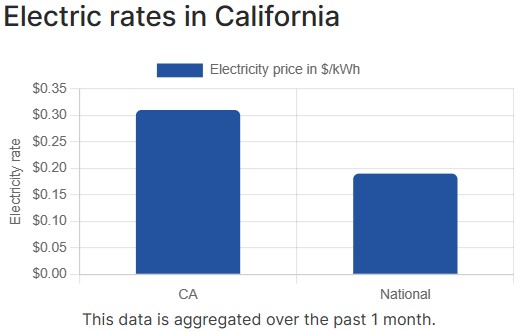
Graphic source: electricityrates.com

“Flat Rate” decision accelerates California’s clean energy transition

May 09, 2024 – SAN FRANCISCO – The California Public Utilities Commission (CPUC) today approved a proposal to reduce the price of residential electricity through a new billing structure mandated by the state Legislature in Assembly Bill 205. This billing adjustment introduces a flat rate bill component and reduces the electricity usage rate. It lowers overall electricity bills on average for lower-income households and those living in regions most impacted by extreme weather events, while accelerating California’s clean energy transition by making electrification more affordable for all.

That’s in spite of the concerns of ratepayers and state legislators who, earlier this year, scrambled to repeal or modify the bill to avoid rates being based on income. The CPUC later scrapped the income-based utility bill scheme proposed by California’s largest utilities including PG&E. (See related articles here and here)

According to the approved proposal, “Today, California’s investor-owned electric utilities recover nearly all costs of providing electricity service through the volumetric (cost per unit) portion of each residential customer’s bill. However, a large portion of these costs are fixed costs that do not directly vary based on the electricity usage of the customer from whom the revenue is being collected, such as the costs of installing final line transformers that make it possible for customers to access the grid. Most utilities nationwide and many publicly-owned utilities in California assess fixed charges on customer bills to recover these fixed costs, consistent with the general ratemaking principle that rates should be based on cost causation

“As directed by Assembly Bill 205, this decision authorizes all investor[1]owned utilities to change the structure of residential customer bills by shifting the recovery of a portion of fixed costs from volumetric rates to a separate, fixed amount on bills without changing the total costs that utilities may recover from customers. As a result, this decision reduces the volumetric price of electricity (in cents per kilowatt hour) for all residential customers of investor-owned utilities.

The new billing structure more evenly allocates fixed costs among customers and will encourage customers to adopt electric vehicles and replace gas appliances with electric appliances because it will be less expensive to charge electric vehicles and operate electric appliances.

“This decision adopts a gradual, incremental approach to implementing Assembly Bill 205 requirements, including the requirement to offer income-graduated fixed charge amounts. The adopted billing structure will offer discounts based on the existing income-verification processes of the utilities’ California Alternate Rates for Energy and Family Electric Rate Assistance programs. The Commission will consider improvements to the new billing structure based on the initial results of implementation and a working group proposal in the next phase of this proceeding.

“Parties to this proceeding concurrently proposed how to implement the requirements of Assembly Bill 205. This decision adopts elements of several party proposals rather than adopting one party’s proposal.”

Read More: Fact Sheet on “Flat Rate” Decision

“This new billing structure puts us further on the path toward a decarbonized future, while enhancing affordability for low-income customers and those most impacted from climate change-driven heat events,” said CPUC President Alice Reynolds. “This billing adjustment makes it cheaper across the board for customers to charge an electric vehicle or run an electric heat pump, which will spur greater uptake of these technologies that are essential to transitioning us away from fossil fuels.”

Under the new billing structure:

  • The usage rate for electricity will be reduced by 5 to 7 cents per kilowatt-hour for all residential customers.
  • This change makes it more affordable for everyone to electrify homes and vehicles, regardless of income or location, because the price of charging an electric vehicle or running a heat pump is cheaper.
  • A portion of the fixed infrastructure costs—such as maintaining power lines and equipment— will be moved from the usage rate to a separate line item called the “Flat Rate” on customer bills.
  • The flat rate will be $24.15 per month, with low-income customers and customers living in deed-restricted affordable housing eligible for discounted flat rates of $6 or $12.

Customers enrolled in the California Alternate Rates for Energy (CARE) low-income assistance program will benefit from a discounted flat rate of $6 per month. Customers enrolled in the Family Electric Rate Assistance Program (FERA), as well as those residing in deed-restricted affordable housing with incomes at or below 80 percent of the area median income, will qualify for a discounted flat rate of $12 per month.

The new billing structure does not introduce any additional fees or generate extra profits for utilities. Instead, it redistributes existing costs among customers. This approach aligns with billing practices employed across the nation and by most other utilities in California.

In the coming months, the CPUC will collaborate with investor-owned utilities on a customer communications plan to educate customers about the new billing structure. The new billing structure will be implemented starting in late 2025 and early 2026.

More information is available on the Docket Card and CPUC webpage for the proceeding.

Allen D. Payton contributed to this report.


Filed Under: Energy, Government, News

CPUC follows State Senate Republicans’ recommendation, scraps income-based utility bill scheme

April 1, 2024 By Publisher Leave a Comment


Sacramento, CA – March 28, 2024 – After immense pressure from California Senate Republicans, the California Public Utilities Commission (CPUC) has finally listened and is scrapping the income-based utility bill scheme proposed by California’s largest utilities, which came to fruition as a result of Assembly Bill 205 (2022). The non-elective commission released a flat fixed rate proposal, with reduced charges for low-income customers, and is expected to vote on it on May 9, 2024. (See related article)

“I’m cautiously optimistic to see that CPUC’s preliminary decision on a new fixed-rate plan for electrical billing includes a flat rate rather than one of the ludicrous income-based charges that had been proposed,” said Senate Minority Leader Brian W. Jones (R-San Diego). “I’m looking deeper into the proposal and studying how it will affect my constituents and ratepayers across the state. Still, I hope this may be a compromise Californians can live with. At the same time, I anticipate that electricity rates will continue to be a huge affordability issue in California, even under this new flat rate proposal.”

“As vice chair of the Senate Energy, Utility and Communications Committee, l have strongly advocated for affordable and reliable energy for Californians, but the majority party’s misguided approach has been driving up the rates for years,” said Senator Brian Dahle (R-Bieber). “This income-based utility scheme was another disastrous measure. I appreciate the CPUC heeding Republicans’ advice to pause this nonsensical bill, and I will continue to work tirelessly with my colleagues to make energy reform a reality in our state.”

The CPUC’s fixed rate proposal has a 20-day comment period and is eligible for a vote at the next CPUC public meeting on May 9, 2024.

California Senate Republicans have been leading the fight against the income-based electricity charge after Capitol Democrats rammed it through budget trailer bill AB 205 in 2022. In 2023, and as recent as January 2024, Senate Democrats thwarted Senate Republicans’ efforts to provide Californians a lifeline by repealing AB 205. Additionally, this year, Senate Minority Leader Jones and the entire Senate Republican Caucus introduced SB 1326 to repeal the income-based fixed charge mandated by AB 205. Click here to learn more about the caucus’ efforts.

After immense pressure from California Senate Republicans, the California Public Utilities Commission (CPUC) has finally listened and is scrapping the income-based utility bill scheme, which came to fruition as a result of Assembly Bill 205 (2022). The non-elective commission released a flat fixed rate proposal and is expected to vote on it on May 9, 2024.

Filed Under: Energy, Finances, News, State of California

Californians face higher electricity rates based on income

March 16, 2024 By Publisher Leave a Comment

If you earn $28K per year or more; unless state legislature reverses course; 5 local legislators voted for bill

By Allen D. Payton

Bill Votes – AB-205 Energy. (ca.gov)

In 2022, the California legislature passed and Governor Gavin Newsom signed AB205 – Energy into law, which requires that the Public Utilities Commission (CPUC) “shall, no later than July 1, 2024, authorize a fixed charge for default residential rates.” As a result, the CPUC is currently reviewing proposals for a tiered, fixed-price structure, as directed by the bill.

According to FOX Business, the state’s three main, investor-owned utilities – Pacific Gas and Electric (PG&E), Southern California Edison (SCE) and San Diego Gas and Electric (SDG&E) – proposed a tiered rate plan: “Households earning $28,000-$69,000 would be charged an extra $20 to $34 per month. Those earning $69,000-$180,000 would pay $51 to $73 per month, and those earning more than $180,000 would pay a $85-to-$128 monthly surcharge.”

According to California Energy Markets, “The first version of the income-graduated fixed charge, or IGFC, could be implemented by SDG&E and SCE by 2026, according to Freedman. PG&E is in the process of changing its billing system, he said, so its implementation would likely be in 2027.”

That’s on top of the 13% increase for both electricity and natural gas rates for PG&E customers approved by a unanimous vote of the CPUC last November that went into effect on January 1, 2024. Plus, another vote on March 7 for $4-$6 in additional monthly fees for the typical ratepayer that will take effect in April, was approved for PG&E to recover $516 million in costs for wildfire mitigation, gas safety and electric modernization.

According to a Canary Media report, “The utilities are also proposing to significantly lower the per-kilowatt-hour charges that customers pay to counterbalance the big increase in fixed charges, and to structure both fixed and volumetric charges in a way that allows lower-income customers to save money overall. Still, the proposal, if enacted, would instantly make California the home of the nation’s highest monthly utility fixed fees, according to analysis by clean energy research firm EQ Research.”

The IGFC would require the CPUC to evaluate every ratepayer’s income annually in order to assess the appropriate fee.

Local Legislators Voted for Bill

Five of Contra Costa’s state legislators supported AB205 on party-line votes including Assemblymembers Tim Grayson, Rebecca Bauer-Kahan, Buffy Wicks, Lori Wilson and State Senator Nancy Skinner. The first four each voted for the bill, twice.

Assemblyman Jim Frazier didn’t vote on the bill in 2021 and State Senator Steve Glazer didn’t vote on AB205 during the State Senate’s floor vote in 2022. Newsom signed the bill into law on June 30, 2022.

Details of New Law

As of July 1, 2022, the applicable portion of the law now reads as follows:

“SEC. 10. Section 739.9 of the Public Utilities Code is amended to read:

(d)  The commission may adopt new, or expand existing, fixed charges for the purpose of collecting a reasonable portion of the fixed costs of providing electrical service to residential customers. The commission shall ensure that any approved charges do all of the following:

(1) Reasonably reflect an appropriate portion of the different costs of serving small and large customers.

(2) Not unreasonably impair incentives for conservation, energy efficiency, and beneficial electrification and greenhouse gas emissions reduction.

(3) Are set at levels that do not overburden low-income customers.

(e)(1) For the purposes of this section and Section 739.1, the commission may authorize fixed charges for any rate schedule applicable to a residential customer account. The fixed charge shall be established on an income-graduated basis with no fewer than three income thresholds so that a low-income ratepayer in each baseline territory would realize a lower average monthly bill without making any changes in usage. The commission shall, no later than July 1, 2024, authorize a fixed charge for default residential rates.

(2) For purposes of this subdivision, ‘income-graduated’ means that low-income customers pay a smaller fixed charge than high-income customers.”

Source: Energy Sage published 3/10/24

Californians Pay 27% More for Electricity Than National Average

According to Energy Sage, California residents currently pay 31 cents per kilowatt-hour compared to the national average of 18 cents per kilowatt-hour. “On average, California residents spend about $256 per month on electricity. That adds up to $3,072 per year. That’s 27% higher than the national average electric bill of $2,426.”

Effort to Reverse Course

Now, some members of the legislature are trying to backpedal on their votes and stop the IGFC increases from being approved. As they had unsuccessfully attempted last September, on Jan. 30, Republican lawmakers tried to bring an immediate vote to repeal AB 205 to the Senate floor, but Democrats who have the majority, voted to table the motion.

That same day, Assemblymember Jacqui Irwin, (D-Thousand Oaks) and 10 others introduced a bill to repeal AB205. According to Irwin’s press release about the new bill, “The CPUC has had the authority to implement a fixed rate charge, up to $10, since 2015, but has declined to do so. I see no need to rush now. It’s time to put some reasoning back into how we charge for electricity in California.” Bauer-Kahan is listed as a principal coauthor. It was also introduced in the State Senate.

According to the aforementioned Canary Media report, “The newly introduced bill, AB 1999, would limit the CPUC to adding a fixed charge of no greater than $10 a month on customers’ bills to pay for the rising costs of maintaining the state’s utility grids, regardless of household income.”

The bill is in the committee process, was referred to the Assembly Committee on Utilities and Electricity. If approved it will then head to the floors of both houses of the state legislature for votes and if passed, the bill will head to the governor’s desk for his signature or veto.

3/27/24 UPDATE: According to Sylvie Ashford, Energy & Climate Policy Analyst for The Utility Reform Network (TURN) which supports the implementation of an income-graduated fixed charge, and is one of the authors of the organization’s IGFC proposal,

  • “The IOUs are no longer proposing the charge levels that you cite (e.g. up to $128 per month). The CPUC has already ruled that the first iteration of the fixed charge will have income tier cut-offs based only on the existing CARE/FERA programs, with no ‘high-income’ tier. The IOUs submitted new proposals in the fall, with a max charge of $51-$73 (page 5 of their brief).
  • It’s not that utilities will “also” lower $/kWh rates. The fixed charge itself lowers rates, as is comprised only of costs that are included in rates today. It shifts some fixed costs out of electricity rates and into a separate line item.
  • Thus, your headline that “Californians face higher electricity rates based on income” is incorrect. All customers will pay lower electricity rates (15% lower under TURN’s proposal). Some higher income customers will see higher overall bills only if their assigned fixed charge exceeds their savings from the reduced rates. (For example, TURN’s proposal has a maximum monthly fixed charge of $30, and we estimate those customers will see $3-7 bill increases, depending on their usage).”

Iin addition, she shared, “TURN believes that the fixed charge presents a critical opportunity to reduce low-income energy bills in the state. TURN also believes much more is needed to make bills affordable and intervenes widely at the CPUC to oppose rate increases. A few quick points:

  • The fixed charge will not increase utility revenue/profits; it removes costs from rates and shifts them to a separate line item on your bill.
  • This will reduce electricity rates ($/kWh) for all Californians, making it more feasible to operate electric vehicles and appliances.
  • Because the new line item is based on income, it will also reduce overall bills for low-income Californians (likely to be defined as the low-income CARE/FERA discount programs, which cover 30% of the state) and it will make electricity bills less regressive.
  • TURN strongly opposes the joint proposal of the utilities for fixed charges, and the CPUC is not considering it. The CPUC has already ruled that the first iteration of the fixed charge will have income tier cut-offs based only on the existing CARE/FERA programs, with no ‘high-income’ tier, so the average fixed charge will be low (TURN proposes an average of $23.50, which is the same charge already offered by the Sacramento Municipal Utility District).

Ashford was asked to explain how, if the cost of providing electricity does not differ from one user to the next in one of the three utility company’s service areas, it’s fair to charge one customer more based on their income. She was also asked weren’t renewals supposed to reduce electricity costs and aren’t we relying more on them, now for electricity generation in California,

Ashford responded, to your questions about the fairness of paying based on income, and why rates have been increasing when generation keeps getting cheaper (thanks to renewables): the problem is that your $/kWh electricity rates today are largely comprised of costs that have nothing to do with your personal usage. They are bloated with the fixed costs of the grid, like the utilities’ wildfire mitigation programs and infrastructure projects.

As a result, a UC Berkeley study found that California’s electric rates are highly regressive; low-income households pay more of their income on shared system costs. Households in hot climates, that need to use more electricity to keep cool, also pay more than their fair share of these costs. On the flipside, solar customers are paying less than their fair share, which has created a ‘cost shift’ that hikes rates for everyone else (source).

TURN is a strong advocate of reducing utility spending, which is the most important step to reduce rates. The fixed charge alone doesn’t address that problem, as it simply shuffles the collection of existing costs, but it will make bills more affordable for those that are disproportionately burdened by shared system costs.”


Filed Under: Energy, Government, News, State of California

Natural gas ban lifted for new buildings in Contra Costa County

February 28, 2024 By Publisher Leave a Comment

Supervisors suspend all-electric requirements following U.S. Court of Appeals ruling

(Martinez, CA) – The Contra Costa County Board of Supervisors Tuesday suspended enforcement of its requirement that most new buildings be constructed as all-electric buildings.  The County’s all-electric building requirement, as part of the County’s building code, had prohibited the installation of natural gas infrastructure in most new buildings and required developers to use electricity as the sole source of energy in the building.  With Tuesday’s action, the County’s all-electric building requirement will not be enforced.

Last month, the U.S. Court of Appeals for the Ninth Circuit invalidated a City of Berkeley ordinance that prohibited natural gas infrastructure in new buildings. The court held that the federal Energy Policy and Conservation Act precludes cities and counties from adopting building codes that prohibit the installation of gas plumbing in buildings.

Contra Costa County’s all-electric building requirement, like the invalidated City of Berkeley ordinance, prohibits the installation of gas plumbing in new buildings.  The County is therefore suspending this requirement in response to the Ninth Circuit’s decision.

At the same time, the Board of Supervisors remains committed to the goals that prompted it to adopt the all-electric requirement: improving public health and fighting what they believe contributes to climate change. The Board referred the topic of reducing greenhouse gas emissions from buildings to its Sustainability Committee and directed staff to report on alternatives for advancing this objective at the Committee’s next meeting.

“Contra Costa County remains committed to reducing the use of fossil fuels in buildings and continues to support the construction of new buildings using all-electric technologies.  We are eager to identify new and innovative ways to continue to pursue our goal of reducing greenhouse gas emissions from buildings.” said Board Chair Federal D. Glover, District 5 Supervisor.

The County encourages residents and businesses to continue to install all-electric building systems and appliances. There are many benefits of all-electric construction, some of which include:

  • Cleaner air and better health outcomes from eliminating the emissions associated with burning fossil fuels, particularly indoors.
  • Not having to pay to install gas pipes in new buildings.
  • Taking advantage of financial incentives and rebates for all-electric appliances.
  • Resilience against power outages, particularly when electric technologies are paired with battery storage.
  • Hedging against high electricity costs by being able to schedule electric appliances to operate at times of day when electricity costs are lowest.
  • Preparing for the potential discontinuation of gas appliances in the future that could occur from possible regulatory actions by regional, state, or federal agencies.

There are many good resources on the benefits of all-electric buildings, including:

The County’s sustainability web site has information on state and federal incentives, rebates, and other ways to fund all-electric upgrades.

The Bay Area Regional Energy Network has information on training opportunities, rebates and incentives, and contractors.

MCE, the community choice energy provider for most of Contra Costa County, offers rebates and incentives.

The Switch Is On, sponsored by the Building Decarbonization Coalition, is a collaborative campaign to support all-electric home conversion by providing tools, support, and resources to Californians.

Rewiring America provides information about the benefits of all-electric technologies, and helps generate a personalized plan for individuals, including costs and savings.

PG&E also has resources on all-electric buildings, including rebates, incentives, rate plans, and design guides.

Allen D. Payton contributed to this report.

Filed Under: Business, Construction, Dining, Energy, Growth & Development, Legal, News, Supervisors

State Public Utilities Commission approves 12.8% PG&E rate increase

November 17, 2023 By Publisher Leave a Comment

Claims typical residential customer will pay $32.62 more for combined monthly electric and natural gas bill beginning January 1, 2024.

By CPUC

The California Public Utilities Commission (CPUC) on Thursday, Nov. 16, 2023, resolved Pacific Gas and Electric Company’s (PG&E) General Rate Case (GRC), which covers its operational and infrastructure revenue requirement for 2023-2026. The decision marks a crucial step in fortifying the future of California’s electric grid while prioritizing customer affordability.

Based on the evidence presented, the CPUC today unanimously approved the Alternate Proposed Decision of Commissioner John Reynolds. This decision approves investments in the safety and reliability of PG&E’s energy services. Inflation and a significant investment in undergrounding electric lines ranked among the top drivers in PG&E’s request. Over the past year and a half, numerous parties reviewed PG&E’s GRC request and provided input on each cost category and related proposed expenditures.

“I am proud of today’s decision because it represents the CPUC’s commitment to finding a reasonable balance in the face of incredibly challenging circumstances and competing objectives,” said Commissioner John Reynolds, who is assigned to the proceeding. “This decision ultimately represents both an historic investment in PG&E’s electric and natural gas systems as well as an expectation that PG&E must continue to be safer and more efficient. I am grateful to the many parties, and the scores of CPUC staffers, for their help as we grappled with this decision.”

Today’s decision propels PG&E’s energy infrastructure and operations into the future, addressing critical objectives such as mitigating wildfire risk, enhancing safety and reliability, and anticipating evolving electric grid demands. This comprehensive approach not only ensures PG&E’s capacity to maintain a safe and reliable energy system with a dedicated workforce, but also positions California for a more resilient energy future in the face of climate change. Moreover, the decision reflects rigorous oversight over hundreds of programs, and reduces PG&E’s request to more accurately reflect forecasts for prudent use of ratepayer funds.

Among the key initiatives covered in the decision:

  • Wildfire System Enhancement and Undergrounding
    • Approves 1,230 miles of electric line undergrounding, as well as 778 miles of covered conductor, totaling 2,008 hardened miles. This represents an historic opportunity for PG&E to invest in safer, reliable improvements for its customers while also achieving economies of scale to drive down costs; the revised undergrounding total also provides PG&E with a bridge to a future phase of undergrounding planning, through the Senate Bill 884 program.
  • Vegetation Management
    • Approves PG&E investing approximately $1.3 billion in vegetation management to reduce wildfire ignition risk and improve reliability on PG&E’s electrical system.
  • Capacity Upgrades
    • Approves PG&E investing more than $2.5 billion in upgrading the electric distribution system from 2023-2026, which will help prepare the grid to support initiatives for enhanced building electrification and new interconnections for electric vehicle charging stations and new housing and businesses.

“Today’s decision balances a myriad of competing interests—affordability, feasibility, safety, and reliability,” said CPUC President Alice Reynolds. “And in the face of increasingly turbulent climate-driven weather events, it gives PG&E the opportunity to prove it can underground electric lines at scale.  This will allow PG&E to achieve economies of scale, drive down costs, and reduce wildfire risk.”

Setting the pathway for critical investments in PG&E’s system

For PG&E customers, this approval by the CPUC translates to a continued commitment to safe, reliable, and affordable energy services. The GRC ensures that every dollar invested contributes to more resilient energy infrastructure, offering customers lasting benefits. Moreover, stringent accountability measures are embedded within the decision, assuring customers that their investment yields tangible and accountable improvements in PG&E’s operations and services.

PG&E requested $15.4 billion for 2023; Thursday’s decision cut that amount substantially, by $1.8 billion. Today’s decision sets the 2023 revenue requirement at $13.5 billion, reflecting an 11 percent increase from the authorized 2022 revenue requirement. For the typical residential customer, their combined monthly electric and natural gas bill will increase by $32.62 or 12.8 percent, compared to PG&E’s request of $38.73 or 17.9 percent increase.

PG&E’s 2022 Authorized Revenue Requirement Proposed 2023
Revenue Requirement
Percent Increase Dollar Increase
$12.2 billion PG&E Request $15.4 billion 26% $3.2 billion
Decision $13.5 billion 11% $1.3 billion

Customers can expect any changes to their bill to go into effect on January 1, 2024.

For further information on the proceeding, including today’s decision and a fact sheet, please visit the CPUC’s website.

About the California Public Utilities Commission

The CPUC regulates services and utilities, protects consumers, safeguards the environment, and assures Californians access to safe and reliable utility infrastructure and services. Visit www.cpuc.ca.gov for more information.


Filed Under: Energy, Finances, Government, News, State of California

Hundreds plan to rally in S.F. Thursday to stop CPUC’s latest solar tax proposal

May 31, 2022 By Publisher 2 Comments

“Don’t Tax the Sun” event is part of the largest ever submission of live and video-recorded public comments in CPUC history

Organizers claim tax will boost utility profits at the expense of clean energy needs 

San Francisco—Hundreds of solar workers, consumers, clean energy advocates, community leaders, conservationists, and climate activists will join together at the California Public Utilities Commission (CPUC) headquarters building in San Francisco on Thursday to protest the CPUC’s latest proposal to tax rooftop solar and drastically reduce the credits consumers receive for selling their solar energy back to the grid.

After a brief rally, solar supporters will line up to give public comments during the CPUC meeting. In Los Angeles, another thousand solar supporters will record their video testimonials to submit to the CPUC. Combined, Thursday’s actions are expected to be the largest ever submission of live and video-recorded public comments in CPUC history.

  • WHAT: 500+ ‘Don’t Tax the Sun’ rally and largest ever CPUC public comment submission
  • WHEN: Thursday, June 2 at 11:00am PDT
  • WHERE: CPUC headquarters at 505 Van Ness Avenue in San Francisco where the CPUC will be opening its doors to in-person public comment.
  • WHO:  Large and diverse coalition of solar supporters.
  • VISUALS: Rally and more than 500 solar supporters lined-up to give public comments wearing bright red ‘Don’t Tax the Sun’ tee-shirts with signs and banners.

The CPUC is currently considering changes to “net energy metering,” the state policy that makes rooftop solar more affordable for consumers of all types by compensating them for the excess energy they produce and share with their neighbors. Currently 1.5 million consumers use net metering, including thousands of public schools, churches and affordable housing developments, and it is the main driver of California’s world-renowned rooftop solar market. As a result of net metering, working and middle class neighborhoods are just under half of the rooftop solar market and the fastest growing segment today.

Big utilities want to change the rules in their favor in order to eliminate a growing competitor, keep consumers stuck in utility monopolies, and maintain the need for costly and often dangerous transmission lines that are a key driver of utility profits and ratepayer costs.

Despite the overwhelming popularity of rooftop solar and net metering in California, the CPUC is considering a proposed decision, favored by investor-owned utilities, to implement a monthly solar penalty tax while also slashing credits consumers receive for their excess solar energy.

The CPUC had previously proposed a similar steep tax on rooftop solar and an immediate gutting of the credits of solar consumers. The unpopular proposed decision was shelved for an indefinite amount of time earlier this year after intense backlash and public disapproval from Governor Newsom. The CPUC’s recent ruling to re-open its net energy metering procedures seems again to be pursuing a tax, this time hidden and under a different name.

By contrast, solar supporters want to keep solar growing and affordable for all types of consumers, ensure California remains on track with its clean energy and land conservation goals, and accelerate the growth of solar plus storage to build a more resilient electric grid.

About Save California Solar

Save California Solar is a coalition formed to help ensure that rooftop solar continues to grow and benefit every Californian. Save CA Solar includes more than 600 diverse organizations and helped generate 150,000+ public comments submitted in support of net metering ahead of the CPUC proposed decision. Learn more at www.savecasolar.org.


Filed Under: Energy, News, Solar Power, Taxes

Monica's-Riverview-Jan-2026
Liberty-Tax-Jan-Apr-2026
Deer-Valley-Chiro-06-22

Copyright © 2026 · Contra Costa Herald · Site by Clifton Creative Web