• Home
  • About The Herald
  • Local Agencies
  • Daily Email Update
  • Legal Notices
  • Classified Ads

Contra Costa Herald

News Of By and For The People of Contra Costa County, California

  • Arts & Entertainment
  • Business
  • Community
  • Crime
  • Dining
  • Education
  • Faith
  • Health
  • News
  • Politics & Elections
  • Real Estate

New laws impacting education go into effect as the school year begins

August 14, 2024 By Publisher Leave a Comment

George Washington Elementary School Principal Gina Lopez, in Lodi, welcomes students on the first day of school on July 30. Photo credit: Diana Lambert / EdSource

Include requiring menstrual products in elementary boy’s bathrooms – supported by all of Contra Costa’s state legislators; allowing kids 12 or older to consent to mental health care without parental consent, keeping transgender student secrets from parents, climate change instruction, more

By Diana Lambert, Zaidee Stavely, Emma Gallegos, Mallika Seshadri, and Amy DiPierro, EdSource.org, republished with permission

California students, including those in elementary school, will have better access to mental health care, free menstrual products and information about climate change this school year. The expansion of transitional kindergarten also means there will be more 4-year-old students on elementary school campuses.

These and other new pieces of education legislation will go into effect this school year, including a bill that bans schools from suspending students for willful defiance and another that offers college students more transparency around the cost of their courses and the materials they will need to purchase for them.

Here are a few new laws that may impact students in the 2024-25 school year.

Climate change instruction required

Science instruction in all grades — first through 12th — must include an emphasis on the causes and effects of climate change, and methods to mitigate it and adapt to it. Although many schools are already teaching students about climate change, all schools must incorporate the topic into instruction beginning this school year.

Content related to climate change appears in some of the state curriculum frameworks, according to an analysis of Assembly Bill 285, the legislation that created the requirement.

Assemblymember Luz Rivas, D-Arieta, the author of the bill, said the legislation will give the next generation the tools needed to prepare for the future and will cultivate a new generation of climate policy leaders in California.

“Climate change is no longer a future problem waiting for us to act upon — it is already here,” Rivas said in a statement. “Extreme climate events are wreaking havoc across the globe and escalating in severity each year.”

Menstrual products in elementary bathrooms

A new law in effect this year adds elementary schools to the public schools that must offer a free and adequate supply of menstruation products — in order to help younger menstruating students.

Last school year, the Menstruation Equity for All Act went into effect, requiring public schools serving sixth- through 12th-grade students to provide menstruation products. It affected over 2,000 schools.

The new law expands the requirement to public schools that serve third- through fifth-grade students. A Senate analysis of the legislation notes that 10% of menstruation periods begin by age 10, according to a Centers for Disease Control and Prevention report.

The new law requires affected schools to offer free menstrual products in all-gender bathrooms, women’s bathrooms and at least one men’s bathroom on each campus. The legislation, authored by Assemblymember Eloise Gómez Reyes,D-San Bernardino, includes one men’s bathroom on each campus to offer access to transgender boys who menstruate.

Supporters of the bill note that menstruation isn’t always predictable and can strike at inopportune times, such as during a test. Menstruation products can also be pricey — especially for students who might also be struggling with food insecurity.

Girl Scout Troop 76 in the Inland Empire advocated for the bill. Scout Ava Firnkoess said that menstruation access is important to young girls, like her, who started menstruating early.

“I have another friend who also started at a young age. She had to use toilet paper and paper towels because she did not have access to menstrual products,” Firnkoess said in a statement. “We think young students who start their periods need to have access to products, not just those who start in sixth grade or later.”

Younger students on campus

Elementary students may seem to be getting a little smaller this year, as transitional kindergarten classes are expanded to children who will turn age 5 between Sept. 2 and June 2.

Transitional kindergarten, an additional grade before kindergarten, was created for 4-year-old children who turn 5 before Dec. 2. It has been expanded each year since 2022 to include more children aged 4. All 4-year-old students will be eligible in the fall of 2025.

Gov. Gavin Newsom and State Superintendent of Public Instruction Tony Thurmond have celebrated the expansion of transitional kindergarten, pointing to numbers that show enrollment doubled over the past two years, from 75,000 in 2021-22, to 151,000 in 2023-24. However, a recent analysis by CalMatters found that the percentage of children eligible for transitional kindergarten who actually enrolled had gone down 4 to 7 percentage points.

Colleges must disclose costs

The typical California college student is expected to spend $1,062 on books and supplies in the 2024-25 academic year, according to the California Student Aid Commission.

The exact costs can be hard for students to predict, leaving them uncertain about how much money to budget for a given class. Assembly Bill 607, which Newsom signed last year, requires California State University campuses and community colleges to disclose upfront the estimated costs of course materials and fees for some of their courses this school year. The bill asks University of California campuses to do the same, but does not make it a requirement.

The schools must provide information for at least 40% of courses by Jan. 1 of next year, increasing that percentage each year until there are cost disclosures for 75% of courses by 2028. This year, campuses should also highlight courses that use free digital course materials and low-cost print materials, according to the legislation.

Proponents of the law, which was co-authored by Assemblymembers Ash Kalra, D-San Jose; Isaac Bryan, D-Los Angeles; and Sabrina Cervantes, D-Inland Empire, said it will promote price transparency. The bill covers digital and physical textbooks as well as software subscriptions and devices like calculators.

A student speaking in support of AB 607 in May 2023 said she felt “helplessly exposed and vulnerable” when she had to appeal to a professor for help covering the surprise costs of a textbook’s online course content.

“If I would have known that a month ahead of time, I could have organized and evaluated my budget in an effective manner for the entire semester,” said Rashal Azar. “This would have prevented my financial anxiety and not triggered my mental health as well.”

TK exempt from English language test

Students enrolled in transitional kindergarten, also known as TK, are no longer required to take the initial English Language Proficiency Assessment for California (ELPAC). The test, which measures proficiency in listening, speaking, reading and writing in English, is required to be taken within 30 days of enrollment in kindergarten through 12th grade, if parents indicate in a survey that their children speak another language at home.

Previously, transitional kindergartners also had to take the ELPAC when enrolling. But many school district staff and advocates for English learners said the test was not designed for 4-year-old children and that it was not identifying English learners accurately, because the children were too young to answer questions correctly.

The California Department of Education has directed school districts to mark children’s English language acquisition status as “to be determined” in the California Longitudinal Pupil Achievement Data System, if their parents indicate on the home language survey that their primary or native language is a language other than English. These students will take the initial ELPAC when they begin kindergarten the following year.

Californians Together, which advocates for English learners, and Early Edge California, which advocates for quality early education for all children, were among the organizations that celebrated the bill.

“As the parent of bilingual children and a dual language learner myself, I deeply appreciate Governor Newsom, Assemblymember (Al) Muratsuchi, and California’s legislators for supporting our young multilingual learners by championing AB 2268,” said Patricia Lozano, executive director of Early Edge California in a news release. “This bill will create more support tailored to their needs and strengths, so they can learn and thrive from the early years onward.”

Kids can consent to mental health care

A new law that took effect in July makes it easier for children on Medi-Cal who are 12 or older to consent to mental health treatment inside and outside of schools. Children older than 12 on private insurance can already consent to mental health care without parental consent.

Previously, students in this age group could only consent to mental health treatment without parental approval under a limited number of circumstances: incest, child abuse or serious danger, such as suicidal ideation.

“From mass shootings in public spaces and, in particular, school shootings, as well as fentanyl overdoses and social media bullying, young people are experiencing a new reality,” said Assemblymember Wendy Carrillo, D-Los Angeles, author of the bill. “The new law is about “making sure all young people, regardless if they have private health insurance or are Medi-Cal recipients, have access to mental health resources.”

Children who need mental health care but do not have consent from their parents could potentially seek help from social media and other online resources of sometimes dubious quality, according to the legislation.

The legislation allows mental health professionals to determine whether parental involvement is “inappropriate” and also whether the child in question is mature enough to consent.

California Capitol Connection, a Baptist advocacy group, opposed the bill, stating, “In most cases, a parent knows what is best for their child.”

This is not strictly an education bill, but it does affect schools. The law notes that school-based providers, such as a credentialed school psychologist, find that some students who want to avail themselves of mental health resources are not able to get parental consent.

No willful defiance suspensions

Beginning this school year, and for the next five years, California students across all grade levels cannot be suspended for willful defiance.

Acts of willful defiance, according to Senate Bill 274, include instances where a student is intentionally disruptive or defies school authorities. Instead of being suspended, these students will be referred to school administrators for intervention and support.

SB 274 builds on previous California legislation that had already banned willful defiance suspensions among first-through-eighth-grade students, and had banned expulsions for willful defiance across the board.

Studies show that willful defiance suspensions disproportionately impact Black male students and increase the likelihood of students dropping out of school.

Los Angeles Unified, Oakland Unified, San Francisco Unified and other school districts have already banned the practice.

SB 274 would apply to all grades TK through 12 in both traditional public schools and charters. The bill would also prohibit schools from suspending or expelling students for being tardy or truant.

Schools can’t ‘out’ students

After Jan. 1, California schools boards will not be permitted to pass resolutions requiring teachers and staff to notify parents if they believe a child is transgender.

Newsom signed the Support Academic Futures and Educators for Today’s Youth, or SAFETY Act, in July in response to the more than a dozen California school boards that proposed or passed parental notification policies in just over a year. At least seven California school districts passed the policies, often after heated public debate.

The policies require school staff to inform parents if a child asks to use a name or pronoun different from the one assigned at birth, or if they engage in activities and use facilities designed for the opposite sex.

The new law protects school staff from retaliation if they refuse to notify parents of a child’s gender preference. The legislation also provides additional resources and support for LGBTQ+ students at junior high and high schools.

“Politically motivated attacks on the rights, safety and dignity of transgender, nonbinary and other LGBTQ+ youth are on the rise nationwide, including in California,” said Assemblymember Chris Ward, D-San Diego, who introduced the legislation along with the California Legislative LGBTQ Caucus.


Filed Under: Children & Families, Education, Legislation, News, Youth

Bay Area Rescue Mission to hold Back to School Block Party in Richmond Saturday, Aug. 3

August 2, 2024 By Publisher Leave a Comment

The Bay Area Rescue Mission – recently ranked as one of the top 0.1% nonprofits in the nation, addressing those in crisis – is hosting its annual block party in downtown Richmond on Saturday, August 3rd. The event is just one very visual way in which the Rescue Mission is expanding its good works from San Francisco out to the rest of the Bay Area.

The Back to School Block Party will include a Saturday full of fun individual and family activities – from the Backpack Giveaway to a Blessing Boutique, and Food, Groceries and Housewares Giveaways to The Kid’s Fun Zone. The event will give those in need the ability to “shop” for free resources that will help attendees get ready for the school year, prepare for the cold winter months ahead, get complimentary haircuts and much more. All in all, the event promises to have a real impact on the community.

“The 1,200 backpacks we’re giving away on Saturday were all packed by Chevron employees. They’ve been spoken for as people registered for them,” shared CEO Bram Begonia. “This is a huge thing. We close down the streets. We have gently used and new clothes in our Clothing Boutique. We’ll have a grocery give-away.”

We have Contra Costa Community College giving out food. We’ll have 50 community partners, here,” he added.

Asked if people have to register Bram stated, “The only thing people had to sign up for ahead of time was the backpacks.

Located on MacDonald Avenue between 1st and 3rd Streets, the event will run from 10 AM to 2 PM.

For more information about the Rescue Mission visit www.bayarearescue.org.


Filed Under: Children & Families, Community, Faith, Government, Health, Homeless, West County

Patients’ donations of tissue are being hoarded hindering medical research

July 30, 2024 By Publisher Leave a Comment

Source: Children’s Tumor Foundation

By Annette Bakker, President, Children’s Tumor Foundation

Imagine receiving the shattering news that your daughter has cancer. Suddenly, you’re battling for her life. In the midst of treatment, you’re asked to sign a flurry of consent forms for her tissue to be donated for scientific research. 

Seeking to help others devastated by the same cruel disease, you agree. But in a twist, you’re never told how her tissue samples are actually being used — or if they ever get used at all.

You wouldn’t be alone. I lead the Children’s Tumor Foundation, a nonprofit dedicated to fighting a rare genetic disease called neurofibromatosis, or NF. There’s no cure for the condition, which causes tumors to grow on nerves. The families I work with are desperate for treatments. That’s why they sign the many lengthy “informed consent” documents presented to them at hospitals, asking for permission to use tissue taken for research. But they have no control over how those samples are eventually utilized. Often, specimens simply collect dust on shelves. 

The same thing happens frequently to older cancer patients and those battling other diseases. Many have undergone a biopsy or provided another tissue sample for the purpose of testing or treatment. They often wrongly assume that their samples will be used to aid research, and so sign out of a wish to help others.

Unlike organ donation, the market for “biomaterial” is largely unregulated. Hospitals typically provide it to “biobanks,” storage facilities that enter into partnerships with hospitals to gain access to tissue.

Currently, biobanks often impede medical progress by hoarding specimens. I know firsthand that a lack of access to tumor samples and cell lines is a major problem for NF research. I regularly encounter obstacles in helping researchers obtain these materials. 

Even when biobanks do provide specimens to researchers, they typically choose those with whom they have strong personal relationships or who can help them publish in prestigious publications. That means researchers in many fields lack access to tissue that would validate their hypotheses.

Most cancer patients want to support research, even if they don’t stand to benefit directly. But it’s deeply unfair to take someone’s tissue or bone marrow without telling them how such tissue will be used — or giving them a say in who gets to use it. 

Beyond basic ownership, patients should have more input on how their biomaterial is used. They should be able to decide for themselves which researchers receive their specimens — or consult with trusted patient organizations to make such decisions. They should also have the option to donate only to nonprofit biobanks, or to stipulate that access to their material shall not be restricted at all. 

While some biobanks tout a supposed commitment to valuing patient input, these proclamations are little more than window dressing in practice. To give patients a real say in the tissue donation process, we need patient committees for biobanks at large hospitals. Numerous studies have found that public involvement in biobanks bolsters long-term medical research and ensures more samples end up in laboratories.

Patients deserve transparency and influence when it comes to how their own bodies are used for research. Empowering them to make informed decisions will help accelerate medical progress for the greater good.

For information about the Children’s Tumor Foundation visit www.ctf.org.

Filed Under: Children & Families, Health, News

Junior Rangers – Insects at Mt. Diablo State Park June 29

June 25, 2024 By Publisher Leave a Comment

For 7- to 12-year-olds

By CA State Parks

Do you think our six-legged neighbors are creepy or cool? Join us to take a closer look at the world of insects. Learn about fierce predators, plant munchers, and nectar sippers and how they get a meal. We’ll search for insects, play a game, and design our own imaginary insects.

Meet at Laurel Nook Picnic Area (see yellow circle on map below). June 29, 10:00 a.m. – 11:15 a.m. Park at the Diablo Overlook parking area next to Juniper Campground. There is a $10 per vehicle entry fee.


Filed Under: Children & Families, Parks, Recreation

Short of signatures for fall, organizers target California’s 2026 ballot for initiative on students’ transgender issues

May 30, 2024 By Publisher Leave a Comment

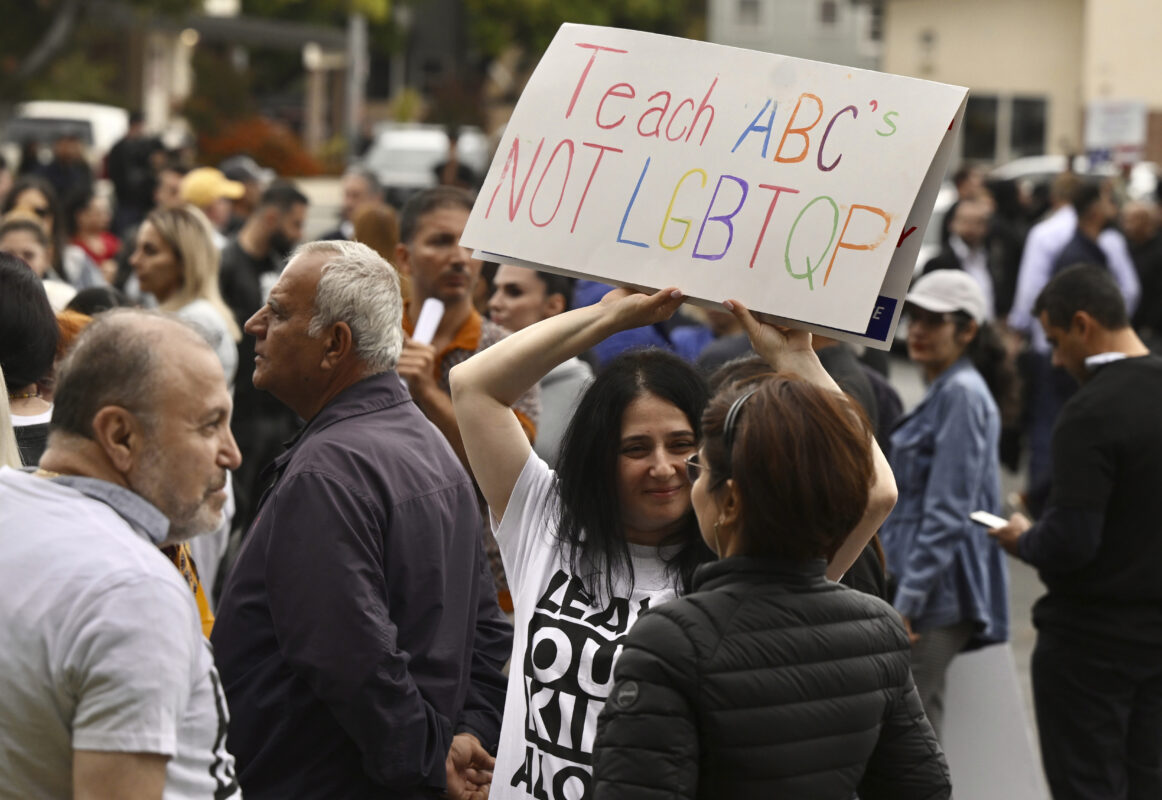
Conservative groups and LGBTQ+ rights supporters protest outside the Glendale Unified School District offices in Glendale, Calif., Tuesday, June 6, 2023. Several hundred people gathered in the parking lot of the district headquarters, split between those who support or oppose teaching about exposing youngsters to LGBTQ+ issues in schools. (Keith Birmingham/The Orange County Register via AP)

Protect Kids California’s effort would require schools to tell parents if their child signals gender changes, prevent biological males in girls’ sports and ban sterilization of children

Claim Attorney General’s ballot title and language change hurt signature gathering effort, lawsuit filed

“Our message is simple. Schools shouldn’t keep secrets from parents” – Protect Kids CA

By Allen D. Payton

California activists seeking to empower parents over their children’s decisions to identify as transgender failed to place a trifecta of restrictions on the November ballot known by the organizers as the Protect Kids of California Act of 2024. Attorney General Rob Bonta changed the ballot title to Restricts Rights of Transgender Youth. Initiative Statute and he changed the ballot language, as well which hampered the signature gathering efforts organizers claim.

According to Students First: Protect Kids California, the initiative will: (1) repeal the California law that permits students to compete in female’s sports and students to be in females’ locker rooms and bathrooms; (2) prohibit schools from deceiving parents about their student’s gender identity crisis and stop them from secretly transitioning a child; and (3) stop sex change operations and chemical castrations on minors.

The organization started late last fall to consolidate their three separate initiatives into one, and its signature-gathering efforts supported by 400,000 voters fell short of the 546,651 verifiable signatures that had to be collected within six months to make the presidential election ballot. The goal was to collect 800,000 signatures to be safe.

Organizers posted their complaint about Bonta’s ballot language changes on the group’s Facebook page on April 2. Initiative committee Executive Team member Nicole C Pearson wrote, “Every Californian, regardless of whether they agree with the initiative, should be concerned about an attorney general who ignores the law and uses his power to sabotage ballot initiatives. We plan to hold Bonta accountable for allowing his political agenda to get in the way of doing his job.”

The post included a link to an opinion on the Orange County Register website  decrying the changes which reads, “As required by California law, proponents submitted the measure to Bonta to receive a neutral official title and summary to use in petitions. Bonta then returned the measure with a new title with a negative and misleading slant: the “Restricts Rights of Transgender Youth Initiative.” And he gave it a summary that was not only completely prejudicial and designed to mislead the electorate — it also contained lies.”

Then on Tuesday, May 28 the group issued a press release announcing the setback in a post on their Facebook page which reads, “We want to thank our tens of thousands of supporters and volunteers for this truly historic effort!Together, we collected over 400,000 signatures – an unprecedented achievement for a 100% grassroots effort. You really are amazing! While it is unfortunate we did not have enough signatures to make the 2024 ballot, we will build off this momentum to continue to fight for the principles set forth in the Protect Kids of California Act.”

The press release reads, “Protect Kids California announced on Tuesday, May 28, 2024, they collected an impressive 400,000 signatures for their proposed ballot measure but fell short of the 546,651 required to be collected within a 180-day timeframe to appear on the ballot.

Tens of thousands of volunteers gathered signatures from every county in California. The largest collection areas were Los Angeles, Orange, Riverside, San Bernardino, San Diego, Santa Clara and Alameda Counties.

A completely grassroots effort, Protect Kids California raised close to $200,000 from over 1,200 donors. This equates to less than 50 cents per signature, a fraction of the amount standard ballot measure committees spend.

“While we are disappointed we didn’t meet the threshold to qualify for the ballot, we are encouraged by the amount of support from every sector of the state. We gathered more signatures for a statewide initiative than any all-volunteer effort in the history of California.” “We had severe headwinds from the beginning. California Attorney General Rob Bonta issued a false and misleading Title & Summary for our initiative. That made our fundraising efforts more difficult. While we sued the Attorney General, a Superior Court Judge denied our motion in April. We plan to appeal the Superior Court Judge’s decision, at which time we will decide how to proceed in the future. If we had a little more time or a little more money, we would have easily qualified for the ballot.”

But battles over transgender issues will continue to burn bright in courts, school districts and the Legislature. Despite a setback, initiative organizers were buoyed by the 400,000 signatures that thousands of volunteers collected. They are confident that they will attract more donations and enough signatures to qualify for the November ballot two years from now — and find more support than leaders in heavily Democratic California assume exists.

“We’re very confident that voters would pass this if it gets to the ballot box,” said Jonathan Zachreson, a Roseville City school board member, co-founder of Protect Kids California and an official proponent of the initiative. “We gathered more signatures for a statewide initiative than any all-volunteer effort in the history of California.”

“We started around the holidays which didn’t help,” he added. “It was an all-volunteer effort. It usually takes about $7 million to get something on the ballot. We raised just under $200,000 which covered our costs. But we didn’t have money to pay signature-gatherers. We had around 25,000 to 30,000 volunteers. Our efforts really took off in the past two months. In the past few weeks, we were collecting so many signatures it was hard to keep up.”

The organizers proposed language for the three-pronged initiative read:

  • REQUIRES schools to notify parents regarding children’s mental health concerns identified in school settings, including gender identification issues.
  • PROTECTS girls’ competitive sports and school spaces to be for biological girls only.
  • PREVENTS the sterilization of children by prohibiting the use of puberty blockers, cross-sex hormones, mastectomies and genital surgeries for minors

But Bonta’s ballot language for the initiative was changed to read instead:

  • Requires public and private schools and colleges to: restrict gender-segregated facilities like bathrooms to persons assigned that gender at birth; prohibit transgender female students (grades 7+) from participating in female sports. Repeals law allowing students to participate in activities and use facilities consistent with their gender identity.
  • Requires schools to notify parents whenever a student under 18 asks to be treated as a gender differing from school records without exception for student safety.
  • Prohibits gender-affirming health care for transgender patients under 18, even if parents consent or treatment is medically recommended.

The second issue has sparked a firestorm within the past year.

Last week, a Democratic legislator introduced a late-session bill that would preempt mandatory parental notification. Assembly Bill 1915, by Assemblymember Chris Ward, D-San Diego, would prohibit school districts from adopting a mandatory parental notification policy and bar them from punishing teachers who defy outing policies of LGBTQ+ students.

Last year, Assemblymember Bill Essayli, R-Corona, introduced a bill that would require parental notification, but AB 1314 died in the Assembly Education Committee without getting a hearing. Committee Chair Al Muratsuchi, D-Torrance, reasoned the bill would “potentially provide a forum for increasingly hateful rhetoric targeting LGBTQ youth.”

Ward cited surveys of transgender and gender nonconforming youths that found most felt unsafe or unsupported at home. In one national survey, 10% reported someone at home had been violent toward them because they were transgender, and 15% had run away or were kicked out of home because they were transgender.

The California Department of Education has issued guidance that warns that parental notification policies would violate students’ privacy rights and cites a California School Boards Association model policy that urges districts to protect students’ gender preferences.

But Zachreson argues that even if children have a right to gender privacy that excludes their parents, which he denies exists, students waive it through their actions.  “At school, their teachers know about it, their peers and volunteers know about it, other kids’ parents know about it —  and yet the child’s own parent doesn’t know that the school is actively participating in the social transition,” he said.

In some instances, he said, schools are actively taking steps to keep name changes and other forms of gender expression secret from the parents.

“What we’re saying is, no, you can’t do that. You have to involve the parents in those decisions,” he said.

Ward responds that many teachers don’t want to be coerced to interfere with students’ privacy and gender preferences. “Teachers have a job to do,” he said. “They are not the gender police.”

A half-dozen school districts with conservative boards, including Rocklin, Temecula Valley and Chino Valley, have adopted mandatory parental notification policies. Last fall, California Attorney General Rob Bonta sued Chino Valley, arguing its policy is discriminatory. A state Superior Court judge in San Bernardino agreed that it violated the federal equal protection clause and granted a preliminary injunction. The case is on appeal.

Last July, U.S. District Court judge for Eastern California threw out a parent’s lawsuit against Chico Unified for its policy prohibiting disclosure of a student’s transgender status to their parent without the student’s explicit consent. The court ruled that it was appropriate for the district to allow students to disclose their gender identity to their parents “on their own terms.” Bonta and attorney generals from 15 states filed briefs supporting Chico Unified; the case, too, is on appeal.

While some teachers vow to sue if required to out transgender students to their parents, a federal judge in Southern California sided with two teachers who sued Escondido Union School District for violating their religious beliefs by requiring them to withhold information to parents about the gender transition of children. The judge issued a preliminary injunction against the district and then ordered the return of the suspended teachers to the classroom.

No California appellate court has issued a ruling on parent notification, and it will probably take the U.S. Supreme Court for a definitive decision. Essayli pledged to take a case there.

The National Picture

Seven states, all in the deeply red Midwest and South, have laws requiring identification of transgender students to their parents, while five, including Florida and Arizona, don’t require it but encourage districts to adopt ther own version., according to the Movement Advancement Project or MAP, an independent nonprofit.

Two dozen states, including Florida, Texas, and many Southern and Midwest states ban best-practice health care, medication and surgical care for transgender youth, and six states, including Florida, make it a felony to provide surgical care for transgender care. Proponents cite the decision in March by the English public health system to prohibit youths under 16 from beginning a medical gender transition to bolster the case for tighter restrictions in the United States.

California has taken the opposite position; it is one of 15 like-minded states and the District of Columbia with shield laws to protect access to transgender health care. They include New York, Oregon, Washington, Colorado and Massachusetts.

Twenty-five states have laws or regulations banning the participation of 13- to 17-year-old transgender youth in participating in sports consistent with their gender identification.

Not one solidly blue state is among those that have adopted the restrictions that Protect Kids California is calling for. But Zachreson and co-founder Erin Friday insist that contrary to the strong opposition in the Legislature, California voters would be open to their proposals. They point to favorable results in a survey of 1,000 California likely voters by the Republican-leaning, conservative pollster Spry Strategies last November.

  • 59% said they would support and 29% would oppose legislation that “restricts people who are biologically male, but who now identify as women, from playing on girl’s sports teams and from sharing facilities that have traditionally been reserved for women.”
  • 72% said they agreed, and 21% disagreed that “parents should be notified if their child identifies as transgender in school.”
  • 21% said they agreed, and 64% disagreed that “children who say they identify as transgender should be allowed to undergo surgeries to try to change them to the opposite sex or take off-label medications and hormones.”

The voters surveyed were geographically representative and reflective of party affiliation, but not demographically, The respondents were mostly white and over 60, and, in a progressive state, were divided roughly evenly among conservatives, moderates and liberals.

Two Versions of Protecting Children

Both sides in this divisive cultural issue say they’re motivated to protect children. One side says it’s protecting transgender children to live as they are, without bias and prejudice that contribute to despair and suicidal thoughts. The other side says it’s protecting kids from coercion to explore who they aren’t, from gender confusion, and exposure to values at odds with their family’s.

Zachreson and Friday wanted to title their initiative “Protect Kids of California Act of 2024.” But Bonta, whose office reviews initiatives’ titles and summaries, chose instead “Restrict Rights of Transgender Youth. Initiative Statute.” Zachreson and Friday, an attorney, appealed the decision, but a Superior Court Judge in Sacramento upheld Bonta’s wording, which he said was accurate, not misleading or prejudicial.

“The ballot title was obviously biased and the summary was intentionally meant to deceive voters and hampered our efforts to get this on the ballot this year,” Zachreson continued. “The statutory requirement is to be impartial and factual. He did the opposite. He was biased and he had descriptions that were false. Bonta claimed there were no exceptions for student safety when notifying parents. But that’s not correct. It’s already in the law.”

Zachreson is appealing again. A more objective title and summary would make a huge difference, he said, by attracting financial backing to hire signature collectors and the support and resources of the California Republican Party, which declined to endorse the initiative. That was a strategic mistake in an election year when turnout will be critical.

“The people who support the initiative are passionate about it,” he said.

Effort for November 2026 Ballot Continues

The organizers may have to start over but a lawsuit about the biased title and summary was filed asking for a change in the language, to use the signatures already gathered and to grant an extension.

“The appeal won’t be heard until after the November election,” Zachreson shared.

If a judge rules in their favor it will make it easier for the group to complete the signature gathering to qualify for the next General Election ballot which will be in November 2026.

Political observer Dan Schnur, who teaches political communications at USC, UC Berkeley and Pepperdine University, agreed that the gender debate could have motivated Republicans and swing voters to go to the polls.

“There’s no question that the Attorney General’s ballot language had a devastating effect on the initiative’s supporters and it could have almost as much of an impact on Republican congressional candidates this fall,” he said.

John Fensterwald who writes about education policy and its impact in California for EdSource.org contributed to this report.

Filed Under: Attorney General, Children & Families, Education, News, Politics & Elections, State of California

Love Life’s annual LifeRide fundraiser in Antioch June 15

May 26, 2024 By Publisher Leave a Comment

Sponsors needed

By Sophia Martin, Regional Director, Love Life NorCal Antioch

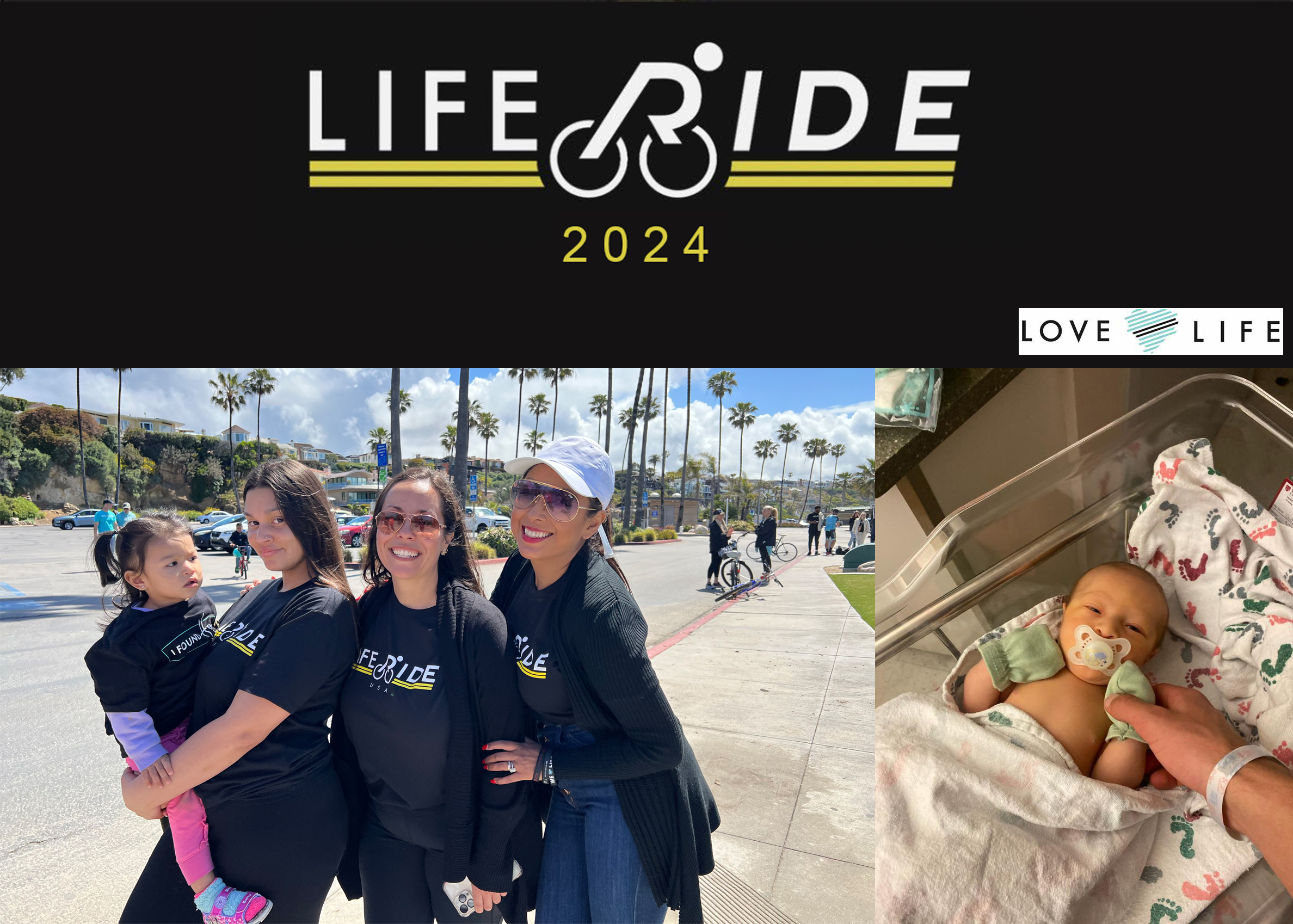
Please support us in our annual fundraiser, LifeRide. We will be riding bikes across the nation to raise awareness and funds to unite and mobilize the Church to end abortion and the orphan crisis.

What is LifeRide?

In 2023, Pastor Jay Stewart at the age of 60, rode his bicycle over 3,100 miles across America to bring awareness to the ministry of Love Life and to raise over a million dollars. Pastor Jay has been a partnering pastor with Love Life from the beginning and his church is also a House of Refuge church. (See video1 and video2)

Locally, our goal is to raise $10,000. If you would like to give $25, $50 or $100 to help us meet our goal and learn more, please visit: https://join.liferideusa.org/team/580862.

“Rescue those who are being taken away to death; hold back those who are stumbling to the slaughter.” – Proverbs 24:11

For more information about Love Life visit https://lovelife.org and to sign up for a 1-Hour Journey visit: https://lovelife.org/1-hour-journey. Get your Love Life apparel and coffee here: https://shop.welovelife.org/?ref=antioch.

Filed Under: Children & Families, Community, East County, Faith, Recreation

STAND! for Families Free of Violence to hold panel discussions on preventing domestic violence April 30, May 7

April 18, 2024 By Publisher Leave a Comment

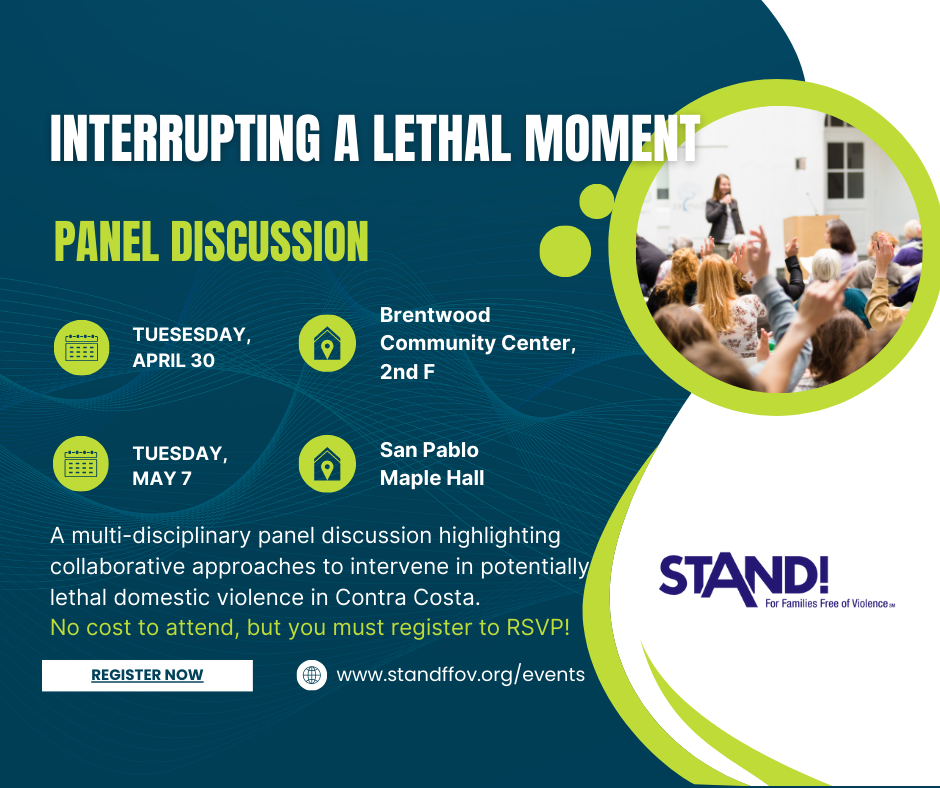
Interrupting a lethal moment: A multi-disciplinary panel discussion highlighting collaborative approaches to intervene in potentially lethal domestic violence in Contra Costa.

In Brentwood and San Pablo

This informative event will be held in three locations throughout the county to share information on how STAND!, law enforcement, and medical professionals are working together to interrupt high-risk events and interactions between intimate partner victims and offenders.

Panelists include Ashley Palomino, STAND! Intervention Support Services Manager, local law enforcement representatives, and medical experts in emergency treatment of domestic violence patients.

Registration is free. Register at http://standforfamiliesfreeofviolence.ticketspice.com/lap-speaker-series.

Filed Under: Children & Families, Community, East County, West County

Three Romanians arrested for stealing Electronic Benefit Transfer information throughout state

April 4, 2024 By Publisher Leave a Comment

Charged with access device fraud in multi-district operation

California has reported loss of over $22 million due to EBT theft in first quarter of 2024, robbing low-income families of funds to buy food

By U.S. Attorney’s Office, Northern District of California

OAKLAND – Three individuals were charged with the use of unauthorized access devices were filed this week, announced United States Attorney Ismail J. Ramsey and United States Secret Service (“USSS”) – San Francisco Field Office, Special Agent in Charge Shawn Bradstreet.

The three defendants—Petrica Mosneagu, 44; Ionut Sopirla, 38; and Virgil Tudorascu, 42, all of Romania—were charged with stealing Electronic Benefit Transfer (“EBT”) account information and making fraudulent cash withdrawals at ATMs using that stolen EBT information in violation of 18 U.S.C. § 1029(a)(2). The defendants were arrested in a multi-district, USSS-led operation, which resulted in several arrests this week, including in the Southern District of California.

According to the public criminal complaints, law enforcement agencies have been investigating EBT theft across California for the past fourteen months. The complaints allege that the California Department of Social Services has identified that approximately $22.8 million has been stolen from victim EBT card beneficiaries from January to March 2024 in California, including in the Northern District of California. Most of these stolen funds have been obtained by unauthorized ATM withdrawals. Furthermore, the complaints allege that victims of the scheme are largely low-income families who depend on EBT benefits to buy food and other household necessities.

The complaints allege that the defendants fraudulently withdrew cash with “cloned” cards, which are debit cards, gift cards, or other devices with magnetic strips that have been encoded with information from legitimate EBT cards. The account holders’ account information was primarily “skimmed” at ATMs or point-of-sale terminals. Skimming devices recorded victim account holder account information on the magnetic strips and log their PINs through keypad overlays. Once skimmed, the victim account holders’ account information was then loaded onto blank or repurposed debit cards, which the defendants then used to withdraw cash or make purchases.

If convicted, each defendant face a maximum statutory sentence of ten years in prison on each charge. However, any sentence following conviction would be imposed by the court after consideration of the U.S. Sentencing Guidelines and the federal statute governing the imposition of a sentence, 18 U.S.C. § 3553.

Defendants Mosneagu and Sopirla made their initial appearances Tuesday morning in Oakland and will appear for their detention hearings on April 10, 2024, before the Honorable Kandis A. Westmore. Defendant Tudorascu made his initial appearance Thursday morning and will also appear for his detention hearing on April 10, 2024.

Criminal complaints only allege that crimes have been committed, and each defendant must be presumed innocent until proven guilty beyond a reasonable doubt.

Assistant U.S. Attorney Alexis James and Special Assistant U.S. Attorney Zachary Glimcher are prosecuting these cases, with the help of Katie Turner and Kay Konopaske. These prosecutions are the result of an investigation by the USSS, California Department of Social Services, U.S. Department of Agriculture – Office of Inspector General, Homeland Security Investigations (HSI), San Francisco Human Services Agency – Special Investigations Unit, Pleasant Hill PD, Richmond PD, Oakland PD, Berkeley PD, Alameda County Sheriff’s Office, Romanian National Police, and U.S. Secret Service Bucharest.

Filed Under: Children & Families, Crime, DOJ, Food, News, Seniors

Brentwood Police help arrest 7 child predators during Operation Broken Heart

March 18, 2024 By Publisher Leave a Comment

Photo: Brentwood PD

Seize devices as part of county’s Internet Crimes Against Children Task Force

By Brentwood Police Department

Recently our agency took part in the Contra Costa County Internet Crimes Against Children (ICAC) Task Force for a week-long operation targeting adults who were seeking to meet minors for sex with the goal of identifying victims of child sexual abuse.

A total of 12 law enforcement agencies participated in “Operation Broken Heart,” which encompassed hundreds of law enforcement work hours throughout the week. The ICAC Task Force resulted in 7 arrests, the identification of minors, the seizure of multiple devices and a “safer community, which is the primary focus of these missions.

The ICAC program helps state and local law enforcement agencies develop an effective response to technology-facilitated child sexual exploitation and internet crimes against children. This includes forensic and investigative services, training, technical assistance, victim services, and community education.

Our agency remains committed to protecting the most vulnerable in our community and would like to thank all of the participating agencies for their contributions last week in combatting child exploitation.


Filed Under: Children & Families, Crime, East County, News

Leap Year baby born to Pittsburg parents at Kaiser Permanente Antioch Medical Center

March 1, 2024 By Publisher Leave a Comment

Blake Harper Trujillo with dad, Timothy and mom, Josephine Trujillo born Feb. 29, 2024, at Kaiser Antioch Medical Center. Photo: Kaiser Permanente

By Antonia Ehlers, PR and Media Relations, Kaiser Permanente Northern California

Pittsburg mother-to-be Josephine Trujillo had a big surprise Wednesday night – she went into labor! What began as a trip to see a midwife at the Kaiser Permanente Delta Fair Medical Offices ended at the Kaiser Permanente Antioch Medical Center. A few hours later – at precisely 12:04 a.m. Thursday, Feb. 29, 2024, – Josephine gave birth to baby Blake Harper. The adorable baby with lots of hair and steel blue eyes is one of the Bay Area’s first 2024 Leap Year babies.

Proud dad Timothy Trujillo, a project manager at the Worley Group, said the little bundle of joy weighed in at 9 pounds, 6 ounces and measured 21 inches.

“It feels surreal but excellent,” he said.

Josephine, a middle school science teacher at Edna Brewer Middle School in Oakland, said everything happened so fast once she went into labor.

“Our due date was February 27, but it was still a surprise,” she said. “Our care at Kaiser Permanente was amazing – they made it easy. Everyone was on top of it. ‘We’ve been calling him our ‘little chonker’ and we’re just ecstatic.”

“Congratulations to the Trujillo family on the birth of baby Blake,” said Pam Galley, Kaiser Permanente senior vice president and area manager for the Diablo Service Area. “Our health care team at the Kaiser Permanente Antioch Medical Center welcomed a very special Leap Year baby today, and we wish his family all the best.”

Filed Under: Children & Families, East County, Health, News

  • « Previous Page
  • 1
  • …
  • 4
  • 5
  • 6
  • 7
  • 8
  • …
  • 14
  • Next Page »
Furniture-Clearance-02-26B
Liberty-Tax-Jan-Apr-2026
Deer-Valley-Chiro-06-22

Copyright © 2026 · Contra Costa Herald · Site by Clifton Creative Web