• Home
  • About The Herald
  • Local Agencies
  • Daily Email Update
  • Legal Notices
  • Classified Ads

Contra Costa Herald

News Of By and For The People of Contra Costa County, California

  • Arts & Entertainment
  • Business
  • Community
  • Crime
  • Dining
  • Education
  • Faith
  • Health
  • News
  • Politics & Elections
  • Real Estate

Charting a Different Course: California Maritime Academy’s unique approach to education

January 26, 2024 By Publisher Leave a Comment

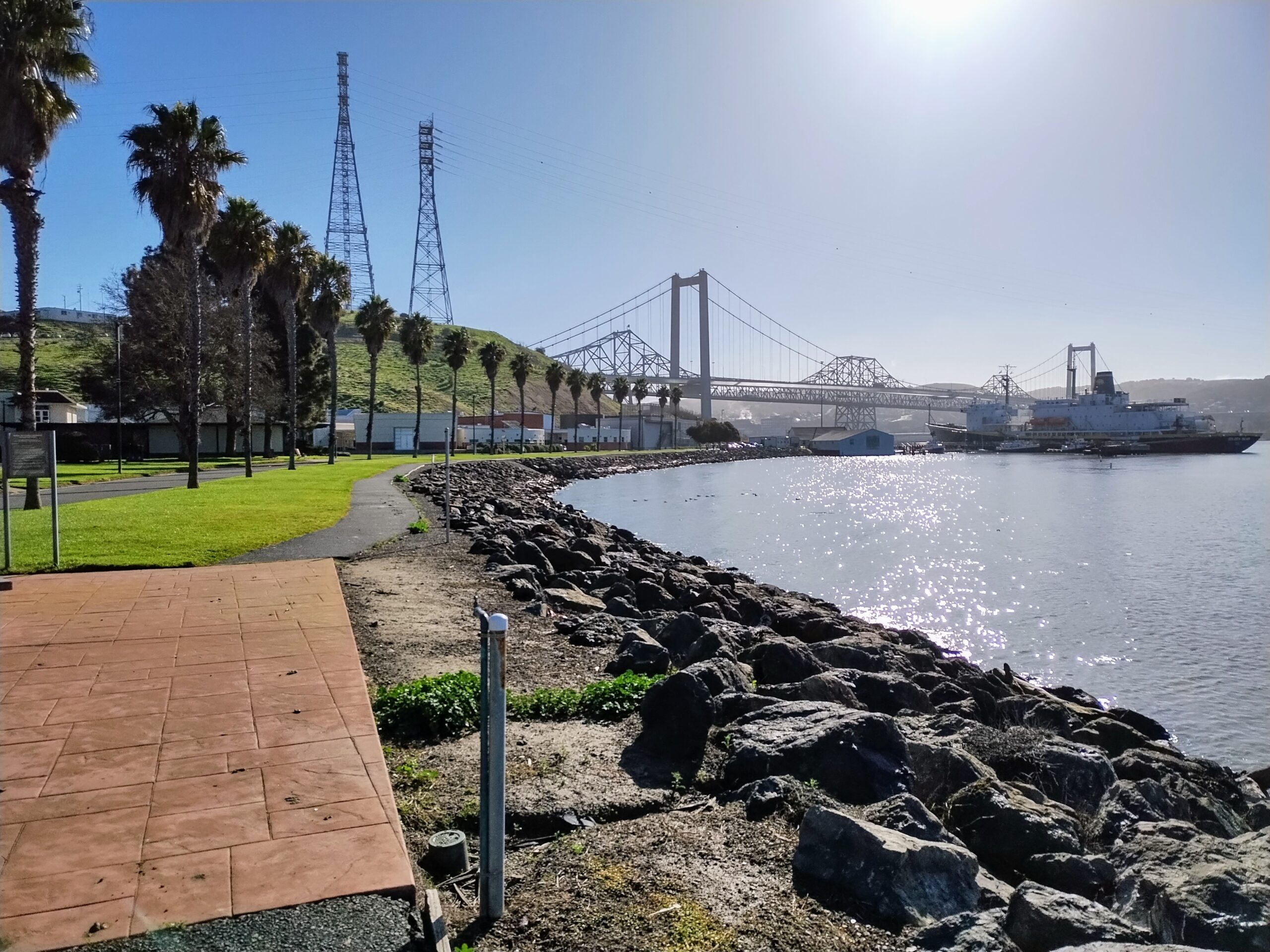
The Training Ship Golden Bear and scenic waterfront at Cal Maritime. Photo by Neil Sterud.

By Neil Sterud

Nestled amidst the picturesque hills along the San Pablo Bay waterfront, California State University Maritime Academy (Cal Maritime) stands as a hidden gem. Despite being the smallest campus of the CSU system, Cal Maritime boasts an impressive track record far beyond its modest size. Graduates from this maritime-focused institution consistently achieve remarkable success.

However, it’s not just the size that separates. The campus embraces a distinctive culture that sets it apart from other universities. Here, students don uniforms, engage in military-style formations, and unite under the distinctive banner of The Keelhauler.

While enjoying a commendable reputation among those familiar with its offerings, Cal Maritime faces the challenge of limited awareness beyond its niche maritime industry market. The school’s staff recognizes this hurdle, and the academy has been diligently working to overcome it and shed light on the exceptional educational opportunities it offers.

The university’s flagship vessel, Training Ship Golden Bear, has traversed the waters of many countries, embodying the global reach of Cal Maritime. Setting itself apart, the academy mandates an international experience for students pursuing any of its majors. This distinctive feature underscores the institution’s commitment to providing a comprehensive education beyond traditional classroom boundaries.

Specializing in business administration, engineering, marine transportation, oceanography, and international strategy and security, Cal Maritime caters to students with clear aspirations. Notably, the academy is responsible for licensing students entering the United States Coast Guard (USCG) and offers an officer program for those with a patriotic calling to serve our nation.

Furthermore, the university offers a program tailored for individuals aspiring to join the Strategic Sealift Midshipman Force (SSMF), a crucial component of the United States Navy. This initiative equips Navy Reserve Officers with civilian Merchant Mariner credentials and specialized military training. The primary mission of the SSMF is to bolster the United States organic Sealift fleet, particularly in contested environments. Additionally, the force is vital in supporting Maritime Domain Operations and fortifying the Maritime Industrial Base.

In summary, Cal Maritime is a unique educational institution notable for its global exposure, mandatory international programs, and specialized tracks for USCG licensing and the Strategic Sealift Midshipman Force. As awareness about its offerings grows, Cal Maritime is a solid choice for individuals seeking a practical and specialized academic experience.

Sterud is an Antioch resident and a senior at Cal Maritime.
Filed Under: Bay Area, Education, Military, News

MTC to seek legislature’s approval to place Bay Area Transportation tax measure on 2026 ballot

January 25, 2024 By Publisher Leave a Comment

Photo by MTC.

To generate at least $1 to $2 billion annually; priorities include transit, safer streets and roads, resilience

Commissioners considering a variety of tax options

By John Goodwin & Rebecca Long, Metropolitan Transportation Commission

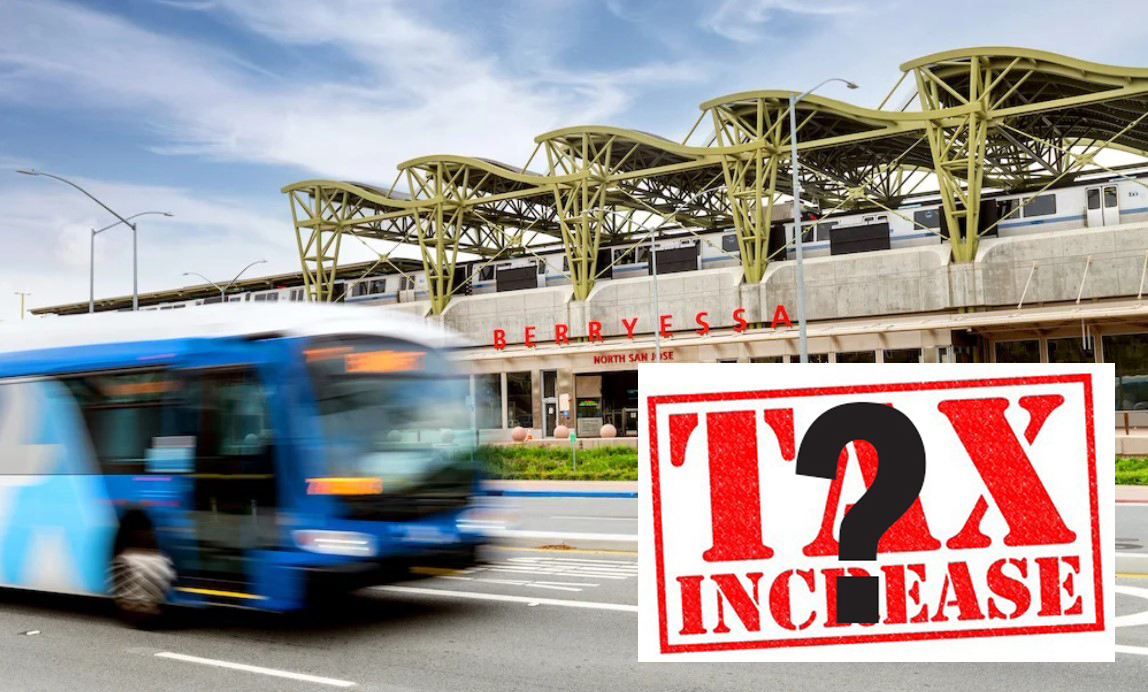
The Metropolitan Transportation Commission (MTC) on Wednesday, Jan. 24, 2024 voted to pursue legislation in Sacramento this year that would enable Bay Area voters to consider a transportation revenue measure as early as November 2026.

The proposed measure aims to advance a climate-friendly Bay Area transportation system that is safe, accessible and convenient for all. This includes preserving and enhancing public transit service; making transit faster, safer and easier to use; repairing local streets and roads; and improving mobility and access for all people, including pedestrians, bicyclists and scooter and wheelchair users.

The vote was approved unanimously by all members present. There are 21 commissioners with three non-voting members. Oakland Mayor Sheng Tao and San Jose Mayor Matt Mahan who are voting members were both absent during the vote.

State Sen. Scott Wiener of San Francisco earlier this month introduced what is known as a spot bill that will be used as the vehicle for authorizing placement of the proposed measure on a future ballot in each of the nine Bay Area counties. The first opportunity to amend Wiener’s Senate Bill 925 will be in mid-February.

While the Commission has not yet identified a revenue source for the proposed measure, MTC Chair and Napa County Supervisor Alfredo Pedroza noted that he and his colleagues are considering a wide range of options.

“Voters traditionally have supported transportation through bridge tolls or sales taxes. Bridge tolls are not an option in this case and we think it’s smart to look at more than a regional sales tax. We’re proposing a few options so we have enough flexibility and enough time to get it right.”

Tax Options & Projected Revenue

Legislators, and MTC staff and commissioners, will consider several options for generating revenue. These may include a sales tax, an income tax, a payroll tax, a square footage-based parcel tax, a Bay Area-specific vehicle registration surcharge with tiered rates based on the value of the vehicle or a regional vehicle-miles traveled charge (VMT) charge subject to prior adoption of a statewide road usage charge not sooner than 2030.

MTC staff recommend raising at least $1 billion to $2 billion per year for robust investments in safe streets and other capital improvements, to improve and expand transit service, and to help Bay Area transit agencies operate their services.

Goals of the Regional Transportation Measure

The revenue measure’s core goal is to advance a climate-friendly transportation system in the Bay Area that is safe, accessible and convenient for all. Focus areas include:

  1. Protect and enhance transit service. Ensure that current resources are maintained and used effectively; and enhance service frequency and areas served.
  2. Make transit faster, safer and easier to use. Create a seamless and convenient Bay Area transit system that attracts more riders by improving public safety on transit; implementing the Bay Area Transit Transformation Action Plan; and strengthening regional network management.
  3. Enhance mobility and access for all. Make it safer and more accessible for people of all ages and abilities to get to where they need to go. Preserve and improve mobility for all transportation system users, including people walking, biking and wheeling.

Proposed Expenditure Categories

  1. Transit transformation: sustain, expand and improve transit service for both current and future riders; accelerate customer-focused initiatives from the Bay Area Transit Transformation Action Plan and other service improvements that are high priorities for Bay Area voters and riders; and help fund the transition to zero-emission transit.
  2. Safe streets: transform local streets and roads to support safety, equity and climate goals, including through pothole repair, investments in bicycle/pedestrian infrastructure, safe routes to transit and other safety enhancements.
  3. Connectivity: fund mobility improvements that close gaps and relieve bottlenecks in the existing transportation network in a climate-neutral way.
  4. Climate resilience: fund planning, design and/or construction work that protects transportation infrastructure and nearby communities from rising sea levels, flooding, wildfires and extreme heat.

Transportation Measure Highlights

This measure reflects feedback from Commissioners, key legislative leaders and other stakeholders, including:

  • Improving transit coordination by strengthening MTC’s role as regional transit network manager;
  • A focus on Bay Area Transit Transformation Action Plan (TAP) action items and other customer facing policies that would benefit from a regional approach, such as ambassadors to assist riders and support a safe atmosphere;
  • Flexibility in the amount of revenue requested, as well as the way that funding could be generated;
  • Flexibility in spending priorities as the region’s needs evolve with time; and
  • The “North Star” vision statement, which includes greenhouse gas emission-reduction tools, such as:
    • A Transportation Demand Management mandate that encourages Bay Area employees to commute to work in ways other than driving to work alone; and
    • A limitation on how money could be spent on highway-widening projects.

Just as MTC commissioners have proposed a range of tax options, so too have they identified multiple expenditure categories.

“We recognize that we’ll be asking voters to take on a heavy lift,” acknowledged Pedroza. “The big lesson from COVID is the need to transform both our transit network and the way we pay to operate it. But we also need to transform our local streets and roads to fix potholes and make the roads safer for walking and biking. We need to improve connectivity and do it in a way that doesn’t encourage people to drive more. And we need to make our transportation infrastructure more resilient to rising sea levels, flooding, wildfires and extreme heat.”

Measure Vision Statement

The commissioners also adopted the following Vision Statement for the measure: “The Bay Area needs a world-class, reliable, affordable, efficient and connected transportation network that meets the needs of Bay Area residents, businesses and visitors while also helping combat the climate crisis; a public transit network that offers safe, clean, frequent, accessible, easy-to-navigate and reliable service, getting transit riders where they want and need to go safely, affordably, quickly and seamlessly; local roads are well maintained; and transit, biking, walking and wheeling are safe, convenient and competitive alternatives to driving; enhancing access to opportunity, lowering greenhouse gas emissions, strengthening the region’s economy and improving quality of life.”

To learn more about the proposed tax measure click, here. To read the supporting documents considered by the Commissioners click, here.

MTC is the transportation planning, financing and coordinating agency for the nine-county San Francisco Bay Area.

Allen D. Payton contributed to this report.


Filed Under: Bay Area, Legislation, News, State of California, Taxes, Transportation

El Cerrito man, former rock musician, arrested in homicide of girlfriend

January 5, 2024 By Publisher Leave a Comment

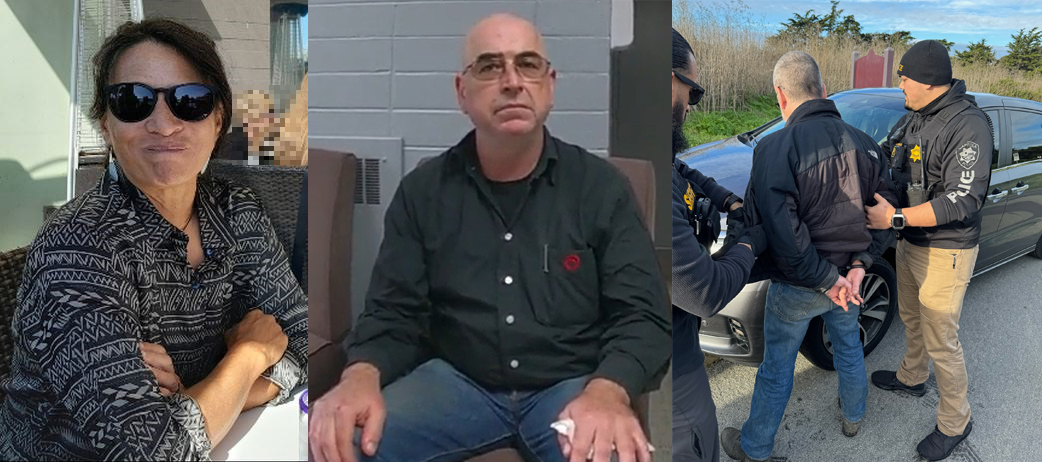
Alice “Alyx” Kamakaokalani Hermann and Theobald “Theo” Lengyel. Photos: El Cerrito PD. Lengyel’s arrest on Jan. 2, 2024. Photo: Capitola PD

Went missing from Santa Cruz Dec. 3, her car located in front of his house, human remains located in Tilden Regional Park

By Allen D. Payton

The Capitola Police Department reported on Tuesday morning, Jan. 2, 2024, Theobald “Theo” Brooks Lengyel (54 years old) was arrested in connection with the homicide of his girlfriend Alice “Alyx” Kamakaokalani Herrmann (61 years old) of Capitola, CA. Lengyel was located in the Santa Cruz County Sheriff’s jurisdiction after an arrest warrant was issued. He was taken into custody by Santa Cruz Sheriff’s Deputies and Capitola PD Detective Currier without incident with the collaboration of the Department of Justice. Lengyel was subsequently booked into Santa Cruz County jail.

The arrest of Lengyel was executed following an intensive and collaborative investigation by Capitola PD which took over as the lead agency in the case. The joint efforts with the Santa Cruz County District Attorney’s Office and El Cerrito Police Department were instrumental in bringing this case to resolution.

Alice Kamakaokalani, a 5’04” tall, 135-pound Pacific Islander woman, was last seen in Santa Cruz, CA on December 3, 2023, prompting a missing person investigation from law enforcement agencies. Capitola Police, in conjunction with El Cerrito PD, initiated an investigation into her disappearance reported by relatives on December 12, 2023, after not hearing from her for over a week.

Capitola PD Detectives gathered evidence, conducted interviews and collaborated with partner agencies to piece together the circumstance surrounding Kamakaokalani’s disappearance.

Kamakaokalani’s car and Lengyel’s truck. Photos: El Cerrito PD

El Cerrito Police investigators located her vehicle, a red 2007 Toyota Highlander SUV, license plate “5VAC944”, in front of the home of her boyfriend, Lengyel, in El Cerrito, CA. Based on his actions, Lengyel was then considered a person of interest in Kamakaokalani’s disappearance and was not cooperative with the police investigation. The 5’10”, 170-pound Lengyel also goes by the name, “Mylo Stone.” In the days following her disappearance, Theo Lengyel is known to have travelled by vehicle from El Cerrito to Portland, OR. He drives a blue 1989 Ford pickup truck, license plate “UNCLDRT.”

Both vehicles were taken into police custody.

Investigators sought information about the actions of both Theo Lengyel and Alice Herrmann from December 3, 2023. As the investigation progressed, it became clear that foul play was involved, leading to the identification of Lengyel as a suspect.

According to sfgate.com Lengyel was a founding member of the funk-metal band Mr. Bungle and, according to the San Francisco Chronicle, he played saxophone, clarinet and keyboards for the group from 1985 to the mid-1990s,.

According to an NBC News report, “Investigators eventually recovered human remains in a wooded area within Tilden Regional Park in Berkeley, about 4 miles from El Cerrito.”

Those remains are pending DNA confirmation from the Santa Cruz County Coroner’s Office which is handling the case. An effort to contact their PIO for more information was unsuccessful prior to publication time.

Capitola Police wrote in a press release, “The diligent work of our investigators, in coordination with our law enforcement partners, has led to the apprehension of Theobald Lengyel in connection with the tragic homicide of Alice Kamakaokalani. We extend our deepest condolences to the family and friends of the victim during this difficult time.

The Capitola Police Department expresses gratitude to the involved agencies who have and are continuing to assist in this investigation: Santa Cruz County District Attorney’s Office, Santa Cruz County Sheriff’s Office, East Bay Regional Parks District Police Department, Contra Costa County Crime Lab, El Cerrito Police, California Office of Emergency Services and Department of Justice.

Lengyel is currently in custody in the Santa Cruz Main Jail. the Capitola Police Department will work closely with the Santa Cruz County District Attorney’s Office to ensure a thorough prosecution of the case.

This remains an ongoing investigation, the Capitola Police Department will not provide further details at this time. Updates will be provided as they become available.”

Please check back later for any updates to this report.


Filed Under: Bay Area, Coroner, Crime, News, Police, Sheriff, West County

BARTable This Weekend: Dec 29-31

December 28, 2023 By Publisher Leave a Comment

Photo source: BART courtesy of TripSavvy.

Ring in the New Year in San Francisco under fireworks.

We’ve made it to the last weekend of 2023, and it will be an event-FULL one! Dozens of New Year’s Eve celebrations are happening, along with a few “Noon Year’s Eve” events for the kids. Take in a live show, a musical performance, or dance until the clock hits 12 a.m. at the BARTable events below. BART will run special service this weekend with trains running as late as 1 a.m. on New Years Eve.

To view the list of BARTable partner events visit BARTable This Weekend: Dec 29-31 | BARTable,

Find more information about our special service here. Are you hosting an event near a BART station? Visit this page to learn about “what is BARTable.”

Use BART’s Trip Planner for detailed routes and transit options.

BARTable partners with local organizations located near BART stations to shine a light on the incredible diversity of businesses, restaurants and happenings that are easily accessible by transit. Our partners provide special deals and prizes for our weekly giveaways, which you can find on our Contest and Deals page. Interested in becoming a BARTable partner? Learn more here.

Filed Under: BART, Bay Area, Holiday

East Bay Parks: Annual wild mushroom warning

December 22, 2023 By Publisher Leave a Comment

Wild mushrooms. Source: EBRPD

Learn more about mushrooms at the Tilden Fungus Fair Jan. 20-21

By Dave Mason, Public Information Supervisor, East Bay Regional Park District

With the return of winter rains, park visitors may have noticed mushrooms popping up in the Regional Parks. Mushrooms are an ecologically important part of our parklands and can look beautiful – but some of them contain dangerous toxins.

The death cap (Amanita phalloides) and western destroying angel (Amanita ocreata) are two of the world’s most toxic mushrooms, and both can be found in East Bay Regional Parks during the rainy season.

The death cap and western destroying angel mushrooms contain amatoxins, molecules that are deadly to many animals. Symptoms may not appear until up to 12 hours after consumption, beginning as severe gastrointestinal distress and progressing to liver and kidney failure if treatment is not sought immediately. Both mushrooms can be lethal to humans and pets if consumed. They are mainly associated with oak trees and can be found growing anywhere oak roots are present.

The death cap is a medium to large mushroom that typically has a greenish-gray cap, white gills, a white ring around the stem, and a large white sac at the base of the stem. Although the death cap is mainly associated with oak trees, it has been found growing with other hardwoods. It was accidentally introduced to North America on the roots of European cork oaks and is now slowly colonizing the west coast. The death cap is not native to California.

The western destroying angel is a medium to large mushroom that usually has a creamy white cap, white gills, a white ring around the stem that can disappear with age, and a thin white sac at the base. It fruits from late winter into spring. It is associated exclusively with oaks. Unlike the death cap, it is a native California mushroom.

The Park District urges the public to be safe and knowledgeable about toxic mushrooms when encountering them in the parks. Collecting any mushrooms in East Bay Regional Parks is not allowed.

Pet owners should contact a veterinarian immediately if they suspect their pet may have eaten a toxic mushroom.

While the death cap and western destroying angel mushrooms are responsible for most cases of mushroom poisonings in California, deadly toxins can also be found in Galerina and Lepiota mushroom species, which also occur in the Bay Area. For more information about toxic mushrooms, visit www.ebparks.org/safety/trails/toxic-mushrooms.

Learn More About Fungi – Tilden Fungus Fair, January 20-21, 2024

Celebrate the fruits of winter! View hundreds of local mushroom specimens, mingle with the mycological community, and enjoy presentations by guest speakers at this two-day special event. Saturday, January 20, and Sunday, January 21, from 10:00 a.m. to 4:30 p.m. at Tilden Nature Area. For more information, visit www.ebparks.org/events/tilden-fungus-fair.


Filed Under: Bay Area, Health, News, Parks

CA State Parks offers new reservation drawing pilot program for Mount Tamalpais cabins

December 20, 2023 By Publisher Leave a Comment

Steep Ravine Cabins, perched on the cliffs of Mount Tamalpais, are now part of the lottery-style reservation at Mount Tamalpais State Park ©2011, California State Parks. Photo by Brian Baer

SACRAMENTO, Calif.— California State Parks announced on Tuesday, Dec. 19, 2023, a new approach to reserving the highly sought after Steep Ravine Cabins at Mount Tamalpais State Park.  Using a lottery-style system to make a reservation, the department’s new pilot program aims to enhance access and equity by allowing outdoor enthusiasts to apply for free for a reservation drawing up to eight months in advance. The drawings are selected randomly and conducted seven months ahead of the reservation dates through California’s state park reservation system, ReserveCalifornia.

Just north of San Francisco’s Golden Gate Bridge, Mount Tamalpais State Park rises majestically from the heart of Marin County. The park offers hiking, picnicking, wildlife watching and camping opportunities. Perched on the cliffs of Mount Tamalpais, the Steep Ravine Cabins have long been a cherished destination for outdoor enthusiasts seeking a unique camping experience. Each cabin has a small wood stove, picnic table, sleeping platforms, and an outdoors barbecue, but no running water.

Launched in October of this year, the reservation lottery system ensures a fair and equitable distribution of reservations. Guests interested in reserving one of these iconic cabins will have the opportunity to enter the free drawing for a chance to secure their stay. This approach eliminates the rush and competition that often accompanies traditional booking processes, allowing more individuals and families to access the cabins at the park. If a visitor is awarded their reservation choice, they must claim and pay for the reservation within 30 days to keep it. Any unclaimed inventory will be released for reservation six months in advance.

Some key features of the pilot program at the Steep Ravine Cabins include:

  • Equal Opportunity: The lottery system provides an equal opportunity for anyone interested to secure a reservation, regardless of their location or previous booking history.
  • Transparency: The drawing process will be conducted, ensuring transparency and fairness in cabin allocation.
  • Accessible Information: Detailed instructions on how to participate in the drawings are available on ReserveCalifornia website, making it easy for anyone to enter.

Thus far, close to 3,400 applicants have signed up for the drawings. The pilot program is part of the department’s ongoing efforts to enhance accessibility, preserve its natural resources, and promote outdoor experiences for all.

The public can learn more about the reservation drawing pilot program by visiting the Frequently Asked Questions or ReserveCalifornia.com.

The California Department of Parks and Recreation, popularly known as State Parks, and the programs supported by its Office of Historic Preservation and divisions of Boating and Waterways and Off-Highway Motor Vehicle Recreation provide for the health, inspiration and education of the people of California by helping to preserve the state’s extraordinary biological diversity, protecting its most valued natural and cultural resources, and creating opportunities for high-quality outdoor recreation. Learn more at parks.ca.gov.

Filed Under: Bay Area, News, Parks, State of California

Boy Scouts of America Golden Gate Area Council seeks District Executive

December 18, 2023 By Publisher Leave a Comment

Job Posting

Position:                         District Executive Position

Position location:           Pleasanton, CA

Council Website:           www.ggacbsa.org

Since 1910, Scouting has helped mold the future leaders of this country by combining educational activities and lifelong values with fun. The Boy Scouts of America believes and understands that helping youth puts us on a path towards a more conscientious, responsible, and productive society.

Today’s professional Scouters are a diverse group of men and women sharing a dynamic career offering independence, achievement, and stability. This is work that makes a difference, work that calls one to continual learning and challenge, work that offers solid compensation, benefits and advancement.

The District Executive selected will:

  • Work with a volunteer board of directors and other community and business leaders to identify, recruit, train, guide, and inspire them to become involved in youth programs.
  • Achieve progress towards specific goals and objectives which include: program development through collaborative relationships, volunteer recruitment and training, fundraising, membership recruitment and retention.
  • Be responsible for extending programs to religious, civic, fraternal, educational, and other community-based organizations through volunteers.
  • Secure adequate financial support for programs in assigned area. Achieve net income and participation objectives for assigned camps and activities.
  • Recruit leadership for finance campaign efforts to meet the financial needs of the organization.
  • Ensure that all program sites are served through volunteers, regular leader meetings, training events and activities.
  • Collaborate with adult volunteers and oversee achievement of training for their respective role.
  • Be a good role model and recognize the importance of working relationships with other professionals and volunteers. The executive must have communication skills and be able to explain the program’s goals and objectives to the public.
  • Provide quality service through timely communication, regular meetings, training events and activities.
  • Have a willingness and ability to devote long and irregular hours to achieve council and district objectives.

Desired Skills:

  • Strong marketing, fund-raising and program development background is highly desired.
  • Non-profit, fundraising or sales experience is a plus.
  • Must be comfortable with public speaking and interacting with diverse audiences. Excellent people skills, enthusiastic, punctual, responsible and creative.
  • Self-motivated individual with solid time management skills and strong organizational skills in management, budgeting, and planning.
  • Committed to personal and professional productivity, while maintaining high ethical and professional working standards.

Requirements:

  • Must be willing to accept and meet the Boy Scout of America’s leadership and membership standards and subscribe to the Scout Oath and Law.
  • Bachelor’s degree from an accredited college or university (transcript with the date degree conferred stated is required for employment).
  • Attained 21 years of age or older unless prohibited by any applicable law.
  • Ability to work varied hours when necessary, evening activities and weekend work is frequently required to achieve positive objectives.
  • Ability to travel for training at least once a year for one to two weeks.
  • A Scouting background is helpful but not required for employment.
  • Offers for employment are subject to criminal, reference and motor vehicle background checks.

Compensation:

All councils are equal opportunity employers. In addition to offering a competitive salary of $64,480, Professional Scouting offers benefits to include major medical, prescription coverage, dental, vision, life-insurance, long-term disability, accidental death, a defined benefit retirement plan, plus compensation for authorized and approved business related expenses to include phone and mileage reimbursement.  We also offer generous vacation policy and ten holiday observances.

How to apply:

Qualified candidates must submit cover letter and resume with salary history to kara.miller@scouting.org only the most qualified candidates will be contacted.

Additional information on a career as a District Executive can be found at this link: http://www.scouting.org/Careers/WorkingWithUs/EssentialSkills.aspx.

Filed Under: Bay Area, Jobs & Economic Development, Youth

MTC data shows Bay Area pavement marked by mediocrity as pothole problems persist

November 18, 2023 By Publisher Leave a Comment

Photo source: MTC. Credit: Peter Beeler

Smaller cities show biggest year-to-year improvements

By John Goodwin, Metropolitan Transportation Commission

Overall pavement conditions on the Bay Area’s 44,000 lane-miles of local streets and roads landed once again in fair territory last year, with the typical stretch of roadway showing serious wear and likely to require rehabilitation soon. Data released today by MTC put the region’s 2022 pavement condition index (PCI) score at 67 out of a maximum possible 100 points, as computed on a three-year moving average basis. This marks the seventh consecutive year Bay Area streets and roads have registered an average score of 67 and underscores the continuing challenges faced by city and county public works departments.

“The new pavement data continues to be a mixed bag,” commented MTC Chair and Napa County Supervisor Alfredo Pedroza. “The lack of progress toward our goal of bringing all the Bay Area’s streets and roads into a state of good repair is frustrating. At the same time, we’re encouraged that our counties and cities have been able to prevent large-scale deterioration. And the dramatic improvements seen in some of our communities, particularly those where voters have approved local taxes for street rehabilitation, show us it’s a goal that can be reached.”

PCI scores of 90 or higher are considered “excellent.” These are newly built or resurfaced streets that show little or no distress. Pavement with a PCI score in the 80 to 89 range is considered “very good” and shows only slight or moderate distress, requiring primarily preventive maintenance.  The “good” category ranges from 70 to 79, while streets with PCI scores in the “fair” (60-69) range are becoming worn to the point where rehabilitation may be needed to prevent rapid deterioration. Because major repairs cost five to 10 times more than routine maintenance, these streets are at an especially critical stage. Roadways with PCI scores of 50 to 59 are deemed “at-risk,” while those with PCI scores of 25 to 49 are considered “poor.” These roads require major rehabilitation or reconstruction. Pavement with a PCI score below 25 is considered “failed.”

San Francisco, with a three-year moving average score of 74, is the only one of the Bay Area’s three largest cities to rank in the “good” category. San Jose, which has by far the largest street network in the Bay Area at nearly 4,500 lane-miles, recorded a three-year moving average score of 69. Oakland’s three-year moving average rose by two points to 54 (at-risk), but the city’s single-year score fell by one point to 57 from 58 in 2021.

The Sonoma County city of Sebastopol achieved the biggest one-year PCI gains of any Bay Area jurisdiction last year, with its 47 lane-miles of city streets registering a score of 55 (at-risk) for 2022, up 12 points from 43 (poor) the year before. Sebastopol’s three-year moving average score remains in the “poor” category at 48 points.

Other communities with big year-over-year improvements include the Santa Clara County city of Los Altos, which rose 10 points to 75 (good) last year from 65 (fair) in 2021 and the Marin County city of Larkspur, which recorded a 9-point increase to 85 (very good) from 76 (good). Larkspur as recently as 2017 registered one-year scores in the “poor” range but twice in recent years passed local sales tax measures dedicated to rehabilitating the city’s 65 lane-miles of streets. Cloverdale, Emeryville and Pacifica each registered 8-point improvements in their one-year PCI scores for 2022. Pacifica, which has long had some of the lowest average PCI ratings in the Bay Area, logged a one-year score of 49, compared to just 41 in 2021.

Five Bay Area municipalities registered three-year PCI scores in the “very good” range for the 2020-2022 period. These include Orinda (84); Cupertino and Palo Alto (83); and Brentwood, Dublin and unincorporated Solano County (80). Pavement conditions on Orinda streets were in the “at-risk” category in 2012, when voters in the Contra Costa County city approved a quarter-cent sales tax to support roadway maintenance and rehabilitation.

View the complete 2022 Pavement Conditions Summary, including percentages of local roadways in various conditions, and a listing of average PCI scores for the arterials, collector roadways and residential streets for all Bay Area counties and cities.

MTC is the regional transportation planning, financing and coordinating agency for the nine-county San Francisco Bay Area.


Filed Under: Bay Area, News, Transportation

Explore regional parks on “Green Friday” Nov. 24

November 17, 2023 By Publisher Leave a Comment

All entrance activity fees waived in East Bay Regional Parks

By Dave Mason, Public Information Supervisor, Public Affairs, East Bay Regional Park District

Thursday, November 16, 2023 (Oakland, CA) – Celebrate Green Friday, November 24, with an East Bay Regional Parks FREE Park Day. Green Friday provides healthy and fun ways to enjoy the day after Thanksgiving with family and friends.

On Green Friday, all entrance activity fees are waived in Regional Parks, including parking, dogs, horses, boat launching, and fishing, as well as entrance to Ardenwood Historic Farm. The fee waiver does not include state fees for fishing licenses and watercraft inspections or concessions, such as the Tilden Merry-Go-Round and Redwood Valley Railway steam train.

For the past nine years, the East Bay Regional Park District has celebrated Green Friday to encourage the public to spend time in nature.

Green Friday activities in Regional Parks include:

Hike It Off, 9:00 a.m. – Reinhardt Redwood, Oakland

Fall Scavenger Hunt, 9:00 a.m. – Sunol, Sunol

Green Friday Hike, 10:00 a.m. – Del Valle, Livermore

History Hike ABOVE the Mines!, 10:00 a.m. – Black Diamond Mines, Antioch

Farm Chores for Kids, 10:30 a.m. – Ardenwood, Fremont

Meet The Bunnies, 11:30 a.m. – Ardenwood, Fremont

Stilts, 1:30 p.m. – Ardenwood, Fremont

Woodland Wonderland, 3:30 p.m. – Del Valle, Livermore

For more information about Green Friday, visit www.ebparks.org/green-friday.

The East Bay Regional Park District is the largest regional park system in the nation, comprising 73 parks, 55 miles of shoreline, and over 1,300 miles of trails for hiking, biking, horseback riding, and environmental education. The Park District receives more than 25 million visits annually throughout Alameda and Contra Costa counties in the San Francisco Bay Area.

Filed Under: Bay Area, News, Parks, Recreation

MTC, Lyft announce plans to grow, improve Bay Wheels Regional Bikeshare System

November 17, 2023 By Publisher Leave a Comment

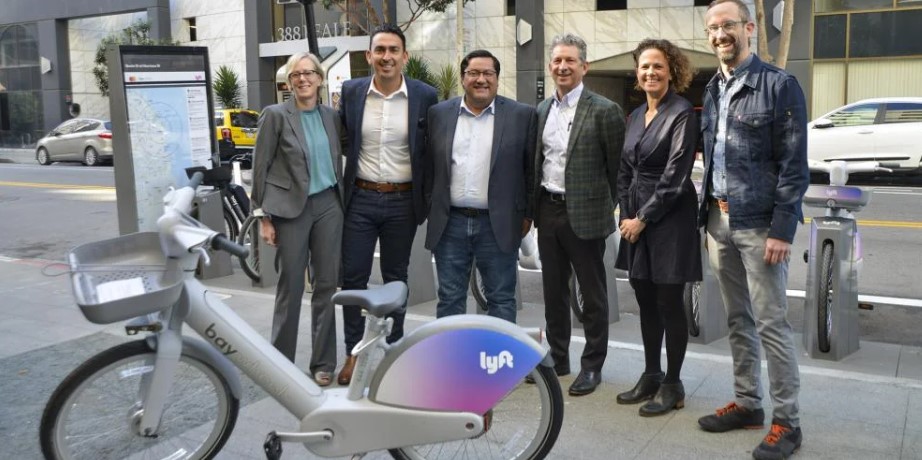
Photo by Joey Kotfica

Lower prices, thousands more e-bikes and 55 mew stations

By John Goodwin & Laura Krull, Metropolitan Transportation Commission

The Metropolitan Transportation Commission (MTC) and Lyft announced on Friday, Nov. 3, 2023, a drop in both annual membership prices for the Bay Area’s Bay Wheels regional bikeshare program and members’ e-bike usage fees, as well as the addition of more than 2,000 next generation e-bikes to the Bay Wheels fleet and the rollout of 55 additional docking stations in San Francisco, San Jose, Oakland, Berkeley and Emeryville. These measures are aimed at improving Bay Wheels’ long-term sustainability by growing ridership and reducing operational costs.

Beginning today, the cost of an annual Bay Wheels membership will drop to $150 from $169 and the cost for members to use a Bay Wheels e-bike will drop to 15 cents per minute from 20 cents per minute. In addition, monthly members will now automatically transition to an annual membership at no additional cost when they renew for five consecutive months. MTC next year will launch a pilot program to provide reduced-cost annual memberships for Bay Area college students.

“Bikesharing, and e-bikes in particular, play a central role in our Plan Bay Area 2050 strategy for reducing greenhouse gas emissions,” explained MTC Chair and Napa County Supervisor Alfredo Pedroza. “The Commission this year committed $20 million of federal climate investment money to promote the use of e-bikes for more of the short trips Bay Area residents make each day. These improvements to the Bay Wheels system are a big part of that commitment.”

The expansion of Bay Wheels’ e-bike fleet will begin this week in San Jose and San Francisco, with the addition of e-bikes to Bay Wheels locations in Oakland, Berkeley and Emeryville expected to begin in the coming months, pending local approval. E-bikes’ ability to climb hills, travel longer distances, and attract riders of varying physical abilities have made them a transformational mobility option for Bay Area residents and visitors alike.

“E-bikes are perfect for San Francisco — they make our steep hills flat. We’re grateful to MTC and Lyft for helping make e-bikes more accessible to more people,” said Jeff Tumlin, SFMTA Director of Transportation.

Bay Wheels’ existing e-bikes are used three times as often as classic pedal bikes. The system’s new generation e-bikes have double the battery life, a more powerful motor for going uphill, improved stability and ergonomics, and better theft deterrents. These new bikes will exclusively dock in stations to improve predictability and availability for riders.

“I’m thrilled that Lyft and MTC are helping San Jose expand access to alternative modes of transportation in our growing downtown,” said Mayor Matt Mahan. “E-bikes are a fun and affordable way to get around the city and they have the wonderful benefit of reducing traffic congestion and carbon emissions.”

“We are ready and eager to help make MTC’s plan a reality to strengthen Bay Wheels and benefit the regional transportation network,” said Caroline Samponaro, Vice President of Transit and Micromobility Public Policy at Lyft. “Our shared goal is get more people to choose bikes for their transportation needs and we’re taking action on the three things that will make the greatest impact: lower prices for members, new hill-climbing e-bikes and a more robust station network.”

To enhance the growth of Bay Wheels’ e-bike fleet, MTC and Lyft are piloting grid-connected charging stations using Lyft’s next generation station technology. Electrified stations improve e-bike availability for riders by increasing the number of bikes with sufficient battery charge and making operations more efficient. E-bike batteries currently are charged in a warehouse and manually swapped at the station.

MTC is the transportation planning, financing and coordinating agency for the nine-county San Francisco Bay Area. Launched in 2017, Bay Wheels is the Bay Area’s regional bikeshare program with over 6,000 bicyles  —  both pedal-powered and pedal-assist electrict bikes — at more than 500 stations in San Jose, San Francisco, Oakland, Berkeley and Emeryville. Lyft operates the Bay Wheels program under a contract managed by MTC.


Filed Under: Bay Area, News, Transportation

  • « Previous Page
  • 1
  • …
  • 4
  • 5
  • 6
  • 7
  • 8
  • …
  • 11
  • Next Page »
Furniture-Clearance-02-26B
Liberty-Tax-Jan-Apr-2026
Deer-Valley-Chiro-06-22

Copyright © 2026 · Contra Costa Herald · Site by Clifton Creative Web