• Home
  • About The Herald
  • Local Agencies
  • Daily Email Update
  • Legal Notices
  • Classified Ads

Contra Costa Herald

News Of By and For The People of Contra Costa County, California

  • Arts & Entertainment
  • Business
  • Community
  • Crime
  • Dining
  • Education
  • Faith
  • Health
  • News
  • Politics & Elections
  • Real Estate

New name. Same game: labeled Delta Conveyance Project the bypass tunnel diverting water south continues forward – Part 1 of 2

July 10, 2020 By Publisher 4 Comments

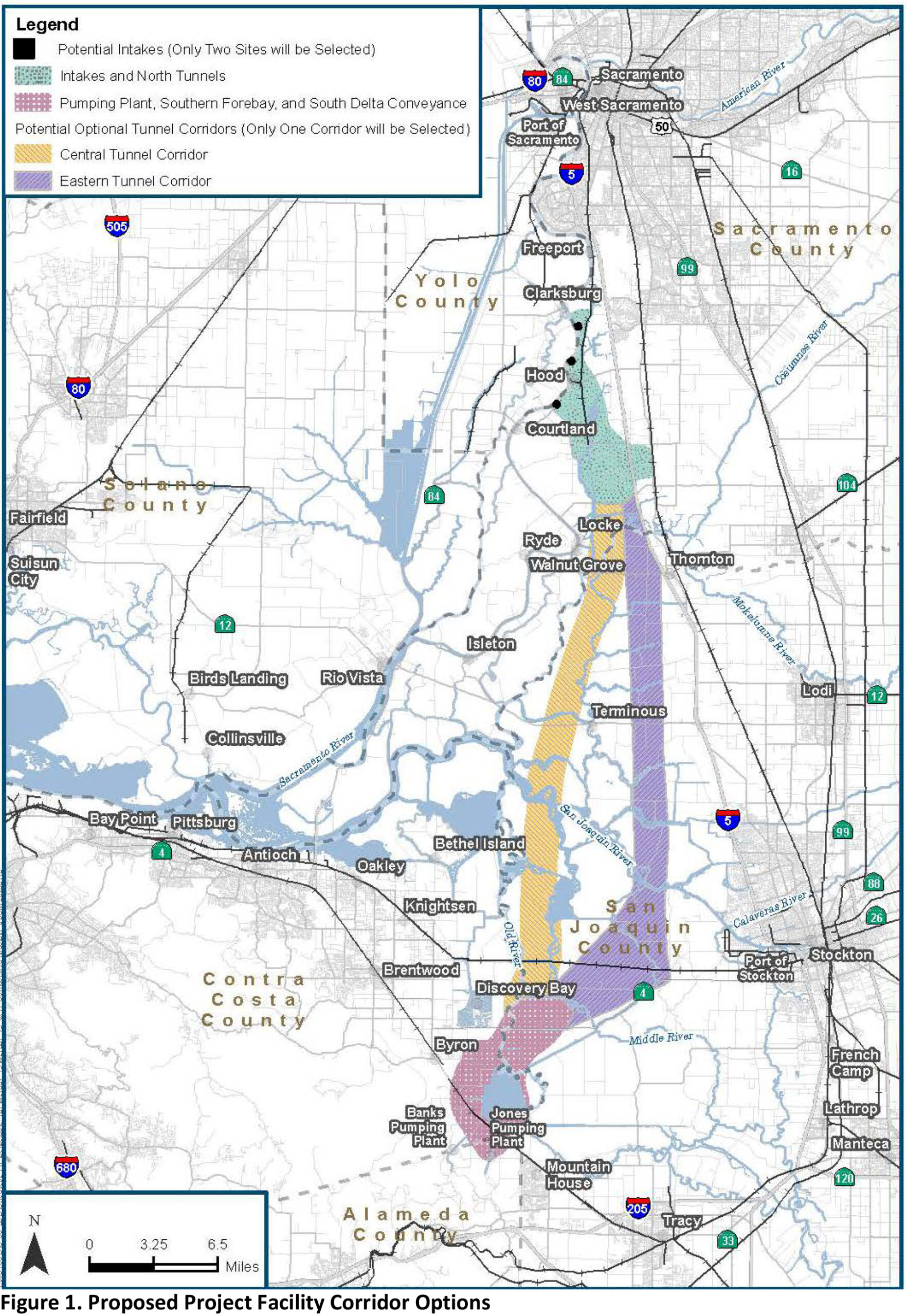
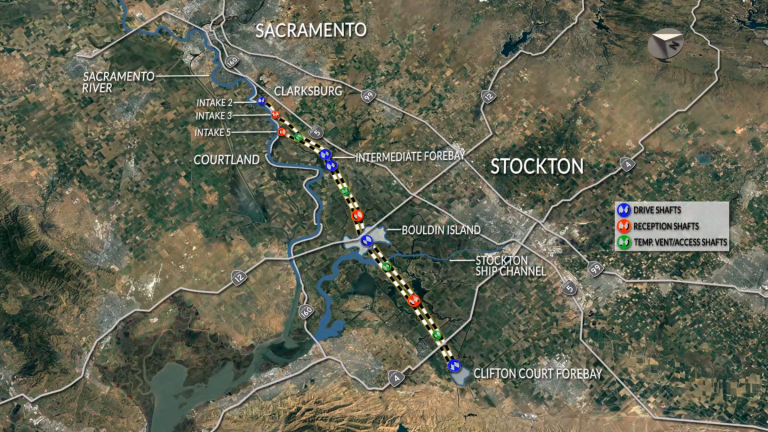
Proposed Delta Conveyance Project Facility Corridor Options. From Scoping Summary Report.

This week’s DCP Environmental Planning Update includes:

  • Adoption of a Mitigated Negative Declaration and Approval of Soil Collection Activities
  • Announcement of Federal Environmental Review

Delta Conveyance Project Scoping Summary Report Now Available

By Allen Payton

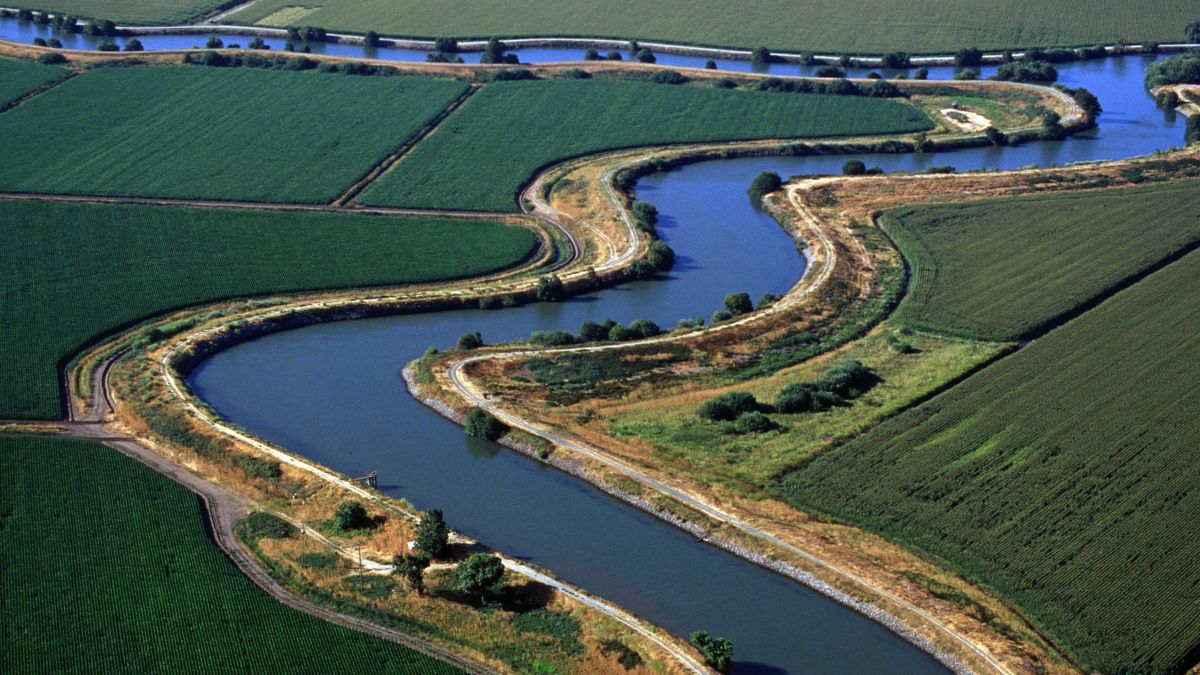
Photo by Department of Water Resources.

What was planned as two tunnels beneath the California Delta to divert fresh water from north of the Delta to areas south, is now a single tunnel plan that is referred to as the Delta Conveyance Project (DCP). The state previously referred to the two tunnel project as the WaterFix.

Although the state Department of Water Resources (DWR) rescinded all approvals of the WaterFix twin tunnel project last year, the Delta Conveyance Design and Construction Authority continues engineering and geotechnical work on the single tunnel project under DWR’s supervision.

On May 2, 2019 the DWR announced it was taking formal steps to withdraw proposed permits for the WaterFix project and began a renewed environmental review and planning process for a smaller, single tunnel project that will protect a critical source of water supplies for California. Those actions implement Governor Gavin Newsom’s direction earlier in 2019, to modernize the state’s water delivery infrastructure by pursuing a smaller, single tunnel project through the Sacramento-San Joaquin Delta. The project will be designed to protect water supply reliability while limiting impacts on local Delta communities and fish. The actions also follow the governor’s executive order directing state agencies to develop a comprehensive statewide strategy to build a climate-resilient water system.

The purpose of the new DCP is “to develop new diversion and conveyance facilities in the Delta necessary to restore and protect the reliability of State Water Project (SWP) deliveries and, potentially, Central Valley Project (CVP) water deliveries south of the Delta, consistent with the State’s Water Resilience Portfolio [WRP].”

California Natural Resources Secretary Wade Crowfoot described it as “A smaller project, coordinated with a wide variety of actions to strengthen existing levee protections, protect Delta water quality, recharge depleted groundwater reserves, and strengthen local water supplies across the state” that “will build California’s water supply resilience.”

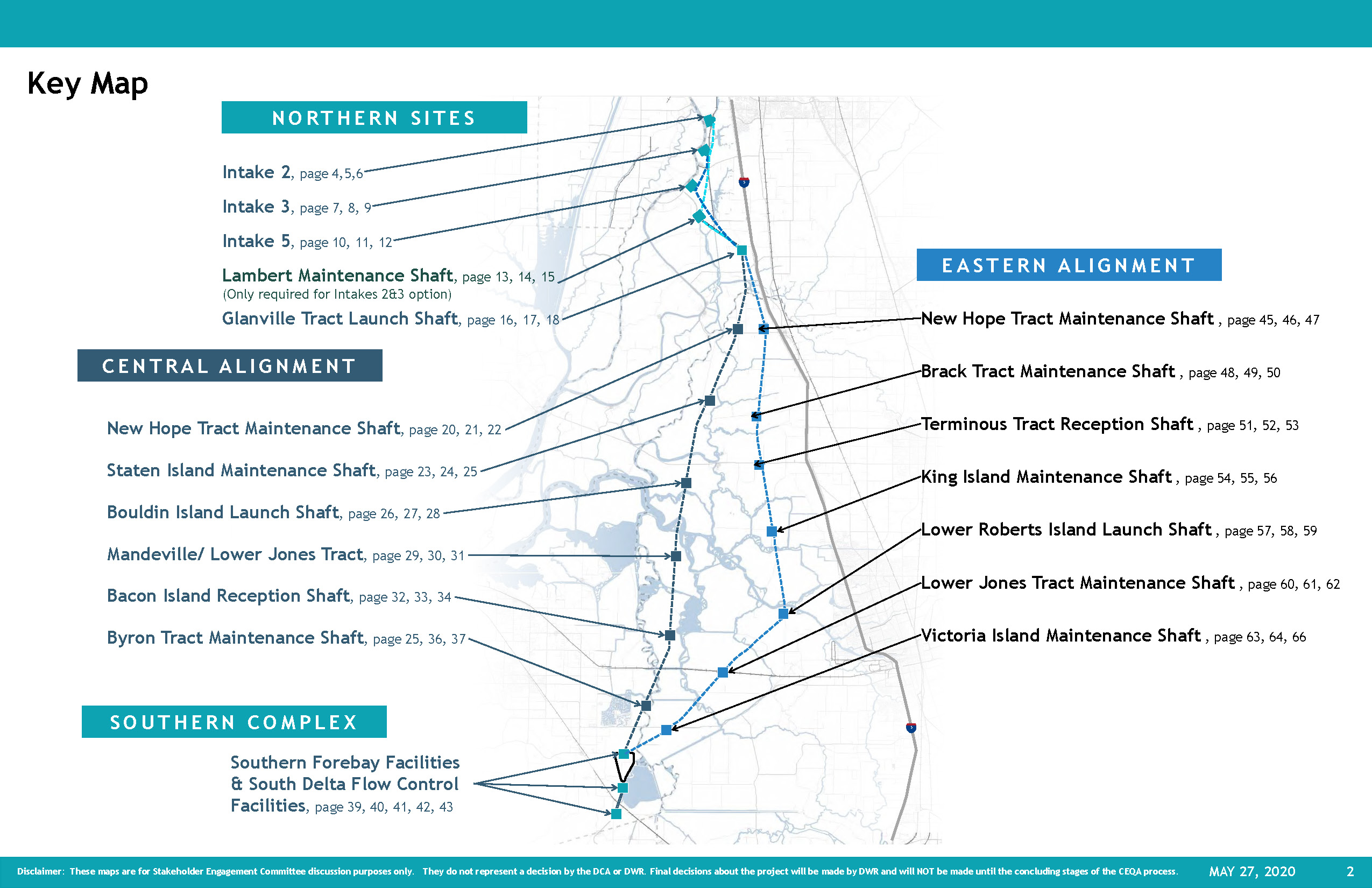
Map of intake, maintenance shaft and facility locations for the two alternative routes. From DCA 2020-05-27-UpdatedMapBooks

No Participation by Contra Costa County or Water Agencies

So, the effort to move fresh Delta water south, continues. But none of the water agencies in Contra Costa County are part of the DCA. They all either oppose or have chosen to remain neutral on the proposed tunnel in the face of almost complete opposition by county residents.

Instead, Contra Costa County is part of the five-member Delta Counties Coalition, along with Sacramento, San Joaquin, Solano and Yolo Counties all opposing the tunnel project.

However, there are four county residents who are members of the DCA’s Stakeholder Engagement Committee. Learn more about them, their opposition to the project and what they’re doing to limit and ensure the project mitigates any impact on county residents and businesses in Part 2 of this report.

The DCA participating state water contractors include the following agencies:

  • Alameda County Water District (At Large)
  • Alameda County Flood Control and Water Conservation District, Zone 7 (At Large)
  • Antelope Valley-East Kern Water Agency (At Large)
  • Coachella Valley Water District (At Large)
  • Metropolitan Water District of  Southern California (2 Permanent Seats)
  • Mojave Water Agency (At Large)
  • San Bernardino Valley Municipal Water District (At Large)
  • San Gorgonio Pass Water Agency (At Large)
  • Santa Clara Valley Water District (Permanent Seat)

DCA officers serve two-year terms. The SWC At Large Director and Alternate Director represent all participating State Water Contractors without a permanent Board seat. Directors and Alternate Directors are determined by the participating State Water Contractors. In addition, the Joint Powers Agreement allocates a Board seat to Kern County Water Agency. This seat is currently unfilled as Kern County Water Agency has not joined the DCA

$11 Billion Price Tag Could Quadruple

According to Barbara Barrigan-Parrilla, Executive Director of Restore the Delta, “the $11 billion figure quoted for construction of the Delta Conveyance Project is dated and incomplete. The $11 billion figure is in 2018 dollars. In 2018, Metropolitan Water District claimed inflation for construction should be calculated at 5% interest annually. That puts the project over $12 billion today without all the mitigation measures discussed by the Design Construction Authority in stakeholder meetings with Delta community members. These externalized mitigation costs will be absorbed by taxpayers.

Before bond interest, and with externalized mitigation costs, inflation roughly would put construction costs closer to $20 billion. Bond interest generally speaking would double the cost to $40 billion. And if the state is going to make Delta communities whole and leave the Delta ‘better off’ than it is presently, additional billions of dollars would need to be spent.”

Latest Updates & Reports

This week, the DWR issued an update and scoping report on environmental planning for the single tunnel project.

DWR Adopts Mitigated Negative Declaration and Approves Soil Collection Activities

On, Thursday, July 9, 2020, consistent with the requirements of the California Environmental Quality Act (CEQA), the Department of Water Resources (DWR) adopted the Final Initial Study/Mitigated Negative Declaration (IS/MND) for soil investigations in the Sacramento-San Joaquin Delta (Delta). As part of the CEQA process, DWR also formally approved the action and adopted a Mitigation Monitoring and Reporting Plan (MMRP). Soil investigations will include data collection, soil samples and surveys in support of DWR’s efforts to better understand the region’s geology to support the future evaluation of potential activities, including the proposed Delta Conveyance Project. As identified in the Final IS/MND, any potential significant impact will be avoided or otherwise mitigated with implementation of mitigation adopted as part of the project approval process. To access a copy of the Notice of Determination and Final IS/MND, which includes responses to comments and the adopted MMRP, visit the Delta Conveyance Environmental Planning page on DWR’s website.

U.S. Army Corps of Engineers to Prepare an Environmental Impact Statement Under the National Environmental Policy Act

The U.S. Army Corps of Engineers (USACE) has informed DWR that it will conduct federal environmental review of the proposed Delta Conveyance Project. USACE, which has regulatory authority over certain actions within specifically defined waters in the United States, will prepare an Environmental Impact Statement (EIS) under the National Environmental Policy Act (NEPA). Later this summer, USACE will issue a Notice of Intent officially announcing the start of preparation of the EIS. USACE’s letter to DWR can be found here.

The tunnel shaft will be drilled 150 feet below ground. From DCA SEC 2019-12-11-Delta Conveyance System Overview

Delta Conveyance Project Scoping Summary Report Now Available

The Department of Water Resources (DWR) has published a Scoping Summary Report for the proposed Delta Conveyance Project. This scoping report is a summary of the public scoping period that concluded in April. It includes all public comments received. The information collected during scoping will help inform the ongoing environmental analysis.
The scoping report includes: project overview, the purpose of scoping, a description of scoping activities, meetings, and notifications; a summary of public comments received and copies of all public comments received, including public scoping meeting transcripts.

The purpose of scoping is for DWR to gather feedback from the public and agencies on what to consider when preparing the proposed Delta Conveyance Project Environmental Impact Report. Specifically, DWR was seeking input on the range of project alternatives and potential environmental impacts to study further.

DWR will continue environmental review and analysis of the proposed Delta Conveyance Project, which is intended to maintain reliability of the state’s water system in the decades to come. For more information about the status of the environmental planning work, click here.

Upcoming Meetings

The next meeting of the Delta Conveyance Design & Construction Authority (DCA) Board of Directors will be held next Thursday, July 16 at 5:30 p.m. in the Tsakopoulos Library Galleria, 828 I Street in Sacramento (map). For details on watching and participating in the meeting online, click here.

Ways to Stay Informed

To stay informed of plans and progress on the Delta Conveyance Project visit https://water.ca.gov/Programs/State-Water-Project/Delta-Conveyance; Twitter @CA_DWR; email DeltaConveyance@water.ca.gov; or call the Project Hotline at 866.924.9955.

Filed Under: East County, Environment, News, The Delta, Water

State withdraws twin tunnel WaterFix approvals, initiates planning, permitting for smaller single tunnel

May 2, 2019 By Publisher Leave a Comment

Photo: CA Dep’t of Water Resources.

SACRAMENTO – The Department of Water Resources (DWR) today is taking formal steps to withdraw proposed permits for the WaterFix project and begin a renewed environmental review and planning process for a smaller, single tunnel project that will protect a critical source of water supplies for California.

Today’s actions implement Governor Gavin Newsom’s direction earlier this year to modernize the state’s water delivery infrastructure by pursuing a smaller, single tunnel project through the Sacramento-San Joaquin Delta. The project is needed to protect water supplies from sea-level rise and saltwater intrusion into the Delta, as well as earthquake risk. It will be designed to protect water supply reliability while limiting impacts on local Delta communities and fish.

This action follows the Governor’s recent executive order directing state agencies to develop a comprehensive statewide strategy to build a climate-resilient water system.

“A smaller project, coordinated with a wide variety of actions to strengthen existing levee protections, protect Delta water quality, recharge depleted groundwater reserves, and strengthen local water supplies across the state, will build California’s water supply resilience,” said Natural Resources Secretary Wade Crowfoot.

DWR Director Karla Nemeth took action today to rescind various permitting applications for the WaterFix project, including those in front of the State Water Resources Control Board, California Department of Fish and Wildlife, and federal agencies responsible for compliance with the Endangered Species Act. Documents related to these actions are available here.

DWR will work with local public water agencies that are partners in the conveyance project to incorporate the latest science and innovation to design the new conveyance project, and work with Delta communities and other stakeholders to limit local impacts of the project.

Assemblymember Jim Frazier (D-Discovery Bay), co-chair of the California Delta Legislative Caucus, issued the following statement today after the state Department of Water Resources officially withdrew its permit application to build the twin tunnels.

“It’s very encouraging that after all these years we are finally being heard by the Governor’s Office. The withdrawal of the permit application acknowledges that alternative solutions have been either overlooked or ignored. I look forward to working with the Governor and Secretary Crowfoot to build a comprehensive water plan that is a benefit for all Californians.”

Filed Under: East County, Environment, News, The Delta, Water

Frazier supports Gov. Newsom’s announcements on high speed rail, Delta Tunnels

February 13, 2019 By Publisher Leave a Comment

Assemblyman Jim Frazier

SACRAMENTO – Assemblymember Jim Frazier (D-Discovery Bay), chairman of the Assembly Transportation Committee, released the following statements on Tuesday after California Gov. Gavin Newsom delivered his first State of the State Address before a joint session of the Legislature.

“Governor Newsom inherited a high-speed rail project that is a mess. He showed he is ready to step up and take the reins as a leader, recognizing there needs to be wholesale changes. I appreciate his realistic and common-sense approach to this project.

The governor also has a soft spot in his heart for the intellectually and developmentally disabled and recognizes that we need to step up our game to better support the special needs community.”

The governor also announced he will appoint a new member to the California High-Speed Rail Authority Board of Directors, with the expectation the new appointee will become chair. Frazier responded with the following statement:

“I applaud the decision to appoint Lenny Mendonca to the High-Speed Rail Authority Board with the governor’s intention that Mendonca become chairman. An investigation by State Auditor Elaine Howle revealed a pattern of repeated failures at the Authority, under the direction of current Chairman Dan Richard, with hundreds of millions in cost overruns and a lack of honesty and transparency. That is just one reason I have been advocating for a change in leadership. I have high hopes for Mr. Mendonca to lead the High-Speed Rail Authority to complete the scaled down project the governor outlined in his State of the State Address today. A change of leadership at the HSRA was long overdue.”

Regarding Newsom’s announcement on scaling back the twin Delta tunnels to a single tunnel project, Frazier, whose district encompasses a large portion of the Delta, issued the following statement:

“I’m grateful Governor Newsom has been willing to listen to local stakeholders in the battle for the future of the Delta. His unequivocal denunciation of the twin tunnels project is a step in the right direction. I look forward to working with the governor to convince him there are alternative water delivery solutions that are economical and can be delivered in a timely manner, nullifying the need for even a single tunnel.”

Assemblymember Frazier represents the 11th Assembly District, which includes the communities of Antioch, Bethel Island, Birds Landing, Brentwood, Byron, Collinsville, Discovery Bay, Fairfield, Isleton, Knightsen, Locke, Oakley, Pittsburg (partial), Rio Vista, Suisun City, Travis AFB, Vacaville and Walnut Grove.

Filed Under: Government, News, The Delta, Transportation, Water

Bill introduced to grant Contra Costa Water District ownership of canal system

June 11, 2018 By Publisher 1 Comment

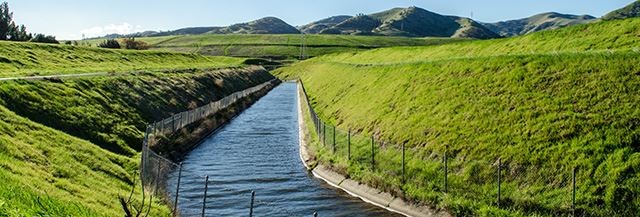
Contra Costa Water District canal. Photo from CCWatercom.

Title transfer would advance modernization of the 81-year-old facility

This week, Senator Dianne Feinstein, Senator Kamala Harris and Congressman Mark DeSaulnier introduced legislation to transfer federal ownership of the Contra Costa Canal System to Contra Costa Water District (CCWD), taking an important step toward modernizing the aging water supply aqueduct.  CCWD is pleased to strongly support the introduction of this legislation.

The canal system serves as the primary water delivery system for 500,000 people in central and eastern Contra Costa County. It was first constructed in 1937 as part of the U.S. Bureau of Reclamation’s Central Valley Project.

The canal system includes the 48-mile Contra Costa Canal, the Shortcut Pipeline, two reservoirs, and other related facilities. Under the companion bills, CCWD receives ownership of assets it has operated since 1972 and has 100% paid off (principal plus interest) since 2010. Ownership of the canal system on the local level means CCWD can more efficiently operate and maintain the system and will reduce federal administrative burdens and associated costs.

In addition, CCWD would be more secure in investing millions of dollars to modernize the aging canal.  CCWD is studying options to modernize the main canal that stretches from Rock Slough Intake near Oakley to Concord. “For those investments to be made,” said CCWD Board President Lisa Borba, “CCWD is awaiting ownership of the canal system.”

Because the canal system is currently owned by the federal government, title transfer requires an act of Congress. This canal system is an ideal unit for title transfer because, its single beneficiary, CCWD, has paid for the facilities and will continue to operate for the benefit of customers currently served.

“The canal system has reliably served the people and businesses of our community for 80 years,” President Borba said. “We appreciate the leadership from Senator Feinstein, Senator Harris and Congressman DeSaulnier to help us gain ownership of a system we can modernize to serve our customers for the next century.”

The canal system also includes recreational trails, Contra Loma and other facilities that will be maintained for recreation with the transfer. This action has gained support from local recreation managers, including East Bay Regional Park District and the cities of Walnut Creek and Antioch.

To learn more about studies to modernize the Contra Costa Canal System, visit www.ccwater.com/688.

Filed Under: Legislation, News, Water

Frazier not happy So Cal water district voted to fund Delta twin tunnels plan

April 11, 2018 By Publisher Leave a Comment

California WaterFix Delta bypass twin tunnels route map. From californiawaterfix.com.

SACRAMENTO – Assemblymember Jim Frazier (D-Discovery Bay) issued the following statement today after the Metropolitan Water District of Southern California’s Board of Directors voted to finance the majority of the proposed Delta twin tunnels plan, known as the California WaterFix:

“Californians deserve comprehensive 21st century water management solutions in light of climate change and more frequent and devastating droughts, not a decades old plan that creates no benefit and picks the pockets of hard-working people.

The vote by the Metropolitan Water District of Southern California shows that proponents of this project have been deceitful the whole time. There’s never been a “statewide” approach as they’ve claimed. It’s never been about sustainability but a foolhardy plan to overdraw the Delta to sell a limited and precious natural resource to the highest bidder.

This boondoggle uses antiquated methods for water delivery to degrade the water quality for all Californians and places greater burdens farmers in the Delta and Central Valley.

Just like the Colorado River Compact, this project is built on false pretenses of water availability. Met has already proven they are bad actors by overcharging San Diego for water many times. Given this history, my concern is Met may try to overcharge Central Valley farmers too.”

A press release issued Tuesday explaining their action, it stated, the board of directors of the Metropolitan Water District of Southern California voted today to provide the additional financing necessary to allow for the construction of the full California WaterFix project.

The board authorized $10.8 billion for the project to modernize the state’s aging water delivery system, making Metropolitan the primary investor in the project and more than doubling the agency’s initially planned investment to ensure the project is completed as originally proposed and studied.  “For decades, we have sought a solution to the problems of the Bay Delta, problems that put Southern California’s water supply at risk,” Metropolitan board Chairman Randy Record said. “We finally have that solution, California WaterFix. We simply could not jeopardize the opportunity to move this long-sought and much-needed project forward.”

WaterFix will be paid for by the people and businesses that use the water it helps deliver via the retail water agencies and cities that serve those customers. Metropolitan’s financing of the full project is expected to cost households on average up to $4.80 a month, though that average cost would be reduced as Metropolitan recoups some of its investments from the agricultural sector. Metropolitan will be selling or leasing capacity in the tunnels to allow water deliveries or exchanges for other parties.

About 30 percent of the water that flows out of taps in Southern California comes from Northern California via the Sacramento-San Joaquin Delta. But the Delta’s delivery system is badly outdated, its ecosystem is in decline and its 1,100-mile levee system is increasingly vulnerable to earthquakes, flooding, saltwater intrusion, sea level rise and environmental degradation.

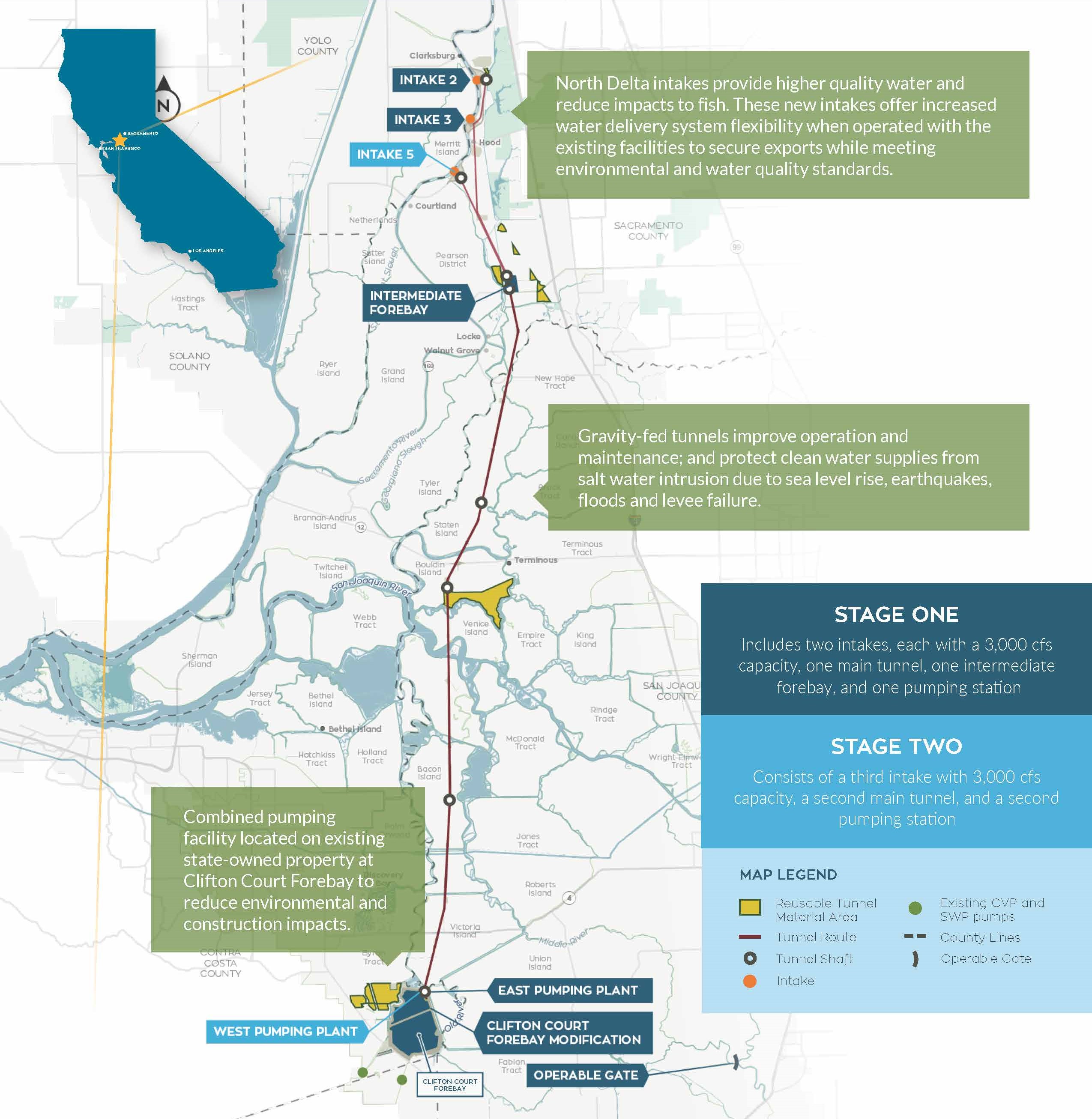
Attempts to help the Delta have led to regulatory restrictions that have reduced water exports from the region. California WaterFix would modernize the state’s water delivery system by building three new water intakes in the northern Delta and two tunnels to carry the water under the Delta to the existing aqueduct systems in the southern Delta that deliver water to cities and farms.

In October 2017, Metropolitan’s board initially voted to participate in WaterFix and contribute up to 26 percent of its $17 billion cost, or about $4.3 billion.  But the majority of federal agricultural contractors who also import supplies via the Delta have yet to commit to investing in the project, leaving part of the project’s costs unfunded. In February, the state proposed building the project in stages instead–starting with two intakes and one tunnel, with a capacity of 6,000 cubic feet per second. An additional intake and tunnel would be added when funding allowed.

In today’s action, Metropolitan’s board chose between supporting this staged construction of the project or helping finance the full 9,000 cfs project all at once, with the hope of recouping the investment from agricultural interests once the project is completed. Staging the project also would result in potential permitting delays associated with the change in approach.

Under the staged approach, the cost of building one tunnel would be about $11.1 billion, with Metropolitan’s share of those capital costs coming in at $5.2 billion. The board ultimately voted to support building the full project all at once at an estimated cost of $16.7 billion, with Metropolitan’s investment at about  $10.8 billion in today’s dollars.

“Two tunnels better accomplishes WaterFix’s co-equal goals of improving the environment and securing supply reliability,” said Metropolitan General Manager Jeffrey Kightlinger. “With them, we’re better able to capture the high flows of big storms that climate change is expected to bring. We’ll better address the reverse flows that disrupt the Delta’s ecology. And we’ll have more flexibility to operate the water delivery system.”

Kightlinger added that investing in WaterFix does not change Metropolitan’s commitment to local supply development and conservation.

“This investment is just one part of ensuring Southern California and its $1.3 trillion economy has a reliable water supply in the age of climate change,” he said. “We need a diverse portfolio, including water recycling, storm-water capture, and increased conservation. We will continue to work hard and invest in those projects.”

The Metropolitan Water District of Southern California is a state-established cooperative of 26 cities and water agencies serving nearly 19 million people in six counties. The district imports water from the Colorado River and Northern California to supplement local supplies, and helps its members to develop increased water conservation, recycling, storage and other resource-management programs.

Filed Under: East County, Environment, News, The Delta, Water

Antioch awarded $10 million from state for brackish water desalination plant, will help attract industry to city

March 16, 2018 By Publisher 1 Comment

One of only four California cities or water agencies to receive the highly competitive water quality grant

The City of Antioch has announced its award as only one of four California cities or water agencies to receive $10 million in state grant funding to establish a ground-breaking, first-of-its-kind, local brackish water desalination treatment facility. It will allow the City to generate its own clean, safe, quality water. Many prominent cities and water agencies competed for the highly-sought after grants from the State Department of Water Resources to fund drinking water production and other uses. Only Antioch, Santa Barbara, Camarillo and the South Coast Water District were awarded grants for construction of water treatment plants.

“Creating millions of gallons of clean, reliable, quality water will allow our community to protect our city residents and businesses from fluctuating water costs and water shortages in the long-term,” said Mayor Sean Wright.

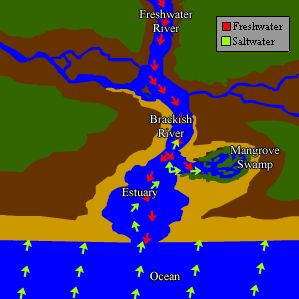
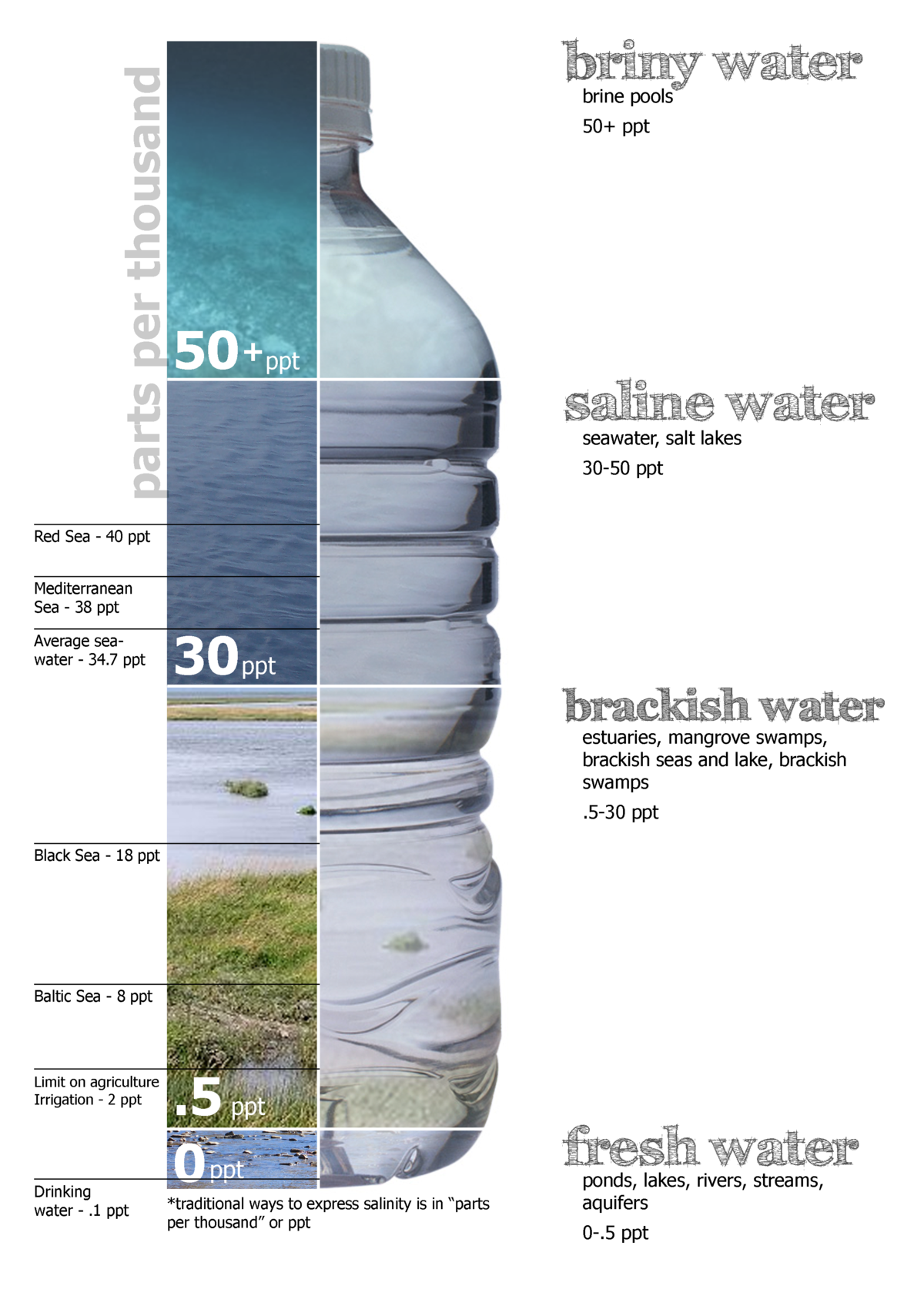
Brackish water is salt water and fresh water mixed together and found in estuaries. The grant will help defray the total estimated cost of $62 million for the brackish water plant for which the City will continue to pursue other grant funds that could be obtained as soon as this summer. (See related articles, here and here).

“Antioch is leading statewide innovation on these clean water quality and local water control issues,” said City Manager Ron Bernal. “With so many high-profile cities and water agencies competing for these grant awards, I couldn’t be more pleased that our city’s innovation, creativity and leadership was recognized by the awards panel – making our city successful in securing Antioch’s fair share of these state funds.”

The highly competitive state grant from Prop. 1 Water Bond funds, which the voters approved in 2014, will help establish a local, water desalination facility within the city’s current water treatment plant. It will turn salty river water into six million gallons per day of clean drinking water, using a safe, secure, reverse osmosis treatment system and positioning the City as a local and regional clean water provider and statewide innovator.

“Establishing Antioch’s own local water plan allows our city to treat and store our own water locally, expanding our ability to be self-reliant, keep water costs down, and attract industries that need a reliable local water supply,” Wright added.

The clean water that is needed by industry will help attract businesses to locate in the city. While seawater reverse osmosis has a conversion rate of 35 percent to 40 percent, the conversion rate of brackish water could be more than 90 percent, with only 10 percent returning to the river. That will help maximize the use of the City’s rights to river water of as much as 16 million gallons per day.

“This is a tremendous economic development engine which allows Antioch to competitively attract and retain all manner of businesses and industries who need a reliable local water supply,” said Bernal. “Antioch is one of the few communities in the state able to offer this benefit to our residents and business stakeholders.”

Filed Under: East County, News, Water

Frazier: One Delta tunnel is a deception

February 11, 2018 By Publisher Leave a Comment

California WaterFix (i.e. Delta Twin Tunnels) route. From californiawaterfix.com

SACRAMENTO – Assemblymember Jim Frazier, D-Discovery Bay, issued a statement on Thursday, after the Department of Water Resources (DWR) announced it is significantly altering the proposed WaterFix project to construct one larger tunnel first and build a second tunnel later.

Assemblyman Jim Frazier

On Wednesday, the DWR sent a memo to the local public water agencies participating in the development and construction of California WaterFix and issued the following statement from DWR Director Karla Nemeth.

“WaterFix is a long-overdue infrastructure upgrade that will maintain a reliable water supply for 25 million Californians while also protecting the Delta ecosystem. With the current stated support of the participating public water agencies, the state is proposing to pursue WaterFix as planned, but also explore an option to implement construction in stages. This prudent approach aligns the urgent statewide need for action with the project’s current support. We are eager to move forward with WaterFix to protect the Delta and water supplies.”

The memo further states “The option for a first stage includes two intakes…one tunnel, one intermediate forebay, and one pumping station.”

Frazier responded with the following statement:

“The Department of Water Resources is trying to sell its latest WaterFix revision as a one-tunnel plan, but that is smoke and mirrors,” Frazier stated. “Their plan still calls for two tunnels. The new plan still poses the same threat to the Delta’s environment, agricultural economy and way of life. There still is no cost-benefit analysis or economic justification for the project.  The project still does not create a single ounce of new water.

DWR has shape-shifted the size of the tunnels. This is now an entirely new project. The process must start over from the beginning, with an entirely new Environmental Impact Report.  The proposed new and even larger tunnel will have even greater ecological and economic impacts on the Delta.

DWR can’t just amend the EIR and biological opinions and pass it off as legitimate. The size and scope of a project this size demands a thorough process and the ability for the people of the Delta to voice their concerns.

DWR’s method for estimating the cost of its revised plan is also curious. Instead of doing a comprehensive cost analysis for the revised proposal, they gave us lazy math. They just took $16.3 billion cost estimate they have been using and chopped it into thirds.

When I was a construction contractor, I couldn’t just change my building plans without bringing it back for review. DWR and the Administration should not be exempt from process that all building projects are subject to in California, especially on one of the biggest infrastructure projects in the state’s history.”

Filed Under: East County, Environment, News, Opinion, The Delta, Water

Wildcat-San Pablo Creeks Levee Project celebration in Richmond Tues. Aug. 29

August 26, 2017 By Publisher 1 Comment

Kickoff event involves local youth in North Richmond

September marks the beginning of a significant flood control and water conservation project in North Richmond.  Last winter’s storms heightened the entire bay area’s awareness of the need for creek improvements and level projects, as we saw flooding in places we wouldn’t ordinarily expect it.  The Wildcat-San Pablo Creeks Levee Project will raise and improve the existing levee system in the area, reducing the risk of flooding and recertifying flood protection capability for the community.   Contra Costa County is leveraging grant funding to make these improvements.

On August 29th, County and community leaders and volunteers will be on hand at the Urban Tilth Farm near the project site preparing for the work.  The County Flood Control District is partnering with Urban Tilth, a local non-profit organization, to employ local youths to work on vegetation management for this project.  Additional benefits will include protecting and preserving natural creek resources with litter cleanup, the removal of nonnative invasive species, and job training for the local youth.

WHO: Contra Costa County Supervisor John Gioia, Office of Assemblymember Tony Thurmond, Deputy Public Works Director Mike Carlson, community partners and local youth

WHAT: Community Kickoff for the Wildcat-San Pablo Creeks Levee Project

WHEN: Tuesday, August 29, 2017 12:00 p.m. (staff onsite until 2:00 p.m.)

WHERE: Urban Tilth Farm, 323 Brookside Drive, Richmond

Filed Under: News, Supervisors, Water, West County

Los Vaqueros Reservoir expansion project seeks $400 million in state funding

August 16, 2017 By Publisher Leave a Comment

For Ecosystem Improvement and Emergency Response Benefits  

With $2.7 billion available in state funding available for water storage projects, Contra Costa Water District (CCWD) is working with partners to secure over $400 million to pay for public benefits of expanding the Los Vaqueros Reservoir.  State funding could help build storage and other facilities that would provide substantial ecosystem and water supply reliability benefits.

Los Vaqueros Reservoir, in Brentwood, is owned and operated by CCWD.  Efforts have been underway, with potential partners, to evaluate a Phase 2 expansion of Los Vaqueros from 160,000 acre-feet to 275,000 acre-feet. An expanded reservoir could provide varying levels of benefits for local partnering agencies, while maintaining all the existing benefits in which CCWD’s customers already invested.

“CCWD and its customers benefitted greatly from Los Vaqueros in the last drought and continuously benefit from the improved water quality the reservoir provides,” said CCWD Board President, Lisa Borba.  “The potential expansion of Los Vaqueros into a regional facility presents a significant opportunity for our customers, the environment and local agency partners.”

More storage capacity and additional pipes to move water directly to partners could bolster preparedness for droughts, increase water deliveries to wildlife refuges, and provide additional Delta ecosystem improvements.

Potential beneficiaries include local water agencies and Central Valley wildlife refuges.  While an expansion cannot meet every water service need for all agencies, it would give partners an additional tool to help deal with droughts and other challenges.  An expansion will depend on a combination of local, state and federal investments – state funding is one component.

State funding for water storage projects will be administered by the California Water Commission.  Only public benefits can qualify for the state funding approved by voters when Proposition 1 passed in 2014.  CCWD has submitted an application on behalf of the potential partners for $434 million to fund the public benefits of the $914 million expansion project (estimated in 2015 dollars).

The majority of the public benefits would come by way of reliable water supplies for wildlife refuges that provide critical habitat for migratory birds and many other species dependent on the last remaining wetlands in the Central Valley.  Additional public benefits include emergency response, fisheries protection, and recreation associated with an expanded reservoir.

The California Water Commission will be reviewing all applications for the Proposition 1 funding, with a preliminary eligibility and funding decision scheduled for June 2018.

For further information about the project and application, or to provide comments, please visit: www.ccwater.com/lvstudies.

Filed Under: East County, News, Water

Supervisors back state funding of Los Vaqueros Reservoir expansion

August 11, 2017 By Publisher 1 Comment

Los Vaqueros Reservoir. Photo by Aerial Photographer Dick Jones. Courtesy of CCWater.com

By Daniel Borsuk

The first shovel may not plunge into the ground for the expansion of the Los Vaqueros Reservoir until 2022, but the Contra Costa County Board of Supervisors have signed on to back state financing of the Contra Costa Water District’s reservoir project.

With District 2 Supervisor Candace Andersen and District 1 Supervisor John Gioia absent Tuesday, supervisors voted 3-0 as a consent item to send a letter of support for the reservoir to the California Water Commission to tap into 2014 voter approved $2.7 billion of state Proposition 1 funds so that the Contra Costa Water District can enlarge the reservoir’s capacity from 160,000-acre feet to 270,000-acre feet.

The Proposition 1 funding would pay 50 percent, or about $450 million of the estimated $900 million price tag with the CCWD and other participating water agencies and their customers picking up the construction price tag.

Although supervisors did not hear either opposition or support concerning their letter, the supervisors’ letter did acknowledge the reservoir project could present an environmental problem unless the CCWD takes action to address it.

Supervisors expect the CCWD to resolve an issue about a proposed alignment of the Transfer-Bethany Pipeline that could upset the environment to a portion of 13,000 acres to the East Contra Costa County Habitat Conservation Plan, a state funded part of the Natural Community Conservation Plan.  Contra Costa County and the cities of Brentwood, Clayton, Oakley and Pittsburg adopted the ECCC habitat conservation plan in 2007.

“Nothing has been decided on the pipeline’s alignment, “said CCWD Public Affairs Director Jennifer Allen. “We still have a lot of steps to go through including the pipeline alignment.”

“With this being a big rain year, I think this is a great thing to move forward on,” said Supervisor Diane Burgis of Brentwood, whose District 3 encompasses much of Los Vaqueros Reservoir.  “If we’re going to spend this kind of money, it’s better to build something that stores water during the rainy years.”

“This is an opportunity to invest against future droughts by adding to our water storage,” said board chair Federal Glover.

Supervisors Adopt New Cardroom License Ordinance

Supervisors also approved a cardroom ordinance that lays out a procedure to ensure that business operations are not interrupted following “an unforeseen event” including the death of the current licensee.

Under the new ordinance, the Sheriff’s Office is designated as the department responsible for licensing gambling establishments locally, is to be notified of the event within 10 days of the event occurrence and identify the appropriate party that should obtain a license. The successor party is required to obtain a license within 30 days of the event.

In Contra Costa County, the California Grand Casino at 5988 Pacheco Blvd. in Pacheco and the 19th Hole Casino and Lounge at 2746 W. Tregallas Road in Antioch are the only licensed cardrooms, according to the State Attorney General’s Office.

In other business, supervisors gave the green light for the Contra Costa County Office of the Sheriff to 21 Lehr Automated License Plate Readers for $225,000 for use in unincorporated Alamo to help curb property crimes.

Automated License Plate Readers

Installation of the Lehr ALPRs will begin at the end of August and should be completed in September, said Sheriff Lt. Jason Haynes of the Alamo Sheriff Office.  The ALPRs will be installed at seven intersections.

Sheriff David Livingston said while a review of crime statistics in the Alamo area does not show a significant increase in reported crime over the last several years, “there was an increase in property crime and residential burglaries specifically in the Contra Costa central 680 corridor.”

The county will not pick a dime on the acquisition of the ALRs because the funds are donated through three private sources.  One unnamed contributor donated $95,000.  Members of the Alamo Police Services Advisory Committee are providing $50,000 and P-6 Alamo-Las Trampas has contributed $80,500.

Alamo will join Danville, Orinda, Lafayette, Clayton and Pittsburg that have Lehr ALPRs installed on city street intersections, Lt. Haynes said.

Lt. Haynes said the license plate readers have proven to work effectively in solving especially property crimes.  He said the Sheriff’s Department has made 25 arrests in connection with Danville stolen vehicle heists over a 12-month period.

Filed Under: Central County, East County, News, Supervisors, Water

  • « Previous Page
  • 1
  • 2
  • 3
  • 4
  • 5
  • Next Page »
Monica's-Riverview-Jan-2026
Liberty-Tax-Jan-Apr-2026
Deer-Valley-Chiro-06-22

Copyright © 2026 · Contra Costa Herald · Site by Clifton Creative Web