• Home
  • About The Herald
  • Local Agencies
  • Daily Email Update
  • Legal Notices
  • Classified Ads

Contra Costa Herald

News Of By and For The People of Contra Costa County, California

  • Arts & Entertainment
  • Business
  • Community
  • Crime
  • Dining
  • Education
  • Faith
  • Health
  • News
  • Politics & Elections
  • Real Estate

Final Plan Bay Area 2040 and Environmental Impact Report approved by regional agencies

August 2, 2017 By Publisher Leave a Comment

Main focus is on transportation and land-use; also focuses on economic development

The Association of Bay Area Governments (ABAG) and the Metropolitan Transportation Commission (MTC), on Wednesday, July 26 adopted Plan Bay Area 2040 and its associated Environmental Impact Report (EIR). The nearly unanimous vote – with 41 of the 43 officials from the two bodies voting in the affirmative on the Plan and 39 for the EIR – caps a three-year process of plan development and intensive public outreach.

The second such regional housing and transportation plan adopted by MTC and ABAG, Plan Bay Area 2040 is a long-range blueprint to guide transportation investments and land-use decisions through 2040, while meeting the requirements of California’s landmark 2008 Senate Bill 375, which calls on each of the state’s 18 metropolitan areas to develop a Sustainable Communities Strategy to accommodate future population growth and reduce greenhouse gas emissions from cars and light trucks.

The Plan shines a spotlight on the region’s housing crisis – in terms of housing availability and affordability – and calls on citizens to join with business, government, academia and the non-profit sector to solve it. The Bay Area must “pursue a multi-pronged strategy that emphasizes the construction of new homes for residents of all incomes, the protection of the region’s most vulnerable households, and the need to advocate for more financial resources to pursue local and regional solutions,” the Plan notes.

The Plan points to two recent developments that will improve the region’s ability to address its chronic housing and affordability challenges. The recent integration of MTC’s and ABAG’s staff into a unified team will lead to more effective long-range planning and strengthen the region’s housing policy resources. And the newly created CASA initiative – the blue-ribbon Committee to House the Bay Area – is bringing together diverse interests to develop a bold new strategy for housing production and preservation.

The Action Plan portion of Plan Bay Area 2040 also focuses on economic development, particularly improving transportation access to jobs, increasing middle-wage job creation and maintaining the region’s infrastructure. Another focus of the Action element is resilience in terms of enhancing climate protection and adaptation efforts, strengthening open space protections, creating healthy and safe communities, and protecting communities against natural hazards.

Leaders of ABAG and MTC applauded the Plan’s adoption.

“The ABAG Executive Board’s and MTC’s passage of Plan Bay Area 2040 recognizes the changes that have occurred to our region’s cities and counties and adjusts the actions we need to take to meet our shared challenges,” commented ABAG President and Clayton Councilmember Julie Pierce.  “This successful second round of Plan Bay Area also highlights the good work that the agencies have done together in conjunction with the cities and counties.”

“The updated Plan charts a smart course by identifying the strategic investments and policy directions necessary to keep the Bay Area economy growing while maintaining a high quality of life,” stated MTC Chair and Rohnert Park Mayor Jake Mackenzie.

The draft Plan and approved revisions can be viewed at 2040.planbayarea.org/reports. The final report integrating the comments will be available in the coming weeks at the same location. MTC is the transportation planning, financing and coordinating agency for the nine-county San Francisco Bay Area. ABAG is the council of governments and official regional planning agency for the 101 cities and towns, and nine counties of the Bay Area.

Filed Under: Environment, Government, Growth & Development, News, Transportation

Traffic detour on Balfour Road in Brentwood beginning Monday, July 31

July 27, 2017 By Publisher Leave a Comment

Phase I of the Balfour Road Shoulder Widening Project is underway. Phase I includes widening the pavement for wider lane and shoulders from Byron Highway to Bixler Road. Eastbound traffic will be detoured via local streets. Westbound traffic will stay on Balfour Road.

The detour will be in effect from Monday July 31st through mid-September. Drivers can expect traffic delays due to construction. The contractor will start Phase II after Phase I work is completed. The project is funded by the Discovery Bay West Traffic Mitigation funds.

For project updates visit the Public Works website at: http://www.cccounty.us/pwdmap.

Filed Under: East County, News, Transportation

Marsh Creek Road repair work during daytime, Mon.-Fri. from July 10-20

July 8, 2017 By Publisher Leave a Comment

Expect delays

Contra Costa County Public Works Department will perform work on Marsh Creek Road from Deer Valley Road to the Clayton City limits from July 10 through July 20, 2017. The work will occur Monday through Friday between the hours of 8:30 a.m. and 4:00 p.m. to shape slopes and shoulders along the road edge where mudslides occurred during the winter storms.

The work may be rescheduled based on weather conditions. Electronic message boards will alert drivers of the scheduled work. There will be traffic control through the work area and drivers can expect delays of 10-15 minutes.

Filed Under: East County, News, Transportation

Public meetings and input sought for Plan Bay Area 2040

July 8, 2017 By Publisher Leave a Comment

Regional Transportation Plan/Sustainable Communities Strategy Final Environmental Impact Report

The Final Environmental Impact Report (Final EIR) (SCH# 2016052041) for Plan Bay Area (PBA) 2040, the Regional Transportation Plan (RTP)/Sustainable Communities Strategy (SCS) (proposed Plan) for the San Francisco Bay Area is available for review as of July 10, 2017. Additional information and notice of public meetings is provided below.

The proposed Plan is a regional strategy for accommodating household and employment growth projected to occur in the Bay Area region through 2040, and a transportation strategy for the region based on expected revenues. The primary objective of the proposed Plan is to achieve mandated reductions of greenhouse (GHG) emissions and to provide adequate housing for the projected 2040 regional population level pursuant to The Sustainable Communities and Climate Protection Act of 2008 (Senate Bill (SB) 375, Statutes of 2008). The proposed Plan sets forth a transportation and land use blueprint for how the Bay Area can address transportation mobility and accessibility needs, regional housing responsibilities, economic conditions and forecasts, environmental concerns, and GHG emissions reduction requirements through the year 2040.

The region includes nine counties (Alameda, Contra Costa, Marin, Napa, San Francisco, San Mateo, Santa Clara, Solano and Sonoma) totaling approximately 4.4 million acres (7,000 square miles). In 2015, the region had 4.01 million jobs, 2.76 million households, and 7.57 million people. The proposed Plan would accommodate projected growth for an additional 688,000 jobs, 666,000 households, and 2.06 million people by 2040 with a transportation investment strategy of $303 billion. MTC is required under State and Federal law to update the RTP/SCS every four years.

The Final EIR includes the Draft EIR, a copy of each comment on the Draft EIR received by MTC/ABAG during the public comment period, responses to comments on environmental issues raised in those comments, and corrections and clarifications to the Draft EIR.

The Final EIR is now available for public review online at the web link listed below or a free electronic copy may be obtained by contacting MTC at the contact information provided below.

http://2040.planbayarea.org/reports

MTC Public Information
375 Beale Street, Suite 800
San Francisco, CA, 94105
415.778.6757 office / 415.536.9800 fax
eircomments@mtc.ca.gov

The document will also be available for public review in at least one library in each of the nine member counties. A list of library locations is available at the website listed below:

http://www.planbayarea.org/2040-plan/access-plan

MTC/ABAG will be conducting two public meetings to consider certification of the Final EIR and adoption of the proposed Plan. All interested agencies, organizations, and individuals are welcome to participate in these public meetings for the Final EIR. Oral comments will be accepted during these meetings.

July 14, 2017       

Joint MTC Planning Committee with the ABAG Administrative Committee (9:30 a.m.) at the Bay Area Metro Center – Board Room, First Floor, 375 Beale Street, San Francisco, CA 94105. At this meeting, the decision-makers will make a recommendation to the MTC Commission/ABAG Executive Board regarding certification of the Final EIR and adoption of the proposed Plan.

July 26, 2017       

MTC Commission/ABAG Executive Board (7:00 p.m.) at the Bay Area Metro Center – Board Room, First Floor, 375 Beale Street, San Francisco, CA 94105. At this meeting, a final action will be taken regarding certification of the Final EIR and adoption of the proposed Plan.

The following statement is required to be included in this notice: Pursuant to CEQA Guidelines Section 15087(c)(6), the nine county Bay Area region contains hazardous waste sites as enumerated under California Government Code Section 65962.5.

Do you need an interpreter or any other assistance in order to participate? Please call us at 415.778.6757. We require three days’ notice in order to provide reasonable accommodation.

為了便於參加,您需要口譯員或其他任何協助嗎?請致電415.778.6757聯絡我們。我們需要提前3天通知才能提供合理的輔助服務。

¿Necesitas un intérprete o cualquier otra asistencia para participar? Comunícate al 415.778.6757. Necesitamos aviso con tres días de anticipación para proporcionar asistencia razonable.

Filed Under: Government, Growth & Development, News, Transportation

County to begin repairs to Alhambra Valley Road washout, June 12th

June 9, 2017 By Publisher Leave a Comment

Contra Costa County Public Works Director awarded a contract to Flatiron West, Inc. to repair the section of Alhambra Valley Road near Castro Ranch Road and Pinole Valley Road intersection that was washed out during the 2017 winter storms. The work will start on June 12 and is anticipated to be completed by the end of September. The work includes installation of a 60-foot long bridge that will have shoulders for bicycles and pedestrians.

The new bridge over Pinole Creek replaces the 1930’s era 9-foot steel pipe culvert and will allow for unimpeded fish passage, specifically steelhead, in consultation with the National Marine Fisheries Service.

For project updates visit the Public Works website at: http://www.cccounty.us/pwdmap.

Filed Under: News, Transportation, West County

Morgan Territory Road culvert repair, June 14-16

June 9, 2017 By Publisher Leave a Comment

Culvert work on Morgan Territory Road is scheduled for June 14th through June 16th between 9:00 a.m. and 4:00 p.m. The work will occur approximately 8 miles south of the Morgan Territory Road temporary signal. Drivers can expect 30 minute delays and are encouraged to use an alternate route during this time. Signage will be placed in advance of the culvert work to alert drivers of the work and anticipated delays.

Filed Under: Central County, East County, News, Transportation

BART Board backs Brentwood Transit Center

June 2, 2017 By Publisher Leave a Comment

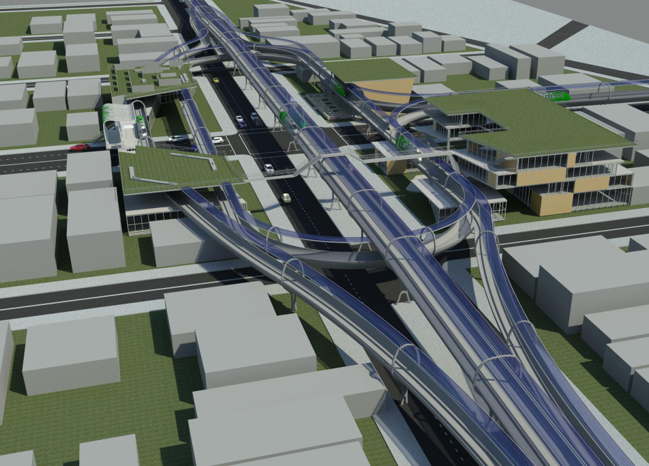
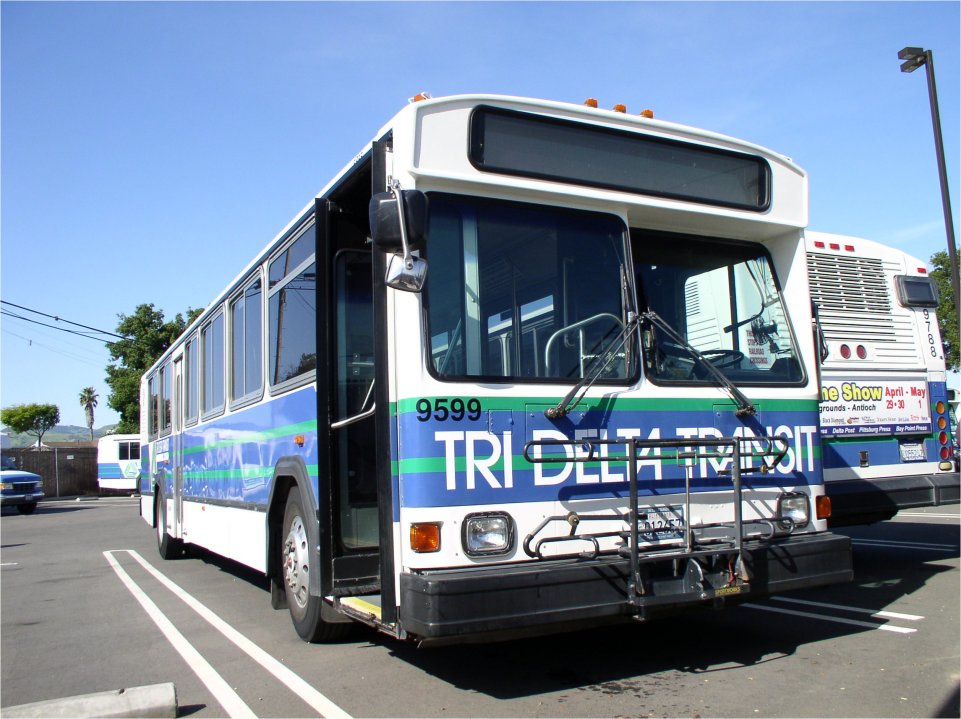
The BART Board of Directors, at their May 11th meeting, approved a resolution of support for the proposed Brentwood Transit Center and Mokelumne Trail Bridge.  If built, the transit center could initially be served by Tri Delta Transit buses and could eventually become a station for a future eBART extension.

“This resolution from the BART Board is an important step in showing the strong regional support for building the Brentwood Transit Center,” said BART Director Joel Keller.  “The transit center would remove approximately 1,000 cars from Highway 4 for more than four miles past the Antioch eBART Station by providing parking for customers taking Tri Delta Transit to BART.”

The resolution calls on BART to work with the city of Brentwood, Tri Delta Transit and the Contra Costa Transportation Authority to explore the idea of the Brentwood Transit Center.  This would include working with Brentwood on the Specific Plan being initiated now.

The decision by the BART Board comes after the Brentwood City Council in March voted unanimously to explore building a transit center near the intersection of the Mokelumne Multi-use Trail and State Highway 4.  The Brentwood City Council is also supporting the construction of a pedestrian and bicycle bridge over Highway 4 to improve access to the site.

In 2014, BART conducted a next segment study to look at possible stops for a future eBART extension.  Six locations were studied and it was determined that the site near Highway 4 and the Mokelumne Trail was the preferred terminus of a future eBART extension beyond Antioch.  The transit center proposal is also on the list of projects for Plan Bay Area 2040 with partial funding.

The BART Board’s support for the transit center comes as construction is underway on the eBART line into eastern Contra Costa County.  That 10-mile extension will run from the Pittsburg/Bay Point Station in the median of Highway 4 and includes stops at the new Pittsburg Center Station and the Antioch Station near Hillcrest Avenue.  The eBART project will use independently propelled railcars known as Diesel Multiple Units (DMUs) that will operate on standard gauge rail.

It is anticipated that eBART service will launch in May of 2018.

Filed Under: BART, East County, News, Transportation

Antioch Council joins Oakley, Brentwood, Richmond and San Pablo in endorsing cheaper, innovative rail lines

April 13, 2017 By Publisher 2 Comments

Rendering of a proposed CyberTran transit station. Courtesy CyberTran International, Inc.

By Dave Roberts

The Antioch City Council on Tuesday joined the city councils in Oakley and Brentwood in endorsing an innovative rail transit system that could extend the East County eBART line through far East County at significantly less cost.

The ultra-light rail transit (ULRT) system by a private company, CyberTran International (whose investors include a company partially owned by Contra Costa Herald publisher Allen Payton), is seeking funding to demonstrate the viability of the system on a track in Richmond, and then to roll out the above ground line possibly in East County connecting the Hillcrest eBART Station to stations in Oakley, Brentwood, Discovery Bay and the Byron Airport.

The eBART line now under construction from the Bay Point BART Station with stations at Railroad Avenue in Pittsburg and Hillcrest in Antioch costs $56 million per mile, CyberTran President Dexter Vizinau told the council. His ULRT system would cost about $30 million per mile and have the advantages of providing more stations, perhaps at shopping centers, and provide cars that would go nonstop from any station along the line.

“The problem is that [traditional] transit is too costly to build, operate and maintain,” Vizinau said. “There is a $78 billion backlog in transit maintenance in the country. The only way to pay is to raise taxes. Something has to change and it has to be innovative. We believe we solve that problem.”

Vizinau cited the support of U.C. Berkeley, and the three national labs, in the development of the CyberTran system. He also held up a letter from the U.S. Department of Transportation stating the system was further along technologically than any other innovative transit system in the country.

Mayor Sean Wright noted that few Antioch residents are likely to use the system. “It doesn’t affect Antioch – we’re done and through,” he said. But it does have the potential of reducing traffic from far East County residents on Highway 4 through Antioch, which pleased Council Member Lori Ogorchock. “Anything to reduce traffic and congestion,” she said.

Vizinau said his company has been working on the project for 23 years and is ready to break ground. The main challenge is finding the funding. A 10-mile ULRT line from Hillcrest Station to Brentwood would cost about $300 million.

The company was set to receive $42.9 million from the county’s Measure X half-cent sales tax hike that fell three percentage points short of passing in November, he said. Another tax-hike attempt could be made in two years, he said.

The council unanimously voted to support the project and the company’s efforts to obtain funding, which was a bit of déjà vu as the Antioch Council passed a similar resolution of support seven years ago for the project. That effort was successful in obtaining $15 million in federal funds for innovative transit in the U.S. But, President Obama failed to release the funds before he left office in January, Vizinau said.

The Oakley City Council unanimously approved a similar resolution at their meeting on February 14, and the Brentwood Council did the same at their March 14th meeting. Previously, the Richmond and San Pablo City Councils approved similar resolutions for a CyberTran system in West County, as well.

(Note: The publisher of the Herald has a financial interest in CyberTran International, Inc.)

Filed Under: East County, News, Technology, Transportation

Sen. Glazer explains vote against transportation bill, gas tax hike

April 7, 2017 By Publisher 1 Comment

Cites failure to ensure reliable transit & ineffective use of funds

Senator Steve Glazer (D-Orinda) who represents most of Contra Costa County in the California State Senate, issued the following statement today, regarding his vote against SB-1, the transportation funding bill which included a 12 cents per gallon gas tax increase, as well as increases to the Vehicle License Fee. He was the only Democrat in the Senate and only one of two in the entire legislature to vote no.

“I want to thank Senate President Pro Tem Kevin de León, Sen. Jim Beall and Gov. Jerry Brown for their hard work in addressing the problem of crumbling roads and aging transportation systems.

My constituents are particularly dependent on good roads and highways and reliable transit systems, so I agree we need additional transportation investments.

But this transportation package did not have the support of my district, for good reasons. Even after a multi-million dollar lobbying effort supporting the $52 billion bill, sentiment in my district ran two-to-one opposing these new gas taxes and car registration fees.

My constituents have told me loud and clear that they want any new taxes to be spent more wisely and effectively. For instance, it doesn’t make sense to spend billions of dollars on an unpopular High Speed Rail system that backers claim might be completed by 2029 when it could go for transportation improvements today.

Beyond the issues of setting better spending priorities and taxes, I also believed this bill could have been improved. We need to be more forward thinking, where we recognize the role technology can play in allowing us to use our roads and highways more efficiently.

And we need a plan that provides commuters with the confidence and assurance that reliable transit will be there for them every day of the year.

This bill also failed to ensure that any new transportation funding given to local transportation agencies be used only for the purposes intended and not diverted to other uses.

I was also concerned about last-minute amendments to this bill that the environmental community and air quality regulators say will unwisely limit our ability to control diesel pollution from trucks. These changes have never been fully vetted and deserve more scrutiny.

I look forward to continued discussions with the governor in which we take into account the need to modernize our approach to transportation in an efficient and reliable manner.”

The bill passed both the State Senate and Assembly and awaits the signature of Governor Brown. To learn more about the bill, click here.

Filed Under: Legislation, News, Taxes, Transportation

County issues $100 million in bonds; Morgan Territory Road repairs to cost at least $2 million

March 9, 2017 By Publisher Leave a Comment

Supervisors to hear ban on juvenile hall residential fees

By Daniel Borsuk

Contra Costa County has closed a $99,810,000 lease revenue bond transaction as a result of an innovative agreement with Wells Fargo Bank.  The transaction closed on Friday, March 3.

Some $9.7 million will fund capital improvement projects within the county’s health services department, including its hospital and clinic system.  The remaining $90.1 million will be used to refinance existing county bond debt at historically low interest rates.  Ultimately, the county and Wells Fargo negotiated a 10-year term at an interest rate of 2.33%.  This will save taxpayers more than $9.1 million in today’s dollars.

“The county’s ‘AAA’ bond rating through Standard and Poor’s has allowed us to take full advantage of the low interest rate environment and maximize cost savings for our taxpayers,” board chair Federal Glover said.  “Ultimately, this means more tax dollars are available to provide services to our residents.”

“Through the strong leadership of the board of supervisors and assistance of our employees, the county has been able to emerge from the Great Recession on a sound financial footing,” County Administrator David Twa said. “The willingness of Wells Fargo to purchase close to $100 million of our bonds at such a favorable interest rate is evidence of that.”

Contra Costa County is rated “AAA” by Standard and Poor’s and “Aa2” by Moody’s Investor Service. Both credit rating agencies have attributed their high ratings for Contra Costa County to very strong financial management, with policies and practices well-embedded in county operations.  They have also pointed to a strong local economy with a large, diverse tax base.”

Morgan Territory Road Repair Resolution

The County Public Works Department received its marching orders from the Board of Supervisors on Tuesday, when they passed a resolution calling for the “expeditious” repair and reopening of storm-damaged Morgan Territory Road.

The board voted 4-0 in adopting the resolution introduced by Supervisor Diane Burgis of Brentwood.  Supervisor Candace Anderson of Danville was absent.

County Public Works Directors Julia Bueren told the Contra Costa Herald preliminary repair costs for Morgan Territory Road that was destroyed by rain-soaked landslides during late January’s torrential rainstorms, could cost $2 million to $2.6 million in state emergency funds.

“Even that is a preliminary estimate,” Bueren said.  “This is a large and complex slide.”

The February torrential rainstorms damaged the road when the hillside slid onto the thoroughfare, causing mounds of dirt 100 high and 300 feet wide.

The massive landslides also caused the disruption of water and PG&E service to residents living in the area.

Supervisors recognized Ruben Aguilar (left) and Michael Stevens (right) for their 56 years of combined service with the county Public Works Department. Photo by Daniel Borsuk

Bueren said the county is studying three alternate routes for up to 1,000 residents living in the area of the damaged roadway.  “This is of the highest priority,” she added.

Supervisor Burgis said Morgan Territory Road is subject to additional destruction.

“There is a hillside that is still moving,” she said.

Board Vice Chair Karen Mitchoff of Pleasant Hill noted Morgan Territory Road residents are still living under difficult conditions.

“The Contra Costa Water District couldn’t get water there for seven days so they began to provide bottled water,” she said.

Glover credited the various county departments, including the Sheriff’s Department, Public Works, Contra Costa Fire, and San Ramon Fire that worked together during the Morgan Territory Road disaster.

“The county was doing what it does best, acting as a team,” he added. Also at the meeting, the Supervisors recognized Ruben Aguilar and Michael Stevens for their 56 years of combines service with the Public Works Department. Aguilar has 36 years with the department and Stevens has 20 years of service. Both men responded to the initial closure of Morgan Territory Road when it was damaged in the storm in late January.

Ban Proposed on Juvenile Hall Residential Fees

A Contra Costa County Board of Supervisors committee voted on Monday to recommend to the full board that a permanent moratorium be imposed on charging residential fees for incarcerated juveniles.

Citing financial hardships on parents of youths held as wards of the county at either the Orin Allen Youth Rehabilitation Facility in Oakley and Juvenile Hall in Martinez, the Public Safety Committee directed the Probation Department and County Administrator to bring before the full board by May a resolution to stop the practice of charging fees to juvenile residents.

The Probation Department first began assessing the fee in 2003 at a rate of $17.03 per day per minor until 2010 when the state permitted counties to increase the fee to $30 a day.  The state passed legislation so counties could assess fees in order to recover costs for the actual cost of care of a minor in detention at a juvenile hall facility.

But the increasing fees made it difficult for the county to recoup costs from parents or guardians of juveniles held in county facilities.  The Probation Department has $16.9 million in accounts receivable outstanding through June 30, 2016, David Twa, County Administrator noted in a report presented to the committee.  He attributed $8.55 million to Juvenile Fees and $8.34 million to Public Defender fees.

If the full board adopts the committee’s recommendation to make the moratorium permanent, the county will join Alameda, San Francisco, Santa Cruz, Santa Barbara, Los Angeles, and Kern counties that do not assess juvenile hall fees.

“These fees cause great economic burden on families of juveniles incarcerated in our facilities,” Supervisor John Gioia of Richmond said.

“At some time we had to put an end to collecting these fees,” said Glover, the committee chairman.

Information in Twa’s report revealed flaws in the way the county assessed the juvenile hall fees.  There are cases where an undisclosed number of families are due refunds because of being overcharged as far back as 2011.

“Families were improperly assessed and billed,” said Rebecca Brown, president of the nonprofit organization Further The Work.  Brown said the financial impact of these juvenile hall housing fees charged leave have a big financial impact on the families of youths incarcerated in county juvenile hall facilities.

“Earlier efforts to remedy these financial problems were impossible to accomplish,” she said.

Filed Under: Crime, News, Supervisors, Transportation, Youth

  • « Previous Page
  • 1
  • …
  • 26
  • 27
  • 28
  • 29
  • 30
  • …
  • 33
  • Next Page »
Antioch July 4th 2026 Sponsors (1)
RepublicServices-Antioch-ad (1)
Furn-Clrnc-Outlet-06-26B web
Monica's dinner 05-26 CCH
Celia's-07-26
Delta-RC-B 07-26
Deer-Valley-Chiro-06-22

Copyright © 2026 · · Contra Costa Herald · All Rights Reserved