• Home
  • About The Herald
  • Local Agencies
  • Daily Email Update
  • Legal Notices
  • Classified Ads

Contra Costa Herald

News Of By and For The People of Contra Costa County, California

  • Arts & Entertainment
  • Business
  • Community
  • Crime
  • Dining
  • Education
  • Faith
  • Health
  • News
  • Politics & Elections
  • Real Estate

Contra Costa County Public Works to begin construction on San Pablo Dam Road May 27

May 20, 2020 By Publisher Leave a Comment

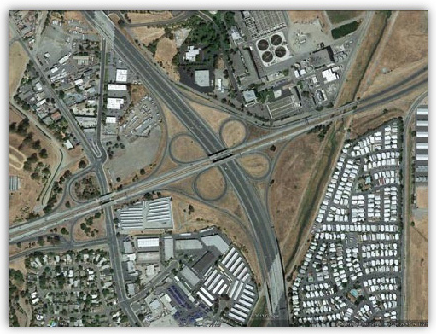
Map by CCC Public Works.

By Kelly Kalfsbeek, Public Information Officer, CCC Public Works 

El Sobrante, CA – The Contra Costa County Public Works Department will begin construction of the San Pablo Dam Road Traffic Safety Improvements project between the city limits of Richmond and city limits of Orinda. Construction will start Wednesday, May 27, 2020 through July 31, 2020, 8:00 am to 4:00 pm, Monday-Friday, barring unforeseen circumstances. Drivers can expect traffic delays up to 30 minutes.

The project will consist of installing a centerline rumble strip and channelizers, reconstructing median islands, replacing roadside signs to meet new retro-reflectivity standards, installation of speed feedback signs, partial slurry seal, removal and replacement of thermoplastic stripes and pavement markings, and restriping of a bike lane at two intersections of San Pablo Dam Road and Old San Pablo Dam Road. Current shelter-in-place and social distancing protocol will be followed.

Funding for this project is gas tax revenues provided by the SB1 Road Repair and Accountability Act and the Highway Safety Improvement Program funds. More information for this project can be found at http://www.cccounty.us/pwdmap.

Filed Under: News, Transportation, West County

Face coverings now required on BART

April 22, 2020 By Publisher Leave a Comment

County health orders in Contra Costa, Alameda, San Francisco, and San Mateo now require all riders to wear face coverings inside BART stations and on-board trains.  The orders also require BART to take reasonable measures to remind the public that they need facing coverings and “must take all reasonable steps to prohibit any member of the public who is not wearing a face covering from entering and must not serve that person if those efforts are unsuccessful and seek to remove that person.” Failure to comply with the emergency health order is a misdemeanor.  Enforcement begins on Wednesday, April 22.

Prior to the order, most BART riders were already wearing face coverings while riding. BART will take the following steps to be compliant with the new orders:

Public Communication

  • Signs with pictograms and translations will be posted in all stations.
  • PA announcements will be made inside stations and on-board trains.
  • Platform digital signs will rotate a message.
  • Website and social media posts will be made.

BART Police Deployment and Enforcement Strategies 

BART Police Chief Ed Alvarez recently shifted deployment to focus police resources to the entrances of stations and near the faregates. This strategy was put into place to improve safety for our employees and riders and to prevent illegal behavior from occurring.  Continuing this deployment will help BART enforce the new orders.

BART Police will be responsible for reminding riders of the new requirement.  Consistent with BART’s current operating procedures, Station Agents will not be used to enforce the new public health emergency orders as they are not trained law enforcement personnel.
BART Police will give verbal reminders of the requirement to riders without face coverings when police encounter someone not covering their mouth and nose.  Police personnel will remind the rider they have the option to use any material to cover their face. Only upon refusal to cover their face with any material will an officer ask the person to leave the system.

Riders should not confront others without a face covering.  If someone isn’t wearing a face covering, riders should move away from the individual.

CDC recommends wearing cloth face coverings that can be fashioned from household items or made at home from common materials.  The cloth face coverings recommended are not surgical masks or N-95 respirators.  Those are critical supplies that must continue to be reserved for healthcare workers and other medical first responders, as recommended by current CDC guidance.

Filed Under: BART, Health, News, Transportation

Congestion pricing tolls suspended at Bay Bridge

April 22, 2020 By Publisher Leave a Comment

Bay Bridge Toll Plaza from MTC website. By Noah-Berger

$6 Tolls At All Times Until Toll Plaza Congestion Returns

SAN FRANCISCO, April 22, 2020 . . . In light of the steep drop in vehicle traffic across the Bay Area’s seven state-owned toll bridges due to state and local shelter-in-place mandates during the ongoing COVID-19 health emergency, the Bay Area Toll Authority (BATA) today voted to suspend weekday congestion pricing — also known as time-of-day pricing — at the Bay Bridge toll plaza. Effective at midnight tonight, tolls for regular two-axle vehicles on each of the state-owned toll bridges will be standardized at $6 on all days and at all times.

Congestion pricing originally was implemented at the Bay Bridge in 2010. Currently, weekday Bay Bridge tolls are set at $5 from midnight to 5 a.m., from 10 a.m. to 3 p.m., and from 7 p.m. to midnight; and rise to $7 during the traditional peak hours of 5 a.m. to 10 a.m. and from 3 p.m. to 7 p.m. The current $6 toll rate at the Bay Bridge on Saturdays and Sundays will remain unchanged, as will the $3 toll rate for three-person carpools and qualifying clean-air vehicles.

The volume of weekday traffic across the Bay Bridge and the six other state-owned toll bridges has fallen about 50 percent below 2019 levels since the Bay Area’s shelter-in-place order went into effect on March 17, while weekend traffic has stabilized at about 65 percent below last year’s levels.

Caltrans and BATA encourage all toll bridge customers who do not already have FasTrak accounts to open accounts online at www.bayareafastrak.org or by phone at 1-877-229-8655 (BAY-TOLL). Customers who may be leaving their homes to buy food or medicine at a Costco or Walgreens store may obtain a FasTrak toll tag at these stores and then activate their new accounts online. A map of retail locations at which FasTrak toll tags are available may be found at https://www.bayareafastrak.org/en/howitworks/retailmap.html.

BATA administers all toll revenues from the region’s seven state-owned toll bridges. In addition to the San Francisco-Oakland Bay Bridge, these include the Antioch, Benicia-Martinez, Carquinez, Dumbarton, Richmond-San Rafael and San Mateo-Hayward bridges. Caltrans owns and operates the state highway system, including the seven Bay Area toll bridges.

Filed Under: News, Transportation

BART to run every 30 minutes Monday-Friday starting Wednesday April 8

April 6, 2020 By Publisher Leave a Comment

Ridership down 93% – “Ridership is now at 7% of what is usual” – General Manager Bob Powers

As the Bay Area counties have now extended mandatory shelter in place orders, BART service needs to be reduced to match demand, increase essential rebuilding projects, save costs, and maintain reliable service based on staffing levels. Starting Wednesday, April 8, Monday-Friday service will run every 30 minutes until further notice.  Ridership data shows social distancing remains possible on all trains with this change.  Effectively, every other train is being cancelled Monday-Friday.

Reducing service also allows greater flexibility to maintain stable service should BART employees need to take time off due to illness or to care for children and family members.

This move will potentially save the operating budget $3-7 million per month. The savings is realized by shifting employees to capital improvement projects that are not funded by the operating budget. BART is using this time of historically low ridership to focus on essential infrastructure projects that typically are very disruptive to riders or can only be accomplished during overnight hours. These rebuilding efforts have been designated as essential public works projects per the region’s public health orders issued in response to the coronavirus.

3-line service will start earlier in the evening

Starting Wednesday, BART will move up the time the Warm Springs-Daly City (Green) and Richmond-Millbrae (Red) lines that provide direct service to/from San Francisco end and 3-line service begins.  This will allow for a longer work window for power cable replacement in San Francisco.  The last two train dispatches in both directions on these lines will be cancelled and single tracking in San Francisco will begin around 8pm.

  • The last Warm Springs-Daly City (Green) line train departs Warm Springs at 5:16pm and arrives at Daly City at 6:26pm.  It then departs Daly City at 6:43pm and arrives at Warm Springs at 7:54pm.
  • The last Richmond-Millbrae (Red) line train departs Richmond at 5:41pm and arrives at Millbrae 6:51pm. It then departs at Millbrae at 7:18pm and arrives at Richmond at 8:24pm.

There is only one hole in the new 30-minute schedule.  It is on the Red line departing from Millbrae at 6:18pm. To avoid this gap, customers should board the SFO shuttle from Millbrae at 6pm and connect with the Antioch line train at SFO at 6:26pm and then transfer at MacArthur at 7:10pm to the Richmond train.

Plan your trip to avoid waiting

PDFs of the new schedule will be available on bart.gov tomorrow (Tuesday). Riders can use the PDF schedule to start planning their trips and what time they should arrive at the station to avoid a long wait.  Riders can also check real time departures before heading to the station.   Staff is updating the online Trip Planner to reflect the new service plan and to show every other train as cancelled.
For personalized trip planning assistance, call the Transit Information Center at 510-465-2278 from 8am-6pm, Monday-Friday.

“Ridership is now at 7% of what is usual, and these changes allow us to increase essential rebuilding projects while also ensuring we can provide reliable and predictable service,” said BART General Manager Bob Powers. “With so many unknowns about the length of the shelter in place orders and the timing of recovery, we must take steps to protect the operating budget while also protecting our ability to run service every 30 minutes.”

A change in the BART schedule can only be implemented by doubling headways (train frequency) because the service plan is tied to operational patterns such as timed transfers and train operator reporting times and locations.  This is the reason why we can’t go to 20 or 24 minute headways Monday-Friday.

Weekend service unchanged

Weekend service will remain unchanged.  The decision to not change weekend service at this time is to avoid doubling weekend headways. Reducing service on the weekend would mean Saturday service would need to go to 40-minute headways and Sunday service would go to 48-minute headways. At this time, that level of service reduction is not something BART is ready to implement but may need to do so in the future if circumstances change.

Shifting workers to rebuilding projects

Running fewer trains means crews can be redeployed to other projects.  Maintenance and Engineering staff can now increase the hours of cable replacement in San Francisco and begin work on cable replacement in the East Bay and crews can perform relighting work in the Caldecott BART Tunnel. Train car mechanics can now be put into Fleet of the Future training.
This plan calls for up to 400 employees to be shifted to capital projects. However, this number can change if employees are pulled off a project to prioritize passenger service if staffing levels reduce.
Early FY21 budget estimates show a bleak scenario of possible budget shortfalls of $258 million to $452 million.  The federal stimulus funds will help bridge some of the gap, but it is not expected to fill all of it moving forward.

Summary of temporary service cuts to date

  • Extra commute trains on the Antioch-SFO (yellow) line were eliminated on Thursday March 19.
  • Monday-Friday service is 5am-9pm (previously 5am-Midnight) began on Monday, March 23.
  • Saturday-Sunday service is 8am-9pm (previously Saturday service started at 6am) began on Saturday, March 28.
  • Starting Wednesday, April 8, Monday-Friday service will run every 30 minutes systemwide all day, with 3-line service beginning earlier in the evening and single tracking in San Francisco starting at around 8pm.


Filed Under: BART, News, Transportation

Amtrak San Joaquins COVID-19 service adjustments

March 24, 2020 By Publisher Leave a Comment

(STOCKTON, Calif.) – March 23, 2020 – The San Joaquins Joint Powers Authority (SJJPA) and Amtrak are working closely with local, state, and federal public health agencies to monitor the Coronavirus (COVID-19) situation closely. Following severe travel restrictions along the corridor, Amtrak San Joaquins is reducing service due to the drop in ridership and revenue, while also maintaining appropriate social distancing abilities aboard the trains.

As of March 23, Amtrak San Joaquins ridership is down approximately 70%. To help contain costs and continue to operate essential transportation services for our riders, SJJPA and Amtrak will be making the following operational adjustments, beginning Thursday, March 26, 2020:

  • Train Service Suspensions: Due to reduced demand, Amtrak San Joaquins trains 701, 702, 703, 704, 714, and 717 will be suspended. We’ve reduced trains with lowest ridership to mitigate the effects on riders still needing to utilize service for essential travel. The suspensions eliminate all direct train service to Lodi and Sacramento. Lodi and Sacramento will continue to be served by Thruway Busses to/from all operating trains.
  • Suspension of Café Car Service: To eliminate risks from food handling and reduce unnecessary onboard passenger movement, Café Car Service will be suspended. Emergency snack packs and water will be distributed to riders free of charge. SJJPA and Amtrak encourage passengers to prepare ahead of time to bring their own food and drinks.
  • Closure of Stations: To focus resources on essential transportation functions, the following station lobbies will be closed: Hanford (HNF), Fresno (FNO), Merced (MCD), Modesto (MOD), and Martinez (MTZ). Note: Trains will stop at all closed stations. Bakersfield (BFD), Stockton (SKN), Sacramento (SAC), Emeryville (EMY), and Oakland (OKJ) will operate with reduced staff and hours. Tickets can still be purchased via amtraksanjoaquins.com, Amtrak Mobile App, 1-800-USA-RAIL, and onboard from the conductor with cash.
  • Reduction in Thruway Bus Service: Amtrak San Joaquins will be suspending all connecting Thruway Bus services to trains that are being suspended. Additionally, Thruway routes with multiple round-trips that are currently underutilized due to the reduction in ridership will be reduced. A summary of continuing bus services can be found below.

The safety of Amtrak San Joaquins’ passengers and employees is our top priority. We continue to monitor the COVID-19 situation closely, and we are taking action based on guidance from public health experts; that includes restoring service to trains and routes once demand returns. To reduce risk during this operational period, we are:

  • Enhancing cleaning protocols: We have increased the frequency of cleaning services on our trains and at our stations.
  • Increasing disinfectant supplies: We have increased the quantity of sanitizers and disinfectant wipes available for riders and employees on our trains and at our stations.
  • Reinforcing good hygiene practices: We are regularly sharing best practices with employees and customers on ways to protect against communicable diseases.

Get accurate information about Coronavirus and prevention at https://www.cdc.gov/coronavirus/2019-ncov/about/index.html

Summary of Thruway Bus Service:

  • RT 1 – Bakersfield – Los Angeles – Long Beach/San Pedro – West Los Angeles – Summary as Follows:
    • 1 Round-Trip between Bakersfield and San-Diego via Los Angeles
    • 3 Round-Trips between Bakersfield and Los Angeles
    • 1 Round-Trip between Fresno and Los Angeles with Connection to Pacific Surfliner
    • 1 Northbound One-Way Trip and 2 Southbound One-Way Trips Between Bakersfield and Long Beach/San Pedro
    • 2 Northbound One-Way Trips Between West Los Angeles and Bakersfield and 3 Southbound One-Way Trips Between Bakersfield and Torrance
    • Bus Numbers Still Operating: 5822, 5710, 5810, 5910, 5712, 5812, 5912, 5716, 5816, 5916, 5818, 5811, 5713, 5813, 5715, 5815, 5915, 5719, 5819, 5919, 5885
  • RT 3 – Stockton – Sacramento – Chico – Redding – 2 Round-Trips Between Stockton-Sacramento-Chico-Redding and 1 Round-Trip Between Stockton-Sacramento-Chico**
    • Bus Numbers Still Operating: 3710, 3810, 3712, 3812, 3716, 3816, 3718, 3711, 3811, 3713, 3813, 3865, 3715, 3815, 3646, 3819
    • *All Oakland/Bakersfield trains include connections to/from Sacramento
  • RT 7 – Martinez – Napa – Santa Rosa – Ukiah – Arcata – 1 Round-Trip
    • Bus Numbers Still Operating: 6313 and 6318
  • RT 9 – Bakersfield – Barstow – Las Vegas – All Service Suspended
  • RT 10 – Bakersfield – Oxnard – Ventura – Santa Barbara – 2 Round-Trips
    • Bus Numbers Still Operating: 5612, 5615, 5616, and 5619
  • RT 12 – Bakersfield – Palmdale – Victorville – 1 Round-Trip
    • Bus Numbers Still Operating: 3410 and 3415
  • RT 18 – Visalia – Hanford (Train Transfer) – Paso Robles – San Luis Obispo – 1 Round-Trip
    • Bus Numbers Still Operating: 6710/4010 and 6715/4015
  • RT 19 – Bakersfield – San Bernardino – Palm Springs – Indio – Hemet – 1 Round-Trip Bakersfield to San Bernardino, 1 Round-Trip Bakersfield to Hemet, and 1 Round-Trip Bakersfield to Indio
    • Bus Numbers Still Operating: 5410, 5412, 5416, 5413, 5415, 5419
  • RT 34 – Stockton – Oakland – San Francisco – All Service Suspended
  • RT 99 – Emeryville – San Francisco – All Service Suspended*
    • *Passengers traveling to/from San Francisco are encouraged to use BART via Richmond Station. BART will be honoring Amtrak Tickets to/from the Richmond Station through April 4, 2020.

Filed Under: Health, News, Transportation

Cash toll collection suspended at Bay Area bridges but you still have to pay

March 20, 2020 By Publisher Leave a Comment

Bay Bridge Toll Plaza. By Noah-Berger from BATA’s website.

Invoicing by mail to supplement FasTrak® during Covid-19 Emergency

March 20, 2019 . . . At the request of Gov. Newsom, Caltrans and the Bay Area Toll Authority (BATA) today announced the temporary suspension of cash toll collection at the region’s seven state-owned toll bridges in order to minimize toll collectors’ and toll-paying customers’ risk of exposure to Covid-19 during the current public health emergency.

The temporary suspension of cash toll collection will affect drivers who cross the Antioch, Benicia-Martinez, Carquinez, Dumbarton, Richmond-San Rafael, San Francisco-Oakland Bay or San Mateo-Hayward bridges. The Golden Gate Bridge adopted all-electronic tolling in 2013.

Beginning at midnight tonight, all toll booths at all Bay Area toll plazas will be unstaffed. Toll bridge patrons who normally stop at a toll booth to pay cash should continue through the toll plaza without stopping. Automated, high-speed cameras will capture images of customers’ license plates, and the FasTrak® customer service center will process the images and then mail a toll notice to the address at which the vehicle is registered with the DMV. While these notices will include a heading that reads “Toll Violation Notice,” these transactions will not be considered violations and the amount due on each notice will be for the toll amount only. The FasTrak customer service center will waive all toll violation penalties during the period in which cash toll collection is suspended, and also will suspend the escalation of penalties for previous unpaid toll crossings. This will include a temporary halt to referrals to the DMV for a hold on vehicle registration after a second toll violation notice has gone unpaid.

Patrons who normally use a FasTrak® toll tag or license plate account for toll collection will see no difference in their statements.

Caltrans and BATA encourage toll bridge customers who do not already have FasTrak accounts to open accounts online at www.bayareafastrak.org or by phone at 1-877-229-8655 (BAY-TOLL). Customers who may be leaving their homes to buy food or medicine at a Costco or Walgreens store may obtain a FasTrak toll tag at these stores and then activate their new accounts online. A map of retail locations at which FasTrak toll tags are available may be found at https://www.bayareafastrak.org/en/howitworks/retailmap.html.

Caltrans and BATA will monitor toll bridge operations and heed ongoing public health guidance before making any decisions about resuming cash toll collection at Bay Area toll bridges.

BATA administers all toll revenues from the region’s seven state-owned toll bridges. Caltrans owns and operates the state highway system, including the seven Bay Area toll bridges.

Filed Under: News, Transportation

Bay Area Express Lanes “open to all” during public health emergency

March 20, 2020 By Publisher Leave a Comment

Photo: MTC.

No-toll policy takes effect Friday morning

By John Goodwin, Metropolitan Transportation Commission

In light of dramatically reduced traffic levels on Bay Area freeways following this week’s declarations of shelter-in-place orders around the region, and because the promotion of carpooling is inconsistent with the urgent need for social distancing, the Bay Area’s three Express Lane operators — the Alameda County Transportation Commission, the Santa Clara Valley Transportation Authority and the Metropolitan Transportation Commission — will jointly cease Express Lane tolling through at least April 7 unless congestion along the Express Lane corridors warrants a return to tolling.

Beginning, Friday, March 20, at 5 a.m., Express Lanes on Interstate 580 in Alameda County; Interstate 680 in Contra Costa County; State Route 237 in Santa Clara County; and southbound I-680 over the Sunol Grade in Alameda and Santa Clara counties will be open to all motorists. Changeable electronic signs over the Express Lanes will read “Open to All.”

The decision to temporarily suspend tolling on Bay Area Express Lanes will free California Highway Patrol officers from Express Lane enforcement duties to perform more urgently needed duties during the current public health emergency.

Filed Under: News, Transportation

BART to temporarily reduce service hours based on ridership data, end daily service at 9 pm beginning March 23

March 19, 2020 By Publisher Leave a Comment

Thursday, 03.19.20 Update

BART is taking swift action to reduce operating costs as ridership levels have declined by 90% as a result of the COVID-19 pandemic and shelter in place orders.  BART has done an exhaustive review of ridership and train car loads this week and will make the following changes to service until further notice:

Starting Monday, March 23, 2020, BART will provide service Monday-Friday from 5am-9pm (currently service is 5am-midnight). Current weekday train frequency will remain.

Starting Saturday March 28, 2020, Saturday and Sunday service will be from 8am-9pm (currently Saturday service is 6am-midnight and Sunday is 8am-midnight). Current weekend train frequency will remain.

All riders must be in the system by 8:45pm to have a guaranteed ride to their destination.

BART will monitor ridership data each day to determine how long these service hours will be in effect.

BART is currently compiling partner agency bus alternatives and will post that information here once confirmed.

Data based decision

Ridership after 9pm has dropped substantially and now represents only 3% of total daily ridership.  Closing early is a better option than running less frequently or running shorter trains after 9pm because BART will realize immediate costs savings to its operating budget by being able to reassign a significant number of operating staff to capital projects.  These are projects that will accelerate our system reinvestment work.

“This decision is being made now because all 9 counties in the Bay Area have shelter in place orders and our ridership has plummeted 90%,” said BART General Manager Bob Powers.  “We are taking a data-driven approach to these decisions to ensure as few people as possible are impacted.  These are extraordinary times and we did not take this decision lightly.  Our system operates using public dollars and we have an obligation to make financially sound decisions about service levels.”

Other steps taken to reduce operating costs

General Manager Bob Powers is closely monitoring revenues and expenses daily, adjusting while also balancing our obligation to provide public transit to essential workers in the region.  The immediate loss of fare revenue has a devastating impact on BART’s operating budget as 60% of our budget to provide service is from fare dollars.

BART’s General Manager has implemented the following cost reduction measures:

  • An immediate District-wide hiring freeze except for BART Police.  All other vacancies funded through the operating budget will remain vacant until further notice.
  • All overtime funded by the operating budget has been cancelled unless required for critical operating and maintenance functions, staffing requirements outlined in our Collective Bargaining Agreements, or legal requirements such as employee rest laws.  Overtime funded by the Capital budget is being approved on a case by case basis.
  • Some positions funded by the operating budget have been shifted to capital funded work. For example, as BART runs few trains on the yellow line in response to lower ridership, train mechanics have been shifted to Fleet of the Future related work.
  • All employee travel for conferences and other work-related travel has been suspended until further notice.

BART is seeking emergency funds from all levels of government during this crisis.  A sustained ridership loss of 90% and a 50% reduction of economic activity impacting other revenue sources could reduce BART’s monthly revenues by approximately $60M.

Filed Under: BART, News, Transportation

Assembly Transportation Chair Frazier commends Gov. Newsom for DMV relief related to COVID-19

March 17, 2020 By Publisher Leave a Comment

Sacramento- Governor Newsom on Monday asked law enforcement across the state to exercise discretion for 60 days in the enforcement of driver license and vehicle registration expiration dates beginning March 16, 2020 in response to the extraordinary circumstances the state is facing as a result of the COVID-19 pandemic.

“In light of this pandemic, it is vitally important that our constituents practice social distancing. Our seniors and vulnerable populations should not risk their lives because their driver’s license or registration are expiring,” said Assemblymember Jim Frazier. “I commend Governor Newsom on his actions to ensure people do not have to rush to a DMV office as they are asked to shelter in place in my district. I also want to thank DMV staff for continuing to provide vital services for the people of California.”

The DMV has taken several actions to encourage social distancing during the COVID-19 pandemic. DMV field offices are asking individuals for their phone numbers so they can wait in their cars and receive a text alert as to when DMV employees are ready to help them. The department is also encouraging people to use online services, DMV Now Kiosks, or a DMV business partner for transactions that do not have to occur in a DMV Field Office.

Assemblymembers Frazier (D-Fairfield) and Vince Fong (R-Bakersfield) Introduced AJR 28 in February, a resolution asking the Department of Homeland Security to delay REAL ID implementation for domestic air travel by at least three years.

“More and more Californians are being asked to shelter in place with fewer eligible to fly in October,” Frazier said. “I urge the federal government to make sure our travel industry does not take a double hit this year and extend the REAL ID deadline so people do not have to come into a DMV office during this crisis to get a new ID.”

The American Travel Association estimates that 57% of Americans are unaware they need a REAL ID to fly and that the U.S. economy will lose out on nearly $300 million of travel related economic spending in the first week of REAL ID implementation.

Filed Under: News, Transportation

BART continues regular service during shelter in place

March 16, 2020 By Publisher Leave a Comment

Monday’s shelter in place emergency order from local counties considers BART an essential business.

BART will continue to provide regular service for riders performing essential activities and for riders travelling to and from “essential business” work, with long enough trains to allow for social distancing. Based on ridership levels last week and over the weekend, social distancing is happening on BART.  Last week BART served 24%-61% fewer riders depending on the day of the week. There is enough space for riders to remain 6 feet from each other. Increased cleaning and disinfecting are continuing in stations and trains. (See related article)

The order provides the following guidelines specific to transit:

  • BART, along with other essential businesses, is “strongly encouraged to remain open.”
  • To the greatest extent feasible, BART should allow for Social Distancing of at least six feet from any other person including, but not limited to, when any customers are standing in line.
  • People must use public transit only for purposes of performing Essential Activities or to travel to and from work to operate Essential Businesses or maintain Essential Governmental Functions and Essential Infrastructure operations and maintenance. People riding on public transit must comply with Social Distancing Requirements, to the greatest extent feasible. The shelter in place order defines each of those categories.
  • Essential travel also includes travel:
  • to obtain necessary services or supplies for themselves and their family or household members.
  • to engage in activities or perform tasks essential to their health and safety, or to the health and safety of their family or household members.
  • to care for elderly, minors, dependents, persons with disabilities, or other vulnerable persons.
  • to or from educational institutions for purposes of receiving materials for distance learning, for receiving meals, and any other related services.
  • to return to a place of residence from outside the jurisdiction.
  • required by law enforcement or court order.
  • required for non-residents to return to their place of residence outside the County.

BART staff and frontline workers continue to deliver safe BART service.  BART staff is being provided the tools they need to perform their job safely including hand sanitizer, germicidal wipes, face masks for positions that require them, and other personal protective equipment.  We offer an Employee Assistance Program with resources that can assist with child/elder care referrals, financial consultation and counseling with a licensed mental health clinician.

Filed Under: BART, Health, News, Transportation

  • « Previous Page
  • 1
  • …
  • 18
  • 19
  • 20
  • 21
  • 22
  • …
  • 32
  • Next Page »
Deer-Valley-Chiro-06-22

Copyright © 2026 · · Contra Costa Herald · All Rights Reserved