• Home
  • About The Herald
  • Local Agencies
  • Daily Email Update
  • Legal Notices
  • Classified Ads

Contra Costa Herald

News Of By and For The People of Contra Costa County, California

  • Arts & Entertainment
  • Business
  • Community
  • Crime
  • Dining
  • Education
  • Faith
  • Health
  • News
  • Politics & Elections
  • Real Estate

Bay Area scores $407 million in state transportation funds for 11 projects

January 5, 2021 By Publisher Leave a Comment

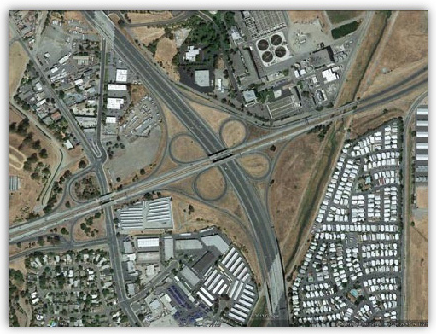
I680/SR4-Interchange. Photo: CCTA

Region receives 20 percent of statewide awards, $18 million for Contra Costa project

Bay Area highway, transit and goods-movement projects this week earned more than $400 million in new funding as the California Transportation Commission (CTC) finalized a new round of awards through a trio of competitive statewide programs established by the Senate Bill 1 transportation investment package signed into law in 2017.

MTC will work with Caltrans, BART and county transportation agencies to deliver 11 crucial projects around the Bay Area, which together earned about 20 percent of the total $2.046 billion awarded by the CTC through the Solutions for Congested Corridors, Trade Corridor Enhancement and Local Partnership programs.

“SB 1 money is essential to keeping the California economy moving, not just through the current crisis, but into the post-pandemic future,” said MTC Chairman and Alameda County Supervisor Scott Haggerty. “The Bay Area’s success in the stiff competition for these dollars reflects the clear need to modernize our freeways, transit systems and freight corridors to maintain the Bay Area’s position as an engine for economic growth throughout the state.”

Among the allocations approved through the Trade Corridor Enhancement Program are:

  • $18 million for the final design of further improvements to the Interstate 680/State Route 4 Interchange in Contra Costa County.
  • $123 million to complete a $275 million funding package for construction to begin in 2021 on 18 miles of Express Lanes along Interstate 80 through the heart of Solano County, providing travelers a reliable trip through this vital artery connecting the Bay Area to Sacramento. The express lanes will also support express buses in the corridor and encourage carpooling as an alternative to single-occupant vehicles.
  • $55 million to complete a $101 million funding package for transforming the outdated two-lane connector between U.S. 101 and State Route 25 in southern Santa Clara Countyto a new four-lane connector with shoulders and bike lanes. The project, set to begin construction in 2022, will improve traffic flow and decrease backups on U.S. 101.
  • $24 million to complete final design for a new Cordelia Truck Scales facility along westbound I-80 in Solano County.

SB 1 funds awarded through the Local Partnership Program include:

  • $25 million to complete the Interstate 680 Southbound Express Lanes project in Alameda County.
  • $25 million for improvements to the U.S. 101/De La Cruz/Trimble interchange just north of the Mineta San Jose International Airport in Santa Clara County.
  • $9 million for San Francisco’s Mission/Geneva Safety Improvements project.
  • $3 million to Sonoma Countyfor the Windsor River Road/Windsor Road Intersection Improvements and Pathway project.

The largest of the CTC’s new allocations to Bay Area projects through the Solutions for Congested Corridors program is $60 million to enable BART to begin construction next year on its $1 billion Train Control Modernization Project, part of the agency’s Transbay Core Capacity Program to increase the number of trains able to travel through the Transbay Tube between San Francisco and Oakland.

The CTC allocated $40 million through the Solutions for Congested Corridors program to close the final gap (known as segment B7) in the long-running US-101 Marin-Sonoma Narrows project by constructing a carpool lane between Novato and Petaluma. The SB1 dollars will supplement over $90 million from other sources and allow for construction on this final segment to begin as early as 2021.

The CTC’s third Bay Area allocation through the Solutions for Congested Corridors program is $25 million to complete a $64 million funding package and begin construction next year of a double roundabout at the Soscol Junction of State Routes 29 and 221 south of Napa. The improvements will relieve a traffic bottleneck that has long bedeviled residents, workers and tourists to Napa’s famous wine region, and will also deliver important safety and active transportation benefits to the area.

Related: California Transportation Commission (CTC), Gasoline — Taxation, Senate Bill 1 (SB 1)
 

Filed Under: Central County, News, Transportation

New Year brings new toll collection system to Bay Area bridges

December 29, 2020 By Publisher Leave a Comment

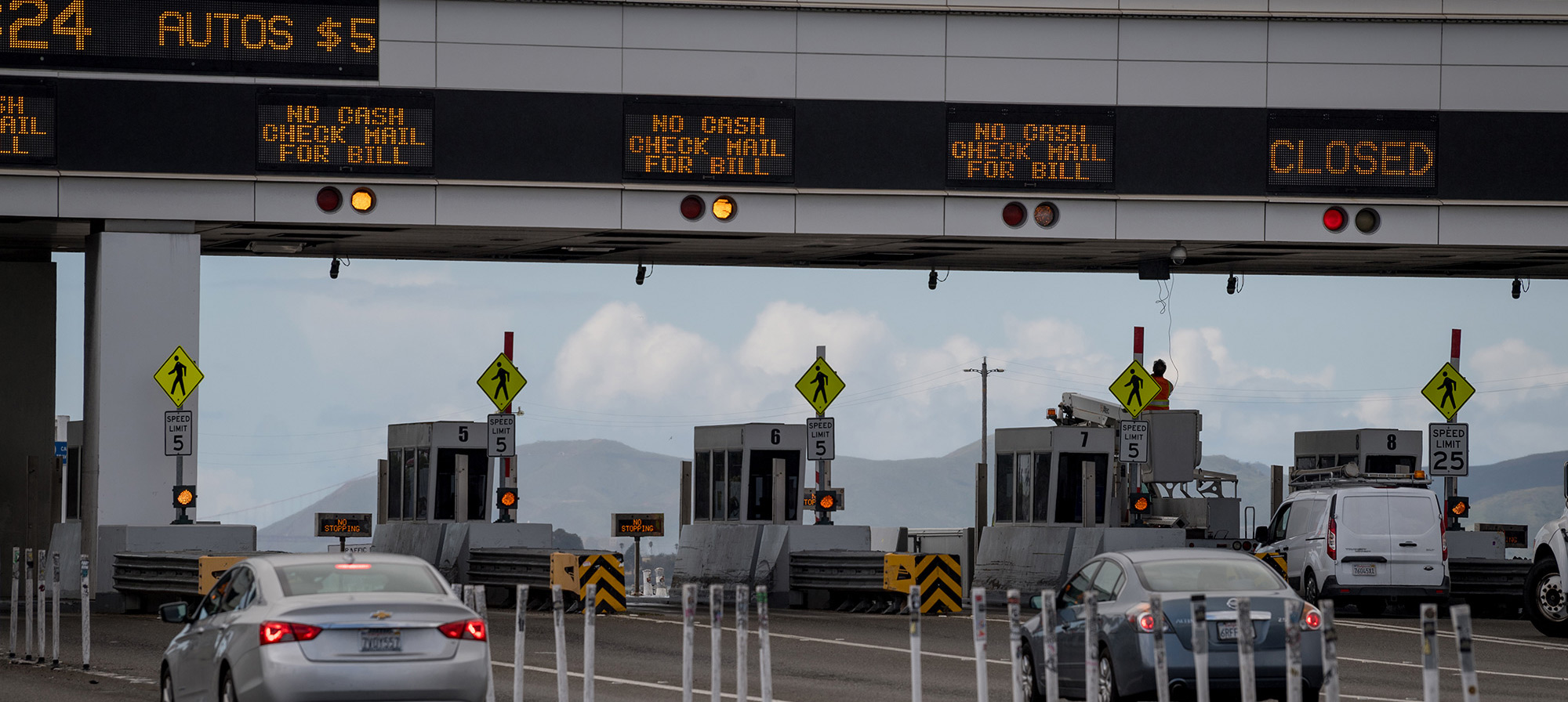
Photo: MTC

Monthly invoices to supplement FasTrak®, replace individual notices

SAN FRANCISCO – The Bay Area Toll Authority (BATA) announced Monday that the start of 2021 will also herald the launch of a new all-electronic toll collection system at the Antioch, Benicia-Martinez, Carquinez, Dumbarton, Richmond-San Rafael, San Francisco-Oakland Bay and San Mateo-Hayward bridges. While bridge customers who pay their tolls with a FasTrak® toll tag or a License Plate Account will see no difference in their statements, patrons who are not enrolled in one of these programs will receive a monthly invoice for all toll bridge crossings made after midnight on New Year’s Eve. Following the suspension of cash toll collection in March of this year, these customers have received individual toll notices for each crossing.

The all-electronic toll collection system being introduced at the Bay Area’s seven state-owned toll bridges is similar to the system used at the Golden Gate Bridge, which adopted all-electronic tolling in 2013. Automated, high-speed cameras will capture images of customers’ license plates, and the FasTrak customer service center will process the images and then mail an invoice each month to the address at which the vehicle is registered with the DMV.

FasTrak customers account for nearly three-quarters of all crossings at the Bay Area’s state-owned toll bridges. BATA encourages customers who do not already have FasTrak to open accounts online at www.bayareafastrak.org or by phone at 1-877-229-8655 (BAY-TOLL). Customers also may obtain FasTrak tags at select Costco and Walgreens stores. A map of retail locations at which FasTrak toll tags are available may be found at https://www.bayareafastrak.org/en/howitworks/retailmap.html. FasTrak tags purchased at Costco or Walgreens must be registered online. A $20 deposit per tag will apply if the account is not funded with a credit card. Drivers who would rather replenish their FasTrak accounts with cash can do so at more than 100 Cash Payment Network locations. A map of these locations may be found at https://www.bayareafastrak.org/en/tolls/cashLocationsMap.html.

Drivers also may open a License Plate Account, which links a license plate to a credit card and charges that card whenever the vehicle crosses a toll bridge; or make a one-time payment, which allows the customer to pay a toll online up to 30 days in advance of a bridge crossing or within 48 hours afterwards. There are no fees for either of these services. More information about License Plate Accounts and one-time payments is available at www.bayareafastrak.org.

The debut of all-electronic tolling and monthly invoicing at the seven state-owned toll bridges also will mark the return of toll payment rules that were temporarily suspended when the COVID-19 pandemic prompted BATA and Caltrans to eliminate cash toll collection on March 21.

Customers who do not have FasTrak or a License Plate Account – and who do not use the online one-time payment option – will be required to return invoices with payment within 30 days. Customers who neglect to return payment within 30 days will receive a “Notice of Toll Evasion” with a $25 penalty for each toll crossing. Customers who do not return invoices with payment after 60 days will receive a “Second Notice of Delinquent Toll Evasion” with a violation penalty of $70 per crossing. Customers who do not return payment after a second notice may have a hold put on their vehicle registration by the DMV and/or have the amount owed referred to a collection agency.

BATA administers all toll revenues from the region’s seven state-owned toll bridges.

Filed Under: News, Transportation

Ring in the new year with new California traffic safety laws January 1

December 24, 2020 By Publisher Leave a Comment

By Jaime Coffee, Information Officer, California Highway Patrol

SACRAMENTO, Calif. – As 2020 comes to a close, the California Highway Patrol (CHP) wants to highlight some new roadway safety laws that take effect in 2021.

License points for distracted driving (AB 47, Daly; 2019):  Using a cell phone in a handheld manner while driving is currently punishable by a fine.  Beginning July 1, 2021, violating the hands-free law for a second time within 36 months of a prior conviction for the same offense will result in a point being added to a driver’s record.  This applies to the violations of talking or texting while driving (except for hands-free use) and to any use of these devices while driving by a person under 18 years of age.

Unattended children in motor vehicles (AB 2717, Chau):  Exempts a person from civil or criminal liability for trespassing or damaging a vehicle when rescuing a child who is 6 years old or younger and who is in immediate danger from heat, cold, lack of ventilation, or other dangerous circumstances.  The law takes effect January 1, 2021.

“Move Over, Slow Down” amendments (AB 2285, Transportation Committee):  Extends the provisions of the “Move Over, Slow Down” law currently in place on freeways to also apply to local streets and roads so drivers approaching a stationary emergency vehicle displaying emergency lights, including tow trucks and Caltrans vehicles, must now move to another lane when possible, or slow to a reasonable speed on all highways, not just freeways.  The law is effective January 1, 2021.

Emergency vehicles (SB 909, Dodd):  Allows authorized emergency vehicles to use a “Hi-Lo” warning sound.  This distinctive sound, different than a siren, would be used to notify the public of an immediate need to evacuate an area in an emergency.  The CHP is currently developing regulations to standardize the Hi-Lo warning sound statewide.  Until the regulations are adopted, law enforcement agencies can use the Hi-Lo warning sound by obtaining a permit from the CHP.  The law went into effect September 29, 2020.

The mission of the CHP is to provide the highest level of Safety, Service, and Security.

Filed Under: CHP, News, State of California, Transportation

CCTA Board unanimously appoints Timothy Haile as new Executive Director

December 17, 2020 By Publisher Leave a Comment

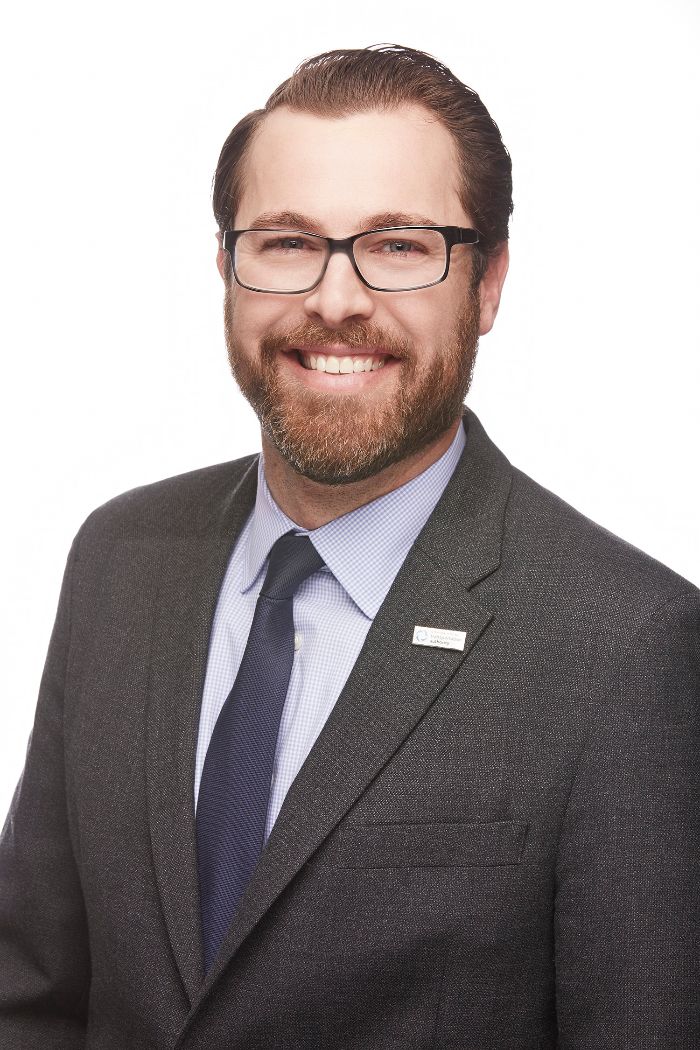
Timothy Haile. Photo: CCTA

By Linsey Willis, Director of External Affairs, CCTA

The Contra Costa Transportation Authority (CCTA) today announced that Timothy Haile has been appointed to serve as its new Executive Director effective December 27, 2020.  Haile served as CCTA’s Deputy Executive Director, Projects since 2017 and has more than 23 years of experience in public works and transportation projects.

“I am pleased to announce the unanimous decision to promote Tim Haile to Executive Director,” CCTA Board Chair Teresa Gerringer said. “Tim’s dynamic thinking, leadership, proactive management style, technical acuity and ability to work in partnership with numerous stakeholders on large, multidisciplinary projects ensures CCTA’s continued success. Tim and I are both poised to begin our chapter at the helm of CCTA and we are excited to continue CCTA’s legacy as an innovative and collaborative agency.”

As CCTA’s Deputy Executive Director for Projects, Haile was responsible for the delivery of the capital improvement program, implementation of projects identified in CCTA’s voter-approved sales tax Measure J, development of a new Transportation Expenditure Plan, as well as other projects funded from grant or other outside sources. He managed CCTA’s innovation portfolio, including partnerships at GoMentum Station, multiple grants from the U.S. Department of Transportation, the Innovate 680 program, and all aspects of program and project management.

Haile has been an active leader in the transportation industry and community, serving as the Communications Chair of the Transportation Research Board Managed Lanes Committee and Board Member of the California Transportation Foundation. A testament to his technical expertise in highway design, communication, and presentation skills, Haile served as an adjunct professor for the Highway Design Course at California State Polytechnic University, Pomona for over eight years. In 2014 he was named one of the “Top 20 under 40 Engineering Professionals in California” by Engineering News Record Magazine.

Prior to CCTA, he worked at Michael Baker International as the Inland Empire Transportation Manager, managing the overall transportation program for the region providing exceptional service to local agencies, stakeholders, and the California Department of Transportation (Caltrans). An expert in Caltrans design policies, procedures, and standards for transportation projects, he advised local agencies and stakeholders to navigate the complex project delivery process from project initiation through environmental, final design and construction.

Haile is recognized for his dynamic thinking, leadership, innovation, proactive management style, technical acuity and ability to work in partnership with numerous stakeholders on large, multi-discipline projects building consensus, developing solutions to complex challenges and recommending policies.

Haile is a registered Professional Engineer and earned his Bachelor’s Degree in Civil Engineering from California State Polytechnic University, Pomona in 2003.

About CCTA

The Contra Costa Transportation Authority (CCTA) is a public agency formed by Contra Costa voters in 1988 to manage the county’s transportation sales tax program and oversee countywide transportation planning efforts. With a staff of twenty people managing a multi-billion-dollar suite of projects and programs, CCTA is responsible for planning, funding and delivering transportation infrastructure projects and programs throughout the County. CCTA also serves as the county’s designated Congestion Management Agency, responsible for putting programs in place to manage traffic levels. More information about CCTA is available at ccta.net.

Allen Payton contributed to this report.

Filed Under: News, Transportation

Oakley, transportation officials announce new Amtrak Train Station platform

October 24, 2020 By Publisher 5 Comments

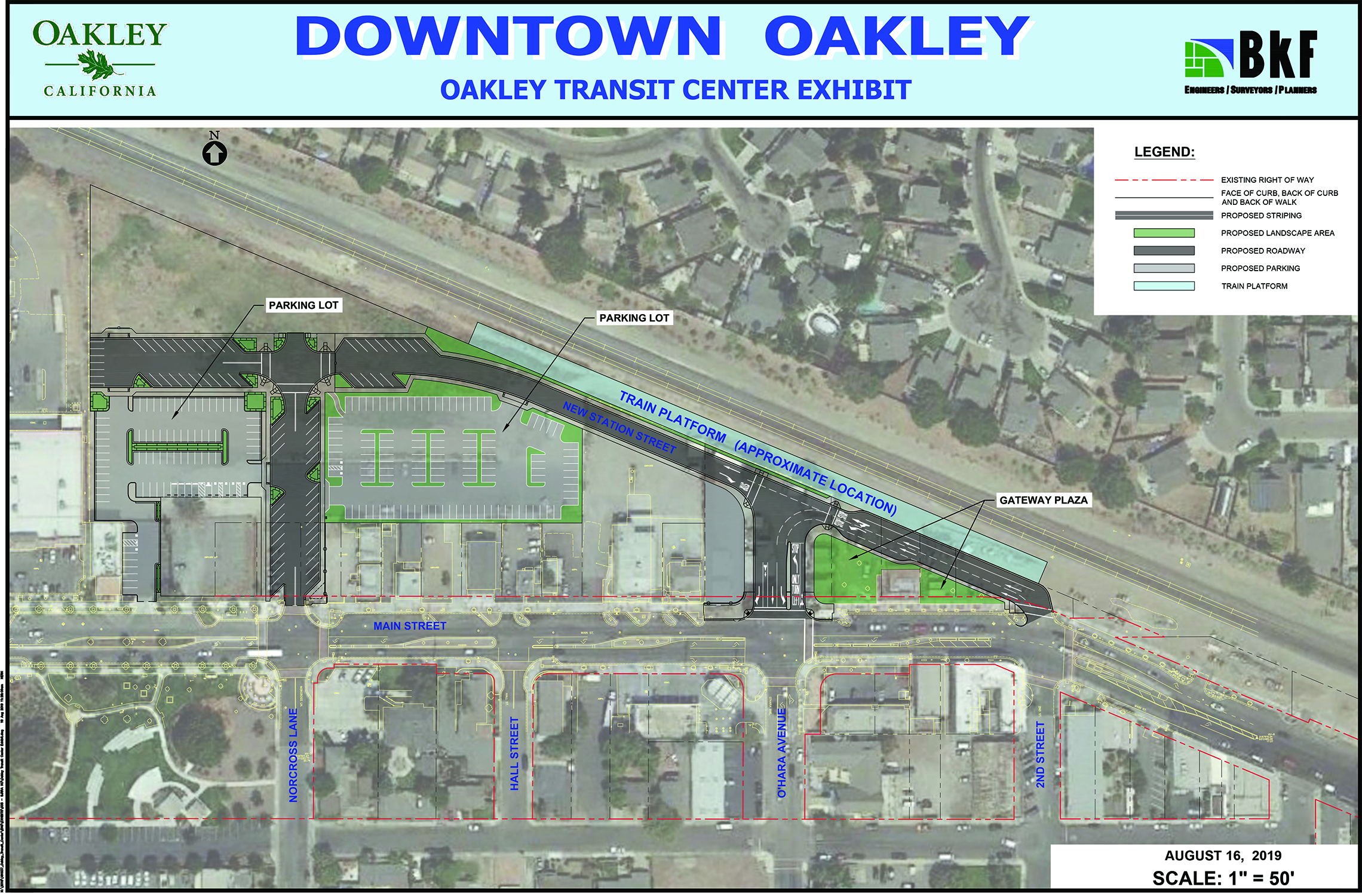
Map of Oakley Center Transit. By City of Oakley.

“You’ll be able to get from downtown Oakley to downtown Oakland in 55 minutes ‐ you can’t do that on BART or a car and the ride is much more pleasant.” – Oakley Mayor Kevin Romick

By Amy Sylvestri, City of Oakley

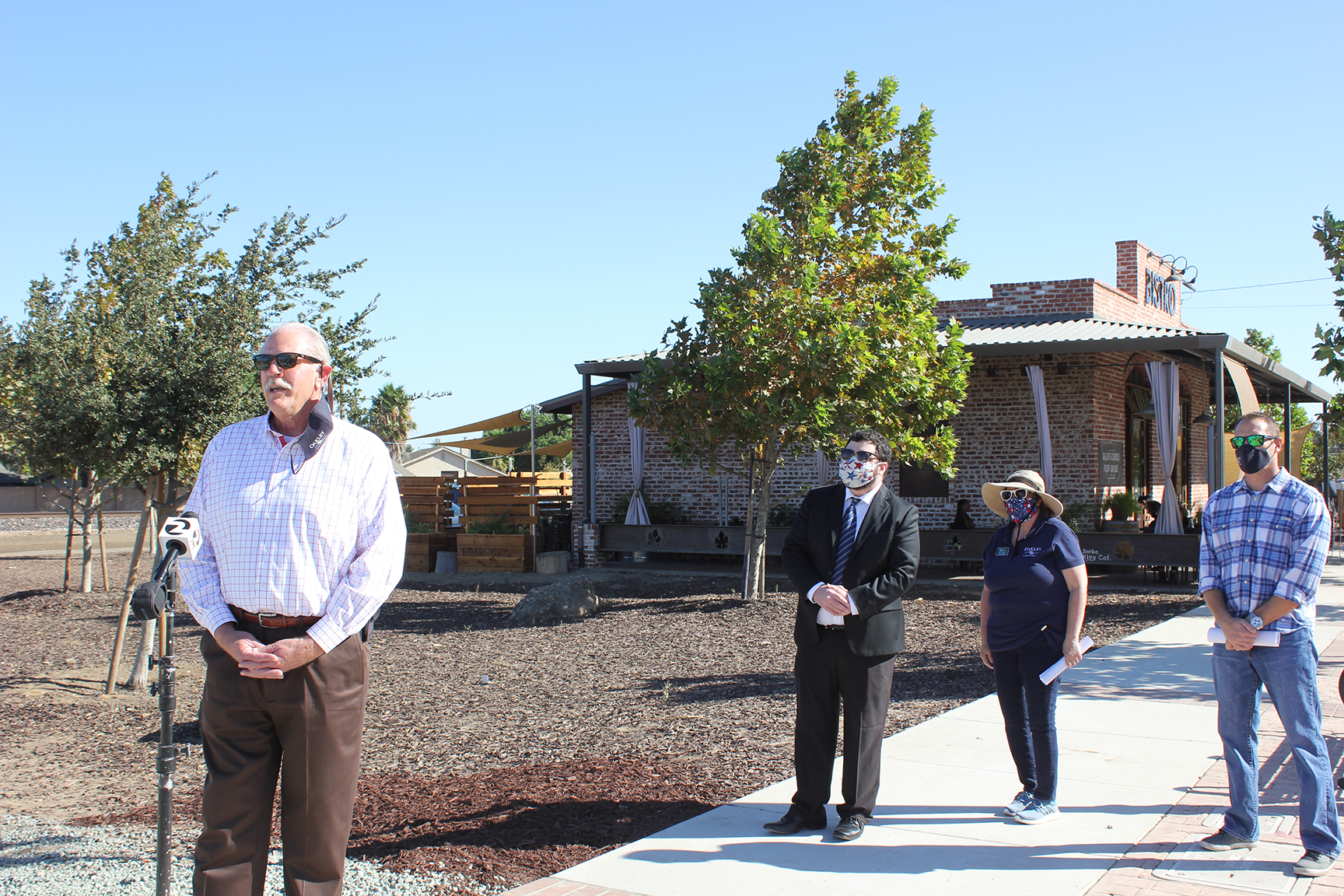
Mayor Kevin Romick speaks at the site of the future Amtrak train station platform, as Paul Herman from the San Joaquin Joint Powers Authority, Vice Mayor Sue Higgins, and City of Oakley Associate Engineer, Jason Kabalin listen on Friday, Oct. 23, 2020. Photo by City of Oakley.

Friday was another exciting day in Oakley, as Mayor Kevin Romick, Vice‐Mayor Sue Higgins and Paul Herman,  Associate Planner of the San Joaquin Joint Powers Authority helped announce the next step in the process of bringing an Amtrak platform to Oakley!

The new 700‐foot‐long Amtrak train station platform that will be located behind Main Street between Second Street and Norcross Lane. Once complete, Oakley commuters will be able to get from downtown Oakley to downtown Oakland in under an hour.

Amtrak is currently under design for the proposed 700‐foot long platform which will be located within the railroad right‐of‐way.

The City will design and construct the adjacent improvements that will include a bus and car drop off area between 2nd Street and O’Hara and a large parking lot will be constructed to the west of the main entrance at O’Hara Avenue to accommodate future passengers.

“The ultimate goal is to keep the small-town look as we attract new restaurants and businesses,” said Mayor Kevin Romick. “We understand that downtown is just a couple of blocks long, but we are trying to create a vibrant area. It’s so important to give the City of Oakley more transit options. You’ll be able to get from downtown Oakley to downtown Oakland in 55 minutes ‐ you can’t do that on BART or a car and the ride is much more pleasant.”

Additionally, to maintain circulation during drop off and pick times, a new roadway will be constructed along the railroad’s right‐of‐way from the main entrance at O’Hara Avenue to Norcross Lane.

The train station platform will be a tremendous benefit to the community. Oakley has many residents that commute to the Bay Area for work every day and the new train platform will provide an alternate mode of transportation and drastically reduce their commute times.

The project, made possible with $8.6 million in state funds, is expected to begin construction soon and complete in 2022, according to Paul Herman of the San Joaquin Joint Powers Authority

“This is an exciting time for the City of Oakley, said Romick. “We’re looking forward to bringing a train stop back to the East County.”

Filed Under: East County, News, Transportation

Contra Costa Transportation Authority Executive Director Randy Iwasaki to retire in December

October 12, 2020 By Publisher Leave a Comment

Search begins for his replacement

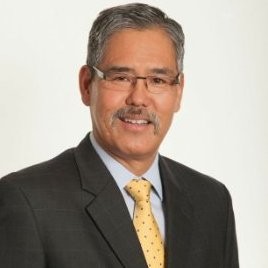
Randy Iwasaki. From LinkedIn.

Randell H. Iwasaki, the Executive Director of the Contra Costa Transportation Authority announced recently, his intention to retire from the agency.  Following is a statement from the Board Chair Julie Pierce.

“It is with a range of mixed emotions that I announce Randell Iwasaki’s (Randy) retirement from his successful and accomplished career at the Contra Costa Transportation Authority (CCTA). I am sad Randy will retire as CCTA’s Executive Director effective December 26, 2020; yet, I am immensely proud of the goals, recognition and innovations CCTA achieved in the ten years Randy has been at the helm of the Authority, and extremely grateful for the leadership Randy has demonstrated while managing this agency. His vision, as well as his ability to create, guide and inspire a remarkable workforce resulted in a small but mighty team who has made significant advances to improve mobility in Contra Costa County.

Randy and his staff have delivered on our promise to the public by completing major infrastructure improvements such as Highway 4 and the Caldecott Fourth Bore projects, while simultaneously pursuing innovative ways to improve mobility in the future. During Randy’s tenure, CCTA has become a leader in advancing new technology to solve real challenges faced by our residents. Notable achievements include establishing the nation’s largest secure, connected and automated vehicle proving grounds, securing legislation to pilot the first low-speed, multi-passenger, shared autonomous vehicles that are not equipped with a steering wheel, brake pedal, accelerator or operator on public roads in California, and more recently winning two nationally competitive grants to deploy innovative transportation technology from the United States Department of Transportation.

Throughout his tenure as Executive Director, Randy has ensured CCTA remains a responsible and prudent steward of public funds. For eight years in a row the agency’s management of sales tax dollars has been recognized with the coveted “Certificate of Excellence in Financial Reporting” from the Government Finance Officers Association. Last year, the Contra Costa Taxpayers Association also honored CCTA with a Silver Medal Award for Good Government.

On behalf of the CCTA Board, I’d like to express our gratitude for Randy’s extraordinary role in delivering so many projects aimed to strengthen the economy, protect the environment and enhance Contra Costa County’s transportation system. In the ten years he has served as Executive Director, he has accomplished much to improve the quality of life for our residents. We thank Randy for his dedication to this agency, and wish him all the best in his new adventures.”

The CCTA Board has appointed a sub-committee of the Board to lead the search for the agency’s next Executive Director.”

Iwasaki is the former Executive Director of CalTrans, the state Department of Transportation, said he plans to work in the private sector following his retirement in December.


Filed Under: News, People, Transportation

Contra Costa Transportation Authority partners with Minnesota DOT to expand autonomous vehicle testing opportunities

October 8, 2020 By Publisher Leave a Comment

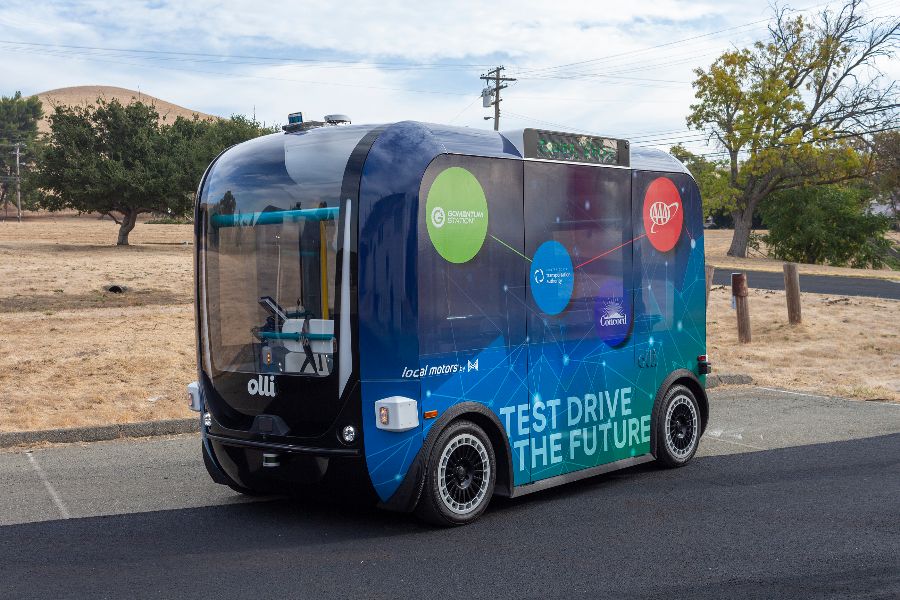
Local Motors Shared Autonomous Vehicle preparing for a test run at GoMentum Station. Photo: CCTA

By Linsey Willis, Director of External Affairs, CCTA

The Contra Costa Transportation Authority proudly announces a new partnership with the Minnesota Department of Transportation– an agency dedicated to advancing transportation technology research – to share knowledge and testing facilities in an effort to advance safer, smarter, more efficient transportation networks that not only benefit both California and Minnesota, but can inform transportation technology implementation across the United States.

MnDOT’s Connected and Automated Vehicle team is actively working to advance research and deployment of Intelligent Transportation Systems, Connected Vehicle applications and Autonomous Vehicle technologies with the help of MnROAD–the state’s cold weather pavement testing facility. MnROAD has over 50 unique test sections on several roadways, including two 3.5-mile, high-speed corridors on Interstate 94 and a 2.5-mile, low-speed, closed access road. MnDOT also partners with Camp Ripley, a military and civilian training facility operated by the Minnesota National Guard, which has a 4.3-mile emergency vehicle operations course. With some of the most extreme weather conditions in the nation, Minnesota offers testing simulations that cannot be replicated elsewhere, which provides unique opportunities to test the safety features of CV and AV technologies.

Through this partnership, CCTA will have access to MnROAD facilities and likewise, MnDOT will have access to GoMentum Station in Concord, California – one of the largest secure connected and automated vehicle proving grounds in the country. GoMentum Station augments MnDOT’s testing with varied terrain, and real-life infrastructure including roads, bridges, tunnels, intersections and parking lots provide the environment needed to accelerate testing of the first and last mile applications, and the ability to safely test technology to its limits. CCTA also has many long-standing research and manufacturing partnerships that offer coordination opportunities for MnDOT.
“With this new collaboration, we’ll be able to test in conditions that just can’t be replicated here in Contra Costa,” stated Randy Iwasaki, Executive Director of CCTA. “Our partnership with a state agency like MnDOT will open new doors to shared research opportunities for a small agency like ours, and it’s exciting to be partnering with an agency that has similar goals in the arena of connected and automated vehicle technology.”

“Minnesota is excited to partner with one of the nation’s leading institutions in this work as we explore innovations in smart mobility, connected and automated vehicles and how advancing technologies are impacting communities,” said Kristin White, MnDOT CAV-X Executive Director. “Through collaboration and information sharing, we’re committing to learning from CCTA, sharing best practices and together advancing research that supports our regions and national goals. We believe this partnership can be a model for other regions to advance smart mobility.”

About the Contra Costa Transportation Authority

The Contra Costa Transportation Authority (CCTA) is a public agency formed by Contra Costa voters in 1988 to manage the county’s transportation sales tax program and oversee countywide transportation planning efforts. With a staff of twenty people managing a multi-billion-dollar suite of projects and programs, CCTA is responsible for planning, funding and delivering critical transportation infrastructure projects and programs that connect our communities, foster a strong economy, increase sustainability, and safely and efficiently get people where they need to go. CCTA also serves as the county’s designated Congestion Management Agency, responsible for putting programs in place to keep traffic levels manageable. More information about CCTA is available at ccta.net.
Background on MnDOT CAV Program

MnDOT’s Connected and Automated Vehicle Office (CAV-X) was launched in 2018 and is now one of the nation’s leading tech startups and idea incubators within state government. Building off its strong history in Intelligent Transportation Systems research, CAV-X advances research, policy, planning and strategy to help the Midwest prepare for the changes that advancing technologies will bring. This multi-disciplinary team combines the fields of law, policy, engineering, planning, and communications to develop strategic partnerships that advance the state’s goals to build a safe, equitable, accessible, healthy, and sustainable transportation system. CAV-X oversees over 100 projects in research, deployment and development with more information found at mndot.gov/automated.

About GoMentum Station

GoMentum Station in Concord, California is owned and operated by AAA, and it is the autonomous vehicle testing facility where the Contra Costa Transportation Authority leads and facilitates collaborative partnerships among multiple automobile manufacturers; original equipment manufacturers and Tier 1 suppliers; communications suppliers; technology companies; researchers and academia; public agencies and other partners. At GoMentum Station, technology, innovation and commercialization will converge to define the next generation of transportation network infrastructure. More information about GoMentum Station is available at gomentumstation.net.


CUTLINE: Local Motors Shared Autonomous Vehicle preparing for a test run at GoMentum Station

Filed Under: Central County, News, Technology, Transportation

MTC seeks public input on toll policies as Martinez-Walnut Creek Express Lane debut nears

August 10, 2020 By Publisher Leave a Comment

Proposal would extend existing rules for Walnut Creek-San Ramon lanes

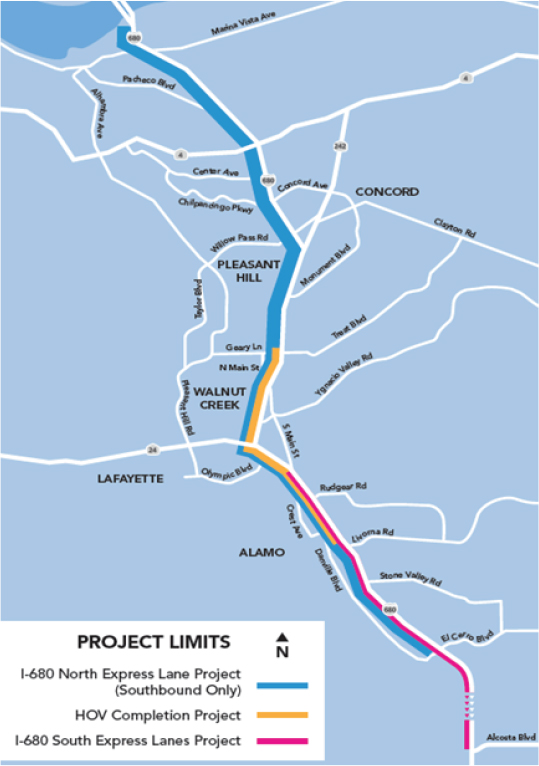
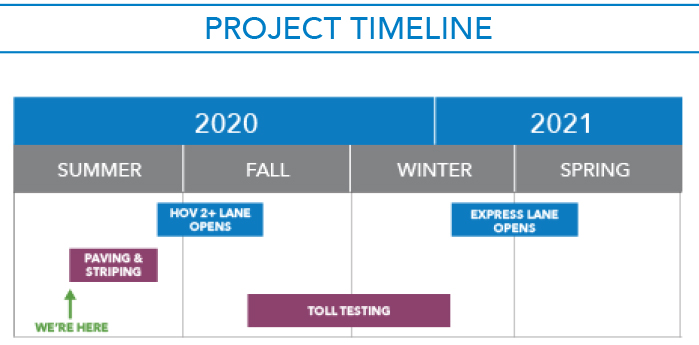
SAN FRANCISCO . . . As the Metropolitan Transportation Commission (MTC) and the Contra Costa Transportation Authority (CCTA) prepare for the early 2021 start of Express Lane operations on an 11-mile stretch of southbound Interstate 680 from Martinez through Walnut Creek, MTC invites Bay Area residents to learn about and comment on Express Lane toll policies during a public comment period that begins today and will continue through Sept. 9, 2020. (See the 680 Express Lane Fact Sheet)

Commuters and other travelers can learn about MTC’s Express Lanes and toll policies on the MTC website at https://mtc.ca.gov/express-lanes-policies and submit comments by email to expresslanes@bayareametro.gov. The comment period will culminate with a virtual Public Hearing conducted as part of MTC’s September 23 public meeting schedule.

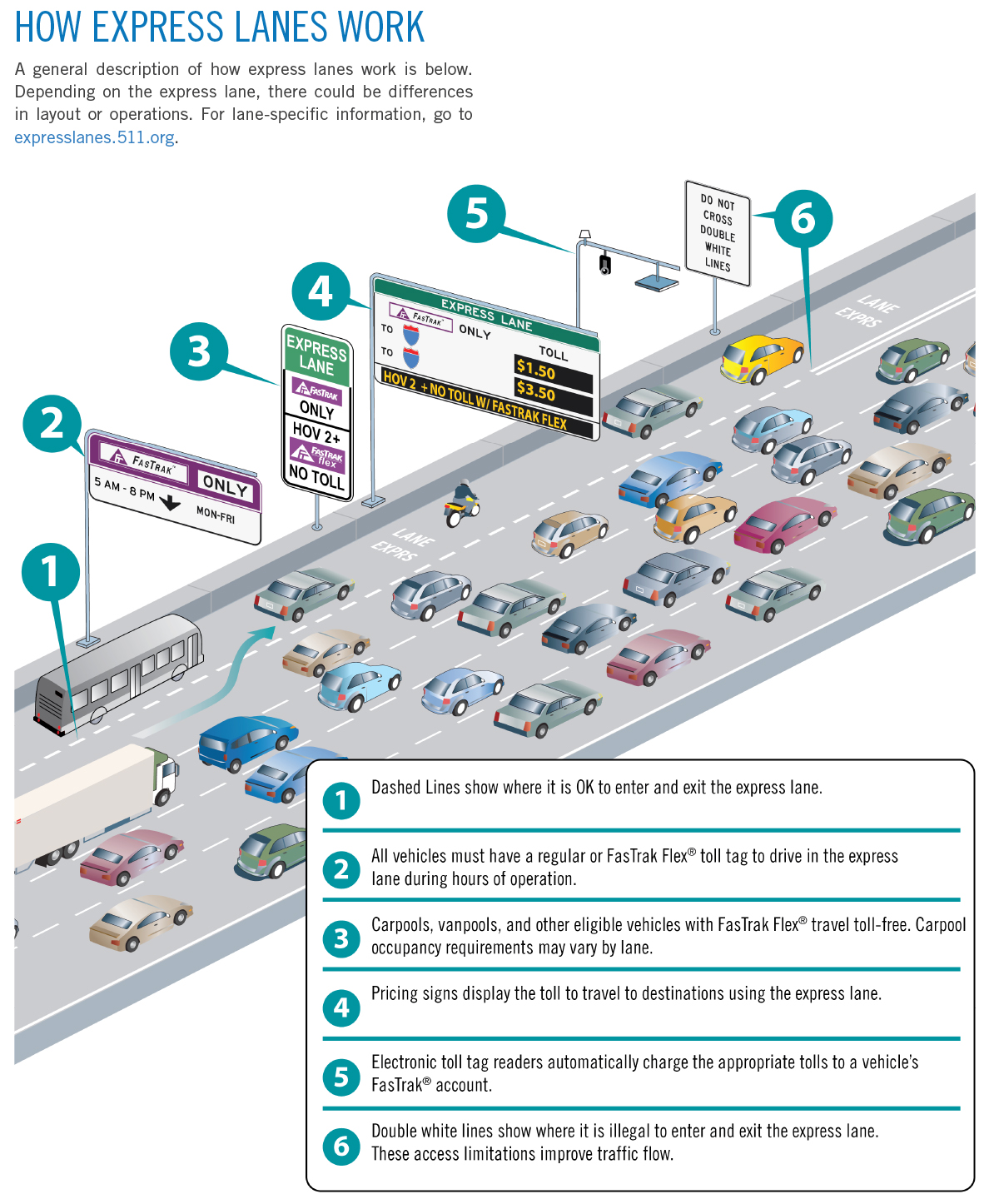
Express Lanes use tolling and technology to keep traffic moving for carpoolers, bus riders, motorcycles and solo drivers alike. When tolling operations begin on the new Martinez-to- Walnut Creek segment of I-680, there will be a continuous 23-mile southbound Express Lane running the length of Contra Costa County. In advance of opening the new Express Lane extension, MTC’s Bay Area Infrastructure Financing Authority (BAIFA) affiliate must adopt rules for how tolling will work. BAIFA is proposing to amend its existing Toll Facility Ordinance to set tolling rules for the Martinez-to-Walnut Creek segment that are identical to those already in place for the existing Express Lanes in both directions of I-680 between Walnut Creek and San Ramon:

  • Hours of operation – 5 am to 8 pm;
  • High-occupancy vehicle (HOV) eligibility – two (2) or more persons;
  • Tolls – Eligible HOVs with two or more persons would pay no toll. Solo drivers would pay the full toll. Clean air vehicles (CAVs) would pay a half-price toll. A minimum toll of $0.50 per toll zone would apply;
  • FasTrak® required – All vehicles would be required to use FasTrak®, including vehicles eligible for reduced tolls;
  • Enforcement and Toll Violation Penalties – Toll enforcement would be automated using license plate cameras as on BAIFA’s existing Express Lanes. If a vehicle does not have a FasTrak® account, a violation notice would be issued by the toll system. Toll violation penalties would be set equal to those charged by BATA, currently $25 for the first notice and $70 for the second notice. CHP would enforce vehicle occupancy requirements, illegal crossing of double white lines and other rules.

More information about the southbound I-680 Express Lane from Martinez to Walnut Creek and about the proposed Toll Facility Ordinance Amendment is available on MTC’s website at https://mtc.ca.gov/express-lanes-policies or on MTC’s public hearings page at https://mtc.ca.gov/whats-happening/events/public-hearings.

The public hearing will take place during BAIFA’s regularly scheduled meeting on Wednesday, Sept. 23, 2020 at 9:05 a.m. In accordance with Executive Order N-29-20 issued by Governor Newsom on March 17, 2020 and the Guidance for Gatherings issued by the California Department of Public Health, the meeting will be conducted via webcast, teleconference, and Zoom. The meeting webcast, as well as a link and a phone number for participation via Zoom, will be posted on the MTC website at http://mtc.ca.gov/whats-happening/meetings. Interested members of the public must send in written comments by Sept. 9, 2020 to MTC’s Public Information Office at 375 Beale Street, Suite 800, San Francisco, CA 94105 or via email at expresslanes@bayareametro.gov (please include “BAIFA Toll Ordinance” in the subject line) by Sept. 9. Comments also may be left on MTC’s public information phone line at (415) 778-6757 before 5 p.m. on Sept. 9. After receiving comments, BAIFA will consider adoption of the ordinance amendment at its September 23, 2020, meeting.

MTC is the transportation planning, financing and coordinating agency for the nine-county San Francisco Bay Area.

Filed Under: Central County, News, Transportation

Citizen Advisory Committee on Transportation seeks new representative

August 1, 2020 By Publisher Leave a Comment

The Contra Costa County Board of Supervisors is seeking an individual to serve on the Contra Costa Transportation Authority (CCTA) Citizen Advisory Committee (CAC) as Public Representative on behalf of the County. The individual selected for this position must live in the unincorporated area of the County, be available to attend committee meetings on the 4th Wednesday of every month at 6:00 pm, normally held at the CCTA offices located at 2999 Oak Road, Suite 100, Walnut Creek, have the ability to review CAC agenda packets, and develop input on agenda items beforehand. Due to the COVID-19 pandemic, meetings presently occur via videoconference. The individual will serve a four-year term in a volunteer capacity and be eligible for reimbursement for travel expenses.

The CCTA Citizen Advisory Committee reviews transportation programs and plans throughout the County (https://ccta.net/about-us/#what-we-do), with the objective of advising and providing recommendations to the CCTA Board of Directors. This includes transportation projects and programs funded by the county half-cent transportation sales tax (“Measure J”) (https://ccta.net/2018/10/17/measure-j), which CCTA oversees. CCTA maintains its standing CAC in order to provide citizen perspective, participation, and involvement in the Measure J-funded and voter-approved Transportation Expenditure Plan and Growth Management Program. The CAC members have an opportunity to learn about and influence transportation and growth issues within Contra Costa County and in other jurisdictions through scheduled presentations by transportation experts, advocates, and CCTA staff.

The deadline to apply is August 31, 2020. For more information on this position, please call (925) 674-7822. To apply, visit the Contra Costa County Boards and Commissions website at www.contracosta.ca.gov/6408, or download an application at www.contracosta.ca.gov/DocumentCenter/View/6433. Applicants can fax the completed form to the attention of Robert Sarmiento at (925) 674-7250.

Filed Under: News, Transportation

President Trump announces modernized environmental review process for infrastructure projects

July 15, 2020 By Publisher Leave a Comment

https://www.youtube.com/watch?v=VIjnkkZQWhU

Start video at the 58 minutes mark.

Delivers Remarks on the Rebuilding of America’s Infrastructure: Faster, Better, Stronger

For the first time in 40 years, President Trump is taking action to right-size the Federal Government’s environmental review process to accelerate America’s infrastructure development

“By streamlining infrastructure approvals, we’ll further expand America’s unprecedented economic boom.” – President Donald J. Trump

On Wednesday, July 15, 2020 at the UPS Hapeville Airport Hub in Atlanta, Georgia, President Donald Trump offered the following remarks announcing a streamlined, modernized environmental review process to accelerate infrastructure projects in America.

“For decades, the single biggest obstacle to building a modern transportation system has been the mountains and mountains of bureaucratic red tape in Washington, D.C.  Before I took office, reviews for highways ballooned to an average of nearly 750 pages in length.  And they were the good ones; they were the short ones.

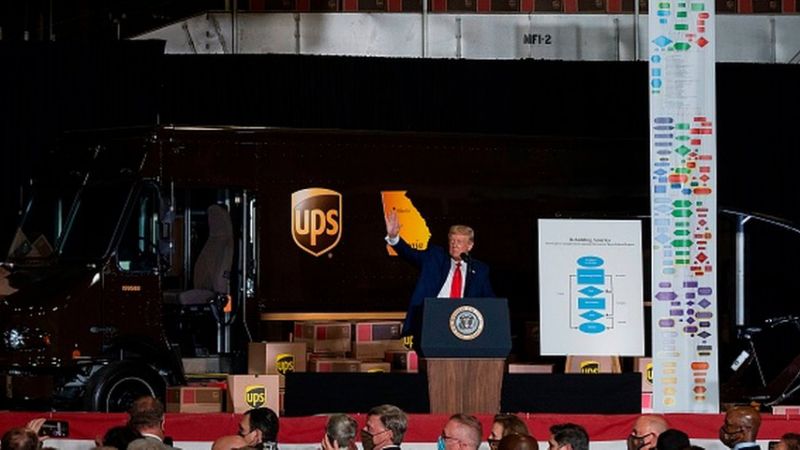
Pres. Trump and the environmental review process charts, old on the right and the new, One Federal Decision policy process on the left. Video screenshot of his remarks July 15, 2020.

And I know because I was in business for a long time, and I had to go through a process that was so ridiculous.  It was so ridiculous.  We went through a process for building buildings, usually.  It would take forever.  By the time you’d start building, the market changed.  You said, “You know, the market was good when we started; now the market is lousy.”  So you’d say, “The hell with it.  We won’t build.”  Sometimes you’d start building and you’d say, “That was a mistake.”

But we went through years and years of litigation and tumult, and it was just not good.  But you go through it to an even greater extent.

The maze-like approval process represented lobbyists that were very rich; they were making a lot of money.  I remember I’d go up to Albany, New York, and I’d see my lobbyists up there.  I said, “What are you doing here?”  I knew what they were doing.  They were trying to make it more difficult.  So you had to hire them for more and more work, spend millions and millions of dollars for nothing.

But too often, they caused massive delays, on top of everything else.  And that way, they got their fees over a longer period of time.  It’s one of the reasons why, for example, the average Atlanta driver spends an incredible 77 hours in traffic during a short period of time.

But all of that ends today.  We’re doing something very dramatic.  (Applause.)  We just completed an unprecedented — and I don’t want to say it’s absolutely unprecedented — top-to- bottom overhaul — should have been done years ago — of the infrastructure approval process; this approval process that has cost trillions of dollars over the years for our country and delays like you wouldn’t believe.

This is a truly historic breakthrough, which means better roads, bridges, tunnels, and highways for every UPS driver and every citizen all across our land.  Together, we’re reclaiming America’s proud heritage as a nation of builders and a nation that can get things done, because with these horrible roadblocks that were put in front of us, you couldn’t get it done.  No matter how good you were, you couldn’t get it done.  You’d wait and wait.  You’d go to the next step.  You’d say, ‘You can’t start the next step until you finish the first.’”

“Today’s action is part of my administration’s fierce commitment to slashing the web of needless bureaucracy that is holding back our citizens.  I’ve been wanting to do this from day one.  And we started it on day one — literally, on day one — but it takes a long time.  You have statutory requirements; you have a lot of different roadblocks even to changing it.  But the change you’ll be hearing about in a minute.  And it’s one of the biggest things we can be doing for our country.

The last administration increased the Federal Register by 16,000 pages of job-killing regulations.  Under my administration, we have cut the Federal Register by nearly 25,000 pages, more than any President in history, whether it’s four years, eight years, or in one case, more.  And we, frankly — this, I would think, is maybe the biggest of all.  We did the U.S. Waters — you saw that.  The U.S. Waters Act.  That was a big one.  That was a big one.  (Applause.)

I thought I was going to take a lot of heat when I did that, and instead it was just the opposite.  People came up — grown men that had never cried, even when they were a baby — they were standing behind me when I signed that bill at the White House, and they were crying.  They were crying — because we gave their life back to them.  That took their life away.  It took their livelihood away.  It was a big, big moment.

But this is a big moment today too — probably, possibly equally as big.  Today’s action completely modernizes the environmental review process under the National Environmental Policy Act of 1969.  We are cutting the federal permitting timeline from a staggering 10 years, 15 years, 18 years, 21 years — you know the story; you’ve seen it — projects that start out.  A young guy heads the project.  By the time it gets approved or disapproved — in many cases, disapproved; usually disapproved — he’s getting ready to retire.

‘So what did you do for your life?’  ‘I worked on one project.  We didn’t get it through in the end.’  No, we won’t get certain projects through for environmental reasons; they have to be environmentally sound.  But you know what?  We’re going to know in a year.  We’re going to know in a year and a half.  We’re not going to know in 20 years.

So we’re cutting the federal permitting timeline for a major project from up to 20 years or more — hard to believe — down to two years or less.  So we have it down to about two years right now, Elaine, and I think two years or less.  And our goal is one year.  And you may get disapproved.  It may — they may vote, at the end, they didn’t like something environmentally or safety-wise, and I’m all for that, but you’re not going to devote a lifetime to doing a project that doesn’t get approved or that gets approved.

And oftentimes, when it gets approved, it comes in at 10, 20, 30 times the cost.  There’s a highway in a certain state — a short road, not even a highway, I guess; more of a roadway.  And they put in.  It was a straight line from point to point.  By the time they finished it, 18 years later, it was this.  It cost tens of times.  It cost many, many, many times more than the original.  It’s a dangerous roadway because there’s turns.  You got to be in good shape.  You got to be wide awake to make those turns.  You got to see those things.  You have to see the guardrails.  Bom.  They had a simple, straight roadway, and now they build it — they end up — it took 17 years to get it approved.  Ended up costing many, many times what the original estimates were, and it’s no good.  It’s not good.

Under the last administration, a mere 7 percent of reviews for federal highways were processed within two years.  Now what we’re doing is the two years won’t be the exception; it’ll be the rule.  So what we’re doing is, we’re going to have that coming down at a much steeper rate.  This will reduce approval times for highways alone by at least 70 percent.  But the 70 percent is a very unambitious number because the number is going to be actually much lower than that.

At the heart of the reforms is the One Federal Decision policy.  It really spells it out when you hear that name: One Federal Decision.  Before, applicants for infrastructure permits were forced to spend years and years navigating a labyrinth of federal agencies, and every single one had a power to stop a project.  Anytime you went to an agency, they had a power to stop it.  And it would stop the project — not only stop it; but right in its tracks it would stop it.

With our reforms, there will be one quick and fair decision.  We’re going to give every project a clear answer: Yes or no.  Yes or no.  The two-year process, where just to submit is two years, is not acceptable.  It’s going to be a very quick ‘yes’ or ‘no,’ after study, but the studies are going to go quickly and they’re going to go simultaneously.

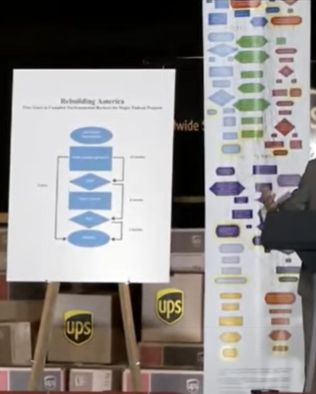
Close up of the two environmental review process charts.

So if you’re in numerous agencies, you’re all going at the same time.  Instead of waiting for one, for two, for three — and oftentimes, you’d go through one, it would take you six months, and then you have to wait 90 days, and then you have a review period, and then you start the second one.  And now you go for another four months, and then you wait 90 days, and you have a review period.  And sometimes you had to go through 9, 10, 12 different agencies.  So even if you did absolute rapid, it was many, many years before you could even think about starting it.

We have up here, by the way — that’s a chart of the old system and the new system.  And I think the new system is better.  (Applause.)  I think it’s better not only in time; I think it’s better in terms of the process, and I think it’s better in terms of the importance from an environmental and a safety standpoint.

But take a look at that.  This is what you had to go through.  In fact, it was much more dramatic when I first came up with this about a year ago.  We took that and we rolled it out.  It was so dramatic.  And it just kept going and going.  So the difference is that.  And many of those steps, you had to wait before you could even think about going to the next one, and you had to get full approvals.

Any one of those colors, where there was a problem or a rejection, meant it was dead.  And now you go through this very simple, but very comprehensive solution.  And it’s a beautiful thing, especially if you understand construction and building, and other things beyond building, like I do.

At the same time, we’ll maintain America’s gold standard environmental protections.  The United States will continue to have among the very cleanest air and cleanest water on Earth — which we do now.”

MODERNIZING ENVIRONMENTAL REVIEWS: For the first time in 40 years, President Donald J. Trump is taking action to right-size the Federal Government’s environmental review process.

  • The Trump Administration is issuing a final rule that will modernize and accelerate environmental reviews under the National Environmental Policy Act (NEPA), so that infrastructure can be built in a timely, efficient, and affordable manner.
  • This marks the end of a multi-year review, which produced more than 1.1 million public comments and involved a broad range of stakeholders.
  • The final rule modernizes Federal NEPA regulations, including by codifying certain court decisions to clarify NEPA’s application and by expanding public involvement in NEPA reviews through the use of modern technology.
  • The rule also improves management by incorporating President Trump’s One Federal Decision policy, establishing time limits of two years for completion of environmental impact statements, when required, and one year for completion of environmental assessments.
  • Together, these common sense reforms will slash unnecessary government bureaucracy and accelerate important infrastructure projects all across the Nation.

STREAMLINING INFRASTRUCTURE APPROVALS: The Federal environmental review process has historically been far too complex, costly, and time consuming.

  • Since NEPA’s enactment, the environmental review process has been burdensome for both Federal agencies conducting reviews and Americans seeking permits or approvals.
  • Environmental impact statements average over 650 pages, and it takes Federal agencies on average four and a half years to conduct required reviews.
  • According to the Council on Environmental Quality, environmental impact statements for highway projects take more than seven years on average and often take a decade or more.
  • NEPA reviews are also frequently challenged in court, making it very challenging for businesses and communities to plan, finance, and build projects in the United States.

CUTTING RED TAPE: President Trump is reversing years of burdensome overregulation and administrative abuse, simultaneously ensuring meaningful environmental reviews and spurring economic growth.

  • President Trump is making good on his promise to conduct historic deregulation, removing job killing regulations that have stifled economic growth for far too long.
  • Already the President has reversed burdensome regulations like the Obama Administration’s Waters of the United States rule and Corporate Average Fuel Economy (CAFE) standards.
  • President Trump also did away with the Obama Administration’s expensive, heavy handed, and job-killing Clean Power Plan, replacing it with the much improved Affordable Clean Energy (ACE) Rule.
  • The President launched his Governors’ Initiative on Regulatory Innovation to cut outdated regulations, put people over paperwork, and align Federal and State regulations.
  • Under President Trump, the United States has remained a world leader in protecting the environment and reducing greenhouse gas emissions, while becoming the largest producer of oil and natural gas in the world.


Filed Under: Infrastructure, News, Transportation

  • « Previous Page
  • 1
  • …
  • 16
  • 17
  • 18
  • 19
  • 20
  • …
  • 31
  • Next Page »
Liberty-Tax-Jan-Apr-2026
Deer-Valley-Chiro-06-22

Copyright © 2026 · Contra Costa Herald · Site by Clifton Creative Web