• Home
  • About The Herald
  • Local Agencies
  • Daily Email Update
  • Legal Notices
  • Classified Ads

Contra Costa Herald

News Of By and For The People of Contra Costa County, California

  • Arts & Entertainment
  • Business
  • Community
  • Crime
  • Dining
  • Education
  • Faith
  • Health
  • News
  • Politics & Elections
  • Real Estate

CCTA, Tri Delta Transit announce public-private partnership for East County 28-mile personal micro transit line

November 29, 2023 By Publisher 1 Comment

Rendering of a proposed Glydways micro-transit system station. Source: CCTA

Using Glydways’ electric, autonomous vehicles holding up to 4 passengers using dedicated guideways

Will pursue regional, state, federal funds for $450 million project

The Contra Costa Transportation Authority (CCTA) and Tri Delta Transit are marking another milestone in the innovative East Contra Costa County Dynamic Personal Micro Transit (DPMT) Project. Today, CCTA and Tri Delta Transit are announcing a partnership with East County Connection Partners, LLC (ECCP), made up of transportation innovators Glydways and Plenary Americas, and lead construction contractor Flatiron.

DPMT is a cutting-edge technology. It provides on-demand and autonomous transportation for up to four passengers. These zero-emission electric vehicles travel in narrow, dedicated guideways to minimize the space needed to operate the system.

The DPMT Project is a 28-mile, multi-city, on-demand transit option designed to meet the diverse mobility needs of people in Eastern Contra Costa County. ECCP will help bring the vision of a safe, on-demand, single-party, transportation system into reality with its zero-emission, autonomous, four-person Glydcars. These electric vehicles travel in narrow, dedicated elevated or at-grade guideways, making more efficient use of space, substantially cutting operational costs, and providing a sustainable option that aligns with local, regional, and state emission reduction goals. The Glydcars are designed with convenience in mind, with enough space for passengers to easily travel with their luggage or bikes. The vehicles are also fully compliant with the Americans with Disabilities Act and provide enough room to comfortably fit a wheelchair.
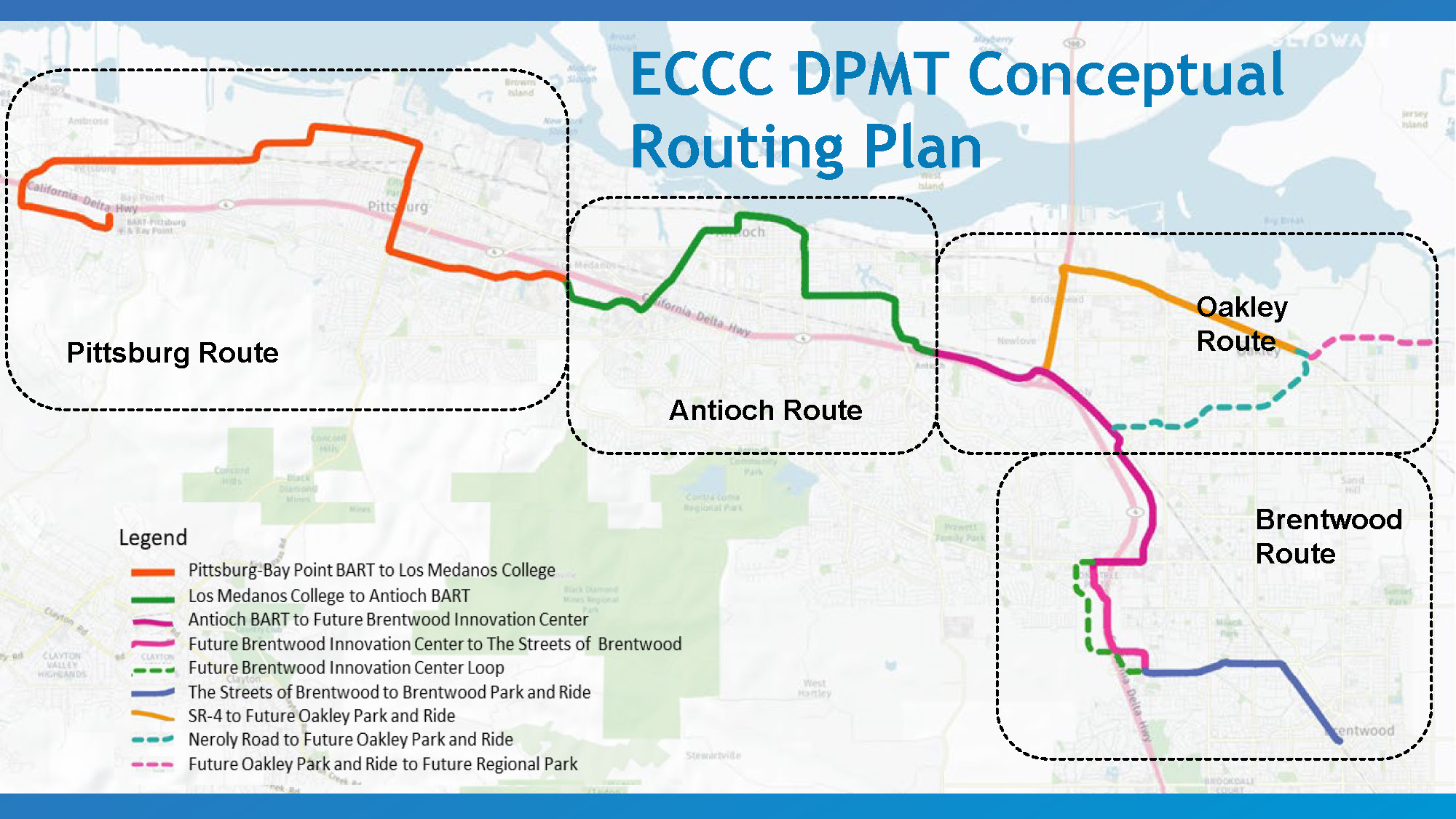
East County DPMT Conceptual Route Map. Source: CCTA

The shuttles will be fully separated from traffic and are a closed system, autonomous, electric, public micro transit solution. They will be on a virtual rail, with tires on their own pathways. It will be near Highway 4 but not in the median.

This new, fare-based transit solution will help alleviate the increasing congestion on Highway 4 in East County. The project also aims to enhance transit accessibility in East County by improving connections to existing options such as BART and local bus services.

In Spring 2021, the cities of Antioch, Brentwood, Oakley and Pittsburg completed the East County DPMT Feasibility Study (Study) to support a potential micro-transit deployment with Autonomous Vehicles (AVs) in East Contra Costa County. Subsequently, the CCTA and Tri Delta Transit partnered to evaluate the potential deployment of the East County DPMT project.

ECCP specializes in a revolutionary on-demand public transportation system. CCTA in partnership with Tri Delta Transit, selected ECCP as the preferred vendor for the DPMT project after a comprehensive evaluation process. CCTA, Tri Delta Transit, and ECCP will work together to deliver an initial viable segment of the larger project through a unique public-private partnership (P3).
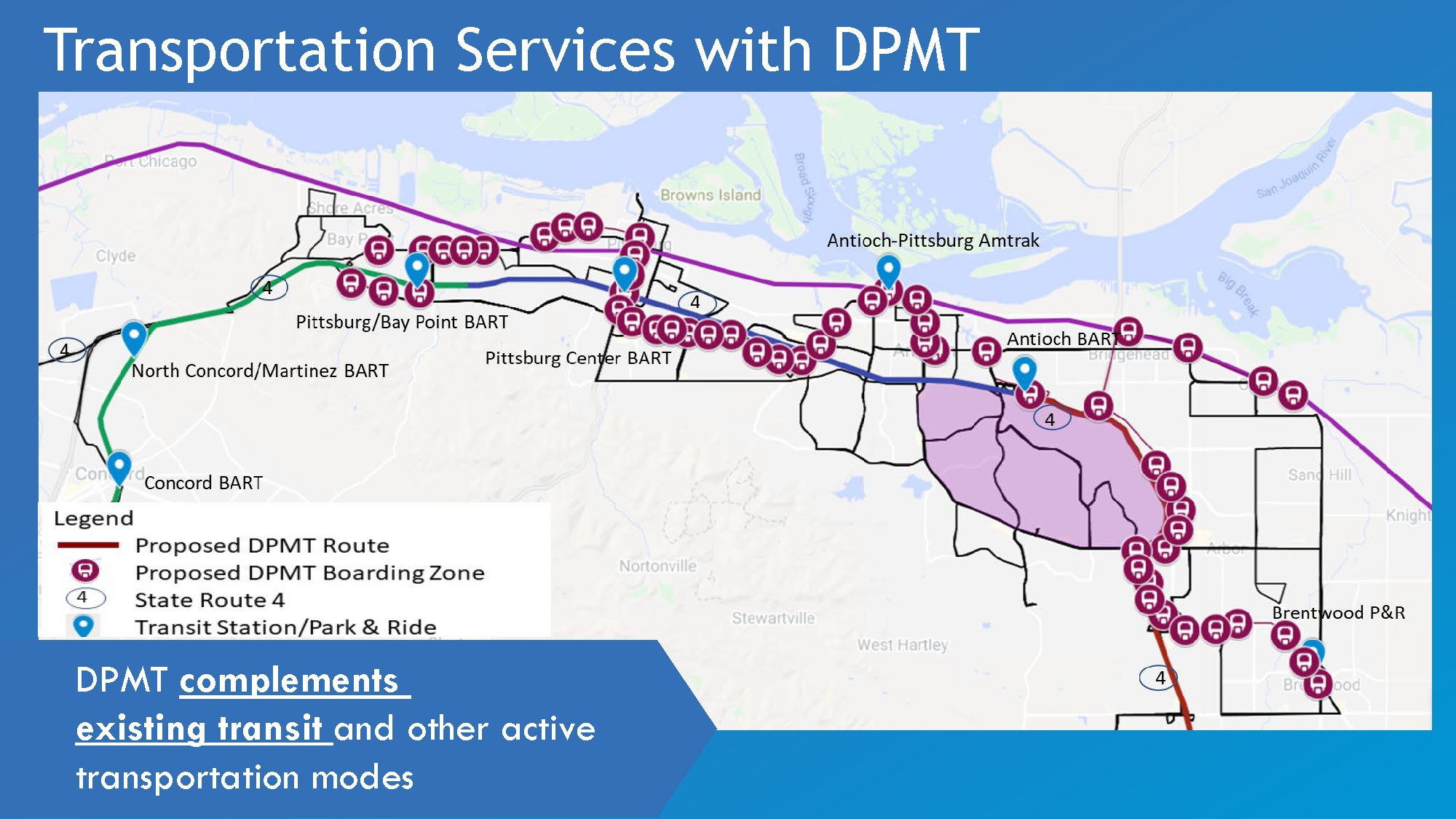
East County DPMT proposed station locations map. Source: CCTA

“We’re very excited about this project and believe it will significantly improve the quality of life in our community,” said CCTA Board Chair Federal Glover. “It’s a bold step towards a more sustainable and accessible future for Contra Costa.”

To actualize that future, CCTA and Tri Delta Transit determined last year that engaging a private sector partner to collaborate with would be the most beneficial strategy. The P3 approach has proven to be a highly efficient agreement, allowing for smoother delivery and deployment of transportation projects. P3s unlock the ability to quickly mobilize the resources required for state-of-the-art, effective, and sustainable transportation solutions, such as the DPMT project.

As East Contra Costa County prepares for extensive population growth and an increasingly overburdened and congested Highway 4, DPMT offers an opportunity to relieve congestion on the freeway and local arterials.

“This partnership is a significant milestone for us,” said Tri Delta Transit Board Chair, Lamar Thorpe. “By working with ECCP, we can leverage their expertise in innovative transportation technologies to better serve East County residents.”

While CCTA and Tri Delta Transit will now need to pursue regional, state and federal funding to support the project, the announcement of this partnership is the first step in the process. The Feasibility Study included a high-level cost estimate of $450M for the conceptual alignment shown in that study. The cost estimate is subject to change as it needs to be validated as the project progresses. During SPDA Phase 1, the ECCP will work collaboratively with CCTA, Tri Delta Transit and the East County cities to select an initial viable segment. The work will include developing the cost estimate and funding plan for this initial segment.

For more information about the DPMT Project see video or visit https://ccta.net/projects/east-county-dynamic-personal-micro-transit-project/

Allen Payton contributed to this report.
Filed Under: East County, News, Transportation

Traffic control on Marsh Creek Road during Bridges Replacement Project Nov. 28

November 22, 2023 By Publisher Leave a Comment

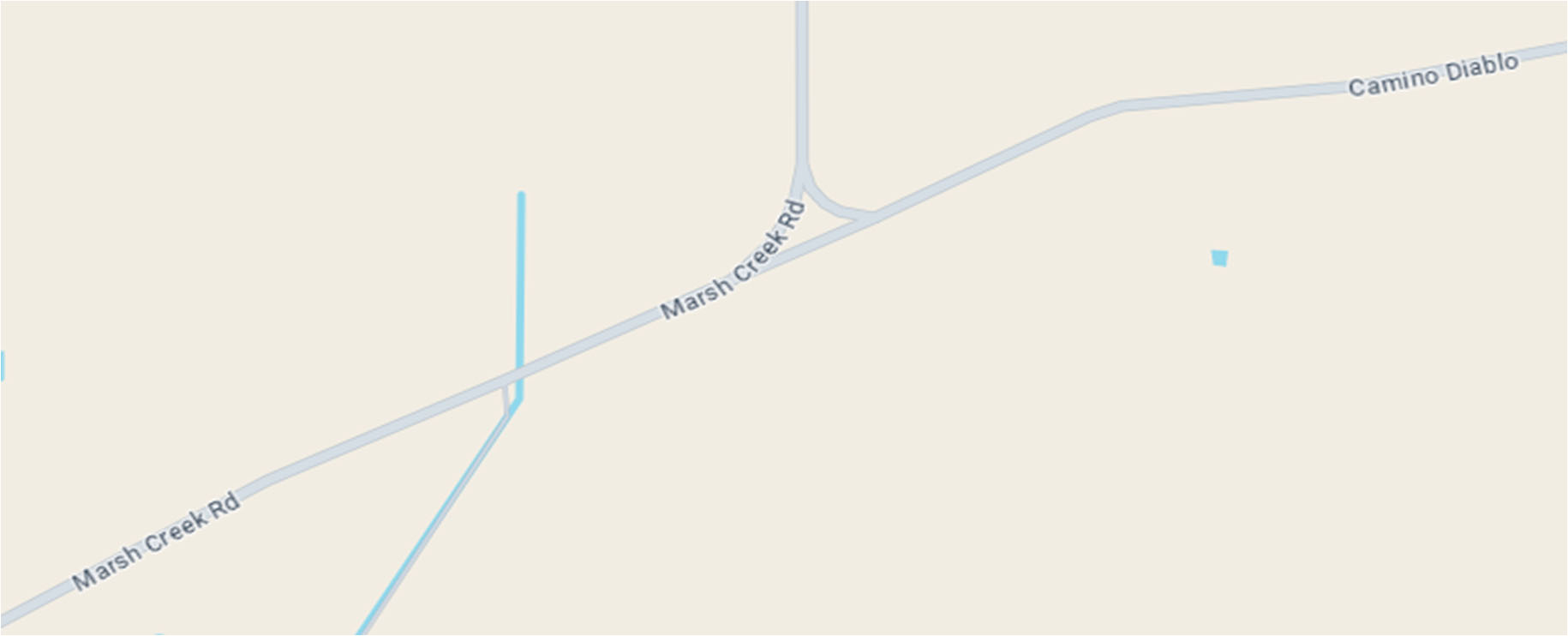
Traffic Control Work Area Map on Nov. 28, 2023. Source: CCCPWD

By Kelly Kalfsbeek, PIO, Community & Media Relations Coordinator, Contra Costa County Public Works Department

November 22, 2023, Clayton and Brentwood, CA- The Contra Costa County Public Works Department will be using traffic control on Marsh Creek Road, approximately .25 miles northwest of the intersection of Marsh Creek Road and Camino Diablo, on Tuesday November 28, 2023, barring unforeseen circumstances, for work that will take place between 9:00 a.m. and 2:00 p.m., weather permitting.

Traffic control is being used to ensure the safety of the travelling public during the installation of concrete girders on Bridge 145. Traffic will be stopped in both directions while the girders are being lifted into place. Delays of 15 minutes are expected.

This project is replacing two (2) bridges on Marsh Creek Road with two (2) new concrete bridges. Work is taking place on Marsh Creek Road at Bridges 143 and 145. Bridge 143 is located approximately 1.5 miles northwest of Deer Valley Road near the Clayton Palms Community. Bridge 145 is located approximately 3.0 miles east of Deer Valley Road near the road transition to Camino Diablo. Work also includes reconstruction of the bridge approach and construction of drainage facilities.

Funding for this project is provided by the federal Highway Bridge Program and local Gas Tax funds. To learn more about this project, please visit: www.contracosta.ca.gov/MCR-Bridge

About Contra Costa County Public Works Department:

Contra Costa County Public Works Department (CCCPWD) maintains over 660 miles of roads, 150 miles of streams, channels, and other drainage and over 150 County buildings throughout Contra Costa County. CCCPWD provides services such as Parks and Recreation, Sandbag Distribution and Flood Control throughout the unincorporated areas of Contra Costa County. CCCPWD operates two airports, Buchanan Field Airport in Concord, and Byron Airport in Byron. For more information about CCCPWD, please visit us at: www.cccpublicworks.org Follow us on Facebook, Instagram and X @cccpublicworks.

CONTACT: Project: Matt Taliaferro, 916.969.6646


Filed Under: Central County, Construction, Transportation

Contra Costa Transportation Authority commemorates Caldecott Tunnel Fourth Bore’s 10th anniversary

November 20, 2023 By Publisher Leave a Comment

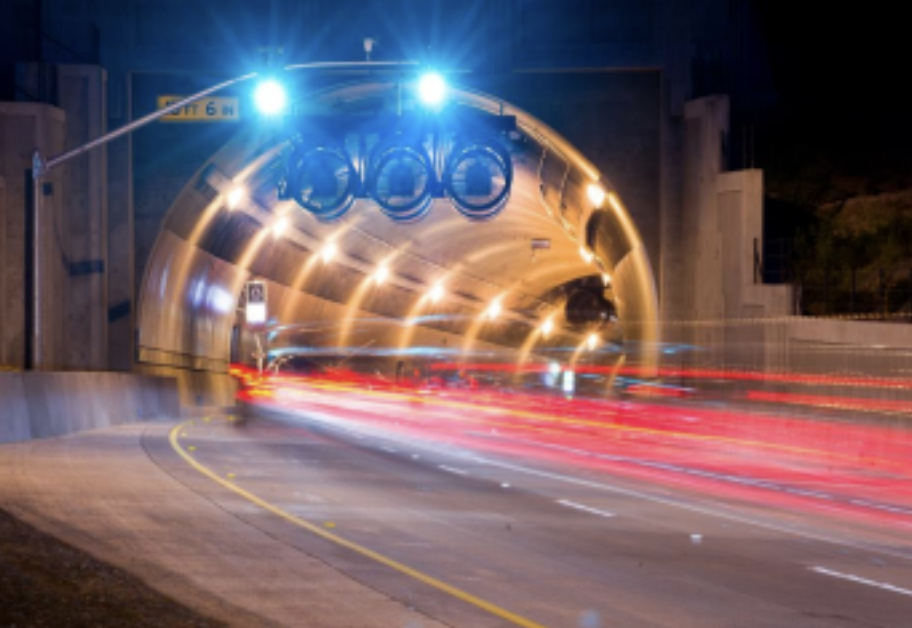
Caldecott Tunnel Fourth Bore. Photo: CCTA

Paid for primarily by federal stimulus funds, and taxpayer-supported Measure J county sales tax and bridge toll increases

This month, the Contra Costa Transportation Authority (CCTA) commemorates Caldecott Tunnel Fourth Bore’s 10 years of service alleviating congestion on Highway 24. Caldecott’s award-winning fourth bore was constructed on time and under budget at a cost of $417 million and finally allowed two permanently dedicated tunnels to service traffic in each direction. The passage was opened to traffic on November 15, 2013, successfully reducing travel times, enhancing safety for Caltrans maintenance workers, and improving mobility for those driving from east Contra Costa County to Oakland and San Francisco.

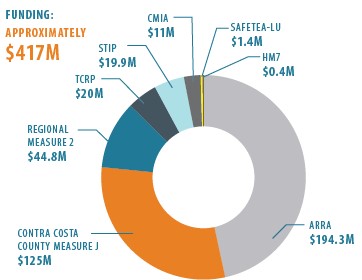
Caldecott Tunnel Fourth Bore funding. Source: CCTA

At the time of the groundbreaking on January 22, 2010, the shovel-ready Fourth Bore was the largest American Recovery and Reinvestment Act of 2009 stimulus funding in the nation of $194.3 million, a testament to the regional importance of the project and the hard work of the project team. Contra Costa County’s Measure J provided $125 million, the Bay Area Regional Measure 2 Bridge Toll increase provided $44.8 million, and the state provided $19.9 million.

“Ten years ago, we opened the fourth bore with much anticipated fanfare,” said CCTA Chair Federal Glover. “Many drivers today don’t remember when Caltrans workers had to shift the middle bore direction at least twice a day to provide lanes for peak commuters.  On some weekdays the direction of the middle bore could change up to six times, which was so inefficient for the 160,000 daily drivers who used the Caldecott each day and unsafe for the workers who were responsible for changing lanes.”

Prior to the tunnel opening, Caltrans reported westbound motorists experienced 52,585 vehicle hours of delay a month. After the fourth bore opened in 2013, the vehicle hours of delay dropped to 12,020 – a 77 percent improvement. CCTA 2023 data shows a continued reduction in delays compared to 2013 data compiled before the tunnel opened. Eastbound delays show a 42 percent reduction of vehicle hours of delay, while westbound delays show an 80 percent improvement – meaning fewer hours drivers waste sitting in traffic. (See Fourth Bore Project Fact Sheet)

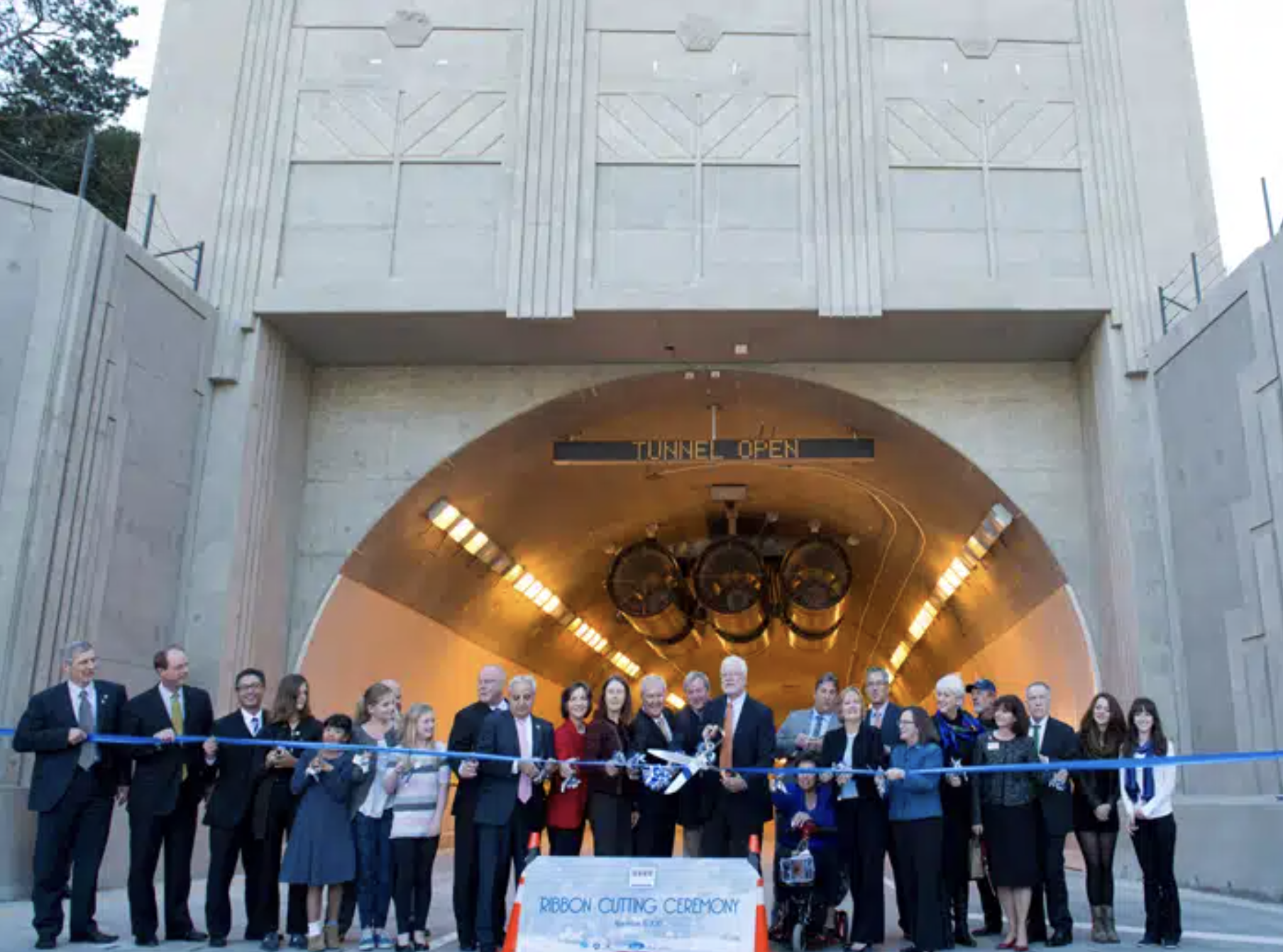
Officials and CCTA staff gather for the Caldecott Tunnel Fourth Bore ribbon cutting on Nov. 15, 2013. Photo: CCTA

“The Caldecott Tunnel Fourth Bore is a remarkable project that has served Bay Area drivers well since 2013,” CCTA Executive Director Timothy Haile stated. “CCTA’s landmark project will continue to be a legacy for decades to come.”

About the Contra Costa Transportation Authority

The Contra Costa Transportation Authority (CCTA) is a public agency formed by Contra Costa voters in 1988 to manage the county’s transportation sales tax program and oversee countywide transportation planning efforts. With a staff of twenty people managing a multi-billion-dollar suite of projects and programs, CCTA is responsible for planning, funding and delivering transportation infrastructure projects and programs throughout the County. CCTA also serves as the county’s designated Congestion Management Agency, responsible for putting programs in place to manage traffic levels. More information about CCTA is available at ccta.net.

Allen D. Payton contributed to this report.
 

Filed Under: History, News, Transportation

MTC data shows Bay Area pavement marked by mediocrity as pothole problems persist

November 18, 2023 By Publisher Leave a Comment

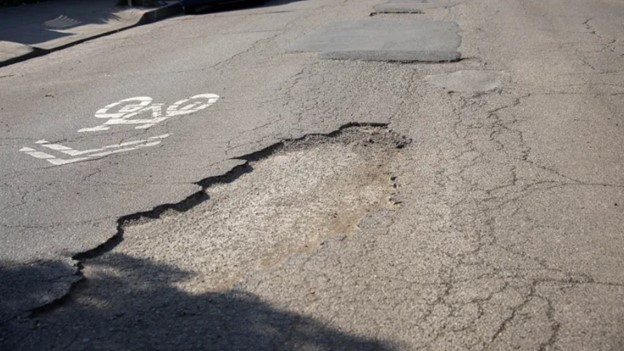
Photo source: MTC. Credit: Peter Beeler

Smaller cities show biggest year-to-year improvements

By John Goodwin, Metropolitan Transportation Commission

Overall pavement conditions on the Bay Area’s 44,000 lane-miles of local streets and roads landed once again in fair territory last year, with the typical stretch of roadway showing serious wear and likely to require rehabilitation soon. Data released today by MTC put the region’s 2022 pavement condition index (PCI) score at 67 out of a maximum possible 100 points, as computed on a three-year moving average basis. This marks the seventh consecutive year Bay Area streets and roads have registered an average score of 67 and underscores the continuing challenges faced by city and county public works departments.

“The new pavement data continues to be a mixed bag,” commented MTC Chair and Napa County Supervisor Alfredo Pedroza. “The lack of progress toward our goal of bringing all the Bay Area’s streets and roads into a state of good repair is frustrating. At the same time, we’re encouraged that our counties and cities have been able to prevent large-scale deterioration. And the dramatic improvements seen in some of our communities, particularly those where voters have approved local taxes for street rehabilitation, show us it’s a goal that can be reached.”

PCI scores of 90 or higher are considered “excellent.” These are newly built or resurfaced streets that show little or no distress. Pavement with a PCI score in the 80 to 89 range is considered “very good” and shows only slight or moderate distress, requiring primarily preventive maintenance.  The “good” category ranges from 70 to 79, while streets with PCI scores in the “fair” (60-69) range are becoming worn to the point where rehabilitation may be needed to prevent rapid deterioration. Because major repairs cost five to 10 times more than routine maintenance, these streets are at an especially critical stage. Roadways with PCI scores of 50 to 59 are deemed “at-risk,” while those with PCI scores of 25 to 49 are considered “poor.” These roads require major rehabilitation or reconstruction. Pavement with a PCI score below 25 is considered “failed.”

San Francisco, with a three-year moving average score of 74, is the only one of the Bay Area’s three largest cities to rank in the “good” category. San Jose, which has by far the largest street network in the Bay Area at nearly 4,500 lane-miles, recorded a three-year moving average score of 69. Oakland’s three-year moving average rose by two points to 54 (at-risk), but the city’s single-year score fell by one point to 57 from 58 in 2021.

The Sonoma County city of Sebastopol achieved the biggest one-year PCI gains of any Bay Area jurisdiction last year, with its 47 lane-miles of city streets registering a score of 55 (at-risk) for 2022, up 12 points from 43 (poor) the year before. Sebastopol’s three-year moving average score remains in the “poor” category at 48 points.

Other communities with big year-over-year improvements include the Santa Clara County city of Los Altos, which rose 10 points to 75 (good) last year from 65 (fair) in 2021 and the Marin County city of Larkspur, which recorded a 9-point increase to 85 (very good) from 76 (good). Larkspur as recently as 2017 registered one-year scores in the “poor” range but twice in recent years passed local sales tax measures dedicated to rehabilitating the city’s 65 lane-miles of streets. Cloverdale, Emeryville and Pacifica each registered 8-point improvements in their one-year PCI scores for 2022. Pacifica, which has long had some of the lowest average PCI ratings in the Bay Area, logged a one-year score of 49, compared to just 41 in 2021.

Five Bay Area municipalities registered three-year PCI scores in the “very good” range for the 2020-2022 period. These include Orinda (84); Cupertino and Palo Alto (83); and Brentwood, Dublin and unincorporated Solano County (80). Pavement conditions on Orinda streets were in the “at-risk” category in 2012, when voters in the Contra Costa County city approved a quarter-cent sales tax to support roadway maintenance and rehabilitation.

View the complete 2022 Pavement Conditions Summary, including percentages of local roadways in various conditions, and a listing of average PCI scores for the arterials, collector roadways and residential streets for all Bay Area counties and cities.

MTC is the regional transportation planning, financing and coordinating agency for the nine-county San Francisco Bay Area.


Filed Under: Bay Area, News, Transportation

MTC, Lyft announce plans to grow, improve Bay Wheels Regional Bikeshare System

November 17, 2023 By Publisher Leave a Comment

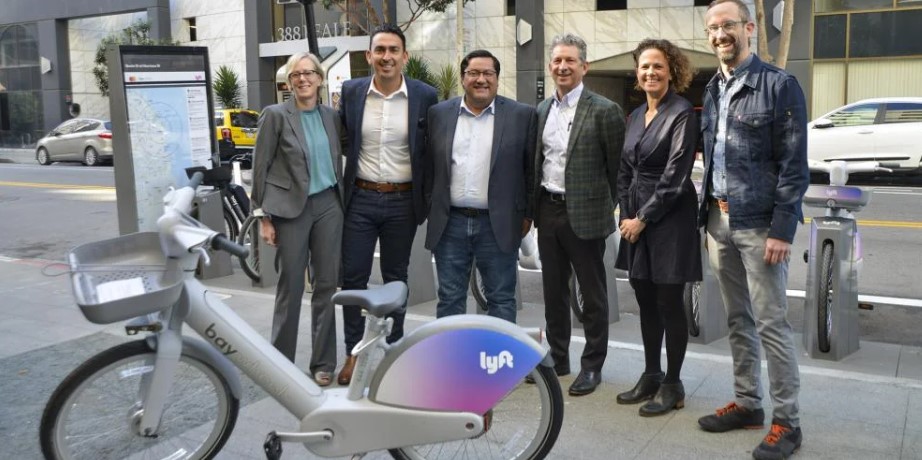
Photo by Joey Kotfica

Lower prices, thousands more e-bikes and 55 mew stations

By John Goodwin & Laura Krull, Metropolitan Transportation Commission

The Metropolitan Transportation Commission (MTC) and Lyft announced on Friday, Nov. 3, 2023, a drop in both annual membership prices for the Bay Area’s Bay Wheels regional bikeshare program and members’ e-bike usage fees, as well as the addition of more than 2,000 next generation e-bikes to the Bay Wheels fleet and the rollout of 55 additional docking stations in San Francisco, San Jose, Oakland, Berkeley and Emeryville. These measures are aimed at improving Bay Wheels’ long-term sustainability by growing ridership and reducing operational costs.

Beginning today, the cost of an annual Bay Wheels membership will drop to $150 from $169 and the cost for members to use a Bay Wheels e-bike will drop to 15 cents per minute from 20 cents per minute. In addition, monthly members will now automatically transition to an annual membership at no additional cost when they renew for five consecutive months. MTC next year will launch a pilot program to provide reduced-cost annual memberships for Bay Area college students.

“Bikesharing, and e-bikes in particular, play a central role in our Plan Bay Area 2050 strategy for reducing greenhouse gas emissions,” explained MTC Chair and Napa County Supervisor Alfredo Pedroza. “The Commission this year committed $20 million of federal climate investment money to promote the use of e-bikes for more of the short trips Bay Area residents make each day. These improvements to the Bay Wheels system are a big part of that commitment.”

The expansion of Bay Wheels’ e-bike fleet will begin this week in San Jose and San Francisco, with the addition of e-bikes to Bay Wheels locations in Oakland, Berkeley and Emeryville expected to begin in the coming months, pending local approval. E-bikes’ ability to climb hills, travel longer distances, and attract riders of varying physical abilities have made them a transformational mobility option for Bay Area residents and visitors alike.

“E-bikes are perfect for San Francisco — they make our steep hills flat. We’re grateful to MTC and Lyft for helping make e-bikes more accessible to more people,” said Jeff Tumlin, SFMTA Director of Transportation.

Bay Wheels’ existing e-bikes are used three times as often as classic pedal bikes. The system’s new generation e-bikes have double the battery life, a more powerful motor for going uphill, improved stability and ergonomics, and better theft deterrents. These new bikes will exclusively dock in stations to improve predictability and availability for riders.

“I’m thrilled that Lyft and MTC are helping San Jose expand access to alternative modes of transportation in our growing downtown,” said Mayor Matt Mahan. “E-bikes are a fun and affordable way to get around the city and they have the wonderful benefit of reducing traffic congestion and carbon emissions.”

“We are ready and eager to help make MTC’s plan a reality to strengthen Bay Wheels and benefit the regional transportation network,” said Caroline Samponaro, Vice President of Transit and Micromobility Public Policy at Lyft. “Our shared goal is get more people to choose bikes for their transportation needs and we’re taking action on the three things that will make the greatest impact: lower prices for members, new hill-climbing e-bikes and a more robust station network.”

To enhance the growth of Bay Wheels’ e-bike fleet, MTC and Lyft are piloting grid-connected charging stations using Lyft’s next generation station technology. Electrified stations improve e-bike availability for riders by increasing the number of bikes with sufficient battery charge and making operations more efficient. E-bike batteries currently are charged in a warehouse and manually swapped at the station.

MTC is the transportation planning, financing and coordinating agency for the nine-county San Francisco Bay Area. Launched in 2017, Bay Wheels is the Bay Area’s regional bikeshare program with over 6,000 bicyles  —  both pedal-powered and pedal-assist electrict bikes — at more than 500 stations in San Jose, San Francisco, Oakland, Berkeley and Emeryville. Lyft operates the Bay Wheels program under a contract managed by MTC.


Filed Under: Bay Area, News, Transportation

MTC approves $776.2 million emergency transit operations funding plan from Senate Bill 125

November 16, 2023 By Publisher Leave a Comment

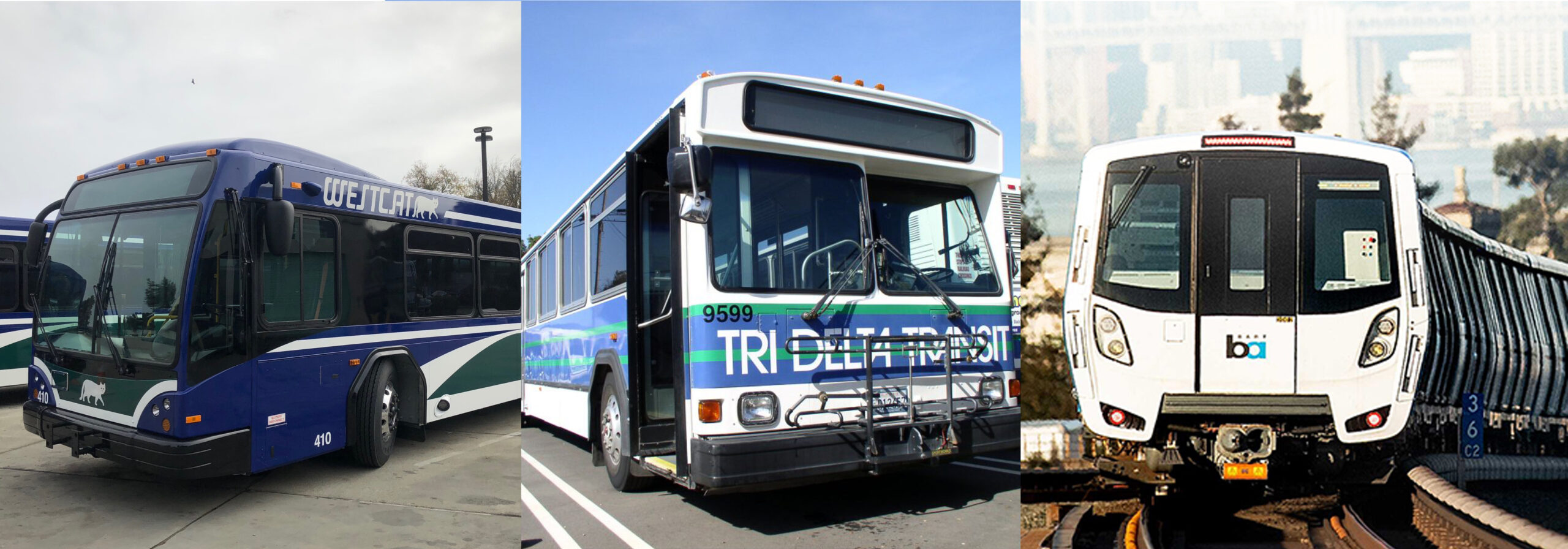
Includes $3.1 million for WestCAT, $741,000 for Tri Delta Transit, $352 million for BART

Funding distribution still is subject to state approval

The Metropolitan Transportation Commission (MTC) on Wednesday, Nov. 15, 2023, approved an emergency transit operations funding plan that, if approved by the state, will use state and regional funds for transit operations to address Bay Area transit agencies’ most dire funding shortfalls and help them avoid service cuts.

Today’s action by the Commission approves the principles informing the funding distribution, the funding distribution framework, and regional accountability measures(link is external) for funding from the Transit and Intercity Rail Program (TIRCP), Zero-Emission Transit Capital Program (ZETCP), and various regional funding sources according to the guidelines described in Senate Bill (SB) 125. The resolution also makes the transit agency boards’ acceptance of the accountability guidelines a requirement for receiving the funds. The actual distribution of the funds is subject to the submittal of these documents to the California State Transportation Agency (CalSTA) and CalSTA’s approval of the documents.

Distribution amounts will be reassessed annually to respond to changing conditions, and the disbursement of operating funds will be contingent upon transit agencies meeting or making significant progress toward a set of accountability requirements, including customer experience and efficiency enhancements.

For all agencies receiving emergency operating money, the accountability requirements will include participation in ongoing Transit Transformation Action Plan initiatives, and implementation of schedule coordination and real-time transit data improvements. Other accountability requirements are specific to individual operators and focus on safety and security, fare evasion reduction, and comprehensive service improvements.

Under this plan, MTC will contribute an additional $300 million in regional funds to help address the funding shortfall and to keep transit operational.

MTC will distribute funds according to the following framework:

MTC will distribute funds according to this framework.
Agency FY24-25 FY25-26 Total ($) Total (%)
SFMTA $99,477 $209,328 $308,805 40%
BART $58,211 $293,837 $352,048 45%
AC Transit $4,000 $28,569 $32,569 4%
Caltrain $0 $25,449 $25,449 3%
Golden Gate Transit $2,838 $38,263 $41,101 5%
Other Operators $4,661 $9,574 $14,235 2%
ACE $1,777 $1,829 $3,605 n/a
ECCTA (Tri Delta Transit) $503 $238 $741 n/a
LAVTA $897 $1,392 $2,289 n/a
NVTA $1,485 $966 $2,450 n/a
SolTrans $0 $2,036 $2,036 n/a
WestCAT (West Contra Costa) $0 $3,113 $3,113 n/a
Regional Network Management $2,000 $0 $2,000 0%
Bay Area Total $171,187 $605,020 $776,207 100%

Amounts shown in thousands ($1,000)

In June, Gov. Newsom signed into law California’s fiscal 2023-24 state budget, which includes $1.1 billion in flexible transportation funding to help support transit operations. The state investment will help transit agencies avoid a near-term ‘fiscal cliff’ that has resulted from the COVID-19 pandemic and associated changes in travel patterns and that likely would have led to deep service cuts as early as this year by Muni, BART and other agencies whose fare revenues remain well below pre-pandemic levels.

SB 125 also requires that MTC collect and summarize data from transit operators on a variety of topics, including expenditures on safety, opportunities for enhanced coordination and improvements, and monthly ridership statistics. MTC by June 30, 2026, must submit a Long-Term Financial Plan that demonstrates the implementation of ridership recovery strategies and provides a five-year operating funding outlook.

In order to meet the December 31, 2023, deadline to submit materials to CalSTA, staff will return to the Commission in December to request adoption of the Short-Term Financial Plan. MTC will receive FY2023-24 SB 125 funds no later than April 30, 2024, and will be eligible to receive FY2024-25 funds early in that fiscal year, pending CalSTA’s review of MTC’s allocation package.


Filed Under: BART, East County, News, Transportation, West County

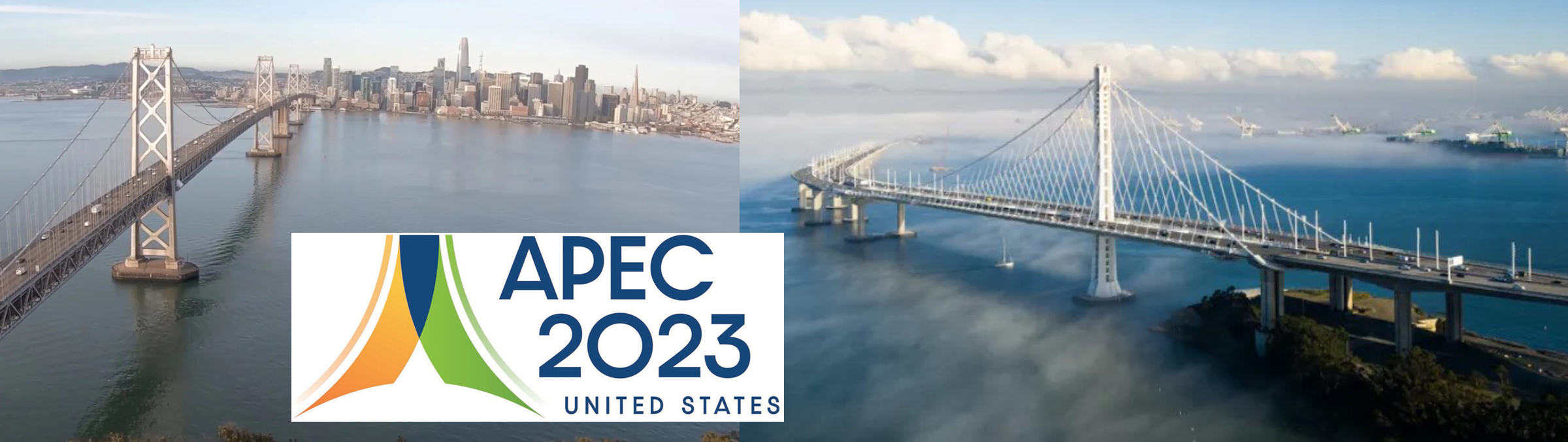
Avoid travel headaches: Check 511 during APEC 2023 Summit Nov. 13-19

November 12, 2023 By Publisher Leave a Comment

Photos: MTC

Two lanes of Bay Bridge will be closed.

Various ramps and ped/bike path closures scheduled along I-80 and U.S. 101 in San Francisco due to Asia-Pacific Economic Cooperation 2023 Summit

Information from MTC, CalTrans & CHP

People traveling to, from and within San Francisco next week can expect heavy congestion and traffic delays; transit reroutes, delays and crowding; and reduced or inconvenient pedestrian and bicycle access during the Asian-Pacific Economic Cooperation (APEC) 2023 Summit taking place in the city from Monday, Nov. 13, through Sunday, Nov. 19.

APEC is expected to draw more than 20,000 people, including heads of state and dignitaries from over 20 member economies, to downtown San Francisco. MTC encourages people to avoid traveling to San Francisco next week if possible. For those who must travel to or through the city, MTC encourages them to ride transit and to visit 511.org for critical travel alerts related to street closures and transportation delays.

In cooperation with the California Highway Patrol, and in coordination with our federal, state, and local law enforcement partners, Caltrans is implementing enhanced safety measures throughout our highway systems in and around San Francisco during the Asia-Pacific Economic Cooperation (APEC) 2023 summit starting Wednesday, November 15. The U.S. Secret Service recently designated the APEC summit as a National Special Security Event, requiring heightened security measures in and around the city of San Francisco.

Closures: At the request of federal, state, and local law enforcement agencies, Caltrans will be implementing the following closures to ensure the safety and security of all attendees and residents:

San Francisco / Oakland Bay Bridge

Closures of #1 (left) lane on Eastbound I-80 and #5 (right) lane on Westbound I-80

o Tuesday, November 14 through Friday, November 17, 2023.

o 4 Day Closure, beginning 11/14 at 5:00 AM, ending 11/17 at 9:00 PM.

o Controlled access to Bay Bridge Ped/Bike Path.

o No impacts to transit bus services.

o Treasure Island on-/off-ramps, Fremont Street off-ramp remain open.

Closures of 4th Street off-ramp from Eastbound I-80 and 5th Street off-ramp from Westbound I-80

o Wednesday, November 15 through Friday, November 17, 2023.

o 5:00 AM to 9:00 PM (Daily).

Closure of NB U.S. 101 Dana Bowers Vista Point off-ramp

o Tuesday, November 14 through Saturday, November 18 (Five Day Closure).

o No access to Dana Bowers Vista Point for vehicles, bicycles, or pedestrians.

o Golden Gate Bridge Pedestrian Path closed at north end of bridge; no pedestrian access from Marin County.

o Bicycle Path on west side of bridge to remain open between Marin County and San Francisco.

California Highway Patrol officers will be present to enforce these closures. We understand that these closures may cause temporary inconvenience, but they are essential to ensure the safety and security of this significant event and to promote immediacy and availability for emergency response. We encourage you to plan your travels, accordingly, allow extra time for your commute, and consider using alternative routes or public transportation during this period. Your patience and cooperation are greatly appreciated as we work to ensure the success of the APEC 2023 summit and the safety of our community.

Muni will reroute several transit lines from Nov. 13-19, and Muni Metro T-Third service will be suspended. For more details, visit SFMTA’s APEC information page. BART, Caltrain and the San Francisco Bay Ferry do not anticipate any major APEC-related impacts to their services.

For the Golden Gate Bridge, the Dana Bowers Vista Point off-ramp from northbound U.S. 101 will be closed from Nov. 14-18. There will be no access to the Vista Point for vehicles, bicyclists or pedestrians. The Golden Gate Bridge Pedestrian Path will be closed at north end of bridge, and there will be no pedestrian access from Marin County.

Most APEC activities will take place in the South of Market and Nob Hill neighborhoods. Due to the scale of the gathering, APEC also may create travel impacts on travel in other areas. People should expect a range of street impacts in and around the United States Secret Service security zones (Vehicle Exclusion Zones)(link is external) established for the conference and conference-related events. Pedestrians will be banned from APEC security zones unless they live or work there; and bicycles, whether traditional or e-bikes, also will be barred.

For 24/7 traffic updates, please visit 511.org: https://twitter.com/511SFBay.  MTC operates 511 in partnership with Caltrans, the California Highway Patrol and other transportation agencies.

For real-time traffic, click on Caltrans QuickMap: http://quickmap.dot.ca.gov/

Filed Under: Bay Area, CHP, News, Transportation

County to fix the Dam Road Nov. 1-16

October 31, 2023 By Publisher 1 Comment

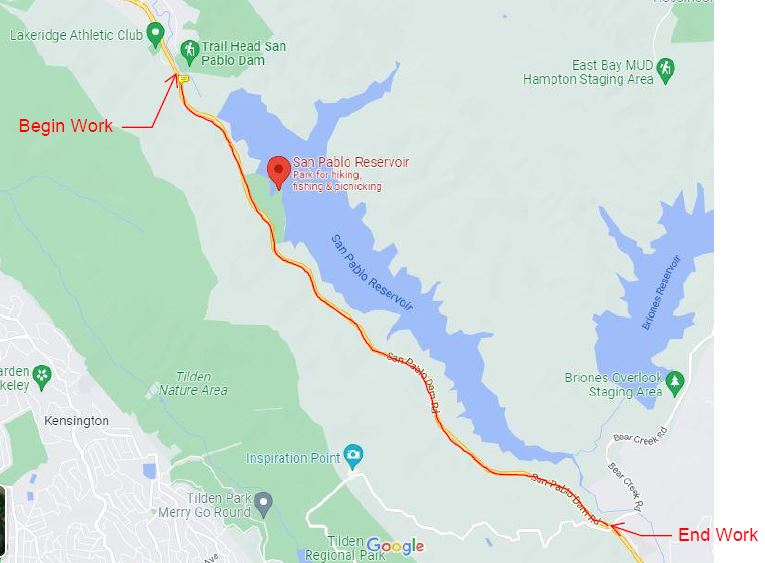
San Pablo Dam Road Work Area Map. Source: CCC Public Works Dept.

San Pablo Dam Road Winter prep work begins Wednesday morning

By Kelly Kalfsbeek, PIO, Contra Costa County Public Works Department

October 27, 2023, El Sobrante & Orinda, CA – Contra Costa County Public Works Department will be performing work along San Pablo Dam Road starting on Wednesday, November 1, 2023, through Thursday, November 16, 2023, barring unforeseen circumstances.  Work will occur between 9:00 am and 4:00 pm, Monday through Thursday, weather permitting. Work will take place on San Pablo Dam Road, between Tri Lane in El Sobrante and Wildcat Canyon Road/Bear Creek Road in Orinda.  The work will consist of clearing slides and cleaning drainage ditches for winter storm preparation and safety.

Message boards will be posted to advise drivers before scheduled work begins. Traffic control, including lane and shoulder closures, will be used. Drivers should expect delays up to 15 minutes near the work area.

About Contra Costa County Public Works Department:

Contra Costa County Public Works Department (CCCPWD) maintains over 660 miles of roads, 150 miles of streams, channels, and other drainage and over 150 County buildings throughout Contra Costa County. CCCPWD provides services such as Parks and Recreation, Sandbag Distribution and Flood Control throughout unincorporated areas of Contra Costa County.  CCCPWD operates two airports, Buchanan Field Airport in Concord, and Byron Airport in Byron. For more information about CCCPWD, please visit us at www.cccpublicworks.org

CONTACT: Michael Stevens, 925.313.7038

Filed Under: Construction, News, Transportation

Contra Costa seeks new public rep for county transportation Citizen Advisory Committee

October 17, 2023 By Publisher Leave a Comment

Application deadline Nov. 30

Contra Costa County is seeking an individual to serve on the Contra Costa Transportation Authority (CCTA) Citizen Advisory Committee (CAC) as Public Representative on behalf of the County. The individual will serve a four-year term in a volunteer capacity. The individual selected for this position must:

  • Live in the unincorporated area of the County;
  • Attend virtual committee meetings on the 4th Wednesday of every month at 6 p.m.; and
  • Review agenda packets and develop input on agenda items beforehand.

The CCTA CAC reviews transportation programs and plans throughout the County, with the objective of advising and providing recommendations to the CCTA Board of Directors. This includes transportation projects and programs funded by the county half-cent transportation sales tax, which CCTA oversees. CCTA maintains its standing CAC in order to provide citizen perspective, participation, and involvement in the Measure J-funded and voter-approved Transportation Expenditure Plan and Growth Management Program. The CAC members have an opportunity to learn about and influence transportation and growth issues within Contra Costa County and in other jurisdictions through scheduled presentations by transportation experts, advocates, and CCTA staff.

Application forms are available from the Clerk of the Board of Supervisors or by calling (925) 655-2000.

Please submit completed applications to the Department of Conservation & Development, 30 Muir Road, Martinez, CA 94553 (Attn: Robert Sarmiento) or email transportation@dcd.cccounty.us with “CCTA CAC County Representative Application” in the subject line no later than November 30, 2023.


Filed Under: Government, Transportation

MTC, partners launch massive Bay Area Travel Survey effort

October 12, 2023 By Publisher Leave a Comment

Thousands of invitations to be mailed, special focus on SF and South Bay 

SAN FRANCISCO, Oct. 12, 2023 . . . The Metropolitan Transportation Commission (MTC) this fall is teaming with the San Francisco County Transportation Authority (SFCTA), the Santa Clara Valley Transportation Authority (VTA) and other partners to conduct a major survey designed to learn more about how people travel throughout the Bay Area. Beginning today, some 750,000 households throughout the nine-county region will receive invitations to participate in what is known as the Bay Area Travel Study

The Bay Area Travel Study is designed to help MTC and other transportation agencies plan for a more efficient and more effective regional transportation network.

“Our goal is a Bay Area that is affordable, connected, diverse, healthy and economically vibrant for all of our residents and is also a great place for all our region’s visitors to enjoy,” observed MTC Chair and Napa County Supervisor Alfredo Pedroza. “Knowing more about how, when and why people go from place to place will help the Commission develop the right policies and make the smartest investments to achieve that goal.”

MTC expects to mail these invitations in four separate waves between now and December. Those who receive an invitation letter can expect to receive a follow-up postcard about a week later. A unique code will be provided to each household that accepts the invitation to participate, and each household will be assigned a date on which to start logging its travel activity in a survey diary. Respondents will be able to complete the study online, by phone, or through the rMoveTM smartphone app developed by RSG, a Vermont-based research firm hired by MTC as a consultant for the study.

MTC is the transportation planning, financing and coordinating agency for the nine-county San Francisco Bay Area. More information about the Bay Area Travel Study may be found on the MTC website at https://bayareatravelstudy.mtc.ca.gov.


Filed Under: Bay Area, Transportation

  • « Previous Page
  • 1
  • …
  • 9
  • 10
  • 11
  • 12
  • 13
  • …
  • 31
  • Next Page »
Liberty-Tax-Jan-Apr-2026
Deer-Valley-Chiro-06-22

Copyright © 2026 · Contra Costa Herald · Site by Clifton Creative Web