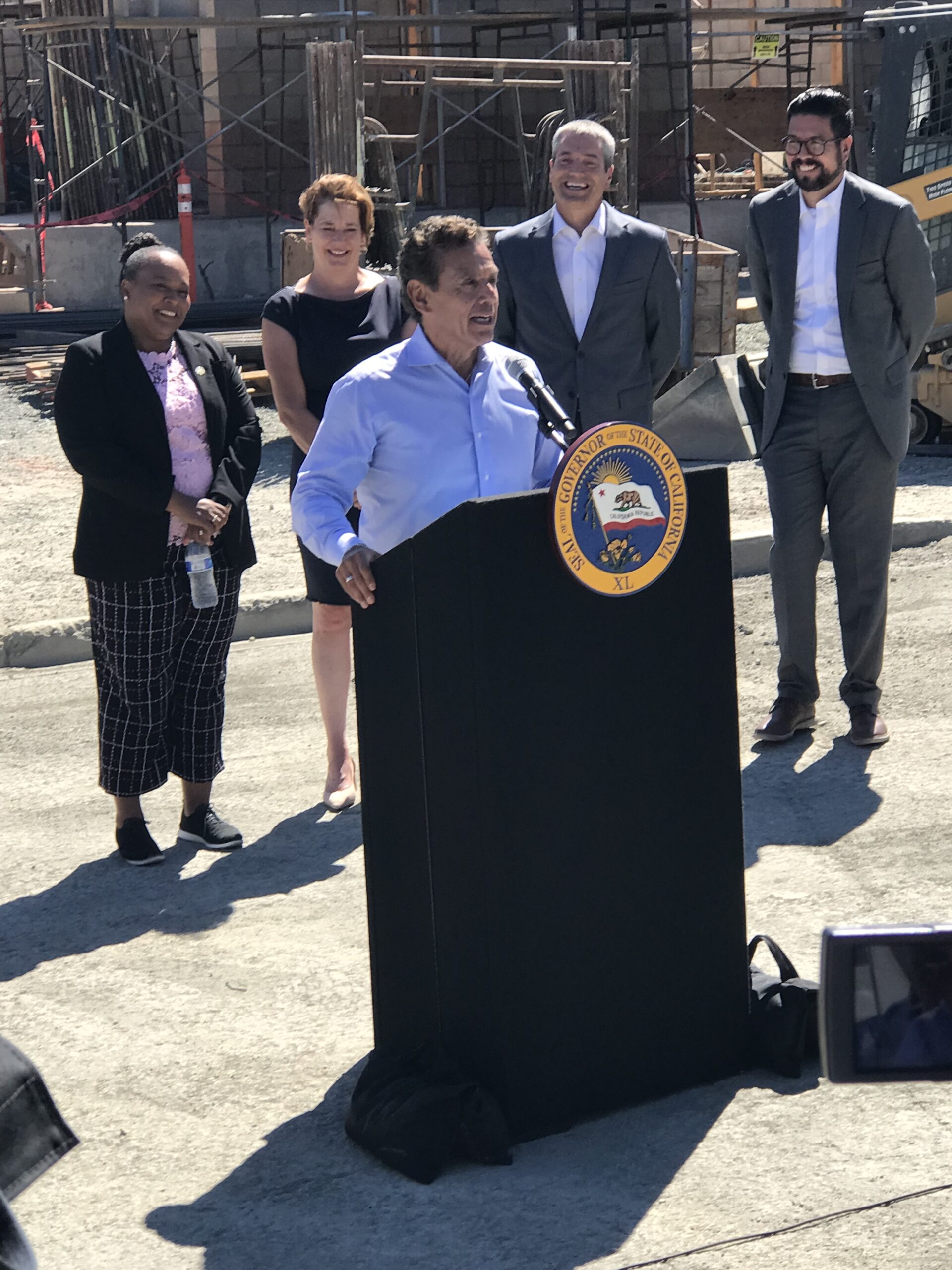
SACRAMENTO – The California Department of Justice has announced that personal information was disclosed in connection with the June 27, 2022 update of its Firearms Dashboard Portal. Based on the Department’s current investigation, the incident exposed the personal information of individuals who were granted or denied a concealed and carry weapons (CCW) permit between 2011-2021. Information exposed included names, date of birth, gender, race, driver’s license number, addresses, and criminal history. Social Security numbers or any financial information were not disclosed as a result of this event. Additionally, data from the following dashboards were also impacted: Assault Weapon Registry, Handguns Certified for Sale, Dealer Record of Sale, Firearm Safety Certificate, and Gun Violence Restraining Order dashboards. DOJ is investigating the extent to which any personally identifiable information could have been exposed from those dashboards and will report additional information as soon as confirmed.“This unauthorized release of personal information is unacceptable and falls far short of my expectations for this department,” said Attorney General Rob Bonta. “I immediately launched an investigation into how this occurred at the California Department of Justice and will take strong corrective measures where necessary. The California Department of Justice is entrusted to protect Californians and their data. We acknowledge the stress this may cause those individuals whose information was exposed. I am deeply disturbed and angered.”On the afternoon of June 27, 2022, DOJ posted updates to the Firearms Dashboard Portal. DOJ was made aware of a disclosure of personal information that was accessible in a spreadsheet on the portal. After DOJ learned of the data exposure, the department took steps to remove the information from public view and shut down the Firearms Dashboard yesterday morning. The dashboard and data were available for less than 24 hours.In the coming days, the Department will notify those individuals whose data was exposed and provide additional information and resources. California law requires a business or state agency to notify any California resident whose unencrypted personal information, as defined, was acquired, or reasonably believed to have been acquired, by an unauthorized person.DOJ asks that anyone who accessed such information respect the privacy of the individuals involved and not share or disseminate any of the personal information. In addition, possession of or use of personal identifying information for an unlawful purpose may be a crime. (See Cal Penal Code Sec. 530.5.)We are communicating with law enforcement partners throughout the state. In collaboration, we will provide support to those whose information has been exposed.In an abundance of caution, the Department of Justice will provide credit monitoring services for individuals whose data was exposed as a result of this incident. DOJ will directly contact individuals who have been impacted by this incident and will provide instructions to sign up for this service.Any Californian may take the following steps to immediately protect their information related to credit:Monitor your credit. One of the best ways to protect yourself from identity theft is to monitor your credit history. To obtain free copies of your credit reports from the three major credit bureaus go to https://www.annualcreditreport.com.Consider placing a free credit freeze on your credit report. Identity thieves will not be able to open a new credit account in your name while the freeze is in place. You can place a credit freeze by contacting each of the three major credit bureaus:Equifax: https://www.equifax.com/personal/credit-report-services/credit-freeze/; 888-766-0008Experian: https://www.experian.com/freeze/center.html; 888-397-3742TransUnion: https://www.transunion.com/credit-freeze; 800-680-7289Place a fraud alert on your credit report. A fraud alert helps protect you against the possibility of someone opening new credit accounts in your name. A fraud alert lasts 90 days and can be renewed. To post a fraud alert on your credit file, you must contact one of the three major credit reporting agencies listed above. Keep in mind that if place a fraud alert with any one of the three major credit reporting agencies, the alert will be automatically added by the other two agencies as well.Additional Resources. If you are a victim of identity theft, contact your local police department or sheriff’s office right away. You may also report identity theft and generate a recovery plan using the Federal Trade Commission’s website at identitytheft.gov. For more information and resources visit the Attorney General’s website at oag.ca.gov/idtheft.
Brentwood man enters special April 5 Assembly election race as write-in candidate to challenge Suisun mayor
Supports cutting gas taxes, opposes facemask mandates for school children, announces endorsements; district includes most of East County
Erik Elness, a 25-year Brentwood resident and business owner, filed paperwork with the Contra Costa County Elections Department on Friday, March 18, 2022, and was certified as an official ‘Write-In Candidate’ for the April 5, 2022 Assembly District 11 Special Election. The AD-11 seat was vacated when former Assemblyman Jim Frazier resigned on December 31st.
“I decided to run as a write-in candidate, because I wanted to give the hard-working voters of our Contra Costa and Solano district a choice of who they want to vote for in this special election,” Elness stated. “Government has grown bigger and more controlling, and individual liberty has been gradually taken from us.”
A Republican, he is challenging Democrat Suisun City Mayor Lori Wilson who is the only candidate to file in the race. While her name will appear on the ballot, voters must write in Elness’ name to vote for him. The winner will serve out the remainder of the term through the end of the year, in the current district which includes Antioch, Brentwood, Oakley, Discovery Bay, Bethel Island, Byron, Knightsen and portions of Pittsburg in the Contra Costa County part of the district.
Within several days of announcing his candidacy, Elness was unanimously endorsed by the Solano County Republican Central Committee and endorsed by CD-8 Congressional Candidate, Major Rudy Recile (U.S. Army, retired), former CD-9 Congressional candidate Antonio Amador, and former AD-11 Assembly candidate Dave Miller. In addition, former AD-11 candidate Lisa Romero has endorsed him, as well.
Elness said he was shocked to learn the Assembly Democrats recently voted against temporarily suspending 50 cents per gallon off the state gasoline taxes. He agreed with the bill to cut state gas prices, adding, “the people of California need relief, now from increasing gas prices, impacting their budgets and our economy. That bill was one simple way to help accomplish that.”
Elness also stated, “I’m ‘pro-choice’ when it comes to COVID vaccines and masks. I don’t believe our children should be forced to wear masks at school.”
“Sacramento politicians are out of touch with the needs of the people who live and work in our neighborhoods. I worked corporate jobs for 23 years and I’ve been a small business owner for nearly 13 years, running a successful family business with my wife,” Elness shared. “We deserve a representative in Sacramento in tune with the issues, concerns, and challenges facing families in our community.”
“I support equal opportunity in education, with every child in every neighborhood receiving a quality education,” he stated. “I applaud successful public schools (my kids had a lot of great teachers in public schools.) But I believe families should have choices when it comes to home school, private or charter schools.’
“I strongly support the U.S. Constitution and I will strongly oppose any new State laws that infringe on our Civil Rights, including our Second Amendment right to bear arms,” Elness continued. “I support our firefighters, local law enforcement officers and deputy district attorneys who work tirelessly to protect our Constitutional liberty and keep our neighborhoods safe.”
To learn more follow his campaign on Facebook at Erik Elness for CA Assembly, District 11 and Instagram at erikelnessforassembly.
To vote for Elness in the April 5 Special Election, simply fill in the ‘bubble’ in the write in section and neatly print his name, “Erik Elness” on the write in line.
Allen D. Payton contributed to this report.
Gov. Newsom lifts mask mandate for unvaccinated indoors March 1, schools March 12
Still required on public transit
Joined by governors of Oregon, Washington to offer more updated health guidance for the three western states
SACRAMENTO – With declining case rates and hospitalizations across the West, California, Oregon and Washington are moving together to update their masking guidance. After 11:59 p.m. on March 11, California, Oregon and Washington will adopt new indoor mask policies and move from mask requirements to mask recommendations in schools.
State policies do not change federal requirements, which still include masks on public transit.
Statement from California Governor Gavin Newsom: “California continues to adjust our policies based on the latest data and science, applying what we’ve learned over the past two years to guide our response to the pandemic. Masks are an effective tool to minimize spread of the virus and future variants, especially when transmission rates are high. We cannot predict the future of the virus, but we are better prepared for it and will continue to take measures rooted in science to keep California moving forward.”
In California, starting March 1, masks will no longer be required for unvaccinated individuals, but will be strongly recommended for all individuals in most indoor settings. After March 11, in schools and childcare facilities, masks will not be required but will be strongly recommended. Masks will still be required for everyone in high transmission settings like public transit, emergency shelters, health care settings, correctional facilities, homeless shelters and long-term care facilities. As always, local jurisdictions may have additional requirements beyond the state guidance.
Newsom also presented his COVID SMARTER Plan introduced on Feb. 17, which stands for Shots, Masks, Awareness, Readiness, Testing, Education and Rx.
Statement from Oregon Governor Kate Brown: “Two years ago today, we identified Oregon’s first case of COVID-19. As has been made clear time and again over the last two years, COVID-19 does not stop at state borders or county lines. On the West Coast, our communities and economies are linked. Together, as we continue to recover from the Omicron surge, we will build resiliency and prepare for the next variant and the next pandemic. As we learn to live with this virus, we must remain vigilant to protect each other and prevent disruption to our schools, businesses, and communities––with a focus on protecting our most vulnerable and the people and communities that have been disproportionately impacted by COVID-19.”
In Oregon, the Oregon Health Authority rules requiring masks in indoor public places and schools will be lifted after 11:59 p.m. on March 11. Other state and federal requirements, such as those for health care settings, public transit, and other specialized settings, will remain in place for a period of time.
Statement from Washington Governor Jay Inslee: “We’ve continued to monitor data from our state Department of Health, and have determined we are able to adjust the timing of our statewide mask requirement. While this represents another step forward for Washingtonians, we must still be mindful that many within our communities remain vulnerable. Many businesses and families will continue choosing to wear masks, because we’ve learned how effective they are at keeping one another safe. As we transition to this next phase, we will continue to move forward together carefully and cautiously.”
In Washington, indoor mask requirements will be lifted as of 11:59 p.m. on March 11. This new date does not change any other aspect of the updated mask requirements Inslee announced last week. Masks will still be required in certain settings including health care, corrections facilities and long-term care facilities. The Washington State Department of Health will be issuing new guidance for K-12 schools next week so schools can prepare to implement updated safety protocols.
Allen D. Payton contributed to this report.
Assemblywoman Bauer-Kahan, Supervisor Burgis introduce bill targeting illegal dumping

Supervisor Diane Burgis stand in front of a truck with nine yards of garbage illegally dumped on roads in the county during press conference in Antioch on Thursday, Feb. 17, 2022. Photo by Allen D. Payton
AB 2374 increases fines, adds teeth to state law on illegal dumping
At a press conference on Thursday, Feb. 17, 2022, in Antioch, Assemblywoman Rebecca Bauer-Kahan (AD16-D-Orinda), District 3 Supervisor Diane Burgis, the bill’s sponsor, and local county leaders announced the introduction of AB 2374. Entitled “Crimes against public health and safety: illegal dumping”, the bill was introduced in response to the rampant illegal dumping plaguing communities across California.
“The illegal dumping of trash, furniture, mattresses, appliances, and toxic materials is out of control in both our rural and urban areas – it isn’t just unsightly, it is putting the health of our communities and environment at risk,” said Bauer-Kahan. “Every Californian deserves the right to live in clean, garbage-free neighborhoods.”
“We started this out when we were trying to figure out how to handle it. That’s when we learned of the multiple agencies each responding,” said Burgis. “We formed a Think Tank of agencies in the county, plus East Bay Regional Park and our garbage haulers. And it’s expensive.”
“What people were doing was instead of taking it to the landfill or transfer station, they were just dumping it on the side of the road,” she stated. Pointing to the truck filled with items picked up along East County roads that was at the press conference Burgis said, “That’s nine yards, but they usually pick up 15 yards of large and small items in East County, each week.”
This bill builds upon previous legislative efforts of Bauer-Kahan and Contra Costa and Alameda Counties in 2019. These efforts provided funding to the counties of Alameda and Contra Costa to establish a pilot program for additional enforcement of illegal dumping laws in both counties. This program has been successful, but more tools in the arsenal to fight illegal dumping are necessary. Policies like increased enforcement, street lighting, and cameras throughout the East Bay region have also helped, however, California still lacks sufficient penalties to deter people from this harmful behavior.
AB 2374 raises fines on illegal dumping of commercial quantities up to $5,000 upon first conviction, up to $10,000 on a second conviction, and up to $20,000 on third or subsequent conviction. Additionally, this bill will give judges discretion to require the convicted to pay for the removal of their illegal dumping, suspend the business license of any individual convicted of dumping waste connected to their business, and allow for that person’s name and name of the business to be publicly displayed as convicted of illegal dumping.
“We want everyone to be doing the right thing, but there’s a limit to what we can do to educate and incentivize good behavior,” said Burgis. “It’s important for the public to understand that dumping has an impact on the quality of our drinking water, and that it disproportionately impacts marginalized communities. I applaud Bauer-Kahan for her efforts to empower us with the tools we need at the local level to start getting greater control of this problem.”
Contra Costa County District 5 Supervisor Federal Glover, who also serves on the County’s Illegal Dumping Ad Hoc Committee, added, “Residents deserve beautiful land and clean neighborhoods to live and work in. We want to be sure that everyone, including commercial businesses, hear loud and clear that they cannot illegally dump in our community without hefty fines, hence the need for this legislation.”
“Illegal dumping is a plague on our entire state – impacting our most urban, suburban, and rural communities. In a pilot project in my Supervisorial District alone we’ve removed nearly 1,200 tons of trash from our streets. This legislation provides needed enforcement authority to combat illegal dumping and blight in our neighborhoods, while alleviating the unfair burden of clean up from residents and local businesses,” said Alameda County Supervisor and Board Vice President Nate Miley.
“By upping the fines and providing tools for the courts to publicly hold violators accountable for committing these acts, we disincentivize actors and create public knowledge on who not to work with,” Bauer-Kahan added. “I want to thank Contra Costa County for bringing this bill idea to my attention and look forward to getting it implemented statewide.”
Allen D. Payton contributed to this report.
Candidate filing period for June 7 Primary Election begins Monday
For county DA, sheriff, supervisor, Superior Court judges and other offices, U.S. Senate, Congress, governor and other statewide offices, and State Assembly
By Dawn Kruger, Civic Outreach/Engagement Specialist, Contra Costa County Clerk-Recorder-Elections Department
On Monday, February 14, the June 7, 2022, Candidate Filing Period will begin, and nomination papers will be available for candidates running for Statewide Constitutional offices, County offices, Superior Court judges, United States Senator, United States Representative in Congress and Member of the State Assembly. The nomination period runs through 5:00 pm Friday, March 11, 2022. A list of offices currently up for election can be found here: https://www.cocovote.us/wp-content/uploads/22Jun07_PositionsUpForElection-1.pdf
Papers for offices that are up for election will be available at the Contra Costa Elections Office, 555 Escobar Street, Martinez.
For further information on the primary election and key dates, visit www.cocovote.us.
With COVID-19 still in play, the Contra Costa Elections Division is asking interested candidates to schedule an appointment through email at candidate.services@vote.cccounty.us or by calling 925-335-7800. Walk-ins are accepted, but subject to the availability of staff. Appointments are available on weekdays from 8:30 am to 4:30 pm. Filing documents and information will be provided to interested constituents at their appointment. The process takes 20 minutes.
All visitors will be asked to check-in at the Elections lobby and will be required to wear a mask and observe social distancing guidelines.
California indoor mask mandate to end for the vaccinated Feb. 15
Two more days to offer input on California Citizens Redistricting Commission’s final maps for state districts

The commission’s final maps show Contra Costa County divided into Congressional Districts 8, 9 and 10. Source: WeDrawTheLinesCA.org
Divides Contra Costa County in multiple ways, combining portions with communities in other counties as far away as Sonoma and Yolo Counties over 90 miles away
By Allen Payton
On Monday, the 2020 California Citizens Redistricting Commission completed and approved final maps for the state’s Congressional, Senate, Assembly, and Board of Equalization districts that are significantly different than the draft maps presented last month. The new maps, which will be in place and affect elections for the next 10 years, split up Contra Costa County in multiple ways and combine portions with other counties and communities as much as 93 miles away.
The California Constitution states that public comment shall be taken for at least three days from the date of public display of any final statewide maps. Additionally, the Commission shall not display any other map for public comment during that period. (To offer additional public comment click here)
“We have reached the finish line for the people’s redistricting process in California. When voters approved the Voters FIRST Act, it created a monumental shift in this decennial process,” stated Commission Chair Alicia Fernandez. “As Californians, my colleagues on this Commission and I answered the call to serve for this great state we honor and love. We conclude our map drawing responsibilities with pride in our final product. We started this process leaving politics out of the equation in hopes of achieving fairer and more equitable maps. I think I speak for my colleagues when I say mission accomplished! Thank you to all that participated in this process.”
The Commission drew 4 Board of Equalization districts, 52 Congressional districts, 40 Senatorial districts, and 80 Assembly districts. All districts were drawn within the permissible population deviation.

The commission’s final maps show Contra Costa County divided into State Senate Districts 3, 7 and 9. Source: WeDrawTheLinesCA.org
Maps Split Up Contra Costa County More
While the current maps approved in 2011 divide the county amongst four Congressional, two State Senate and three State Assembly districts, what the Commission did to Contra Costa, this time, was split it up even more into three Congressional, three State Senate, and four Assembly districts.
For the State Senate map, the majority of the county, from Crockett in West County to Antioch in East County is combined with San Leandro, Castro Valley and San Lorenzo in southwest Alameda County. Like the draft maps issued by the Commission in November, the new Senate map includes the Far East County cities of Brentwood and Oakley and communities of Discovery Bay, Byron, Bethel Island and Knightsen in the same district as Vallejo, Napa, Rohnert Park in Sonoma County, over 90 miles away. In addition, the map combines all of West County with the cities of Berkeley, Oakland and Alameda.
For the State Assembly map, the Commission keeps the county split in four districts keeping Far East County except for Brentwood, in the same district as most of Solano County including Vallejo, Fairfield, Vacaville and Dixon. It keeps most of West County in the same district, except for Crockett, which is included in the same district as Martinez, Pleasant Hill, Concord, Clayton, Bay Point, Pittsburg, Antioch and Brentwood.
The commission, only split the county amongst three districts for the Congressional map. But it splits up East County into those three, new separate districts by carving out Discovery Bay and Byron and leaving them in the same district as most of San Joaquin County. The proposed final map also combines the southern portion of Antioch, plus Brentwood, Oakley, Bethel Island and Knightsen with Central County, including most of Concord, plus Lamorinda, the San Ramon Valley and a portion of Dublin in the same congressional district. Finally, it splits off the northern portion of Antioch, plus Pittsburg and Bay Point, and includes it in a district with the other part of Concord, plus Martinez, West County cities of Richmond, El Cerrito, San Pablo, Pinole, Hercules and Crockett with most of Solano County.
Independent Commission Creates Maps That Benefit Democrats
The place of residence of any incumbent or political candidate may not be considered in the creation of a map, and districts may not be drawn for the purpose of favoring or discriminating against an incumbent, political candidate, or political party.
However, according to a news report by the left-leaning Politico, “California’s new congressional map boosts Democrats” in their “uphill quest to maintain their minuscule House majority”. The new lines “create more challenging districts for Republican incumbents without substantially undermining the prospects of vulnerable Democrats.” The “map could point to Democrats holding ground or picking up seats.”

The commission’s final maps show Contra Costa divided into Assembly Districts 11, 14, 15 and 16. Source: WeDrawTheLinesCA.org
Shape Files/Equivalency Files/Stats and Map Viewer: https://www.wedrawthelinesca.org/final_maps
In accordance with the California Constitution, the Commission followed these criteria, in this order, to draw district maps:
- Districts must be of equal population to comply with the U.S. Constitution.
- Districts must comply with the Voting Rights Act to ensure that minorities have an equal opportunity to elect representatives of their choice.
- Districts must be drawn contiguously, so that all parts of the district are connected to each other.
- Districts must minimize the division of cities, counties, neighborhoods and communities of interest to the extent possible.
- Districts should be geographically compact: such that nearby areas of population are not bypassed for a more distant population. This requirement refers to density, not shape. Census blocks cannot be split.
- Where practicable each Senate District should be comprised of two complete and adjacent Assembly Districts, and Board of Equalization districts should be comprised of 10 complete and adjacent State Senate Districts.
The last of the criteria makes sense, as there are twice as many Assembly districts as Senatorial districts, and the Commission could have simply divided each Senatorial district into two. But they chose not to follow it when drawing the new maps.
Additional Commission Meetings
The Commission is continuing to hold meetings Sunday and next Monday and accepting additional public comments on the final maps. At the start of Tuesday’s meeting, Chair Fernandez announced that the meetings scheduled for tomorrow (Wednesday) and Thursday, as shown on the Commission’s website, have been cancelled.
December 26, 2021 CRC Business Meeting – 2020 Citizens Redistricting Commission Meeting – 11:00 A.M. – 1:00 P.M. daily or upon conclusion of business Public Input Form
December 27, 2021 CRC Business Meeting – 2020 Citizens Redistricting Commission Meeting – 11:00 A.M. – 1:00 P.M. daily or upon conclusion of business Public Input Form
Background on Redistricting and Commission
Every 10 years, after the federal government publishes updated census information, California must redraw the boundaries of its electoral districts so that the state’s population is evenly allocated among the new districts.
In 2008, California voters passed the Voters First Act, authorizing the creation of the independent California Citizens Redistricting Commission to draw new State Senate, State Assembly, and State Board of Equalization district lines. In 2010, the Voters First Act for Congress gave the Commission the responsibility of drawing new Congressional districts following every census.
For more information, please visit www.WeDrawTheLinesCA.org. To offer additional comments to the Commission about the proposed final maps visit www.wedrawthelinesca.org/contact by Thursday, Dec. 23 at 5:00 p.m.
Ninth Circuit agrees to rehear lawsuit ruling Newsom unconstitutionally closed private schools during pandemic
Vacates court’s three judge panel ruling, will hear en banc
San Francisco — The Ninth Circuit Court of Appeals, at the request of Governor Gavin Newsom, agreed, on Wednesday, to vacate the court’s three judge panel ruling, earlier this year, in favor of the parents represented by the Center for American Liberty’s lawsuit Brach v. Newsom (#OpenCASchools), that Newsom’s COVID order barring private schools from in-person teaching, violated parents’ Due Process rights, and have the entire case reheard by the full Ninth Circuit Panel.
Click here to view and download the court’s order.
Click here to view and download the Ninth’s Circuit’s prior ruling
In the prior ruling for parents, the three-judge panel of the Ninth Circuit reasoned: “…the Supreme Court has long held that ‘the right of parents to make decisions concerning the care, custody, and control of their children is a fundamental liberty interested protected by the Due Process Clause,’ and that right includes ‘the right of parents to be free from state interference with their choice of the educational forum itself.’”
“It’s sad to see Governor Newsom so vigorously continue his assault on children’s education,” said Harmeet K. Dhillon, CEO of the Center for American Liberty. “The prior opinion from the Ninth Circuit was a clear victory for parents and students when the court correctly ruled that under the Constitution, parents – and not Gavin Newsom or faceless bureaucrats — have the right to decide how best to educate their children. I’m confident that the en banc panel will reaffirm that Governor Newsom’s anti-parent power grab was unconstitutional.”
“Although we believe that the original panel correctly held that Governor Newsom violated the Constitution when he closed private schools across the state, we look forward to making our case again to the en banc panel,” said Partner at Eimer Stahl LLP, Robert Dunn. “The school closure orders the Governor kept in place for nearly a year had a devastating impact on students throughout the state and plainly interfered with parents’ ability to control the education of their children. We are confident that the en banc panel will vindicate our clients’ fundamental rights and prevent the Governor from reinstituting such an order.”
Delta Conveyance (tunnel) Project Case Study Workshop on community benefits programs Nov. 17
Learn from other projects
Haga clic aquí para ver este aviso en español.
As part of ongoing development of the Community Benefits Program for the proposed Delta Conveyance (tunnel) Project, the Department of Water Resources (DWR) is holding a virtual workshop on Wednesday, November 17th from 6:00pm – 8:00pm to hear and learn from representatives of several different example community benefits programs around the country. (See related articles here and here)
Members of the local Delta community are encouraged to attend this event and hear firsthand experiences about the development and implementation of these programs, including different organizational structures, development timing, important milestones and lessons learned.
There will also be an opportunity to ask the panelists questions and engage in dialogue about their experiences and insights. Although these types of programs are not uncommon, there are various ways to go about setting them up. This workshop gives both DWR and the local community the chance to learn more about how it could be done for the proposed Delta Conveyance Project. (See details of the proposed system, here)
The workshop panelists represent a diverse set of projects and community benefits programs from different parts of the country:
- Oakland, California, Partnership for Working Families
- Ben Beach, Legal Director
- North Charleston, South Carolina, LowCountry Alliance for Model Communities Port Authority Redevelopment and Transfer Station
- Omar Muhammed, Executive Director, LowCountry Alliance for Model Communities
- Morro Bay, California, Castle Offshore Wind Project
- Scott Collins, City Manager, City of Morro Bay
While no other project or community benefits program exactly matches the specifics of the proposed Delta Conveyance Project and what might be most appropriate for the Community Benefits Program for this project, the example projects that will be discussed in this workshop offer different and valuable perspectives and examples with varying structures, locations and challenges. In preparing for this workshop, DWR researched community benefits programs for large infrastructure projects that had long-term construction impacts, where the benefits of the project were not local, but impacts of the project were, and where location and potential for environmental justice and economically disadvantaged community concerns were also involved.
Workshop Details & Registration
- Wednesday, November 17, 2021 | 6:00pm – 8:00pm | REGISTER HERE
- Workshop will be conducted on Zoom with a call-in option available
Agenda
- Welcome and Introductions
- Presentations from the three project representatives
- Focused panelist discussion:
- How did the idea develop in your project?
- How did the community come together to provide input?
- When in the project lifecycle did people come together?
- How did you solicit priorities?
- How did you formalize the program?
- How are community benefit funds distributed?
- How are you measuring and monitoring community benefits?
- Public questions/discussion
Participation Accommodations & Additional Information
- Closed captioning will be provided
- Workshop materials will be available in English and Spanish, and a simultaneous Spanish translation will be offered
- Workshop access information and materials will be sent out prior to the workshop through Eventbrite
- If you cannot participate in the workshop but have questions, please email us at DeltaConveyanceCBP@water.ca.gov
- A recording of the workshop will be posted on the project website, along with the background material, when available
To register, click here.
Cal Fire to allocate funds for California Forest Improvement Program
$18 million in funding for the next 3 years available to private and public land owners
CAL FIRE announced today, Thursday, October 28, 2021, it is allocating more than $18 million for the California Forest Improvement Program (CFIP), which is designed to provide up to a 90% cost-share assistance to small private and public forestland owners to improve forest health and increase the resilience of California’s forestlands to adapt to climate change. Funding to support private forestland owners through this and other programs was provided through Senate Bill-170 Budget Act of 2021.
The purpose of the CFIP is to encourage private and public investments in forestlands and resources within the state to ensure adequate future high quality timber supplies, related employment, and other economic benefits, and to protect, maintain, and enhance the forest resource for the benefit of present and future generations.
The funds will be released over the next three years beginning in 2021 for forest health projects. The funds will be dispersed in bi-monthly blocks of approximately $2 million until all monies have been applied for by project applicants. Cost-share assistance is available to private and public ownerships containing 20 to 5,000 acres of forest land, and cost-shared projects include thinning for forest health and fire resilience, tree planting, pruning, and other forest health improvement activities as described at the following web location:
https://www.fire.ca.gov/grants/california-forest-improvement-program-cfip/
For inquiries on the program and how to apply, please contact one of CAL FIRE’s Forestry Assistance Specialists at the following web location:
https://www.fire.ca.gov/media/trjncbme/contact-a-cfip-forest-advisor.pdf
This funding is designed to help meet California’s goals of improved forest health, resilience to climate change, and reduced forestland impacts due to devastating wildfires. The efforts help implement the recommendations in California’s Wildfire and Forest Resilience Action Plan from the Governor’s Forest Management Task Force issued in January, this year.
The CFIP has been in existence since the 1978 California Forest Improvement Act was passed and has encumbered over $75 million for landowner assistance since the beginning of the program.
- « Previous Page
- 1
- …
- 15
- 16
- 17
- 18
- 19
- …
- 22
- Next Page »