• Home
  • About The Herald
  • Local Agencies
  • Daily Email Update
  • Legal Notices
  • Classified Ads

Contra Costa Herald

News Of By and For The People of Contra Costa County, California

  • Arts & Entertainment
  • Business
  • Community
  • Crime
  • Dining
  • Education
  • Faith
  • Health
  • News
  • Politics & Elections
  • Real Estate

Governor signs tax credit bill to promote historic preservation, affordable housing

October 12, 2019 By Publisher Leave a Comment

Will create $800 million in economic activity and 1,300 construction jobs

Sacramento, CA: On Tuesday, October 9th, Governor Gavin Newsom signed SB 451, the California Historic Rehabilitation Tax Credit, adding California to the list of more than 35 states that have passed such incentives. The bill, which passed both the Senate and the Assembly with unanimous approval, will enable the renewal of aging structures and communities throughout the state, and promote the development of affordable housing.

The bill will create a 20% state tax credit for the rehabilitation of historic structures listed on the California Register of Historic Places.  An additional 5% bonus can be granted for certain projects, such as affordable housing for lower-income households and projects in transit-oriented developments or regions with high unemployment and poverty rates. All projects must be approved by the California Office of Historic Preservation and the California Tax Credit Allocation Committee to determine if a project qualifies. The tax credit goes into effect on January 1, 2021.

“The California State Historic Tax Credit is an important tool that we can use to revitalize communities throughout California,” said Cindy Heitzman, Executive Director, California Preservation Foundation. “This is a major victory for every Californian who believes that our architectural and cultural heritage is worth protecting.”

The State Historic Tax Credit will help to address the critical need for affordable housing in underutilized historic buildings by providing an important financial incentive. Between 2007 and 2017 over 38% of all federal historic tax credit projects in California created new housing units or improved existing units. Of that amount over half were affordable housing projects, and SB 451 will make even more of these projects feasible.

Since February, the California Preservation Foundation (CPF) and the American Institute of Architects, California Council have led a major coalition to shepherd the bill through the legislature, working directly with California Senate President pro Tempore Toni G. Atkins. The bill received broad support from organized labor, affordable housing groups, historic preservation organizations and local governments.  This effort built on the work CPF did in 2014 to pass AB 1999, the first version of this legislation. While it passed both houses of the California legislature, it was ultimately vetoed by then Governor Jerry Brown.

“This legislation will breathe new life into the buildings that give our cities and communities character and charm…Further, the Historic Tax Credit will increase the supply of affordable housing, support growth through infill development and encourage property rehabilitation and maintenance in economically depressed areas,” said Senator Atkins.

About the Federal Tax Credit

Since 1976, the Federal Historic Tax Credit (HTC) has offered tax credits equal to 20 percent of the qualified rehabilitation expenditures (QRE) for the rehabilitation of certified historic buildings, such as those listed on the National Register of Historic Places or architecturally contributing to a National Register district. Over the last 4 decades, more than 35 states have passed their own bills to boost this tax credit, making thousands of projects financially feasible.

From 2002 to 2016, $468.1 million in Federal Historic Tax Credits catalyzed 169 projects in California, totaling $2.8 billion in qualifying rehabilitation expenditures. This activity has generated:

  • 39,279 jobs
  • $2.8 billion in Gross State Product
  • $160 million in state and local taxes
  • $493.3 million in federal taxes
  • $468.1 million in federal tax credits

SB 451 will provide further incentive for historic rehabilitation, increase the supply of affordable housing, support growth through infill development, and encourage property rehabilitation and maintenance in economically depressed areas. Below are a few examples of the types of projects that will benefit from SB 451, but there are hundreds more stories just like these throughout California. The tax credit will make these kinds of projects more feasible, and will encourage meaningful investments in communities across the state.

For more information:

Bill Text: https://leginfo.legislature.ca.gov/faces/billTextClient.xhtml?bill_id=201920200SB451

Images and additional information: https://californiapreservation.org/tax-credit-press/

Press Release from Senator Toni Atkins on the passage of SB 451: https://sd39.senate.ca.gov/news/20190912-press-release-atkins%E2%80%99-tax-credit-historic-preservation-passes-assembly

Preservation & State Historic Tax Credits overview from the National Trust for Historic Preservation: https://forum.savingplaces.org/learn/fundamentals/economics/tax-credits/state-htc

2017 Report from the National Park Service on the Federal Historic Preservation Tax Credit’s impact: https://www.nps.gov/orgs/1207/htc2017.htm

Case Statement: https://californiapreservation.org/wp-content/uploads/2019/09/Case-Statement.pdf

Filed Under: History, Legislation, News

Frazier bill increasing representation for individuals with disabilities on Apprenticeship Board signed by governor

August 1, 2019 By Publisher Leave a Comment

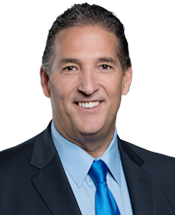
Assemblyman Jim Frazier

SACRAMENTO – Last night, Governor Gavin Newsom signed AB 1019 by Assemblymember Jim Frazier (D-Discovery Bay) that would add two additional seats to a statewide advisory committee on apprenticeships and had overwhelming and bi-partisan support in both the Assembly and Senate.

AB 1019 would add both the Director of Rehabilitation and the Executive Director of the State Council on Developmental Disabilities to the Interagency Advisory Committee on Apprenticeships (IACA). This move would be to specifically address job and apprenticeship rates for Californians living with Intellectual and Developmental Disabilities (IDD) by the creation of a subcommittee with that exact purpose.

“Since 2013, California has had an employment first policy for the IDD community,” Assemblymember Frazier said. “Yet California has seen minimal growth in the employment rate for persons living with disabilities despite continued economic growth since the great recession.”

The American Community Survey reports that in 2017, the employment rate of working age people living with a disability (ages 21 to 64) in California was 36.9 percent compared to the percentage of working age people without a disability which was 77.3, a stark difference of 40.5 percent. Additional data from 2017 shows that 23.1 percent of working age people living with a disability on California are living in poverty.

Filed Under: Labor & Unions, Legislation, News

OP/ED: State must keep financial assistance for low-income California dialysis patients

July 9, 2019 By Publisher Leave a Comment

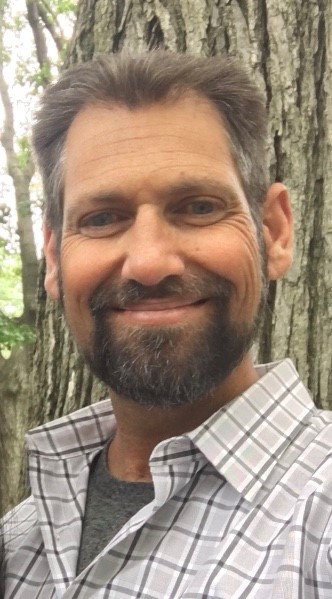
Joel Levin

By Joel Levin

I am a local public schoolteacher working with special education students from elementary age through young adults, and I am a dialysis patient who has suffered kidney disease for decades.

I’ve dedicated my career to helping those less fortunate in need. That’s why I’m disappointed that insurance companies are behind legislation that would cut off the charitable financial assistance I need to pay for the dialysis that keeps me alive.

Legislators will soon be voting on Assembly Bill 290, which would eliminate financial assistance that the non-profit American Kidney Fund provides charitably to more than 3,700 qualifying California dialysis patients like me.

AB 290 requires AKF to disclose confidential patient information in violation of the federal regulations governing the program. Because of these unreasonable requirements, AB 290 would force AKF to stop helping California patients altogether.

The losers are patients like me who depend on the financial assistance AKF provides to pay for the dialysis that we need to stay alive. The winners are insurance companies whose profits would go up if it passes.

Even as a kidney patient who must undergo the rigorous dialysis treatment process to stay alive, I feel like one of the fortunate ones. Most people on dialysis can’t work because of the exhausting process of dialysis. Thankfully I can continue working as a teacher while still receiving this time-consuming treatment three times a week for three to four hours at a time, after my workday.

It is not easy, of course. And for dialysis patients who require between 9-12 hours a week of dialysis treatments, our health care coverage is expensive. Although I’m on Medicare, it only covers 80 percent of my health care costs and Medicare also requires monthly insurance premiums. I also have copays for doctor visits and copays for my numerous medications because of my kidney disease.

On top of that, I must get an additional insurance policy, with additional monthly premiums, to cover the 20 percent “gap” that isn’t paid for by Medicare.

As a public schoolteacher, I’m certainly not rich. I have a finite amount of funds. Without the AKF’s assistance program, I’m not sure how I’d be able to afford these payments.

Only a small number of Californians on dialysis, about 5 percent, use financial assistance from a third-party, non-profit charitable organization like the American Kidney Fund to help pay their health insurance premiums. AKF has made premium assistance available for more than 20 years.

I’m extremely thankful they’re in existence and grateful for the help they provide me. For me, the program offers peace of mind that I can pay my expenses and receive the healthcare that I need. I can’t even imagine what would happen to dialysis patients who can’t work. How will they survive?

At its core, AB 290 is about increasing insurance company profits.

Lawmakers who are aligning with insurance companies and supporting the measure are not seeing how it would impact the patients in the long run.

I urge legislators to reject this insurance company scheme and vote no on AB 290.

Joel Levin is a dialysis patient and resident of Danville.

Filed Under: Health, Legislation, Opinion

DeSaulnier manages rule to make Special Counsel Mueller’s report available to public, Congress

March 13, 2019 By Publisher Leave a Comment

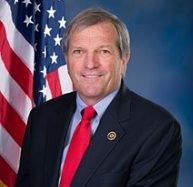
Rep. Mark DeSaulnier

Washington, DC – On the House floor today, Congressman Mark DeSaulnier (D-CA-11) managed the rule to begin consideration of H.Con.Res. 24, a straightforward Democratic resolution sponsored by Rep. Jerry Nadler (D-NY-10), expressing the sense of Congress that the report by Special Counsel Mueller should be made available to the American public and to Congress.

Highlights of Congressman DeSaulnier’s remarks are included below and video of the full speech is available here.

“When the Justice Department named Robert Mueller to Special Counsel for the Russia investigation, acting Attorney General Rod Rosenstein said, ‘A special counsel is necessary in order for the American people to have full confidence in the outcome. Our nation is grounded on the rule of law, and the public must be assured that government officials administer the law fairly.’

This resolution does not predetermine the outcome of the Mueller investigation. It simply expresses that the report of the Special Counsel should be made available to Congress and to the American people.

The public, including my constituents in Contra Costa, wants to know what happened. Nearly 9 in 10 Americans – in both parties – say the Mueller investigation should produce a full, public report on the findings.

Not only do people want to know, but they deserve to know.

To date, Mueller’s investigation has resulted in:

o   34 people and three companies being criminally charged;

o   Nearly 200 charges filed;

o   Seven guilty pleas;

o   And one conviction following a jury trial.

o   The investigation cost over $25 million, but recovered approximately $48 million in assets from tax evasion.

Eight federal and congressional intelligence and national security groups believe Russia interfered in the election. With the Central Intelligence Agency, the National Security Agency, the F.B.I., and the Office of the Director of National Intelligence concluding that Vladimir Putin personally ‘ordered an influence campaign in 2016 aimed at the U.S. presidential election’ to ‘undermine public faith in the democratic process.’

The last time our country had a Special Counsel operating under the same rules as the Mueller Probe was in 1993 to investigate the Waco siege and allegations of government wrongdoing. Prosecutors posted their final report directly on the Internet with hundreds of pages of exhibits and timelines.

The American public should receive the same transparency when the Mueller report is released.

I encourage my friends across the aisle to support the release of the Mueller report. We have commitments to support it from three House Republican Leaders including the Minority Leader, Minority Whip, and Republican Conference Chair, and I hope all of the Republican Caucus will join Democrats in this vote to ensure we share one of the most important investigations of our time within these halls and with all of America.”

DeSaulnier is also a Member of the House Committee on Oversight and Reform, which is investigating any possible criminal activity related to President Trump or his associates.

DeSaulnier represents portions of Contra Costa County.

Filed Under: Legislation, News

In honor of Black History Month, Reps. DeSaulnier, Lee renew effort to exonerate Port Chicago 50

February 13, 2019 By Publisher 2 Comments

Photo of the aftermath of the Port Chicago disaster.

Washington, D.C. – Today, in honor of Black History Month, Representatives Mark DeSaulnier (CA-11) and Barbara Lee (CA-13) reintroduced a House Resolution calling for the public exoneration of the Port Chicago 50. The resolution is part of their ongoing effort, first started by former Congressman George Miller III, to bring attention and solutions to the injustice suffered by the Port Chicago 50, a group of African American sailors who were wrongly convicted of mutiny following the deadliest home front disaster of World War II at the Port Chicago Naval Magazine in California.

After experiencing segregation in the Navy, 435 African American munitions sailors, who were not properly trained or supported, were killed or injured when a cargo vessel exploded. This incident accounted for more than 15 percent of all African American Naval casualties during WWII. When 50 of these men understandably refused to return to the unsafe working conditions that killed their fellow sailors, they were discriminately charged and convicted of mutiny.
“If we are to progress as a nation, it is critical that we learn from past injustices and correct our mistakes,” said Congressman DeSaulnier. “Our resolution recognizes the Port Chicago 50’s courage, celebrates their service to our country, and calls for their public exoneration. I thank Congresswoman Lee for her partnership as we work to right the wrongs of our past, and properly honor these men.”

“As the daughter of a veteran, I am deeply grateful to our men and women in uniform, who make tremendous sacrifices in service to this nation. However, our nation has not always treated our service members with the compassion and decency that they deserve. The 50 African American sailors at Port Chicago, who boldly stood against discrimination and refused to return to unsafe work conditions, should be remembered as heroes. The wrongful charges of mutiny levied against these service members were an injustice that persists to this day,” said Congresswoman Lee. “These brave men should be honored, not only for their pivotal role in the World War II home front effort, but also for their courage in the face of injustice. I am grateful to Congressman DeSaulnier for introducing this legislation and celebrating these local heroes.”

Representatives DeSaulnier and Lee have introduced this resolution in both the 114th and 115th Congress, and together they sent a letter to former President Obama requesting he acknowledge the injustice suffered by these sailors and remove these racially biased convictions from their records.

Additionally, Congressman DeSaulnier successfully included a provision to the National Defense Authorization Act (NDAA) requiring the Navy to investigate the circumstances surrounding the treatment of sailors at Port Chicago. This led to the Navy acknowledging the injustice that was served to the Port Chicago 50. DeSaulnier has also called upon the Smithsonian Institution to include information about the Port Chicago 50 in the new National Museum of African American History and Culture.

To learn more about the Port Chicago disaster and memorial visit https://portchicagomemorial.org/.

Filed Under: Central County, Legislation, Military, News

To prevent wildfire Frazier bill would require utilities to move electrical equipment, bury or fireproof it

January 30, 2019 By Publisher Leave a Comment


Assemblyman Jim Frazier

Says “PG&E must be required to pay every cent it owes victims”

SACRAMENTO – Assemblymember Jim Frazier (D-Discovery Bay) has introduced a bill to require the state’s electric utility companies to move their equipment and transmission lines out of forests, and other regions where the potential for fire is high, or bury or fireproof it, to prevent the ignition of devastating and deadly wildfires.

“Like all Californians I am horrified that our state has become increasingly powerless against wildfires indiscriminately destroying communities and taking lives every fire season,” Frazier said. “Climate change has made us more vulnerable and California’s major utility companies have failed to keep up with this new reality. Their equipment has ignited thousands of wildfires in recent years and many of these blew up into destructive and deadly infernos. The environmental damage caused by these fires is appalling. Forests are scarred for decades. The loss of life due to an inattentive safety net is unconscionable. We need common-sense solutions now. Requiring utility companies to take responsibility for their equipment in order to safeguard California is reasonable and just.”

AB 281 would require utilities to relocate their transmission lines out of forests and other areas where the potential for fire is high. If relocation is not possible, they would be required to bury the lines. If it’s not possible to relocate or bury the lines, they would be required to improve the equipment to “prevent, and minimize the risk” of the equipment igniting fires.

A recent Los Angeles Times investigation found that equipment owned by California’s three largest utility companies started more than 2,000 wildfires in a 3-1/2 year period ending in 2017. The report found the state lacks the resources to monitor whether utility companies are properly maintaining their transmission line right-of-ways to protect against vegetation coming into contact with their equipment and sparking fires.

“The current system, with the state relying on the utility companies to police themselves, is not working,” Frazier added. “There is no bigger issue facing our state than this right now, and we cannot wait to take action any longer. The way of doing business with these utilities needs to change by recognizing what’s been done in the past doesn’t work anymore.”

Frazier issued the following statement after California’s largest investor-owned utility company, Pacific Gas & Electric, filed for Chapter 11 bankruptcy protection today.

“PG&E is solvent with a guaranteed revenue stream. To evade responsibility for the devastation caused by the company’s negligence would be unconscionable. The company filed for bankruptcy in 2001 and came back stronger than ever. Whatever happens, PG&E must be required to pay every cent it owes to victims of the devastating wildfires the company caused.”

Assemblymember Frazier represents the 11th Assembly District, which includes the communities of Antioch, Bethel Island, Birds Landing, Brentwood, Byron, Collinsville, Discovery Bay, Fairfield, Isleton, Knightsen, Locke, Oakley, Pittsburg (partial), Rio Vista, Suisun City, Travis AFB, Vacaville and Walnut Grove.


Filed Under: Legislation, News

Supervisors support one, split to stay neutral on another housing measure on Nov. ballot

September 25, 2018 By Publisher Leave a Comment

By Daniel Borsuk

Contra Costa County Board of Supervisors took a “support” position on Proposition 2, a state bond ballot measure to build housing for homeless individuals with mental illness but, took a “no position” on Proposition 10, another state ballot measure that would expand residential property rent control at last Tuesday’s meeting.

Supervisors voted 4-0 in favor of Proposition 2, but voted 3-1 to a remain neutral, with Supervisor John Gioia of Richmond in dissent, on the rent control measure – Proposition 10.  Supervisor Federal Glover of Pittsburg was absent.

Both Proposition 2 and Proposition 10 will appear on the November 6, 2018 general election ballot.

Before the meeting, supervisors were initially prepared to brand an “oppose” position on Proposition 2 that “Authorizes Bonds to Fund Existing Housing Programs for Individuals with Mental Illness Legislative Statute.” But supervisors reversed that recommendation from the board’s Legislation Committee from August 13 to recommend an “oppose” vote on Prop. 2 over concerns the county could lose about $2.8 million in state funds for mental health services.

For a while, Board Chair Karen Mitchoff of Pleasant Hill was concerned passage of Proposition 2 might jeopardize funding for another mental health and housing program for the homeless, the No Place Like Home Program, because a state Legislative Analyst Office report states passage of Proposition 2 would mean money would be borrowed from the 2016 enacted homeless housing program.

During the meeting, Dr. Matthew White, head of the Contra Costa County Behavioral Health Services, said the threat to the state funds, in the event Proposition 2 passes at the polls, will probably have little impact on county mental health services.  He said there is a major need for adequate housing for the homeless needing mental health services that will be integrated into new housing projects.

But some speakers were unconvinced Proposition 2 will not deteriorate county mental health services.

Retired physician Dr. Mark Cohen, who has an adult child with mental illness, urged supervisors to oppose Proposition 2 on grounds that the ballot measure’s passage would divert money away from the psychiatric care services for the severely mentally ill not housed in Proposition 2 funding developments.

County mental health commissioner Douglas Dunn opposes the measure because the county is bound to lose upfront money aimed for mental health services that would be diverted to construct housing for the homeless with mental and substance abuse issues.

In support of Proposition 2, Gloria Bruce, executive director of the East Bay Housing Coalition, said “Proposition 2 is the right way to go. Give high need people access to affordable housing.”

Danville resident Douglas Leach called for supervisors to support Proposition 2 because it would create safe housing for the homeless needing mental health and substance abuse assistance.

Supervisor Diane Burgis of Brentwood said she would support Proposition 2 based on the fact it is “difficult to find housing for the mentally ill,”

“These dollars are needed,” supervisor Candace Andersen of Danville said.  “We won’t see a reduction in programs. It will give us an addition tool.”

On Proposition 10, the Affordable Housing Act, supervisors voted to take “no position” on a 3-1 vote.  Supervisors John Gioia of Richmond cast the dissenting vote.  He supported Proposition 10 mainly because it would eliminate the 1998-enacted Costa-Hawkins Rental Housing Act that permits landlords to raise rents of residential apartments and houses as much as they want constructed after 1995, but not before 1995.  Costa-Hawkins allows landlords to raise the rent in any building before 1995 to the market value when it becomes vacant.

In other business, supervisors officially adopted the $3.2 billion budget for the 2018-2019 fiscal year without any public comments. The 2018-2019 budget is up from the $3 billion budget for the 2017-2018 fiscal year.

In other action, Supervisors recognized September 16-22 as Falls Prevention Awareness Week at their meeting on Tuesday. At the presentation were Meals on Wheels Mt. Diablo Region Chief Executive Officer Elaine Clark and Communications Specialist Maricel Kinsella.

Meals on Wheels Mt. Diablo Region and the Contra Costa County Fall Prevention Coalition will hold presentations on how to prevent senior citizens from falling in their homes, a leading cause of death or injury to persons 65 years old or more.

Filed Under: Legislation, Politics & Elections, Supervisors

Bill introduced to grant Contra Costa Water District ownership of canal system

June 11, 2018 By Publisher 1 Comment

Contra Costa Water District canal. Photo from CCWatercom.

Title transfer would advance modernization of the 81-year-old facility

This week, Senator Dianne Feinstein, Senator Kamala Harris and Congressman Mark DeSaulnier introduced legislation to transfer federal ownership of the Contra Costa Canal System to Contra Costa Water District (CCWD), taking an important step toward modernizing the aging water supply aqueduct.  CCWD is pleased to strongly support the introduction of this legislation.

The canal system serves as the primary water delivery system for 500,000 people in central and eastern Contra Costa County. It was first constructed in 1937 as part of the U.S. Bureau of Reclamation’s Central Valley Project.

The canal system includes the 48-mile Contra Costa Canal, the Shortcut Pipeline, two reservoirs, and other related facilities. Under the companion bills, CCWD receives ownership of assets it has operated since 1972 and has 100% paid off (principal plus interest) since 2010. Ownership of the canal system on the local level means CCWD can more efficiently operate and maintain the system and will reduce federal administrative burdens and associated costs.

In addition, CCWD would be more secure in investing millions of dollars to modernize the aging canal.  CCWD is studying options to modernize the main canal that stretches from Rock Slough Intake near Oakley to Concord. “For those investments to be made,” said CCWD Board President Lisa Borba, “CCWD is awaiting ownership of the canal system.”

Because the canal system is currently owned by the federal government, title transfer requires an act of Congress. This canal system is an ideal unit for title transfer because, its single beneficiary, CCWD, has paid for the facilities and will continue to operate for the benefit of customers currently served.

“The canal system has reliably served the people and businesses of our community for 80 years,” President Borba said. “We appreciate the leadership from Senator Feinstein, Senator Harris and Congressman DeSaulnier to help us gain ownership of a system we can modernize to serve our customers for the next century.”

The canal system also includes recreational trails, Contra Loma and other facilities that will be maintained for recreation with the transfer. This action has gained support from local recreation managers, including East Bay Regional Park District and the cities of Walnut Creek and Antioch.

To learn more about studies to modernize the Contra Costa Canal System, visit www.ccwater.com/688.

Filed Under: Legislation, News, Water

Congressman DeSaulnier to host Tax Town Hall in El Cerrito Saturday

January 10, 2018 By Publisher Leave a Comment

Rep. Mark DeSaulnier (D, CA-11) will host a tax-focused town hall meeting in El Cerrito on Saturday, January 13th at 2:00 p.m. This town hall was originally scheduled in December, but was postponed when Republican Leadership changed the voting schedule to rush the tax bill through Congress.

Since taking office in 2015, the Congressman has hosted 53 town halls and mobile district office hours throughout Contra Costa County. In his first town hall of 2018, DeSaulnier invites residents to participate in a discussion of the new Republican tax law, which was passed by Congressional Republicans and signed into law by President Trump last month. The law increases taxes on more than 5.5 million California families. Bay Area residents who own or are interested in purchasing a home, in one of the most expensive housing markets in the country, are particularly impacted by the law. New home purchasers are subject to limits on the mortgage interest deduction and current homeowners have lost the ability to fully deduct state and local taxes (SALT). It is DeSaulnier’s opinion that “the bill was jammed through Congress with little debate and no Democratic amendments in an effort to deliver a massive tax cut to corporations and the wealthiest 1%.”

During the town hall constituents will be provided with an overview of the legislation and its potential impact on Bay Area residents, and will have an opportunity to ask questions or share comments about the new law.

El Cerrito Town Hall
Saturday, January 13, 2018
2:00 p.m. to 3:30 p.m.
El Cerrito Community Center
7007 Moeser Lane
El Cerrito, CA 94530

Please RSVP by visiting https://desaulnier.house.gov/town-hall-rsvp or calling (925) 933-2660. For more information or to request ADA accommodations, contact Congressman DeSaulnier’s office in either Walnut Creek or Richmond.

Filed Under: Government, Legislation, West County

Rep. DeSaulnier to hold Town Hall on GOP Tax Plan Monday, Nov. 20 in Orinda

November 15, 2017 By Publisher 1 Comment

Washington, DC – Monday night, Nov. 20th Congressman Mark DeSaulnier (CA-11) will host a town hall meeting on the Republican tax plan. Since coming to Congress in January 2015, Mark has hosted 50 town halls and mobile district office hours throughout Contra Costa County.

Congressman DeSaulnier will host two town halls. Details are below:

 ORINDA IN PERSON TAX TOWN HALL

Monday, November 20th

6:30 p.m. to 8:00 p.m. PST

Miramonte High School, Theater

750 Moraga Way

Orinda, CA 94563

RSVP Using the Link Below:

https://desaulnier.house.gov/town-hall-rsvp

 For more information on these events or to request ADA accommodations contact Congressman DeSaulnier’s offices in either Walnut Creek, Richmond, or Washington, DC. 

Filed Under: Government, Lamorinda, Legislation, News

  • « Previous Page
  • 1
  • …
  • 7
  • 8
  • 9
  • 10
  • 11
  • …
  • 14
  • Next Page »
Monica's-Riverview-Jan-2026
Liberty-Tax-Jan-Apr-2026
Deer-Valley-Chiro-06-22

Copyright © 2026 · Contra Costa Herald · Site by Clifton Creative Web