• Home
  • About The Herald
  • Local Agencies
  • Daily Email Update
  • Legal Notices
  • Classified Ads

Contra Costa Herald

News Of By and For The People of Contra Costa County, California

  • Arts & Entertainment
  • Business
  • Community
  • Crime
  • Dining
  • Education
  • Faith
  • Health
  • News
  • Politics & Elections
  • Real Estate

DeSaulnier unveils model for energy transition away from oil and gas

March 9, 2021 By Publisher Leave a Comment

Introduces three bills

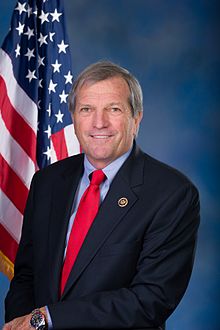
Congressman Mark DeSaulnier (D, CA-11) announced, Monday, his effort to create a model that will help transition our economy away from petroleum products to cleaner, renewable energy while simultaneously supporting workers, communities, and state and local governments. The model will also create more investments in our transportation system, developing an inter-connected, world-class public transportation network and creating jobs. The coronavirus pandemic has expedited our transition away” from petroleum products which increases the urgency of a planned and serious effort to make sure we shape this transition in a way that works for everyone. DeSaulnier’s model will allow local communities to join with workers, industry, environmental leaders, mayors, and other local elected officials to proactively plan for the transition away from the petroleum industry and support worker transition and training.

As part of this effort, Congressman DeSaulnier announced three bills that will address this transition. The first bill, the Protecting Workers for a Clean Future Act, addresses the imminent market evolution to renewable, clean energy by providing direct support to local communities to convene industry, the local petroleum products workforce whose jobs are at risk, environmental justice advocates, and environmental groups to make a plan to transition workers to meaningful, sustainable work. The market is inevitably moving to cheaper, more sustainable energy sources, and refinery workers across America will fall victim to joblessness if we do not act now.

The second bill, the Jobs for a Carbon Free Transportation System Act, takes a unique approach to addressing the intersection of three of the biggest challenges our nation faces: climate change, outdated infrastructure, and job insecurity. The bill prioritizes and invests in state-of-the-art transportation system reforms that would improve mobility and reduce greenhouse gas emissions by developing low-carbon, efficient, inter-connected, and smart transportation corridors all while creating good paying union jobs. With the inevitable transition away from petroleum products these improvements would have, it also supports workers to transition out of the petroleum products industry and into meaningful, more secure work.

The third bill, the Clean Corridors Act, would launch a federal program that would accelerate the expansion of electric vehicle (EV) charging infrastructure to help reverse climate change and modernize our country’s infrastructure. Specifically, the Clean Corridors Act, which the congressman also introduced in the 116th Congress, would direct $3 billion over the coming decade to construct and install infrastructure to support technologies like hydrogen fuel cell and electric battery-powered vehicles. With this legislation, we can help sustain the growth of the EV market, which means more jobs, a healthier Earth, and a strong economy.

“We’re seeing firsthand in Contra Costa that refineries are idling…and local governments are losing their tax base because of the decrease in…(oil) consumption during the pandemic. Failing to address the market shift will inevitably create a snowball effect including dramatic job loss and decreased local and county revenues, which in turn create drastically underfunded schools. The time is now…to shift toward more sustainable sources of energy, but they cannot leave thousands of workers jobless in their wake,” said DeSaulnier. “At home in Contra Costa and around the country, we have the opportunity to set the stage for green jobs that are both worthy of workers’ skills and help our nation in the much-needed fight against climate change. This effort can help make Contra Costa a model for the rest of the nation.”

In developing this effort, the congressman has held dozens of meetings with stakeholders over the past two years, including with local mayors, county supervisors, the Contra Costa County administrator, other elected officials, environmental justice advocates, environmental representatives, labor leaders, university researchers, and other thought leaders on the energy transition.

“I am proud to support Rep. DeSaulnier’s transition model that will support workers while also incentivizing the move toward clean energy,” said Congressman Mike Thompson (D, CA-5), who represents Martinez. “These three bills are a critical step forward in using renewable energy right here in our community while also ensuring that workers have the opportunity for retraining and job opportunities in new industries. I am proud that our region can be an example in this important step toward tackling climate change and paving the way forward for green jobs.”

“We welcome Congressman DeSaulnier’s bold effort since our county is on the front lines of the transition to cleaner energy,” said Contra Costa County Supervisor John Gioia, who represents West County in District 1. “Given the plans of two Contra Costa refineries to end crude oil production and convert to the world’s largest renewable fuels plants, we need to ensure our workers and local economy are not left behind and that residents in communities which bear the burden of pollution benefit from the transition to clean energy.”

“We welcome leadership and assistance from the federal government as we develop plans to help workers, bolster our economy, and support communities that have historically been the most impacted,” said Contra Costa County Administrator Monica Nino.

“As we transition to clean fuels and high-tech energy, it is a matter of equity and economic justice that we support the growth of high-paying jobs and industries to replace those which are being phased out,” said California Assemblyman Tim Grayson. “The green economy presents us the opportunity to not only protect our planet, but to also empower workers, particularly those within historically-marginalized communities, by investing in their training and education.”

“The future of work in the green economy cannot be a race to the bottom in terms of labor standards and not having a voice at work,” said Contra Costa Labor Council Executive Director Josh Anijar. “Contra Costa’s labor movement is encouraged by Congressmember DeSaulnier and all those who are committed toward the future by building the bridge between the green economy and working families.”

“The clean energy economy can work for everyone, providing good paying jobs for a just transition, giving all of us more options,” said Ann Notthoff, retired Natural Resources Defense Council California Advocacy Director.

“The International Brotherhood of Boilermakers has a history of being at the forefront of innovation related to clean, reliable energy.” said International Vice President for the Western States Section of the International Brotherhood of Boilermakers Tom Baca. “To that end, we continue to advocate for carbon capture, use and storage and other carbon capture technology as a solution – all while preserving and creating jobs, economic growth, and social stability.”

“Contra Costa​ County’s refineries are well aware of the energy future and work every day to help meet it. Local refineries have invested billions to upgrade their facilities as California leads the nation with ambitious greenhouse gas reduction targets,” said President and CEO of the East Bay Leadership Council Kristin Connelly. “Without a doubt, the COVID-19 pandemic has dramatically impacted countless industries including the local energy sector. Protecting the thousands of high paying jobs created by these employers must be a top priority. The East Bay Leadership Council looks forward to working with Congressman DeSaulnier in facilitating industry’s engagement in this process.”

“Congressman DeSaulnier has clearly thought about the American workers and communities that will be impacted by this transition, and he is seeking solutions to ensure those workers and communities are supported as we move into a low-carbon future,” said Citizens’ Climate Lobby Executive Director Mark Reynolds.

Rep. DeSaulnier is a member of the U.S. House of Representatives Education and Labor Committee, Transportation & Infrastructure Committee, and Oversight and Reform Committee. He previously served as the Chair of the State Senate Transportation and Housing Committee and in the State Assembly as the first freshman in history to chair the Assembly Transportation Committee. He is also a former Concord City Councilmember, Mayor, County Supervisor, and member of the California Air Resources Board.

Filed Under: Business, Industry, Legislation, News

DeSaulnier, Lee introduce Confronting and Correcting Historical Injustices Act

February 23, 2021 By Publisher Leave a Comment

Bill will “establish commission for Review and Correction of Historical Injustices, and for other purposes.”

The Congressman hopes to address the unfair treatment of the Port Chicago 50 during World War II

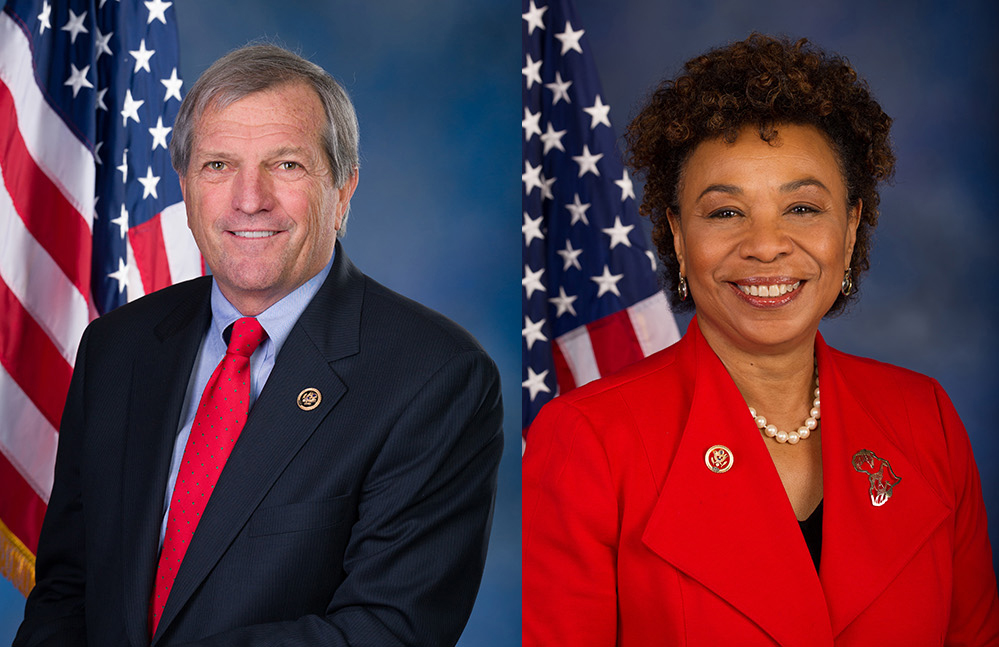
Reps DeSaulnier and Lee. Official photos.

Washington, DC – Today, Tuesday, Feb. 23, 2021, Congressman Mark DeSaulnier (D, CA-11) and Congresswoman Barbara Lee (D, CA-13) announced the introduction of the Confronting and Correcting Historical Injustices Act (H.R. 1196), a bill that would establish a commission to recognize and remedy the discrimination suffered by individuals and groups at the hands of the federal government.

The bill would create the Commission for Review and Correction of Historical Injustices, an independent commission responsible for reviewing and investigating federal cases in which individuals and groups have been unjustly discriminated against by federal agencies or entities. Cases eligible for consideration experienced discrimination based on race, color, religion, sex, national origin, physical or mental disability, or sexual orientation, and where the original act of discrimination led to a charge, conviction, discharge, or dismissal. The Commission would also be responsible for recommending legislative or executive action to adequately make whole those who experienced discrimination.

The proposed bill does not yet include any text, according to the Congressional legislation website.

“Now more than ever, we need to come together as a nation to dismantle the systems that were built to disadvantage people of color and other marginalized groups. To do that, we must confront and correct the injustices the federal government has perpetrated that were based on bias, discrimination, and hate,” said DeSaulnier. “I can think of no better way to celebrate Black History Month than publicly acknowledging those injustices and setting them right. Only by addressing the past can we begin healing the stark divides that continue to exist in our country. I am grateful to lead this effort with a civil rights champion like Congresswoman Lee.”

The bill is in addition to Rep. Sheila Jackson Lee’s (D, TX-18) Commission to Study and Develop Reparation Proposals for African Americans Act (H.R. 40), that she reintroduced, last month.

“For too long, the federal government has played a central role in creating unjust policies across the United States, from redlining and mortgage discrimination to the systemic racism in our public health system that persists today,” said Lee. “It’s past time that we recognize the legacy of racial inequality in our institutions and call on the federal government to address these historical injustices. The Confronting and Correcting Historical Injustices Act is a critical step in demanding accountability and action from the federal government in order to move forward. I thank Congressman DeSaulnier for his leadership on this issue.”

Port Chicago 50 book cover.

One example that inspired this legislation is the case of the Port Chicago 50. On July 17, 1944 at the Port Chicago Naval Magazine in DeSaulnier’s district and hometown of Concord, California, 435 African American munitions sailors, who were not properly trained or supported by the Navy, were killed or injured when a cargo vessel exploded as they were loading munitions. When 50 of these men refused to return to the unsafe working conditions that killed their fellow sailors without additional supports or training, they were discriminately charged and convicted of mutiny. Without a process like the one the bill creates in place, the families of the Port Chicago 50 have been unable to have their loved ones exonerated.

“Wow! I’m so grateful to Congressman DeSaulnier and Congresswoman Lee for this bill to establish a Commission for Review and Correction of Historical Injustices. It has been long overdue. There has been a painful legacy of injustices in this country and I am hopeful it will help in the exoneration of the Port Chicago 50 who were found guilty of mutiny and severely sentenced even though no mutinous acts occurred. The Friends of Port Chicago National Memorial would like their names to be cleared and the convictions removed,” said Rev. Diana McDaniel of the Friends of Port Chicago National Memorial.

Filed Under: History, Legislation, News

Glazer’s bill allowing Contra Costa half-cent sales tax increase signed by governor

October 2, 2020 By Publisher Leave a Comment

Votes for Measure X will now count; sales taxes in the county could go to 10.75%, highest in California; Glazer’s second tax increase measure on November ballot

State Senator Steve Glazer. From his campaign Facebook page.

By Allen Payton

On the last day possible, Gov. Gavin Newsom signed into law a variety of bills on Thursday, including SB1349 by State Senator Steve Glazer, allowing a countywide half-cent sales tax increase which is designated Measure X on the November ballot in Contra Costa. The votes on that measure will now count. Had the governor vetoed the bill the votes would not have counted. He also had the option of not signing it by the Sept. 30th deadline and the bill would have become law.

The ballot language for Measure X reads as follows: “To keep Contra Costa’s regional hospital open and staffed; fund community health centers; provide timely fire and emergency response; support crucial safety-net services; invest in early childhood services; protect vulnerable populations; and for other essential county services, shall the Contra Costa County measure levying a ½ cent sales tax, exempting food sales, providing an estimated $81,000,000 annually for 20 years that the State cannot take, with funds benefitting County residents, be adopted?”

Glazer introduced the bill in the State Senate on February 21, 2020 focusing on “State responsibility area fire prevention fees”. He changed it to, “Transactions and use taxes: County of Contra Costa” on April 8, 2020 after the March Primary election was decided and the countywide additional half-cent sales tax increase for transportation failed.

It took some maneuvering in the State Senate Governance & Finance Committee to get the bill to the floor for a full vote. The bill first failed on a 3-2-2 vote on May 21. A motion to reconsider the bill then passed 7-0 on May 28 and a final committee vote was held on June 3 with just enough to pass by a vote of 4-2-1. It then passed the full Senate on June 11 by a vote of 27-11-2 with both Glazer and State Senator Nancy Skinner, who represents all of West County, voting in favor.

In the Assembly, Member Tim Grayson carried the bill which passed 48-23-8, with the other three Assemblymembers representing Contra Costa County, Jim Frazier, Rebecca Bauer-Kahan and Buffy Wicks not voting.

The Contra Costa County Public Managers Association was coordinating the effort to get the bill passed and the City Managers were the ones who endorsed it, not the various city councils.

The state has a sales tax rate of 7.25%, decreased from 7.5% on January 1, 2017, and state law prevented counties from charging more than 9.25% prior to the bill becoming law. That includes the half-cent sales tax for BART and the additional half-cent sales tax for transportation through the Contra Costa Transportation Authority. That leaves 1% remaining by which the county can increase its sales tax.

The Board of Supervisors considered a sales tax increase that would have only applied to unincorporated areas outside the 19 city limits. But that was quietly set aside.

According to the Senate Governance & Finance Committee Bill Analysis, the earlier version of the bill, that passed the Senate the first time, would have allowed a possible increase in the countywide sales tax rate to 11.75% in cities that already have a 1% sales tax such as in Antioch, and as high as 12.25% in El Cerrito which has a 1.5% city sales tax. However, the governor’s office said that went too far and the final bill was scaled back.

California’s sales tax rate is high compared to other states, especially when incorporating locally imposed district taxes. Tax experts argue that sales and use taxes are regressive, meaning that the tax incidence falls more on low-income individuals than high-income individuals because those of lesser means generally spend a greater percentage of their income on taxable sales, instead of intangible products or services which are not taxed.

By removing the current Contra Costa Transportation Authority and BART taxes as counting against the cap, in the final version of SB 1349, which passed the Senate the second time and signed by Newsom, allows an additional 1% of room for the county and each of its 19 cities to impose another district of up to 1% in sales tax. If voters approve the 1/2% allowed under Measure X, when it states that existing taxes do not count against the cap, the combined rate would increase to 8.75% countywide, plus any current city rates. The bill also grants Contra Costa County an additional authorization for another 1/2% sales tax increase, such as for the Contra Costa Transportation Authority, thereby boosting the maximum countywide rate to 9.25%, plus any current city rates.

That could result in a rate as high as 10.75% in the City of El Cerrito, where an additional 1.5% rate currently applies, and a 10.25% rate in the City of Antioch where they have a current 1% sales tax.

Glazer had the support of his bill from the California Labor Federation, California Professional Firefighters, California Teamsters Public Affairs Council, Contra Costa County Board of Supervisors, Contra Costa Transportation Authority, International Federation of Professional and Technical Engineers Local 21, Office and Professional Employees International Union Local 29, and SEIU California.

Those opposed to SB1349 were the Alliance of Contra Costa Taxpayers, California Taxpayers Association, Contra Costa County Taxpayers Association, Howard Jarvis Taxpayers Association and the Transportation Solutions Defense and Education Fund.

In spite of campaigning as a fiscal conservative, touting a hold the line approach to new taxes, this is Glazer’s second measure on the November ballot that will increase taxes if passed. The other is statewide Prop. 19, which will increase taxes on inherited homes or commercial property. According to Ballotpedia, “The ballot measure would eliminate the parent-to-child and grandparent-to-grandchild exemption in cases where the child or grandchild does not use the inherited property as their principal residence, such as using a property a rental house or a second home. When the inherited property is used as the recipient’s principal residence but has a market value above $1 million, an upward adjustment in assessed value would occur. The ballot measure would also apply these rules to certain farms. Beginning on February 16, 2023, the taxable value of an inherited principal residential property would be adjusted each year at a rate equal to the change in the California House Price Index.”

Following is the Legislative Counsel’s Digest and text of Glazer’s bill:

Senate Bill No. 1349

CHAPTER 369

An act to amend Section 29140 of the Public Utilities Code, and to amend Section 7291 of the Revenue and Taxation Code, relating to taxation.

[ Approved by Governor  September 30, 2020. Filed with Secretary of State  September 30, 2020. ]

LEGISLATIVE COUNSEL’S DIGEST

SB 1349, Glazer. Transactions and use taxes: County of Contra Costa.

Existing law authorizes various specified cities and counties, subject to certain limitations and approval requirements, to levy a transactions and use tax for general or specific purposes, in accordance with the procedures and requirements set forth in the Transactions and Use Tax Law. A provision of the Transactions and Use Tax Law prohibits the combined rate of all taxes that may be imposed in accordance with that law in a county from exceeding 2%.

Existing law authorizes the Contra Costa Transportation Authority to impose a transactions and use tax for the support of countywide transportation programs at a rate of no more than 0.5% that, in combination with other transactions and use taxes, exceeds the above-described combined rate limit of 2%, if certain requirements are met, including a requirement that the ordinance proposing the transactions and use tax be submitted to, and approved by, the voters. Existing law repeals this authorization on December 31, 2020, if an ordinance proposing a transactions and use tax has not been approved by that date.

Existing law, the San Francisco Bay Area Rapid Transit District Act, creates the San Francisco Bay Area Rapid Transit District, which comprises a territory that includes the County of Contra Costa, and, among other things, authorizes the board of directors of the district to impose transactions and use taxes in conformity with the Transactions and Use Tax Law for specified purposes, subject to periodic legislative review and amendment, as provided.

This bill would provide that, notwithstanding the combined rate limit under the Transactions and Use Tax Law, neither a transaction and use tax rate imposed in the County of Contra Costa by the transportation authority under the above-described authority nor a transactions and use tax rate imposed by the San Francisco Bay Area Rapid Transit District, as specified, will be considered for purposes of that combined rate limit within the County of Contra Costa. The bill would declare that the changes made with regard to taxes imposed by the Contra Costa Transportation Authority for countywide transportation programs are declaratory of existing law.

This bill would make legislative findings and declarations as to the necessity of a special statute for the County of Contra Costa.

<hr size=1 width=1209 style=’width:907.1pt’ noshade style=’color:#333333′>

BILL TEXT

THE PEOPLE OF THE STATE OF CALIFORNIA DO ENACT AS FOLLOWS:

SECTION 1.

Section 29140 of the Public Utilities Code is amended to read:

29140.

(a) The board shall, by ordinance, impose transactions and use taxes in conformity with Part 1.6 (commencing with Section 7251) of Division 2 of the Revenue and Taxation Code for the purposes specified in Sections 29142 and 29142.2, subject to periodic legislative review and amendment.

(b) (1) Notwithstanding Section 7251.1 of the Revenue and Taxation Code, a transactions and use tax rate imposed pursuant to subdivision (a) on or before January 1, 2020, that applies within the County of Alameda shall not be considered for purposes of the combined rate limit within the County of Alameda established by that section.

(2) Notwithstanding Section 7251.1 of the Revenue and Taxation Code, a transactions and use tax rate imposed pursuant to subdivision (a) on or before the effective date of the act adding this subdivision that applies within the County of Contra Costa shall not be considered for purposes of the combined rate limit within the County of Contra Costa established by that section.

SEC. 2.

Section 7291 of the Revenue and Taxation Code is amended to read:

7291.

(a) Notwithstanding any other law, the Contra Costa Transportation Authority may impose a transactions and use tax for the support of countywide transportation programs at a rate of no more than 0.5 percent that would, in combination with all taxes imposed pursuant to Part 1.6 (commencing with Section 7251), exceed the limit established in Section 7251.1, if all of the following requirements are met:

(1) The Contra Costa Transportation Authority adopts an ordinance proposing the transactions and use tax by any applicable voting approval requirement.

(2) The ordinance proposing the transactions and use tax is submitted to the electorate and is approved by the voters voting on the ordinance pursuant to Article XIII C of the California Constitution.

(3) The transactions and use tax conforms to the Transactions and Use Tax Law, Part 1.6 (commencing with Section 7251), other than Section 7251.1.

(b) (1) Notwithstanding Section 7251.1, a transactions and use tax rate imposed pursuant to subdivision (a) shall not be considered for purposes of the combined rate limit established by Section 7251.1.

(2) This subdivision does not constitute a change in, but is declaratory of, existing law.

SEC. 3.

The Legislature finds and declares that a special statute is necessary and that a general statute cannot be made applicable within the meaning of Section 16 of Article IV of the California Constitution because of the unique fiscal pressures being experienced in the County of Contra Costa.


Filed Under: Legislation, News, Taxes

House passes McNerney-Latta electric grid security legislation

September 30, 2020 By Publisher Leave a Comment

Rep. Jerry McNerney

Washington, DC – On Tuesday, September 29, 2020,, the House of Representatives passed H.R. 359, the Enhancing Grid Security through Public-Private Partnerships Act, and H.R. 360, the Cyber Sense Act – two critical bills introduced by Congressmen Jerry McNerney (CA-09) and Bob Latta (OH-05) which would bolster America’s electric infrastructure by encouraging coordination between the Department of Energy (DOE) and electric utilities.

“It is more important than ever that Congress pursue policies to support our grid infrastructure and secure it against potential physical and cyber threats,” said Congressman McNerney. “These bills will not only strengthen the electric utility system, they will also help build partnerships between DOE and industry. I’m proud that they have passed the House and I thank my friend and co-sponsor, Congressman Latta, for his partnership on this important issue.”

“Over the last quarter century, we have seen incredible changes to the way we communicate with the rest of the world and the way we engage in commerce,” said Congressman Latta. “Along with these changes, we have also seen innovation in the technologies that power society, resulting in a more efficient and streamlined electric grid. Unfortunately, the promise of a more interconnected society also means that we must also address the challenges and vulnerabilities that arise with it. I am pleased to see the passage of two bills working to improve our nation’s grid security and resiliency, and I am proud to have led these bills with Congressman McNerney over the past two Congresses.”

H.R. 359 directs DOE to facilitate and encourage public-private partnerships in order to improve cybersecurity of electric utilities. The legislation would improve sharing of best practices and data collection, along with providing training and technical assistance to electric utilities in order to address and mitigate cybersecurity risks.

H.R. 360 would create a voluntary Department of Energy ‘Cyber Sense’ program that would identify and promote cyber-secure products for use in the bulk-power system. The bill also establishes a testing process for the products, along with a reporting process of cybersecurity vulnerabilities, and it would require the Secretary of Energy to keep a related database on the products. This would aid electric utilities that are evaluating products and their potential to cause harm to the electric grid.

Congressmen McNerney and Latta co-chair the Grid Innovation Caucus, which was founded to provide a forum for discussing solutions to the many challenges facing the grid, and to educate Members of Congress and staff about the importance of the electric grid with relation to the economy, energy security, and advanced technologies being utilized to enhance grid capabilities.


Filed Under: Legislation, News

Glazer, Skinner, Bauer-Kahan vote for, Newsom signs bill requiring California to house inmates based on gender identity

September 29, 2020 By Publisher Leave a Comment

Frazier, Grayson, Wicks don’t vote; SB 132 requires Dep’t. of Corrections to house transgender, gender-nonconforming and intersex people based on their choice.

State Senator Steve Glazer (D-7-Orinda)

By Allen Payton

Governor Gavin Newsom on Sunday, Sept. 26 signed a package of pro-LGBTQ+ bills, including SB132 requiring the California Department of Corrections and Rehabilitation (CDCR) to house transgender, gender-nonconforming and intersex (TGI) individuals in a manner that matches their gender identity while supporting health and safety.

SB 132 also requires CDCR to house people according to their own sense of where they will be safest and to record the individual’s self-reported gender identity, gender pronouns and honorifics throughout an inmate’s term.

State Senators Steve Glazer (D-7, Orinda) and Nancy Skinner (D-9, Oakland) were joined by Assemblymember Rebecca Bauer-Kahan (D-16, San Ramon), who all represent portions of Contra Costa County, in voting for the bill. Assemblymembers Jim Frazier (D-11, Discovery Bay), Tim Grayson (D-14, Concord), and Buffy Wicks (D-15, Oakland) who also represent portions of the county, did not vote.

State Senator Nancy Skinner (D-9, Oakland)

The bill was introduced by State Senator Scott Weiner (D-11, San Francisco) who also authored the controversial SB145 regarding non-regular sexual intercourse between youth ages 14-17 and those as much as 10 years older. Glazer, Skinner, Bauer-Kahan and Wicks voted for that bill, as well. While Frazier and Grayson didn’t vote on that bill, either. (See related article)

Newsom also signed other LGBTQ+ related legislation including a measure to track the effects of COVID-19 on the community, and a bill establishing the Transgender and Wellness Equity Fund.

Assemblymember Rebecca Bauer-Kahan (D16, San Ramon)

Included in the package of bills signed into law on Sunday is SB 932 also by Wiener, which aligns with emergency regulations announced by the California Department of Public Health in July requiring better and more timely collection and reporting of communicable disease data from providers and laboratories on a patient’s gender identity and sexual orientation. This legislation will provide public health officials with more information on patients who identify as lesbian, gay, bisexual or transgender, which is essential to addressing health inequities and designing public health interventions that help California’s diverse communities. Glazer, Skinner Bauer-Kahan and Grayson vote for the bill. Frazier and Wicks didn’t cast votes.

AB 2218 by Assemblymember Miguel Santiago (D-53, Los Angeles) establishes the Transgender Wellness and Equity Fund. The Fund will assist organizations serving people that identify as transgender, gender nonconforming, or intersex (TGI), and help create or fund TGI-specific housing programs and partnerships with hospitals, health care clinics and other medical providers to provide TGI-focused health care. Glazer, Skinner, Bauer-Kahan and Grayson voted for the bill, while Frazier and Wicks didn’t vote.

The Governor also signed SB 1255 by Senator Lena Gonzalez (D-33, Long Beach) and the Senate Committee on Insurance requiring insurance companies not decline policies for individuals because of their HIV status. Glazer, Skinner, Bauer-Kahan and Grayson voted for the bill. Frazier and Wicks, again didn’t vote.

Filed Under: Crime, Legislation, News, State of California

Frazier to introduce bill to combat major cause of greenhouse gas emissions in California – wildfires

September 23, 2020 By Publisher Leave a Comment

Challenges CA Air Resources Board to “pause and think” about effectiveness of Cap and Trade program

Assemblyman Jim Frazier

SACRAMENTO – Assemblymember Jim Frazier (D-Fairfield) announced today that he plans to introduce legislation in the upcoming session to fundamentally change the way California reduces greenhouse gas emissions.

  “While I believe the work the California Air Resources Board (CARB) has been doing is laudable, we need to shift gears and address the main cause of carbon emissions in California, and right now, that is unquestionably wildfires,” said Frazier. “The data is undeniable and staggering.”

  According the U.S. Geological Survey, in 2018 alone, the wildfires in California were estimated to have released emissions equivalent to roughly 68 million metric tons of carbon dioxide. By contrast, after seven years of reduction efforts from Cap and Trade funded projects to date, is estimated to be 45 million metric tons – at the cost of billions of dollars.

  Frazier went on to say that he believes CARB needs to “pause and think” carefully about their programs and overall efficacy of the resources devoted to them, and reprioritize Cap and Trade dollars to address the immediate threat and environmental devastation that wildfires are causing. In addition to the further advancement of global warming, these fires result in property damage, loss of life, economic peril, and long-term health issues.

  “The science and statistics of the devastation that wildfires are causing are not just limited to the land. These fires are pumping more pollution – far more toxic – than the burning of fossil fuels, and we must take a critical look at how we dedicate our precious financial resources to their reduction.  As we know, wildfires are a major contributor to the advancement of global warming.”

  Frazier will introduce a bill this December.

Filed Under: Economy, Environment, Fire, Health, Legislation, News

Frazier bill to streamline Disabled Veterans license plate process signed into law

September 11, 2020 By Publisher 1 Comment

SACRAMENTO – Wednesday, Governor Gavin Newsom signed AB 408, authored by Assemblymember Jim Frazier (D-Fairfield) into law. The bill requires the Department of Motor Vehicles (DMV) to accept a certificate certifying that a veteran is disabled for the purpose of a disability license plate from a County Veteran Service Officer (CVSO) or the Department of Veteran Affairs (CalVet).


“On behalf of all the men and women who serve in our Armed Forces, I’m very pleased that Governor Newsom signed AB 408, which continues to build on the promise that we have made to our veterans,” said Frazier. “Veterans shouldn’t have to wait months on end to see results from a system that owes them a huge debt of gratitude. This bill ensures that they will get the timely services that they deserve.”


This legislation is even timelier as it has become more difficult for veterans to receive documentation certifying their disability status from traditional Veterans Affairs (VA) offices. AB 408 allows for expedited service and a better running system, but also has the added benefit of getting veterans in to see their CVSO in order to check if they are receiving other benefits and services that they may be entitled to receive. The legislation will become law on January 1, 2021.  For more information about the Disable Veteran license plates, click here.

Filed Under: Legislation, News, Veterans

Gov. Newsom signs statewide COVID-19 tenant and landlord protection legislation, extended through Jan. 31, 2021

September 4, 2020 By Publisher Leave a Comment

New law includes targeted protections for tenants to shield them from evictions due to COVID-19-related back rent through February 1, 2021 

Extends anti-foreclosure protections in the Homeowner Bill of Rights to small landlords

SACRAMENTO — Governor Gavin Newsom on Monday announced that he had signed legislation to protect millions of tenants from eviction and property owners from foreclosure due to the economic impacts of COVID-19. These protections apply to tenants who declare an inability to pay all or part of the rent due to a COVID-related reason.

Under the legislation, no tenant can be evicted before February 1, 2021 as a result of rent owed due to a COVID-19 related hardship accrued between March 4 – August 31, 2020, if the tenant provides a declaration of hardship according to the legislation’s timelines. For a COVID-19 related hardship that accrues between September 1, 2020 – January 31, 2021, tenants must also pay at least 25 percent of the rent due to avoid eviction.

“COVID-19 has impacted everyone in California – but some bear much more of the burden than others, especially tenants struggling to stitch together the monthly rent, and they deserve protection from eviction,” said Governor Newsom. “This new law protects tenants from eviction for non-payment of rent and helps keep homeowners out of foreclosure as a result of economic hardship caused by this terrible pandemic. California is stepping up to protect those most at-risk because of COVID-related nonpayment, but it’s just a bridge to a more permanent solution once the federal government finally recognizes its role in stabilizing the housing market. We need a real, federal commitment of significant new funding to assist struggling tenants and homeowners in California and across the nation.”

On Friday, the Governor, Senate President pro Tempore Toni G. Atkins and Assembly Speaker Anthony Rendon announced an agreement on the legislation, AB 3088, co-authored by Assemblymembers David Chiu (D-San Francisco) and Monique Limón (D-Santa Barbara) and Senators Steven Bradford (D-Gardena) and Anna Caballero (D-Salinas).

Tenants are still responsible for paying unpaid amounts to landlords, but those unpaid amounts cannot be the basis for an eviction. Landlords may begin to recover this debt on March 1, 2021, and small claims court jurisdiction is temporarily expanded to allow landlords to recover these amounts. Landlords who do not follow the court evictions process will face increased penalties under the Act.

The legislation also extends anti-foreclosure protections in the Homeowner Bill of Rights to small landlords; provides new accountability and transparency provisions to protect small landlord borrowers who request CARES-compliant forbearance; and provides the borrower who is harmed by a material violation with a cause of action.

Additional legal and financial protections for tenants include:

  • Extending the notice period for nonpayment of rent from 3 to 15 days to provide tenant additional time to respond to landlord’s notice to pay rent or quit.
  • Requiring landlords to provide hardship declaration forms in a different language if rental agreement was negotiated in a different language.
  • Providing tenants a backstop if they have a good reason for failing to return the hardship declaration within 15 days.
  • Requiring landlords to provide tenants a notice detailing their rights under the Act.
  • Limiting public disclosure of eviction cases involving nonpayment of rent between March 4, 2020 – January 31, 2021.
  • Protecting tenants against being evicted for “just cause” if the landlord is shown to be really evicting the tenant for COVID-19-related nonpayment of rent.

Existing local ordinances can generally remain in place until they expire and future local action cannot undermine this Act’s framework. Nothing in the legislation affects a local jurisdiction’s ability to adopt an ordinance that requires just cause, provided it does not affect rental payments before January 31, 2021.

The legislation builds on the state’s strongest-in-the-nation rent cap and eviction protections passed by the Legislature and signed into law by the Governor last year. The Governor also signed major legislation last year to boost housing production, remove barriers to construction of accessory dwelling units and create an ongoing source of funding for borrower relief and legal aid to vulnerable homeowners and renters. Last year’s budget made a historic $1.75 billion investment in new housing and created major incentives – both sticks and carrots – to incentivize cities to approve new home construction. In the first weeks of his administration, Governor Newsom signed an executive order that created an inventory of all excess state land and has launched partnerships with California cities to develop affordable housing on that land. This year, the Governor prioritized $550 million in federal stimulus funding to purchase and rehabilitate thousands of motels around the state for use as permanent housing for people experiencing homelessness and provided an additional $350 million in general fund support to California’s cities and counties for homeless services and housing.

Local leaders and advocates welcomed the signing of the Act:

Los Angeles Mayor Eric Garcetti: “No one should lose their home due to this public health crisis — and while cities like Los Angeles have strong tenant protections in place, there is no substitute for a clear, statewide framework that keeps hard-hit Californians under a roof. With the state legislature’s action and Governor Newsom’s signature, tenants and landlords can rest easier tonight, but the fight continues for every dollar in federal assistance to help struggling families survive the choppy waters of COVID-19 and navigate the economic destruction left in its wake.”

Sacramento Mayor Darrell Steinberg: “The COVID-19 pandemic has devastated low-income families across the state and right here in the City of Sacramento. The eviction protections signed into law today will protect some of the most vulnerable – those who have lost income or suffered other unimaginable hardships in these past few months — from falling into homelessness. I appreciate the work of the Legislature and the Governor to provide this meaningful relief.”

San Francisco Mayor London Breed: “Protecting people from eviction has been critical from Day One of the COVID crisis, when it became clear that this pandemic was going to threaten our residents and our economies like nothing we have ever seen. People are living in fear of losing their homes because they have lost their jobs, seen their wages cut, or have been forced to close their businesses. I want to thank Governor Newsom for working with our Legislative leaders to pass AB 3088, especially our own Assemblymember David Chiu who has been an early and tireless fighter for tenants on this issue.”

UC, Berkeley Terner Center Faculty Director Carol Galante: “California is taking a big step forward today to protect the most vulnerable tenants at this moment of acute crisis. As our research has shown, more than one million California renters households have experienced job loss during COVID-19, and this directly impacts their housing security. While today’s new laws are necessary, more must be done – and this means the Congress and the President stepping into their rightful role as provider of a meaningful renter relief package as part of the next stimulus. California deserves credit for acting, and now we must demand the Federal government follow suit.”

The Governor also announced that he has signed the following bills:

  • AB 2782 by Assemblymember Mark Stone (D-Scotts Valley) – Mobilehome parks: change of use: rent control.
  • AB 3364 by the Committee on Judiciary – Judiciary omnibus.

Additional information on the Tenant, Homeowner, and Small Landlord Relief and Stabilization Act can be found here. For full text of the bills signed today, visit: http://leginfo.legislature.ca.gov


Filed Under: Government, Health, Legislation, News

Glazer, Skinner, Bauer-Kahan, Wicks vote to eliminate requirement of mandatory sex offender registration for sex with minors 14 years or older

September 3, 2020 By Publisher Leave a Comment

“if the person was not more than ten years older than the minor at the time of the offense” – Assembly analysis of bill

State Senator Steve Glazer (D-7, Orinda)

Frazier, Grayson didn’t vote.

By Allen Payton

On Monday, the California State Senate and Assembly passed SB-145 Sex offenders: registration, authored by Sen. Scott Wiener, (D-11, San Francisco), exempts defendants convicted of specified, non-forcible sex offenses involving minors from mandatory registration as a sex offender. State Senators Steve Glazer (D-7, Orinda) and Nancy Skinner (D-9, Oakland) were joined by Assemblymembers Rebecca Bauer-Kahan (D-16, San Ramon) and Buffy Wicks (D-15, Oakland) who all represent portions of Contra Costa County in voting for it.

The bill passed in the 40-member Senate by a vote of 23-10 and in the 80-member Assembly by the minimum votes required of 41-25. Seven Senators and 13 Assemblymembers, including Jim Frazier (D-11, Discovery Bay) and Tim Grayson (D-14, Concord), who also represent portions of the county, did not vote on the bill.

Wiener said about his bill, “if a young person has voluntary sexual intercourse with a minor then the offense is not automatically registerable if they are within 10 years of age of the minor and the minor is 14 years or older.”

State Senator Nancy Skinner (D-9, Oakland)

Assembly amendments removed provisions of the bill that would have mandated that specified offenders would still have to comply with provisions of Megan’s Law, despite the fact that they would no longer be registered sex offenders.

According to the state’s Legislative Information website, this bill:

1) Exempts a person convicted of non-forcible sodomy with a minor, oral copulation with a minor, or sexual penetration with a minor, as specified, from having to automatically register as a sex offender under the Sex Offender Registry Act if the person was not more than 10 years older than the minor at the time of the offense, and the conviction is the only one requiring the person to register.

2) Specifies that a person convicted of one of those specified offenses may still be ordered to register in the discretion of the court, if the court finds at the time of conviction or sentencing that the person committed the offense as a result of sexual compulsion or for purposes of sexual gratification.

(WARNING: Graphic language) A report in the San Francisco Examiner reads, “Currently, while consensual sex between 15- to 17-year-olds and a partner within 10 years of age is illegal, vaginal intercourse between the two does not require an offender to register as a sex offender. Other forms of intercourse such as oral and anal intercourse require sex offender registration.”

Assemblymember Rebecca Bauer-Kahan (D16, San Ramon)

The Washington Examiner reports, “Adults less than 10 years older than the minor they are convicted of engaging in oral or anal sex with are not automatically added to the sex-offender registry. The decision whether or not to add them is left up to a judge under the new bill, referred to as SB145. Under current state law, judges are given discretion to keep teenagers off the sex-offender registry for having sex with someone close to their own age, but it only applies to “penile-vaginal” intercourse, and gay and transgender rights advocates argue this discriminates against gay teenagers.”

But the bill does not just cover minors as the offender can be 10 years older than the younger partner who must be at least age 14.

According to attorney Samuel Dordulian, who represents sexual assault victims, “The goal of SB 145, according to the bill’s language, is to ‘exempt from mandatory registration under the (Sex Offender Registration) act a person convicted of certain offenses involving minors if the person is not more than 10 years older than the minor and if that offense is the only one requiring the person to register.’ But rather than amend existing law to include vaginal intercourse with a minor as an act that requires mandatory sex offender registration – which would in effect remedy what Senator Wiener apparently views as discrimination – the bill aims to make all criminal sex acts with a minor over 14 equal by providing offenders with an opportunity to evade said mandatory registration. Doing so would be a disservice to survivors of those sex offenders, to communities, and to law enforcement officials.”

Assemblymember Buffy Wicks (D-15, Oakland)

“Communities would be forced to accept that sex offenders could now potentially live anonymously among law-abiding citizens,” Dordulian added.

The result of the legislation, if signed by Governor Gavin Newsom, a person 24 to 27 years old can have any kind of intercourse with a child as young as 14 and judges would no longer be required to mandate the older of the two register as a sex offender.

“I cannot in my mind as a mother understand how sex between a 24-year-old and a 14-year-old could ever be consensual, how it could ever not be a registrable offense,” said Assemblywoman Lorena Gonzalez (D-80, San Diego), one of only 10 Democrats to vote against the bill. “We should never give up on this idea that children should be in no way subject to a predator.”

A question to Glazer’s aide, Susannah Meyer was sent late Wednesday asking why he voted for the bill.

UPDATE: In response Glazer said, “I voted for SB 145 after consulting with law enforcement, including the California District Attorneys Association and the California Police Chiefs Association, which supported this bill.

This bill simply clarifies that in cases of statutory rape involving non-forcible sexual contact, the same sentences and the same registration requirements should apply no matter what kind of sexual interaction leads to the charges.

In all such cases, the perpetrator will still be required to register as a sex offender if the judge determines that this is necessary to protect public safety.”

The bill next goes to Newsom who has until the end of September to either sign or veto it.

Filed Under: Legislation, News, Youth

Rep. McNerney secures funding for critical energy and water programs

August 6, 2020 By Publisher Leave a Comment

House-passed legislation includes McNerney-sponsored provisions

Rep. Jerry McNerney

Stockton, CA – Included in the $1.3 trillion spending package recently passed by the House of Representatives are a number of key provisions championed by Congressman Jerry McNerney (CA-09) to tackle the climate crisis in addition to addressing the stability and modernization of America’s energy and water systems.

Among the funding secured by the Congressman are several national projects, including:

  • funding for the Department of Energy (DOE) to bolster their work to combat the climate crisis, including through robust investments in grid modernization and security;
  • funding for continued cloud aerosol research through the DOE, which will provide useful information for our carbon reduction plans, and for continued research through the National Oceanic and Atmospheric Administration (NOAA) to study atmospheric climate intervention modeling and technologies;
  • and funding to strengthen our water infrastructure and for authorized flood and storm damage reduction, navigation, and environmental restoration projects.

Congressman McNerney also secured increased funding for operation and maintenance of the Port of Stockton to help the port ensure that its shipping channel – which is also the largest flood conveyance channel to the Delta – continues to be operational for navigation purposes.

“Climate change is accelerating and poses a growing threat to our country and the world,” said Congressman McNerney. “That is why I secured funding in this bill to ensure that federal agencies work to prepare for the climate crisis, including through research into carbon reduction and water sustainability, and to address regional issues facing our community such as flooding and annual maintenance dredging at the Port of Stockton.”

Additionally, the legislation includes an amendment from the Congressman which would direct DOE’s Energy Information Administration (EIA) to gather more robust analysis and data collection from EIA’s commercial and residential surveys – specifically with regards to water consumption – and would make water consumption data for commercial buildings publicly available and broken out by principal building activity and region.

Rep. McNerney proudly serves the constituents of California’s 9th Congressional District that includes portions of San Joaquin, Contra Costa, and Sacramento Counties. For more information on Rep. McNerney’s work, follow him on Facebook and on Twitter @RepMcNerney.

Filed Under: East County, Legislation, News

  • « Previous Page
  • 1
  • …
  • 6
  • 7
  • 8
  • 9
  • 10
  • …
  • 15
  • Next Page »
Antioch July 4th 2026 Sponsors (1)
RepublicServices-Antioch-ad (1)
Furn-Clrnc-Outlet-06-26B web
Monica's dinner 05-26 CCH
Celia's-06-26
Delta-RC-A (2)
Deer-Valley-Chiro-06-22

Copyright © 2026 · · Contra Costa Herald · All Rights Reserved