• Home
  • About The Herald
  • Local Agencies
  • Daily Email Update
  • Legal Notices
  • Classified Ads

Contra Costa Herald

News Of By and For The People of Contra Costa County, California

  • Arts & Entertainment
  • Business
  • Community
  • Crime
  • Dining
  • Education
  • Faith
  • Health
  • News
  • Politics & Elections
  • Real Estate

Newsom vetoes bill to include illegal immigrants in CA home loan program

September 6, 2024 By Publisher Leave a Comment

Cites “finite funding”; would have qualified some for up to $150,000 or 20% down payment; signs 5 other bills

By Allen D. Payton

In a message to the California State Assembly on Thursday, Sept. 6, Governor Gavin Newsom explained his veto of AB1840, Home Purchase Assistance Program: eligibility by Assemblymember Dr. Joaquin Arambula (D-Fresno) that it’s due to limited funds. He wrote:

“To the Members of the California State Assembly:

I am returning Assembly Bill 1840 without my signature.

This bill seeks to prohibit the disqualification of applicants from one of California Housing Finance Agency’s (CalHFA) home purchase assistance programs based solely on their immigration status.

Given the finite funding available for CalHFA programs, expanding program eligibility must be carefully considered within the broader context of the annual state budget to ensure we manage our resources effectively.

For this reason, I am unable to sign this bill.”

Source: Office of the Governor of California

The bill would have allowed some illegal immigrants in California to qualify for the California Dream for All Shared Appreciation Loan program, which would have been renamed under the bill to the Home Purchase Assistance Program, and receive up to $150,000 for a 20% downpayment to purchase their first home.

Newsom also announced on Thursday the bills he signed into law:

AB 1170 by Assemblymember Avelino Valencia (D-Anaheim) – Political Reform Act of 1974: filing requirements.

AB 1770 by the Committee on Emergency Management – Emergency services: Alfred E. Alquist Seismic Safety Commission: seismic mitigation and earthquake early warning technology.

AB 2094 by Assemblymember Heath Flora (R-Modesto) – Alcoholic beverage control: public community college stadiums: City of Bakersfield.

AB 2436 by Assemblymember Juan Alanis (R-Modesto) – Cattle: inspections: fees.

AB 2721 by the Committee on Agriculture – Food and agriculture: omnibus bill.

For full text of the bills, visit: http://leginfo.legislature.ca.gov.


Filed Under: Finances, Government, Immigration, Legislation, News, State of California

CA legislature passes bill to give home loan assistance to illegal immigrants

August 28, 2024 By Publisher Leave a Comment

Up to $150,000 for a 20% down payment, awaits Newsom’s signature or veto

Glazer against, Skinner votes for, Grayson, Wilson, Bauer-Kahan, Wilson also in favor

By Allen D. Payton

The California State Senate passed the bill, on Tuesday, August 27, 2024, to give home loan down payments to illegal immigrants on a 25-14 vote with 1 Democrat abstaining from voting. It follows the action in May by the Assembly, which passed it on a 56-15 vote with 6 Democrats and 3 Republicans not voting. Now the controversial Assembly Bill 1840 is on Governor Newsom’s desk awaiting his decision.

State Senator Nancy Skinner (D-SD9) who represents portions of West Contra Costa County voted yes, while State Senator Steve Glazer (D-SD7), who represents the rest of the county, voted against the bill authored by Assemblyman Joaquin Arambula (D-AD31) of Fresno. As previously reported, all four Assemblymembers representing Contra Costa County, including Tim Grayson (D-AD15), Lori Wilson (D-AD11), Rebecca Bauer-Kahan (D-AD16) and Buffy Wicks (D-AD14), voted to pass the bill.

It would expand eligibility of the California Dream for All Shared Appreciation Loan program, to be renamed under the bill to the Home Purchase Assistance Program, by removing any disqualifications based on an applicant’s immigration status. If approved, illegal immigrants could enter the lottery system under the program and qualify for the 20% in down payment assistance up to $150,000.

However, not all illegal immigrants would qualify for the program. Under AB 1840, only those with taxpayer ID numbers or Social Security numbers could apply. According to the language of the bill “This bill would specify that an applicant who meets all other requirements for a loan under the program and who is otherwise eligible under applicable federal and state law, shall not be disqualified solely based on the applicant’s immigration status.”

According to a June 28, 2024, press release from the governor’s office, out of 18,000 people who applied to the program this year, only 1,700 were chosen and according to a report by KQED, in 2013, the program ran out of money in the first 11 days. The bill would greatly expand the number of applicants, due to the California Dream program targeting low- to middle-income first-time buyers.

According to the program details, “The Dream for All Shared Appreciation Loan is a down payment assistance program for first-time homebuyers to be used in conjunction with the Dream For All Conventional first mortgage for down payment and/or closing costs. Upon sale or transfer of the home, the homebuyer repays the original down payment loan, plus a share of the appreciation in the value of the home.” In addition, one borrower must be a first-generation homebuyer and all borrowers must be first-time homebuyers.

Contact the Governor

To contact the governor to offer your input on how he should respond to the bill use the online form on the office’s website at www.gov.ca.gov/contact/. But you’ll have to select Immigration Issues/Concerns and write AB1840 in the comment as it is not currently in the Active Bills list. You can also call Newsom’s office at (916) 445-2841 and leave a message with or for his staff.

Filed Under: Finances, Government, Housing, Immigration, Legislation, News, State of California

New laws impacting education go into effect as the school year begins

August 14, 2024 By Publisher Leave a Comment

George Washington Elementary School Principal Gina Lopez, in Lodi, welcomes students on the first day of school on July 30. Photo credit: Diana Lambert / EdSource

Include requiring menstrual products in elementary boy’s bathrooms – supported by all of Contra Costa’s state legislators; allowing kids 12 or older to consent to mental health care without parental consent, keeping transgender student secrets from parents, climate change instruction, more

By Diana Lambert, Zaidee Stavely, Emma Gallegos, Mallika Seshadri, and Amy DiPierro, EdSource.org, republished with permission

California students, including those in elementary school, will have better access to mental health care, free menstrual products and information about climate change this school year. The expansion of transitional kindergarten also means there will be more 4-year-old students on elementary school campuses.

These and other new pieces of education legislation will go into effect this school year, including a bill that bans schools from suspending students for willful defiance and another that offers college students more transparency around the cost of their courses and the materials they will need to purchase for them.

Here are a few new laws that may impact students in the 2024-25 school year.

Climate change instruction required

Science instruction in all grades — first through 12th — must include an emphasis on the causes and effects of climate change, and methods to mitigate it and adapt to it. Although many schools are already teaching students about climate change, all schools must incorporate the topic into instruction beginning this school year.

Content related to climate change appears in some of the state curriculum frameworks, according to an analysis of Assembly Bill 285, the legislation that created the requirement.

Assemblymember Luz Rivas, D-Arieta, the author of the bill, said the legislation will give the next generation the tools needed to prepare for the future and will cultivate a new generation of climate policy leaders in California.

“Climate change is no longer a future problem waiting for us to act upon — it is already here,” Rivas said in a statement. “Extreme climate events are wreaking havoc across the globe and escalating in severity each year.”

Menstrual products in elementary bathrooms

A new law in effect this year adds elementary schools to the public schools that must offer a free and adequate supply of menstruation products — in order to help younger menstruating students.

Last school year, the Menstruation Equity for All Act went into effect, requiring public schools serving sixth- through 12th-grade students to provide menstruation products. It affected over 2,000 schools.

The new law expands the requirement to public schools that serve third- through fifth-grade students. A Senate analysis of the legislation notes that 10% of menstruation periods begin by age 10, according to a Centers for Disease Control and Prevention report.

The new law requires affected schools to offer free menstrual products in all-gender bathrooms, women’s bathrooms and at least one men’s bathroom on each campus. The legislation, authored by Assemblymember Eloise Gómez Reyes,D-San Bernardino, includes one men’s bathroom on each campus to offer access to transgender boys who menstruate.

Supporters of the bill note that menstruation isn’t always predictable and can strike at inopportune times, such as during a test. Menstruation products can also be pricey — especially for students who might also be struggling with food insecurity.

Girl Scout Troop 76 in the Inland Empire advocated for the bill. Scout Ava Firnkoess said that menstruation access is important to young girls, like her, who started menstruating early.

“I have another friend who also started at a young age. She had to use toilet paper and paper towels because she did not have access to menstrual products,” Firnkoess said in a statement. “We think young students who start their periods need to have access to products, not just those who start in sixth grade or later.”

Younger students on campus

Elementary students may seem to be getting a little smaller this year, as transitional kindergarten classes are expanded to children who will turn age 5 between Sept. 2 and June 2.

Transitional kindergarten, an additional grade before kindergarten, was created for 4-year-old children who turn 5 before Dec. 2. It has been expanded each year since 2022 to include more children aged 4. All 4-year-old students will be eligible in the fall of 2025.

Gov. Gavin Newsom and State Superintendent of Public Instruction Tony Thurmond have celebrated the expansion of transitional kindergarten, pointing to numbers that show enrollment doubled over the past two years, from 75,000 in 2021-22, to 151,000 in 2023-24. However, a recent analysis by CalMatters found that the percentage of children eligible for transitional kindergarten who actually enrolled had gone down 4 to 7 percentage points.

Colleges must disclose costs

The typical California college student is expected to spend $1,062 on books and supplies in the 2024-25 academic year, according to the California Student Aid Commission.

The exact costs can be hard for students to predict, leaving them uncertain about how much money to budget for a given class. Assembly Bill 607, which Newsom signed last year, requires California State University campuses and community colleges to disclose upfront the estimated costs of course materials and fees for some of their courses this school year. The bill asks University of California campuses to do the same, but does not make it a requirement.

The schools must provide information for at least 40% of courses by Jan. 1 of next year, increasing that percentage each year until there are cost disclosures for 75% of courses by 2028. This year, campuses should also highlight courses that use free digital course materials and low-cost print materials, according to the legislation.

Proponents of the law, which was co-authored by Assemblymembers Ash Kalra, D-San Jose; Isaac Bryan, D-Los Angeles; and Sabrina Cervantes, D-Inland Empire, said it will promote price transparency. The bill covers digital and physical textbooks as well as software subscriptions and devices like calculators.

A student speaking in support of AB 607 in May 2023 said she felt “helplessly exposed and vulnerable” when she had to appeal to a professor for help covering the surprise costs of a textbook’s online course content.

“If I would have known that a month ahead of time, I could have organized and evaluated my budget in an effective manner for the entire semester,” said Rashal Azar. “This would have prevented my financial anxiety and not triggered my mental health as well.”

TK exempt from English language test

Students enrolled in transitional kindergarten, also known as TK, are no longer required to take the initial English Language Proficiency Assessment for California (ELPAC). The test, which measures proficiency in listening, speaking, reading and writing in English, is required to be taken within 30 days of enrollment in kindergarten through 12th grade, if parents indicate in a survey that their children speak another language at home.

Previously, transitional kindergartners also had to take the ELPAC when enrolling. But many school district staff and advocates for English learners said the test was not designed for 4-year-old children and that it was not identifying English learners accurately, because the children were too young to answer questions correctly.

The California Department of Education has directed school districts to mark children’s English language acquisition status as “to be determined” in the California Longitudinal Pupil Achievement Data System, if their parents indicate on the home language survey that their primary or native language is a language other than English. These students will take the initial ELPAC when they begin kindergarten the following year.

Californians Together, which advocates for English learners, and Early Edge California, which advocates for quality early education for all children, were among the organizations that celebrated the bill.

“As the parent of bilingual children and a dual language learner myself, I deeply appreciate Governor Newsom, Assemblymember (Al) Muratsuchi, and California’s legislators for supporting our young multilingual learners by championing AB 2268,” said Patricia Lozano, executive director of Early Edge California in a news release. “This bill will create more support tailored to their needs and strengths, so they can learn and thrive from the early years onward.”

Kids can consent to mental health care

A new law that took effect in July makes it easier for children on Medi-Cal who are 12 or older to consent to mental health treatment inside and outside of schools. Children older than 12 on private insurance can already consent to mental health care without parental consent.

Previously, students in this age group could only consent to mental health treatment without parental approval under a limited number of circumstances: incest, child abuse or serious danger, such as suicidal ideation.

“From mass shootings in public spaces and, in particular, school shootings, as well as fentanyl overdoses and social media bullying, young people are experiencing a new reality,” said Assemblymember Wendy Carrillo, D-Los Angeles, author of the bill. “The new law is about “making sure all young people, regardless if they have private health insurance or are Medi-Cal recipients, have access to mental health resources.”

Children who need mental health care but do not have consent from their parents could potentially seek help from social media and other online resources of sometimes dubious quality, according to the legislation.

The legislation allows mental health professionals to determine whether parental involvement is “inappropriate” and also whether the child in question is mature enough to consent.

California Capitol Connection, a Baptist advocacy group, opposed the bill, stating, “In most cases, a parent knows what is best for their child.”

This is not strictly an education bill, but it does affect schools. The law notes that school-based providers, such as a credentialed school psychologist, find that some students who want to avail themselves of mental health resources are not able to get parental consent.

No willful defiance suspensions

Beginning this school year, and for the next five years, California students across all grade levels cannot be suspended for willful defiance.

Acts of willful defiance, according to Senate Bill 274, include instances where a student is intentionally disruptive or defies school authorities. Instead of being suspended, these students will be referred to school administrators for intervention and support.

SB 274 builds on previous California legislation that had already banned willful defiance suspensions among first-through-eighth-grade students, and had banned expulsions for willful defiance across the board.

Studies show that willful defiance suspensions disproportionately impact Black male students and increase the likelihood of students dropping out of school.

Los Angeles Unified, Oakland Unified, San Francisco Unified and other school districts have already banned the practice.

SB 274 would apply to all grades TK through 12 in both traditional public schools and charters. The bill would also prohibit schools from suspending or expelling students for being tardy or truant.

Schools can’t ‘out’ students

After Jan. 1, California schools boards will not be permitted to pass resolutions requiring teachers and staff to notify parents if they believe a child is transgender.

Newsom signed the Support Academic Futures and Educators for Today’s Youth, or SAFETY Act, in July in response to the more than a dozen California school boards that proposed or passed parental notification policies in just over a year. At least seven California school districts passed the policies, often after heated public debate.

The policies require school staff to inform parents if a child asks to use a name or pronoun different from the one assigned at birth, or if they engage in activities and use facilities designed for the opposite sex.

The new law protects school staff from retaliation if they refuse to notify parents of a child’s gender preference. The legislation also provides additional resources and support for LGBTQ+ students at junior high and high schools.

“Politically motivated attacks on the rights, safety and dignity of transgender, nonbinary and other LGBTQ+ youth are on the rise nationwide, including in California,” said Assemblymember Chris Ward, D-San Diego, who introduced the legislation along with the California Legislative LGBTQ Caucus.


Filed Under: Children & Families, Education, Legislation, News, Youth

Governor signs West Contra Costa Assemblywoman’s bill to pay settlements in three lawsuits against state

July 15, 2024 By Publisher Leave a Comment

Newsom announces bills he’s signed, vetoed during July 15, 2024 Legislative Update

SACRAMENTO – Governor Gavin Newsom today, Monday, July 15, 2024, announced that he has signed the following bills, including one by a legislator who represents portions of Western Contra Costa County:

AB 2755 by Assemblymember Buffy Wicks (D-Oakland) – Claims against the state: appropriation. This bill appropriates $523,000 from the General Fund to the Attorney General for the payment of claims, settlements, or judgments against the state arising from three specified actions. The sum of $150,000 was allocated for the payment of claims, settlements, or judgments against the state arising from Gupta v. Bonta (United States District Court, Northern District of California, September 6, 2023, No. 21-cv-9045).

The bill also included $193,000 for the payment of claims, settlements, or judgments against the state arising from Right to Life of Central California v. Bonta (United States District Court, Eastern District of California, September 5, 2023, No. 21-cv-1512). Both cased challenged SB 742, “a new California law that would curtail free speech around virtually every clinic, hospital, and pharmacy in the state.”

  • AB 375 by Assemblymember Laurie Davies (R-Laguna Niguel) – Food delivery platforms: disclosure of delivery drivers’ identity.
  • AB 1782 by Assemblymember Tri Ta (R-Westminster) – Redevelopment: successor agencies: Low and Moderate Income Housing Asset Fund.
  • AB 1790 by Assemblymember Damon Connolly (D-San Rafael) – California State University: sexual harassment: implementing California State Auditor recommendations.
  • AB 1870 by Assemblymember Liz Ortega (D-San Leandro) – Notice to employees: legal services.
  • AB 1881 by Assemblymember Laurie Davies (R-Laguna Niguel) – California Coastal Commission: scientific panel expertise: coastal erosion.
  • AB 1900 by Assemblymember Dr. Akilah Weber (D-San Diego) – Consumer refunds: nondisclosure agreements.
  • AB 1903 by Assemblymember Brian Maienschein (D-San Diego) – International commercial arbitration: procedure.
  • AB 1916 by Assemblymember Brian Maienschein (D-San Diego) – Self-service storage facilities: abandoned personal property.
  • AB 1924 by Assemblymember Stephanie Nguyen (D-Elk Grove) – Sacramento Regional Transit District.
  • AB 1935 by Assemblymember Blanca Rubio (D-Baldwin Park) – Gaming: Indian Gaming Special Distribution Fund.
  • AB 1948 by Assemblymember Anthony Rendon (D-Lakewood) – Homeless multidisciplinary personnel teams.
  • AB 1955 by Assemblymember Christopher Ward (D-San Diego) – Support Academic Futures and Educators for Today’s Youth Act.
  • AB 1988 by Assemblymember Al Muratsuchi (D-Torrance) – Stray animals: availability for adoption or release.
  • AB 2001 by Assemblymember James Gallagher (R-Yuba City) – Political Reform Act of 1974.
  • AB 2018 by Assemblymember Freddie Rodriguez (D-Pomona) – Controlled substances: fenfluramine.
  • AB 2049 by Assemblymember Blanca Pacheco (D-Downey) – Motions for summary judgment: filing deadlines.
  • AB 2114 by Assemblymember Jacqui Irwin (D-Thousand Oaks) – Building standards: exterior elevated elements: inspection.
  • AB 2227 by Assemblymember Josh Hoover (R-Folsom) – Unemployment insurance: violations.
  • AB 2261 by Assemblymember Eduardo Garcia (D-Coachella) – Transportation: federal funding: tribes.
  • AB 2275  by Assemblymember Mike Fong (D-Alhambra) – Trustees of the California State University: appointees.
  • AB 2287 by Assemblymember Phillip Chen (R-Yorba Linda) – Inuit.
  • AB 2299 by Assemblymember Heath Flora (R-Modesto) – Labor Commissioner: whistleblower protections: model list of rights and responsibilities.
  • AB 2325 by Assemblymember Alex Lee (D-San Jose) – San Francisco Bay Area Rapid Transit District: officers and employees: designation and appointment.
  • AB 2393 by Assemblymember Diane Dixon (R-Newport Beach) – Tidelands and submerged lands: County of Orange and Newport Bay: franchises or leases.
  • AB 2474 by Assemblymember Tom Lackey (R-Palmdale) – Retirement: County Employees Retirement Law of 1937: benefit payments and overpayments.
  • AB 2582 by Assemblymember Gail Pellerin (D-Santa Cruz) – Elections omnibus bill.
  • AB 2608 by Assemblymember Jesse Gabriel (D-Encino) – Postsecondary education: sexual violence and sexual harassment: training.
  • AB 2634 by Assemblymember Kevin McCarty (D-Sacramento) – Sacramento Regional Transit District.
  • AB 2689 by Assemblymember Dr. Jasmeet Bains (D-Bakersfield) – Personal income taxes: California Alzheimer’s Disease and Related Dementia Research Voluntary Tax Contribution Fund.
  • AB 2730 by Assemblymember Tom Lackey (R-Palmdale) – Sexual assault: medical evidentiary examinations.
  • AB 2731 by Assemblymember Wendy Carrillo (D-Los Angeles) – California Pollution Control Financing Authority: eligible projects.
  • AB 2767 by Assemblymember Miguel Santiago (D-Los Angeles) – Financial Solvency Standards Board: membership.
  • AB 2770 by the Committee on Public Employment and Retirement – Public employees’ retirement.
  • AB 2932 by Assemblymember Joe Patterson (R-Rocklin) – Pupil instruction: sextortion prevention.
  • AB 2979 by Assemblymember Mike Fong (D-Alhambra) – Income taxation: exclusion: victim compensation.
  • AB 3197 by Assemblymember Tom Lackey (R-Palmdale) – Elections.
  • AB 3286 by the Committee on Privacy and Consumer Protection – California Consumer Privacy Act of 2018: monetary thresholds: grants.
  • AB 3287 by the Committee on Revenue and Taxation – Electronic notifications.
  • AB 3288 by the Committee on Revenue and Taxation – Property taxation: tax-defaulted property sales: objections and excess proceeds.
  • AB 3289 by the Committee on Revenue and Taxation – Taxation: tax expenditures: information.
  • SB 948 by Senator Monique Limόn (D-Santa Barbara) – Political Reform Act of 1974: contribution limitations. – Affects candidates for Contra Costa County-wide offices and supervisor.
  • SB 962 by Senator Steve Padilla (D-San Diego) – San Diego Unified Port District: public employee pension benefits.
  • SB 1009 by Senator Brian Dahle (R-Bieber) – Mount Shasta Fish Hatchery: lease.
  • SB 1044 by Senator Kelly Seyarto (R-Murrieta) – Bingo: overhead costs.
  • SB 1097 by Senator John Laird (D-Santa Cruz) – Veterans: military and veterans: gender-neutral terms.
  • SB 1172 by Senator Shannon Grove (R-Bakersfield) – Personal income tax: voluntary contributions: California Breast Cancer Research Voluntary Tax Contribution Fund and California Cancer Research Voluntary Tax Contribution Fund.
  • SB 1189 by Senator Monique Limόn (D-Santa Barbara) – County Employees Retirement Law of 1937: county board of retirement.
  • SB 1215 by the Committee on Governmental Organization – Fire protection: Office of the State Fire Marshal: State Board of Fire Services: membership: quorum.
  • SB 1224 by Senator Rosilicie Ochoa Bogh (R-Yucaipa) – Alcoholic beverage control: on-sale general license: County of Riverside.
  • SB 1257 by Senator Catherine Blakespear (D-Encinitas) – Geographic Managed Care Pilot Project: County of San Diego: advisory board.
  • SB 1320 by Senator Aisha Wahab (D-Silicon Valley) – Mental health and substance use disorder treatment.
  • SB 1464 by Senator Angelique Ashby (D-Sacramento) – Health facilities: cardiac catheterization laboratory services.
  • SB 1495 by Senator Scott Wilk (R-Santa Clarita) – Tied-house restrictions: for-profit cemeteries: City of Los Angeles.
  • SB 1519 by the Committee on Governmental Organization – Gambling Control Act.
  • SB 1520 by the Committee on Natural Resources and Water – Public resources.
  • SB 1529 by the Committee on Military and Veterans Affairs – Veterans homes.
  • SB 1530 by the Committee on Military and Veterans Affairs – Veterans homes.

The Governor also announced that he has vetoed the following bills:

  • AB 2570 by Assemblymember Joe Patterson (R-Rocklin) – Department of Housing and Community Development: annual report: Homeless Housing, Assistance, and Prevention program. A veto message can be found here.
  • AB 2708 by Assemblymember Jim Patterson (R-Fresno) – Office of Broadband and Digital Literacy: reports. A veto message can be found here.

For full text of the bills, visit: http://leginfo.legislature.ca.gov.

Allen D. Payton contributed to this report.

Filed Under: Legislation, News, State of California, West County

State Senate approves Glazer bill to revive newsrooms

June 28, 2024 By Publisher Leave a Comment

SB 1327 gets required two-thirds vote approving $500 million in annual tax credits

Funded by fee on large internet companies

SACRAMENTO – Senator Steve Glazer’s bill to help strengthen local newsrooms with $500 million in annual tax credits was approved Thursday, June 27, 2024, on a required two-thirds vote. It now moves to the Assembly.

The bill, SB 1327, was approved on a bipartisan 27-7 vote. A two-thirds vote was required because the bill assesses a Data Extraction Mitigation Fee on large Internet companies. It would distribute the money through tax credits to California news organizations.

“The passage today of my bill, SB 1327, is a step toward helping to revive news organizations across California,” said Glazer, D-7-Contra Costa. “Independent journalism is the lifeblood of our democracy by keeping our citizens informed on the workings of their government.

“This measure will mitigate the damage caused by platforms who use our personal data and their subsequent advertising profits to gut our mainstream news channels. I will continue to work with all stakeholders in the weeks ahead to chart a path forward that restores and expands independent news organizations, so critical to our democracy.”

Assemblywoman Buffy Wicks, D-14-Oakland, who represents portions of West Contra Costa County and has her own legislation, AB 886, to help news organizations, applauded the bill’s passage.

“I am encouraged to see SB 1327 move forward, and grateful to my Senate colleagues for recognizing the importance of this issue,” said Wicks. “The advancement of Sen. Glazer’s bill will allow us to continue working collaboratively toward a solution that protects and grows newsrooms across California.”

Filed Under: Business, Legislation, News

All four Contra Costa Assemblymembers vote to include illegal aliens in California home loan program

June 14, 2024 By Publisher Leave a Comment

Source: CalFHA

Grayson, Wilson, Bauer-Kahan, Wicks support offering up to 20% for down payment or closing costs, not to exceed $150,000

By Allen D. Payton

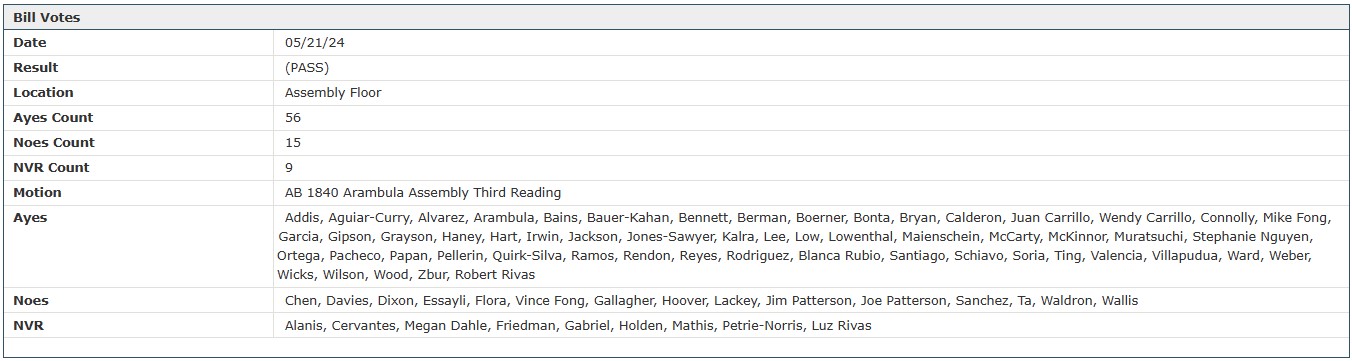
A bill to make illegal immigrants eligible for the California Dream for All Shared Appreciation Loan Program, which provides up to 20 percent of downpayment assistance to prospective homebuyers, passed the State Assembly last month on a vote of 56-15. All four members representing Contra Costa County, Tim Grayson (D-15), Lori Wilson (D-11), Rebecca Bauer-Kahan (D-16) and Buffy Wicks (D-14) voted in favor of Assembly Bill 1840.

Wicks also voted for the bill, authored by Assemblyman Joaquin Arambula (D-31), as a member of the Assembly Appropriates Committee.

AB1840 Assembly Floor vote on May 21, 2024. Source: leginfo.legislature.ca.gov

According to CalFHA, “The Dream For All Shared Appreciation Loan is a down payment assistance program for first-time homebuyers to be used in conjunction with the Dream For All Conventional first mortgage for down payment and/or closing costs. Upon sale or transfer of the home, the homebuyer repays the original down payment loan, plus a share of the appreciation in the value of the home.”

The program offers up to 20% for down payment or closing costs, not to exceed $150,000 and is not on a first come, first served basis. The homebuyer must register for a voucher and a randomized drawing will select registrants who will receive the voucher.  The program requires at least one borrower be a first-generation homebuyer and all borrowers must be first-time homebuyers.

According to the Legislative Counsel’s Digest, “Existing law establishes the California Housing Finance Agency in the Department of Housing and Community Development, and authorizes the agency to, among other things, make loans to finance affordable housing, including residential structures, housing developments, multifamily rental housing, special needs housing, and other forms of housing, as specified. Existing law establishes the California Dream for All Program to provide shared appreciation loans to qualified first-time homebuyers, as specified.

Existing law establishes the California Dream for All Fund, which is continuously appropriated for expenditure pursuant to the program and defraying the administrative costs for the agency. Existing law authorizes moneys deposited into the fund to include, among other moneys, appropriations from the Legislature from the General Fund or other state fund.

This bill would specify that an applicant under the program who meets all other requirements for a loan under the program, including, but not limited to, any requirements imposed by the Federal National Mortgage Association or other loan servicer, shall not be disqualified solely based on the applicant’s immigration status.

By expanding the persons eligible to receive moneys from a continuously appropriated fund, this bill would make an appropriation. The bill would recast the fund so that appropriations from the Legislature from the General Fund or other state fund are deposited into the California Dream for All Subaccount, which the bill would create and make available upon appropriation by the Legislature for specified purposes.”

AB 1840 is now up for votes by the State Senate Housing and Judiciary Committees before a possible vote on the floor.


Filed Under: Immigration, Legislation, News, State of California

Wilson’s Constitutional amendment defining, banning forced prison, jail labor as slavery in California passes State Senate committee

June 14, 2024 By Publisher Leave a Comment

Source: ACLU & GHRC

ACA 8 “would prohibit the Department of Corrections and Rehabilitation or any local entity operating a jail facility from punishing any incarcerated person for refusing a work assignment.”

Senate Public Safety Committee approves, moves to Senate Elections Committee

Would go to voters in November

By Edgar Guerra, Communications Director, Office of Assemblywoman Lori Wilson

SACRAMENTO, CA – The End Slavery in California Act (ACA 8), authored by Assemblywoman Lori D. Wilson (D-11) has made significant progress by passing out of the Senate Public Safety Committee. This crucial step brings California closer to abolishing the practice of forced labor for incarcerated workers and removing the last vestiges of slavery from the state constitution.

The Constitutional Amendment was introduced in February 2023 and passed by the Assembly last September. According to the Legislative Counsel’s Digest, “The California Constitution prohibits slavery and prohibits involuntary servitude, except as punishment to a crime.

This measure would instead prohibit slavery in any form, including forced labor compelled by the use or threat of physical or legal coercion. form. This measure would prohibit the Department of Corrections and Rehabilitation or any local entity operating a jail facility from punishing any incarcerated person for refusing a work assignment. The measure would also clarify that its provisions do not prohibit the Department of Corrections and Rehabilitation or any local entity operating a jail facility from awarding an incarcerated person credit towards their sentence for voluntarily accepting a work assignment.”

Wilson, who represents portions of Eastern Contra Costa County, emphasized the urgency of advancing this historic measure, stating, “The passage of ACA 8 out of the Senate Public Safety Committee marks a critical moment in our pursuit of justice and human dignity. We must urgently move this bill through the Senate Elections and Appropriations Committees, and onto the Senate and Assembly floors, so we can get it to the voters. Californians deserve the opportunity to abolish slavery once and for all.”

According to a November 2023 L.A. Times article about “The California Department of Corrections and Rehabilitation’s (CDCR) proposal…for eliminating all unpaid work assignments and reducing hours for most prison workers from full-time jobs to half-time.”

“Approximately 40% of California’s 96,000 prisoners have jobs while they serve out their sentences, according to the department spokesperson, doing laundry and janitorial work, as well as clerking and construction. Their wages generally range from 8 cents an hour to 37 cents an hour, depending on the skill level required for the job. The proposal calls for doubling the wage range, from 16 cents an hour to 74 cents an hour,” according to the Times’ report. “Prison officials argue that higher wages will have several benefits, including making it easier for inmates to pay back the money they owe for damage from their crimes” and “Fifty-five percent of inmates’ wages go toward restitution costs, according to the Department of Corrections.”

According to the CDCR’s Restitution Responsibilities, Information for Adult Offenders, “Restitution means ‘paying back’…State law requires judges to order restitution in every criminal case,” and “may cover medical bills, funeral expenses, and the cost of repairing damaged property.”

There are two types of restitution. “Restitution fines usually range from $200 to $10,000” and are determined by the judge. “Direct orders are specifically for victim losses because of the crime(s) committed against them” and the judge also determines the amount to be paid.

The ACA 8 Coalition, echoed the same sentiment as Wilson: “We are fighting to give people long-overdue humanity. Californians should be able to say how they feel about the forced labor of incarcerated people and our state’s continued use of slavery/involuntary servitude as a means to exploit human beings in 2024. The ACA 8 Coalition is determined to give voters the opportunity to add their voice to this movement. We must end slavery. No excuses, no exceptions.”

In May, the ACLU California Action announced, ACA 8 Coalition, made up of more than 30 organizations across the state, had secured the endorsement of the California Democratic Party. The organization wrote in a press release, “On Sunday, May 19, the California Democratic Party endorsed the End Slavery in California Act by Assemblywoman Lori Wilson (ACA 8). This historic legislation will give incarcerated workers the dignity and autonomy to prioritize education, vocation or rehabilitative programming over forced exploitation. ACA 8 places a constitutional amendment before the voters in November to remove the last vestiges of slavery from our state constitution.”

The press release further reads, “After the legislature passes ACA 8, voters can remove the “exception clause” that allows prison officials to force incarcerated people to labor and punish workers for calling off sick, taking a day to grieve, or declining a work assignment that does not serve their rehabilitation needs.”

According to a June 2022 report by the ACLU entitled, Captive Labor: Exploitation of Incarcerated Workers, “From the moment they enter the prison gates, incarcerated people lose the right to refuse to work. This is because the 13th Amendment to the U.S. Constitution, which protects against slavery and involuntary servitude, explicitly excludes from its reach those held in confinement due to a criminal conviction. The roots of modern prison labor can be found in the ratification of this exception clause at the end of the Civil War, which disproportionately encouraged the criminalization and effective re-enslavement of Black people during the Jim Crow era, with impacts that persist to this day.

Today, more than 76 percent of incarcerated workers surveyed by the Bureau of Justice Statistics say that they are required to work or face additional punishment such as solitary confinement, denial of opportunities to reduce their sentence, and loss of family visitation. They have no right to choose what type of work they do and are subject to arbitrary, discriminatory, and punitive decisions by the prison administrators who select their work assignments.”

Following its passage in the Senate Public Safety Committee, ACA 8 now moves to the Senate Elections Committee. Upon approval there, it will proceed to the Senate Appropriations Committee, and subsequently, to the Senate and Assembly floors for a final vote.

Allen D. Payton contributed to this report.

Filed Under: Crime, Legislation, News, State of California

Candidate for State Senate opposes Solano County sales tax increase bill

May 8, 2024 By Publisher Leave a Comment

“We’re taxed too much, already” – Thom Bogue, running to represent District 3 which includes Brentwood, Oakley, Discovery Bay

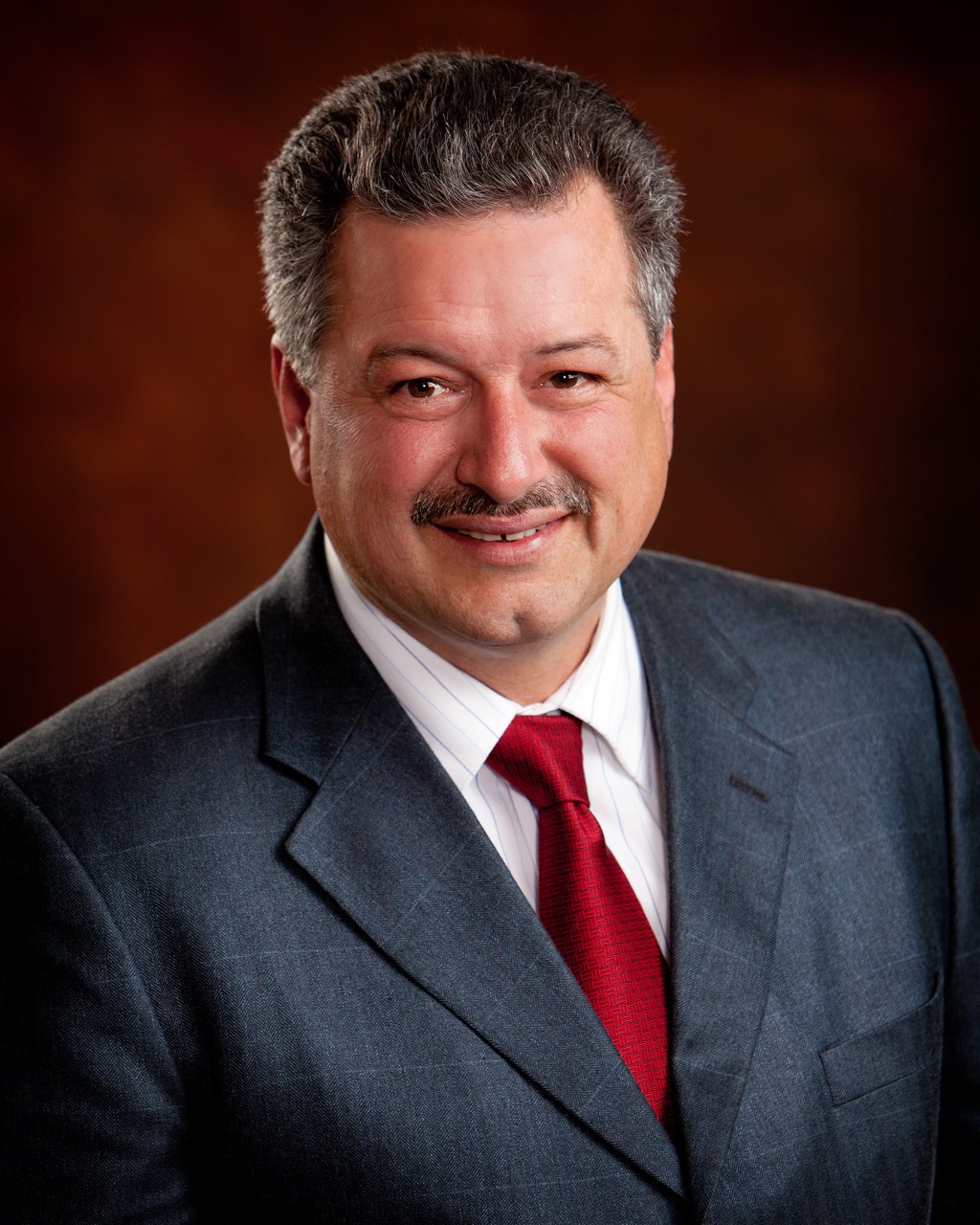
Thom Bogue. Source: campaign

Solano County, CA – Dixon Councilman Thom Bogue, candidate for State Senate in District 3, announced his opposition to AB 3259 by Assemblywoman Lori Wilson (D-Suisun City) making it easier to raise taxes only in Solano County. According to the press release about the bill from her office, it “authorizes an increase in the sales tax limit, providing an avenue for residents to decide on potential funding for crucial infrastructure and public services.”

“I have informed Ms. Wilson that I will not support her bill and that it’s unnecessary for Solano County residents, as we’re taxed too much, already,” Bogue stated. “We don’t have a revenue problem in Solano County or Sacramento, we have a spending problem.”

In his message to the assemblywoman, the candidate wrote, “I strongly oppose AB3259 in removing limitations to sales tax increases. The potential impacts to the everyday citizen and to our economy in pushing prices further up is not what we need. This is not a government revenue issue, it is a spending issue, and our State needs to quit impoverishing people further. The only question I and many others have, is are our legislators purposely trying to destroy our State? Certainly looks like it.”

The sales tax rate in Solano County is 6.25% (including the state and county taxes). The total local sales tax rate in Solano County is 7.375%. The average cumulative sales tax rate in the county is 8.34%. That includes state, county, city, and special district taxes.

“With the economy hurting and inflation continuing to increase the cost of living, we can’t ask our residents and businesses to pay more to the government,” Bogue added.

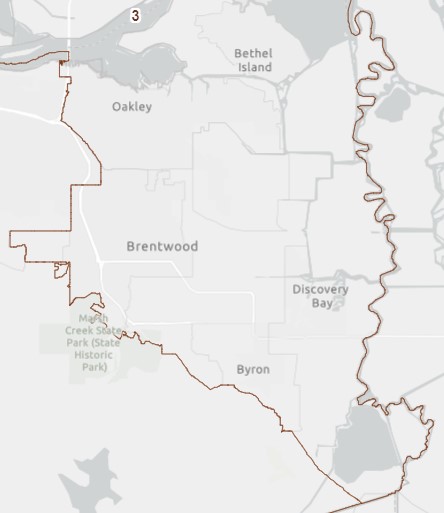
May of Eastern Contra Costa County portion of State. Source: wedrawthelines.ca.gov

Placing first in the primary election in March, Bogue is running for the open State Senate seat in District 3 which includes the Eastern Contra Costa County cities of Brentwood and Oakley, and communities of Discovery Bay, Bethel Island, Byron and Knightsen. The election is Nov. 5. For more information about his campaign visit www.thombogue4statesenate.com.


Filed Under: East County, Legislation, News, Politics & Elections

Senator Glazer’s bill would raise $500 million in tax credits to help revive local news    

May 1, 2024 By Publisher Leave a Comment

Doesn’t consult at least four local news publishers in his district before developing legislation

SACRAMENTO – A data extraction mitigation fee on major Internet corporations would raise $500 million to fund employment credits for news organizations across California under legislation Senator Steve Glazer, D-Contra Costa, outlined Wednesday at a press conference. Joining Senator Glazer were news publishers representing hundreds of community, and ethnic outlets.

Amid the backdrop of newsrooms continuing a downward spiral with staff layoffs, cutbacks in resources or outright closures, Senator Glazer said “we must create a new framework to ensure that newsrooms keep our citizens informed and democracy accountable to the people.”

The bill, SB 1327, is co-authored by Senate President Pro Tem Mike McGuire, D-Santa Rosa, and Senators Catherine Blakeslee, D-Encinatas, Steve Padilla, D-San Diego, and John Laird, D-Santa Cruz.

Senator Glazer’s proposal would create a data extraction mitigation fee on the largest online companies, or platforms, with a minimum of $2.5 billion in revenues. The Data Extraction Mitigation Fee will be based on the value that online platforms derive by extracting personal and economic data from those who visit the company’s web pages.

“News organizations and their advertising revenues have been hollowed out by these online platforms,” Senator Glazer said. “They should mitigate this damage and this new bill will do exactly that.”

The data extraction mitigation fee closes a loophole that allows online platforms to avoid taxation on the value of the barter in which they engage with customers who, in effect, trade access to their personal data for the opportunity to use a website. While this kind of economic relationship has helped fuel innovation and access to information, it has also created what economists call “negative externalities” – or harm to third parties who are not directly a part of that exchange.

In this case, the harm is being done to local news organizations and, more broadly, to all Californians who depend on independent local news coverage of events that affect their daily lives and the democratic form of government – the foundation of our society.

“You cannot have informed voters if there is no one to tell them what their government is doing,” said Senator Blakespear. “We’ve seen the journalism industry devastated in recent years, and we need to do something about that. SB 1327 is a smart, sensible way to fund local journalism.”

Unofficial estimates indicate that a fee level equivalent to the current statewide sales and use tax rate could generate almost $1 billion per year. Of that amount, 39.5% would go to K-14 education as required by Proposition 98 and 1.5% would go to state budget reserves as required by Proposition 2.

In addition to the constitutional requirement to use a portion of the fee revenue for education and budget reserves, some of the revenue would also go to backfill the state’s general fund for revenue lost when the companies deduct the cost of the fee as an expense on their income tax returns. Some of the money would also go to the Franchise Tax Board for administration and collection costs. That would leave approximately $500 million annually to support local journalism.

While Congressman Mark DeSaulnier held a Zoom meeting with local news publishers in Contra Costa County to provide input on his proposed federal legislation in 2021, neither Glazer nor his staff reached out to at least four publishers in the county for input on his bill before developing it. They include Tamara Steiner, publisher of the Concord and Clayton Pioneer, Mike Burkholder, publisher of ContraCostaNews.com, Greg Robinson, publisher of The Press covering Brentwood, Oakley and Discovery Bay, and Allen Payton, publisher of the Antioch Herald and Contra Costa Herald.

As he did with DeSaulnier’s bill, Payton twice asked the state senator if he would include an exception in the tax code to allow non-profit owners of local media to continue endorsing or opposing candidates and ballot measures, and publishing editorials. But that was not included in the state legislation.

However, Glazer did gather support from other news organizations and sought their input prior to announcing his legislation.

Steve Waldman, president of Rebuild Local News, a nonpartisan, nonprofit coalition of more than 3,000 locally-owned and nonprofit, community-based newsrooms, said the legislation would be a major breakthrough for the news industry – and for communities that are starving for local news.

“We vigorously applaud Sen. Glazer’s proposed local news employment credit, which would truly revitalize community news in California,” Waldman said. “It is a transformative proposal. It would dramatically improve the capacity of newsrooms to cover their communities and is especially attentive to the role of medium and small-sized outlets.

Waldman added: “An employment credit places the incentives in the right place: hiring of local reporters. It’s non bureaucratic. It helps for-profits and nonprofits, print, digital and broadcast, urban and rural. It’s future friendly so new innovators can plug in too. And it does all this while being compatible with the First Amendment and the need to protect the editorial independence of news outlets.”

Much like mitigation fees imposed on companies that put chemicals into the environment to make their products or develop projects that burden our roads and schools, this fee assigns the cost of saving local journalism to those firms whose economic activity is causing the news industry’s demise.

The program would also distribute at least $25 million annually for non-profit local news organizations that don’t benefit from tax credits. Half of that amount would be reserved for those news organizations with fewer than 10 full-time employees. Additional funds would be provided to journalism training programs.

To qualify for the tax credit, news organizations would have to have their primary circulation or distribution in California and their online news primarily consumed within the state. They would publish in the current and previous year and carry media liability insurance. Broadcasters would have to be licensed by the Federal Communications Commission to broadcast in the state to claim the credit.

All qualifying news organizations would be eligible for tax credits based on the number of working journalists they have, the credits increasing with every new hire. News organizations that aren’t profitable would be eligible for tax refunds, as would non-profit news organizations.

Matt Pearce, president of Media Guild of the West, said in a letter of support that the bill hits the right tone in its support of smaller publications and outlets.

“The journalism jobs tax credit is well structured, nondiscriminatory in a way that avoids government favoritism, and incentivizes local journalist employment,” Pearce wrote. “Smaller publishers with fewer than 10 employees – which includes many of California’s ethnic media publishers – would, appropriately, receive a slightly larger share of support than larger newsrooms. Freelance journalists are appropriately recognized and economically supported at a level that would not incentivize workforce fissuring. Employers that provide benefits to their employees would receive more support than those that didn’t.”

Laura Rearwin Ward, publisher of the Ojai Valley News in Ojai, CA near Santa Barbara and Ventura, praised Senator Glazer’s proposal to fund small news publications through tax credits and a data mitigation fee.

“Senator Glazer’s bill gives support to those most in need — California’s print and digital local, independent, and ethnic media,” Rearwin Ward said. “And the data mitigation fee appropriately focuses on large online platforms, such as Google, which profit from the use of content they do not create, and user data they have utilized in a one-sided barter arrangement. This fee will mitigate the harm done to the California news industry through loss of advertising revenue. This fee closes a loophole that has allowed online platforms to avoid taxation on the value of that barter. The visible damage to California is clear to see — huge losses in professional local news reporting, resulting in news deserts and ghost papers.”

Lance Knobel, CEO and co-founder of Cityside Journalism Initiative, the nonprofit that publishes Oaklandside, Berkeleyside and Richmondside, said the legislation could be a game-changer.

“Senator Glazer’s local news employment credit tackles the core problem for local journalism in California: how can we sustain and even increase the number of reporters and editors working in our community? If passed it would be truly transformative for independent local news organizations like ours,” Knobel said.

Ken Doctor, Local Founder and CEO of Santa Cruz-based publication Lookout, said the proposed tax credits would be a critical lifeline for local news organizations.

“The best solution for California’s local news crisis is simple: more experienced journalists offering trusted and trustworthy reporting to and for communities up and down the state,” said Doctor, also an analyst with Newsonomics. “Sen. Glazer’s bill recognizes that payroll tax credits are the best way to fund such a revival, without having the state pick winners or losers. As the legislature debates how to fund such credits, the focus on them is the one essential going forward.”

“We have seen a dramatic devastation of the news eco system, and with it a coarsening of our politics that have led many to worry whether our democracy can survive,” Senator Glazer said. “In so many cases, stories are not being covered in communities, large and small. We often don’t know what politicians and other community leaders are doing – many of the checks and balances have vanished – because nobody is there to cover them. We want to restore accountability and strengthen our democracy by reviving newsrooms.”

Allen D. Payton contributed to this report.


Filed Under: Legislation, News

Bill to mandate ‘science of reading’ in CA schools faces teachers’ union opposition

April 6, 2024 By Publisher Leave a Comment

Teacher Jennifer Dare Sparks conducts a reading lesson in her 3rd/4th class at Ethel I. Baker Elementary School in Sacramento, Calif. Thursday, Jun. 2, 2022. Photo credit: Randall Benton / EdSource

Part of nationwide push to bring back phonics, sponsors seek compromise, CTA refuses to negotiate

By DIANA LAMBERT, JOHN FENSTERWALD, ZAIDEE STAVELY, EDSOURCE.org

California’s largest teachers’ union has moved to put the brakes on legislation that mandates instruction, known as the “science of reading,” that spotlights phonics to teach children to read.

The move by the politically powerful California Teachers Association (CTA) puts the fate of Assembly Bill 2222 in question as supporters insist that there is room to negotiate changes that will bring opponents together.

CTA’s complaints include some recently voiced by some advocacy organizations for English learners and bilingual education that oppose the bill and have refused to negotiate any changes to make the bill more acceptable.

The teachers union put its opposition to AB 2222 in writing in a lengthy letter to Assembly Education Committee Chairman Al Muratsuchi last week. The committee is expected to hear the bill, introduced in February, later this month.

The letter includes a checklist of complaints including that the proposed legislation would duplicate and potentially undermine current literacy initiatives, would not meet the needs of English learner students and cuts teachers out of the decision-making process, especially when it comes to curriculum.

“Educators are best equipped to make school and classroom decisions to ensure student success,” the letter said. “Limiting instructional approaches undermines teachers’ professional autonomy and may impede their effectiveness in the classroom.”

Marshall Tuck, CEO of EdVoice, an advocacy nonprofit co-sponsoring the bill, said he was surprised that CTA would oppose legislation that would ensure all teachers are trained to use the latest brain research to teach children how to read.

“Unfortunately, a lot of folks in the field haven’t actually been trained on that, and a lot of the instruction materials in classrooms today don’t align with that,” Tuck said.

Tuck said CTA appears to misunderstand the body of evidence-based research known as the science of reading. It “is not a curriculum and is not a program or a one-size-fits-all approach,” he said. “It will give teachers a foundational understanding of how children learn to read. Teachers will still have a lot of room locally to decide which instructional moves to make on any given day for any given children. So, you’ll still have significant differentiation.”

A nationwide push

California’s push to adopt the science of reading approach to early literacy is in sync with 37 states and some cities, such as New York City, that have passed similar legislation.

States nationwide are rejecting balanced literacy as failing to effectively teach children how to read, since it trains children to use pictures to recognize words on sight, also known as three-cueing. The new method would teach children to decode words by sounding them out, a process known as phonics.

Although phonics, the ability to connect letters to sounds, has drawn the most attention, the science of reading focuses on four other pillars of literacy instruction: phonemic awareness, identifying distinct units of sounds; vocabulary; comprehension; and fluency. It is based on research on how the brain connects letters with sounds when learning to read.

Along with mandating the science of reading approach to instruction, AB 2222 would require that all TK to fifth-grade teachers, literacy coaches and specialists take a 30-hour-minimum course in reading instruction by 2028. School districts and charter schools would purchase textbooks from an approved list endorsed by the State Board of Education.

The legislation goes against the state policy of local control that gives school districts authority to select curriculum and teaching methods as long as they meet state academic standards. Currently, the state encourages, but does not mandate, districts to incorporate instruction in the science of reading in the early grades.

“It’s a big bill,” said Yolie Flores, president of Families in Schools, a co-sponsor. “We’re very proud that it’s a big bill because that means it is truly consequential in the best way possible for children. It’s not a sort of tweak around the edges kind though, it’s the kind of bill that really brings transformation. So we are hoping that the Legislature sees beyond the sort of typical pushback and resistance, and in the end, I think, teachers will see that this was a huge benefit for them.”

Seeking compromise

The bill’s author, Blanca Rubio, D-Baldwin Park, said she took CTA’s seven-page letter not as an outright rejection but as an opportunity for negotiations.

“I’m glad they sent this letter,” she said. “They outline their objections and the reasons why, and that’s something I can work with. It’s not a flat, ‘No, we don’t want you to do it.’ They gave me specific items that I can look at and have a conversation about.”

She said that Assemblymember Muratsuchi asked her to work with the CTA on a compromise. She is also meeting with consultants for Assembly Speaker Robert Rivas, D-Salinas, “to look at the big picture,” she said.

But Flores says the state’s budget problems, with predictions of no money for new programs, may be a bigger hurdle to getting the bill passed than the CTA opposition. The cost of paying for the required professional development for teachers would total $200 million to $300 million, she said. Because it is a mandate, the state would be required to repay districts for the cost.

“That is a drop in the bucket for something so transformational, so consequential,” Flores said. “I hope that the Legislature really comes to that realization. We’re in a budget deficit, but our budget is a statement of priorities.”

Advocates say that it is imperative that California mandate instruction in the science of reading. In 2023, just 43% of California third graders met the academic standards on the state’s standardized test in 2023. Only 27.2% of Black students, 32% of Latino students and 35% of low-income children were reading at grade level, compared with 57.5% of white, 69% of Asian and 66% of non-low-income students.

“It’s foundational,” Flores said. “It’s not the only thing teachers need to know. It’s not the only thing that teachers will need to do and to adhere to, but it’s sort of the basic foundational knowledge of how children’s brains work in order to learn to read.”

The bill would sunset in 2028 when all teachers are required to have completed training. Beginning in July, all teacher preparation programs would be required to teach future educators to base literacy instruction on the science of reading.

Needs of English learners

The CTA and other critics of AB 2222 charge that it ignores the need of English learners for oral language skills, vocabulary and comparison between their home languages and English, which they need in order to learn how to read. Four out of 10 students in California start school as English learners.

Tuck disputes this. “We actually emphasize oral language development,” he said. “This would be the first statute that would say when instructional materials are adopted, and when teachers are trained in the science of reading, they must include a focus on English learners and oral language development.”

Representatives from Californians Together, an advocacy organization for English learners and bilingual education, applauded the CTA’s opposition to the bill. They oppose the bill, rather than suggest amendments, because they disagree with its overall approach.

“We just don’t think this is the right bill to address literacy needs,” said Executive Director Martha Hernandez. “It’s very restrictive. We know that mandates don’t work. It lacks a robust, comprehensive approach for multilingual learners.”

Instead, Californians Together and the California Association for Bilingual Education have both said they would prefer California fund the training of teachers and full implementation of the English Language Arts/English Language Development Framework.

The framework was adopted in 2014 and encourages, but does not mandate, explicit instruction in foundational skills and oral language development for English learners.

The California Language Teachers Association has requested the bill be amended to include information about teaching literacy in languages not based on the English alphabet, such as Japanese, Chinese or Arabic, according to Executive Director Liz Matchett. However, the organization has not yet taken a position on the bill.

“I agree that we want to support all children to be able to read. If they can’t read, they can’t participate in education, which is the one way that is proven to change people’s circumstances,” said Matchett, who teaches Spanish at Gunn High School in Palo Alto. “There’s nothing to oppose about that. I’m still a classroom teacher, and all the time, you get kids in high school who can’t read.”

Education Trust-West urges changes in the bill to center the needs of “multilingual learners” — children who speak languages other than English at home — and to include more oversight and fewer mandates, such as those that may discourage new teachers from entering the profession.

“If our recommended amendments were to be accepted, EdTrust-West would support it as a much-needed solution to California’s acute literacy crisis.”

Claude Goldenberg, professor emeritus of education at Stanford University, said “it was disappointing” to see CTA’s opposition, particularly because the union did not suggest amendments. He said he had met with representatives from CTA and urged them to identify what could be changed in the bill.

In a recent EdSource commentary, Goldenberg urged opponents to “do the right thing for all students. AB 2222’s introduction is an important step forward on the road to universal literacy in California. We must get it on the right track and take it across the finish line.”

Referring to the CTA’s opposition, Goldenberg said, “Obviously my urgings fell flat. They identified why they’re opposing, but there’s no indication of any possible re-evaluation.”

Goldenberg, who served on the National Literacy Panel, which synthesized research on literacy development among children who speak languages other than English, has called on the bill’s authors to amend it to include a more comprehensive definition of the “science of reading” and include more information about teaching students to read in English as a second language and in their home languages.

The CTA has changed its position on bills related to literacy instruction in the last two years. It had originally supported Senate Bill 488, which passed in 2022. The legislation requires a literacy performance assessment for teachers and oversight of literacy instruction in teacher preparation. The union is now in support of a bill that would do away with both.

The change of course was attributed to a survey of 1,300 CTA members, who said the assessment caused stress, took away time that could have been used to collaborate with mentors and for teaching, and did not prepare them to meet the needs of students, according to Leslie Littman, vice president of the union, in a prior interview.

Veteran political observer Dan Schnur said he’s not surprised CTA would oppose the bill since some of its political allies are against it; the question is how important CTA considers the bill.

“If it becomes a pitched battle, CTA will have to decide whether it is one of its highest priorities in this session,” he said.

Gov. Gavin Newsom hasn’t indicated his position yet, but Schnur, the press secretary for former Gov. Pete Wilson, who teaches political communications at UC Berkeley and USC, said, “This is not the type of fight Newsom needs or wants right now. If he has strong feelings, it’s hard to see him going to war for or against.”

Filed Under: Employment, Labor & Unions, Legislation, News

  • « Previous Page
  • 1
  • 2
  • 3
  • 4
  • 5
  • …
  • 14
  • Next Page »
Monica's-Riverview-Jan-2026
Liberty-Tax-Jan-Apr-2026
Deer-Valley-Chiro-06-22

Copyright © 2026 · Contra Costa Herald · Site by Clifton Creative Web