• Home
  • About The Herald
  • Local Agencies
  • Daily Email Update
  • Legal Notices
  • Classified Ads

Contra Costa Herald

News Of By and For The People of Contra Costa County, California

  • Arts & Entertainment
  • Business
  • Community
  • Crime
  • Dining
  • Education
  • Faith
  • Health
  • News
  • Politics & Elections
  • Real Estate

During labor negotiations dialysis caregivers to picket Fresenius Kidney Care, Satellite Healthcare over understaffing, low-wages, patient care crisis

August 2, 2023 By Publisher Leave a Comment

At Antioch and other locations in California; Fresenius says they’re “committed to bargaining in good faith”

By Renée Saldaña, SEIU-United Healthcare Workers West (SEIU-UHW)

Fresenius and Satellite Healthcare dialysis caregivers across California are the latest round of healthcare workers to join statewide protests over the short-staffing crisis in the state’s healthcare system. Protests will be held on August 9th and 10th at 21 locations, including Antioch, San Francisco, San Jose, San Diego, Riverside, and Orange.

“We are severely understaffed and stretched so thin. We used to have a one to three patient ratio, but over the years it’s become one to eight, and if someone calls out sick it becomes one to twelve. It happens a lot,” says Jose Manuel Gonzalez, a certified hemodialysis technician preceptor III at Fresenius Kidney Care for over 25 years. “We have to rush, to work as fast as we can, and the quality of service really suffers. I’m considering patient care, regardless of how the company treats us. The company should care more.”

In response to caregivers’ attempts to improve care and safety for dialysis patients, management has violated United States labor law. Both employers have threatened and intimidated caregivers, including firing caregivers for leading the organizing efforts and speaking out to improve patient care. The union has filed unfair labor practice charges with the National Labor Relations Board against both companies for these illegal acts, including one against Satellite Healthcare for canceling all bargaining sessions scheduled for July and August.

Legislators are also lending their support to the struggle of dialysis caregivers to improve conditions. In a letter of support, U.S. Representative Robert Garcia (D-CA-42), wrote:

“Across the industry, I understand that dialysis clinic caregivers continue to struggle with low wages, inadequate training, and chronically low staffing levels. These working conditions often lead to high turnover as caregivers leave the industry because of burnout or transfer to another healthcare sector where pay is higher. These factors deprive patients of experienced and consistent support.”

The ongoing protests by dialysis and other healthcare workers are part of a larger movement of workers across the country who are taking a stand against poor working conditions, low wages, exorbitant corporate profits, and excessive executive pay. Dialysis workers are joining over 85,000 Kaiser Permanente, Prime, and other healthcare workers who launched protests in July to improve patient care and staffing.

The chronic short-staffing in dialysis care has allowed for-profit dialysis corporations to make hundreds of millions in profits. Fresenius medical care made nearly $720 million in profits and paid its CEO nearly $5 million in compensation in 2022. Satellite Healthcare made $16.7 million in profits and paid its CEO $1.5 million in compensation in 2021.

In contrast, many dialysis caregivers make as little as $20 an hour and routinely hold two or more jobs just to make ends meet.

SEIU-UHW represents more than 600 dialysis caregivers at Fresenius and Satellite Healthcare in various job classes including registered nurses, patient care technicians, licensed vocational nurses, certified clinical hemodialysis technicians, dietitians, social workers, clinical administrative coordinators, and receptionists.

SEIU-United Healthcare Workers West (SEIU-UHW) is a healthcare justice union of more than 100,000 healthcare workers, patients, and healthcare activists united to ensure affordable, accessible, high-quality care for all Californians, provided by valued and respected healthcare workers. Learn more at www.seiu-uhw.org.

Fresenius Kidney Care Responds

In response, Fresenius issued the following statement: “There is nothing more important than the safety of our patients and our team members. In fact, in 2022, for the seventh consecutive year, Fresenius Kidney Care led the industry with 99.63% of our facilities, achieving 5-Diamond Patient Safety status, a program endorsed by the American Nephrology Nurses’ Association (ANNA) and several other organizations in the industry.

We use a staffing tool to align staffing needs with patient care requirements in order to provide safe and effective care. We constantly monitor census and staffing fluctuations and redeploy staff accordingly to maintain safe staffing levels. We maintain staff float pools and use both internal and external agency support to fill gaps.

Healthcare as an industry in general continues to face staffing challenges. We continue to address the recruitment needs where we provide care and are actively hiring for clinical care roles.

We recently began negotiations with SEIU-UHW and are committed to bargaining in good faith to reach agreements that are fair to team members and enable Fresenius Kidney Care to continue its mission of providing life-sustaining care to patients. 

We fully believe that the dedication and passion of all our team members should be recognized and rewarded. That’s why we offer competitive compensation, benefits and development programs that support our team members personally and professionally.”

Allen D. Payton contributed to this report.
 

Filed Under: Health, Labor & Unions, News

During bargaining Coalition of Kaiser Permanente Unions holding nationwide protests this week

July 26, 2023 By Publisher Leave a Comment

Kaiser says pickets, actions at hospitals July 24-29 aren’t strikes, facilities remain open

By Allen D. Payton

The 85,000-member Coalition of Kaiser Permanent Unions is holding nationwide pickets and actions at Kaiser hospitals and facilities, this week, July 24-29 to protest staffing shortage and wages, less than three months from their contract expiration on September 30. The two sides are in the midst of bargaining and the next session is scheduled for Tuesday, August 1. The protest at Kaiser Medical Centers in Antioch and Richmond were held yesterday, Tuesday, July 25 and the protest at Kaiser-Walnut Creek is occurring, today.

The Coalition unites 85,000 members of four international unions at Kaiser hospitals, clinics, and facilities throughout the United States.

In a July 13, 2023 post on their website labeled “Bargaining Update 4”, the coalition claims, “At bargaining this week, the ‘non-profit’ that pays its CEO $16 million a year gave a clear message to the EVS (environmental services) worker raising a family on $48K a year in LA: ‘You make too much money.’

It’s unbelievable. Kaiser pays 49 executives more than a million dollars a year, but they think a PCT (patient care technician) earning $52K a year in Portland is making Kaiser unaffordable. The corporation that has over $113 billion in investments – including questionable ventures around the world – believes they are paying healthcare workers $450 million a year too much in wages that are ‘over market.’

We will be submitting a full economic proposal – including wages – at our next bargaining session on August 1, but the fault lines in negotiations are becoming more and more clear: our Coalition spoke about how we are falling behind, struggling to afford living where we work, and losing ground to rising costs. Kaiser spoke about outsourcing more of our work to low wage, for-profit companies – undermining middle class jobs.”

The unions have offered a list of concerns and demands:

  • We want Kaiser to grow as a union company with leading wages, benefits, and quality care. Instead, Kaiser is spending $5 billion of our patients’ premiums to launch a non-union, non-partnership company that will lower labor standards.
  • We want a guaranteed PSP payout we can count on when we reach our goals. Kaiser is still defending their shameful decision to deny frontline caregivers our PSP while paying big bonuses to managers.
  • We want Kaiser to make meaningful investments in solving the staffing shortage: increase training funds, eliminate barriers to promotion, justify unposted vacancies, create paid externships, provide referral/ retention and recruitment bonuses, and dial back wasteful registry spending.

The coalition further claims, “It’s clear that the only way that we will get Kaiser to listen to us is to make some noise.”

Kaiser Responds: Not Strikes, Hospitals & Facilities Remain Open

Kaiser Permanent responded with a statement that the events are not strikes and their facilities remain open.

Following is the complete Statement from Kaiser Permanente on Coalition picketing July 24 to 29:

“It’s important for our members and patients to know that these events are not strikes. Our medical facilities will remain open and operate normally.

Kaiser Permanente is the largest union-represented health care employer in the U.S. — with nearly 75% of our employees represented by unions. We are currently bargaining with the Coalition of Kaiser Permanente Unions, which represents about 88,000 employees in a variety of roles and is part of our historic Labor Management Partnership.

Our priority is to reach an agreement that ensures we can continue to provide market-competitive pay and outstanding benefits. We are confident we’ll be able to reach an agreement that strengthens our position as a best place to work and ensures that the high-quality care our members expect from us remains affordable and easy to access.

Given where we are in the bargaining process, it’s clear the picketing by the Coalition isn’t about drawing attention to new issues, but rather an attempt to create bargaining leverage.

We have been and will continue to address the real issues that are affecting health care and our employees. On the heels of the global pandemic and given today’s economy, these challenges include inflation and rising costs to deliver health care, increasing competition from nontraditional businesses, labor shortages, supply chain disruptions, and increases in the demand for access to health care. We look to the Coalition to be a constructive partner in helping address these and other challenges affecting us all.

Staffing

The staffing challenges mentioned by the Coalition have been happening all across health care but are actually less true at Kaiser Permanente now than elsewhere.

It’s worth remembering that during the pandemic, we took extraordinary steps to support and protect our workforce. This included providing $800 million in employee assistance to ensure that front-line employees had access to alternate housing options, special child care grants, and additional paid leave for COVID-19 illness and exposure.

The average employee turnover rate across health care is 21.4% (Source: PwC Saratoga 2022 Survey). While it crept up a bit during the height of the pandemic, we are thankful that our current rate of 8.5% as of June 2023 is significantly lower than the rest of health care.

At the beginning of bargaining in April, Kaiser Permanente and the Coalition agreed to a joint goal of hiring 10,000 new people for Coalition-represented jobs in 2023. We are making great progress toward achieving that goal.

Talented people want to work at Kaiser Permanente, which is why 96% of candidates accept our employment offers, which is 5.3% above the U.S. health care industry average (Source: PwC Saratoga 2022 Survey).

Our staffing approach reflects our shared commitment to ensure every Kaiser Permanente patient receives extraordinary care, every time and in every place.

Wages and Benefits

We are one of the leaders in employee wages and benefits in every market we’re in. We offer employees market-competitive pay and outstanding benefits, opportunities to learn new skills and grow their careers, and we’re committed to providing a safe and equitable work environment. We also want to ensure that we help our employees build long-term economic security with low-cost health insurance, industry-leading retirement plans, and other benefit programs to support their health and well-being.

We have discussed with the Coalition that in some regions Kaiser Permanente is paying Coalition-represented employees up to 28% above the market average wage rates — impacting our overall costs and ability to attract new members. In other regions, we are paying at or slightly above the market average, which hurts our ability to attract new employees and retain the excellent employees we already have.

We look forward to continuing to work collaboratively with our union partners in bargaining. We will reach a great agreement. To get there, we all need to be responsible stewards of our members’ and customers’ needs and resources and be mindful of the rising costs of health care and our collective role in addressing it.”

Filed Under: Central County, East County, Health, Labor & Unions, News, West County

Healthcare workers at Tenet’s San Ramon Regional Medical Center to picket July 21

July 7, 2023 By Publisher Leave a Comment

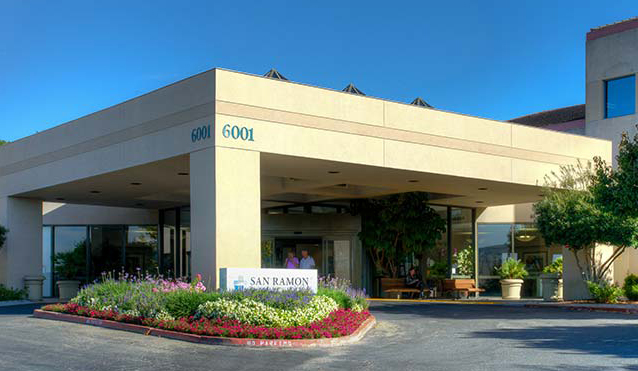
Photo: San Ramon Regional Medical Center

Part of statewide protest calling for additional support in the workplace

By Maria Leal, SEIU-United Healthcare Workers West

Healthcare workers across California will picket at 12 Tenet Healthcare facilities to call for additional support in the workplace starting July 11. The pickets will take place at facilities owned by Tenet Healthcare. These workers are part of what is expected to be tens of thousands of healthcare workers picketing this summer. Workers from four Prime Healthcare facilities in Southern California also start their pickets the same day.

The protest at Tenet San Ramon Regional Medical Center located at 6001 Norris Canyon Road will take place Friday, July 21 from 11:30 am – 1:30 pm.

After years of battling the COVID pandemic, healthcare workers are calling on management to provide additional support to retain and attract more caregivers to the industry.

“We are simply asking for additional support to improve working conditions. We put our lives at risk during the pandemic and were called ‘heroes,” said Bridgette Lamere, Respiratory Therapist, Tenet Emmanuel Medical Center in Turlock. “We are calling on our employers to increase their investments in workers to ensure the additional support of healthcare workers, our patients, and our entire communities.”

SEIU-United Healthcare Workers West (SEIU-UHW) is a healthcare justice union of more than 100,000 healthcare workers, patients, and healthcare activists united to ensure affordable, accessible, high-quality care for all Californians, provided by valued and respected healthcare workers. Learn more at www.seiu-uhw.org.

Efforts to reach the media relationships staff for the San Ramon Regional Medical Center were unsuccessful prior to publication time. Please check back for any updates.

Allen D. Payton contributed to this report.
Filed Under: Health, Labor & Unions, News

Healthcare workers to protest understaffing at Walnut Creek, Antioch Kaiser hospitals   

April 8, 2023 By Publisher Leave a Comment

By Renée Saldaña, SEIU-United Healthcare Workers West (SEIU-UHW)

Starting the week of April 10, healthcare workers at medical facilities across California, including Walnut Creek and Antioch, will hold events to speak out against the dangers of short staffing and the effects on patients and caregivers.

On Tuesday, a protest will be held at Kaiser Permanente in Walnut Creek from 11 am to 1 pm and on Wednesday, another protest will be held at Kaiser Permanent on Sand Creek Road in Antioch, also from 11 am to 1 pm.

“After years of understaffing and dealing with the pandemic, we are stretched thin and burnt out. Healthcare workers are leaving the field, and those of us who have stayed are doing the work of two or three people. We can’t give our patients the care they deserve without enough staff,” said Datosha Williams, a service representative at Kaiser Permanente. “We are calling on Kaiser to do what it takes to hire more caregivers so that we can deliver the best care possible for our patients.”

After three years of the COVID pandemic and chronic understaffing, healthcare workers are calling on management to provide safe staffing levels and additional support. Caregivers say that short-staffed hospitals can lead to long wait times, mistaken diagnoses, and neglect, making it harder to give patients quality care.

Even before the pandemic, California faced a massive shortage of allied healthcare workers to care for its aging population — as many as 65,000 workers annually, according to conservative estimates. The stress and the toil of fighting the pandemic has led many to leave the industry, creating a full-blown healthcare staffing and patient care crisis.

A survey of over 30,000 SEIU-UHW members, Crisis in Care, highlighted the short-staffing crisis in California, with 83% of responding healthcare workers saying their facility is understaffed. At the same time, healthcare corporations are reporting record profits.

Filed Under: Central County, East County, Health, Labor & Unions, News

Contra Costa County physicians union reaches contract agreement with management

March 27, 2023 By Publisher Leave a Comment

The Physicians’ and Dentists’ Organization of Contra Costa (PDOCC), a labor union representing more than 240 doctors in Contra Costa County’s public health system, announced a contract agreement with county management. 

The agreement was supported by 90 percent of voting PDOCC members and approved by the County Board Supervisors on Tuesday, May 21. It avoids a historic strike which would have impacted operations throughout the county health system. 

The contract enhances the time doctors have to manage their panels of patients and also makes the compensation package more competitive in the Bay Area market. 

The contract addresses many issues PDOCC members raised in their negotiations. During the negotiations county doctors and dentists pointed to high patient caseloads, insufficient time for administrative tasks, long waits for primary care appointments and specialty referrals, chronic short staffing and high turnover – all of which combine to negatively impact patient care and health impacts. 

“Our new contract advances our goal of improving the ability of Contra Costa County to recruit and retain top medical and dental talent to best serve our communities,” said Dr. David MacDonald, PDOCC President. “We will continue advocating for the patient care issues we called attention to in our negotiations, but we are optimistic about our progress and path forward.” 


Filed Under: Government, Health, Labor & Unions, News

Healthcare workers protest short-staffing at John Muir Concord Medical Center

March 15, 2023 By Publisher Leave a Comment

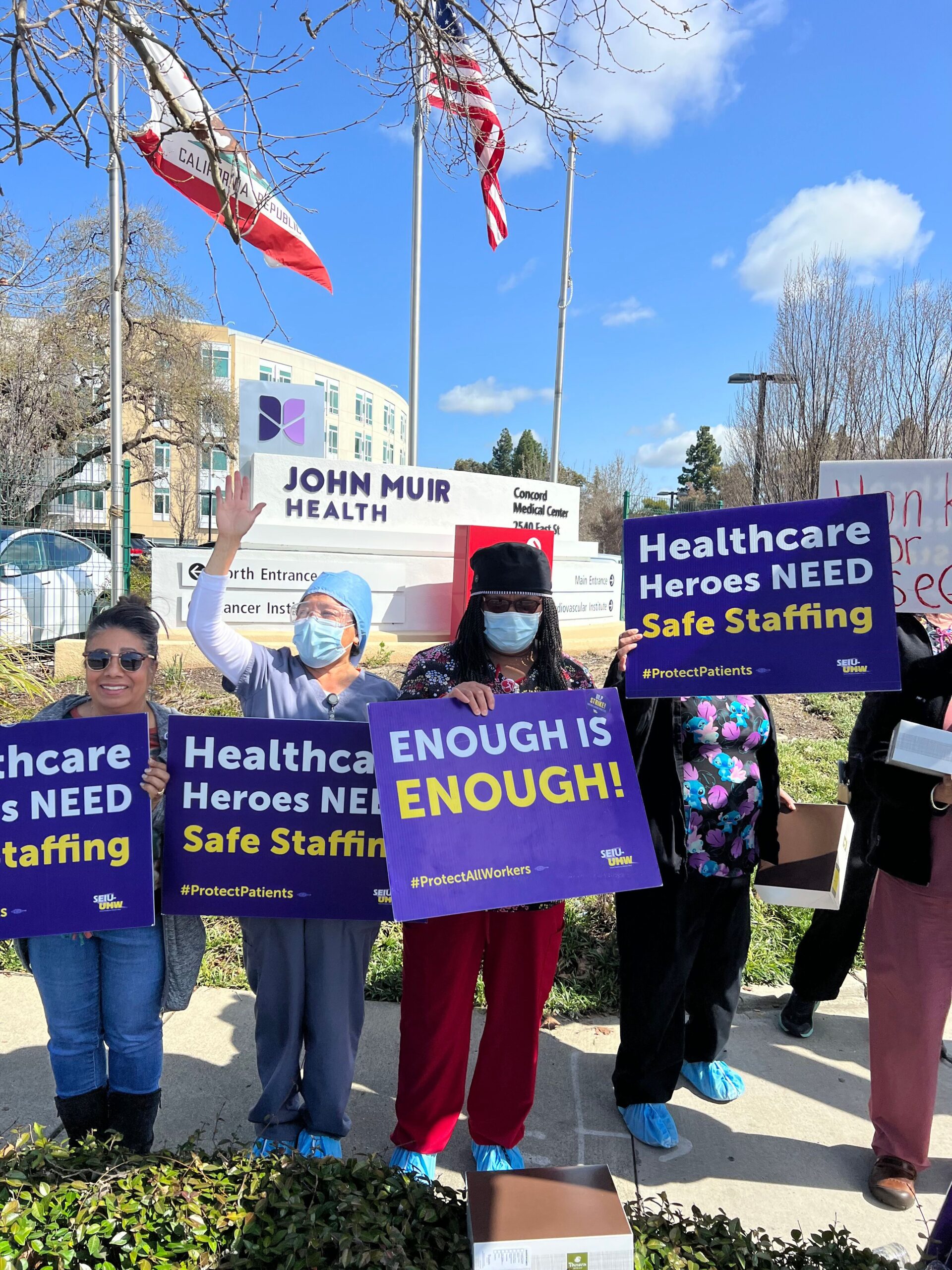
Healthcare workers protest at John Muir Concord Medical Center on Wednesday, March 15, 2023. Photos by SEIU

“The union’s accusations of patients not receiving meals, dangerous working conditions and lack of investment in our employees, are completely false.” – John Muir Health PIO Ben Drew

By Allen D. Payton

Healthcare workers are gathered at John Muir Health, Concord Medical Center today, Wednesday, March 15, beginning at 11 a.m. until 1 p.m., to protest unsafe staffing levels and their employer’s lack of investment in their workforce. Members of SEIU-United Healthcare Workers West are wearing their uniforms picketing, carrying signs and speaking about what they claim is the hospital’s failure to invest in its patients and caregivers.

According to a press release from the union, “John Muir Health, Concord Medical Center employees say conditions are dangerous for caregivers and patients as management ignores concerns about understaffing and working conditions. Workers are worried about patient and staff safety and say they’ve been pushed to the limit by their employer. They are calling on their employer to listen to and work with healthcare workers to address the staffing crisis through ongoing contract negotiations.”

“We care a lot for our patients, but management isn’t giving us the support we need. Staffing shortages are hitting all departments at our hospital,” said Brian Mynatt, a dietetic technician at John Muir Health, Concord Medical Center. “One of the best ways a patient can recover from an illness is through food and nutrition. But, when we don’t have the staff to get patients the meals they need, it puts their health at risk.”

However, spokesman for the healthcare provider, Ben Drew refutes the claims. In a response statement issued, yesterday he wrote, “The union’s accusations of patients not receiving meals, dangerous working conditions and lack of investment in our employees, are completely false.”

Located at 2540 East Street, John Muir Health, Concord Medical Center’s refusal to invest in its workforce comes in the midst of a healthcare staffing crisis across the state. California faces a massive shortage of allied healthcare workers — job classes that include medical assistants, respiratory therapists, emergency room workers, licensed vocational nurses, lab assistants, housekeepers, and many other frontline staff. 

SEIU-United Healthcare Workers West (SEIU-UHW) is a healthcare justice union of more than 100,000 healthcare workers, patients, and healthcare activists united to ensure affordable, accessible, high-quality care for all Californians, provided by valued and respected healthcare workers. Learn more at www.seiu-uhw.org.

John Muir Health issues statement responding to SEIU-UHW informational picketing at Concord Medical Center

John Muir Health issued the following response to the protest: “SEIU-UHW and John Muir Health just began bargaining for a successor contract for the Concord Medical Center. The current agreement expires in mid-April and we’ve held one bargaining session to date.

The union’s accusations of patients not receiving meals, dangerous working conditions and lack of investment in our employees, are completely false. Notably, not a word was said at yesterday’s bargaining session about patients not receiving meals. At all times, the health and safety of our patients, staff and providers is our top priority.

Like all health systems, JMH has been facing staffing challenges. We have worked hard to address those challenges by hiring 1,125 new employees in 2022, and that hiring process continues.

We have a long history of constructive relationships with the unions that currently represent employees at our Concord Medical Center, including SEIU-UHW. We hope to continue this practice going forward and reach a fair agreement on a new contract. We will continue to bargain in good faith.”

Allen D. Payton contributed to this report.
 

Filed Under: Central County, Concord, Health, Labor & Unions, News

County doctors’, dentists’ union challenges Contra Costa Health Services’ claim severe doctor shortages don’t impact patient care

March 7, 2023 By Publisher Leave a Comment

In the midst of contract negotiations

“a physician vacancy does not mean that there is a clinical vacancy, nor that care is compromised.” – Kim McCarl, CCHS

“A bigger medical and dental staff would help alleviate some of the load that our current employed members are carrying.” – Dr. David MacDonald, President, PDOCC

By Allen D. Payton

Last month the Physicians’ and Dentists Organization of Contra Costa (PDOCC) released data showing a high number of doctor vacancies in Contra Costa County Health Services.

According to a Feb. 16, 2023, PDOCC press release, based on county data, there are currently 83 out of 285 employed positions listed as vacant in Contra Costa Health Services, a 29 percent vacancy rate in the system. That includes 27 vacant positions in family medicine and primary care adult medicine, 5 vacant dentist positions and 5 vacant OB/GYN positions. With 19 vacant psychiatrist positions, only 27 percent of employed psychiatry positions are currently filled. 11 vacant employed positions in the emergency department – half of the department’s employed positions – means the county is unable to safely staff the emergency room.

Since November, 5 emergency department doctors have left county employment. The county interviewed and offered positions to 21 new emergency department applicants, but the offer was declined by every applicant.

The problem is expected to get a lot worse in 2024 when Contra Costa County will need an additional 40 primary care providers to care for 30,000 new Medi-Cal patients being added to the county’s health services due to an agreement between the county and California’s Department of Health Services.

The problem continues to worsen. Contra Costa County Health Services added 12,200 patients in the last two months, while only adding 1 new primary care physician. The result is that the average primary care physician employed by the county now has almost 200 more patients on their panel than at the end of 2022. There are no new primary care physicians anticipated to join county employment before July 2023.

On average, the county has only been able to fill three primary care doctor vacancies annually over the last three years.

In response, CCHS Communications Officer Kim McCarl, said doctor shortages are a nationwide challenge, are not compromising care, and confirmed that negotiations between the union and county “are underway”.

She wrote, “We value the medical staff who work across our department.

Health systems across the country are struggling to recruit and retain medical staff at all levels. Contra Costa Health is no different.

It’s important to note that a physician vacancy does not mean that there is a clinical vacancy, nor that care is compromised. We are confident that the right provider is caring for the right patient in the right way at Contra Costa Regional Medical Center and Health Centers every day.

We provide flexibility in work schedule, an emphasis on proactive care, and mission-oriented work that helps us recruit and retain physicians who want to practice in an integrated environment. It’s not uncommon for our physicians to be expert in many areas of clinical medicine which our system values.

We value physicians who embrace our mission and choose to work for Contra Costa Health on a full-time, permanent basis but we also welcome doctors who take a less traditional approach to their careers by working part time or in partnership with other health care entities. These approaches help to alleviate the burnout that has been so costly to hospitals and healthcare systems since the height of the pandemic.

We are proud to be home to one of the most highly rated family medicine training programs in the country. We recruit well-trained physicians who are familiar with our system from each graduating class.

Recruitment and retention of physicians is a top priority at Contra Costa Health. We will continue to explore ways to fill every vacancy across our healthcare system.”

Doctors, Dentists Disagree

That opinion, however, is not shared by the county’s doctors and dentists or by best practice standards for patient care.

The severe shortages most certainly impact patient care, including the time a physician can devote to each patient along with the availability of appointments, according to county doctors.

Contra Costa County’s own policies recommend no more than 1,500 patients to a primary care physician’s panel (the number of patients assigned to a physician). Currently the average panel size for Contra Costa’s employed primary care physicians is 1,879.

“County leaders may be willing to turn a blind eye to severe staffing shortages, but doctors care too much about our patients to let the problem go unaddressed any longer,” said Dr. David MacDonald, PDOCC President. “We hear from patients all the time about how difficult it is for them to schedule appointments in our system. When they finally get an appointment, it is rarely for the amount of time they need because doctors are overstretched and taking on more patients because of all the vacancies. The patients who rely on Contra Costa County Health Services for care should not have to settle for less time and attention than patients in other systems or ones with private healthcare.”

In addition to the primary care vacancies, there are 5 vacant dentist positions and 5 vacant OB/GYN positions. With 19 vacant psychiatrist positions, only 27 percent of employed psychiatry positions are currently filled. 11 vacant employed positions in the emergency department – half of the department’s employed positions – means the county is unable to safely staff the emergency room.

The problem is expected to get exponentially worse in 2024 when Contra Costa County will need an additional 40 primary care providers to care for 30,000 new Medi-Cal patients being added to the county’s health services due to an agreement between the county and California’s Department of Health Services.

PDOCC is calling on county leaders to be proactive by filling the position vacancies which will improve patient care and support county revenues. “It’s hard to believe that Contra Costa County is not working more closely with our union to help it become more attractive and competitive in retaining and recruiting medical and dental talent. I believe the county is moving in the wrong direction and I’m concerned that patients are being put at risk,” MacDonald said.

PDOCC members are currently in negotiations with county management towards a new contract. Issues raised in negotiations by PDOCC members include high patient caseloads, insufficient time for administrative tasks, long waits for primary care appointments and specialty referrals, chronic short staffing and high turnover – all of which combine to negatively impact patient care and health impacts. PDOCC members also state that burnout is at an all-time high.

County Health, PDOCC Respond to Questions

Questions were sent to both McCarl and the union’s spokesman asking if the PDOCC is in the midst of contract negotiations with the county and if so, is this an effort to obtain an increase in compensation for its members.

While McCarl responded, “Yes, negotiations are underway” she did not respond to the additional question about their criticism.

The questions were also sent Tuesday afternoon to Dr. David MacDonald with the PDOCC.

He responded, “PDOCC is engaged with Contra Costa County in negotiations at the level of state mediation. We have one more session to go.

We are focused on improving patient care and making the workplace in Contra Costa Health Services (CCHS) more sustainable.

We have to be able to hire new medical and dental talent, so compensation has to be more market competitive. This would also help with retention. A bigger medical and dental staff would help alleviate some of the load that our current employed members are carrying. The situation at this time is untenable. And, per an agreement between CCHS and the state’s Department of Health Services, CCHS will become the single system to provide care for MediCal patients in the county (aside from small fraction of MediCal patients covered by Kaiser). This will mean for an additional 30,000 new patients into our system as of January 1, 2024. We’re not ready for that. We will need an additional 40 new primary care providers to handle the influx of new patients. The County is nowhere close to hiring that many (I believe the County has 3 new providers scheduled to start after July of this year).

In addition, half of our emergency department employed positions are vacant. This means that the County partially fills the gap with very expensive temp doctors. We think it would be smarter for the County to take the funds doled out to temps and invest that money in committed, dedicated and County career minded docs who will be here for the long term.

Another issue is that our primary care providers need more protected time to manage their patient panels. The in-basket work – lab follow up, med refills, answering patient calls & emails, etc., has been escalating. Our physicians take this work home with them and it takes away time from their families and individual restorative activities.

All of this after the three-year pandemic onslaught has left our physicians and dentists suffering more from burnout than ever before. The County must step up, be proactive, and work with our union on how to achieve meaningful improvements that will enhance patient care and move our system in the right direction.”

Filed Under: Health, Labor & Unions, News

Kaiser claims bargaining in good faith with striking engineers’ union, best compensated in profession

December 13, 2021 By Publisher 3 Comments

A large inflatable rat on display at the Antioch Kaiser strike on Thursday afternoon, Nov. 18, 2021. Photos by Allen Payton

On strike for nearly three months

By Antonia Ehlers, PR and Media Relations, Kaiser Permanente Northern California

Kaiser Permanente has been bargaining in good faith with Local 39 IUOE (International Union of Operating Engineers Local 39 Stationary Engineers), the union that represents about 600 Kaiser Permanente operating engineers, for several months. The union decided to call a strike and have kept employees out for nearly three months. Our proposals to Local 39 will keep our engineers among the best compensated in their profession, at an average of more than $180,000 in total wages and benefits. We are not proposing any take-aways. (See related article)

In bargaining with IOUE Local 39, we delivered a comprehensive proposal that offers across-the-board pay increases and cash payments that are similar to our other employees’ and continues to include all our industry-leading benefits. Further, engineers’ retirement benefit would continue to be substantial, with several improvements.

Right now, Local 39’s position is the same as before it went on strike. The union continues to insist it receive much more – in some cases nearly 2 times more – than other union agreements covering Kaiser Permanente employees. It simply is not in line with other employees, nor is it in line with our obligation to continue addressing the affordability of health care for our more than 4.5 million members.

We will continue to bargain in good faith, and we hope that Local 39 leaders will continue to do the same. That means more discussion, fresh ideas, and compromise. At this time, we do not have any further dates scheduled to meet.  We are optimistic that we can resolve the remaining issues with Local 39 at the bargaining table and reach an agreement that continues to reward our employees and supports health care affordability, just as we have with several unions recently.

Filed Under: Health, Labor & Unions, News

Kaiser Permanente issues statements about claims made by the California Nurses Association, bargaining with NUHW and claims they’ve made

November 19, 2021 By Publisher 1 Comment

By Antonia Ehlers, PR and Media Relations, Kaiser Permanente Northern California

Members of both the California Nurses Association and National Union of Healthcare Workers (NUHW) are participating in sympathy strikes on Friday, Nov. 19, at all Kaiser facilities in Northern California in support of the Engineers, Local 39 who have been on strike for 63 days, as of today.

Kaiser Permanente statement about claims made by the California Nurses Association

November 19, 2021

Note: Kaiser Permanente is not in bargaining with the California Nurses Association, whose contract runs through August 2022.

The last 20 months of this pandemic have been an incredibly challenging and stressful time to work on the front lines of health care. We are extremely grateful for our frontline health care workforce, including our nurses, whose commitment to providing care and service throughout the COVID-19 pandemic has been nothing short of inspiring.

And while staffing continues to be a challenge across health care, we have hired hundreds of nurses and other care team members in recent months and continue to support our teams and their need for respite by bringing in experienced temporary staff.  In fact, in spite of the acute shortage of nurses in the state, Kaiser Permanente Northern California will have hired an estimated 1,800 experienced nurses by the end of the year, in addition to adding 300 new nurses who will graduate from Kaiser Permanente’s nurse residency program.

We want to thank our nurses, who demonstrate resilience, expertise and compassion every day. We recognize and have worked hard to ease the stresses that this pandemic has caused our people. Since early in the pandemic response, Kaiser Permanente has provided nearly $600 million in employee assistance to ensure that our frontline employees had access to alternate housing, special childcare grants, and additional paid leave for COVID-19 illness and exposure. When it became clear at year-end that our workers’ performance bonuses could be reduced by the effects of the pandemic, we instead chose to guarantee all eligible union-represented employees at least a 100% payout of their performance bonus, amounting to thousands of dollars a person on average.

Kaiser Permanente statement about bargaining with NUHW and claims made by the union

November 19, 2021

Kaiser Permanente and the National Union of Healthcare Workers (NUHW), which represents nearly 2,000 of our mental health professionals in Northern California, began bargaining in late July. While the union is issuing press statements about staffing, the real issue at the table is how much therapists are paid. 

This strike is a bargaining tactic this union has used every time it is bargaining for a new contract with Kaiser Permanente, over the past 11 years of its existence. We are still bargaining and are committed to resolving the issues and reaching an agreement.  

There is a national shortage of mental health clinicians that was already a challenge before the pandemic, and over the past year-and-a-half the demand for care has increased everywhere. We have been taking action to address the shortage of caregivers and to ensure care is available to our members. Over the past five years we have added hundreds of new mental health clinicians to our workforce; we currently have more than 300 open positions. We’ve worked hard to expand the number of therapists in California and are investing $30 million to build a pipeline to educate and train new mental health professionals across the state, with an emphasis on expanding the number of bilingual and diverse students entering the mental health field.

We have significantly expanded our ability to provide virtual care to patients who want it, increasing convenience and access, even though NUHW initially objected to this effort. We also continue to scale up our collaborative care programs that have proven to effectively treat patients with anxiety and depression diagnoses. 

As a result of these efforts and more, Kaiser Permanente offers timely access to initial and return appointments that meets all state standards and is above the average of other California providers. While this is an accomplishment during this time of caregiver shortage and increased demand, we are not finished. We know that every appointment is important and matters to each patient, every person’s needs are unique and every Kaiser Permanente member who needs care deserves timely access to that care. 

We have the greatest respect and gratitude for our mental health professionals and we are dedicated to supporting them in their important work. In addition to working with us to improve access to high quality mental health care, we are asking NUHW to work constructively to help address future costs to ensure we continue to be affordable for our members. 

At the heart of the issues in bargaining is this: Health care is increasingly unaffordable, and escalating wages are half of our costs. Kaiser Permanente is indisputably one of the most labor-friendly organizations in the United States. We are committed to remaining an employer of choice for mental health professionals, and to continuing to offer our employees market-leading wages and benefits. But we cannot continue to allow costs to grow beyond what our members can afford.  

The wages our mental health care professionals receive are significantly higher than average in some markets. For example, in the San Francisco Bay Area, licensed marriage family therapists at Kaiser Permanente earn more than $126,000 on average, which is more than $21,000 higher than market average wages, and licensed clinical social workers make more than $128,000, which is more than $16,000 higher than the market average. The same trend is true in the other parts of Northern California. In Sacramento, licensed clinical social workers earn an average of more than $127,000 in wages, which is $24,000 more than the market average. In addition, we provide among the most generous benefits available. 

The challenge we are trying to address is that if we continue to increase costs so high above the marketplace, our members will not be able to afford to get the care they need. We have to work together to address this challenge in a way that honors and rewards our employees and recognizes the increasing difficulty our members and customers face in paying for care. 

NUHW leadership has called for strikes every time we are in bargaining. It is a key part of their bargaining strategy, and it is especially disappointing that they are asking our dedicated and compassionate employees to walk away from their patients when they need us most. We take seriously any threat to disrupt care. We urge our employees to reject any call for a strike, continue to focus on providing care, and work with us through the bargaining process to finalize a new agreement.

Filed Under: Health, Labor & Unions, News

NUHW holds solidarity strike in support of engineers, marches on Kaiser’s Oakland headquarters

November 19, 2021 By Publisher Leave a Comment

NUHW members hold sympathy strike in support of the engineers and march on Kaiser headquarters in Oakland on Friday, Nov. 19, 2021. Photo: NUHW

Contra Costa Supervisor John Gioia speaks during rally

In a forceful demonstration of solidarity with striking Kaiser Permanente engineers and outrage over Kaiser’s chronic underfunding of behavioral health care, National Union of Healthcare Workers (NUHW) members including social workers, therapists, and psychologists fanned out to Kaiser hospitals across Northern California for a one-day strike. (See videos here and here)

The picket lines formed before dawn and culminated with hundreds of red-clad NUHW members, along with allied nurses and engineers, marching through downtown Oakland for a rally outside Kaiser’s corporate headquarters.

“I want to thank the solidarity that we’ve had the last few weeks,” Mark Sutherland, a Kaiser engineer, told NUHW members in Oakland, recognizing that several NUHW members had also staged individual sympathy strikes with the engineers who had been on strike for 63 days.

Outside a nearby Kaiser corporate office building, mental clinicians, nurses, and engineers chanted together, “We’re all essential workers.”

The rallies were headlined by mental health clinicians, allies including Mental Health America of California President Heidi Strunk, and elected officials including Assemblymember Alex Lee, Santa Clara County Supervisor Cindy Chavez, San Francisco Supervisor Connie Chan, Santa Rosa Mayor Chris Rogers and councilmembers Natalie Rogers, Eddie Alvarez, and Victoria Fleming, Sacramento City Councilmember Katie Valenzuela, Oakland City Councilmembers Carroll Fife and Dan Kalb, and Contra Costa Supervisor John Gioia.

When Gioia told clinicians, “I know you don’t like having to tell your patients we can’t make your next appointment for another month,” one clinician responded, “Three months.”

Friday’s solidarity strike was an opportunity for clinicians to support the engineers, who went on sympathy strikes with NUHW and also inform the public that Kaiser is refusing to consider contract proposals to dramatically increase mental health staffing and improve access to care.

“You can say you are bargaining in good faith, but the results are in what shows up out here,” Jason Lechner, an addiction medicine therapist, told KPIX-5 from the Oakland picket line.

Mickey Fitzpatrick, a psychologist at Kaiser Pleasanton, told the Mercury News his next appointment isn’t until January.

“We’re grossly understaffed and caseloads exceeding into the hundreds,” Fitzpatick told the paper. “It’s unethical to force clients to wait one or two months, sometimes three months for therapy appointments, and it’s incongruent with their standard of care that suggests for therapy to be effective, for clients to be seen in intervals of one to two weeks.”

Joanna Manqueros told the paper that long waits for care can have devastating implications for patients. “Depression is a serious mental health condition and just like an untreated diabetic or an untreated person with a severe cardiac condition, serious ramifications can include death and this is true for many of the mental health conditions we treat.”

At the San Francisco rally, Kerry Levin, a Kaiser social worker in San Rafael, chronicled the deterioration of Kaiser’s mental health services.

“I have worked for Kaiser for 20 years and I have never seen it this bad,” he said. “I work in the emergency room. The overdoses, the suicide attempts, the people in crisis, it has multiplied by at least four times. It takes eight weeks for people who are suffering to get care. It’s unconscionable.”

Levin added, “In contract negotiations, via Zoom, Kaiser has nothing to bring to the table. They turn off their cameras after 10 minutes. They offer nothing.”

“Kaiser needs to provide the funding and staffing necessary to provide adequate health care,” Matt Hannon, a psychologist for Kaiser in Daly City, said during the rally. “It is typical for Kaiser patients to wait eight weeks between appointments. There is no form of therapy that works anywhere when the sessions are eight weeks apart. None. Zip. Nada.”


Filed Under: Health, Labor & Unions, News

  • « Previous Page
  • 1
  • 2
  • 3
  • 4
  • 5
  • 6
  • Next Page »
RepublicServices-Antioch-ad (1)
Monica's Riverview 10-26 B
Celia's-10-26
Delta-RC-B 07-26
Deer-Valley-Chiro-06-22

Copyright © 2026 · · Contra Costa Herald · All Rights Reserved