• Home
  • About The Herald
  • Local Agencies
  • Daily Email Update
  • Legal Notices
  • Classified Ads

Contra Costa Herald

News Of By and For The People of Contra Costa County, California

  • Arts & Entertainment
  • Business
  • Community
  • Crime
  • Dining
  • Education
  • Faith
  • Health
  • News
  • Politics & Elections
  • Real Estate

Air District, Contra Costa DA pursue joint civil enforcement action against refinery owner for recent fire

February 15, 2025 By Publisher Leave a Comment

For Martinez Refining Company “creating a public nuisance, for failing to operate equipment as permitted, and for excessive smoke and soot fallout.”

By Ted Asregadoo, PIO, Contra Costa District Attorney’s Office

The Bay Area Air District and the Contra Costa County District Attorney’s Office understand the community’s concerns following the February 1, 2025, fire at the Martinez Refining Company. (See related articles here, here, here and here)

The Air District has been evaluating the fire’s air quality impacts and has issued three notices of violation to MRC for violating Air District regulations. These notices of violation were issued for creating a public nuisance, for failing to operate equipment as permitted, and for excessive smoke and soot fallout. The Air District’s investigations are ongoing, and the agency will issue further notices of violation for any additional violations uncovered.

Additionally, the Air District and the District Attorney’s Office continue the joint civil enforcement action against MRC for previous violations at this refinery. The two agencies are working collaboratively to take a comprehensive approach to ensure MRC’s compliance with all air quality regulations. While we understand the public’s interest, the confidential nature of the process prevents us from commenting on the status of this enforcement action.

Filed Under: Central County, Environment, Health, Industry, News

Martinez refinery discloses toxic chemicals released during recent fire

February 11, 2025 By Publisher Leave a Comment

Fire at the Martinez refinery on Feb. 1, 2025. Photo: BAAQMD

“The combustion byproducts pose the greatest health concern.”

“This could have been much worse. We got lucky this time,” – County Health Officer Dr. Ori Tzvieli

By Contra Costa Health

The Martinez Refining Company (MRC), owned by PBF Energy, has told local health officials that chemicals and combustion byproducts from a recent fire at the refinery included chemicals that can cause cancer, as well as heart and lung disease.

Dr. Ori Tzvieli, the County’s health officer, said the community was fortunate that the wind blew most of the toxic smoke north of the refinery, away from populated areas.

“This could have been much worse,” Dr. Tzvieli said. “We got lucky this time. But our community shouldn’t have to rely on luck.”

Air-quality measurements taken by Contra Costa Health’s hazmat staff during the incident showed that concentrations of chemicals in the air during the event were mostly below the threshold considered dangerous. There was a short period when the smoke from the fire stayed closer to the ground and particulate matter immediately North of the refinery measured at a high level, but because that was not sustained over a long period it is not expected to have a significant health impact on most people. The Bay Area Air Quality Managment District (BAAQMD) also took air samples during the incident, which the health department will review after the results are available.

The blaze started at 1:30 p.m. on Feb. 1 as refinery workers prepared for a planned maintenance of a process unit that had been shut down earlier in the week. While opening equipment, hydrocarbon started to leak and ignited the fire, according to MRC’s 72-hour follow-up report to the County. Six refinery workers were evaluated by medical personnel and released.

The County initially issued a health advisory to residents in nearby Martinez, Pacheco and Clyde. Contra Costa Health later ordered a shelter-in-place to residents in Martinez north of the refinery when the smoke got closer to ground level. The shelter-in-place order was lifted later that night, although the health advisory remained in effect until the fire was completely put out on Feb. 4.

On Feb. 5, Contra Costa Health (CCH) sent MRC a letter asking the refinery to disclose what products were released or caught fire during the blaze.

In its response, MRC revealed that the following chemical products were involved: naphtha (petroleum), light thermal and light catalytic cracked; distillates (petroleum), light catalytic cracked; isobutane-rich C3-C4; diethanolamine; and distillates (petroleum), intermed cat cracked.

Combustion byproducts from the fire included particulate matter from the smoke, benzene, hydrogen sulfide, sulfur dioxide and xylene.

The combustion byproducts pose the greatest health concern. CCH will be working closely with a toxicologist to assess whether there may be any long-term health impacts, including potential impacts to soil and water.

MRC is scheduled to provide CCH a 30-day follow-up report in early March. The County is in the process of hiring a firm to do an independent root-cause analysis to determine why the accident happened and how it can be prevented from happening again.

“Like the community, I am concerned about the byproducts released during the fire and any health impacts they pose to residents,” said Contra Costa County Supervisor Shanelle Scales-Preston, whose district includes the area around the refinery. “I will work to ensure all reports and analyses done by or contracted by MRC, CCH, and the Air District are released fully and promptly. My top priority continues to be the health and safety of the community.”

“I want to thank all the first responders who bravely fought to contain the fire and monitored the incident for health impacts,” Scales-Preston added. “My goal for the future is that we don’t have accidents at the refinery that require first responders to get involved in the first place.”

The fire is the latest in a string of safety incidents at MRC over the past two-and-a-half years. In November 2022, the refinery accidentally released tons of toxic spent-catalyst dust in the surrounding community.

For more information, visit our Martinez Refining Company Oversight webpage.


Filed Under: Central County, Environment, Fire, Government, Health, Industry, News

MTC, ABAG approve Plan Bay Area 2050+ Draft Blueprint Strategies and Growth Geographies

January 30, 2024 By Publisher Leave a Comment

Source: Plan Bay Area 2050+

Include non-transit transportation, environment, housing and economy strategy refinements

The Joint Metropolitan Transportation Commission (MTC) Planning Committee with the Association of Bay Area Governments (ABAG) Administrative Committee on Jan. 12, 2024 approved the revised Plan Bay Area 2050+ Draft Blueprint strategies and Growth Geographies.  This action enables staff to further study the strategies’ performance in meeting critical regional goals for an affordable, connected, diverse, healthy and vibrant Bay Area for all. Staff are aiming for adoption of the Plan Bay Area 2050+ Final Blueprint in summer 2024.

Given Plan Bay Area 2050’s solid foundation of 35 strategies, the Draft Blueprint phase for Plan Bay Area 2050+ is focusing on making targeted refinements to select plan strategies. These refinements reflect Plan Bay Area 2050’s implementation progress, the post-pandemic planning context and insights gathered during engagement with the public and partners in summer 2023.

What is the Plan Bay Area 2050+ Blueprint?

The Plan Bay Area 2050+ Blueprint will integrate strategies across the four elements of the plan — the economy, the environment, housing and transportation — to create a more equitable and resilient future for all.

Beginning in summer 2023 and wrapping up in late 2024, staff will develop the Blueprint over two phases: the Draft Blueprint and the Final Blueprint. Given Plan Bay Area 2050’s solid foundation of 35 strategies, the Draft Blueprint phase for Plan Bay Area 2050+ will focus on making targeted refinements to select plan strategies.

What are Growth Geographies?

Priority Development Areas — Places nominated by local governments served by transit and planned for new homes and jobs at densities necessary to support effective transit service.

Priority Production Areas — Industrial areas of importance to the regional economy and local communities that support middle-wage jobs.

Transit-Rich Areas — Places near rail, ferry or frequent bus service that were not already identified as Priority Development Areas.

High-Resource Areas — State-identified places with well-resourced schools and access to jobs and open space.

Staff previously shared proposed Draft Blueprint strategy refinements in October and November 2023, detailing which of Plan Bay Area 2050’s 35 strategies were likely to see major, minor or no changes in Plan Bay Area 2050+. This month, the MTC and ABAG committees approved moving forward with revisions for further study and analysis, including:

  • Non-transit transportation strategy refinementsfocused on prioritizing equity considerations, adapting to tighter fiscal constraints, promoting active transportation and safety, and expanding pricing strategies;
  • Environment strategy refinementsfocused on further reducing greenhouse gas emissions and proactively adapting to climate change; and
  • Housing and economy strategy refinementsfocused on addressing pressing challenges of housing affordability, homelessness and access to opportunity.

At this time the Draft Blueprint only includes a handful of modified transportation strategies, pending the development of a fiscally constrained Transportation Project List, which will integrate recommendations from the ongoing parallel Transit 2050+ effort. The complete suite of revised transportation strategies will be integrated as part of the Final Blueprint in summer 2024.

The Joint ABAG and MTC Committee also approved targeted updates to the Growth Geographies that were adopted as part of Plan Bay Area 2050. Growth Geographies are places that Plan Bay Area prioritizes for future homes, jobs, services and amenities and serve as a component of the plan’s housing and economy elements. Specifically, draft Growth Geographies for Plan Bay Area 2050+ will include five new Priority Development Areas (PDAs) and 16 modified existing PDAs nominated by local Bay Area jurisdictions; reflect up-to-date information on transit service, natural hazards and demographics; and integrate areas subject to MTC’s revised Transit Oriented Communities Policy.

The Draft Blueprint approval comes six months after MTC and ABAG kicked off the limited and focused update to Plan Bay Area 2050. In November 2023, staff shared progress-to-date with policymakers, including findings from the first round of engagement, core planning assumptions, the draft Regional Growth Forecast, a financial needs and revenue analyses and proposed strategy refinements.

The next round of public and partner organization engagement activities, which will inform the development of the Plan Bay Area 2050+ Final Blueprint, is planned to begin in spring 2024. MTC and the ABAG Executive Board are expected to approve Final Blueprint strategies in summer 2024.

Learn more about the Plan Bay Area 2050+ Draft Blueprint strategies and Growth Geographies. For additional technical resources, please visit the Plan Bay Area 2050+ Draft Blueprint Documents page on our website.

Filed Under: Bay Area, Business, Economy, Government, Homeless, Industry, Jobs & Economic Development, News, Transportation

State Workforce Board awards $33 million to help rebuild California’s middle class

October 10, 2023 By Publisher Leave a Comment

The Resilient Workforce Program invests in opportunities that advance job quality, environmental resilience

Contra Costa Refinery Transition Partnership program receives $400K

By Anna Champe, Communications Manager, California Workforce Development Board

SACRAMENTO, CA – The California Workforce Development Board (CWDB), in partnership with the Labor & Workforce Development Agency, recently awarded $33,155,915 to nine projects across the state to advance High Road Training Partnerships (HRTPs) that move underserved populations into better jobs.

Monday’s funding announcement is part of a larger, multi-level investment to advance state workforce development efforts to prioritize equity, quality jobs, and climate resilience

while meeting regional labor market needs. With the addition of these nine new projects, California is investing more than $260 million in nearly 100 active state-funded HRTPs.

The Contra Costa Refinery Transition Partnership received $400,000 in RWF funding in Spring/Summer 2022.

“Funding for existing HRTPs, which invest in industry-led worker-informed efforts, deliver on Governor Newsom’s promise of a California for All,” said California Workforce Development Board Chief Deputy Director Curtis Notsinneh. “California continues to lead the nation in investments that recognize and lift up a middle-class, while meeting the skills needs of our employers to stay competitive and innovative.”

Projects receiving funding include:

  • $7.5 million for High Road to Tribal Forest Restoration and Stewardship – expands job pathways with living wages for underserved tribal and rural populations, including tree and native plant nursery work, forest health, and forest and meadow restoration.
  • $5.1 million for Early Care & Education Pathways to Success – this existing apprenticeship program will expand to new under-sourced regions and serve 655 new apprentices to earn certifications in education serving Pre-K to Third-grade students.
  • $5 million for Vocational English as a Second Language Home Care Immersion Training Program – Homebridge will partner with SEIU Local 2015 to provide language skills and advanced home care training to immigrant, refugee, and formerly incarcerated populations. Participants will immediately earn $25 an hour after graduating and have opportunities for advancement.
  • $5 million for Dental Assistant Training Program – will scale successful earn-as-you-learn bootcamps to more regions and fill the gap between unlicensed dental assistants and licensed Registered Dental Assistants. Target populations include low-wage workers, communities of color, youth, immigrants, and workers without a college degree.

Contra Costa Harnessing Change: Refinery Transition Partnership (CCRTP)

Contra Costa County (CCC) communities, particularly low-income communities of color, bear major health burdens inflicted by the refineries and their toxic emissions. Additionally, the Bay Area refineries emit significant amounts of climate warming greenhouse gasses, posing one of the state’s most significant challenges to climate resilience. As California works to establish a carbon neutral economy, the oil refining sector will unavoidably undergo a massive transition. This transition is already taking place in CCC, where two of the four refineries are transitioning to biofuels, resulting in a significant workforce reduction–most notably at the Marathon Martinez Refinery, which laid off approximately 700 workers in 2020.

The Contra Costa Refinery Transition Partnership (CCRTP) is the first effort to bring together frontline workers and community organizations to plan for refinery transition. CCCRTP brings together CCC oil refinery workers, the refinery community, allies, and high-road industry stakeholders to develop shared strategies to prepare for this significant economic shift, including leading research and developing policy recommendations to support refinery communities and workers, as well as the development of a regional high-road economic development vision to advance CCC’s economic resilience as the state transitions to a low-carbon economy.

This project addresses the critical need to plan for economic transition in one of California’s most oil-industry dependent counties, through deep engagement and shared visioning led by impacted workers and community members themselves, in partnership with the broader community of stakeholders.

Project Highlights

  • Strengthen the CCRTP for the long-term, as a coalition of frontline workers, community organizations and allies.
  • Complete and publish a detailed report and recommendations on planning for refinery transition in the Bay Area.
  • Complete and publish a Contra Costa High Road Economic Development Vision.

Key Partners

  • Contra Costa Central Labor Council
  • BlueGreen Alliance Foundation
  • United Steelworkers District 12
  • United Steelworkers Local 5
  • UA Plumbers & Steamfitters Local 342
  • Asian Pacific Environmental Network
  • California Labor Federation, Workforce & Economic Development (WED)
  • UC Berkeley Labor Center

A complete list of awardees can be found on CWDB’s website.

Allen D. Payton contributed to this report.

Filed Under: Environment, Government, Industry, Jobs & Economic Development, News

Report shows no ongoing public health risk from Martinez Refinery petroleum coke dust release

July 17, 2023 By Publisher Leave a Comment

Source: Martinez Refining Company

By Contra Costa Health

Laboratory analysis shows that samples of coke dust collected by Contra Costa Health (CCH) following last Tuesday’s hazardous materials release at Martinez Refining Company (MRC) did not contain high levels of toxic metals, indicating the dust does not pose an increased, long-term risk to public health. (See related article)

CCH’s Hazardous Materials Program sent samples of the sooty substance for laboratory analysis after it collected on cars, garbage cans and other surfaces in neighborhoods around the refinery soon after notification of the release on July 11. The laboratory report is available here.

MRC reported the release at about 10:20 a.m. on Tuesday by activating the county’s Community Warning System at Level 1, the lowest-level alert, used for hazardous materials releases when there are no expected off-site health consequences.

MRC reported the material was coke dust, a black, sooty or powdery residue created during petroleum refining that primarily contains carbon and is chemically similar to charcoal. The material was released about 8:30 a.m. for approximately one minute, according to MRC.

CCH and the Bay Area Air Quality Management District are investigating the incident to determine whether the release violated regulatory law.

CCH is also investigating whether MRC properly followed the county’s emergency notification policy and properly used the Community Warning System, as required by law.

Coke dust can be safely washed off surfaces with soap and water. The primary health concern regarding the release of coke dust is irritation of throat, lungs and the respiratory system while the release was occurring and the material was in the air, particularly for people with respiratory conditions such as asthma.

Anyone who believes they have symptoms or health concerns due to breathing material released during the July 11 incident should contact their healthcare provider.

CCH expects to learn more about the contributing causes of the incident, actions immediately taken, and proposed actions to prevent a similar incident from occurring. The first incident report from MRC to CCH, required by the county’s notification policy, will be available at cchealth.org on Monday. 


Filed Under: Central County, Health, Industry, News

Contra Costa Health responding to coke dust release at Martinez Refining Company

July 11, 2023 By Publisher 2 Comments

Source: Martinez Refining Company

Contra Costa Health’s (CCH) Hazardous Materials program is investigating a hazardous materials release from the Martinez Refining Company (MRC) Tuesday morning.

MRC reported through the Community Warning System (CWS) that the released material was coke dust, a byproduct of the petroleum refining process.

The release left the material on the ground, parked cars, and other surfaces in the surrounding neighborhoods. CCH’s Hazardous Materials team is working to assess potential health impacts.

Wipe samples are being taken and will be sent to a lab for analysis. Results are expected by the end of the week. CCH will provide updates after the results are reviewed.

Coke dust is black and looks like soot. Use soap and water to clean impacted outdoor surfaces.

MRC notified CCH of the release around 10:20 a.m. through the CWS. MRC reported the release took place around 8:30 a.m. and lasted approximately one minute.

“We are very concerned about the delayed notification to the Community Warning System. We are once again responding to a refinery incident and trying to determine the health impacts,” said Contra Costa County Supervisor Federal Glover. “We understand this is an ongoing concern for our community and timely notification is critical.”

CCH requested a 72-hour report about the incident, which will be posted to cchealth.org.


Filed Under: Central County, Health, Industry, News

Risk assessment finds Martinez refinery release did not increase risk of exposure to hazardous metals in local soils 

June 8, 2023 By Publisher Leave a Comment

Proposed sample locations map. Source: CC Health

Investigation continues into refinery’s failure to notify the public of Nov. 2022 hazardous materials release

By Contra Costa Health

A toxicologist hired by Contra Costa Health has determined that a release of spent catalyst in November 2022 did not increase risk to public health from exposure to hazardous metals in the soil. (See related articles here and here)

The risk assessment, done by TRC, came to this conclusion after metals detected in 14 soil samples did not appear in similar ratios or quantities to spent-catalyst dust samples collected shortly after the accident at Martinez Refining Company (MRC) on Nov. 24-25, 2022. Metals detected in the soil samples were also within an expected range of levels typically found in the state.

“Contra Costa County has taken all steps to determine whether residents suffered any health consequences from November’s hazardous materials release. We are committed to holding MRC responsible for any impacts to the community and to ensuring that this type of incident does not happen again,” said John Gioia, Chair of the Contra Costa County Board of Supervisors.

MRC remains under investigation by the Contra Costa District Attorney for failing to notify authorities when a process upset released 20 to 24 tons of waste into the air, covering nearby neighborhoods in a dust that contained metals.

Source: Martinez Refining Company

An oversight committee, which includes residents from affected areas, was appointed by the Board of Supervisors to investigate whether the release increased risk of health problems in the community due to environmental contamination and is also overseeing an independent community investigation of the cause of the release.

The County’s health officer, Dr. Ori Tzvieli, will lift a March health advisory that warned refinery neighbors not to eat produce grown in soil possibly contaminated by spent catalyst dust until environmental testing could be completed.

“Now that we have these results, I personally would have no issue eating fruits and vegetables grown in ground soil from one of the affected areas,” Dr. Tzvieli said.

The soil testing did underscore the fact that metals in the ground are a fact of life in developed areas like Contra Costa with heavy industry and agriculture. Metals found in the samples included lead and arsenic, once commonly used in pesticides, but the measured amounts did not suggest a link to the spent-catalyst release.

It’s important to note that there is no absolute safe amount of arsenic that humans and animals can ingest. But while most edible plants absorb some small amounts of arsenic, they usually do not contain enough to be a health concern.   

Dr. Tzvieli said if people are worried they may have elevated levels of lead, arsenic or other metals on their property, they can grow produce in pots or raised garden beds using clean store-bought soil. He also recommends rinsing and/or scrubbing produce well and peeling root crops like potatoes and carrots.

The primary health risk from the spent-catalyst release happened in the initial hours and days after the refinery accident when people may have been exposed from breathing in dust particles. In response to community concerns about potential long-term health impacts, the County initiated the community risk assessment and soil sampling.

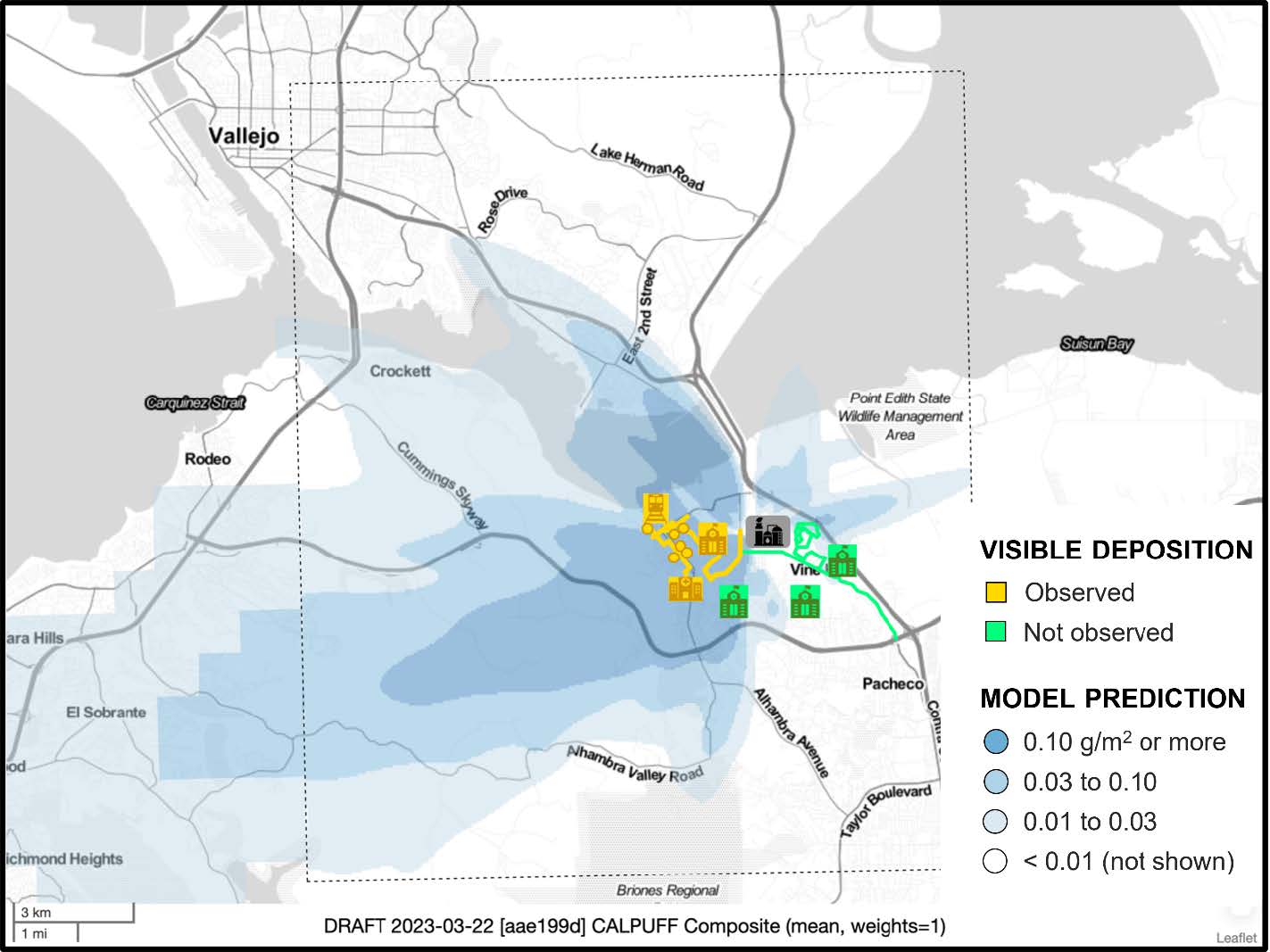
Soil-sampling sites were chosen using a plume-model map developed by the Bay Area Air Quality Management District and input from the Oversight Committee.  

“We thank everyone for their patience as the Oversight Committee researched the impact of this incident on our community,” said Supervisor Federal Glover, who represents residents in areas affected by the release. “Industry has a responsibility to operate in a safe and responsible way. We will work tirelessly to hold them accountable when they don’t meet our standards.”

The root cause of the November hazardous materials release – and how a similar accident can be prevented in the future – is still being investigated by the County and the oversight committee. The District Attorney is considering legal action against MRC for not properly notifying the County of the release, which health officials learned about from social media.

For more information, visit our MRC oversight webpage.


Filed Under: Central County, Health, Industry, News

Soil sampling conducted around Martinez refinery to assess health risks from “Spent Catalyst” release

May 6, 2023 By Publisher 1 Comment

Proposed samples and refinery locations map. Source: CC Health

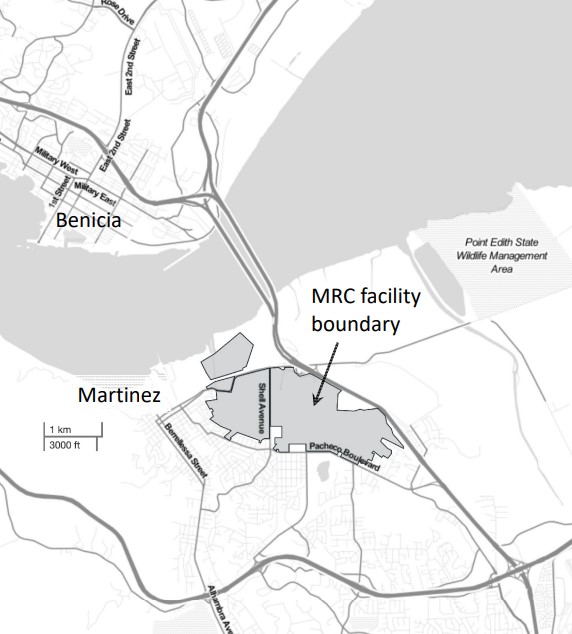
Martinez Refining Company area map. Source: Bay Area Air Quality Management District.

A toxicologist hired by the County this week began collecting samples of soil that may have been exposed to metal-laden “spent catalyst” released by the Martinez Refining Company (MRC) into the surrounding community last Thanksgiving. (See related articles here, here and here)

Soil samples are being taken from more than a dozen sites, primarily areas neighboring the refinery in Martinez and Benicia. Collected samples will be sent to a lab to analyze for concentrations of metals associated with the catalyst that may pose risks to human health through skin contact, inhalation or from consuming produce grown in the contaminated soil. Lab results of the soil samples are expected in late May or early June.

“We know the community is eager to find out what’s in the soil in their yards and whether they should be concerned for their health,” said Supervisor Federal Glover, whose district includes the refinery, which is owned by PBF Energy Inc. “The soil testing will help provide residents with answers to those questions.”

The sampling plan was based in part on a plume model map created by the Bay Area Air Quality Management District that showed where the spent-catalyst dust likely traveled. The plan was reviewed and approved by the MRC Oversight Committee, which includes seven community residents, at its April 27 meeting.

The soil sampling and risk assessment are being done for the County by TRC, a Concord-based environmental consulting firm. The risk assessment will also compare levels of metals found in the sampled soil against background levels taken from published academic and regulatory sources.

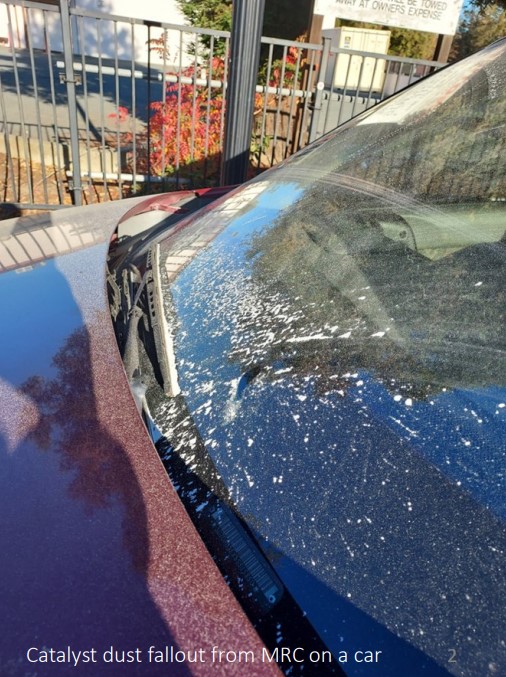
Catalyst dust fallout from MRC on a car. Source: BAAQMD

On November 24-25, 2022, MRC accidentally released up to 24 tons of metal-laden spent catalyst dust into the surrounding community. MRC failed to notify the County about the incident, which the County learned about two days later from social media, as required by local policy. Initial wipe samples of the spent-catalyst dust taken from surfaces in neighborhoods around the refinery in the days after the accident showed elevated levels of certain metals, such as aluminum, barium, chromium, nickel, vanadium, and zinc.

The most acute health risk occurred at the time of the incident when people could have breathed in the dust and caused respiratory distress. Questions have persisted about possible long-term health impacts, particularly from food grown in potentially contaminated soil exposed to the spent catalyst.

In March, with spring and gardening season arriving, the County’s health officer issued an advisory cautioning residents not to eat food grown in potentially contaminated soil until environmental testing could be completed.

“Residents affected by this release deserve to know if there is any health risk. Contra Costa Health is working as quickly as possible to ensure that accurate information reaches the public about this issue,” said Board of Supervisors Chair John Gioia, who also serves on the Bay Area Air Quality Management District Board of Directors.

For more information on the risk assessment and independent investigation of the November 2022 incident, visit cchealth.org/hazmat/mrc.


Filed Under: Health, Industry, News

CC Health Dep’t asks DA for legal action against Martinez Refining Company for hazardous materials release 

January 6, 2023 By Publisher 1 Comment

Source: Martinez Refining Company

Released more than 20 tons of metal-laden dust on Thanksgiving, CC Health not notified, no public warning issued

On Wednesday, Jan. 4, 2023, Contra Costa Health (CCH) formally requested that the District Attorney consider taking legal action against the Martinez Refining Company (MRC) for not notifying the County after the refinery released more than 20 tons of metal-laden dust into the community over the Thanksgiving holiday.

The accidental release of “spent catalyst” from the refinery during multiple flarings, began around 9:30 p.m. on Nov. 24 (Thanksgiving Day) and continued into the early hours of Nov. 25, showering the surrounding community in the dust-like substance. Samples of the dust taken later showed it had elevated levels of aluminum and other metals, which could have potentially caused respiratory symptoms in people who breathed it. Prolonged exposure to these metals can lead to health concerns.

MRC did not report the release via the county’s Community Warning System or directly to CCH, as required by the county’s notification policy. CCH learned about the release from media accounts two days after it began. Had MRC followed the notification policy, the Community Warning System would have been activated to notify the community about the hazard at the time of the accident.

“It is unacceptable that the refinery did not notify County Health Services of their chemical release and that the County learned about it through the media,” said John Gioia, Chair of the Contra Costa County Board of Supervisors. “By failing to notify the County in a timely manner, the refinery delayed an emergency response that could have reduced harm to the surrounding community.”

“We rely on our industrial businesses to follow the rules and be good neighbors – and most of the time, they are. But when an industrial facility doesn’t follow the rules and possibly puts its neighbors in harm’s way, as in this case, then they must be held accountable,” said Supervisor Federal Glover, whose district includes the Martinez refinery.

The District Attorney’s Office has approximately 30 days to decide whether to accept the enforcement case referral from CCH.

In a separate but related move, CCH is also recommending an independent investigation and risk assessment be done of the accidental release of spent catalyst from the refinery. The Contra Costa Industrial Safety Ordinance (ISO) Ad Hoc Committee, which is appointed by the County Board of Supervisors, will consider that recommendation at its Jan. 12 meeting at 1 p.m., which is open to the public.

A Nov. 30th post on MRC’s Facebook page reads, “On November 30, 2022, Contra Costa County Health Services held a news briefing regarding the Martinez Refining Company spent catalyst release that occurred overnight last Thursday, November 24th. You can watch a video of the County’s briefing https://www.youtube.com/watch?v=9PovDvIq7IQ

This incident is still under internal and external investigations, and we appreciate the cooperation and responses of the Contra Costa County Health Services and Bay Area Air Quality Management District. MRC will continue working with the agencies on this matter. Again, we apologize for the inconvenience this incident has posed to our neighbors and community.”

In that video, Contra Costa Health Officer Dr. Ori Tzveli said, “Contra Costa Health does not believe that there is an immediate risk to the community from this event. Breathing the air containing this material could have caused temporary respiratory symptoms…during the incident. Anyone who experienced those or are continuing to experience those should contact their healthcare provider. Exposure during a single event like this would be unlikely to cause any major health problems.”

“We will be working with the facility to make sure exposures like this don’t happen again,” he added.

MRC is owned by New Jersey-based PBF Energy. According to the parent company’s website, it “is one of the largest independent petroleum refiners and suppliers of unbranded transportation fuels, heating oil, petrochemical feedstocks, lubricants and other petroleum products in the United States.”

Asked for comment about CCH’s request, MRC’s Community Relations Advisor, David Schoenthal responded, “While this incident is still under internal and external investigation, MRC will continue cooperating with all agencies.”

Allen D. Payton contributed to this report.

Filed Under: District Attorney, History, Industry, News

Hazardous materials release at Martinez oil refinery contained heavy metals

November 30, 2022 By Publisher 2 Comments

Source: Martinez Refining Company

A powdery substance released into the community by Martinez Refining Company (MRC) last week contained higher-than-normal amounts of heavy metals, tests of samples collected by Contra Costa Health (CCH) show.

CCH does not believe there is an immediate health risk to the community. The most significant health risks were short-term respiratory impacts from breathing in the metals in the hours after the release. Exposure to high concentrations of these metals over a long period of time could cause more serious health problems.

The accidental release of “spent catalyst” from the refinery began about 9:30 p.m. on Thanksgiving and into the early morning hours of Friday, Nov. 25. CCH’s testing of samples taken near the refinery showed levels of aluminum, barium, chromium, nickel, vanadium, and zinc higher than normal background levels for those metals.

CCH and the County’s Community Warning System were not notified of the release as required by law. CCH’s HazMat team learned about the release on Saturday morning after seeing community complaints about white dust on surfaces near the refinery. In its amended 72-hour report regarding the incident submitted to the health department, MRC says it is investigating why those notifications were not made.

“Martinez residents need an immediate response when there is a release at the refinery,” said Deputy Health Director Matt Kaufmann. “MRC’s failure to follow notification procedure cost us critical time we could have used to warn the public and reduce health risks in the community. It’s unacceptable.”

Anyone exposed to the material released from the Martinez refinery who is experiencing respiratory symptoms such as coughing, sore throat or difficulty breathing should contact their healthcare provider. People should avoid handling or breathing any remaining dust that has settled on the ground or other surfaces.

“We are concerned for people’s health anytime they are exposed to toxic metals,” said Dr. Ori Tzvieli, health officer for Contra Costa County. “Our goal going forward is to make sure something like this doesn’t happen again.”

MRC, owned by PBF Energy, had initially told the community that its own testing of samples collected from the release suggested it was a non-toxic mixture of materials. The company also offered free carwash vouchers to Martinez residents.

Industrial facilities such as MRC are required by state law and county policy to immediately report the release or suspected release of hazardous materials to emergency response authorities, including the county’s Community Warning System, which sends text and telephone messages with emergency instructions to affected parts of the county.

CCH is continuing to investigate the incident and will hold MRC to its legal responsibilities to cooperate with its review of this release. More information will be posted at cchealth.org as it becomes available. – Safety Data Sheet (SDS) – Catalyst


Filed Under: Central County, Health, Industry, News

  • 1
  • 2
  • Next Page »
Monicas-11-25
Deer-Valley-Chiro-06-22

Copyright © 2026 · Contra Costa Herald · Site by Clifton Creative Web