• Home
  • About The Herald
  • Local Agencies
  • Daily Email Update
  • Legal Notices
  • Classified Ads

Contra Costa Herald

News Of By and For The People of Contra Costa County, California

  • Arts & Entertainment
  • Business
  • Community
  • Crime
  • Dining
  • Education
  • Faith
  • Health
  • News
  • Politics & Elections
  • Real Estate

Los Medanos College celebrates “50 years of excellence in education”

April 6, 2024 By Publisher Leave a Comment

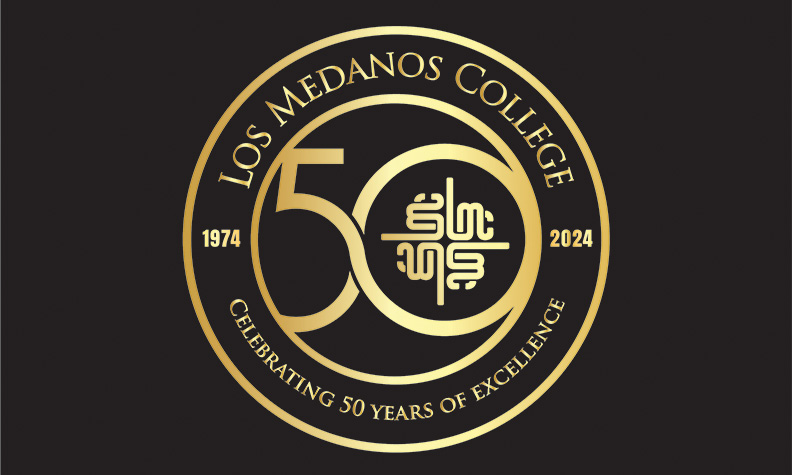
Unveils anniversary logo

By Juliet V. Casey, Director of Marketing, Los Medanos College

Pittsburg, Calif. – Los Medanos College (LMC) this year celebrates its golden anniversary, and to kick off recognition of its 50 years of excellence in education, workforce training and innovation, the college released its 50th Anniversary logo.

The golden logo harkens back to LMC’s retired brand. At the center, the stylized compass rose in which each direction spells LMC is indicative of its mission to help students find their future. While that mark has gone out of use, it remains a sentimental favorite among alumni and long-time residents of the East Bay community.

The anniversary logo’s looping five and zero of the 50 touching the inner golden circle conveys the infinite search for knowledge and truth, and unwavering service for the greater good. The Contra Costa Community College District (4CD) opened Los Medanos College in Pittsburg in 1974 to serve east Contra Costa County. Today, its service area includes Pittsburg, Antioch, Bay Point, Clayton, parts of Concord, Brentwood, Oakley, Knightsen, Bethel Island, Byron, and Discovery Bay. It is the third of three colleges within 4CD.

“Over the past five decades, LMC has grown and adapted to the needs of our students and the greater community,” President Ralston said. “Our program offerings have grown to over 90, we’ve added the new state-of-the-art Brentwood Center, and we have established ourselves as a cultural focal point for the community. Looking ahead to the next 50 years, we are focused on continuing this legacy with our alumni leading, innovating and shaping a sustainable and equitable future for generations to come.”

For LMC, 2024 will be a golden year of celebrating its collective successes and achievements. LMC in the past year has emerged in the Top 150 U.S. Community Colleges for the fifth consecutive time. The college is among the best community colleges for math, according to BestAccreditedColleges.org, and LMC athletes consistently win the conference and make it into post-season play.

Stay tuned for upcoming events throughout the year.

About Los Medanos College (LMC): LMC is one of three colleges in the Contra Costa Community College District, serving the East Contra Costa County community. Established in 1974, LMC has earned federal designations as a Minority-Serving and Hispanic-Serving institution. It offers award-winning transfer and career-technical programs, support services, and diverse academic opportunities in an inclusive learning environment. With exceptional educators, innovative curriculum, growing degree and certificate offerings, and state-of-the-art facilities, the college prepares students to succeed in their educational pursuits, in the workforce, and beyond. LMC’s Pittsburg Campus is located on 120 acres bordering Antioch, with an additional education center in Brentwood.

Filed Under: East County, Education, History, News

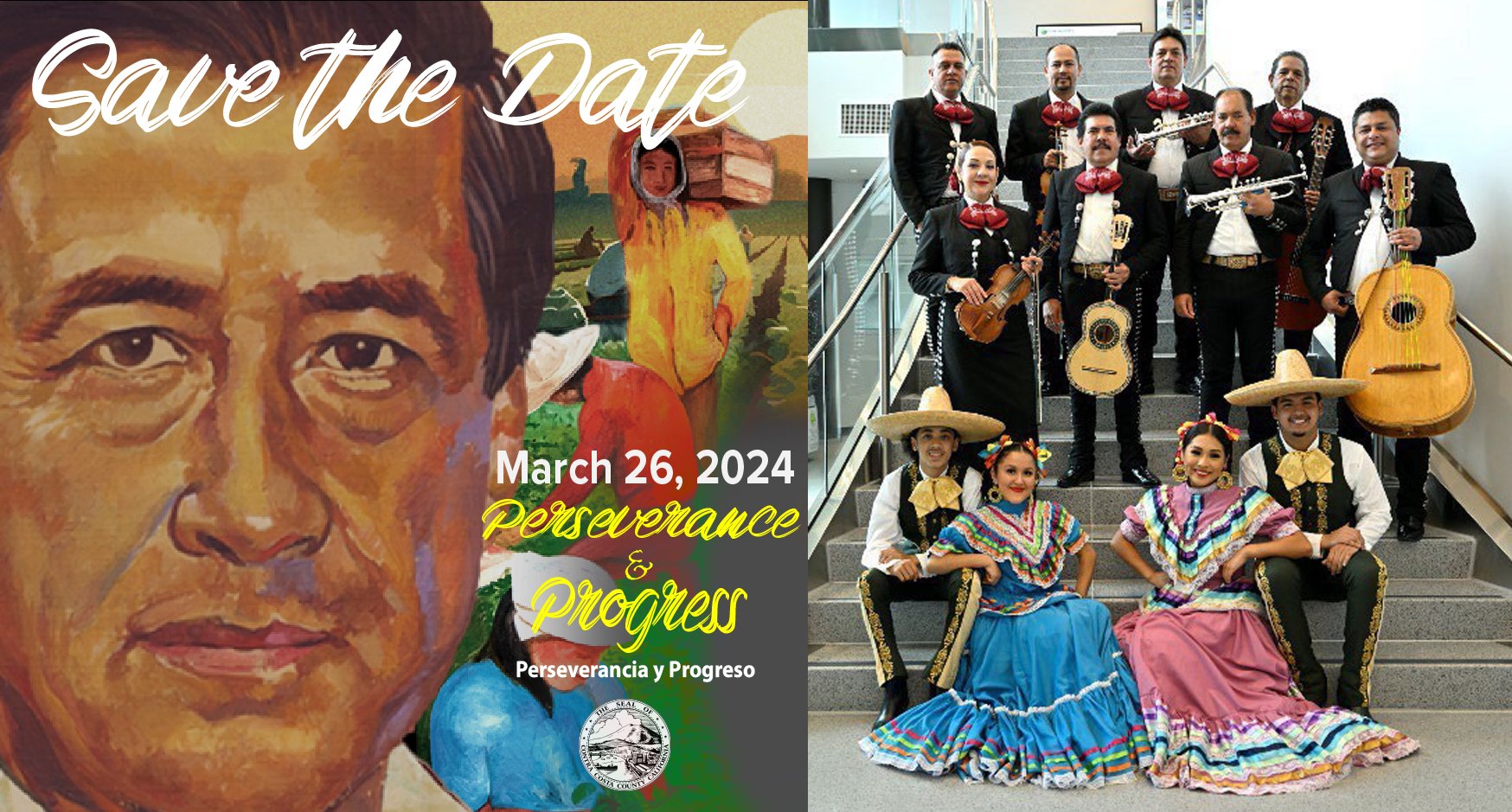
30th Contra Costa Annual César E. Chávez commemorative celebration & 2024 Youth Hall of Fame Awards presentation March 26

March 25, 2024 By Publisher Leave a Comment

Ballet Folklórico Netzahualcoyotl dancers will perform accompanied by Mariachi Monumental. Photo from Contra Costa County District 5 Chief of Staff David Fraser.

Únase a nosotros el martes 26 de marzo de 2024 para la 30ª Celebración Conmemorativa Anual de César E. Chávez.

During Contra Costa County Board of Supervisors meeting

This year’s theme: Perseverance & Progress – Perseverancia y Progreso.

By Kristi Jourdan, PIO, Contra Costa County

(Martinez, CA) – The Contra Costa County Board of Supervisors will honor César E. Chávez in a celebration recognizing his commitment to social justice and respect for human dignity. The 30th Annual César E. Chávez Commemorative Celebration will be at 11 a.m., Tuesday, March 26, in Board Chambers at 1025 Escobar Street in Martinez.

“We honor César E. Chávez and recognize his legacy of fighting injustice and improving the lives of farmworkers, their families, and so many others. We are inspired to once again commit ourselves to service to others,” said Board Chair Supervisor Federal Glover. “We also recognize our 2024 Youth Hall of Fame awardees whose commitment to service and community are to be celebrated and are the force moving forward Cesar Chavez’s legacy.”

The theme for this year’s celebration is Perseverance & Progress – Perseverancia y Progreso. The festival will feature keynote speaker Contra Costa Community College District Trustee Fernando Sandoval who was raised in the City of Pittsburg where he also attended school. Fernando joined the U.S. Navy like Cesar Chavez. Fernando played an instrumental role aboard the USS Enterprise during the Vietnam War, where his expertise in data systems previewed the vital importance of STEM education, a field he continues to support passionately. Fernando’s book, “From Tortilla Chips to Computer Chips,” is a testament to his life’s work and an educational and motivational touchstone for students and educators alike. Fernando continues to embody the value of education, community, and family like Cesar Chavez.

The event will include presentation of the 2024 Youth Hall of Fame Awards to students who make outstanding community contributions, live performances by Mariachi Monumental and Ballet Folklórico Netzahualcoyotl, spoken word performance by Jose Cordon, and celebratory remarks from members of the Board of Supervisors.

County’s 2024 Youth Hall of Fame Awards winners:

High School Awardees:

Volunteerism: Mariella Cajina, Carondelet High School

Teamwork: Neil Chandran, Monte Vista High School

Perseverance: Aditya Narayan, Dougherty Valley High School

Leadership & Civic Engagement: Morelia Gil-Cubillo, Antioch High School

Good Samaritan: Nitya Varanasi, California High School

Innovation and Empowerment: Alice Zhou, Miramonte High School

Middle School Rising Stars:

Volunteerism Rising Star: Samhita Chikoti, Gale Ranch Middle School

Leadership & Civic Engagement Rising Star: Dhruv Subramanian, Windermere Ranch Middle School

The annual celebration honors the diversity and richness of our community. Community members can also join the event live on Contra Costa Television channels and the County’s website.

To learn more about the César E. Chávez Ceremony, visit www.contracosta.ca.gov/6039 on the Contra Costa County website. The community can also watch the event live online at www.contracosta.ca.gov/6086 or www.contracostatv.org. The celebration will broadcast live on Contra Costa Television channels: Comcast Cable 27, ATT/U-Verse 99, and Astound 32 & 1027.

Filed Under: Community, Education, History, News, Supervisors, Youth

Women’s History Month 2024: BART celebrates trailblazing women who shaped transit agency’s world

March 2, 2024 By Publisher Leave a Comment

Women’s History Month 2024 collage. Source: BART

From past to present, highlights three

By Bay Area Rapid Transit District

Friday, March 1, 2024, marked the beginning of Women’s History Month, a time to recognize and celebrate the vital role women have played – and continue to play – in American history, including the history of public transportation, which has been shaped and transformed by women.

BART is home to an amazingly diverse workforce with women serving in crucial roles across the agency, from trackworkers and train operators to executives and our Board of Directors, which is composed of a majority of women.

From left to right: Tera Stokes-Hankins, Thu Nguyen, and Stephine Barnes. Source: BART

To spotlight just a few exceptional women in the BART family:

Tera Stokes-Hankins is the first woman to serve as Chief Transportation Officer at BART. Tera started as a part-time station agent in 1995, nearly fresh out of college. Since her hiring, she has been promoted six times! Tera says she is motivated to work hard each and every day because “if BART’s not running, that means people can’t get to an interview or an appointment or class. To get up every day and make sure we’re ready to go and putting our best foot forward – that keeps me going.” Read more about Tera’s BART journey here.  

Thu Nguyen, a track operator, came to the Bay Area a few years ago with her daughter and just $300 in her pocket. She didn’t have housing or a job, but she eventually landed at Cypress Mandela Training Center, which offers free pre-apprenticeship program for Bay Area residents and helps connect them with employment opportunities, including at BART. Foreworker Jaime Ramirez said Nguyen is “no holds barred.” He added: “She’s not afraid of the work. She just goes for it.” Read more about Thu here.  

Stephine Barnes, a Crisis Intervention Specialist in BART’s Progressive Policing Bureau, recently won a Rider First Award in recognition of her work to move Bay Area transit forward. Stephine has worked for BART for more than two decades, and in her role as a CIS, she has changed the lives of many individuals. Her work has focused on reducing prison recidivism and advocating for those facing homelessness through intervention/prevention, de-escalation, case management, working with community partners, networking, and family reunification. Read more about Stephine here. 

BART is committed to recognizing, supporting, and uplifting all the passionate and hardworking women in the BART family by fostering a culture that values diversity, equity, and inclusion – the themes of Women’s History Month 2024.

We thank every single one of the women at BART, who are working every day to make the system better for everyone.

Happy Women’s History Month!

Filed Under: BART, History, News

Payton Perspective: It’s time for reparations for descendants of African slaves in America

February 23, 2024 By Publisher Leave a Comment

“15th Amendment, or the Darkey’s millenium: 40 acres of land and a mule.” Man and boy with cart in front of the Putnam House, Palatka, Fla. Source: The Miriam and Ira D. Wallach Division of Art, Prints and Photographs: Photography Collection, from The New York Public Library. (1850 – 1930). (PUBLISHER’S NOTE: Objects depicting racist and/or stereotypical imagery or language may be offensive and disturbing, but the National Museum of African American History and Culture in which this photo is displayed aims to include them in the Collection to present and preserve the historical context in which they were created and used. Objects of this type provide an important historical record from which to study and evaluate racism).

Using federal land, not cash

By Allen D. Payton, Publisher

During this Black History Month, as I’ve been arguing for several years, I believe it’s time for all Americans to agree the promised reparations to freed slave families following the Civil War in 1865 should finally be fulfilled – but to their descendants.

First, let me point out the fact – especially to my fellow Republicans who might oppose them – that reparations were first, a Republican idea, ordered by Union Army Major General William Tecumseh Sherman, and supported by President Abraham Lincoln, the nation’s first Republican president. As a reminder, the Republican Party was formed to abolish slavery, and Lincoln and the Union Army successfully fought the Civil War to accomplish that goal.

40 Acres & A Mule

You may have heard the phrase “40 acres and a mule”, which was made more popularly known by movie actor and director Spike Lee who labeled his production company “40 Acres and a Mule Filmworks”. But you may not know that the phrase originated with reparations. That’s because Special Field Orders No. 15 were issued by Sherman on January 16, 1865, before the Civil War ended that May, granting “a plot of not more than (40) forty acres of tillable ground” to families, “made free by the acts of war and the proclamation of the President of the United States He also later ordered the army to lend mules to the freed slaves for their farming efforts.

The orders included the confiscation of 400,000 acres of plantation land along “a strip of (Atlantic) coastline stretching from Charleston, South Carolina to the St. John’s River in Florida, including Georgia’s Sea Islands and the mainland 30 miles in from the coast.” The land was to be divided into parcels on which approximately 18,000 formerly enslaved families and other Black people then living in the area would be settled.

The purpose was to provide for the freed slaves both a means to earn a living and support themselves, and the result would have been giving them an asset that could be passed on to future generations.

According to History.com, “The freedmen set out to begin working their new land immediately, with a group of 1,000 settling on Georgia’s Skidaway Island. In subsequent months as many as 40,000 freedmen settled on the redistributed land.”

Order Rescinded

Unfortunately, after Lincoln’s assassination just three months after the order was issued, his running mate on the National Union Party ticket in 1864, Democrat Vice President Andrew Johnson, following his ascension to the presidency, rescinded Sherman’s order. He returned to Confederate owners the 400,000 acres of land. Thus, the freed slaves were denied the land they had been granted and reparations were never offered to them by the federal government, again.

Why Reparations Now?

Some people argue that it’s been over 150 years, so why do Black Americans need reparations, today? My initial response is that they’re long past due. But my main answer is two-fold. One is the fact that a major issue among most Blacks in the U.S., today is a lack of asset ownership, including homes, real estate, investments and businesses. For example, the average Black family has one-tenth the assets of the average white family in the U.S.

Disparity in Household Wealth

According to the U.S. Census Bureau’s Wealth and Asset Ownership Detailed Tables: 2020, Table 1. Median Value of Assets for Households, from the Survey of Income and Program Participation, Survey Year 2021, the median net worth for all households was $140,800. However, when broken down by ethnicity, the median “Black alone” household had one-tenth the assets of the median “White alone” household, or $18,430 compared to $178,500. The disparity is even greater when compared to the median “White alone, non-Hispanic” household which had assets of $217,500.

My argument for the disparity and second one in favor of why reparations, now is the fact that for nearly 250 years, almost all Blacks in the U.S. couldn’t own property because they were property, nor did they get paid. They also couldn’t get an education. So, the rest of us, whose ancestors were never subjected to the horrors and evil of chattel slavery, in effect had a 250-year head start!

Yes, I’ve heard the arguments about the Irish, which is my ancestry, and how they were mistreated, or others who were indentured servants. But those were not the same as being a slave sold, bought and owned by someone else, as well as their future generations to follow.

A Federal Responsibility, Not State or Local

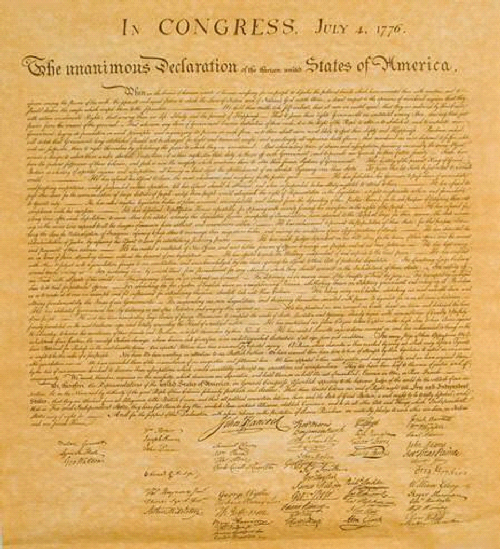
Second, reparations are not a state or local issue, but a federal responsibility. Long before the day the Declaration of Independence was signed on July 4, 1776, and in spite of the fact it enshrined the statement that, “that all men are created equal, that they are endowed by their Creator with certain unalienable Rights, that among these are Life, Liberty and the pursuit of Happiness,” and then from the signing of the U.S. Constitution on September 17, 1789, to Lincoln’s issuance of the Emancipation Proclamation and the end of the Civil War, our federal government allowed slavey. It continued for another 65 years after the Constitution was ratified on May 29, 1790, for a total of 246 years since the first African slaves were brought to our country in 1619. So, again, reparations are a federal responsibility.

(A side, historical note on the Three-Fifths Compromise and clauses in the Constitution. It was not intended by the framers to further devalue the lives of slaves, but to reduce the influence in Congress by the slave states, by preventing them from having additional members in the House of Representatives and a greater number of electors in presidential elections. The slave states wanted to include the slaves in the census count, while the free states didn’t want them included at all. The compromise determined that three out of every five slaves were counted when establishing a state’s total population. A benefit to the slave states was it reduced the amount of taxes they had to pay to the federal government.

In Article I, Section II, Clause III of the Constitution, the Three-Fifths Compromise is stated as:

“Representatives and direct taxes shall be apportioned among the several states which may be included in this Union, according to their respective numbers, which shall be determined by adding to the whole number of free persons, including those bound to service for a term of years, and excluding Indians not taxed, three fifths of all other persons.”

See also James Madison’s writings in Federalist Paper No. 54 in which he argues that slaves were both property and people, and thus required some degree of representation).

But I digress. Back to the issue at hand.

Source: Bureau of Land Management

Reparations Are About Land, An Asset

Third, to my Democrat friends I remind them, reparations were initially land and that’s what they still should be, today, not cash. They should be about helping Black Americans own an asset for their use, from which to generate income and to pass on to future generations.

The federal government owns over one-fourth of the land in the U.S. According to a 2020 report and 2023 report by the Congressional Research Service, it amounts to “roughly 640 million acres, about 28% of the 2.27 billion acres of land in the United States”.

Looking at a map you’ll see the federal land is “heavily concentrated in 12 western states (including Alaska), 3 where the federal government owns roughly half of the overall land area.” That includes 45.4% of California, 60.9% of Alaska, 38.6% of Arizona, 36.2% of Colorado, 20.2% of Hawaii, 61.9% of Idaho, 29.0% of Montana, 80.1% of Nevada, 52.5% of Oregon, 63.1% of Utah, 28.6% of Washington and 46.7% of Wyoming. The federal government also owns 12.9% of Florida.

Much of that land is either in national parks (79.9 million acres), in national forests (192.9 million acres) or is farm and ranch land leased to farmers and ranchers. Five federal agencies administer most of it, including the Bureau of Land Management (BLM), Fish and Wildlife Service (FWS), and National Park Service (NPS) in the Department of the Interior (DOI) and the Forest Service (FS) in the Department of Agriculture. with the Department of Defense controlling 8.8 million acres, and 4% administered by multiple other agencies.

So, my proposal is to give to all Black Americans, who can prove they are a descendant of a slave in America, some of that federal land. It can either be given out on an individual or family basis.

While not all Black Americans are descendants of a slave in the U.S. – for example, Vice President Kamala Harris, whose father descended from a Jamaican slave, would not qualify – for simple calculation purposes let’s say all of them are. Blacks currently make up about 13% of the U.S. population of about 330 million people for a total of 40 million people.

If we gave every Black American one, two or even five acres, that would be 40, 80 or as much as 200 million acres which would still leave 440 million acres remaining for ownership and use by the federal government. (Frankly, I don’t understand why the federal government needs to own so much land, especially ranch land for grazing, anyway.)

The new owners could do what they want with the land: farm it, drill it for oil, gas or water, mine it, lease it, swap it with other reparation land recipients, build a home on it, borrow against it, or perhaps form joint ventures with neighboring property owners and develop new communities, even cities. But I believe the one stipulation should be the land could only be sold to another descendant of an American slave. Then, it could be passed on to future generations.

Another argument I’ve heard or read about reparations is, why should people today have to pay anything when neither they nor their family ever owned slaves. This approach addresses that concern. By giving out federal land, there would be no cost to current taxpayers. While it might reduce revenue to the federal government from a reduction in leased lands, that’s a small price to pay for addressing this 160-year-old matter once and for all time.

Source: Congressional Research Service

No One Has to Participate

Some Black people have stated publicly they don’t need or want the help and find it offensive that they be offered reparations. Let’s be clear, no one who is qualified has to participate in a federal reparations program. But I believe most would. Who wouldn’t want free land?

Those who chose to participate would, of course, have to prove their status, and some form of reparations commission or government agency would have to be formed to verify their status and manage the distribution of the land grants. Once verified, program participants would be entered into a lottery and the property could be distributed in periodic drawings. It could even be televised nationally as the participants’ numbers are drawn, and advertising could be sold, and the revenue shared with the federal government to make up for the loss of land lease revenue.

One Time Program May Take Several Years

To sum up, I say it’s time, once and for all, to fulfill the commitment of reparations ordered in 1865 and give portions of federally owned land to the descendants of slaves in the U.S. It might take several years to accomplish, but I believe we should and could start right away. Once the land has been distributed and all who want it received their share, then that would be it. We’d be done. Everyone would be happy, and there could be no more complaining. The agency would be disbanded, the issue would be put to rest, and it would be up to the new landowners to make do with theirs what they can.

Now, all we need is for Members of Congress and U.S. Senators to introduce the idea and move it forward.

Filed Under: Government, History, Opinion

Contra Costa Health awarded state grant for Bicycle and Pedestrian Safety Program

February 14, 2024 By Publisher Leave a Comment

Graphic source: OTS

$202.7K from Office of Traffic Safety

Contra Costa Health (CCH) announced today that it has received a $202,692 grant from the California Office of Traffic Safety (OTS) to support its Bicycle and Pedestrian Safety Program. This grant will allow CCH to promote safe practices for pedestrians and bicyclists and provide education about the importance of sharing the road.

Local data show an increase of nearly 30% in fatal crashes involving pedestrians over the past 10 years in Contra Costa County, and that pedestrians and bicyclists are 2.4 times more likely to be seriously injured or killed in a traffic crash compared to drivers. The OTS grant funds multiple efforts to improve safety for pedestrians and bicyclists.

“Everyone deserves a safe environment to travel, regardless of how people get to places,” OTS Director Barbara Rooney said. “The safety of people walking and biking on our roads is a high priority. Education plays a pivotal role in creating a strong road safety culture that prioritizes traffic safety, especially for our most vulnerable road users.”

Grant funds will support a variety of activities focused on bicycle and pedestrian safety:

  • Support for local jurisdictions to include public health in road safety plans and address the community conditions that create unsafe environments for non-motorized road users.
  • Local bicycle and pedestrian safety campaigns.
  • Community bicycle and walk “audits” of streets with high rates of pedestrian or bicyclist fatalities and serious injury crashes.
  • Bicycle training courses that teach youth on how to stay safe on the road.
  • Community events that promote bicyclist and pedestrian visibility and the importance of sharing the road, slowing down, and staying alert to bicyclists and pedestrians while driving.

Area Goals for the OTS program include:

  • Reduce the total number of pedestrians killed.
  • Reduce the total number of pedestrians injured.
  • Reduce the number of pedestrians killed under the age of 15.
  • Reduce the number of pedestrians injured under the age of 15.
  • Reduce the number of pedestrians killed over the age of 65.
  • Reduce the number of pedestrians injured over the age of 65.
  • Reduce the total number of bicyclists killed in traffic related crashes.
  • Reduce the total number of bicyclists injured in traffic related crashes.
  • Reduce the number of bicyclists killed in traffic related crashes under the age of 15.
  • Reduce the number of bicyclists injured in traffic related crashes under the age of 15.
  • Increase bicycle helmet compliance for children aged 5 to 18.

The grant program will run through September 2024.

Funding for this program was provided by a grant from the California Office of Traffic Safety, through the National Highway Traffic Safety Administration.

Filed Under: History, News, Recreation, State of California, Transportation

The history of Black History Month and 2024 theme: African Americans and the Arts

February 5, 2024 By Publisher Leave a Comment

ASALH – The Founders of Black History Month

From Association for the Study of African American Life and History (ASALH)

The story of Black History Month begins in Chicago during the summer of 1915. An alumnus of the University of Chicago with many friends in the city, Carter G. Woodson traveled from Washington, D.C. to participate in a national celebration of the fiftieth anniversary of emancipation sponsored by the state of Illinois. Thousands of African Americans travelled from across the country to see exhibits highlighting the progress their people had made since the destruction of slavery. Awarded a doctorate in Harvard three years earlier, Woodson joined the other exhibitors with a black history display.

Despite being held at the Coliseum, the site of the 1912 Republican convention, an overflow crowd of six to twelve thousand waited outside for their turn to view the exhibits. Inspired by the three-week celebration, Woodson decided to form an organization to promote the scientific study of black life and history before leaving town. On September 9th, Woodson met at the Wabash YMCA with A. L. Jackson and three others and formed the Association for the Study of Negro Life and History (ASNLH).

When Woodson established Negro History week in 1926, he realized the importance of providing a theme to focus the attention of the public. The intention has never been to dictate or limit the exploration of the Black experience, but to bring to the public’s attention important developments that merit emphasis.

He hoped that others would popularize the findings that he and other black intellectuals would publish in The Journal of Negro History, which he established in 1916. As early as 1920, Woodson urged black civic organizations to promote the achievements that researchers were uncovering. A graduate member of Omega Psi Phi, he urged his fraternity brothers to take up the work. In 1924, they responded with the creation of Negro History and Literature Week, which they renamed Negro Achievement Week. Their outreach was significant, but Woodson desired greater impact. As he told an audience of Hampton Institute students, “We are going back to that beautiful history, and it is going to inspire us to greater achievements.” In 1925, he decided that the Association had to shoulder the responsibility. Going forward it would both create and popularize knowledge about the black past. He sent out a press release announcing Negro History Week in February 1926.

Woodson chose February for reasons of tradition and reform. It is commonly said that Woodson selected February to encompass the birthdays of two great Americans who played a prominent role in shaping black history, namely Abraham Lincoln and Frederick Douglass, whose birthdays are the 12th and the 14th, respectively. More importantly, he chose them for reasons of tradition. Since Lincoln’s assassination in 1865, the black community, along with other Republicans, had been celebrating the fallen President’s birthday. And since the late 1890s, black communities across the country had been celebrating Douglass’. Well aware of the pre-existing celebrations, Woodson built Negro History Week around traditional days of commemorating the black past. He was asking the public to extend their study of black history, not to create a new tradition. In doing so, he increased his chances for success.

Yet Woodson was up to something more than building on tradition. Without saying so, he aimed to reform it from the study of two great men to a great race. Though he admired both men, Woodson had never been fond of the celebrations held in their honor. He railed against the “ignorant spellbinders” who addressed large, convivial gatherings and displayed their lack of knowledge about the men and their contributions to history. More importantly, Woodson believed that history was made by the people, not simply or primarily by great men. He envisioned the study and celebration of the Negro as a race, not simply as the producers of a great man. And Lincoln, however great, had not freed the slaves—the Union Army, including hundreds of thousands of black soldiers and sailors, had done that. Rather than focusing on two men, the black community, he believed, should focus on the countless black men and women who had contributed to the advance of human civilization.

From the beginning, Woodson was overwhelmed by the response to his call. Negro History Week appeared across the country in schools and before the public. The 1920s was the decade of the New Negro, a name given to the Post-War I generation because of its rising racial pride and consciousness. Urbanization and industrialization had brought over a million African Americans from the rural South into big cities of the nation. The expanding black middle class became participants in and consumers of black literature and culture. Black history clubs sprang up, teachers demanded materials to instruct their pupils, and progressive whites stepped and endorsed the efforts.

Woodson and the Association scrambled to meet the demand. They set a theme for the annual celebration, and provided study materials—pictures, lessons for teachers, plays for historical performances, and posters of important dates and people. Provisioned with a steady flow of knowledge, high schools in progressive communities formed Negro History Clubs. To serve the desire of history buffs to participate in the re-education of black folks and the nation, ASNLH formed branches that stretched from coast to coast. In 1937, at the urging of Mary McLeod Bethune, Woodson established the Negro History Bulletin, which focused on the annual theme. As black populations grew, mayors issued Negro History Week proclamations, and in cities like Syracuse progressive whites joined Negro History Week with National Brotherhood Week.

Like most ideas that resonate with the spirit of the times, Negro History Week proved to be more dynamic than Woodson or the Association could control. By the 1930s, Woodson complained about the intellectual charlatans, black and white, popping up everywhere seeking to take advantage of the public interest in black history. He warned teachers not to invite speakers who had less knowledge than the students themselves. Increasingly publishing houses that had previously ignored black topics and authors rushed to put books on the market and in the schools. Instant experts appeared everywhere, and non-scholarly works appeared from “mushroom presses.” In America, nothing popular escapes either commercialization or eventual trivialization, and so Woodson, the constant reformer, had his hands full in promoting celebrations worthy of the people who had made the history.

Source: ASALH

Well before his death in 1950, Woodson believed that the weekly celebrations—not the study or celebration of black history–would eventually come to an end. In fact, Woodson never viewed black history as a one-week affair. He pressed for schools to use Negro History Week to demonstrate what students learned all year. In the same vein, he established a black studies extension program to reach adults throughout the year. It was in this sense that blacks would learn of their past on a daily basis that he looked forward to the time when an annual celebration would no longer be necessary. Generations before Morgan Freeman and other advocates of all-year commemorations, Woodson believed that black history was too important to America and the world to be crammed into a limited time frame. He spoke of a shift from Negro History Week to Negro History Year.

In the 1940s, efforts began slowly within the black community to expand the study of black history in the schools and black history celebrations before the public. In the South, black teachers often taught Negro History as a supplement to United States history. One early beneficiary of the movement reported that his teacher would hide Woodson’s textbook beneath his desk to avoid drawing the wrath of the principal. During the Civil Rights Movement in the South, the Freedom Schools incorporated black history into the curriculum to advance social change. The Negro History movement was an intellectual insurgency that was part of every larger effort to transform race relations.

The 1960s had a dramatic effect on the study and celebration of black history. Before the decade was over, Negro History Week would be well on its way to becoming Black History Month. The shift to a month-long celebration began even before Dr. Woodson death. As early as 1940s, blacks in West Virginia, a state where Woodson often spoke, began to celebrate February as Negro History Month. In Chicago, a now forgotten cultural activist, Fredrick H. Hammaurabi, started celebrating Negro History Month in the mid-1960s. Having taken an African name in the 1930s, Hammaurabi used his cultural center, the House of Knowledge, to fuse African consciousness with the study of the black past. By the late 1960s, as young blacks on college campuses became increasingly conscious of links with Africa, Black History Month replaced Negro History Week at a quickening pace. Within the Association, younger intellectuals, part of the awakening, prodded Woodson’s organization to change with the times. They succeeded. In 1976, fifty years after the first celebration, the Association used its influence to institutionalize the shifts from a week to a month and from Negro history to black history. Since the mid-1970s, every American president, Democrat and Republican, has issued proclamations endorsing the Association’s annual theme.

What Carter G. Woodson would say about the continued celebrations is unknown, but he would smile on all honest efforts to make black history a field of serious study and provide the public with thoughtful celebrations.

Daryl Michael Scott, ASALH Former National President

Read more about the origins of Black History Month.

Learn about and watch the 2024 Black History Month Virtual Festival – ASALH.

Annual Themes

For those interested in the study of identity and ideology, an exploration of ASALH’s Black History themes is itself instructive. Over the years, the themes reflect changes in how people of African descent in the United States have viewed themselves, the influence of social movements on racial ideologies, and the aspirations of the Black community.

The changes notwithstanding, the list reveals an overarching continuity in ASALH – our dedication to exploring historical issues of importance to people of African descent and race relations in America.

2024 Theme

African American art is infused with African, Caribbean, and the Black American lived experiences. In the fields of visual and performing arts, literature, fashion, folklore, language, film, music, architecture, culinary and other forms of cultural expression, the African American influence has been paramount. African American artists have used art to preserve history and community memory as well as for empowerment. Artistic and cultural movements such as the New Negro, Black Arts, Black Renaissance, hip-hop and Afrofuturism, have been led by people of African descent and set the standard for popular trends around the world. In 2024, we examine the varied history and life of African American arts and artisans.

For centuries Western intellectuals denied or minimized the contributions of people of African descent to the arts as well as history, even as their artistry in many genres was mimicked and/or stolen. However, we can still see the unbroken chain of Black art production from antiquity to the present, from Egypt across Africa, from Europe to the New World. Prior to the American Revolution, enslaved Africans of the Lowcountry began their more than a 300-year tradition of making sweetgrass baskets, revealing their visual artistry via craft.

The suffering of those in bondage gave birth to the spirituals, the nation’s first contribution to music. Blues musicians such as Robert Johnson, McKinley ‘Muddy Waters’ Morganfield and Riley “BB” B. King created and nurtured a style of music that became the bedrock for gospel, soul, and other still popular (and evolving) forms of music. Black contributions to literature include works by poets like Phillis Wheatley, essays, autobiographies, and novels by writers such as David Walker and Maria Stewart. Black aesthetics have also been manifested through sculptors like Edmonia Lewis and painters like Henry O. Tanner.

In the 1920s and 30s, the rise of the Black Renaissance and New Negro Movement brought the Black Arts to an international stage. Members of the armed forces, such as James Reese Europe, and artists such as Langston Hughes, Josephine Baker and Lois Mailou Jones brought Black culture and Black American aesthetics internationally, and Black culture began its ascent to becoming a dominant cultural movement to the world. In addition to the Harlem Renaissance, today we recognize that cities like Los Angeles, Chicago, and New Orleans also were home to many Black artists.

The 1960s continued this thread through the cultural evolution known as the Black Arts Movement, where artists covered issues such as pride in one’s heritage and established art galleries and museum exhibitions to show their own work, as well as publications such as Black Art. This period brought us artists such as Alvin Ailey, Judith Jamison, Amiri Baraka, Nikki Giovanni and Sonia Sanchez. The movement would not have been as impactful without the influences from the broader Black world, especially the Negritude movement and the writings of Frantz Fanon.

In 1973, in the Bronx, New York Black musicians (i.e. DJ Kool Herc and Coke La Rock) started a new genre of music called hip-hop, which comprises five foundational elements (DJing, MCing, Graffiti, Break Dancing and Beat Boxing). Hip-hop performers also used technological equipment such as turntables, synthesizers, drum machines, and samplers to make their songs. Since then, hip-hop has continued to be a pivotal force in political, social, and cultural spaces and was a medium where issues such as racial violence in the inner city, sexism, economic disinvestment and others took the forefront.

The term Afrofuturism was used approximately 30 years ago in an effort to define cultural and artistic productions (music, literature, visual arts, etc.) that imagine a future for Black people without oppressive systems and examines how Black history and knowledge intersects with technology and science. Afrofuturist elements can be found in the music of Sun Ra, Rashan Roland Kirk, Janelle Monáe and Jimi Hendrix. Other examples include sci-fi writer Octavia Butler’s novels, Marvel film Black Panther, and artists such as British-Liberian painter Lina Iris Viktor, Kenyan-born sculptor Wangechi Mutu, and Caribbean writers and artists such as Nalo Hopkinson, and Grace Jones.

In celebrating the entire history of African Americans and the arts, the Association for the Study of African American Life and History (ASALH) puts into the national spotlight the richness of the past and present with an eye towards what the rest of the twenty-first century will bring. ASALH dedicates its 98th Annual Black History Theme to African Americans and the arts.

Filed Under: Arts & Entertainment, History, News, People

Raising awareness of abortion on Sanctity of Human Life Sunday

January 21, 2024 By Publisher Leave a Comment

January is Sanctity of Human Life Month

By Alliance for Life

January is Sanctity of Human Life Month, and this year Sanctity of Human Life Sunday (SOHLS) is celebrated on Sunday, January 21, 2024. SOHLS is a day for Americans to focus on the value of each and every human life. It is celebrated every year on the Sunday closest to the anniversary of the 1973 U.S. Supreme Court decisions Roe v. Wade and Doe v. Bolton, which legalized abortion in every state for any reason through all nine months of pregnancy.

In the past two years, the right to abortion has been one of the most heated discussions in our country.

We rejoice that the Supreme Court overturned Roe vs. Wade in 2022. But this hasn’t stopped abortion; it simply placed the decision back into the hands of each state. While many states have chosen to stop abortions, we still recognize the awful tragedy that, on average, the lives of approximately 98 precious babies are ended every hour!

In response to the Supreme Court’s decision, the abortion industry nationwide has stepped up its efforts of promoting a culture of death by offering abortion as the “smart answer” to an unplanned pregnancy during uncertain times.

One of the best ways to stand against this evil is to come together and openly state “We support and defend the Sanctity of Human Life.”

Pastors, churches and life organizations across the United States use this day to bring awareness to the attacks that are daily waged against human life through the abortion industry.

In 1984, President Ronal Reagan issued a presidential proclamation designating the third Sunday of January as National Sanctity of Human Life Day.

“We have been given the precious gift of human life, made more precious still by our births in or pilgrimages to a land of freedom. It is fitting, then, on the anniversary of the Supreme Court decision in Roe v. Wade that struck down State anti-abortion laws, that we reflect anew on these blessings, and on our corresponding responsibility to guard with care the lives and freedoms of even the weakest of our fellow human beings.”

Ronald Reagan

President

We are continuing that tradition by setting this day aside – January 21, 2024 – as a day to pray for the end of the tragedy of abortion, ask for God’s mercy on our country for this heinous sin, and proclaim loudly that all lives are created in the image of God and should be treated as such.

On Sunday, January 21, we declare the sanctity of all human lives and stand together to protect the lives of each and every unborn baby.

“The Lord called me from the womb, from the body of my mother he named my name.” – Isaiah 49:1

“For you created my inmost being;
you knit me together in my mother’s womb.

I praise you because I am fearfully and wonderfully made;
your works are wonderful,
I know that full well.

My frame was not hidden from you
when I was made in the secret place,
when I was woven together in the depths of the earth.

Your eyes saw my unformed body;
all the days ordained for me were written in your book
before one of them came to be.” Psalm 139;13-16

We would also like to encourage you to focus on the value of human life all month — and all year — long. Watch the video below to find out four ways that you can make a difference for life this January.

A Message for Sanctity of Human Life Month (youtube.com)

Additional information included from Heartbeat International and LifePlan.

Filed Under: Children & Families, Health, History, News

Read and listen to the Rev. Dr. Martin Luther King Jr.’s “I Have A Dream” speech

January 15, 2024 By Publisher Leave a Comment

Dr, King delivering the speech on Aug. 28, 1963. Photo: National Archives and Records Administration.

In honor of Martin Luther King Jr. Day, today, following is the complete text of his famous “I Have A Dream” speech, given on the steps of the Lincoln Memorial in Washington, D.C. during the March on Washington for Jobs and Freedom on August 28, 1963. (Listen to the audio, by clicking here.)

I am happy to join with you today in what will go down in history as the greatest demonstration for freedom in the history of our nation.

Five score years ago, a great American, in whose symbolic shadow we stand today, signed the Emancipation Proclamation. This momentous decree came as a great beacon light of hope to millions of Negro slaves who had been seared in the flames of withering injustice. It came as a joyous daybreak to end the long night of their captivity.

But one hundred years later, the Negro still is not free. One hundred years later, the life of the Negro is still sadly crippled by the manacles of segregation and the chains of discrimination. One hundred years later, the Negro lives on a lonely island of poverty in the midst of a vast ocean of material prosperity. One hundred years later, the Negro is still languishing in the corners of American society and finds himself an exile in his own land. So we have come here today to dramatize a shameful condition.

In a sense we have come to our nation’s capital to cash a check. When the architects of our republic wrote the magnificent words of the Constitution and the Declaration of Independence, they were signing a promissory note to which every American was to fall heir. This note was a promise that all men, yes, black men as well as white men, would be guaranteed the unalienable rights of life, liberty, and the pursuit of happiness.

It is obvious today that America has defaulted on this promissory note insofar as her citizens of color are concerned. Instead of honoring this sacred obligation, America has given the Negro people a bad check, a check which has come back marked “insufficient funds.” But we refuse to believe that the bank of justice is bankrupt. We refuse to believe that there are insufficient funds in the great vaults of opportunity of this nation. So we have come to cash this check — a check that will give us upon demand the riches of freedom and the security of justice. We have also come to this hallowed spot to remind America of the fierce urgency of now. This is no time to engage in the luxury of cooling off or to take the tranquilizing drug of gradualism. Now is the time to make real the promises of democracy. Now is the time to rise from the dark and desolate valley of segregation to the sunlit path of racial justice. Now is the time to lift our nation from the quick sands of racial injustice to the solid rock of brotherhood. Now is the time to make justice a reality for all of God’s children.

It would be fatal for the nation to overlook the urgency of the moment. This sweltering summer of the Negro’s legitimate discontent will not pass until there is an invigorating autumn of freedom and equality. Nineteen sixty-three is not an end, but a beginning. Those who hope that the Negro needed to blow off steam and will now be content will have a rude awakening if the nation returns to business as usual. There will be neither rest nor tranquility in America until the Negro is granted his citizenship rights. The whirlwinds of revolt will continue to shake the foundations of our nation until the bright day of justice emerges.

But there is something that I must say to my people who stand on the warm threshold which leads into the palace of justice. In the process of gaining our rightful place we must not be guilty of wrongful deeds. Let us not seek to satisfy our thirst for freedom by drinking from the cup of bitterness and hatred.

We must forever conduct our struggle on the high plane of dignity and discipline. We must not allow our creative protest to degenerate into physical violence. Again and again we must rise to the majestic heights of meeting physical force with soul force. The marvelous new militancy which has engulfed the Negro community must not lead us to a distrust of all white people, for many of our white brothers, as evidenced by their presence here today, have come to realize that their destiny is tied up with our destiny. They have come to realize that their freedom is inextricably bound to our freedom. We cannot walk alone.

As we walk, we must make the pledge that we shall always march ahead. We cannot turn back. There are those who are asking the devotees of civil rights, “When will you be satisfied?” We can never be satisfied as long as the Negro is the victim of the unspeakable horrors of police brutality. We can never be satisfied, as long as our bodies, heavy with the fatigue of travel, cannot gain lodging in the motels of the highways and the hotels of the cities. We cannot be satisfied as long as the Negro’s basic mobility is from a smaller ghetto to a larger one. We can never be satisfied as long as our children are stripped of their selfhood and robbed of their dignity by signs stating “For Whites Only”. We cannot be satisfied as long as a Negro in Mississippi cannot vote and a Negro in New York believes he has nothing for which to vote. No, no, we are not satisfied, and we will not be satisfied until justice rolls down like waters and righteousness like a mighty stream.

I am not unmindful that some of you have come here out of great trials and tribulations. Some of you have come fresh from narrow jail cells. Some of you have come from areas where your quest for freedom left you battered by the storms of persecution and staggered by the winds of police brutality. You have been the veterans of creative suffering. Continue to work with the faith that unearned suffering is redemptive.

Go back to Mississippi, go back to Alabama, go back to South Carolina, go back to Georgia, go back to Louisiana, go back to the slums and ghettos of our northern cities, knowing that somehow this situation can and will be changed. Let us not wallow in the valley of despair.

I say to you today, my friends, so even though we face the difficulties of today and tomorrow, I still have a dream. It is a dream deeply rooted in the American dream.

I have a dream that one day this nation will rise up and live out the true meaning of its creed: “We hold these truths to be self-evident: that all men are created equal.”

I have a dream that one day on the red hills of Georgia the sons of former slaves and the sons of former slave owners will be able to sit down together at the table of brotherhood.

I have a dream that one day even the state of Mississippi, a state sweltering with the heat of injustice, sweltering with the heat of oppression, will be transformed into an oasis of freedom and justice.

I have a dream that my four little children will one day live in a nation where they will not be judged by the color of their skin but by the content of their character.

I have a dream today.

I have a dream that one day, down in Alabama, with its vicious racists, with its governor having his lips dripping with the words of interposition and nullification; one day right there in Alabama, little black boys and black girls will be able to join hands with little white boys and white girls as sisters and brothers.

I have a dream today.

I have a dream that one day every valley shall be exalted, every hill and mountain shall be made low, the rough places will be made plain, and the crooked places will be made straight, and the glory of the Lord shall be revealed, and all flesh shall see it together.

This is our hope. This is the faith that I go back to the South with. With this faith we will be able to hew out of the mountain of despair a stone of hope. With this faith we will be able to transform the jangling discords of our nation into a beautiful symphony of brotherhood. With this faith we will be able to work together, to pray together, to struggle together, to go to jail together, to stand up for freedom together, knowing that we will be free one day.

This will be the day when all of God’s children will be able to sing with a new meaning, “My country, ’tis of thee, sweet land of liberty, of thee I sing. Land where my fathers died, land of the pilgrim’s pride, from every mountainside, let freedom ring.”

And if America is to be a great nation this must become true. So let freedom ring from the prodigious hilltops of New Hampshire. Let freedom ring from the mighty mountains of New York. Let freedom ring from the heightening Alleghenies of Pennsylvania!

Let freedom ring from the snowcapped Rockies of Colorado!

Let freedom ring from the curvaceous slopes of California!

But not only that; let freedom ring from Stone Mountain of Georgia!

Let freedom ring from Lookout Mountain of Tennessee!

Let freedom ring from every hill and molehill of Mississippi. From every mountainside, let freedom ring.

And when this happens, when we allow freedom to ring, when we let it ring from every village and every hamlet, from every state and every city, we will be able to speed up that day when all of God’s children, black men and white men, Jews and Gentiles, Protestants and Catholics, will be able to join hands and sing in the words of the old Negro spiritual, “Free at last! free at last! thank God Almighty, we are free at last!”

Filed Under: History

East Bay Regional Parks celebrating 90 years throughout 2024

January 5, 2024 By Publisher Leave a Comment

Participate in 90th Anniversary “Explore Your Parks” Adventure Series

By Dave Mason, Public Information Supervisor, East Bay Regional Park District

Welcome to the East Bay Regional Park District’s 90th Anniversary year. After 90 years, the Park District has grown to be the largest regional park district of its kind in the nation, with 73 regional parks available for hiking, biking, swimming, horseback riding, boating, fishing, picnicking, camping, and nature discovery. The Park District manages over 125,000 acres of parklands, 55 miles of shoreline, and more than 1,300 miles of trails in Alameda and Contra Costa counties. Wherever you live in the East Bay, there is a beautiful regional park close to you.

To celebrate 90 years of land preservation, environmental conservation, and recreation, the District is planning a series of events and programs throughout the year, including a community birthday celebration on May 11 and monthly naturalist led “Explore Your Parks” adventure programs, among others. Additional events and programs will be announced throughout the year.

“Join us in celebrating the Park District’s 90 years of milestones and history of environmental conservation and positive experiences in nature,” said Park District General Manager Sabrina Landreth. “We invite the public to enjoy their regional parks and shorelines and celebrate with us throughout the year at events and programs commemorating our 90 years of service to the community.”

The East Bay Regional Park District’s story began in the late 1920s when thousands of acres of watershed land in the East Bay Hills suddenly became available for development. Civic leaders came together with a vision: preserve the land forever, and balance environmental conservation with public enjoyment.

To aid the cause, they enlisted renowned landscape architect Frederick Law Olmsted, Jr. and National Park Service’s Chief Naturalist Ansel Hall to survey the watershed lands for potential park use. The resulting 1930 Olmsted-Hall report titled “Report on Proposed Park Reservations for East Bay Cities” brought national credibility to the effort and is largely considered the founding document of the East Bay Regional Park District.

Four years later, in the heart of the Great Depression, civic leaders placed a measure on the ballot to establish the Park District and tax themselves for land preservation. The measure passed on November 6, 1934, by a resounding 71 percent – even during trying times and economic instability. On June 4, 1936, the District purchased land from the East Bay Municipal Utility District to create its first three parks – Upper Wildcat Canyon (Tilden), Temescal, and Roundtop (Sibley).

For 90 years, the East Bay Regional Park District has preserved and protected open space and provided safe and welcoming parks for recreation and nature viewing.

For more information about the Park District’s 90th Anniversary, including events and activities, visit www.ebparks.org/celebrating-90-years.

90th Anniversary “Explore Your Parks” Adventure Series

Throughout 2024, Park District naturalists are hosting a series of programs and events to celebrate the District’s 90th Anniversary. Look for these events to discover new parks, activities and ways to celebrate 90 years of connecting parks and communities. Celebrate with us!

KING TIDE WALK

Hayward Regional Shoreline (West Winton Ave. Staging Area)

Jan 13 (Sat), noon-1:30 p.m.; Feb 10 (Sat), 11 a.m.-12:30 p.m.

What are king tides? How do they affect plants and animals, and what can we learn from them? Be prepared for muddy shoes! Drop-in program; no registration is required.

COMMUNITY SCIENCE BIO BLITZ

Sunol Wilderness Regional Preserve (Sunol)

Jan 27 (Sat), 10 a.m.-noon

Love nature and want to contribute to real scientific studies? Learn how apps like Seek, iNaturalist, and others are used to help scientists gather data, while enhancing your next hike! Drop-in program; no registration is required.

CELEBRATING BLACK HISTORY WALKS

Thurgood Marshall Regional Park (Concord)

Sundays in February, 10 a.m.-1 p.m.

In honor of Black History Month, tours will explore the southern end of the new Thurgood Marshall Regional Park – Home of the Port Chicago 50, where attendees can learn about the natural and human history of the land. Registration required. www.ebparks.org/calendar.

WINTER WALK

Carquinez Strait Regional Shoreline (Port Costa Staging Area)

Feb 23 (Fri), 9am-noon

Take in the spectacular views of Carquinez Strait and look for signs of spring’s approach along this rolling, paved trail. Heavy rain cancels. Drop-in program; no registration is required. The East Bay Regional Park District is the largest regional park system in the nation, comprising 73 parks, 55 miles of shoreline, and over 1,300 miles of trails for hiking, biking, horseback riding, and environmental education. The Park District receives more than 25 million visits annually throughout Alameda and Contra Costa counties in the San Francisco Bay Area

Filed Under: East Bay, History, News, Parks, Recreation

Payton Perspective: Remembering JFK 60 years later, it’s time for the public to have all the facts

November 22, 2023 By Publisher Leave a Comment

(Left) President John F. Kennedy and First Lady Jacqueline Kennedy arrive at Love Field, Dallas, Texas. (Right) Witnesses lay down in the grass immediately following the assassination of President John F. Kennedy. Bill and Gayle Newman cover their children, Clayton and Billy (hidden) at left. Photographers, including White House Motion Picture Photographer, Lieutenant Thomas M. Atkins (right), film in center. Dealey Plaza, Dallas, Texas. Credit: Cecil Stoughton. White House Photographs. John F. Kennedy Presidential Library and Museum, Boston

By Allen D. Payton, Publisher

While I usually focus on matters in Antioch and Contra Costa County, on this 60th anniversary of the assassination of President John F. Kennedy, I’m compelled to share my thoughts and views.

That’s because, for all of my life, the government has been lying to us about his assassination on November 22, 1963 and it angers me to this day that we,  the American people, still don’t know everything about it, the facts and truth. I was born just five-and-a-half months before and I’ve always felt a connection to him, even though as a baby I knew nothing about JFK, his presidency, policies or life, I’ve taken it upon myself to read and learn about him and that fateful day in American history.

I’m angered by JFK’s assassination, which was clearly a conspiracy, as well as the ensuing coverup and whitewash of the Warren Commission Report. They’ve tried to tell us there was a single gunman, Lee Harvey Oswald had acted alone, and a single, pristine bullet tore through both Kennedy and Governor John Connally’s bodies. But the testimony of so many eyewitnesses, many of whom were ignored by the commission and excluded from its report, has told us otherwise.

Views of the grassy knoll, the rail line and triple underpass to the west in Dallas’ Dealey Plaza from the seventh floor of the Texas School Book Depository building on Dec. 11, 2020. Photos by Allen D. Payton

A few years ago, my mother and I flew into Dallas to attend my youngest niece’s wedding, and I made it a point, for the first time, to visit Dealey Plaza, the site of the horrible event, as well as the Sixth Floor Museum of the School Book Depository building. I toured, saw the displays, watched and listened to the videos and found it most interesting that the southwest corner windows were covered with black shades preventing people from looking down upon the infamous grassy knoll. It’s as if they don’t want folks to question the official narrative. So, my mom and I went upstairs to the seventh floor where events are held, walk to the corner and lift the shades to look down upon the place where it’s clear the kill shot was taken.

While there, I also stood in the middle of Elm Street on the X on the ground marking the location where Kennedy was riding in the presidential limousine when he was struck by the gunfire. I looked up at both the corner of the Sixth Floor perch of at least one gunman, and over to the grassy knoll and fence above it that still stands to this day.

Views of the Texas Book Depository building from and of the second X on Elm Street, and the grassy knoll and fence on Dec. 11, 2020. Photos by Allen D. Payton

I walked to the back of the fence that so many people, including a few police officers, ran towards, after at least four shots were fired – including one that struck the front window of the limousine. That fence is the location where people said they saw a puff of smoke rise under the trees and at least one witness said he saw a man take apart a rifle and hand it off to another man in a suit who quickly walked away. As I stood there, as one of my sisters and my eldest niece, who had arrived and joined me in Dealey Plaza, stood nearby, I was moved by emotion realizing that was the place where our president’s life was taken with the fatal headshot. That emotion turned to anger.

Views from behind the fence atop the grassy knoll in Dallas’ Dealey Plaza and the second X on Elm Street on Dec. 11, 2020. Photos by Allen D. Payton

Whose president do the powers that be think he was? Whose government do they think this is? We the people, that’s who! For too long, too many have sat idly by and allowed them to lie to us, cover up their evil deeds and hope we’ll all just go on with our lives – which is what has happened – and maybe even forget. But I won’t. Many people won’t. While I applaud former President Trump for releasing most of the remaining JFK Assassination records, he failed to fulfill his promise to release them all.

As a November 21, 2018 report on History.com reads, “…despite the 25-year deadline established by the 1992 JFK Records Collection Act, not everything came out. Citing national security concerns, President Trump then elected to halt the release of some of the remaining classified files for an additional six months. Now that deadline has passed, and it’s still unclear how many records (or portions of the records) still remain under wraps, whether they will be ever released in full, and what—if any—new information they may contain.”

At that time, sources estimated “some 21,980 documents, totaling more than 368,000 pages, are still being withheld in full or in part” and “through a request under the Freedom of Information Act (FOIA), the (National) Archives itself put the total number at 22,933 documents (or 442,606 pages).

Since then, President Biden released over 1,000 records in 2021 and earlier this year he “declared that he has made his ‘final certification’ of files to be released, even though 4,684 documents remain withheld in whole or in part. Going forward, agencies will decide any future disclosures that may be warranted by the passage of time. Of roughly 320,000 documents reviewed since the law passed, 99 percent have been disclosed, according to the National Archives and Records Administration. But 2,140 documents remain fully or partially withheld as a result of Mr. Biden’s action…” (See JFK Assassination Records)

But the fact is many of the records “were partially or mostly redacted”. So, we the people still don’t know what’s in them.

Members of the Kennedy family, officials and dignitaries attend graveside services in the state funeral of President John F. Kennedy as honor guard pallbearers lift the casket flag. Credit: Abbie Rowe. White House Photographs. John F. Kennedy Presidential Library and Museum, Boston

Who after 60 years could they possibly be trying to protect? Some of our federal government institutions? We’ve already learned we can’t completely trust them. Powerful individuals or their reputations? I say too bad. We have a right to know all the facts and see all the documents related to the events and individuals leading up to, involved in Kennedy’s assassination, and who participated in the cover up after the fact. No more soft-pedaling, no more waiting. The next president must issue an Executive Order and release the remaining documents and we the people need to make it an issue in next year’s campaign.

It’s long past time for the lies and coverup to end. It’s time we the people are provided all the facts and truth, and if some of the people are still alive, it’s time they were brought to justice because there are no statutes of limitation for capital murder – and should never be for the murder of our president.

Filed Under: History, Opinion

  • « Previous Page
  • 1
  • 2
  • 3
  • 4
  • 5
  • …
  • 11
  • Next Page »
Monicas-11-25
Deer-Valley-Chiro-06-22

Copyright © 2026 · Contra Costa Herald · Site by Clifton Creative Web