• Home
  • About The Herald
  • Local Agencies
  • Daily Email Update
  • Legal Notices
  • Classified Ads

Contra Costa Herald

News Of By and For The People of Contra Costa County, California

  • Arts & Entertainment
  • Business
  • Community
  • Crime
  • Dining
  • Education
  • Faith
  • Health
  • News
  • Politics & Elections
  • Real Estate

Supervisors set stage for adopting anti-vaping ordinance at next meeting

November 14, 2019 By Publisher Leave a Comment

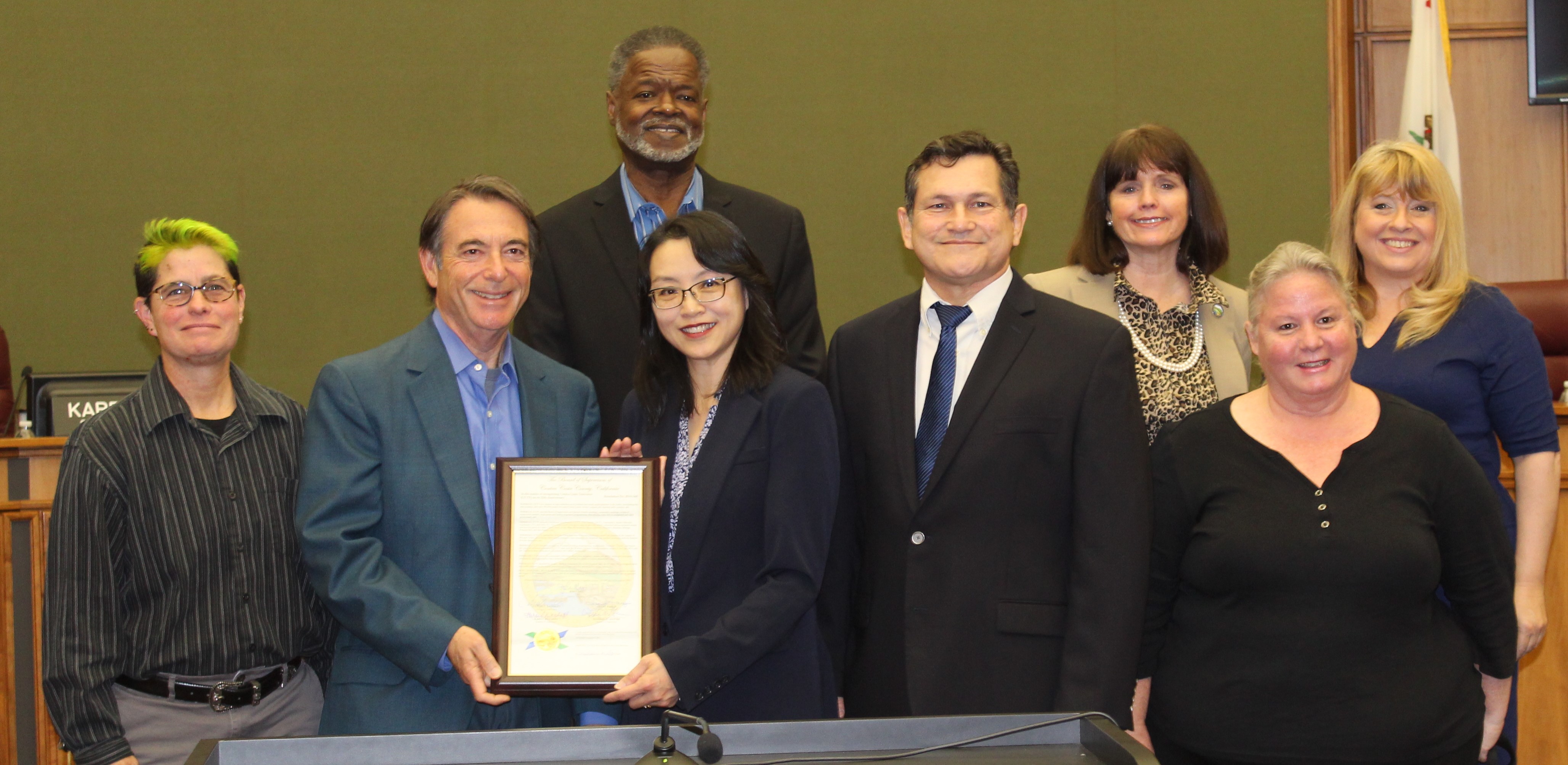
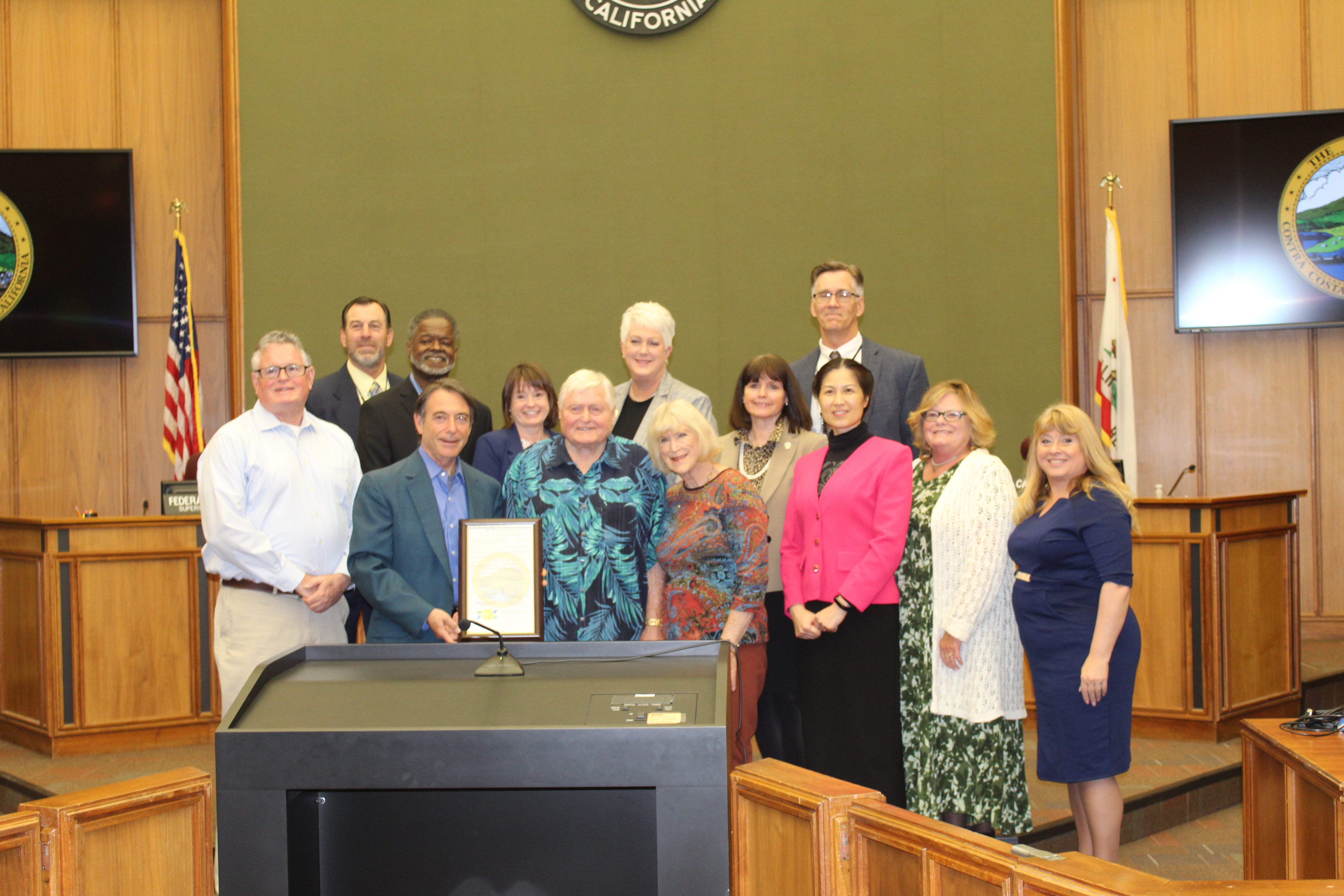
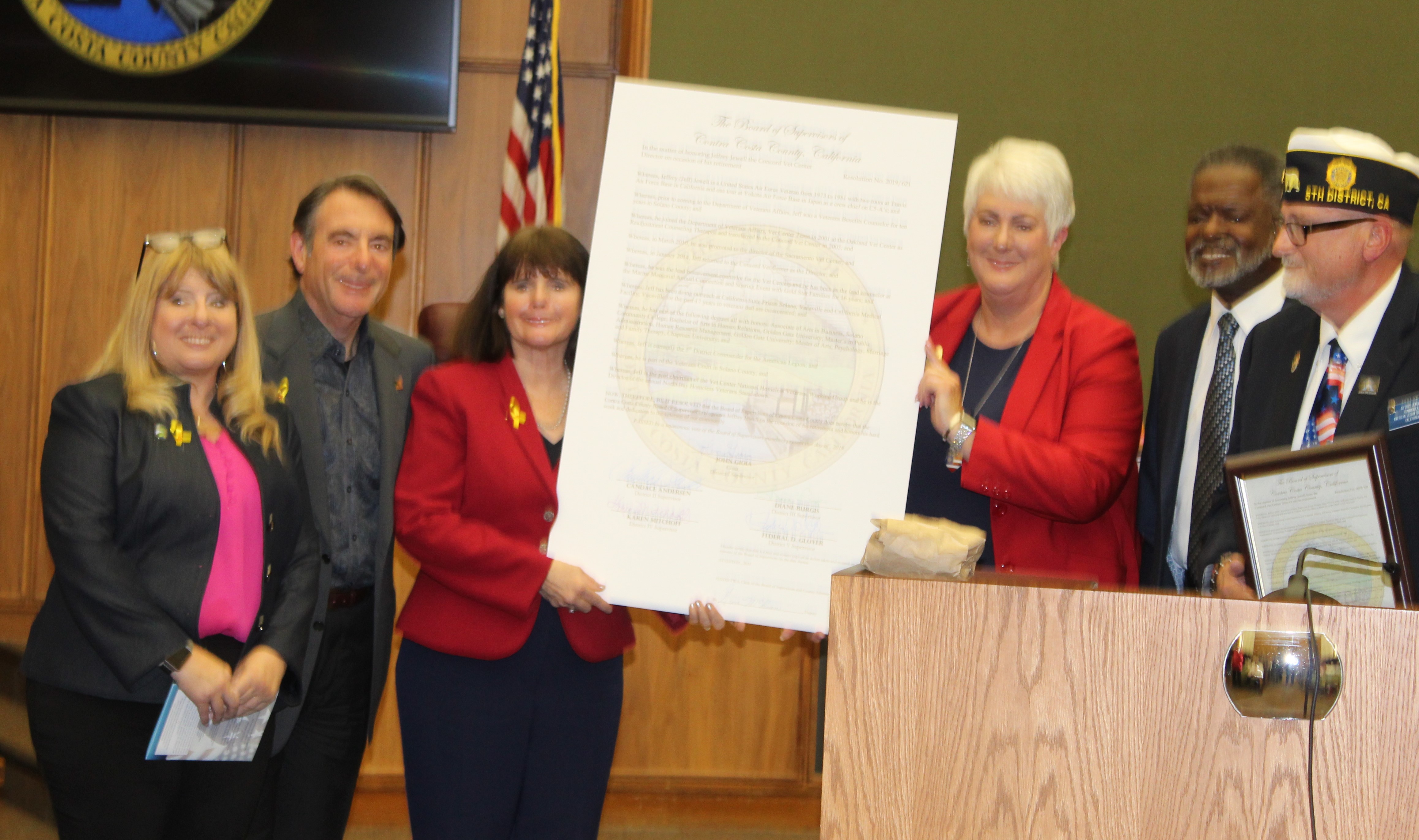
Contra Costa County Board of Supervisors recognized the men and women who served in the armed forces on Tuesday by passing a resolution recognizing Veterans Day, November 11. Supervisors presented an enlarged version of the proclamation during a ceremony in which United States Air Force Veteran Jeffrey (Jeff) Jewell, who has retired as the Concord Vet Center Director, spoke to veterans who have served various military operations such as World war II, Vietnam, Afghanistan, Iraq and other confrontations. Jewell, far right, served in the United States Air Force from 1973 to 1981 with two tours at Travis Air Force Base and on tour at Yokota Air Force Base in Japan as a crew chief on C5-A’s. Jewell has been the Concord Vet Center director since 2014, He joined the Department of Veteran Affairs in 2001. He is a 5th District Commander for the American Legion. He holds the following degrees with honors: Associate of Arts in Business, Solano Community College: Bachelor of Arts in Human Relations, Golden Gate University; Master’s in Public Administration, Human Resource Management, Golden Gate University, Master of Arts, Psychology, Marriage and Family Therapy, Chapman University. At the ceremony were from left, Supervisor Diane Burgis of Brentwood, Chair John Gioia of Richmond, Vice Chair Candace Andersen of Danville, Supervisor Karen Mitchoff of Pleasant Hill, Supervisor Federal Glover of Pittsburg, and Jeffrey (Jeff) Jewell. Photo by Daniel Borsuk.

Place half-cent transportation sales tax measure on March 2020 ballot

By Daniel Borsuk

County supervisors are hopping aboard the bandwagon in banning the sale of any e-liquid or electronic smoking device in unincorporated Contra Costa County.

Supervisors voted 5-0 voted on Tuesday to set the stage to formally adopt an ordinance next week that will outlaw the retail sale of e-liquid flavored smoking devices within 1,000 feet from a school, park or library at the supervisors’ upcoming November 19 meeting.

The ordinance also inserts limitations on the delivery of cannabis-related e-devices in unincorporated Contra Costa County.

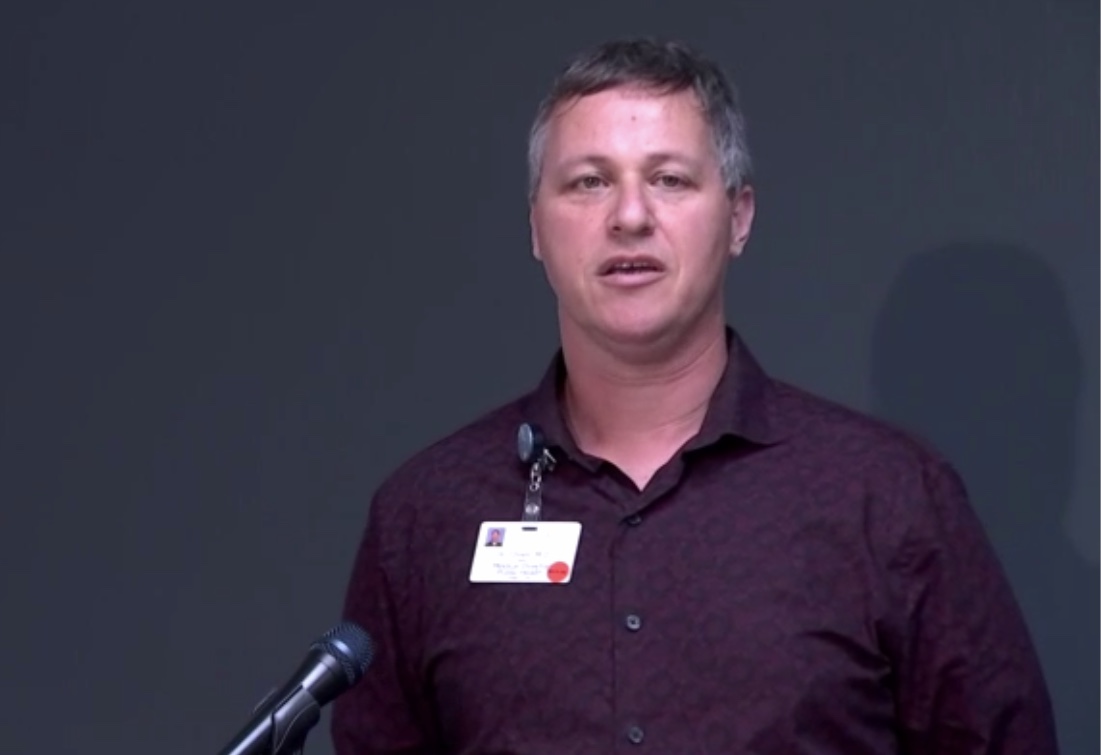
The supervisors’ action means Contra Costa County will join an expanding number of California counties including Los Angeles, San Diego, and San Mateo that have already adopted laws banning the sale of e-cigarettes that have killed three Californians while some 151 related medical cases have been reported around the Golden State, Dr. Chris Fonataano of the Contra Costa Health Services reported. More than 800 cases and 12 deaths across 46 states have been reported by the Centers for Disease Prevention and Control.

Since 2019, the City Councils of San Pablo, Lafayette, Richmond and Oakley have passed laws banning the sales of e-cigarettes within city limits.

The rising health concerns about e-cigarettes at the national level has financially hit the e-cigarette industry. Major e-cigarette maker Juul Labs on Monday announced it is cutting about 650 jobs, or about 16 percent of its total workforce because of the national pullback on its products, especially its most popular flavors mint and mango flavored pods, in the U.S.

During the public hearing, where Board Chair John Gioia discretionarily decided to cut speaker time fifty percent to one minute per speaker in order to accommodate the supervisors’ annual Veterans Day ceremony scheduled at 11 a.m., 45 speakers, many from middle and high schools, shared stories about how fellow students have become hooked to e-devices in restrooms or anywhere they can sneak in a smoke.

Mt. Diablo High School student Dominique Vine complained that vaping is a serious problem at his school. “The air is contaminated,” he complained.

“It is my understanding that this proposed ordinance would help improve public health and continue the positive work the county has historically done to combat youth tobacco usage,” said Congressman Mark DeSaulnier in a written statement read by District Director Shanelle Scales-Preston.

Lafayette City Councilwoman Susan Kendall encouraged supervisors to pass the ordinance. Adopt this ordinance. You are the right body to do this. Lafayette is an island that none of its neighboring cities have addressed.”

The new ordinance will also impose new retail delivery standards on cannabis products from about 84 retail locations in unincorporated Contra Costa County, which is a priority issue of Vice Chair Candace Andersen of Danville, who has previously overseen tough protections on cannabis deliveries in the county.

“We are providing an additional layer of protection to residents wanting this kind of service,” Supervisor Andersen told the Contra Costa Herald.

The new ordinance states:

A – The delivery of more than eight hundred milligrams of tetrahydrocannabinol in the form of edible    cannabis products to a single cannabis customer in a single day is prohibited.

B – The delivery of any cannabis product listed in Title 17, California Code of Regulations, section

40300, is prohibited.

C – The delivery of any flavored cannabis product for which the primary use is human inhalation of the gases, particles, vapors, or byproducts released as a result of combustion, electrical ignition, or vaporization of the flavored cannabis product, is prohibited.”

Support Half-Cent Sales Tax for Transportation Ballot Measure

Supervisors voted to place a half-cent sales tax measure on the March 2020 ballot for transportation. Contra Costa County voters will get a chance to vote up or down on a half-cent sales tax measure to raise $103 million a year for local transportation annually for 35 years. The tax measure will be placed on the March 3, 2020 ballot and will be spent for only county road or transit projects. The state cannot take the funds. See how the funds will be spent, here – Draft 2020 Transportation Expenditure Plan

The purpose of the half cent sales tax is to reduce congestion and fix bottlenecks on highways and major roads, make commutes faster and more predictable, improve the frequency, reliability, accessibility, cleanliness and safety of buses, ferries, and BART; improve air quality and repave roads.

Animal Service Fees Hiked

Starting in 2020, Contra Costa residents wanting to adopt cats or dogs or other veterinary services from the county’s Animal Services Department will have to dig deeper into their wallets.

Supervisors unanimously approved new Animal Services Department fees that have not been increased since 2008.

No one spoke either against or in favor of the fee increases that vary all over the map from a 2% rise to spaying a dog over 100 pounds from $195 to $199 to spaying a dog less than 20 pounds to $121, a 29% increase of $27.

“The average cost to care for an animal made available for adoption for the Animal Services Department is $908.21,” stated the report prepared by Animal Services Director Beth Ward. “These costs are based on an average length of stay of 30 days and includes the cost of daily care, basic medical care and spay/neuter to prepare an animal for adoption.

New adoption fees for a dog are $155 (age of dog), $135 (puppies under six months), $85 dogs over six years), $5 (senior citizens over 65 years of age or dogs over six years old). New adoption fees for cats are $120 (age of cat), $100 (kittens under four months), $55, (cats over six years), senior citizens (over 65 years of age) adopting cats over 6 years old $5.

2018 Agriculture Production Down 10 Percent

Agricultural crop production in the county declined 10% last year, according to a report submitted by Agricultural Commissioner Director of Weights and Measures Matt Slattengren. Supervisors approved the report as a consent item.

“The total gross value of agricultural crops in 2018 was $208,556,338, a decline of $11,884,662 or 10% from 2017. In general, demand and prices have remained strong from agricultural crops in Contra Costa County,” wrote Slattengren in his report submitted to California Department of Food and Agriculture and the Contra Costa Count Board of Supervisors.

Slattengren cited a decrease of 27 percent of vegetable and seed crop values because of rainy weather and market conditions for the decline.

Rodeo’s Lefty Gomez Community Center Fee Increase

Supervisors will consider an increase in rental rates for the use of the Lefty Gomez Community Center facilities in Rodeo at their meeting on Dec. 19. Fees have not been increased in 16 years. The fees for rental use of the center, restrooms, and security guard have not kept up with current maintenance and energy costs.

The Public Works Department requested that renters of the facility obtain insurance with coverage of $1 million of liability coverage. The department also has imposed a specific prohibition against the use of inflatable jumpers.

Filed Under: Health, News, Supervisors, Transportation

Health Advisory: Unhealthy air quality in Contra Costa

October 28, 2019 By Publisher Leave a Comment

Screenshot of ABC7 News report 10-28-19.

Residents of cities in western and central parts of Contra Costa County – especially those with respiratory sensitivities like asthma – are urged to stay inside with windows and doors closed and limit outdoor activity due to poor air quality in the area.

Air quality in these areas have been measured at unhealthy levels this morning as a result of smoke from large fires burning in the region. (See ABC7 News report for video and list of fires). A health advisory issued last night for eastern parts of Contra Costa County has been lifted. Other areas in the county may be impacted by the smoke as wind conditions change.

People in the affected areas should avoid contact with the smoke and minimize any time spent outdoors, especially older adults, pregnant women, people who have asthma, lung or heart disease. People in the area should avoid going in and out of their homes in order to prevent bad air from getting indoors. For those without power, consider going to a location with a powered ventilation system.

Using a mask is not an effective substitute for staying indoors in a space with filtered air.
Common symptoms of smoke exposure include coughing, scratchy throat, headaches and irritated eyes, nose and throat. Contact your healthcare provider if you are concerned about these symptoms.

People with asthma should continue to follow their asthma plan, and those with chronic lung or heart disease should continue to take their medications regularly. Symptoms such as difficulty breathing, chest pain or chest tightness may require immediate medical attention. Call 911 if you experience these symptoms.

For the most up-to-date air quality maps, visit airnow.gov. More health information about wildfire smoke is available at cchealth.org/wildfire-smoke.

Filed Under: Health, News

Rep. DeSaulnier announces reinstatement of Deferred Action possibly benefits Concord resident

September 20, 2019 By Publisher Leave a Comment

Screenshot of C-SPAN coverage of Isabel Bueso testifying before a Congressional Oversight and Reform Committee on Sept. 11, 2019.

Policy reversal signals that Isabel Bueso and other families will likely remain in the United States

Washington, DC – On Thursday, Sept. 19, Congressman Mark DeSaulnier (CA-11) issued the following statement after learning that U.S. Citizenship and Immigration Services (USCIS) will reinstate deferred action. The announcement signals that his constituent, Concord resident Isabel Bueso, and other families impacted by the initial decision to end the program will likely be allowed remain in the United States. (See related article)

“In a major victory, the Trump Administration will apparently reverse course and resume the deferred action program, allowing hundreds of deserving immigrants like Isabel Bueso to stay in the United States to receive life-saving medical care. We will continue to press the Administration for answers and assurances that this program is safe from future targeting and pursue our private bill to keep Isabel and her family in the United States permanently, but in the meantime, we breathe a sigh of relief. While I am dismayed that my colleagues and I had to step in to get the Administration to do what is right, I am grateful for the leadership of Chairman Jamie Raskin, Chairman Elijah Cummings, Congresswoman Ayanna Pressley, and the countless others who fought alongside me.”

Since Isabel Bueso and her family were denied deferred action, Congressman DeSaulnier has been actively working to save Isabel and her family from deportation. DeSaulnier has been actively working to save Isabel by:

  • Introducing a private bill (H.R. 4225) that would allow Isabel and her family to remain in the United States to continue to receive treatment for her rare, life-threatening disease.
  • Calling for an Oversight and Reform Committee hearing on the policy change. The hearing was held on Wednesday, September 11th, at which Isabel Bueso testified.
  • Sending a letter with Senator Kamala Harris (D-CA) petitioning the Acting Secretary of the Department of Homeland Security, Kevin McAleenan, to re-review the cases of the Bueso family.
  • Co-leading an effort with Immigration and Citizenship Subcommittee Chairwoman Zoe Lofgren (D-CA), Representatives Ayanna Pressley (D-MA), Judy Chu (D-CA), Lou Correa (D-CA), and Senators Edward Markey (D-MA) and Senator Elizabeth Warren (D-MA) and over 100 other lawmakers to DHS, ICE, and USCIS in demanding answers on USCIS’s decision to end consideration of non-military deferred action requests, including medical deferred action.

Filed Under: Central County, Concord, Government, Health, Immigration, News

DeSaulnier introduces private bill to protect Concord woman receiving medical treatment, and family from deportation

September 3, 2019 By Publisher 2 Comments

Rep. Mark DeSaulnier with Isabel Bueso. Photo from Facebook.

Washington, DC – Today, Tuesday, Sept. 3, 2019, Congressman Mark DeSaulnier (CA-11) announced the introduction of a private bill (H.R. 4225) to allow Maria Isabel Bueso, a resident of Concord, California, to remain in the United States to continue to receive treatment for her rare, life-threatening disease. Following a Trump Administration change, Isabel and her family face deportation. Yesterday, the United States Citizenship and Immigration Services (USCIS) said it will re-open deferred action cases that received denials like Isabel’s but, did not say whether it would reverse the policy change that led to the cancellation of deferred action.

“A few weeks ago, families were blindsided when they received notification from USCIS that they were being forced to leave the country within 33 days. Re-opening cases is no guarantee they will be allowed to stay, and it is not a permanent solution. These families need and deserve decisive action,” said DeSaulnier. “I am introducing legislation that would provide Isabel and her family with permanent resident status so they can remain in the United States without fear of removal. The Bueso family has followed every rule – they came here legally, paid their taxes, and Isabel’s participation in groundbreaking clinical trials has given hope to Americans with rare diseases. I will do everything in my power to help Isabel and her family remain here.”

“While I am thrilled that my deferred action status is being reconsidered, I was born with MPS 6; so, neither my condition nor my critical need for lifelong, weekly treatment will change in another two years’ time,” said Isabel Bueso. “We need to work together to find a more permanent solution that gives families like mine the guarantee that our lives won’t continue to be threatened. Congressman DeSaulnier and Senator Feinstein’s bill to give my family permanent status is part of that solution,” said Isabel.

“We are encouraged to hear that the administration is willing to reconsider our medical deferred action case,” the Bueso family stated. “We see this as a first step in revisiting our status as U.S. residents and will be working with lawmakers to find a more permanent solution that guarantees Isabel’s life is never put at risk again. Our hearts go out to all of the families involved in this sudden policy change and we won’t rest until they also have continued access to the life-saving medical care they deserve. Thank you to everyone who supported our family during this time – our hearts are overflowing with gratitude,” the Bueso family concluded.

Isabel came to the United States legally from Guatemala to receive treatment for Maroteaux-Lamy Syndrome, also known as Mucopolysaccharidosis Type VI. Her participation in drug trials helped identify an effective, life-saving treatment, which the drug manufacturer says Isabel cannot receive in her home country of Guatemala. Isabel and her family have lawfully resided in the East Bay since then, where she recently graduated summa cum laude from Cal State Easy Bay. Before her treatment was discovered, Isabel’s life expectancy was seven years old. She is now 24.

In a comment with a video posted on his Congressional Facebook page on Saturday, DeSaulnier wrote, “We have a sociopath in the White House who acts more like a mobster than the President. Our office is working hard to #SaveIsabel and stand up for immigrants with medical conditions that the #Trump Administration has targeted.”

In addition to introducing a private bill, Congressman DeSaulnier was joined by Senator Kamala Harris (D-CA) in sending a letter petitioning the Acting Secretary of the Department of Homeland Security, Kevin McAleenan, to re-review the cases of the Bueso family. He also co-led an effort with Immigration and Citizenship Subcommittee Chairwoman Zoe Lofgren (D-CA), Representatives Ayanna Pressley (D-MA), Judy Chu (D-CA), Lou Correa (D-CA), and Senators Edward Markey (D-MA) and Senator Elizabeth Warren (D-MA) to DHS, ICE, and USCIS demanding answers on USCIS’s decision to end consideration of non-military deferred action requests, including medical deferred action. In the letter, which was joined by over 100 additional lawmakers, he called on the agencies to reverse this decision and turn over any documents discussing the policy change by September 13, 2019.

Filed Under: Central County, Health, Immigration, News, People

Contra Costa Health Services celebrates Black Breastfeeding Week Aug. 25-31

August 24, 2019 By Publisher Leave a Comment

WHAT: Join our celebration of Black Breastfeeding Week, Aug. 25-31 at the Chocolate Milk Lounge, a free health education event to help black moms and families meet each other and learn about the importance of breastfeeding their infants.

The Lounge includes certified lactation consultants and information about community resources to support breastfeeding mothers, along with prizes, gift bags, snacks and more. The lounge is sponsored by Contra Costa Health Services, Black Infant Health and First 5 Contra Costa.

For more information, call Pam Moore at 925-313-6128, Marlene Ceballo at 925-646-5200 or Lonnie Watkins at 925-313-6254.

WHO: All are welcome. Registration is required – links below.

WHEN: 12-2pm Tuesday, Aug. 27 at Antioch First 5 Center, 300 H Street – register

11am-2pm Wednesday, Aug. 28 at Pittsburg Health Center, 2311 Loveridge Road – register

10am-12pm Thursday, Aug. 29 at LifeLong Brookside San Pablo Health Center, 2023 Vale Road, San Pablo – register

8:30am-12pm Friday, Aug. 30 at West County Health Center, 501 Gateway Avenue, San Pablo – register

Filed Under: Children & Families, Health

Kaiser Permanent responds to strike vote by SEIU United Healthcare Workers

August 14, 2019 By Publisher Leave a Comment

In response to the vote to strike by the Service Employees International Union – United Healthcare Workers (see related article), John Nelson, Vice President, Communications, Kaiser Permanente issued the following statement:

Kaiser Permanente and SEIU-UHW have been working together toward a mutually beneficial agreement as part of the national bargaining with the Coalition of Kaiser Permanente Unions that began in April. Unfortunately, UHW leadership has decided to use the threat of a strike as a bargaining tactic, designed to divide employees and mischaracterize Kaiser Permanente’s position, even though most of the contracts don’t expire until October.

We believe the result of the strike vote reflects obviously misleading ballot questions used by the union:

  • “I vote YES to authorize our bargaining team to call for a strike to protest Kaiser’s illegal behavior and unfair labor practices and to show my support for a contract with good raises, no take-aways and a ban on subcontracting.” 
  • “I vote NO and am willing to accept a contract that increases our medical costs, cuts our pensions and retiree medical benefits, offers lower pay scales and raises that are less for Oregon and Washington than California.”

To be clear, Kaiser Permanente has presented a contract proposal that would provide annual pay increases that would keep our employees compensated higher than market averages and maintain excellent benefits. Contrary to the union’s claims, there are no pay cuts and no changes to our employees’ defined pension benefit, under our proposal.

It is important to understand that a strike vote does not mean that a strike is imminent, although it does place Kaiser Permanente in the position of having to spend millions of dollars preparing for the threat of a strike event. Our first priority is always continuity of care for our patients and members.

SEIU-UHW leadership is more interested in a power play to position themselves vis a vis other Kaiser Permanente unions – rather than focusing on what is best for their membership.  At a time when we are working hard to keep our care affordable, the Coalition’s demands are not fair to our members and the communities we serve. Coalition-represented employees are already compensated 23% above market rates—we pay well and we have markets where our wage rates are challenging our ability to be affordable. The Coalition’s proposal would actually increase our wages on average 32% above the market over the next five years, adding a billion dollars to our labor costs.

Despite the union leadership’s disruptive tactics, we are hopeful that our employees will value our proposal and SEIU-UHW and the other Coalition unions will move forward with us to reach a new agreement. Our goal is to continue to make Kaiser Permanente a great place to give and receive care.

Proposed Contract Offer

Kaiser Permanente’s bargaining proposal would provide employees with the following best-in-class conditions:

  • Solid wage increases. The average salary of Coalition-represented employees is already higher than market averages. Mindful of our goal to improve the affordability of health care and engage our employees in the effort, the current proposal provides guaranteed wage increases across the board each year through 2022 of 3% each year in Northern and Southern California.
  • Opportunities for new hires. Kaiser Permanente and the Coalition are proposing a $40 million Workforce Development Fund and creation of new-hire training positions, all part of the solution to address the national shortage of health care workers and help develop the next generation of unionized workers in health care.
  • Retirement security. The proposal preserves the existing defined pension plan along with other strong retirement benefits.
  • Career mobility. The proposal includes a more robust tuition reimbursement program for employees that allows more funds to be used for travel.
  • Affordable health care. The proposal includes a pharmacy utilization approach that incents employees to take greater responsibility for their health by rewarding them for increasing their use of mail-order prescriptions.

Just last year SEIU-UHW touted what it described as “strong wages and benefits” in the agreement it reached with Dignity Health, which included lower wage increases (13% over 5 years plus a one-time 1% bonus) than being offered by Kaiser Permanente, and only $2.5 million for workforce development, as compared to $40 million in Kaiser Permanente’s current proposal. (Source: SEIU-UHW press release, March 2018, http://www.seiu-uhw.org/archives/26114)

Filed Under: Health, Labor & Unions, News

Kaiser Permanente workers in Contra Costa, state vote to support strike beginning in October

August 14, 2019 By Publisher 1 Comment

Strike would affect more than 24,000 Kaiser Permanente workers in the Bay Area. Voting results in five other states, D.C. expected by September; would be nation’s largest walkout since 1997

OAKLAND, CA –  Kaiser Permanente workers in California poured out in large numbers to overwhelmingly authorize a strike in early October that would be the biggest in the United States in more than two decades.

Becoming the first of more than 80,000 Kaiser workers to vote, members of the Service Employees International Union – United Healthcare Workers West (SEIU-UHW) across the state voted between July 29 and Aug. 11 whether to approve the unfair labor practices strike at Kaiser Permanente hospitals and clinics. More than 37,000 cast ballots in support of a strike (98 percent) while only 867 voted to oppose (2 percent). The turnout was uncommonly high for a strike vote in any industry, with two-thirds of workers casting ballots.

Strike authorization votes among other groups of Kaiser workers in California, and Kaiser Permanente employees in Oregon, Washington, Colorado, Maryland, Virginia and the District of Columbia run through mid-September. The strike would start in early October and be the nation’s largest since the Teamsters’ walkout at United Parcel Service in 1997.

“Kaiser workers all over California are putting a stake in the ground that it’s time for this corporation to get back on track and live up to its mission to help patients, workers and communities thrive, said Heather Wright, a women’s health clerk at Kaiser Permanente in Santa Clara, Calif. “This strike vote is about stopping Kaiser’s unfair labor practices. This company should be all about providing the best possible patient care, but unfortunately its focus in recent years has been on making billions of dollars in profits and millions of dollars for Kaiser executives.”

Workers want Kaiser Permanente to bargain in good faith and stop committing unfair labor practices, and are fighting for a new contract that would:

  1. Restore a true worker-management partnership, and have Kaiser bargain in good faith;
  2. Ensure safe staffing and compassionate use of technology;
  3. Build the workforce of the future to deal with major projected shortages of licensed and accredited staff in the coming years; and
  4. Protect middle-class jobs with wages and benefits that can support families.

As a non-profit entity, Kaiser Permanente is supposed to serve the public interest in exchange for billions of dollars in tax breaks. But in recent years, the corporation has departed from its mission:

  • Profits: Kaiser made more than $5.2 billion in profits during the first half of 2019, bringing its profits to more than $11 billion since Jan. 1, 2017. The company also sits on $35 billion in reserves.
  • Executive pay: Kaiser gave its CEO a $6 million raise to $16 million a year and pays at least 36 executives a million dollars or more a year.
  • Care for low-income patients: Kaiser provides very little care to Medicaid patients, far less than other non-profit health systems, even though it gets massive tax breaks in exchange for supposedly working in the public interest.
  • Financial transparency: Kaiser lacks transparency and operates in the shadows. It is exempt from many of the financial reporting requirements of other hospitals and health systems. Operating secretly allows Kaiser to avoid the kind of scrutiny consumers, employers, unions and regulators need to protect themselves and the public.
  • Turning its back on workers: Kaiser has worked to destroy what had been the most successful and largest worker-management partnership in the country that was a source of innovation and problem-solving for many years; it has committed numerous unfair labor practices, including refusing to bargain in good faith.
  • Destroying good jobs. Kaiser is actively destroying good jobs by outsourcing them to companies that pay low wages with few benefits, and wants to limit the wages and cut the benefits of its frontline healthcare employees.

The workers’ national contract expired Sept. 30, 2018, and in December 2018 the National Labor Relations Board charged Kaiser Permanente with failing to bargain in good faith. Since then, Kaiser has continued to commit unfair labor practices.

The Coalition of Kaiser Permanente Unions comprises labor unions in California, Oregon, Washington, Colorado, Hawaii, Virginia, Maryland and the District of Columbia, representing more than 80,000 Kaiser caregivers. To learn more, visit www.KaiserKeepThriveAlive.com.     

Filed Under: Health, Labor & Unions, News

OP/ED: State must keep financial assistance for low-income California dialysis patients

July 9, 2019 By Publisher Leave a Comment

Joel Levin

By Joel Levin

I am a local public schoolteacher working with special education students from elementary age through young adults, and I am a dialysis patient who has suffered kidney disease for decades.

I’ve dedicated my career to helping those less fortunate in need. That’s why I’m disappointed that insurance companies are behind legislation that would cut off the charitable financial assistance I need to pay for the dialysis that keeps me alive.

Legislators will soon be voting on Assembly Bill 290, which would eliminate financial assistance that the non-profit American Kidney Fund provides charitably to more than 3,700 qualifying California dialysis patients like me.

AB 290 requires AKF to disclose confidential patient information in violation of the federal regulations governing the program. Because of these unreasonable requirements, AB 290 would force AKF to stop helping California patients altogether.

The losers are patients like me who depend on the financial assistance AKF provides to pay for the dialysis that we need to stay alive. The winners are insurance companies whose profits would go up if it passes.

Even as a kidney patient who must undergo the rigorous dialysis treatment process to stay alive, I feel like one of the fortunate ones. Most people on dialysis can’t work because of the exhausting process of dialysis. Thankfully I can continue working as a teacher while still receiving this time-consuming treatment three times a week for three to four hours at a time, after my workday.

It is not easy, of course. And for dialysis patients who require between 9-12 hours a week of dialysis treatments, our health care coverage is expensive. Although I’m on Medicare, it only covers 80 percent of my health care costs and Medicare also requires monthly insurance premiums. I also have copays for doctor visits and copays for my numerous medications because of my kidney disease.

On top of that, I must get an additional insurance policy, with additional monthly premiums, to cover the 20 percent “gap” that isn’t paid for by Medicare.

As a public schoolteacher, I’m certainly not rich. I have a finite amount of funds. Without the AKF’s assistance program, I’m not sure how I’d be able to afford these payments.

Only a small number of Californians on dialysis, about 5 percent, use financial assistance from a third-party, non-profit charitable organization like the American Kidney Fund to help pay their health insurance premiums. AKF has made premium assistance available for more than 20 years.

I’m extremely thankful they’re in existence and grateful for the help they provide me. For me, the program offers peace of mind that I can pay my expenses and receive the healthcare that I need. I can’t even imagine what would happen to dialysis patients who can’t work. How will they survive?

At its core, AB 290 is about increasing insurance company profits.

Lawmakers who are aligning with insurance companies and supporting the measure are not seeing how it would impact the patients in the long run.

I urge legislators to reject this insurance company scheme and vote no on AB 290.

Joel Levin is a dialysis patient and resident of Danville.

Filed Under: Health, Legislation, Opinion

County to hold Mental Health Services Act Supportive Housing Community Forum July 18 in San Pablo

July 8, 2019 By Publisher Leave a Comment

WHAT: Contra Costa Behavioral Health Services, a division of Contra Costa Health Services (CCHS), invites anyone interested in discussing local public mental health services in relation to supportive housing to participate in a public forum on Thursday, July 18, in San Pablo.

The forum offers the community an opportunity to discuss its needs and meet with service providers to discuss current issues relevant to supportive housing. These discussions will help to inform future use of local Mental Health Services Act (MHSA) funding.

California approved Proposition 63 in November 2004, and the Mental Health Services Act became law. The Act provides significant additional funding to the existing public mental health system and combines prevention services with a full range of integrated services to treat the whole person. With the goal of wellness, recovery and self-sufficiency, the intent of the law is to reach out and include those most in need and those who have been traditionally underserved. Services are to be consumer driven, family focused, based in the community, culturally and linguistically competent, and integrated with other appropriate health and social services. Funding is to be provided at sufficient levels to ensure that counties can provide each child, transition age youth, adult and senior with the necessary mental health services, medications and support set forth in their treatment plan. Finally, the Act requires this Three Year Plan be developed with the active participation of local stakeholders in a community program planning process.

WHO: All members of the public are welcome, including people that have or are receiving supportive housing services, their families or loved ones, and interested members of the community. RSVP online at cchealth.org/mentalhealth/mhsa – click the “Supportive Housing Community Forum” button.

Other RVSP options include emailing mhsa@cchealth.org – please include “MHSA Forum” in the subject line – or by telephoning (925) 957-2617. Attendees may also mail RSVPs to MHSA, 1220 Morello Avenue, Suite 100, Martinez, CA 94553.

WHEN: Thursday, July 18th at 1 p.m. to 5 p.m. at Contra Costa College, 2600 Mission Bell Drive, Room GE 225, San Pablo, CA 94806

WHY: Contra Costa County’s current MHSA budget provides over $50 million to more than 80 mental health programs and services. Forum goals include identifying service needs, priorities and strategies to inform the county’s MHSA Three-Year Program and Expenditure Plan for fiscal years 2020-2023.

The forum will include an overview of the MHSA and current funding use in Contra Costa County and will be livestreamed at: cchealth.org/mentalhealth/mhsa.

Visit cchealth.org/mentalhealth/mhsa to access the MHSA Three Year Program and Expenditure Plan Update and other information about the MHSA in Contra Costa.

Filed Under: Government, Health

Supervisors approve $13 million plan to reduce number of mentally ill in county jail

May 15, 2019 By Publisher Leave a Comment

May is Foster Parent Recognition Month

The Contra Cost Board of Supervisors on Tuesday, May 14 recognized May as Foster Parent Recognition Month. Supervisors’ resolution noted there are approximately 1,100 children and youngsters in foster care in the county. At the ceremony, supervisors presented the resolution to first time foster parents Patricia and Ryan Streeter of Antioch, who became the foster parents of two-month-old Samuel. The couple are the parents of their eight-year-old biological son Josiah. The supervisors’ resolution noted the importance of Foster Parent Recognition Month in Contra Costa County for “being provided with a safe, secure and stable home environment, along with the compassion and nurturing of foster relative and non-relative families….” Photo by D. Borsuk

By Daniel Borsuk

The Contra Costa County Board of Supervisors approved on a 4-0 vote Tuesday a $13 million multi-faceted plan that aims to detour people with mental illness who are in county jail and to relocate them in appropriate mental health facilities. Supervisor Federal Glover of Pittsburg was absent.

Chief Assistant County Administrator Timothy Ewell told supervisors the county has grant applications pending totaling about $13 million that will help the fund the recommendations from Policy Research Associates.

Supervisors accepted 13 recommendations drafted by Policy Research Associates, a Delmar, NY-based firm that conducted a conference last January with Contra Costa mental health, medical, law, political officials and other community stakeholders in attendance.

Policy Research Associates researchers Brian Case and Regina Hueter co-authored the study “Sequential Intercept Model Mapping Report for Contra Costa County.”

Supervisors quickly approved the Policy Research Associates report. There were no comments from the public.

Since 2015, Contra Costa County has been involved in the nationwide Stepping Up movement designed to reduce the number of persons with mental illness in county jails. The county’s inmate population’s daily mental illness rate hovers around 15 percent. That is comparable with a national average of 17 percent.

“We have more critically mentally unhealthy people in our jails than in our hospitals. The question is how do we intercept these people?” asked Board Vice Chair Candace Andersen of Danville, who attended the Policy Research Associates conference in January.

The 13 recommendations the supervisors adopted in the “Sequential Intercept Model Mapping Report for Contra Costa County,” include:

  • “Establish an Uber committee and process that allows for shared leadership, responsibility, coordination, and oversight of justice system and behavioral health innovation and reform.”
  • “Establish standardized metrics and data-sharing across county agencies to improve data-informed decision-making.”
  • “Increase county-wide deflection and diversion strategies. Explore the need for a 24-hour crisis stabilization and triage center and a mental health first responder co-responder strategy.”
  • “Further incorporate the use of peers and peer support and recovery across intercepts.”
  • “Identify ‘familiar face’ high utilizer populations to help manage costs, reduce unnecessary utilization of services while increasing individual stabilization. Develop ‘higher utilizer’ strategies.”
  • “Implement a comprehensive substance use disorder strategy: Population identification & treatment resources in the jail & community.”
  • “Examine the need for pre-trial interventions to reduce failure to appear of individuals who are booked and released.”
  • “Improve and pre-and-post-arrest diversion opportunities for the incompetent to stand trial populations.”
  • “Review and address problems solving court criteria to align with national best practice
  • “Increase equity and access to services regardless of AB 109 funding.”
  • “Improve jail-based services and transition planning to reduce recidivism and improve health and other outcomes for detained or jailed individuals.”
  • “Continue to build probation Best Practices, training, and coordination to reduce technical violations and probation revocations.”
  • “Work with Center for Medicare and Medicaid services and the state of California to establish an agreement that allows parolees to access Medi-Cal and receive county services.”

Supervisors also approved the following consent calendar items:

Danville Blvd.-Orchard Court Roadway Project

Supervisors approved a $375,000 Public Works contract with Quincy Engineering Inc. for civil engineering services for the Danville Boulevard-Orchard Court Complete Streets Improvement Project to be completed by March 31, 2021. The road project includes the construction of a roundabout at Danville Boulevard and Orchard Court to reduce speeds and improve pedestrian crossing. The project also includes the restriping of the roadway and lane reconfiguration and storm drain modifications, landscaping, storm water treatment, signage, utility adjustments and changes to existing roadside features.

Emergency Driving Program

Gave the green light for the Sheriff-Coroner to sign a $165,000 contract with the Commission on Peace Officer Standards and Training to provide an emergency vehicle operations course instruction for the period July 1, 2019 through June 30, 2020. The course will serve 110 students at an initial cost of $1,500 per student.

Redesiginating the John Muir Medical Center as Official Trauma Center

Supervisors redesignated John Muir Medical Center as the county’s official trauma center through May 21, 2031. In approving the consent item, supervisors agreed John Muir Medical Center’s trauma center has seen its patient rate grow by 53 percent since 2011, but its trauma inpatient volume has remained relatively steady with an average of about 1,200 inpatients per year. With the supervisors’ consent action, the county will receive $350,000 a year during the duration of the agreement from John Muir Medical Center for the county to fund programs to decrease violence or prevent injuries throughout the county.

Filed Under: Health, News, Supervisors

  • « Previous Page
  • 1
  • …
  • 45
  • 46
  • 47
  • 48
  • 49
  • …
  • 53
  • Next Page »
Monica's dinner 05-26 CCH
Celia's-05-26-A
Delta-RC-A (2)
Deer-Valley-Chiro-06-22

Copyright © 2026 · · Contra Costa Herald · All Rights Reserved