• Home
  • About The Herald
  • Local Agencies
  • Daily Email Update
  • Legal Notices
  • Classified Ads

Contra Costa Herald

News Of By and For The People of Contra Costa County, California

  • Arts & Entertainment
  • Business
  • Community
  • Crime
  • Dining
  • Education
  • Faith
  • Health
  • News
  • Politics & Elections
  • Real Estate

Californians face higher electricity rates based on income

March 16, 2024 By Publisher Leave a Comment

If you earn $28K per year or more; unless state legislature reverses course; 5 local legislators voted for bill

By Allen D. Payton

Bill Votes – AB-205 Energy. (ca.gov)

In 2022, the California legislature passed and Governor Gavin Newsom signed AB205 – Energy into law, which requires that the Public Utilities Commission (CPUC) “shall, no later than July 1, 2024, authorize a fixed charge for default residential rates.” As a result, the CPUC is currently reviewing proposals for a tiered, fixed-price structure, as directed by the bill.

According to FOX Business, the state’s three main, investor-owned utilities – Pacific Gas and Electric (PG&E), Southern California Edison (SCE) and San Diego Gas and Electric (SDG&E) – proposed a tiered rate plan: “Households earning $28,000-$69,000 would be charged an extra $20 to $34 per month. Those earning $69,000-$180,000 would pay $51 to $73 per month, and those earning more than $180,000 would pay a $85-to-$128 monthly surcharge.”

According to California Energy Markets, “The first version of the income-graduated fixed charge, or IGFC, could be implemented by SDG&E and SCE by 2026, according to Freedman. PG&E is in the process of changing its billing system, he said, so its implementation would likely be in 2027.”

That’s on top of the 13% increase for both electricity and natural gas rates for PG&E customers approved by a unanimous vote of the CPUC last November that went into effect on January 1, 2024. Plus, another vote on March 7 for $4-$6 in additional monthly fees for the typical ratepayer that will take effect in April, was approved for PG&E to recover $516 million in costs for wildfire mitigation, gas safety and electric modernization.

According to a Canary Media report, “The utilities are also proposing to significantly lower the per-kilowatt-hour charges that customers pay to counterbalance the big increase in fixed charges, and to structure both fixed and volumetric charges in a way that allows lower-income customers to save money overall. Still, the proposal, if enacted, would instantly make California the home of the nation’s highest monthly utility fixed fees, according to analysis by clean energy research firm EQ Research.”

The IGFC would require the CPUC to evaluate every ratepayer’s income annually in order to assess the appropriate fee.

Local Legislators Voted for Bill

Five of Contra Costa’s state legislators supported AB205 on party-line votes including Assemblymembers Tim Grayson, Rebecca Bauer-Kahan, Buffy Wicks, Lori Wilson and State Senator Nancy Skinner. The first four each voted for the bill, twice.

Assemblyman Jim Frazier didn’t vote on the bill in 2021 and State Senator Steve Glazer didn’t vote on AB205 during the State Senate’s floor vote in 2022. Newsom signed the bill into law on June 30, 2022.

Details of New Law

As of July 1, 2022, the applicable portion of the law now reads as follows:

“SEC. 10. Section 739.9 of the Public Utilities Code is amended to read:

(d)  The commission may adopt new, or expand existing, fixed charges for the purpose of collecting a reasonable portion of the fixed costs of providing electrical service to residential customers. The commission shall ensure that any approved charges do all of the following:

(1) Reasonably reflect an appropriate portion of the different costs of serving small and large customers.

(2) Not unreasonably impair incentives for conservation, energy efficiency, and beneficial electrification and greenhouse gas emissions reduction.

(3) Are set at levels that do not overburden low-income customers.

(e)(1) For the purposes of this section and Section 739.1, the commission may authorize fixed charges for any rate schedule applicable to a residential customer account. The fixed charge shall be established on an income-graduated basis with no fewer than three income thresholds so that a low-income ratepayer in each baseline territory would realize a lower average monthly bill without making any changes in usage. The commission shall, no later than July 1, 2024, authorize a fixed charge for default residential rates.

(2) For purposes of this subdivision, ‘income-graduated’ means that low-income customers pay a smaller fixed charge than high-income customers.”

Source: Energy Sage published 3/10/24

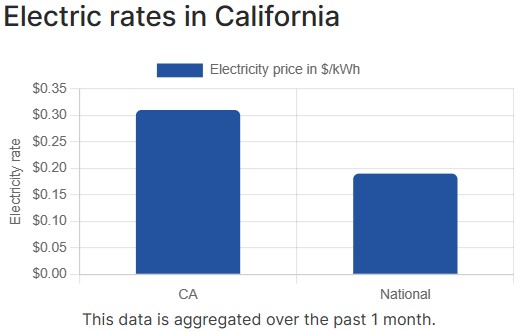
Californians Pay 27% More for Electricity Than National Average

According to Energy Sage, California residents currently pay 31 cents per kilowatt-hour compared to the national average of 18 cents per kilowatt-hour. “On average, California residents spend about $256 per month on electricity. That adds up to $3,072 per year. That’s 27% higher than the national average electric bill of $2,426.”

Effort to Reverse Course

Now, some members of the legislature are trying to backpedal on their votes and stop the IGFC increases from being approved. As they had unsuccessfully attempted last September, on Jan. 30, Republican lawmakers tried to bring an immediate vote to repeal AB 205 to the Senate floor, but Democrats who have the majority, voted to table the motion.

That same day, Assemblymember Jacqui Irwin, (D-Thousand Oaks) and 10 others introduced a bill to repeal AB205. According to Irwin’s press release about the new bill, “The CPUC has had the authority to implement a fixed rate charge, up to $10, since 2015, but has declined to do so. I see no need to rush now. It’s time to put some reasoning back into how we charge for electricity in California.” Bauer-Kahan is listed as a principal coauthor. It was also introduced in the State Senate.

According to the aforementioned Canary Media report, “The newly introduced bill, AB 1999, would limit the CPUC to adding a fixed charge of no greater than $10 a month on customers’ bills to pay for the rising costs of maintaining the state’s utility grids, regardless of household income.”

The bill is in the committee process, was referred to the Assembly Committee on Utilities and Electricity. If approved it will then head to the floors of both houses of the state legislature for votes and if passed, the bill will head to the governor’s desk for his signature or veto.

3/27/24 UPDATE: According to Sylvie Ashford, Energy & Climate Policy Analyst for The Utility Reform Network (TURN) which supports the implementation of an income-graduated fixed charge, and is one of the authors of the organization’s IGFC proposal,

  • “The IOUs are no longer proposing the charge levels that you cite (e.g. up to $128 per month). The CPUC has already ruled that the first iteration of the fixed charge will have income tier cut-offs based only on the existing CARE/FERA programs, with no ‘high-income’ tier. The IOUs submitted new proposals in the fall, with a max charge of $51-$73 (page 5 of their brief).
  • It’s not that utilities will “also” lower $/kWh rates. The fixed charge itself lowers rates, as is comprised only of costs that are included in rates today. It shifts some fixed costs out of electricity rates and into a separate line item.
  • Thus, your headline that “Californians face higher electricity rates based on income” is incorrect. All customers will pay lower electricity rates (15% lower under TURN’s proposal). Some higher income customers will see higher overall bills only if their assigned fixed charge exceeds their savings from the reduced rates. (For example, TURN’s proposal has a maximum monthly fixed charge of $30, and we estimate those customers will see $3-7 bill increases, depending on their usage).”

Iin addition, she shared, “TURN believes that the fixed charge presents a critical opportunity to reduce low-income energy bills in the state. TURN also believes much more is needed to make bills affordable and intervenes widely at the CPUC to oppose rate increases. A few quick points:

  • The fixed charge will not increase utility revenue/profits; it removes costs from rates and shifts them to a separate line item on your bill.
  • This will reduce electricity rates ($/kWh) for all Californians, making it more feasible to operate electric vehicles and appliances.
  • Because the new line item is based on income, it will also reduce overall bills for low-income Californians (likely to be defined as the low-income CARE/FERA discount programs, which cover 30% of the state) and it will make electricity bills less regressive.
  • TURN strongly opposes the joint proposal of the utilities for fixed charges, and the CPUC is not considering it. The CPUC has already ruled that the first iteration of the fixed charge will have income tier cut-offs based only on the existing CARE/FERA programs, with no ‘high-income’ tier, so the average fixed charge will be low (TURN proposes an average of $23.50, which is the same charge already offered by the Sacramento Municipal Utility District).

Ashford was asked to explain how, if the cost of providing electricity does not differ from one user to the next in one of the three utility company’s service areas, it’s fair to charge one customer more based on their income. She was also asked weren’t renewals supposed to reduce electricity costs and aren’t we relying more on them, now for electricity generation in California,

Ashford responded, to your questions about the fairness of paying based on income, and why rates have been increasing when generation keeps getting cheaper (thanks to renewables): the problem is that your $/kWh electricity rates today are largely comprised of costs that have nothing to do with your personal usage. They are bloated with the fixed costs of the grid, like the utilities’ wildfire mitigation programs and infrastructure projects.

As a result, a UC Berkeley study found that California’s electric rates are highly regressive; low-income households pay more of their income on shared system costs. Households in hot climates, that need to use more electricity to keep cool, also pay more than their fair share of these costs. On the flipside, solar customers are paying less than their fair share, which has created a ‘cost shift’ that hikes rates for everyone else (source).

TURN is a strong advocate of reducing utility spending, which is the most important step to reduce rates. The fixed charge alone doesn’t address that problem, as it simply shuffles the collection of existing costs, but it will make bills more affordable for those that are disproportionately burdened by shared system costs.”


Filed Under: Energy, Government, News, State of California

Supervisor Glover seeks people to serve on county committees, commissions, boards

March 8, 2024 By Publisher Leave a Comment

District 5 residents who want to get involved in improving their communities

Applications due March 29

Supervisor Federal Glover announced opportunities for District 5 residents to make decisions affecting their communities. “A lot of policies begin in these county commissions and boards,” said Glover. Commissions are appointed by the Board of Supervisors based on his recommendation. Interested individuals may apply online at: https://contra-costa.granicus.com/boards/forms/321/apply/ or they can contact Supervisor Glover’s office at (925) 608-4200. Completed applications must be received in Supervisor Glover’s office by close of business Friday, March 29, 2023.

Crockett-Carquinez Fire Protection District Fire Advisory Commission: reviews and advises on annual operations and capital budgets; reviews Fire District expenditures; advises the Fire Chief on district service matters; and serves as a liaison between the Board of Supervisors and the community served by the fire district. The seats that are open are: 1 Regular Seat (Appointee 2). Meetings are held on the third Thursday of the month at 7:00 p.m. at 746 Loring Avenue, Crockett, CA 94525. The current seat opening has a term ending December 31, 2024. For information call Dean Colombo at (925) 787-0790.

Emergency Medical Care Committee: Role is to review the County’s ambulance and other emergency services as required in State law; and serves in an advisory capacity to the County Board of Supervisors, and to the County EMS Agency, on matters relating to emergency medical services as directed by the Board. The Committee meets at the Contra Costa County Emergency Medical Services (EMS) Administrative Office, 777 Arnold Drive, Martinez, CA, from 4 p.m. to 5:30 p.m. The current vacancy is for District V – Consumer Representative with a term ending September 30, 2024. For information, call Rachel Morris (925) 608-5454. Rachel.Morris@cchealth.org

Measure X Community Advisory Board: The Measure X Community Advisory Board was established by the Board of Supervisors on February 2, 2021 to advise the Board of Supervisors on the use of Measure X transactions and use tax funds. The current vacancy is for the District 5 Seat – Alternate seat with a term ending March 31, 2025. The meetings are normally scheduled for Wednesday’s at 5:00 p.m. For information call Adam Nguyen at (925) 655-2048. Adam.Nguyen@cao.cccounty.us

Measure X Community Fiscal Oversight Committee: The Measure X Community Fiscal Oversight Committee was established by the Board of Supervisors earlier this year to advise the Board of Supervisors on financial audits of Measure X tax funds. The current vacancy is for the District 5 Seat with a term ending December 31, 2024. The meeting dates and times are to be determined. For information call Adam Nguyen at (925) 655-2048. Adam.Nguyen@cao.cccounty.us

Mental Health Commission: The Mental Health Commission was established to review and assess the community’s mental health needs, services, facilities, and special problems, in order to advise the Board of Supervisors concerning local mental health services and programs. The current vacancies are for the District 5 Seat 3 with a term ending June 30, 2027. The Mental Health Commission meets the first Wednesday of each month from 4:30-6:30 p.m. For information call Angela Beck at (925) 313-9553. Angela.Beck@cchealth.org


Filed Under: Government

USDA announces approval of D-SNAP for California disaster areas

March 2, 2024 By Publisher Leave a Comment

For recipients in Contra Costa County ZIP codes 94528, 94596 and 94516

By Office of Communications, U.S. Department of Agriculture

WASHINGTON, D.C. – The U.S. Department of Agriculture (USDA) announced Friday, March 1, 2024, that low-income California residents recovering from severe storms and power outages beginning January 21, 2024, could be eligible for a helping hand from the USDA’s Disaster Supplemental Nutrition Assistance Program (D-SNAP).

Agriculture Secretary Tom Vilsack said that approximately 4,500 households that may not normally be eligible under regular Supplemental Nutrition Assistance Program (SNAP) rules may qualify for D-SNAP – if they meet certain criteria, including the disaster income limits and have qualifying disaster-related expenses.

“USDA is committed to making sure that those experiencing the impact of the recent storms get the food they need,” Vilsack said. “We recognize that the crisis doesn’t end when the rain stops. For families in these stricken areas, it may be just beginning.”

To be eligible for D-SNAP, a household must live or work in an identified disaster area, have been affected by the disaster, and meet certain D-SNAP eligibility criteria. Eligible households will receive one month of benefits – equal to the maximum monthly amount for a SNAP household of their size – that they can use to purchase groceries at SNAP-authorized stores or from select retailers online to meet their temporary food needs as they settle back home following the disaster. California will operate its D-SNAP application for seven non-consecutive days, beginning March 7, 2024, through March 8, 2024, and March 11, 2024, through March 15, 2024. California will share additional information about D-SNAP application dates and locations through local media.

On Feb. 29, 2024, FNS approved the California Department of Social Services (DSS) request to issue mass replacements to impacted households. This waiver approval allows households to receive replacement of benefits as stated in the approval as a result of power outages due to winter storms. The waiver applies to 121 zip codes in the following 27 counties including 94528, 94596 and 94516 in Contra Costa.

The timing of D-SNAP varies with the unique circumstances of each disaster, but always begins after commercial channels of food distribution have been restored and families are able to purchase and prepare food at home. Before operating a D-SNAP, a state must ensure that the proper public information, staffing, and resources are in place.

Although current SNAP households in the identified areas are not eligible for D-SNAP, they may request supplemental SNAP benefits to raise their allotment to the maximum amount for their household size for one month if they don’t already receive that amount.

The D-SNAP announcement today is the latest in a battery of USDA actions taken to help California residents cope with recent severe storms and its aftermath, which also include:

  • Approving a mass replacements waiver for SNAP participants, allowing households to receive replacement of benefits lost due to power outages. This waiver applies to 121 zip codesin 27 counties.
  • Approving a 10-day reporting waiver for food purchased with SNAP benefits that were lost as a result of power outages in 14 counties: Lake, Los Angeles, Mendocino, Napa, Nevada Orange, Placer, Riverside, San Bernardino, San Diego, San Luis Obispo, Santa Barbara, Sonoma and Ventura.
  • Approving California’s DSS non-congregate feeding request for Child Care Food Program (CCFP) institutions and sponsoring organizations under the Child and Adult Care Food Program (CACFP), allowing program operators to serve meals in a non-congregate setting, adjust the time of meal service, and allow parent and guardian meal pick up.

For more information about this and other available aid, callers from California can dial 2-1-1 or 1-800-621-3362. For more information about CalFresh visit California’s Department of Social Services.

USDA’s Food and Nutrition Service works to end hunger and improve food and nutrition security through a suite of more than 16 nutrition assistance programs, such as the school breakfast and lunch programs, WIC and SNAP. Together, these programs serve 1 in 4 Americans over the course of a year, promoting consistent and equitable access to healthy, safe, and affordable food essential to optimal health and well-being. FNS also provides science-based nutrition recommendations through the co-development of the Dietary Guidelines for Americans. FNS’s report, “Leveraging the White House Conference to Promote and Elevate Nutrition Security: The Role of the USDA Food and Nutrition Service,” highlights ways the agency will support the Biden-Harris Administration’s National Strategy, released in conjunction with the historic White House Conference on Hunger, Nutrition, and Health in September 2022. To learn more about FNS, visit www.fns.usda.gov and follow @USDANutrition.

Allen D. Payton contributed to this report.

Filed Under: Food, Government, News

SNAP food replacement due to widespread power outages during strong winter storm in California announced

March 2, 2024 By Publisher Leave a Comment

By Julie Yee, Public Affairs Specialist, Western Regional Office, Food and Nutrition Service, U.S. Department of Agriculture

The U.S. Department of Agriculture (USDA) announced Friday, March 1, 2024, that households impacted by widespread power outages that started on February 4th as the result of a strong winter storm in California could be eligible for replacement of Supplemental Nutrition Assistance Program (SNAP)/CalFresh benefits. This is one of many recent steps USDA has taken to ensure California residents in need have food to eat.

Rather than require SNAP households to report food losses individually, USDA allowed the State of California to approve automatic mass replacements for residents of certain zip codes who lost food as a result of the power outages and winter storm. The waiver applies to specified zip codes from 27 counties. More details will be made available through the  California Department of Social Services (CDSS).

SNAP participants in areas hardest hit by the power outages may have a portion of their February benefits replaced. SNAP recipients residing in other affected areas may request replacement benefits by filing an affidavit with the local office attesting to disaster-related loss.

Additionally, USDA has approved CDSS’ request to waive the 10-day reporting requirement for replacement of food purchased with SNAP benefits that were lost as a result of power outages due to the winter storms that began in February. The waiver is in effect through March 4, 2024.

USDA’s Food and Nutrition Service is ready to consider additional waivers that may be needed to help program participants who have lost food due to widespread power outages and to simplify the application process for affected households, upon request from the CDSS. Individuals seeking more information about this and other available aid should dial 2-1-1. For more information about California SNAP, visit https://www.cdss.ca.gov/food-nutrition/calfresh.

USDA’s Food and Nutrition Service works to end hunger and improve food and nutrition security through a suite of 16 nutrition assistance programs, such as the school breakfast and lunch programs, WIC and SNAP. Together, these programs serve 1 in 4 Americans over the course of a year, promoting consistent and equitable access to healthy, safe, and affordable food essential to optimal health and well-being. FNS also provides science-based nutrition recommendations through the co-development of the Dietary Guidelines for Americans. FNS’s report, “Leveraging the White House Conference to Promote and Elevate Nutrition Security: The Role of the USDA Food and Nutrition Service,” highlights ways the agency will support the Biden-Harris Administration’s National Strategy, released in conjunction with the historic White House Conference on Hunger, Nutrition, and Health in September 2022. To learn more about FNS, visit www.fns.usda.gov and follow @USDANutrition.

USDA is an equal opportunity provider, employer, and lender.


Filed Under: Food, Government, News

Payton Perspective: It’s time for reparations for descendants of African slaves in America

February 23, 2024 By Publisher Leave a Comment

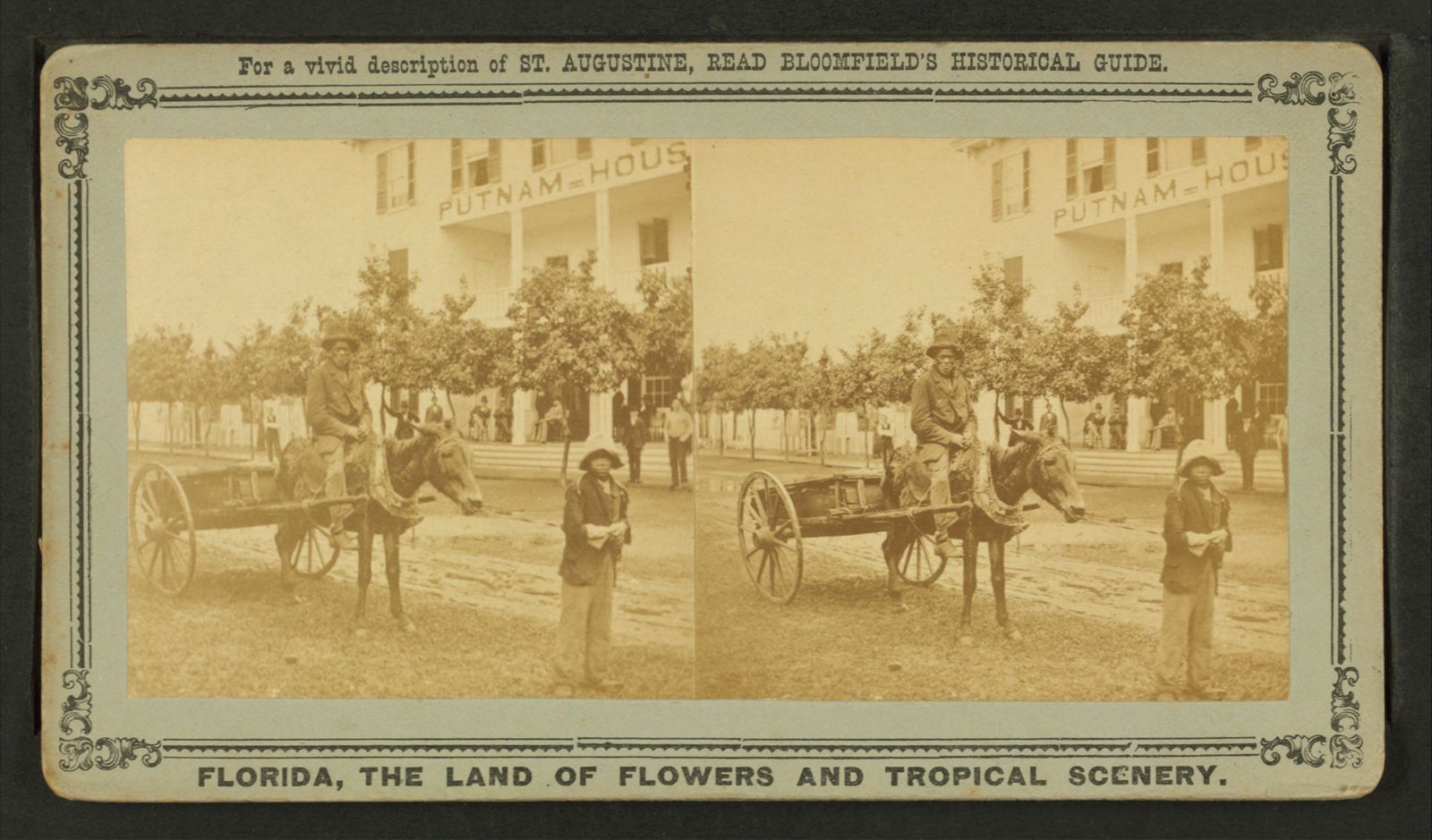
“15th Amendment, or the Darkey’s millenium: 40 acres of land and a mule.” Man and boy with cart in front of the Putnam House, Palatka, Fla. Source: The Miriam and Ira D. Wallach Division of Art, Prints and Photographs: Photography Collection, from The New York Public Library. (1850 – 1930). (PUBLISHER’S NOTE: Objects depicting racist and/or stereotypical imagery or language may be offensive and disturbing, but the National Museum of African American History and Culture in which this photo is displayed aims to include them in the Collection to present and preserve the historical context in which they were created and used. Objects of this type provide an important historical record from which to study and evaluate racism).

Using federal land, not cash

By Allen D. Payton, Publisher

During this Black History Month, as I’ve been arguing for several years, I believe it’s time for all Americans to agree the promised reparations to freed slave families following the Civil War in 1865 should finally be fulfilled – but to their descendants.

First, let me point out the fact – especially to my fellow Republicans who might oppose them – that reparations were first, a Republican idea, ordered by Union Army Major General William Tecumseh Sherman, and supported by President Abraham Lincoln, the nation’s first Republican president. As a reminder, the Republican Party was formed to abolish slavery, and Lincoln and the Union Army successfully fought the Civil War to accomplish that goal.

40 Acres & A Mule

You may have heard the phrase “40 acres and a mule”, which was made more popularly known by movie actor and director Spike Lee who labeled his production company “40 Acres and a Mule Filmworks”. But you may not know that the phrase originated with reparations. That’s because Special Field Orders No. 15 were issued by Sherman on January 16, 1865, before the Civil War ended that May, granting “a plot of not more than (40) forty acres of tillable ground” to families, “made free by the acts of war and the proclamation of the President of the United States He also later ordered the army to lend mules to the freed slaves for their farming efforts.

The orders included the confiscation of 400,000 acres of plantation land along “a strip of (Atlantic) coastline stretching from Charleston, South Carolina to the St. John’s River in Florida, including Georgia’s Sea Islands and the mainland 30 miles in from the coast.” The land was to be divided into parcels on which approximately 18,000 formerly enslaved families and other Black people then living in the area would be settled.

The purpose was to provide for the freed slaves both a means to earn a living and support themselves, and the result would have been giving them an asset that could be passed on to future generations.

According to History.com, “The freedmen set out to begin working their new land immediately, with a group of 1,000 settling on Georgia’s Skidaway Island. In subsequent months as many as 40,000 freedmen settled on the redistributed land.”

Order Rescinded

Unfortunately, after Lincoln’s assassination just three months after the order was issued, his running mate on the National Union Party ticket in 1864, Democrat Vice President Andrew Johnson, following his ascension to the presidency, rescinded Sherman’s order. He returned to Confederate owners the 400,000 acres of land. Thus, the freed slaves were denied the land they had been granted and reparations were never offered to them by the federal government, again.

Why Reparations Now?

Some people argue that it’s been over 150 years, so why do Black Americans need reparations, today? My initial response is that they’re long past due. But my main answer is two-fold. One is the fact that a major issue among most Blacks in the U.S., today is a lack of asset ownership, including homes, real estate, investments and businesses. For example, the average Black family has one-tenth the assets of the average white family in the U.S.

Disparity in Household Wealth

According to the U.S. Census Bureau’s Wealth and Asset Ownership Detailed Tables: 2020, Table 1. Median Value of Assets for Households, from the Survey of Income and Program Participation, Survey Year 2021, the median net worth for all households was $140,800. However, when broken down by ethnicity, the median “Black alone” household had one-tenth the assets of the median “White alone” household, or $18,430 compared to $178,500. The disparity is even greater when compared to the median “White alone, non-Hispanic” household which had assets of $217,500.

My argument for the disparity and second one in favor of why reparations, now is the fact that for nearly 250 years, almost all Blacks in the U.S. couldn’t own property because they were property, nor did they get paid. They also couldn’t get an education. So, the rest of us, whose ancestors were never subjected to the horrors and evil of chattel slavery, in effect had a 250-year head start!

Yes, I’ve heard the arguments about the Irish, which is my ancestry, and how they were mistreated, or others who were indentured servants. But those were not the same as being a slave sold, bought and owned by someone else, as well as their future generations to follow.

A Federal Responsibility, Not State or Local

Second, reparations are not a state or local issue, but a federal responsibility. Long before the day the Declaration of Independence was signed on July 4, 1776, and in spite of the fact it enshrined the statement that, “that all men are created equal, that they are endowed by their Creator with certain unalienable Rights, that among these are Life, Liberty and the pursuit of Happiness,” and then from the signing of the U.S. Constitution on September 17, 1789, to Lincoln’s issuance of the Emancipation Proclamation and the end of the Civil War, our federal government allowed slavey. It continued for another 65 years after the Constitution was ratified on May 29, 1790, for a total of 246 years since the first African slaves were brought to our country in 1619. So, again, reparations are a federal responsibility.

(A side, historical note on the Three-Fifths Compromise and clauses in the Constitution. It was not intended by the framers to further devalue the lives of slaves, but to reduce the influence in Congress by the slave states, by preventing them from having additional members in the House of Representatives and a greater number of electors in presidential elections. The slave states wanted to include the slaves in the census count, while the free states didn’t want them included at all. The compromise determined that three out of every five slaves were counted when establishing a state’s total population. A benefit to the slave states was it reduced the amount of taxes they had to pay to the federal government.

In Article I, Section II, Clause III of the Constitution, the Three-Fifths Compromise is stated as:

“Representatives and direct taxes shall be apportioned among the several states which may be included in this Union, according to their respective numbers, which shall be determined by adding to the whole number of free persons, including those bound to service for a term of years, and excluding Indians not taxed, three fifths of all other persons.”

See also James Madison’s writings in Federalist Paper No. 54 in which he argues that slaves were both property and people, and thus required some degree of representation).

But I digress. Back to the issue at hand.

Source: Bureau of Land Management

Reparations Are About Land, An Asset

Third, to my Democrat friends I remind them, reparations were initially land and that’s what they still should be, today, not cash. They should be about helping Black Americans own an asset for their use, from which to generate income and to pass on to future generations.

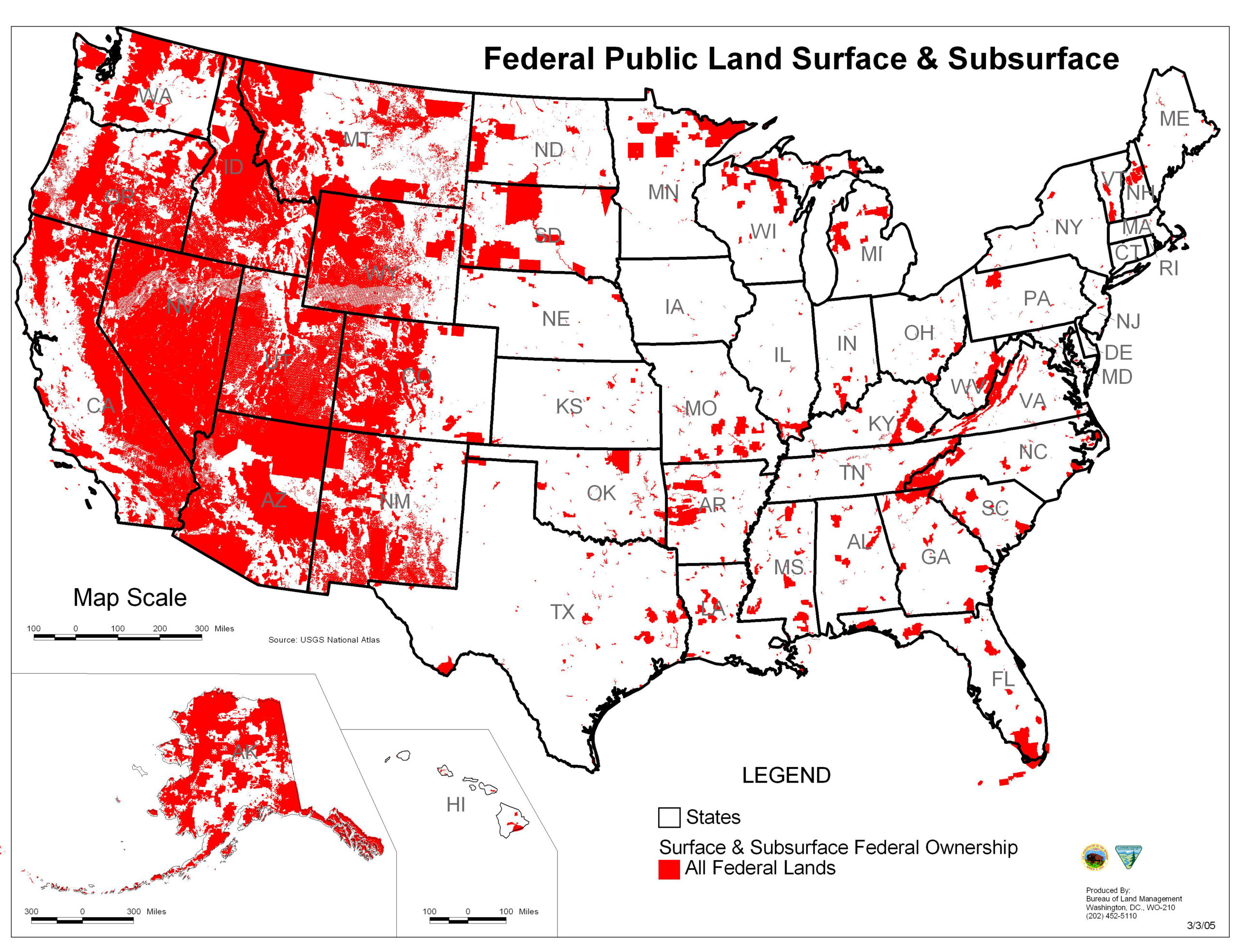
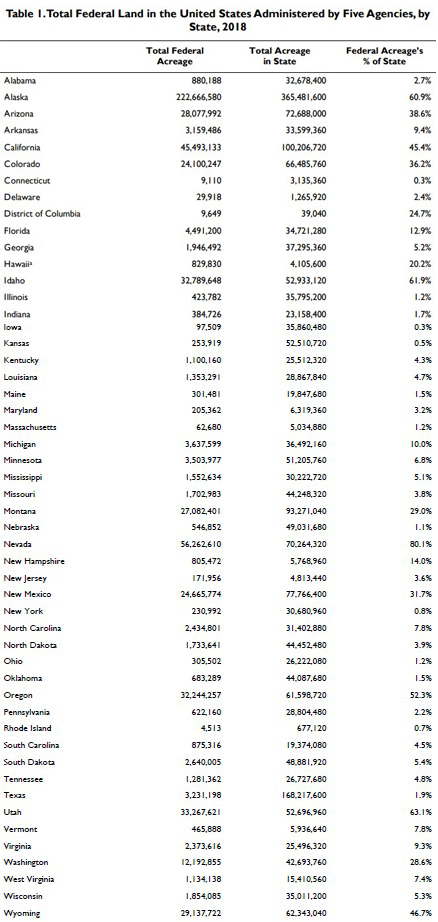
The federal government owns over one-fourth of the land in the U.S. According to a 2020 report and 2023 report by the Congressional Research Service, it amounts to “roughly 640 million acres, about 28% of the 2.27 billion acres of land in the United States”.

Looking at a map you’ll see the federal land is “heavily concentrated in 12 western states (including Alaska), 3 where the federal government owns roughly half of the overall land area.” That includes 45.4% of California, 60.9% of Alaska, 38.6% of Arizona, 36.2% of Colorado, 20.2% of Hawaii, 61.9% of Idaho, 29.0% of Montana, 80.1% of Nevada, 52.5% of Oregon, 63.1% of Utah, 28.6% of Washington and 46.7% of Wyoming. The federal government also owns 12.9% of Florida.

Much of that land is either in national parks (79.9 million acres), in national forests (192.9 million acres) or is farm and ranch land leased to farmers and ranchers. Five federal agencies administer most of it, including the Bureau of Land Management (BLM), Fish and Wildlife Service (FWS), and National Park Service (NPS) in the Department of the Interior (DOI) and the Forest Service (FS) in the Department of Agriculture. with the Department of Defense controlling 8.8 million acres, and 4% administered by multiple other agencies.

So, my proposal is to give to all Black Americans, who can prove they are a descendant of a slave in America, some of that federal land. It can either be given out on an individual or family basis.

While not all Black Americans are descendants of a slave in the U.S. – for example, Vice President Kamala Harris, whose father descended from a Jamaican slave, would not qualify – for simple calculation purposes let’s say all of them are. Blacks currently make up about 13% of the U.S. population of about 330 million people for a total of 40 million people.

If we gave every Black American one, two or even five acres, that would be 40, 80 or as much as 200 million acres which would still leave 440 million acres remaining for ownership and use by the federal government. (Frankly, I don’t understand why the federal government needs to own so much land, especially ranch land for grazing, anyway.)

The new owners could do what they want with the land: farm it, drill it for oil, gas or water, mine it, lease it, swap it with other reparation land recipients, build a home on it, borrow against it, or perhaps form joint ventures with neighboring property owners and develop new communities, even cities. But I believe the one stipulation should be the land could only be sold to another descendant of an American slave. Then, it could be passed on to future generations.

Another argument I’ve heard or read about reparations is, why should people today have to pay anything when neither they nor their family ever owned slaves. This approach addresses that concern. By giving out federal land, there would be no cost to current taxpayers. While it might reduce revenue to the federal government from a reduction in leased lands, that’s a small price to pay for addressing this 160-year-old matter once and for all time.

Source: Congressional Research Service

No One Has to Participate

Some Black people have stated publicly they don’t need or want the help and find it offensive that they be offered reparations. Let’s be clear, no one who is qualified has to participate in a federal reparations program. But I believe most would. Who wouldn’t want free land?

Those who chose to participate would, of course, have to prove their status, and some form of reparations commission or government agency would have to be formed to verify their status and manage the distribution of the land grants. Once verified, program participants would be entered into a lottery and the property could be distributed in periodic drawings. It could even be televised nationally as the participants’ numbers are drawn, and advertising could be sold, and the revenue shared with the federal government to make up for the loss of land lease revenue.

One Time Program May Take Several Years

To sum up, I say it’s time, once and for all, to fulfill the commitment of reparations ordered in 1865 and give portions of federally owned land to the descendants of slaves in the U.S. It might take several years to accomplish, but I believe we should and could start right away. Once the land has been distributed and all who want it received their share, then that would be it. We’d be done. Everyone would be happy, and there could be no more complaining. The agency would be disbanded, the issue would be put to rest, and it would be up to the new landowners to make do with theirs what they can.

Now, all we need is for Members of Congress and U.S. Senators to introduce the idea and move it forward.

Filed Under: Government, History, Opinion

CA Legislative Analyst’s Office increases state deficit by $15 billion to $73 billion

February 21, 2024 By Publisher Leave a Comment

The 2024‑25 Budget

Deficit Update

Under LAO Revenue Update, Budget Problem Grows by $15 Billion

February 20, 2024

From the California Legislative Analyst’s Office, The California Legislature’s Non-Partisan Fiscal and Policy Advisor

The state already faces a significant deficit this year—we estimate it totaled $58 billion under the administration’s revenue forecast at the time the Governor’s budget was proposed in January. However, recent revenue collections data reflect even further weakness relative to those estimates. Specifically, our forecast is about $24 billion below the Governor’s budget across 2022‑23 to 2024‑25. All else equal, this means the budget problem is likely to be higher at the time of the May Revision. The actual increase in the state’s budget problem will depend on a number of factors, including formula-driven spending changes, most notably Proposition 98 spending requirements for schools and community colleges. (Due to specific circumstances this year, changes in revenues are unlikely to have a significant effect on the state’s other major formula-driven spending requirements, specifically related to Proposition 2.) Roughly, a $24 billion erosion in revenues corresponds to a $15 billion increase in the budget problem. This would expand the $58 billion estimated deficit to $73 billion under our updated revenue forecast.

Options to Address $15 Billion in Additional Budget Problem

If the budget problem increases by $15 billion, the Legislature will need to find a like amount of new budget solutions to ensure the budget is balanced for 2024‑25. Budget solutions include, for example: revenue increases and spending reductions (on both a one-time and ongoing basis), as well as other tools, like reserves and cost shifts. As the Legislature considers how to address this increased budget problem, we have put together a set of tables identifying one-time and temporary spending that could be pulled back or reduced in order to achieve budgetary savings. Below, we explain why we set forth these amounts as a possible first option to addressing a larger budget problem and then walk through our method for estimating the amounts potentially available in more detail.

Why Reduce One-Time and Temporary Spending?

The Legislature will weigh the implications of each possible solution—including increasing revenues and spending reductions—against others and, ultimately, choose a mix of solutions based on its priorities. We recommend the Legislature start by reviewing whether recent augmentations for one-time and temporary spending could be pulled back or reduced. We recommend this approach for two key reasons. First, when this one-time and temporary spending was adopted, it was understood that doing so would provide a cushion for future budget problems. For example, the administration frequently displayed “operating surpluses” in its multiyear forecasts excluding this type of spending—implying that the administration understood that the state could not afford all of the commitments under its own projections, but the state could afford the ongoing budget.

Second, the more the Legislature reduces one-time and temporary spending this year, the more other tools it can preserve for future budget problems. Reducing one-time and temporary spending is a “use or lose” tool for addressing the budget problem—once the funds are disbursed to recipients, pulling them back becomes practically impossible. Other tools, like reserve withdrawals and cost shifts, also can be used only once, but at any time. Saving them to deploy in the future can help the Legislature avoid cuts to ongoing services—which involve very difficult decisions. For example, in the Great Recession, the programs with some of the largest expenditure reductions were in health and human services, including to Medi-Cal, which provides health coverage to low-income individuals and the California Work Opportunity and Responsibility to Kids (CalWORKs) program, which provides income assistance to low-income individuals. Although the federal government has certain requirements for minimum state participation in these programs, California provides services well above these minimums. As a result, reductions tend to be concentrated in these areas because they are the ones where the state has the most flexibility to reduce spending without raising issues related to requirements imposed by courts, the voters, and the federal government. As such, maintaining other tools like reserves and cost shifts now could help mitigate reductions in these areas in the future.

Options Possibly Available to Reduce One-Time and Temporary Spending

State Allocated Large Shares of Surpluses to Temporary Purposes, Although Some Has Been Disbursed or Already Proposed for Reduction. Recent budgets allocated tens of billions of dollars in surpluses to one-time and temporary spending, including in 2023‑24, 2024‑25, and 2025‑26. Some spending, most notably for 2023‑24, has already been disbursed or encumbered. This means, for example, that grants have been awarded, funds have been transferred to other entities of government, and contracts or leases have been signed. (In some cases, funds have also been committed for 2024‑25 and 2025‑26, for example, through grant awards.) In addition, the Governor has already proposed pulling back much—but not all—of the undisbursed spending associated with these augmentations.

State Has Nearly $16 Billion in Recent One-Time and Temporary Spending That Could Possibly Still Be Pulled Back or Reduced. After setting aside disbursements and Governor’s budget proposals, we estimate the state possibly could pull back and reduce one-time and temporary augmentations by as much as $6.4 billion in 2023‑24, $4.1 billion in 2024‑25, and $5.1 billion in 2025‑26. Figure 1 shows the distribution of these amounts by program area, while the Appendix includes a complete list of them. These figures represent our current estimates of the amounts for which the Legislature has broad authority to make reductions, which could help the state address a larger budget problem in May. (In some cases, however, further disbursements could occur between now and May, such smaller amounts would be available for reduction at that time.)

Figure 1

Summary of Possible Remaining One‑Time and Temporary Spending

(In Millions)

2023‑24 2024‑25 2025‑26
Business and Labor $266 $284 $198
Criminal Justice 130 40 —
Education 602 1,195 1,109
Health and Human Services 867 301 701
Housing and Homelessness 1,599 — 260
Other 1,752 557 432
Resources and Environment 1,049 1,005 1,377
Transportation 146 739 1,000
Totals $6,411 $4,121 $5,076
Note: Amounts reflect one‑time and temporary spending adopted in the 2021 and 2022 budget packages.

This Information Reflects Our Best Current Understanding. While these estimates reflect the best information we have available, in many cases we do not have perfect information from the administration about the current status of funds. As such, we would view this list as a starting place for the Legislature as it begins crafting the final budget package. For any specific reductions, particularly in 2023‑24, the Legislature could ask the administration for detailed and up-to-date information on disbursements and encumbrances.

More Could Be Pulled Back From Earlier Years. For the purposes of this analysis, we only reviewed disbursements and encumbrances authorized for 2023‑24 and later. There is, however, additional spending attributable to 2022‑23 and earlier that has not yet been disbursed. The Legislature could ask the administration to provide information about the amount of unspent funds from these earlier years.

Appendix Tables

Appendix Figure 1

Possible Remaining One‑Time and Temporary Spending:
Business and Labor

(In Millions)

Department/
Program Area
Description 2023‑24 2024‑25 2025‑26
EDD New IT overhaul—EDDNext $99 — —
GO Biz California Competes Grants 10 — —
HCAI Health and home care workforce package 85 $259 $198
HCAI Behavioral health workforce capacity 52 — —
HCAI Various other health care workforce initiatives 20 25 —
Totals $266 $284 $198
Note: This table includes allocations from the 2021 and 2022 budget packages that remain after accounting for Governor’s budget proposals and known disbursements and encumbrances, as of February 2024. In some cases our office does not have full information on disbursements from the administration, which means these estimates reflect our best understanding at this time.

Note: Amounts reflect one‑time and temporary spending adopted in the 2021 and 2022 budget packages.

EDD = Employment Development Department; IT = information technology; GO Biz = Governor’s Office of Business and Economic Development; and HCAI = Department of Health Care Access and Information.

Appendix Figure 2

Possible Remaining One‑Time and Temporary Spending:
Criminal Justice

(In Millions)

Department/
Program Area
Description 2023‑24 2024‑25 2025‑26
BSCC Adult Reentry Grant $20 — —
CDCR Expansion of community reentry centers 40 $40 —
CDCR Various capital projects at San Quentin Rehabilitation Center 20 — —
OES Nonprofit Security Grant Program 40 — —
OES Family Justice Centers 10 — —
Totals $130 $40 —
Note: This table includes allocations from the 2021 and 2022 budget packages that remain after accounting for Governor’s budget proposals and known disbursements and encumbrances, as of February 2024. In some cases our office does not have full information on disbursements from the administration, which means these estimates reflect our best understanding at this time.

Note: Amounts reflect one‑time and temporary spending adopted in the 2021 and 2022 budget packages.

BSCC = Board of State and Community Corrections; CDCR = California Department of Corrections and Rehabilitation; and OES = Governor’s Office of Emergency Services.

Appendix Figure 3

Possible Remaining One‑Time and Temporary Spending:
Education

(In Millions)

Department/
Program Area
Description 2023‑24 2024‑25 2025‑26
CSAC Golden State Teacher Grants $91 $128 $1
CSU CSU Dominguez Hills Dymally Institute facility 15 — —
DGS State share for school construction projects 472 994 485
DGS Construction and renovation of transitional kindergarten, State Preschool, and full‑day kindergarten facilities — — 550
OPR California College Corps Program — 73 73
UC Cancer Research Relating to Firefighters 7 — —
UC UC Berkeley School of Journalism Police Records Access Project 7 — —
UC UC Los Angeles Ralph J. Bunche Center 5 — —
UC UC Davis Equine Performance and Rehabilitation Center 5 — —
Totals $602 $1,195 1,109
Note: This table includes allocations from the 2021 and 2022 budget packages that remain after accounting for Governor’s budget proposals and known disbursements and encumbrances, as of February 2024. In some cases our office does not have full information on disbursements from the administration, which means these estimates reflect our best understanding at this time.

Note: Amounts reflect one‑time and temporary spending adopted in the 2021 and 2022 budget packages.

CSAC = Student Aid Commission; DGS = Department of General Services; and OPR = Governor’s Office of Planning and Research.

Appendix Figure 4

Possible Remaining One‑Time and Temporary Spending:
Health and Human Services

(In Millions)

Department/
Program Area
Description 2023‑24 2024‑25 2025‑26
CalHHS Health innovation accelerator initiative — — $43
CDPH Carryover from certain one‑time funds in previous years $268 — —
CDPH COVID‑19 response 25 — —
CDPH Public health IT systems 9 — —
CDPH Public education and change campaign — $40 5
Aging Modernizing the Older Californians Act — 37 37
DHCS Behavioral Health Bridge Housing program — — 235
DHCS Behavioral Health Continuum Infrastructure Program — 100 381
DHCS Evidence‑based and community‑defined behavioral health programs — 109 —
DSS CalFresh minimum nutrition benefit pilot — 15 —
HCAI Carryover from certain one‑time funds in previous years 565 — —
Totals $867 $301 $701
Note: This table includes allocations from the 2021 and 2022 budget packages that remain after accounting for Governor’s budget proposals and known disbursements and encumbrances, as of February 2024. In some cases our office does not have full information on disbursements from the administration, which means these estimates reflect our best understanding at this time.

Note: Amounts reflect one‑time and temporary spending adopted in the 2021 and 2022 budget packages.

CalHHS = Health and Human Services Agency; CDPH = California Department of Public Health; Aging = Department of Aging; DHCS = Department of Health Care Services; DSS = Department of Social Services; and HCAI = Department of Health Care Access and Information.

Appendix Figure 5

Possible Remaining One‑Time and Temporary Spending:
Housing and Homelessness

(In Millions)

Department/
Program Area
Description 2023‑24 2024‑25 2025‑26
BCH Agencya Homeless Housing, Assistance, and Prevention Program (HHAPP) $1,100 — $260
BCH Agency Encampment Resolution Grants 299 — —
HCD Portfolio Reinvestment Program 100 — —
HCD Multifamily Housing Program 75 — —
HCD Infill Infrastructure Grant Program 25 — —
Totals $1,599 — $260
aBy the time the HHAPP costs are incurred, the program will have transferred to from BCSH Agency to HCD.
Note: This table includes allocations from the 2021 and 2022 budget packages that remain after accounting for Governor’s budget proposals and known disbursements and encumbrances, as of February 2024. In some cases our office does not have full information on disbursements from the administration, which means these estimates reflect our best understanding at this time.

Note: Amounts reflect one‑time and temporary spending adopted in the 2021 and 2022 budget packages.

BCH Agency Business, Consumer Services, and Housing Agency and HCD = Department of Housing and Community Development.

Appendix Figure 6

Possible Remaining One‑Time and Temporary Spending:
Other

(In Millions)

Department/
Program Area
Description 2023‑24 2024‑25 2025‑26
CDT Broadband infrastructure—increased middle‑mile network costs $420 $250 —
CPUC Broadband infrastructure—last‑mile projects 900 100 $200
CPUC Broadband infrastructure—Broadband Loan Loss Reserve Fund 175 150 175
GO‑Biz Fresno Infrastructure Plan 50 — —
OPR Establish new office of public outreach 60 57 57
SCO California State Payroll System 147 — —
Totals $1,752 $557 $432
Note: This table includes allocations from the 2021 and 2022 budget packages that remain after accounting for Governor’s budget proposals and known disbursements and encumbrances, as of February 2024. In some cases our office does not have full information on disbursements from the administration, which means these estimates reflect our best understanding at this time.

Note: Amounts reflect one‑time and temporary spending adopted in the 2021 and 2022 budget packages

CDT = California Department of Technology; CPUC = California Public Utilities Commission; GO‑Biz = Governor’s Office of Business and Economic Development; OPR = Governor’s Office of Planning and Research; and SCO = State Controller’s Office.

Appendix Figure 7

Possible Remaining One‑Time and Temporary Spending:
Resources and Environment

(In Millions)

Department/
Program Area
Description 2023‑24 2024‑25 2025‑26
CalEPA Environmental Justice Initiative (Community Resilience Package) $5 — —
CalFire Post‑fire reforestation and regeneration (Wildfire Resilience Package) 50 — —
CalFire Emergency surge (helitanker contract component) 45 $45 —
CalFire Forest Improvement Program (Wildfire Resilience Package) 13 — —
CalFire Tribal engagement (Wildfire Resilience Package) 10 — —
CARB FARMER program 75 — —
CARB Clean Cars 4 All (ZEV Package) 50 — —
CARB AB 617 (Community Resilience Package) 50 — —
CARB Equitable Building Decarbonization (Energy Package) 20 — —
CEC Clean Energy Reliability Investment Plan (SB 846) 100 400 $500
CEC Distributed Electricity Backup Assets (Energy Package) 100 25 25
CEC Demand Side Grid Support (Energy Package) 95 — —
CEC Equitable Building Decarbonization (Energy Package) — 53 92
CNRA Water resilience projects (Drought‑Water Resilience Package) 171 — —
CNRA Tribal nature‑based solutions program (Nature‑Based Solutions Package) 30 — —
CPUC Residential Solar and Storage (Energy Package) — 50 100
DTSC Brownfield cleanups — 85 15
DWR Flood and dam safety (Drought‑Water Resilience Package) 53 — —
DWR Oroville Pump Storage (Energy Package) 4 10 20
DWR American River flood project — 27 —
DWR Urban flood risk reduction — 35 —
DWR Strategic Reliability Assets (Energy Package) — 75 75
DWR Water conveyance, water storage (Drought‑Water Resilience Package) — — 500
Go‑Biz or CNRA Diablo Canyon land use planning — — 50
IBank Transmission Financing (Energy Package) 25 — —
OPC Ocean protection (Coastal Resilience Package) 13 — —
OPC Coastal resilience SB 1 implementation (Coastal Resilience Package) 1 — —
OPR Community‑Based Public Awareness Campaign (Extreme Heat Package) 14 — —
SWRCB Water recycling, groundwater cleanup (Drought‑Water Resilience Package) 17 — —
SWRCB Drinking water and wastewater projects (Drought‑Water Resilience) — 200 —
Various Misc Nature‑Based Solutions Package 9 — —
Various Misc Wildfire Resilience Package 5 — —
WCB Protect fish and wildlife from changing conditions (Nature‑Based Solutions) 49 — —
WCB Various WCB programs (Nature‑Based Solutions Package) 46 — —
Totals $1,049 $1,005 $1,377
Note: This table includes allocations from the 2021 and 2022 budget packages that remain after accounting for Governor’s budget proposals and known disbursements and encumbrances, as of February 2024. In some cases our office does not have full information on disbursements from the administration, which means these estimates reflect our best understanding at this time.

Note: Amounts reflect one‑time and temporary spending adopted in the 2021 and 2022 budget packages

CalEPA = California Environmental Protection Agency; CalFire = California Department of Forestry and Fire Protection; CARB = California Air Resources Board; CEC = California Energy Commission; CNRA = California Natural Resources Agency; CPUC = California Public Utilities Commission; DTSC = Department of Toxics and Substances Control; DWR = Department of Water Resources; Go‑Biz = Governor’s Office of Business and Economic Development; IBank =California Infrastructure and Economic Development Bank; OPC = Ocean Protection Council; OPR = Governor’s Office of Planning and Research; SWRCB = State Water Resources Control Board; and WCB = Wildlife Conservation Board.

Appendix Figure 8

Possible Remaining One‑Time and Temporary Spending:
Transportation

(In Millions)

Department/
Program Area
Description 2023‑24 2024‑25 2025‑26
Caltrans Clean California $146 — —
CalSTA Transit and rail funding (Transportation Infrastructure) — $739 $1,000
Totals $146 $739 $1,000
Note: This table includes allocations from the 2021 and 2022 budget packages that remain after accounting for Governor’s budget proposals and known disbursements and encumbrances, as of February 2024. In some cases our office does not have full information on disbursements from the administration, which means these estimates reflect our best understanding at this time.

Note: Amounts reflect one‑time and temporary spending adopted in the 2021 and 2022 budget packages.

Caltrans = California Department of Transportation and CalSTA = California State Transportation Agency.


Filed Under: Finances, Government, News, State of California

Contra Costa Advisory Council on Equal Employment Opportunity seeks three members

February 20, 2024 By Publisher Leave a Comment

One Business member, two Community members

The Contra Costa County Advisory Council on Equal Employment Opportunity (ACEEO) has one vacant Business seat and two vacant Community seats open to applicants. The successful candidate for the Business seat must own a business within the county, and candidate(s) for the Community seats must either work or reside within the county. All candidates must have an interest in equal employment matters. The ACEEO meets on the fourth Friday of each month from 9:30 a.m. to 11:30 a.m., except for holidays.

The ACEEO assists with the implementation of the County’s Equal Employment Opportunities and Contracting Programs and serves as an advisory committee to the Board of Supervisors. The ACEEO reviews the Equal Employment Opportunities Program and recommends actions to facilitate the attainment of the County’s goals for equal employment opportunities regardless of gender and race/ethnicity.

The Board of Supervisors established the ACEEO on July 9, 1991. The Council has thirteen (13) seats representing the following groups: 4 Community seats; 2 Labor seats; 2 Management seats; 1 Educational seat; 1 Disability seat; 1 Business seat; 1 Veteran seat; and 1 Labor/Trade seat.

Application forms can be obtained from the Clerk of the Board of Supervisors by calling (925) 655- 2000 or visiting the County webpage at www.contracosta.ca.gov/3418. Applications should be returned to the Clerk of the Board of Supervisors, 1025 Escobar St., 1st Floor, Martinez, CA 94553. Applications can also be emailed to ClerkoftheBoard@cob.cccounty.us.

Applicants should plan to be available for public interviews. For further information about the ACEEO, please contact Antoine Wilson at antoine.wilson@riskm.cccounty.us or (925) 335-1455. You can also visit the web page at www.contracosta.ca.gov/4503/Advisory-Council-on-Equal- Employment-Opp.


Filed Under: Employment, Government, News

DeSaulnier announces 2024 Congressional Art Competition for high school students

February 20, 2024 By Publisher Leave a Comment

2022 District CA-11 Congressional Art Competition winner, “Growing Up” by Menglin Cai of Danville. Source: Office of Congressman Mark DeSaulnier (when he represented the 11th District)

Deadline for submittals is April 5th

Walnut Creek, CA – Today, Congressman Mark DeSaulnier (D, CA-10) announced he will participate in the nationwide 2024 Congressional Art Competition. High school artists living in California’s 10th Congressional District may begin submitting original artwork to his office virtually from now through Friday, April 5th. The winning piece will be selected by a panel of local judges who will view all artwork electronically and announced at a reception to celebrate all participants following the submission deadline.

Participants may submit one photograph or scan of their artwork, taken in the highest possible resolution, to kaylee.deland@mail.house.gov. Submissions must include the Student Release Form. Artwork entered in the contest may be up to 26 inches by 26 inches, may be up to 4 inches in depth, and not weigh more than 15 pounds. If your artwork is selected as the winning piece, it must arrive framed and must still measure no larger than the above maximum dimensions.

  • Paintings – including oil, acrylics, and watercolor
  • Drawings – including pastels, colored pencil, pencil, charcoal, ink, and markers (It is recommended that charcoal and pastel drawings be fixed.)
  • Collages – must be two dimensional
  • Prints – including lithographs, silkscreen, and block prints
  • Mixed Media – use of more than two mediums such as pencil, ink, watercolor, etc.
  • Computer-generated art
  • Photography

All entries must be original in concept, design and execution and may not violate any U.S. copyright laws. Any entry that has been copied from an existing photo or image (including a painting, graphic, or advertisement) that was created by someone other than the student is a violation of the competition rules and will not be accepted. Work entered must be in the original medium (that is, not a scanned reproduction of a painting or drawing).

The rules for the 2024 competition are available here or on House.gov.

“Every year I am so impressed by the talent of the students in our district who participate in the Congressional Art Competition,” said DeSaulnier. “I am pleased to again host this event as an opportunity for young artists to showcase and be recognized for their creativity.”

The competition is open to all high school students living in California’s 10th Congressional District. The winning piece will be displayed in the U.S. Capitol and the winner will be invited to Washington D.C. to attend a national reception honoring winners from around the country. All submissions must be emailed to Kaylee.deland@mail.house.gov no later than 5:00 p.m. PT on April 5, 2024.

The Congressional Art Competition is a nationwide high school visual art competition to recognize and encourage artistic talent in the nation and in each congressional district. Since the Competition began in 1982, more than 650,000 high school students have participated. Complete contest guidelines and submissions forms are available on the Congressman’s website here. For more information or help submitting artwork, please contact DeSaulnier’s office at 925-933-2660.

Filed Under: Arts & Entertainment, Education, Government, News, Youth

Non-union construction coalition warns of Project Labor Agreements being considered by local governments in Contra Costa, East Bay

February 15, 2024 By Publisher Leave a Comment

By Allen D. Payton

The Coalition for Fair Employment in Construction (CFEC) issued a warning this week about Project Labor Agreements being considered by local governments throughout the state, including two in Contra Costa County, as well as by the East Bay Municipal Utilities District (East Bay MUD).

PLA’s First Implemented in Contra Costa County

According to CFEC, “In 1992, California construction trade unions were given a new scheme for regaining their severely-eroded market share and making extra money on projects. The U.S. Supreme Court ruled that governments could act as a ‘market participant’ to negotiate and sign Project Labor Agreements (PLAs) and then require contractors to sign those union agreements as a condition of work.

In 1994, the Contra Costa County Board of Supervisors voted 4-1 for the first government-mandated Project Labor Agreement in California. At the instigation of unions, local governments throughout the state soon followed, with their own Project Labor Agreement mandates on public works contracts. These Project Labor Agreements were discouraging bidders, increasing costs, and reducing bid participation from minority and women-owned small businesses.”

CFEC Executive Director Eric Christen claims “PLA’s rob workers of their hard earned pay” and explains the organization’s position in a YouTube video from a presentation to the San Gabriel Unified School District which “illustrates how the non-union worker loses out on over $10,000 in hard earned pay working under a PLA as opposed to working without one.”

Less Than 11% of Construction Workers Nationwide are Union Members, 21% in Contra Costa

The organization offers a variety of studies about the costs of union-only PLA’s. They also shared a Jan. 31, 2024, report entitled, “A Record 89.3% of the U.S. Construction Industry Is Not Part of a Union”. It claims, “According to an Associated Builders and Contractors analysis of the U.S. Bureau of Labor Statistics’ 2023 Union Members Summary released Jan. 23, 2024, a historic low of 10.7% of the construction industry belongs to a union, a decline from 11.7% in 2022.”

Asked for the statistics in Contra Costa County Christen responded, “according to the Bureau of Labor Statistics, CC County has a 21% union density level in the construction industry.”

CFEC warns of three agencies considering PLA’s including, “City of Hercules: This Bay Area city has begun looking into the use of a PLA. Mount Diablo Unified School District: This Contra Costa County school district is considering a Project Labor Agreement for all its bond work. East Bay MUD: This Bay Area entity continues to look into the use of a PLA for some of its work. CFEC and our allies have worked hard to keep it PLA-free for decades.” The organization asks for those interested to contact them to help keep the local governments “PLA-free”.

ABOUT CFEC

Non-union and union contractors, business and community leaders, and taxpayer advocates recognized Project Labor Agreements as a looming threat to fiscal responsibility, fair and open competition, and freedom of choice in training in California. In May 1998, state leaders attended a strategic conference in Sacramento to develop a plan to protect fair and open competition in the awarding of construction contracts.

By the end of the year, the Coalition for Fair Employment in Construction (CFEC) was incorporated. Its sole responsibility: protect fair and open bid competition on construction contracts through education. When the California Supreme Court in 1999 permitted the San Francisco Airport Commission to continue its Project Labor Agreement mandate, the educational role of CFEC became extremely important to stopping this union favoritism.

The Coalition for Fair Employment in Construction is dedicated to guaranteeing genuine accountability and results for taxpayers by ensuring a fair and competitive construction industry. CFEC educates taxpayers and public officials about waste, fraud and abuse associated with lobbyist brokered Project Labor Agreements (PLAs). It’s our right and responsibility to hold our elected officials accountable for pushing special interest backroom deals that favor special interests over the public interest. That’s what we do.

Through education and advocacy, CFEC stands up for taxpayers, construction workers, contractors and developers so that the public can get the best quality work at the best price. To learn more visit http://opencompca.com/.


Filed Under: Construction, East Bay, Government, Jobs & Economic Development, Labor & Unions, News

West County: District 1 Open House on Contra Costa Draft General & Climate Action Plans Feb. 21

February 14, 2024 By Publisher Leave a Comment

Casa Abierta sobre el Borrador del Plan General del Condado y el Plan de Acción Climática

At El Cerrito City Hall

By District 1 Supervisor John Gioia

I invite you to join us for an upcoming open house to learn about the Draft Contra Costa County General Plan and Draft Climate Action Plan Update!

When: Wednesday, February 21 from 5:00 – 7:00 pm

Where: El Cerrito City Hall Lobby, 10890 San Pablo Ave., El Cerrito

Learn about proposed land use policies for the unincorporated areas of West County – Kensington, East Richmond Heights, El Sobrante, North Richmond, Rollngwood, Montalvin Manor/Bayview and Tara Hills; and provide input.

Click on my video explaining the importance of participating in the General Plan!

The Draft Contra Costa County General Plan and Draft Climate Action Plan (CAP) 2024 Update are part of the Envision Contra Costa 2040, the County’s plan to address land use, transportation, housing, climate change, environmental justice and other important issues over the next 20 years. They update is available for public review at envisioncontracosta2040.org. (See related article)

Community feedback has been the driving force behind our planning efforts. Now, we invite you to explore our work and ensure it reflects our collective vision for Contra Costa County’s future.

We’ll be taking questions, providing answers, and encouraging you to share feedback in-person or through our online commenting tool.

View the event flyer here.

Thank you, and we hope to see you there!

En Español

¡Lo invito a unirse a nosotros en una próxima jornada de puertas abiertas para conocer el borrador del Plan General del Condado de Contra Costa y el borrador de la actualización del Plan de Acción Climática!

Cuándo: Miércoles 21 de febrero de 5:00 a 7:00 p.m.

Dónde: Vestíbulo del Ayuntamiento de El Cerrito, 10890 San Pablo Ave., El Cerrito

Conozca las políticas de uso de suelo propuestas para las áreas no incorporadas del oeste del condado: Kensington, East Richmond Heights, El Sobrante, North Richmond, Rollngwood, Montalvin Manor/Bayview, Tara Hills; y proporcionar información.

El borrador del Plan General del Condado de Contra Costa y el borrador del Plan de Acción Climática (CAP) 2024 están disponibles para revisión pública en envisioncontracosta2040.org

Los comentarios de la comunidad han sido la fuerza impulsora detrás de nuestros esfuerzos de planificación. Ahora, lo invitamos a explorar nuestro trabajo y asegurarnos de que refleje nuestra visión colectiva para el futuro del condado de Contra Costa.

Responderemos preguntas, brindaremos respuestas y lo alentaremos a compartir sus comentarios en persona o a través de nuestra herramienta de comentarios en línea.

Vea el folleto del evento aquí.

¡Gracias y esperamos verte allí!

Allen D. Payton contributed to this report.
Filed Under: Environment, Government, Growth & Development, Supervisors, Transportation, West County

  • « Previous Page
  • 1
  • …
  • 9
  • 10
  • 11
  • 12
  • 13
  • …
  • 44
  • Next Page »
Furniture-Clearance-02-26B
Celia's-3-26-A
Delta-RC-A
Deer-Valley-Chiro-06-22

Copyright © 2026 · Contra Costa Herald · Site by Clifton Creative Web